Blue Cashmere Sweater Outfits for a Polished Winter Wardrobe
Some wardrobe pieces do more than fill a gap. They set the tone for how an entire closet feels. A blue cashmere sweater is one of those pieces: soft but composed, familiar but elevated, and quietly expressive in a way that plain basics rarely are. That is why blue cashmere sweater outfits continue to sit at the intersection of practical dressing and fashion identity.
What makes this category especially interesting is that it is often mistaken for a simple neutral-basic story. It is not. Blue shifts mood depending on shade, texture, and styling context. Navy can read controlled and old-money adjacent; cobalt feels sharper and more fashion-forward; sky blue carries a lighter, softer visual energy. Add cashmere, and the result becomes less about trend and more about tone, proportion, and tactile polish.
Across editorial styling, shopping roundups, and retailer collections, the same themes surface again and again: denim, tailored trousers, skirts, blazers, coats, boots, and tonal layering. But the real difference between a forgettable outfit and a strong one lies in how those pieces are balanced. Blue cashmere works because it can move between New York polish, Los Angeles ease, London casual chic, and the cleaner minimalism often associated with Milan and Paris without losing its core elegance.
This is where the sweater becomes more than a product. It becomes a visual anchor. Whether your instinct leans toward capsule wardrobe minimalism, smart-casual office dressing, or the refined restraint of timeless elegance, the styling logic behind blue cashmere reveals exactly what kind of dresser you are.
Found the dress? Keep the rest in one place.
Zarellea brings guest details, vendors, timelines, and every next step together — so your wedding plan feels as good as your look.
The visual intelligence of blue cashmere
Cashmere already signals softness, luxury, and ease. Blue gives that softness direction. Together, they create a look that feels intentionally calm rather than plain. This matters because knitwear can sometimes lose shape visually, especially in casual outfits. Blue helps retain structure in the eye, while cashmere softens the mood.
There is also a strong psychological distinction between blue and other classic sweater colors. Camel and gray read traditional. Black reads direct and urban. Blue sits in a more flexible space. It can feel understated in navy, crisp in indigo, fresh in powder blue, or expressive in cobalt. That range is one reason stylists and editors return to it so often in fall and winter wardrobes.
In practical terms, blue cashmere is one of the easiest premium knitwear categories to integrate because it works naturally with denim, white, black, gray, and camel. Those pairings are visually stable. They do not compete with the texture of the knit. Instead, they let the sweater remain the center of gravity.
The shades that change the entire outfit mood
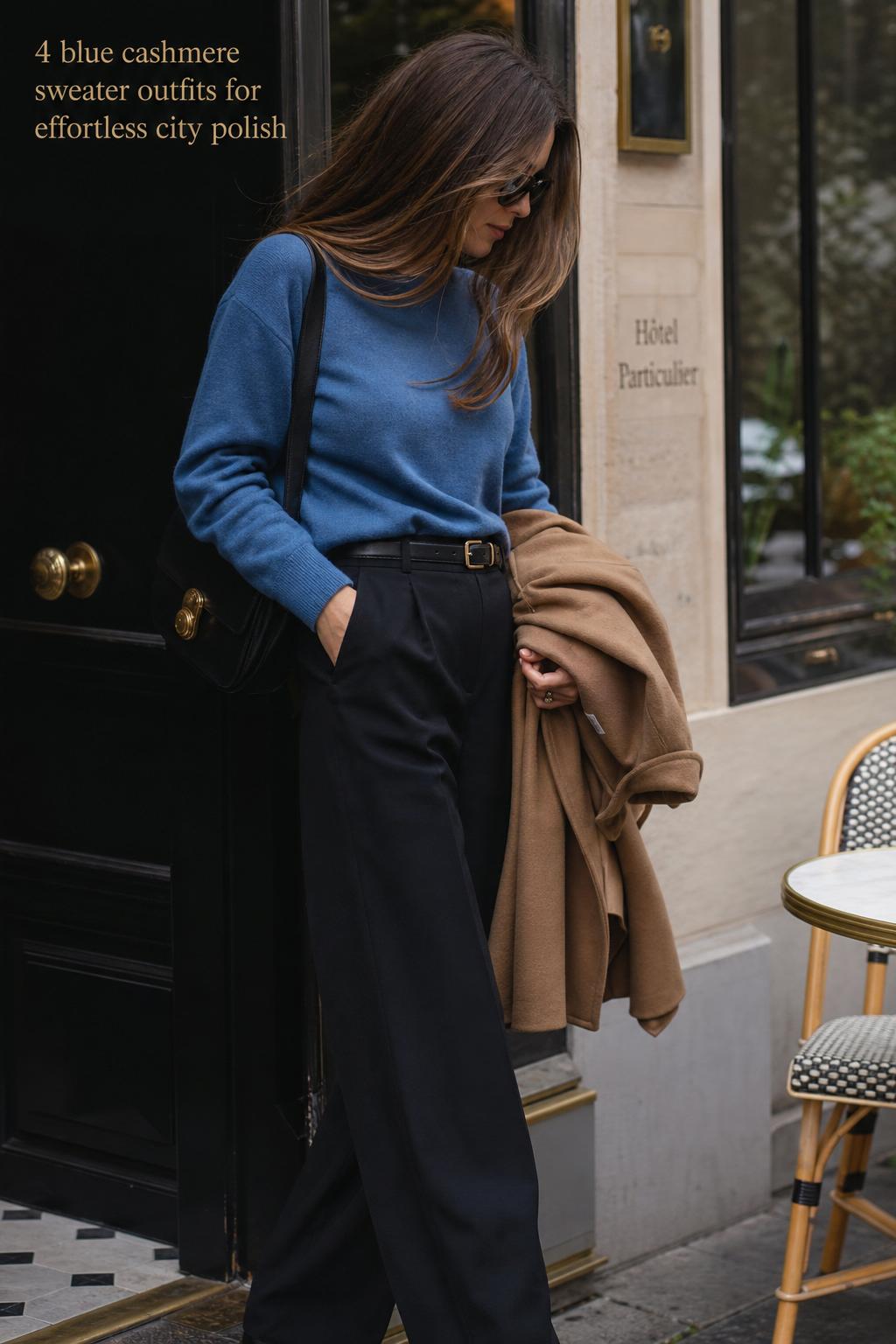
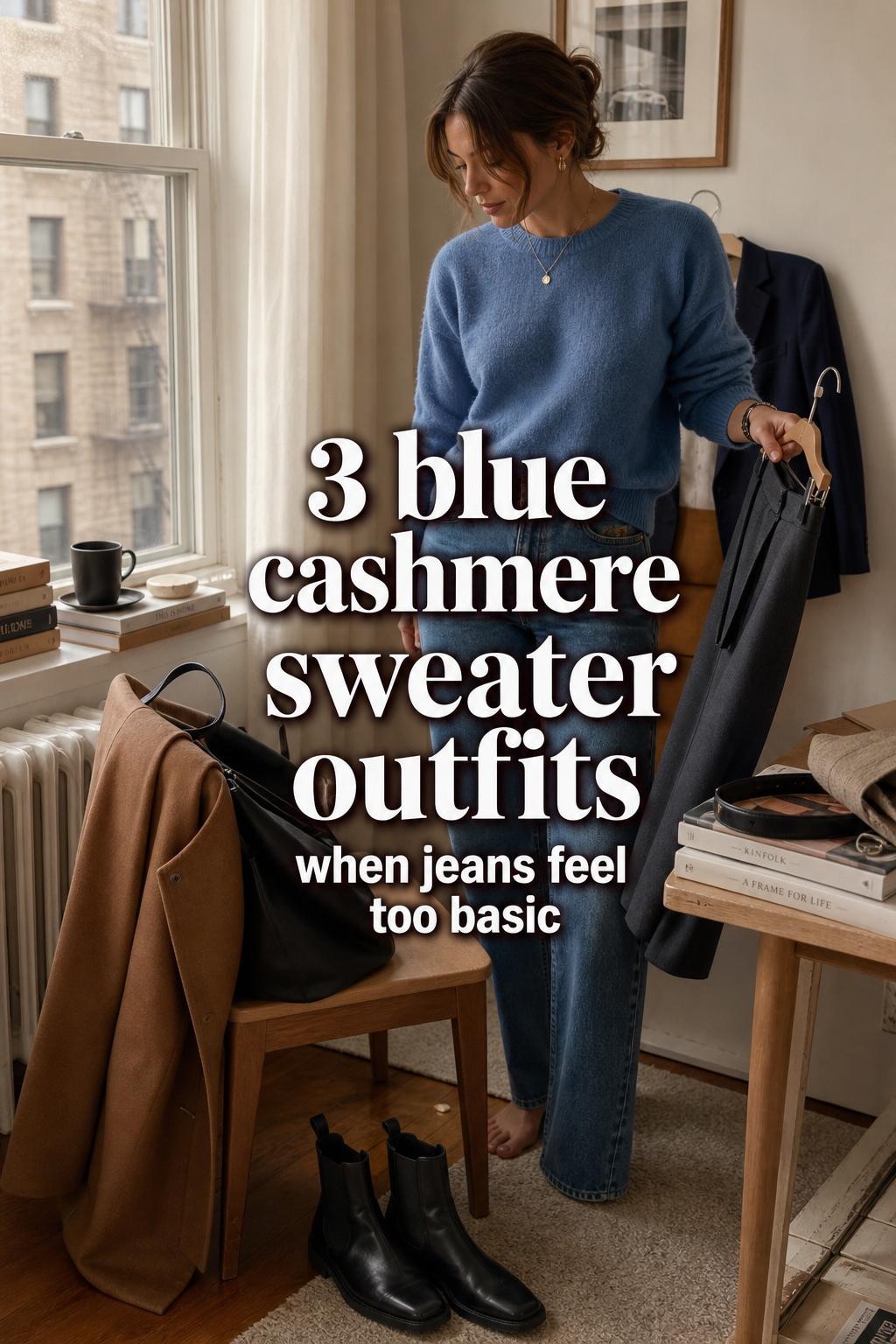
Not all blue cashmere sweaters communicate the same thing. Navy is the most controlled and versatile. It pairs easily with tailored trousers, blazers, and long coats, making it especially effective for office-ready and city wardrobes. Cobalt and royal blue create more contrast and bring sharper fashion energy, particularly when worn with black or bright white. Sky blue and powder blue soften the outfit and feel more relaxed, especially when styled with off-white denim or light neutral layers.
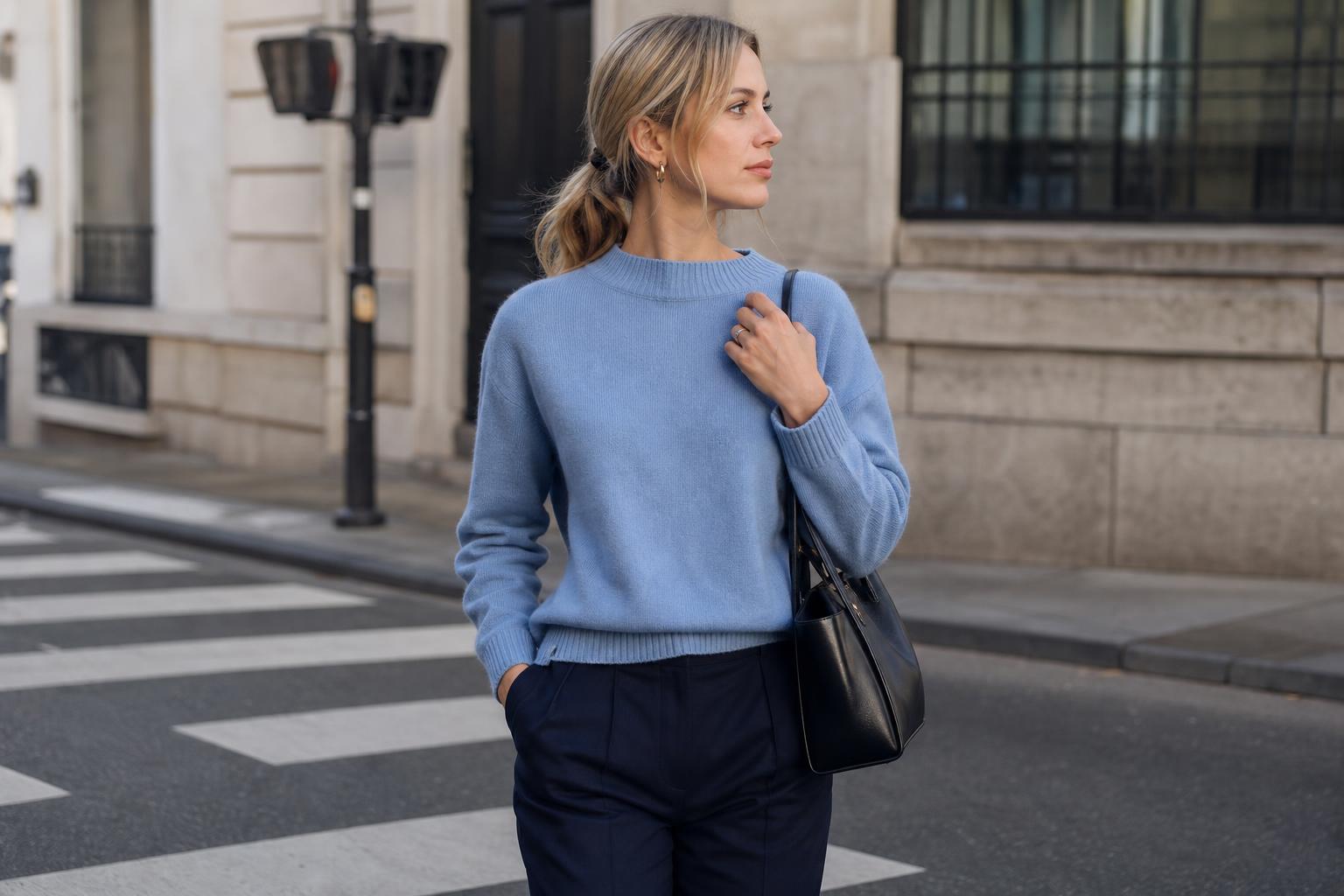
This is where color theory becomes practical. The darker and deeper the blue, the more formal and anchoring the sweater appears. The lighter the shade, the more the outfit depends on surrounding structure. A pale blue cashmere knit with relaxed jeans can look beautifully effortless, but it benefits from clear finishing details such as sleek boots, a defined coat, or a polished bag.
The relaxed structure behind timeless blue knit dressing
Blue cashmere often appears in fashion conversations around timeless elegance, capsule wardrobes, and the old-money aesthetic because it captures a very specific kind of restraint. The knit is inherently soft, but the overall look rarely feels overly romantic. Instead, it suggests measured comfort: luxurious fabric, clean color, low-noise styling.
That is why silhouettes matter so much here. A crewneck blue cashmere sweater reads different from a turtleneck or cardigan even in the same shade. Crewnecks feel classic and adaptable. Turtlenecks increase visual authority and are especially effective with tailored outerwear. Cardigans create a layered softness and work well when the goal is to make the outfit feel less formal, more lived-in, and easier to transition from indoors to outdoors.
The style language also shifts depending on whether the sweater is worn tucked in, half-tucked, or left loose. A tuck adds intention and shape. A loose hem feels more off-duty and often aligns better with wide-leg trousers or relaxed denim. These are small changes, but they are exactly what determine whether an outfit lands as polished, casual, or editorial.
Why cashmere changes the silhouette
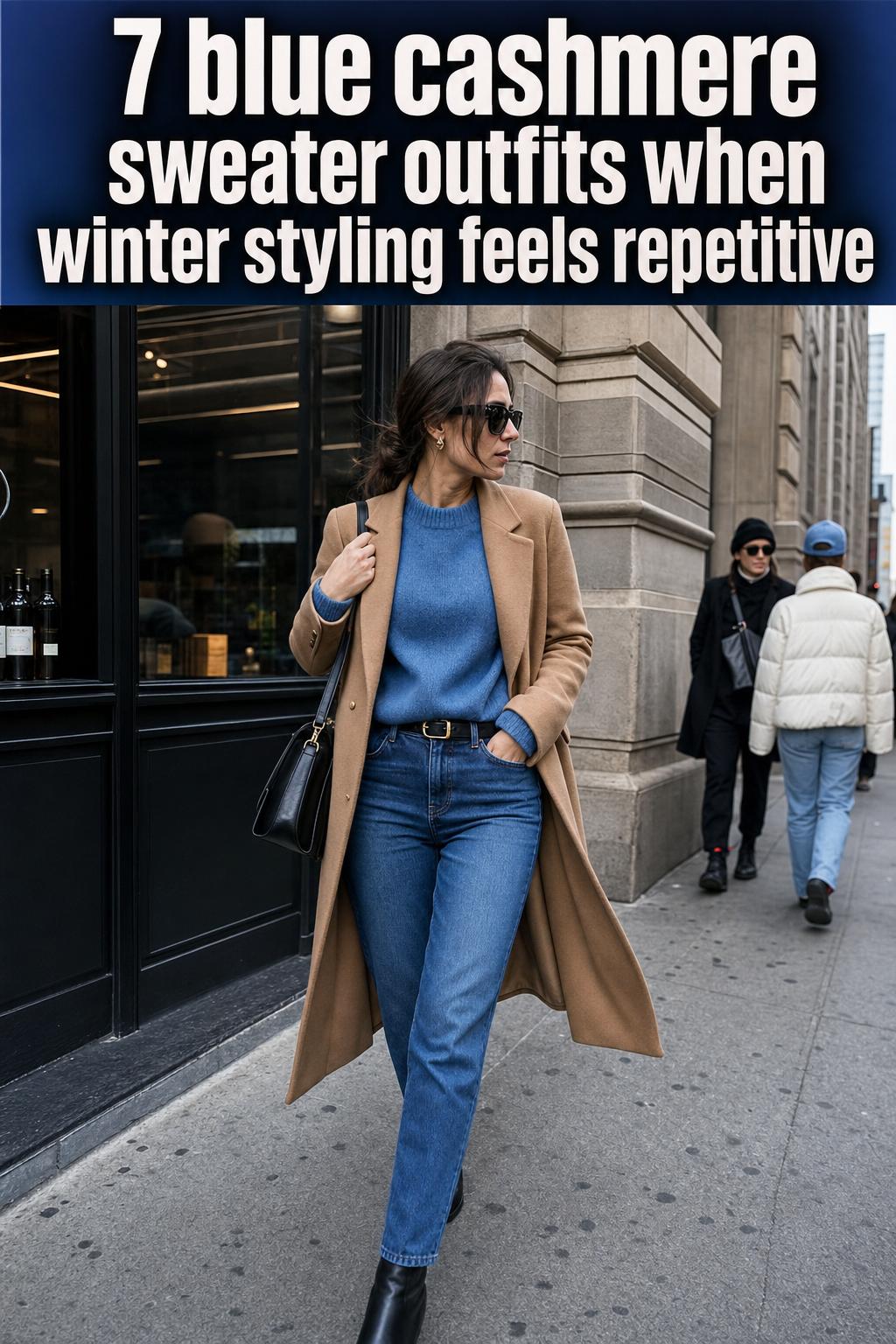
Cashmere drapes differently from many standard knits. It softens edges and creates a smoother line through the torso, which is one reason it layers so well under blazers and coats. But that same softness can also blur shape if the rest of the outfit lacks structure. The strongest blue cashmere outfits usually include at least one grounding element: straight-leg denim, a tailored trouser, a defined skirt waist, knee-high boots, or a sharp outer layer.
This balance between softness and control is what makes blue cashmere such a strong real-world investment piece. It can look expensive without appearing rigid, and comfortable without appearing unfinished.
How everyday basics become more elevated with blue cashmere
The most wearable blue cashmere sweater outfits usually begin with basics, not statement pieces. That is also where visual differences between aesthetics become easiest to spot. One dresser may style the sweater with dark denim and black boots for a clean city look. Another may pair it with white jeans and a camel coat for a softer, more classic mood. The sweater stays the same, but the styling philosophy shifts.
Denim as the most reliable partner
Denim appears repeatedly in outfit formulas because it creates the right amount of contrast against cashmere’s softness. Indigo denim with navy cashmere produces tonal depth without becoming monochrome. Black denim with cobalt or royal blue sharpens the outfit and makes the sweater read more intentional. White denim with sky blue or powder blue creates a fresher, more polished contrast that can feel almost coastal in its simplicity.
The success of this pairing depends on proportion. Slimmer jeans make the sweater’s softness more visible, while straight-leg or wider denim creates a more current, balanced silhouette. A cropped or lightly tucked sweater often helps define the waist and stop the look from feeling heavy through the middle.
- For a grounded everyday formula, pair navy cashmere with straight-leg indigo denim and black leather boots.
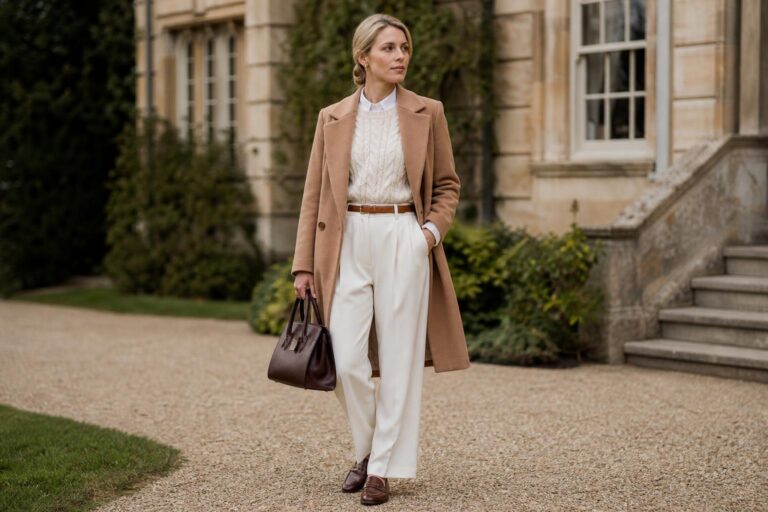
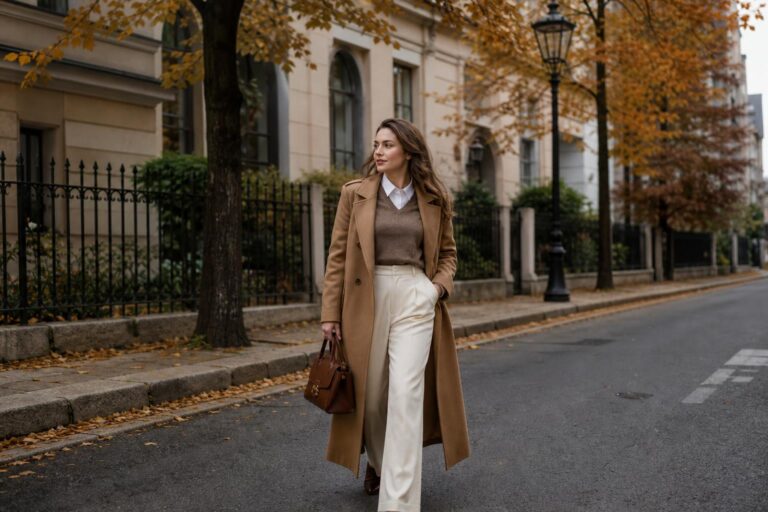
- For a lighter, more polished version, use a pale blue knit with white denim and a camel outer layer.
- For a sharper editorial mood, style cobalt cashmere with black denim and minimal accessories.
Why trousers change the message
Switch denim for tailored trousers, and the sweater immediately enters a different style conversation. Blue cashmere with gray, black, or camel trousers looks more controlled and office-appropriate. The knit introduces softness, while the trouser line provides shape and clarity. This combination works particularly well in smart-casual workplaces, holiday dressing, and city wardrobes that need comfort without sacrificing polish.
Wide-leg trousers make the outfit feel more directional, especially when paired with a slightly fitted crewneck or neatly tucked cardigan. Narrower tailored trousers create a cleaner, more classic shape. Neither is universally better. The choice depends on whether you want visual ease or stronger structure.
The controlled elegance of work-ready blue cashmere
Workwear is where blue cashmere often outperforms louder knitwear options. It is refined without being severe and expressive without feeling distracting. For office dressing, the strongest combinations are built around tonal discipline and a clear silhouette. A navy cashmere turtleneck under a blazer has a different authority from a cobalt crewneck worn solo, but both can function well when the outfit is anchored properly.
In New York-style workwear, this often means pairing blue cashmere with tailored black trousers, a structured blazer, and sleek boots. The visual effect is composed and metropolitan. In a softer Los Angeles interpretation, the same sweater might be worn with looser trousers and minimal accessories, preserving polish while easing the formality. London styling tends to lean into layering and texture contrast, often making the sweater feel more practical and weather-aware.
Blazers, coats, and office layering
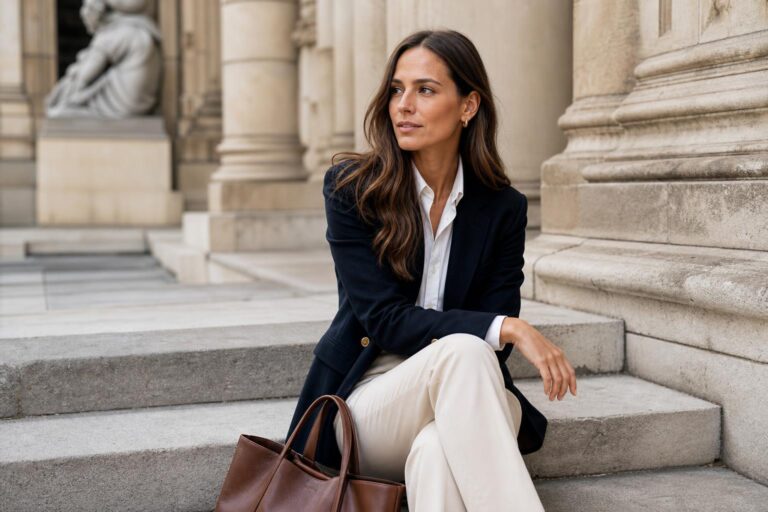
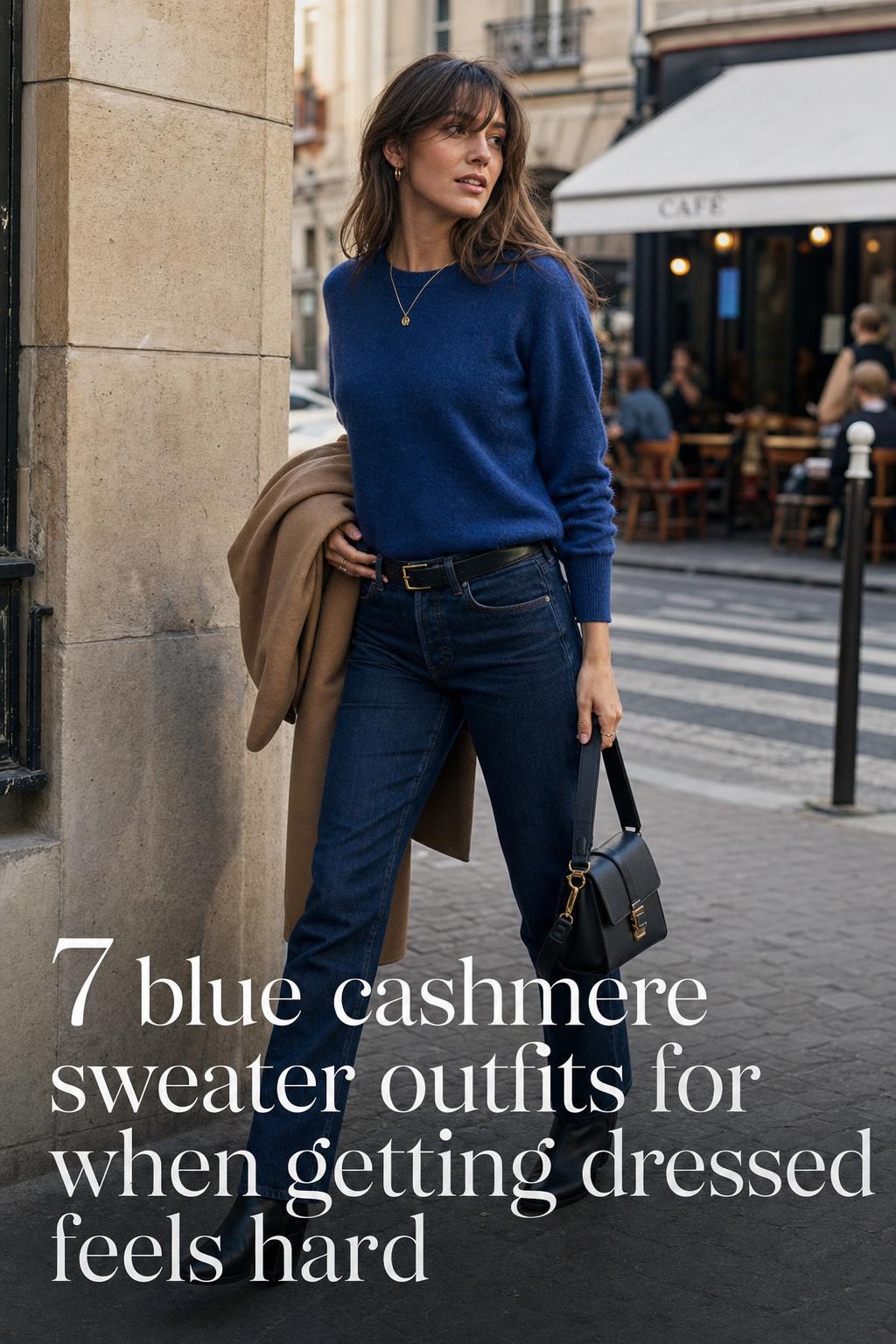
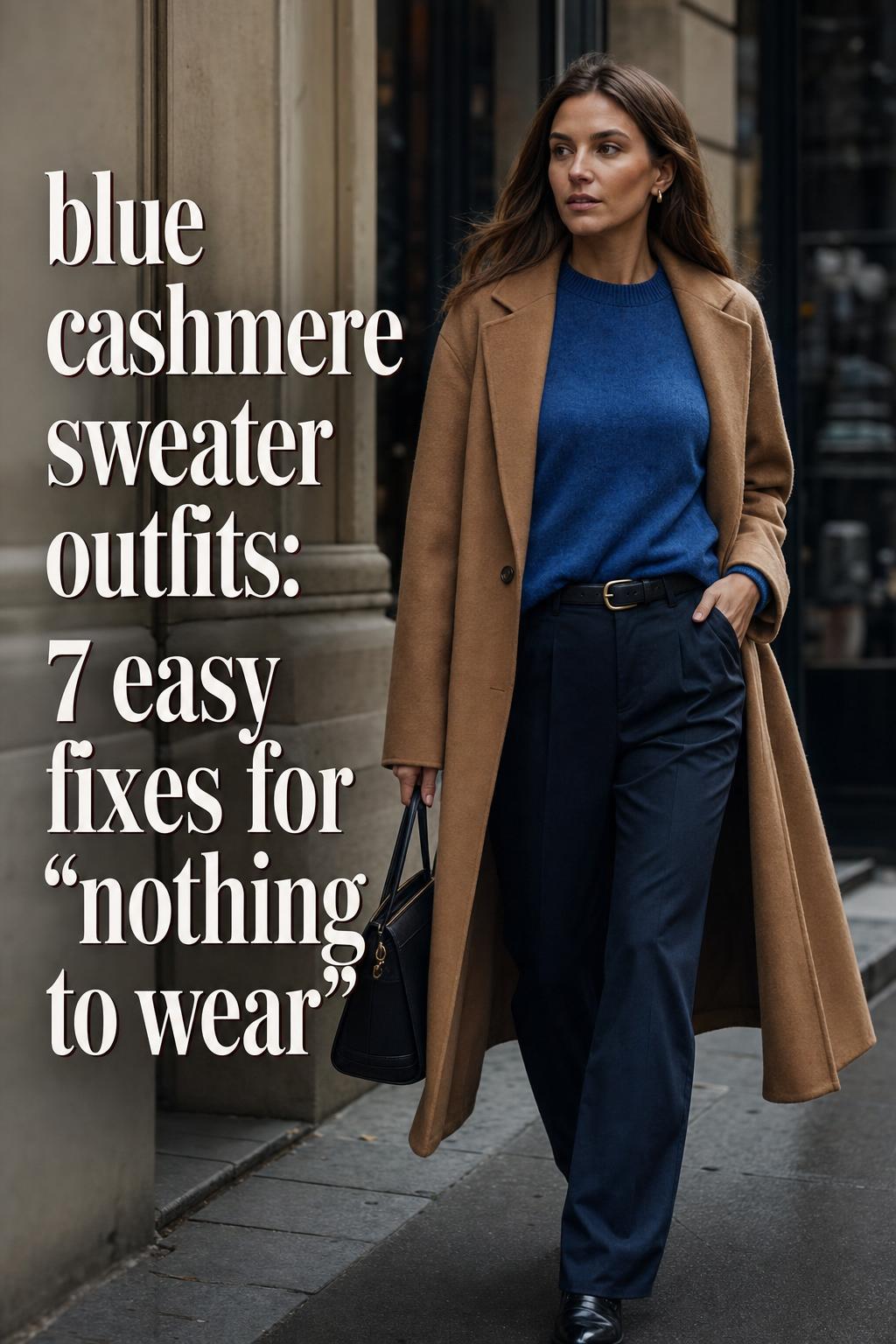
A blazer over blue cashmere works because it sharpens the sweater without flattening its texture. The knit remains visible as a soft center layer, while the blazer adds edge and line. Long wool coats perform a different role. They extend the silhouette and make the outfit feel more seasonal, more luxurious, and more aligned with fall and winter wardrobe planning.
The key visual difference is this: blazers create precision; coats create atmosphere. If you want the outfit to read work-first, choose the blazer. If you want it to read editorial, city-ready, or holiday-appropriate, a coat over cashmere often feels richer.
- Use a crewneck under a blazer for the cleanest office-ready profile.
- Choose a turtleneck when you want the outfit to feel more authoritative and cold-weather specific.
- Let camel, gray, black, and white carry the supporting role so the blue remains the visual anchor.
Skirts, movement, and the softer side of blue cashmere
A skirt changes blue cashmere completely. The sweater becomes less tailored and more atmospheric, especially when paired with midi lengths, pleats, or softer fabrics. This is where the styling starts to move away from pure minimalism and closer to a more expressive, editorial approach. The contrast between knit texture and a fluid lower half gives the outfit motion.
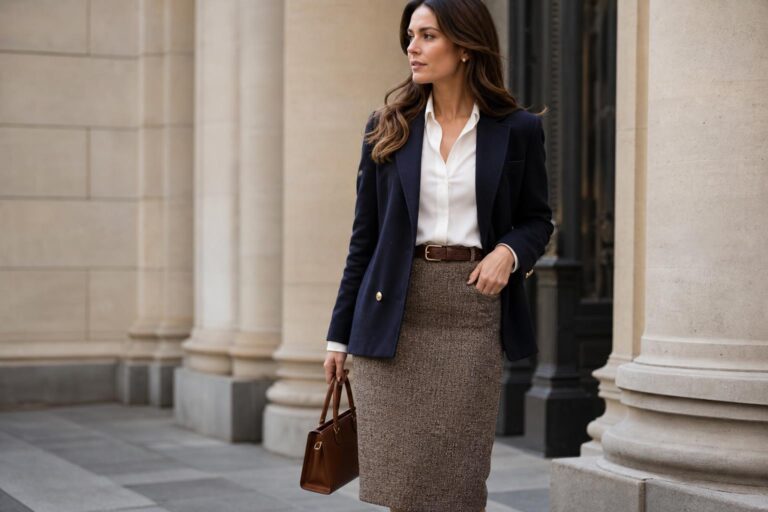
With skirts, proportion is everything. A bulkier sweater can overwhelm the look if worn untucked with a full midi. A cleaner fit, a front tuck, or a more defined waistband usually restores balance. Pencil skirts create a stronger line and feel more work-aligned, while pleated or softer skirts push the outfit into evening-adjacent or dressier daytime territory.
Boots as the finishing structure
Boots matter here because they prevent the softness of the sweater-skirt pairing from drifting into visual vagueness. Black leather boots add edge and urban clarity. Taller boots especially help bridge the space between hemline and footwear, making the outfit feel more grounded in colder months. If the sweater is light blue or powder blue, black boots create useful contrast; if the sweater is navy, the result is more tonal and restrained.
Belts can also play an important role in these outfits. Even when barely visible, they introduce a break in texture and define the waist. That small adjustment can make a sweater-and-skirt combination look intentional rather than simply comfortable.
Evening and elevated casual: when blue cashmere feels quietly luxurious
Blue cashmere is not only a daytime staple. It can move into evening and elevated casual settings when the supporting elements become sleeker and more contrast-driven. This is less about formal dressing in the strict sense and more about creating a polished after-hours look that still feels relaxed.
A silk skirt under a blue cashmere sweater introduces shine against matte softness, which immediately increases sophistication. Leather details create another useful tension. Metallic accessories can then finish the outfit without overcomplicating it. What keeps this category elegant is restraint. The sweater itself is already luxurious; the rest of the look should frame that rather than compete with it.
The difference between polished and overdressed
Cashmere tends to elevate whatever surrounds it, which means evening styling does not need much force. A navy or royal blue sweater with a dark skirt and refined accessories often lands better than a heavily accessorized look. The appeal comes from tonal dressing, texture contrast, and proportion play, not from piling on detail.
This is also where the old-money and quiet luxury associations appear most clearly. The mood is not dramatic. It is controlled, tactile, and understated. In real life, that makes blue cashmere especially useful for dinners, holiday gatherings, and occasions where you want warmth and polish at the same time.
The role of accessories in shaping the aesthetic
Accessories do not just finish blue cashmere sweater outfits. They determine what kind of outfit it becomes. The same navy crewneck can lean classic, urban, or fashion-editorial depending on whether it is paired with a structured bag, leather boots, a simple belt, or metallic jewelry.
Black accessories create contrast and sharpen the composition. Camel softens blue and supports a timeless, capsule-wardrobe feel. White and off-white create freshness and make lighter blues feel cleaner. Jewelry adds another layer of temperature to the outfit: minimal metal details usually support the polish of cashmere better than overly decorative styling.
Why tonal dressing works so well here
Tonal dressing with blue cashmere is effective because it extends the softness of the knit across the outfit. Pairing navy with indigo denim or using multiple blue-adjacent tones creates depth without noise. The result often feels more expensive and more intentional than high-contrast color blocking. That said, tonal outfits need at least one distinction in texture or silhouette, or they can start to feel flat.
- Use boots to give soft cashmere outfits visual traction.
- Add a belt when the sweater is worn with skirts or wide-leg trousers and the waist needs definition.
- Keep bags structured if the knit is oversized, so the look does not lose shape.
- Let black, white, camel, and gray do most of the supporting work.
Where brand identity changes the outfit feeling
Not all blue cashmere communicates the same style even before it is worn. Brand identity affects fit, tone, and wardrobe context. Reformation often sits comfortably in a fashion-forward shopping conversation, while Jenni Kayne and Vince are closely aligned with refined, luxe basics. Theory fits naturally into more tailored wardrobes. J.Crew and Nordstrom help bridge classic, accessible, and department-store styling realities, making them relevant for readers who want wearable options rather than abstract inspiration.
This matters because shoppers are rarely choosing a sweater in isolation. They are usually choosing a version of an aesthetic. A cleaner, more minimal blue cashmere sweater fits directly into a capsule wardrobe. A softer or slightly more relaxed silhouette leans casual. A sharper shade or a more structured cut can push the sweater toward fashion-editorial dressing.
Retailer pages such as Nordstrom’s blue cashmere selections often prioritize assortment, size, color filters, and shopping convenience. Editorial pages from titles such as Who What Wear, Marie Claire, and Woman & Home tend to frame cashmere through styling, aspiration, and seasonal context. Both perspectives are useful. One tells you what exists. The other tells you how a piece behaves within a wardrobe.
Blue cashmere in different style cities
Location shifts the way blue cashmere is worn, even when the individual items stay familiar. In New York, the sweater often appears with black, tailored layers, and practical boots. The emphasis is on polish, movement, and city functionality. In Los Angeles, styling tends to relax. Softer trousers, lighter palettes, and a more effortless approach make blue cashmere feel less formal and more naturally integrated into everyday dressing.
London adds another layer: weather-conscious styling with personality. Blue sweaters often sit under coats, around scarves, and alongside boots in a way that feels both practical and editorial. Milan and Paris, as broader inspiration points, push blue cashmere toward controlled sophistication and tonal dressing. None of these approaches require a completely different wardrobe. They simply reveal how styling intention changes perception.
What this means for real life
If your routine involves commuting, office dressing, and repeat wear, take the New York and Theory-style approach: structured layers, deep blue shades, and stable neutrals. If your wardrobe leans softer and more relaxed, the Los Angeles and Jenni Kayne direction makes more sense: lighter layers, cleaner denim, and easy proportions. If you like texture, layering, and a more visibly styled finish, a London-inspired formula of blue knitwear, coat, boots, and practical accessories is often the most satisfying.
Tips for building better blue cashmere sweater outfits
The strongest outfits are usually not the most complex. They are the ones where every element is doing a clear job. The sweater brings softness and color. The bottom half establishes proportion. The outer layer defines the level of polish. The accessories keep the look from drifting into vagueness.
- Choose navy if you want the most versatile and office-friendly option.
- Choose cobalt or royal blue if you want the sweater to act as the focal point.
- Choose sky blue or powder blue if your wardrobe already includes white, off-white, and softer neutrals.
- Use denim for everyday ease, tailored trousers for structure, and skirts for movement.
- Keep at least one element sharp when the sweater is oversized: boots, blazer, belt, or structured bag.
- Avoid too many competing soft pieces at once, or the outfit can lose visual definition.
Styling mistakes to avoid
The most common issue with blue cashmere is not the color itself. It is imbalance. A very soft sweater with equally soft pants, soft shoes, and no defined accessory can look expensive on a hanger but vague in motion. Another frequent mistake is choosing a light blue sweater and pairing it with overly muted supporting pieces, which can make the outfit feel washed out instead of refined.
There is also a tendency to over-style cashmere because it is seen as a premium piece. In practice, cashmere often looks best when the outfit is edited carefully. Let the fabric and color carry the luxury signal. Build around that with proportion and restraint.
Care, longevity, and why maintenance affects styling
Cashmere care is not separate from styling. It influences how the garment drapes, how fresh the color appears, and whether the sweater continues to look refined after repeated wear. A beautifully styled blue cashmere outfit loses impact if the knit appears misshapen, dulled, or heavily pilled. That is why care guidance belongs in the same conversation as outfit planning.
Cleaning, storage, and pilling prevention all support the visual life of the sweater. The cleaner the surface and the better the shape retention, the more easily the knit can move between casual and elevated settings. This is especially important with lighter blue tones, where wear can become more visible. For a capsule wardrobe or investment-piece mindset, longevity is part of the value equation.
Practical care priorities
- Follow the garment’s care labeling closely to preserve softness and shape.
- Store cashmere carefully so the knit retains its silhouette between wears.
- Address pilling early to keep the surface looking smooth and polished.
- Think of maintenance as part of wardrobe planning, not an afterthought.
How to choose the right blue cashmere aesthetic for your lifestyle
The reason people often feel unsure about blue cashmere is that the piece itself is versatile enough to belong to several visual identities at once. It can support quiet luxury, old-money styling, smart-casual workwear, weekend minimalism, or a more editorial color-focused wardrobe. The right direction depends less on trend language and more on how you actually dress most days.
If you repeat outfits often and want high utility, build around navy, straight-leg denim, black boots, a blazer, and one good coat. If you value a cleaner, lighter wardrobe, work with powder blue, white or off-white denim, and camel layers. If you enjoy stronger visual contrast, choose cobalt, black trousers, leather details, and simpler accessories. The sweater can shift with you, but the rest of the outfit should reflect your routine, not an abstract aesthetic.
Most versatile pieces to pair with blue cashmere
Across all these variations, a few supporting pieces prove consistently useful: indigo denim, black trousers, a camel coat, black leather boots, a structured blazer, and simple accessories. These items do not compete with the sweater’s texture or color. They frame it. That is the logic behind a blue cashmere capsule: fewer pieces, stronger interaction, more repeatable combinations.
That is also why blue cashmere ages well as a wardrobe decision. It is responsive rather than rigid. It can move across seasons, settings, and style moods as long as the surrounding proportions stay intentional.
Why this category remains so relevant now
Blue cashmere remains culturally resonant because it sits between aspiration and realism. It aligns with the current appetite for premium basics, capsule wardrobe thinking, and understated elegance, yet it also answers practical needs: warmth, softness, office versatility, and repeat wear. It does not rely on novelty to feel current.
Fashion editors, influencers, and shopping platforms continue to return to it because it photographs well, layers well, and adapts to multiple style vocabularies. It can feel expensive in a Nordstrom shopping context, directional in a Who What Wear editorial, quietly refined in a Vince or Jenni Kayne framework, and more tailored in a Theory wardrobe. Few knitwear categories move this easily across visual worlds.
The real appeal, though, is simpler. Blue cashmere gives a wardrobe emotional clarity. It feels calm, wearable, and precise. In a fashion landscape crowded with noise, that kind of confidence still stands out.
FAQ
How do I style a blue cashmere sweater for everyday wear?
The easiest everyday formula is a blue cashmere sweater with denim and a structured finishing piece. Indigo or black jeans create reliable contrast, while boots, a blazer, or a coat keep the outfit from feeling too soft. If the sweater is oversized, a slight tuck or straighter pant shape usually improves balance.
What colors look best with a blue cashmere sweater?
Black, white, camel, and gray are the most dependable pairings because they support blue without competing with it. Navy and indigo also work well for tonal dressing. Lighter blue shades usually look strongest with white, off-white, or camel, while deeper blue shades handle black and charcoal more easily.
Can I wear a blue cashmere sweater to the office?
Yes, especially in navy or other deeper blue tones. Pair it with tailored trousers, a blazer, and polished boots for a smart-casual office look that feels comfortable and refined. A crewneck gives the cleanest profile under a blazer, while a turtleneck adds more authority in colder months.
What is the difference between styling navy cashmere and light blue cashmere?
Navy cashmere is more grounding and naturally suited to tailored looks, darker denim, and city dressing. Light blue cashmere feels softer and usually benefits from cleaner, lighter supporting pieces such as white denim, off-white trousers, or camel layers. The lighter the shade, the more important clear structure becomes elsewhere in the outfit.
Which bottoms work best with blue cashmere sweater outfits?
Denim is the most flexible option, especially in indigo, black, or white. Tailored trousers create a more polished and office-ready result, while skirts add movement and can make the outfit feel softer or more elevated depending on the silhouette. The best choice depends on whether you want ease, structure, or a dressier mood.
Which brands are commonly associated with blue cashmere sweaters?
Names that frequently appear in this space include Nordstrom, Jenni Kayne, Vince, Theory, Reformation, and J.Crew. They represent different wardrobe directions, from accessible classic shopping to more refined luxe basics and fashion-forward knitwear. The right brand choice often depends on whether your priority is tailoring, softness, minimalism, or trend awareness.
How can I make a blue cashmere sweater look more elevated at night?
Use texture contrast and reduce visual clutter. A silk skirt, leather detail, darker bottom half, or metallic accessory can shift the sweater into evening territory without forcing it. The most successful after-hours looks keep the outfit edited so the cashmere remains the luxury focal point.
How do I care for a blue cashmere sweater so it keeps looking polished?
Follow the garment’s care label carefully, store it in a way that protects shape, and deal with pilling before it becomes obvious. Good maintenance helps preserve drape, softness, and color clarity, all of which affect how refined the sweater looks when styled. Care is part of the garment’s longevity, not a separate issue.
Are blue cashmere sweater outfits better for fall and winter only?
They are especially strong in fall and winter because cashmere, coats, boots, and layered dressing naturally work together, but lighter blue shades can also feel relevant in milder conditions. The main shift is in styling weight: darker blues and heavier layers feel more seasonal, while pale blue with white or light neutrals reads lighter and more transitional.
How do I build a capsule wardrobe around a blue cashmere sweater?
Start with a versatile shade such as navy, then add reliable supporting pieces that create multiple outfit paths: indigo denim, black trousers, a camel coat, black leather boots, and a structured blazer. This keeps the sweater useful across casual, work, and elevated settings. The goal is not variety for its own sake, but strong repeat combinations with clear styling logic.