
Old Money Skirt Outfits for a Polished, Timeless Wardrobe
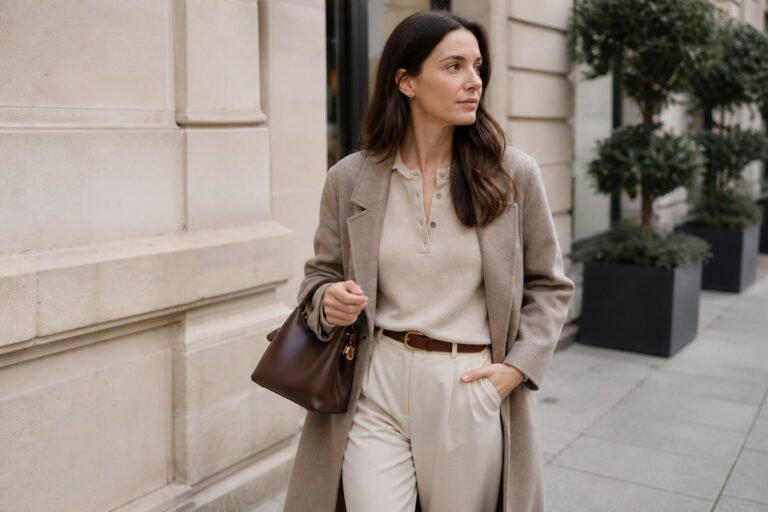
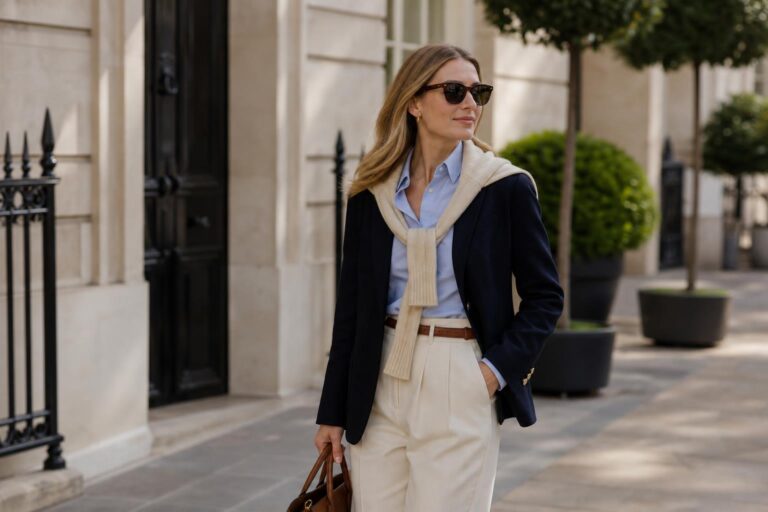
There is a reason old money skirt outfits keep resurfacing whenever fashion swings toward restraint. They offer a version of polish that feels composed rather than theatrical: a navy blazer over a pleated midi, a silk blouse tucked into a pencil skirt, loafers instead of anything too attention-seeking. The mood is less about novelty and more about visual discipline, where fabric, fit, and palette do the work that logos and trend pieces usually try to do.
What makes the aesthetic especially relevant now is its flexibility. The same vocabulary can move from an office morning to a coastal weekend, from an Ivy League-inspired campus mood to a yacht-club dinner setting, simply by adjusting texture, jewelry, and proportion. Cream, camel, navy, black, cashmere, wool, linen, silk, pearls, leather belts, structured handbags: these elements repeat because they create an immediate sense of order.

For readers searching for old money skirt outfits, the appeal is not only aspirational. It is practical. A well-cut A-line midi can carry spring through fall. A houndstooth pencil skirt can sharpen a work wardrobe without feeling severe. A cashmere jumper over a skirt already in your closet can shift an outfit into quiet luxury territory without requiring a full style overhaul.
This guide breaks the aesthetic down the way a stylist would: through silhouette balance, texture contrast, seasonal adjustments, and setting-specific formulas. The goal is not to dress like a costume version of wealth. It is to understand why these combinations read refined, then adapt them to real life with confidence.
Found the dress? Keep the rest in one place.
Zarellea brings guest details, vendors, timelines, and every next step together — so your wedding plan feels as good as your look.
What defines the old money skirt aesthetic
At its core, the old money skirt aesthetic is built on heritage prep and quiet luxury. That means visual restraint, traditional wardrobe staples, and a preference for garments that look expensive because of their cut and fabrication rather than because they advertise a label. The aesthetic often draws from Ivy League and Oxbridge-adjacent style codes: button-down shirts, navy blazers, camel coats, loafers, pearls, tweed, wool, and crisp neutrals softened by rich textures.
Skirts matter within this aesthetic because they introduce movement and polish at the same time. A skirt can look formal without becoming rigid, especially when the silhouette is clean and the fabric has some depth. Pencil skirts communicate structure. Pleated midis bring a more classic, movement-driven elegance. A-line shapes feel forgiving and balanced. Tweed versions add visual density, which is why they are so effective in cooler weather and more formal settings.
The old money version of femininity is also notably controlled. Instead of extreme volume, body-conscious fit, or fast-trend detailing, the styling leans on proportion play. A fitted knit with an A-line midi feels measured. A silk blouse with a pencil skirt creates a long, vertical line. A Breton top with a linen skirt shifts the mood toward nautical prep without breaking the broader rules of understatement.
That is also why this style can feel so wearable. It is not asking for a dramatic transformation. It asks for editing. Better fabric choices. Better color harmony. Better accessories. Fewer items competing for attention.

The skirt silhouettes that carry the entire look
Pencil skirts with a sharper, quieter line
A pencil skirt is one of the clearest old money signals because it creates an immediate structure through the hips and hemline. It works best when the rest of the outfit stays equally disciplined: a silk blouse, a white shirt, or a fine knit tucked in cleanly, followed by understated jewelry and leather loafers or similarly refined footwear. In visual terms, the pencil silhouette creates a narrow column, so it benefits from smooth fabrics and minimal interruption.
For office-ready dressing, this is often the strongest option. A houndstooth or wool pencil skirt adds authority without becoming flashy, especially when paired with a navy blazer. If you want the look to feel less corporate, soften it with cream or camel instead of stark contrast. The key is fit. A pencil skirt that pulls, wrinkles, or sits awkwardly at the waist immediately weakens the effect. In this aesthetic, tailoring matters more than trend relevance.
A-line midis that balance ease and polish
The A-line midi is often the most versatile entry point into old money styling. It has enough structure to feel composed, but enough movement to feel approachable. Because it widens gently from the waist, it balances fitted tops beautifully: cashmere jumpers, twinset-inspired knitwear, silk blouses, or button-down shirts with a slightly relaxed drape.
This silhouette is especially useful if you want an elegant look that still works across errands, lunch, office hours, or travel. In linen or twill, it reads spring and summer. In wool or tweed, it becomes more formal and seasonal. A-line midis also respond well to belt styling, particularly leather belts that define the waist without becoming a visual distraction.
Pleated midis for movement and heritage energy
Pleated midi skirts sit at the intersection of prep, quiet luxury, and timeless femininity. Their strength is movement. Even a simple cream or navy pleated skirt feels elevated because the folds add texture without requiring embellishment. This is one of the easiest ways to create old money skirt outfits that feel expressive while still following a restrained palette.
Pleats pair particularly well with navy cashmere sweaters, crisp button-down shirts, and loafers. They also adapt naturally to coastal or yacht-club styling, where the motion of the skirt echoes the relaxed but polished energy of nautical prep. If the skirt has substantial volume, keep the top streamlined to maintain silhouette balance. If the pleat is finer and more fluid, you can introduce a slightly softer knit without losing definition.
Tweed midi and maxi options with visual depth
Tweed carries a different kind of authority. It is not fluid or airy; it is textured, grounded, and slightly more formal. That makes it ideal for fall, winter, and occasions where the old money aesthetic needs stronger presence. A tweed skirt immediately nods toward heritage brands and house codes often associated with Chanel-inspired dressing, Burberry tailoring, Brooks Brothers polish, and the broader lineage of refined prep.
Because tweed has visual density, it pairs best with pieces that either echo that richness or contrast it cleanly. A white shirt makes the texture feel intentional. A cashmere cardigan adds softness. A camel coat over the top creates tonal layering that reads expensive without looking forced. This is also where structured handbags and pearl jewelry become especially effective, because they sharpen the formality without tipping into costume.

Fabrics and textures that make the outfit read expensive
In quiet luxury dressing, fabric is rarely secondary. It is the primary signal. The difference between a generic outfit and one that feels aligned with old money style is often not the garment category but the texture relationship between pieces. Cashmere next to wool. Silk against tweed. Linen paired with leather accessories. Satin used sparingly through a blouse or layered element rather than dominating the outfit.
Cashmere, silk, wool, linen, satin, velvet, twill, and tweed appear repeatedly in this style language because they create depth without requiring excess detail. Even when the palette stays minimal, the outfit avoids looking flat. A navy cashmere sweater with a cream pleated midi has enough variation in surface and movement to feel finished. A silk blouse against a wool pencil skirt creates a polished tension between softness and structure.
- Cashmere works best when you want softness and visual refinement without bulk.
- Silk sharpens a skirt outfit by adding subtle light reflection and fluidity.
- Wool and tweed bring authority, particularly in office or winter styling.
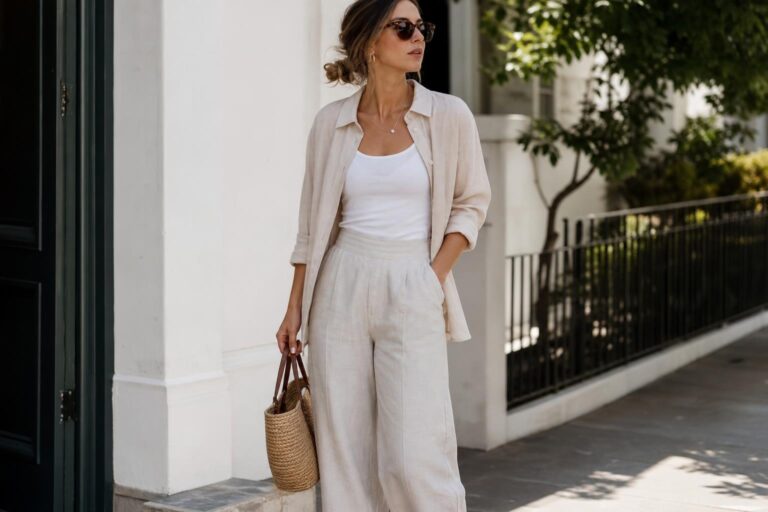
- Linen is the natural choice for spring and summer, especially in coastal or Hamptons-inspired settings.
- Twill is useful when you want more structure than linen but less weight than wool.
- Velvet and satin are most effective in evening variations or texture-led editorial combinations.
A common mistake is using too many luxe textures at once. Silk, velvet, tweed, and heavy jewelry in a single composition can become visually crowded. Old money styling works better when one or two texture stories lead the outfit and the rest stays supporting. That restraint is exactly what gives the aesthetic its calm authority.
Color discipline: why navy, cream, camel, and black work so well
The old money palette is narrow for a reason. Cream, camel, navy, black, and other neutrals create continuity between wardrobe pieces, which makes styling feel cohesive rather than improvised. These shades also allow texture and silhouette to become more noticeable. When the color story is controlled, a pleat, a sharp shoulder line, or a silk finish has room to stand out.
Navy is arguably the strongest foundation shade in old money skirt outfits because it feels authoritative without the severity that black can sometimes introduce in daylight. Camel softens winter layers and gives wool and cashmere a warmer, more relaxed energy. Cream brightens the aesthetic without making it feel playful. Black still has a place, particularly in evening or city-focused interpretations, but it tends to work best when balanced with warmer neutrals or richer textures.
Seasonal palette shifts without losing the aesthetic
Seasonality should change the weight of the outfit more than the identity of the outfit. In winter, the palette can become denser through navy, camel, black, and textured wool. In spring and summer, cream and lighter neutrals take over, often joined by linen, silk, or twill. A nautical-prep direction also enters more naturally in warmer months through Breton tops, scarves, loafers, and yacht-club styling cues.
Jewel tones do appear in some interpretations, especially through satin, velvet, or jewelry-led styling, but they work best as accents rather than the entire framework. The old money version of color is measured. It complements the skirt silhouette instead of trying to overshadow it.

Tops, layers, and accessories that complete the composition
The button-down shirt as a visual anchor
A crisp white shirt remains one of the easiest ways to bring clarity to a skirt outfit. It adds discipline to pleats, sharpens an A-line silhouette, and keeps a textured skirt from feeling too heavy. In practical terms, it is also one of the most useful pieces to invest in first because it moves across workwear, coastal styling, and evening layering with only small adjustments in jewelry and outerwear.
Silk blouses for controlled softness
If the button-down is the architectural option, the silk blouse is the softer counterpart. It works especially well with pencil skirts because it relaxes the strictness of the silhouette without undermining its polish. A silk blouse also helps old money skirt outfits transition into dinner settings, where you want fluidity and light reflection but not overt glamour.
Knitwear that adds depth instead of bulk
Cashmere jumpers, cardigans, and turtlenecks are central because they introduce softness while preserving structure. The most effective approach is to use fine or medium-gauge knitwear that tucks cleanly or skims the waist. Oversized volume can work, but only if the skirt beneath it is simpler and straighter. Otherwise the outfit loses the composed line that this aesthetic relies on.
Outerwear and accessories with heritage polish
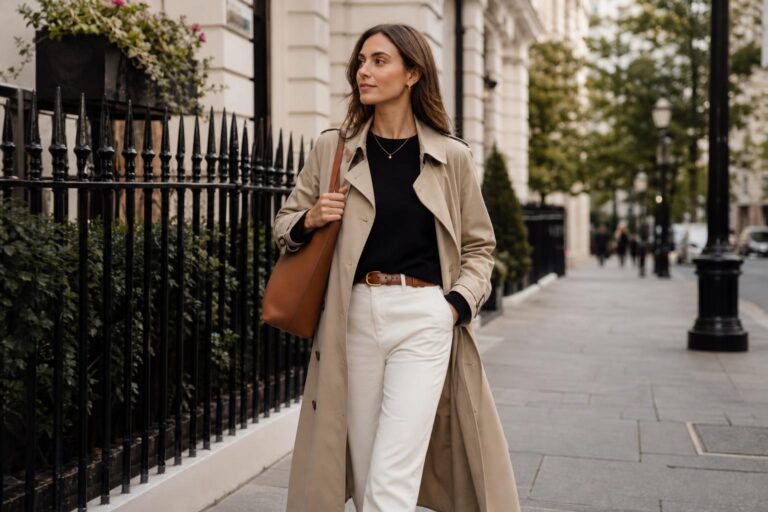
A navy blazer and camel coat are the two outerwear pillars. The blazer supports office, Ivy League, and yacht-club interpretations. The camel coat adds warmth and visual luxury in winter. Accessories should stay logo-light and intentional: pearl jewelry, leather belts, structured handbags, luxury watches, scarves, loafers, and delicate jewelry where you want less formality.
- Pearls add a classic finish, especially with tweed, white shirts, and navy layers.
- Leather belts define the waist and help A-line or pleated skirts feel more tailored.
- Structured handbags reinforce the composed nature of the outfit.
- Loafers connect directly to prep and heritage styling.
- Scarves can shift a simple look toward yacht-club or seaside elegance.
Minimal branding is important here. Even heritage labels such as Ralph Lauren Purple Label, Burberry, Brooks Brothers, Chanel-inspired tweed houses, and Loro Piana are most aligned with the aesthetic when the quality is visible through cut and material rather than visible logos. That is the quiet luxury principle in practice.
Wearable interpretations for real life
Office polish with a pencil skirt and silk restraint
This is the most direct route into old money dressing for everyday life. Start with a wool or houndstooth pencil skirt, add a silk blouse or white shirt, then layer on a navy blazer. The visual logic is simple: a narrow lower silhouette, a clean upper line, and one structured layer to frame the entire outfit. Understated jewelry keeps the look refined, while loafers maintain continuity with heritage prep.
Why it works: the silhouette is disciplined, the fabric story is balanced, and the palette stays controlled. If your workplace is more relaxed, swap the blazer for a cashmere cardigan. If you need stronger authority, choose wool over silk and sharpen the contrast between navy and cream. This combination also suits readers who want old money style without leaning too heavily into coastal or romantic references.
Tip: if pencil skirts feel too formal for daily wear, choose a midi length with slight ease through the hem. You keep the tailored effect while making movement and long hours more comfortable.
Coastal prep with pleats, a Breton top, and yacht-club energy
Among the most distinctive versions of old money skirt outfits is the yacht-club interpretation. A pleated midi or linen skirt paired with a Breton top, button-down shirt, or navy cashmere sweater creates a look that feels polished but breezy. Cream, navy, and camel are especially effective here because they echo the nautical-prep mood without becoming themed.
Accessories define the setting. A silk scarf tied cleanly, loafers, fine jewelry, and pearls all reinforce the club-adjacent refinement associated with Newport, Nantucket, and Hamptons style cues. The reason this formula works so well is that the skirt moves, the palette remains crisp, and the references are clear without being loud.
For everyday wear, remove one of the more polished accessories. Keep the scarf or the pearls, not both. That adjustment makes the outfit feel less occasion-specific while preserving the old money vocabulary.
Winter quiet luxury through wool, cashmere, and a camel coat
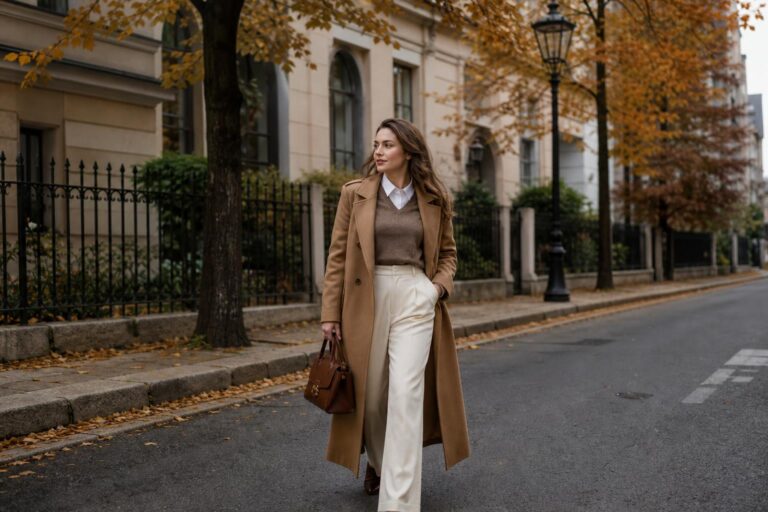
Cold weather is where texture does most of the storytelling. A wool skirt, cashmere jumper, and camel coat create one of the strongest winter interpretations because each layer adds material depth without visual clutter. The outfit feels expensive not because of any single statement piece but because the fibers speak the same language.
Boots can enter here as a practical seasonal adjustment, especially with midi lengths. The key is to keep the boot refined enough that it does not break the line of the skirt too harshly. If the skirt is tweed, choose a smoother knit on top. If the jumper is more textured, let the skirt remain simple. This balance prevents winter outfits from becoming heavy.
Style insight: winter old money dressing benefits from tonal layering more than high contrast. Camel over cream, navy over charcoal, or black softened with wool and pearl accents tends to look more composed than a sharp, busy mix.
Evening refinement with satin or silk under a jacket
Some of the more editorial takes on this aesthetic introduce layering such as a slip-dress element under a jacket or richer fabrics like satin and velvet. For a skirt-centered version, the principle stays the same: maintain elegance through texture, not excess detail. A satin or silk-accented top with a tailored skirt and structured jacket creates evening depth while staying aligned with quiet luxury.
Jewelry matters more in this version, but restraint still wins. Gold jewelry, pearls, or a luxury watch can elevate the composition. Jewel tones can appear here in a subtle way, especially through fabric sheen or accessory accents. The outfit should feel slightly richer than daytime dressing, not dramatically transformed.
Ivy League-inspired layering for a campus-to-city mood
This variation leans into heritage prep. Think pleated or A-line midi skirt, button-down shirt, navy blazer or cardigan, loafers, and a structured handbag. The appeal is intellectual polish rather than overt glamour. It references the old-school discipline associated with Ivy League campuses while remaining modern enough for city errands, lunch meetings, or gallery afternoons.
It is also one of the easiest formulas to recreate from existing basics. If you already own a white shirt, a neutral skirt, and loafers, the shift into this aesthetic mostly comes from editing: cleaner lines, fewer statement accessories, and stronger fabric choices.
How geography shapes the mood of the outfit
One of the most useful ways to understand old money styling is to think in locations rather than trends. The aesthetic changes subtly depending on whether the reference point is coastal, academic, or city-polished. These shifts do not require a different wardrobe, just a different emphasis.
- Newport and Nantucket references favor nautical prep, pleated skirts, scarves, navy knitwear, cream linen, and loafers.
- The Hamptons mood leans lighter and more relaxed, with linen skirts, button-down shirts, soft camel tones, and understated leather accessories.
- Ivy League campus styling relies on blazers, white shirts, pleats, wool skirts, and a more disciplined prep framework.
- Exclusive club and regatta-inspired dressing can carry pearls, structured handbags, and sharper tailoring, but still within a minimal logo-free approach.
Thinking this way helps avoid one of the biggest pitfalls of the aesthetic: flattening every outfit into the same uniform. A coastal old money outfit should breathe differently than a winter office outfit. The pieces may overlap, but the styling energy should not.
Designer references and heritage cues without overdoing it
Although many outfit guides stay generic, heritage associations can be helpful when you want a clearer visual benchmark. Burberry evokes tailored structure and classic polish. Brooks Brothers supports the button-down, blazer, and prep tradition. Ralph Lauren Purple Label reinforces the refined American heritage angle. Chanel-inspired tweed houses help define textured femininity. Loro Piana represents the fabric-first side of quiet luxury, especially through cashmere.
The useful takeaway is not that every outfit needs a specific label. It is that these names clarify the style language: heritage tailoring, fine wool, restrained luxury, classic silhouettes, and pieces designed to endure. If you are shopping at any price point, those are the qualities to prioritize. Fabric, fit, and line matter more than the label itself.
Brooke Delaney’s yacht-club-focused framing is a good example of how setting can sharpen the aesthetic. The clothes do not change dramatically, but the context brings scarf styling, nautical prep, loafers, and cream-navy combinations into clearer focus. That kind of specificity is often what turns a generic skirt outfit into one with a recognizable point of view.
Common mistakes that weaken the old money effect
Because this aesthetic depends on subtlety, small missteps become more visible. The outfit usually fails not from a lack of luxury references, but from an imbalance in styling logic.
- Too many logos or obvious branding disrupt the quiet luxury effect.
- Overly trendy silhouettes can clash with the timeless framework.
- Poor fit, especially at the waist and hips, immediately undermines polish.
- Too many accessories make the outfit feel performative rather than assured.
- Mixing too many statement textures at once can create visual noise.
- Ignoring seasonality makes the look feel forced, especially with heavy fabrics in warm weather or thin fabrics in winter.
Another mistake is mistaking “old money” for stiffness. The strongest versions of this style always have some ease. That might come through the movement of a pleated midi, the softness of cashmere, or the relaxed drape of a linen skirt. Without that softness, the outfit can start to resemble formal costume rather than lived-in elegance.
Practical tips for building the wardrobe without starting over
The most efficient approach is to build around one skirt silhouette that already suits your lifestyle. If you dress for work often, begin with a pencil or clean midi in wool or twill. If you want flexibility across weekends and daytime dressing, choose an A-line or pleated midi in a neutral shade. Then add one top from each category: a white button-down, a silk blouse, and a cashmere knit.
From there, outerwear and accessories should act as multipliers, not distractions. A navy blazer can sharpen nearly every skirt in your closet. A camel coat will carry winter. Loafers, pearls, and a structured handbag can transform basics if the clothing underneath is already cleanly composed.
Easy ways to recreate the look from pieces you already own
- Tuck in your shirt fully instead of leaving it loose; the waist definition changes the entire silhouette.
- Swap a busy handbag for a structured, minimal one to make the outfit feel more expensive.
- Replace trend-driven jewelry stacks with one pearl element or one understated gold piece.
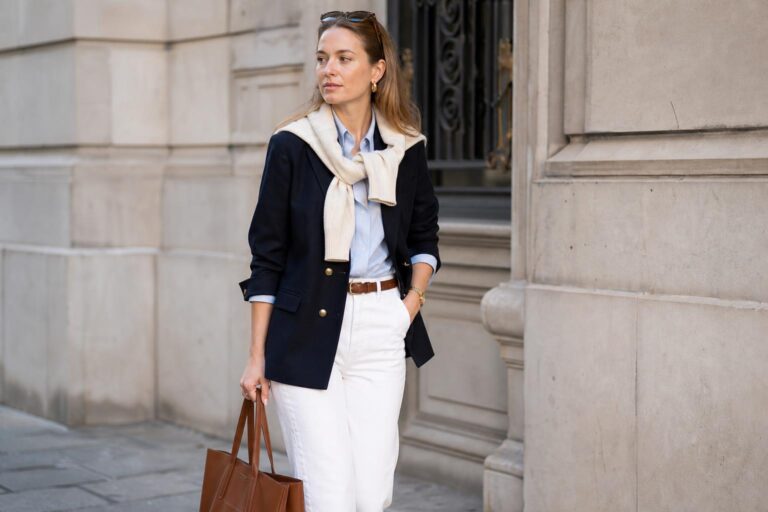
- Layer a navy blazer or camel coat over an existing neutral skirt and knit combination.
- Use a leather belt to sharpen softer skirts such as A-line or pleated midis.
Budget-friendly styling usually succeeds when it copies the composition rather than the label. A balanced neutral palette, cleaner lines, and better fabric pairings can communicate old money style far more effectively than chasing a specific designer name without the supporting wardrobe logic.
Scenario-based formulas worth repeating
Some outfits become reliable because their internal logic is so strong. In old money styling, a few formulas consistently work across seasons and settings.
- For work: wool pencil skirt, silk blouse, navy blazer, loafers, delicate jewelry.
- For a coastal weekend: pleated midi or linen skirt, Breton top or navy cashmere sweater, silk scarf, loafers.
- For winter city dressing: tweed or wool midi, cashmere turtleneck, camel coat, structured handbag, refined boots.
- For dinner: tailored skirt, silk or satin top, jacket, gold jewelry or pearls, minimal handbag.
- For a prep-inspired daytime look: A-line midi, white button-down, cardigan or blazer, leather belt, loafers.
These formulas are useful because they reduce decision fatigue while still allowing variation through color, fabric, and accessories. You do not need a large wardrobe to dress this way consistently. You need repeatable structure.
Why this aesthetic continues to feel modern
Old money skirt outfits remain compelling because they offer a rare combination: aspiration with practicality. The clothes suggest a world of yacht clubs, regattas, exclusive clubs, Ivy League corridors, and Hamptons weekends, yet the underlying pieces are fundamentally wearable. A skirt, a knit, a blazer, loafers, pearls. Nothing about that formula requires fantasy to function.
What keeps the style contemporary is not blind imitation of heritage references, but intelligent adaptation. A pleated midi can feel coastal one day and urban the next. A silk blouse can read corporate, romantic, or evening-appropriate depending on the jacket and jewelry. That adaptability is the real luxury. It gives the aesthetic longevity.
The most convincing interpretation is always personal. Keep the palette disciplined, choose textures that add depth, prioritize fit, and let the outfit feel edited rather than overbuilt. That is where the elegance lives.

FAQ
How do I start building an old money skirt wardrobe?
Start with one neutral skirt silhouette that fits your lifestyle, usually a pencil, A-line midi, or pleated midi, then add a white button-down, a silk blouse, and a cashmere knit. Finish with a navy blazer or camel coat, loafers, and minimal accessories such as pearls or a leather belt. This creates a small but functional foundation without overbuying.
What skirt style looks the most old money?
Pencil skirts, A-line midis, pleated midis, and tweed midi skirts are the strongest options because they reflect the timeless silhouettes most associated with quiet luxury and heritage prep. The best choice depends on context: pencil skirts work especially well for office dressing, while pleated and A-line styles feel more versatile for daytime and coastal settings.
Can I wear old money skirt outfits to work?
Yes, workwear is one of the easiest settings for this aesthetic. A wool or houndstooth pencil skirt with a silk blouse, white shirt, or cashmere knit, paired with a navy blazer and understated jewelry, aligns naturally with the polished and restrained character of old money style.
What fabrics make a skirt outfit look more expensive?
Cashmere, silk, wool, tweed, linen, twill, satin, and velvet are the fabrics most often associated with this look because they add texture and depth without relying on embellishment. The key is not using all of them at once, but pairing one rich fabric with one cleaner supporting texture so the outfit stays balanced.
Which colors work best for old money skirt outfits?
Cream, camel, navy, black, and other soft neutrals form the strongest base because they make the outfit feel cohesive and allow silhouette and texture to stand out. Navy is especially effective for daywear and office dressing, while camel and cream soften the look and make layering feel more refined.
How can I make a skirt outfit feel old money without buying designer labels?
Focus on composition rather than labels. Choose cleaner silhouettes, a restrained palette, and better fabric pairings, then add simple finishing pieces such as loafers, a structured handbag, a leather belt, or pearl jewelry. Quiet luxury depends more on fit, proportion, and material quality than visible branding.
Are pearls necessary for the old money aesthetic?
No, but they are a strong accessory cue within the style because they add polish without looking flashy. If pearls feel too formal for your daily wardrobe, delicate jewelry or a luxury watch can create a similar restrained finish while keeping the outfit aligned with the same understated mood.
What shoes work best with old money skirt outfits?
Loafers are the clearest match because they connect directly to prep, Ivy League, and yacht-club styling references. In winter, refined boots can work with wool or tweed midis, provided they do not interrupt the line of the skirt too harshly. The general rule is to choose polished footwear with minimal visual noise.
Can old money skirt outfits work in summer?
Yes, especially through linen skirts, lighter silk tops, button-down shirts, Breton tops, and a cream-camel-navy palette. Summer versions often lean more coastal, drawing on Hamptons, Nantucket, or yacht-club references, but the styling still depends on restraint, clean accessories, and classic silhouettes.
What should I avoid if I want the outfit to feel authentic?
Avoid excessive logos, too many accessories, poor tailoring, and highly trend-driven silhouettes that compete with the timeless framework. The most convincing old money outfits feel edited, balanced, and calm, with fabric, fit, and proportion doing most of the visual work.