
Quiet Luxury Style for a Everyday Wardrobe
Quiet luxury style appeals to people who want their clothes to look considered without looking loud. The frustration is that this aesthetic is often described in abstract terms: timeless, refined, understated, expensive-looking. That sounds elegant, but it does not help much at 7:30 in the morning when you need to get dressed for work, dinner, travel, or a full day of errands and still feel polished.
The real challenge is not understanding the mood. Most people already know the visual direction: clean lines, neutral palettes, restraint, quality over obvious statement dressing. The harder part is making that idea wearable. Without the right proportions, fabric choices, and outfit balance, quiet luxury style can quickly drift into flat, stiff, or impractical territory.

That is where styling logic matters. Quiet luxury works best when every piece has a role: one item gives structure, another softens the silhouette, another adds subtle texture, and the overall composition feels calm rather than empty. The goal is not to buy a whole new wardrobe. It is to build outfits that feel elevated, realistic, and useful in everyday life.
What quiet luxury style actually means in real life
Quiet luxury style is best understood as a dressing approach built around discretion, polish, and consistency. Instead of relying on obvious logos or trend-heavy pieces, it uses shape, fabrication, color control, and fit to create impact. The clothes do not need to announce themselves. The effect comes from precision.
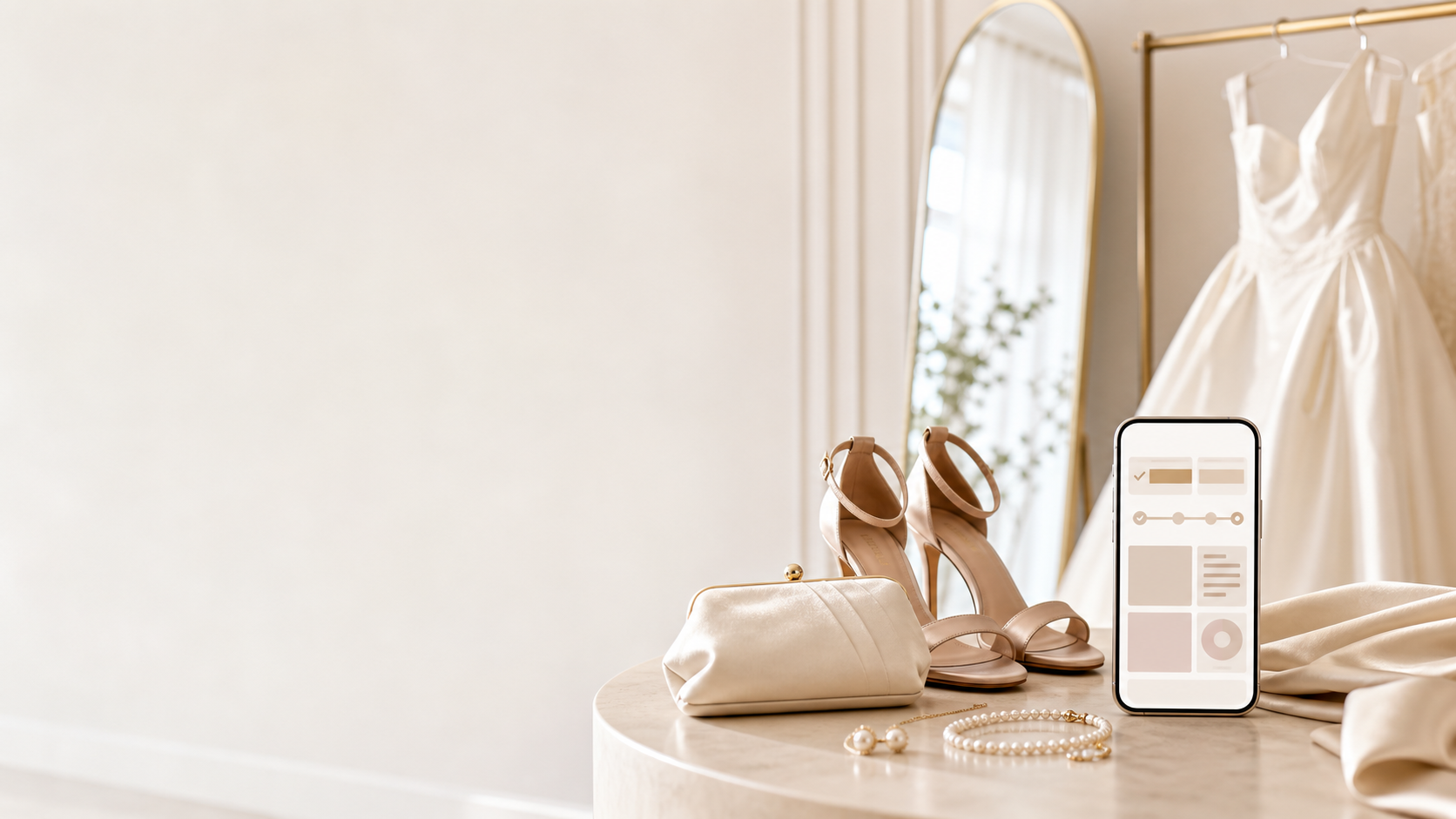
Found the dress? Keep the rest in one place.
Zarellea brings guest details, vendors, timelines, and every next step together — so your wedding plan feels as good as your look.
In practical terms, that usually means a wardrobe anchored by well-cut basics, subtle layering, and a restrained palette. Think trousers that skim rather than cling, knits that drape instead of overwhelm, shirts with enough structure to sharpen the outfit, and outerwear that acts as a visual anchor. The look often reads effortless, but it only works when the details are intentional.
This is also why so many people miss the mark. They focus only on color and minimalism, then end up in outfits that feel blank. Quiet luxury is not just wearing beige, cream, black, gray, or navy. It is creating a clean outfit composition where texture contrast, silhouette balance, and fabric behavior do the work that embellishment would usually do.

Why this style feels difficult to pull off
Quiet luxury style seems simple on paper, but simplicity makes every decision more visible. If a blazer is too boxy, the outfit feels heavy. If trousers are too tight, the whole look loses that relaxed refinement. If every piece is soft and unstructured, the outfit can collapse visually. Because the aesthetic is understated, small mistakes stand out more.
There is also a practical tension built into the style. People want the elegance associated with a polished wardrobe, but they also need comfort, movement, and adaptability. A commute, changing weather, office air conditioning, long lunches, and quick evening plans all affect what actually works. Quiet luxury looks strongest when it can survive a real day, not only a photo.
Dress codes make the problem even more specific. In some settings, the look needs to read professional. In others, it needs to feel relaxed without becoming careless. The styling challenge is to keep the restraint while adjusting the formality. That is why this aesthetic depends less on one perfect item and more on knowing how pieces interact.
The most common source of imbalance
The most frequent issue is visual sameness. When the palette, fabric, and silhouette are all too similar, an outfit can feel dull rather than refined. Quiet luxury needs variation inside the restraint: matte against soft sheen, fluid fabric against tailored structure, slim lines balanced with roomier shapes. Those contrasts create depth without breaking the calm mood.
The styling logic behind a polished quiet luxury wardrobe
A successful quiet luxury outfit usually rests on four principles: controlled silhouette, tonal harmony, fabric quality, and practical function. These principles matter more than owning a specific brand or chasing a certain image. They are what make the look believable.
- Controlled silhouette: not everything fitted, not everything oversized. One element can be relaxed, but another should define the shape.
- Tonal harmony: colors should relate to each other closely enough to feel calm, even when there is contrast.
- Fabric quality: texture carries the visual interest, especially when prints and embellishment are limited.
- Practical function: shoes, layers, and bags need to support movement and real-world wear.
That final point is often overlooked. A quiet luxury outfit breaks down quickly when one part is impractical. An elegant coat loses impact with uncomfortable shoes. Beautiful trousers stop feeling refined if the fabric creases excessively during a full day. The aesthetic works best when comfort is integrated into the design of the outfit rather than treated as an afterthought.
Texture does more work than people expect
Because quiet luxury style avoids obvious decoration, texture becomes one of its main visual tools. A fine knit, crisp cotton shirting, smooth leather, brushed wool, and soft tailoring can all sit in the same outfit and make it feel layered even when the color palette stays narrow. This is how understated dressing avoids becoming visually flat.
Proportion is what makes the outfit look expensive
People often describe this style as expensive-looking, but that effect usually comes from proportion rather than price. Trousers with the right length, sleeves that end cleanly at the wrist, coats that skim the body rather than swallow it, and shoes that support the line of the leg all create visual polish. Fit does not mean tightness. It means intention.

Relaxed tailoring that still feels sharp
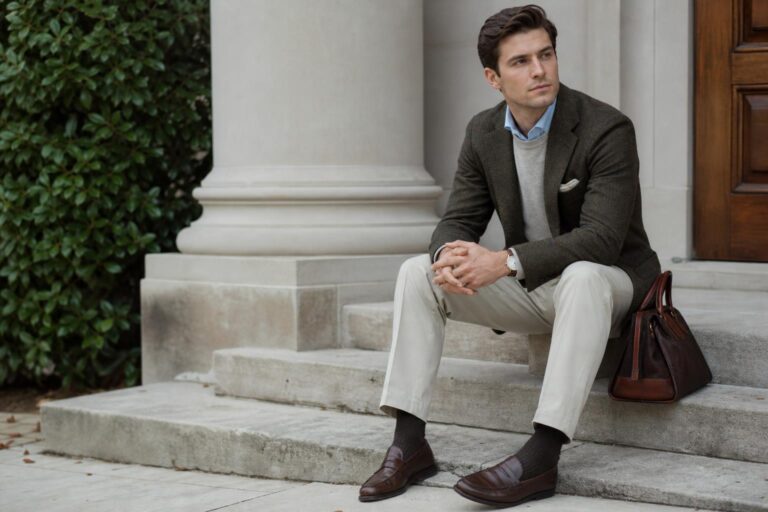
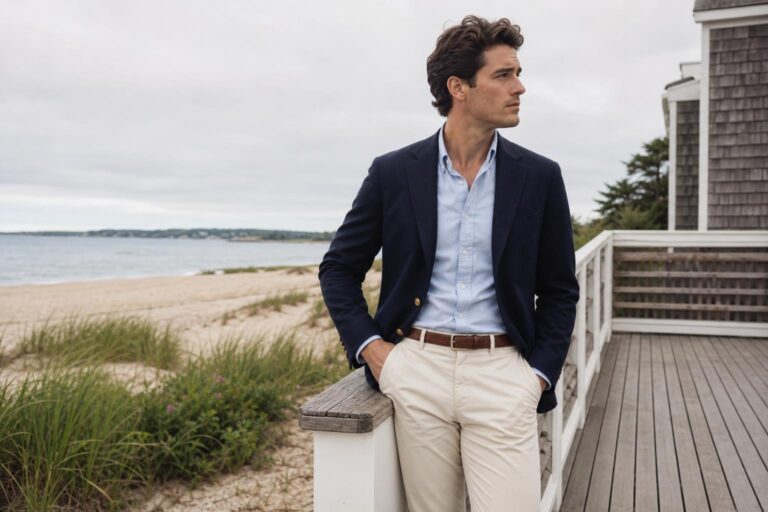
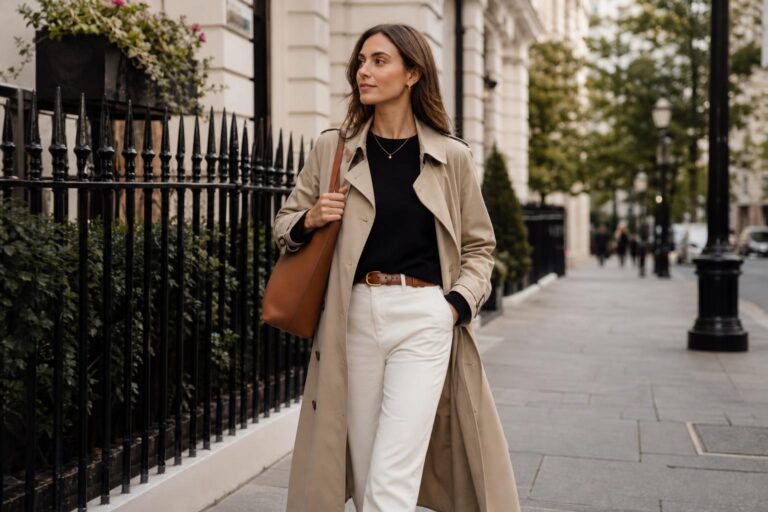
One of the easiest ways to wear quiet luxury style is through relaxed tailoring. This solves a common wardrobe problem: wanting to look polished without feeling restricted. The formula is simple but precise. Start with straight or softly wide-leg trousers in a neutral tone, add a fine knit or clean crewneck top, then finish with a structured blazer or coat that gives the outfit authority.
This combination works because it balances softness and discipline. The trousers provide movement, which keeps the look modern and comfortable. The tailored outer layer acts as the visual frame, preventing the outfit from feeling too casual. A controlled palette such as cream with camel, gray with black, or navy with off-white keeps the mood quiet and cohesive.
Why this outfit works
The strength of this look is its proportion play. A slightly roomier trouser creates ease through the leg, while a neater top keeps the upper body from feeling bulky. The blazer sharpens the outline without requiring anything dramatic. It is ideal for workdays, meetings, lunches, or city errands because it moves with you while still reading composed.
Best shoe pairing
Shoes should support the clean line rather than interrupt it. Minimal loafers, sleek ankle boots, or simple leather flats maintain the quiet luxury mood. Heavy sneakers can dilute the refinement unless the rest of the outfit is deliberately pared back. The goal is continuity from hem to floor.
Easy ways to recreate the look
You do not need a full suiting wardrobe. A single well-cut blazer, one pair of tailored neutral trousers, and two tops in complementary tones can create several variations. Keep hardware minimal, avoid over-accessorizing, and let the fabric and fit carry the look.

Soft tonal dressing for days when you want comfort without losing polish
Some days call for softness rather than structure, but that does not mean abandoning quiet luxury style. Tonal dressing offers a practical solution. Building an outfit from closely related shades creates visual calm, while subtle differences in texture stop the look from feeling one-note.
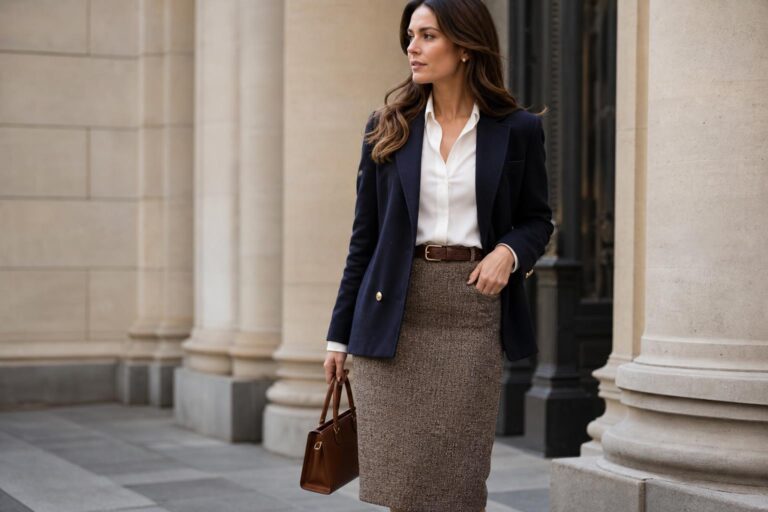
A soft knit paired with fluid trousers or a column skirt can look remarkably elevated when the tones stay controlled. Cream, taupe, stone, charcoal, and navy all work well because they create depth without appearing busy. The result feels refined, but also gentle enough for long wear.
Fabric insight
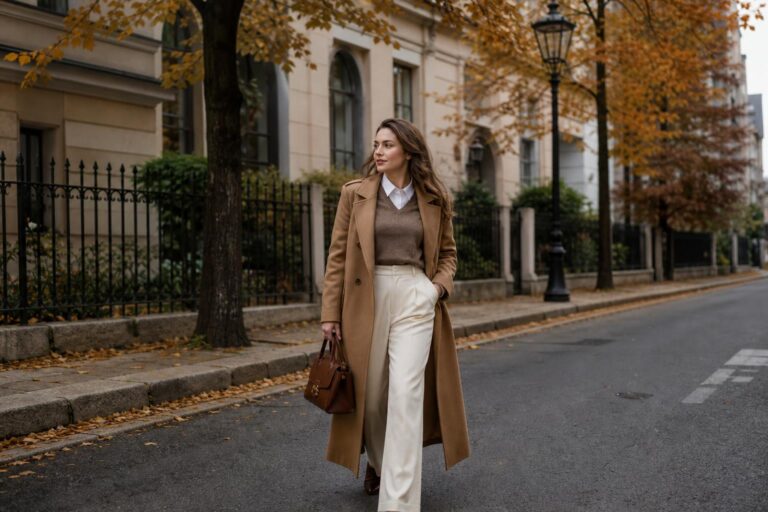
This is where fabric behavior matters most. If everything is too thin, the outfit can look limp. If every piece is thick, the silhouette becomes heavy. The stronger formula is one soft element, one fluid element, and one slightly structured piece. For example, a smooth knit, draped trouser, and polished coat give the eye enough variation to hold the look together.
Transitional weather tip
For unpredictable temperatures, keep the base outfit light and use outerwear as the adjustment point. A tonal layer under a coat or blazer is easier to adapt than a heavily layered outfit that becomes uncomfortable indoors. Quiet luxury style benefits from this restraint because the silhouette stays cleaner.
Comfortable city outfits with structure
City dressing tests whether an aesthetic can really perform. You may be walking, sitting, commuting, and moving between indoor and outdoor temperatures. Quiet luxury style works well here because it favors practical pieces, but only if the styling stays grounded in movement.
A strong city formula pairs a long coat or refined jacket with straight-leg trousers or dark denim and a simple knit or shirt underneath. The outer layer becomes the visual anchor. It instantly organizes the look, which means the rest of the outfit can remain uncomplicated. This matters on busy days when you need consistency rather than fuss.
Most versatile piece
The coat is often the hardest-working item in this wardrobe. It creates line, sets the tone, and allows simple foundations to look intentional. A clean, neutral outer layer can make even very basic pieces feel aligned with quiet luxury style as long as the overall proportions remain balanced.
Quick styling adjustment
If the outfit feels too formal, swap the crisp shirt for a fine knit. If it feels too casual, switch casual trousers for a tailored pair or add a more structured bag. Quiet luxury is often about one calibrated adjustment rather than a complete outfit change.
Elevated casual looks that do not rely on obvious statement pieces
Many people want quiet luxury style for weekends, casual offices, and social plans where full tailoring feels excessive. The solution is elevated casual dressing built on cleaner shapes and more disciplined styling. Instead of reaching for statement details, focus on one relaxed base and one refined layer.
Dark denim, a smooth knit, and a tailored coat or blazer create that balance immediately. The denim keeps the look grounded and wearable. The knit adds softness. The structured layer prevents the outfit from tipping into ordinary casualwear. This kind of outfit is particularly useful because it can move from daytime plans to dinner with only minor changes in shoes or accessories.
How to make the outfit feel more elevated
Keep washes clean and dark, avoid distressing, and choose tops with a refined finish rather than sporty detailing. A leather belt, sleek bag, and polished flat or boot can transform the result. The quiet luxury effect comes from editing out unnecessary visual noise.
Budget-friendly alternative
If investing in multiple premium basics is unrealistic, prioritize one visible anchor piece: a coat, blazer, or bag with clean lines. Then support it with simple, well-maintained basics already in your wardrobe. Quiet luxury reads through consistency and restraint more than through quantity.
Soft layering without added bulk
Layering is where many quiet luxury outfits lose their elegance. Too many pieces can distort the silhouette, create overheating, or make the look appear overworked. The strongest layered outfits usually involve fewer items with better contrast in weight and function.
A streamlined base, such as a fitted knit or simple shirt, works well under one mid-layer and one outer layer. Each layer should have a reason to exist. The base controls temperature and shape, the middle layer adds softness or insulation, and the outer layer provides structure. When all three pieces are chosen carefully, the outfit feels rich without looking heavy.
Common comfort mistake
People often layer garments of similar thickness, which creates stiffness and bulk around the shoulders and waist. A better approach is to vary the weights. A lighter base under a substantial coat always looks cleaner than stacking several medium-weight pieces.
Tips for cleaner layering
- Choose one piece to define the shoulder line, not three.
- Keep the innermost layer close to the body for a smoother silhouette.
- Use texture variation instead of extra volume to create depth.
- Let outerwear provide drama so the base outfit can stay simple.
The color strategy that keeps quiet luxury style from looking flat
Neutral dressing is central to quiet luxury style, but neutrals need structure. A wardrobe made entirely of similar beige tones can lose definition very quickly. The more polished approach is to build within a restrained seasonal palette while still creating enough distinction between pieces.
That distinction can come from value contrast, such as pairing cream with camel or charcoal with black, or from texture contrast, such as matte wool against smoother leather. Both methods preserve the understated mood while giving the eye something to read. This is what makes an outfit feel thoughtful rather than simply plain.
A useful palette rule
Limit the outfit to two or three closely connected tones, then vary texture and shape. That keeps the composition calm. Adding too many disconnected shades can weaken the effect, especially when the clothing itself is minimal.
Accessories should refine the outfit, not compete with it
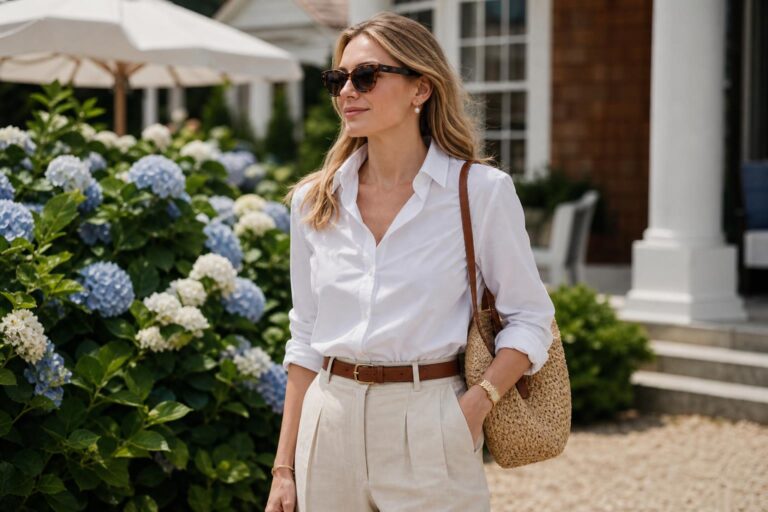
In quiet luxury style, accessories are not there to steal attention. Their role is to complete the line of the outfit and add utility. A structured bag, minimal jewelry, a polished belt, or simple sunglasses can all sharpen the overall composition, but only if they stay aligned with the clothing.
This is especially important for readers trying to make everyday outfits feel more expensive-looking without becoming overly formal. Accessories create that final layer of intention. They can also solve practical issues. A bag with clean structure adds polish and function at the same time, while a sleek flat or boot supports all-day wear better than a dramatic shoe chosen only for effect.
What to avoid
Too many high-contrast details can pull the outfit away from its quiet luxury mood. Hardware-heavy bags, shoes that dominate the silhouette, or stacks of competing accessories often create visual tension. The better choice is to let one accessory anchor the outfit and keep the rest restrained.
How to adapt quiet luxury style to different routines
The appeal of this aesthetic is that it can shift across situations without losing its identity. The key is understanding which part of the outfit carries the polish. Once you know that, you can adjust the rest for your day.
- For work: let tailoring lead, then soften with knitwear or fluid trousers.
- For travel: build around comfort-first separates in a tonal palette, then add a coat or blazer for structure.
- For weekends: use dark denim or relaxed trousers with one elevated layer.
- For dinners or social plans: simplify the outfit and rely on sharper proportions, better shoes, and a cleaner bag.
This adaptability is what makes quiet luxury style practical rather than purely aspirational. It is less about dressing for a fantasy life and more about building a wardrobe that stays coherent across many real ones.
Where quiet luxury often goes wrong
Because the aesthetic is subtle, the styling traps are subtle too. Most mistakes happen when people pursue the image without considering comfort, balance, or visual depth. The outfit may technically fit the brief, but it does not function well or look convincing in motion.
- Over-layering until the silhouette feels rigid.
- Choosing only soft pieces and losing structure.
- Wearing shoes that undermine comfort and therefore confidence.
- Relying on color minimalism alone without texture contrast.
- Copying a polished image without adapting it to routine, climate, or dress code.
The fix is usually not more fashion. It is better editing. Remove one unnecessary layer, sharpen one proportion, or replace one awkward fabric with something that drapes better. Quiet luxury style improves through refinement, not complication.
A realistic wardrobe-building approach
Trying to adopt this style all at once can make the process feel expensive and confusing. A better approach is to identify the categories that do the most visual work in your current life. For many people, that means outerwear, trousers, knitwear, shoes, and one reliable bag. These are the pieces that repeatedly determine whether an outfit feels intentional.
Start by improving consistency rather than quantity. If your wardrobe contains strong basics but they do not work together, focus on color harmony and silhouette first. If the shapes are good but the outfits still feel incomplete, look at texture and footwear. The aim is to create combinations that can be repeated easily, because repetition is part of what makes this aesthetic feel settled and confident.
Tips for shopping or editing your closet
- Choose pieces that combine with at least three items you already own.
- Prioritize clean lines over novelty details.
- Test comfort while sitting, walking, and layering, not just while standing still.
- Look for fabrics and cuts that hold their shape through a full day.
- Build around a narrow palette so outfit composition feels easier.
The quiet confidence behind the look
Quiet luxury style succeeds because it removes pressure to perform through clothing while still allowing you to look polished. It gives space for comfort, repetition, and restraint, but it still demands discernment. The difference between an ordinary simple outfit and a strong quiet luxury outfit is almost always in the styling decisions: the coat length, the trouser line, the texture contrast, the tonal control, the practicality of the shoes.
That is also why this aesthetic remains useful. It is not dependent on one statement item or one fleeting formula. It works when you understand how to create calm visual impact from pieces that fit your life. Once that logic becomes familiar, getting dressed feels less like chasing an image and more like making clear, smart choices.

FAQ
What is quiet luxury style?
Quiet luxury style is an understated way of dressing that relies on clean lines, refined fit, restrained color palettes, subtle texture, and quality-looking materials rather than obvious logos or dramatic statement pieces.
How do I make quiet luxury style look wearable for everyday life?
Build outfits around practical anchor pieces such as a tailored coat, relaxed trousers, fine knitwear, or dark denim, then keep the palette controlled and the accessories minimal so the look feels polished without becoming stiff or unrealistic.
Do I need expensive clothes to achieve quiet luxury style?
No. The effect comes more from proportion, fabric appearance, color harmony, and outfit editing than from price alone. One strong outer layer or well-cut trouser can elevate simple basics if the overall styling is disciplined.
Which colors work best for quiet luxury style?
Neutral tones such as cream, camel, taupe, gray, navy, black, and off-white work especially well because they create a calm foundation, but the key is to combine them with enough tonal or textural contrast to avoid a flat result.
How can I keep a neutral outfit from looking boring?
Use texture contrast, vary silhouette shape, and mix related tones rather than wearing pieces that are identical in color and weight. A soft knit, structured coat, and fluid trouser usually create more depth than matching flat fabrics.
What shoes suit quiet luxury style best?
Shoes with clean lines and practical wearability work best, including minimal loafers, sleek ankle boots, polished flats, and other refined options that support the silhouette rather than dominate it.
Can quiet luxury style work for casual outfits?
Yes. Dark denim, a smooth knit, and a structured coat or blazer create an elevated casual formula that feels relaxed but still aligned with the calm, refined mood of quiet luxury dressing.
What is the biggest mistake people make with quiet luxury style?
The most common mistake is reducing the look to neutral basics without considering fit, structure, comfort, or texture. Quiet luxury depends on styling precision, not just minimal color.
How do I layer for quiet luxury style without adding bulk?
Use a close-fitting base, add one softer or insulating mid-layer if needed, and let the outer layer provide structure. Varying garment weight creates a cleaner silhouette than stacking several pieces of similar thickness.
Is quiet luxury style suitable for work and travel?
Yes. It is particularly effective for work and travel because it favors functional, repeatable pieces that can shift across settings while still looking composed, especially when built around tailoring, tonal dressing, and practical footwear.