Old Money Girl Style for City Days and Dinner Plans
There is a reason the old money girl idea keeps resurfacing. It promises polish without obvious effort, luxury without visible logos, and a wardrobe that feels composed instead of crowded. Yet that is also why so many people struggle with it. The look seems simple from a distance, but in practice it is easy to end up either too plain, too costume-like, or too uncomfortable for real life.
The real challenge is not buying a set of “classic” pieces and hoping they work together. It is learning how heritage fashion, quiet luxury, and timeless style translate into modern routines: commuting, dinners, office days, weekends, travel, and social media moments that still need to feel natural. A blazer that looks elegant on a mood board can feel stiff in daily wear. Minimal jewelry can read refined or unfinished depending on the outfit composition around it.
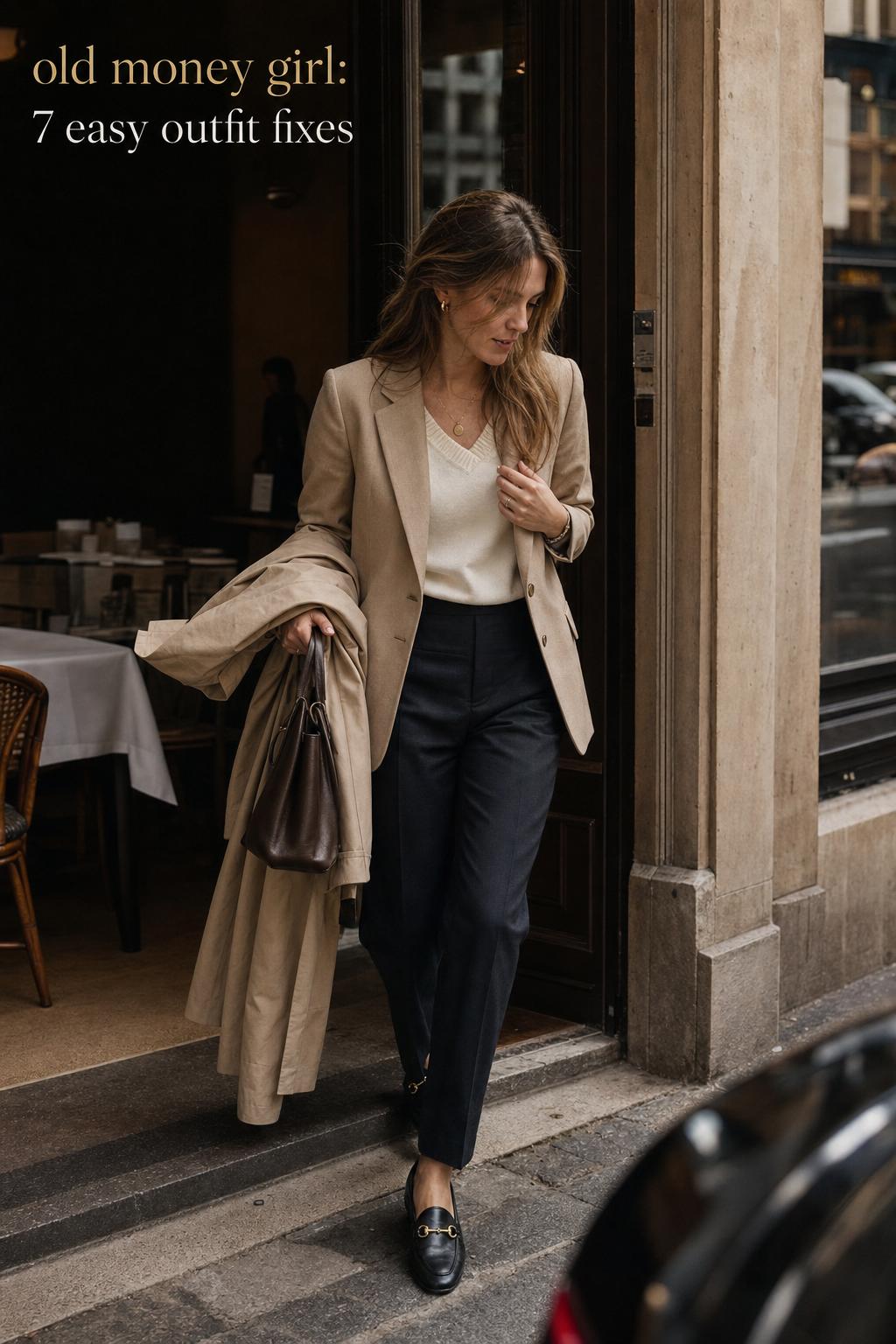
An effective old money girl wardrobe solves that tension. It balances structure with ease, restraint with personality, and aesthetic clarity with comfort. That is where styling logic matters more than trend chasing. Once you understand why certain silhouettes, fabrics, and accessories create the effect, the look becomes far more wearable and far less intimidating.
What the old money girl aesthetic actually means
The old money girl aesthetic is best understood as a form of quiet luxury shaped by heritage style. It favors visual stability over novelty, quality over ostentation, and timeless wardrobe choices over short-lived statements. In fashion terms, that usually means classic tailoring, a neutral palette, refined materials, and accessories that support the outfit rather than dominate it.
Found the dress? Keep the rest in one place.
Zarellea brings guest details, vendors, timelines, and every next step together — so your wedding plan feels as good as your look.
This is why the aesthetic is often linked with terms such as old money style, heritage fashion, timeless fashion, classic tailoring, and subtle luxury. The goal is not to look flashy. The goal is to look settled. Even when the outfit is simple, it should suggest confidence, care, and consistency.
That cultural reading is part of the appeal. Media references like Gossip Girl, Succession, and The Great Gatsby help define the visual language around “old money,” even when modern readers are adapting it for everyday wardrobes rather than social worlds of private clubs, horse racing, polo, or formal estates. Those references matter because they teach the eye what the aesthetic is trying to signal: composure, lineage, discretion, and control.
In practical terms, the aesthetic works best when it feels lived-in rather than theatrical. That means a trench coat that layers easily, loafers that hold up through a full day, wool and cashmere that drape well, silk that softens tailoring, and delicate jewelry that finishes the look without turning it into an accessories story.
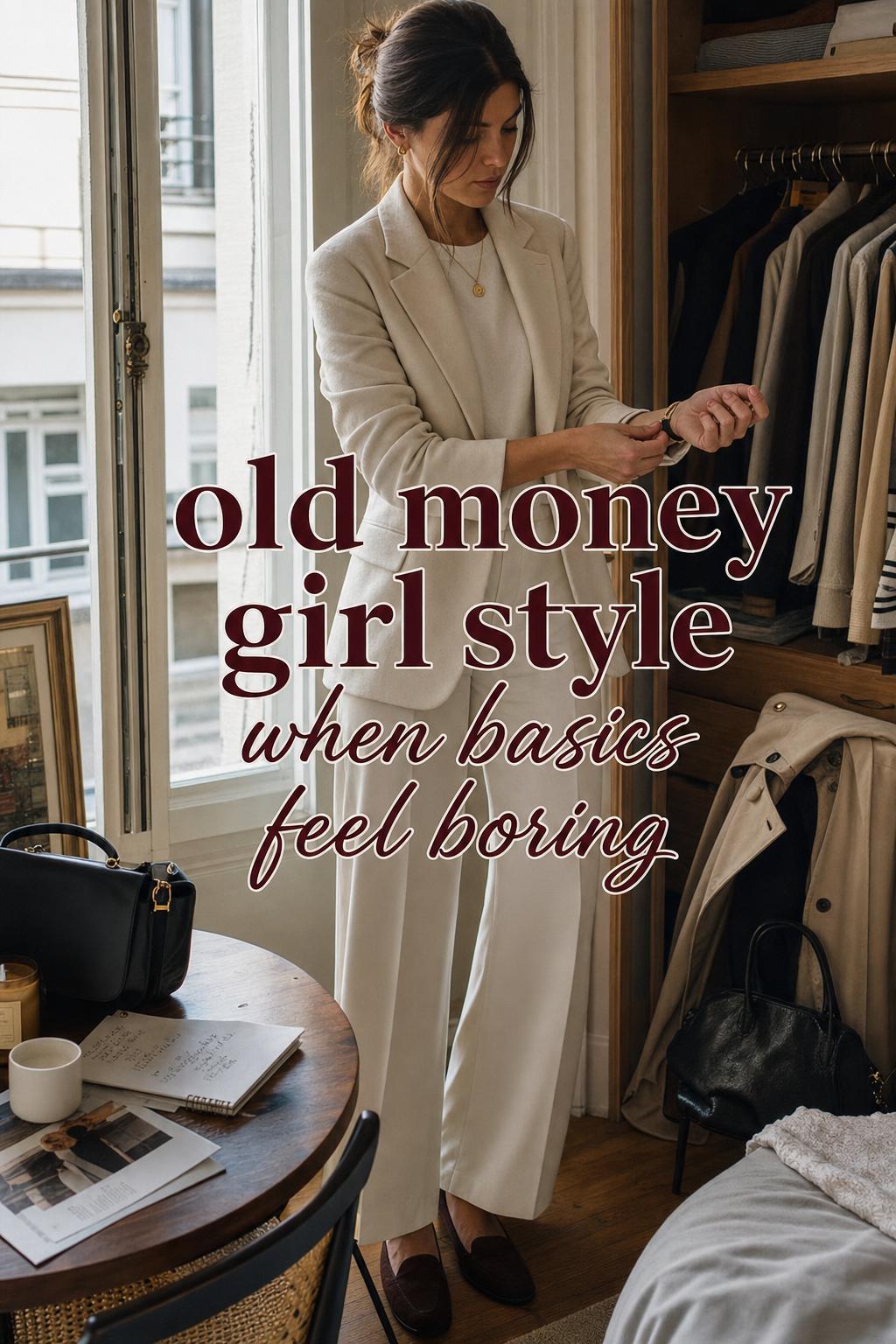
Why this style is harder to wear than it looks
The old money girl wardrobe creates a specific frustration because the styling margins are narrow. The pieces are often understated, so fit, proportion, and texture become more visible. If the blazer is too boxy, the outfit can look heavy. If the trousers are too tight, the look loses that relaxed authority. If every item is neutral but the fabrics are flat, the outfit can feel dull instead of elevated.
Climate also complicates the picture. Heritage fabrics like wool, cashmere, and silk are visually rich, but they behave differently across seasons and routines. A cashmere knit may look ideal in a styled image yet feel impractical in overheated interiors. A silk blouse can create beautiful movement under tailoring, but it may require more care than many daily wardrobes allow. The aesthetic depends on restraint, but real life depends on adaptability.
There is also a social factor. The look sits between casual and formal, which means it can feel slightly overdressed in one setting and too relaxed in another. That is why many people default to copying isolated pieces such as a blazer, signet ring, or loafers without adjusting the full outfit composition. The result is often disconnected rather than coherent.
Another common issue is confusing “minimal” with “empty.” The old money girl style is not about wearing the fewest possible items. It is about selecting pieces that create a clean visual hierarchy. One structured layer, one softening texture, one practical shoe, and one discreet accessory often create a stronger result than a larger pile of supposedly classic items.
The styling principles that make the look feel expensive and believable
The foundation of this aesthetic is proportion play. A structured blazer becomes more elegant when paired with a softer blouse or knit because the contrast keeps the silhouette from feeling rigid. Straight or gently tailored trousers work because they create continuity from hip to shoe, giving the outfit an intentional line rather than visual interruption. Loafers anchor that line without adding excess weight.
Tonal layering matters just as much. Neutral colors are central to quiet luxury, but they need depth. Cream against white can feel washed out unless one fabric has texture. Navy with wool reads richer than navy in a thin synthetic finish. Beige, camel, ivory, charcoal, and deep black all work best when they are balanced through material quality, drape, and light contrast rather than bright color blocking.
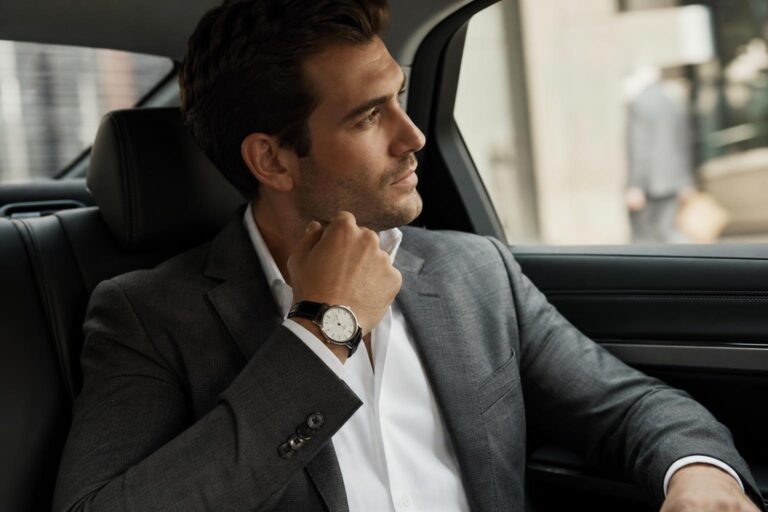
Accessories should function as precision tools. Minimal jewelry, thin gold chains, a signet ring, or a restrained timepiece can sharpen the outfit’s message. When accessories become too numerous or too decorative, the look shifts from old money style into something more performative. Quiet luxury depends on editing.
The same principle applies to grooming and presentation. The old money girl aesthetic is often discussed through clothes, but social presence is part of the styling equation. The overall impression should feel composed, not staged. In real life, that means clothes that move well, shoes you can actually walk in, and styling choices that hold up in daylight, at work, and in candid photos instead of only in posed images.
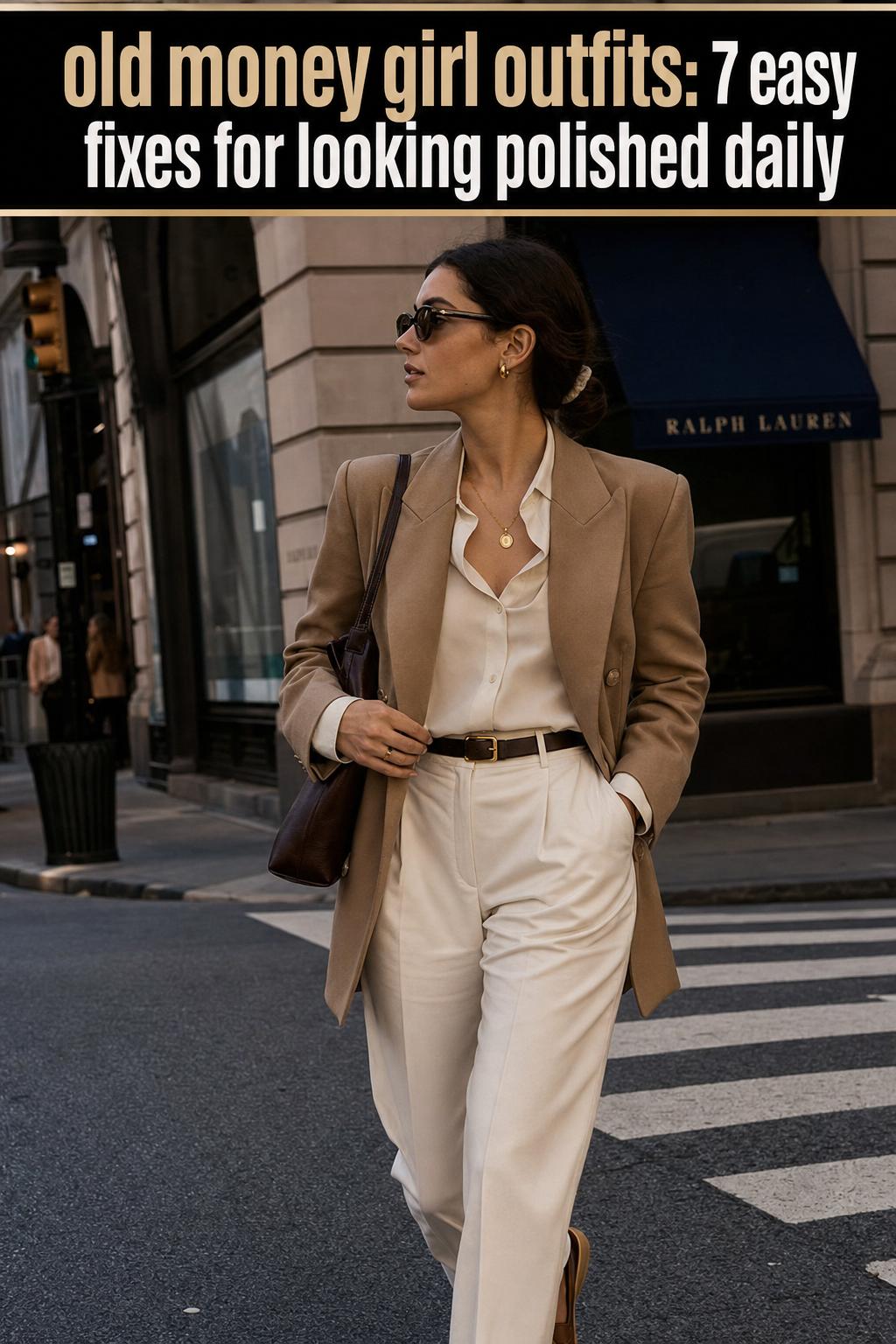
Core wardrobe signals that consistently support the aesthetic
- classic tailoring that skims rather than squeezes
- a neutral palette with tonal variation
- heritage fabrics such as wool, cashmere, and silk
- timeless wardrobe pieces like a blazer, trench coat, loafers, and a midi dress
- minimal jewelry and refined timepieces
- quality materials that look better the longer they are worn
Building the wardrobe blueprint before buying anything new
The smartest way to approach this aesthetic is through a capsule wardrobe mindset. Not because minimalism is automatically superior, but because this style depends on repeatable combinations. A wardrobe full of unrelated “elegant” items will not create the old money girl effect. A smaller set of compatible pieces will.
Start by identifying visual anchors. Usually these are the pieces that bring structure: a blazer, tailored trousers, a trench coat, or loafers. Then build softening elements around them, such as a silk blouse, a fine knit, or a midi dress. This keeps the wardrobe from feeling severe. The old money girl look is rarely harsh. It is controlled, but still fluid.
A useful test is versatility across three settings: work, weekend, and evening. If a piece only works in one hyper-specific context, it may be beautiful but not foundational. The strongest wardrobe staples can shift roles. A blazer should work with trousers for a more formal mood and with softer separates for a relaxed version of heritage style. A trench coat should layer over both tailoring and simpler daily outfits without fighting the silhouette underneath.
This is also where budget becomes less stressful. A wardrobe built around quiet luxury does not require replacing everything at once. It requires selecting the most visible, most repeatable categories first: outer layer, shoe, trouser shape, knitwear texture, and jewelry scale. Once those are cohesive, the rest of the wardrobe looks more considered even if it develops gradually.
A practical capsule starting point
- one structured blazer in navy, charcoal, cream, or black
- one trench coat with clean lines
- two pairs of tailored or straight-leg trousers
- one silk blouse and one fine knit
- one midi dress with a clean silhouette
- one pair of loafers
- one discreet timepiece
- one set of delicate jewelry
Relaxed tailoring for workdays, lunches, and everyday polish
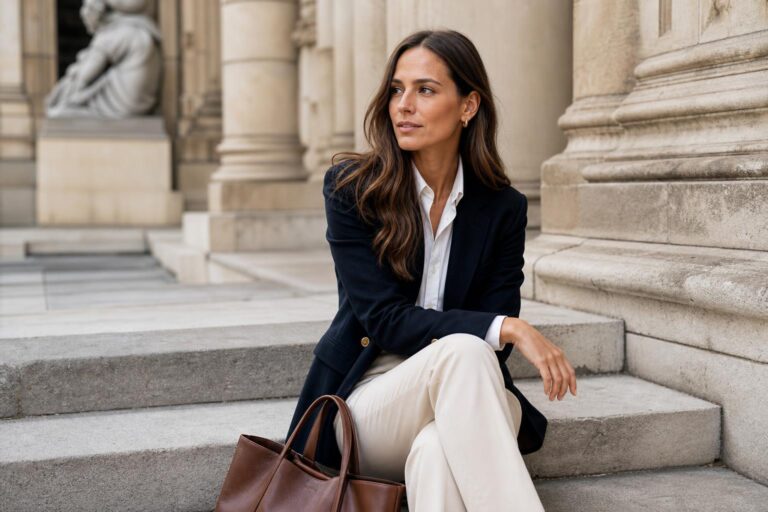
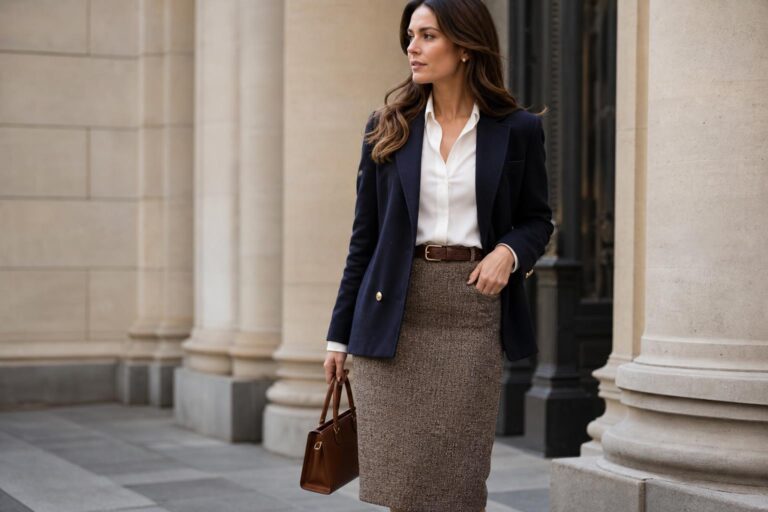
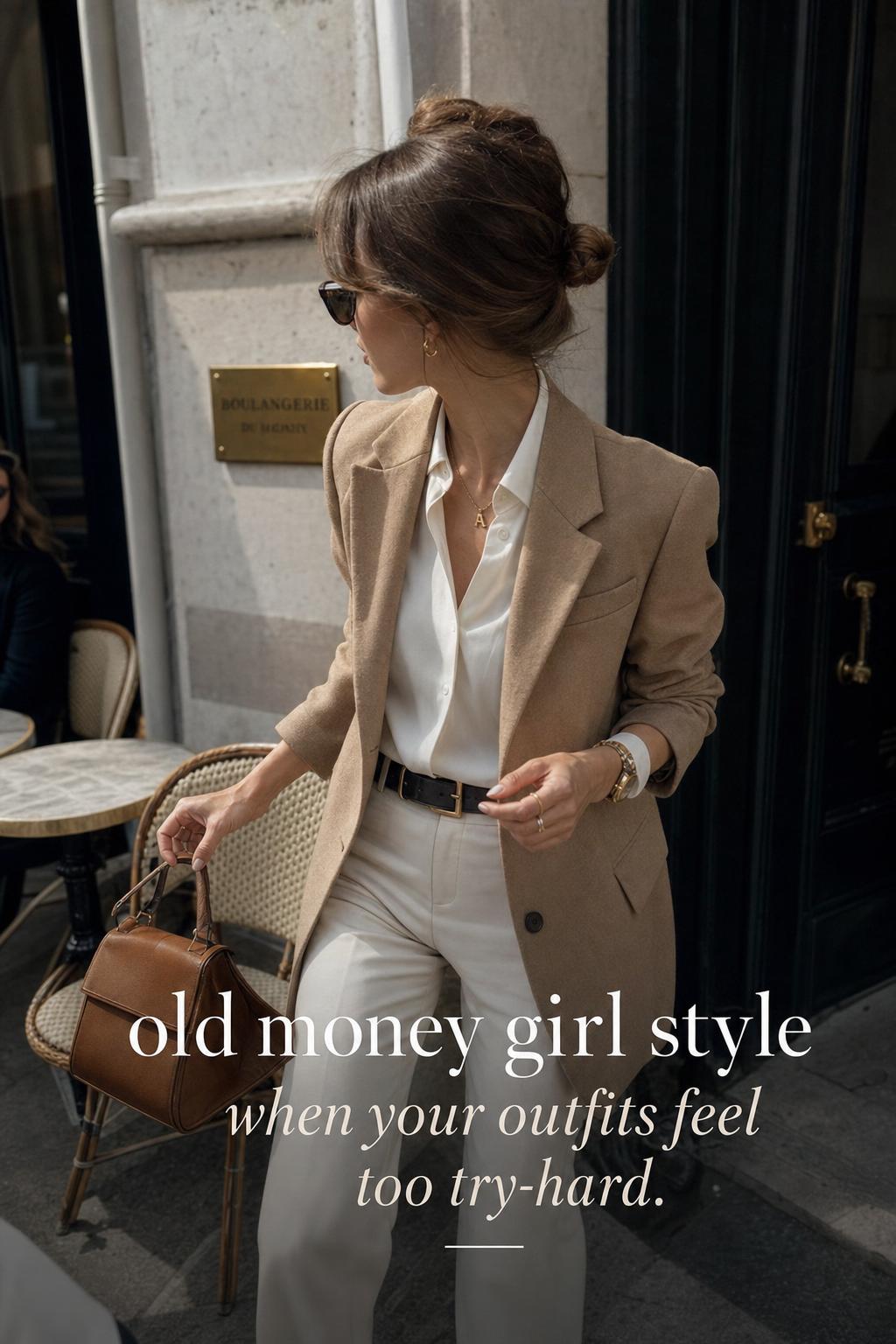
This is the outfit formula that solves the most common styling problem: wanting to look refined without feeling overdressed or restricted. The combination is a structured blazer, straight tailored trousers, a silk blouse or fine knit, loafers, and minimal jewelry. Visually, it creates the exact balance that old money style depends on. The blazer provides authority, while the softer top prevents the outfit from becoming rigid.
The reason this works so well is silhouette control. Straight trousers create a clean vertical line, which lets the blazer feel polished rather than bulky. Loafers keep the lower half practical and grounded, especially for city routines that involve walking, transit, or long hours on your feet. A thin gold chain or signet ring gives the outfit a point of refinement without disrupting the quiet luxury message.
For body balance, pay attention to blazer length. A slightly longer line often creates a more modern and composed result because it extends the silhouette rather than cutting the body in half. If you are petite or simply dislike extra length, the adjustment is easy: keep the blazer trim through the shoulder and let the trousers do more of the elongating work.
This formula also recreates well from an existing wardrobe. If silk feels too high maintenance for your routine, a fine knit can do the same job by adding softness and texture under tailoring. The key is keeping the surface refined and the palette controlled. Cream with navy, charcoal with ivory, or beige with black all maintain the heritage fashion feel.
Why this outfit works
The visual anchor is the blazer, but the success of the outfit comes from tension between structure and ease. Without that softness underneath, the look can turn corporate. Without the blazer, it can lose the old money girl clarity. The balance is what makes it feel intentional.
Soft layering that feels elegant instead of bulky
Many people trying to dress like an old money girl make the outfit too heavy. They pile on tailoring, thick knits, and dense shoes all at once, assuming more heritage equals more credibility. In reality, that approach often shortens the silhouette and makes the wardrobe feel stiff.
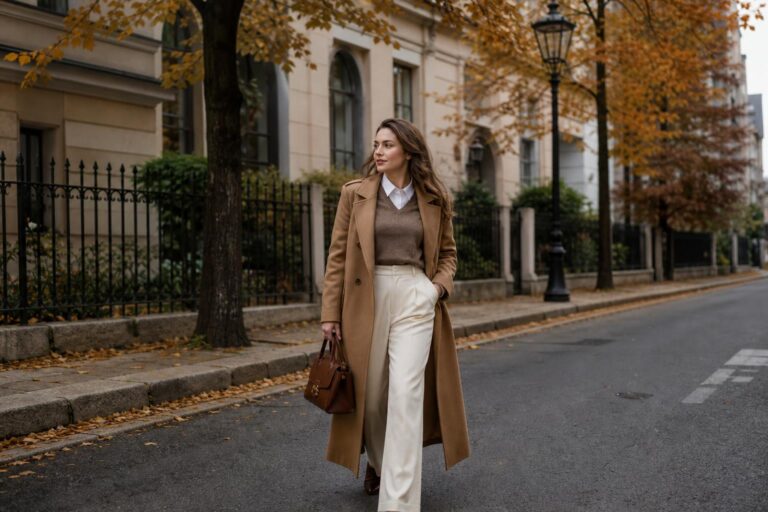
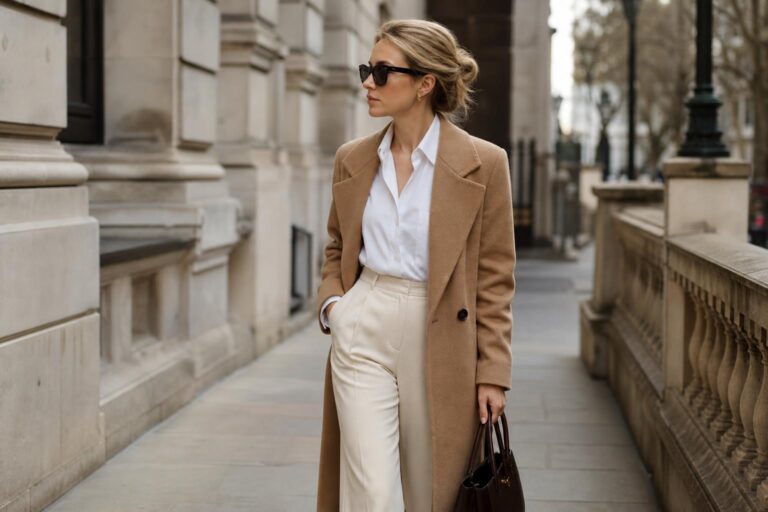
A better solution is soft layering: a trench coat over a fine knit and a midi dress, finished with loafers or another streamlined shoe. This combination creates movement and polish at the same time. The trench coat introduces classic structure, but because it is an outer layer rather than the main event, the outfit still breathes. The midi dress adds vertical continuity, which keeps the overall shape clean and flattering.
This is especially effective for transitional weather. The trench can be removed indoors without the outfit collapsing visually, and the fine knit can be used as either a true layer or a shoulder drape if temperatures shift. That kind of adaptability is central to practical quiet luxury. The clothing should support the day rather than requiring constant adjustment.
Texture contrast is what keeps this look from appearing flat. A smooth trench over a knit surface, or a knit over silk, creates enough visual depth for a neutral palette to feel rich. That is a useful principle across the entire aesthetic: when color is restrained, texture carries much of the sophistication.
Fabric insight
Wool and cashmere add quiet depth, while silk creates lightness and movement. When combining them, let one fabric lead and the other support. Too many dense textures in one look can make an otherwise elegant outfit feel overly formal and harder to wear through a normal day.
City outfits with practical shoes and clean lines
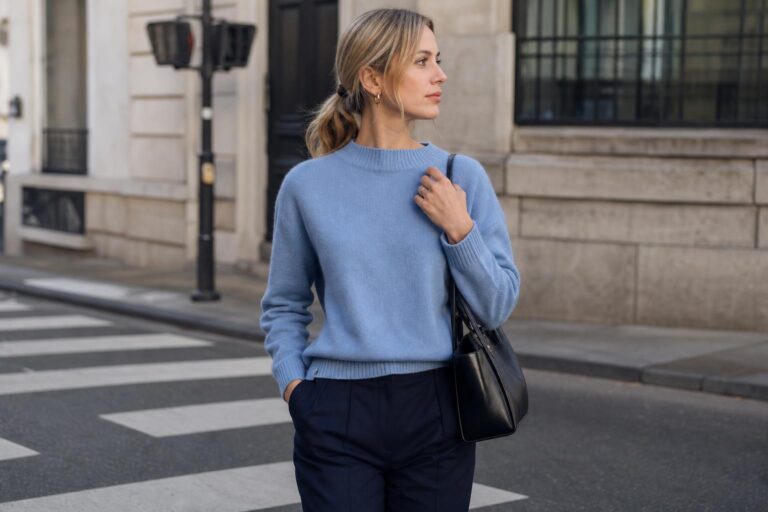
The old money girl aesthetic often gets reduced to country-club fantasy, but many readers need something more useful: a city-ready version that still feels composed. The answer is not abandoning the style. It is editing it for movement and practicality.
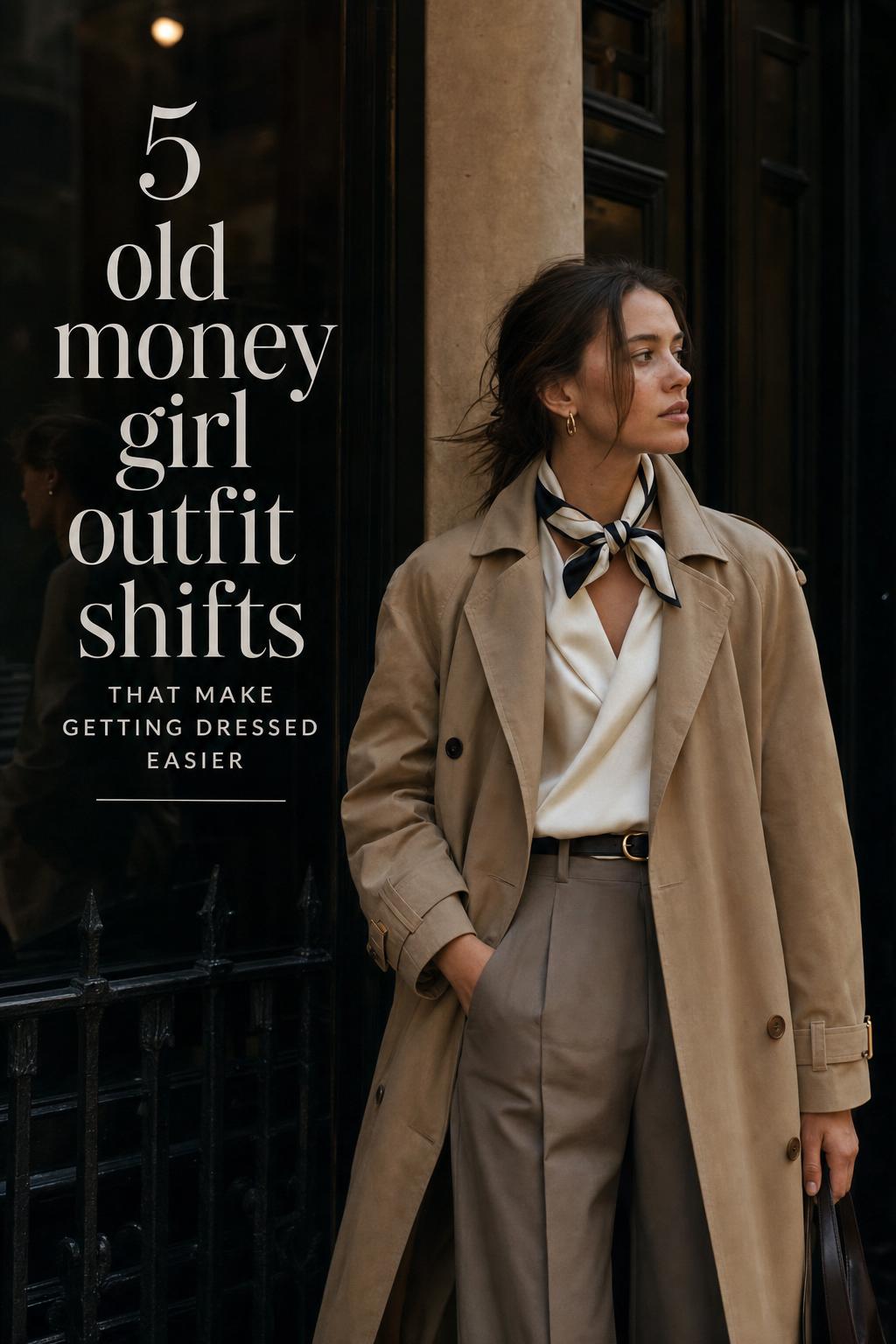
A trench coat, straight trousers, a lightweight blouse, loafers, and a discreet timepiece create one of the strongest urban versions of the look. This outfit works because every piece has a function. The trench handles changing weather. The blouse keeps the center of the outfit light and breathable. The trousers maintain polish. The loafers support long wear. The timepiece signals quiet precision rather than decoration.
In this context, proportions matter more than ornament. The coat should not swamp the body, and the trousers should not puddle excessively over the shoe. The elegance comes from clean transitions between layers. City dressing often involves more visual noise in the environment, so the outfit benefits from sharper editing and less accessory clutter.
This is also where the old money girl aesthetic aligns naturally with social presentation. In a candid photo, the look reads composed because the lines are controlled and the accessories are understated. It feels believable, not overworked. That matters whether you are thinking about daily presence, personal branding, or simply wanting your wardrobe to look coherent across different settings.
Best shoe pairing
Loafers remain the most practical option because they support the heritage fashion language without disrupting comfort. They also maintain a sleek line under trousers and with midi lengths, which keeps the outfit polished from morning through evening.
Evening refinement without obvious glamour
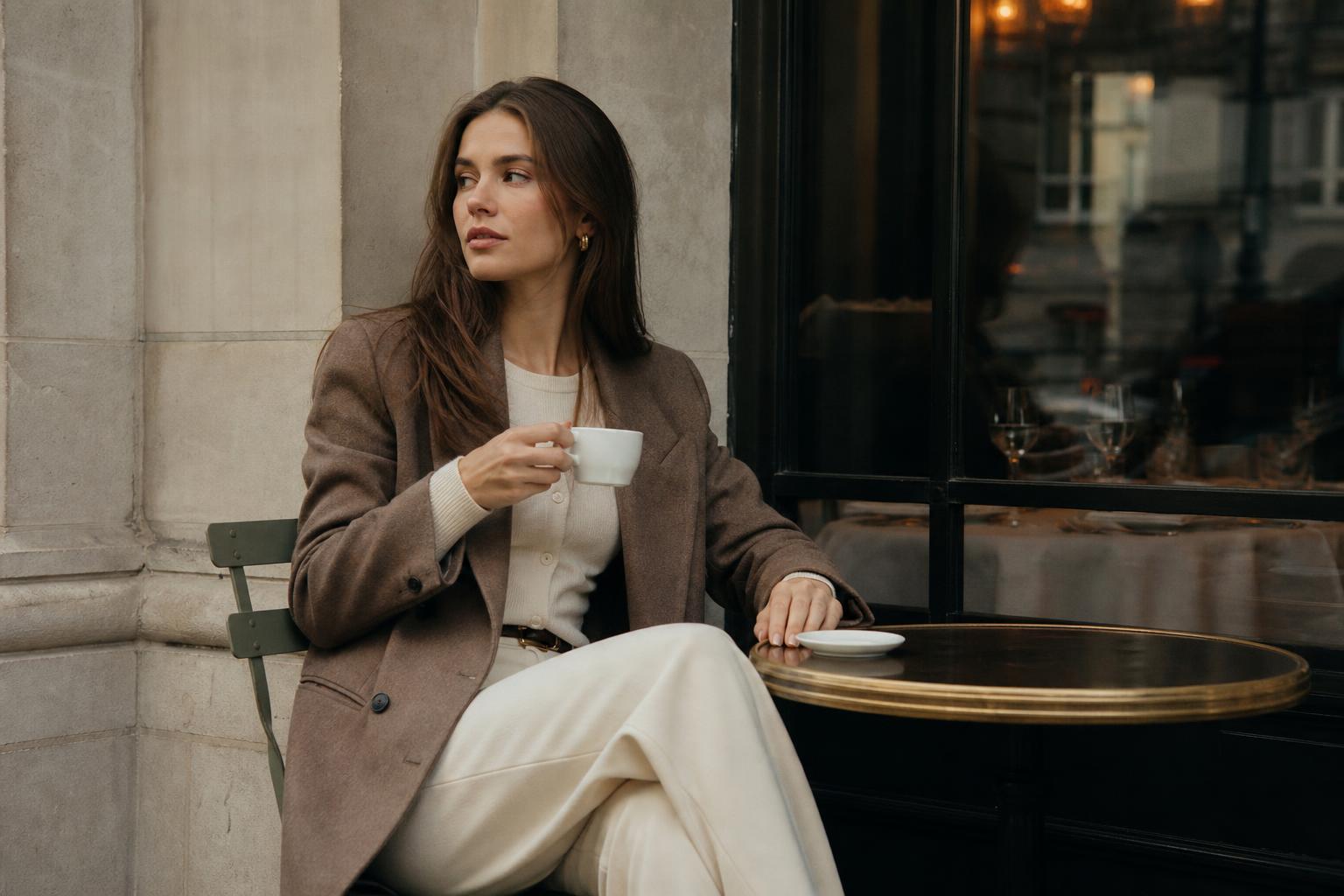
One of the easiest ways to lose the old money girl effect is to make evening dressing too flashy. The aesthetic does not disappear at night, but it shifts through finish and texture rather than through sparkle overload. A silk blouse with tailored trousers, delicate jewelry, a timepiece, and a sharper outer layer creates evening polish without abandoning restraint.
The styling logic here is subtle elevation. Silk catches light in a way that feels refined, so the rest of the look can stay controlled. Tailored trousers preserve composure, and minimal jewelry keeps the focus on silhouette and fabric quality. If the blouse is especially fluid, a structured blazer works well. If the blazer is the stronger visual anchor, the blouse should remain clean and understated.
This formula is ideal for dinners, gallery settings, and occasions where you want to appear intentional but not overdone. It respects the old money style preference for continuity. The evening version still looks connected to the daytime wardrobe rather than being an entirely separate costume.
How to make the outfit feel more elevated
Choose one evening signal only. Let it be the silk finish, the timepiece, or the jewelry scale. When all three try to announce themselves at once, the outfit loses the discreet confidence that defines quiet luxury.
Accessories that communicate quiet luxury clearly
In this aesthetic, accessories should confirm the wardrobe message rather than compete with it. Minimal jewelry is a recurring theme for good reason. Delicate pieces keep the face and neckline refined, but they also allow tailoring, fabric quality, and silhouette balance to remain visible. Thin gold chains, a signet ring, and understated earrings all work because they feel intentional yet controlled.
Timepieces are especially useful because they bridge fashion and lifestyle. They introduce precision and heritage without requiring obvious decoration. That is why watch and jewelry references appear so often in discussions of old money girl outfit ideas. A timepiece adds structure to the styling story in the same way loafers add structure to the lower half of the outfit.
Classic heritage brands are also logically tied to this visual language. Houses such as Chanel, Hermès, and Burberry are often associated with old money myth and heritage branding because of their long-standing links to classic product categories and durable visual identity. The key is not plastering a label across the outfit. It is understanding why those names align with the aesthetic: restraint, continuity, and recognizable quality signals.
If you are building this look on a budget, the lesson is not “buy heritage labels or fail.” It is “imitate the styling logic.” Seek clean hardware, timeless shapes, quality-looking materials, and accessories that can be repeated often. Repetition is part of what makes an old money wardrobe believable.
Tip
If an accessory only works with one outfit, it is probably too specific for this aesthetic. The strongest old money girl accessories are the ones that quietly improve many looks instead of dominating one.
Regional variations in the United States
The old money girl aesthetic is often treated as one universal image, but it becomes more convincing when you understand regional nuance. A Northeast reading of the style tends to feel more prep-adjacent: stronger tailoring, clearer heritage references, and a slightly more formal approach to wardrobe staples. A West Coast interpretation often reads softer and more minimal, with cleaner lines and a lighter expression of quiet luxury.
This distinction matters because it helps readers avoid looking like they are wearing a costume borrowed from another setting. In a more formal East Coast context, a blazer, loafers, timepiece, and structured outerwear can feel completely natural. In a more relaxed West Coast context, the same aesthetic may rely more heavily on soft tailoring, simpler layering, and restrained accessories.
The shared core remains the same: quality over ostentation, classic silhouettes, neutral colors, and practical refinement. The difference is in emphasis. Regional style should shape how sharply the aesthetic is expressed, not whether it exists at all.
How media shaped the visual language of old money style
The rise of the old money girl aesthetic in modern fashion conversation is inseparable from media shorthand. The Great Gatsby reinforces the fantasy of inherited refinement and social ritual. Gossip Girl translates wealth-coded dressing into a younger, more recognizable wardrobe language. Succession sharpens the modern idea of quiet luxury by making restraint itself look powerful.
These references are useful, but they should be handled carefully. They are visual anchors, not exact templates. Dressing like a believable modern classic means taking the mood they suggest and adapting it into a real wardrobe of blazers, trench coats, silk blouses, loafers, midi dresses, tailoring, and quality materials. The result should feel contemporary and functional, not theatrical.
That distinction is important because many styling mistakes come from overcommitting to the fantasy version of the look. Private clubs, equestrian settings, and horse racing references may sit inside the broader old money cultural image, but most readers do not need literal costume cues. They need urban, wearable outfit logic informed by heritage fashion. That is where the aesthetic becomes useful rather than merely aspirational.
Common styling traps that make the look feel forced
The most common mistake is trying to signal “old money” too loudly. When every detail is insisting on status, the result usually reads as new money performance rather than quiet confidence. The outfit should feel edited, not announced.
- Over-layering heavy fabrics so the silhouette becomes stiff and bulky.
- Choosing overly formal tailoring that limits movement and daily wear.
- Using too many accessories at once, which weakens the effect of minimal jewelry.
- Ignoring fit because the palette is neutral, even though fit is more visible in simple outfits.
- Copying media references literally instead of adapting them to your own climate and routine.
A second trap is misunderstanding quality. In this aesthetic, quality is not just about price. It is about fabric behavior, drape, and longevity of shape. Wool, cashmere, and silk matter because they usually create richer texture and cleaner movement than flimsier alternatives. But even a beautiful material fails if the cut is awkward or the piece cannot integrate into a larger wardrobe.
Common comfort mistake
Do not choose shoes or outerwear that only work for sitting still. The old money girl effect depends on composure, and nothing breaks composure faster than visibly uncomfortable movement.
Making the aesthetic accessible, ethical, and realistic
One reason this style remains appealing is that it rewards discipline over excess. That makes it surprisingly adaptable for different budgets. You do not need a closet full of new purchases. You need a coherent set of timeless wardrobe pieces that can repeat across contexts without losing their polish.
An accessible approach starts with material and silhouette awareness. Prioritize the categories that have the biggest visual impact: a clean blazer, trousers with a flattering straight line, loafers that hold their shape, and a few tops in silk-like or fine knit textures that layer smoothly. Once those foundations are in place, the wardrobe immediately feels more grounded in old money style.
Ethical sourcing matters here because the aesthetic is built on longevity. A wardrobe centered on repeat wear, careful selection, and durable shapes aligns naturally with a more thoughtful shopping approach. The practical question is simple: will this piece still make sense in a year, and can it be styled at least three different ways? If the answer is no, it probably does not belong in a quiet luxury capsule.
Easy ways to recreate the look without replacing your whole wardrobe
- swap bright contrast for tonal neutrals
- replace bulky layers with one structured outer layer and one soft base layer
- choose loafers over trend-driven statement shoes
- reduce accessories to one jewelry note and one timepiece
- focus on fit adjustments before buying additional pieces
The role of names, image, and personal branding
The broader “old money girl” conversation extends beyond clothing into mood, naming, and presentation. That is why old money girl names appear alongside fashion guides in the same style universe. Names that evoke heritage, nobility, or timeless charm support the same cultural associations that the wardrobe is trying to communicate: refinement, continuity, and understated status.
This does not mean a person needs a certain name to wear the style convincingly. It simply shows how strongly the aesthetic relies on an overall atmosphere. The same applies to social media presence. A quiet luxury image is shaped not only by what you wear, but by how you present it: clean photography, calm color stories, and clothing that looks natural in movement rather than aggressively styled for effect.
That is also why the old money girl aesthetic works best when it feels consistent across wardrobe, behavior, and visual presentation. The clothes are one part of the message. Ease, restraint, and repetition complete it.
A concise decision framework for dressing like a modern classic
When an outfit is not working, the fix is usually not adding more. It is identifying which part of the old money style formula is missing: structure, softness, texture, or restraint. A polished wardrobe becomes much easier to manage when you evaluate it through those four lenses.
- Structure: Is there a clear visual anchor such as a blazer, trench coat, or tailored trouser?
- Softness: Is there a balancing element such as silk, a fine knit, or a fluid midi silhouette?
- Texture: Do the fabrics create depth, especially if the palette is neutral?
- Restraint: Have the accessories, colors, and layers been edited enough?
If all four are present, the outfit usually reads as composed and expensive-looking even without obvious luxury signals. If one is missing, the result often feels off. This framework is more useful than memorizing fixed formulas because it adapts to different regions, routines, budgets, and personal preferences while preserving the essence of the old money girl aesthetic.
The strongest version of this style is not the most dramatic one. It is the one that fits your life so well that the elegance seems incidental. That is the real power of heritage fashion and quiet luxury: not spectacle, but steadiness.
FAQ
What is the old money girl aesthetic?
The old money girl aesthetic is a style approach built around quiet luxury, heritage fashion, classic tailoring, and timeless wardrobe choices. It favors quality, restraint, and polished simplicity over obvious logos or trend-driven dressing.
How do I dress like an old money girl without looking like I am wearing a costume?
Focus on wearable combinations instead of theatrical references. A blazer, tailored trousers, loafers, a trench coat, a silk blouse, and minimal jewelry create a believable version of the look because they suit real routines while still reflecting old money style.
Which fabrics work best for old money style for girls?
Wool, cashmere, and silk are the most consistent fabric signals because they add depth, drape, and a refined finish. These materials help neutral outfits look rich rather than flat, especially when the color palette is understated.
Are loafers essential for an old money girl wardrobe?
They are not mandatory, but they are one of the most useful choices because they balance practicality with heritage style. Loafers support long wear, work with tailoring and midi lengths, and keep the silhouette polished without feeling overly formal.
What kind of jewelry fits the old money girl aesthetic?
Minimal jewelry works best: delicate pieces, thin gold chains, a signet ring, and discreet earrings. A refined timepiece also fits naturally because it adds a sense of precision and quiet luxury without overpowering the outfit.
Can I create an old money girl wardrobe on a budget?
Yes, because the look depends more on cohesion than on buying everything new. Start with a blazer, straight trousers, loafers, a trench coat, and one or two polished tops in fine knit or silk-like finishes, then build slowly around those repeatable staples.
How is old money style different from new money style?
Old money style is associated with restraint, heritage cues, and quality over ostentation. It usually relies on subtle luxury signals such as tailoring, neutral colors, and refined materials rather than flashy branding or highly attention-seeking details.
Do social media and posting style matter for this aesthetic?
Yes, because the aesthetic extends beyond clothing into presentation. Clean photography, calm styling, and outfits that look natural in motion support the old money girl image more effectively than highly staged or overly busy visual presentation.
Why do media references like Gossip Girl, Succession, and The Great Gatsby come up so often?
These titles help define the cultural language around old money, quiet luxury, and inherited refinement. They are useful visual references, but the most wearable approach is to adapt their mood into practical outfits rather than copy them literally.
What are the biggest mistakes people make when trying this look?
The most common mistakes are over-layering heavy pieces, wearing uncomfortable shoes, adding too many accessories, and confusing neutral colors with automatic elegance. The look succeeds when fit, texture, and restraint are handled carefully.