The Old Money Aesthetic, Styled With Quiet Confidence
There is a reason the old money aesthetic keeps resurfacing whenever fashion grows tired of excess. Its appeal is not only visual. It is emotional, cultural, and sharply coded. The look suggests assurance rather than performance: navy blazers instead of novelty jackets, cashmere instead of flashy embellishment, loafers instead of statement sneakers, a wardrobe built around restraint rather than reaction.
In practice, that means clothing that feels polished without looking effortful. The palette tends toward cream, camel, navy, white, and other neutrals. Logos are minimal or absent. Silhouettes are tailored but not severe. The mood draws from East Coast prep, Ivy League dress codes, country club formality, sailing references, equestrian cues, and the broader language of quiet luxury.
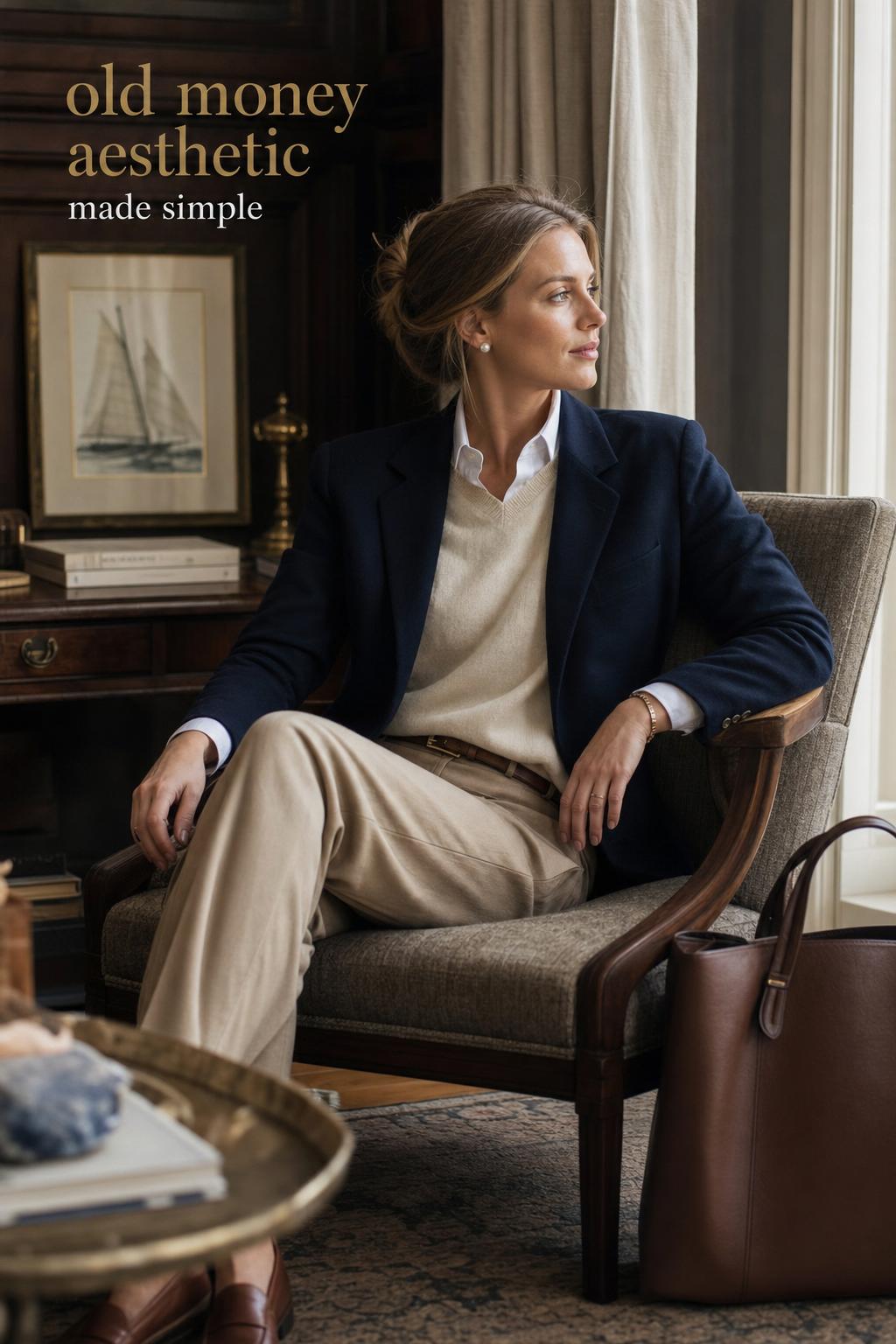
It also explains why the aesthetic works so well in everyday life. You can wear it to the office, on a weekend trip, for a dinner reservation, or while building a simple capsule wardrobe that does not date quickly. The old money aesthetic is aspirational, but it is wearable because its foundations are practical: fit, fabric, proportion, and consistency.
Modern fascination with the look has been amplified by TikTok, Instagram, and cultural touchpoints like Succession, but its wardrobe language remains rooted in familiar references such as Carolyn Bessette-Kennedy, JFK Jr., Ralph Lauren, Brooks Brothers, Barbour, and the broader world of heritage brands. What matters most is not imitation. It is understanding the logic behind the look so you can recreate it with clarity.
Found the dress? Keep the rest in one place.
Zarellea brings guest details, vendors, timelines, and every next step together — so your wedding plan feels as good as your look.
What the old money aesthetic actually means
The old money aesthetic is a style built around understated luxury, classic wardrobe codes, and the appearance of permanence. It signals quality through materials, cut, and consistency rather than through overt branding. That is why it is so closely linked with quiet luxury, stealth wealth, and a logo-free approach to dressing.
Culturally, the look is often framed through East Coast elite and Ivy League references, with overlap into WASP-inspired dressing, country club codes, and a polished preppy sensibility. The visual shorthand is familiar: tailored trousers, cable-knit sweaters, white Oxford shirts, loafers, camel coats, and accessories that read refined rather than attention-seeking.
What separates this aesthetic from simple minimalism is context. Minimalism can be stark, modern, or intentionally severe. The old money aesthetic tends to feel softer and more heritage-driven. It relies on tradition, continuity, and the subtle authority of clothes that seem chosen for decades of wear rather than one season of visibility.
Why the look feels so relevant again
The resurgence is partly visual and partly social. On TikTok and Instagram, the old money aesthetic offers a clean, legible alternative to louder trend cycles. It photographs well because neutral palettes, structured silhouettes, and classic accessories create immediate coherence. At the same time, its connection to quiet luxury reflects a wider appetite for clothing that looks expensive without relying on obvious status markers.
Media has sharpened that fascination. Succession became a key cultural anchor because it presented wealth through excellent fabrics, muted colors, and unshowy polish rather than traditional glamour. In fashion coverage, icons like Carolyn Bessette-Kennedy and JFK Jr. have served a similar purpose. Their style is repeatedly referenced because it made simplicity look intentional, and intention is the real currency of this aesthetic.
There is also a generational reason. Gen Z’s interest in the look is not only about wealth fantasy. It is also about wanting a wardrobe that feels organized, mature, and resistant to visual clutter. A navy blazer or a cream knit offers more styling longevity than a highly specific trend piece. That makes the aesthetic appealing even to people who are not interested in dressing literally like East Coast elites.
The visual codes that define the aesthetic
The old money wardrobe is recognizable because several elements appear consistently across the best interpretations. None of them are especially dramatic on their own. Their strength comes from how they work together.
- Neutral color palettes built around cream, navy, camel, beige, white, and soft gray
- Tailored silhouettes that skim the body instead of clinging to it
- Natural-looking textures such as cashmere, wool, and silk
- Classic staples including blazers, polo shirts, Oxford shirts, tailored trousers, loafers, and structured outerwear
- Minimal logos and restrained accessories
- A polished but never overworked finish
When one of these elements is missing, the look can still work. When several are missing, it starts to drift into adjacent territory such as generic prep, officewear, or minimalist fashion. The old money aesthetic depends on composition. A cable-knit sweater with poor fit and overly distressed denim will not create the same impression as the same knit paired with cream trousers and leather loafers.
Core wardrobe pieces that carry the entire look
The blazer as a visual anchor
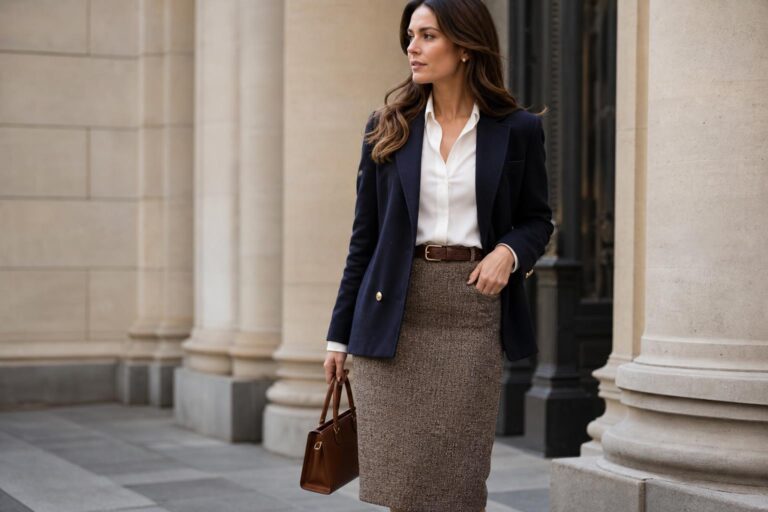
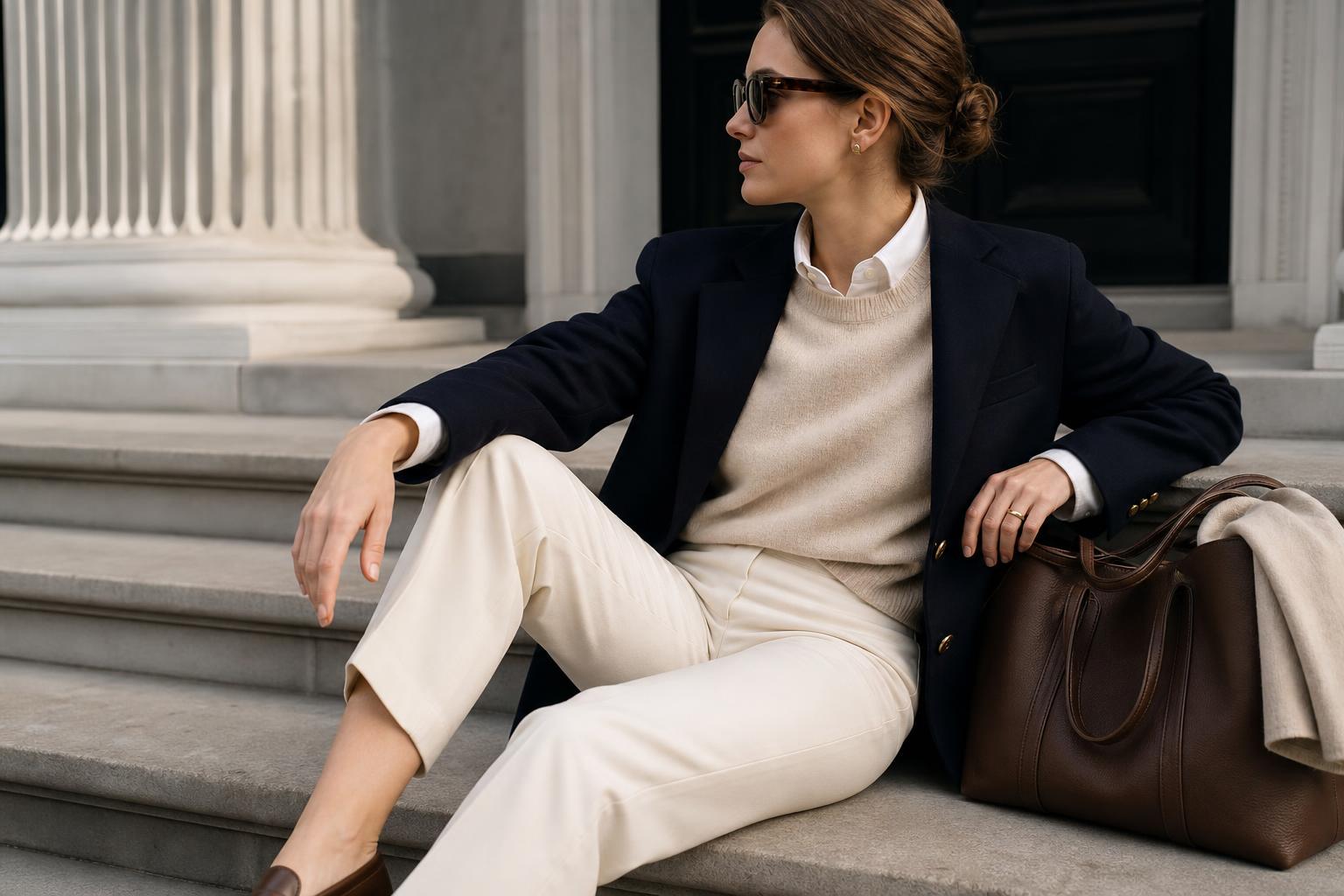
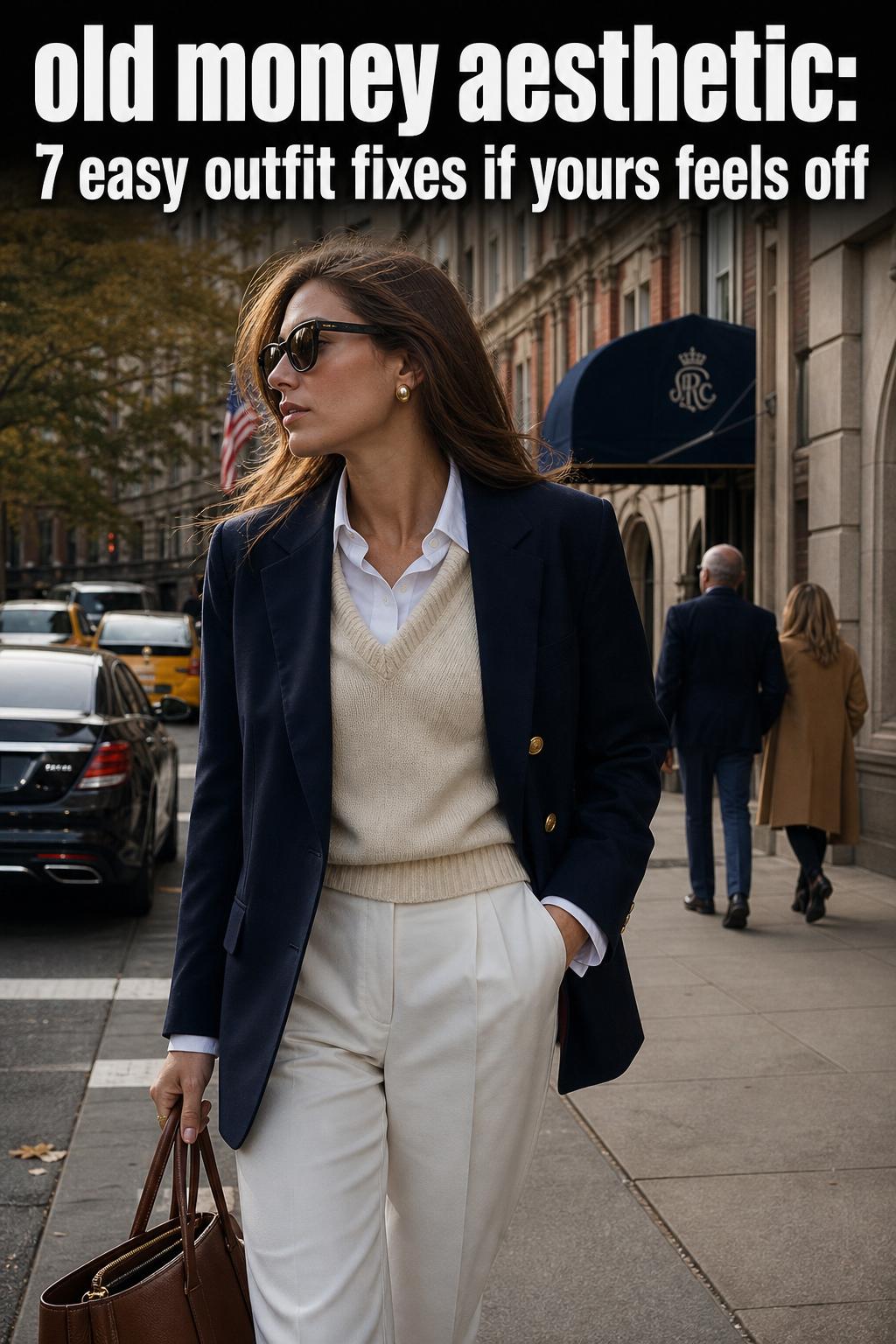
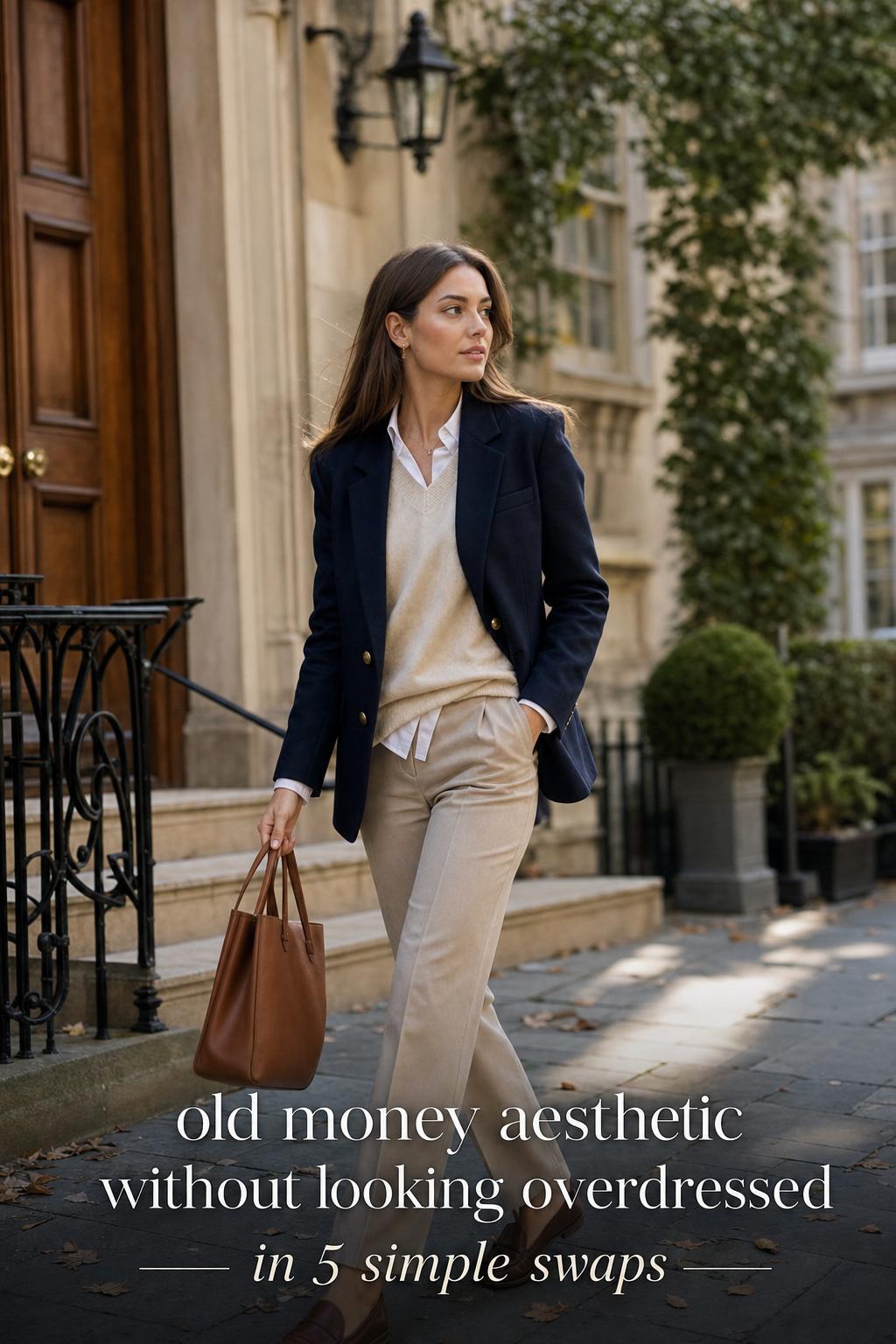
A navy blazer is one of the clearest old money signifiers because it bridges formality and ease. It references Ivy League dressing, East Coast polish, and heritage tailoring all at once. It works over a white Oxford shirt, with tailored trousers, or even with simpler separates when you need immediate structure.
Why it works: the blazer brings line and authority. It sharpens softer garments such as cashmere knits and polo shirts, and it keeps neutral palettes from feeling flat. A strong blazer does not need dramatic details. Clean shoulders, balanced length, and good fabric do most of the work.
Tailored trousers instead of trend-driven bottoms
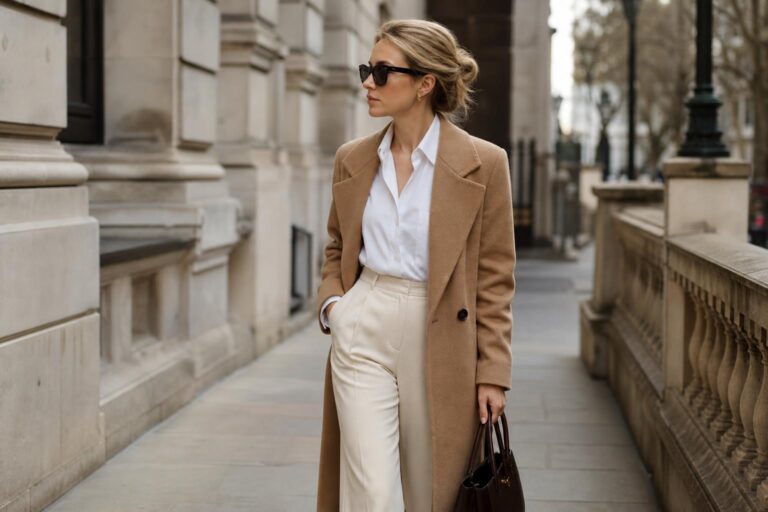
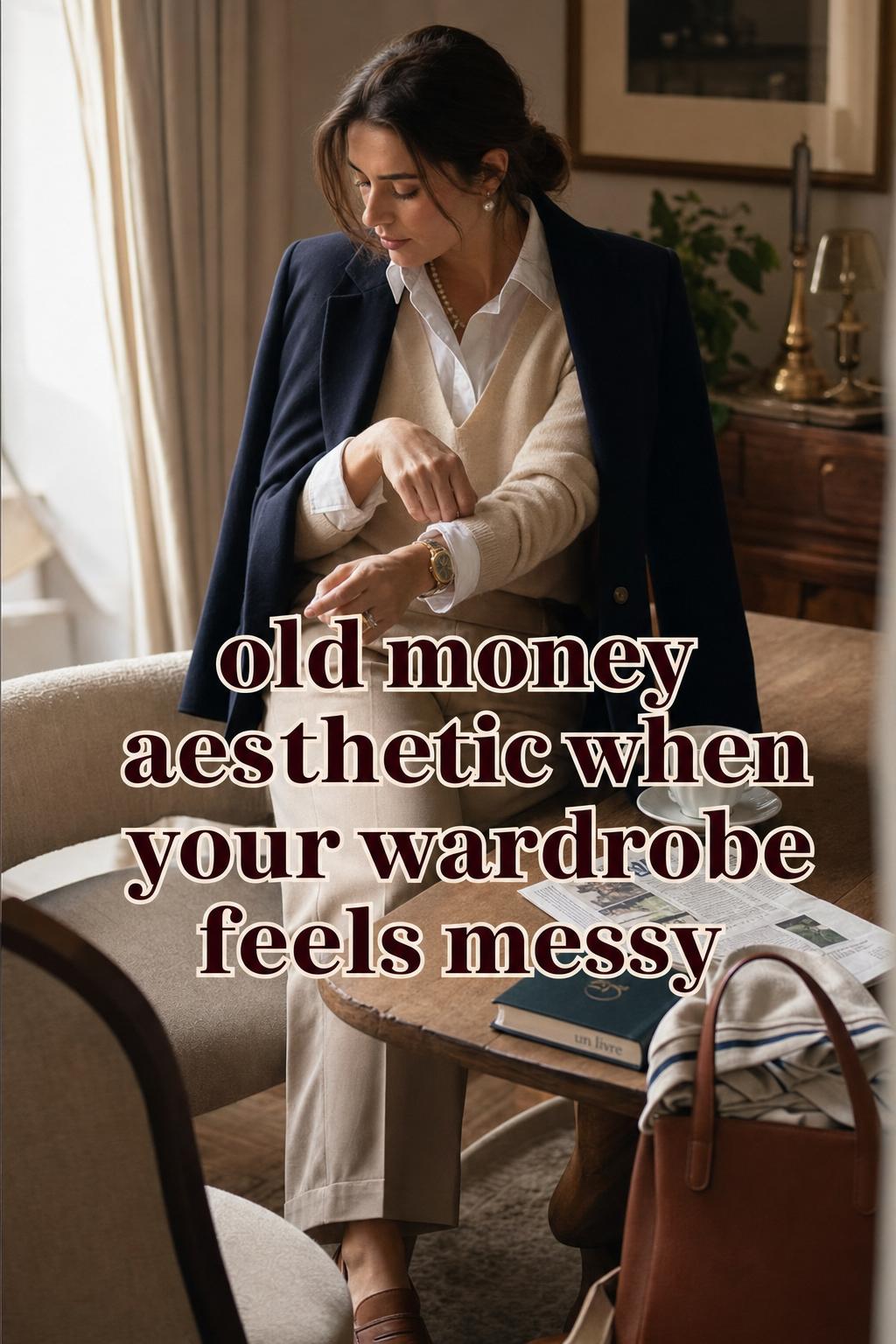
Tailored trousers are central because they create calm in an outfit. They lengthen the silhouette, reduce visual noise, and make knitwear and shirting look intentional. In navy, cream, camel, or soft gray, they become the kind of base layer that can carry most of the wardrobe.
For everyday wear, this is one of the easiest places to start. If your wardrobe already contains sweaters, shirts, or simple outerwear, changing the trouser shape often moves the outfit closer to the old money aesthetic immediately. The key is drape and fit, not excessive detail.
Cashmere and knit texture
Cashmere appears repeatedly in old money style guides because texture communicates quality faster than branding does. A fine-gauge cashmere sweater in cream or camel softens a tailored look while maintaining polish. Cable-knit sweaters do something similar, but with a more preppy and Ivy League energy.
Texture contrast matters here. Smooth trousers with a softly structured knit create depth without requiring color complexity. This is one reason the aesthetic can look rich even when the palette is extremely restrained.
Oxford shirts and polo shirts
White Oxford shirts and classic polo shirts sit at the casual end of the old money spectrum. They carry East Coast and country club references, but they are also practical because they layer well. Under a blazer they look composed. With tailored trousers and loafers they feel clean and direct. Under knitwear they bring crispness to softer layers.
Polo shirts in particular can easily go wrong if the fit is too tight or the branding is too prominent. The aesthetic favors a refined, quiet version of the polo rather than a loud sportswear interpretation.
Loafers, structured bags, and classic finishing pieces
Loafers are important because they reinforce the heritage quality of the wardrobe. They are polished but not formal in a rigid way, which makes them ideal for the old money aesthetic’s in-between spaces: weekday lunches, gallery visits, smart casual offices, and travel days that still require presence.
Accessories should stay understated. Pearl earrings, a simple gold chain, a leather tote, a structured bag, or a classic watch all fit because they complement the clothing rather than compete with it. The styling logic is simple: the eye should move across the entire outfit, not stop at one loud detail.
Heritage brands and the role of quiet luxury
Brands matter in this aesthetic, but mostly as references for cut, fabrication, and heritage rather than as labels to display. Ralph Lauren is one of the clearest examples because it captures the overlap between prep, country, equestrian influence, and East Coast refinement. Brooks Brothers carries similar authority through classic shirting and tailoring. Barbour adds a more outdoor, heritage-driven edge that suits weekend and country-inspired versions of the look.
On the more luxury-focused end, names such as Chanel, Saint Laurent, Bottega Veneta, Ferragamo, and The Row are often linked to the aesthetic because they can embody polish without relying on obvious logos. They support the central idea of quiet luxury: clothes and accessories that signal discernment through restraint.
The practical takeaway is not that you need a wardrobe full of expensive labels. It is that the old money aesthetic becomes more convincing when garments echo the same values those heritage brands are known for: stable silhouettes, excellent materials, and visual discipline.
Icons, references, and the cultural mood behind the look
Style rarely exists without imagery, and the old money aesthetic is especially dependent on iconography. Carolyn Bessette-Kennedy remains a dominant reference because her wardrobe distilled the tension that makes this look compelling: minimal yet luxurious, clean yet unmistakably expensive in feel. JFK Jr. operates similarly on the men’s side, embodying an ease that never looked accidental.
Fashion coverage often expands the field with Jackie Kennedy, Grace Kelly, Diana, and related social figures whose wardrobes conveyed heritage, diplomacy, or social polish. Their relevance is not simply nostalgia. They help explain the archetype: clothing that feels secure, socially literate, and elegantly contained.
These references matter because they keep the aesthetic from becoming a bland shopping checklist. They remind you that the look is not just about owning a blazer or pearls. It is about maintaining line, restraint, and consistency across the entire wardrobe.
Relaxed layers with an Ivy League edge
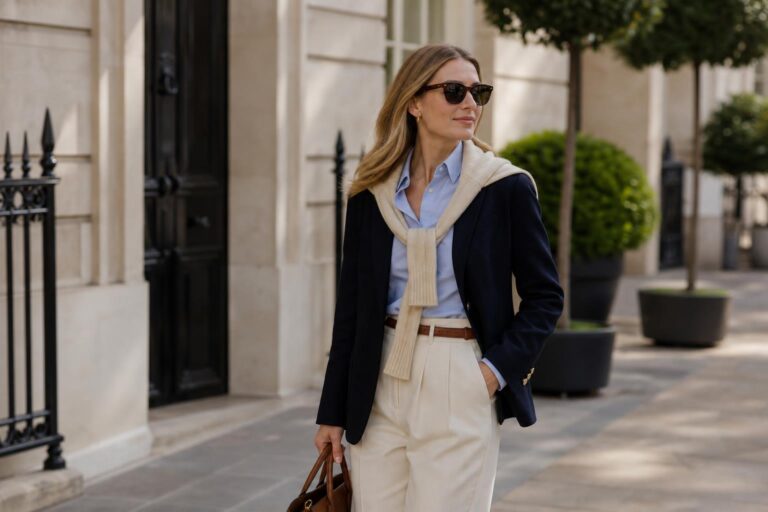
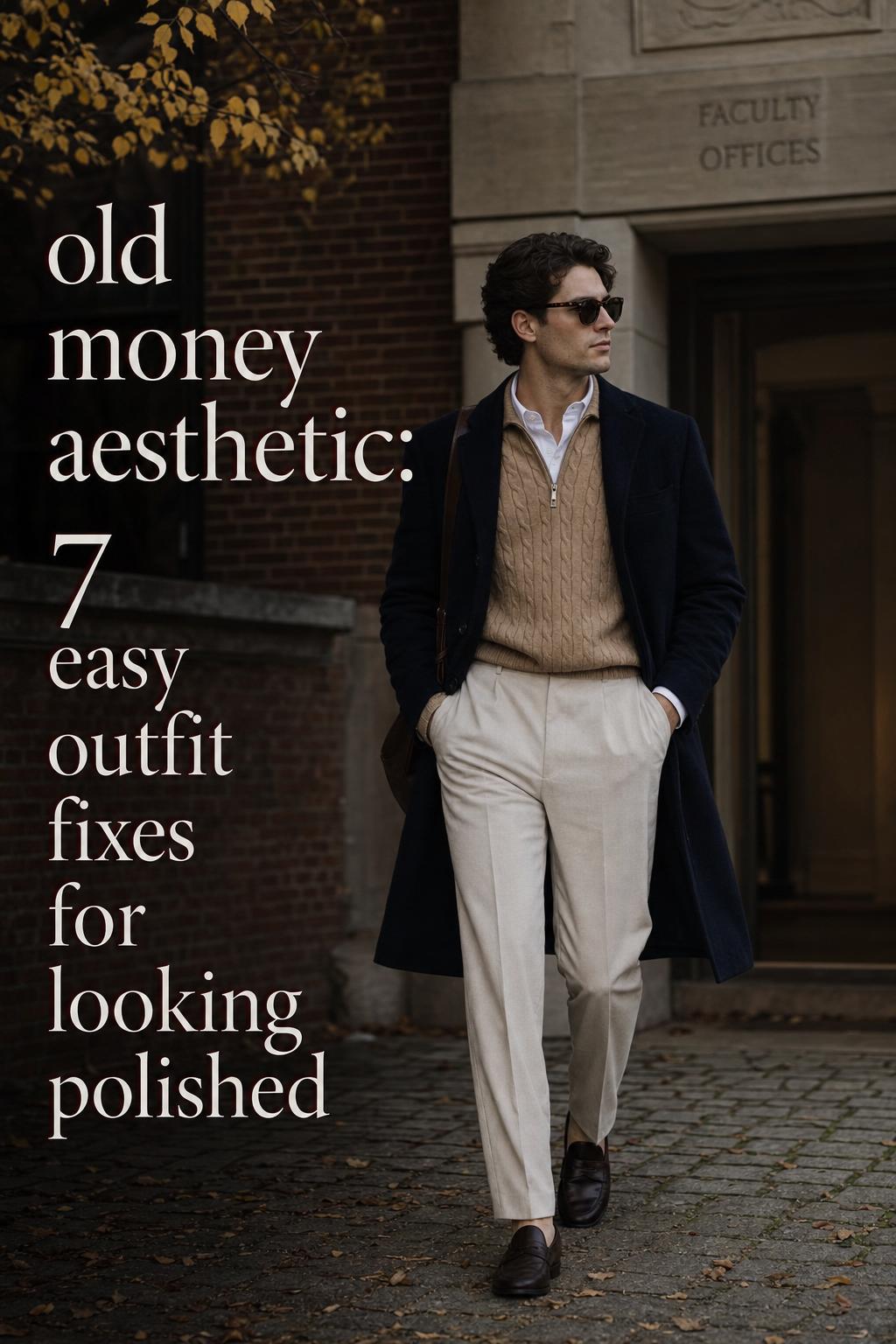
This is one of the easiest interpretations to wear in real life because it sits between casual and polished. Think a cable-knit sweater over a white Oxford shirt, tailored trousers in cream or navy, and loafers. The visual message is collegiate but elevated, closer to inherited ease than campus costume.
The silhouette works because each layer has a role. The shirt provides crisp structure at the collar and cuffs. The knit softens the outfit and introduces texture. The trousers keep the line clean. If the sweater is slightly relaxed, the trousers should remain sharp to avoid losing definition.
Easy ways to recreate the look: start with one excellent knit and one pair of neutral tailored trousers. These two pieces can rotate with shirts you already own. If you add pearls, a simple gold chain, or a leather tote, keep the rest of the styling restrained so the outfit does not feel over-composed.
Subversive basics and the power of understated fit
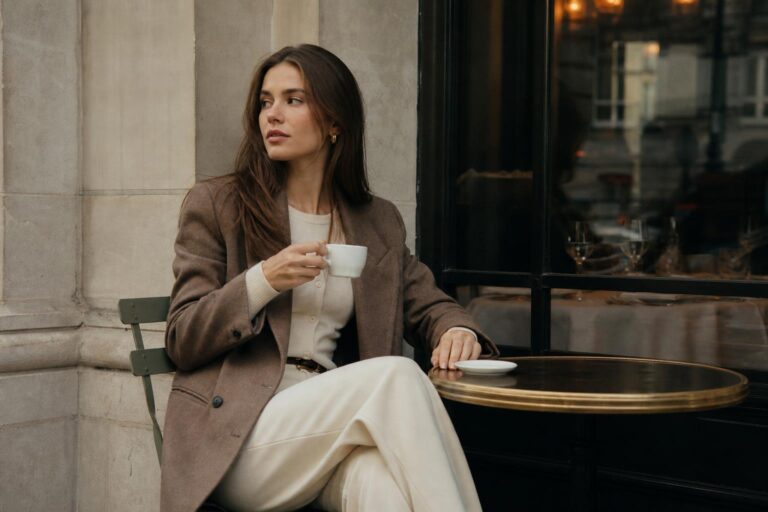
Some of the strongest old money outfits are built from basics that seem almost too simple: a cream cashmere knit, straight tailored trousers, loafers, and a structured bag. What makes them compelling is precision. The knit sits cleanly at the shoulder. The trousers skim the body. The accessories are discreet. There is no visual clutter to distract from proportion.
This is where many people misunderstand the aesthetic. They focus on neutral color and forget silhouette balance. A beige sweater and beige trousers are not automatically convincing. The outfit works only when the shades are intentionally layered and the shapes maintain clarity. Tonal dressing needs contrast through texture or tailoring, otherwise it can read flat rather than refined.
Style insight: this kind of outfit is especially effective for smart casual settings, city lunches, or creative offices because it looks polished without feeling rigid. It also adapts well across age groups and body types because the emphasis is on clean line rather than trend-specific shape.
Country club polish without looking costume-like
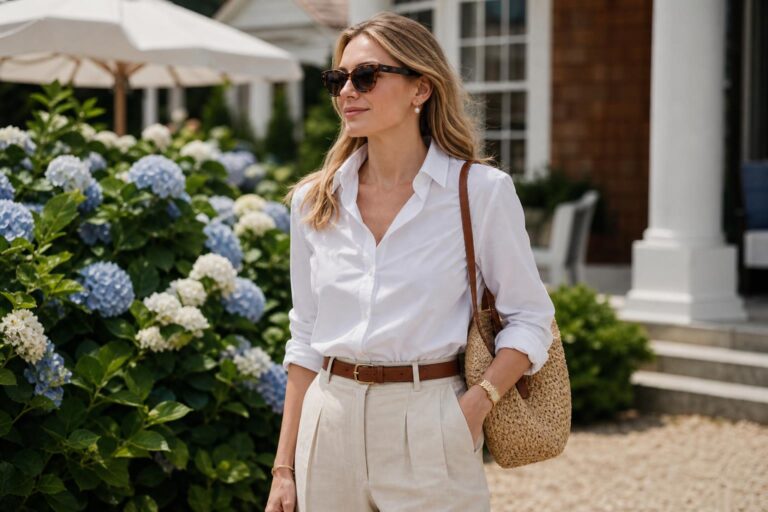
Country club and sailing references are central to the old money aesthetic, but they need a measured hand. Polo shirts, white jeans, espadrilles, navy blazers, and cream tailoring can all fit this world, yet the goal is suggestion rather than theatrical styling. One or two cues are enough.
A practical version might pair a polo shirt with navy tailored trousers and loafers, or white jeans with a camel knit and a structured jacket. The look should feel edited, not themed. If you add too many references at once, the result shifts from heritage to imitation.
For warmer days, lighter fabrics and cleaner lines matter more than layering. In cooler weather, adding a Barbour-style outer layer can support the country influence while keeping the palette grounded. The best version of this look feels lived-in but never careless.
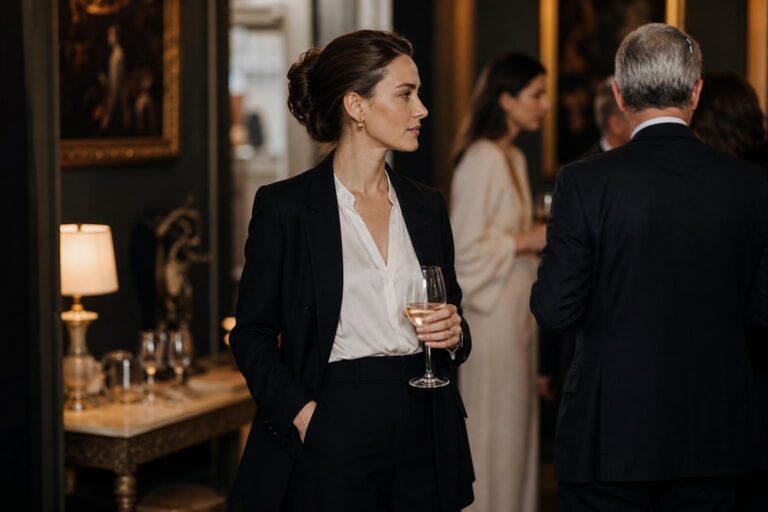
Tailored restraint for formal settings
The formal side of the old money aesthetic is less about embellishment and more about disciplined elegance. This is where silk, wool, and sharper tailoring become especially useful. For women, a clean dress or tailored separates in navy, cream, or black-adjacent neutrals can capture the mood. For men, the route is usually a precise blazer or tailored jacket, refined trousers, and classic footwear.
The most effective formal styling avoids making every piece “special.” Instead, one or two elevated elements carry the outfit. A beautifully cut jacket, a polished leather shoe, or a structured bag does more than multiple statement details. This is the logic behind understated luxury: the more disciplined the styling, the more visible the quality becomes.
Tip: if an outfit feels too severe, introduce softness through fabric rather than color. Cashmere, silk, or a gentle knit texture can make formal old money styling feel more wearable while preserving the polished line.
How the aesthetic adapts across settings
One of the strongest arguments for the old money aesthetic is its flexibility. The same wardrobe can move across casual, smart casual, formal, and outdoor contexts with only small adjustments.
- For casual wear, rely on polo shirts, Oxford shirts, soft knits, tailored trousers, and loafers.
- For smart casual, add a navy blazer, a structured bag, or a more refined shoe.
- For formal settings, sharpen the tailoring and reduce the number of visible accessories.
- For outdoor or country-leaning styling, use heritage references like Barbour-inspired outerwear and richer wool textures.
This adaptability explains why the aesthetic has such broad appeal. It does not require a separate identity for every context. It asks for a coherent wardrobe and better decisions about fit, fabric, and finishing.
Color palette, tonal layering, and why neutrals do the heavy lifting
The old money palette is often discussed in simple terms, but color choice is more strategic than it first appears. Cream, navy, camel, beige, and white create a stable visual framework. They are flexible, they layer easily, and they allow fabric quality to remain visible. This is essential in a style language where loud color is rarely the point.
Tonal layering is especially important. A camel coat over a cream knit and tailored beige trousers can look exceptionally refined when the textures are distinct enough to separate each layer. Without that texture difference, neutral dressing can collapse into sameness. Cashmere, wool, and silk prevent that problem because they each catch light differently.
Most versatile approach: build around navy and cream first. That pairing carries both East Coast prep and quiet luxury, and it works in every season. Camel then adds warmth, while white sharpens the entire wardrobe.
Materials and finishes that quietly elevate the wardrobe
Fabric is one of the clearest dividing lines between a convincing old money wardrobe and one that only imitates the color scheme. Cashmere, wool, and silk recur in discussions of the aesthetic because they create softness, structure, and movement without visual excess. Even simple garments become more persuasive when the material behaves well on the body.
Wool helps blazers and coats maintain line. Cashmere adds ease and richness to sweaters. Silk introduces polish in a way that does not require embellishment. These choices matter because the old money aesthetic depends on the eye reading quality instinctively. The cut may be quiet, but the material should not look dull or flimsy.
Practical advice: if you are shopping selectively, invest in knitwear and outerwear before trend pieces. Those categories do the most to establish texture, warmth, and visual credibility across multiple outfits.
How to build the look on any budget
The aesthetic is often associated with expensive labels, but it can be approximated intelligently because so much of it depends on selection rather than volume. The key is not to buy an entire “old money” wardrobe at once. Start with the pieces that shape the silhouette and appear most often in real life.
- Begin with one blazer in navy or camel
- Add one pair of tailored trousers in cream, navy, or beige
- Choose one knit that looks and feels elevated, ideally cashmere or a similar refined texture
- Use a white Oxford shirt or simple polo shirt as a layering base
- Finish with loafers and one understated bag or watch
Budget-friendly styling depends on discipline. A smaller wardrobe in the right colors and shapes will look more convincing than a larger wardrobe full of mixed messages. It is also wise to prioritize fit adjustments when needed. A blazer that sits correctly often reads more expensive than one with an obvious designer name but awkward proportions.
Another useful strategy is to treat heritage brands as references even when you are not buying them directly. Study the line of a Ralph Lauren blazer, the polish of Brooks Brothers shirting, the outdoor ease of Barbour, or the restraint associated with The Row and Ferragamo. Then apply those principles to your own wardrobe choices.
Common styling mistakes that weaken the effect
The old money aesthetic is often simplified into “wear neutrals and avoid logos,” but several common mistakes can make the result feel forced.
- Over-branding, even when the brands are expensive
- Too many references at once, such as combining sailing, equestrian, pearls, and prep in a single look
- Poor fit, especially in blazers, polo shirts, and trousers
- Overly trendy silhouettes that interrupt the timeless mood
- Flat tonal dressing with no texture contrast
- Accessories that dominate the outfit instead of refining it
Perhaps the biggest mistake is trying to look “rich” rather than trying to look considered. The aesthetic is strongest when the wardrobe appears settled, coherent, and intentional. If every item is competing to prove value, the underlying elegance disappears.
Old money aesthetic for men, women, and a shared wardrobe logic
Although many visual references are gendered, the core mechanics of the old money aesthetic are remarkably consistent across menswear and womenswear. In both cases, quality fabrics, neutral tones, subtle accessories, and balanced tailoring matter more than trend-driven differentiation.
For men, the formula often centers on navy blazers, polo shirts, Oxford shirts, cable-knit sweaters, tailored jackets, trousers, and loafers. For women, the same language appears through cashmere knitwear, blazers, cream tailoring, pearls, leather totes, and softly structured outerwear. The point of distinction is less about separate wardrobes and more about how line and finish are interpreted.
This shared logic is useful if you want the look to feel natural rather than costume-like. It keeps the focus on wardrobe architecture. Once the basics are right, you can adjust for personal taste, age, climate, and lifestyle without losing the aesthetic.
Beyond clothing: interiors, mood, and the broader lifestyle frame
Part of the old money aesthetic’s power is that it extends beyond clothing into a larger visual world. Editorial coverage increasingly connects it to interior design, heritage details, and country-inspired environments. That broader frame helps explain why references such as the English countryside, East Coast homes, private clubs, sailing culture, and equestrian settings continue to shape the mood around the clothes.
This does not mean you need to build a lifestyle fantasy around your wardrobe. It means the clothing tends to make sense in spaces that share the same values: quiet refinement, tradition, and a lack of visual excess. A blazer, loafers, and a leather tote feel coherent in that world because the entire aesthetic is based on continuity.
That is also why the look translates so well to Pinterest-driven inspiration. It is not merely a set of garments. It is an atmosphere of order, polish, and inherited visual confidence.
Practical tips for making the aesthetic feel real, not performative
The most successful old money wardrobes tend to feel lived-in and edited. They do not look assembled overnight. If you want the style to feel believable in daily life, use these principles as filters rather than rigid rules.
- Repeat your best pieces often instead of constantly introducing new ones
- Keep your color palette narrow enough that most items can work together
- Choose accessories that support the silhouette rather than distract from it
- Let one heritage cue lead the outfit instead of stacking several references
- Invest in the pieces that affect fit and texture first
A useful test is this: if you remove the jewelry, bag, or outer layer, does the outfit still feel coherent? If the answer is yes, the foundation is strong. If the answer is no, the look may rely too heavily on aesthetic signaling rather than good wardrobe construction.
FAQ
What is the difference between old money style and quiet luxury?
Quiet luxury describes understated, logo-light dressing that emphasizes quality and restraint, while the old money aesthetic adds a stronger cultural frame through East Coast prep, Ivy League references, heritage brands, country club cues, and classic social iconography such as Carolyn Bessette-Kennedy and JFK Jr.
Which pieces matter most if I want to build an old money wardrobe?
The most useful starting points are a navy blazer, tailored trousers, a white Oxford shirt, a cashmere or cable-knit sweater, loafers, and one understated bag or watch, because these pieces establish the silhouette, texture, and restraint that define the aesthetic.
Do I need expensive brands to achieve the old money aesthetic?
No, but you do need discipline in fit, fabric, and styling. Heritage brands like Ralph Lauren, Brooks Brothers, Barbour, Chanel, Ferragamo, Bottega Veneta, Saint Laurent, and The Row are often used as references because they embody the look well, yet the overall effect depends more on coherent choices than on labels alone.
What colors are most associated with the old money aesthetic?
The core palette is built around cream, navy, camel, beige, white, and other soft neutrals because these shades layer easily, support tailored silhouettes, and allow texture such as cashmere, wool, and silk to stand out.
Can the old money aesthetic work for casual everyday outfits?
Yes, and that is one reason it remains so popular. A polo shirt, Oxford shirt, knitwear, tailored trousers, loafers, and a structured outer layer can create a relaxed version of the look that still feels polished enough for errands, travel, lunches, and smart casual workplaces.
What are the most common mistakes people make with this style?
The biggest mistakes are over-branding, poor fit, relying only on neutral colors without texture contrast, and combining too many references at once, which can make the outfit feel staged rather than naturally refined.
Who are the main style icons linked to the old money aesthetic?
Carolyn Bessette-Kennedy and JFK Jr. are among the most frequently cited modern icons, while Jackie Kennedy, Grace Kelly, and Diana are also often used as visual references for the aesthetic’s polished, heritage-driven appeal.
Why has the old money aesthetic become so popular on TikTok and Instagram?
The aesthetic photographs well because neutral palettes, strong tailoring, and quiet accessories create immediate visual cohesion, and social media has amplified interest through trend cycles around quiet luxury, preppy dressing, and cultural references such as Succession.
Is the old money aesthetic the same as preppy style?
Not exactly. Preppy style is one of its strongest influences, especially through Ivy League, polo, nautical, and country club cues, but the old money aesthetic is broader and more polished, with a stronger emphasis on restraint, heritage, and understated luxury.
The lasting appeal of the old money aesthetic is not really about wealth. It is about visual certainty. The clothes know what they are doing. They do not chase attention, and that is precisely why they hold it. When the palette is disciplined, the fabrics are thoughtful, and the silhouette is balanced, even the simplest outfit begins to carry the quiet authority this style is known for.
That makes the aesthetic unusually adaptable. It can lean Ivy League, city-polished, country-influenced, or formally restrained without losing coherence. Build it slowly, edit it carefully, and let personal rhythm shape the final result. The strongest version will never look copied. It will simply look settled.