
Old Money Style Outfits for a Timeless Wardrobe
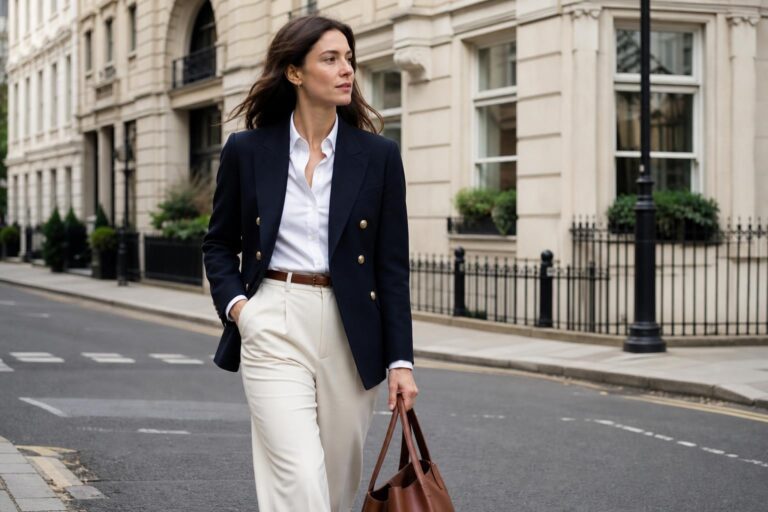
Old money style outfits are having a visible moment, but the appeal goes deeper than social media labels. What draws people in is not simply the promise of looking expensive. It is the discipline of a wardrobe that feels controlled, polished, and quiet even when the outfit itself is simple: a navy blazer, a white shirt, tailored trousers, loafers, and a coat that never competes for attention.
This aesthetic is often confused with generic luxury dressing because both rely on quality and restraint. Yet the visual identity is different. Old money style is less about display and more about continuity. The outfit looks as though it belongs to a life with longstanding habits: good tailoring, repeatable pieces, neutral tones, and fabrics that improve the whole silhouette rather than shouting for recognition.

That is why the conversation around old money style outfits now overlaps with quiet luxury and stealth wealth. The terms are related, but not identical. Quiet luxury describes the understated finish; old money style adds a stronger cultural mood, often shaped by prep-inspired fashion, heritage fabrics, and classic tailoring. The result can lean East Coast, British preppy, urban, coastal, or even slightly cinematic through references like Blair Waldorf, Kennedy and Vanderbilt energy, or the polished codes associated with Ralph Lauren and Max Mara.
The most useful way to understand this look is not as a costume, but as a system. Once you see the visual logic behind it, you can decide whether you want a full old money wardrobe or simply want to borrow its strongest ideas: tonal layering, refined accessories, better fabrics, and silhouettes that look composed in motion.
Found the dress? Keep the rest in one place.
Zarellea brings guest details, vendors, timelines, and every next step together — so your wedding plan feels as good as your look.
The controlled elegance of old money styling

At its core, old money style is built on three principles: timelessness, quality, and restraint. Timelessness means the wardrobe is anchored by pieces with a long shelf life rather than trend spikes. Quality means the garments communicate substance through fabrication, drape, and finish. Restraint means the styling avoids obvious status signals in favor of balance and understatement.
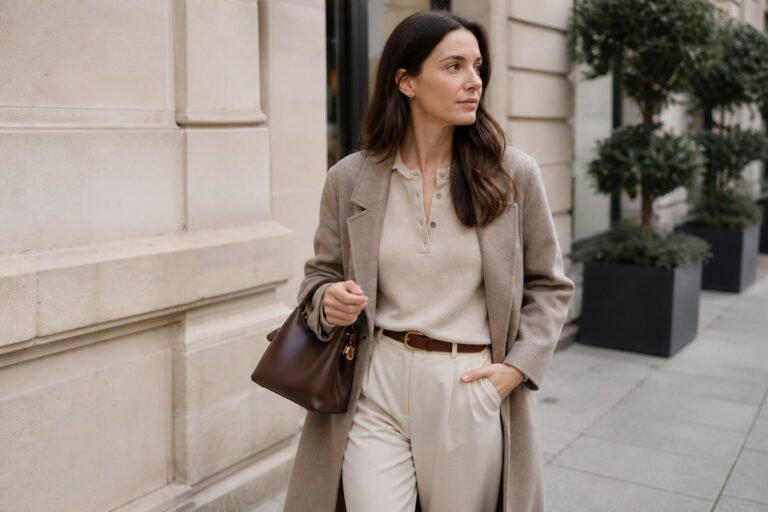
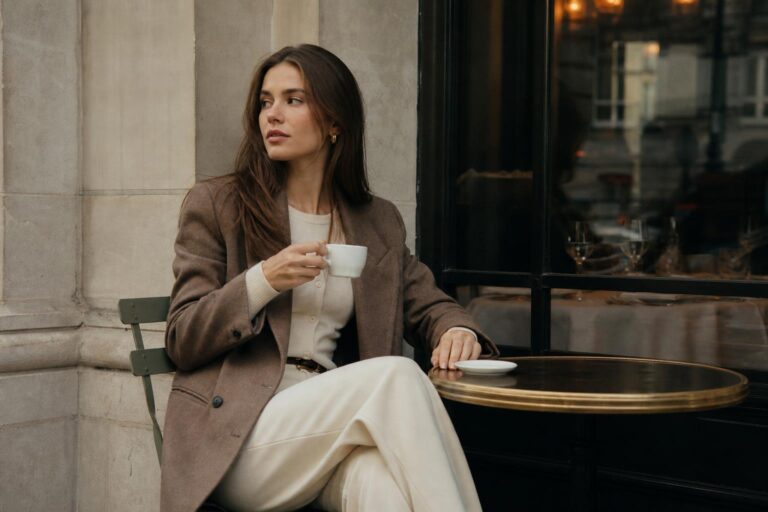
Visually, this creates a specific kind of polish. The silhouette is rarely extreme. Instead of dramatic proportion play, the outfit tends to rely on clean lines, soft structure, and measured layering. A blazer sits close enough to define the shoulders without looking aggressive. A cashmere sweater softens the line of tailored trousers. A camel coat adds length and authority without making the outfit feel theatrical.
That is the key distinction from louder luxury or streetwear luxury. The latter often treats fashion as visible expression. Old money dressing treats fashion as social fluency. The pieces do not beg to be noticed individually; they create an overall impression of ease, continuity, and assurance.
Why people often confuse it with quiet luxury
Quiet luxury and old money style share a neutral palette, clean outfit composition, and an emphasis on better materials. But old money style usually has stronger references to prep school, Ivy League tailoring, heritage fabrics, and country-house or coastal settings. Quiet luxury can be more minimalist and urban. Old money style often includes visual markers like a navy blazer, pleated skirt, cable-knit sweater, trench coat, silk scarf, or loafers that signal tradition as much as sophistication.
The mood it communicates
This aesthetic reads as disciplined, self-possessed, and stable. It is not trying to look fashion-forward in an obvious way. It wants to look established. That emotional message is part of why it resonates with people who want their wardrobe to feel more grounded and less reactive to trends.
The wardrobe architecture behind the look

Old money style outfits work best when the wardrobe is treated like a capsule rather than a collection of isolated statement pieces. The most convincing version of the aesthetic comes from repetition. The same blazer moves across workwear, travel, and weekend outfits. The same loafers work with trousers, dresses, and skirts. The same neutral coat frames multiple combinations without breaking the tone of the wardrobe.
Because of that, the real power of the style is not in buying more. It is in choosing better visual anchors. Every strong old money wardrobe tends to revolve around a small group of staples that create instant coherence.
- Crisp shirts in white or similarly refined neutral tones
- Cashmere knits and cream cable-knit sweaters
- Tailored trousers with a clean leg line
- Midi skirts or pleated skirts for softer structure
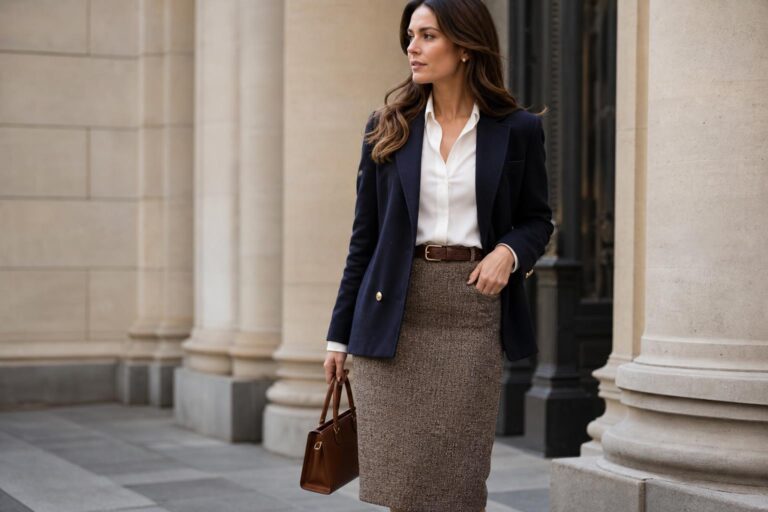
- A navy blazer as a year-round finishing piece
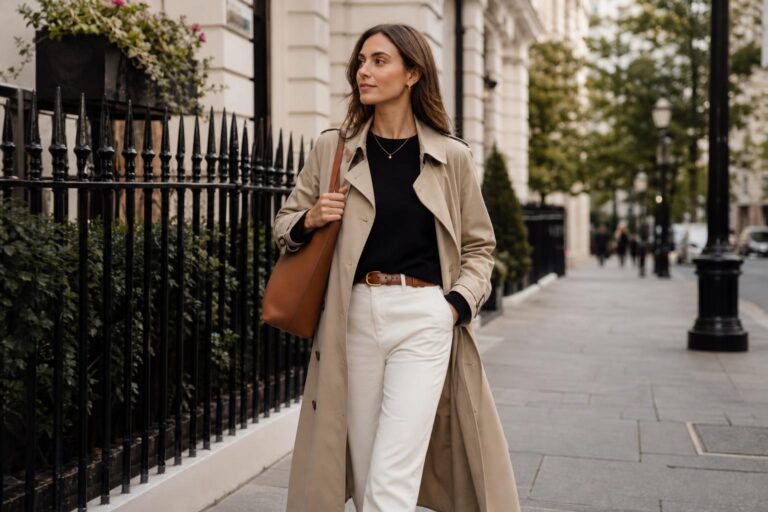
- A camel coat or trench coat for outerwear authority
- Tweed jackets for heritage texture
- Loafers, oxfords, or minimal boots
- Leather belts, leather handbags, and understated jewelry
- Silk scarves for controlled, prep-inspired detail
These pieces appear repeatedly because they solve multiple styling problems at once. They create shape without looking stiff, they layer well, and they naturally support a neutral color palette. Just as importantly, they age well visually. A wardrobe built around them looks intentional even before accessories are added.
The most versatile pieces
If only a few items are doing the heavy lifting, prioritize the navy blazer, camel coat, loafers, tailored trousers, and a soft cashmere knit. These are the pieces that most clearly establish the aesthetic without making the wardrobe feel theatrical or overly costume-like.
How silhouette creates the old money effect

What makes an outfit feel old money is often less about the item itself and more about proportion. A blazer can look collegiate, corporate, or heritage-rich depending on the way it sits over the body. A knit can read elevated or casual depending on whether it softens a tailored base or collapses the whole silhouette.
Old money dressing tends to favor controlled structure. The shoulders are neat, the hem lengths are deliberate, and the clothing skims rather than clings. This is why tailoring matters so much in the aesthetic. Even simple garments look more expensive when sleeve length, trouser break, and skirt proportion are working in harmony.
There is also a useful tension between polish and ease. A white shirt and tailored trousers can become too rigid if every line is sharp. Add a cashmere sweater over the shoulders or a trench coat with fluid movement, and the outfit relaxes without losing authority. That balance is central to the look.
Why this combination works
A structured outer layer paired with a softer knit texture creates visual hierarchy. The blazer or coat acts as the frame; the knit supplies depth; the trousers or skirt keep the base clean. Loafers or oxfords complete the line without interrupting it. This is classic outfit composition: one strong anchor, one softener, one grounding piece.
Materials that make the outfit feel credible
In old money style, fabric often does more work than decoration. Heritage fabrics and natural fibers are important because they communicate quality through texture and drape rather than through logos or overt embellishment. Cashmere, wool, tweed, flannel, and gabardine all support the visual language of the aesthetic because they hold shape, layer well, and create quiet richness.
Tweed adds depth and heritage character, especially in jackets. Cashmere softens the outfit and introduces a refined finish without making the silhouette bulky. Wool suiting keeps tailored trousers and structured layers crisp. Trench and coat fabrics matter because outerwear is one of the first things people register in the look. If the coat collapses, the whole outfit can lose authority.
This is also where the old money wardrobe separates itself from a purely trend-based interpretation. The aesthetic depends on garments that retain their integrity through repeat wear. Fabrics that pill quickly, wrinkle badly, or lose structure too fast tend to weaken the effect even if the color palette is correct.
Tips for choosing fabrics wisely
- Choose natural fibers first when possible, especially for knits, coats, and tailoring.
- Use texture strategically: tweed for depth, cashmere for softness, wool for clean shape.
- Pay attention to drape. A garment that hangs well instantly supports the quiet luxury mood.
- Think seasonally. Lighter fabrics suit travel and summer polish; heavier wool and coats carry the look through fall and winter.
The palette is restrained, but never flat
Many people reduce old money style to neutrals, but the real visual strength comes from tonal relationships rather than from color avoidance. Cream, camel, navy, white, and similarly refined shades create cohesion because they allow tailoring and texture to lead. The palette functions as a stabilizer. It prevents the outfit from feeling chaotic and keeps the eye focused on proportion and material.
That does not mean the wardrobe has to feel monotonous. A cream cable-knit sweater with navy trousers and a tan trench has more visual nuance than a louder outfit built from trend colors. The difference lies in texture contrast and tonal layering. One shade deepens another; one fabric sharpens another. The effect is subtle, but highly readable.
This is why neutral tones are so common in old money style outfits for women and men alike. The palette travels well across settings. It feels equally believable in a city wardrobe, a coastal context, or a more British preppy interpretation with tweed and tailored outerwear.
The key visual difference
A rich-looking outfit often relies on color control to suggest expense. An old money outfit uses color control to suggest habit. It looks less like someone tried to impress and more like someone knows exactly what works.
Where old money style shifts: East Coast prep, British preppy, and city polish
One reason the aesthetic feels broad is that it has regional variations. The core principles stay the same, but the mood changes with setting. This is useful because it allows the wardrobe to adapt to lifestyle rather than forcing one rigid formula.
East Coast prep
This interpretation leans into Ivy League tailoring, prepschool chic, and the clean confidence associated with coastal American privilege. Think navy blazer, white shirt, pleated skirt, loafers, cable-knit sweater, and trench coat. The energy is polished but athletic, especially for weekends and daytime settings. There is often a sense of movement built into the styling, as if the outfit should work from lunch to travel to an outdoor social event without looking overworked.
British preppy and country-house influence
Here the mood becomes more textural. Tweed, structured coats, heritage fabrics, and a slightly more grounded color story create a manor-house or countryside polish. The aesthetic is still refined, but it reads more weather-aware and less overtly crisp. It also makes room for event cues such as horseshows or polo, where tailored practicality and traditional accessories feel entirely natural.
City-based refinement
In places like NYC, London, or Paris, old money style often sharpens into sleeker quiet luxury. The blazer line becomes cleaner, the coat more architectural, and the accessories more pared back. A leather bag, minimal boots, or a silk scarf may replace more overtly preppy cues. The result feels more discreet, but still rooted in classic tailoring and timeless wardrobe staples.
Understanding these variations makes it easier to build a wardrobe that feels believable. A person commuting in the city may want more streamlined corporate refinement. Someone drawn to coastal or weekend dressing may want more knitwear, loafers, and relaxed layering.
How old money outfits function in real life
The best test of any aesthetic is whether it survives ordinary situations. Old money dressing succeeds because the formulas are practical. The wardrobe is meant to repeat, layer, and transition between settings. That functionality is part of the visual message. Clothes that look too fragile, too tight, or too trend-dependent rarely support the mood.
Corporate refinement
For work, the aesthetic is at its most convincing when the tailoring is clean and the accessories stay measured. A navy blazer over a crisp shirt with tailored trousers and loafers communicates authority without looking severe. A camel coat over the same base adds length and maturity, especially in cooler months. This formula works because every element serves a purpose: structure at the shoulder, clarity at the neckline, and stable grounding through the shoe.
Weekend prepschool chic
On weekends, the same wardrobe can become more relaxed without losing its codes. A cream cable-knit sweater, pleated skirt, leather handbag, and loafers create a softer silhouette with the same polished core. A trench coat keeps the outfit moving visually. This is where the old money look feels especially wearable for people who want elegance without feeling overdressed.
Evening understated elegance
For evening, the old money interpretation is not about dramatic embellishment. It is about controlled refinement. A dress with a clean line, a tailored coat, understated jewelry, and shoes that do not break the silhouette create a calm, expensive effect. The beauty of this approach is that it photographs and moves well without chasing obvious glamour.
Travel-friendly polish
Travel is where old money styling proves its practicality. A trench, knitwear, tailored trousers, leather bag, and loafers form an efficient capsule that looks composed while remaining comfortable enough for long hours. The reason this works is simple: every piece layers, every tone aligns, and nothing feels too precious to repeat.
Style psychology: why some people feel at home in this aesthetic
Old money style appeals to people who want a wardrobe to reduce decision fatigue. Because the pieces are stable and compatible, getting dressed becomes more about adjustment than invention. This is especially useful for those who prefer consistency, travel often, work in semi-formal settings, or simply want their clothes to project composure.
It also resonates with those who like visual discipline. A tightly edited closet of blazers, coats, shirts, loafers, and knitwear offers clarity. There is less risk of one item disrupting the whole wardrobe. In that sense, old money dressing is not only aesthetic. It is strategic.
At the same time, it will not suit everyone equally. Anyone who prefers highly expressive fashion, bold trend shifts, or strong statement dressing may find the aesthetic too controlled. That is not a flaw. It simply means the style works best for people who value polish over novelty and continuity over spectacle.
The role of accessories in making the outfit believable
Accessories can either refine old money style or distort it. Because the clothing itself is usually restrained, the accessories carry unusual importance. A leather belt, a polished leather handbag, a silk scarf, understated jewelry, and discreet eyewear complete the look without competing for attention.
This is also where a lot of styling mistakes happen. If the clothing is grounded in quiet luxury but the accessories are too loud, the outfit shifts toward performance. Old money style prefers accessories that reinforce the silhouette and color story rather than interrupting it.
There is room here for heritage markers as well. Watch houses such as Patek Philippe or vintage Cartier fit the aesthetic because they align with the broader language of understated status and long-term value. The same logic applies to bags and shoes: they should suggest durability and discernment rather than immediate visibility.
Tips for finishing the look
- Use one accessory as the visual anchor, not five competing details.
- Keep metals, leather tones, and shoe mood consistent with the rest of the outfit.
- A silk scarf can elevate a basic blazer-and-shirt combination without making it feel forced.
- Understated jewelry reads stronger than trend-driven statement accessories in this aesthetic.
Brand benchmarks without turning the outfit into a logo exercise
Brand references matter in old money style mostly as quality benchmarks, not as advertising. Ralph Lauren is often associated with the polished, East Coast prep dimension of the look. Max Mara supports the more refined coat-driven side of the aesthetic. Burberry aligns naturally with trench coats, heritage outerwear, and British polish. Chanel tweed interpretations are logically connected to the aesthetic through tailoring and heritage texture.
But wearing recognizable labels is not the point. The point is understanding what these references signal: clean construction, classic silhouettes, and pieces that fit into a longer wardrobe story. A convincing old money outfit can be assembled through accessible basics, second-hand finds, or carefully chosen staples, provided the fabrication and fit support the same visual logic.
This is why budget-conscious approaches can still work. The aesthetic is more forgiving of repetition than of inconsistency. One good camel coat and one well-cut blazer often do more for the wardrobe than several trend-driven purchases that do not align with the rest of the closet.
What social media gets wrong about old money dressing
Much of the online interpretation turns the aesthetic into a surface formula: loafers, pleated skirt, white socks, blazer, sunglasses. The problem is not the pieces themselves. The problem is that the look gets flattened into costume. Real old money styling depends on proportion, repetition, fabric credibility, and context. Without those things, the outfit can read like imitation rather than fluency.
Another common mistake is overloading the look with symbols of wealth. Quiet luxury and stealth wealth work because they withdraw. If every element is signaling luxury at once, the outfit starts to move away from old money style and toward a richer-looking but less convincing version of refinement.
Styling mistakes to avoid
- Choosing stiff or low-quality fabrics that undermine the clean silhouette
- Stacking too many preppy signals into one outfit
- Ignoring tailoring and relying only on color palette
- Using flashy accessories that break the understated mood
- Buying isolated “old money” pieces without building a cohesive capsule
Seasonal old money outfits and why they feel different
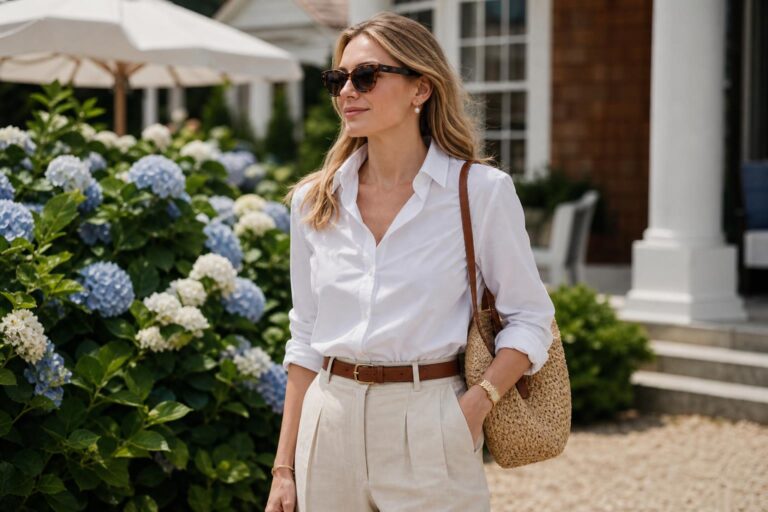
Seasonality changes the mood of old money style more than the identity of it. In spring and summer, the aesthetic becomes lighter, more coastal, and more visibly prep-inspired. Shirts, dresses, loafers, and lighter outerwear create easy polish. In fall and winter, the look deepens into coats, tweed, wool, and stronger layering. The silhouette gains weight, but should never feel crowded.
A summer version might rely on a crisp shirt, tailored bottoms, loafers, and a trench for unpredictable weather. A winter version could center on a camel coat, cashmere, wool trousers, and minimal boots. The continuity comes from color restraint, tailoring, and fabric quality, not from identical item choices across seasons.
This is one reason the aesthetic ages well. It is built to evolve through climate and setting without losing its visual principles. The same wardrobe can shift from coastal daytime ease to city winter polish simply by changing the weight of the fabrics and the density of the layering.
How to build old money style outfits on a realistic budget
The most practical route is to begin with silhouette and fabric, not labels. Focus on one or two outer layers, one good pair of loafers or similarly polished shoes, a white shirt, tailored trousers, and quality knitwear. Once those foundations are in place, the wardrobe starts to create the old money effect even if every item is not premium.
Second-hand and thrifted routes make particular sense here because the aesthetic values heritage pieces, durable fabrics, and classic cuts. Older blazers, coats, and leather accessories often align more naturally with the style than trend-led fast purchases. A small tailoring budget can also transform an average piece into one that looks far more expensive.
Budget dressing does come with trade-offs. The easiest pieces to fake are shirts, scarves, and some accessories. The hardest pieces to fake are coats, knitwear, and structured tailoring because fabric quality is more visible there. If spending selectively, spend where drape and structure matter most.
An efficient starter approach
- Start with a blazer, coat, knit, tailored bottom, and loafers.
- Choose neutral tones so every purchase multiplies your outfit options.
- Use tailoring to improve fit before adding more pieces.
- Add a silk scarf or leather bag only after the core silhouette is strong.
How to blend old money with your own wardrobe instead of dressing in costume
The easiest way to wear this aesthetic well is to borrow its structure without erasing your personality. If your wardrobe already leans minimalist, old money elements can arrive through better outerwear, loafers, and knitwear. If you prefer more feminine dressing, a pleated skirt, refined dress, camel coat, and understated jewelry can create the same mood with a softer line.
Even people drawn to pop-culture references like Blair Waldorf do not need to copy every prep cue literally. The smarter approach is to isolate what made that visual identity work: controlled layering, neat tailoring, polished accessories, and a coherent palette. The same applies to Kennedy or Vanderbilt-coded dressing. The lesson is less about imitation and more about visual discipline.
Blending also keeps the style modern. A city wardrobe may pair a classic blazer with more streamlined tailoring. A coastal wardrobe may emphasize cable knits and trench coats. A traveler may prioritize wrinkle-resistant versions of the same shapes. The aesthetic remains intact because the underlying styling philosophy is still there.
Maintenance is part of the aesthetic
Old money style depends on clothing that looks cared for. This is not a minor detail. Quiet luxury fails quickly when knitwear pills, leather looks neglected, or tailoring loses shape. Garment care, alteration planning, and sensible wardrobe rotation all support the visual integrity of the look.
This practical side is easy to overlook, but it matters as much as the purchase itself. Coats and blazers should hold their structure. Cashmere needs proper care to preserve softness and line. Leather goods should stay polished enough to look intentional, not distressed by neglect. Because the aesthetic is simple, flaws stand out more clearly.
There is also long-term value in maintaining a smaller wardrobe of stronger pieces. Garments that can be altered, reworn, and even resold fit naturally into the philosophy of classic dressing. The wardrobe becomes more stable, and the visual result becomes more convincing with time.

FAQ
What defines old money style outfits?
Old money style outfits are defined by timelessness, quality, and restraint. They usually rely on classic tailoring, neutral tones, heritage fabrics, and repeatable wardrobe staples such as blazers, cashmere knits, tailored trousers, trench coats, loafers, and understated accessories.
How is old money style different from quiet luxury?
Quiet luxury focuses on understated refinement and minimal display, while old money style adds stronger cultural and visual references such as prep-inspired fashion, Ivy League tailoring, heritage fabrics, and classic pieces like tweed jackets, pleated skirts, loafers, and navy blazers.
How do I dress old money style without looking like I am wearing a costume?
The key is to build around fit, fabric, and proportion rather than collecting obvious symbols of the trend. Start with a few strong staples, keep the palette controlled, and avoid overloading the outfit with too many preppy details or flashy accessories at once.
What are the best starter pieces for old money outfits?
A strong starting point is a navy blazer, a camel coat or trench coat, a white shirt, tailored trousers, a cashmere or cable-knit sweater, loafers, and a leather bag. These pieces create the clearest foundation and can be worn across work, weekend, and travel settings.
Can I create old money style outfits on a budget?
Yes, especially if you focus on second-hand or thrifted tailoring, coats, leather accessories, and classic knitwear. This aesthetic depends more on quality, cohesion, and silhouette than on visible labels, so a smaller wardrobe of well-chosen basics often works better than frequent trend purchases.
Which fabrics make old money outfits look more convincing?
Cashmere, wool, tweed, flannel, and gabardine support the look particularly well because they add structure, texture, and depth without needing decoration. Natural fibers usually perform better visually because they drape more elegantly and reinforce the quiet luxury mood.
Are old money style outfits only for women?
No. The aesthetic appears across men’s and women’s wardrobes through similar principles: classic tailoring, refined outerwear, loafers or oxfords, knitwear, and restrained accessories. The exact items may shift, but the visual logic stays consistent.
Which brands are often associated with this aesthetic?
Ralph Lauren is closely linked to the prep-inspired side of the look, Max Mara is a strong reference for refined outerwear, and Burberry fits naturally into trench-based heritage styling. Chanel tweed interpretations also align with the aesthetic through classic tailoring and fabric heritage.
What accessories work best with old money style outfits?
Leather belts, leather handbags, silk scarves, understated jewelry, and discreet eyewear work best because they support the outfit rather than dominate it. Watches associated with long-term value, such as Patek Philippe or vintage Cartier, also fit the understated status language of the aesthetic.
Is old money style only for wealthy people?
No. The aesthetic may be inspired by longstanding wealth codes, but the wearable version is really about discipline, repetition, and thoughtful purchasing. Anyone can adapt the principles through a focused capsule wardrobe, good tailoring, careful garment care, and a preference for timeless pieces over trend turnover.