Casual Autumn Outfits For Real Life
Casual autumn outfits that work in real life
Autumn dressing usually sounds easier than it feels. The visual idea is simple: layers, texture, richer color, and that relaxed in-between-season balance. The practical reality is more complicated. Temperatures shift by the hour, outerwear starts to matter, footwear choices affect comfort, and the line between polished and overly styled becomes very thin. That is exactly why casual autumn outfits need more than inspiration. They need clear outfit composition, useful layering logic, and pieces that earn their place in a wardrobe.
The strongest casual autumn outfits are not built from random seasonal trends. They come from a reliable framework: a visual anchor, controlled proportion play, adaptable layers, and fabrics that make sense for changing weather. Whether you are dressing for daily errands, a relaxed office, travel days, coffee runs, or weekend plans, the goal is the same. You want outfits that feel easy, look intentional, and can be recreated without constant shopping.

This guide approaches casual autumn outfits as a style intelligence exercise rather than a mood board. The focus is practical: what to buy first, which combinations are most versatile, how to make everyday outfits look more expensive, how to avoid common mistakes, and how to adapt silhouettes for petite, curvy, or tall proportions. The result is a wardrobe strategy that makes autumn dressing easier every single morning.
The foundation behind effective autumn styling
Before building individual outfits, it helps to define what makes an autumn look successful. In practical terms, the season asks for flexibility. A great outfit has to handle indoor heat, outdoor chill, possible wind, long walks, and the need to remove or add layers without disrupting the overall composition.
Found the dress? Keep the rest in one place.
Zarellea brings guest details, vendors, timelines, and every next step together — so your wedding plan feels as good as your look.
Three style principles usually matter most. First is silhouette balance. If one piece is oversized, another should create shape or structure. Second is texture contrast. Autumn outfits become more visually complete when smooth fabrics are paired with knits, denim, leather-like finishes, or brushed materials. Third is tonal layering. Keeping colors in the same family often makes casual outfits look more elevated, even when the pieces themselves are basic.
This is also where practicality and style stop being separate ideas. A structured layer helps with warmth and gives an outfit definition. A good pair of shoes affects both proportion and comfort. A bag large enough for daily essentials changes whether a look truly functions in everyday life. Autumn dressing works best when every item contributes both visually and functionally.

What to buy first if your fall wardrobe feels incomplete
- A lightweight jacket or blazer that can layer over knits and tees
- A reliable pair of jeans or casual trousers with a flattering rise
- A knit that is soft enough for direct wear and thin enough for layering
- Closed-toe shoes that can handle longer wear
- A neutral bag that works with multiple color stories
These pieces create the highest outfit return because they combine easily and solve daily dressing decisions. If your budget is limited, start with the layer, the bottoms, and the shoes. Those three elements shape most of the outfit’s overall impression.
The easiest casual autumn outfits to recreate
Not every seasonal look deserves equal effort. Some combinations are useful because they work across different routines and body types with only small adjustments. These are the outfits worth repeating.
Jeans, knitwear, and a structured outer layer
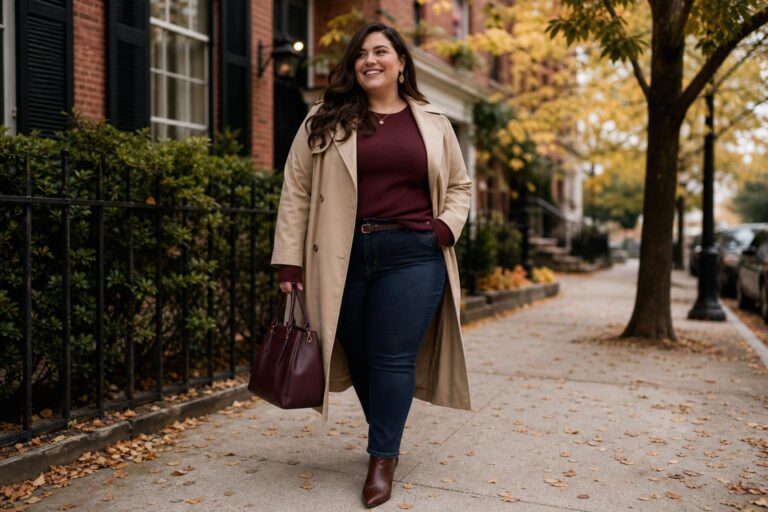
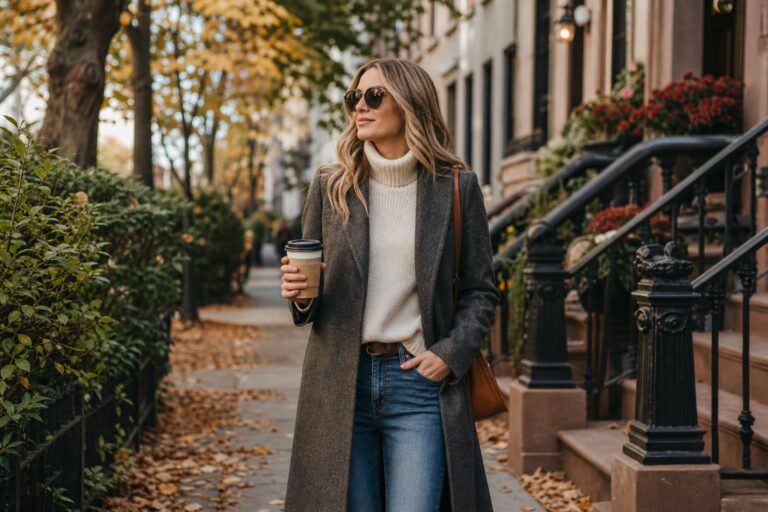
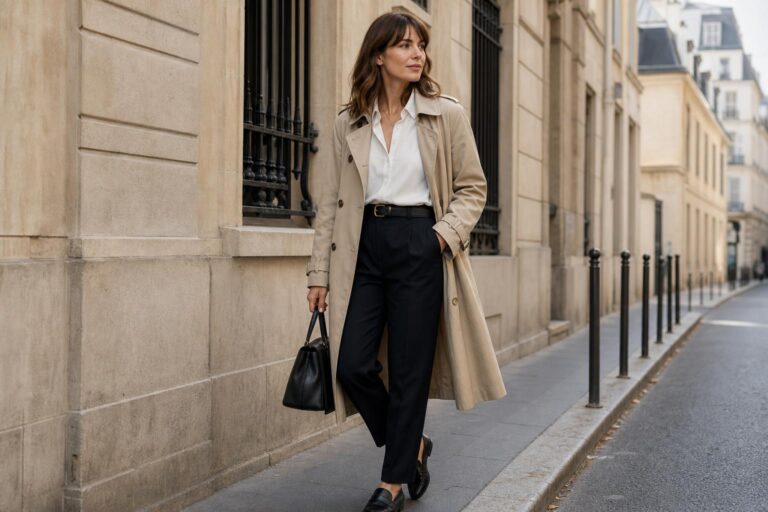
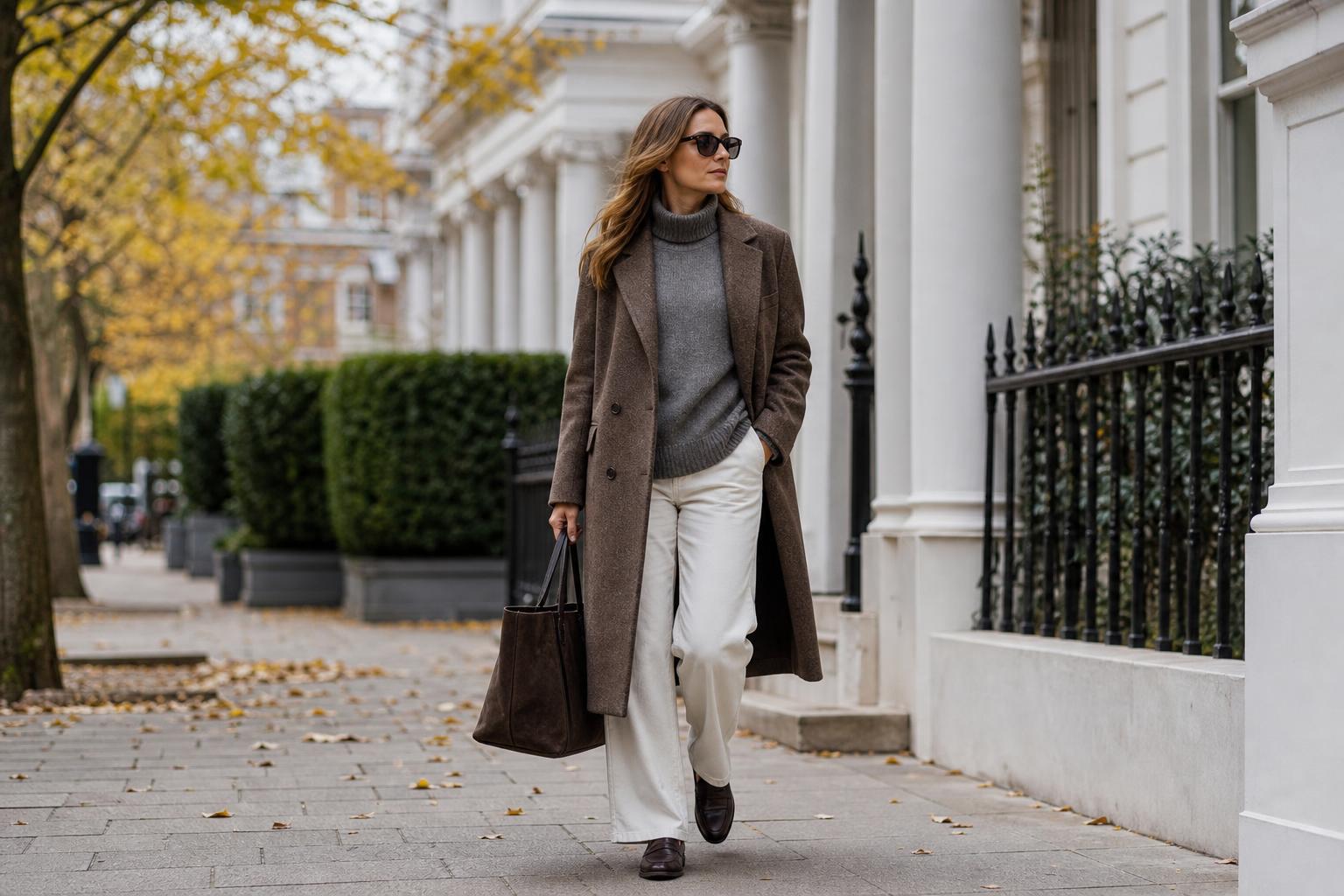
This is one of the most dependable casual autumn outfits because it solves several style problems at once. Jeans provide a grounded base, knitwear adds seasonal texture, and a structured jacket or blazer acts as the visual anchor. The reason it works is proportion control: denim keeps the outfit casual, while the outer layer introduces shape and polish.
For everyday wear, straight-leg or relaxed jeans are often the most versatile. They pair well with ankle boots, loafers, or clean sneakers and allow room for socks when temperatures drop. A midweight knit is more useful than a bulky sweater because it can be worn alone or layered under outerwear without adding too much volume.
Petite frames usually benefit from a shorter jacket length or a front tuck to keep the leg line visible. Curvy proportions often look balanced with jeans that define the waist and a jacket that skims rather than clings. Taller frames can carry more oversized silhouettes, but the outfit still looks sharper when at least one element, such as the waistband or sleeve line, keeps some structure.
Casual trousers with a simple top and layered knit
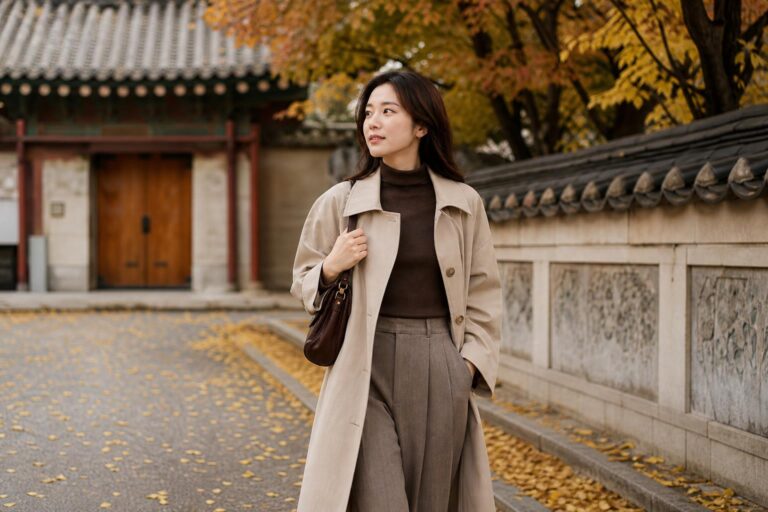
This combination is ideal for readers who want casual outfits that feel softer than denim. A pair of neutral trousers creates a cleaner line, especially for work-from-cafe days, low-key meetings, or travel. Add a simple top as the base and use a cardigan or lightweight sweater as the second layer. The outfit reads intentional because the trouser line adds polish while the knit preserves comfort.
To keep the look from feeling flat, use texture variation. Smooth trousers with a ribbed knit or brushed cardigan create visual depth without requiring bold color. If you prefer a more relaxed silhouette, choose trousers with drape and keep the top closer to the body. If you prefer more structure, reverse the formula and wear a looser knit with straighter trousers.
A casual dress made autumn-ready with practical layers
Dresses remain useful in autumn when the supporting pieces are chosen carefully. The common mistake is treating a dress like a summer item and only adding a jacket at the last moment. A stronger approach is to build the outfit around seasonal support pieces first: boots or closed shoes, a knit layer, and outerwear that complements the dress length.
This outfit works especially well for those who want comfort with minimal styling effort. The dress creates a one-piece base, which reduces outfit decisions, while the added layers provide weather relevance. For petite wearers, shorter hemlines or a visible waist can prevent the outfit from feeling heavy. For curvier shapes, dresses with subtle structure through the waist or shoulder often layer more cleanly under jackets. Taller wearers can experiment more easily with midi lengths and oversized outer layers because their vertical line accommodates extra fabric volume.

Why some autumn outfits look expensive even when they are simple
The difference between random layering and elevated casual autumn outfits usually comes down to visual discipline. Expensive-looking outfits rarely rely on many statement pieces at once. Instead, they use consistency: a restrained seasonal palette, coherent fabric direction, and clean lines.
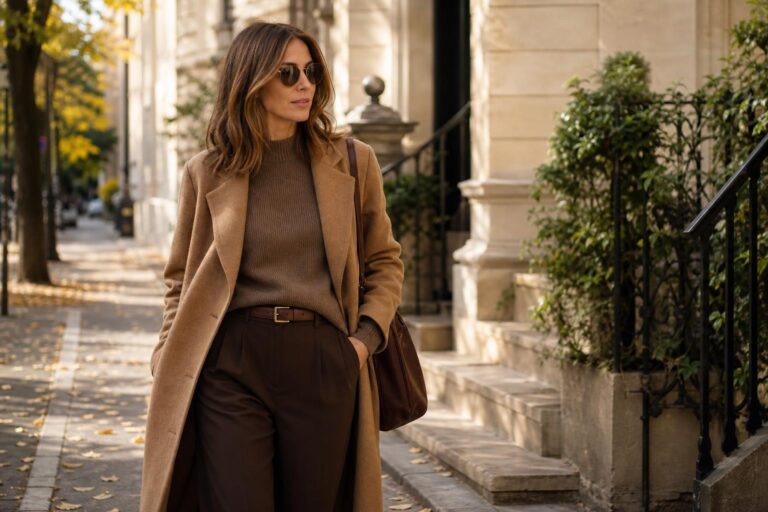
Tonal dressing is especially effective in autumn. Keeping pieces within a narrow color range creates a long, uninterrupted visual line, which often looks more polished than high-contrast combinations. Texture then prevents the outfit from becoming dull. For example, even a simple combination of knitwear, denim, and a smooth jacket can look refined when the color relationship feels controlled.
Fit also matters more than trend level. A basic sweater that sits well at the shoulder and a pair of jeans with a good rise will outperform trend-driven pieces that pull, bunch, or overwhelm the frame. This is useful from a budget perspective because it shifts the investment from novelty to longevity.
Small upgrades that change the whole outfit
- Steam or press layers so the outfit looks intentional rather than rushed
- Use one structured piece, such as a blazer or sharper jacket, to anchor softer fabrics
- Keep footwear clean and seasonally appropriate
- Choose a bag that matches the outfit’s overall tone instead of introducing unrelated color
- Limit competing details so texture and silhouette can do the work
These decisions are especially important in casual dressing, where simple items are exposed. When the outfit itself is minimal, finishing details become more visible.
Layering logic for unpredictable autumn weather
Layering is often discussed visually, but its practical role matters just as much. Effective autumn layering creates removable warmth without destroying silhouette balance. That means choosing pieces that can stack comfortably and still look complete if one layer comes off indoors.
The most useful sequence is usually a breathable base, a textural middle layer, and an outer layer with shape. This order helps the outfit remain adaptable through temperature changes. It also prevents bulk from collecting around the torso, which is a common reason autumn outfits feel awkward rather than relaxed.

How to layer without adding visual weight
Start with thinner fabrics closest to the body and add thickness gradually. If the base layer is already heavy, the outfit can quickly become stiff and uncomfortable. Keep at least one area of the outfit visually streamlined, usually the waistline, neckline, or lower leg. This preserves shape even when multiple layers are involved.
Color can help here too. When layers belong to a similar tonal family, the outfit reads as cohesive rather than crowded. This is particularly useful for curvy or petite readers who want warmth without losing definition.
Tips for commuting, travel, and long days out
- Choose a middle layer that still looks complete if the jacket comes off
- Avoid overly bulky sleeves if you expect to wear a coat over knitwear
- Prioritize shoes that can handle walking, not just the first ten minutes of wear
- Use a bag size that fits a scarf or compact layer without becoming impractical
- Build around one outerwear piece that works with most of your wardrobe
This is where real-life functionality becomes visible. An outfit that works only while standing still is not a strong casual autumn outfit. Good styling accounts for motion, changing temperatures, and the fact that most people need to carry things, sit comfortably, and walk more than expected.
Autumn color strategy that makes outfit planning easier
The easiest way to simplify casual autumn outfits is to reduce the number of unrelated colors in your wardrobe. A controlled seasonal palette makes mixing and matching faster, which matters if you want a capsule-friendly closet.
Autumn color planning works best when it combines neutrals with a few deeper accents. The neutral pieces form the backbone of the wardrobe, while accent colors create variation without making every outfit feel entirely new. This is useful for both budget shopping and repeat wear because the same outer layer or shoe can support multiple combinations.
Tonal layering is especially effective in casual dressing because it reduces visual interruption. When top, layer, and shoe share some harmony, the outfit appears more deliberate. That does not mean everything needs to match exactly. It means each item should feel related enough to maintain cohesion.
How to prevent autumn palettes from feeling heavy
Depth in color is useful for the season, but too many dark pieces in the same outfit can flatten the look. The solution is contrast through texture or one lighter element. A softer knit, a lighter top under a jacket, or a shoe that breaks up a solid block of darkness can make an outfit feel more dimensional.
This matters for body proportion as well. Monochromatic or near-monochromatic looks often elongate the frame, while strong horizontal breaks can visually shorten it. Readers who are petite may prefer fewer abrupt color divisions. Taller readers can usually handle more contrast without losing balance.
Outfit composition for different body proportions
Casual autumn outfits become much easier to build once you understand which styling moves support your proportions. The goal is not to follow strict rules. It is to use proportion play strategically so clothes work with your frame rather than against it.
For petite frames
Petite dressing benefits from visual clarity. Too many layers, long hems, or oversized pieces can compress the frame. Keep at least one line clean and visible, such as the waist or the ankle. Cropped jackets, higher rises, and tonal combinations tend to support length. If you love oversized knitwear, pair it with a more streamlined bottom and avoid stacking excessive volume with long outerwear.
For curvy frames
Curvy proportions often look strongest when outfits acknowledge shape rather than hiding it completely. That does not mean everything should be fitted. It means structure matters. A defined waist, a shoulder line with some integrity, or trousers that sit cleanly at the hip can improve silhouette balance. Soft layers work beautifully, but they usually perform best when paired with one piece that creates direction and prevents the outfit from becoming visually diffuse.
For tall frames
Tall readers often have more freedom with long outerwear, wide-leg trousers, and larger-scale layering. The main consideration is maintaining intention. Because extra fabric is easier to carry on a tall frame, outfits can drift into shapeless territory if every piece is oversized. Use one visual anchor, such as a fitted knit, a belt, or a structured jacket, to keep the composition controlled.
Budget-smart autumn dressing without losing polish
Recreating casual autumn outfits on a budget is less about finding exact versions of specific looks and more about understanding which wardrobe staples deliver the most versatility. If the item only works in one outfit, it is rarely the best place to start.
Outerwear, denim or trousers, and practical footwear usually deserve the first share of the budget because they carry repeat wear and affect overall outfit perception most strongly. Trend details can come later through accessories, knit textures, or a seasonal color update. This approach also reduces the risk of impulse purchases that look good in isolation but fail in daily rotation.
Where to save and where to invest
- Invest more in shoes you will wear often and layers that need to hold shape
- Save on basic tops if the fabric sits well and layers smoothly
- Be selective with trend-led items unless they coordinate with existing staples
- Prioritize pieces that work across casual, work, and travel settings
- Choose washable or low-maintenance items when possible for higher long-term value
A useful shopping test is simple: can this item work in at least three realistic autumn outfits you would actually wear? If the answer is no, it is probably not a priority purchase.
Where casual autumn outfits need context: weekends, relaxed workdays, and travel
One reason autumn outfit advice often feels vague is that casual does not mean only one thing. A weekend market outfit, a relaxed office look, and a travel-day combination may all be casual, but their functional demands are different. The strongest wardrobe choices account for context before aesthetics.
Weekend dressing
Weekend casual autumn outfits should emphasize comfort and movement without slipping into visual carelessness. Denim, knitwear, and practical shoes usually form the best base. Add one structured element, such as a sharper jacket or cleaner bag, so the outfit keeps definition. This creates an easy balance between relaxed dressing and intentional style.
Relaxed workdays
For casual office settings, swap the most informal piece rather than changing the whole formula. Trousers instead of distressed denim, a structured knit instead of a slouchier one, or loafers instead of sneakers can shift the outfit toward polish while keeping autumn comfort intact. The styling logic is efficient because the wardrobe remains versatile across both work and off-duty use.
Travel and day-long wear
Travel outfits need stronger functional planning. Layers should be easy to remove, shoes must hold up to walking, and fabrics should resist looking crumpled too quickly. This is one of the clearest examples of why casual autumn outfits must be judged by wearability, not only appearance. An outfit that looks balanced in a mirror but feels restrictive in transit is not a successful travel look.
Common mistakes that weaken autumn outfit composition
Most styling mistakes in autumn come from either too much volume, too little structure, or poor weather planning. These problems are easy to correct once they are visible.
- Wearing all oversized pieces at once and losing silhouette definition
- Choosing shoes that do not match the weight of the outfit
- Adding random layers that disrupt the outfit’s color harmony
- Using fabrics that feel out of season and make the outfit look disconnected
- Buying statement pieces before securing reliable basics
- Ignoring comfort, then abandoning the outfit halfway through the day
A frequent issue is forgetting that autumn outfits are seen in motion. A jacket that constantly needs adjustment, boots that limit walking, or sleeves that bunch awkwardly under outerwear may seem minor during styling but become major irritations in practice. Functional friction is often what stops people from repeating outfits, even if the look was visually strong.
Tip: edit one element before adding another
If an outfit feels off, do not keep adding accessories or extra layers. Instead, remove one element and reassess the silhouette. Casual autumn outfits usually improve through editing. One better jacket or one cleaner shoe choice often solves more than multiple small additions.
How to transition outfits across the season
Early autumn, mid-season layering, and colder late-autumn days all require slightly different styling decisions. The most efficient wardrobes adapt through fabric weight and layer count rather than complete outfit reinvention.
Early in the season, lighter layers do most of the work. A simple top, jeans or trousers, and a blazer or lightweight jacket usually feel sufficient. As temperatures drop, knitwear becomes more central and shoes need more coverage. Later in the season, outerwear moves from accent to primary style piece, which means its fit, shape, and compatibility with the rest of the wardrobe become even more important.
This gradual approach is useful for shopping as well. Buy adaptable core pieces first, then add colder-weather support items once you know which outfits you are repeating most. That avoids overbuying seasonal pieces that do not integrate well.
Tip: build around repeatable formulas, not one-time looks
A formula such as trousers, fitted top, knit layer, and practical shoe can generate many outfits through small changes in color, texture, and outerwear. This is far more effective than chasing highly specific combinations that are hard to repeat. The best casual autumn outfits are modular.
Building a compact autumn capsule from casual staples
A capsule approach makes autumn dressing simpler because the season naturally favors repetition. Layers come back into rotation, shoes need to coordinate with more than one hemline, and outerwear is seen often enough that poor choices become obvious quickly. A compact wardrobe reduces those problems.
The ideal casual autumn capsule is not about strict minimalism. It is about compatibility. Each item should connect to several others through color, proportion, or function. That means your best sweater should work with both jeans and trousers. Your jacket should layer over at least two knit options. Your shoes should support both the most relaxed outfit and the slightly more polished one.
Core categories to keep in rotation
- Two to three tops that layer easily
- Two knit options with different weights or shapes
- One structured outer layer and one more relaxed layer
- Two bottoms with distinct functions, such as jeans and trousers
- Two shoe options, one more polished and one more walkable
- One everyday bag that supports most outfits
This structure supports repeat wear while still allowing variation through proportion, layering, and color. It also helps prevent the common shopping mistake of buying multiple versions of the same item while neglecting categories that actually complete outfits.
Final styling perspective
The best casual autumn outfits are rarely the most complicated. They are the ones built with clear styling logic: a balanced silhouette, controlled layering, practical footwear, and a palette that makes repeat wear easy. Once those foundations are in place, even simple combinations can feel elevated.
Autumn style becomes much more manageable when you focus on versatility over novelty. Buy the pieces that solve daily dressing first. Pay attention to fabric behavior, proportion, and weather relevance. Let outerwear, knitwear, trousers, denim, and shoes work together instead of competing. That is how a seasonal wardrobe starts to look polished and feel effortless at the same time.

FAQ
What are the easiest casual autumn outfits to wear every day?
The easiest formulas are usually jeans with knitwear and a structured outer layer, casual trousers with a simple top and cardigan, or a dress made autumn-ready with practical shoes and a jacket. These combinations work because they balance comfort, weather adaptability, and visual structure.
What should I buy first for a casual autumn wardrobe?
Start with the pieces that create the most outfit combinations: a versatile jacket or blazer, reliable jeans or trousers, a layerable knit, and comfortable closed-toe shoes. These staples do more for daily wear than highly specific trend pieces.
How can I make casual autumn outfits look more expensive?
Focus on tonal layering, clean fit, and one structured element in the outfit. Keep shoes in good condition, avoid too many competing details, and use texture contrast to add depth. Simple outfits usually look more elevated when the color story is controlled and the silhouette is intentional.
Do casual autumn outfits work for petite, curvy, and tall body types?
Yes, but the styling adjustments matter. Petite frames often benefit from clearer lines and less bulk, curvy frames usually look strongest with some visible structure or waist definition, and tall frames can carry longer layers or more volume as long as the outfit still has a visual anchor.
How do I recreate autumn outfits on a budget?
Prioritize staples that can be worn in multiple ways, especially outerwear, bottoms, and shoes. Save on basic tops and avoid buying items that only work in one outfit. A budget-friendly wardrobe looks stronger when each piece supports several realistic outfit combinations.
What shoes are most practical for casual autumn outfits?
Closed-toe shoes that can handle walking are usually the strongest choice. The most practical options are the ones that work with both jeans and trousers and feel appropriate for changing weather. Comfort matters because an outfit is only successful if you can wear it through a full day.
How can I layer for autumn without looking bulky?
Use thinner fabrics close to the body, add texture through a mid-layer, and finish with an outer layer that adds shape. Keep at least one area streamlined, such as the waist or lower leg, so the outfit maintains definition even with multiple layers.
What should I avoid when styling casual autumn outfits?
Avoid wearing all oversized pieces at once, combining unrelated colors without a clear palette, and choosing shoes that do not match the weight or function of the outfit. Another common mistake is shopping for statement pieces before securing basics that actually make daily styling easier.