French Minimalist Wardrobe for Polished Everyday Style
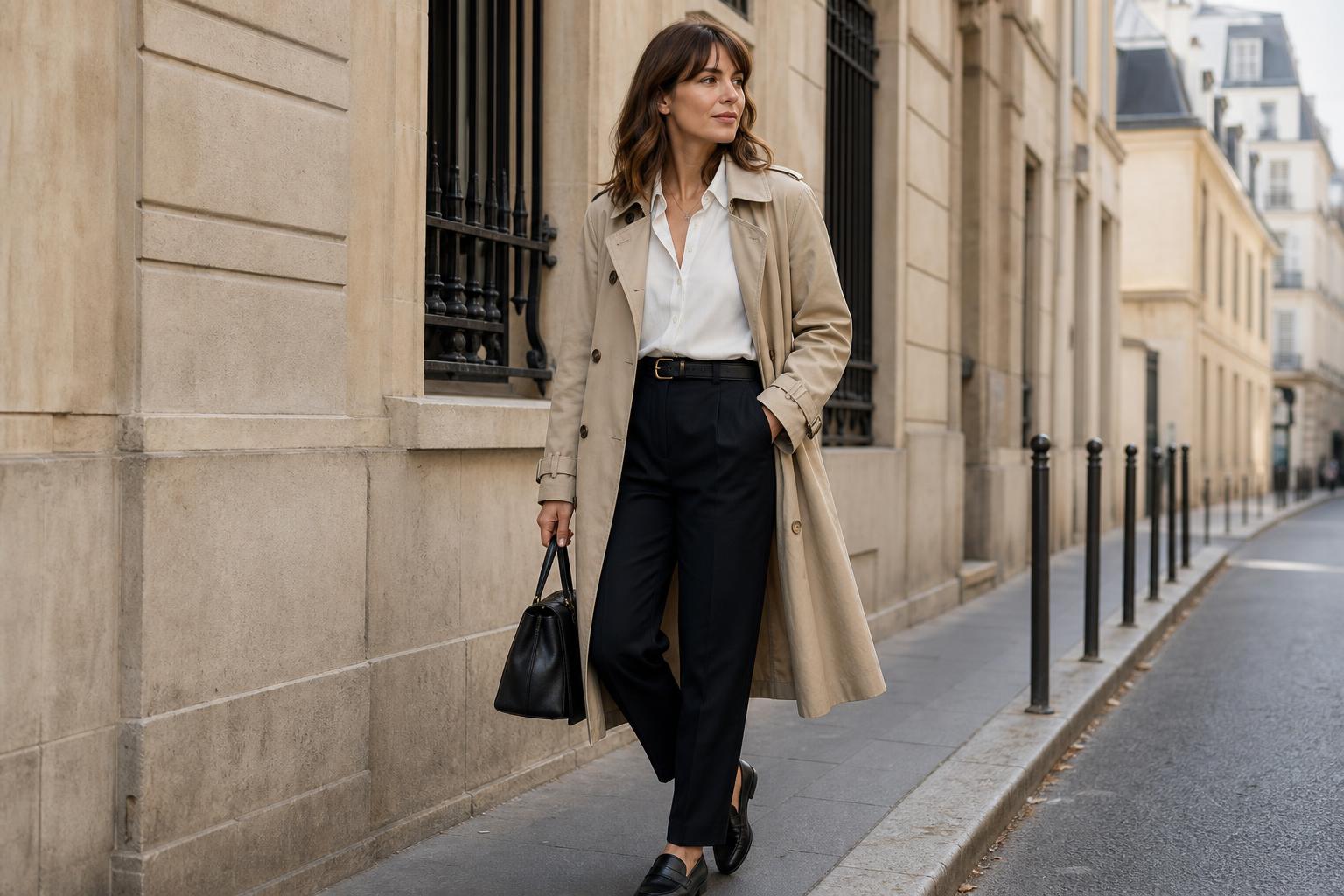
A french minimalist wardrobe earns its appeal in the moments that usually expose weak clothing choices: a rushed weekday morning, a carry-on-only trip, an unpredictable temperature swing, or a workday that turns into dinner. The strength of this style is not only aesthetic. It is structural. Built around tailored silhouettes, a neutral palette, and high-repeat staples, it reduces friction while still looking intentional. The Paris association matters here because Parisian style is repeatedly framed around editing rather than excess: fewer pieces, better proportion, stronger fabric choices, and enough personality through details like a silk scarf, a structured bag, or a sharp trench coat.
The most functional version of a french minimalist wardrobe is essentially a capsule wardrobe with a distinctly French point of view. That means clean lines, timeless pieces, practical elegance, and enough flexibility to move across casual, professional, and travel settings. Whether your inspiration comes from the Chanel legacy, a Jacquemus mood, the restraint of A.P.C., the everyday polish of Sézane, or the accessible simplicity of COS, Zara, and H&M, the goal is the same: a closet that works harder without looking overworked.

What defines the French minimalist approach
A minimalist wardrobe becomes French in its styling logic. It is less about owning only a tiny number of garments and more about selecting pieces with visual discipline. Neutral colors create continuity. Tailoring gives shape. Fabric quality adds depth, so even a simple white shirt or knitwear looks considered rather than flat. The result is a wardrobe that feels calm but never blank.
Three principles sit at the center of this approach. First, quality over quantity. Second, timelessness over novelty. Third, silhouette balance over decoration. A tailored blazer, straight-leg denim, a trench coat, and loafers are not essentials because they are famous staples. They are essentials because they solve common dressing problems: they layer well, flatter multiple body types, and adapt to more than one setting.
Found the dress? Keep the rest in one place.
Zarellea brings guest details, vendors, timelines, and every next step together — so your wedding plan feels as good as your look.
Paris and French fashion heritage also shape the visual language. References to Coco Chanel, Dior, Celine, and Jacquemus often appear because they help explain the spectrum of French minimalism. Chanel signals polished ease and enduring structure. Jacquemus suggests a cleaner, sunlit simplicity with airy lines. Celine and A.P.C. sharpen the idea of pared-back sophistication. Even when shopping from COS, Zara, or H&M, the style still follows these foundations: refined silhouettes, controlled color, and clothes that can be remixed without strain.

The wardrobe edit comes before the shopping list
Many people try to build a capsule wardrobe by buying everything at once. That usually creates duplication. A more intelligent method is to edit first. Look at what already repeats in your wardrobe and what consistently gets ignored. If you own three black blazers but no practical trench coat, the issue is not a lack of style inspiration. It is imbalance within the wardrobe system.
The French minimalist method rewards precision. Before buying, sort your clothing into three groups: dependable basics, occasional pieces, and friction pieces. Dependable basics are the garments you reach for when you need reliability. Occasional pieces may still belong if they layer easily with your core palette. Friction pieces are the ones that require special shoes, awkward underlayers, or a specific mood. Those are the garments that quietly sabotage a capsule.
What to evaluate during your wardrobe edit
- Does the piece work with at least three other items you already own?
- Does the fabric behave well for your lifestyle, or does it wrinkle, cling, or overheat too easily?
- Is the silhouette easy to layer under coats, blazers, or knitwear?
- Can you wear it in more than one context, such as work, weekend, or travel?
- Does it support your main color palette rather than interrupt it?
This process is especially useful for budget shoppers. It prevents buying a Jacquemus-inspired dress, a Breton top, or tailored trousers simply because they fit the aesthetic in theory. In a strong capsule, every new item should close a real gap.
The core capsule: 14 pieces that create the most outfit range
A practical french minimalist wardrobe does not need a rigid number, but a 12 to 14 piece clothing core gives enough structure for real life. This excludes underwear, activewear, and highly seasonal outerwear. The purpose is not restriction. It is repeatable outfit composition.
- 1 tailored blazer
- 1 trench coat
- 1 tailored coat or lightweight coat depending on climate
- 2 knitwear pieces in versatile neutrals
- 1 white button-down or linen shirt
- 1 Breton top or simple striped top
- 2 elevated basics such as fitted tees or knit tops
- 1 pair of straight-leg jeans, ideally blue-tinted denim or a clean dark wash
- 1 pair of tailored trousers
- 1 little black dress or simple midi dress
- 1 skirt or second trouser option based on lifestyle
- 1 pair of loafers
- 1 pair of ankle boots
- 1 pair of clean-lined sandals or other minimalist footwear for warmer weather
This combination works because each piece supports at least two styling functions. The blazer adds structure. The trench handles transition weather. The striped top introduces pattern without disrupting minimalism. Straight-leg jeans soften tailoring. The little black dress solves event dressing with almost no effort. The footwear mix covers office days, travel, and weekend use.
Which pieces to buy first
If you are building gradually, start with the items that generate the highest number of outfits: a tailored blazer, straight-leg jeans, tailored trousers, a white shirt, one strong knit, and loafers. These six pieces can already create enough combinations for casual workdays, city weekends, and simple travel dressing. The trench coat and little black dress can come next, followed by seasonal additions like linen shirts, airy dresses, or heavier wool layers.
For readers on a stricter budget, accessible retailers such as COS, Zara, and H&M are most useful for trend-filtered basics, especially knit tops, lightweight coats, and simple trousers. Investment purchases make more sense in categories where cut and wear rate matter most: blazers, outerwear, loafers, ankle boots, and durable bags.

Why these silhouettes work in everyday life
French minimalism looks effortless because the silhouette work is doing most of the labor. A structured blazer over soft knitwear creates tension between sharpness and ease. A straight-leg jean gives enough room for comfort but keeps the line cleaner than overly distressed denim. A midi dress with a trench coat avoids the styling dead-end of mini hemlines in transitional weather. Every strong outfit in this category has a visual anchor and a balancing element.
This matters for body type adaptation as well. Petite frames often benefit from cleaner lines, shorter blazer lengths, and trousers that do not pool at the ankle. Curvy figures often look strongest in pieces that define shape without clinging, such as a softly tailored blazer, a midi dress with subtle waist emphasis, or straight rather than ultra-skinny denim. Tall frames can carry longer coats, relaxed tailoring, and tonal layering particularly well because the vertical line remains clear.
The key is not to force one exact Parisian formula onto every body. The key is to keep proportion play controlled. If your blazer is oversized, keep the trouser line cleaner. If your trousers are wide, use a more defined knit or shirt. If your dress is fluid, add structure through outerwear or a bag. That is the practical side of looking polished.
Common proportion mistakes to avoid
- Combining oversized layers on both top and bottom, which can erase shape.
- Choosing a trench coat that is too stiff or too long for your height.
- Using very flat fabrics with no texture contrast, which can make neutrals look dull.
- Adding too many statement accessories at once, which breaks the edited effect.
- Buying trousers based only on trend rather than on shoe compatibility.
Fabrics carry the entire wardrobe
In a wardrobe built on black, white, navy, beige, and other restrained tones, fabric quality becomes visible very quickly. Linen, wool, cotton, silk, and knit textures matter because they provide depth when color is intentionally limited. A beige outfit in mixed materials can look rich and dimensional. The same outfit in weak synthetic-looking fabrics can feel unfinished.
Linen shirts and airy dresses are especially effective in warmer months because they align with the relaxed side of French minimalism while still looking refined. Wool and denser knitwear support winter capsules by adding insulation and texture. Cotton basics bridge both worlds, especially in striped tops, white shirts, and everyday tees. Silk works best in smaller doses for this aesthetic, such as a scarf or a fluid blouse, because it adds movement without making the wardrobe too precious.
Fabric also influences function. If your daily life includes commuting, long periods of sitting, or travel, choose garments that keep their line. Tailored trousers should not collapse after an hour. A blazer should layer over knitwear without pulling across the back. A linen shirt can be lightly rumpled and still look intentional; a poor-quality shirt often looks simply messy. This is where cost-per-wear becomes more useful than a low sticker price.
Practical fabric guide by season
- Summer: linen, lightweight cotton, breathable knit tops, airy dresses, clean-lined sandals.
- Transitional months: cotton shirts, medium-weight knitwear, trench coats, straight-leg denim, loafers.
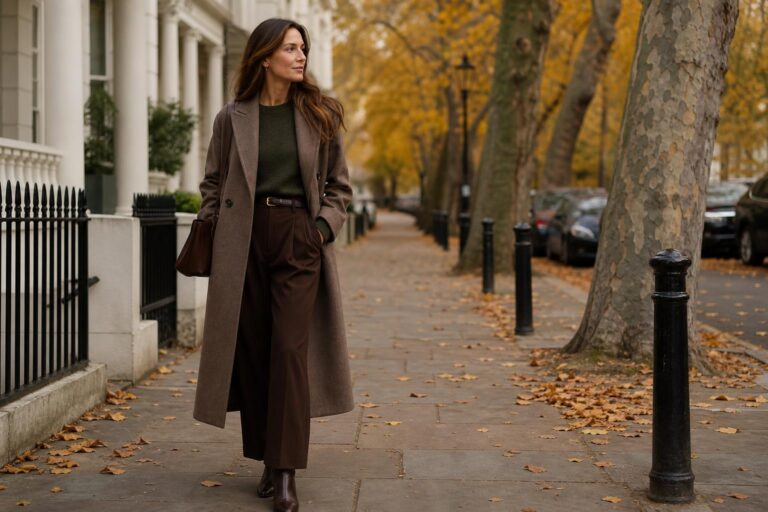
- Winter: wool coats, denser knitwear, tailored trousers, ankle boots, layered scarves.
A useful rule is to let fabric, not trend, determine seasonal updates. That keeps the capsule stable while still making it livable in changing weather.
The neutral palette that actually mixes well
Neutrals are often discussed too vaguely. In practice, a workable palette needs hierarchy. One dark anchor, one light anchor, and one soft middle tone create the easiest combinations. Black and navy are reliable dark anchors. White and cream handle brightness. Beige, camel, or taupe act as the bridge. Once these are established, blue-tinted denim functions almost like a neutral in the capsule.
The reason this palette succeeds is that it reduces visual conflict. A navy blazer, white shirt, and blue denim already feel composed because the contrast is clean and familiar. Replace one of those elements with an unrelated loud shade and the styling burden increases. French minimalist dressing depends on low-friction color decisions so the silhouette and fabric can stand out.
For readers who worry neutrals will feel repetitive, the solution is tonal layering rather than random color insertion. Cream with beige, black with charcoal-like depth through texture, navy with denim, white with soft camel knitwear—these combinations maintain restraint while still creating interest. A silk scarf can bring in pattern without destabilizing the wardrobe.
Parisian outfit composition without overstyling
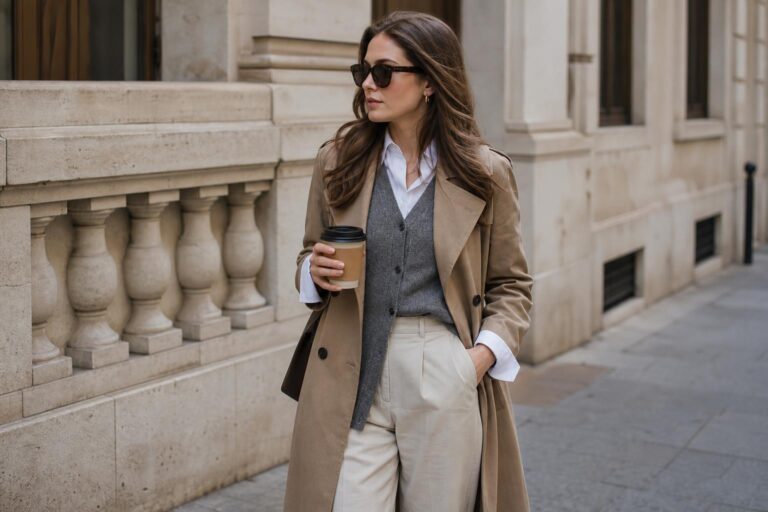
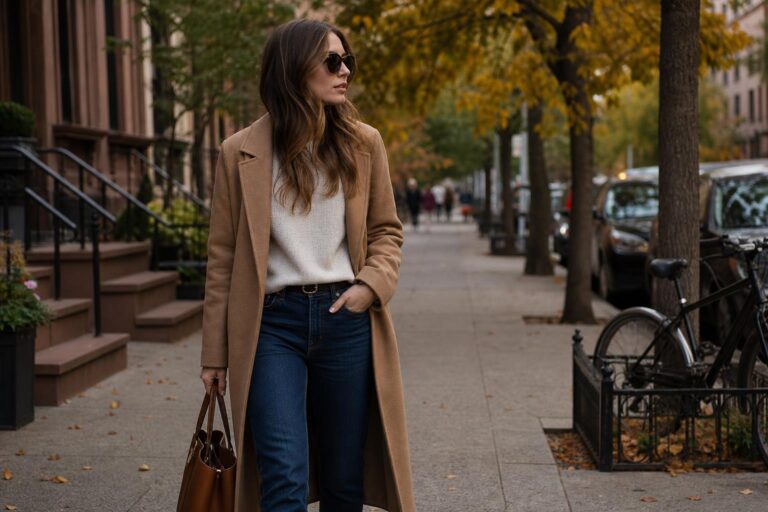
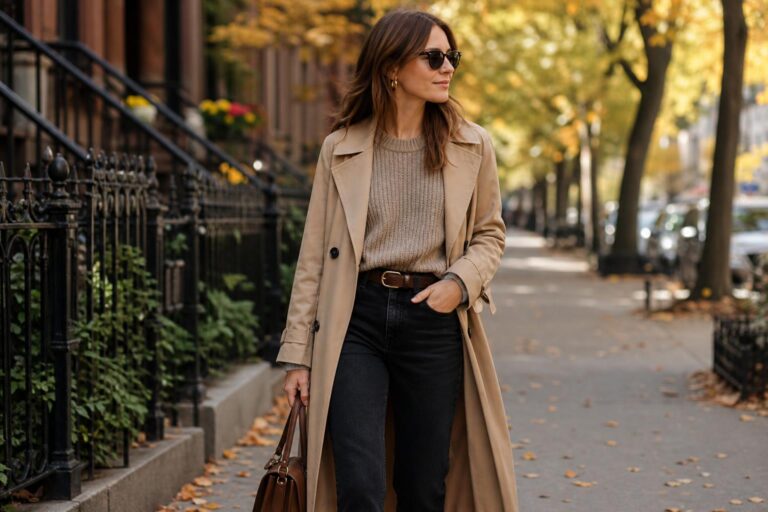
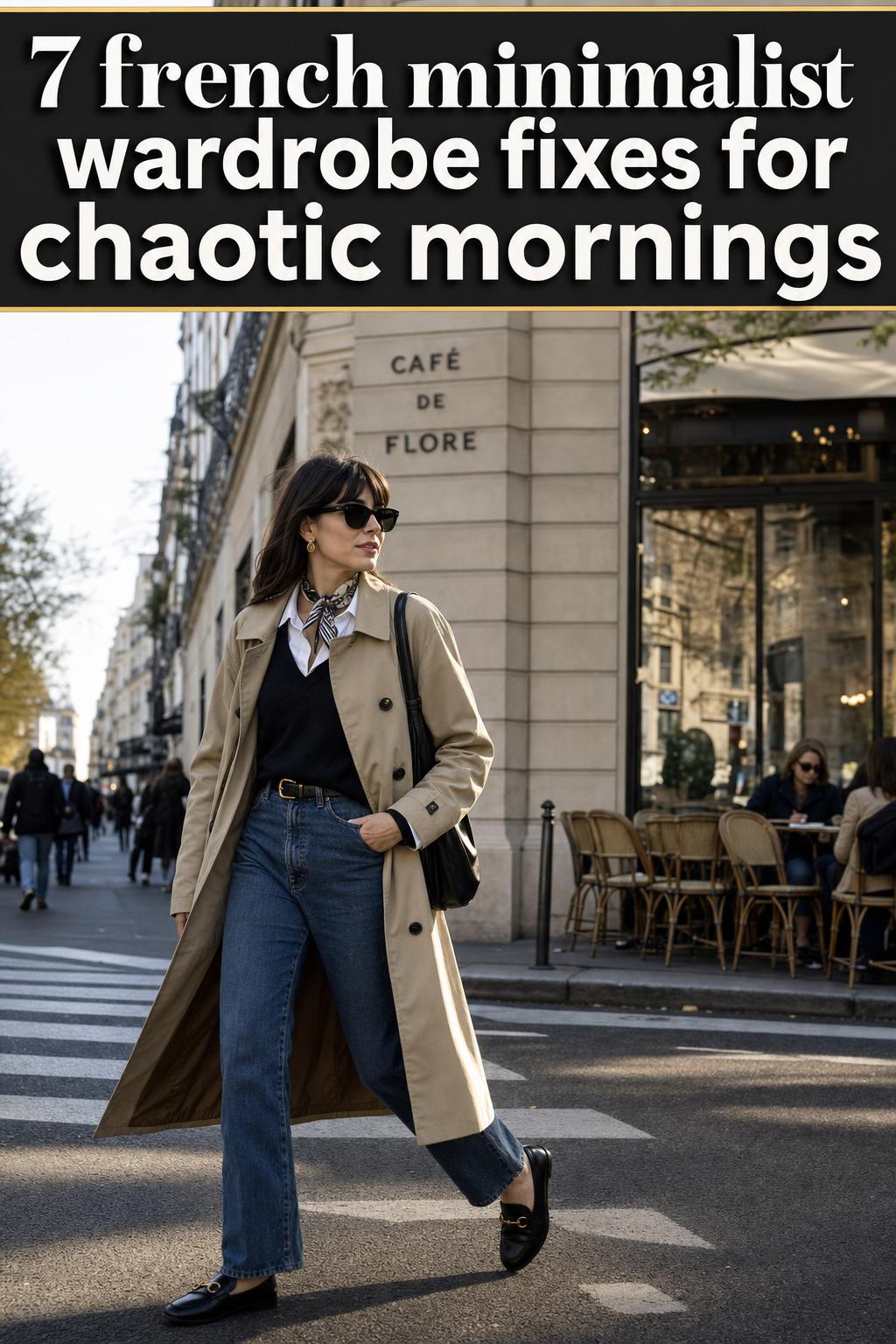
The most convincing Parisian-inspired outfits usually look slightly edited rather than heavily assembled. That is why the formula of one structured piece, one relaxed piece, and one polished finishing detail works so well. For example: tailored blazer, straight-leg jeans, and loafers. Or trench coat, knit top, tailored trousers, and a structured bag. The finishing detail can be a silk scarf, simple jewelry, or minimal footwear, but it should sharpen the outfit rather than compete with it.
Three highly functional outfit formulas
For work, use a blazer over a knit top with tailored trousers and loafers. This combination works because the blazer and trousers create professional structure, while the knit softens the formality. It is especially useful for offices with variable temperatures because the layers can be adjusted without breaking the look.
For weekend city wear, pair a Breton top with straight-leg jeans, a trench coat, and ankle boots or loafers. The stripe introduces visual rhythm, the denim keeps the outfit grounded, and the trench adds immediate polish. This is one of the easiest combinations to recreate on a budget because the effect comes more from shape and restraint than from labels.
For travel, choose a lightweight coat or trench, knitwear, straight-leg denim or tailored trousers, and minimalist footwear that can handle long walking days. A structured bag keeps the outfit from looking overly casual. This formula works because it layers efficiently, resists trend fatigue, and transitions from airport to dinner without a full change.
Tips for making simple outfits look more expensive
- Prioritize clean hems and good pressing on shirts, blazers, and trousers.
- Keep the shoe shape refined; loafers and ankle boots influence the outfit more than people expect.
- Use one clear line of structure, such as a blazer shoulder or trench collar.
- Limit visible distractions like bulky hardware or too many contrasting accessories.
- Choose bags and scarves as finishing pieces rather than adding multiple trend accents.
Where French minimalism becomes personal: Paris, Le Marais, and Saint-Germain
French minimalist dressing is often discussed as one unified look, but the mood can shift depending on the reference point. A Le Marais-inspired wardrobe may lean slightly sharper or more directional, with cleaner black pieces and stronger tailoring. A Saint-Germain mood may feel softer and more classic, with trench coats, knitwear, and timeless accessories. Both still fit the same capsule logic.
This distinction is useful when shopping because it helps narrow your version of the style. If you are drawn to Jacquemus-inspired simplicity, airy dresses, linen shirts, and clean-lined sandals may matter more. If your taste leans toward A.P.C., Celine, or more restrained Paris fashion, a dark blazer, straight denim, tailored coats, and minimal loafers may do more of the work. You do not need every interpretation in one wardrobe.
Choosing one visual direction prevents a common mistake: buying individually attractive items that do not support each other. A capsule wardrobe becomes stronger when the pieces share the same level of polish and the same styling rhythm.
Seasonal shifts without rebuilding the entire closet
One of the biggest misconceptions about a capsule wardrobe is that each season requires a new set of clothes. A more efficient French approach makes small strategic substitutions. In summer, the silhouette can stay similar while fabric weight changes. In winter, layering and texture take over, but the color base remains mostly intact.
Summer capsule adjustments
Shift toward linen shirts, lighter cotton tops, airy dresses, and clean-lined sandals. Tailored shorts are less central than dresses, trousers, and fluid shirts in this style language, so if you want the wardrobe to stay cohesive, focus on breathable versions of your usual staples instead of building a separate vacation identity. A lightweight blazer can still work for cooler evenings, especially with a simple midi dress.
Winter capsule adjustments
Swap in wool coats, heavier knitwear, ankle boots, and denser trousers while keeping the core palette stable. The winter version of French minimalism depends heavily on texture contrast: wool with denim, knitwear with tailored coats, silk scarf against structured outerwear. This prevents dark neutrals from feeling flat during colder months.
Transitional dressing strategy
Transitional months are where the trench coat becomes indispensable. It bridges warm and cool days, layers cleanly over knitwear and shirts, and instantly makes denim or tailored trousers look more deliberate. If your climate is unpredictable, a trench, loafers, medium-weight knit, and straight-leg jean will likely outperform most trend-driven purchases.
Shopping well: from French maisons to accessible retail
There is no requirement to fill a french minimalist wardrobe with designer labels. What matters more is understanding what each type of brand is useful for. French maisons such as Dior or Celine often function as reference points for proportion, restraint, and finishing. Jacquemus can shape a more contemporary mood. A.P.C. and Sézane sit closer to practical wardrobe inspiration. COS, Zara, and H&M make the style more accessible, especially when you shop selectively.
Use premium references for direction and mass retail for strategic basics, but be disciplined. In affordable stores, the best categories are usually simple knit tops, shirts, lightweight coats, and uncomplicated trousers. Categories where poor construction becomes obvious quickly include blazers, shoes, and bags. If you are deciding where to invest, start there.
What is worth investing in
- Tailored blazer, because fit and structure determine whether outfits look polished.
- Trench coat or tailored coat, because outerwear is often the first thing people see.
- Loafers and ankle boots, because shoe shape changes the tone of the entire look.
- Structured bag, because it anchors casual pieces like denim and knitwear.
What is easier to save on
- Basic tees and knit tops
- Breton or striped tops
- Seasonal linen shirts if the cut is clean
- Simple layering pieces with minimal hardware or embellishment
The smartest shopping filter is versatility. If a piece cannot work with your blazer, denim, trousers, and outerwear, it likely belongs outside the core capsule.
Body type, comfort, and real-world wearability
A useful wardrobe should not require ideal proportions or constant adjustment. Comfort is part of the French minimalist equation because clothing that pulls, pinches, or needs correcting all day undermines the composed effect. Good style in this category looks relaxed because the fit is resolved in advance.
For petite dressers, shortened hemlines on coats, clean ankle exposure with loafers, and blazers that do not overwhelm the shoulder line tend to preserve proportion. For curvy figures, drape matters. Choose trousers that skim rather than squeeze, dresses that trace the shape without excessive cling, and shirts that button smoothly through the bust. For tall dressers, longer trench coats, straight denim, and tonal layering can look especially strong because the vertical line remains uninterrupted.
For anyone who needs outfits to perform across long days, knitwear with enough recovery, denim with structure, and outerwear that layers over shirts without bulk are practical priorities. The best french minimalist wardrobe is not precious. It should handle movement, weather changes, and repeated wear.
Longevity, repair, and the smarter side of minimalism
A wardrobe built on fewer pieces puts more pressure on each garment, which makes maintenance part of style strategy. Repair, care, and small seasonal edits are not secondary tasks. They are what keep minimalism from turning into visible wear and tear. If you rely heavily on a blazer, trench, denim, or boots, their condition directly affects the whole wardrobe.
Longevity also aligns with the broader minimalist mindset discussed across wardrobe advice: buy with durability in mind, maintain what you own, and refresh through styling before replacing. A silk scarf can change the tone of a familiar outfit. A shoe resole can extend a favorite pair of loafers. A simple tailoring adjustment can make older trousers feel current again.
Maintenance habits that protect a capsule wardrobe
- Review the capsule at seasonal change points rather than impulsively.
- Repair high-rotation pieces before visible damage spreads.
- Store knitwear carefully so shape and texture stay intact.
- Keep a donation stream for items that no longer support the palette or silhouette logic.
- Use scarves and accessories to refresh outfits before buying more clothes.
This is also where a minimalist wardrobe avoids boredom. Instead of adding random newness, you create variation through texture, layering, and accessory shifts while preserving the overall line of the wardrobe.
A realistic weekly rotation
To test whether your capsule is working, imagine a five-day rotation. Monday: blazer, knit top, tailored trousers, loafers. Tuesday: white shirt, straight-leg jeans, trench coat, ankle boots. Wednesday: little black dress with tailored coat and simple jewelry. Thursday: Breton top, trousers, blazer, loafers. Friday: knitwear, denim, trench, structured bag. This kind of repetition should not feel limiting. It should feel efficient, with enough variation from accessories, footwear, and outerwear.
If that rotation sounds too narrow, the issue may not be the number of pieces. It may be that your current wardrobe lacks texture contrast or enough strong basics. A french minimalist wardrobe succeeds when the staples are visually dependable enough to repeat without looking identical.

FAQ
How many pieces should a french minimalist wardrobe have?
A practical core often works well at around 12 to 14 main pieces, excluding underwear and highly specific seasonal items, but the exact number matters less than how well the pieces mix. The goal is enough range for work, weekends, and travel without duplication.
Do I need designer brands like Jacquemus, Dior, or Celine to achieve the look?
No. Those brands are useful as style references for silhouette and mood, but the look can be recreated with well-chosen pieces from COS, Zara, H&M, or similar retailers. Prioritize fit, fabric, and restraint over labels.
What should I buy first if I am starting from scratch?
Start with the highest-utility pieces: a tailored blazer, straight-leg jeans, tailored trousers, a white shirt, one strong knit, and loafers. These build the largest number of outfits and create the base for outerwear, dresses, and seasonal additions later.
Will this wardrobe work for everyday life in the U.S.?
Yes, especially if you adapt fabric weight and layering to your climate. The structure of the wardrobe is highly practical for commuting, office dressing, travel, and casual weekends because the pieces are versatile and easy to rewear.
What if I am petite, curvy, or tall?
The style is adaptable because its core principles are proportion and balance, not one fixed cut. Petites often benefit from cleaner lengths, curvy figures usually do well with skim-not-cling tailoring, and tall frames can carry longer coats and tonal layering particularly well.
How do I keep a minimalist wardrobe from feeling boring?
Use texture contrast, tonal layering, and small accessories like a silk scarf or simple jewelry rather than adding unrelated trend pieces. Variation should come from styling shifts, seasonal fabric changes, and silhouette balance.
Which fabrics are best for a french minimalist wardrobe?
Linen, wool, cotton, silk, and quality knitwear are the most useful because they add depth to a neutral wardrobe and perform well across seasons. Choose fabric based on climate, comfort, and how well the garment keeps its shape through repeated wear.
What are the most common mistakes people make?
The biggest mistakes are buying too many similar items, ignoring fabric quality, choosing trendy cuts that do not work with existing shoes or layers, and using too many statement accessories at once. French minimalism depends on editing, not accumulation.
Can a french minimalist wardrobe work across seasons?
Yes. The easiest approach is to keep the core palette and silhouettes stable while changing fabric weight and a few key items. Linen shirts and airy dresses support summer, while wool coats, heavier knitwear, and ankle boots carry the wardrobe through winter.