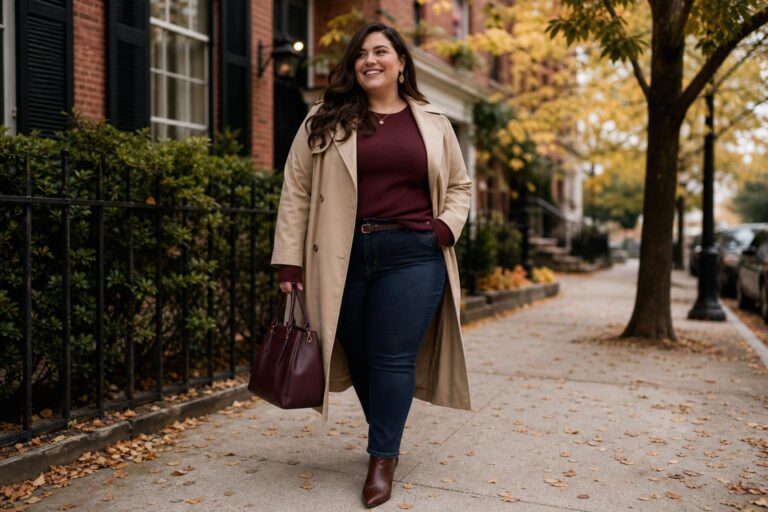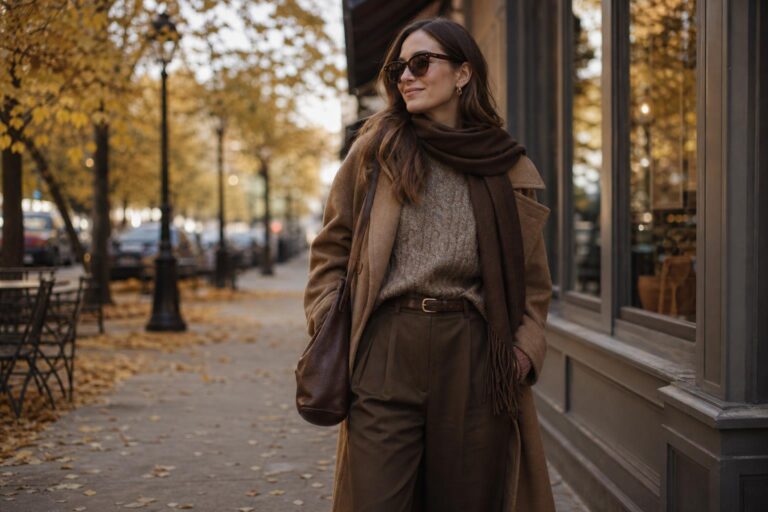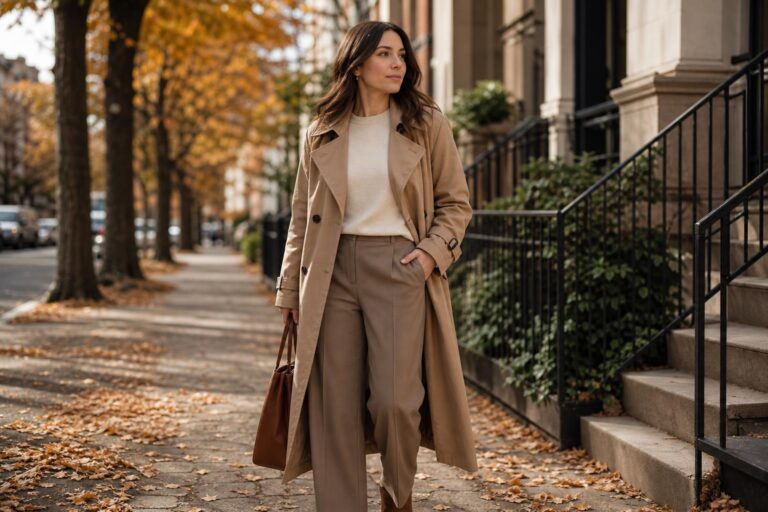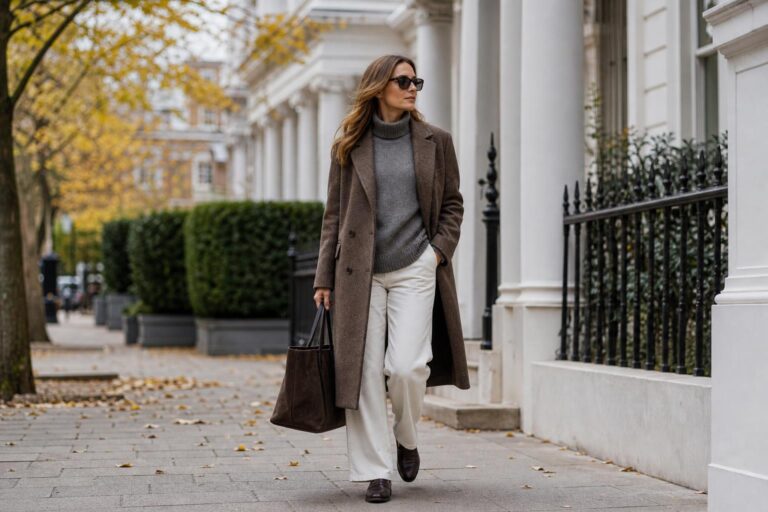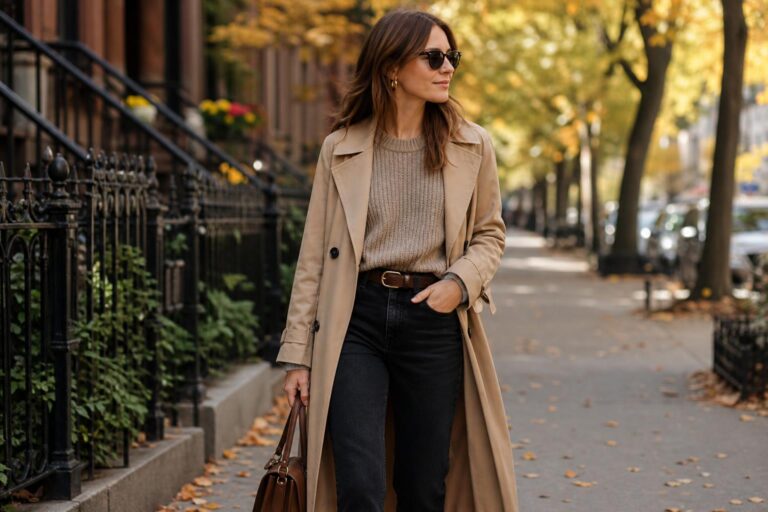

Long Sweater Outfits for a Polished Everyday Look
There is a reason long sweater outfits keep returning every fall and winter, even as trends shift around them. A long sweater has a rare kind of visual flexibility: it can read relaxed, polished, protective, minimal, or slightly dramatic depending on what happens around it. The same knit can lean editorial with leather pants and boots, or feel quietly practical with denim, a coat, and a scarf.
That is also why this category creates confusion. People often group together long sweaters, sweater dresses, tunic sweaters, and long cardigans, even though each one changes the silhouette in a different way. The difference is not only in length. It is in how the hem interacts with trousers, whether the knit stands on its own like a dress, and how outerwear or a belt alters the shape.

In current U.S. styling, the appeal is especially clear. Long sweaters bridge casual wardrobes and more intentional dressing. They work in cold-weather layering, office dressing, weekend outfits, and the increasingly common need for clothes that feel comfortable without looking unfinished. Understanding the styling logic behind them matters more than memorizing a few outfit formulas.
The most successful long sweater outfits are not built around one perfect item. They are built around balance: proportion, texture, footwear, and the visual mood you want the outfit to communicate.
Found the dress? Keep the rest in one place.
Zarellea brings guest details, vendors, timelines, and every next step together — so your wedding plan feels as good as your look.
The visual identity of a long sweater
A long sweater changes the body line more dramatically than a standard knit. It extends the torso, softens structure, and creates vertical movement. That can feel elegant and effortless, but it can also overwhelm an outfit if the rest of the composition is not controlled. This is why so many strong styling examples rely on silhouette balance as the foundation.
In fashion editorial styling, the long sweater often operates in one of two visual worlds. The first is the elongated, slim-line approach: a long sweater with skinny jeans, leggings, or leather pants, finished with boots or a coat. The second is the softer, dress-like approach: a knee-length or midi knit worn almost as a sweater dress, often shaped with a belt and grounded by knee-high boots. Both approaches work, but they communicate very different energies.
This is also where tunic, knee-length, midi, and cardigan silhouettes matter. A tunic sweater tends to function as a layering top. A knee-length sweater can move between top and dress territory. A midi knit has the strongest statement presence and usually needs cleaner styling around it. A long cardigan, by contrast, leaves the center line open and creates motion through layering rather than through a single solid shape.

Why this silhouette keeps feeling modern
The long sweater fits contemporary dressing because it combines comfort with visual intention. It answers the same need that has kept layering, oversized knitwear, and long cardigan outfits relevant: people want softness and warmth, but they still want shape, polish, and flexibility across different settings. A long sweater delivers that when the outfit composition is handled carefully.
What actually makes long sweater outfits work
The core principle is proportion play. Because the sweater takes up visual space, the rest of the outfit needs either contrast or definition. That contrast can come from slim bottoms, a visible belt, strong boots, or a structured outer layer such as a blazer, coat, or jacket. Without one of those anchors, the outfit can drift into looking heavy rather than intentional.
Fabric also matters. Knit texture changes the mood immediately. Cashmere reads smoother and quieter. Wool has more visual substance and often works well for strong cold-weather layering. Merino wool can feel refined and light enough for cleaner office styling. Alpaca introduces a softer, more tactile finish. These are not minor details; they affect how much volume the outfit appears to have and how formal or relaxed it feels.
Color balance matters in the same way. Neutral and earthy palettes support the elongated line of a long sweater because they let texture and silhouette lead. When the color story gets too fragmented, the sweater can start looking disconnected from the rest of the outfit. Tonal layering often feels more elevated because it creates continuity from knit to trouser to outerwear.
- A slim or defined base keeps the silhouette from becoming visually flat.
- Boots, loafers, sneakers, and ankle boots shift the mood more than many people expect.
- Outerwear should either mirror the length logic or create intentional contrast.
- Belts are useful when the knit needs waist definition, not as a default styling move.
- Texture contrast, such as knit against leather or denim, makes the outfit feel more finished.
Tips for avoiding a shapeless result
If a long sweater feels unflattering, the issue is usually not the sweater alone. It is often the combination of a bulky knit, a hemline that cuts at an awkward point, and equally heavy pieces on the bottom. Switching to leather pants, denim with a closer fit, or a more defined boot often solves the problem faster than replacing the knit itself.
The controlled elegance of the sweater-dress approach
One of the most compelling long sweater outfits is the version that behaves like a dress. This is where the knit becomes the main event rather than a layer. Visually, it feels more self-contained, slightly more polished, and often more directional. But it also demands more precision, because the entire silhouette depends on the hem length, the knit density, and what is happening underneath.
A sweater worn as a dress works best when there is enough length to feel secure and enough structure to hold its line. Underlayers become part of the logic here. Leggings or other discreet base layers can provide confidence and comfort without interrupting the overall shape. A turtleneck underlayer changes the effect completely, making the outfit feel more styled and less improvised.
The belt is the most debated element in this category. Used well, it creates a deliberate waist and turns a soft column into a more sculpted silhouette. Used poorly, it bunches the knit and makes the outfit look overworked. The best belted sweater-dress looks usually rely on a knit with enough drape to gather cleanly and enough weight to fall back into shape.

Knee-high boots as a visual anchor
Knee-high boots are especially effective with sweater-dress styling because they complete the vertical line. They also give the outfit a practical cold-weather function. Compared with ankle boots, they create a more continuous silhouette and often make the dress interpretation feel more intentional. This is one reason editorial styling repeatedly returns to the knit-dress-and-boots combination.
The overall mood here is sleek but soft. It works well for date-night dressing, fashion-forward daytime styling, and polished fall outfits when you want warmth without a complicated layered look.
Why leather pants change the entire mood
Among all long sweater pairings, leather pants create one of the clearest visual contrasts. The knit brings softness and volume; leather introduces shine, structure, and edge. This combination reads more editorial than a sweater with standard denim because the texture contrast is stronger and the outfit has a more deliberate high-low tension.
That tension is what makes the look effective. A long sweater on its own can skew cozy or even sleepy if every piece in the outfit shares the same soft energy. Leather interrupts that softness. It sharpens the outfit composition and gives the eye a second focal point beyond the knit itself. Boots reinforce the effect, especially when the boot shape feels substantial enough to support the weight of the top half.
This combination is often ideal for evenings, creative workplaces, or any setting where you want a casual-cool result without looking overly dressed. It carries a different kind of confidence from a sweater dress. Instead of looking sleek and contained, it looks slightly more urban and expressive.
The key visual difference
A long sweater with leather pants is defined by contrast. A long sweater with denim is defined by familiarity. Neither is better; they simply communicate different fashion instincts. If you want the outfit to feel more directional, leather helps. If you want it to feel more approachable and everyday, denim usually does the job more naturally.
Denim, skinny jeans, and the everyday version of ease
Denim remains one of the most practical foundations for long sweater outfits because it brings structure without making the look feel formal. The pairing is straightforward, but the effect depends heavily on fit. A long sweater works especially well with skinny jeans or other slimmer denim silhouettes because they preserve balance. The eye reads a clear contrast between volume on top and a narrower line below.
This is where many casual outfits succeed. The sweater provides comfort and movement. Denim keeps the look grounded in everyday wear. Add ankle boots for a classic cold-weather finish, sneakers for a younger and more relaxed direction, or loafers if the goal is understated polish. The sweater remains the dominant piece, but the denim prevents the outfit from feeling overly precious.
A turtleneck layered underneath can make the outfit feel smarter and more intentional, especially if the outer knit has a more open neckline or if the climate calls for extra warmth. A coat over the top creates a clean layered architecture, especially in fall and winter wardrobes where practicality matters as much as style.
- Choose denim when you want versatility and repeat wear.
- Choose skinny jeans when the knit is oversized or knee-length.
- Choose sneakers when the outfit should feel casual and active.
- Choose ankle boots when you want a stronger seasonal finish.
- Choose loafers when the styling direction is work-adjacent or minimal.
Work-ready polish without losing the softness
Office dressing with a long sweater depends on control. The knit cannot be the only soft element in the outfit. Tailored trousers, a blazer, or loafers add the structure that makes the look professional rather than lounge-adjacent. This is where merino wool or a smoother cashmere texture often performs particularly well, because cleaner knits integrate more easily into workwear.
A long sweater over tailored trousers creates a refined line when the trousers are not too wide and the hem relationship feels deliberate. If both pieces are overly loose, the result can become visually heavy. A blazer worn over or under the sweater changes the hierarchy of the outfit. Over the sweater, it creates outer structure. Under an open long cardigan, it becomes a polished interior frame.
Loafers are especially useful in this setting because they keep the outfit grounded and neat without introducing too much visual weight. For colder offices or commuting, a wool coat over the knit keeps the palette sophisticated and consistent. Scarves can work here too, but they need restraint; too much bulk at the neck can make the upper half of the outfit feel congested.

Most versatile office formula
A long sweater, tailored trousers, loafers, and a blazer is one of the strongest work-ready combinations because every piece does a different job. The sweater softens, the trousers refine, the loafers stabilize, and the blazer sharpens. That distribution of roles is what makes the outfit feel complete.
Weekend styling and the appeal of comfort that still looks composed
Weekend long sweater outfits often look best when they avoid trying too hard. This is where denim, skirts, sneakers, ankle boots, and scarves become useful not just as add-ons, but as mood setters. The long sweater already communicates ease. Weekend styling should support that energy while keeping enough contrast in the outfit to avoid visual monotony.
A long cardigan over a tank or tee with jeans feels lighter and more flexible than a closed sweater look. It is ideal for transitional weather and for readers who prefer visible layering. A long pullover sweater with a skirt creates a softer, more styled result, especially when boots help anchor the lower half. The cardigan version feels open and fluid. The pullover version feels more intentional and sculptural.
This category is also where accessories can be more playful without disrupting the outfit. A scarf adds texture, a bag gives the silhouette a visual interruption point, and hats can shift the mood toward a more styled cold-weather identity. The key is not adding everything at once. One accessory should lead, while the sweater remains the visual base.
Tips for casual outfits that still feel intentional
Keep one clean line somewhere in the look. That line can come from slim denim, a straight skirt, a structured coat, or tall boots. Casual styling starts looking polished when the softness of the knit meets at least one element with definition.
Long sweater versus long cardigan: similar category, different energy
People often treat these pieces as interchangeable, but visually they behave differently. A long sweater creates a continuous front and therefore a stronger silhouette statement. A long cardigan creates a frame. It layers over dresses, tees, tanks, button-down shirts, and trousers more easily because it leaves visual space through the center.
This is why long cardigan outfits often feel more adaptable across casual, work, and travel settings. They are easier to adjust during the day and simpler to style over an existing outfit. A long pullover sweater, by contrast, tends to define the whole outfit from the start. It requires more commitment but can look more cohesive and editorial.
In cold weather, the long cardigan becomes a layering workhorse. Over a summer dress, it extends seasonal wear. With denim, it adds warmth without losing mobility. With a scarf and coat, it creates the kind of layered depth often seen in broader cold-weather fashion coverage. The pullover version is more concentrated and often better when you want the knit itself to be the statement piece.
Which one is easier to wear?
For most wardrobes, the long cardigan is easier to style repeatedly because it works with more base layers and occasions. The long sweater is often more striking and more self-contained. If your priority is versatility, start with the cardigan. If your priority is silhouette impact, the sweater often has the stronger visual payoff.
Textures, fabrics, and why the outfit mood changes before color does
Texture often determines whether a long sweater outfit feels refined, cozy, dramatic, or casual. A smooth cashmere knit creates a quiet, controlled finish. Wool gives more winter presence and reads as practical and substantial. Merino wool can bridge the two, making it especially useful for workwear and polished daily outfits. Alpaca introduces a softer halo and a more tactile, romantic effect.
The interaction between knit texture and pairing fabric is where the styling gets interesting. Knit against denim feels familiar. Knit against leather feels sharp. Knit with a wool coat feels tonal and composed. Knit with a blazer creates a conversation between softness and tailoring. These contrasts shape the fashion message of the outfit more than trend language ever could.
Seasonal palettes matter too. Neutral, earthy, and muted color families tend to flatter the long sweater format because they let length and texture read clearly. In fall and winter, these palettes also support layering with coats, scarves, and boots without making the outfit feel overcomplicated.
- Choose smoother knits for office and polished dressing.
- Choose more textured knits for casual and cold-weather outfits.
- Use leather, denim, or tailored trousers to create contrast.
- Keep the palette tonal when the silhouette is already dramatic.
- Let one texture lead instead of making every element equally heavy.
Layering architecture: coats, blazers, jackets, and scarves
Layering with a long sweater is less about stacking pieces and more about controlling shape. Because the sweater already adds length and visual softness, outerwear should either streamline the outfit or clearly define its structure. A wool coat creates continuity and works especially well for polished city dressing. A blazer introduces tailoring and is one of the best tools for office-ready long sweater outfits. A jacket can shorten the line intentionally, which adds contrast and prevents the outfit from looking too elongated.
Scarves work best when they support the outfit rather than competing with the knit. In practical cold weather, a scarf adds warmth and texture, but if the sweater already has volume at the neckline, too much scarf bulk can make the upper half feel overloaded. The same principle applies to hats and bags. Accessories should provide punctuation, not clutter.
Why this combination works
A long sweater under a coat works because both pieces support a vertical silhouette. A long cardigan over a blazer works because the cardigan softens the blazer’s structure while the blazer prevents the cardigan from looking loose. These combinations succeed when each layer contributes a distinct function rather than repeating the same visual weight.
U.S. climate reality: how region changes the outfit logic
Long sweater outfits do not land the same way in every part of the United States. The same knit-and-boots formula that feels natural in the Northeast or Midwest can feel too heavy in the South, where transitional dressing matters more than deep winter layering. On the West Coast, the styling often leans more toward easy layering with long cardigans, tees, denim, and lighter outer layers rather than full cold-weather buildouts.
This matters because long sweaters are highly responsive to climate. In wind, snow, or sustained cold, wool coats, scarves, boots, and substantial knits feel practical and coherent. In milder regions, lighter knit textures and open layering make more sense. The outfit still follows the same principles of proportion and silhouette balance, but the thickness and density of each layer should shift with the weather.
Regional styling also influences mood. Urban cold-weather dressing often favors sharper pairings like leather pants, tailored outerwear, and sleek boots. Softer climates tend to support more relaxed combinations with sneakers, denim, tanks, and open cardigans. The core piece is the same; the wardrobe architecture around it changes.
Practical tip for climate-based wardrobes
If your region has short cold spells rather than a full winter season, prioritize a long cardigan or a lighter long sweater in merino wool or cashmere. If your climate is consistently cold, heavier wool textures, knee-high boots, scarves, and a coat will give the piece more repeat value.
The role of accessories in changing the aesthetic
Accessories can shift a long sweater outfit from understated to editorial very quickly. Boots are the strongest example. They change not only the function of the outfit, but also its language. Knee-high boots create continuity and authority. Ankle boots add everyday structure. Sneakers make the look younger and more casual. Loafers bring restraint and polish.
Belts are equally transformative when they are used with purpose. On a sweater dress or a long cardigan, a belt can define the waist and break up a heavy vertical line. But not every long knit needs one. Some of the best outfits preserve the sweater’s natural drape and let boots or outerwear provide definition instead.
Scarves, hats, and bags should support the visual direction already in place. If the outfit is minimal and tonal, accessories should continue that clean line. If the outfit relies on texture contrast, a scarf can reinforce the winter mood effectively. The mistake is assuming every long sweater outfit needs every classic cold-weather accessory. Restraint usually reads more intentional.
Common styling mistakes that make long sweaters look accidental
The most common problem is ignoring proportion. A long, oversized sweater with equally oversized pants and soft shoes can lose all structure. Another issue is mismatched lengths, especially when a coat, cardigan, or skirt hem cuts the silhouette at awkward points. Long sweater outfits look strongest when the length relationships are either clearly layered or clearly contrasted.
A second mistake is adding accessories without hierarchy. Boots, a scarf, a belt, a hat, and a statement bag can each work with a long sweater, but not all at once unless the rest of the outfit is very controlled. The long sweater already carries visual weight, so accessories should edit the look rather than compete with it.
Another frequent issue is choosing the wrong base layer for the knit’s volume. If the sweater is thick and relaxed, slim bottoms often create the cleanest composition. If the sweater is lighter and more refined, tailored trousers or a skirt may work beautifully. The key is matching the base to the sweater’s actual behavior, not just the idea of the outfit.
- Do not combine too many bulky layers around the neck and torso.
- Do not assume every long sweater should be belted.
- Do not ignore how footwear changes proportion.
- Do not let hemlines compete without a clear reason.
- Do not rely on softness alone; add one anchor piece.
How to build a long sweater wardrobe that actually gets worn
The most useful approach is to think in outfit systems rather than isolated sweaters. A strong long sweater wardrobe usually includes one polished knit, one more casual knit or cardigan, one reliable pair of boots, one easy denim option, one sharper bottom such as leather pants or tailored trousers, and one coat or blazer that creates structure. This kind of compact system supports work, casual, and more elevated dressing without requiring a large rotation.
From a shopping perspective, fabric, fit, and length matter more than novelty. A long sweater that hits at the wrong point for your preferred trousers or boots will be difficult to style no matter how attractive the knit is on its own. A cardigan that layers easily over tees, tanks, dresses, or button-down shirts may deliver more value than a statement piece that only works one way.
For readers deciding between aesthetics, this is the real distinction: do you want your knitwear to act as the outfit or as the layer that pulls an outfit together? The first points toward long sweaters and sweater-dress styling. The second points toward long cardigan outfits and more visible layering.
Easy ways to blend both approaches
Start with a long cardigan over a slim knit base and denim for everyday use, then adopt sweater-dress styling for evenings or colder days when you want more visual impact. This creates wardrobe range without forcing you into a single aesthetic.
A quick styling checklist for real-life outfit decisions
Before leaving the house in a long sweater outfit, assess the look through four questions: Is there enough shape? Is there enough contrast? Does the footwear support the hemline? Does the outerwear improve the silhouette or interrupt it? These checks prevent most of the issues that make long knits feel awkward.
- If the sweater is oversized, keep the bottom half cleaner.
- If the outfit feels flat, add texture contrast with leather, denim, or a structured coat.
- If the look feels too bulky, remove one layer or skip the scarf.
- If the sweater reads too casual, switch to loafers, tailored trousers, or a blazer.
- If the outfit lacks definition, try boots or a belt before adding more accessories.
The best long sweater outfits are rarely complicated. They just look considered. That comes from understanding the garment’s visual behavior and building around it with discipline.

FAQ
How do you wear a long sweater without looking frumpy?
Focus on silhouette balance. Pair a long sweater with slim bottoms like skinny jeans, leggings, or leather pants, or define the shape with a belt, boots, or a structured coat. The goal is to contrast the knit’s softness with at least one clean or tailored element.
Can a long sweater be worn as a dress?
Yes, if the sweater has enough length and coverage to function confidently as a dress. This approach works especially well with underlayers and knee-high boots, and a belt can help create waist definition when the knit has enough drape to handle it cleanly.
What shoes look best with long sweater outfits?
Boots are the strongest styling partner because they anchor the length of the knit. Knee-high boots create a sleek, continuous line, ankle boots add everyday structure, sneakers make the outfit feel more casual, and loafers are useful for polished or work-ready styling.
Are long cardigans and long sweaters styled the same way?
Not exactly. A long sweater creates a more complete and self-contained silhouette, while a long cardigan acts as a layering frame over tees, tanks, dresses, or button-down shirts. Cardigans are often easier for everyday layering, while long sweaters usually make a stronger statement.
What bottoms work best with a long sweater?
Skinny jeans, leather pants, leggings, and tailored trousers are the most reliable choices because they balance the extended line of the knit. Denim is ideal for casual wear, leather adds sharper contrast, and tailored trousers make the outfit more office-appropriate.
How do you style a long sweater for work?
Use polished supporting pieces. A long sweater with tailored trousers, loafers, and a blazer creates a professional look because the knit’s softness is balanced by structure and refinement. Smooth fabrics such as cashmere or merino wool usually integrate most easily into workwear.
Which fabrics are best for long sweater outfits?
Cashmere, wool, merino wool, and alpaca each create a different effect. Cashmere feels refined and smooth, wool offers more winter weight, merino wool works well for polished daily dressing, and alpaca gives a softer, more tactile finish. The best option depends on how much structure and warmth you need.
Do you need a belt with a long sweater?
No. A belt is useful when the outfit needs waist definition, especially in sweater-dress styling, but many long sweater outfits look better when the knit is left to drape naturally. Boots, outerwear, or slimmer bottoms can provide enough shape on their own.
How should long sweater outfits change by climate?
In colder U.S. regions like the Northeast and Midwest, heavier knits, wool coats, scarves, and boots make practical sense. In milder parts of the South or on the West Coast, lighter knits and long cardigans layered over simple base pieces are often easier to wear. The core styling principle stays the same, but the fabric weight and layering depth should match the weather.