Christmas Family Outfits: A Simple Coordination Plan
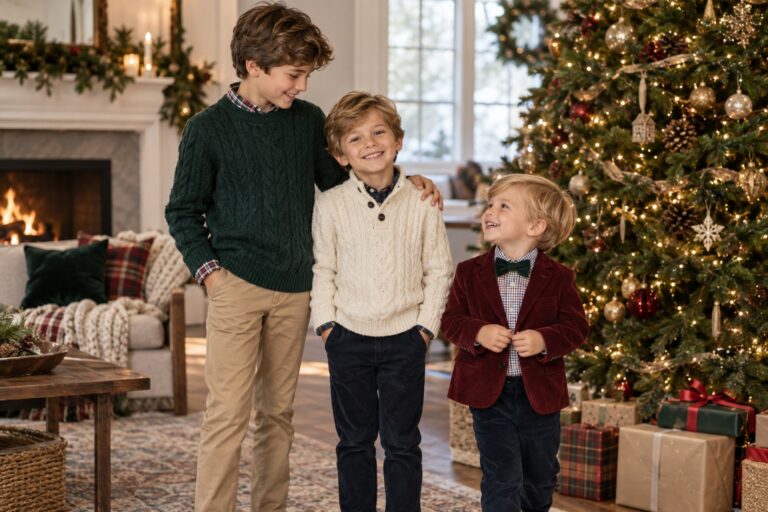
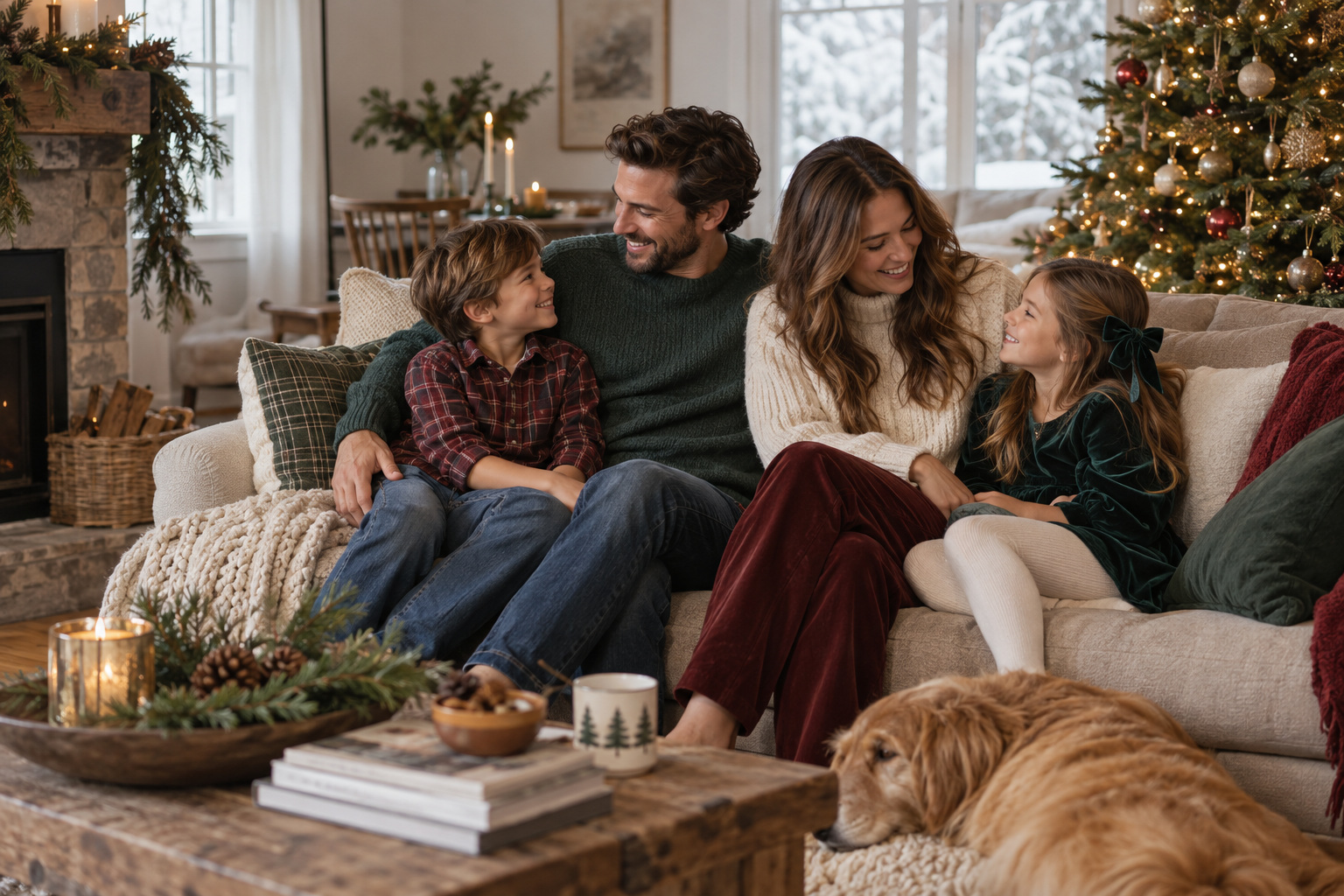
Christmas family outfits are easier to plan when everyone shares a few visual cues instead of wearing an identical uniform. Start with one piece someone already loves, build a small palette around it, and give each person a different role in the group. A cranberry sweater might set the direction, for example, while the rest of the family wears cream, pine, denim, or warm brown in different combinations.
This checklist-playbook is for family photos, holiday cards, and the gathering around them. It helps you coordinate adults, children, babies, and relatives who live in different closets, while keeping the clothes comfortable enough to sit, eat, play, or step outside. You do not need matching pajamas, a new wardrobe, or a rule that everyone must wear red and green. You need a clear plan and a quick final check.
1. Set up the family outfit plan before choosing colors
Before sorting through clothes, decide what the outfits need to do. A short card photo at home has different demands from an outdoor portrait, a long Christmas lunch, or a day when the children will open gifts before the family picture. The best coordinated outfits respect the actual plan, not an imagined perfect photograph in which nobody moves, gets warm, or spills anything.
Write down the setting and the level of dress
Make a short note with the location, background, time of day, and likely activities. A photo beside a decorated tree may call for a different color balance than a portrait among evergreens or against a pale wall. For an indoor gathering, consider whether everyone will be near a warm fireplace or crowded around a dining table. For an outdoor picture, account for the coat, shoes, and layers that will actually be visible.
Found the dress? Keep the rest in one place.
Zarellea brings guest details, vendors, timelines, and every next step together — so your wedding plan feels as good as your look.
Choose a shared dress level in plain language: relaxed, polished casual, or dressy. This prevents one relative arriving in a suit while everyone else is in soft sweaters. The group does not need the same garment category. A knit dress, a collared shirt, and a comfortable trouser can look connected when their formality feels similar.
Choose a lead piece that is already in the closet
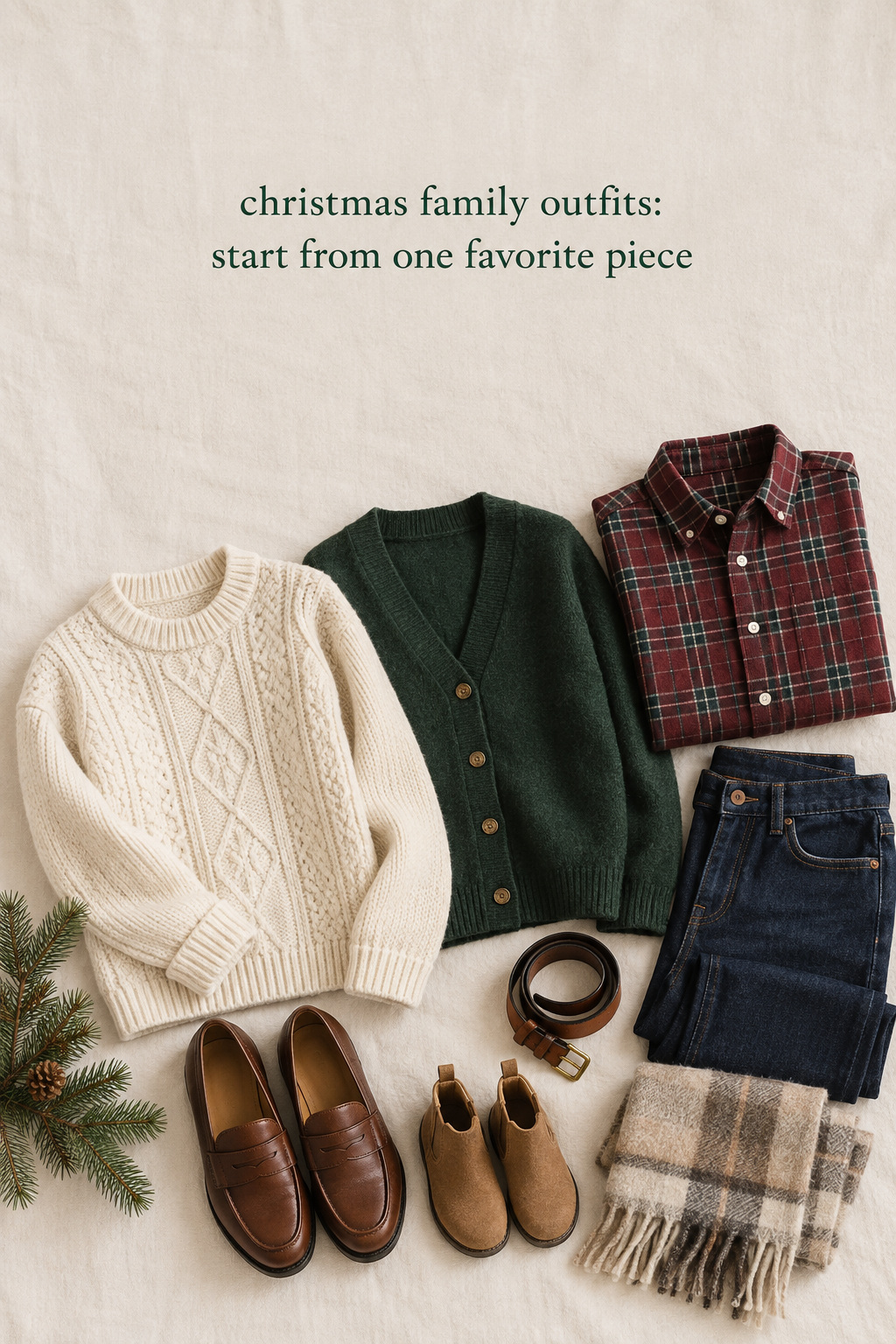
Pick one outfit item with a color or pattern you want to build around. It could be a plaid skirt, a forest-green cardigan, a burgundy blouse, a cream cable knit, or a navy shirt that someone is happy to wear. The lead piece is a starting point, not a command that everyone else must copy it. Its colors can suggest the group palette, while its texture or pattern can stay unique to one person.
Ask the wearer whether the piece feels comfortable and like them. If the answer is no, choose a different anchor. A family photo looks more relaxed when each person recognizes their own style. A child may prefer a soft sweatshirt to a stiff shirt. One adult may wear a skirt often, while another feels at ease in trousers. Keep those preferences in the plan instead of solving them at the last minute.
Set a no-buy boundary and list the real constraints
Decide whether the plan uses only what the family owns. If a missing item is truly needed, name just that item and check whether someone can borrow it. Matching outfits sold as a set can be convenient, but they are not required for a coordinated photograph. A group can look intentional in separate clothes when the palette, level of dress, and overall visual weight work together.
Write down any comfort or access needs that affect clothing: a baby carrier, a mobility aid, sensory preferences, shoes that must support walking, or a coat that cannot be removed outdoors. Keep this simple and private. The aim is to make choices that work for the people wearing them, not to make anyone explain themselves to the whole group.
2. Use a simple checklist to coordinate the group
With the setting, dress level, and lead piece settled, coordinate the rest of the family through a few decisions. A useful palette is small enough to remember and flexible enough for different closets. One dominant color, one or two supporting colors, and a neutral usually provide plenty of direction. Treat this as a planning aid rather than a strict color law.
Turn the lead garment into a compact palette
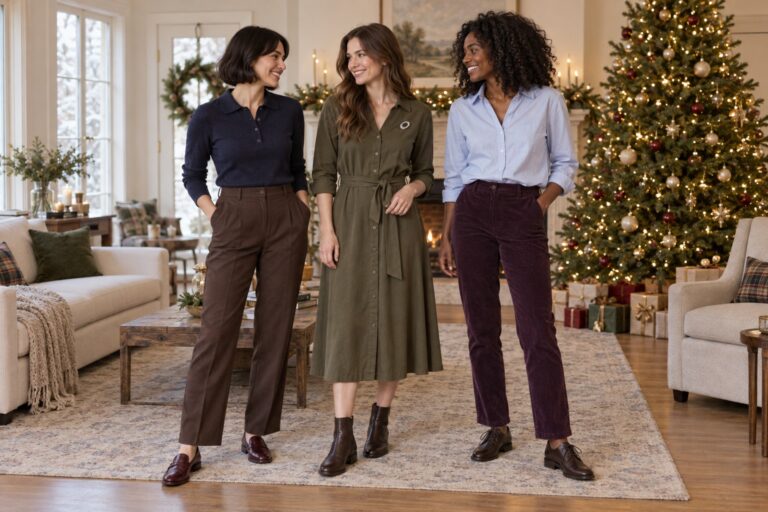
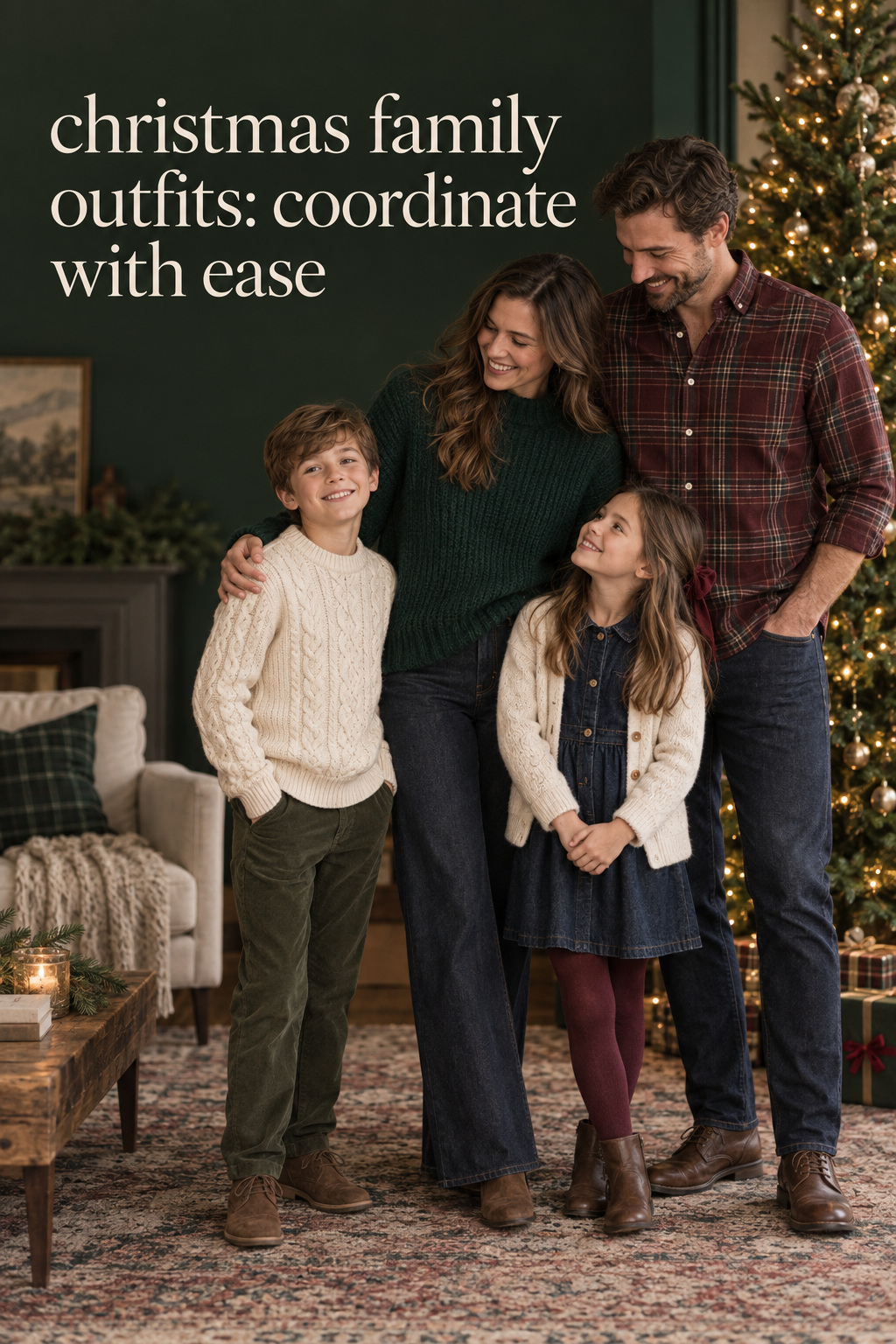
Look at the main colors in the lead piece and choose shades that sit comfortably beside them. A cranberry sweater could connect with cream and charcoal, with pine as a small accent. A green plaid might suggest forest, soft blue, and warm brown. A navy dress could lead to cream, burgundy, and denim. You can also choose a quieter direction, such as oatmeal, camel, gray, and one muted berry shade.
Consider what will be behind the group. Clothing that blends into a tree-lined setting may lose definition, while a very pale look can feel different against a bright snowy background than against a dark wall. You do not need to calculate color values. Hold the outfit next to the background if possible, or take a quick phone picture in the room where the portrait will happen. If the main colors disappear, adjust one person’s supporting shade.
Give everyone a color role instead of a uniform
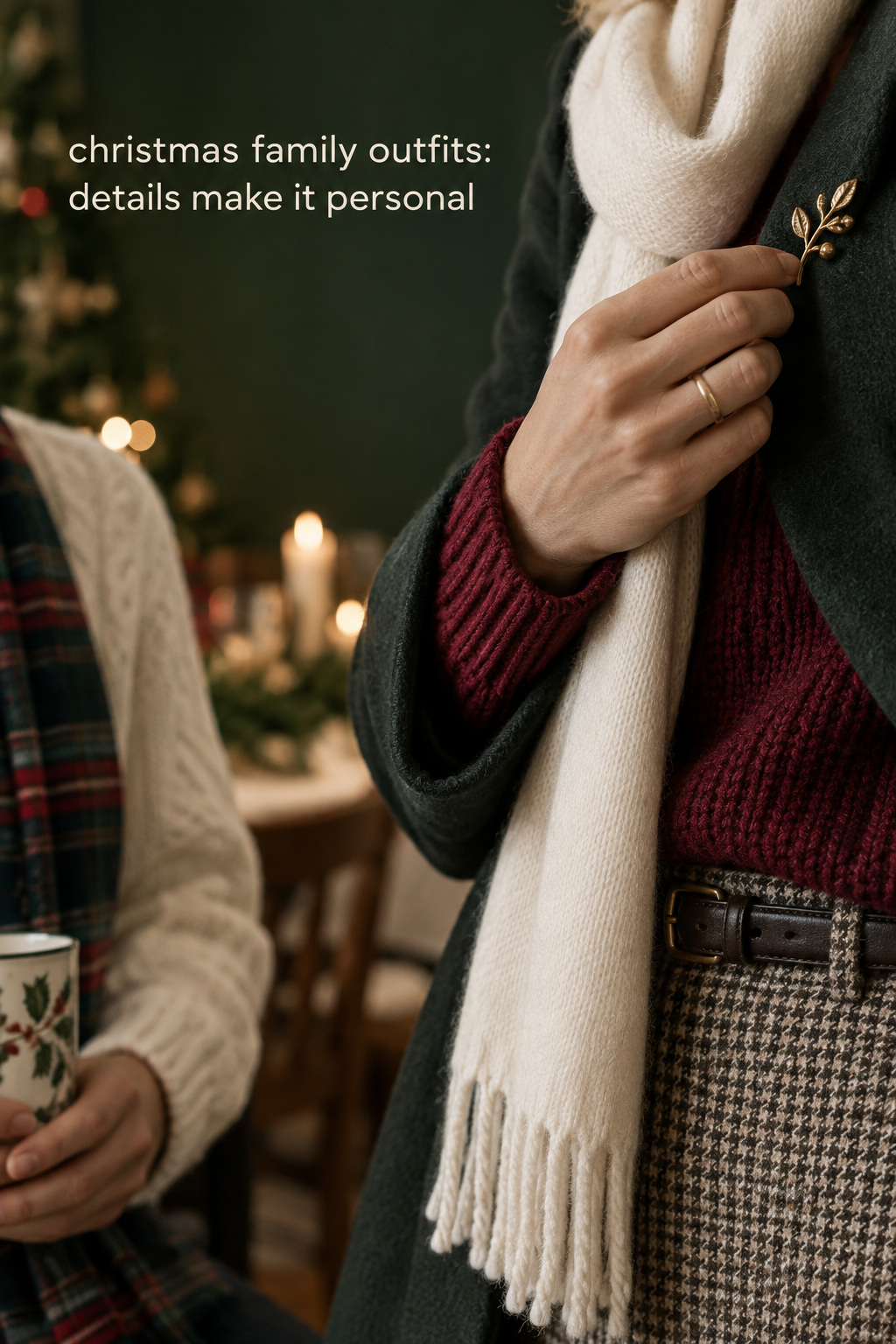
Assign each person one dominant shade from the palette, then let a small detail repeat elsewhere. One person might wear a cream sweater, another a dark green dress, another a burgundy scarf, and another navy trousers with a soft blue shirt. The visual link can come from a shared accent, like brown shoes, a cream collar, or a muted red stripe, rather than identical tops.
Try to spread the darkest and brightest pieces through the group rather than putting every strong color on one end of the frame. If the photographer has asked the family to stand in a row, imagine the colors alternating in a calm way. For a more candid grouping, think about the frame as a whole: avoid clustering every light outfit together if the opposite side becomes very dark. You can make a small adjustment by switching a sweater or scarf between family members.
Balance patterns, textures, and shine
A pattern can be the lead piece, but it does not need to appear on everyone. If one person wears a plaid shirt or skirt, let other outfits use solid colors taken from that print. If several people want patterns, vary their scale and leave visual space between them. A broad plaid next to another large plaid can compete in a close group photo, while a small check beside a solid knit is easier to read.
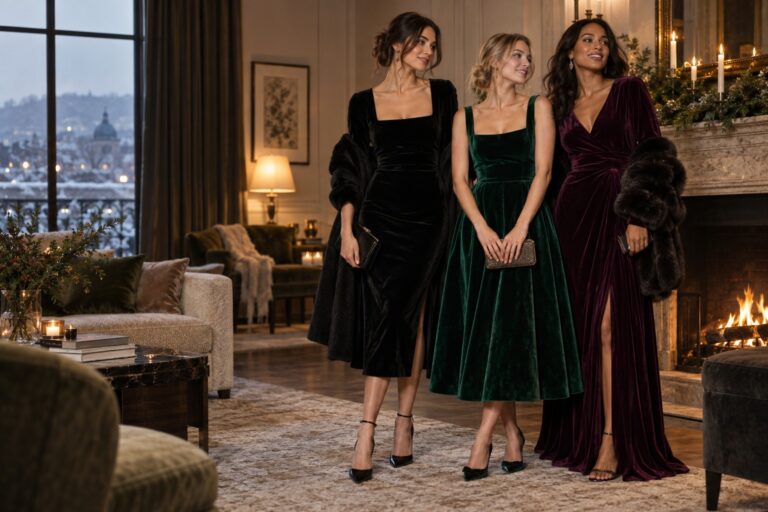
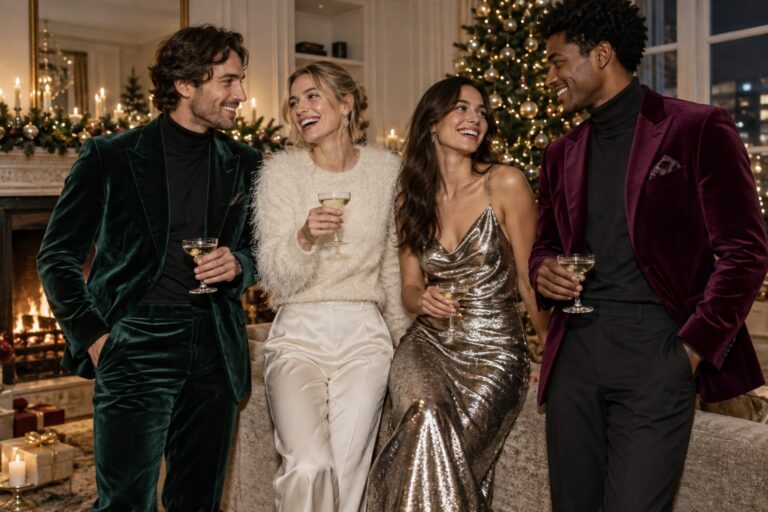
Texture adds interest without requiring more colors. Ribbed knits, corduroy, velvet, denim, brushed wool, and smooth cotton can sit together naturally when the dress level is consistent. If one person chooses sequins or a reflective fabric, keep the other outfits quieter so the shine has room. This is not a ban on sparkle. It is a way to decide where the eye should land in the group.
Send the family a clear note
A short message works better than a long mood board that leaves everyone guessing. Include the date, setting, dress level, palette, and the option to shop from a person’s own closet. If people are joining from different households, ask each household to choose one main color and share a quick outfit photo before the event. That gives the organizer time to spot an obvious clash without taking control of everyone’s personal style.
- Photo and gathering: tell everyone what the outfit needs to work for.
- Dress level: choose relaxed, polished casual, or dressy.
- Palette: name three or four colors, including a neutral.
- Pattern: say whether one patterned piece is the group anchor.
- Comfort: remind everyone to choose shoes and layers they can wear comfortably.
- Shopping: say plainly that nobody needs to buy a new outfit unless they want to.
3. Work through three family outfit plans
These examples show how the checklist can work across different family sizes. Use them as starting points, not prescriptions. Swap a dress for trousers, boots for flats, or a knit for a soft button-up. Keep the role each garment plays in the group: one anchor, several related colors, and enough difference for people to feel like themselves.
A small family with one patterned anchor
For a family of three, begin with a red-and-navy plaid skirt or shirt. Let the person wearing it carry the pattern, then dress the other two in a navy knit and a cream sweater with dark trousers. A small burgundy accessory can repeat the warmer note. The pieces share a color story without creating three matching outfits.
For a relaxed living-room photo, choose shoes that can be removed easily or are comfortable to wear around the house. If the group will be photographed seated, check where waistbands, skirt hems, and shirt buttons sit when everyone is on a sofa. The outfit should still look neat when a jacket comes off. A tidy cardigan or overshirt can add warmth and texture without making the family look formal.
A family with children and different comfort preferences
For two adults and children, try a palette of forest green, cream, denim, and a restrained red accent. One adult could wear a green dress with boots, while the other wears a cream knit with dark jeans. A child who likes soft clothes might choose a cream sweatshirt and denim, while another chooses a green cardigan with leggings or trousers. Repeat red in a hair bow, sock detail, or scarf only if the wearer likes it.
Children need to be able to bend, sit, run a short distance, and use the bathroom without constant help if that matters for their age. Try the outfit on before the event and let the child move in it. Check whether a collar scratches, a sleeve slips, a belt pinches, or a shoe rubs. A comfortable alternative in a coordinating color is more useful than a perfect-looking outfit that no one wants to keep on.
For a baby, choose a soft base layer in one of the palette colors and add a cardigan or blanket for the picture. Avoid complicated fastenings that make changes difficult. If the baby will be held, think about how the fabric looks at the shoulders and chest, since that is what the camera may see. The baby’s outfit can be simple while the adults provide more of the color variation.
An extended family with several households
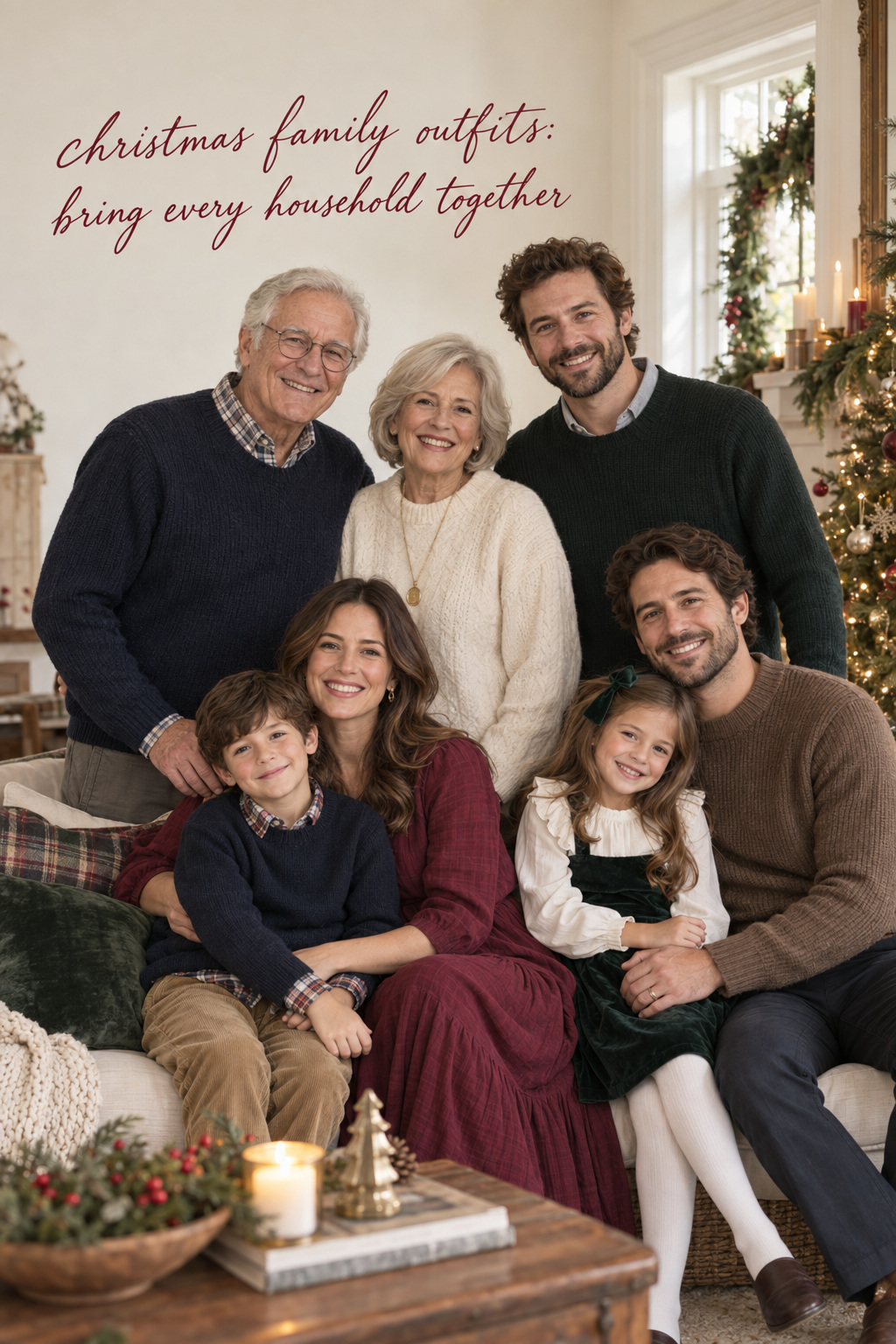
For grandparents, siblings, cousins, partners, and children, keep the directions even simpler. Send a small palette such as navy, cream, warm brown, and muted berry, then ask each household to choose one or two of those colors. Do not assign a separate exact outfit to every relative. A grandparent may wear a favorite navy cardigan, one household may use berry as an accent, and another may bring cream knits and brown trousers.
If the group has a photographer, follow their preferred arrangement and ask before planning clothing around a pose. Otherwise, group people by household or generation in a way that feels natural, then look for any large color cluster. If one side of the frame has every dark outfit, move one lighter layer or person toward the middle. This is a small composition adjustment, not a demand that relatives change their whole look.
Offer relatives a clear opt-out from buying something. Someone may not own the exact palette shade or may be traveling with limited luggage. A related neutral, a small accessory, or simply a similar dress level can be enough to make the group feel considered. Family photographs tend to feel more personal when people arrive in clothes they chose willingly.
When matching pajamas are the right simple choice
Matching Christmas pajamas can be a fun option for a casual morning photo, especially when the family already enjoys the tradition. Choose them because the group likes the idea, not because coordinated outfits require identical sets. Check sizing, fabric feel, and return or exchange timing before ordering. If one person dislikes pajamas for a portrait, a plain knit or soft loungewear in a related color can fit the group just as well.
4. Do a final fit, photo, and comfort review
Once the outfits are assembled, lay them out together or ask each person to get dressed for a quick check. A phone photo is useful because it shows whether one color dominates, a pattern distracts, or a background swallows a garment. It does not need to look like a finished portrait. It only needs to help you notice a fix while there is still time.
Run the movement check before the photo day
Have each person sit, stand, reach, and walk in their outfit. Check that the waistband stays comfortable, sleeves do not restrict movement, and the hem works with the planned shoes. If the portrait includes sitting on the floor or holding a child, try that position too. These small tests help reveal clothing that looks fine on a hanger but becomes distracting after a few minutes.
Inspect the clothes in the light where the photo will happen. Look for visible undershirts, see-through fabric, lint, pet hair, twisted collars, or a belt buckle that catches the light more than intended. Keep a simple lint roller and a spare top or tights available if the family is getting ready at home. If traveling, pack the outfit in a way that avoids unnecessary creases and keep shoes with the clothes they belong to.
Plan layers around the part of the day outside
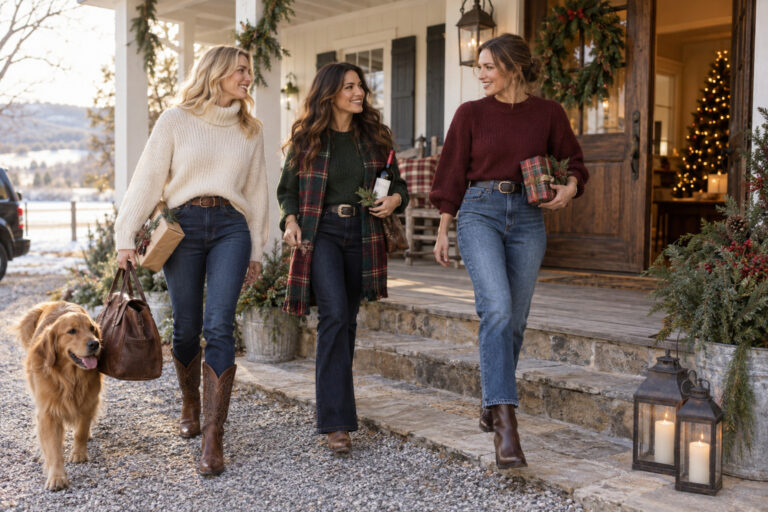
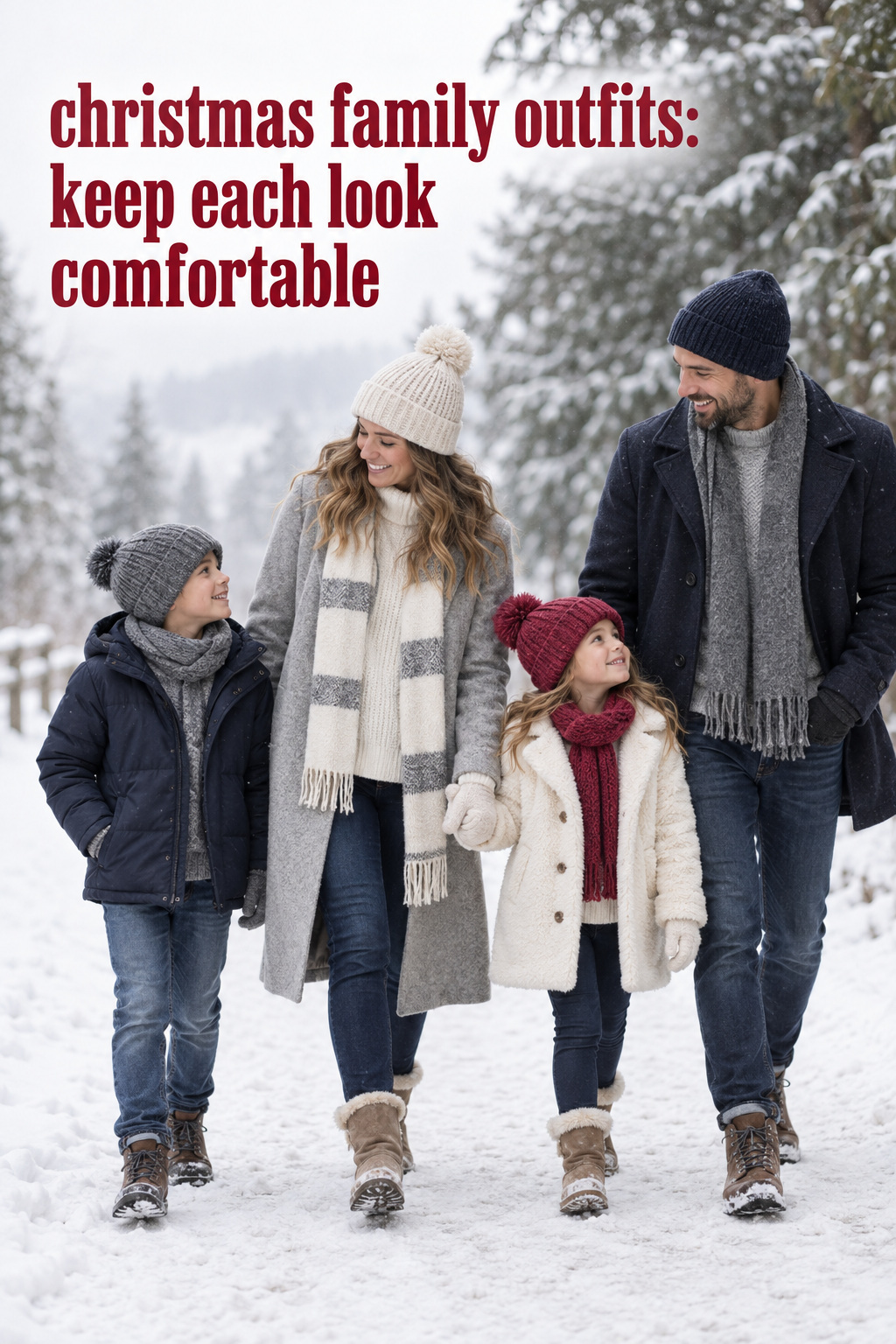
For outdoor photos, plan the coat and footwear as part of the outfit. If a coat stays on in the picture, choose one that works with the palette. If it comes off for a few minutes, make sure the person wearing it will remain comfortable in the base layer. Scarves, hats, and gloves can be useful accents, but they should be easy to remove if they cover faces or compete with the main outfit.
For a warm indoor room after a cold commute, use a removable layer rather than relying on one heavy outfit. A cardigan, overshirt, vest, or simple jacket can shift the look and temperature without requiring a full change. This matters most when photos happen between activities. The family can look coordinated in the portrait and still feel dressed for the gathering that follows.
Use this final family outfit checklist
- Does every person feel comfortable and recognizable in what they are wearing?
- Do the clothes share a palette and a similar dress level without looking copied?
- Is there one clear pattern or color anchor rather than several competing focal points?
- Do the colors stand apart from the room, tree, snow, or outdoor background?
- Can each person sit, walk, reach, eat, and move as the day requires?
- Are shoes and layers suitable for the route between indoors and outdoors?
- Is there a backup for the one garment most likely to cause a problem?
- Has everyone received the same simple instructions and the freedom to use their own closet?
For a large group, you can send this short message and fill in the details: “For our Christmas photo and gathering, let’s aim for [dress level] outfits in [three or four colors]. Pick something comfortable from your closet, and no one needs to buy a matching outfit. Please send me a quick photo by [day] so we can make sure the group palette feels balanced.” A clear invitation keeps the planning friendly and makes it easier for relatives to ask questions early.
The easiest Christmas family outfits do not depend on everybody wearing the same sweater or following a strict color chart. Start with one piece the family enjoys, share a small set of colors, and let each person choose a comfortable version of the plan. A little coordination gives the group a connected look, while the individual choices keep the photograph warm and personal.
FAQ
Should Christmas family outfits match or coordinate?
They can coordinate without matching exactly. Choose a small palette and a similar level of dress, then let each person wear a different combination. Matching pajamas are one optional tradition, but a shared accent, knit texture, or color family can connect separate outfits just as well.
How many colors should a family wear in Christmas photos?
Three or four related colors are a manageable starting point for many groups, often including a neutral. The right number depends on the group size, setting, and clothes people already own. Treat the palette as guidance rather than a strict limit, and check a quick group photo to see whether the colors feel balanced.
Can we wear different patterns in a family Christmas photo?
Yes. Keep the patterns from competing by making one print the visual anchor and using quieter pieces around it. If more than one person wears a pattern, choose prints with different scales or repeat a color between them. Solid knits and simple trousers can give the eye a calm place to rest.
What should a large extended family wear?
Share a short palette and dress-level note, then let each household choose outfits from its own closet. Ask for a quick photo in advance if coordination matters to the group. A related neutral can stand in for a missing color, and relatives should not need to buy an outfit just to join the photograph.
Are matching Christmas pajamas a good idea for family pictures?
They can work well for a relaxed morning picture when everyone enjoys wearing them. Check that the fabric feels comfortable and the sizes fit before the photo day. If someone prefers regular clothes, a soft knit or loungewear in a related shade can keep the picture connected without forcing a matching set.
How can children stay comfortable in Christmas photo outfits?
Try the outfit on early and let the child sit, bend, walk, and reach in it. Pay attention to scratchy tags, tight waistbands, stiff shoes, slipping sleeves, and layers that are difficult to remove. A familiar piece in a coordinating color is often more useful than a new outfit that feels uncomfortable.
How do we choose family outfits for an outdoor Christmas photo?
Include coats, shoes, and weather layers in the plan, then consider how their colors will sit against the location. If coats stay on, coordinate them with the palette. If they come off briefly, make sure the base outfits are warm enough for the photo. Keep hats and scarves practical and easy to adjust.
Can we reuse clothes we already own for coordinated outfits?
Yes. Begin with a favorite garment and use its colors to guide the group. A plain shirt, cardigan, trousers, dress, or accessory in a related shade can connect outfits you already own. A quick try-on together will show whether one small swap would improve the overall balance.