Winter Jacket Outfits: 12 Easy Formulas to Wear on Repeat
A good winter jacket can make getting dressed easier, but only when you know what belongs underneath it. The same puffer that feels right with leggings may overwhelm wide trousers, while a short wool jacket can look polished with a dress and unfinished with a bulky sweater. The answer is not a new outfit for every morning. It is a small set of winter jacket outfits built from repeatable pieces, with a few adjustments for warmth, proportion, and the kind of day ahead.
This guide treats the jacket as the starting point of a useful wardrobe system. You will find combinations for casual errands, work, dinner, and colder outdoor plans, plus a simple way to choose layers without piling on bulk. Start with the jackets that fit your climate and routine, then use the formulas as templates. Swap colors, fabrics, and shoes to make each look feel like your own.
Choose a small winter jacket capsule that fits your week
Before collecting outfit ideas, look at the places you actually go in winter. A person who walks to work in wet weather needs dependable coverage and shoes with grip. Someone who drives between warm buildings may prefer a lighter jacket that is easy to take off. A weekend outdoors asks for different insulation than a short ride to dinner. Write down your three most common winter situations and choose outerwear around those needs. Style becomes simpler when the jacket already suits the day.
A compact capsule can include one warm everyday option, one polished option, and one personality piece. A puffer or insulated parka can handle colder walks. A wool jacket or tailored coat can sharpen trousers, dresses, and office basics. A shearling, suede-look, quilted, or barn jacket can add texture and character on milder days. You may need only two categories if your winters are mild, or a longer insulated coat for exposed, windy commutes. The useful number depends on your climate, storage, budget, and laundry habits.
Found the dress? Keep the rest in one place.
Zarellea brings guest details, vendors, timelines, and every next step together — so your wedding plan feels as good as your look.
Check what each jacket can layer over before deciding it belongs in the rotation. Wear your thickest regular sweater, zip or button the jacket, then reach forward, sit down, and lift your arms. If the shoulders pull or the sleeves ride up, the outfit may not work for a long day. Also check whether the collar sits comfortably with a scarf, whether the cuffs meet your wrists, and whether the hem covers the area you want protected. A beautiful jacket that stays on a hanger does not create useful winter jacket outfits.
Pick a color plan that connects your outerwear to pieces already in the closet. Black, navy, charcoal, camel, olive, and cream are easy anchors, but the best neutral is the shade you enjoy wearing. If your jacket is patterned or bright, keep a few supporting pieces quiet and repeat one of its colors in a scarf, bag, or shoe. With a neutral jacket, use a colored knit, plaid shirt, or textured bag to give the outfit a focal point. Repeating one color across the outfit can make separate pieces feel intentional.
Finally, separate warmth from visual weight. A thin thermal base layer can add comfort without changing the outline of a sweater. A bulky cardigan under a fitted jacket may restrict movement, while a roomy jacket can accommodate a thicker knit. Think about the full route, not just the indoor mirror: standing at a windy bus stop, carrying groceries, or walking on slushy sidewalks can change which outfit makes sense.
Four reliable formulas for winter jacket outfits
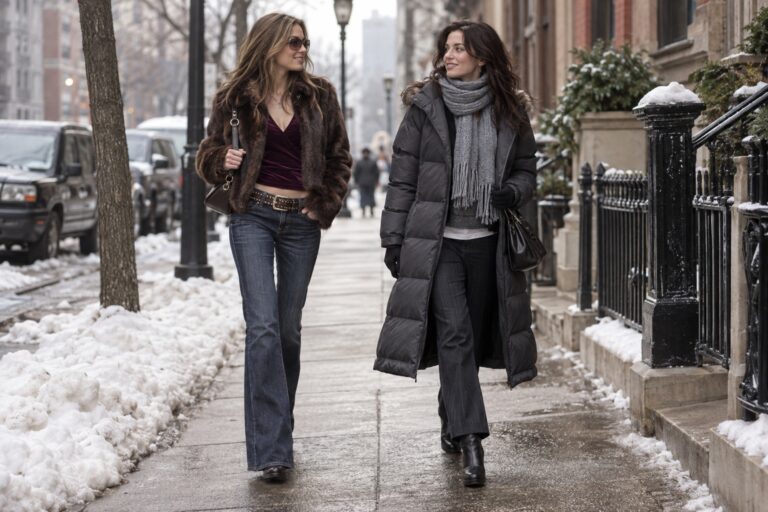
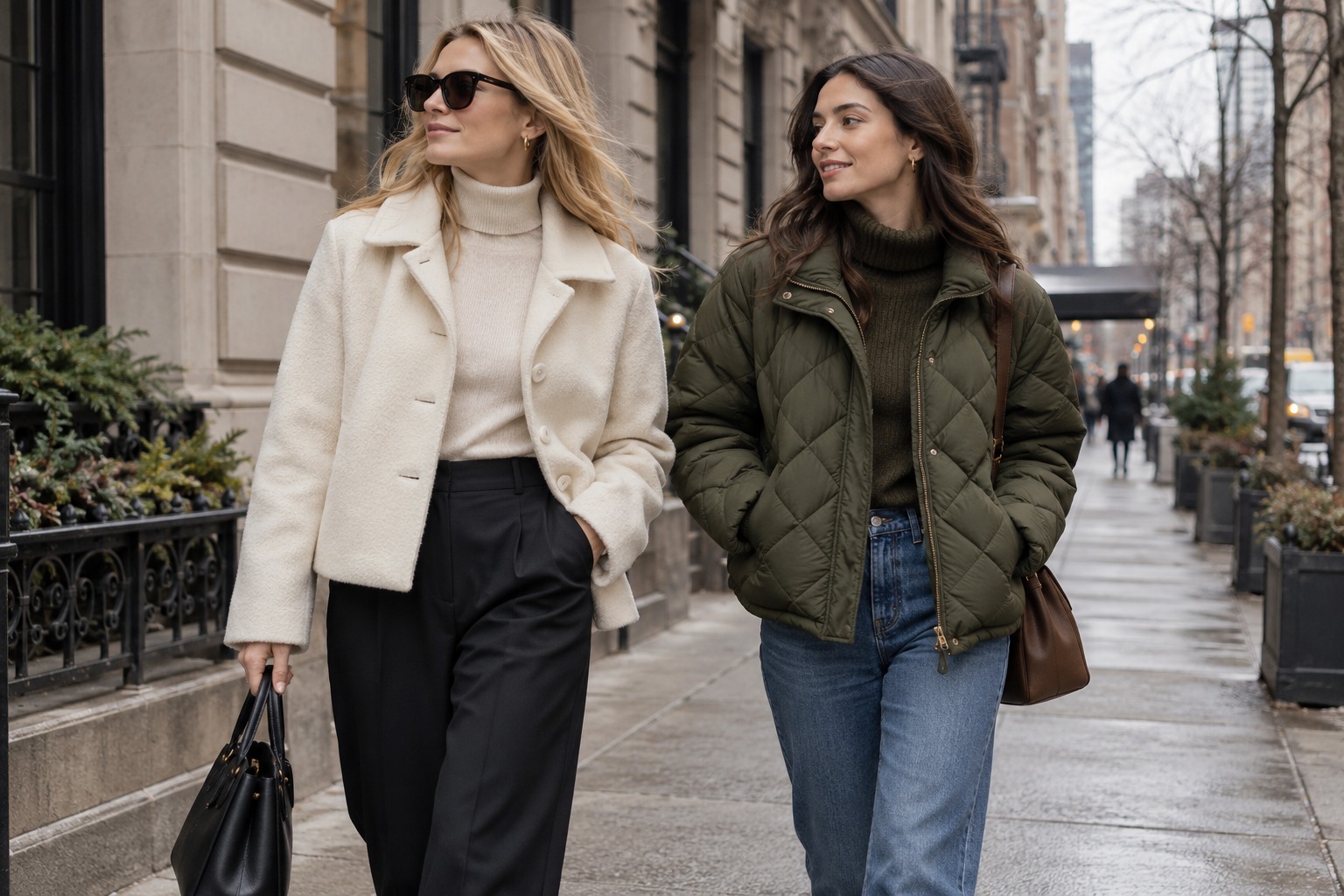
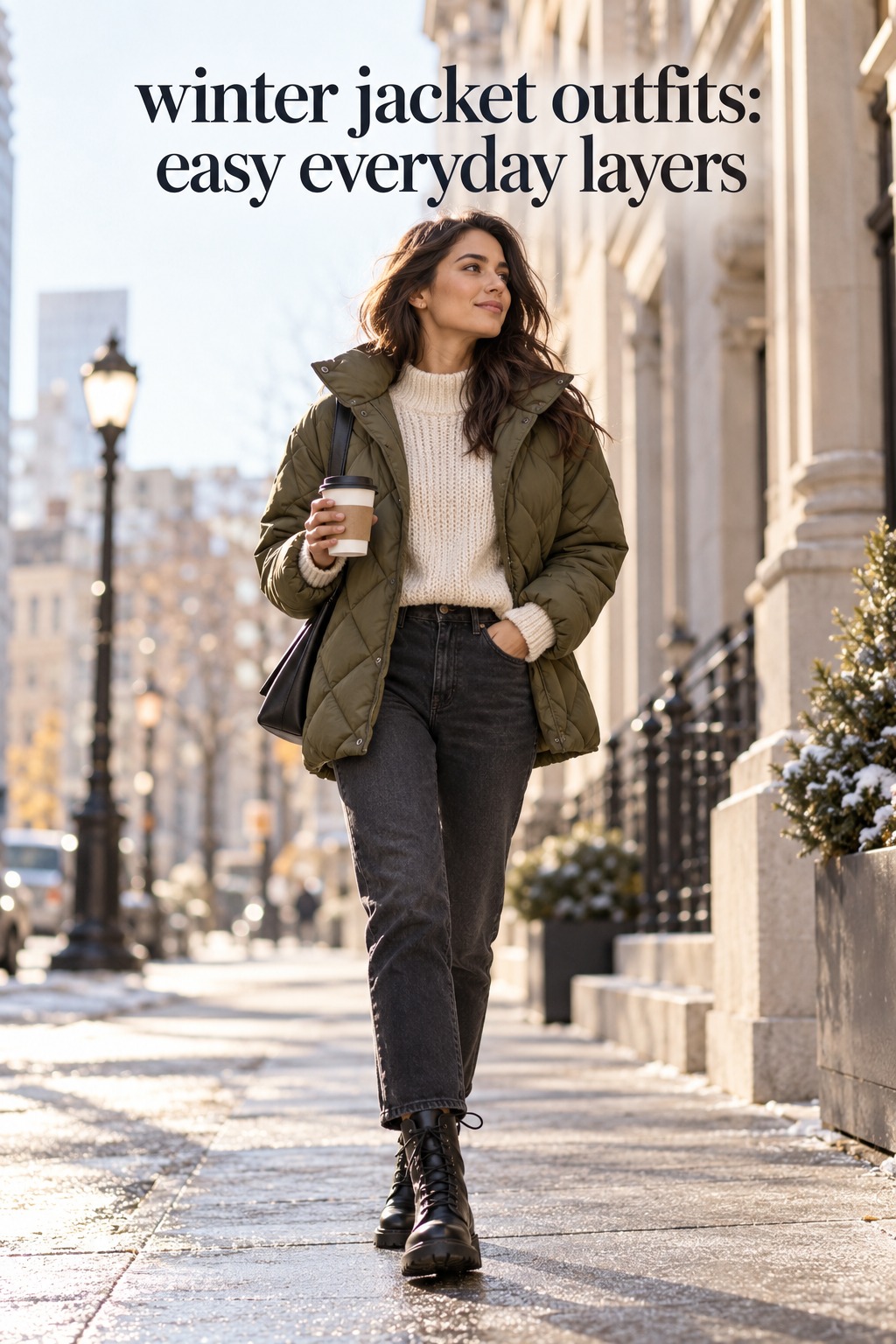
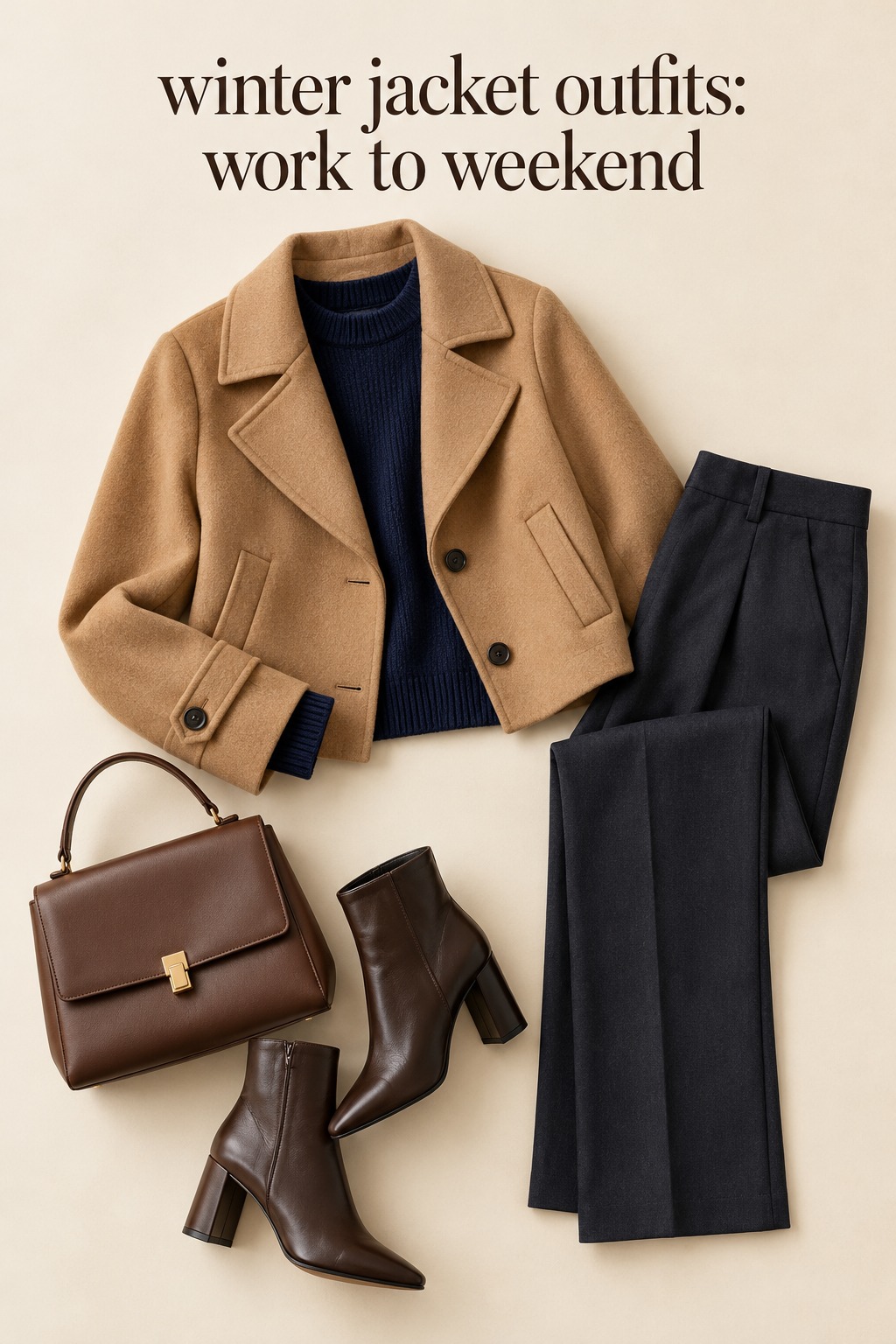
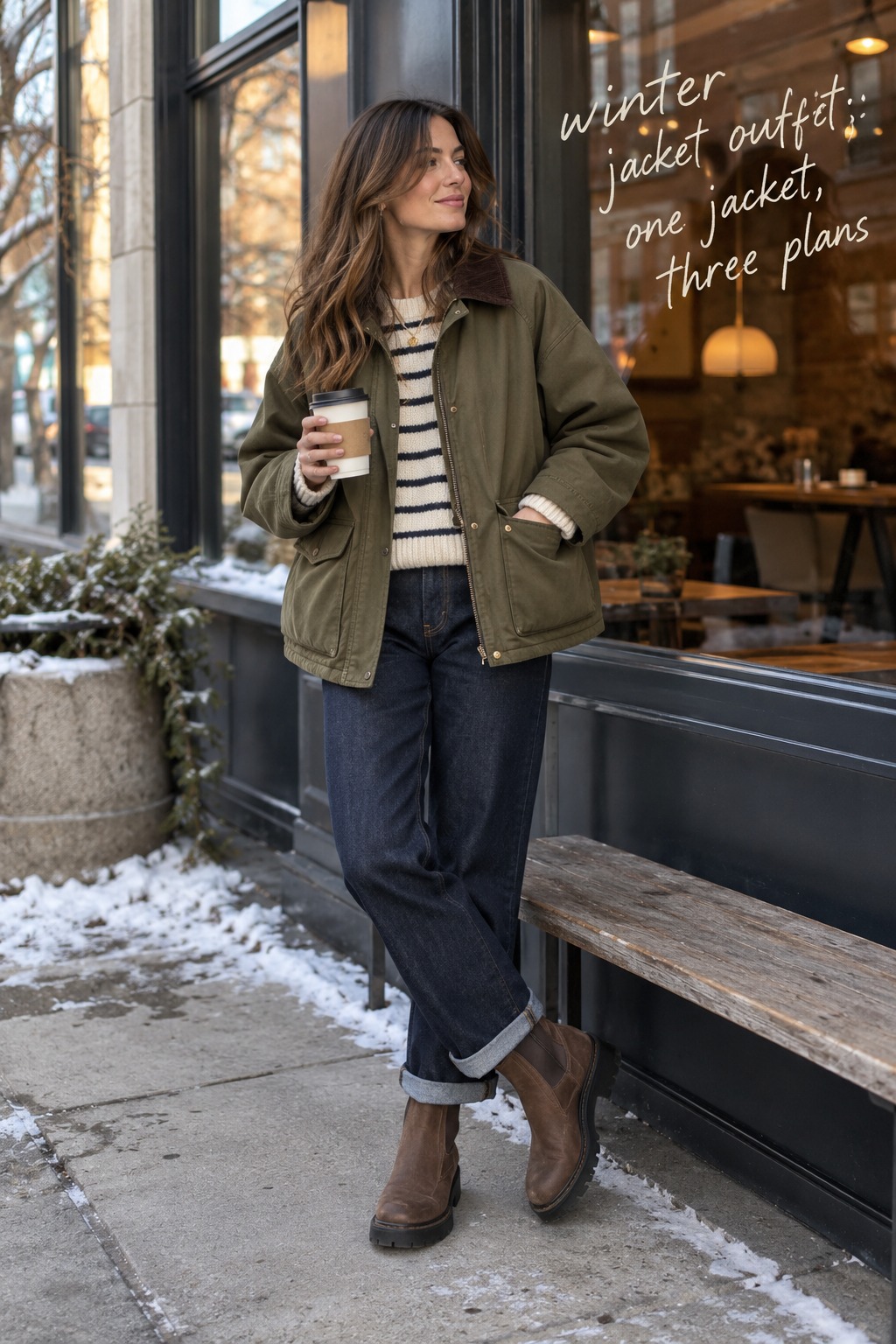
Formula one: jacket, fine knit, straight-leg jeans, and sturdy boots. This is a dependable everyday base because each piece has a clear job. The knit sits smoothly under outerwear, straight jeans keep the line easy, and boots add visual weight at the hem. Try it with a cropped wool jacket for a neat silhouette or a hip-length puffer for a relaxed one. If the jacket is dark, a lighter sweater near the face can brighten the combination. Choose a jean length that does not bunch heavily over the boot.
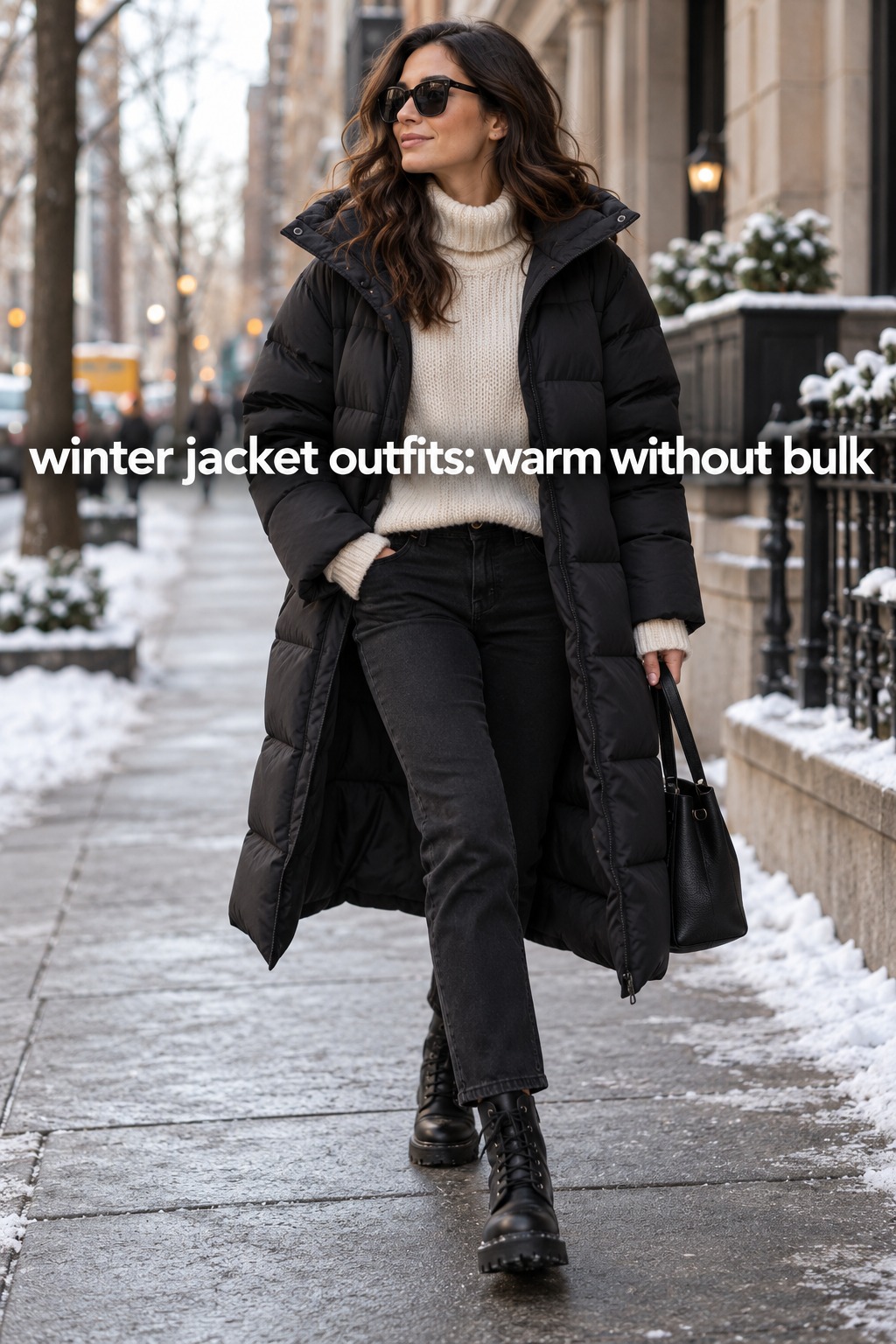
Formula two: insulated jacket, matching base, and weather-ready shoes. Start with leggings or slim trousers and a long-sleeve top in one color family, then add a puffer. The uninterrupted base gives a voluminous jacket a clean frame. A beanie and scarf can echo the shoe color or introduce one contrasting shade. This outfit works for errands and casual travel when your layers are comfortable enough to move in. In wet or icy conditions, let footwear function lead the choice: use a sole and upper suited to the route instead of relying on a fashionable but slippery shoe.
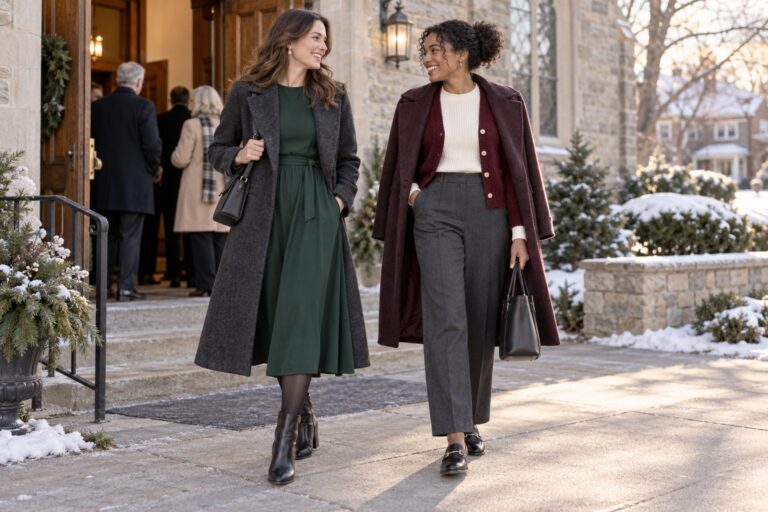
Formula three: short jacket, flowing skirt, and tall boots. A cropped or waist-length jacket can balance the movement of a midi skirt, while boots connect the hemline to the rest of the outfit. Add opaque tights or a thin thermal layer when the weather calls for it. This combination is useful when jeans feel too casual but a dressy coat seems excessive. Keep the sweater close enough to the body to tuck or sit neatly at the waistband. If both jacket and skirt are statement pieces, use a simple knit and restrained accessories to let their shapes show.
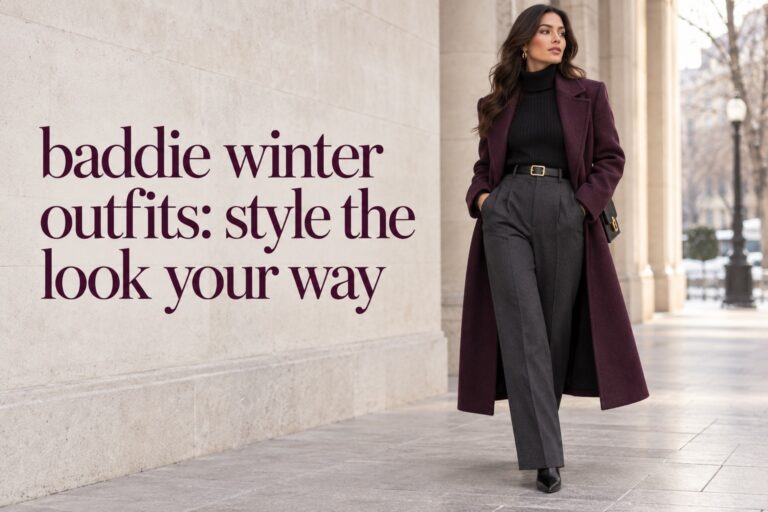
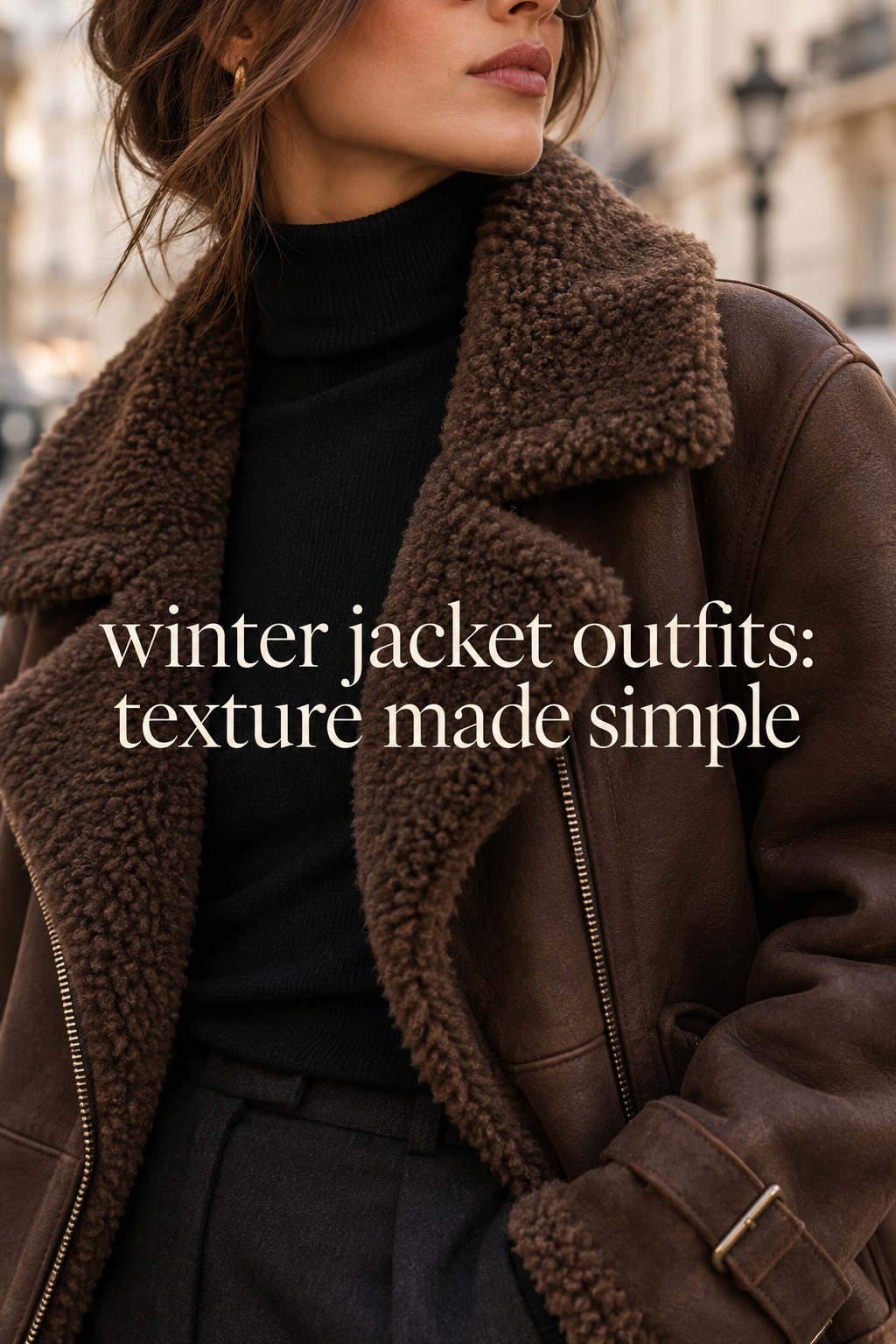
Formula four: textured jacket, simple column, and one polished accessory. A shearling or quilted jacket can be the most expressive item, so pair it with a monochrome base such as a black turtleneck and dark trousers. Add a belt, structured bag, or small earrings to make the outfit feel finished. This approach is easy for lunch, casual office days, and dinner when you want outerwear to carry the personality. If the jacket has a large collar or visible lining, keep the scarf compact so the neckline does not become crowded.
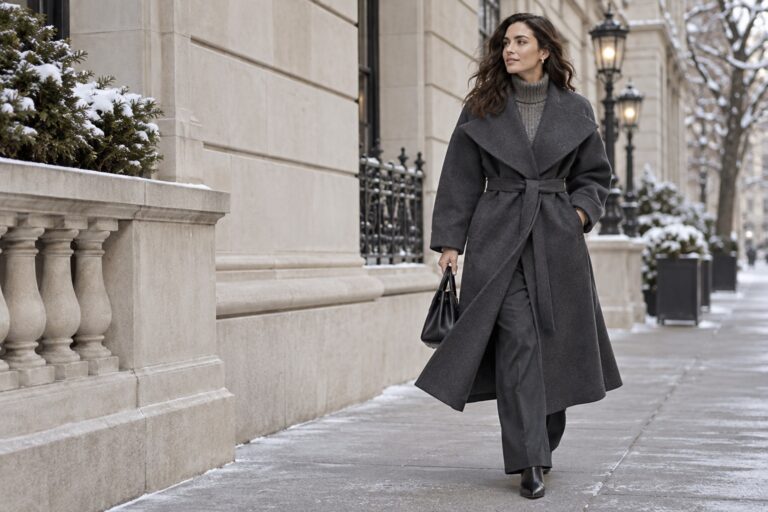
These formulas are starting points, not rules about body shape. If you like a relaxed fit, keep it and adjust the lengths or materials around it. A long puffer can work with wide trousers when the base is streamlined at the top and the hems fall cleanly. A fitted jacket can feel modern with looser denim when the shoulder and sleeve are comfortable. The mirror check is about movement and balance, not making your body look smaller.
Build outfits around the jacket you are wearing
Puffer jacket: Let the padding set the proportions. A cropped puffer pairs naturally with high-rise jeans, a knit dress, or a midi skirt because the shorter hem leaves room for the bottom half to move. A longer puffer can sit over leggings, slim jeans, or tailored trousers without requiring a fitted outfit. For a more dressed-up look, try a fine sweater, straight trousers, and sleek boots. If the jacket has a glossy finish, mix it with matte wool, denim, or cotton so the textures feel considered.
Mind the layers under a puffer. A thick hoodie, chunky scarf, and high collar can all compete near your face, so choose one substantial detail and keep the others simpler. If you need more warmth, add a thin insulating layer beneath the sweater or use a neck warmer that fits under the jacket. Keep cuffs out of the way of gloves, and check that the jacket closes comfortably over the outfit. A puffer can look relaxed without being hard to move in.
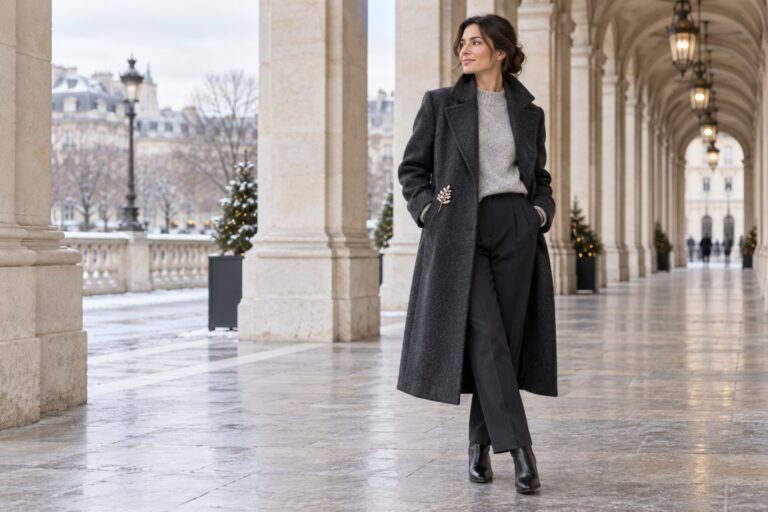
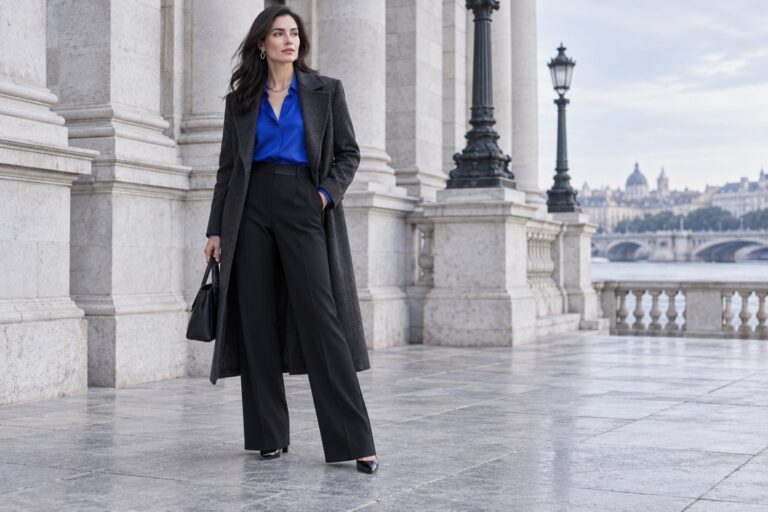
Wool or tailored jacket: Use the clean structure to make everyday pieces feel more deliberate. Pair it with a crewneck sweater, dark jeans, and loafers for a milder commute, or swap in boots and thicker socks when it is colder. For work, wear the jacket over a fine turtleneck and matching or tonal trousers. A scarf in a related color softens a sharp lapel. If the jacket is short, a shirt or knit hem peeking out can add a relaxed layer, but check that the lengths look purposeful rather than accidental.
A tailored jacket has limits in severe weather. If it does not block wind or protect you from precipitation, use it for short trips or layer it under a more protective outer shell. A polished look should still suit the conditions. Keep a compact umbrella or weather-ready shoes near the door so a good outfit does not depend on dry pavement.
Shearling or faux-shearling jacket: Lean into its texture with uncomplicated basics. Dark straight-leg denim, a fine-gauge knit, and lace-up boots create a grounded daytime look. For a softer combination, try cream trousers and a tonal sweater, allowing the jacket’s edge or trim to add contrast. A skirt can work too: choose tights and boots that make the transition between hem and shoe feel intentional. Because shearling adds visual volume around the shoulders and collar, avoid stacking a thick scarf on top unless it is necessary for warmth.
Barn or quilted jacket: Use the utilitarian feel with crisp, familiar pieces. A striped shirt, slim knit, and straight jeans create a casual weekday outfit. A quilted jacket over a sweater dress and boots can soften a dressier piece for daytime. If the jacket is roomy, show a little shape at the wrist or ankle, or use a tucked top to define where the outfit begins. A cap or canvas tote can reinforce the casual mood, while a leather bag makes the same jacket feel more city-ready.
Leather or suede-look jacket: Treat it as a texture and mood piece, then decide whether its warmth is enough for the day. Over a thin turtleneck with black jeans, it creates a simple evening outfit. With a soft sweater, relaxed denim, and boots, it works for a casual weekend. A leather-look jacket can also add contrast to a floral or knit dress, especially when the rest of the outfit has a clear color story. For a very cold walk, add a warm base layer or choose a more insulated jacket.
When you are unsure what to wear with a jacket, start with its strongest feature. A striking color calls for a quieter base. A dramatic collar looks best when the neckline underneath is simple. A boxy shape can be balanced by a straighter trouser, a visible waistline, or a skirt that moves. A slim jacket can handle a wider bottom if the fabric drapes rather than bunches. Repeating one color in two places, such as the jacket and shoes or scarf and bag, helps the combination feel connected.
Adjust proportion, layers, and shoes for real winter days
When an outfit feels off, check three points before replacing anything: shoulder volume, jacket hem, and trouser or skirt hem. If both the jacket and sweater are bulky, remove one layer or choose a smoother knit. If the jacket ends at the widest point of a skirt or trouser, try a slightly shorter or longer top layer and see whether the line improves. If fabric catches on the shoe, change the hem or footwear rather than adding more accessories. Small changes often solve the problem.
Build warmth from the body outward. A comfortable base layer, a knit suited to the temperature, and a jacket that blocks the conditions are easier to wear than several restrictive sweaters. Leave enough room for a full breath and normal arm movement. If you commute between cold outdoors and heated interiors, choose layers you can remove without disturbing the whole outfit. A cardigan, zip-neck, or scarf may be easier to manage than a second bulky sweater.
Shoes complete the outfit and affect how practical it feels. Ankle boots work with jeans and trousers when the hems meet cleanly. Tall boots can connect to a skirt or dress and add coverage. Sneakers may suit dry, mild days, while waterproof boots with a stable sole are useful when streets are wet or icy. Socks matter too: a visible sock can echo a stripe or knit, while a hidden one keeps the line uninterrupted. Choose shoes for the actual surface and temperature, then style the rest around them.
Accessories should solve a need or reinforce the outfit. A scarf can add warmth and color; gloves can echo a bag or belt; a hat can repeat a jacket’s casual mood. You do not need all three to match. If the jacket already has a strong print, sheen, or trim, a simple scarf and bag are enough. If the outfit is mostly tonal, a patterned scarf can become the one focal point. Keep straps and bulky bags in mind when trying the jacket, since a shoulder bag may distort a smooth silhouette or catch on textured fabric.
Use a practical exit check before leaving: can you zip the jacket, reach for your bag, sit down, and walk at your usual pace? Are your wrists and ankles covered as much as you need? Do your shoes feel secure? These questions help winter jacket outfits work beyond a photo. They also show which pieces deserve a place near the front of the closet and which combinations need a warmer or more comfortable adjustment.
Plan a seven-day jacket rotation without repeating the same look
A weekly rotation can begin with three jackets or even two, depending on your climate. Assign each one a job rather than a day: insulated outerwear for the coldest or wettest route, a polished layer for work or appointments, and a textured casual jacket for milder plans. Then rotate the base pieces. Jeans, trousers, a skirt, and a knit dress can each work with more than one jacket when the layers fit comfortably.
For example, wear a puffer with leggings and boots for a long errand day, then use the same jacket over straight jeans and a fine knit for a casual lunch. Style a wool jacket with tailored trousers for work, then with dark denim and a sweater for dinner. Wear a shearling jacket over a knit dress on a mild weekend, or pair a barn jacket with jeans and a striped shirt for a daytime walk. These combinations feel different because the base shape, texture, and shoes change, even when the outer layer repeats.
Hang complete combinations together for busy mornings. Place the top, bottom, and any base layer on one hanger or take a quick mirror photo when an outfit works. Note the temperature range and shoes that made it comfortable. A few saved combinations are more useful than a long list of clothes you might buy. If a look fails outdoors, make a note of what caused it: cold ankles, a tight shoulder, slippery soles, or too much volume near the neck. The next version can solve that specific issue.
At the end of the week, check whether every jacket earned its place. If one only works with a single outfit, see whether a different shoe, base layer, or bottom would give it another use. If it still feels impractical, it may not suit your routine. A strong capsule is not about owning a fixed number of jackets. It is about knowing which ones cover your real needs and how to wear them with the pieces you already reach for.
FAQ
What should I wear with a winter jacket?
Start with a comfortable base layer, then choose a bottom and shoes that suit the jacket’s length, warmth, and shape. Straight jeans, a fine knit, and sturdy boots are a flexible starting combination.
How do I make a puffer jacket outfit look polished?
Balance the puffer’s volume with a smoother base, keep the neckline simple, and repeat a color in your shoes or accessories. Tailored trousers or a knit dress can make the jacket feel more considered.
Can I wear a winter jacket with a skirt?
Yes. Try a short jacket with a flowing midi skirt, tights, and boots, or wear a longer jacket with a straighter skirt. Adjust the layers and footwear to match the temperature and walking conditions.
How many winter jackets do I need?
Choose enough jackets to cover your typical weather and plans. Many wardrobes work with one warm everyday option and one more polished layer, with an additional style piece if it serves a distinct use.
What can I wear under a winter jacket without looking bulky?
Use a smooth base layer and a knit that fits comfortably under the jacket. Add warmth with thin layers where possible, and test shoulder movement and the jacket closure before you leave.
Which shoes work best with winter jacket outfits?
Boots are a versatile choice, but the right pair depends on weather and route. Use a stable, weather-ready sole on wet or icy streets, and check that trouser or skirt hems sit neatly over or alongside the shoes.