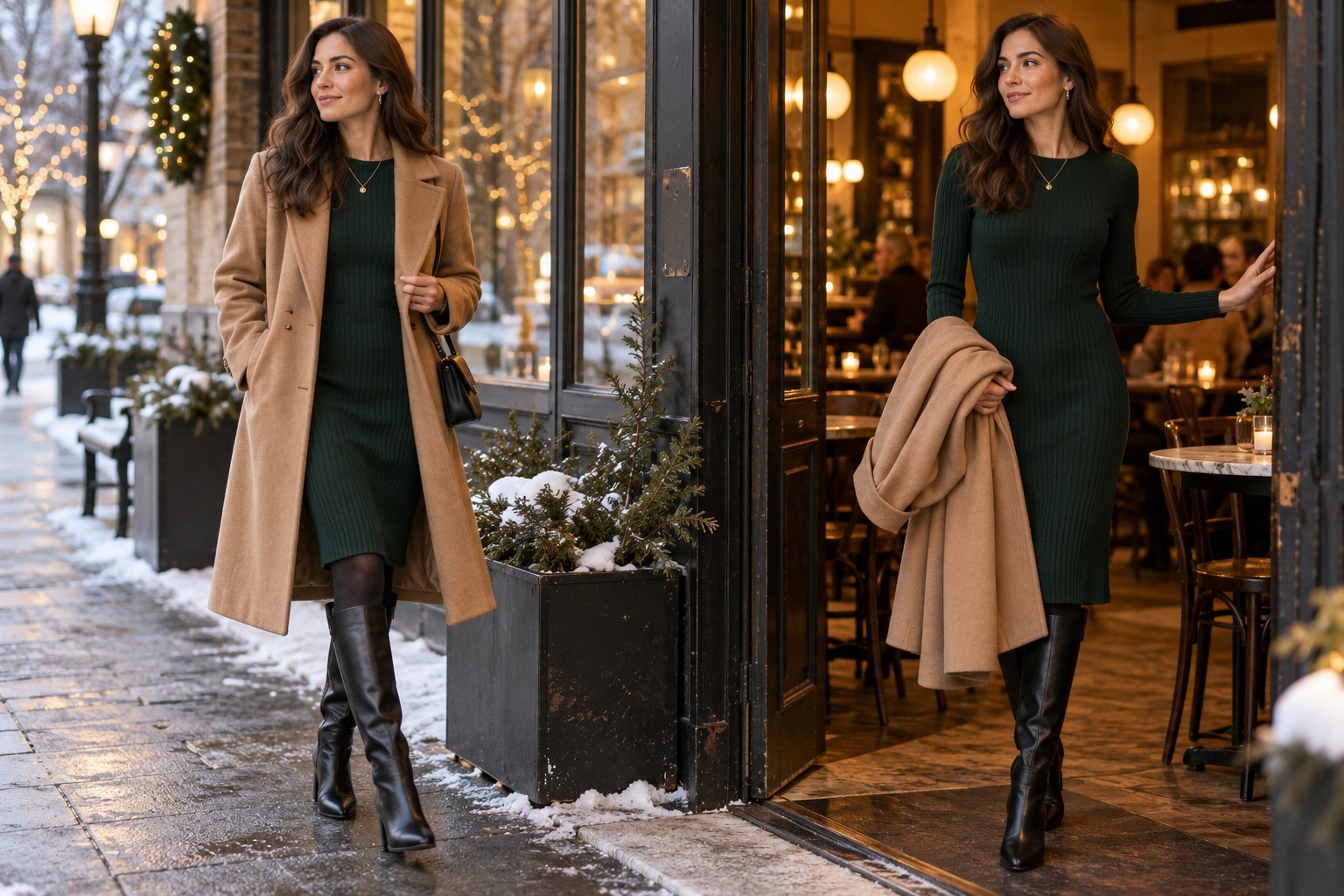
Winter Date Outfits: Dress for the Whole Plan
You leave home in a coat that makes sense for the weather, arrive with cold hands, then hang it over the back of a chair. The outfit underneath has to carry the rest of the evening: conversation, dinner, a walk to the next place, or the trip back to the car. That is the small challenge behind winter date outfits. Instead of dressing for one frozen mirror selfie, build a look that feels like you in three moments: outside, indoors without the coat, and on the way home.
The answer does not have to be a special-occasion purchase or a dramatic departure from your everyday style. Start with a piece you already trust, decide how dressed up the plan feels, and check that the full combination still works when the outer layer comes off. A favorite pair of trousers, a skirt you can sit in, or a knit dress can all lead to a date-ready outfit. The details around them make the look feel intentional.
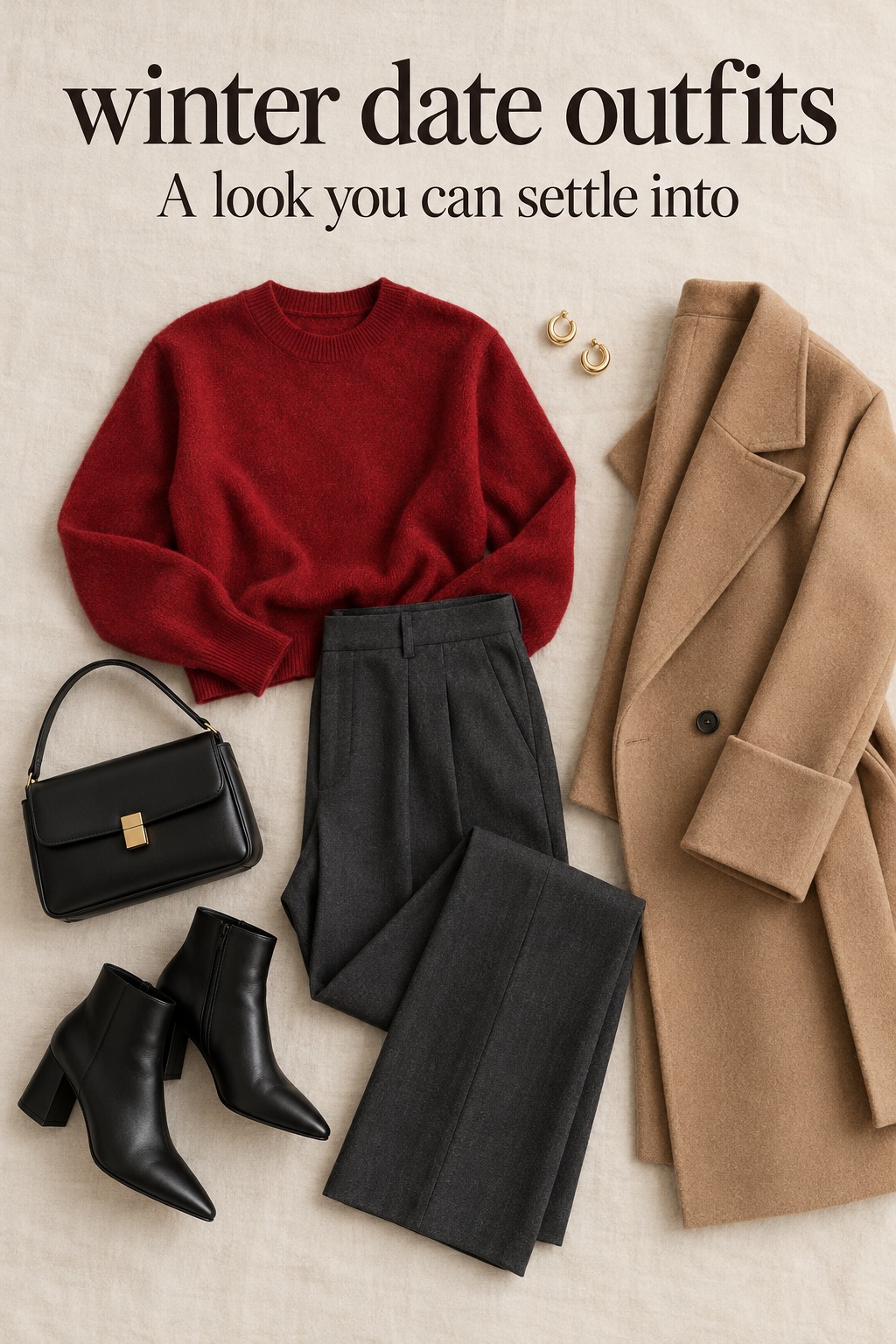
Start with the version of you that already feels right
On a winter evening, getting dressed can start to feel like solving two unrelated problems. The coat has to handle the cold. The outfit has to feel special enough for the date. When those decisions pull in opposite directions, it is tempting to build a look you would never wear on an ordinary day. Before choosing a silhouette, ask a simpler question: what is one piece you would happily wear even if the date were not part of the story?
That piece is your anchor. It might be dark straight-leg jeans, trousers with a good drape, a soft sweater dress, a satin skirt, or a button-down that makes you feel composed. The anchor gives the outfit a familiar starting point. You can then add one signal that makes it feel date-ready: a more noticeable neckline, polished boots, a small piece of jewelry, a richer color, or a texture that catches the light. One clear signal is often easier to wear than several special pieces competing at once.
Found the dress? Keep the rest in one place.
Zarellea brings guest details, vendors, timelines, and every next step together — so your wedding plan feels as good as your look.
Think about the tone of the plan, not only its price or label. A casual coffee, a first meeting at a neighborhood restaurant, and a celebratory dinner all permit different levels of polish. If you are unsure, choose clothes that can lean either way. A fine knit and tailored pants can feel relaxed with flat boots, then a little sharper with a belt or earrings. A simple dress can move from daytime to evening through the coat, shoe, and bag you pair with it.
Try to recognize your usual style in the mirror. If you rarely wear heels, you do not need to make a first date the night you learn how to walk in them. If you prefer relaxed shapes, a structured coat or a crisp accessory can provide the polish without changing the entire silhouette. A look feels more convincing when you can stop thinking about it and pay attention to the person across from you.
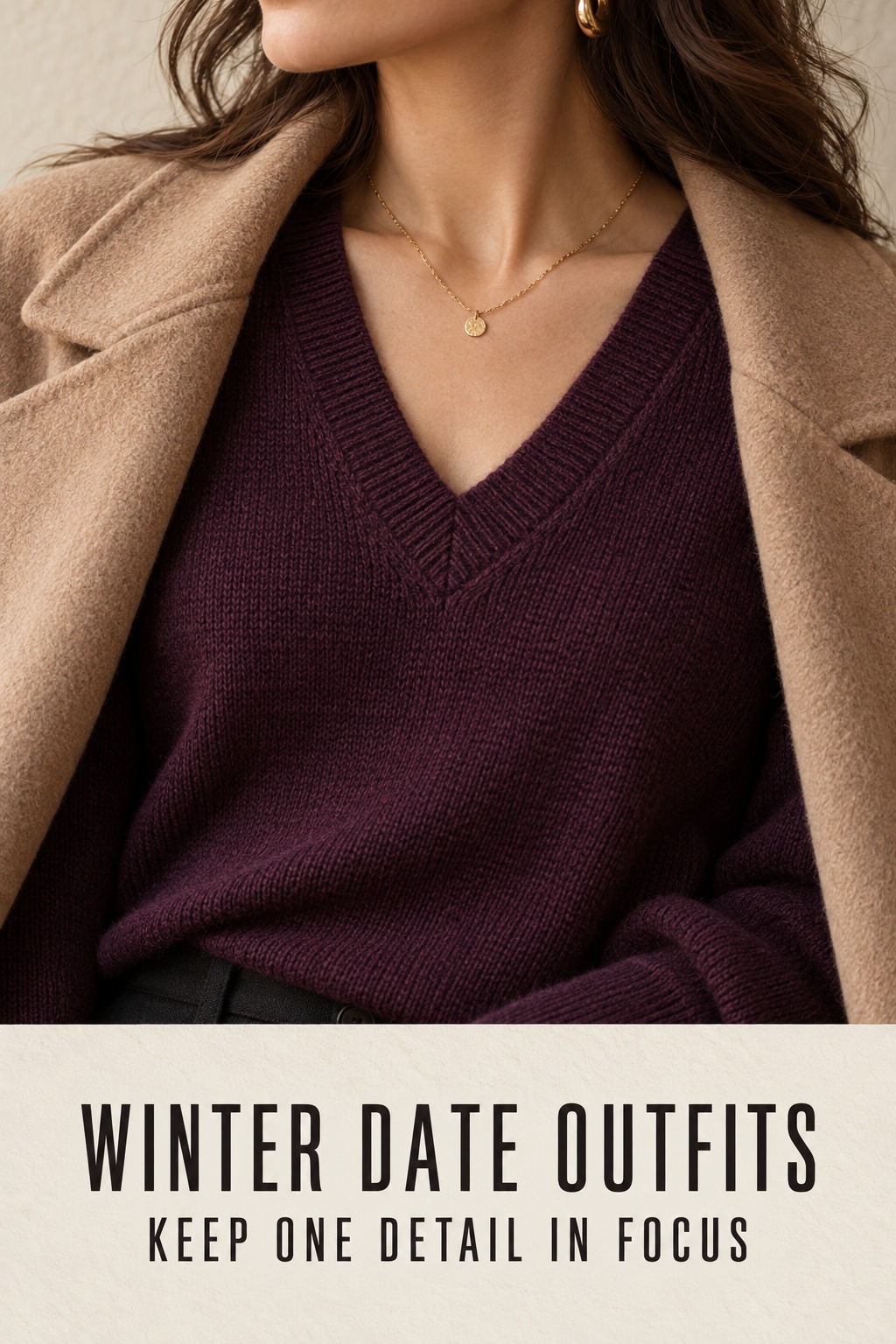
See the outfit in three winter-date moments
Put the coat on, take it off, then put it back on. Those three simple stages reveal more than a long list of outfit rules. The same date look should feel complete at the door, comfortable at the table, and appropriate for whatever walk happens after. You are not trying to make every layer visible. You are checking that the outfit does not depend on the coat to look finished or depend on bare skin to feel special.
At the door: let the coat frame the outfit
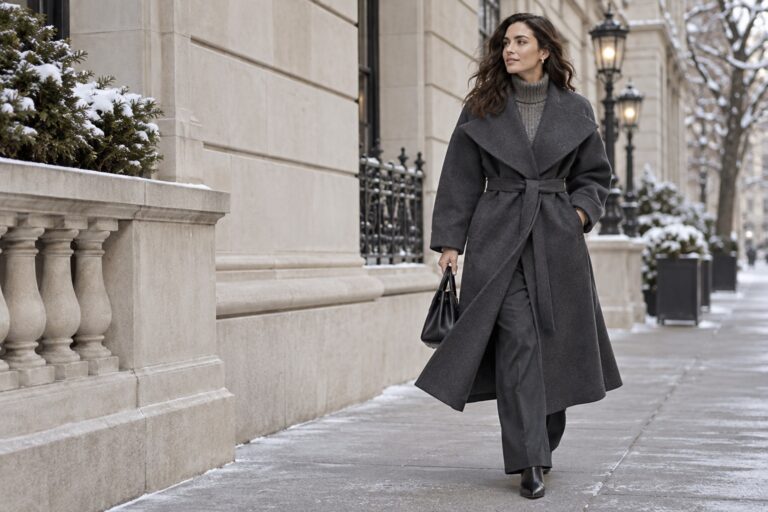
Start with outerwear because it is the first part of the outfit that is seen outdoors. A long coat can make jeans and a knit feel considered. A shorter jacket can give a dress or skirt a sharper outline. Choose the one that sits well over the clothes beneath it and that you are comfortable keeping on while you wait outside. If the outfit’s most interesting detail is at the waist or hem, try the coat both open and closed so you know what will actually be visible on the way there.
Think about the short distances that can make an outfit surprisingly awkward: waiting for a ride, crossing a parking lot, walking from a station, or standing while the table is ready. Shoes should suit the route you expect, even if the date itself is indoors. A low block heel, flat boot, or clean sneaker can look intentional when the rest of the outfit supports it. If you choose a more delicate shoe, consider whether you will have a short, easy walk rather than assuming you can remain seated all evening.
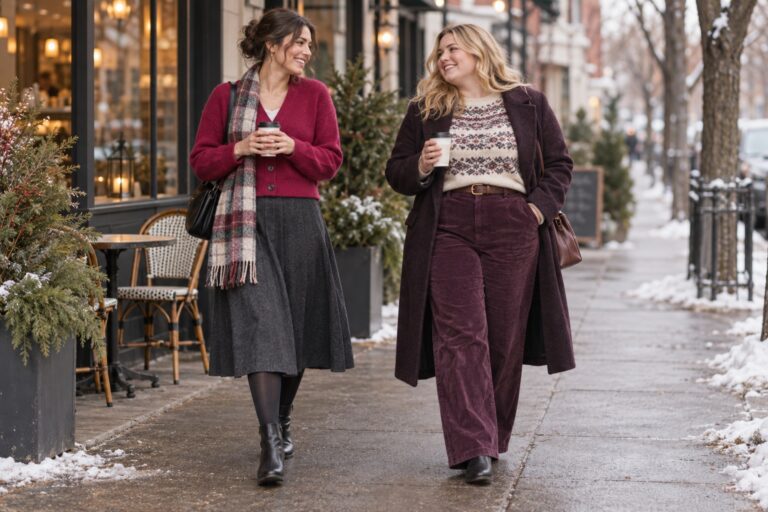
Choose one accessory that feels like a small signature rather than a checklist item. A scarf can add color near the face and come off with the coat. A bag can finish the silhouette and keep your hands free. Earrings or a necklace can make a simple sweater feel more personal. You do not need all of them. If your coat, scarf, and bag already bring strong color or texture, let the outfit under them stay quieter.
At the table: make the coat-off look feel complete
Now take off the coat and look again. Is there still a focal point? Can you sit without pulling at the skirt, tugging down a top, or worrying about a hem? Does a layer bunch when you reach for a glass or move your arms? This is where a beautiful outfit can feel less like yours. You do not have to reject the look. You may only need to switch one item for a more comfortable version of the same idea.
A sweater dress, for example, can feel easy and warm under a coat. Check its shape while seated, and add tights or boots if those make the whole outfit feel more balanced. If a slim dress feels too exposed or restrictive for a long dinner, a skirt with a soft knit can create movement while giving you more freedom to adjust the proportions. A blouse and trousers can feel polished without the structure of a full suit. The right choice is the one that lets you settle into the evening.
Details around the neckline often do more once the coat is gone. A V-neck knit can frame a fine chain. A crewneck can work with small hoops or a visible shirt collar. A high neck may not need a necklace at all. Pick the relationship that feels comfortable and visible to you. If your hair, glasses, or a patterned top already make the upper half busy, let the jewelry rest. Leaving one area simple can make the chosen focal point feel deliberate.
Also check the back and sides. A crossbody strap can flatten a textured sleeve or pull an open jacket out of place. A chair may catch a long scarf or a loose hem. A top that stays tucked while you are standing might ride up after an hour at dinner. A quick sit-down at home can tell you whether the outfit will need constant attention. You are allowed to choose comfort here. It is easier to be present when you are not adjusting a waistband throughout the conversation.
On the way home: bring the outfit back together
Put the coat back on and check whether the layers still sit smoothly. A sweater that looked simple indoors may bunch at the sleeves beneath a narrow coat. A scarf may compete with a high collar. A long skirt may need a different coat length to move freely. These are small editing questions, not reasons to start over. Smooth a sleeve, take off an extra accessory, or choose the coat that closes without flattening the detail you wanted to keep.
Bring any cold-weather extras you know you will use. Gloves can fit in a larger bag or coat pocket; a soft scarf can be worn loosely or put away once you are inside. The goal is for practical items to have a place, so they do not become an unplanned bundle in your hands. If you need to carry a tote, test the strap with your coat before leaving. A comfortable grip and a bag that stays put are part of how the outfit moves, too.
Imagine the actual last ten minutes: leaving a warm room, stepping onto a cold sidewalk, walking to transit or a parked car, and getting home. You do not need to dress for an imaginary blizzard if your route is short, and you do not have to ignore the weather to look dressed up. Just know what the outfit feels like once you are outdoors again. If the answer is “I will be thinking about my feet or shoulders,” make one practical change before you go.
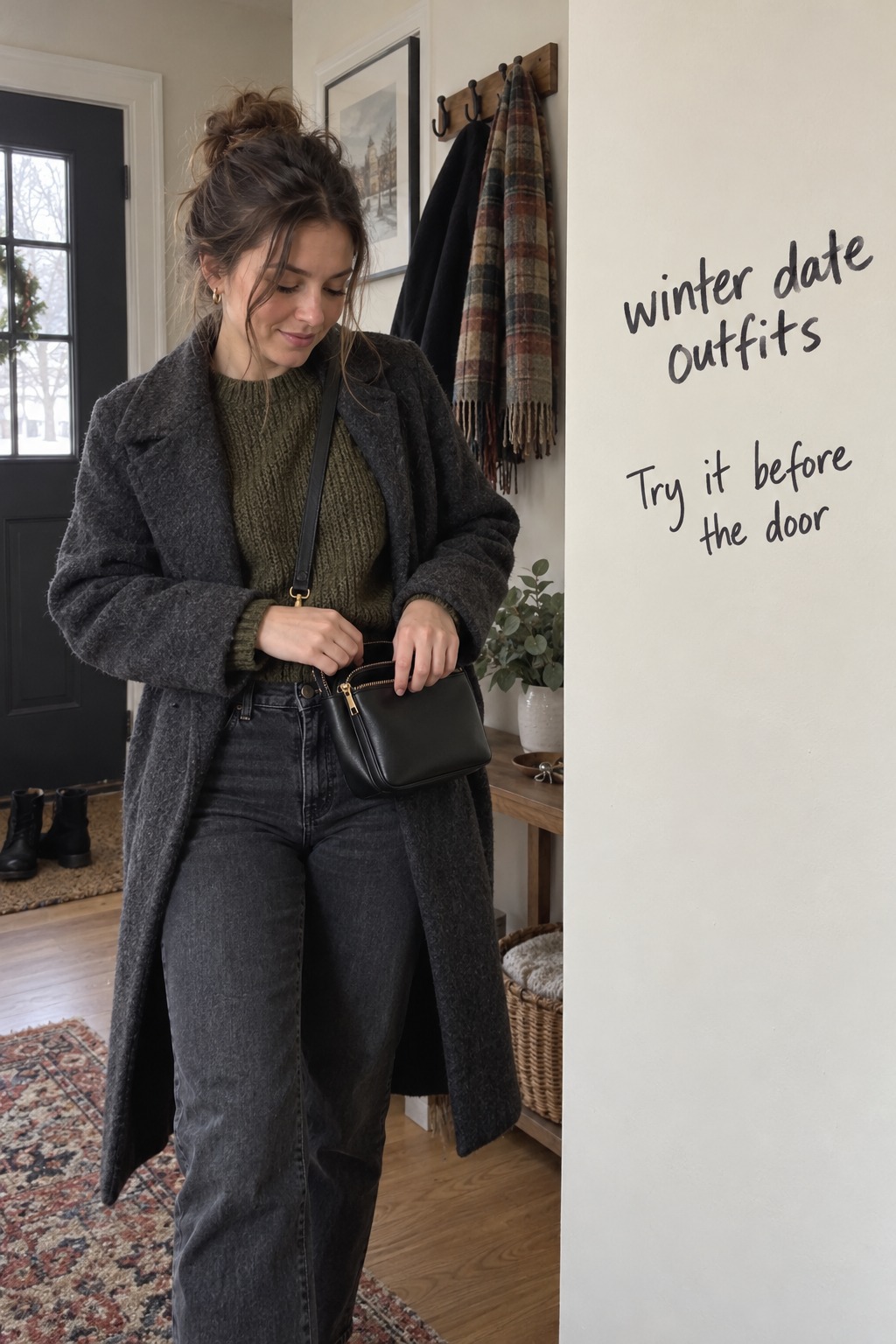
Three outfit anchors, one personal focal point
The following examples are starting points rather than a list of looks to copy. Each uses one familiar anchor and a single focal point. Keep the silhouette that feels like you, then make the coat-on and coat-off checks around it.
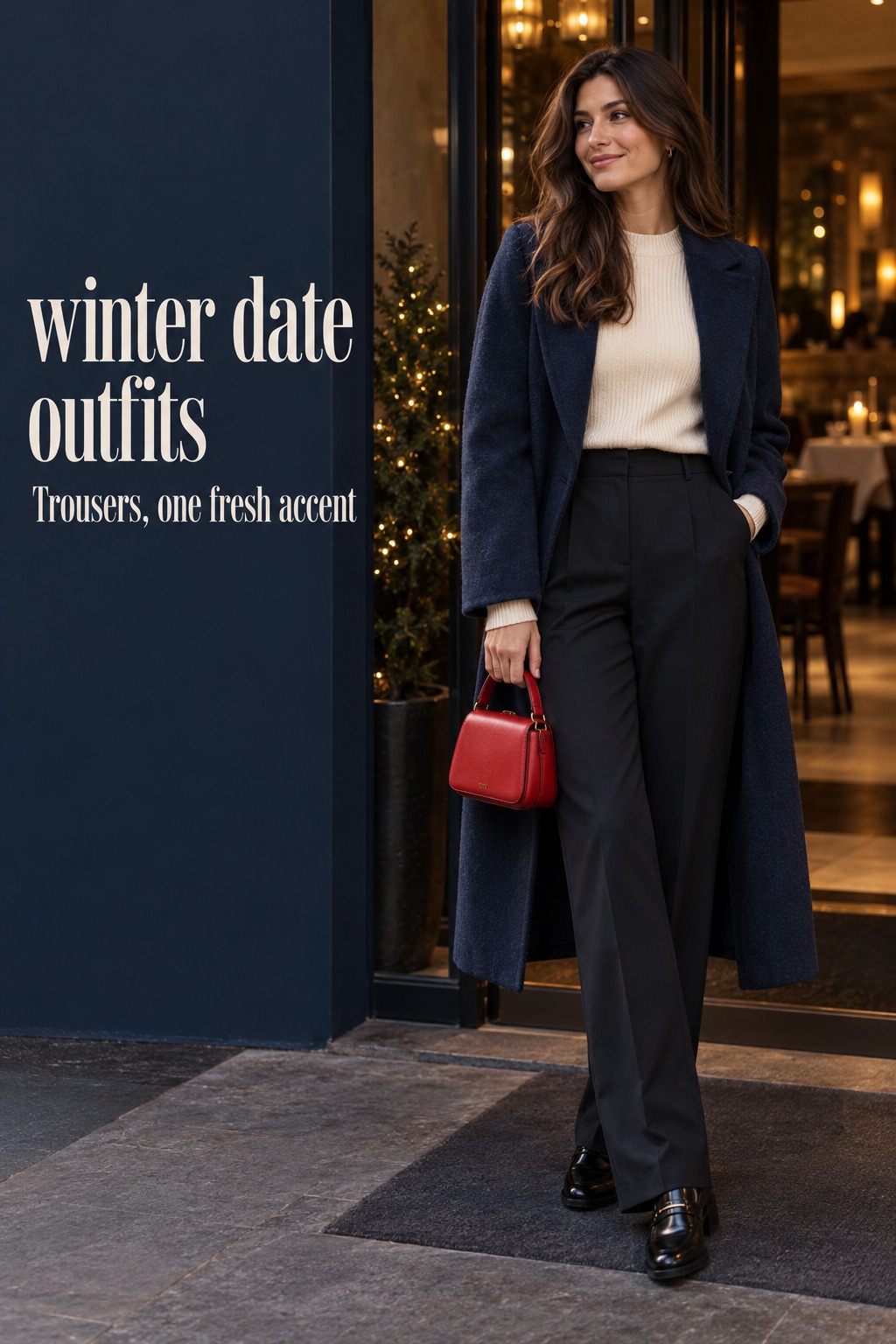
Trousers and a knit with one polished detail
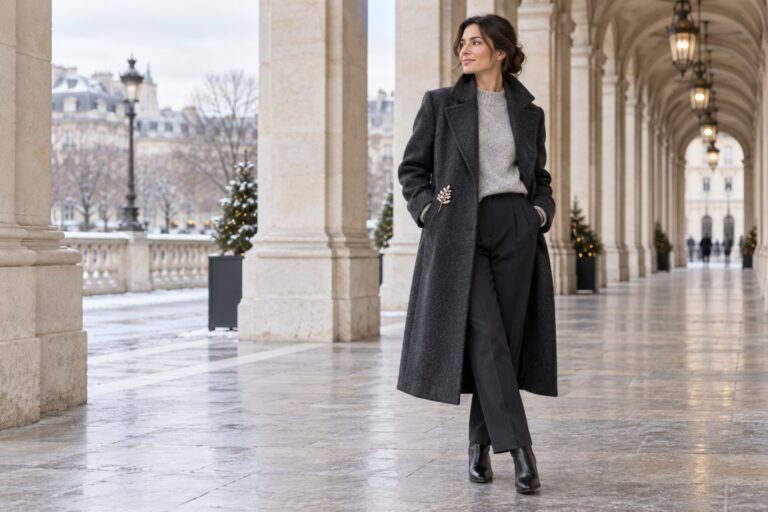
Begin with tailored or straight-leg trousers and a soft sweater. Add a thin base beneath if it helps the outfit feel comfortable outside, then use a belt, earrings, or a more expressive color as the focal point. A coat with a clear shoulder line can make the combination feel ready for dinner. If you prefer a casual date, use flat ankle boots and a less formal bag. If you want more polish, keep the same base and change only the shoe or accessory.
For the indoor check, ask whether the sweater still looks complete when the coat is gone. If the knit is very plain, add one necklace or let the belt show. If the trousers already have a distinct texture or shape, keep the top and jewelry simple. Sit down before deciding on the belt. It should define the outfit, not make dinner uncomfortable.
A skirt with boots and a clean upper half
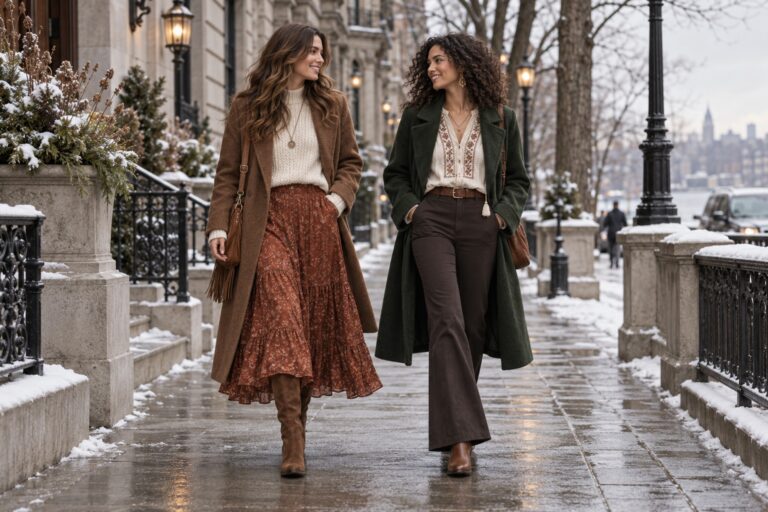
A midi skirt can bring movement to a winter look. Pair it with a fine knit or a smooth long-sleeve top, then choose tights and boots that let you walk naturally. If the skirt has a pattern or sheen, let it be the focal point. If it is a simple neutral, a colored knit or visible earrings can add a personal note. A coat that ends near the skirt hem can work, but try both pieces together to make sure the lengths do not catch or crowd each other.
Check the seated version carefully. Move your knees, cross your legs if that is how you usually sit, and see whether the skirt stays where you want it. If you feel exposed or distracted, choose a longer hem, a different lining, or trousers instead. A date outfit is not a performance of discomfort. It can still feel special when the silhouette is easy to wear.
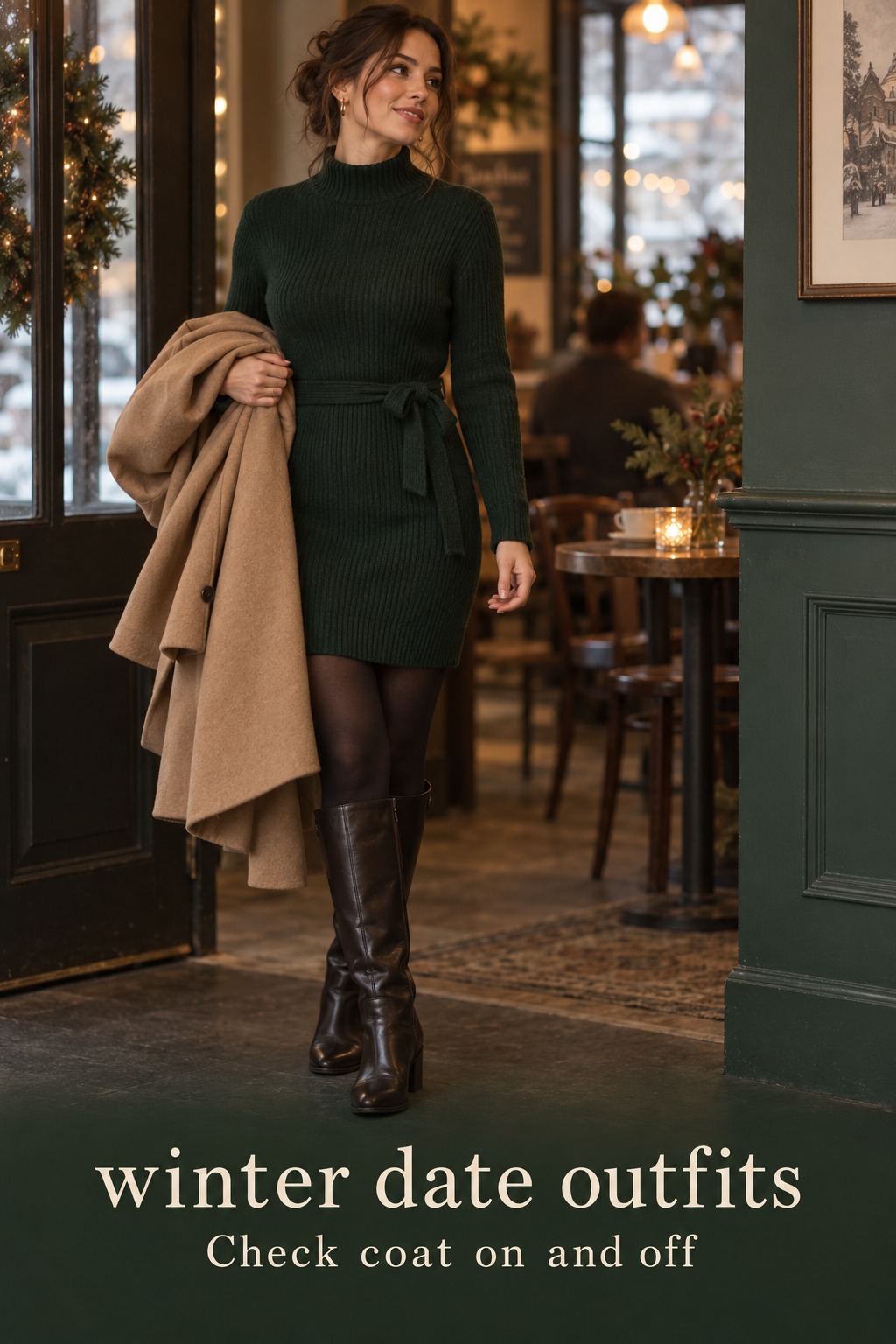
A dress that works with the coat, not only without it
A knit or long-sleeve dress can simplify the outfit because it gives you one clear line to build around. Add tights and boots if they fit your plan, then select a coat that works with the dress length and shape. A belt is optional. Use one only if you like the way it changes the line and it remains comfortable when you sit. If the dress has a strong neckline or texture, let that be the focal point instead of adding several competing accessories.
Stand in front of a mirror with the coat open, then closed. The open view shows the outfit itself. The closed view shows the silhouette others will see as you arrive. Both should feel intentional, even if one is simpler. If the coat covers most of the dress, that is fine; a scarf, bag, or visible boot can carry the visual interest on the walk. When you take the coat off, the dress becomes the center again.
Across all three examples, the same editing principle applies: decide what the focal point is before adding another special detail. That point could be color, a neckline, a skirt texture, polished shoes, or a favorite piece of jewelry. Keeping one area in focus gives the look a clear mood, while the rest of the outfit helps you move, sit, and stay warm.
Make the last try-on feel like the actual date
A final try-on is more useful when you act out a few ordinary moments. Put on the coat and fasten it. Reach for your bag, then take the coat off. Sit at a chair or on the edge of the sofa. Stand and put the outer layer back on. You are looking for a small snag: a sleeve that twists, a neckline that shifts, a skirt that rides up, shoes that feel unstable, or an accessory you keep moving out of the way.
Fix the snag without changing the whole outfit. Swap the bag strap, choose a lower heel, tuck a top more securely, or remove a scarf that crowds the collar. Then repeat the exact moment that felt awkward. A full wardrobe restart can make you less certain because you are judging a new outfit from scratch. One small adjustment helps you keep what already feels right.
Now look at the outfit without the coat and find the detail that makes it feel like a date look. If nothing stands out, add one small element with meaning to you: a color you love, a favorite pair of earrings, a textured layer, or shoes that shift the mood. If everything stands out at once, remove one detail. The aim is not to create a perfect image. It is to feel at ease enough to forget about the outfit after you arrive.
That last part matters more than an elaborate styling rule. You may be meeting someone new, celebrating with a partner, or simply doing something different on a cold evening. A familiar anchor lets you keep your own style in the room. A coat that works with the outfit lets you get there comfortably. A quick seated check helps the rest of the plan feel easier.
Let the evening stay yours
When you are ready to leave, you should not need to remember a dozen rules. Remember the scene: the coat at the door, the outfit at the table, the same layers on the way home. Start with something you already like wearing. Add one detail that shifts it toward the plan. Then make sure the whole look works while moving and sitting, not only while standing in front of your bedroom mirror.
Winter date outfits can be simple and still feel thoughtful. A knit with trousers can feel romantic through color and jewelry. A skirt can feel relaxed with practical boots. A dress can feel like you when the coat and shoes support its shape. The best choice is not the one that looks most dressed up in isolation. It is the one that lets you arrive, settle in, and enjoy the date without wishing you had changed before leaving home.
FAQ
What should I wear on a winter date?
Start with a piece you already feel comfortable wearing, such as trousers, a skirt, jeans, or a dress. Add one detail that suits the plan, then check the outfit with your coat on and off. Choose shoes that feel comfortable for the distance you expect to walk.
How can I look dressed up without feeling overdressed?
Keep the familiar base and change one finishing detail. Polished boots, a belt, earrings, a richer color, or a more structured coat can shift the mood without making the outfit feel unlike you. If you are unsure about the venue, a flexible smart-casual base is easy to adjust.
What works for a casual winter coffee date?
Try straight-leg jeans or trousers with a soft sweater and boots or clean sneakers. Add a coat and one personal detail, such as a scarf or earrings. If the date includes a walk afterward, use shoes and outerwear that suit the route as well as the café.
How do I make a winter date outfit comfortable for dinner?
Sit down in the outfit before leaving. Check that waistbands, sleeves, hems, and shoes still feel comfortable when you move. Choose a focal detail that does not need constant adjusting, and make sure the coat can be removed without leaving the outfit feeling unfinished.
Can I wear jeans on a winter date?
Yes. Dark or clean-finish jeans can work with a fine knit, a distinctive top, a structured coat, or polished footwear. Let one element provide the date-night feeling rather than dressing every part of the outfit up at the same time.
How do I choose shoes for a winter date?
Consider how far you will walk and whether you will stand or sit for most of the date. A flat or low-heeled boot can feel polished and easy to move in. If you choose a higher heel, try it with the full outfit and think about the route from the door to the venue.
How can I keep my outfit looking good after I take off my coat?
Choose a top or dress that feels complete on its own, and keep one visible detail beneath the outerwear, such as a neckline, texture, color, or jewelry. Try the coat both open and closed before you leave so the outfit makes sense in either view.