
Clean Casual vs. Boho Chic: An Outfits Moodboard Decode
Outfits moodboard logic: why “casual” and “boho chic” keep colliding
A good outfits moodboard doesn’t just collect pretty looks—it clarifies the rules behind them. In practice, most people building outfit inspiration boards end up pinning two aesthetics side by side: outfits casuales that feel clean and wearable, and look boho chic outfits that read relaxed, expressive, and textured. They sit next to each other because both are rooted in comfort, both can be styled for everyday life, and both often rely on easy layers. The overlap is real—but the styling logic is different.
This comparison-style breakdown maps where “casual” ends and “boho” begins, using the moodboard approach as the organizing tool. You’ll see how silhouette balance shifts, how color behaves, why fabric choice changes the entire visual message, and how accessories act as the deciding factor when a look is hovering between two identities. If you’ve ever saved mode inspo that looked cohesive on Pinterest but felt confusing in your closet, this is the missing structure.

Along the way, you’ll also see how to translate these aesthetics into a practical lookbook outfits system: repeatable formulas, quick outfit checks, and a few “if this, then that” decisions that make styling feel intentional rather than random. Consider this an editorial decoding of the outfits moodboard categories people most often blend—sometimes successfully, sometimes not.
Style overview: outfits casuales (clean casual) as a wardrobe framework
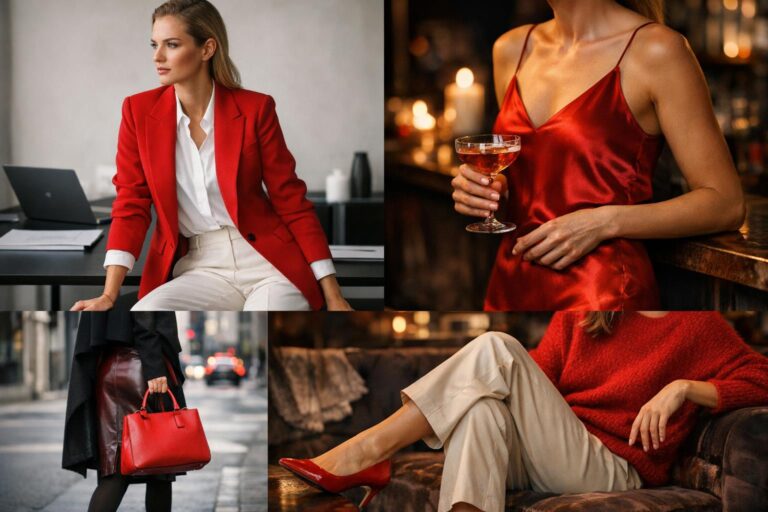
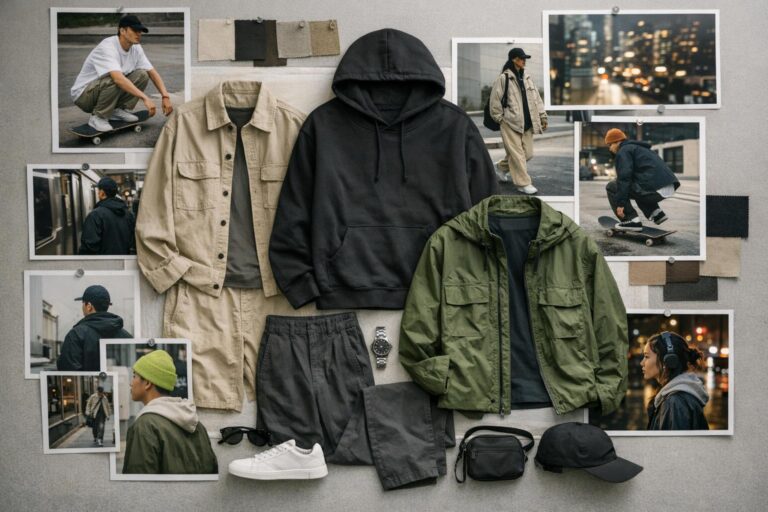
Outfits casuales, in the context of an outfits moodboard, typically function as a baseline style: simple, adaptable, and anchored in pieces that can be repeated without looking repetitive. The defining characteristic is restraint. Instead of building a look from statement items, clean casual builds from proportion and clarity—what’s fitted, what’s relaxed, where the visual “quiet” areas are, and how the outfit holds together without needing decoration.
Found the dress? Keep the rest in one place.
Zarellea brings guest details, vendors, timelines, and every next step together — so your wedding plan feels as good as your look.
Silhouette-wise, casual looks often rely on one structured element (a clean shoulder line, a straighter pant, a defined waistband) paired with one relaxed element (a softer top, an easier layer, a looser leg). The mood is “pulled together without trying,” which is also why casual mode inspo tends to look polished even when the outfit components are simple.
Color palettes in outfits casuales usually feel grounded: neutrals, muted tones, or tonal dressing. Fabrics tend to sit flatter and read “everyday”—smooth knits, cotton-like textures, denim-like structure, and materials that don’t demand attention. The overall aesthetic is practical, minimal, and repeat-friendly, which makes it ideal for building a functional lookbook outfits rotation.

Style overview: look boho chic (bohemian ease with intentional texture)
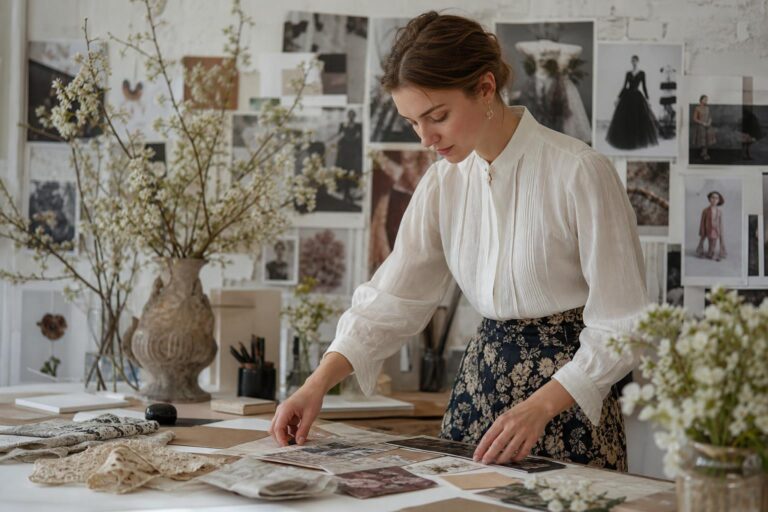
Look boho chic is often mistaken for “just casual, but flowier.” In a true outfits moodboard, though, boho chic has a different organizing principle: expressive ease. The silhouette is typically softer and more fluid, with movement built into the outfit composition—draped layers, relaxed shapes, and pieces that create visual rhythm as you move.
Where outfits casuales lean on restraint, boho chic leans on texture contrast and detail. Even when the color palette is neutral, the outfit rarely reads “plain” because something is always adding dimension: a light layer, a tactile fabric, a decorative seam, or an accessory that feels collected rather than minimal.
Boho chic also tends to use a more “composed” kind of looseness. The goal is not sloppiness; it’s an artful balance where the outfit feels relaxed but still styled. This is why boho mode inspo often looks effortless on a board but can feel costume-like in real life if the pieces aren’t controlled by proportion and a clear color story.

Key differences that separate clean casual from boho chic
Silhouette and structure: clean lines vs. soft movement
Clean casual depends on structure to keep the outfit legible at a glance. Even in relaxed fits, there’s usually a clear frame: a straight outer layer, a consistent hemline, or a waistband that defines the body’s vertical line. Boho chic, by contrast, uses movement as the frame. It’s less about crisp edges and more about how layers fall, overlap, and create depth through drape.
Color behavior: tonal minimalism vs. nuanced palette mixing
In outfits casuales, color often works as a stabilizer: fewer colors, clearer separation, and a preference for tonal dressing that reads calm. In look boho chic, color is often used to create warmth and variation, even if it stays within a restrained palette. The difference isn’t “bright vs. neutral”; it’s how many small shifts you allow—slightly different shades, blended tones, and softer contrast that feels lived-in.
Texture and fabric: flat simplicity vs. tactile storytelling
Casual looks tend to rely on smoother textures and fabrics that sit close to the body without too much volume. Boho chic intentionally introduces texture—whether through airy layers, tactile surfaces, or materials that create visual interest. In an outfits moodboard, this difference is easy to spot: casual pins look “clean”; boho pins look “touchable.”
Styling philosophy: repeatable uniforms vs. curated individuality
Outfits casuales operate like a uniform system: repeat the same silhouette formula, switch one piece, keep the look consistent. Boho chic is more about curated individuality—outfits feel assembled, not standardized, even when built from recurring categories like layers, relaxed shapes, and accessories with presence.

Visual style breakdown: how the outfits actually read in daily life
Layering approach: clean stacking vs. dimensional layering
Clean casual layering is typically “stacked”: a base, a mid layer, an outer layer—each with a clear job, little overlap, and minimal volume. This keeps the silhouette controlled and makes the outfit easy to wear in mixed indoor/outdoor settings. Boho chic layering is “dimensional”: pieces overlap, lengths vary, and the goal is depth. The trade-off is that dimensional layering can add bulk if the proportions aren’t managed.
Garment proportions: defined anchors vs. fluid balance
Outfits casuales often use a visual anchor—one piece that defines the shape. That anchor could be a straight pant, a structured top line, or a clean outer layer. Boho chic uses fluid balance: instead of one strict anchor, the outfit is balanced through repeated softness—drape on top, movement below, and accessories that keep the look intentional.
Accessories: minimal punctuation vs. expressive finishing
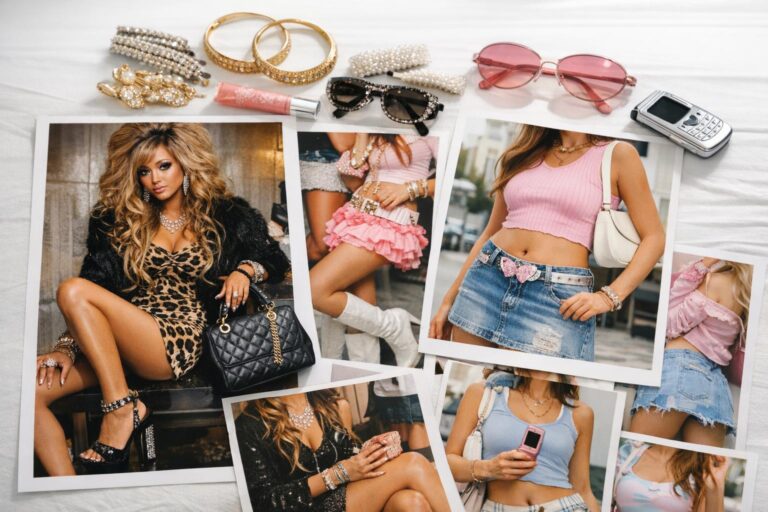
Accessories are where most outfits moodboard confusion happens. Clean casual uses accessories as punctuation: a simple finishing touch that doesn’t compete with the outfit’s lines. Boho chic uses accessories as part of the outfit composition—often the element that makes the look feel curated. If you add multiple expressive accessories to a clean casual base, the outfit can quickly drift into boho territory.
Footwear choices: quiet support vs. style signature
In clean casual, footwear tends to support the look rather than define it—simple, streamlined, and consistent with the outfit’s restraint. In boho chic, footwear often acts as a style signature, contributing to the outfit’s character and reinforcing the mood of ease and texture. The practical implication: boho footwear often looks best when the rest of the outfit leaves room for it to be seen and felt, not hidden by overly tight hems or overly structured lines.
Outfits moodboard translation: building a lookbook outfits system for each style
A moodboard is only useful if it becomes a repeatable system. The fastest way to do that is to turn your saved mode inspo into outfit formulas. Think of formulas as “visual math”: a consistent silhouette + a consistent palette logic + a consistent accessory approach. The goal is not to copy outfits, but to reproduce the styling decisions that make the moodboard coherent.
Clean casual formula set (outfits casuales)
- One structured line + one relaxed line (e.g., a clean top line with a softer bottom, or the reverse)
- Tonal or near-tonal palette with one controlled contrast point
- Accessories as minimal finish, not the main event
- Texture kept subtle so proportion stays the focus
Boho chic formula set (look boho chic)
- At least one fluid layer that creates movement in the silhouette
- Palette with warmth or nuance (shades that blend rather than sharply contrast)
- Texture contrast built in (smooth + tactile, light + grounded)
- Accessories used to signal “curated,” not “basic”
When people say they want “look di moda” results—an outfit that feels current and intentionally styled—what they often need is not more pieces, but a clearer formula. Both clean casual and boho chic can read fashion-forward, but they get there through different structure: one through editing, the other through layering and texture.
Example comparisons: same scenario, different styling logic
Rather than listing random outfits, the most useful comparison is to style the same real-life situations two ways. That’s how you learn what your outfits moodboard is truly communicating—and why some saved looks don’t translate.
Example comparison: casual day errand run (outfits casuales vs. look boho chic)
Clean casual treats errands as an opportunity for a controlled, efficient silhouette: the outfit looks composed even when you’re moving fast. The visual anchor is usually a clean line (waist definition or a straight leg) and a restrained palette that doesn’t require constant adjusting. Boho chic approaches the same moment with softness and dimension: a relaxed base that feels comfortable for walking and bending, plus a layer or accessory that adds personality. The key difference is visual noise: clean casual reduces it; boho chic edits it but doesn’t eliminate it.
Example comparison: coffee meeting that’s not quite “work”
For clean casual, the strategy is polish without formality: one element that implies intention (a sharper line, a clean outer layer, a consistent tonal story). This is where casual mode inspo shines—simple pieces, but the outfit composition reads deliberate. In boho chic, the same meeting can look elevated through texture and curated details: an outfit that feels relaxed, yet designed. The risk is going too costume-like if every item is expressive; the fix is to keep one area quiet (either the palette or the silhouette) so the look stays chic.
Example comparison: travel day comfort (airport, long drives, unpredictable temperatures)
Clean casual travel outfits prioritize temperature control and minimal fuss: layers that are easy to remove, pieces that don’t wrinkle into chaos, and a silhouette that still looks neat after hours of sitting. Boho chic travel outfits prioritize comfort through softness and drape: a fluid layer can be more forgiving during long wear, and textured pieces can disguise travel creases. The trade-off is volume—boho layering can feel bulky in tight seats unless you keep the proportions streamlined.
Example comparison: warm-weather weekend styling
In warm weather, outfits casuales look best when the silhouette is simple and breathable, with the “style” coming from proportion and clean lines rather than extra layers. Boho chic tends to thrive in warm weather because lighter fabrics and airy shapes naturally support movement and texture. The main difference becomes accessory strategy: clean casual keeps it minimal to avoid visual clutter; boho chic uses accessories to maintain a styled finish even when the outfit is intentionally loose.
Tips: how to prevent your outfits moodboard from turning into a mixed-message closet
The most common moodboard problem isn’t a lack of inspiration—it’s a lack of filtering. If your board contains both outfits casuales and look boho chic pins, it can still be cohesive, but only if you decide what stays consistent. Without a consistent “through line,” your saved mode inspo becomes a scroll of unrelated vibes.
Tip 1: choose one fixed element (silhouette, palette, or texture)
To blend styles intentionally, lock one element across both aesthetics. For example: keep a consistent palette (mostly tonal neutrals), then let silhouette shift between clean casual structure and boho drape. Or keep silhouette consistent (a familiar proportion you know flatters you), then let texture shift toward boho. This single decision keeps your lookbook outfits feeling like a collection rather than a costume box.
Tip 2: use accessories as the “style switch”
Accessories are the fastest way to move between styles without rebuilding your wardrobe. On a clean casual base, minimal accessories maintain the streamlined message. Add more expressive, curated accessories and you’ve effectively flipped the same base into a look boho chic direction. The important part is intention: one statement element can be enough; too many competing details often makes the outfit feel unedited.
Tip 3: define your version of “look di moda” before shopping
“Look di moda” is often treated like a single aesthetic, but it’s really a result: the outfit reads current, composed, and intentional. For clean casual, that usually means sharper editing and modern proportion play. For boho chic, it means updated balance—expressive, but not messy. Decide which version you’re targeting, then shop for pieces that support that logic rather than buying random “cute” items that don’t integrate into your outfits moodboard system.
Where the styles overlap (and how to use that overlap on purpose)
Clean casual and boho chic overlap most clearly in comfort-first dressing. Both can use relaxed silhouettes, both can look effortless, and both can live in a wearable day-to-day wardrobe. That’s why people building outfits moodboard collections often pin them together without realizing they’re mixing different visual priorities.
The overlap becomes an advantage when you treat it as a capsule of shared principles: comfort, ease, and real-life wearability. Start with those shared principles, then decide where you want the visual emphasis to land. If you want your lookbook outfits to feel cleaner, keep texture subtle and let proportion lead. If you want them to feel more boho, introduce texture and detail but keep the palette controlled so it still reads chic.
Common styling mistakes: why an outfit feels “off” even when the pieces are good
Mistake 1: mixing structure and drape without a clear anchor
The most frequent misfire happens when a structured piece and a very fluid piece collide, but neither is acting as the anchor. The outfit starts to look accidental: too sharp in one area, too loose in another, with no intentional proportion relationship. Fix it by choosing the anchor: either the structured element defines the silhouette (clean casual direction), or the fluid element defines it (boho chic direction), and the other pieces support that decision.
Mistake 2: adding “boho” details to an otherwise minimal outfit—then stopping halfway
Halfway styling creates mixed signals. A clean casual outfit with one boho element can be modern and interesting, but it needs completion: either keep everything else extremely edited so the boho detail becomes a controlled statement, or echo that texture/detail once more so it feels intentional. The moodboard version looks effortless because it’s edited; the real-life version looks confusing when the editing is missing.
Mistake 3: treating “casual” as “anything comfortable”
Comfort is not a style category; it’s a requirement. Outfits casuales still need composition—consistent palette, coherent proportions, and a clear finish. When casual is treated as a free-for-all, outfits lose shape and visual clarity. This is also where people feel their mode inspo “doesn’t work on me,” when the real issue is missing structure, not body type.
When to choose each style (and when a hybrid works best)
Choosing between clean casual and look boho chic is less about identity and more about function. Different environments demand different levels of structure, different amounts of movement, and different degrees of visual detail. Your outfits moodboard can—and should—reflect those context shifts instead of forcing one vibe for every occasion.
Everyday wear and errands
Clean casual is the most efficient for everyday repetition because it reads composed with minimal decision fatigue. Boho chic is excellent when you want personality without stiffness, especially if your day includes walking, outdoor time, or informal social plans. A hybrid works when you keep a clean casual base and introduce one boho signature—usually through texture or an expressive finishing piece.
Work environments (from relaxed to polished)
Clean casual adapts more easily to workplaces because its structure reads professional even when the outfit is comfortable. Boho chic can work in more relaxed environments, but it needs tighter editing: less volume, controlled palette, and fewer competing details. If you’re building lookbook outfits for work, prioritize coherence over “more,” and treat boho elements as accents rather than the entire message.
Travel and long-wear comfort
For long days, clean casual wins on simplicity and easy layering. Boho chic wins on softness and forgiving fit. The practical decision point is bulk: if you’ll be seated for hours or carrying layers, keep boho volume in check and let texture do the work. If you want a look di moda travel outfit, focus on proportion—comfortable pieces that still create a deliberate line.
Casual events that still need a “styled” finish
Clean casual gives a crisp, modern impression when the setting calls for neatness without formality. Boho chic gives a relaxed, curated impression when the setting rewards personality and texture. A hybrid is often the most realistic: clean lines with one expressive element, keeping the outfit grounded but not boring—exactly the kind of balance that performs well on an outfits moodboard and in real life.
How to combine both aesthetics without losing coherence
Combining styles is not about stacking trends—it’s about aligning visual priorities. The strongest hybrid outfits tend to look intentional because they control two variables and let one variable be expressive. If you want a board that contains both outfits casuales and look boho chic, build your combinations using a controlled framework.
- Control the palette, play with texture: keep colors consistent and let boho texture show up as the interest point.
- Control the silhouette, play with accessories: stick to a familiar clean casual proportion and use curated accessories to shift the mood.
- Control the texture, play with proportion: keep fabrics relatively smooth and introduce boho through drape and layered lengths.
The outcome should feel like a single lookbook outfits identity, not two separate wardrobes colliding. The moment the outfit requires constant adjusting, tugging, or second-guessing, the styling logic is likely unclear—either too many focal points or no focal point at all.
Using your outfits moodboard as a decision tool (not just inspiration)
A moodboard becomes powerful when it helps you decide quickly: what to keep, what to skip, and what doesn’t fit your real life. Instead of saving everything, use your board to define boundaries. The more precise your boundaries, the more your mode inspo turns into wearable outfits.
A practical “pin test” for clean casual vs. boho chic
When you’re unsure what style a saved outfit belongs to, look for the dominant organizing feature. If the outfit’s impact comes from clean lines and edited simplicity, it’s casual at its core. If the impact comes from movement, texture, and curated detail, it’s boho chic at its core. This single diagnostic reduces over-saving and helps your outfits moodboard stay strategic.
Tips: turn pins into a weekly rotation
Choose five saved looks and rewrite them as formulas rather than items. For example: “tonal base + clean outer layer + minimal finish” (casual) versus “soft base + dimensional layer + curated finishing” (boho). Then build your week using those formulas. This is how mode inspo becomes look di moda reality—through repeatable structure, not constant reinvention.

FAQ
What is an outfits moodboard, and how is it different from a lookbook?
An outfits moodboard is a visual collection used to define a style direction—silhouettes, palettes, and overall outfit mood—while a lookbook outfits set is typically a more finalized lineup of complete outfit combinations. A moodboard is best for clarifying themes and rules; a lookbook is best for planning specific wears.
Why do outfits casuales and look boho chic look similar on Pinterest?
They overlap in comfort-first styling and relaxed silhouettes, so both can read effortless at a glance. The difference is the styling engine: clean casual is driven by edited structure and simple composition, while boho chic is driven by texture, movement, and curated detail.
How do I know if my outfit reads more casual or more boho?
Identify what creates the outfit’s impact. If the strongest feature is clean lines and restraint, it reads casual; if the strongest feature is drape, layered dimension, and tactile detail, it reads boho chic. Accessories often reveal the answer because they either stay minimal (casual) or become part of the expression (boho).
Can I mix clean casual and boho chic in one outfit without it looking messy?
Yes—mixing works when you control two elements and let one element be expressive. For example, keep a consistent palette and clean proportions, then add one boho texture or finishing element. The outfit looks messy when there are too many focal points or no clear anchor.
What’s the fastest way to make my mode inspo feel wearable in real life?
Convert saved images into formulas: silhouette rule + palette rule + accessory rule. This turns inspiration into repeatable decisions and reduces the gap between what looks good on a board and what functions in your day-to-day wardrobe.
How can I build lookbook outfits from an outfits moodboard?
Choose a small set of pins that share the same styling logic, then write each as a repeatable structure (for example, “tonal base + structured line + minimal finish” for casual, or “soft base + dimensional layer + curated finish” for boho). Use those structures to assemble complete outfits you can rotate through the week.
What does “look di moda” mean in practical styling terms?
In practical terms, look di moda is the result of an outfit reading current and intentional through proportion, coherent palette, and a controlled focal point. It can be achieved through clean casual editing or boho chic texture and layering, as long as the outfit composition is deliberate rather than accidental.
Why do my outfits feel different from the outfits moodboard even when I own similar pieces?
The difference is usually composition: proportion balance, palette cohesion, and how the outfit is finished. Moodboard images often look effortless because they’re edited—one clear anchor, consistent color story, and accessories that support the intended aesthetic rather than competing with it.