
Old Money Casual Outfits for Everyday Style
Getting dressed in the old money casual outfits vein sounds simple until real life enters the picture. Most people are not styling themselves for a portrait on the Upper East Side or a polished walk through Newport. They are trying to get through workdays, weekend brunch, museum visits, errands, dinner plans, and weather shifts without looking either overdressed or vaguely costume-like.
That is exactly why this aesthetic can feel harder than it looks. The appeal is restraint, but restraint only works when the outfit still feels intentional. A navy blazer, loafers, white shirt, cream knitwear, beige trousers, or white denim can look effortless in theory and awkward in practice if the proportions are off, the fabric feels too stiff, or the outfit lacks a clear visual anchor.

The most wearable version of old money casual outfits is not about pretending to live at a yacht club or private member club. It is about building a wardrobe around timeless tailoring, quiet luxury, and refined casual pieces that transition easily across settings. Think Ivy style filtered through modern routines: polished enough for a gallery or office-appropriate casual setting, relaxed enough for a coffee run or weekend lunch, and comfortable enough to wear all day.
What makes the difference is styling logic. Once you understand how neutral palettes, texture contrast, soft structure, and fabric quality work together, this look becomes far more practical. It stops being an abstract aesthetic and starts functioning like a real wardrobe.
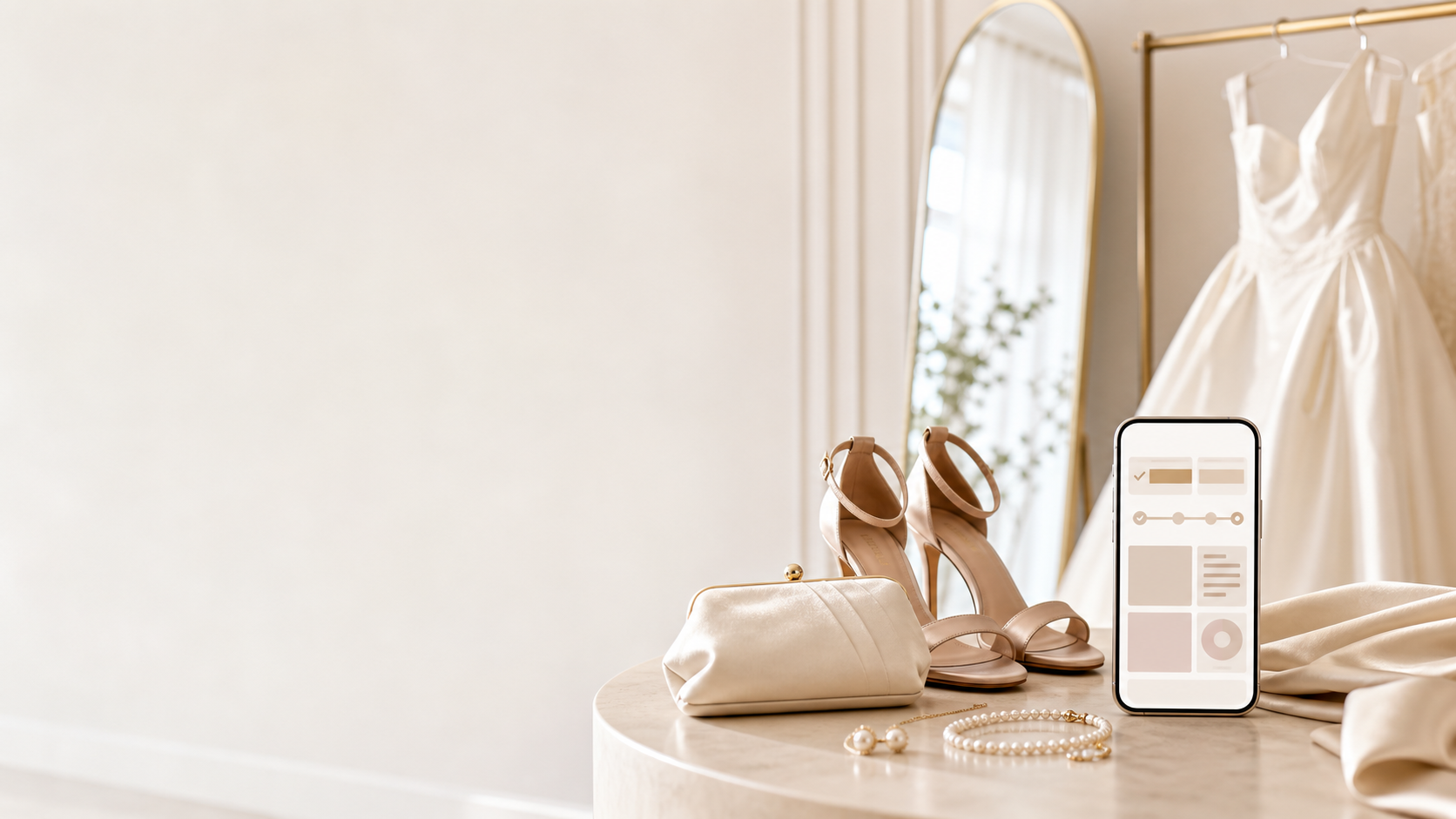
Found the dress? Keep the rest in one place.
Zarellea brings guest details, vendors, timelines, and every next step together — so your wedding plan feels as good as your look.
Why the old money casual look is harder to wear than it appears
The challenge is not finding classic pieces. Most wardrobes already contain some version of them: a crisp shirt, knitwear, a blazer, jeans, loafers, simple jewelry, maybe a structured bag. The difficulty is making those pieces read as understated elegance rather than basic officewear, trendy prep, or overly formal tailoring.
Part of the issue is balance. Old money style depends on clothes that appear calm and easy, but that ease is usually created through careful proportion play. A white button-down with trousers can feel polished and expensive when the trousers drape correctly and the shirt has enough structure to hold its shape. The same combination can feel flat if both pieces are too tight, too crisp, or too visually thin.
Weather makes the problem more complicated. Linen shirts, cashmere sweaters, wool blazers, and soft-shoulder jackets all signal heritage and quality, but they behave differently in motion and across climates. A beautiful layered look in Boston or New York may feel impractical in a warmer coastal setting. Likewise, a breezy cream-and-linen combination that looks perfect for Nantucket casual can feel underbuilt in a colder city routine.
There is also a social factor. Quiet luxury relies on subtlety, and subtle outfits can easily feel underwhelming if the setting expects more polish. On the other hand, adding too many visible signals at once—tweed jacket, pearls, silk scarf, loafers, structured bag—can make the outfit feel theatrical. The goal is not to wear every heritage reference at once. It is to let one or two elements carry the message while the rest of the outfit supports it.

What defines the old money casual aesthetic
At its core, the old money aesthetic is built on quality over logos, fit over trend, and consistency over excess. It shares visual territory with prep fashion, Ivy League dressing, and understated luxury, but the casual version matters because it is more wearable for everyday life. Instead of heavily formal tailoring, it leans on refined staples: blazers, Oxford shirts, knitwear, loafers, soft trousers, white denim, pleated skirts, and clean accessories.
The palette is usually controlled. Navy, cream, beige, camel, charcoal, and white do much of the work because they create tonal layering without visual noise. Fabrics become especially important in this kind of restrained wardrobe. Cashmere, wool, linen, and crisp cotton elevate even simple silhouettes because the texture carries the outfit when color and branding are minimal.
This is where heritage references come in. Brooks Brothers, J. Press, and Ralph Lauren are logically tied to Ivy and prep dressing because they reinforce the visual language of classic American style. Geographic references support that feeling too. Upper East Side polish, Manhattan museum-day dressing, Nantucket nautical ease, Mayfair tailoring, and Bridgehampton polo-adjacent leisure all point to slightly different versions of the same core idea: clothes that suggest confidence, continuity, and social ease rather than overt display.
The strongest old money casual wardrobe does not chase a costume version of wealth. It builds a reliable capsule around pieces that can move between brunch, gallery afternoons, office-appropriate casual settings, and low-key evening plans with only a few styling shifts.

The wardrobe pillars that make the aesthetic work
Before putting together complete outfits, it helps to understand which pieces repeatedly create the right outfit composition. The common thread across the most convincing looks is not complexity. It is the consistent use of a few categories that anchor silhouette, texture, and polish.
- Structured but not severe blazers, especially in navy, cream, camel, or charcoal
- Oxford shirts and crisp white shirts that hold shape without feeling stiff
- Cashmere sweaters, lightweight knits, and cardigans for softness and tonal layering
- Loafers as the most repeated shoe signal across both men’s and women’s styling
- White denim, cream trousers, chinos, draped trousers, and beige tailoring separates
- Linen shirts and soft-shoulder jackets for relaxed warm-weather refinement
- Pleated skirts, midi skirts, and navy separates for women
- Simple accessories such as pearl earrings, silk scarves, belts, a structured bag, or a watch
These pieces matter because each solves a different styling problem. Blazers create instant visual structure. Knitwear softens sharper tailoring. Loafers keep the outfit grounded and practical. White shirt and trouser combinations provide a clean canvas for texture contrast. Accessories refine the mood without introducing the kind of overt branding that disrupts the quiet luxury effect.
Fabric insight
Fabric is often the deciding factor between a convincing old money outfit and a generic neutral outfit. Cashmere and wool add depth to simple palettes. Linen relaxes the formality of tailored shapes. Crisp cotton sharpens draped pieces. If the colors are quiet, the materials must do more work.

Styling logic: the proportions, textures, and layers behind a polished result
The easiest way to make this aesthetic wearable is to treat every outfit as a balance between structure and ease. If the top half is sharp, the lower half should usually soften the look. If the fabric palette is soft and fluid, then one structured piece should create a visual anchor. That is why a blazer over knitwear feels stronger than knitwear with another soft layer, and why loafers often work better than athletic shoes in these combinations. They sharpen the finish without making the outfit feel formal.
Texture contrast is equally important. A cashmere sweater with white denim has more presence than a plain cotton sweater with white denim because the surface variation adds richness. A tweed jacket with smooth trousers creates a refined dialogue between texture and clean lines. A linen shirt with cream chinos works because the relaxed weave of the shirt offsets the more controlled silhouette of the trousers.
Color balancing should also stay deliberate. Tonal dressing in navy, cream, beige, and white makes an outfit feel expensive because the eye reads cohesion rather than fragmentation. The mistake is assuming tonal means flat. What gives tonal layering life is a shift in material, weight, or silhouette: wool against cotton, linen against polished leather loafers, cashmere against white denim, or a silk scarf against a matte blazer.
Comfort matters more here than many people expect. Outfits in this category fail when they are overbuilt. Too many layers create bulk, especially around the shoulders and waist, and bulk works against the clean silhouette that makes old money casual effective. The best combinations allow movement, breathe well, and still maintain shape by relying on one or two well-cut pieces rather than constant layering.
Common comfort mistake
One frequent problem is pairing heavy fabrics with heavy shapes: a thick tweed jacket, dense knit, stiff trousers, and chunky shoes. The result feels visually expensive but physically exhausting. A better approach is to let one item bring weight and texture while the other pieces stay lighter and cleaner.
Relaxed layers that still feel polished
This is the outfit formula that solves the most common daily dressing problem: you want to look put together without appearing dressed for a formal appointment. Start with a white shirt or Oxford shirt, add a lightweight cashmere sweater or fine knit draped over the shoulders or worn normally, and ground it with beige trousers, cream chinos, or white denim. Finish with loafers.
Visually, this works because the shirt creates crispness while the knit softens the structure. The loafers keep the outfit connected to Ivy style rather than drifting into generic business casual. The palette remains controlled, which lets the layering read as intentional rather than busy.
For women, this combination can shift beautifully between a white shirt and navy skirt or white denim depending on whether the day is more social or more practical. For men, the same formula works with draped trousers or chinos and a soft-shoulder jacket added only when needed. It is one of the strongest outfits for brunch, museum visits, casual office days, or a coffee meeting in Manhattan or Boston where polished understatement feels natural.
Why this outfit works
The silhouette remains easy because no single piece is trying too hard. The shirt sharpens, the knit softens, and the loafers stabilize the finish. It reads composed without the effort showing.
Easy ways to recreate the look
- Use the best white shirt already in your wardrobe before buying anything new
- Choose one knit in navy, cream, or camel to layer repeatedly
- If white denim feels too bright, swap to beige trousers or navy pants
- Keep jewelry minimal so the textures remain the focus
Lightweight styling for warm weather and coastal routines
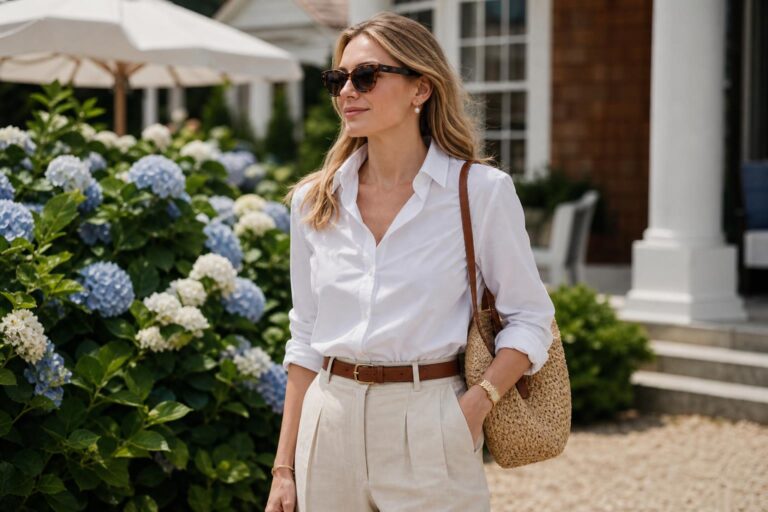
Warm-weather old money casual dressing works best when it resists the temptation to look overly resort-driven. The practical solution is a linen shirt with light trousers or white denim, loafers, and restrained accessories. For men, this can mean a cream or pale linen shirt worn open at the collar with draped trousers. For women, it can mean a linen shirt half-tucked into a navy skirt or cream pants with a structured bag.
This formula captures the Nantucket and Newport side of the aesthetic without tipping into costume. Linen adds the relaxed texture associated with leisure and warm climates, but the sharper lower half keeps the look refined. Loafers are especially effective here because they retain the heritage message while staying less severe than more formal shoes.
The key is to avoid over-accessorizing. In warm weather, the fabrics and colors should carry the mood. A silk scarf, simple watch, or pearl earrings can be enough. Adding too many signals at once can make the outfit feel staged rather than natural.
Transitional weather tip
If the morning starts cool and the afternoon warms up, make the outer layer a blazer or light knit that can be removed without harming the outfit composition. The shirt-and-trouser base should still look complete on its own.
Comfortable city outfits with structure
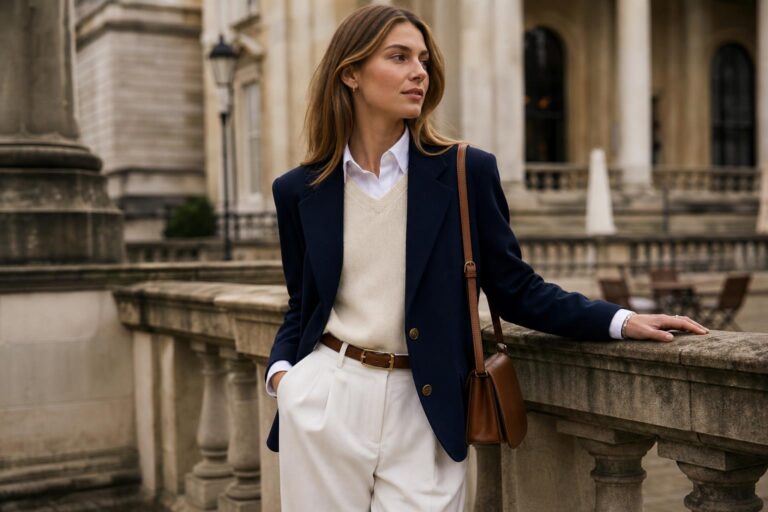
City dressing asks more of an outfit. You need polish, movement, and enough practicality for walking, commuting, or moving through meetings and social stops. A navy blazer, white tee or crisp shirt, straight or draped trousers, and loafers create one of the cleanest solutions. This combination appears across many refined casual interpretations because it bridges smart and easy so effectively.
The blazer is the visual anchor. It gives the outfit authority and shape, especially in urban settings like New York where sharper dressing feels at home. The softer base layer prevents the look from feeling corporate. White tee and jeans can also work here, but the result is stronger when the jeans are white denim or a cleaner, more minimal cut rather than heavily distressed styles.
For women, a tweed jacket can replace the blazer when the goal is a little more texture and formality. Pair it with beige trousers or a pleated skirt to keep the lower half streamlined. For men, a soft-shoulder jacket creates the same effect with less rigidity, making it easier to wear through long days.
Best shoe pairing
Loafers remain the strongest option because they support walking and preserve the outfit’s refined language. They also transition more smoothly from daytime errands to evening plans than highly sporty footwear.
Soft layering without added bulk
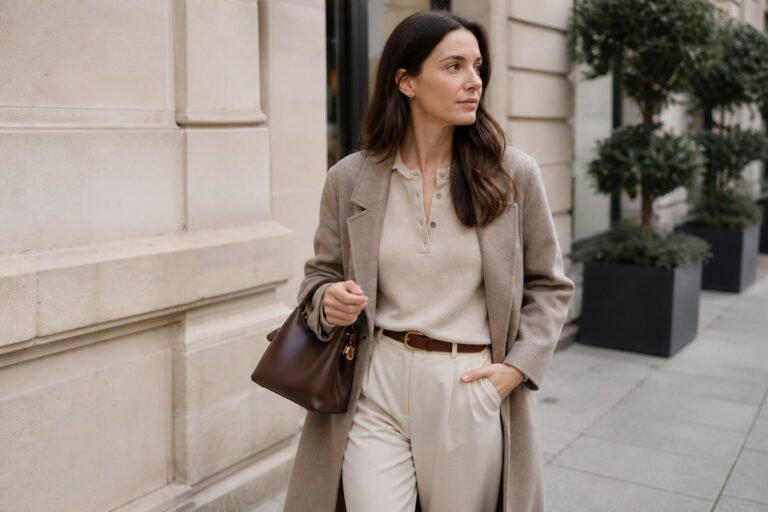
Many people trying this aesthetic over-layer because they associate wealth dressing with complexity. In reality, some of the best old money casual outfits are built on only two or three elements. A cashmere sweater with cream trousers and loafers is one example. A cardigan over a white shirt with a midi skirt is another. The power comes from the fabric quality and proportion balance, not the number of pieces.
This approach is especially useful when your day includes constant temperature changes. Soft knitwear gives warmth without the stiffness of a jacket, and it sits more comfortably for long periods. The trick is to choose a knit with enough substance to hold shape. If the fabric is too flimsy, the outfit can collapse visually and lose the quiet luxury effect.
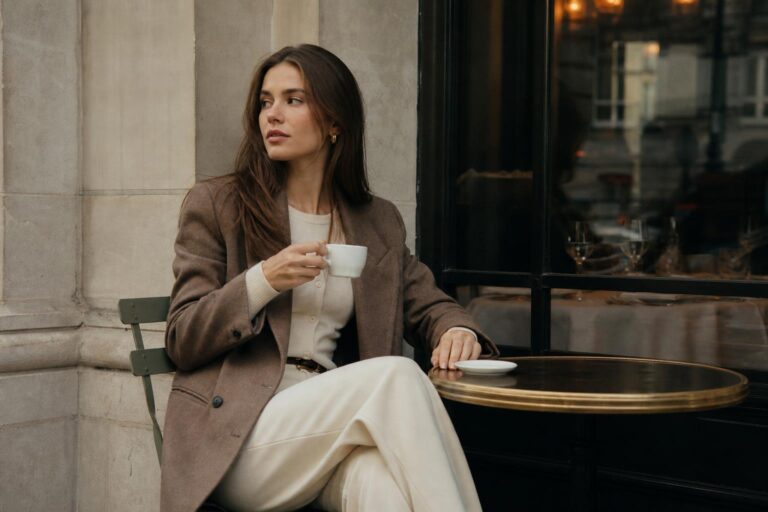
A cream cashmere sweater with navy trousers creates one of the most reliable color relationships in the entire aesthetic. It feels classic, polished, and gentle without becoming precious. Add a structured bag or a simple watch, and the outfit gains a subtle sense of completion.
Most versatile piece
A lightweight cashmere sweater is arguably the most useful item in this wardrobe. It layers over shirts, under blazers, with skirts, with white denim, and with trousers while always maintaining the right level of restraint.
Elevated casual looks that transition from errands to dinner
One of the biggest appeals of the old money aesthetic is versatility. The same wardrobe should handle daytime routines and more polished social settings with only minor adjustments. A white shirt, navy trousers, loafers, and a blazer already solve most of that equation. To shift the outfit into evening, you do not need to rebuild it. You refine it.
For women, that may mean exchanging a daytime knit for a structured blazer, adding pearl earrings or a silk scarf, and switching from a larger practical bag to a more compact structured option. For men, it may mean buttoning the Oxford shirt more neatly, adding the sport coat, and ensuring the loafers are clean and polished. The foundation remains the same, which is what makes the wardrobe practical.
This is where understated elegance shows its value. Because the clothes are not built around trend-heavy details or loud logos, they can shift mood very easily. They depend more on fabric, fit, and finishing choices than on statement pieces.
How to make the outfit feel more elevated
- Add one structured outer layer such as a blazer or tweed jacket
- Keep the palette tonal instead of introducing a strong contrast color
- Use one refined accessory, such as a silk scarf, pearls, or a watch
- Choose trousers or a skirt with cleaner lines than casual denim for the evening version
Office-appropriate old money casual without looking stiff
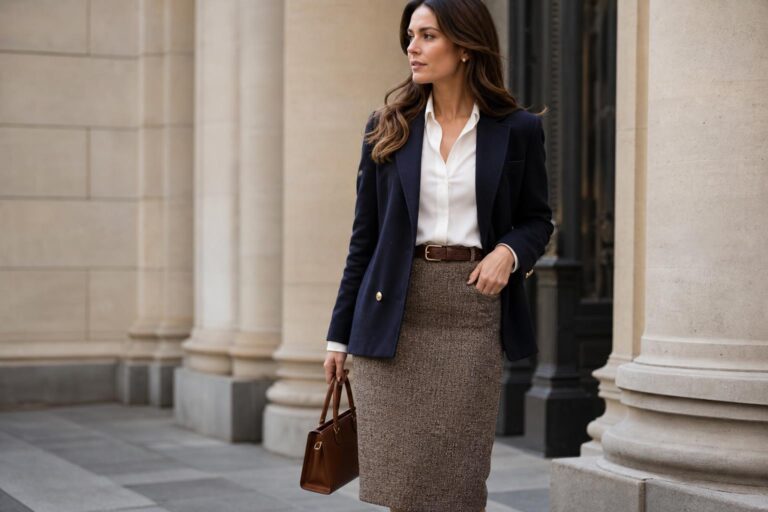
Office dressing is where many people either lose the relaxed part of refined casual or make the outfit too casual to communicate authority. The most effective formula uses tailoring selectively. A blazer with a white shirt and cream or charcoal trousers works because it creates enough structure for professional settings while the restrained palette keeps it from feeling severe.
For women, a pleated skirt with knitwear and loafers can be an excellent alternative to trousers when you want movement without sacrificing polish. For men, an Oxford shirt with chinos and a soft-shoulder jacket delivers an Ivy-informed office look that feels less rigid than full suiting. In both cases, the absence of loud branding is part of the message. The confidence comes from clean lines and consistency.
What separates this from standard business casual is texture and softness. Cashmere, wool, and linen used thoughtfully add depth, while a navy or camel blazer keeps the look rooted in heritage style rather than generic officewear.
Quick styling adjustment
If the outfit starts feeling too formal, remove one rigid element. Replace a sharp buttoned shirt with a softer knit, or swap highly structured trousers for a pair with more drape. The result usually feels more current and more wearable.
Women’s old money casual formulas that feel realistic
The women’s version of this aesthetic often works best when it combines one crisp element, one soft element, and one heritage-coded accessory. That combination keeps the look grounded in everyday wear rather than social-media costume. A crisp white shirt with a navy midi skirt and loafers is one clear example. A tweed jacket with beige trousers and simple jewelry is another. White denim with a cream cardigan and structured bag offers a more weekend-friendly version.
These outfits succeed because they solve several practical issues at once. They create waist definition or line control without relying on body-conscious silhouettes. They support movement. They layer cleanly. And they adapt to a range of settings from brunch to museum visits to casual dinners.
- For a longer frame, use a midi skirt or draped trousers to preserve length and fluidity
- For a petite frame, keep the blazer or cardigan slightly shorter so the outfit does not feel heavy
- If loafers feel too flat visually, use a structured bag or pearl earrings to rebalance the outfit
- If white shirts feel stark, soften the look with cream knitwear or beige trousers
Simple accessories matter more than trend pieces here. Pearl earrings, a silk scarf, a watch, and a polished belt all support the aesthetic because they refine the outfit without taking over the composition.
Men’s old money casual formulas with Ivy style roots
The men’s side of this aesthetic leans more directly into Ivy style, prep fashion, and soft tailoring. Oxford shirts, sport coats, loafers, chinos, and linen shirts form the backbone. The goal is not to look overly styled but to create a wardrobe that appears settled and consistent.
A cream or blue Oxford shirt with chinos and loafers is one of the most dependable combinations because it is clean without being aggressive. Add a navy blazer or soft-shoulder jacket when more structure is needed. For warmer weather, switch to a linen shirt and lighter trousers. For cooler months, bring in wool or cashmere knitwear under the jacket to add depth while maintaining a restrained palette.
Brooks Brothers, J. Press, and Ralph Lauren fit naturally into this conversation because they support the heritage side of the look. The visual message is classic American refinement rather than trend-focused menswear. That is why these outfits work equally well for office-appropriate casual days, museum afternoons, or a polished weekend lunch.
Budget-friendly alternative
You do not need an entirely new wardrobe to create this effect. Prioritize one strong blazer or jacket, one excellent Oxford shirt, and one pair of loafers. Those three pieces can refine trousers, chinos, and knitwear you already own.
Color palettes and fabric signals that read authentic
Some wardrobes fail not because the pieces are wrong, but because the color story is too scattered. Old money casual dressing depends heavily on a controlled seasonal palette. Navy, cream, beige, camel, white, and charcoal consistently signal the right mood because they allow the textures and silhouettes to take priority.
There is also a reason cashmere, wool, linen, and merino wool appear so often in this style language. These materials create visible quality without relying on decoration. A cream cashmere sweater has more depth than a flat synthetic knit. Linen naturally introduces movement and ease. Wool blazers and soft tailoring hold shape in a way that makes even simple combinations appear more substantial.
When building tonal outfits, think in layers of finish rather than just shades. Matte wool next to a smoother cotton shirt, or textured linen against polished loafers, gives the eye enough variation to keep the look interesting. This is especially important in neutral wardrobes, where texture often replaces color contrast.
Tips for choosing a color base
- Use navy as the easiest anchor if you want a polished but not severe starting point
- Use cream and beige when you want softness and warm-weather ease
- Use charcoal sparingly for sharper office or evening situations
- Pair white with textured fabrics so it feels intentional rather than stark
Accessories that whisper luxury instead of announcing it
Accessories should never overpower this aesthetic. Their role is to support the outfit composition, add function, and reinforce the sense of polish. That is why loafers, structured bags, watches, silk scarves, belts, and pearl earrings work so well. They give definition without changing the mood of the clothing.
A structured bag is particularly useful for women because it sharpens softer outfits built from knitwear or skirts. For men, a watch can serve the same purpose, bringing precision to a linen shirt or softer tailoring. Silk scarves are best used sparingly. They can add elegance to a blazer or crisp shirt, but they work best when the rest of the outfit is very clean.
The practical rule is simple: if your outfit already includes a textured blazer, loafers, and tonal layering, accessories should remain minimal. If the outfit is very pared back, one accessory can add the final note of refinement.
Regional style cues: translating the look across U.S. settings
One useful way to make this aesthetic feel more believable is to interpret it through location. The old money casual wardrobe is not identical everywhere. The Upper East Side version tends to be sharper, more tailored, and more navy-based. A Nantucket or Newport interpretation is lighter, often more linen-forward, and slightly nautical in mood. Boston and Ivy League-adjacent dressing can lean more prep through Oxford shirts, loafers, and blazers. A Pacific Northwest version may prioritize layering and practicality while still keeping the palette muted and refined.
These differences matter because they help you avoid wearing the aesthetic as a costume. If your day involves walking, commuting, or unpredictable weather, a city-focused blazer-and-trouser formula may make more sense than a breezy resort-driven look. If your weekend rhythm includes coastal lunches or outdoor social plans, linen and cream tones may feel more natural.
Even references such as Greenwich Village, Manhattan museum districts, Mayfair tailoring, or Bridgehampton polo culture are most useful when treated as mood cues rather than rules. They help define whether your version of refined casual should feel urban, coastal, tailored, or leisure-oriented.
How to build a practical 30–60–90 day capsule
A capsule wardrobe approach suits this style particularly well because the aesthetic depends on repetition, consistency, and interchangeable pieces. Instead of chasing many outfit ideas at once, build around a small foundation and expand only when you notice a genuine gap.
- First 30 days: secure the core anchors such as a blazer, loafers, one crisp white shirt, one knit, and one reliable pair of neutral trousers or white denim
- Next 60 days: add variation through a second knit, a linen shirt, a navy piece, and one accessory such as a structured bag, watch, silk scarf, or pearl earrings
- By 90 days: refine by climate and routine, adding either a tweed jacket, soft-shoulder jacket, pleated skirt, chinos, or a second trouser silhouette depending on your lifestyle
This method prevents overbuying and keeps the wardrobe aligned with how you actually dress. It also helps you identify whether your routine needs more office-appropriate pieces, more weekend options, or more climate-specific fabrics.
Tips for shopping smarter
Heritage pieces do not have to be bought all at once or always bought new. Vintage and second-hand sources can be especially useful for blazers, loafers, knitwear, and other classics because these garments often retain their value through cut and fabric rather than trend relevance. The goal is not novelty. It is consistency and quality.
What makes an outfit look forced instead of refined
The most common styling trap is trying to display the aesthetic too obviously. If every item in the outfit is announcing old-world status at once, the result usually feels artificial. Quiet luxury works because it is edited. One heritage-coded element can anchor the look; the rest should simply support it.
Another issue is ignoring practicality. Shoes that cannot handle walking, heavy layers for mild weather, or delicate fabrics in a hectic daily routine will make even a beautiful outfit feel wrong. Real elegance looks easy because the wearer is comfortable enough to move naturally.
- Do not stack too many statement heritage elements in one outfit
- Do not use loud logos if the aim is understated luxury
- Do not force a seasonal fabric outside the weather it suits
- Do not choose silhouettes that restrict movement for an otherwise casual day
- Do not confuse minimal color with minimal texture; texture is what keeps neutral outfits alive
Often, the better solution is subtraction. Remove one accessory, lighten one fabric, or swap one rigid piece for something softer. The outfit usually improves immediately.
Real-world outfit planning by occasion
If your goal is not simply to admire the aesthetic but to wear it consistently, occasion-based planning helps. Old money casual outfits are strongest when they respond to actual routines rather than vague inspiration images.
For brunch or a museum visit
A white shirt, cream knit, navy trousers or a midi skirt, and loafers create the right balance of polish and ease. The look feels thoughtful enough for a gallery or museum district, yet relaxed enough for a long lunch afterward.
For everyday errands with polish
White denim, a cashmere sweater, and loafers give structure without stiffness. Add a structured bag if you want the outfit to feel more complete. This works especially well when you need comfort but do not want to slip into overly casual basics.
For casual office settings
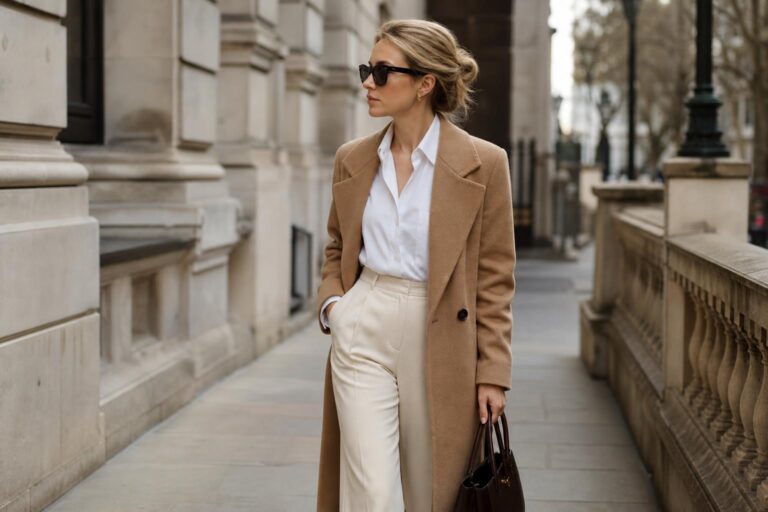
Use a blazer, white shirt, and trousers as the framework, then soften with texture. A camel or navy blazer, cream or charcoal trousers, and loafers keep the look credible and office-ready while still aligned with refined casual dressing.
For weekend social plans that may run into evening
Start with a linen or Oxford shirt and tailored trousers, then carry a blazer or knit for the second half of the day. This keeps the outfit flexible without requiring a full change, which is one of the most practical strengths of the aesthetic.

FAQ
What are old money casual outfits, exactly?
Old money casual outfits are everyday looks built around timeless tailoring, understated luxury, quiet color palettes, and high-quality fabrics rather than loud logos or trend-heavy details. They typically include pieces such as blazers, Oxford shirts, knitwear, loafers, trousers, white denim, and simple accessories.
How do I make old money style look natural instead of costume-like?
Keep the outfit edited. Choose one or two strong heritage-style elements, such as a navy blazer and loafers or a white shirt and cashmere sweater, then let the rest of the look stay simple. Controlled color palettes, clean lines, and practical fabrics make the outfit feel believable in real life.
Which colors work best for old money casual dressing?
Navy, cream, beige, camel, white, and charcoal are the most reliable colors because they create tonal layering and support a refined, understated look. These shades also make it easier to mix pieces repeatedly without the wardrobe feeling chaotic.
What shoes fit the old money casual aesthetic best?
Loafers are the clearest match because they balance practicality with polish and work across both men’s and women’s outfits. They also transition well between casual daytime plans and more elevated settings such as dinners, office environments, and museum visits.
Can I wear old money casual outfits in warm weather?
Yes, but the fabric choices matter. Linen shirts, lightweight knitwear, cream trousers, white denim, and loafers create a warm-weather version that still feels refined. The key is to keep the outfit airy and avoid over-layering or over-accessorizing.
What is the difference between old money casual and business casual?
Business casual often focuses on workplace acceptability first, while old money casual emphasizes texture, restraint, and heritage-inflected styling. A white shirt and trousers may appear in both, but old money casual relies more on tonal layering, fabric quality, loafers, soft tailoring, and a quieter overall finish.
Do I need expensive brands to create this look?
No. Heritage references such as Brooks Brothers, J. Press, or Ralph Lauren help define the visual language, but the overall effect comes more from fit, fabric, palette, and consistency than from buying everything new. Second-hand and vintage pieces can work especially well for blazers, loafers, and knitwear.
What are the easiest starter pieces for this wardrobe?
Start with one blazer, one crisp white shirt or Oxford shirt, one lightweight knit, one pair of neutral trousers or white denim, and one pair of loafers. That small foundation can already create multiple old money casual outfits for brunch, office-appropriate days, errands, and casual evening plans.
How can I adapt this style for different U.S. locations or routines?
Use the core aesthetic but adjust fabric and structure to your setting. A New York or Boston version may lean more blazer-focused and tailored, while a Nantucket or Newport interpretation may use more linen, cream tones, and softer layers. The best version always reflects your actual climate, movement needs, and daily schedule.
What is the biggest mistake people make with old money casual outfits?
The biggest mistake is overdoing the reference points. Too many heritage-coded pieces, too much layering, or too much visible status signaling can make the outfit feel forced. The strongest looks are controlled, comfortable, and built around just a few polished elements that work together naturally.