Old Money Party Outfits with Quiet Luxury
Old money party outfits depend on nuance more than novelty. The appeal is not loud trend-chasing or overt statement dressing. It is the quiet confidence of a wardrobe that looks considered, expensive, and restrained without needing to announce itself. The overall mood is polished but never fussy, elegant without visible effort, and rooted in the kind of dressing that reads timeless in a dimly lit cocktail room, at a holiday dinner, or during a formal celebration where the dress code matters.
What makes this aesthetic especially compelling is its balance between aspiration and practicality. The pieces are often familiar: a tailored blazer, a silk blouse, a refined black dress, a cashmere knit, a column skirt, a pair of loafers or classic pumps. The difference is in proportion, fabrication, fit, and restraint. Every element is chosen to support the same visual message: composure, discretion, and quality.
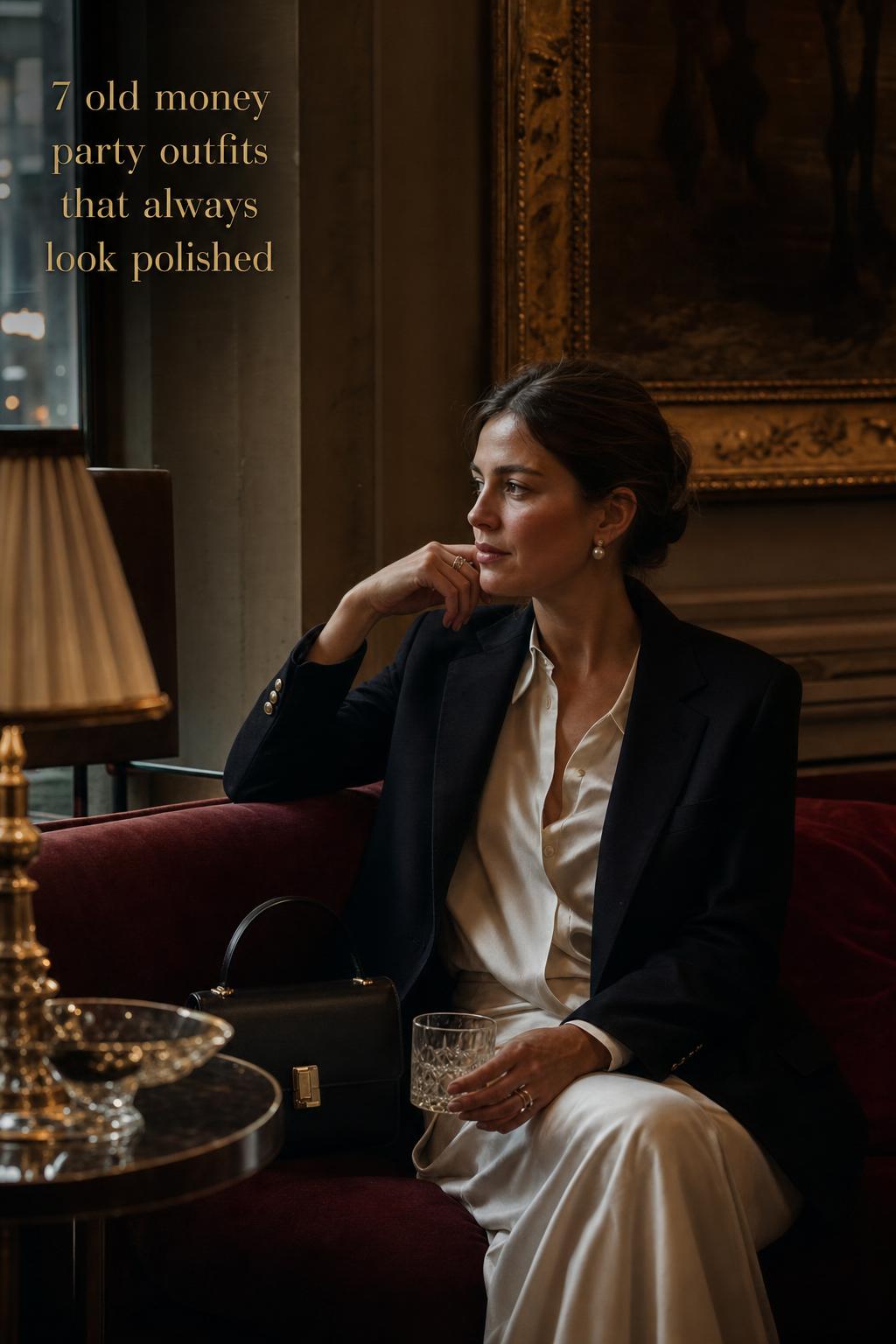
In real life, old money party outfits work because they adapt well to actual occasions. They make sense for private dinners, engagement celebrations, gallery events, formal birthday parties, club dinners, holiday gatherings, and wedding-adjacent events where you want to look elevated without appearing costume-like. The beauty of the aesthetic is that it translates across settings while still leaving room for personal interpretation.
The key is understanding why the styling works. Old money dressing is not about buying an entirely new wardrobe or copying one rigid formula. It is about building a composed outfit structure, relying on clean silhouettes, tonal discipline, subtle texture contrast, and accessories that reinforce refinement rather than compete with it.
Found the dress? Keep the rest in one place.
Zarellea brings guest details, vendors, timelines, and every next step together — so your wedding plan feels as good as your look.
The visual codes that define old money evening style
At its core, this aesthetic is built on visual control. That means no element feels accidental, but nothing feels overworked either. The silhouette tends to be streamlined, fabrics carry a sense of weight or fluidity, and the palette remains anchored in neutrals, jewel tones, navy, ivory, black, camel, cream, and muted metallics. Even when the outfit is feminine or glamorous, it rarely becomes flashy.
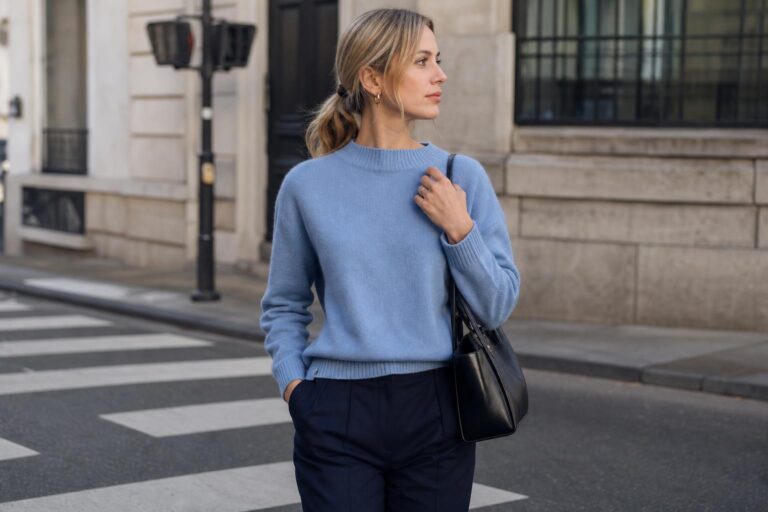
Texture plays a major role. Satin, silk, velvet, wool crepe, cashmere, fine knits, structured cotton, and quality tailoring create the depth that keeps a simple outfit from feeling plain. Instead of relying on heavy embellishment, the look draws interest from contrast: matte wool against glossy silk, structured shoulders against a fluid skirt, polished leather with soft knitwear.
Fit is equally important. Clothing should skim the body or hold a clear shape without pulling, collapsing, or clinging. Old money party outfits usually avoid both extremes: they are neither skin-tight nor shapeless. A precise shoulder line, a hem that falls cleanly, a waist that is softly defined, and trousers with graceful drape all signal intention.
- Choose one dominant mood: tailored, softly feminine, evening minimal, or heritage-inspired.
- Limit the palette to two or three main tones for visual cohesion.
- Let one texture act as the focal point, such as velvet, silk, satin, or cashmere.
- Keep accessories polished and selective rather than abundant.
- Prioritize fit and fabric before decorative detail.
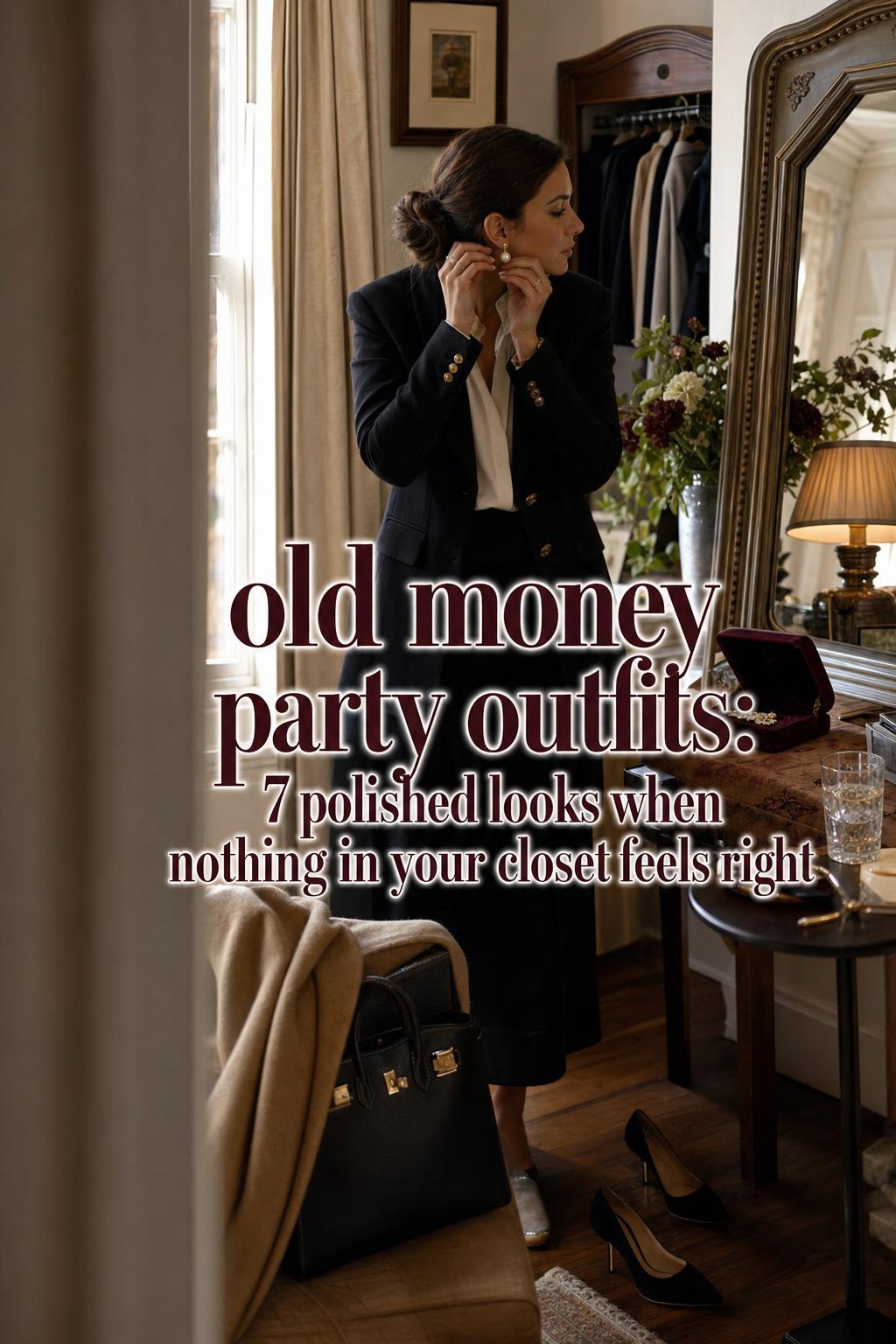
Tailored evening dressing with a quiet aristocratic edge
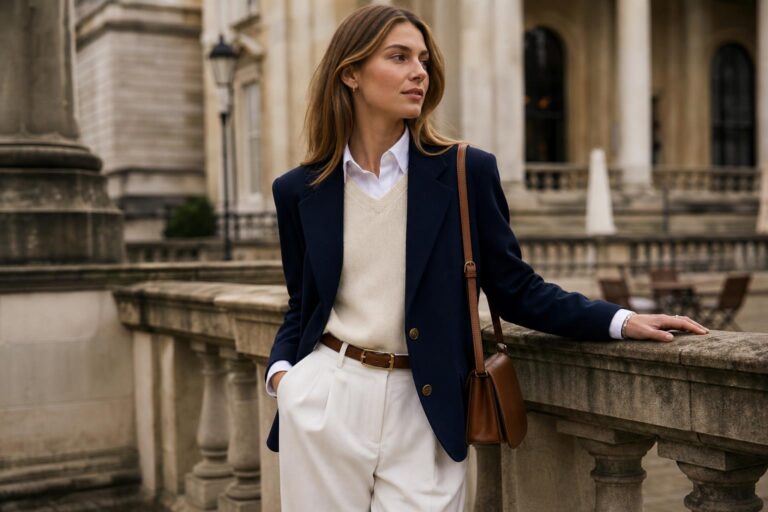
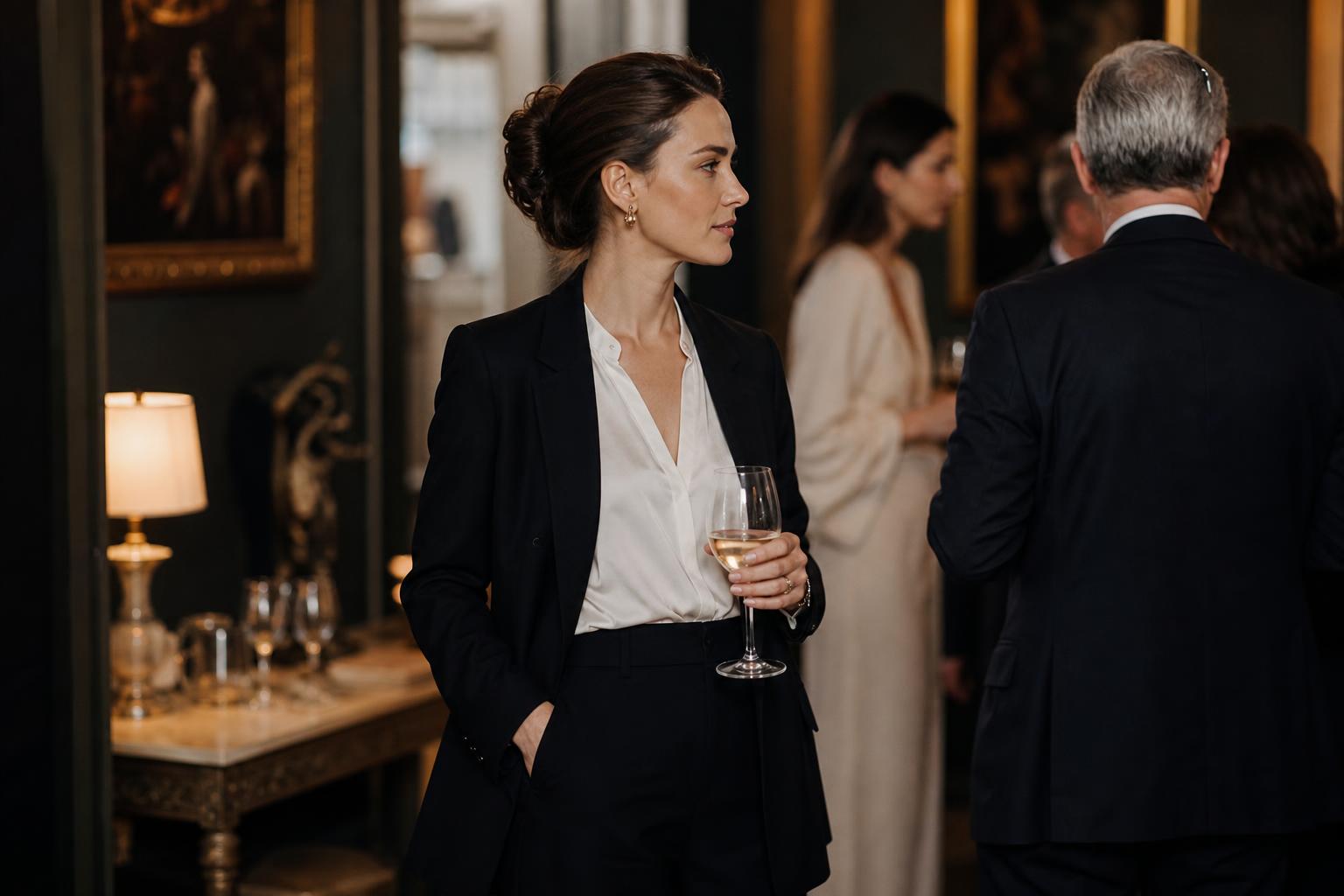
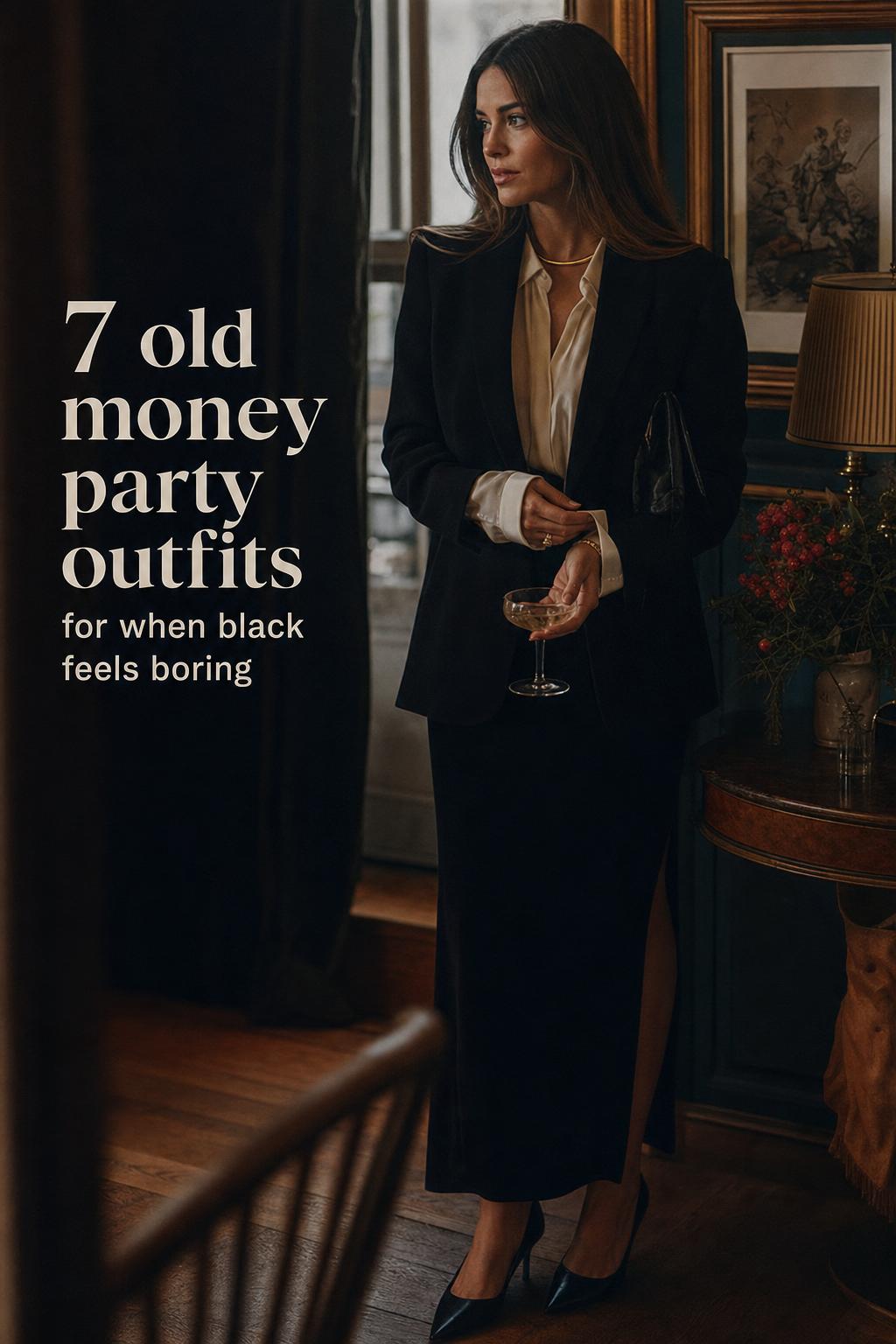
One of the strongest interpretations of the aesthetic begins with tailoring. A sharply cut blazer worn over a silk camisole or refined blouse, paired with high-waisted trousers or a long narrow skirt, creates instant authority. It reads formal enough for an evening event while maintaining the self-contained elegance associated with inherited style rather than obvious occasionwear.
This combination works because it balances structure and softness. The blazer provides the visual anchor. It holds the outfit in place and gives the silhouette a disciplined frame. The silk layer underneath introduces fluidity, preventing the composition from feeling severe. Wide-leg trousers add movement, while a pencil or column skirt creates a sleeker, more controlled line.
Key piece breakdown
The blazer is the investment item here. Look for strong shoulders, smooth lapels, and a length that either covers the hip or ends in a deliberate cropped cut. Mid-thigh lengths are often the most versatile because they work with both trousers and skirts. A navy, black, cream, or deep brown blazer tends to feel more aligned with the old money mood than trend-led colors.
Underneath, a silk shell, satin camisole, or buttoned blouse keeps the finish refined. Avoid anything too low-cut, too sheer, or overly embellished. The goal is to suggest confidence through restraint. Trousers should fall cleanly from the hip, with enough structure to hold shape but enough softness to move well through a long evening.
For shoes, classic pumps, slingbacks, or sleek loafers all work depending on the formality level. Jewelry should remain minimal: pearl studs, gold hoops, a watch, or a single cuff bracelet. A leather clutch or compact structured bag completes the composition without interrupting the clean line.
Why this combination works
The success of this outfit comes from silhouette balance. Tailoring introduces status and polish, while the softer underlayer keeps it from reading corporate. It is particularly effective for evening settings where a dress may feel too expected but full suiting feels too hard. The result sits in a very useful middle ground: formal, composed, and understated.
Silk dresses, column shapes, and the discipline of minimal glamour
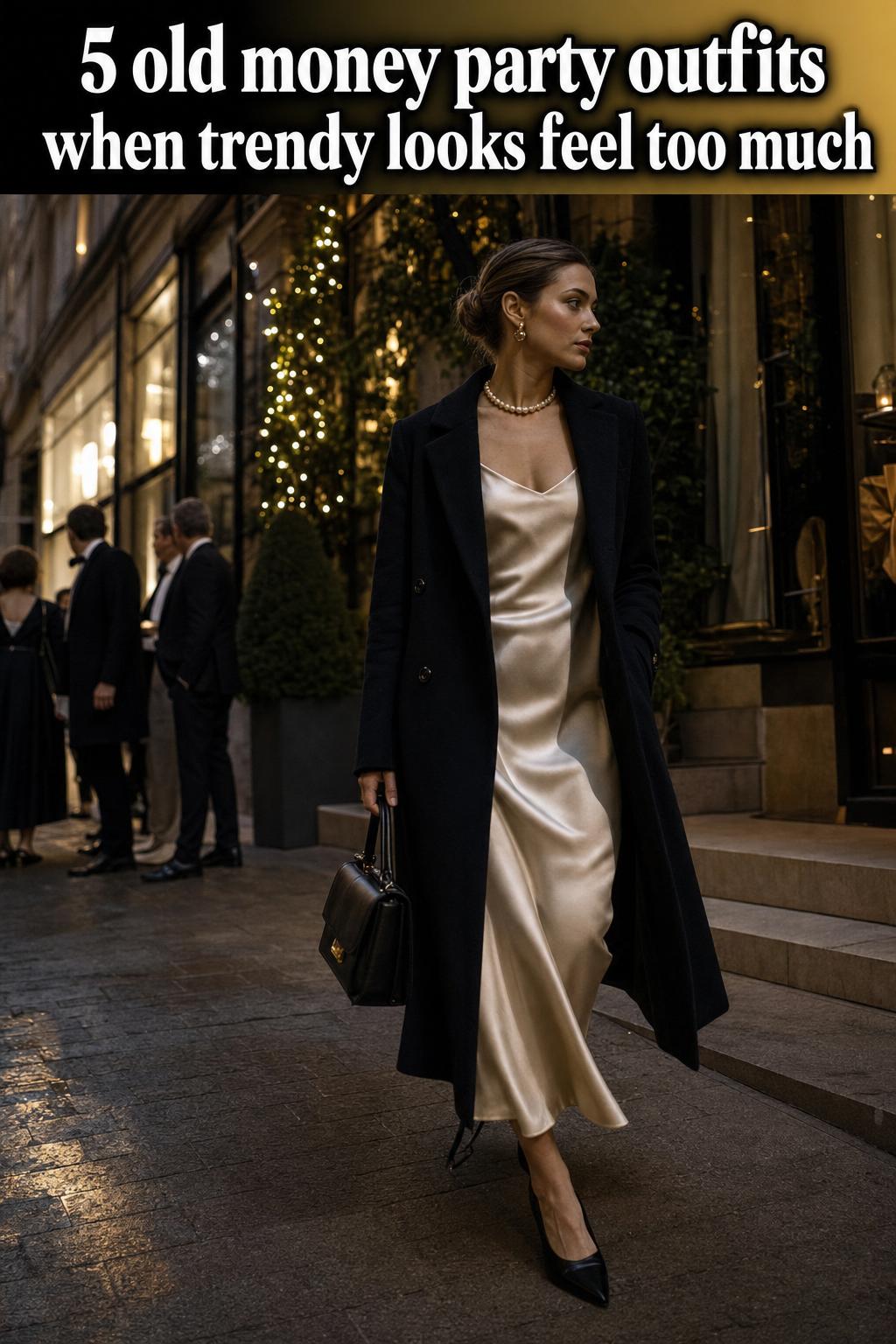
If there is one category that consistently aligns with old money party outfits, it is the minimalist evening dress. Not the kind overloaded with cutouts, sequins, or dramatic hardware, but the kind that relies on line, fabric, and drape. A bias-cut slip dress, a sleeveless column dress, or a long-sleeved sheath in silk, satin, or crepe captures the aesthetic with remarkable efficiency.
The reason this works is simple: these dresses do not need visual noise. A clean neckline, a fluid fall through the body, and a hem that moves elegantly with the wearer create all the impact required. In darker tones such as black, deep green, midnight navy, burgundy, or chocolate brown, the effect becomes especially sophisticated for evening.
Styling logic
Minimal dresses benefit from equally restrained styling. A fine wool coat draped over the shoulders, a cashmere wrap, or a cropped tailored jacket adds warmth without disrupting the line. Jewelry should feel intentional but sparse. A strand of pearls, a slim gold chain, or delicate drop earrings are usually enough.
Footwear matters more than people often expect. A minimalist dress paired with overly trendy shoes loses its old money clarity almost instantly. Pointed pumps, satin heels, low evening sandals, or polished kitten heels maintain the visual discipline. The shoe should extend the silhouette, not compete with it.
Tips for making a simple dress feel expensive
- Steam the fabric thoroughly because wrinkling undermines the clean finish.
- Choose lining or underpinnings carefully so the dress falls smoothly.
- Keep the color palette concentrated rather than introducing multiple accent shades.
- Add one polished outer layer if the dress feels too bare on its own.
- Select a bag with structure to contrast the softness of the fabric.
This is also one of the easiest ways to recreate the aesthetic without buying heavily. Many wardrobes already contain a black slip dress or simple formal dress. The transformation happens through editing: remove excess accessories, add a better coat, swap statement jewelry for something quieter, and choose more classic shoes.
Heritage-inspired layers for winter parties and holiday dinners
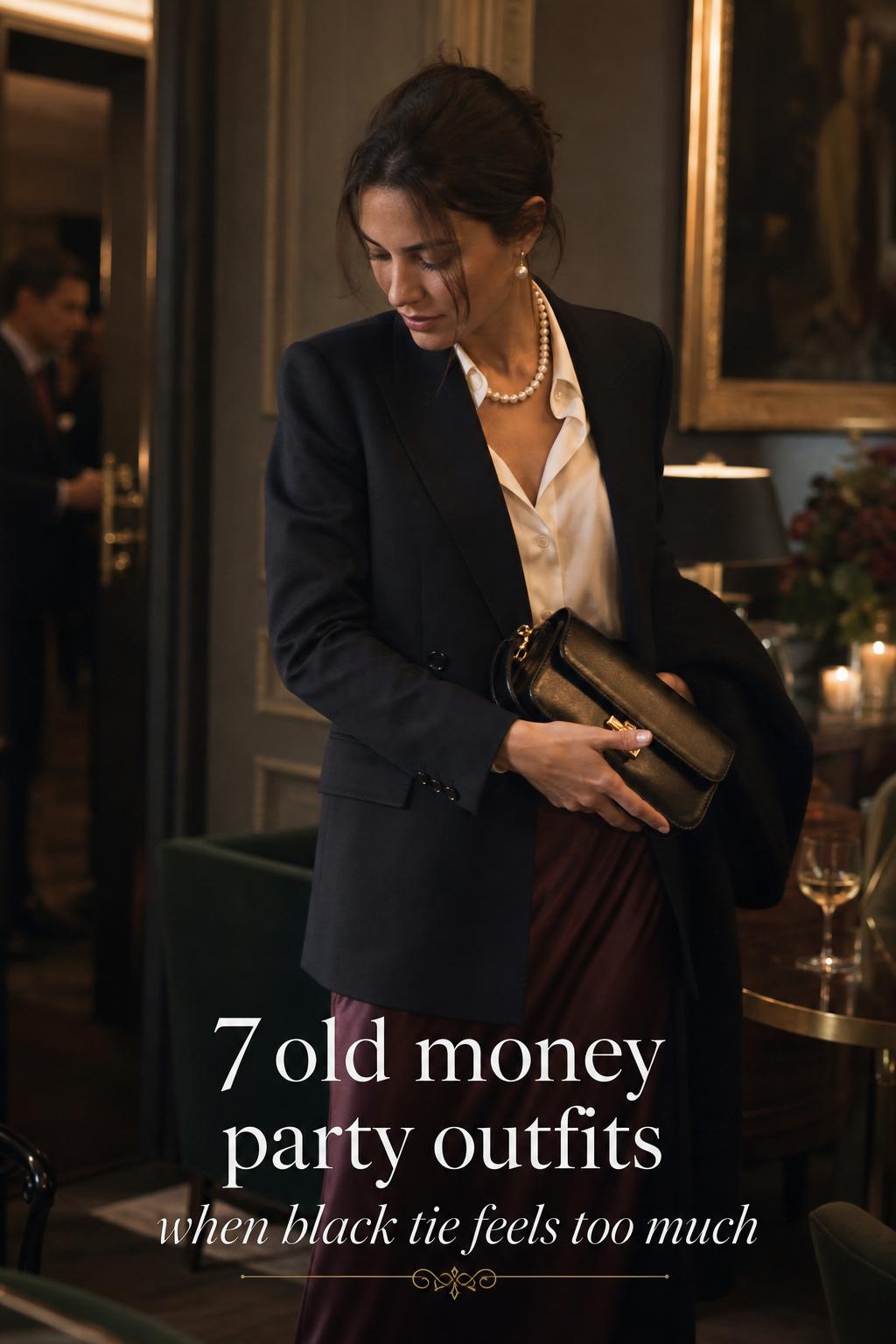
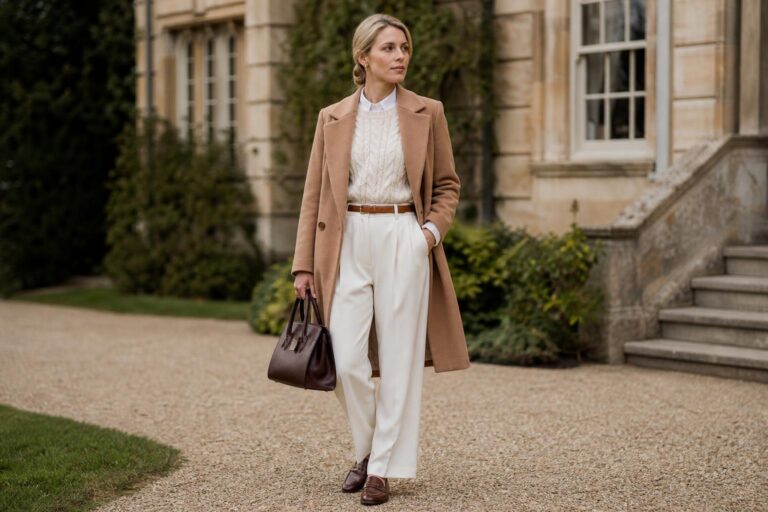
Old money style becomes especially convincing in colder weather because layering naturally supports the aesthetic. Winter party dressing allows for richer textures and more visible structure: wool coats, cashmere knits, velvet separates, long skirts, leather gloves, and classic hosiery all contribute to the sense of cultivated polish.
A particularly strong formula begins with a fine-gauge knit or fitted turtleneck, followed by a midi skirt in satin, wool, or velvet, then finished with a tailored coat. This outfit communicates refinement through fabric contrast. The knit provides softness and intimacy, the skirt introduces movement, and the coat sharpens the frame. It feels festive without relying on obvious holiday sparkle.
Seasonal adaptation tip
For colder climates, closed-toe pumps, knee-high boots, or heeled loafers make more sense than delicate sandals. Opaque tights in black or dark brown can integrate seamlessly if the hemline and shoe color remain coordinated. This matters because broken color lines at the leg can interrupt the elegance of the silhouette.
Color is worth handling carefully in winter. Cream and camel can look beautiful, but darker tones often feel more grounded for evening events. Burgundy, forest green, charcoal, black, navy, and espresso all support the heritage aspect of the aesthetic while still reading formal. Metallic elements should stay subtle, more brushed gold than mirror shine.
Most versatile item
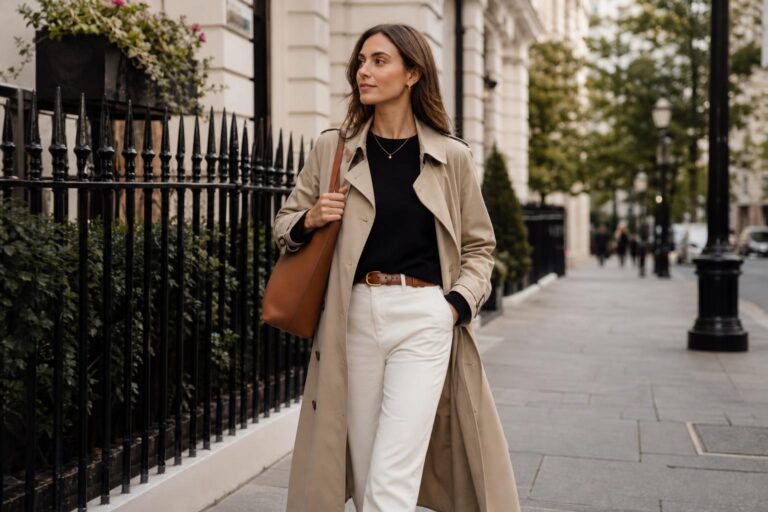
A long wool coat is arguably the most useful purchase for this style direction. It elevates nearly everything underneath and instantly creates the composed entrance associated with old money dressing. Even if the inner outfit is relatively simple, the right coat can give the entire look greater authority.
Softly feminine dressing with structure underneath
Not every interpretation of the aesthetic needs to lean severe or highly tailored. There is also a feminine version built around graceful movement, soft necklines, subtle waist definition, and refined romanticism. The difference between this and a more generic romantic party outfit is control. The softness is always supported by structure somewhere in the outfit.
A blouse with gentle volume at the sleeve, tucked into a high-waisted skirt, is a strong example. So is a dress with a softly draped bodice but a clean, uninterrupted skirt line. Fabrics such as silk georgette, satin, and lightweight crepe create a beautiful sense of motion, but they need grounding through tailored seams, a defined waistband, or a polished shoe.
How to keep feminine styling from feeling too sweet
Use contrast intentionally. If the blouse is soft and fluid, make the skirt structured. If the dress has a romantic neckline, keep the accessories spare. If the fabric is lustrous, choose matte shoes or a clean leather bag. This controlled contrast keeps the outfit elegant and adult rather than overly delicate.
Pearls often fit naturally into this version of the aesthetic, but they are most effective when used with restraint. A single strand, pearl drops, or one hair accessory can be enough. Too many overtly “classic” signifiers at once can make the outfit feel styled for a character rather than for an actual event.
Black-tie interpretation without visible excess
For truly formal events, old money party outfits still follow the same principles, just in more elevated materials and longer lines. A floor-length gown in silk, velvet, or crepe; a sharply cut tuxedo-inspired suit; or a long dress with a sculpted neckline all fit the mood if the overall execution remains disciplined.
The key distinction is that black-tie old money style avoids theatrical decoration. Instead of relying on sequins, bold cutouts, or maximalist embellishment, it favors quality fabric, graceful drape, and shape. A velvet gown with long sleeves can be more powerful than a heavily adorned dress because the visual message is confidence, not performance.
Practical considerations for long formal evenings
- Choose a hem length that works with your actual shoes to avoid dragging and bunching.
- Test mobility before the event, especially in fitted skirts or narrow gowns.
- Carry an outer layer that feels equal in formality to the outfit.
- Keep jewelry comfortable enough for several hours of wear.
- Use a clutch that fits the essentials without distorting the outfit line.
If a gown feels impractical or too occasion-specific, a tuxedo-style suit offers a highly credible alternative. The masculine tailoring creates striking contrast for evening, and the result often feels even more in line with quiet luxury than a conventionally glamorous dress. A satin lapel, silk blouse, and pointed heel can carry the entire look.
Country club polish and polished daytime-to-evening transitions
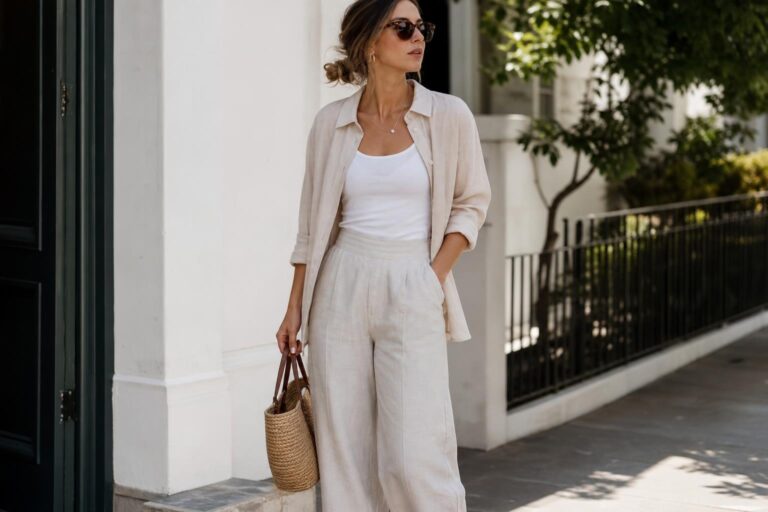
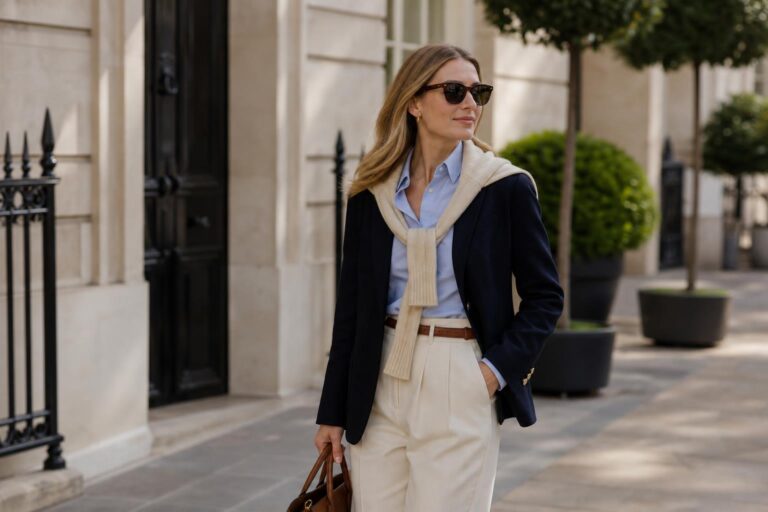
Some party settings fall into a more relaxed but still elevated category: garden celebrations, club dinners, daytime engagement events, brunch parties that extend into evening, or refined summer gatherings. Here, the old money aesthetic becomes lighter, but it should not lose its structure. Think crisp shirting, linen-blend tailoring, pleated skirts, sleeveless dresses with clean lines, and understated leather accessories.
This version often benefits from brighter neutrals and softer seasonal tones. Ivory, pale blue, stone, soft pink, and light camel can all work, especially in spring and summer. The challenge is avoiding anything too resort-like or casual. The outfit still needs a visual anchor, such as a belt, a tailored jacket, a polished flat, or a structured handbag.
Easy ways to recreate the look
Start with a button-down shirt you already own, ideally in white, cream, or pale blue. Pair it with a midi skirt or tailored trousers instead of denim. Add loafers or ballet flats in polished leather. Then finish with one element that increases formality, such as a blazer, silk scarf, or pearl earring. That single adjustment often moves the outfit from smart casual into old money territory.
This is one of the most wearable interpretations because it can be adapted for many body types and comfort levels. Those who prefer more coverage can use longer hemlines and light layers. Those who want a stronger waist can define it with a belt or choose pieces with built-in shaping. The principle remains the same: refined structure over visible effort.
Accessories that reinforce the old money message
Accessories decide whether an outfit reads genuinely polished or merely expensive-looking. In this aesthetic, they should support the clothing rather than dominate it. Leather matters. Hardware should be subtle. Shapes tend to be classic. Footwear should look maintained, not distressed, exaggerated, or trend-saturated.
Jewelry is usually selective rather than layered in abundance. Watches, signet-style rings, stud earrings, a chain necklace, pearls, or a cuff bracelet all align well when used with discipline. Bags should be compact and structured for evening, with enough refinement to stand beside tailored clothing or a fluid dress without looking casual.
Accessory priorities
- Structured evening bag or compact leather clutch
- Classic pumps, slingbacks, loafers, or elegant low sandals
- One focused jewelry story rather than several competing pieces
- Outerwear that matches the formality of the outfit
- Belts used sparingly and only when they improve proportion
Hair and beauty also shape the final impression. The old money approach generally favors polished simplicity: smooth blowouts, neat buns, soft waves, understated makeup, and nails in natural or classic shades. The beauty direction should mirror the outfit’s restraint.
Common styling mistakes that weaken the aesthetic
The biggest misconception about old money party outfits is that the look comes from labels alone. In practice, the aesthetic is easier to disrupt than to build, and the wrong styling choices can quickly shift the outfit into costume, trend overload, or generic formalwear. Editing is essential.
What to avoid
- Too many visible logos or obviously branded elements
- Over-accessorizing a simple outfit until it loses clarity
- Very tight fits that undermine the composed silhouette
- Trend-heavy shoes or bags that conflict with timeless clothing
- Cheap shiny fabrics that imitate luxury but read flat in real light
- Mixing too many style messages in one outfit
Another common issue is ignoring venue context. A silk gown may be beautiful, but it can feel misplaced at a semi-formal club dinner where tailoring or an elevated midi dress would make more sense. Likewise, a tweed jacket and loafers may be impeccable for a daytime gathering but too restrained for black tie. Old money style is not just about taste; it is about calibration.
Building old money party outfits from what you already own
This aesthetic becomes much more accessible when treated as an exercise in styling rather than shopping. Most people do not need a full wardrobe reset. They need stronger editing, better combinations, and more attention to fit, fabric, and finish. A simple black dress, neutral trousers, a blazer, a satin blouse, and polished shoes can already form the foundation.
Begin by identifying your most refined base pieces. Then remove anything that distracts from their elegance. Replace casual layers with tailored ones, trade overtly trendy accessories for cleaner options, and build a tighter palette. If the outfit still feels unfinished, the missing element is often outerwear or footwear rather than more jewelry.
Budget-friendly alternative
If you are deciding where to invest first, prioritize a coat, blazer, shoe, or bag before highly occasion-specific clothing. Those items reshape multiple outfits and create the polished frame that this aesthetic depends on. Even an affordable dress can look significantly more elevated when paired with better outerwear and disciplined accessories.
Tailoring is another practical advantage. Hemming a trouser, refining a sleeve length, or adjusting the waist of a dress often does more for the final result than replacing the garment altogether. Old money style is deeply tied to proportion, and good proportions are often achieved through small corrections.
How to adapt the aesthetic to different personal styles
The strongest old money party outfits do not erase personality. They refine it. Someone with minimalist taste may lean into monochrome dressing, long lines, and severe simplicity. Someone more romantic may prefer fluid dresses, pearls, and soft drape. Someone with a masculine edge may choose tuxedo tailoring and loafers instead of heels. The aesthetic is broad enough to accommodate these variations as long as the central principles remain intact.
For petites, keeping the line uninterrupted often helps. Matching shoe and hem tones, avoiding bulky layering, and choosing cleaner vertical silhouettes can preserve height. For taller frames, longer coats, wide-leg trousers, and dramatic column dresses often feel particularly natural. Those wanting more waist emphasis can choose belted outerwear, nipped-in blazers, or dresses with subtle shaping. Those preferring ease can rely on fluid tailoring and softly structured separates.
The point is not to imitate one narrow image of wealth. It is to interpret the visual language in a way that feels credible on your body, in your climate, and at your event. That practical credibility is what keeps the style elegant instead of performative.
The enduring appeal of quiet evening elegance
The reason old money party outfits remain so compelling is that they are built on design principles that rarely date: proportion, restraint, quality, and confidence. They allow the wearer to look formal without becoming theatrical, polished without appearing overdone, and aspirational without losing real-life wearability.
In the end, the aesthetic works best when it feels lived-in rather than staged. A beautifully cut blazer, a silk dress that falls cleanly, a dark coat with presence, a shoe that finishes the line, a piece of jewelry chosen with care: these are the details that create the effect. Personal style can still lead, but refinement sets the tone.
FAQ
What makes an outfit look old money for a party?
An outfit reads old money when it emphasizes fit, fabric, restraint, and polished accessories rather than overt trends or heavy decoration. Tailoring, tonal cohesion, classic shoes, and subtle jewelry create the composed look most associated with the aesthetic.
Can old money party outfits include black?
Yes, black works especially well for evening because it sharpens tailoring and highlights clean silhouettes. The key is choosing refined materials and keeping the styling minimal so the outfit feels elegant rather than harsh or overly dramatic.
Are dresses necessary for this aesthetic?
No. Dresses are one strong option, but tailored separates, tuxedo-style suits, silk blouses with skirts, and polished trouser combinations all fit the aesthetic. The defining factor is visual discipline, not any single garment category.
How do I make a simple outfit look more expensive?
Improve the overall finish rather than adding more pieces. Focus on steaming garments, refining the fit, coordinating the color palette, upgrading shoes or outerwear, and limiting accessories to a few well-chosen items that reinforce the clean structure of the outfit.
What shoes work best with old money party outfits?
Classic pumps, slingbacks, polished loafers, elegant flats, heeled boots, and understated evening sandals are the most reliable choices. The best option depends on the formality level, season, and hemline, but the common thread is a timeless shape and a refined finish.
Can I wear this style on a budget?
Yes. The aesthetic is often easier to achieve through styling than through constant shopping. A blazer, simple black dress, neutral trousers, and polished shoes can create multiple old money-inspired party outfits when the palette is controlled and the fit is strong.
What colors fit the old money party aesthetic best?
Black, navy, ivory, cream, camel, charcoal, burgundy, forest green, chocolate brown, and muted metallics tend to work especially well. These shades support tonal layering and help the outfit feel classic rather than trend-driven.
How much jewelry is too much for this look?
If the jewelry starts competing with the clothing, it is likely too much. This aesthetic usually works best with one clear jewelry direction, such as pearls, gold accents, or a watch with simple earrings, rather than multiple statement pieces worn together.
How do I keep the outfit from looking costume-like?
Avoid piling on every classic signifier at once. Instead, combine just a few refined elements, such as tailoring, a restrained color palette, and polished accessories, and make sure the outfit suits the actual venue and dress code. Realism is what keeps the style convincing.