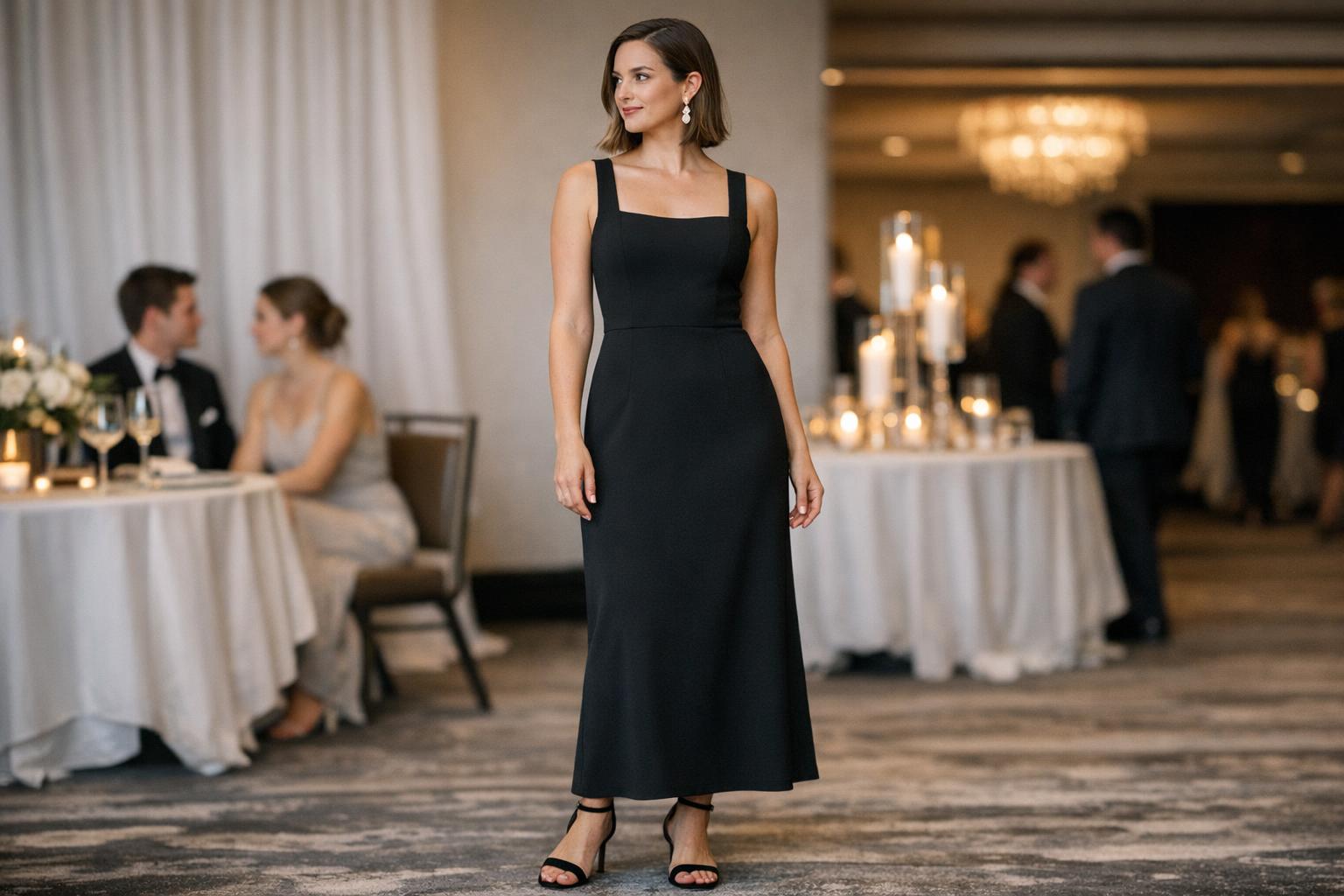
Quietly Luxurious crepe fabric dress style for U.S. Events
The moment you decide on a crepe fabric dress style, you’re also deciding how you want a dress to behave through a real event: how it drapes when you walk, how it holds a clean line in photos, and how it feels after hours of sitting, standing, and moving. In U.S. wardrobes, crepe fabric is often chosen for the same reason people reach for a polished blazer or a sharply pressed trouser—it signals intent. It reads modern, controlled, and quietly dressy without relying on excess shine or heavy embellishment.
This is also why “crepe” shows up across very different needs: a crepe fabric dress for an evening ceremony, prom dresses sleeveless that need a smooth, flattering fall, or even a simple cooperate gown style meant to look confident and streamlined in a corporate setting. The key is understanding what you’re actually buying when you buy crepe, how that dress fabric interacts with silhouette, and how to style it so the look stays deliberate rather than severe.
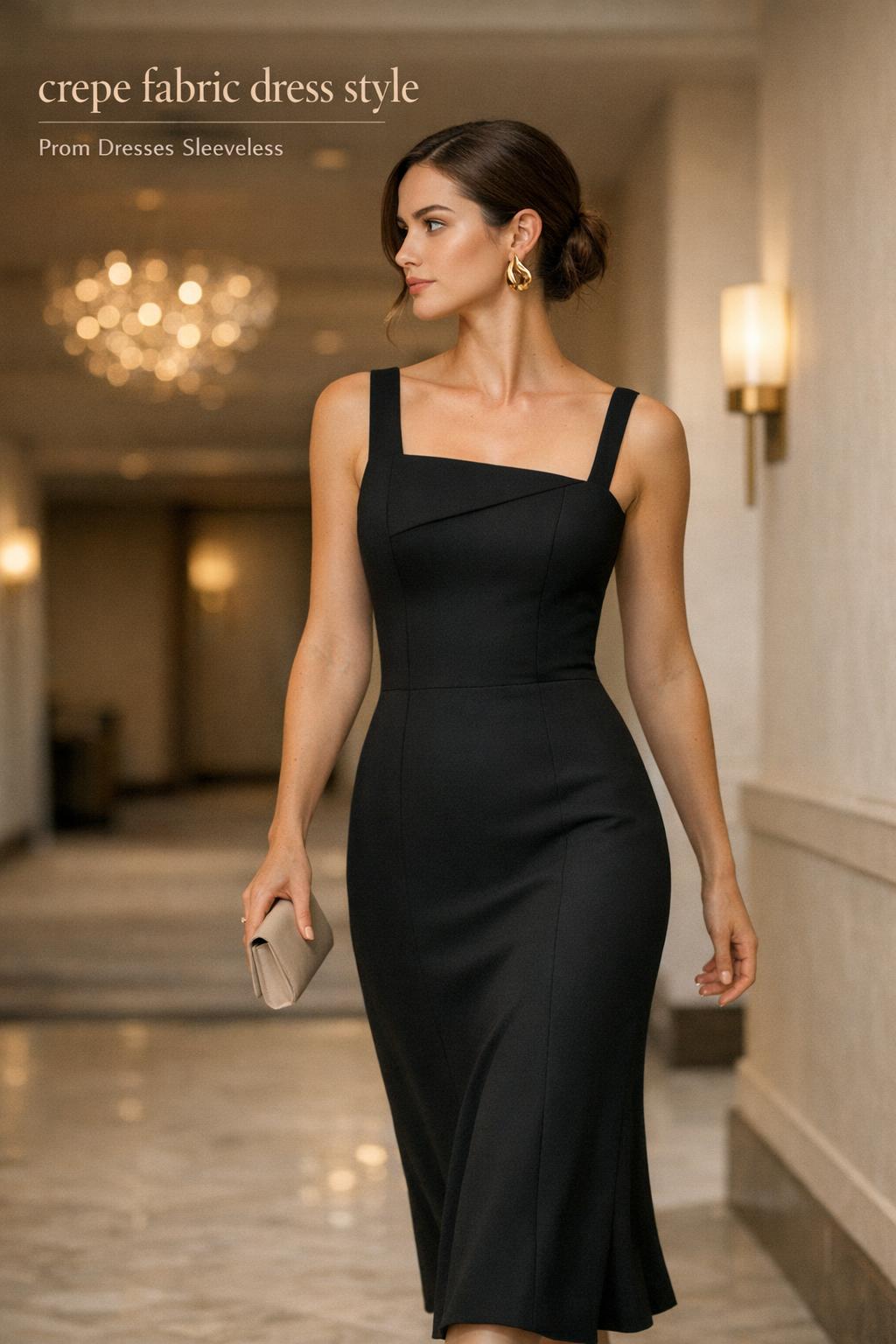
What “crepe” means in a dress—and why it looks expensive when it fits well
Crepe fabric is best understood as a feel and a finish as much as a category. When people describe crepe, they’re usually responding to its slightly textured surface and the way it falls with weight and control. In a crepe fabric dress, that controlled drape can create clean vertical lines, which is why it’s frequently used for minimal designs that still look finished.
That “expensive” impression is not automatic, though. Crepe is unforgiving of poor fit and uneven underlayers. If a crepe fabric dress style is too tight, the fabric can cling in a way that makes the dress look strained. If it’s too loose, crepe can lose its crispness and start reading like a generic shift. The sweet spot is a fit that skims and hangs—close enough to look tailored, relaxed enough to move.
Found the dress? Keep the rest in one place.
Zarellea brings guest details, vendors, timelines, and every next step together — so your wedding plan feels as good as your look.
A quick way to spot whether crepe will work for your day
Before you commit, ask yourself what the dress needs to do. If you need structure without heavy lining, crepe is often a smart dress fabric choice. If you want a look that depends on dramatic volume or extreme shine, crepe may not deliver that effect unless the design builds it in through shape rather than surface.
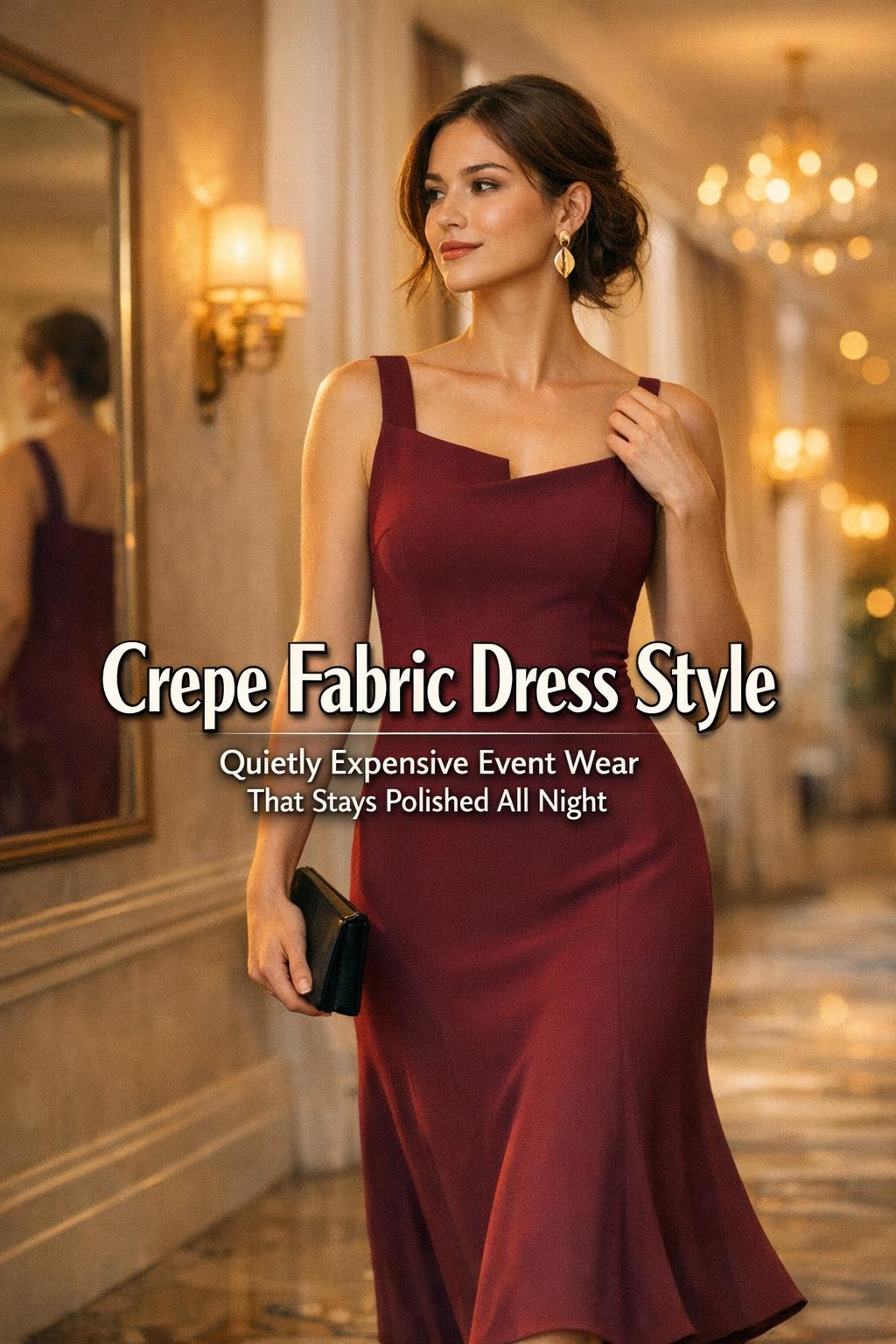
Silhouette first: how crepe fabric dress style changes with cut
Crepe is one of those fabrics that can look radically different depending on the pattern. The same crepe fabric can read sleek and architectural in one dress, and soft and romantic in another—because crepe responds strongly to seam placement, neckline geometry, and whether the designer intends the fabric to skim or sculpt.
The column and sheath: clean lines with high photo payoff
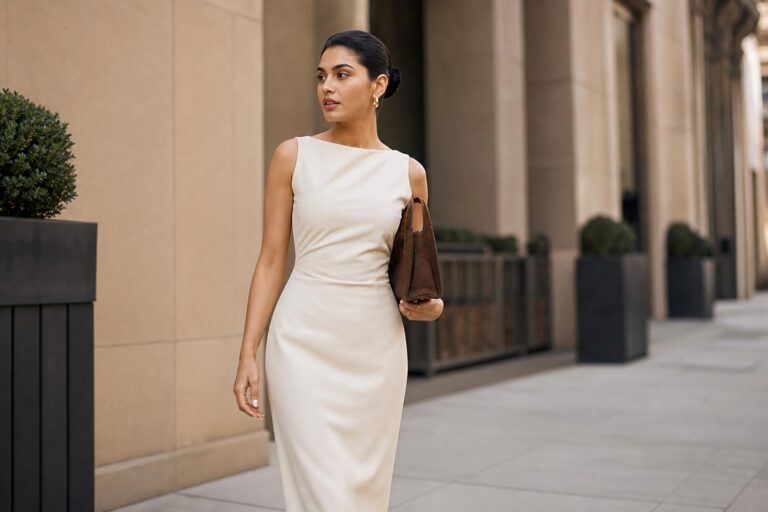
In a column or sheath silhouette, crepe fabric dress style leans into what crepe does best: uninterrupted lines. This is the shape that tends to look the most modern and the most “intentional,” especially in settings where you want polish rather than overt glamour. The trade-off is that every detail matters—neckline, strap width, and hem length become the design. If you love minimalism, this is a strength. If you prefer lots of detail to “carry” the look, you’ll want stronger accessories or a more distinctive neckline.
The fit-and-flare: movement without bulk
Fit-and-flare in crepe gives you motion while keeping the upper body clean. This is often a comfortable way to wear crepe for events that involve sitting for long stretches and then getting up repeatedly—dinners, ceremonies, award nights—because the skirt can release tension. If you’re choosing crepe fabric as your dress fabric for comfort, pay attention to where the flare begins; starting too low can restrict stride, while starting too high can make the look feel less refined.
The slip-inspired look: sleek, but only when the underlayer is right
Slip-inspired crepe dresses can look effortless, but they’re not a “no-thought-required” choice. Crepe fabric tends to show the outline of undergarments more than people expect, especially under bright indoor lighting. If you’re drawn to this style, plan the foundation first—smooth lines, no visible seams, and a neckline that stays stable through movement.
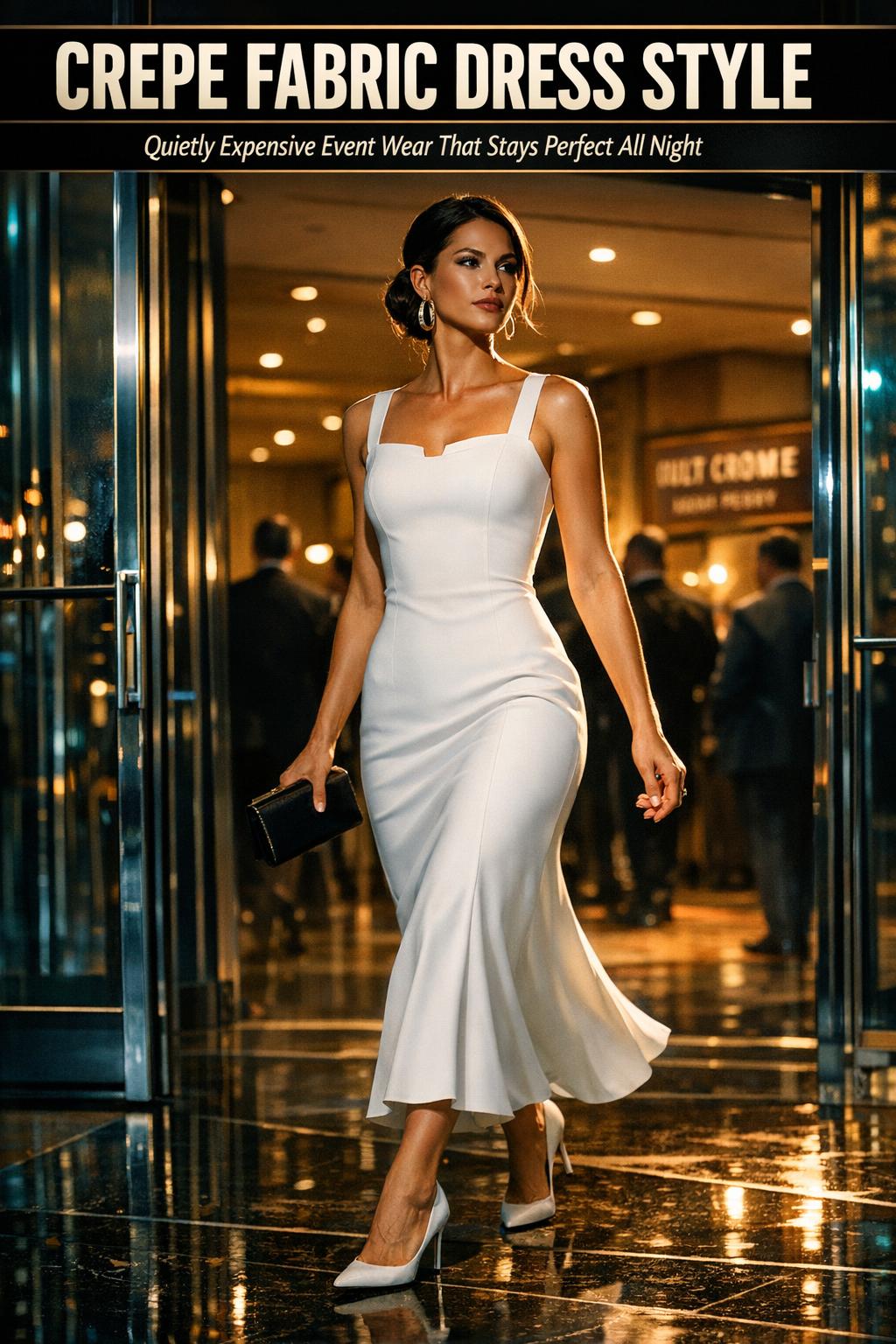
Prom dresses sleeveless in crepe: why this combination works (and where it can go wrong)
Prom dresses sleeveless are a common place where crepe shines because the fabric provides visual “weight” that balances bare shoulders and arms. In photos, sleeveless crepe often reads clean and elevated rather than overly delicate. It’s also practical: crepe can hold a refined shape through a long evening without looking rumpled early.
The risk is proportion. When you remove sleeves, you highlight the neckline and the strap architecture. If straps are too thin for the bodice structure, the dress can look under-supported. If the neckline is too sharp for the wearer’s comfort level, you’ll spend the night adjusting instead of enjoying the event. A sleeveless crepe fabric dress should feel secure enough that you forget about it.
Tips: getting sleeveless crepe to feel secure and look intentional
- Choose a neckline you can wear without constant readjustment; comfort reads as confidence.
- Look for clean finishing at the armhole so it lies flat without gaping.
- If you’re between sizes, prioritize how the bodice sits; crepe shows pulling more than many dress fabric options.
- Test movement: sit, stand, lift your arms, and take a few steps to see if the dress stays aligned.
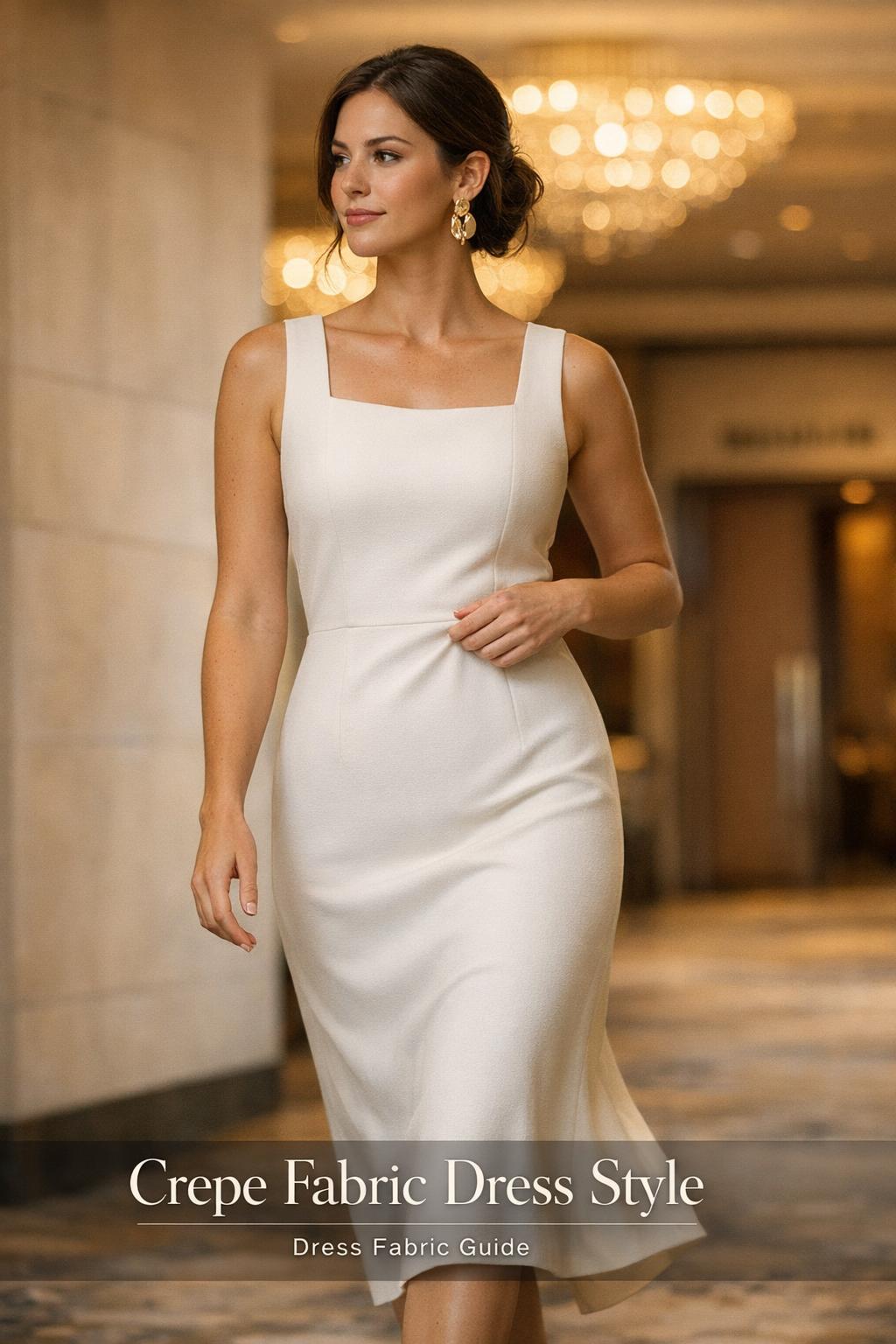
The “simple cooperate gown style” question: making crepe look corporate, not bridal or party
Crepe is a natural partner for a simple cooperate gown style because it communicates restraint and professionalism. The same minimalism that works for eveningwear can also translate to a formal corporate function—if you choose the right length, neckline, and accessories. The goal is clean, not bare; structured, not stiff.
Where people slip is in mixing formality cues. A crepe fabric dress with an ultra-deep neckline or an extreme thigh slit can read like night-out attire, even if the fabric is sophisticated. On the other hand, a high neckline with a severe straight cut can look overly strict. The best corporate-leaning crepe dress styles tend to balance one strong element—like a clean boat neckline, a modest V, or a sharp square neckline—without piling on multiple bold features at once.
Practical styling for corporate events in the U.S.
Think about how the dress will look under mixed lighting: hotel ballrooms, conference spaces, and restaurants often have lighting that exaggerates texture and shadows. Crepe fabric is generally forgiving in these settings because it doesn’t flash like satin, but it can emphasize wrinkles from sitting. If you’ll be seated for presentations or dinners, choose a crepe fabric dress style that doesn’t strain across the lap and consider a length that feels composed when seated.
Color and surface: why crepe behaves differently than shiny dress fabric
Crepe fabric typically reads matte to semi-matte, which changes how color is perceived. Dark tones can look inky and saturated; light tones can look soft and modern rather than glossy. This matters because a crepe fabric dress style relies on silhouette and fit, not reflection, to create dimension.
If you love a dramatic look but want to avoid shine, crepe gives you drama through line. If you prefer a playful, attention-grabbing surface, crepe may feel too restrained unless you bring interest through shape, accessories, or a neckline detail.
Tips: choosing color when the fabric is crepe
- If you want the dress to photograph with crisp edges, lean into strong, clear colors rather than ambiguous mid-tones.
- If you’re choosing a very light color, pay extra attention to underlayers; crepe can show shadows more than expected.
- If you want versatility across events, a crepe fabric dress in a solid, calm tone tends to restyle easily.
Necklines and straps: the “architecture” that defines a crepe fabric dress
Because crepe isn’t relying on shine, the neckline becomes the focal point. In a crepe fabric dress, a small change in neckline can shift the entire impression—romantic, modern, formal, or corporate. This is especially true for prom dresses sleeveless, where the neckline and straps frame the face and shoulders.
In practice, the most flattering neckline isn’t just about body type—it’s about how you move and what you’ll be doing. A strapless crepe dress can look immaculate, but if you’ll be dancing for hours, the security of the bodice is everything. A square neckline can feel modern and stable. A V-neck can elongate but may require more attention to underlayers. The right choice is the one that keeps you relaxed and upright through the night.
Real-life check: how to test a neckline before committing
Try the dress on and mimic the moments that matter: hugging someone, raising your arms for photos, sitting in a car, leaning forward at a dinner table. Crepe fabric tends to hold the memory of strain in the form of rippling or pulling, so if it’s uncomfortable in the fitting room, it will be obvious at the event.
Length and hem: where crepe looks most polished
Crepe’s drape makes hems a major style signal. A hem that hits at an intentional place—just above the ankle for an evening look, at a refined midi length for a day-to-night event, or full length for formal—often looks cleaner in crepe than in many other dress fabric options because the fabric tends to fall straight rather than bounce.
But hem choices are also practical. Full-length crepe can be stunning, yet it can catch under shoes if it’s even slightly long, especially on stairs or when you’re stepping out of a car. Midi crepe can be the easiest “high polish with low stress” choice in the U.S. for events that involve movement across different floors and surfaces.
Tips: the hemline details people notice in photos
- Make sure the hem doesn’t drag; crepe shows wear at the bottom edge quickly in real life.
- Walk in the shoes you’ll actually wear; the right hem depends on heel height.
- If the dress has a slit, check that it opens gracefully when you walk rather than folding awkwardly.
Comfort and movement: what crepe does over a long day
People often choose a crepe fabric dress because they want a clean look that lasts. In real wear, crepe can be comfortable because it doesn’t feel as fussy as highly structured materials, but it can also reveal stress points if the fit is too exact. If the dress is meant to be sleek, it should still allow a natural stride and easy sitting.
This matters for events that aren’t just “stand and smile.” Think of prom nights with long photo sessions, formal dinners that last hours, or corporate evenings where you move between cocktail spaces and seated programs. A crepe fabric dress style should support your posture without requiring constant adjustment. The best test is whether you can forget you’re wearing it.
Tips: simple comfort upgrades that keep the look clean
Prioritize the foundation. Smooth, well-chosen underlayers can make a crepe fabric dress look sharper and feel more secure, especially in sleeveless designs. Also consider how you’ll carry essentials: if the dress has no pockets, plan for a small, unobtrusive bag so you’re not stuffing items into the neckline or holding everything in your hands all night.
Styling crepe without overcomplicating it
Crepe’s strength is clarity. Styling should complement that rather than compete with it. If you chose a crepe fabric dress style because you like minimalism, lean into edits: fewer pieces, better choices. If your dress is very simple, you can add personality through one focal point—an earring shape, a strong shoe, or a defined lip—without turning the outfit into a costume.
For prom dresses sleeveless in crepe, styling is often about balance: the dress shows skin and line, so accessories should look deliberate and secure. For a simple cooperate gown style, the styling should read composed: clean hair, refined shoes, and accessories that don’t jingle, snag, or demand attention in a quiet room.
A practical formula that works for most crepe looks
- Let the dress be the primary line (silhouette and neckline).
- Choose one visual accent (jewelry or shoes, not both competing).
- Keep the finishing touches smooth (hair and makeup that won’t require constant fixing).
Common styling mistakes that make crepe look cheaper than it is
Crepe fabric can look elevated, but it’s also honest. It won’t hide rushed styling choices. Many “something feels off” moments with a crepe fabric dress aren’t about the dress itself—they’re about proportion, fit tension, and mismatched formality cues.
- Overly tight fit: Crepe will show pulling at seams and across the hips or bust, which interrupts the clean line that makes the fabric appealing.
- Visible lines underneath: Crepe fabric dress styles often look best with smooth underlayers; harsh seams and textures can show through.
- Too many competing details: A very minimal crepe dress can handle one dramatic element, but multiple statement pieces can fight the fabric’s refined simplicity.
- Ignoring the event context: A crepe dress for a corporate setting needs different styling than prom dresses sleeveless; the same dress fabric can read differently depending on accessories and grooming.
Occasion-driven crepe: choosing the right crepe fabric dress for where you’re going
One reason crepe fabric dress style is searched so often is that crepe sits at a sweet spot: it can look formal without being flashy, and it can look minimal without being plain. Still, the best choice is always occasion-first. Your venue, your schedule, and how long you’ll be in the dress should guide the silhouette, neckline, and finishing details.
For prom and formal nights
If you’re considering a crepe fabric dress for prom, especially prom dresses sleeveless, think about how the dress will look in both posed photos and candid movement. Crepe reads beautifully in still images because it keeps its line. For dancing, prioritize security—stable straps, a bodice that doesn’t shift, and a hem you can move in.
For corporate formal and dinner events
A simple cooperate gown style in crepe works best when it looks calm and controlled. Avoid anything that demands constant management: unstable necklines, fussy closures, or extreme silhouettes. The point is to look present, not preoccupied. Crepe fabric supports that message by staying visually consistent across a long evening.
For “one dress, many events” versatility
If you want one crepe fabric dress style that can stretch across different occasions, choose a silhouette that’s refined but not extreme. Moderate neckline, clean lines, and a hem that works with more than one shoe height usually deliver the best repeat-wear value. Versatility matters in real life: you may wear the dress to a formal dinner now and a future event later, and crepe is often chosen precisely because it doesn’t feel tied to one theme.
Care and readiness: keeping crepe looking crisp before you walk out the door
Crepe is often selected because it looks composed, so preparation matters. Even a beautiful crepe fabric dress can lose impact if it’s wrinkled from travel or stored poorly. Plan enough time to hang the dress so it can relax. If you’re changing at a venue, bring the dress in a way that protects the neckline and straps, especially for prom dresses sleeveless where the top edge is part of the design.
Tips: last-minute checks that prevent a long night of fussing
- Do a full outfit rehearsal with underlayers and shoes so you’re not making decisions under time pressure.
- Sit down and stand up in the dress to confirm it keeps its line.
- Check the neckline and strap placement in a mirror from multiple angles, not just straight-on.
FAQ
What is a crepe fabric dress style best known for?
A crepe fabric dress style is best known for a smooth, refined drape and a clean, modern look that relies on silhouette and fit rather than shine, making it a popular choice for polished events where you want an elevated but controlled finish.
Are prom dresses sleeveless in crepe a good choice for a long night?
They can be, because crepe fabric tends to hold a crisp line in photos and through wear, but the bodice must feel secure; the best sleeveless crepe choices are the ones you can move, sit, and dance in without constant readjustment.
How do I keep a crepe fabric dress from looking too plain?
Use one intentional focal point—such as a distinctive neckline, a single strong accessory, or a confident shoe—while keeping the rest of the styling clean, since crepe fabric looks most elevated when the outfit feels edited rather than overloaded.
What makes crepe fabric tricky compared with other dress fabric options?
Crepe can be unforgiving of poor fit and visible underlayers because it emphasizes clean lines; if a dress is too tight it may show pulling, and if foundations are bulky or seamed they can disrupt the smooth look crepe is chosen for.
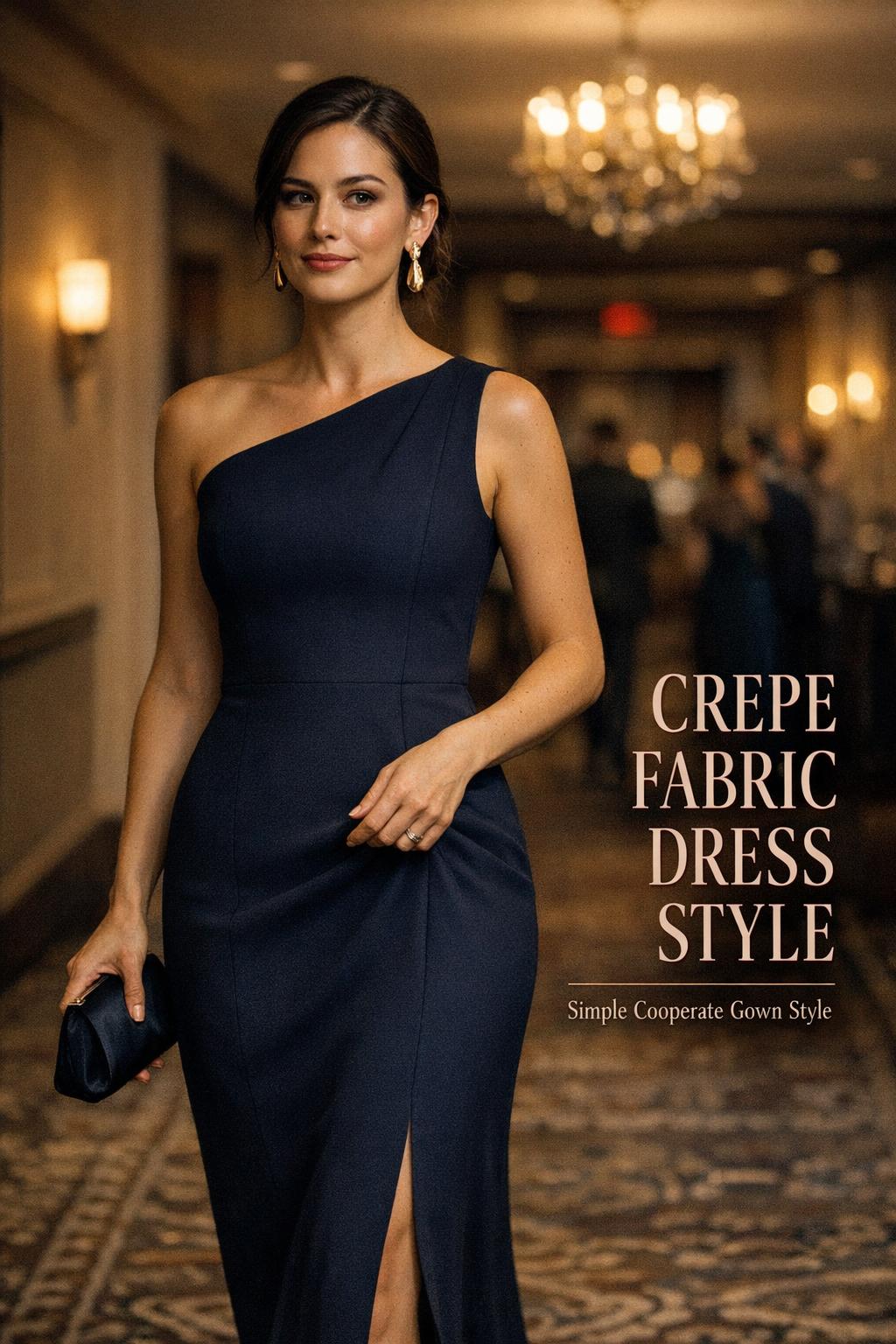
Can a crepe fabric dress work as a simple cooperate gown style?
Yes—crepe is well-suited to a simple cooperate gown style because it reads restrained and professional, especially when paired with a balanced neckline, an appropriate hem length, and styling that stays refined rather than flashy.
How should a crepe fabric dress fit to look its best?
It should skim the body without strain, allowing you to sit and walk comfortably; crepe fabric looks most polished when it hangs cleanly, so avoid a fit that creates ripples or pulling at seams.
What should I test when trying on a crepe fabric dress?
Test real-life movement—sitting, walking, raising your arms, and leaning forward—because a crepe fabric dress will reveal tension points quickly, and the goal is a look that stays aligned without you managing it all night.
Is crepe fabric better for minimal designs or detailed designs?
Crepe fabric is especially strong for minimal designs because the fabric’s controlled drape highlights silhouette and tailoring, though it can also work with detail when those elements support the dress’s clean structure rather than compete with it.