Polished Minimalism: Fashion Moodboard Inspiration with Edge
Introduction
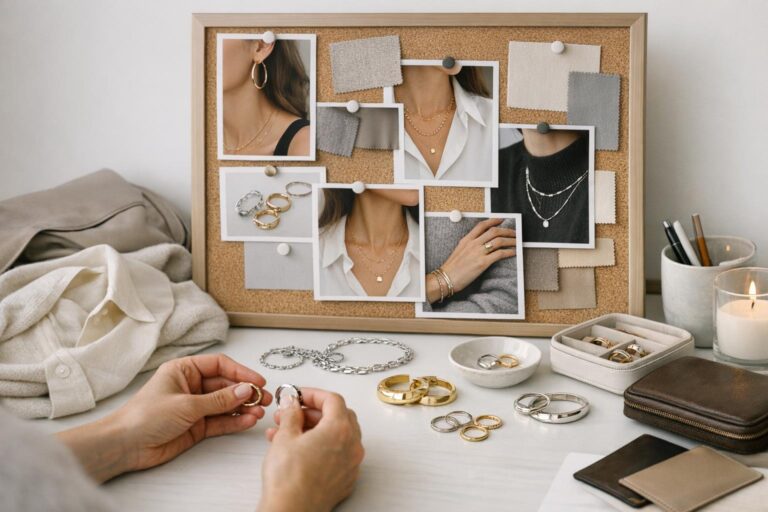
Fashion moodboard inspiration isn’t just a pretty collage—it’s a visual decision system. It clarifies what your style is trying to say before you buy, pack, shoot, or style. When the aesthetic feels cohesive, everything gets easier: proportion choices become obvious, color combinations feel intentional, and outfits stop looking like disconnected pieces competing for attention.
This editorial focuses on a single, adaptable aesthetic identity: polished minimalism with a soft edge. Think calm palettes, clean lines, and texture-led interest—an aesthetic that reads modern in a city setting, effortless for weekends, and credible in professional environments without feeling overly formal. It’s popular because it works in real life: it photographs well, layers intelligently, and translates across seasons with small material shifts.
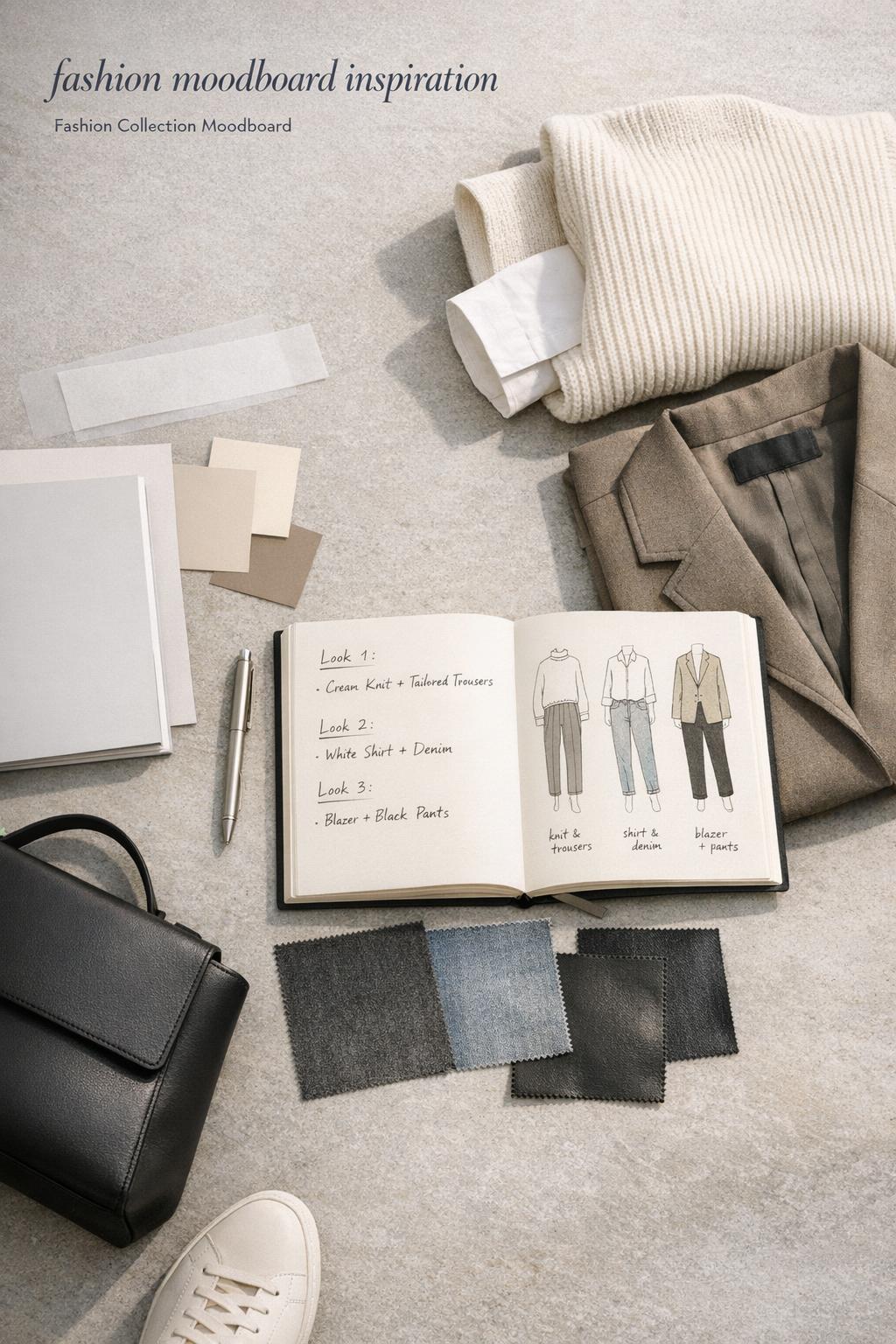
If you’re building a style moodboard, a fashion collection moodboard, or concept boards fashion for a personal wardrobe refresh, treat each outfit below like a modular styling board: the goal is consistent visual language with enough variation to cover different days, climates, and levels of polish. This is also the logic that strengthens a fashion styling portfolio—clear aesthetic direction, flexible execution.
The aesthetic code: what to pin on your style moodboard
A cohesive aesthetic starts with a tight “code”—a small set of rules you can repeat without boredom. For this mood, the code is built on neutral structure, soft texture contrast, and proportion play. The pieces don’t need loud prints to create impact; the visual interest comes from silhouette balance (straight vs. draped), matte vs. sheen, and controlled volume.
Found the dress? Keep the rest in one place.
Zarellea brings guest details, vendors, timelines, and every next step together — so your wedding plan feels as good as your look.
- Palette: neutrals and softened tones (think light-to-deep variations rather than stark contrast)
- Silhouette: clean columns, relaxed tailoring, or softly oversized layers with one refined anchor
- Textures: knits, cotton, denim, leather-like finishes, and crisp shirting—used to create depth
- Accessories: minimal but intentional; one visual anchor per look
- Overall vibe: composed, modern, wearable—never fussy
Use this code as the backbone of your fashion collection moodboard. A board becomes useful when it tells you what to repeat (shape and palette) and where to experiment (texture and styling angles). That’s the difference between random inspiration and a styling board that drives real outfit decisions.
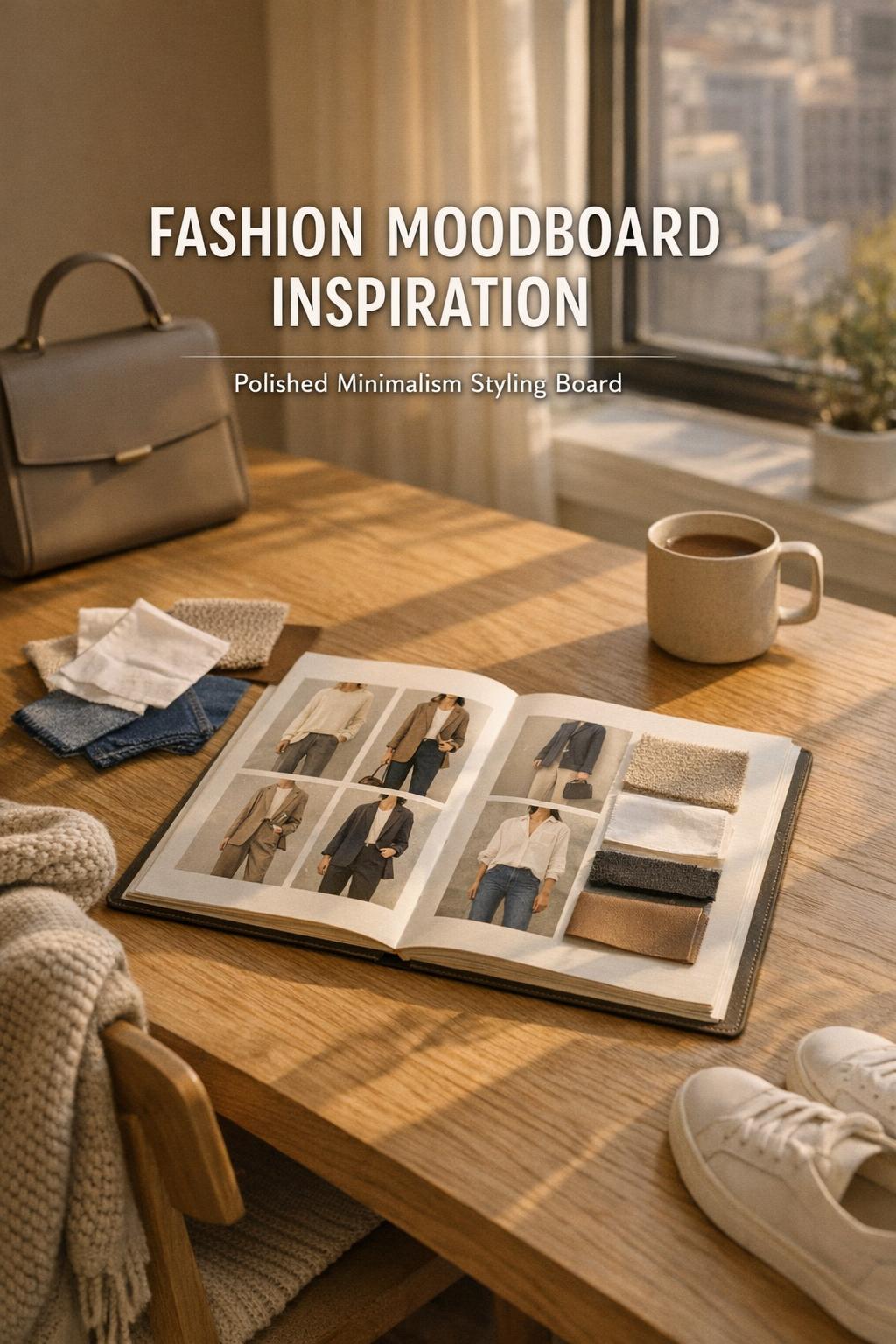
Look: Relaxed minimal layers
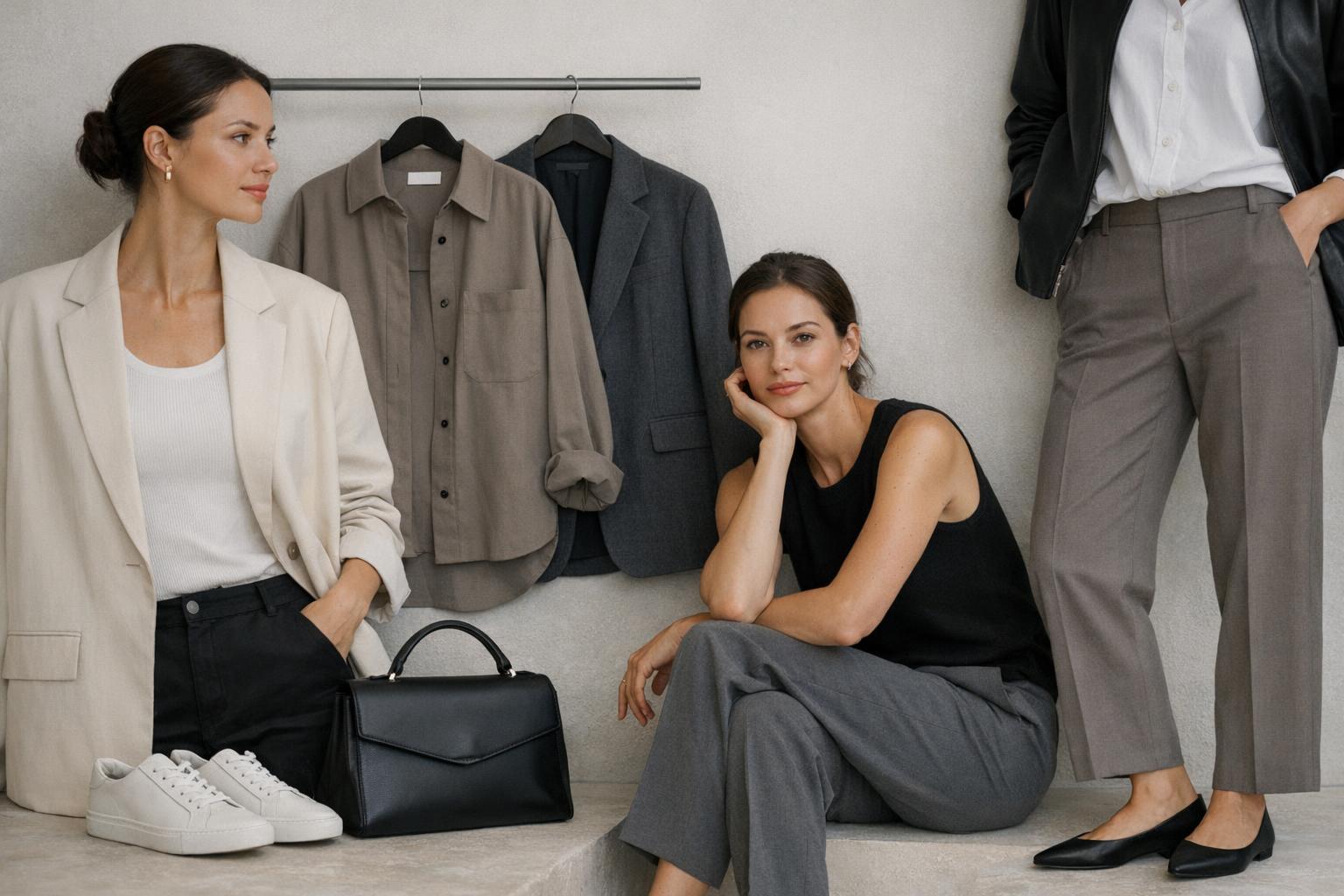
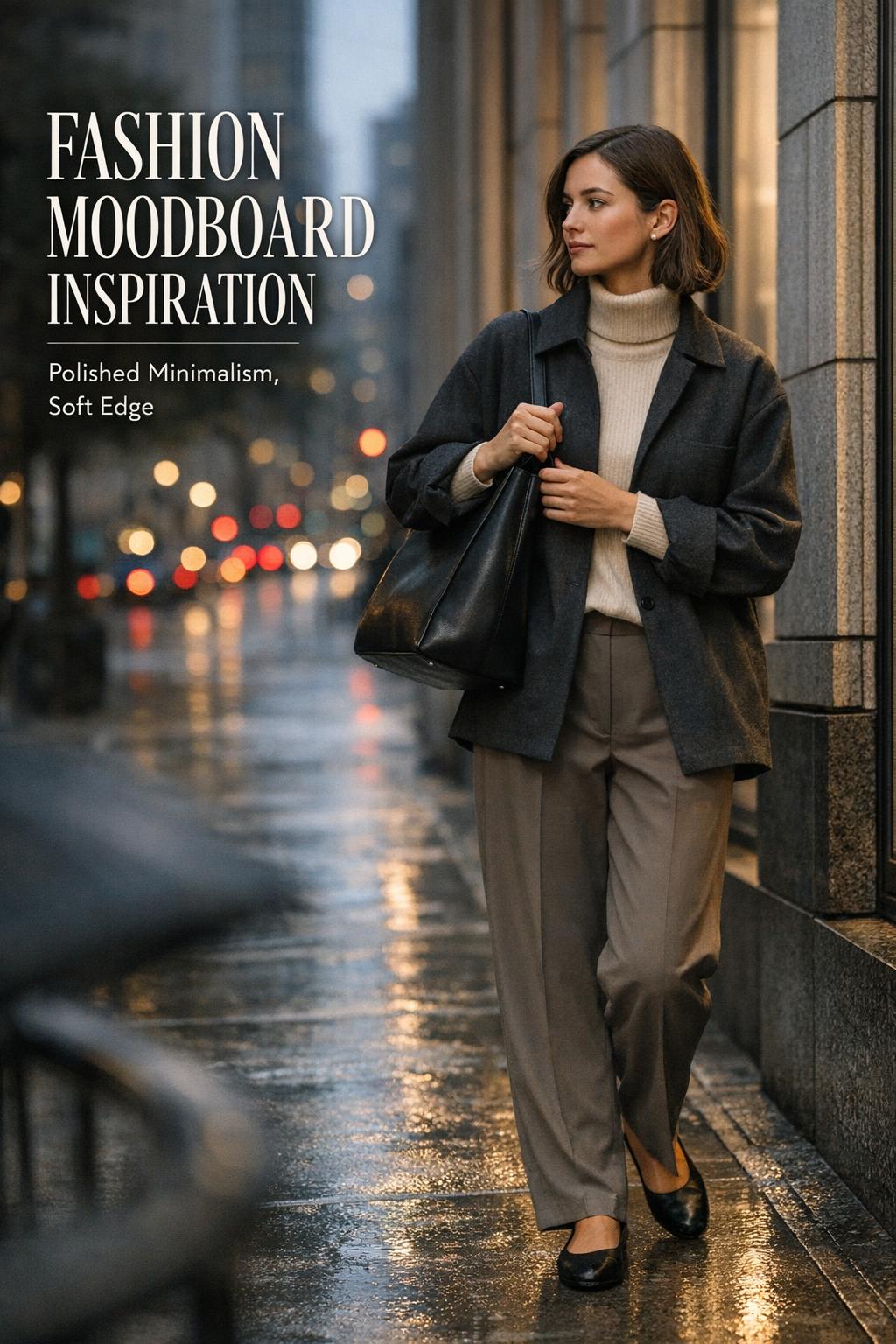
This look is the cleanest expression of the aesthetic: calm, elongated, and quietly structured. The silhouette reads effortless because it avoids sharp contrast—no extreme crop, no overly tight fit—just a controlled drape that moves well and stays polished on the go.
Build the outfit around tonal layering: a lightweight knit over a smooth base, paired with straight-leg trousers that fall without clinging. Keep the palette close—creams, soft grays, muted taupes—so texture becomes the primary detail. A single structured outer layer (like a tailored overshirt or refined jacket) acts as the visual boundary that keeps the softness from turning sloppy.
- Key garments: fine-knit top, straight-leg trousers, structured overshirt or light jacket
- Footwear: minimal sneakers or sleek flats for a clean line
- Accessories: one understated bag; simple metal hardware if needed
Why it fits the mood: the outfit composition relies on proportion discipline. Straight trousers anchor the look, while a soft knit adds approachability. This is the kind of combination that reads “intentional” in a styling board because it repeats the same visual message from head to toe: quiet, modern, controlled.
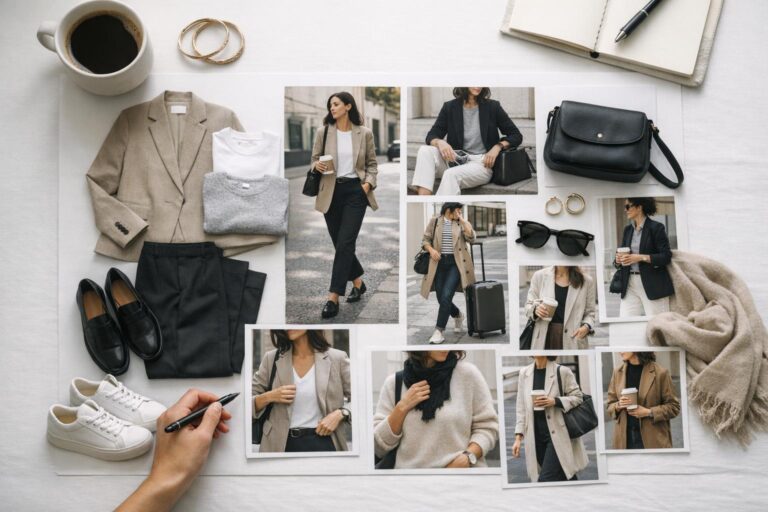
Look: Neutral street style with a crisp edge
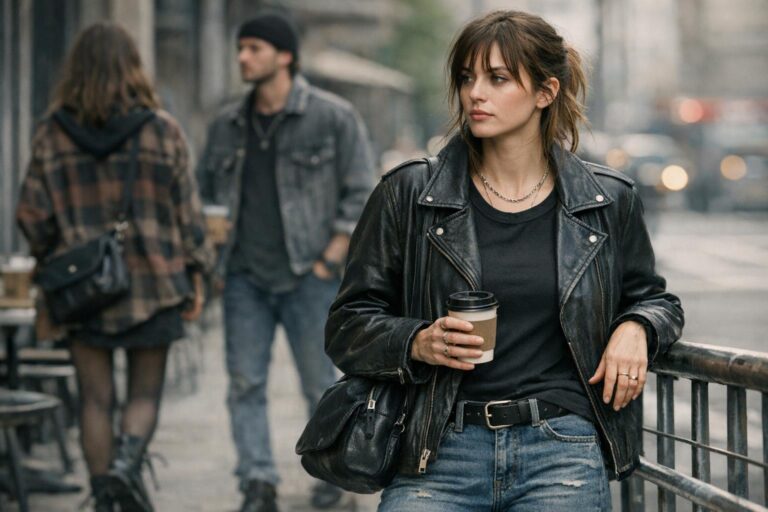
Street style within this aesthetic isn’t about loud logos—it’s about clarity. The vibe is urban and functional, with sharper lines and a slightly tougher stance. The silhouette becomes more architectural: straight shoulders, cleaner hems, and a more defined waistline or midsection.
Start with a crisp shirt or structured top as the “clean signal,” then layer with a minimal jacket that holds its shape. Pair with denim in a straight or relaxed cut—nothing overly distressed—so the look stays elevated. Keep the color story neutral, but introduce one deeper anchor (charcoal or black) to create a grounded base that reads confident rather than delicate.
Why it works: crispness plus restraint is the formula. A structured layer does the heavy lifting visually, so everything else can stay simple. This is especially effective when you’re building concept boards fashion that need to translate into repeatable, wearable outfits rather than one-time statements.
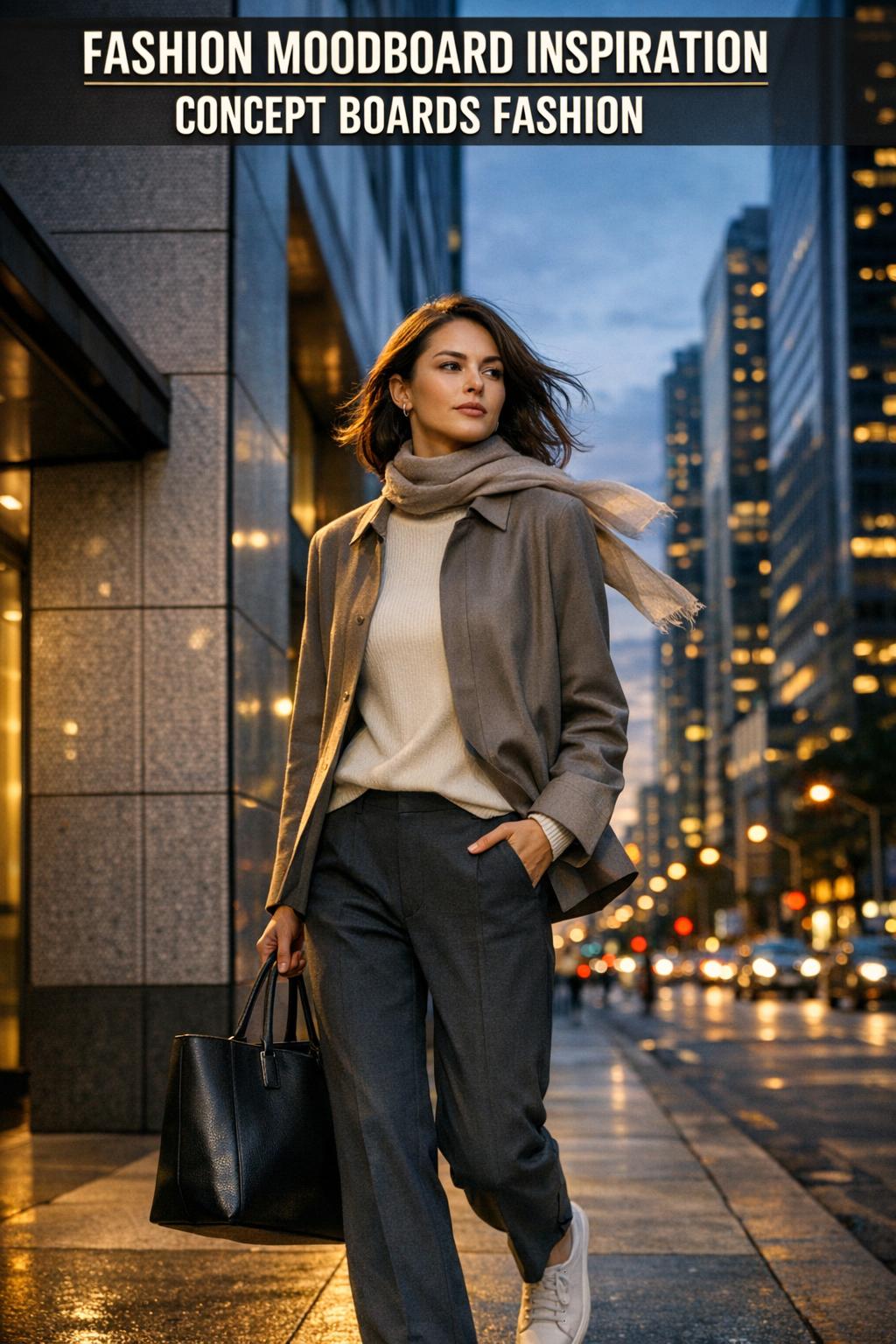
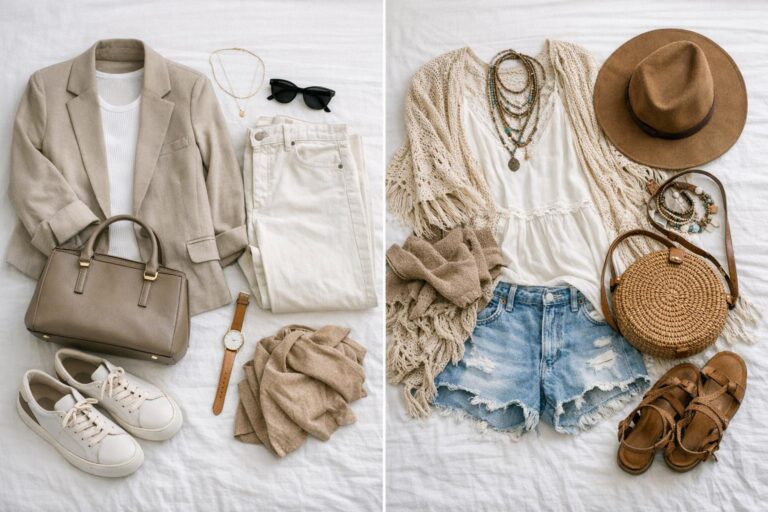
Look: Soft weekend aesthetic
This weekend variation keeps the same minimal identity but loosens the posture. The mood is airy, comfortable, and visually calm—an outfit that still looks “edited” even when it prioritizes ease. The silhouette is slightly relaxed, but never shapeless; there’s still a clear line through the body.
Choose comfortable separates in soft, breathable fabrics. A relaxed top with subtle drape pairs well with an easy bottom that holds form—think straight or gently wide. Keep the palette light to medium in value so the whole look feels fresh, then add one small accessory detail to prevent it from looking like loungewear.
- Key garments: relaxed top with clean neckline, easy straight or wide-leg bottoms
- Footwear: minimalist slip-ons or clean sneakers
- Accessories: one refined element (belt, watch, or structured bag)
Styling insight: a soft weekend look succeeds when you preserve “shape language.” If the top is relaxed, keep the bottom clean and structured; if the bottom is looser, define the upper body with a clearer neckline or a more tailored layer. This proportion play is the quiet engine of the aesthetic.
Style tip: turn fashion moodboard inspiration into a working styling board
The most common issue with moodboards is that they stay aspirational instead of actionable. A working styling board translates aesthetic into repeatable formulas. Instead of pinning only full outfits, pin the components that create the look: the trouser shape, the jacket proportion, the texture pairing, the color value range.
- Pin at least three variations of the same silhouette (for example: straight trouser outfits) to identify the repeating “core.”
- Limit your palette range on the board so the visual identity stays coherent.
- Capture texture contrast intentionally: one soft element plus one structured element in each pinned look.
- Add one “real life” reference per cluster: travel day, office day, weekend day—so the board supports decisions.
This approach is equally useful for concept boards fashion and a fashion styling portfolio because it shows clarity: you’re not collecting images—you’re defining an aesthetic system.
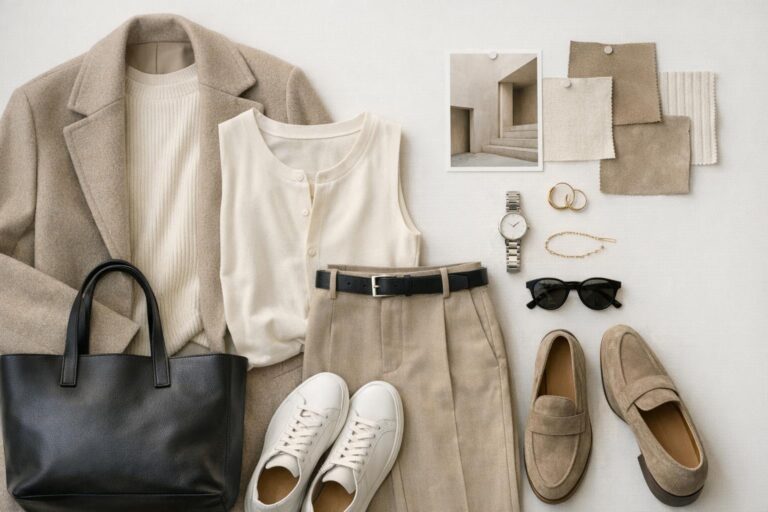
Look: Clean monochrome with texture contrast
Monochrome is a shortcut to cohesion, but it can fall flat if everything has the same surface finish. This look keeps one color family and builds depth through materials and weight. The mood reads refined, almost architectural, because the eye follows uninterrupted lines.
Choose a single tone—light, mid, or deep—and mix at least two textures. A matte base paired with a slightly smoother or shinier layer creates dimension without adding extra color. Keep the silhouette simple: straight through the leg, clean through the torso, and one deliberate layer to define the frame.
Why it fits the aesthetic: the look proves that minimalism isn’t “plain.” It’s controlled complexity. In a fashion collection moodboard, monochrome clusters signal maturity and consistency, while texture contrast prevents the board from becoming visually repetitive.
Look: Tailored ease for a polished setting
This is the office-appropriate translation of the same aesthetic—polished, composed, and movement-friendly. The silhouette is built around relaxed tailoring: structure where it counts, ease where it matters. The mood is professional without looking rigid.
Start with tailored trousers as the anchor. Add a refined top with clean lines, then introduce a structured layer that sharpens the outline—think a blazer-like effect without excessive stiffness. Keep colors restrained and cohesive so the tailoring reads modern rather than traditional.
- Key garments: tailored trousers, clean-line top, structured jacket layer
- Footwear: sleek flats or low-profile shoes that maintain the line of the leg
- Accessories: minimal jewelry; one structured work bag as the visual anchor
Styling insight: tailored ease works because it manages contrast. The structured layer provides authority, while the softer underlayer keeps the outfit from feeling severe. If you’re assembling a fashion styling portfolio, this is a strong “client-ready” look because it demonstrates controlled proportion and practical wearability.
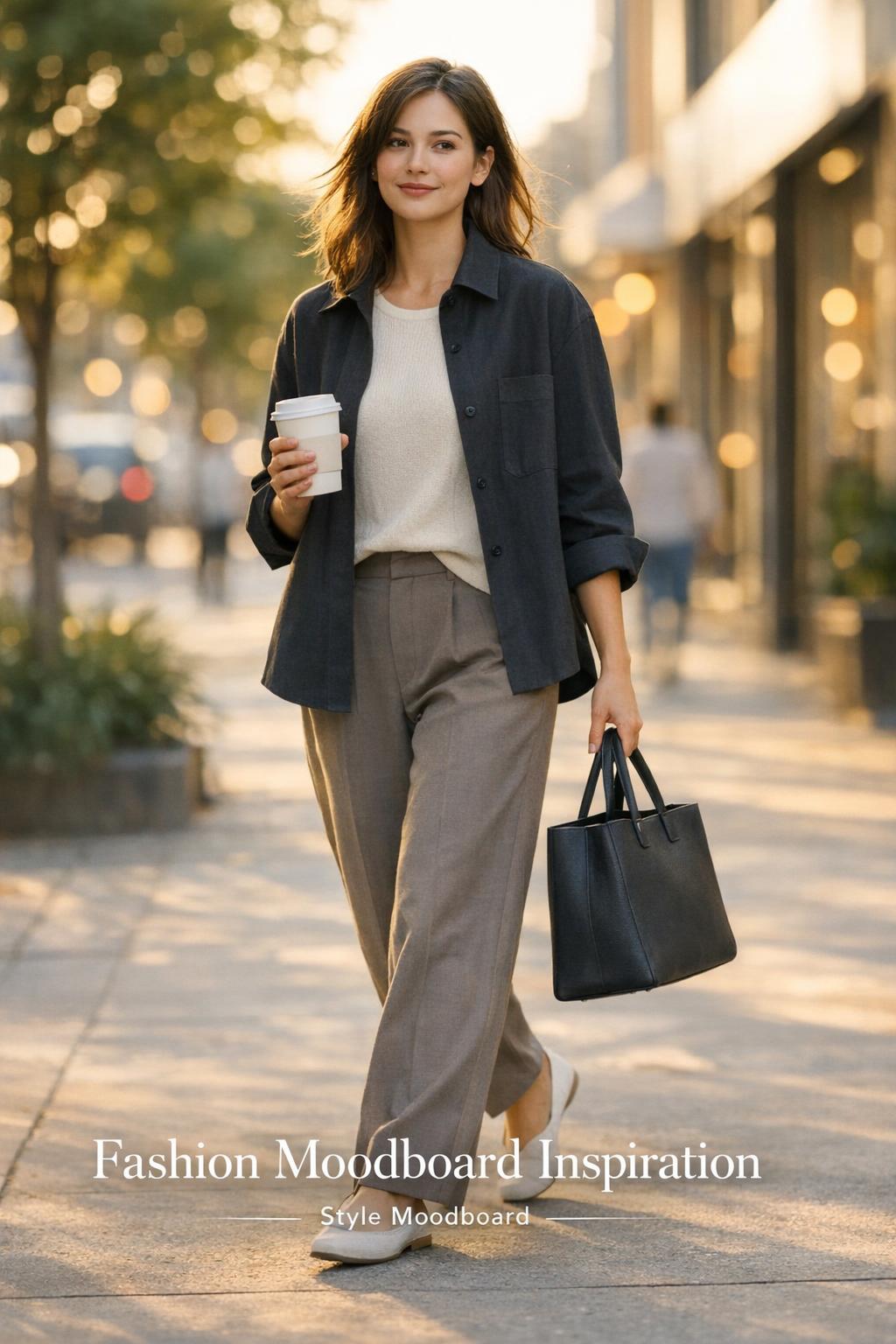
Look: Transitional layering for unpredictable weather
Transitional weather exposes weak styling fast: outfits either overheat, collapse into bulk, or lose their silhouette once layers come off. This look is designed as a modular system—each layer stands on its own, and together they create a clean vertical line.
Build from a smooth base, then add a mid-layer with softness (a knit or lightweight layer) and finish with an outer piece that defines shape. Keep colors close so removing a layer doesn’t change the story. This is where neutral palettes become practical: they reduce visual disruption as conditions shift.
Why it works: the aesthetic stays consistent because the outfit is engineered for subtraction. A strong styling board doesn’t only show the “final look”—it anticipates real life: indoor heating, outdoor wind, long commutes, and the need to move comfortably.
Common moodboard mistakes that break the aesthetic
Even with great fashion moodboard inspiration, the final outfits can drift if the board is built on vague vibes rather than concrete choices. Minimal aesthetics are especially sensitive: one inconsistent proportion or a random color can throw off the entire look because there’s nowhere for mistakes to hide.
- Pinning only “perfect” images: If your concept boards fashion include only editorial shots with no everyday context, the board won’t translate into wearable outfits.
- Ignoring silhouette consistency: Mixing ultra-cropped proportions with longline minimal layers can fragment the visual identity unless you define when each proportion applies.
- Overloading accessories: In this aesthetic, accessories should clarify the outfit, not compete with it.
- Chasing novelty over coherence: A style moodboard should make your choices simpler, not constantly introduce new directions.
Corrective insight: if your wardrobe outcomes feel inconsistent, tighten the board around three repeatable outfit formulas. Your styling board becomes a tool when it reduces decision fatigue and produces consistent results across different days.
Look: Minimal evening polish without trying too hard
Evening within this aesthetic isn’t about sparkle or maximal glamour—it’s about sleekness and control. The mood is elevated and intentional, with a cleaner line and slightly sharper contrast. The silhouette should feel fluid but designed, as if every piece belongs in the same visual sentence.
Choose one statement element through shape or finish rather than loud detail: a sharper jacket line, a smoother fabric, or a deeper tonal base. Keep the color palette restrained and let the styling precision do the work—clean hems, deliberate layering, and a single accessory that reads refined.
Why it fits the aesthetic: minimal evening looks succeed when they look effortless but aren’t casual. The difference is in the finish—clean structure, controlled volume, and a strong visual anchor that signals intention.
Key pieces that hold the entire aesthetic together
To keep your style moodboard consistent, treat certain items as “connectors”—pieces that can move between relaxed, street, work, and evening interpretations without changing the aesthetic identity. These are the quiet backbone of a fashion collection moodboard that actually reflects a wearable wardrobe.
- Straight-leg trousers in a neutral tone
- A structured outer layer that holds shape (light jacket, overshirt, or blazer-like piece)
- A fine-knit layer for softness and temperature control
- A crisp top with clean neckline or collar detail
- Minimal footwear with low visual noise
- One structured bag as a recurring visual anchor
If you’re building concept boards fashion for a project or curating a fashion styling portfolio, these pieces also function as continuity markers. They create a recognizable signature across multiple looks, which is exactly what makes an aesthetic feel like a defined point of view.
How to recreate the look: a practical mini-framework
Recreating this aesthetic isn’t about copying a single outfit—it’s about repeating a structure. Use a three-step system: pick an anchor, add a softener, then finish with a frame. The anchor is usually the trouser or denim silhouette; the softener is knit or breathable fabric; the frame is the structured outer layer that makes the outfit read “styled.”
- Anchor: straight or relaxed-leg bottom in a neutral value
- Softener: knit or smooth base that adds comfort and tactile depth
- Frame: structured top layer that defines shoulders and outline
Trade-off to consider: the cleaner the palette, the more visible fit becomes. If the outfit feels off, adjust proportion first—hem length, shoulder line, or how closely the trousers skim the leg—before adding new pieces. This is the kind of decision-making that turns fashion moodboard inspiration into a reliable styling board.
Conclusion
This aesthetic works because it’s built on repeatable logic: tonal cohesion, texture contrast, and proportion discipline. Use your style moodboard and concept boards fashion to define the code, then apply it across relaxed, street, tailored, transitional, and evening contexts. With a few connector pieces and a clear styling framework, the look adapts to your life while staying visually consistent—exactly what makes a fashion collection moodboard and a fashion styling portfolio feel intentional rather than incidental.
FAQ
What makes fashion moodboard inspiration actually useful for getting dressed?
It becomes useful when it moves from “vibes” to decisions: repeating silhouettes, a controlled palette, and consistent texture contrast. A board that shows what to repeat (like straight-leg proportions and structured layers) will guide daily outfits far better than a collage of unrelated images.
What’s the difference between a style moodboard and a styling board?
A style moodboard defines the visual identity—palette, mood, and silhouette direction—while a styling board translates that identity into repeatable outfit formulas and component choices. The styling board is more actionable because it focuses on how to build outfits, not only how they should feel.
How do concept boards fashion help prevent impulse purchases?
Concept boards fashion create a filter: if a potential purchase doesn’t match the board’s silhouette and palette rules, it’s less likely to integrate into your outfits. The clearer the board’s “code,” the easier it is to spot items that look exciting alone but disrupt wardrobe cohesion.
How many looks should I include in a fashion collection moodboard?
Include enough looks to show variation without losing identity: a small cluster for relaxed, street, tailored, transitional, and evening interpretations is typically more effective than an oversized board. If the board starts feeling inconsistent, reduce it to a few repeatable formulas and rebuild from there.
How can I keep a neutral aesthetic from looking boring?
Use texture and proportion as the main design tools: mix matte and smoother finishes, add one structured “frame” layer, and vary volume strategically (relaxed top with clean bottom, or clean top with relaxed bottom). In a neutral palette, fit and fabric behavior create most of the visual interest.
What should I include in a fashion styling portfolio if my aesthetic is minimal?
Show consistency and range: include relaxed minimal layers, a neutral street style interpretation, a tailored-ease look, a transitional layering system, and a minimal evening polish option. The portfolio reads stronger when each look shares a clear visual identity while solving different real-life styling contexts.
How do I adapt this aesthetic for different seasons without changing my style?
Keep the same silhouette code and palette range, then shift weight and texture: lighter layers for warm weather and thicker knits or more substantial outer layers for cold weather. The aesthetic stays consistent when the outfit composition remains the same, even as materials change for comfort.
Why do my outfits look less cohesive than my moodboard?
Most mismatches come from proportion drift or inconsistent anchors. If your board leans into straight, elongated lines but your outfits mix conflicting lengths and volumes, the aesthetic breaks. Correct it by matching the board’s core silhouette first, then refining with texture and minimal accessories.