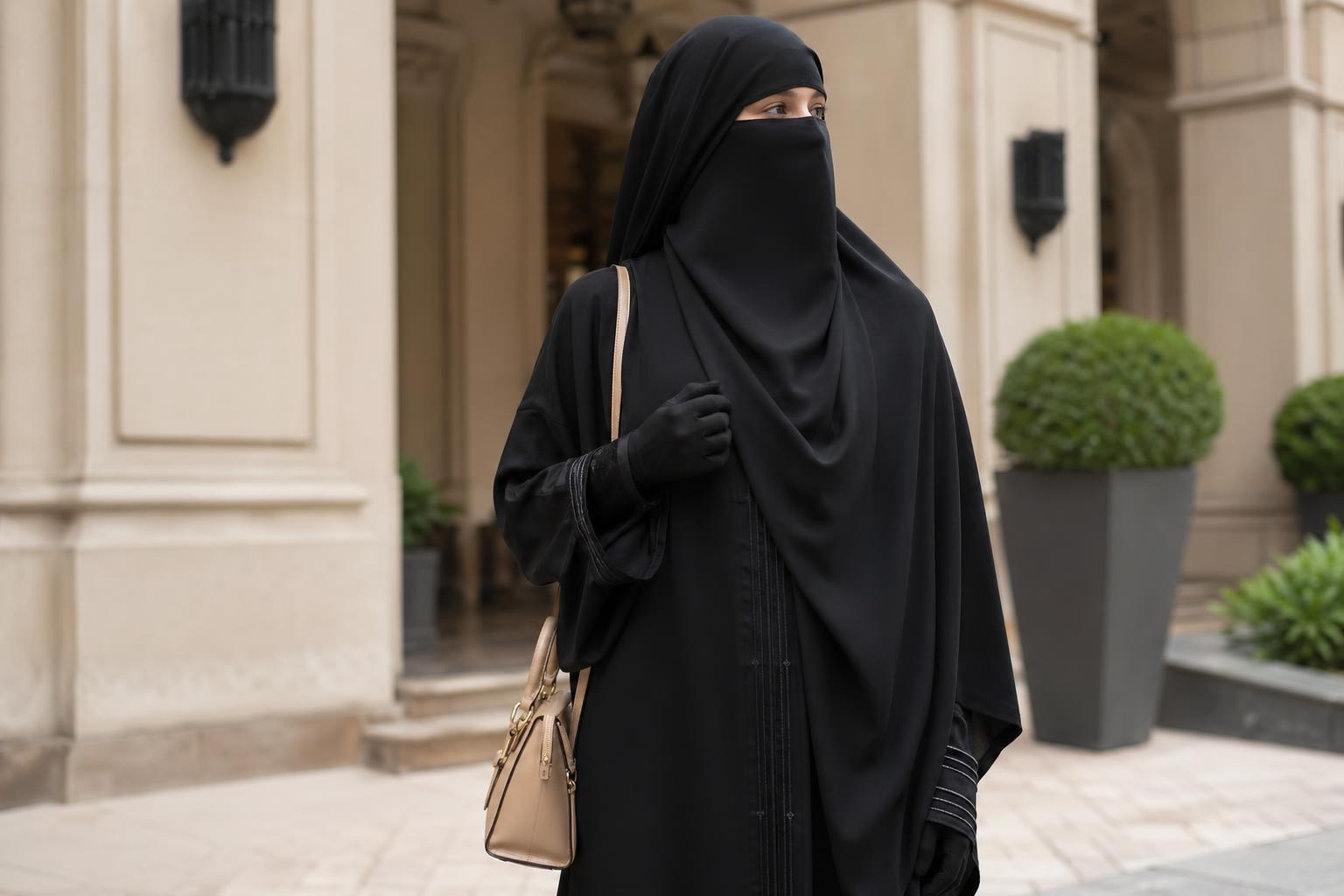
Modern Niqab Fashion Style for Work, Travel, and Events
Across modern modest wear, few topics generate as much visual nuance as niqab fashion style. The conversation often centers on a familiar comparison: modern versus traditional niqab styling. They are frequently discussed together because both share the same modest foundation, yet they differ in silhouette balance, fabric choice, layering logic, occasion suitability, and the way they interact with the broader modest fashion movement.
That overlap can make the distinctions feel less obvious at first glance. A look may appear traditional because of its color restraint, while the cut, fabric behavior, or styling pairings place it firmly in a contemporary category. In other cases, a modern outfit borrows from gulf-style niqab conventions or from established modest wear habits linked to abaya, khimar, and hijab fashion. Understanding that tension is what makes this comparison useful.
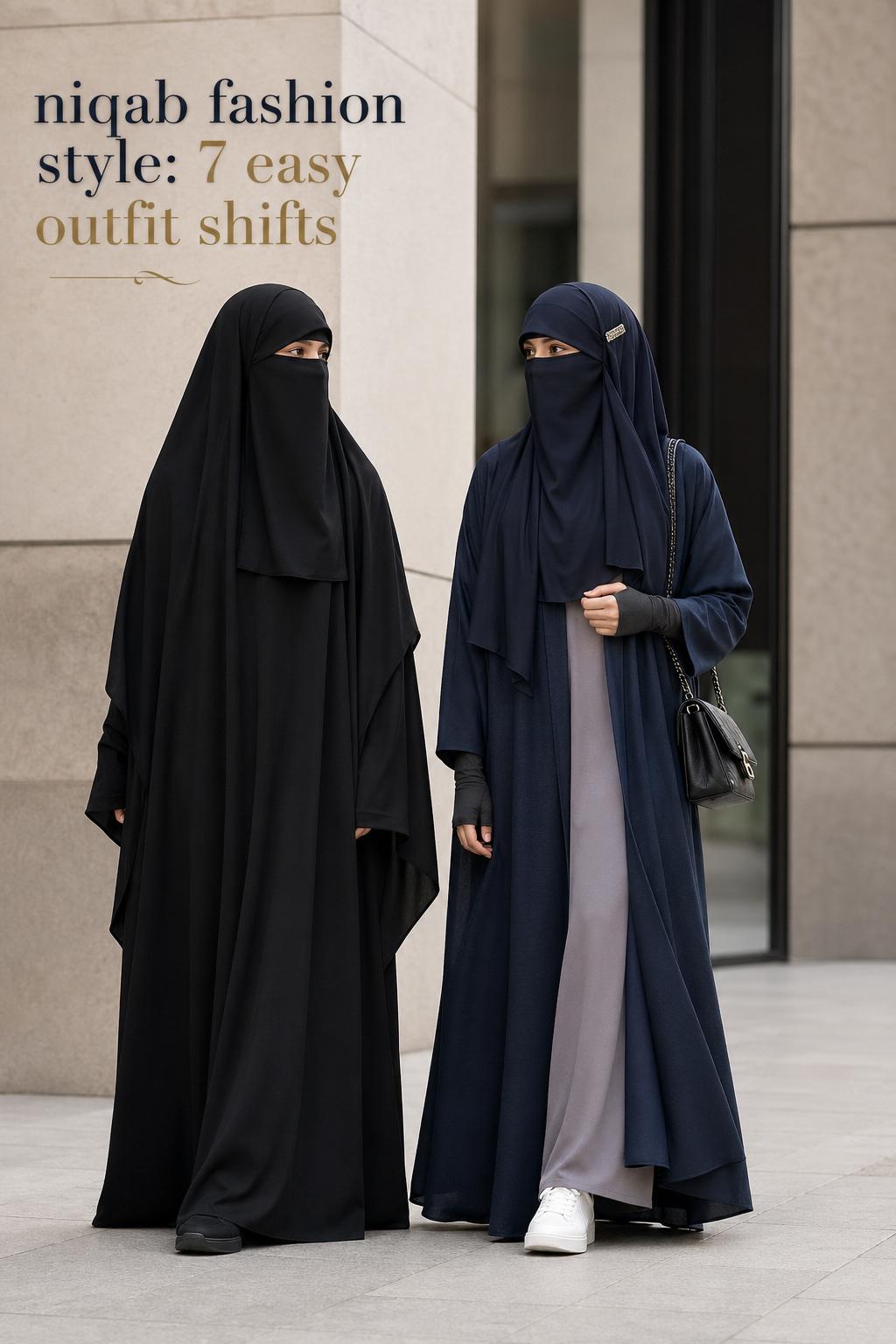
This article breaks down the defining features of each approach, compares how they work in daily wear and formal settings, and explains how fabrics, accessories, climate, and regional influences shape the final outfit composition. The goal is not to rank one style over the other, but to make the visual and practical logic of each easier to read.
The baseline: what niqab fashion means in a style context
Niqab fashion sits within the broader umbrella of modest fashion and modest wear. In practical terms, it refers to how the niqab is styled as part of a complete outfit system rather than treated as an isolated piece. That system includes garment layering, fabric selection, color harmony, related head coverings such as khimar, coordination with abaya styling, and adaptation to different occasions from daily errands to formal events.
Found the dress? Keep the rest in one place.
Zarellea brings guest details, vendors, timelines, and every next step together — so your wedding plan feels as good as your look.
The category also includes variants. The research around niqab style repeatedly points to interest in niqab variants, including terms such as half-niqab, gulf-style niqab, and ghushwah. Even when an outfit remains visually minimal, these differences matter because they affect drape, opacity, movement, and how the niqab integrates with the rest of the ensemble.
In current fashion coverage, niqab design is often framed through a dual lens: respect for traditional modesty and openness to contemporary styling. That is why many style discussions connect niqab fashion with modern trends, designer inspiration, lookbook presentation, and occasion-based outfit planning.
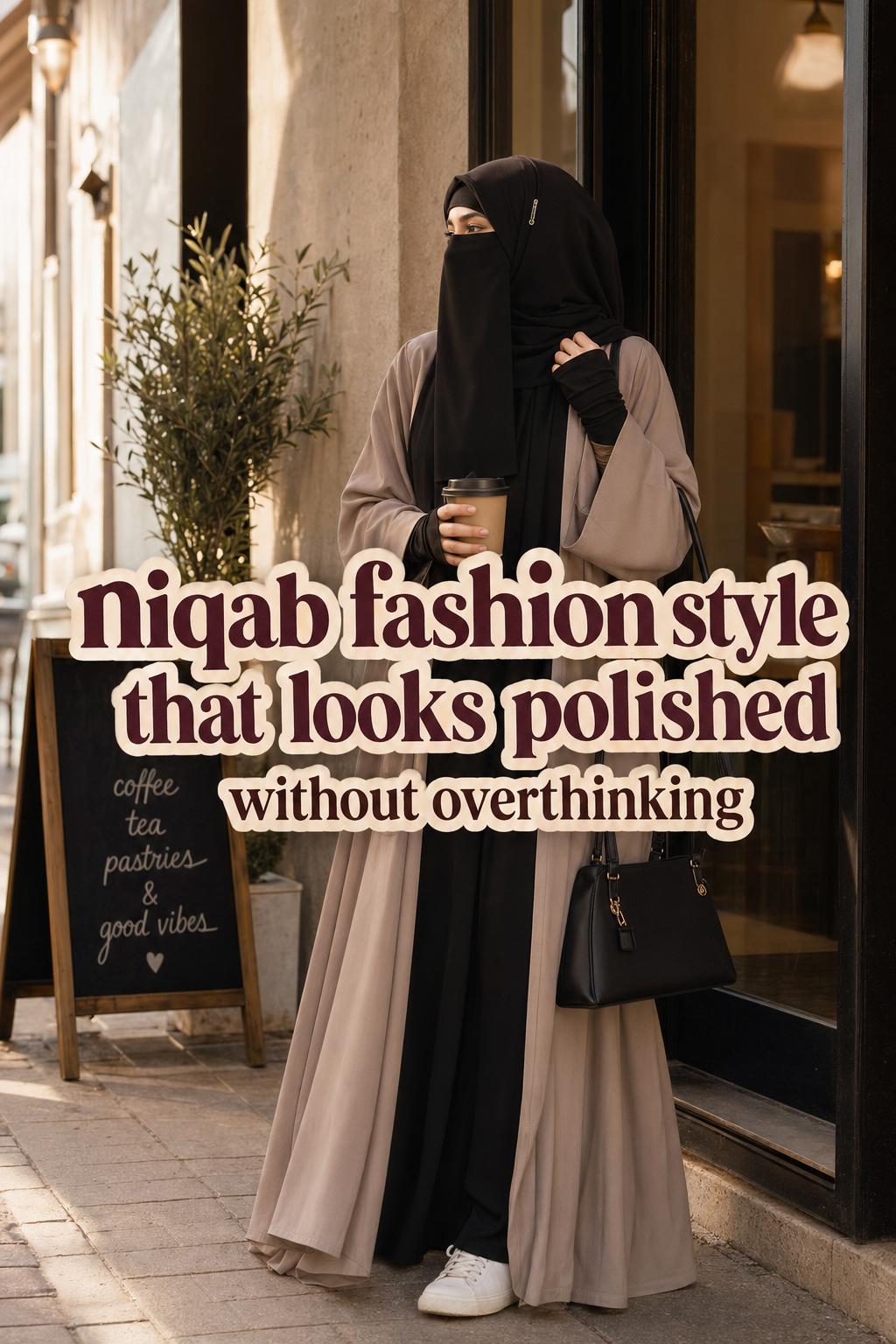
Style overview: traditional niqab
Traditional niqab styling is defined by restraint, continuity, and a strong connection to established modest dressing principles. The visual mood is composed rather than trend-driven. Silhouettes usually prioritize coverage, fluid lines, and a coherent relationship between the niqab and the garments around it.
In outfit composition, traditional niqab looks tend to rely on simple structures and modest elegance rather than visible fashion contrast. The emphasis is less on statement styling and more on consistency. This often makes the outfit feel calm, balanced, and anchored in purpose.
- Defining characteristics: understated presentation, continuity with modest wear traditions, practical coverage
- Typical silhouettes: fluid layers, longer lines, less emphasis on dramatic proportion shifts
- Color palette: often more restrained and tonal
- Fabrics and textures: materials chosen for comfort, opacity, and ease of wear
- Overall aesthetic mood: grounded, modest, composed
Traditional styling also tends to align closely with everyday practicality. It often works well for daily wear, religious settings, family gatherings, and environments where a quiet visual language is preferred over trend signaling. In many cases, the beauty of the outfit comes from proportion discipline and fabric control rather than decorative complexity.
Style overview: modern niqab
Modern niqab styling keeps the modest foundation intact but introduces stronger fashion direction. The distinguishing feature is not reduced modesty; it is more deliberate styling. Contemporary niqab outfits often use color strategy, layered textures, cleaner outfit architecture, and occasion-specific adaptation to create a sharper visual identity.
This approach is often associated with trend-aware dressing, runway-to-street translation, and inspiration from designers and influencers within the modest fashion space. That does not automatically mean boldness in the conventional sense. A modern niqab look can still be minimal, but the minimalism feels curated rather than purely functional.
- Defining characteristics: contemporary styling cues, refined outfit composition, visible attention to trend and occasion
- Typical silhouettes: balanced layering, intentional structure, modern proportion play
- Color palette: can remain neutral, but often uses coordinated tonal layering or selective contrast
- Fabrics and textures: breathable fabrics, lighter drape, and texture variation used with more styling intention
- Overall aesthetic mood: polished, current, visually edited
Modern niqab fashion appears most clearly in work-ready outfits, casual street-style interpretations, and event dressing where elegance and trend language are expected to coexist. It also adapts more visibly to regional fashion ecosystems, especially where modest fashion intersects with city dressing and digital lookbook culture.
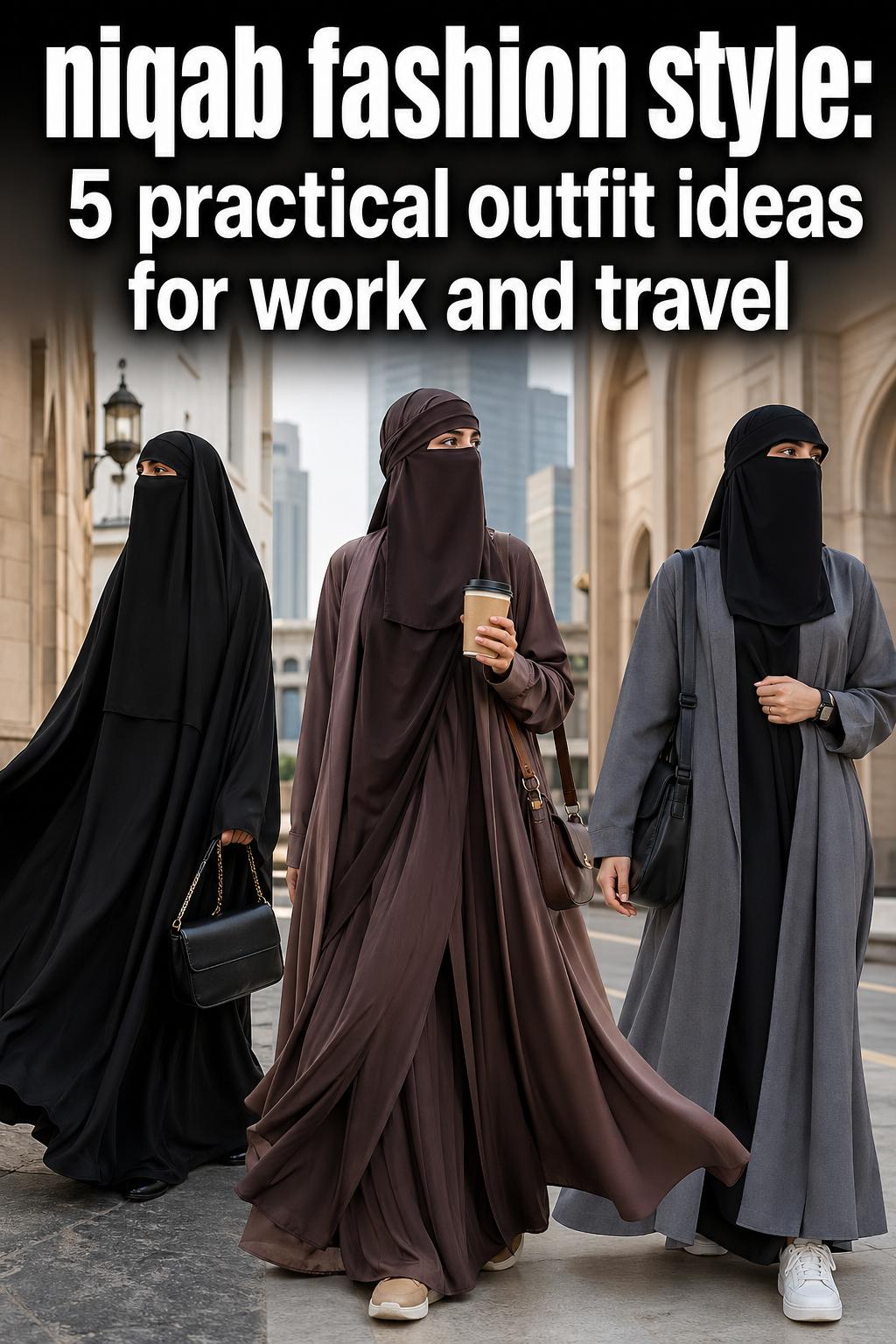
Where the distinction becomes clear
The easiest way to compare modern and traditional niqab is to look at styling philosophy rather than individual garments. Both can include similar foundational pieces. The difference lies in how those pieces are edited, layered, and visually prioritized.
Silhouette and structure
Traditional niqab styling usually favors a more continuous line from head covering to outer garment. The outfit reads as a single modest composition. Modern niqab styling is more likely to create controlled contrast within that composition, using subtle proportion shifts, clearer garment separation, or sharper layering logic. The result is not necessarily more complex, but more visibly styled.
Color palette and tonal strategy
Traditional looks often stay closer to restrained palettes and low-contrast coordination. Modern looks may still use neutrals, but they tend to employ tonal layering more consciously. The palette becomes part of the outfit’s architecture. That can make a simple niqab style appear more editorial, even when the garments themselves remain modest and uncomplicated.
Level of formality
Traditional styling usually transitions smoothly across daily life because it is rooted in consistency. Modern styling can be more situational. A work-ready outfit, a formal event look, and a casual street-style interpretation may all sit within the same wardrobe, but each is adjusted with more visible intention. This makes modern niqab fashion especially useful for occasion-based dressing.
Wardrobe logic
Traditional niqab dressing often builds around dependable modest staples. Modern niqab styling tends to think in outfit formulas: what works for work, what shifts for an evening event, what feels lighter in warm weather, and how accessories and layering pieces modify the visual balance. That difference in planning is one of the clearest markers between the two aesthetics.
Visual style breakdown in real-life outfits
On the street, in a workplace, or in event settings, the difference between traditional and modern niqab styling is usually visible in five areas: layering approach, garment proportions, accessories, footwear logic, and the balance between the niqab and the surrounding pieces.
Layering approach
Traditional niqab outfits often treat layering as a support system. Layers are there to maintain comfort, coverage, and continuity. Modern niqab outfits use layering as a visual tool. A khimar, outer layer, or arm-covering component may still serve a practical role, but it also contributes to texture contrast and proportion play.
Garment proportions
Traditional composition tends to read as uniform and fluid. Modern composition allows more visible editing. The eye may notice the relationship between the niqab, the outer garment, and the lower half of the outfit more distinctly. That creates a fashion-forward effect without abandoning modesty.
Accessories and supporting pieces
In traditional styling, accessories are usually minimal and secondary. In modern styling, accessories and layering pieces become more active visual anchors. The research around niqab accessories repeatedly points to undergarments, khimar, arm covers, niqab clips, and layering pieces as part of a broader modest fashion ecosystem. Their role is not purely decorative; they influence silhouette control and comfort.
Outfit balance
A traditional outfit often balances itself through visual continuity. A modern outfit balances itself through styling decisions. That may involve color theory, fabric interaction, or the deliberate contrast between a soft drape and a cleaner garment line. In both cases, the niqab remains central, but the surrounding style language changes.
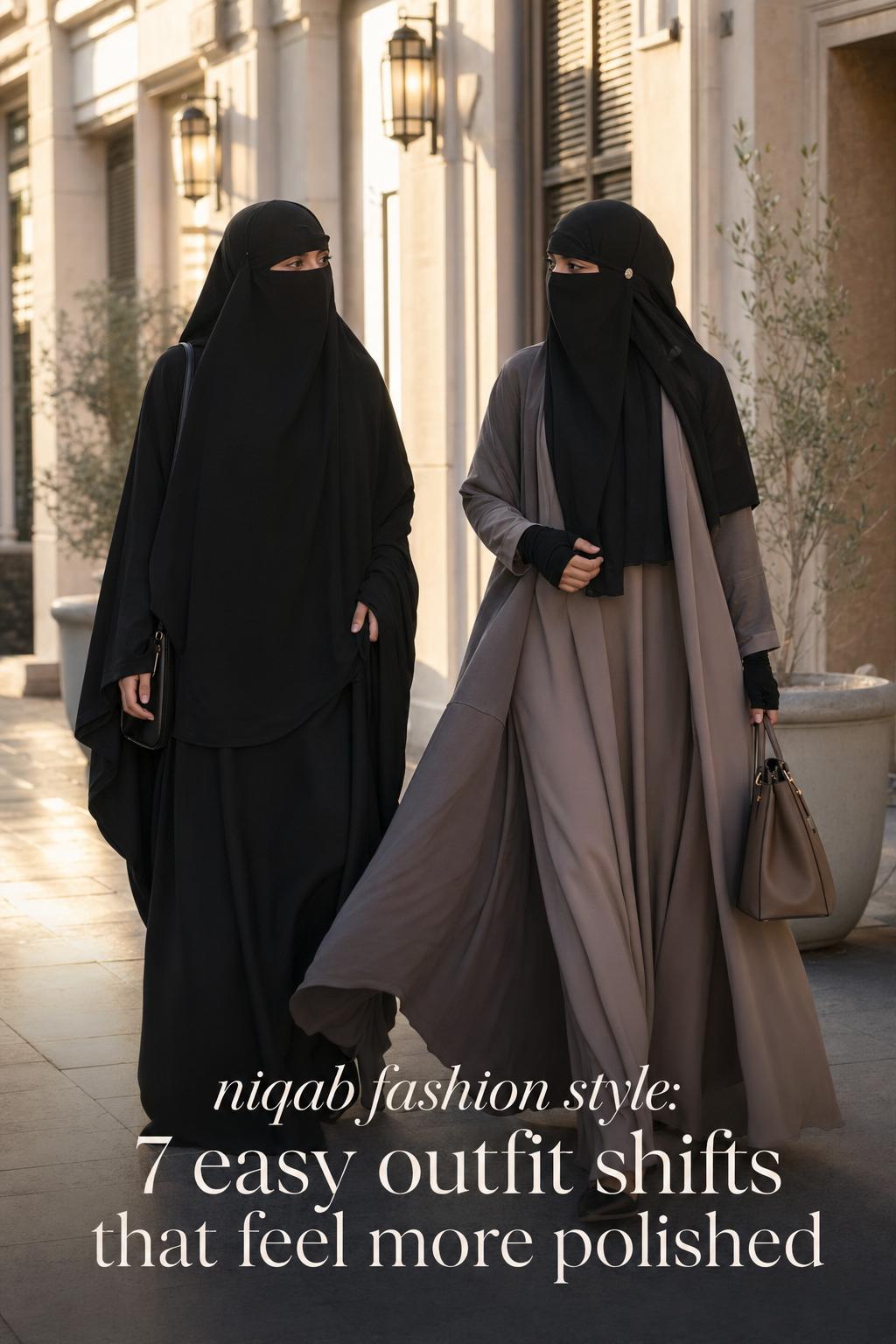
Fabrics are where style becomes practical
Any comparison of niqab fashion style is incomplete without fabric analysis. Fabric behavior determines drape, breathability, movement, and comfort across climates and occasions. It also shapes whether an outfit reads as more traditional or more contemporary.
Across niqab styling content, breathable fabrics repeatedly appear as an important factor. Chiffon, cotton, jersey, and other breathable materials are especially relevant when wear extends through long days, commutes, work settings, or warm weather. A fabric that looks elegant in a still image may not perform well in heat, humidity, or frequent movement. That trade-off matters more in real wardrobes than in lookbook images.
Traditional fabric priorities
Traditional niqab styling often prioritizes dependable performance: opacity, comfort, and low-maintenance wear. The visual result is usually smoother and less trend-specific. This works especially well for repeated daily use, where the garment needs to remain stable through varied routines.
Modern fabric priorities
Modern styling still needs comfort, but it often pays closer attention to drape quality, texture contrast, and how fabric interacts with the rest of the outfit. A breathable niqab with a lighter hand can make tonal layering feel more refined. That refinement is subtle, but it changes the final impression significantly.
Climate and comfort tips
Climate suitability is one of the most under-discussed but most important style decisions. In heat or humidity, lighter breathable fabrics reduce visual heaviness and physical discomfort. In cooler conditions, layering becomes the main strategy, and the challenge is avoiding bulk. A successful niqab outfit does not only look coherent; it remains wearable over hours of movement and changing temperatures.
- Choose fabrics based on the day’s climate, not just the desired look.
- For everyday wear, prioritize breathability before trend appeal.
- For event dressing, drape and opacity should work together rather than compete.
- Use layering pieces to control comfort, but avoid adding unnecessary volume.
Regional style signals: how location shapes the look
One of the clearest ways to understand niqab style is to look at regional fashion ecosystems. The niqab does not appear in a vacuum. It is shaped by local modest fashion habits, climate, public style norms, and how closely the outfit interacts with abaya styling, hijab fashion, and broader streetwear influences.
The most useful comparison here is not about strict rules. It is about visual tendencies. In Gulf-related contexts, terms such as gulf-style niqab carry a strong stylistic identity. In South Asia, Europe, and North America, the outfit may absorb different layering conventions or a more visible blend of traditional and contemporary modest wear. That blend is especially relevant for U.S. readers, where niqab fashion often has to move across work settings, travel, community events, and everyday errands within a single wardrobe.
Regional fashion hubs such as Dubai, Riyadh, Istanbul, Jakarta, and London represent useful style references because they signal different balances between tradition, trend language, and urban practicality. North America introduces another layer: adaptability. A niqab outfit in the U.S. often needs to respond to mixed climates, varied public environments, and a stronger emphasis on wardrobe versatility.
Why this matters in outfit planning
Regional context helps explain why two outfits built around similar niqab designs can feel entirely different. One may emphasize continuity with established modest dressing norms. Another may integrate a more edited city aesthetic through cleaner layering and occasion-specific styling. Neither is inherently more correct. They simply respond to different fashion environments.
Outfit comparison: everyday wear
Daily dressing is where the difference between traditional and modern niqab becomes most practical. The modern version often looks more intentionally styled, but the traditional version may be easier to repeat consistently across the week. That distinction matters for anyone building a wardrobe rather than a single look.
How traditional styling handles daily wear
The traditional approach usually favors simplicity, dependable fabrics, and low visual fluctuation. The outfit reads as coherent from the moment it is put on. There is little need for adjustment during the day, and the focus stays on ease, comfort, and modest structure. This is why simple niqab styles remain so relevant: they offer elegance without requiring visible fashion complexity.
How modern styling handles daily wear
The modern approach to everyday niqab outfits still values practicality, but it often introduces more outfit editing. Tonal coordination, cleaner line management, and subtle accessory integration make the look feel current. The styling logic is especially effective for professionals or anyone who wants a wardrobe that transitions smoothly from errands to meetings to casual social settings.
Tip: For daily wear, the strongest modern outfits are usually not the most layered. They are the most disciplined. A restrained color story and breathable fabric do more for polish than excessive styling components.
Outfit comparison: formal and event dressing
Occasion-based niqab styling is a recurring theme in fashion coverage because formal settings reveal how each approach handles elegance. The question is not simply what looks dressier. It is how each style communicates refinement.
Traditional event interpretation
Traditional event dressing tends to elevate the same principles seen in everyday wear: continuity, modest elegance, and measured presentation. The outfit becomes more polished through fabric quality, smoother drape, and careful coordination rather than through dramatic trend references. This creates a composed, timeless effect that works well for formal gatherings where quiet sophistication is preferable.
Modern event interpretation
Modern event styling is more likely to emphasize elegant and trendy designs, which is why it appears frequently in niqab fashion editorials and brand-led lookbooks. The mood is still modest, but the outfit composition becomes more visibly curated. Texture contrast, cleaner visual anchors, and a stronger color strategy help the look stand apart without losing modest coherence.
This is also the category where designer influence becomes most visible. Publications such as Amanis often frame this type of styling through elegance, trends, and occasion adaptation, while broader educational commentary focuses on personal expression and the symbolism of modern modest dress. Both perspectives point to the same conclusion: formal niqab style succeeds when elegance is built through control rather than excess.
Outfit comparison: casual street-style niqab
Casual dressing is where modern niqab styling typically separates itself most clearly from the traditional mode. Street-style interpretation introduces a stronger relationship between modest wear and broader fashion trends. The outfit may still be minimal, but it acknowledges contemporary city dressing more directly.
Traditional casual
Traditional casual dressing remains rooted in function and continuity. It avoids visual overstatement and tends to rely on familiar modest wardrobe pieces. The strength of this approach is consistency. It is easy to wear, easy to repeat, and often better suited to readers who want stability more than variation.
Modern casual
Modern casual niqab style often borrows from streetwear logic while staying within modest boundaries. The outfit may use sharper tonal layering, a more edited silhouette, or accessories that create a contemporary visual anchor. This is the area where runway-to-street framing becomes most relevant, especially in articles focused on combining modesty with modern trends.
Tip: In casual styling, the easiest way to keep the outfit balanced is to let one element lead. That can be the niqab’s drape, the outer layer’s line, or the palette. If too many elements compete, the look loses clarity.
Accessories, khimar, and layering pieces
Niqab style is rarely defined by the face covering alone. The surrounding elements determine whether the outfit reads as simple, traditional, trend-aware, or event-ready. Khimar, undergarments, arm covers, niqab clips, and additional layering pieces all influence the final result.
Traditional styling generally keeps these components visually quiet. They serve the composition without drawing attention. Modern styling makes them more active. A layering piece may be selected not only for practical use but also for the way it sharpens the silhouette or supports a tonal palette. This is a subtle but decisive difference.
- Khimar supports continuity and can soften the transition between niqab and outfit layers.
- Undergarments and arm covers help maintain coverage without disrupting the line of the outfit.
- Niqab clips and related accessories can improve ease of wear, especially in long-day dressing.
- Layering pieces are most effective when they reduce bulk rather than add it.
Readers comparing hijab fashion, abaya styling, and niqab outfits often notice that the same accessory ecosystem appears across all three categories. The distinction lies in emphasis. In niqab dressing, these additions must support visual balance while preserving comfort over time.
Brand and style references in the current niqab fashion conversation
Much of the visible online conversation around niqab style currently comes from modest fashion publishers and content-driven retailers. Amanis appears prominently in niqab fashion coverage through themes such as modern versus traditional styling, elegant and trendy designs, simple niqab styles, niqab dress styles for every occasion, and stylish niqab design that bridges modesty with contemporary trends.
These editorial angles matter because they reflect the main ways readers approach niqab style: as a practical wardrobe question, a design question, and an occasion question. The inclusion of educational commentary from a university-affiliated blog such as Grand Avenue Housing at Cal Poly adds another dimension, focusing on modern women, symbolism, and personal expression within modest fashion.
Brand anchors such as Amanis and references to modest fashion retailers like Sunnah Style help situate niqab fashion within a broader product and styling ecosystem. The same applies to lookbook culture, designer influence, and the role of influencers as style references. Even when public figures are not always named, their effect is visible in the increasing focus on wearable trend adaptation and visual styling guidance.
Common styling mistakes when comparing modern and traditional niqab looks
Most confusion between modern and traditional niqab styling comes from misreading details. A wardrobe can include both approaches successfully, but only when each outfit has internal consistency.
- Treating fabric as secondary. Fabric often determines whether a look appears polished, practical, or visually heavy.
- Over-layering in the name of styling. Excess volume can disrupt silhouette balance and reduce comfort.
- Using accessories without purpose. Accessories should support fit, movement, or visual clarity.
- Confusing trend awareness with trend overload. Modern niqab style works best when edited.
- Ignoring occasion context. A look suited to casual street-style dressing may not translate well to formal settings.
Tip: The strongest outfit decisions usually come from asking two questions first: what is the occasion, and what is the climate? Those answers narrow the fabric, layering, and structure choices immediately.
When each style works best
Choosing between traditional and modern niqab styling is rarely a matter of identity alone. In practice, it is also about use case. Different settings reward different kinds of outfit logic.
For everyday wear
Traditional styling often has the advantage in repetition, ease, and continuity. It suits routines that require dependable comfort and low visual maintenance. Modern styling works well too, but usually benefits from a more curated wardrobe with clear outfit formulas.
For work environments
Modern niqab outfits often perform strongly here because they can project visual polish through tonal coordination and balanced structure. At the same time, a traditional outfit can work equally well when the garments are well chosen and the silhouette remains neat and intentional. The deciding factor is usually how much visible styling the environment supports.
For travel and climate shifts
Breathable fabrics, packable layering pieces, and comfort-driven styling become more important than aesthetic labels. In these situations, the best wardrobe often borrows from both traditions: the reliability of traditional modest dressing and the adaptability of modern outfit planning.
For formal or polished occasions
Modern niqab style usually offers more obvious pathways to event dressing because it uses design language and occasion adaptation more actively. Traditional styling remains an excellent choice for refined settings where quiet elegance feels more appropriate than visible trend emphasis.
How to combine both approaches without losing clarity
The most wearable wardrobes do not treat modern and traditional niqab style as opposites. They use them as reference points. A wardrobe can keep the modest discipline and composure of traditional styling while adopting the cleaner palette strategy, occasion awareness, and fabric sensitivity of modern styling.
A useful method is to keep one axis traditional and one axis contemporary. For example, maintain a classic silhouette but refine the palette through tonal layering. Or keep the color story restrained while introducing a more modern drape or occasion-based accessory strategy. This produces outfits that feel current without becoming visually unstable.
That blended approach is especially effective in U.S. wardrobes, where a single niqab collection often needs to cover multiple settings. It also aligns with the broader direction of modest fashion, which increasingly connects practical modest wear with contemporary styling intelligence rather than treating them as separate worlds.
The core comparison in one view
Traditional niqab style is defined by continuity, modest restraint, and dependable wearability. Modern niqab style is defined by editing, occasion-based styling, and more visible fashion direction. Both rely on the same modest foundation. Both can be elegant. Both can be practical. The difference lies in how the outfit is composed, how fabrics are used, and how much styling intention is made visible.
Once that distinction is clear, niqab fashion style becomes much easier to read. A traditional look tends to feel unified and steady. A modern look tends to feel curated and visually deliberate. The most sophisticated wardrobes understand both languages and know when to use each one.
FAQ
What is niqab fashion?
Niqab fashion refers to the styling of the niqab within a complete modest outfit, including silhouette, layering, fabrics, color palette, accessories, and coordination with related modest wear such as abaya, khimar, and broader hijab fashion.
What is the difference between modern and traditional niqab style?
Traditional niqab style usually emphasizes continuity, restraint, and dependable modest dressing, while modern niqab style uses more visible styling direction through tonal layering, occasion-based outfit planning, texture contrast, and a more curated fashion approach.
Which fabrics work best for niqab comfort?
Breathable fabrics are especially important for comfort, particularly in warm weather or long wear. Materials mentioned in niqab styling discussions include chiffon, cotton, jersey, and other lightweight options that support airflow, drape, and practical movement.
How do I choose a niqab style for different occasions?
Start with the occasion and climate. Daily wear generally benefits from simple, breathable, easy-to-repeat styling, while formal events call for more refined fabric choice, polished coordination, and stronger outfit editing. Work and travel usually require a balance between comfort and visual structure.
Are simple niqab styles still fashionable?
Yes. Simple niqab styles remain relevant because they often deliver the strongest balance of modest elegance, comfort, and repeat wear. A restrained palette, good fabric, and clean silhouette can look more polished than an overcomplicated outfit.
How does regional fashion affect niqab styling?
Regional fashion influences how niqab outfits are layered, which fabrics are preferred, how trend-aware the styling appears, and how closely the look aligns with local modest fashion habits. Gulf-related styling, South Asian influences, European city dressing, and North American practicality can all shape the final outfit differently.
What accessories are most useful in niqab outfits?
Useful supporting pieces include khimar, undergarments, arm covers, niqab clips, and other layering components that improve comfort, silhouette control, and outfit balance. The best accessories serve a practical purpose while supporting the overall visual composition.
Can modern niqab style still feel modest and traditional?
Yes. Modern niqab style does not require abandoning traditional modest principles. It often works best when it keeps the same modest foundation but refines the outfit through better fabric choice, cleaner tonal coordination, and more thoughtful adaptation for different occasions.