Modern Abaya Style for Polished Everyday Dressing
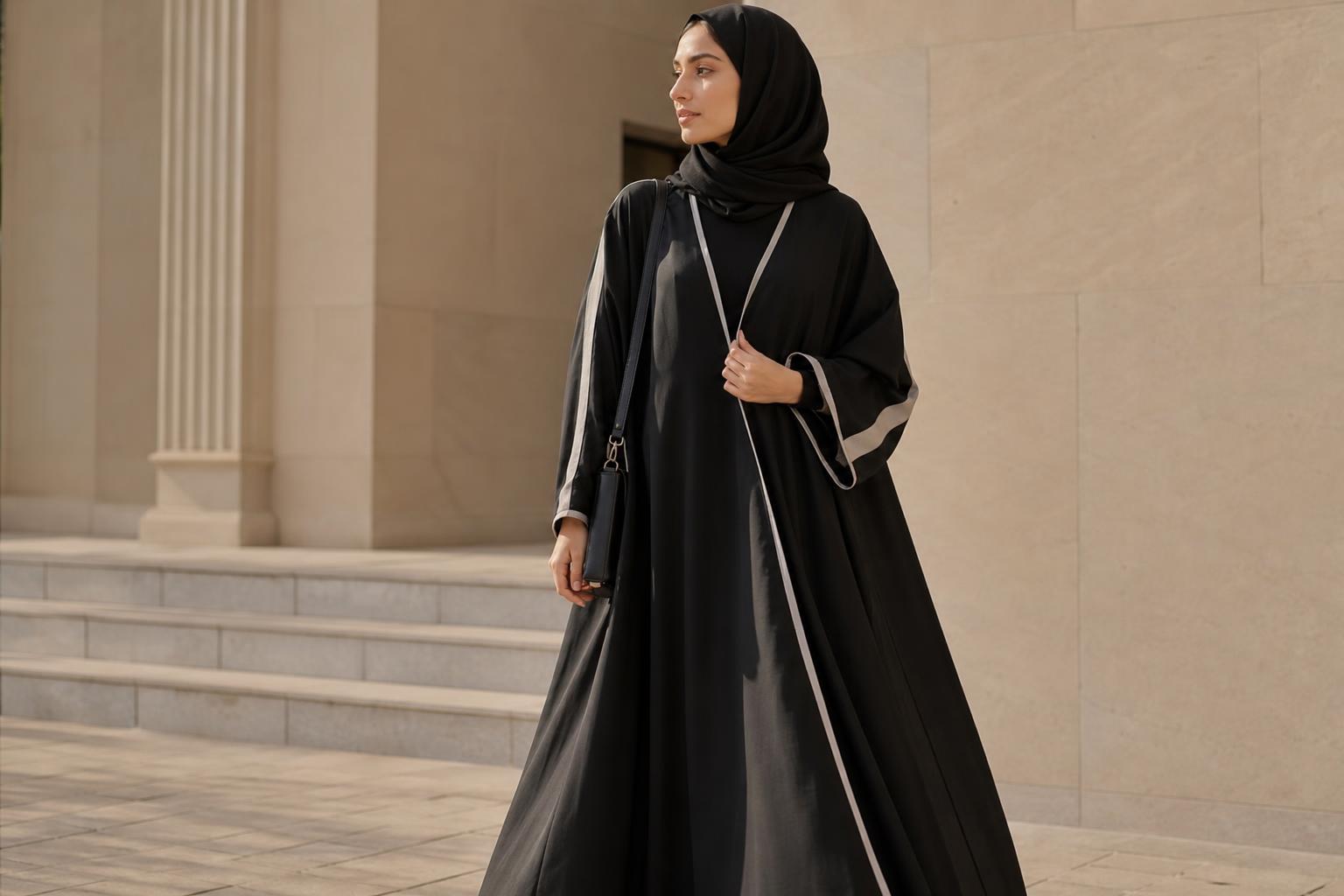
Morning light, a neutral palette, and a long, fluid silhouette: that is where abaya style feels most visually complete. The aesthetic is defined by movement rather than excess, with fabric, layering, and proportion doing the work that louder fashion often leaves to prints or embellishment. In contemporary modest fashion, the abaya reads as both composed and adaptable, equally grounded in heritage and modern dress logic.
The mood shifts easily depending on cut and styling. A classic closed abaya creates quiet polish; an open front abaya introduces structure through layering; kimono, kaftan, butterfly, embellished, layered, and two-tone variations push the look in different directions without losing the central sense of elegance. This range explains why abaya style remains compelling in everyday wear, work settings, casual social plans, and more formal moments.
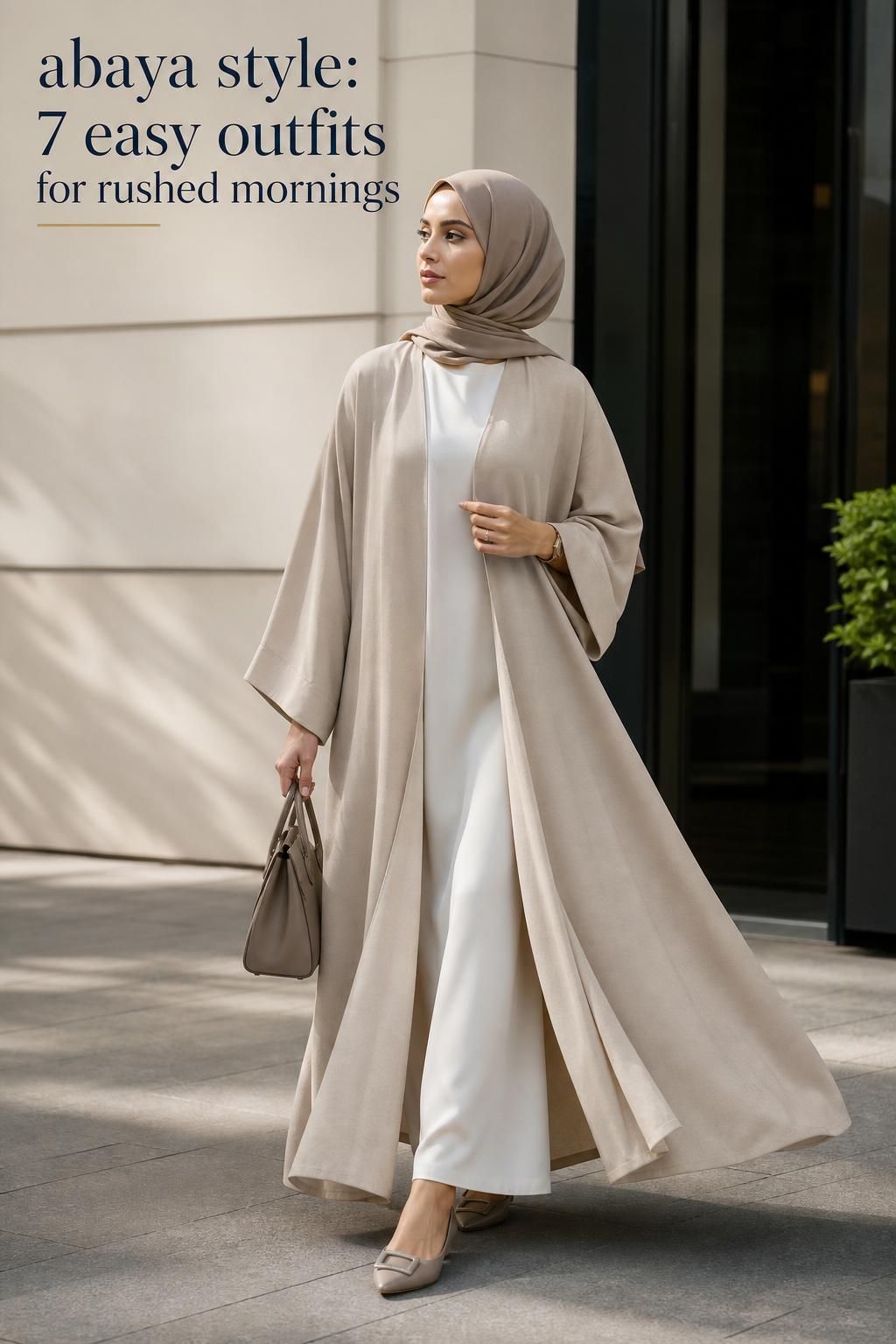
Its appeal also comes from clarity. The best abaya outfits are not crowded. They rely on tonal harmony, breathable fabrics, thoughtful hijab coordination, and accessories that support rather than compete. That balance is why the style continues to resonate from Gulf fashion contexts in Saudi Arabia and the UAE to broader modest fashion wardrobes in the U.S., where versatility, comfort, and visual identity matter equally.
What abaya style means in a modern wardrobe
At its core, abaya style is the styling language built around the abaya as a central garment. It sits within modest fashion, but it is not visually limited to one formula. The silhouette can be minimal, architectural, romantic, softly draped, or statement-led depending on cut, fabric, and styling context. That is why the term covers both tradition and reinterpretation.
Found the dress? Keep the rest in one place.
Zarellea brings guest details, vendors, timelines, and every next step together — so your wedding plan feels as good as your look.
In practical terms, abaya style usually revolves around a few recurring decisions: whether the shape is closed or open, whether the fabric is lightweight or more formal, how the hijab is coordinated, and how much layering the look requires. These choices affect movement, comfort, and how polished or relaxed the final outfit appears. A linen abaya worn with simple footwear communicates something entirely different from a satin or velvet version styled for evening.
This flexibility is also why fashion brands and editorial platforms approach the subject from slightly different angles. The Abaya Alley emphasizes everyday wear, lightweight fabrics, and minimal accessories. Outfit Trends leans into open abaya designs and visual inspiration. Amanis frames the abaya as a modern guide to timeless elegance, combining typology, myth correction, and shopping advice. Together, these approaches reflect how broad abaya fashion style has become.
The essential abaya style taxonomy
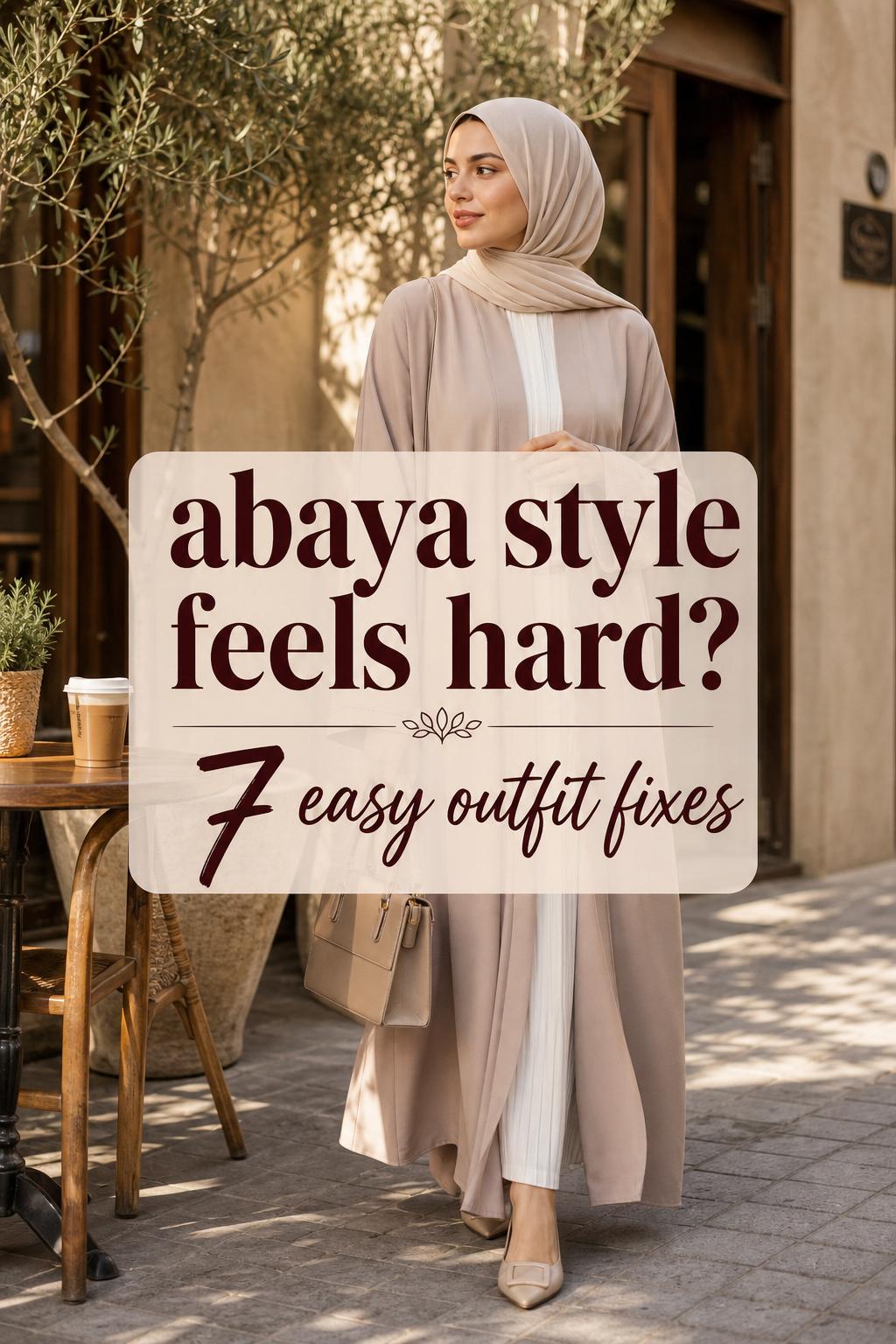
Understanding the main style archetypes makes shopping and styling more precise. Instead of treating every abaya as the same garment, it helps to read each type as a different outfit composition tool. Some styles create clean vertical lines, some are made for layering, and others rely on drape and volume as the visual anchor.
Classic closed abaya
The classic closed abaya is the most streamlined version. It creates an uninterrupted silhouette and often feels the most traditional in mood, though fabric and finishing can make it look very current. This style works especially well for readers who prefer simplicity, low-maintenance styling, and an outfit that feels complete with minimal additions.
Open front abaya
The open front abaya is one of the most versatile modern interpretations. Because it functions through layering, it offers more styling variation across casual, work, and occasion wear. It can be worn over tonal underlayers, paired with a belt, or used to add movement and dimension to an otherwise simple outfit. This is also the style most often linked with visual experimentation, from lace trim to metallic finishes and denim-inspired interpretations.
Kimono and kaftan abayas
Kimono and kaftan abayas introduce a softer, more fashion-led drape. They often feel fluid, slightly wider in line, and more expressive through sleeve shape or cut. These styles suit readers who want an abaya outfit to carry a stronger aesthetic statement without relying heavily on accessories.
Butterfly, embellished, layered, and two-tone abayas
Butterfly abayas lean into width and movement, creating a floating silhouette that works beautifully when fabric has enough drape. Embellished abayas shift the focus toward detail and are often better reserved for dressier settings. Layered abayas add depth through construction, while two-tone abayas use color contrast as the main design element. Each of these styles can be effective, but they require more deliberate styling so the overall composition remains balanced.
Look: relaxed minimal layers for everyday wear
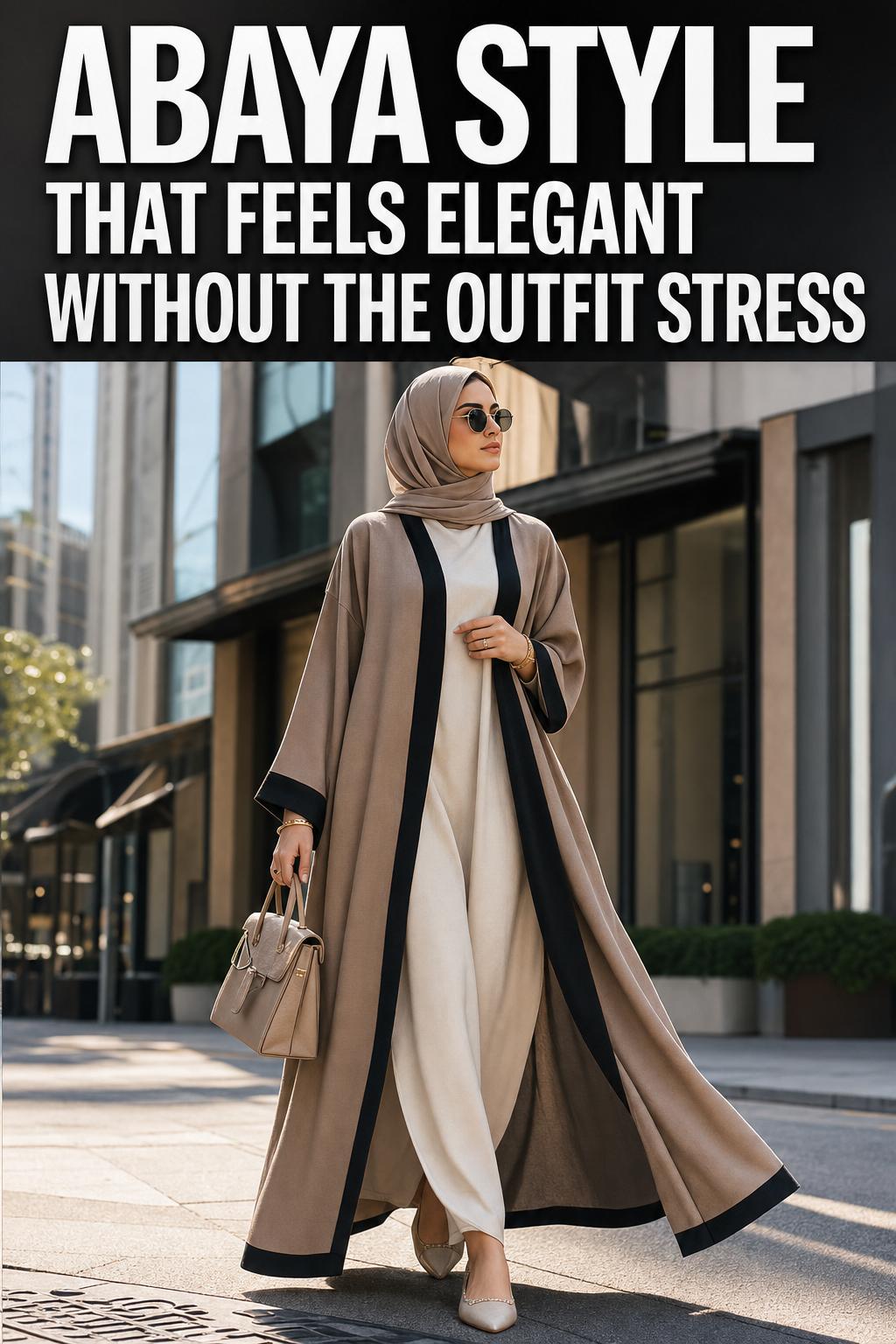
This is the everyday version of abaya style at its most refined: light, unforced, and visually calm. The silhouette depends on a breathable abaya with enough structure to hold its line but enough fluidity to move easily through a full day. The mood is polished without looking formal, which is why this look fits school, errands, casual meetings, and general daily wear.
A lightweight linen or similarly breathable fabric works best here, especially in an open front or simple closed abaya. A plain hijab in a closely related tone keeps the look cohesive, while flat footwear supports comfort and practicality. Accessories stay intentionally limited so the clean lines of the abaya remain the visual focus.
- key garments: lightweight abaya, tonal underlayer if needed, simple hijab
- footwear: understated flats or similarly minimal shoes
- accessories: minimal jewelry and one functional bag
This look works because the silhouette balance is controlled. Nothing interrupts the vertical line too sharply, and the fabric choice supports the intended use. It reflects the styling logic often associated with everyday modest fashion: comfort first, but never at the expense of polish.
Look: open abaya street polish
The open front abaya has a distinct visual advantage in modern wardrobes because it introduces layering without making the outfit feel heavy. The mood here is urban, considered, and slightly directional. Instead of relying on decoration, the outfit creates interest through depth, open movement, and proportion play between the abaya and what sits underneath it.
A belted open abaya or one with subtle trim can act as the statement piece, especially in black, dusty pink, or another muted tone. Underlayers should remain clean and cohesive rather than busy. A coordinated hijab, a structured bag, and restrained earrings create a finished look without shifting attention away from the garment’s shape.
This interpretation is especially effective for readers drawn to open abaya designs with styling tips that translate into real life. A belt can define the waist, but it should only be used if it improves silhouette balance. If the abaya already has movement and shape, leaving it open often creates a more elegant line.
Style tip: when to belt and when to leave it open
Belt an open abaya when the fabric is fluid and the outfit underneath is simple enough to support waist definition. Leave it open when the design has strong trim, texture, or a naturally graceful fall. The wrong belt can break the line too abruptly, while the right one adds visual structure.
Look: soft weekend abaya aesthetic
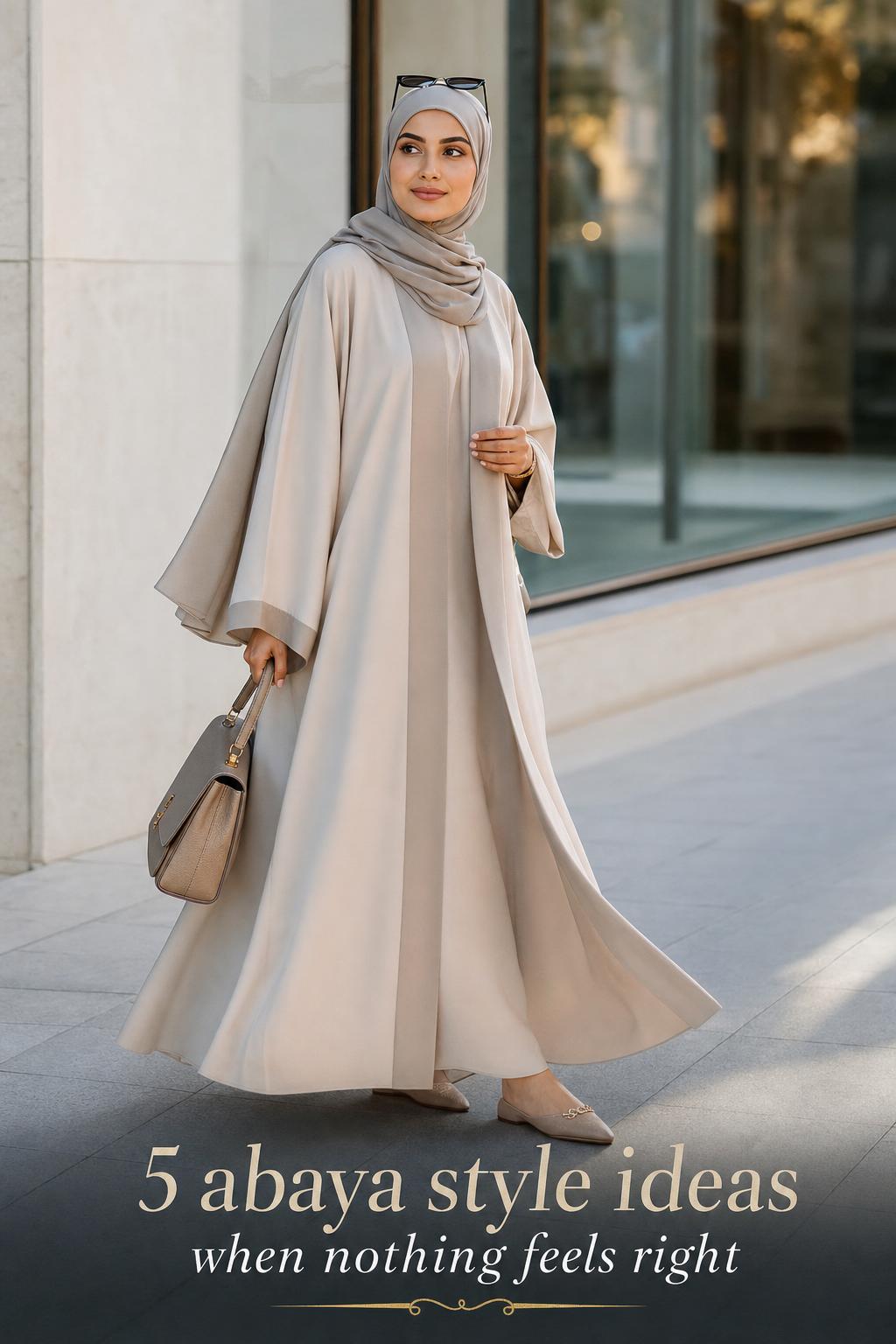
Some of the most appealing abaya outfits are the quietest ones. A soft weekend look is less about visual sharpness and more about ease, drape, and a calm color story. The overall mood should feel airy and gentle, with silhouette volume used carefully so the outfit remains elegant rather than oversized.
Kimono abayas, butterfly abayas, and relaxed kaftan abayas work especially well in this direction. Breathable fabrics remain important, particularly if the look is meant for daytime wear. A simple hijab, minimal jewelry, and a low-contrast palette keep the outfit cohesive. The result feels intentional but not rigid.
This look fits the aesthetic because the outfit composition prioritizes softness. Instead of contrast-heavy layering, it relies on drape and monochrome or near-monochrome harmony. That makes it visually restful while still retaining the elegance expected from abaya fashion style.
Fabric, drape, and why texture changes the entire look
Fabric is not a secondary detail in abaya style. It determines how the garment hangs, how formal it feels, and whether it works for daily wear or occasional dressing. Two abayas with the same cut can look entirely different once fabric weight and drape enter the equation.
Linen and other breathable materials align best with everyday use because they support comfort and ease of movement. Crepe offers a useful middle ground, giving more structure while still working across multiple settings. Satin and velvet move the outfit into a dressier direction, adding richness and stronger light reflection. The more surface presence a fabric has, the more disciplined the rest of the styling should be.
Drape matters just as much. A butterfly or layered abaya requires fluidity to avoid looking heavy, while a closed abaya can tolerate a slightly firmer fabric if a cleaner line is the goal. In practical wardrobe terms, this means that selecting the right material is not just about seasonality. It is about matching silhouette intent to real use.
- linen and lightweight fabrics: best for everyday wear and breathable comfort
- crepe: useful for polished versatility and shape retention
- satin: stronger visual presence, better for evening or formal styling
- velvet: richer texture with a more occasion-based mood
Look: work-ready tonal structure
For professional settings, abaya style works best when the silhouette is decisive and the palette is controlled. The visual target is clarity: enough structure to feel polished, enough softness to remain graceful. This is where classic closed abayas and neatly cut open front styles perform particularly well.
A crepe abaya in a dark neutral or understated tone creates a refined base. Pair it with a simple hijab in the same tonal family and avoid over-accessorizing. Footwear should feel clean rather than ornate, and a practical handbag works better than anything too decorative. The outfit should communicate confidence through restraint.
This look succeeds because it understands proportion and context. In workwear, the abaya should frame the wearer rather than dominate the room. Tonal layering, smooth fabrics, and minimal finishing create a result that feels modern and aligned with Western professional environments while staying rooted in modest dressing principles.
How to recreate the look
- choose a closed or open front abaya with a clean cut
- keep the hijab simple and close in tone to the abaya
- use one structured bag as the main accessory
- avoid multiple statement elements at once
Look: evening elegance with an embellished focus
Evening abaya styling should feel intentional rather than overloaded. The most sophisticated formal looks usually center on one visual anchor: embellishment, sheen, texture, or dramatic drape. Once that focal point is established, everything else should support it. This keeps the outfit elegant instead of fragmented.
An embellished abaya, a satin style, or a more dramatic layered design works well here. Richer fabrics naturally increase formality, so accessories can become quieter. A coordinated hijab in a smooth finish, refined jewelry, and a polished handbag complete the composition without competing with the garment itself.
This interpretation fits the aesthetic because it respects visual hierarchy. Formal abaya styling is not about adding every decorative element available. It is about letting one refined design decision carry the look, whether that is the embellishment, the fabric, or the silhouette.
Hijab coordination and accessories that actually elevate the outfit
Hijab coordination appears repeatedly in modern abaya guidance because it affects the entire outfit composition. The hijab frames the face and sits directly beside the abaya, so any mismatch in color, texture, or mood becomes obvious quickly. The easiest route is usually tonal or closely related color pairing, especially for everyday wear.
Accessories should be treated as supporting elements. Belts can sharpen an open abaya; handbags add structure; jewelry can introduce light or detail. But minimalism tends to produce the strongest result, especially when the abaya already has a distinctive cut, trim, or fabric texture. This is one of the clearest differences between a cohesive abaya outfit and one that feels overworked.
From a practical standpoint, the right accessories also need to match the context. A functional bag suits daily wear. More decorative earrings may work better for evening. Flat footwear often supports everyday styling, while more polished shoe choices can reinforce formal looks. The key is to build around the abaya rather than decorating against it.
Key pieces for this aesthetic
- simple hijabs that blend easily with multiple abayas
- belts for open abaya styling when more definition is needed
- structured handbags to anchor softer silhouettes
- minimal jewelry that complements embellished or plain designs
Look: design-led open abaya with texture play
This look takes inspiration from the more experimental side of open abaya styling. It is still modest and balanced, but it uses texture and design details more deliberately. Lace trim, metallic finishes, or denim-inspired surfaces introduce personality, making the abaya the clear focal point of the outfit.
Because the outer layer is visually expressive, the underlayer should remain quiet and streamlined. A plain hijab and limited accessories protect the look from becoming too fragmented. If the abaya includes a belt or strong trim, that feature should act as the primary visual anchor rather than competing with additional statement pieces.
This style works best for readers who enjoy inspiration-led dressing but still want discipline in the final result. Texture contrast can make an abaya look modern and directional, yet it only works well when the rest of the outfit is edited carefully.
Regional influence and the modern identity of abaya fashion
Abaya style carries strong cultural identity, particularly through its connection to the Middle East and Gulf fashion. References to Saudi Arabia and the UAE appear frequently in modern abaya discussions because these regions remain central to how the garment is understood, designed, and reinterpreted. That cultural foundation matters even when the styling becomes more global.
What has changed is not the significance of the abaya, but the range of its expressions. The garment now moves comfortably between classic and contemporary wardrobes, which is why fashion editorials increasingly position it as both heritage and modern style language. Amanis presents this through a timeless-elegance lens, while The Abaya Alley connects it to practical everyday dressing. Outfit Trends highlights its design versatility, especially through open abaya concepts.
Designer and expert perspectives reinforce this evolution. Layla Al-Sharif is cited in abaya fashion commentary as a supporting voice for stylistic variety, while Maha Al-Farsi appears in the conversation around design insight and modern elegance. These references matter because abaya style is not only about garments; it is also about how fashion expertise frames cultural continuity and contemporary expression together.
Common styling mistakes that weaken the abaya look
The most common issue is visual overload. An embellished abaya, statement jewelry, a contrasting hijab, a bold bag, and dramatic footwear can all work individually, but together they often disrupt the silhouette. Abaya style is strongest when there is a clear focal point and supporting elements remain intentional.
Another frequent mistake is fabric mismatch. Lightweight everyday styling loses coherence when paired with overly formal accessories, while richer fabrics like satin or velvet can feel under-finished if everything else is too casual. The outfit needs internal consistency. Fabric mood should align with occasion, accessories, and underlayers.
Finally, many outfits suffer from poor layering decisions. Open front abayas require underlayers that support the line rather than bunch or distract. Belts should improve proportion, not interrupt it. And hijab coordination should look connected to the abaya’s color story. Small styling errors are more visible in abaya outfits because the garment itself is such a dominant visual element.
Tips for avoiding imbalance
- choose one statement feature per outfit
- match the fabric mood to the occasion
- keep underlayers smooth beneath open abayas
- use tonal hijab pairings when in doubt
Shopping smart: quality signals that matter
Buying an abaya well starts with reading beyond appearance. The cut may attract attention first, but quality is often revealed through stitching, fabric behavior, and how the garment holds its silhouette in motion. A visually appealing abaya that twists, clings awkwardly, or lacks finish will not deliver the same elegance once worn.
Fabric choice should reflect actual lifestyle. For everyday wear, breathable and lightweight materials offer stronger long-term value because they support frequent use and layering. For occasion dressing, richer textures can be worthwhile, but only if the drape remains flattering. Open front styles also need enough structure to fall cleanly when worn over underlayers.
Brand context can help frame expectations. The Abaya Alley positions itself around wearable modest fashion and practical styling. Amanis presents a more editorial take on timeless elegance. Outfit Trends functions more as inspiration and design reference. Understanding those distinctions makes it easier to shop with clarity rather than expecting every source to serve the same purpose.
What to inspect before buying
- stitching quality and visible finishing
- fabric weight relative to intended use
- how the cut supports layering or stand-alone wear
- whether embellishment, trim, or belts feel integrated rather than added on
Look: two-tone modern refinement
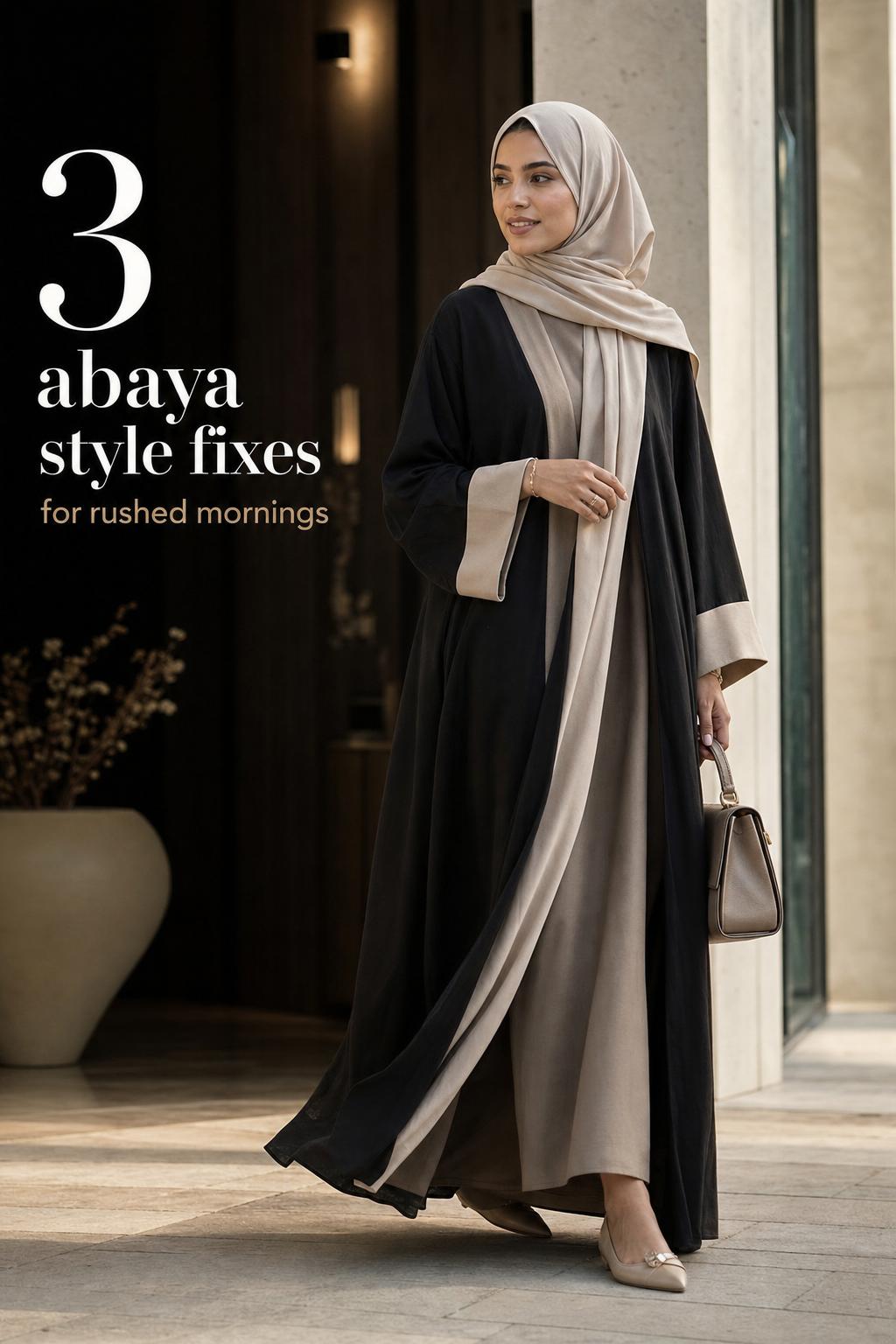
Two-tone abayas create visual interest through color architecture rather than texture or embellishment. The mood is graphic but still restrained, making this one of the most modern-feeling interpretations of abaya style. It suits readers who want a sharper fashion identity without moving into overtly decorative territory.
The most effective version uses a controlled palette and lets the color contrast define the silhouette. A simple hijab should connect to one of the tones already present, not introduce a third dominant story. Accessories need to stay refined so the color blocking remains the main design language.
This look works because the visual anchor is built into the garment itself. When color does the work, the rest of the styling can become quieter. That creates a modern, editorial finish that still feels wearable.
Occasion logic: casual, work, and formal abaya styling
One reason abaya style remains so relevant is that it adapts across different settings without losing coherence. The key is understanding how occasion changes the styling formula. Casual abaya outfits favor comfort, breathability, and minimal accessories. Workwear versions require cleaner lines and more restrained palettes. Formal looks depend on richer fabrics, embellishment, or stronger drape.
This is where wardrobe planning becomes useful. A person who needs an abaya for daily movement and long hours will get more value from lightweight and open or simple closed styles. Someone dressing for special occasions may prioritize embellished or satin-focused pieces. Neither is better in general; the right choice depends on use case, climate, and how much styling flexibility is needed.
For U.S.-based readers, this adaptability is particularly important. Abaya styling often needs to move between modest fashion priorities and broader Western dress contexts such as office environments, social plans, and practical shopping habits. That is why thoughtful fabric selection, sizing clarity, and easy layering matter so much.
Practical use cases
A lightweight linen abaya with a plain hijab is ideal for errands, school, or daytime wear. A crepe open front abaya with tonal underlayers transitions well into work settings. An embellished, satin, or more dramatic layered abaya is better reserved for evening or special occasions, where its visual richness has the space to read properly.
Look: layered elegance with controlled volume
A layered abaya can look exceptionally refined when the volume is disciplined. The mood here is elegant and dimensional, with the silhouette building interest through structure instead of shine. This is a strong choice for readers who want an outfit that feels elevated without relying on embellishment.
Fabric choice is critical. Too much weight can make the layers feel bulky, while too little structure can flatten the design. A supportive fabric with graceful drape allows the different elements to remain visible. A simple hijab and streamlined accessories keep the layered construction as the visual center.
This look fits the aesthetic because it uses proportion deliberately. Volume is not scattered across every element; it is contained within the abaya itself. That gives the outfit presence while preserving elegance.
Expert-led perspective on why modern abaya style endures
Modern abaya style endures because it resolves several wardrobe demands at once: modesty, elegance, comfort, and identity. That dual role appears repeatedly in editorial and brand-led fashion guidance. The abaya is not treated only as a traditional garment or only as a trend piece. It is presented as a stable style category with room for interpretation.
Insights associated with voices such as Layla Al-Sharif and Maha Al-Farsi help frame this point. The emphasis is not simply on having more styles available, but on understanding how stylistic variety still fits within a coherent modest fashion language. That is why classic closed, open front, kimono, kaftan, butterfly, embellished, layered, and two-tone abayas can all belong to the same broader aesthetic conversation.
For the wearer, this matters because it turns abaya shopping into a process of selection rather than imitation. The decision becomes less about following one idealized look and more about identifying which silhouette, fabric, and level of detail align with real life.
Building an abaya wardrobe with visual consistency
A strong abaya wardrobe usually begins with a few reliable categories rather than many scattered purchases. One everyday style, one work-ready option, and one occasion piece create a more functional foundation than several highly specific designs that do not translate across contexts. This kind of editing also helps maintain a recognizable personal aesthetic.
Consistency comes from repeating a few decisions that suit you well: perhaps open front silhouettes, tonal hijab pairings, minimal accessories, and breathable fabrics for daytime. Once those preferences are clear, adding variation through kaftan, kimono, butterfly, embellished, or two-tone styles becomes much easier. The wardrobe grows with intention rather than random trend adoption.
The result is a style system rather than isolated outfits. That is the real sophistication of abaya fashion style. It offers many design routes, but the strongest wardrobes still read as unified because silhouette, palette, and proportion are handled with discipline.
FAQ
What is abaya style?
Abaya style refers to the overall fashion approach built around the abaya, including silhouette, fabric, layering, hijab coordination, and accessories. It can range from classic closed abayas to modern open front, kimono, kaftan, butterfly, embellished, layered, and two-tone styles.
How do I style an abaya for everyday wear?
For everyday wear, choose lightweight and breathable fabrics such as linen or similar easy draping materials, keep the hijab simple, and limit accessories. A clean silhouette, comfortable footwear, and minimal layering usually create the most practical and polished result.
What is the difference between a closed abaya and an open front abaya?
A closed abaya creates a more continuous, streamlined silhouette and often needs fewer styling additions. An open front abaya is designed for layering, making it more flexible for styling with underlayers, belts, and different accessories.
Which fabrics are best for abaya styling?
The best fabric depends on how the abaya will be worn. Lightweight and breathable fabrics work best for daily use, crepe offers versatile polish, and satin or velvet create a more formal effect. Fabric choice should match both the silhouette and the occasion.
How should I match my hijab with an abaya?
The most reliable approach is tonal coordination or pairing a hijab in a closely related shade. This keeps the outfit visually cohesive and allows the abaya’s cut, drape, or embellishment to remain the focus.
Are open abayas good for workwear?
Yes, open abayas can work very well for professional settings when the cut is clean, the fabric is refined, and the underlayers are smooth and understated. A tonal palette and minimal accessories make the look feel more polished and office-appropriate.
What accessories work best with abaya outfits?
Simple accessories tend to work best, including a coordinated hijab, a structured handbag, restrained jewelry, and occasionally a belt for open abaya styling. The goal is to support the garment rather than compete with it.
How can I tell if an abaya is good quality?
Look at stitching, fabric behavior, silhouette integrity, and how well details like trim, embellishment, or belts are integrated into the design. A good abaya should hang cleanly, feel comfortable in motion, and suit its intended use.
Which abaya styles are best for formal occasions?
Formal occasions usually suit embellished, satin, velvet, or more dramatic layered abayas because these styles carry stronger visual presence. The most elegant results come from letting the abaya be the focal point and keeping the rest of the styling refined.
Why is abaya style so popular in modern modest fashion?
Abaya style remains popular because it combines modesty, versatility, and strong visual identity. It can adapt to everyday wear, work, and occasion dressing while still maintaining a sense of elegance rooted in both cultural tradition and modern fashion.