Starboy Style vs Monochrome Minimalism: A Modern Menswear Edit
Starboy style vs monochrome minimalism: why they’re grouped, and where the lines actually are
There’s a specific menswear tension that keeps showing up in modern wardrobes: the desire for cinematic impact without drifting into costume. That’s where starboy style enters the conversation. It’s an aesthetic anchored to The Weeknd (Abel Tesfaye) and his Starboy persona—an era defined by visual reinvention, noir-leaning mood, and sharply recognizable wardrobe signals like the red suit, monochromatic palettes, leather, and controlled accessory choices.
At the same time, many of the pieces associated with starboy style—dark sunglasses, tonal black outfits, boots like Chelsea boots or combat boots—also live inside a broader, everyday category: monochrome minimalism. That overlap is the reason the two are often confused or discussed together, especially by anyone collecting mens outfit inspiration and trying to translate an iconic look into real life without losing practicality.
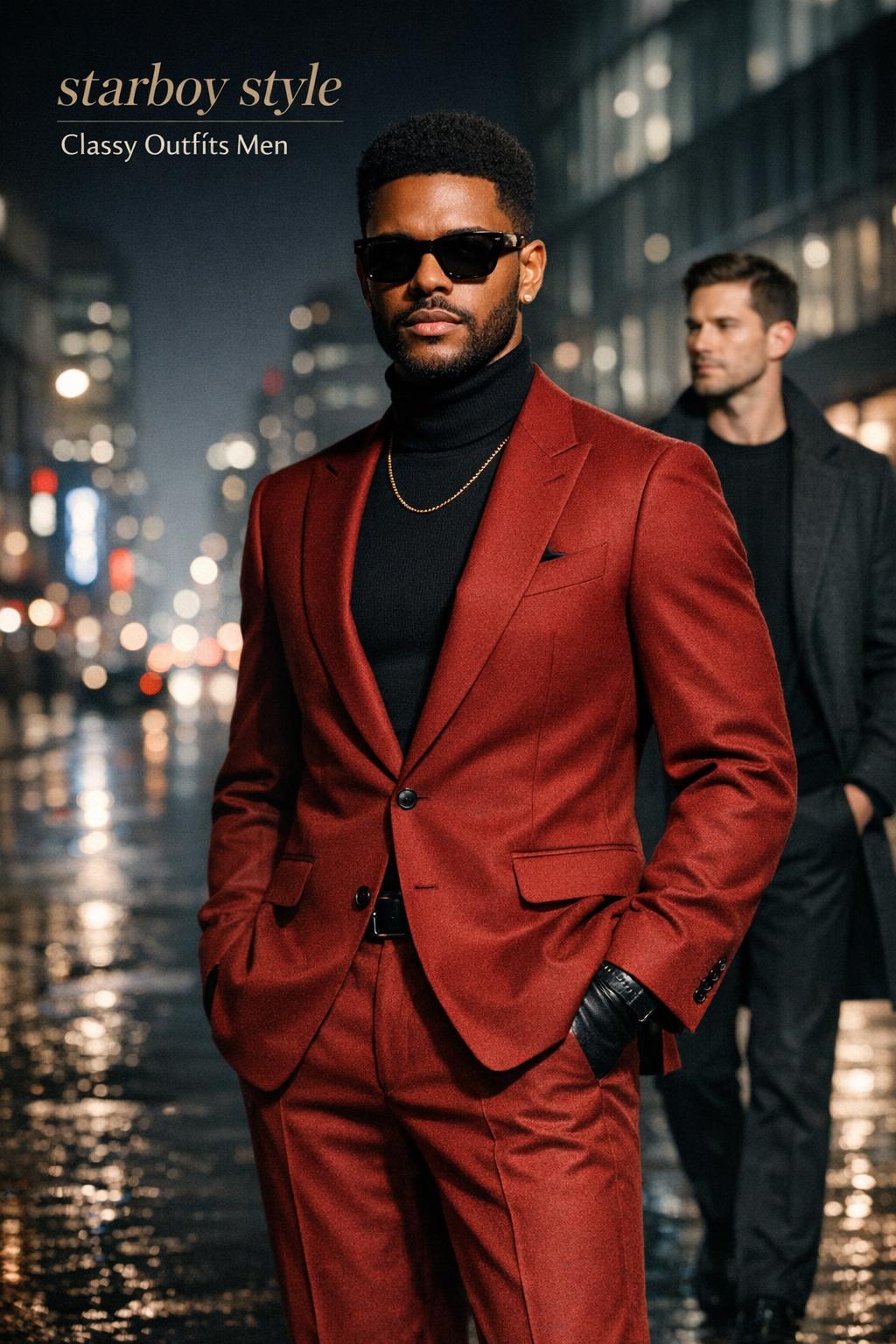
This breakdown compares starboy style and monochrome minimalism as two related but distinct styling approaches. You’ll learn how they differ in silhouette, color strategy, texture, footwear, and accessories, plus how to choose between them depending on setting—daily wear, travel, work environments, or polished evenings. Throughout, the focus stays on style logic: how the outfit composition works, where it fails, and how to adapt it into classy outfits men can actually wear.
Style overview: starboy style (The Weeknd’s Starboy persona as a fashion blueprint)
Starboy style is best understood as a wardrobe system tied to a visual identity. It’s not only “what to wear,” but how clothes support a persona: sleek, nocturnal, and cinematic. The Weeknd’s Starboy era established a consistent style vocabulary—an iconic red suit moment, recurring monochrome looks, leather and textured materials, and a tightly curated set of accessories that read instantly on camera and in editorial-style imagery.
Found the dress? Keep the rest in one place.
Zarellea brings guest details, vendors, timelines, and every next step together — so your wedding plan feels as good as your look.
Defining characteristics center on strong visual anchors. The red suit functions as a statement piece; monochrome looks function as controlled backdrops. Leather and texture add edge and dimension so the outfits don’t flatten under low light or night settings. Footwear (Chelsea boots, combat boots, high-tops) and accessories (dark sunglasses, gold chains, gloves) act as finishers that keep the look intentional rather than generic.
- Silhouette: tailored and streamlined; the suit is a key shape, with outerwear adding structure
- Color palette: iconic red as a focal point, plus dominant black/charcoal monochrome palettes
- Fabrics and textures: leather and other high-impact textures (the point is contrast, not softness)
- Aesthetic mood: noir/cinematic, futuristic-leaning, and deliberately styled for visual storytelling
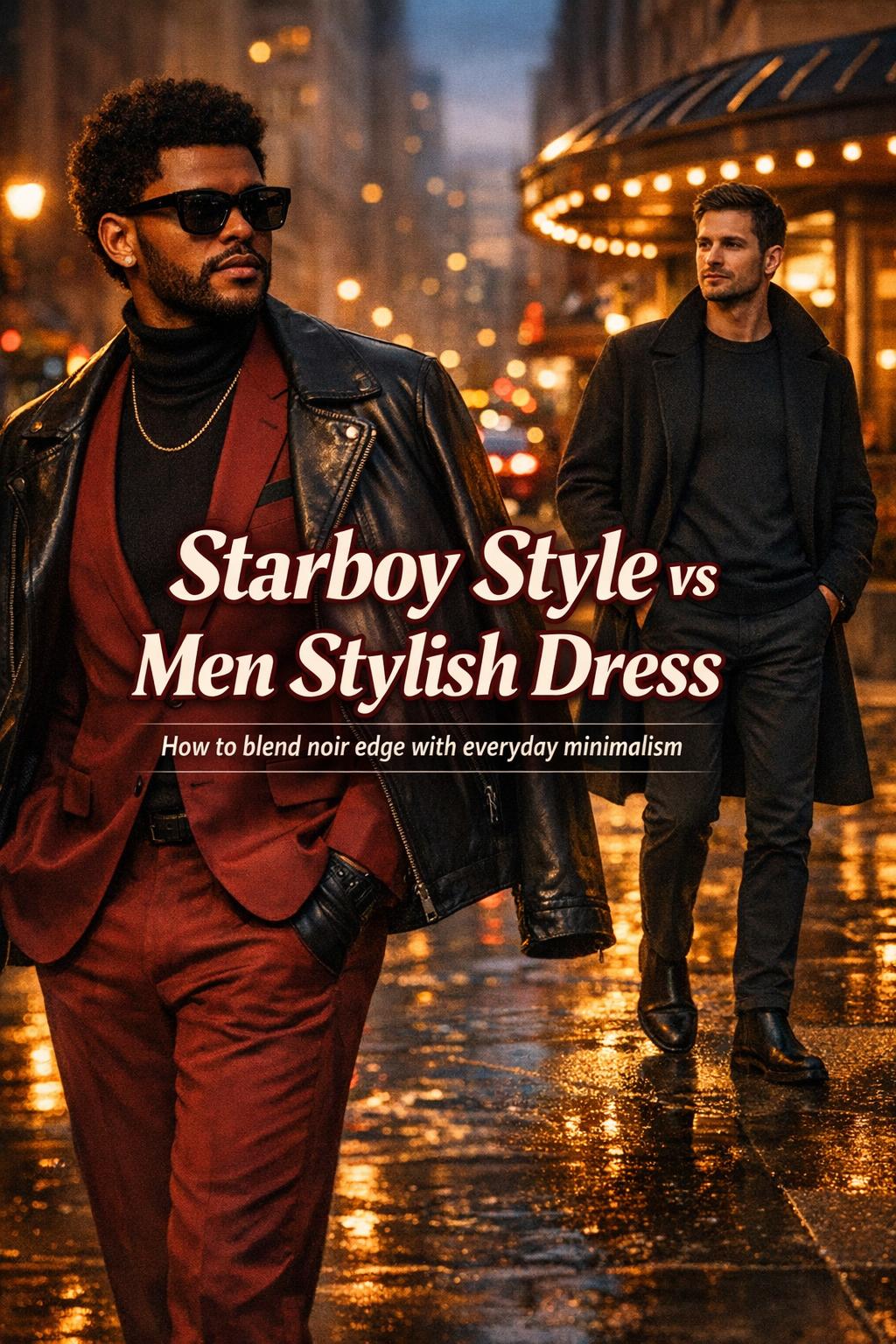
Style overview: monochrome minimalism (the everyday cousin of the Starboy aesthetic)
Monochrome minimalism is a styling approach built on restraint: narrow color range, clean outfit composition, and a preference for tonal layering over loud statements. It overlaps with starboy style because The Weeknd’s Starboy visuals repeatedly rely on monochromatic palettes—especially dark, minimal looks—yet minimalism doesn’t require a persona, an “era,” or a narrative. It’s designed to be repeatable for daily men stylish dress routines.
The defining move is consistency. Instead of a red suit as the visual anchor, monochrome minimalism creates impact through proportion play and texture contrast inside a single color family. Boots or sneakers can both work, but the goal is a quiet, polished line that reads as intentional without demanding attention.
- Silhouette: streamlined but flexible; structure comes from fit, not spectacle
- Color palette: primarily tonal darks (black and near-black), sometimes softened by subtle variations
- Fabrics and textures: texture is used for depth, but typically in a less “statement” way than starboy style
- Aesthetic mood: clean, modern, understated—more wardrobe system than character styling
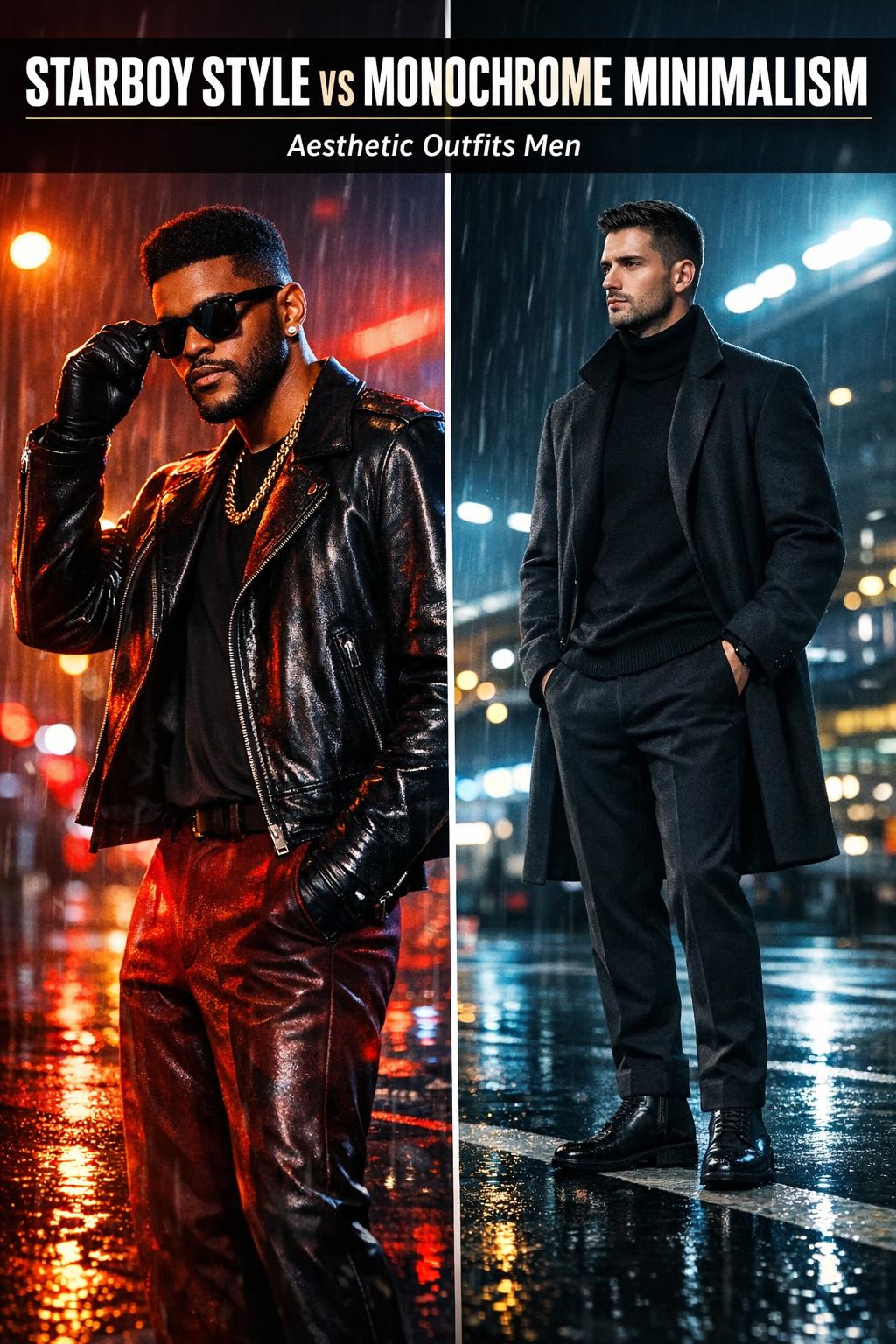
The core comparison: statement identity vs repeatable uniform
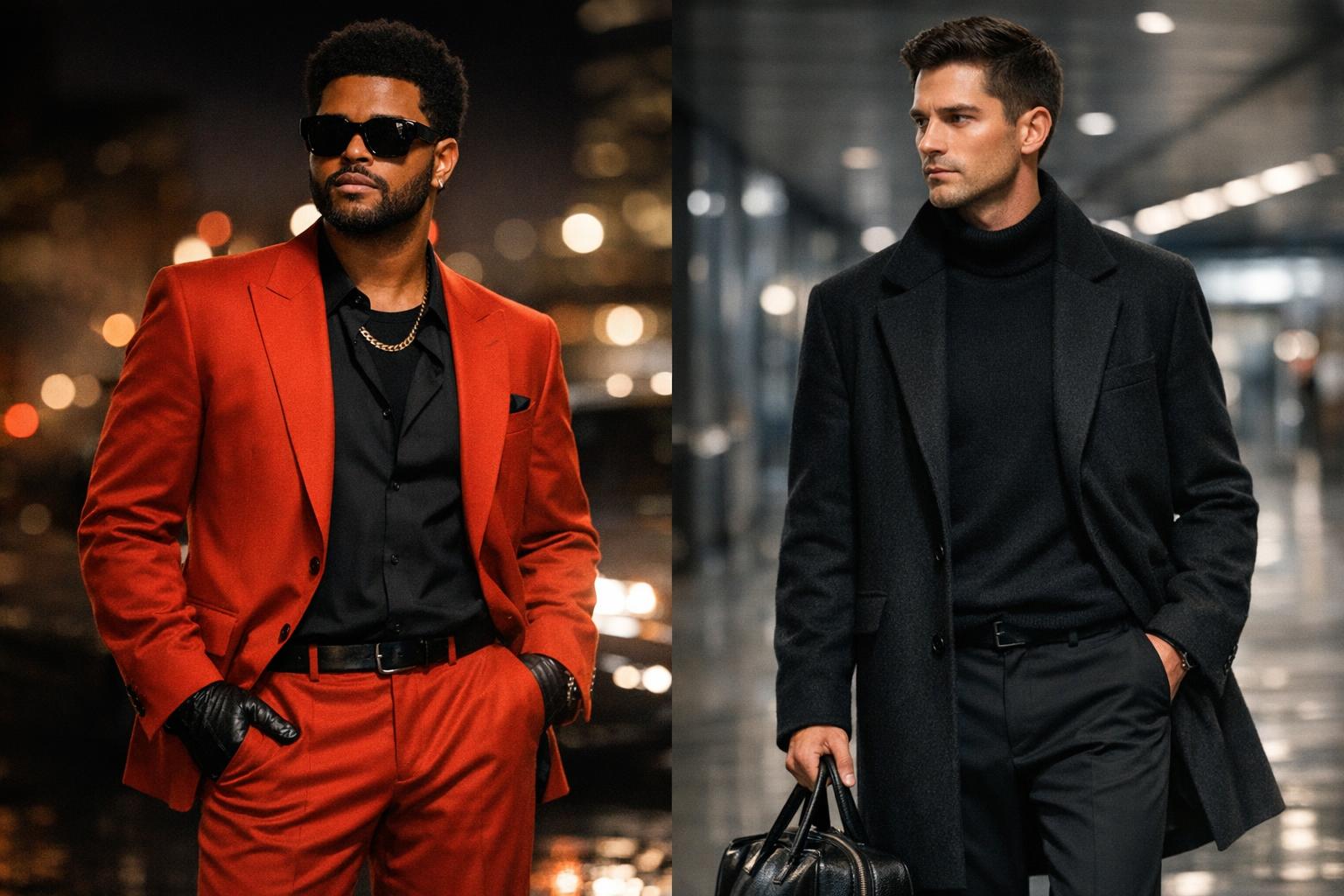
Think of starboy style as identity-first dressing, and monochrome minimalism as system-first dressing. Both can produce aesthetic outfits men want to screenshot and recreate, but their intent diverges. Starboy style treats clothing as a narrative device—especially through the red suit motif and cinematic noir framing. Monochrome minimalism treats clothing as a consistent toolkit where the wearer remains the focus, not the wardrobe.
This distinction matters because it changes what you prioritize when you shop, get dressed, or pack for a trip. If you lean starboy, you’ll invest in the visual anchor pieces (a suit that carries the look, leather layers, unmistakable accessories). If you lean monochrome minimalist, you’ll invest in repeatable basics that mix cleanly under one palette and rely on fit to do the heavy lifting.
Key differences that change the whole outfit
1) Silhouette and structure
Starboy style pushes structure to the front. Tailoring is a central language: the suit silhouette (especially when it’s the red suit) creates immediate shape and authority. Even when the outfit moves into monochrome, the underlying line stays intentional—jackets that hold form, trousers that keep the leg clean, and footwear that supports a sharp stance.
Monochrome minimalism is still fit-driven, but it doesn’t need the “stage-ready” level of structure. The silhouette can be streamlined without looking formal. The result is a wearable uniform where you can repeat the same outline across days without it feeling like a performance.
2) Color palette: red-as-symbol vs tonal discipline
The red suit in starboy style isn’t just a color choice; it functions as an icon—an instantly readable signal tied to The Weeknd’s Starboy persona. Around it, monochromatic palettes (often dark) act like negative space, making that red feel even more deliberate when it appears.
Monochrome minimalism generally avoids that kind of symbol color. Its “visual anchor” is tonal layering: black-on-black, charcoal-on-black, or subtle shade shifts. It’s less about a single iconic item and more about consistency across the whole look.
3) Texture strategy: leather and edge vs quiet depth
Starboy style uses leather and texture as a signature. Texture is not a background detail; it’s a deliberate edge-builder. Leather jackets and other textured layers add dimensionality that suits a noir/cinematic frame—especially in low light where flat fabrics can look visually thin.
Monochrome minimalism also benefits from texture contrast, but it tends to keep the contrast subtle. The focus is on clean outfit composition. A textured piece should add depth without taking over the look.
4) Accessories: curated signals vs optional polish
In starboy style, accessories complete the identity. Dark sunglasses create anonymity and attitude. Gold chains introduce a controlled flash against monochrome outfits. Gloves add a sharp finishing detail that reads as cinematic and intentional. These aren’t random add-ons; they function like punctuation marks that keep the look inside the Starboy universe.
In monochrome minimalism, accessories are optional. You can wear sunglasses, but they’re not a required signature. Jewelry tends to be minimal and functional in appearance. The philosophy is that the outfit stands on clean lines first.
5) Footwear: boots and high-tops, styled differently
Both aesthetics use similar footwear categories—Chelsea boots, combat boots, and high-tops are all part of the shared vocabulary. The difference is how they’re deployed. Starboy style uses footwear to intensify the character: boots sharpen the silhouette and feel grounded; high-tops push a more futuristic, street-leaning finish that still reads as part of a visual era.
Monochrome minimalism treats footwear as the stabilizer. Boots or sneakers should maintain the tonal line and keep the outfit clean. The shoe is less about edge and more about continuity.
Visual style breakdown: how each look reads in real life
Layering approach
Starboy style layering is built around the concept of reveal: a tailored base (or sharp monochrome base) with a texture layer that changes the mood—often leather. The layers are chosen to photograph well and to hold shape. Even a simple outfit benefits from an outer layer that creates structure and shadow, reinforcing the noir/cinematic aesthetic.
Monochrome minimalism layers for practicality and line. The best tonal layering reads smooth from a distance and interesting up close. Instead of dramatic contrast, the aim is a cohesive gradient: small changes in shade, finish, or texture that keep the outfit from becoming a flat block of color.
Garment proportions and outfit balance
Starboy style thrives on controlled sharpness. The outfit composition usually has a clear visual anchor—often the red suit or a leather outer layer—and everything else supports that. If the outerwear is strong, the rest of the outfit stays refined so the silhouette doesn’t become busy.
Monochrome minimalism relies on proportion play rather than icons. A clean line from shoulder to shoe matters more than one standout piece. The outfit balance is about consistency: nothing should look like it belongs to a different story.
Accessory density
Starboy style often looks incomplete without at least one signature accessory—dark sunglasses, a gold chain, or gloves. These create a recognizable finish that pushes the look from “nice outfit” to “distinct aesthetic.”
Monochrome minimalism reads best with fewer signals. Too many accessories can interrupt the clean line and make the look feel curated in a way that contradicts the minimalist goal.
Footwear choices in context
On the street, Chelsea boots lean polished and sleek, combat boots lean heavier and more aggressive, and high-tops tilt modern. Starboy style can use all three as mood modifiers: Chelsea boots tighten the silhouette; combat boots add grit; high-tops pivot the look toward futuristic street styling while keeping the palette tight.
Monochrome minimalism makes the opposite move: pick the footwear that disappears into the outfit. When the shoe blends tonally, the whole look reads longer and cleaner—an easy win for men stylish dress without extra effort.
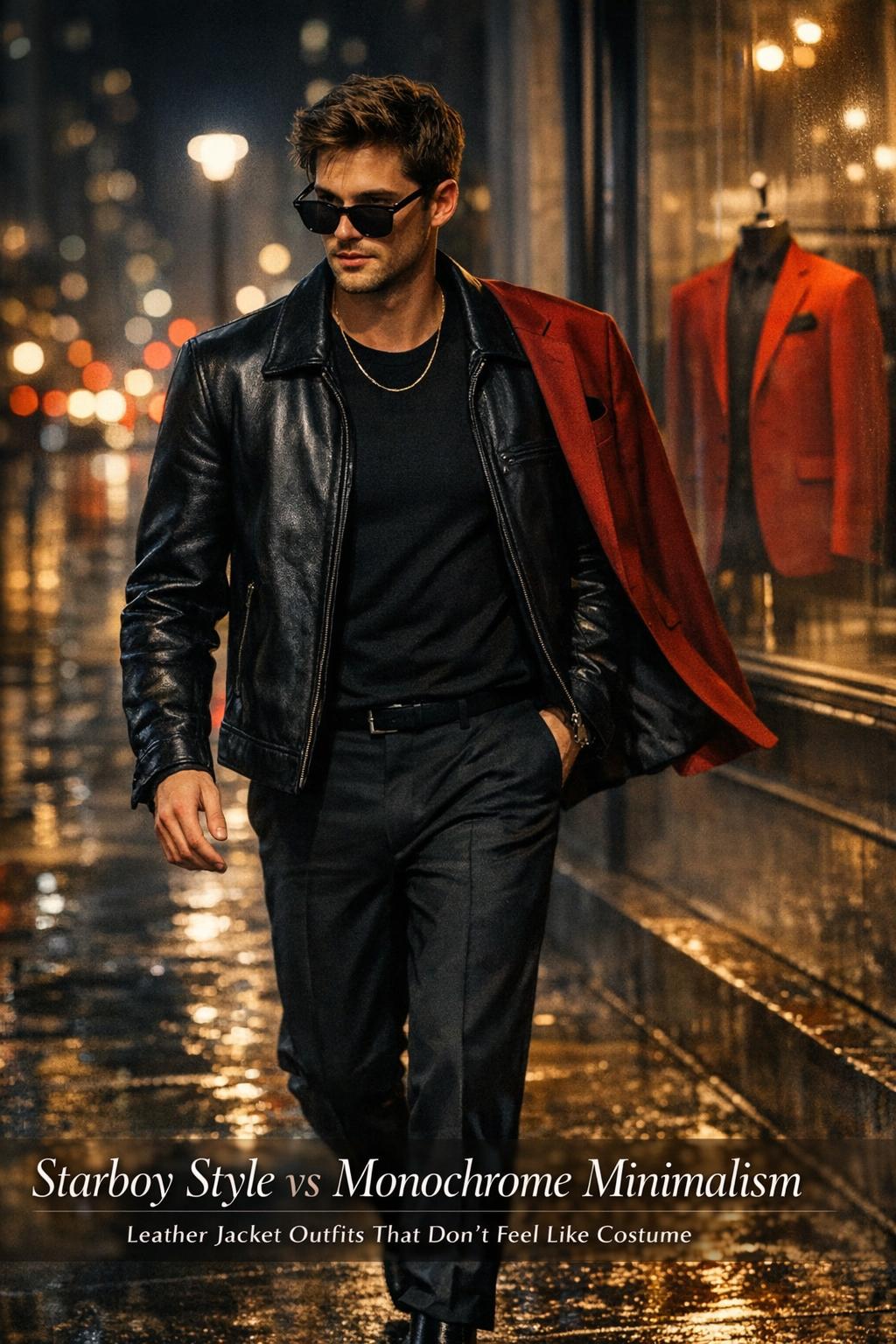
Outfit comparisons: same scenario, different styling logic
These comparisons use the same real-life situation and show how starboy style versus monochrome minimalism would solve it. The goal is to clarify decision-making: which pieces become the visual anchor, where texture contrast belongs, and how to keep the look from tipping into costume.
Example comparison: “casual night out” outfit composition
Starboy style approach: Build the look around a cinematic focal point. A leather jacket becomes the visual anchor, supported by a monochrome base so the texture reads clearly. Add dark sunglasses to sharpen the persona, and choose Chelsea boots for a clean, narrow finish or combat boots if you want more grit. The logic is contrast: sleek base, high-impact texture, precise accessories.
Monochrome minimalism approach: Keep the outfit quiet and cohesive. Use a single tonal family with minimal contrast and let fit provide shape. Footwear can be boots or high-tops, but the priority is continuity—nothing should pull attention away from the streamlined line. Accessories stay minimal or optional. The logic is discipline: clean palette, clean silhouette, low noise.
Example comparison: “polished evening” as classy outfits men can repeat
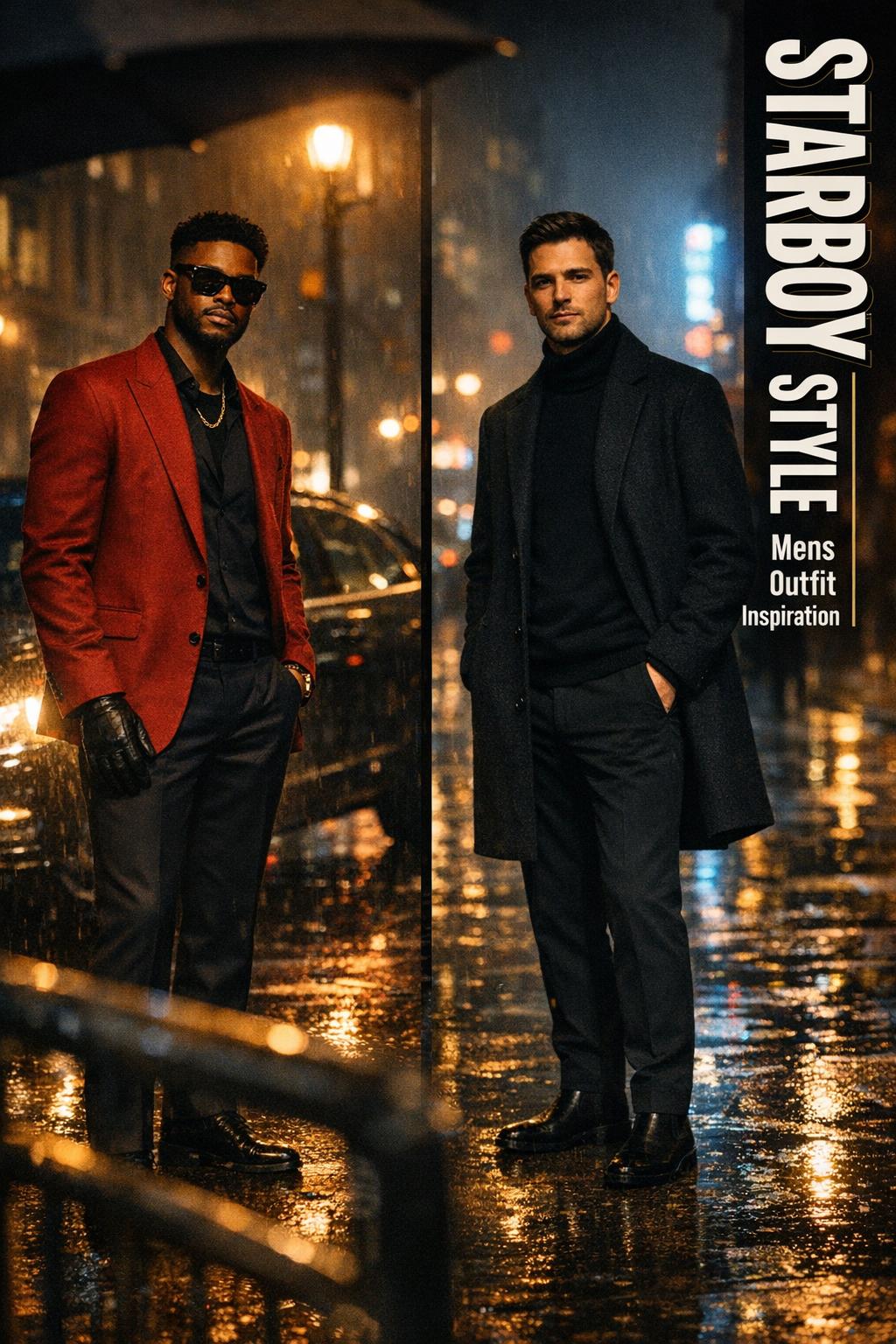
Starboy style approach: This is where the red suit earns its reputation. The suit becomes the entire statement, so everything else should be edited: footwear kept sleek (Chelsea boots excel here), accessories chosen with intention (dark sunglasses for edge; a gold chain to add controlled shine). The outfit works because the suit is a complete visual narrative—bold color, tailored structure, and a cinematic finish.
Monochrome minimalism approach: Choose a monochrome palette for an understated formal read. Keep accessories minimal and rely on tonal layering to add depth. The look is less about iconic recognition and more about refined restraint—ideal when you want a men stylish dress solution that doesn’t become the center of the room.
Example comparison: “travel day” outfit that still photographs well
Starboy style approach: Travel outfits succeed or fail on comfort and repeatability, so the Starboy translation should lean into monochrome palettes and one strong layer. A leather jacket can carry the aesthetic without needing a full suit moment. High-tops can make sense here because they support movement while still aligning with the era’s modern edge. Keep accessories limited—dark sunglasses do the most work with the least effort.
Monochrome minimalism approach: A tonal uniform is built for travel: consistent palette, simple layers, and footwear that blends. The outfit reads intentional in airports and on arrival because it avoids loud statements that feel situational. Minimalism is often the more practical choice when you need mens outfit inspiration that survives long hours and changing temperatures.
Leather jacket outfits: where both aesthetics overlap—and how to separate them
Leather jacket outfits sit at the intersection of these two aesthetics, which is why they’re so often confused. In starboy style, leather is a primary texture signal: it pushes the noir/cinematic vibe and strengthens the persona. In monochrome minimalism, leather is a single texture note that should integrate cleanly into the tonal system rather than dominate it.
The practical difference shows up in the finishing choices. Starboy styling is comfortable with stronger cues—dark sunglasses, a gold chain, sometimes gloves—because accessories reinforce identity. Minimalism asks for editing: fewer visible signals so the jacket doesn’t feel like a costume piece layered onto an otherwise quiet look.
Tips: making leather look intentional, not heavy
Leather can easily overpower an outfit if the rest of the look has competing messages. The simplest control method is to choose one “loud” element: either let leather be the texture anchor in a monochrome palette, or let color (like the red suit concept) be the anchor and keep texture quieter elsewhere. If you stack multiple high-impact signals—leather plus multiple accessories plus aggressive boots—the outfit loses the sleek, cinematic clarity that defines starboy style in the first place.
Choosing between them: a situational guide for real wardrobes
Both aesthetics can produce aesthetic outfits men actually wear, but their strongest contexts differ. Starboy style performs best when the environment supports visual storytelling—night settings, events where a statement piece makes sense, or any moment where a cinematic edge reads as intentional. Monochrome minimalism excels when you need repeatability: commuting, travel, daily city life, and work environments that reward polish without spectacle.
- Everyday wear: monochrome minimalism is easier to repeat; starboy style works when you keep it mostly monochrome and use one signature signal (leather or sunglasses)
- Work environments: monochrome minimalism is safer; starboy style can translate through tailoring discipline without relying on the red suit
- Nightlife and events: starboy style has the advantage; accessories and texture read deliberate and camera-ready
- Travel: monochrome minimalism wins on comfort and flexibility; starboy style can be added through one strong outer layer and edited accessories
Starboy style as wardrobe architecture: building it without turning it into costume
The biggest misconception about starboy style is that it requires extreme pieces every time. In reality, the strongest Starboy-inspired outfits use a limited set of repeatable foundations—monochromatic palettes, tailored shapes, and controlled texture—then add one iconic move. Sometimes that move is the red suit. Other times it’s leather and texture. Sometimes it’s simply dark sunglasses and boots that sharpen a monochrome base.
That’s why starboy style can live inside a modern closet: treat it like a capsule with a few clear anchors. When the anchors are strong, the rest of the outfit can stay simple—an important principle for classy outfits men want to wear more than once.
Tips: a practical checklist for a Starboy-inspired outfit
- Choose one visual anchor: the red suit, a leather jacket, or a sharply tailored monochrome base
- Keep the palette controlled: either commit to monochrome palettes or use red as the single statement
- Add texture on purpose: leather and other texture should create depth, not clutter
- Pick footwear to support the silhouette: Chelsea boots for sleekness, combat boots for weight, high-tops for modern edge
- Use accessories as punctuation: dark sunglasses, a gold chain, gloves—one to two signals usually reads strongest
The pop culture effect: why the Starboy aesthetic keeps resurfacing
Starboy style doesn’t persist because it’s complicated; it persists because it’s legible. The Weeknd’s Starboy persona connected music-era visuals with a wardrobe system that’s easy to recognize: a red suit that functions as an icon, noir/cinematic mood, and a repeatable set of elements—monochrome palettes, leather and texture, specific footwear types, and unmistakable accessories.
That legibility is why the aesthetic translates into editorial shoots and broader fashion conversations. The styling is designed to read quickly—high contrast, strong silhouette, controlled details—making it a useful reference point when people search for mens outfit inspiration that feels elevated but still straightforward to execute.
Common mistakes that dilute the look (and how to correct them)
Overloading signals: when every piece tries to be the statement
Starboy style is iconic, but it’s also edited. If you wear a strong leather jacket, heavy boots, dark sunglasses, a gold chain, and gloves all at once—without clean tailoring or a disciplined monochrome base—the look can tip into costume. Correction: choose one primary signal and keep the rest clean. Let either the texture or the accessory do the talking, not everything at once.
Monochrome without dimension: the “flat black” problem
Monochrome palettes are central to starboy style and monochrome minimalism, but head-to-toe dark can read flat if there’s no texture contrast or structure. Correction: add one textured element (leather is the most on-theme) or ensure the silhouette is tailored enough to create shape. The goal is depth, not just darkness.
Ignoring footwear’s role in silhouette balance
Footwear isn’t a last-minute choice in this aesthetic family. Chelsea boots sharpen and elongate; combat boots add weight; high-tops push modern edge. If the shoe contradicts the outfit’s intent, the whole composition feels off. Correction: decide whether you want sleek, heavy, or futuristic—then choose Chelsea boots, combat boots, or high-tops accordingly.
Using the red suit without the supporting discipline
The red suit is the easiest Starboy reference—and the easiest to get wrong. If everything else competes with it, the suit loses its iconic clarity. Correction: keep accessories controlled and footwear sleek. Treat the red suit as the visual anchor and let monochrome supporting elements frame it.
How to blend both aesthetics for modern men stylish dress
The most wearable outcome often sits between the two: monochrome minimalism as the daily uniform, with starboy style injected in measured doses. This hybrid approach works because both aesthetics share core tools—monochrome palettes, streamlined silhouettes, leather and texture, and a similar footwear set—yet they differ in how loudly those tools are expressed.
A clean way to blend them is to keep your base minimalist and add one Starboy-era finisher. Dark sunglasses are the simplest. A leather jacket is the strongest. A gold chain adds controlled highlight. Gloves are high-impact and should be used sparingly unless the setting supports a more cinematic read.
Tips: quick upgrades that shift minimal to Starboy in under a minute
Start with a monochrome base and add one element that changes the outfit’s “genre.” Swap in Chelsea boots for a sharper line, or choose combat boots if you want a heavier stance. Add dark sunglasses to reinforce anonymity and edge. If you add jewelry, keep it to a single gold chain so the look stays curated rather than noisy.
A practical lens on “aesthetic outfits men” actually keep wearing
Many aesthetic outfits men save online don’t survive real schedules: temperature changes, long events, commuting, and the simple need to re-wear pieces. Monochrome minimalism wins on repeatability because it functions as a system. Starboy style wins on impact because it’s designed around strong signals—tailoring, texture, accessories—that read instantly.
The most sustainable approach is to decide where you want to sit on the spectrum. If you need daily men stylish dress solutions, treat starboy style as a “dial” you turn up for nights, events, and moments that reward cinematic clarity. If you want a recognizable signature, build the Starboy core—monochrome palettes, leather and texture, and precise footwear—then reserve the red suit for the occasions where it can be the sole protagonist.
Conclusion: the simplest way to identify each style on sight
Starboy style is a persona-driven aesthetic tied to The Weeknd’s Starboy era: iconic red suit symbolism, noir/cinematic mood, leather and texture as edge, and curated accessories like dark sunglasses, gold chains, and gloves. Monochrome minimalism uses many of the same tools—especially monochrome palettes and streamlined silhouettes—but aims for a repeatable, understated uniform rather than a visual narrative.
To spot the difference quickly, look for the intent. If the outfit has a clear visual anchor and “on-camera” finishing, it leans starboy. If the outfit reads clean, tonal, and quietly consistent, it leans minimalist. Combine them by treating minimalism as the base and adding one Starboy signal—leather, sunglasses, or a sharp boot—to create mens outfit inspiration that feels modern, controlled, and wearable.
FAQ
What is starboy style?
Starboy style is a fashion aesthetic associated with The Weeknd (Abel Tesfaye) and his Starboy persona, defined by a cinematic noir mood, strong tailoring cues, iconic elements like the red suit, and recurring wardrobe signals such as monochrome palettes, leather and texture, and curated accessories including dark sunglasses, gold chains, and gloves.
Why is the red suit so central to the Weeknd Starboy look?
The red suit functions as an instantly recognizable visual anchor within starboy style, creating a bold statement that separates the Starboy era from more neutral looks; it works best when the rest of the outfit stays edited so the suit remains the clear focal point.
How do monochrome palettes fit into starboy style?
Monochrome palettes are a core styling approach in starboy style because they support the noir/cinematic mood and keep the outfit composition controlled; they also act as a clean backdrop for high-impact textures like leather or for statement moments like the red suit.
What footwear works best for a Starboy-inspired outfit?
Chelsea boots, combat boots, and high-tops all fit within the Starboy vocabulary, with Chelsea boots emphasizing a sleek silhouette, combat boots adding weight and edge, and high-tops creating a more modern, futuristic finish while still working within monochrome styling.
Which accessories are most associated with starboy style?
Dark sunglasses, gold chains, and gloves are the most recognizable accessories tied to starboy style, used as finishing signals that reinforce the persona and keep the look feeling intentional rather than simply “all black.”
How can I wear leather jacket outfits without looking like I’m in costume?
Keep leather as the single texture statement by pairing it with a controlled monochrome base and limiting accessories to one or two signals (such as dark sunglasses or a gold chain), which preserves the sleek, cinematic intent without stacking too many competing elements.
Is starboy style the same as monochrome minimalism?
No—both share monochrome palettes and streamlined silhouettes, but starboy style is identity-driven with iconic statement elements like the red suit and more deliberate accessory signaling, while monochrome minimalism is a repeatable, understated uniform built around tonal discipline and clean lines.
What’s the easiest way to add starboy style to an everyday men stylish dress routine?
Start with a monochrome outfit and add one Starboy finisher—dark sunglasses, a leather layer for texture, or sleek boots like Chelsea boots—so the look gains cinematic edge while staying practical for daily wear.
What are the most common mistakes people make when recreating starboy style?
The most common mistakes are overloading signals (too many statement items at once), wearing monochrome without structure or texture depth, choosing footwear that contradicts the intended silhouette, and treating the red suit like just another piece instead of the outfit’s primary visual anchor.