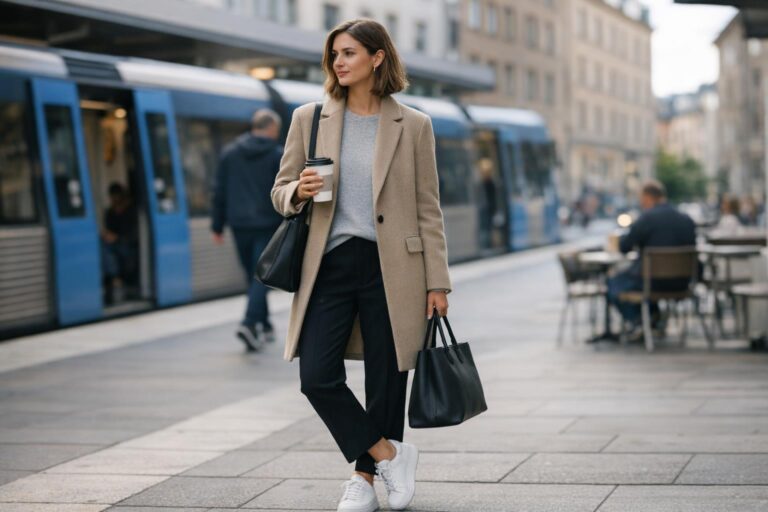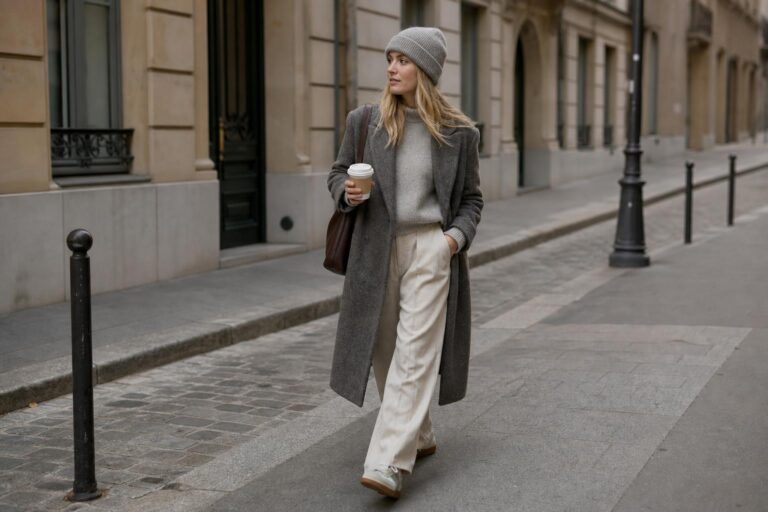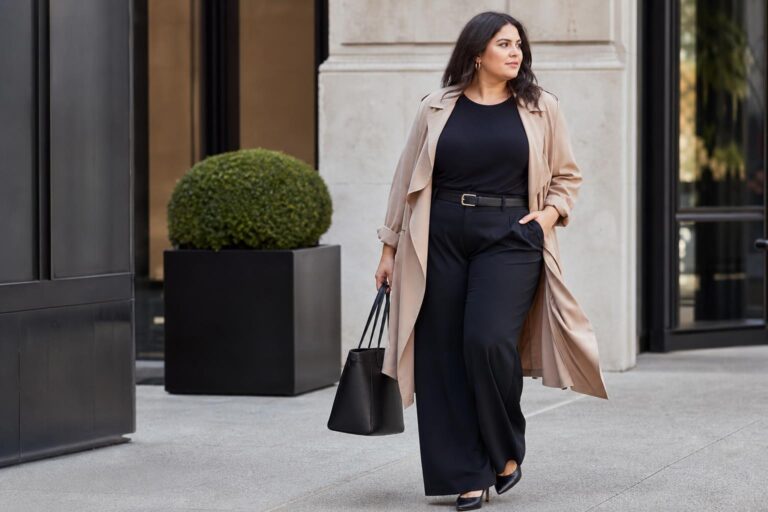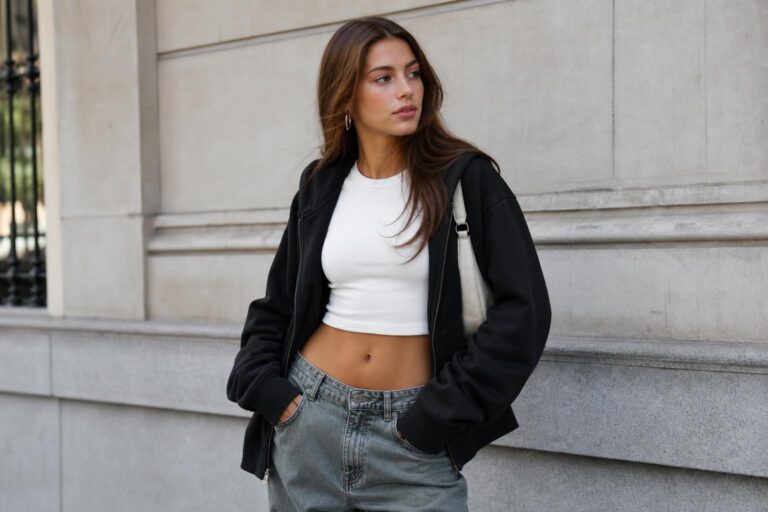
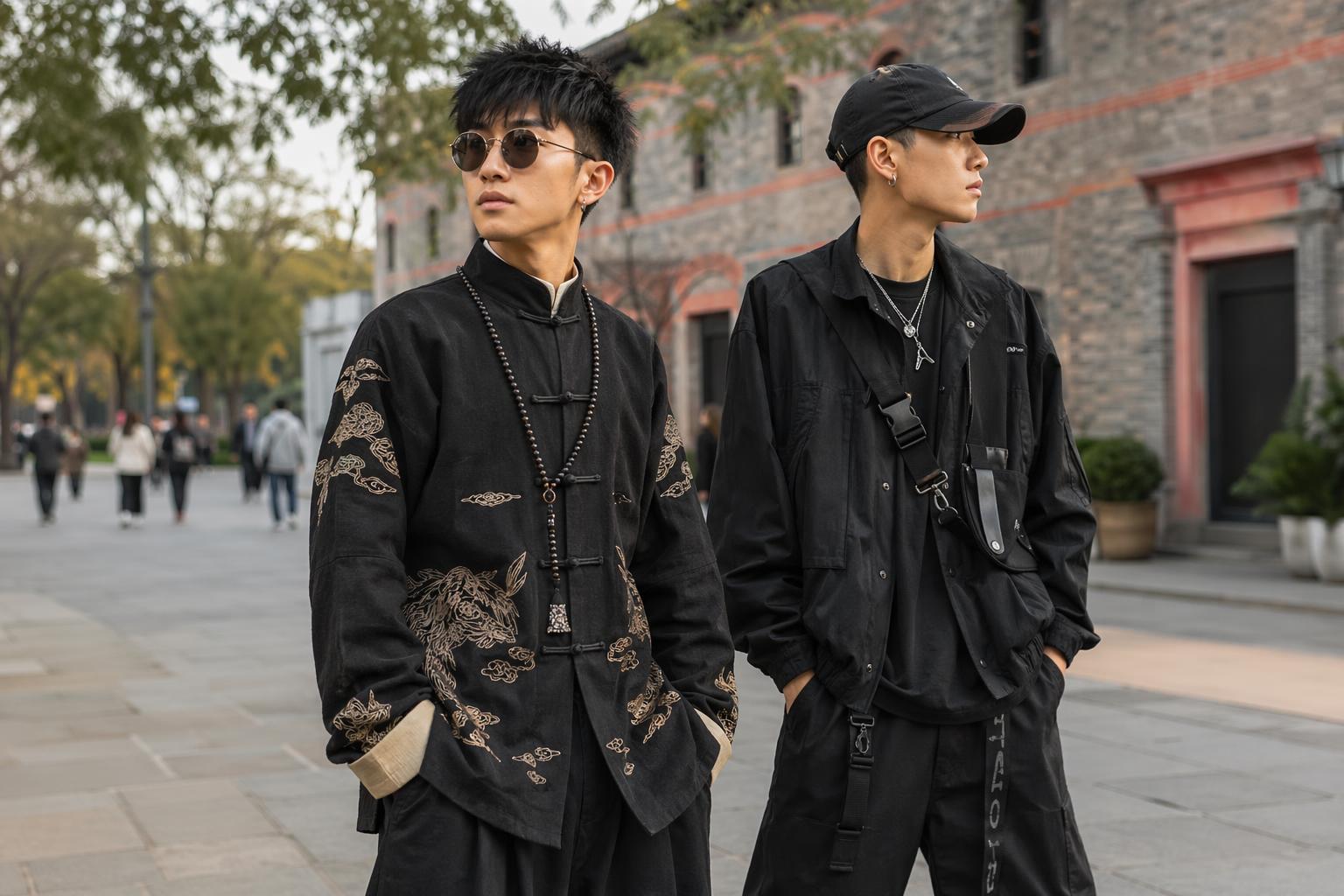
Modern Chinese Street Style With Heritage and Edge
Scroll through TikTok, Douyin, or Xiaohongshu long enough and the visual codes of chinese street style start to separate into distinct lanes. One leans into traditional motifs, sharper cultural references, and details such as Mandarin collars or print-led accents. The other pushes toward cleaner urban silhouettes, oversized layers, utility elements, and the fast-moving energy associated with districts like Sanlitun, Xintiandi, and Taikoo Li. Because both belong to the same broader Chinese street style fashion conversation, they are often discussed as if they are one look.
That overlap is exactly what makes the category interesting. Chinese fashion street is not a single uniform aesthetic. It is a living mix of city-based influence, designer perspective, social platform visibility, and the ongoing dialogue between tradition and modernity. Designers such as Angel Chen and Shushu/Tong, along with the visibility created by Shanghai Fashion Week and short-form video culture, have made that contrast more legible to a global audience.
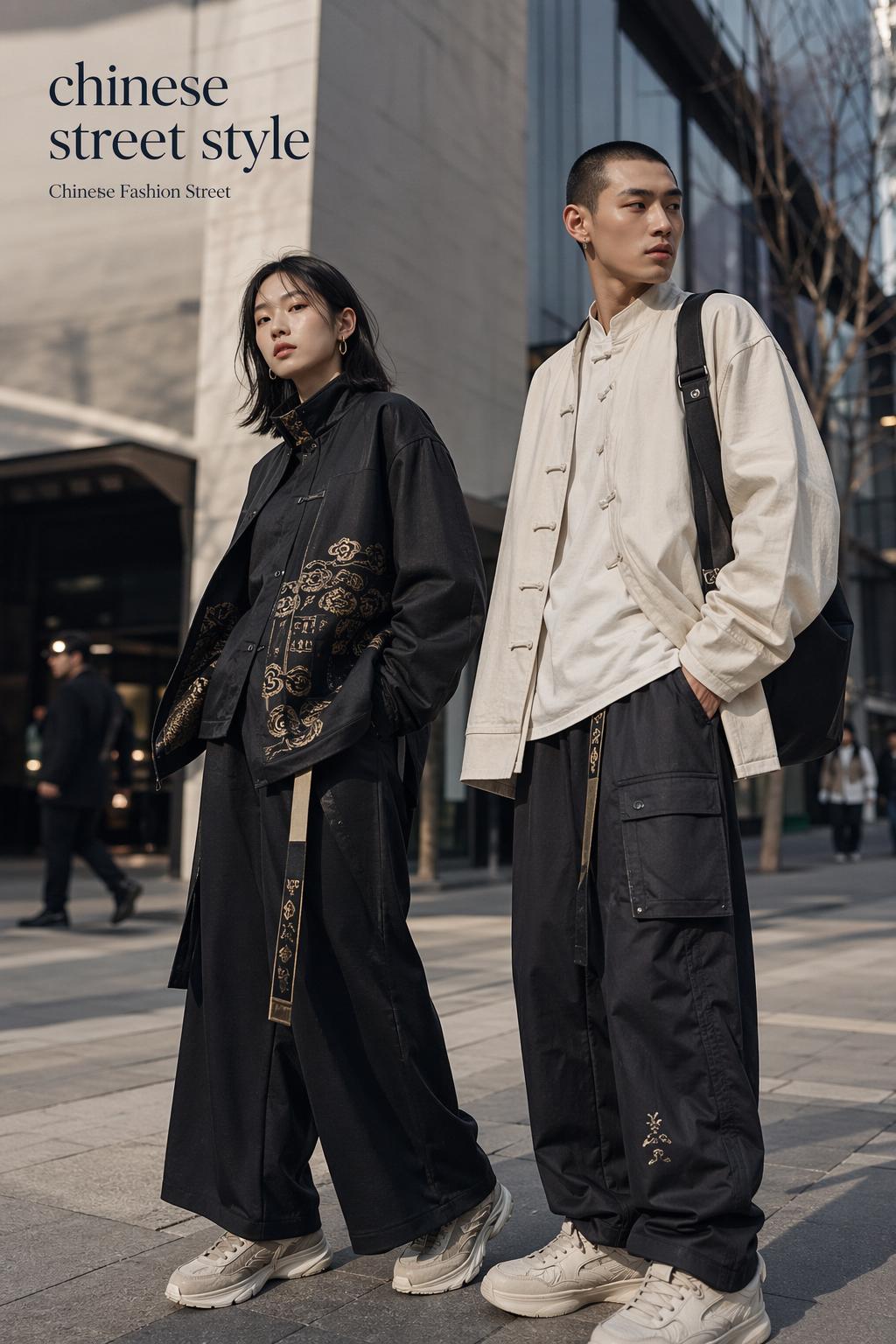
This article breaks down the difference between traditional Chinese streetwear and modern Chinese streetwear, while also showing where the two meet. The goal is not to reduce chinese street wear to two rigid boxes, but to clarify how silhouette, fabric emphasis, styling logic, and visual mood shift from one approach to the other. If you want to identify the look, recreate it, or blend both directions intelligently, this comparison gives you the framework.
Two style lanes inside chinese street style
The most useful way to read chinese street style is as a spectrum anchored by two major aesthetics. On one side is traditional Chinese streetwear: a fusion approach where heritage-coded details are carried into urban dressing. On the other is modern Chinese streetwear: city-driven, platform-amplified, and often built around proportion play, streetwear staples, and a more global street silhouette. Both appear across Beijing, Shanghai, and Chengdu, but they do not communicate the same thing in an outfit.

Found the dress? Keep the rest in one place.
Zarellea brings guest details, vendors, timelines, and every next step together — so your wedding plan feels as good as your look.
The confusion happens because both styles can share the same environment. The same district can show one person in print-accented layering with a Mandarin-collar top and another in oversized outerwear, track pants, and utility pockets. Both are part of chinese street style fashion, yet the styling philosophy behind each is different.
Style overview: traditional Chinese streetwear
Traditional Chinese streetwear is defined by visible references to Chinese visual heritage translated into current street dressing. The look often centers on traditional motifs, Mandarin collars, distinctive prints, and a deliberate fusion of old and new. Rather than reading as costume, the successful version uses one or two heritage cues as visual anchors inside a contemporary outfit composition.
Its silhouettes can vary, but they tend to feel more intentional and slightly more composed than purely casual streetwear. The line is often cleaner through the neckline and upper body because details such as collars or print placement already carry visual weight. Fabrics and textures matter here because the style depends on contrast: traditional references need enough modern framing around them to avoid looking theatrical.
The mood is expressive but controlled. In the context of chinese fashion street, this aesthetic often signals cultural fluency and fashion awareness at the same time. It works especially well when the wearer wants the outfit to communicate identity, not just trend participation.
Style overview: modern Chinese streetwear
Modern Chinese streetwear is more closely tied to platform culture, urban districts, and the visual speed of street photography and short-form video. This is the side of chinese street style most commonly associated with TikTok, Douyin, and Xiaohongshu, where the outfit has to register immediately. Oversized outerwear, utility-focused pieces, track pants, and strong accessories often create that instant impact.
The silhouette language is bolder and more relaxed. Volume is often placed on the jacket, trouser, or both, and the outfit balance is achieved through proportion rather than ornament. This lane of modern Chinese streetwear feels especially connected to places like Xintiandi in Shanghai, Sanlitun in Beijing, and Taikoo Li in Chengdu, where the relationship between fashion, movement, and visibility is central.
The mood is fast, directional, and highly urban. While it can still include references to Chinese style today, those references are usually subtler than in traditional Chinese streetwear. The emphasis is on current streetwear logic first, heritage coding second.
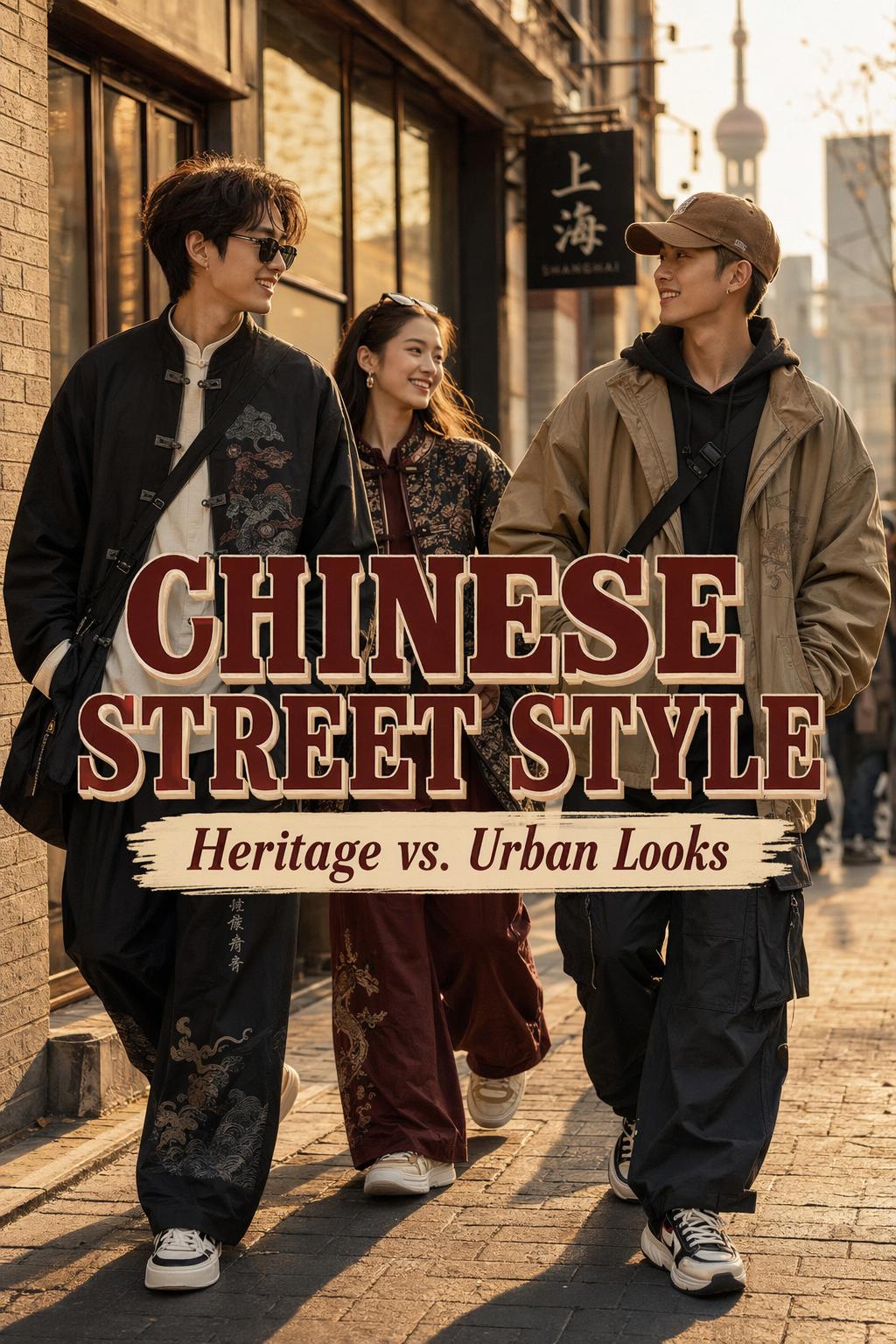
Where the scene takes shape: Shanghai, Beijing, and Chengdu compared
Location matters in chinese street style because districts do more than provide backdrops. They influence how outfits are built, photographed, and circulated. A useful comparison starts with the three cities that appear repeatedly in the conversation: Shanghai, Beijing, and Chengdu.
Shanghai and Xintiandi: the polished edge
Shanghai is often treated as the most globally legible street style hub, partly because of its fashion-week ecosystem and the wider cultural visibility around Shanghai Fashion Week. In Xintiandi, chinese street style fashion tends to look refined even when it is experimental. Traditional details are often streamlined, and modern Chinese streetwear appears more edited, with stronger attention to tonal layering and silhouette finish.
This is also where designers such as Angel Chen and Shushu/Tong become especially relevant to the conversation. Their presence in the broader Chinese style dialogue reinforces the idea that Shanghai helps merge runway thinking with street-level dressing. In visual terms, Shanghai often narrows the gap between traditional Chinese streetwear and modern Chinese streetwear by making both look more fashion-system aware.
Beijing and Sanlitun: heritage meeting streetwear
Beijing brings a different pressure to outfit composition. Sanlitun is repeatedly associated with premium streetwear culture, but it also sits inside a city where heritage references carry a different weight. As a result, chinese street wear in Beijing can look more direct in its contrast: traditional cues against clearly urban pieces, or elevated streetwear against a more structured backdrop.
The result is often a more visible tension between past and present. Traditional Chinese streetwear can feel especially convincing here because the heritage reference has enough context around it. Modern Chinese streetwear, by contrast, tends to look harder-edged and slightly less polished than in Shanghai. The silhouettes may be similarly oversized, but the attitude is less soft and more assertive.
Chengdu and Taikoo Li: youth culture in motion
Chengdu, especially Taikoo Li, is frequently cited as a hotspot because of its strong connection to youth culture and highly visible street photography. In Chengdu, chinese fashion street often reads as more playful and trend-responsive. Social media amplification matters greatly here, so outfits tend to prioritize immediate visual clarity.
This makes modern Chinese streetwear especially prominent. Utility details, accessories, loose trousers, and statement outerwear translate well on camera and move well through video cycles. Traditional Chinese streetwear still appears, but in this context it often needs cleaner integration to compete with the speed of a platform-driven visual environment.
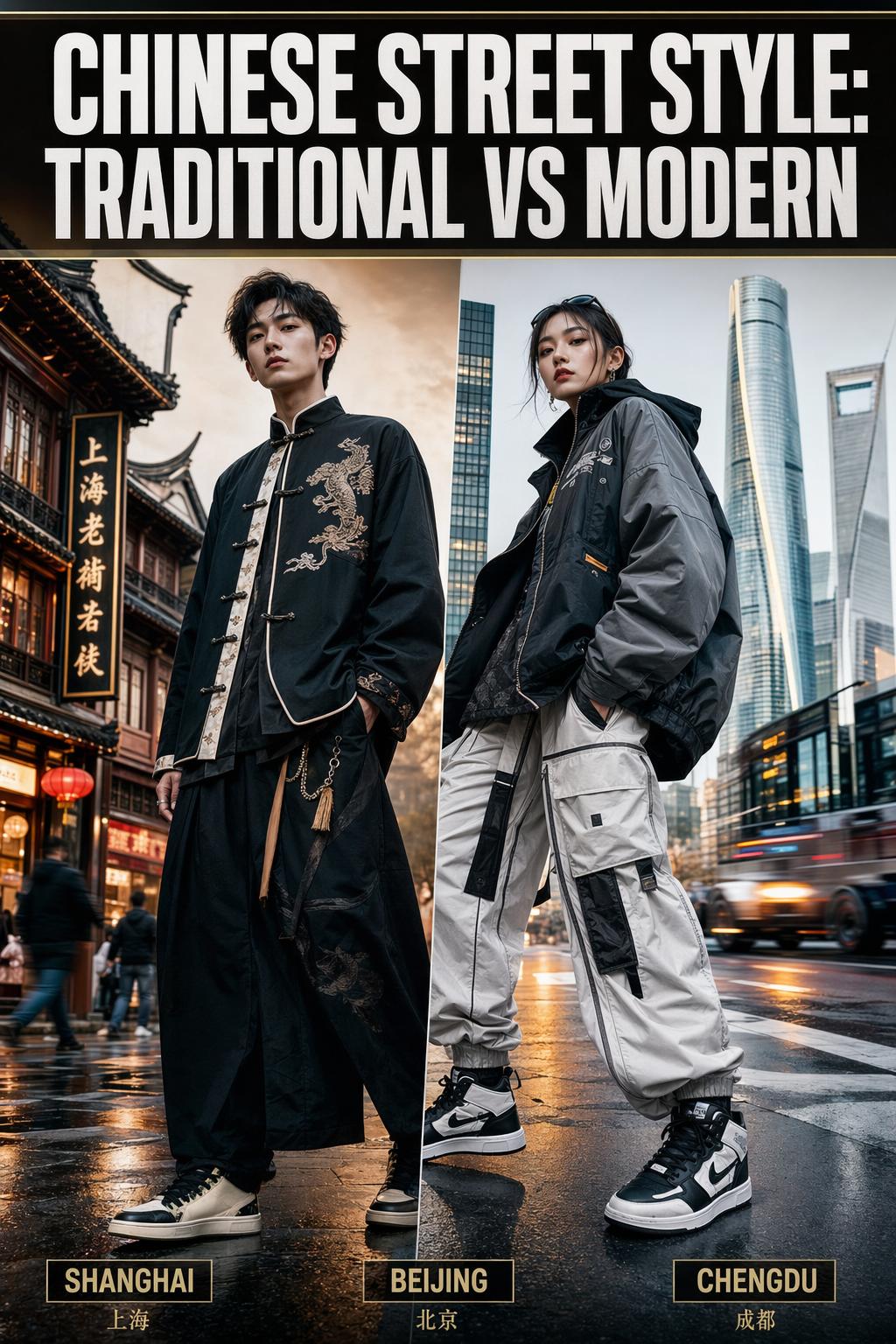
The defining differences in styling logic
The easiest way to separate these aesthetics is not by one hero item, but by the logic used to build the outfit. The distinction sits in proportion, detail placement, and what the wearer wants the eye to notice first.
Silhouette and structure
Traditional Chinese streetwear usually builds structure from the top half of the outfit. A Mandarin collar, a print-led jacket, or a more defined neckline creates immediate architecture. Because of that, the lower half often becomes calmer, allowing the heritage-coded detail to remain the visual anchor.
Modern Chinese streetwear usually spreads volume more evenly or exaggerates it. Oversized outerwear, wider trousers, and utility shapes create a silhouette that is legible from a distance. Instead of relying on one historic reference point, the look uses scale and layering to make impact.
Color palette and print emphasis
Traditional Chinese streetwear can handle stronger print language because print is part of the concept, not an afterthought. When traditional motifs are present, the outfit often allows them room to breathe. That means fewer competing graphic elements and a more measured use of accessories.
Modern Chinese streetwear generally relies less on motif-heavy surfaces and more on tonal composition. Even when the palette is bold, the impact comes from blocks of color, shape, and layering rhythm rather than heritage-oriented prints. In practice, this often makes the outfit easier to adapt across cities and more flexible for everyday wear.
Formality and finish
Traditional Chinese streetwear often reads slightly more dressed, even when styled casually. Heritage-inflected pieces naturally introduce intention, and that intention raises the outfit’s perceived formality. This does not make it formalwear; it simply means the finish feels more deliberate.
Modern Chinese streetwear usually prioritizes movement and immediacy over polish. The finish can still be sharp, especially in Shanghai, but the overall mood is more spontaneous. It belongs naturally to districts, social platforms, and street photography culture.
Wardrobe building philosophy
If you build a wardrobe around traditional Chinese streetwear, you are likely collecting statement pieces with cultural or motif-led relevance and then grounding them with simpler separates. If you build around modern Chinese streetwear, you are more likely collecting flexible staples such as oversized jackets, track pants, utility-focused pieces, and accessories that can be re-layered in different combinations.
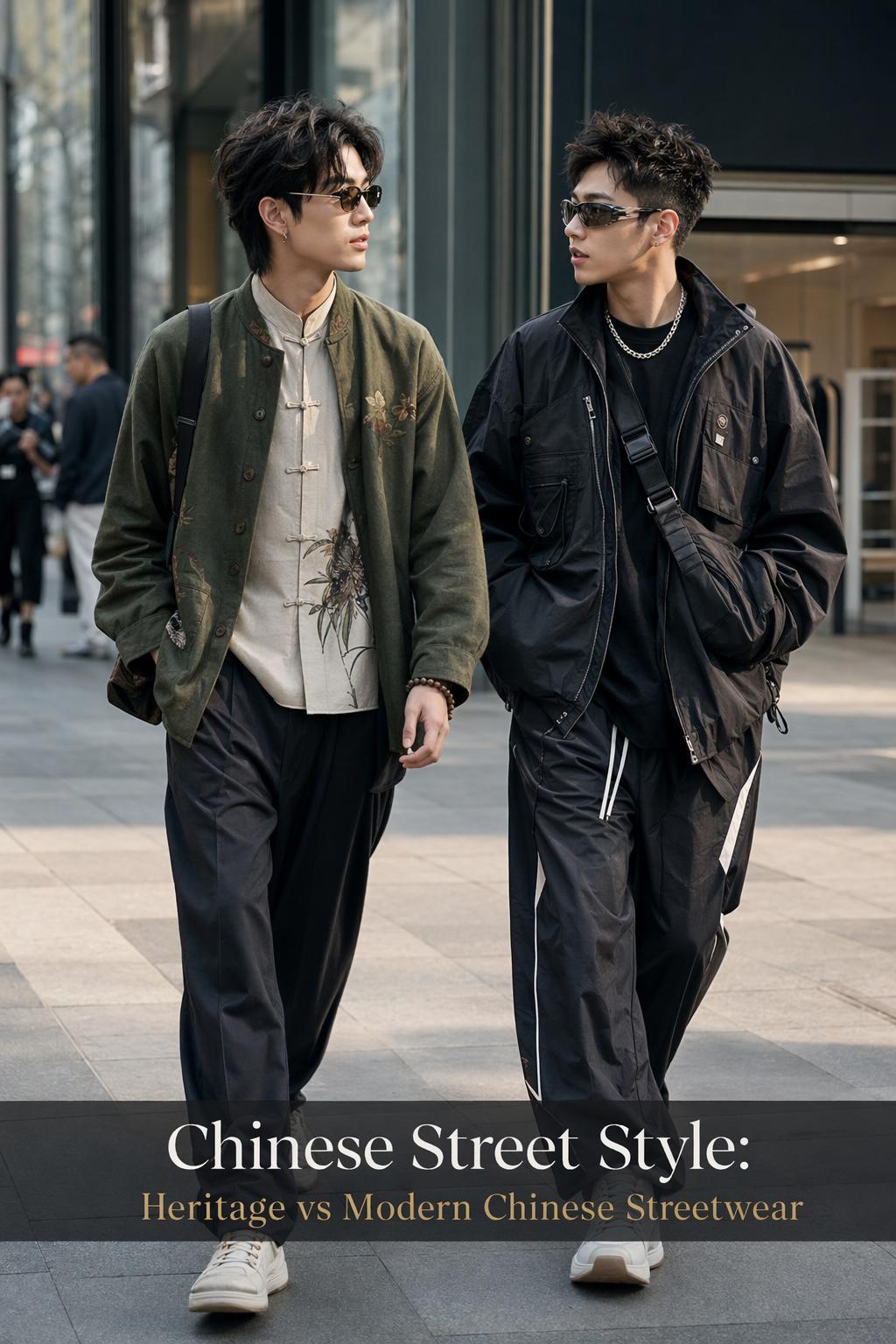
Visual breakdown: how the two styles look in real outfits
Street style is visual by definition, so comparison becomes clearer when translated into real-world outfit behavior. The following breakdown focuses on what the eye actually sees first.
Layering approach
Traditional Chinese streetwear uses layering more selectively. The layers tend to support one focal garment rather than compete with it. If a print, collar, or culturally resonant top is already carrying visual density, excess layering can disrupt silhouette balance.
Modern Chinese streetwear treats layering as a primary styling tool. Outerwear over relaxed separates, or multiple streetwear weights in one look, helps create volume and movement. This is one reason it performs well on TikTok and Douyin: the outfit reads instantly in motion.
Garment proportions
In traditional Chinese streetwear, proportion is often disciplined. The contrast may come from a fitted or structured upper element against a straighter lower line, or from one statement piece balanced with quieter basics. The shape is guided by the featured detail.
In modern Chinese streetwear, the garment proportions can be intentionally exaggerated. Wider pants, bigger jackets, and more dramatic outerwear shifts are not mistakes; they are the point. The wearer is creating a silhouette first and refining it second.
Accessories as visual anchors
Traditional Chinese streetwear usually benefits from restraint in accessories. Since the outfit may already include traditional motifs or a distinctive collar, too many secondary statements can muddy the message. The best accessory strategy is to reinforce the outfit’s direction, not add a new one.
Modern Chinese streetwear can handle more accessory weight because the overall styling language is already rooted in urban layering and visual speed. In that setting, accessories help sharpen the streetwear impression and complete the look’s city-facing energy.
Footwear and grounding effect
Even though specific shoe categories are not the central story in most coverage, the broader styling logic is clear. Traditional Chinese streetwear needs footwear that grounds the outfit without fighting the upper-body focal point. Modern Chinese streetwear can use footwear more assertively because the whole outfit is already built on a streetwear base.
This difference matters in everyday dressing. If the top half is culturally coded and visually rich, quieter footwear often improves cohesion. If the outfit is based on utility, volume, and movement, stronger footwear choices usually feel more natural.
Designers and platforms shaping the comparison
No analysis of chinese street style is complete without the people and systems that have made the style visible. The comparison between traditional and modern approaches is not happening in isolation. It is shaped by designers, fashion weeks, and platform ecosystems that keep the visual language in circulation.
Angel Chen and Shushu/Tong in the broader style conversation
Angel Chen and Shushu/Tong matter because they help define what Chinese style today can mean beyond stereotypes. Their names come up in conversations around contemporary Chinese fashion identity and Shanghai Fashion Week, which makes them important reference points when understanding how street style and designer influence interact.
In practical terms, they show that chinese street style fashion is not only about casual dressing. It is also about how runway ideas, local fashion communities, and designer perspectives move into everyday wardrobes. That is why the line between polished and street can feel especially thin in Shanghai.
TikTok, Douyin, and Xiaohongshu as style filters
TikTok helped expose chinese street style to wider global audiences, while Douyin and Xiaohongshu remain crucial inside the Chinese fashion ecosystem. These platforms do not just document style; they shape which style codes get repeated. Looks with immediate visual clarity, strong proportions, and recognizable district backdrops tend to circulate faster.
That platform effect often favors modern Chinese streetwear because oversized silhouettes, utility details, and high-impact layering read well in short-form video. Traditional Chinese streetwear still performs strongly, but it usually needs sharper styling control so that heritage details remain legible on screen.
Outfit comparisons that show the difference clearly
Comparing the same dressing scenario across both aesthetics is the fastest way to understand how chinese street wear changes in practice.
Casual city outfit: district walk in Xintiandi or Sanlitun
A traditional Chinese streetwear version would likely center one heritage-coded piece, such as a top with a Mandarin collar or a garment featuring traditional prints, then pair it with simpler urban basics. The styling logic is clarity. One visual message leads, while the rest of the outfit stabilizes the composition.
A modern Chinese streetwear version would start with silhouette. Oversized outerwear, relaxed trousers, and visible streetwear accessories would create the outfit’s energy before any cultural reference enters the picture. The message is movement, relevance, and city confidence rather than detail-led storytelling.
Fashion-week-adjacent outfit: Shanghai context
In a Shanghai Fashion Week environment, traditional Chinese streetwear often looks more refined and editorial. The outfit may use traditional motifs, but the finish is cleaner and more fashion-system aware. This is where tonal discipline and texture contrast matter; the outfit needs enough restraint to feel current.
The modern Chinese streetwear version in the same context would likely sharpen volume rather than reduce it. Strong outerwear, cleaner line breaks, and deliberate proportion play create a look that photographs well and holds its own in a fashion crowd. The key difference is where the drama comes from: motif in one case, shape in the other.
Travel-day outfit: Chengdu and Taikoo Li pace
Traditional Chinese streetwear for a long day in Chengdu would benefit from a lighter heritage cue rather than a fully statement-driven composition. Comfort matters when moving across a district, and heavy styling can quickly become impractical. A controlled reference point works better than a head-to-toe concept.
Modern Chinese streetwear is naturally suited to this scenario because its best versions are built around movement. Loose layers, utility-friendly pieces, and outfit components that read well in motion make sense in a fast-paced district environment and on camera. This is one reason Taikoo Li appears so often in the broader chinese street style conversation.
Tips for building either aesthetic without losing balance
The most common mistake in chinese street style fashion is overcommitting to one visual idea without considering proportion. Strong details need space, and oversized silhouettes need editing. A balanced outfit always identifies its primary statement first.
- If you are leaning into traditional Chinese streetwear, keep one heritage element dominant and let the rest of the outfit stay supportive.
- If you are building modern Chinese streetwear, control volume by making sure one oversized area is balanced by a cleaner line elsewhere.
- Use accessories to reinforce the outfit’s direction, not to introduce a second competing concept.
- In highly visible districts or content-heavy settings, prioritize pieces that remain legible from a distance or on video.
- For everyday wear, reduce visual density before reducing personality. Simpler styling often makes the statement piece look stronger.
Another useful principle is city sensitivity. What feels polished enough for Shanghai may feel too restrained in Chengdu, while what looks energetic in Taikoo Li may need more editing in Xintiandi. Chinese fashion street is not only about garment choice; it is also about matching your outfit composition to the pace and visual culture of the environment.
When each style works best in a real wardrobe
Both traditional Chinese streetwear and modern Chinese streetwear can be wearable, but they solve different wardrobe needs.
Everyday wear
Modern Chinese streetwear generally adapts more easily to everyday use because its foundation is built from repeatable urban staples. Oversized outerwear and relaxed separates can be recombined without losing the look’s identity. Traditional Chinese streetwear is still practical, but it often works best when edited down to one clear cultural reference.
Polished casual settings
Traditional Chinese streetwear often has the advantage in polished casual settings because its detail language naturally feels more considered. A garment featuring traditional motifs or a cleaner neckline can elevate the outfit without requiring formal structure. This is especially effective in settings where you want style presence without full streetwear volume.
Travel and long days on foot
Modern Chinese streetwear usually performs better for travel and long district-based days because it is movement-oriented. Utility details and relaxed shapes support comfort, and the outfit still reads as intentional in photos. Traditional Chinese streetwear can work for travel too, but it benefits from restraint to avoid discomfort and visual overload.
Fashion events and street photography moments
Both aesthetics work well here, but for different reasons. Traditional Chinese streetwear stands out through distinct detail and cultural specificity. Modern Chinese streetwear stands out through silhouette and immediacy. If the event environment is dense and fast-moving, larger shapes often register better. If the environment rewards closer inspection, motif and construction can have more impact.
A practical hybrid: where chinese street style becomes most interesting
The strongest looks often sit between the two categories. That is where chinese street style feels current rather than formulaic. A hybrid approach might pair modern oversized outerwear with a more heritage-coded inner layer, or use a traditional motif in a way that does not disrupt the relaxed line of the overall outfit.
This hybrid direction reflects the broader idea of Chinese style today: not a rejection of tradition, and not a simple copy of global streetwear, but an evolving fusion. It also explains why districts, designers, and platforms are all essential to the conversation. Shanghai Fashion Week offers the runway context, designers such as Angel Chen and Shushu/Tong shape the creative frame, and TikTok, Douyin, and Xiaohongshu accelerate the outfit language into public view.
For readers trying to interpret chinese street style fashion accurately, the key is to ask one question first: is this outfit communicating through cultural detail or through urban proportion? Once that is clear, the rest of the styling choices usually make sense.
Common styling mistakes in chinese fashion street
Misreading chinese fashion street usually comes from flattening the aesthetic into a trend board instead of understanding its structure. The visual language is specific, and the mistakes tend to be consistent.
- Using too many traditional motifs at once, which can overwhelm the outfit and reduce clarity.
- Adding oversized pieces without controlling proportion, resulting in volume without shape.
- Mixing polished heritage details with random streetwear items that do not share the same visual rhythm.
- Over-accessorizing a look that already has a strong focal point.
- Ignoring setting and context, even though places like Xintiandi, Sanlitun, and Taikoo Li each favor slightly different styling energies.
A strong outfit in this space usually looks edited. Whether the look is closer to traditional Chinese streetwear or modern Chinese streetwear, the outfit needs one central idea and enough restraint around it to stay readable.
Global visibility and why the distinction matters
Global interest in chinese street style has grown through platform visibility, especially on TikTok, but outside audiences often compress the scene into one broad image. That misses the real sophistication of the style landscape. The distinction between traditional Chinese streetwear and modern Chinese streetwear matters because it shows that the scene is not simply “streetwear in China.” It is a fashion movement shaped by urban districts, contemporary Chinese fashion identity, designers, and the ongoing fusion of tradition and modernity.
That nuance also improves the way readers shop, style, and interpret what they see. Instead of copying one viral outfit, they can identify the design logic behind it. Was the look built around traditional prints and a refined silhouette? Was it built around oversized streetwear staples and platform-friendly layering? Understanding that difference leads to better styling decisions and a more accurate reading of chinese street wear as a whole.
Final style read
The core distinction is simple once you see it clearly. Traditional Chinese streetwear communicates through culturally resonant detail, controlled structure, and a more deliberate visual anchor. Modern Chinese streetwear communicates through silhouette, urban layering, and the speed of contemporary district style. Both belong to chinese street style, and both are visible across Shanghai, Beijing, and Chengdu, but they create impact in different ways.
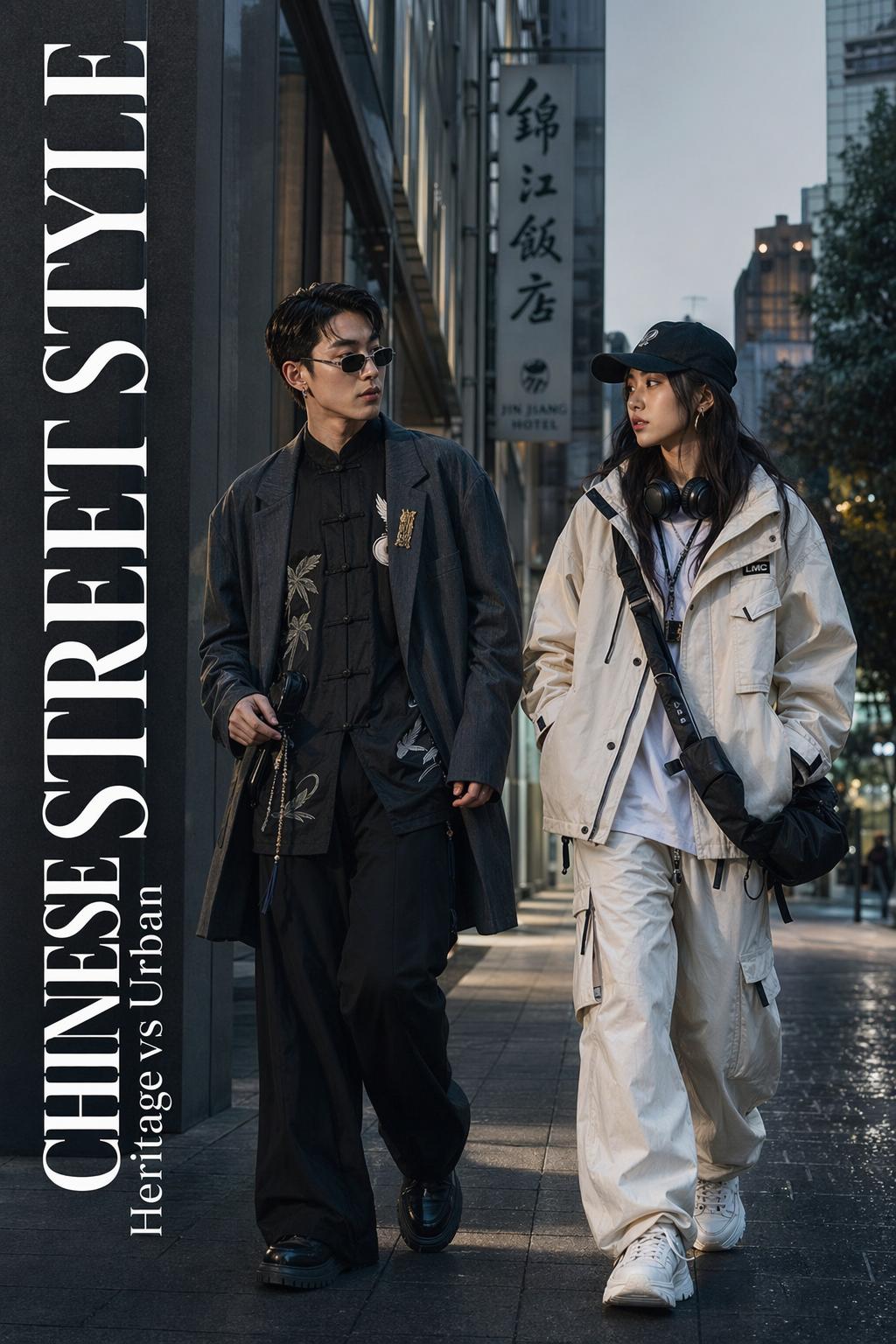
To identify each one, look at what leads the outfit. If a Mandarin collar, traditional motifs, or a heritage-coded piece defines the composition, you are likely reading a traditional lane. If oversized outerwear, utility details, track pants, and proportion play define the composition, the look is likely modern. The most sophisticated outfits combine both directions carefully, using one as the statement and the other as the frame.
That balance is what keeps chinese street style fashion compelling. It is not static, and it is not singular. It moves between cities, across platforms, through fashion weeks, and into everyday wardrobes while holding onto the tension that made it distinct in the first place.
FAQ
What is chinese street style?
Chinese street style is a contemporary urban fashion movement shaped by cities such as Shanghai, Beijing, and Chengdu, amplified by platforms like TikTok, Douyin, and Xiaohongshu, and defined by a visible mix of modern streetwear and references to Chinese fashion identity.
What is the difference between traditional Chinese streetwear and modern Chinese streetwear?
Traditional Chinese streetwear usually emphasizes cultural details such as Mandarin collars, traditional motifs, or print-led accents within a contemporary outfit, while modern Chinese streetwear focuses more on oversized silhouettes, utility elements, track pants, and streetwear layering rooted in urban proportion and platform visibility.
Which cities are most associated with chinese street style fashion?
Shanghai, Beijing, and Chengdu are the most frequently associated cities, with Xintiandi in Shanghai, Sanlitun in Beijing, and Taikoo Li in Chengdu often cited as key districts where chinese street style is especially visible.
How did TikTok influence chinese street style?
TikTok helped expose chinese street style to global audiences by circulating short-form videos of outfits and street scenes from districts such as Xintiandi, Sanlitun, and Taikoo Li, making the movement more recognizable outside China.
What role do Douyin and Xiaohongshu play in chinese fashion street?
Douyin and Xiaohongshu are important fashion communities that shape how looks are documented, shared, and repeated, especially in relation to outfit inspiration, creator-driven styling, and the rapid spread of modern Chinese streetwear aesthetics.
Who are important names connected to Chinese style today?
Angel Chen and Shushu/Tong are key names in the broader conversation because they are linked to contemporary Chinese fashion identity and Shanghai Fashion Week, helping connect designer influence with the way chinese street style is understood today.
How can I recreate chinese street wear without making it look forced?
Start by choosing one main direction: either a heritage-coded focal piece for a traditional approach or an oversized, utility-based silhouette for a modern approach, then keep the rest of the outfit supportive so the composition stays clear and balanced.
Is chinese street style more polished in Shanghai than in Beijing or Chengdu?
Shanghai often reads as more polished because of its strong connection to fashion-week culture and a more edited street style finish, while Beijing can feel more assertive and Chengdu often feels more playful and youth-culture driven, especially around Taikoo Li.
Can traditional motifs work in everyday chinese street style fashion?
Yes, but they usually work best when used selectively, with one motif-led or Mandarin-collar piece acting as the visual anchor and the rest of the outfit kept relatively simple to maintain silhouette balance and wearability.