Acubi style for Real Life: Clean Layers, Neutral Tones
Acubi style, decoded: minimalist structure with a Korean-streetwear edge
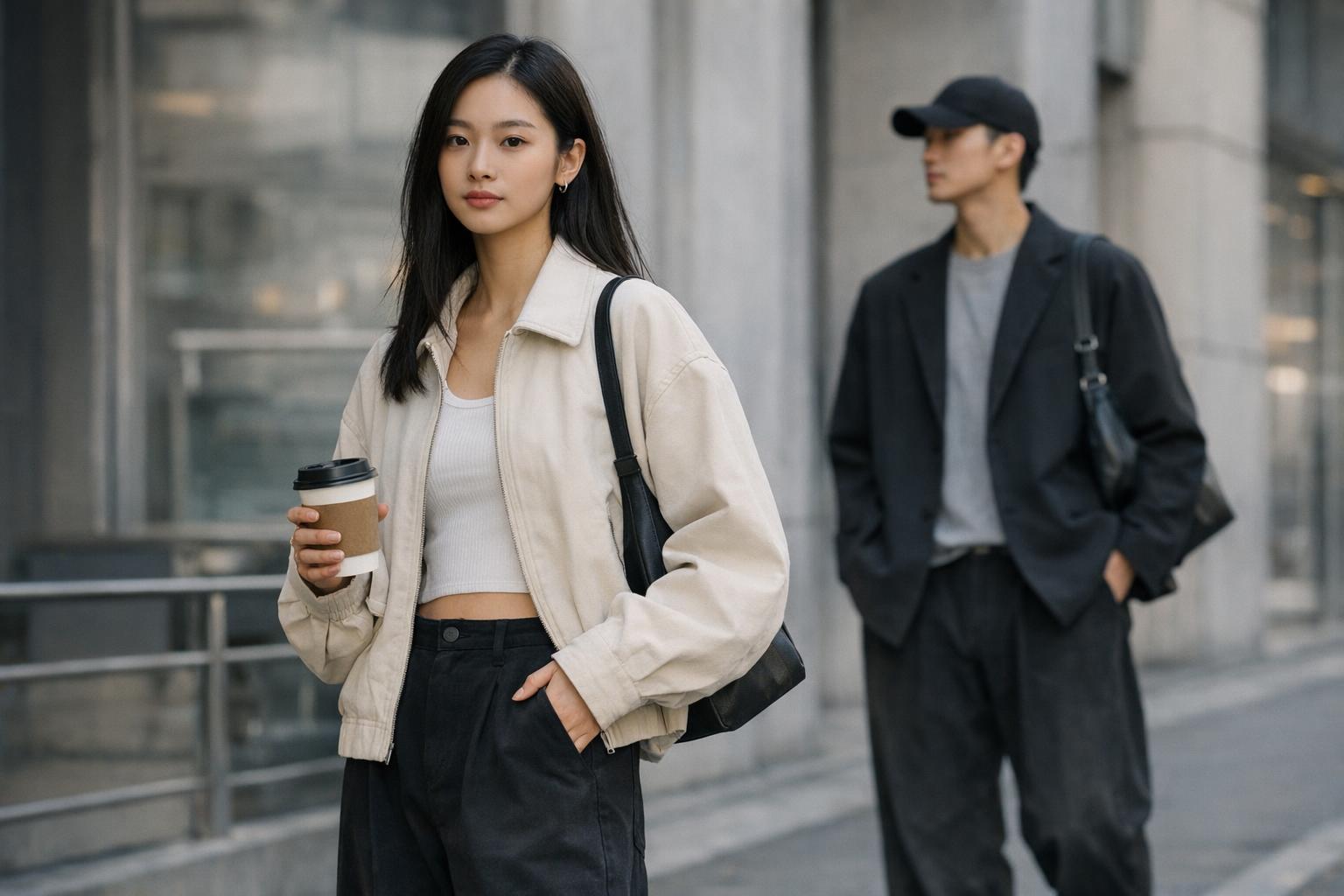
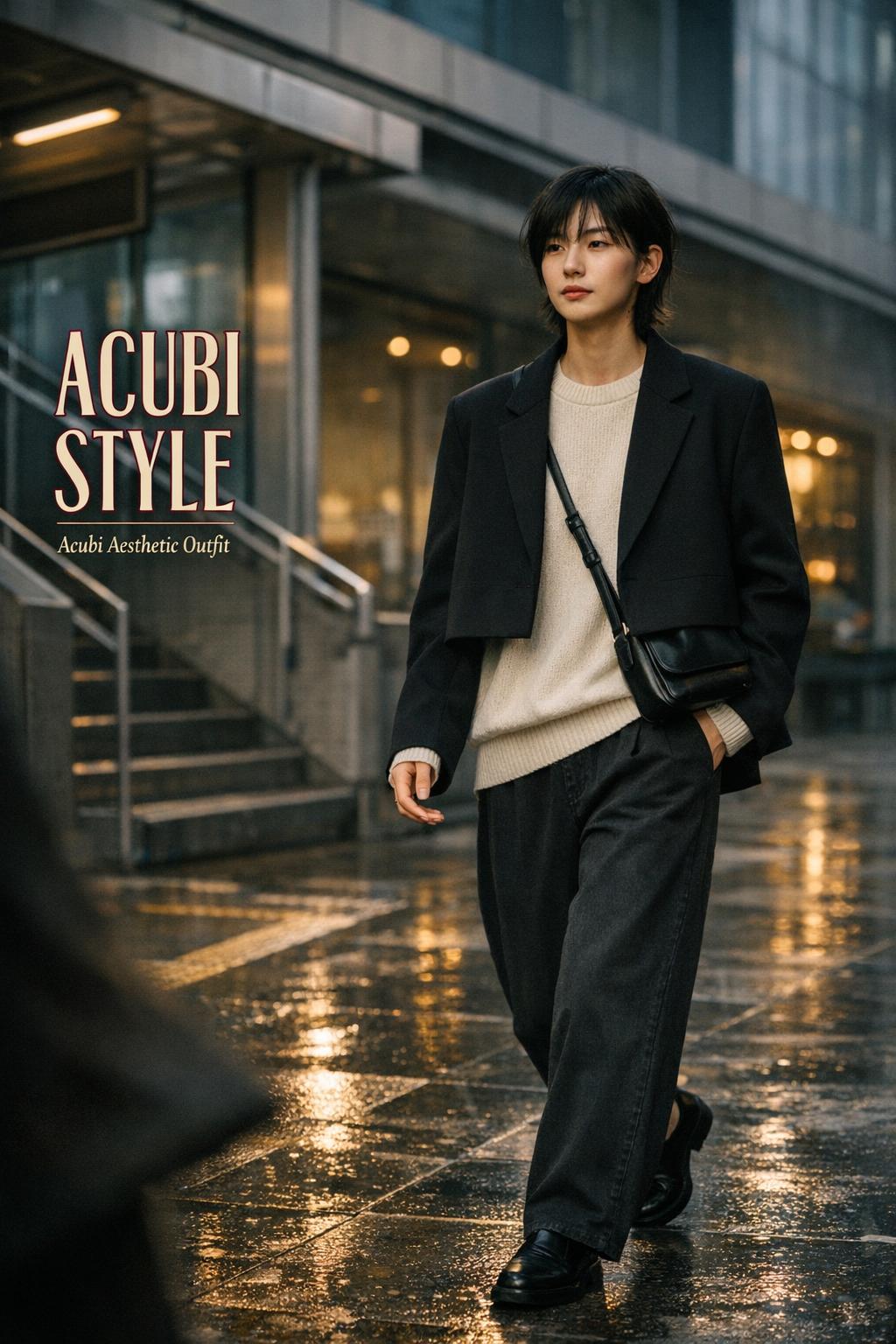
Acubi style shows up most clearly in real life on the days when you need your outfit to handle everything—commuting, long hours, unpredictable temperatures—without looking like you dressed for “survival.” The aesthetic reads controlled, modern, and intentionally simple, yet it still has the streetwear energy that keeps it from feeling flat. Think minimalist fashion principles applied with Korean fashion influence, then sharpened by proportion play (oversized silhouettes, relaxed tailoring) and the occasional Y2K echo.
This is why the acubi style aesthetic keeps gaining traction beyond its origin context: it’s built on repeatable outfit logic. Neutral color palette choices reduce decision fatigue. Layering adds depth without requiring loud prints. The silhouette balance does the heavy lifting—wide-leg bottoms and roomy tops create presence even when the palette is black, white, and earth tones. If you’re collecting acubi inspo outfits on Pinterest, you’re usually reacting to that clean impact: an outfit that’s easy to wear, hard to misread, and comfortable enough to live in.
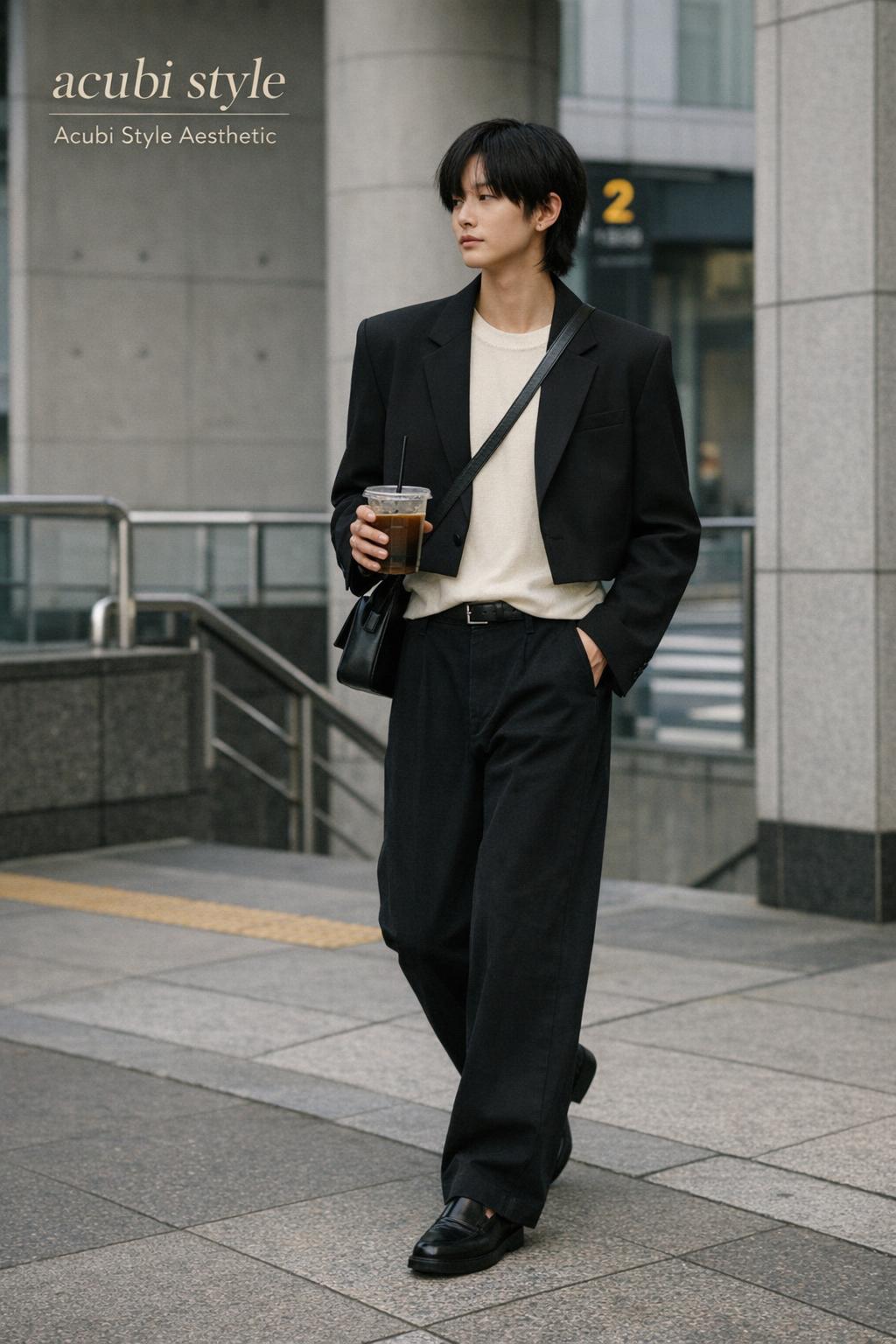
Below is a complete, practical breakdown of what defines acubi style, how to build it with high-utility pieces, how to compose acubi fashion outfit combinations for different settings, and how to shop the look thoughtfully—without turning a minimalist wardrobe into a pile of near-duplicates.
What is acubi style? Definition, origins, and the core principles
At its most useful definition, acubi style (often discussed interchangeably with “acubi fashion”) is a minimalist, modern, often gender-neutral way of dressing rooted in Korean fashion influence and supported by a neutral palette, clean lines, and confident layering. It’s less about a single “signature item” and more about a system: a set of repeatable outfit rules that keep the look cohesive across seasons and occasions.
Found the dress? Keep the rest in one place.
Zarellea brings guest details, vendors, timelines, and every next step together — so your wedding plan feels as good as your look.
Origins: from acubi club to global influence
Many discussions trace the term’s origin back to “acubi club,” with the style then gaining broader recognition through Korean-minimalist framing and later spreading into global wardrobes. The global adoption makes sense: the outfits translate well across contexts because they prioritize comfort with style, rely on high-function basics, and use simple color coordination—elements that can be executed with pieces from many closets and price points.
Core principles that keep the look recognizable
The acubi style aesthetic stays consistent when you treat it like wardrobe architecture. Each principle solves a specific styling problem—how to look put together with minimal effort, how to layer without bulk, how to keep streetwear from becoming sloppy, and how to make basics feel intentional.
- Minimalism with edge: simple pieces, but not timid proportions—oversized silhouettes and relaxed tailoring are key.
- Neutral color palette control: black, white, and earth tones create instant cohesion and allow texture to become the detail.
- Layering as structure: tonal layering adds depth and creates a visual hierarchy without heavy accessories.
- Comfort-led fit: the look is designed for movement; “wearable all day” isn’t a bonus, it’s the baseline.
- Unisex appeal: many acubi outfits work across gender presentations because the silhouette logic is not body-type-dependent.
- Light Y2K influence: selective throwbacks (like baggy denim or wide-leg shapes) show up, but usually restrained by minimalist styling.
When an acubi aesthetic outfit fails, it’s usually because one of these principles gets overdone: the silhouette becomes shapeless, the palette becomes dull without texture, or the layering becomes bulky instead of clean.
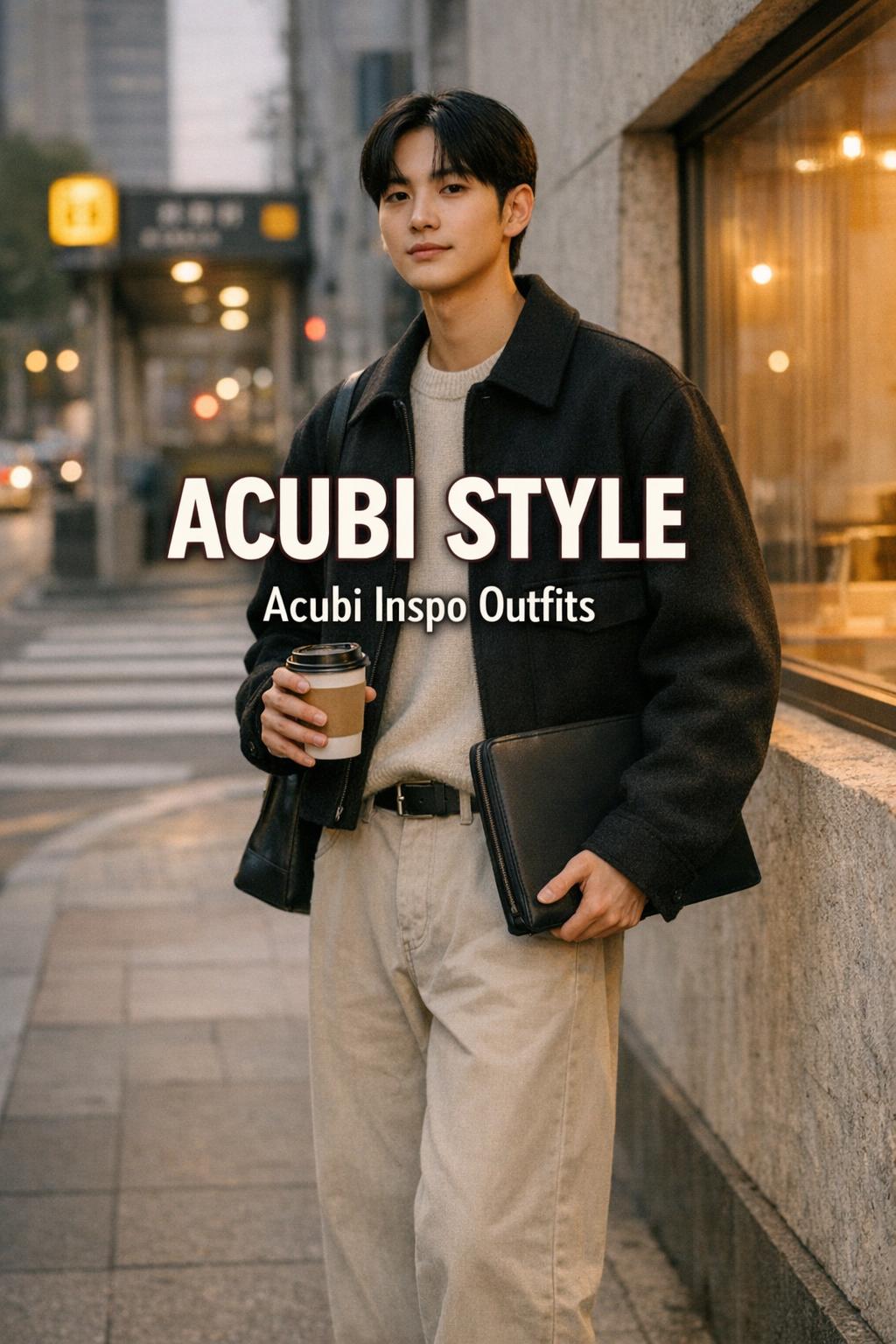
The visual language of the acubi style aesthetic: palette, texture, silhouette
Acubi is often described as “minimal,” but the best examples don’t rely on minimalism alone. They rely on visual strategy: tonal layering, texture contrast, and proportion play. If you focus only on buying neutral basics, the result can look unfinished. If you understand the visual language, even simple garments read styled.
Color palette: neutral, earth tones, black & white—with deliberate repetition
The acubi style palette typically lives in neutrals, earth tones, and black-and-white combinations. The trick is repetition: echo a color at least twice in an outfit so it looks designed, not accidental. For example, black pants + black shoes creates a long line; a white tee then becomes a clean highlight rather than a random contrast.
Platforms that collect palette-first acubi inspo outfits often show the same principle: keep the palette quiet so the silhouette can speak. This is why “acubi outfits aesthetic” boards frequently look cohesive even when the individual pieces vary.
Fabrics and textures: cotton, denim, knit, with leather accents as punctuation
With a minimalist palette, fabric behavior becomes your pattern. Cotton gives a clean base. Denim adds weight and streetwear credibility. Knit softens the look and improves comfort. Occasional leather accents can function like punctuation—small, sharp, and grounding—without turning the outfit into a statement costume.
Texture contrast is what makes an acubi fashion outfit feel intentional: matte cotton against rigid denim; a smooth outer layer over a knit; a structured piece paired with relaxed pants. The outfit remains simple, but not one-note.
Silhouettes: oversized, relaxed, and tailored minimalism in balance
Oversized silhouettes are common in acubi style, but “oversized” works best when it’s balanced by one controlled element. The easiest formula is oversized on top + straighter or wide-leg bottom, then a defined shoe to anchor the hemline. Tailored minimalism can also show up as a cleaner outerwear line over relaxed basics, giving the outfit a crisp outline without sacrificing comfort.
Wide-leg denim is a recurring anchor piece in the space—seen even in product interpretations like MAUV STUDIO’s “acubi wide leg jeans,” where the name itself signals that the silhouette aligns with the trend’s relaxed, street-ready base.
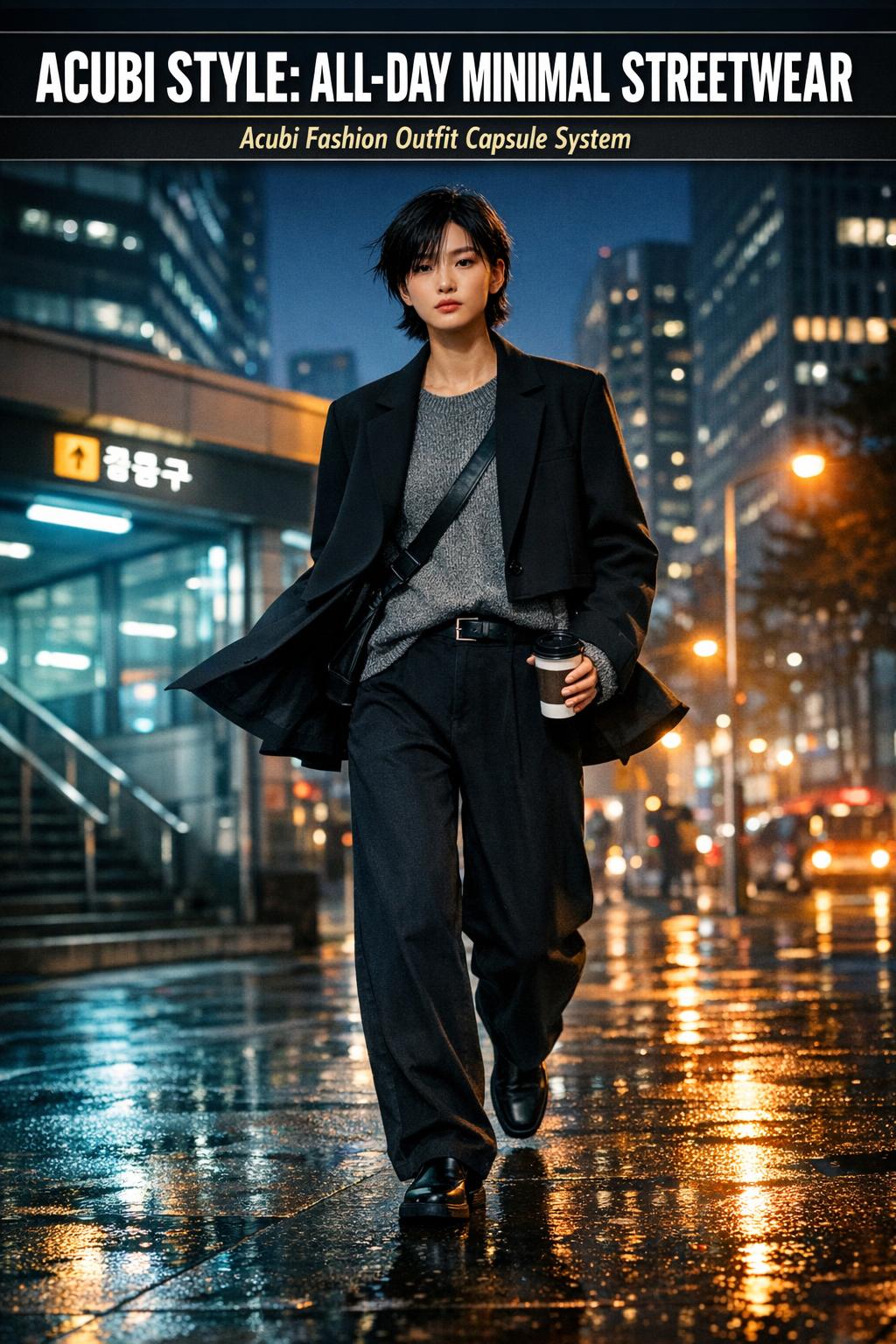
Style mechanics: why layering is non-negotiable in acubi fashion
Layering is not decoration in acubi style; it’s engineering. It creates depth in a neutral palette, controls proportions, and adds practical temperature flexibility—especially useful for U.S. daily life where indoor AC and outdoor heat can collide in the same afternoon.
Tonal layering: depth without visual noise
Tonal layering means stacking similar shades—black on black, cream on beige, charcoal with soft gray—so the eye reads one cohesive column. The outfit looks elevated because the separation comes from texture and silhouette, not from color blocking. This is a key reason acubi outfits photograph well: the lines are clear even when the palette is quiet.
Proportion layering: using length to create a visual hierarchy
Acubi layering is strongest when it uses length differences to create hierarchy: a longer base layer under a slightly shorter outer layer, or a structured layer that frames a softer inner texture. The goal is a readable outfit composition—your eye should know what the “base,” “mid,” and “top” layers are at a glance.
Comfort-led layering: practical warmth without bulk
Because comfort is prioritized, acubi style layering should not restrict movement. Avoid stacking multiple heavy pieces; instead, choose one primary warmth layer and keep the rest lightweight. The outcome is a clean silhouette that still performs in daily wear.
Tips: If your layers feel bulky, simplify one variable. Either reduce fabric weight (swap a heavy knit for a lighter one) or reduce volume (keep the inner layer closer to the body when the outer layer is oversized). Acubi works when the silhouette is relaxed, not swollen.
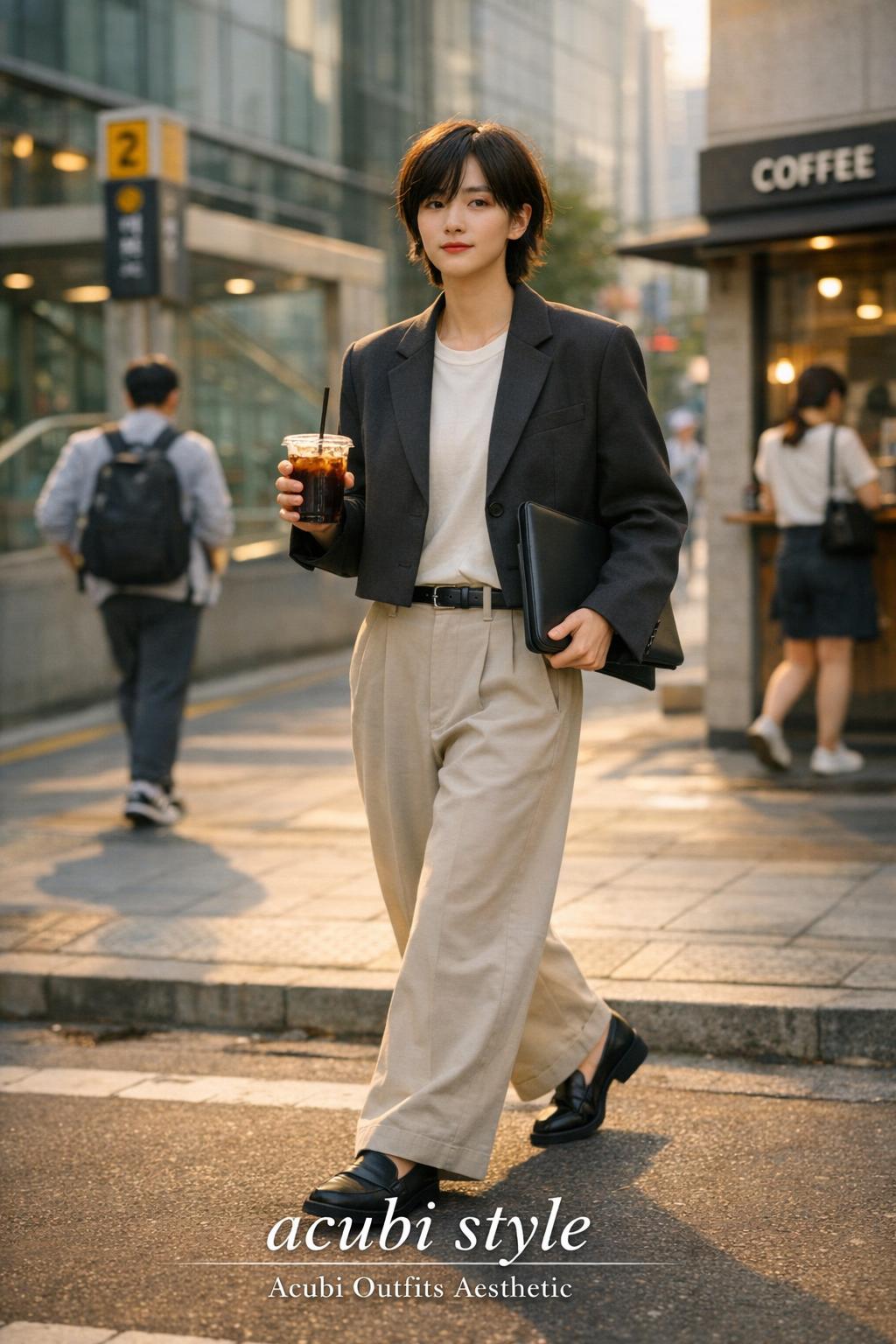
Building an acubi capsule wardrobe without buying duplicates
Acubi style naturally aligns with a capsule wardrobe mindset because the aesthetic relies on high-utility basics, neutral tones, and repeatable outfit formulas. The risk is overbuying “the same piece in five versions,” which creates clutter while still leaving you feeling like you have nothing to wear. The smarter approach is to build a small set of pieces that differ by function: one provides structure, another provides drape, another provides texture.
Core pieces: tops, bottoms, outerwear that create multiple silhouettes
- Essential tops: clean, high-quality basics (tees and simple tops) that layer smoothly under outerwear.
- Bottoms with shape: wide-leg pants or wide-leg denim as the relaxed anchor; straighter options for a cleaner line when needed.
- Outerwear as structure: one piece that provides a defined outline over soft layers, creating tailored minimalism without stiffness.
Notice the focus: not “buy many items,” but “buy pieces that do different jobs.” In acubi style, the same neutral top can read casual, office-appropriate, or event-ready based on the outer layer and the pant silhouette.
Footwear and accessories: subtle accents, not competing statements
Acubi styling tends to keep accessories subtle so the outfit remains clean. Rather than turning jewelry into the focal point, use accessories as alignment tools: they echo the palette, reinforce the silhouette, and keep the look polished. This is especially important for unisex styling, where the outfit’s structure often replaces overt “dressy” signals.
Tips: If your outfit feels too plain, add one textural accent (a knit layer, a denim switch, or a leather accent) before adding multiple accessories. Acubi looks elevated when the outfit composition is strong on its own.
Layering techniques that make a small capsule feel expansive
The fastest way to multiply a capsule is to rotate which layer plays the “visual anchor.” Some days the anchor is wide-leg jeans; other days it’s a structured outer layer. The base pieces remain the same, but the hierarchy changes, and that reads as a new outfit.
For example, if wide-leg denim is your constant, rotate between a clean cotton base + knit layer one day, then a more structured layer the next. This approach aligns with the acubi style aesthetic: repeatable, intentional, and built for real life.
Acubi inspo outfits that work in the real world (and why they work)
The most useful way to use acubi inspo outfits is to translate them into formulas you can repeat. Below are outfit compositions you can adapt, with the styling logic spelled out: silhouette balance, tonal layering, texture contrast, and occasion fit. This is not about copying a single photo; it’s about understanding the mechanics that make acubi outfits aesthetic boards so consistent.
Casual day uniform: wide-leg denim + clean top + light layer
This is the backbone acubi fashion outfit for errands, coffee runs, and day plans that stretch longer than expected. Wide-leg denim creates the relaxed base; a clean top keeps the center clean; a light outer layer adds a third dimension and prevents the look from reading as “just jeans and a tee.”
Why it works: the wide-leg silhouette provides presence, while the neutral palette keeps it controlled. If you’re using a piece like MAUV STUDIO’s acubi wide leg jeans as the anchor, the rest of the outfit can stay minimal and still feel “styled” because the pant shape carries the aesthetic.
Tips: Keep the hemline intentional. Wide-leg pants look most deliberate when the shoe line is clean and the pant length doesn’t bunch excessively. Acubi is relaxed, but it’s not careless.
Tonal black column: black top + black wide-leg pants + texture swap
A black-on-black base is a classic acubi outfits aesthetic move because it creates an instant elongated line. The key is to prevent it from becoming flat by introducing a texture swap—cotton paired with denim, or knit layered under a smoother outer piece.
Why it works: tonal layering creates cohesion, while texture contrast creates depth. This formula also travels well across settings—casual, semi-polished, and night plans—because black reads intentional and modern.
Neutral earth tone set: cream/white base + earth tone layer + dark anchor
For those who want the acubi style aesthetic without living in all black, this formula uses neutral and earth tones with one dark anchor (often the bottom or shoes). The result is softer, still minimalist, and seasonally flexible.
Why it works: the lighter base brightens the look, the earth tone adds warmth, and the dark anchor grounds the silhouette so it doesn’t feel washed out. This is especially effective for daytime photos where pure black can feel harsh.
Office-appropriate acubi: tailored minimalism over relaxed basics
Acubi style can translate to office environments when you push the outfit slightly toward tailored minimalism. Use a clean base (neutral top and simple bottom) and add one structured layer that defines the outer line. Keep accessories subtle and let the silhouette do the professional signaling.
Why it works: the structured layer sets boundaries for oversized silhouettes, ensuring the outfit reads composed rather than oversized-for-oversized’s-sake. It’s a practical compromise between comfort-led dressing and workplace expectations.
Night-out acubi aesthetic outfit: darker palette + sharper contrast in texture
For nights out, acubi doesn’t need sparkle to feel event-ready. Instead, it leans into a darker palette and increases texture contrast—pairing smoother fabrics with denim or knit elements, and using clean lines to keep the look modern.
Why it works: nighttime lighting favors simple silhouettes and clear lines. A controlled palette lets texture do the work, and the overall outfit composition stays confident without becoming loud.
Common acubi style mistakes that dilute the aesthetic
Because acubi style is built on basics, it’s easy to miss the details that make it look intentional. Most missteps come from treating minimalism as “less effort” instead of “more precision.”
- All-neutral, no dimension: if every piece is the same texture and tone, the outfit can look unfinished. Add texture contrast or a clear layering hierarchy.
- Oversized without balance: oversized silhouettes need one controlled element (a cleaner layer, a more defined hemline, or a stable bottom shape).
- Layering that adds bulk: acubi layering should create depth, not thickness. Choose lighter layers or reduce volume in one piece.
- Too many “micro-trends” at once: Y2K influence works best as a subtle nod (like baggy denim), not as a full costume layered onto minimalism.
- Comfort ignored: acubi is comfort-oriented; if the outfit restricts movement, it’s missing a core principle of the style.
Tips: Before you add anything, check the silhouette from three angles: front, side, and seated. Acubi outfits are often worn for long days; if the layers ride up, bunch, or twist when you sit, adjust fit or fabric weight. Comfort is part of the visual polish.
Where brands and product interpretations fit in: from mood to purchase
Acubi style is primarily an aesthetic and a styling system, but it also shows up in brand language and product naming. When an item is labeled “acubi” (as with MAUV STUDIO’s acubi wide leg jeans), it usually signals a specific silhouette and vibe: relaxed, street-ready, and easy to integrate into a neutral, layered wardrobe.
MAUV STUDIO and the “acubi” denim anchor
Wide-leg denim functions as an acubi wardrobe workhorse because it anchors proportion play: it gives volume at the bottom, which makes it easier to layer on top without looking top-heavy. A product like acubi wide leg jeans acts as a ready-made foundation for multiple acubi aesthetic outfit combinations—casual, tonal, or slightly dressed up depending on the upper layers.
Palette-first inspiration platforms and why they influence acubi
Acubi inspiration is often consumed visually through palette collections and mood-driven outfit boards, where the neutral color coordination and streetwear basics are the main signal. This is consistent with the style’s strengths: it reads quickly in a grid, and the outfit logic is easy to replicate if you understand layering and silhouette balance.
Shopping guide: how to buy acubi-style pieces without fast-fashion regret
Because acubi style relies on basics, shopping can feel deceptively simple: “just buy neutrals.” The smarter strategy is to shop for performance—fabric, construction, and fit—so your capsule stays crisp after repeated wears. This matters even more if you’re building multiple acubi fashion outfit options from a small set of garments.
Where to shop: reputable brands vs quick racks
Acubi can be sourced through brand-driven interpretations (including e-commerce product pages that explicitly label silhouettes as “acubi”) or by building the look with high-quality basics. The trade-off is consistency: quick, low-quality basics can lose shape, which is a problem in a style where silhouette and clean lines are the main design features.
Quality indicators that matter in minimalist wardrobes
- Fabric hand-feel and weight: basics should drape cleanly; flimsy fabric can collapse and look untidy.
- Construction and seams: clean finishing supports the “elevated minimal” reading.
- Fit consistency: if you plan to layer, ensure the base layer doesn’t bunch under outer pieces.
- Denim structure: wide-leg jeans need stable shape to avoid looking sloppy after wear.
Tips: Test a piece for layering compatibility before committing. Put it on under your most structured outer layer and move around—raise arms, sit, walk. If it twists or binds, it won’t serve you in an acubi capsule where repeat wear and layering are standard.
Acubi in the U.S.: making Korean-minimalist logic work with American daily life
Acubi fashion is frequently framed through Korean fashion influence, but its global reach comes from practicality. In the U.S., the style adapts well to long commutes, variable dress codes, and temperature swings—exactly the conditions where layering and neutral palettes outperform trend-heavy outfits.
The most successful acubi style wardrobes in a U.S. context are built around “transition outfits”: combinations that can look polished enough for a meeting, relaxed enough for errands, and comfortable enough for extended wear. This is why unisex, comfort-led styling becomes a functional advantage, not just an aesthetic preference.
Climate and season realities: the hidden reason acubi layering stays relevant
Layering is the quiet engine of acubi style because it supports seasonal context without forcing a new wardrobe every few months. A neutral base can be worn alone in heat, then upgraded with additional layers when temperatures drop. The key is to keep the overall outline clean so the outfit remains minimalist rather than bulky.
Tips: Use one “temperature control” layer per outfit. If your base is breathable cotton, your added layer can be knit or a structured outer piece. Avoid stacking multiple heavy layers, which can compromise the sleek lines that define the acubi style aesthetic.
Trend trajectory: history signals, Y2K influence, and where acubi might go next
Acubi style sits at an intersection: minimalist fashion, streetwear basics, Korean fashion influence, and selective Y2K influence. The Y2K element is most visible through relaxed denim and baggy silhouettes, but acubi tends to filter those references through minimalism—meaning the styling remains controlled rather than nostalgic-heavy.
As the aesthetic continues to circulate through digital outfit boards and palette-based inspiration, acubi becomes increasingly defined by repeatable wardrobe logic: neutral palettes, layering, and proportion play. That’s also why it’s likely to keep evolving through curated lookbooks and digitally assembled wardrobes—systems that reward cohesion, modularity, and clear silhouette signatures.
Acubi vocabulary: the terms that help you style it accurately
Part of building consistent acubi outfits is being precise about what you’re trying to achieve. These terms act like a styling checklist—if your outfit is “missing something,” it’s usually missing one of these components.
- Silhouette balance: distributing volume intentionally (for example, wide-leg bottoms with a controlled layer on top).
- Tonal layering: stacking similar tones to create depth without high contrast.
- Texture contrast: using fabric variation (cotton, denim, knit, leather accents) to add dimension in neutral outfits.
- Visual anchor: the piece that holds the outfit together—often wide-leg jeans or a structured outer layer.
- Outfit composition: the hierarchy of base, mid, and top layers that keeps minimalism from looking unfinished.
Once you can identify the anchor and the hierarchy, creating an acubi aesthetic outfit becomes a repeatable process rather than a daily guessing game.
FAQ
What is acubi style in simple terms?
Acubi style is a Korean-influenced minimalist fashion approach built around neutral color palettes, clean lines, oversized or relaxed silhouettes, and layering that adds depth while staying comfortable and modern.
Is acubi style the same as acubi fashion?
In most usage, yes—both terms describe the same aesthetic system: minimalist, comfort-led styling with Korean fashion influence, often featuring neutral palettes, layering, and oversized silhouettes with occasional Y2K-inspired shapes.
What colors are used in the acubi style palette?
The acubi style palette typically centers on neutrals and earth tones, including black and white; the look stays cohesive by repeating tones and using texture contrast rather than loud color combinations.
How do I start building an acubi capsule wardrobe?
Start with high-utility basics that layer well, add one or two silhouette-defining bottoms like wide-leg pants or wide-leg denim, and include an outer layer that provides structure; prioritize fit, fabric behavior, and layering compatibility so your small set of pieces creates many outfits.
What makes an acubi fashion outfit look intentional instead of plain?
An intentional acubi fashion outfit has a clear silhouette strategy (balanced volume), a controlled neutral palette, and at least one dimension-builder such as tonal layering or texture contrast (for example, cotton with denim or knit) so minimalism reads as designed rather than unfinished.
How important is layering in acubi outfits aesthetic styling?
Layering is central because it creates depth in neutral palettes, builds a clean hierarchy between base and outer pieces, and adds practical temperature flexibility while maintaining the modern, minimalist outline associated with acubi style.
Is acubi style unisex?
Acubi style is often framed as gender-neutral because it relies on silhouette balance, relaxed fits, and minimalist basics rather than gender-specific styling cues; many acubi outfit formulas translate easily across different presentations.
What’s an example of a brand using “acubi” in a product context?
MAUV STUDIO uses “acubi” in product naming, such as acubi wide leg jeans, which aligns with the aesthetic’s emphasis on relaxed silhouettes and denim as a versatile streetwear anchor.
How do I avoid fast-fashion pitfalls when shopping for an acubi aesthetic outfit?
Focus on quality indicators that matter in minimalist wardrobes—fabric weight and drape, clean construction, and fit consistency for layering—because acubi style depends heavily on silhouette and clean lines, which can degrade quickly when basics lose shape.