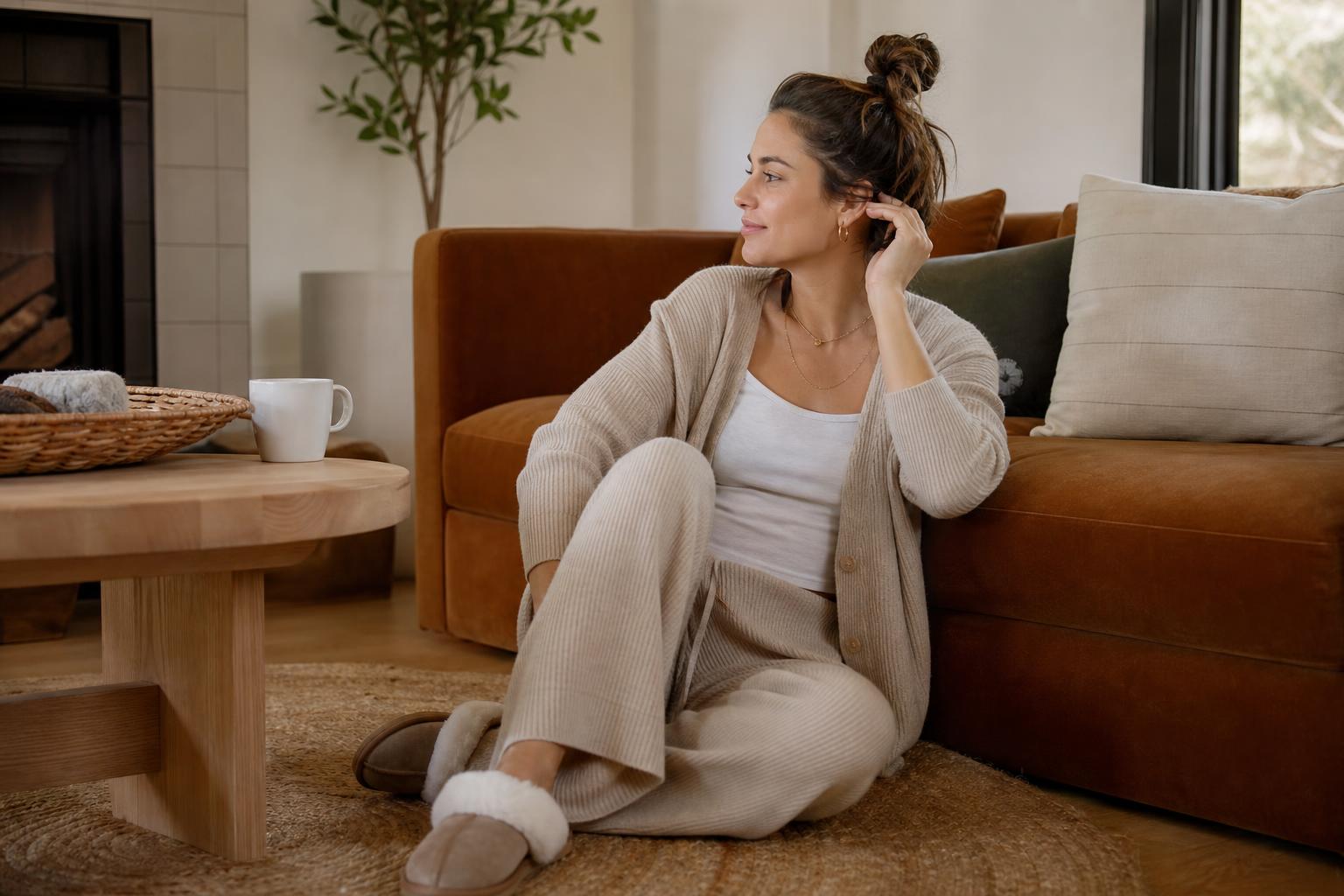
Home Style Outfit for Chic, Comfortable Days In
The modern home style outfit sits at the intersection of comfort, visual polish, and daily practicality. It is not simply loungewear, and it is not fully streetwear either. The strongest at-home looks are built with intention: soft fabrics that support ease, silhouettes that hold shape without feeling restrictive, and styling details that make even a quiet day at home look composed. Whether the setting is casual lounging, a work-from-home schedule, or hosting guests in the living room, the outfit composition matters because it influences both comfort and presentation.
A well-built home style outfit also reflects a broader shift in casual home fashion. Readers searching for cozy outfits, at-home wear, and work from home outfits are not only looking for ideas; they want clear outfit logic. Why does a knit dress feel more refined than a pajama set? Why do relaxed joggers work better with a structured top for video calls? Why do natural fibers and cozy textures consistently appear in the best homewear formulas? The answer is simple: a strong home wardrobe relies on balance. Softness needs structure, comfort benefits from proportion play, and simplicity often looks best when anchored by one thoughtful accessory.
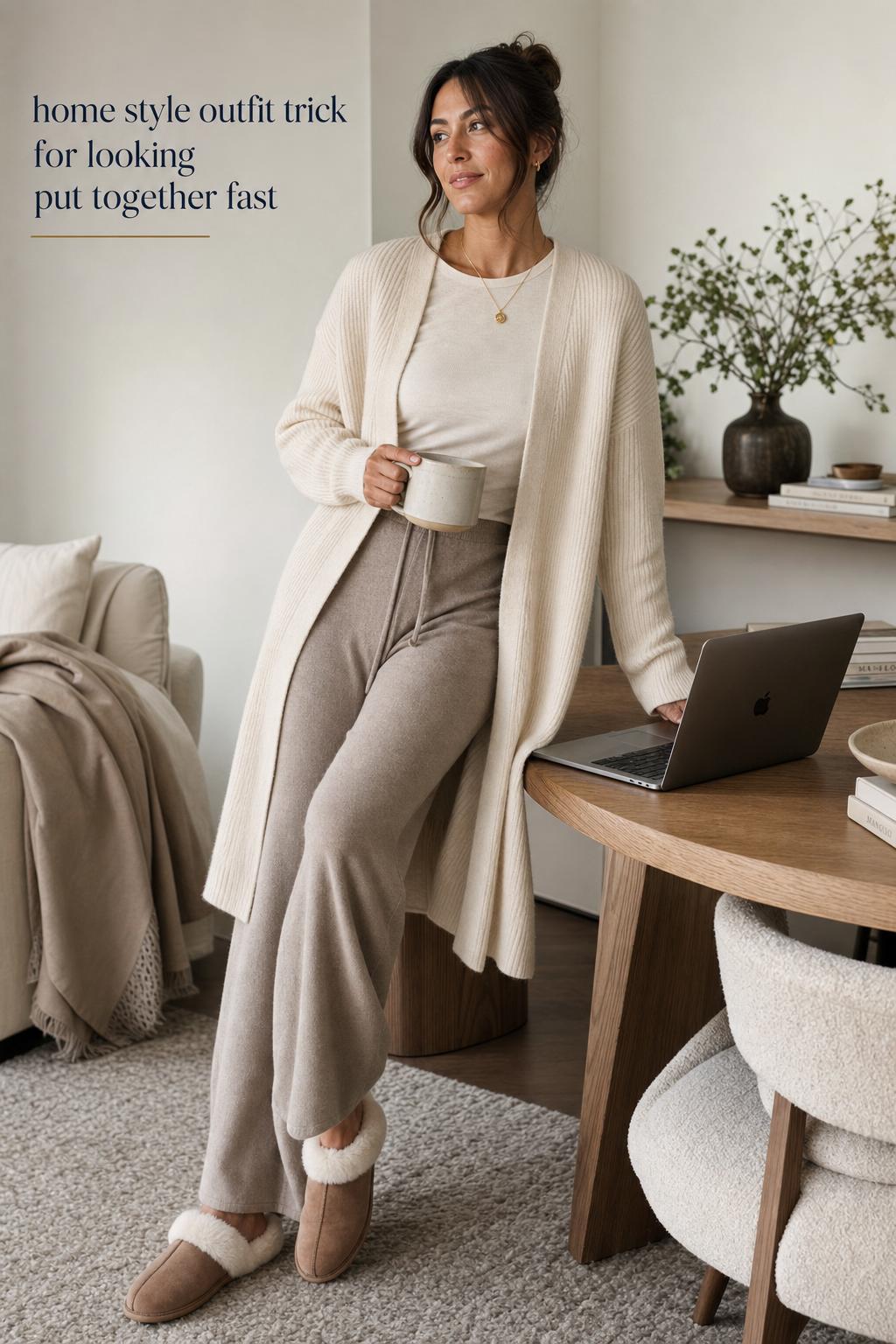
What a home style outfit actually means
A home style outfit is best understood as comfortable chic designed specifically for home life. It prioritizes ease of movement and tactile comfort while still maintaining enough visual clarity to feel intentional. This is the category that includes polished loungewear, relaxed knitwear, versatile wardrobe staples, and home-ready separates that can shift from lounging to a quick video call without looking accidental.
This definition matters because several related categories overlap. Loungewear is usually softer and more relaxed, often centered on lounging first. A pajama set is generally sleep-adjacent, with less emphasis on styling versatility. Streetwear is meant for public-facing environments and often relies on more directional styling choices. A home style outfit pulls from all three areas but translates them into an at-home fashion formula built around comfort, aesthetics, and versatility.
Found the dress? Keep the rest in one place.
Zarellea brings guest details, vendors, timelines, and every next step together — so your wedding plan feels as good as your look.
The three goals that shape every strong look
The best home-style ensembles consistently serve three purposes. First, they feel good over extended wear. Second, they look balanced enough to appear polished rather than unfinished. Third, they adapt to real home scenarios, from working at a desk to answering the door to hosting casually. That combination is why home outfit ideas built around tees, knitwear, leggings, wide-leg pants, and midi cardigans remain so effective.
- Comfort keeps the look wearable for long stretches of the day.
- Aesthetics ensure the outfit reads as deliberate rather than improvised.
- Versatility allows one base look to shift across multiple home settings.
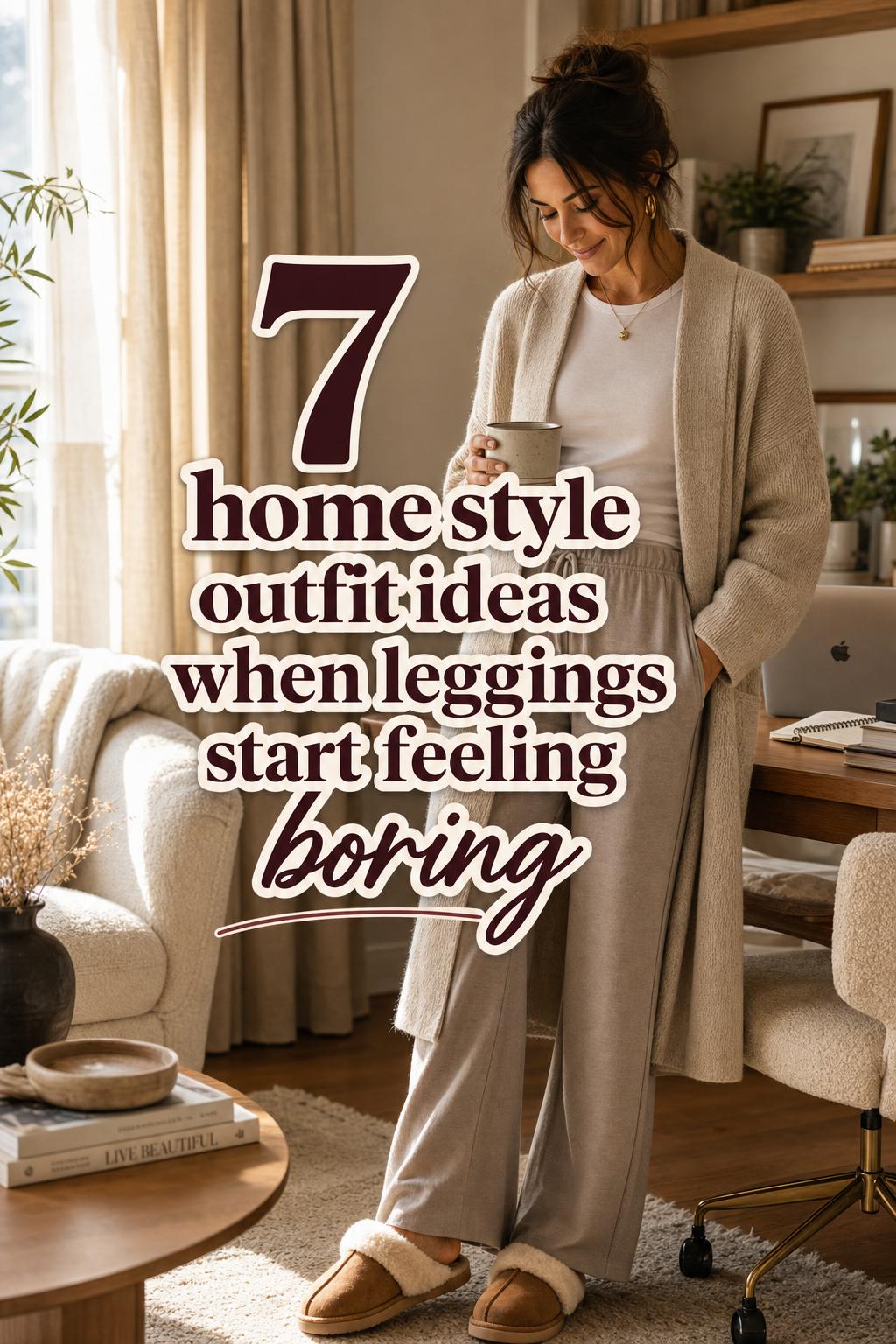
Where home wear ends and polished loungewear begins
The distinction often comes down to silhouette and finish. A simple pajama set may be soft and appealing, but it usually lacks the visual anchor needed for a refined home style outfit. By contrast, relaxed joggers paired with a clean tee and a midi cardigan create more shape and proportion. The outfit still reads as comfortable, but it also feels complete.
This is where casual chic becomes useful as a styling principle. Casual chic at home is not about dressing up excessively. It is about giving soft garments a point of structure. A scarf, jewelry, a belt, or a slightly more defined neckline can shift an outfit from purely functional to visually composed. This is also why wardrobe staples consistently outperform trend-heavy items in home styling. They are easier to pair, easier to repeat, and easier to adjust by season.
A practical taxonomy for home-ready dressing
One of the most useful ways to build clarity is to separate common categories by function. This avoids the common mistake of treating all comfortable clothing as interchangeable.
- Pajama sets: best for rest-driven routines, but not always ideal for a polished daytime appearance.
- Loungewear separates: flexible pieces such as lounge pants, tees, knitwear, and joggers that can be mixed for stronger outfit composition.
- Work from home outfits: comfort-based combinations with slightly more structure, especially around the neckline, shoulders, or top layer.
- Hosting looks: presentable homewear with cleaner silhouettes, thoughtful layering, and subtle accessories.
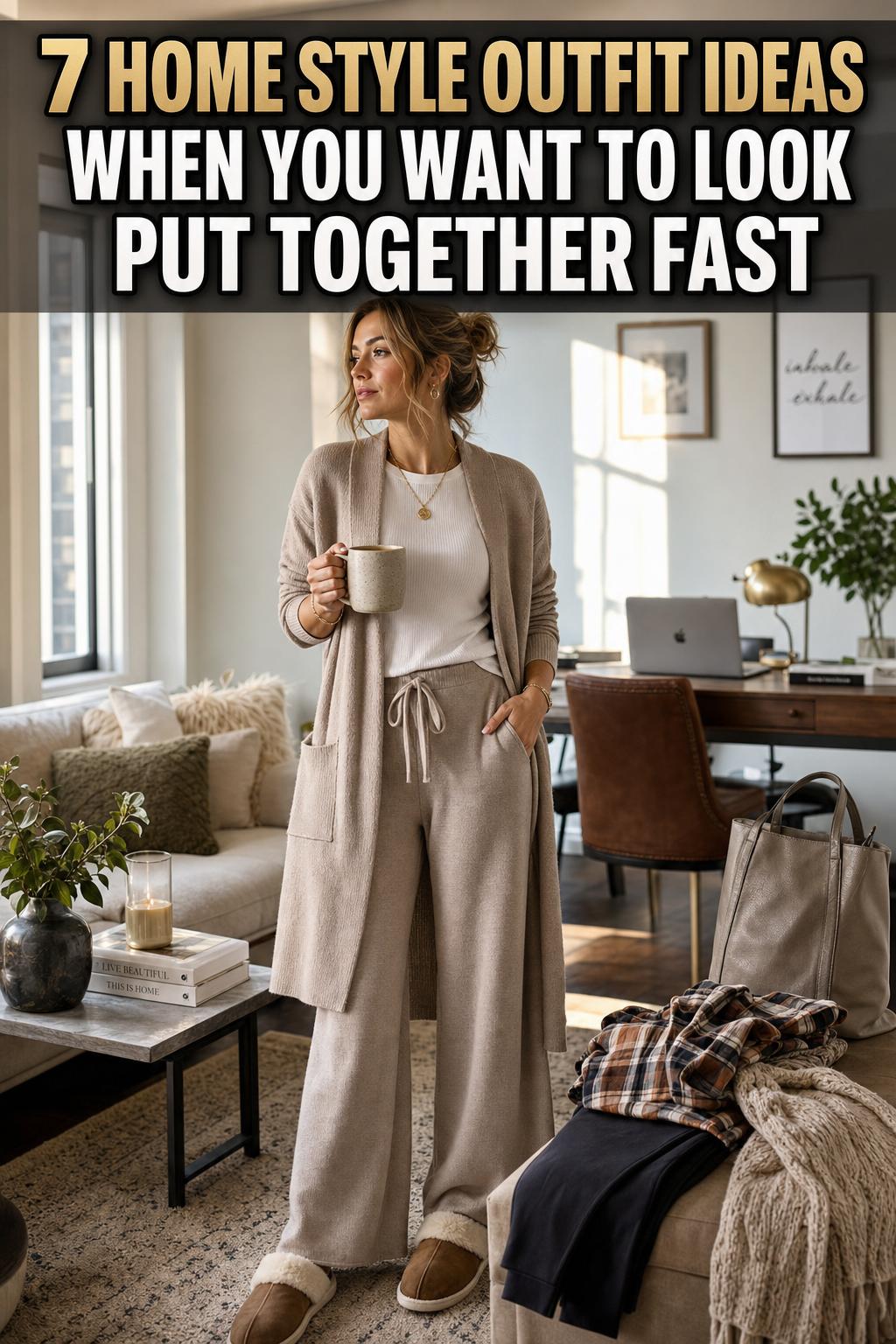
The foundation pieces that make home outfits look intentional
A cohesive home wardrobe does not require a large number of garments. It requires the right garment families. The strongest foundations mentioned across homewear content are tees, knitwear, leggings, sweaters, flannel shirts, thermal leggings, shirt dresses, wide-leg pants, lounge pants, and relaxed cardigans. These pieces work because they can either soften the silhouette or define it, depending on what they are paired with.
Fabrics that support comfort without losing shape
Fabric choice is one of the clearest separators between average and elevated home style. Cotton, bamboo, and cashmere blends are especially useful because they align comfort with visual quality. Natural fibers and cozy textures repeatedly stand out in successful homewear because they regulate comfort while also looking more refined than overly synthetic, limp alternatives.
Breathability matters in a home environment where temperature can shift from room to room. Insulation matters in winter when warmth is required without heavy bulk. Moisture control matters during long wear, especially for work-from-home days. These practical factors influence not only comfort but also how fresh an outfit looks by late afternoon.
Silhouettes with the right amount of ease
Relaxed does not mean shapeless. The most effective home silhouette usually includes one draped or soft element and one piece that provides visual definition. A knit dress offers a streamlined line with minimal effort. Relaxed joggers provide comfort but benefit from a cleaner top half. Wide-leg pants feel airy and modern, especially in summer homewear, but they need a controlled upper silhouette to avoid looking oversized overall.
- Knit dress: clean vertical line, easy to style, strong for low-effort polish.
- Relaxed joggers: ideal for lounging and work-from-home use when balanced with a sharper top layer.
- Midi cardigan: effective for tonal layering and light structure.
- Shirt dress: especially useful in warm weather because it combines airflow with visual clarity.
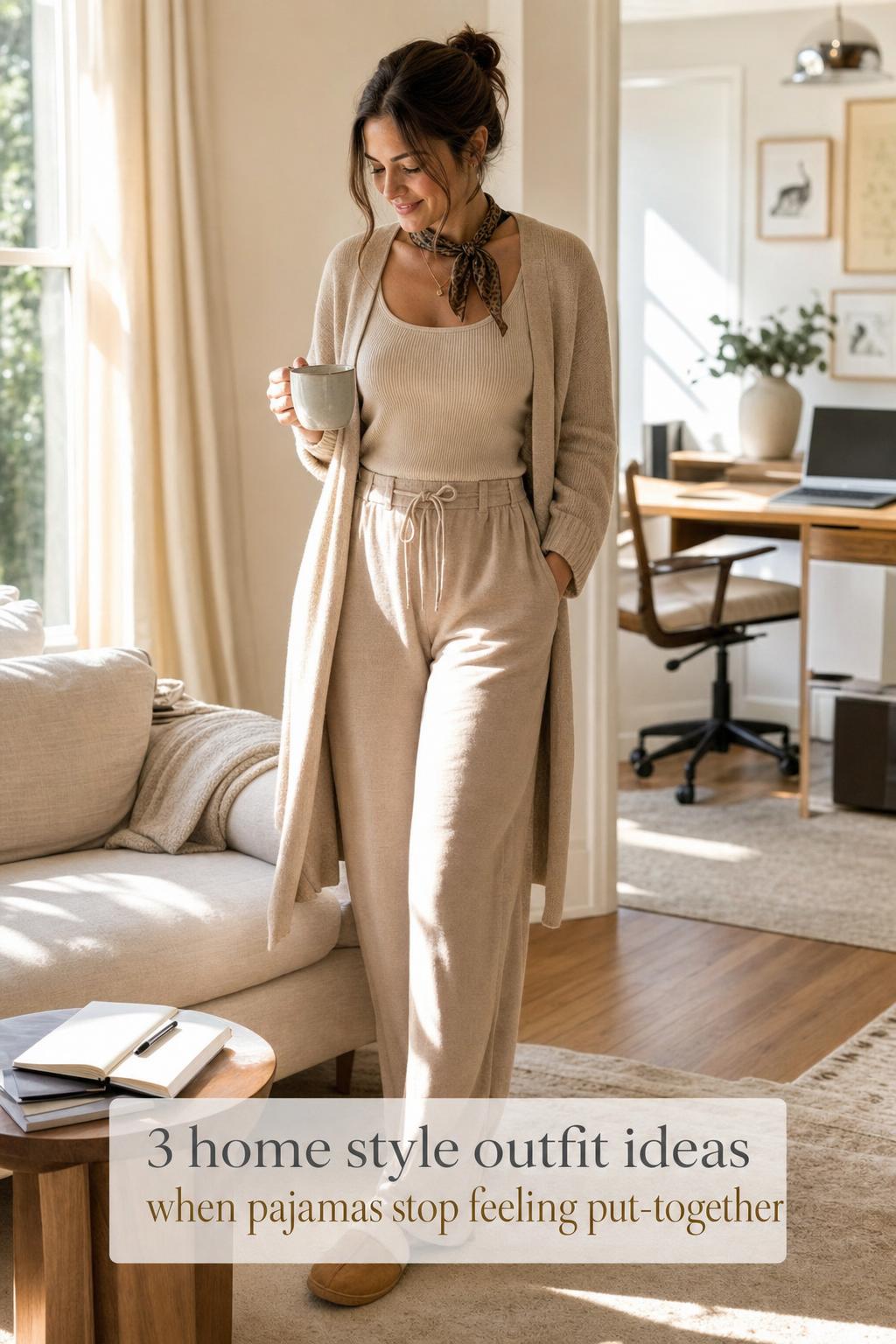
Outfit logic by scenario: what to wear at home and why it works
The most useful home outfit ideas are scenario-based. A look that works for a quiet morning may not suit a day filled with online meetings. A combination built for winter comfort may feel too heavy for summer homewear. The best home style outfit strategy is not a single uniform. It is a wardrobe system with formulas that fit different parts of home life.
For casual lounging: softness with one visual anchor
Casual lounging is where texture becomes the key styling tool. A soft sweater with lounge pants or leggings works because both pieces prioritize ease, but the outfit needs one anchor to avoid looking too flat. That anchor can be a scarf, a clean neckline, or jewelry. Even minimal accessorizing helps frame the look and creates a more intentional finish.
This type of outfit performs best when the textures are distinct enough to create depth. A fluffy knit paired with smoother leggings gives the eye contrast. A flannel shirt layered over a simple tee introduces pattern and warmth while keeping the silhouette relaxed. The goal is not to overdress for lounging. It is to make comfort visually coherent.
For working from home: structure at the top, ease at the base
Work from home outfits are often strongest when the upper half appears more composed than the lower half. This styling logic is practical. The visible area on a video call benefits from shape, while the rest of the outfit can stay comfort-led. A simple tee under a midi cardigan, or knitwear paired with relaxed joggers, creates a smart casual balance that reads professional enough without becoming formal.
Lawrence Zarian’s expert-driven comfort-and-style approach aligns well with this formula: wardrobe staples become more effective when they are arranged with versatility in mind. A top layer adds presence. A neutral palette keeps the look calm and focused. Soft fabrics support all-day wear. The result is not officewear adapted for home, but homewear refined for productivity.
For hosting or video calls: polish through proportion and accessories
Hosting at home and appearing on video both require a slightly sharper interpretation of at-home fashion. This is where jewelry, scarves, and a more defined silhouette matter most. A knit dress can be especially effective here because it feels comfortable yet reads as one complete look. A shirt dress offers similar ease with slightly crisper lines, making it ideal for warmer months.
The styling principle is straightforward: keep the palette controlled, then add one element of finish. A belt can define shape. Jewelry can brighten a simple knit. A robe-like outer layer or cardigan can create a polished frame. In practical terms, these additions take very little effort, but they significantly improve visual presence.
Seasonal homewear: winter warmth versus summer ease
Seasonal adaptation is one of the clearest differences between generic cozy outfits and well-considered home style. Winter home outfits rely on layering, thermal support, and cozy fashion elements such as knitwear, leggings, sweaters, and flannel shirts. Summer homewear shifts toward natural fibers, breathable silhouettes, shirt dresses, floral patterns, and wide-leg pants that encourage airflow and lightness.
Winter home outfits that avoid bulk
In colder months, layering is essential, but bulk can disrupt silhouette balance. Thermal leggings under lounge pants or beneath a longer top can create warmth without making the outfit heavy. Sweaters and knitwear are central because they deliver insulation and texture at once. A flannel shirt adds another practical layer and works especially well when the rest of the outfit is simple.
Celebrity-inspired winter homewear often leans into cozy textures and familiar staples rather than dramatic shapes. That makes sense. At-home winter styling succeeds when movement remains easy and the outfit still feels livable across a long day indoors. The most wearable formulas keep the lower half streamlined and let the upper layers provide warmth and visual interest.
Summer homewear that feels breathable but not underdressed
Warm-weather homewear is built on fabric and airflow. Natural fibers are especially valuable here, as are relaxed fits that prevent the body from feeling restricted. Shirt dresses and wide-leg pants are effective because they create movement around the body while still appearing styled. Floral patterns can also work well in this context, adding softness and seasonal lift without requiring extra layers.
The best summer home style outfit maintains visual ease. It should feel lighter in both fabric weight and color impression. Neutral palettes with one subtle accent often look more polished indoors than highly busy combinations. This is where minimalism and effortless style overlap: fewer pieces, stronger choices.
Color, texture, and pattern: the styling mechanics behind an elevated home look
A polished home outfit rarely depends on trend intensity. It depends on composition. Color theory, texture pairing, and fabric compatibility all influence whether a look feels calm, chic, or visually disjointed. Home environments tend to soften visual context, so outfits often benefit from palettes that feel cohesive rather than loud.
Why neutrals work so often indoors
Neutral palettes are common in home-ready styling because they create instant tonal harmony. Tees, leggings, sweaters, and cardigan layers in related tones feel composed with very little effort. This does not mean a home style outfit must be monochrome. A scarf, floral accent, or piece of jewelry can act as a controlled pop without breaking the overall calm of the look.
This approach also supports wardrobe organization. A curated closet based on compatible tones makes it easier to build outfit formulas quickly. That is one reason minimalism appears so frequently in discussions of effortless style at home. A smaller palette reduces friction and improves repeat wear.
Texture contrast creates depth when the palette is simple
When colors are restrained, texture does the expressive work. Knit plus satin, cotton plus fleece, and smooth leggings against plush sweaters all create visual movement. These combinations matter because they stop simple homewear from feeling flat. Even a basic tee becomes more considered when paired with a richer outer texture.
Fabric compatibility should guide these choices. Soft, draped fabrics pair best with pieces that offer at least a little shape. If every element is loose and matte, the outfit can lose definition. If every element is too structured, comfort declines. The strongest combinations sit between those extremes.
The accessory question: small details that change the whole outfit
Accessories are often the final step that moves a home style outfit from functional to finished. Scarves, jewelry, belts, slippers, and robe-like layers all play a role, but their purpose is not decoration alone. They direct the eye, create proportion, and help identify the focal point of the outfit.
What counts as useful accessorizing at home
At-home accessories need to remain practical. Jewelry works best when it is lightweight and intentional rather than excessive. Scarves are effective because they add both texture and a framing device around the face. Belts can sharpen dresses or cardigans when an outfit needs more waist definition. Slippers matter too, especially when they align with the softness and polish of the rest of the look instead of feeling disconnected.
- Use jewelry to brighten basic knitwear or a simple tee.
- Add a scarf when the outfit needs texture and a stronger focal point.
- Choose slippers that support the overall palette and mood of the outfit.
- Use a belt selectively to create shape in knit dresses or layered cardigans.
When a robe, cardigan, or jacket improves the composition
Layering pieces have a structural role in home styling. A robe-coat hybrid or long cardigan can make even basic separates feel more complete. In winter, that layer provides warmth and visual depth. In work-from-home settings, it can also create a cleaner top half for calls. The key is proportion. If the base outfit is loose, the outer layer should elongate rather than overwhelm.
How wardrobe organization improves everyday outfit quality
Home style often looks effortless when the wardrobe behind it is well organized. A minimalist or curated closet does not eliminate variety; it improves compatibility. If tees, knitwear, leggings, lounge pants, and cardigans all belong to a consistent palette and fit logic, outfit creation becomes significantly easier.
This matters because home dressing is repetitive by nature. People need looks that can be worn frequently, maintained easily, and adapted across seasons. A cluttered wardrobe filled with disconnected pieces usually creates more friction, not more style. By contrast, a smaller rotation of wardrobe staples encourages stronger combinations and reduces the urge to default to pajamas when a more polished home outfit would be equally comfortable.
Tip: build a rotation, not a pile
A strong home wardrobe should include repeatable formulas rather than random comfort pieces. Keep several tops that work with the same lounge pants, joggers, or leggings. Add one or two statement layers, such as a textured cardigan or a refined knit dress, to vary the visual rhythm. This system supports comfort, maintenance, and consistency all at once.
Home-to-street transition pieces worth prioritizing
One of the smartest approaches to homewear is choosing pieces that can move beyond the house with minimal adjustment. This is where versatile silhouettes become especially valuable. A knit dress, a shirt dress, wide-leg pants, and elevated knitwear all support home comfort while retaining enough polish for an outside errand or a brief outing.
This transition logic is part of what makes modern at-home wear feel relevant. It respects the reality that home life and outside life often overlap. A strong home style outfit does not need a full reset when the setting changes. It needs only a few refinements, such as footwear, a more defined accessory, or a cleaner top layer.
Why these pieces adapt well
- Knit dresses hold shape and read as complete outfits with very little effort.
- Shirt dresses offer an easy shift from indoor ease to casual daywear.
- Wide-leg pants feel relaxed at home but can look directional with simple styling.
- Refined knitwear layers seamlessly over tees and separates across settings.
Common mistakes that make home outfits feel unfinished
Even comfortable chic can lose impact when a few basic principles are ignored. The most common issue is a lack of visual anchor. If every piece is equally soft, oversized, or neutral without contrast, the outfit can appear accidental rather than intentional. Another frequent problem is using garments meant strictly for sleep as all-day homewear, especially in moments that call for more versatility.
There is also the issue of maintenance. Care and upkeep are part of the look. Homewear that has lost shape, texture, or freshness will not deliver the same effect, no matter how good the original formula was. This is why care and maintenance belong within the conversation, not outside it. A home style outfit only works when the garments still support the silhouette and finish they were chosen for.
Tip: check these three points before repeating a look
- Does the outfit have one element that gives it structure or focus?
- Are the textures working together, or do they flatten the silhouette?
- Do the pieces still look fresh enough to support a polished impression?
Style signals from editors, experts, and inspiration sources
Different style sources approach homewear from slightly different angles, but the strongest ideas remain consistent. Fashion editorials tend to emphasize accessories, casual chic, and the shift from lounge wear to polished at-home dressing. Minimalist wardrobe perspectives focus on organization, neutral palettes, and repeatable formulas. Lifestyle experts such as Lawrence Zarian frame the issue through comfort and versatility, showing how wardrobe staples can bridge home life and on-the-go needs.
Celebrity inspiration, meanwhile, often reinforces the appeal of knitwear, leggings, sweaters, and cozy winter combinations. The value of this inspiration is not celebrity itself. It is the confirmation that familiar, practical garments can still create a refined result when proportion and layering are handled well.
Buying well: what to look for before adding another homewear piece
A smart shopping strategy for home style starts with purpose. Before buying, it helps to know whether the piece is meant for lounging, work-from-home use, hosting, or cross-context wear. This simple distinction prevents a wardrobe from becoming overfilled with garments that serve only one narrow function.
How to evaluate a piece quickly
Start with fit, fabric, and care. The fit should support movement without collapsing the shape. The fabric should align with the season and the amount of time the piece will be worn. The care requirements should be realistic for frequent use. Home-ready clothing needs repeat value. If a garment feels good but cannot maintain its appearance through regular wear, it may not earn its place.
Price also matters, but in homewear the more useful measure is value. A sweater, knit dress, or wide-leg pant that rotates regularly across different home scenarios often delivers stronger value than a more dramatic piece worn only occasionally. This is one reason wardrobe staples remain central to the category.
Tip: shop by category, not by mood alone
Separate future purchases into groups such as lounge pants, tops, layering pieces, dresses, and accessories. This helps maintain a balanced wardrobe. It also prevents overbuying one category, such as sweaters, while neglecting the simple tees or leggings that actually make the wardrobe function.
Visual formulas to keep in mind when building your next look
Some of the best home outfit ideas are easy to remember because they are based on proportion and contrast rather than trend. These formulas work repeatedly because they are rooted in styling logic.
- A soft sweater plus leggings plus jewelry creates a clean, comfort-first winter formula.
- A tee plus relaxed joggers plus midi cardigan is one of the most reliable work from home outfits.
- A shirt dress plus slippers plus a light scarf works well for summer homewear with minimal effort.
- A knit dress plus belt plus simple jewelry creates an effective hosting look.
- A flannel shirt over a tee with lounge pants offers warmth, pattern, and relaxed structure.
Each of these combinations succeeds for a different reason, but all of them rely on the same principles: one easy base, one element of structure, and one detail that completes the look. That is the recurring framework behind a successful home style outfit.
FAQ
What is a home style outfit?
A home style outfit is a comfortable, polished look designed for at-home life. It sits between basic loungewear and everyday casual dressing, combining soft fabrics, practical silhouettes, and enough visual structure to feel intentional.
How is a home style outfit different from loungewear?
Loungewear is usually focused on relaxation first, while a home style outfit adds styling versatility and a more finished appearance. The difference often comes from better silhouette balance, cleaner layering, and small accessories such as scarves or jewelry.
What are the best pieces for work from home outfits?
The most effective work from home outfits combine a comfortable base with a slightly more structured top half. Tees, refined knitwear, relaxed joggers, leggings, and midi cardigans work well because they support comfort while still looking composed on calls.
Which fabrics are best for at-home fashion?
Cotton, bamboo, and cashmere blends are especially useful because they balance comfort and visual quality. Natural fibers and cozy textures also help with breathability, insulation, and overall wearability across long hours at home.
How do I make cozy outfits look more polished?
Start by adding one visual anchor. This could be a cardigan, a scarf, jewelry, or a more defined silhouette such as a knit dress. Texture contrast and a controlled color palette also help cozy pieces feel more intentional.
What works best for winter home outfits?
Winter home outfits work best when they use layering without too much bulk. Knitwear, sweaters, thermal leggings, flannel shirts, and soft lounge pants create warmth and comfort, especially when the silhouette stays balanced and easy to move in.
What are the strongest summer homewear options?
Shirt dresses, wide-leg pants, simple tees, and breathable natural fibers are especially effective in summer. They create airflow and ease while still maintaining a polished home-ready appearance.
How should I care for sensitive homewear fabrics?
Sensitive fabrics need regular care to keep their shape, texture, and finish. This matters because homewear is often worn repeatedly, and garments only look polished when they still hold their intended silhouette and freshness.
Can a home style outfit transition outside the house?
Yes, especially when the outfit includes versatile pieces such as knit dresses, shirt dresses, wide-leg pants, or refined knitwear. These items can move from home to street with only minor changes, such as different footwear or one sharper accessory.
How many pieces do I need for a cohesive home wardrobe?
You do not need a large wardrobe. A smaller, organized rotation of tees, leggings, lounge pants, knitwear, dresses, cardigans, and a few accessories is often more effective because the pieces can be mixed into repeatable formulas across seasons and daily scenarios.