Modern Lace Dress Styles for Weddings, Proms, and More
In current fashion, lace dress styles sit at the intersection of romance, structure, craftsmanship, and trend movement. That is exactly why they are so often discussed in overlapping ways: a lace slip dress can feel entirely different from a lace ballgown, and a Chantilly lace wedding gown communicates a different mood than a dense lace sheath or a pearl-embellished prom silhouette. Readers searching this category are usually not looking for one dress idea but for a clear comparison between silhouettes, lace types, occasions, and styling approaches.
This comparison-driven guide breaks down the major lace dress styles by silhouette, fabric effect, and use case. It also clarifies where bridal, bridesmaid, prom, evening, and trend-led lace overlap, and where they diverge. The goal is practical fashion intelligence: how lace behaves visually, what makes one style read polished versus soft, and how to choose the version that aligns with your event, venue, and overall outfit composition.
The two core ways to read lace dresses: silhouette first or fabric first
Most lace dress decisions begin from one of two directions. The first is silhouette-first dressing: choosing between mermaid, A-line, ballgown, sheath, column, bodycon, fit-and-flare, or off-shoulder shapes and then deciding how much lace detail the shape can support. The second is fabric-first dressing: starting with the character of the lace itself, such as Chantilly, Alençon, Venise, or Guipure, then selecting the cut that best displays that texture.
These two approaches are often confused because they are visually intertwined. A lace wedding dress may be described as “romantic” when the real source of that mood is an A-line silhouette with soft lace overlay. A celebrity lace slip dress may feel modern because of its stripped-back shape even though lace is traditionally associated with ornate dressing. Understanding this distinction makes every later choice more precise.
Found the dress? Keep the rest in one place.
Zarellea brings guest details, vendors, timelines, and every next step together — so your wedding plan feels as good as your look.
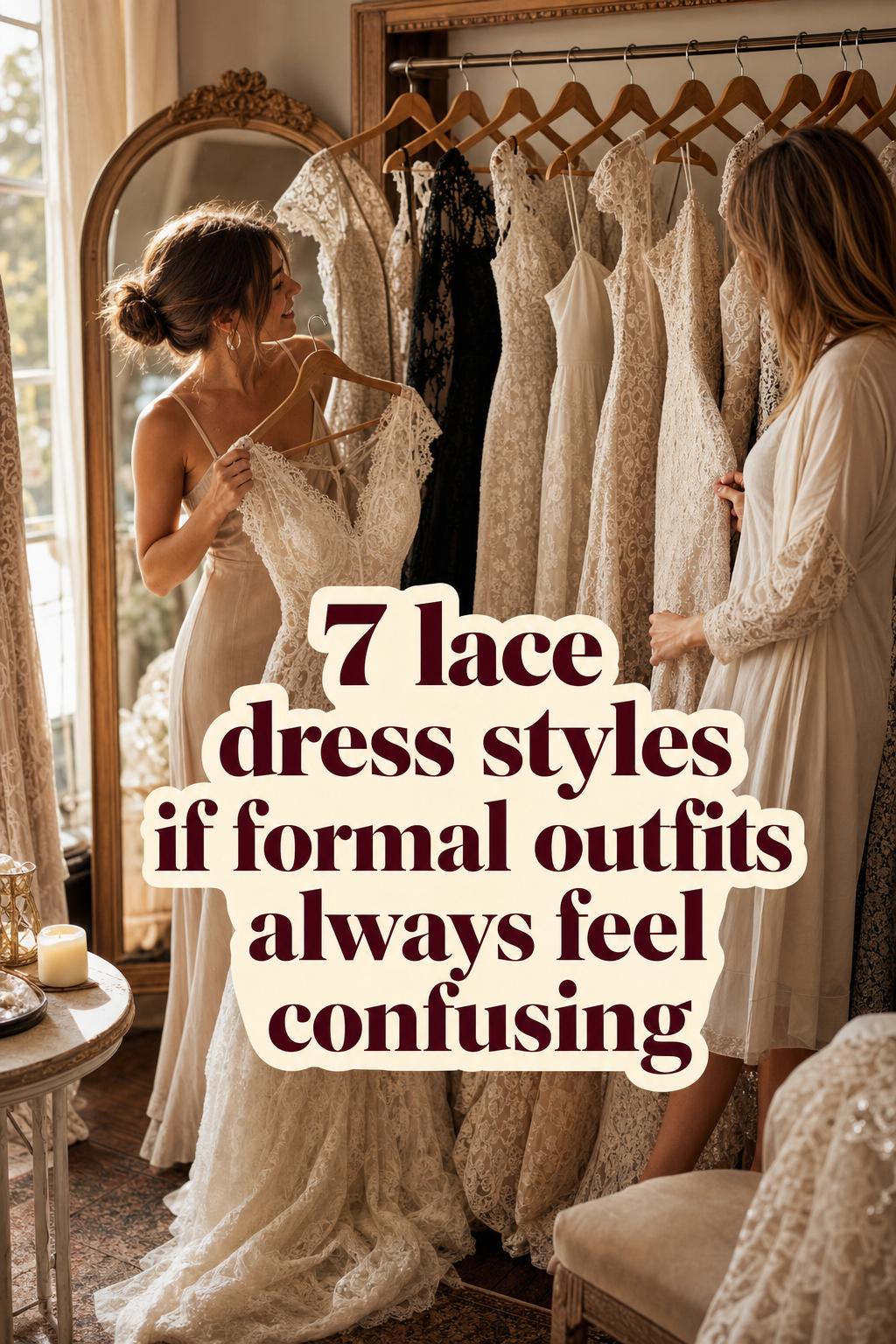
Style overview: silhouette-led lace dress styles
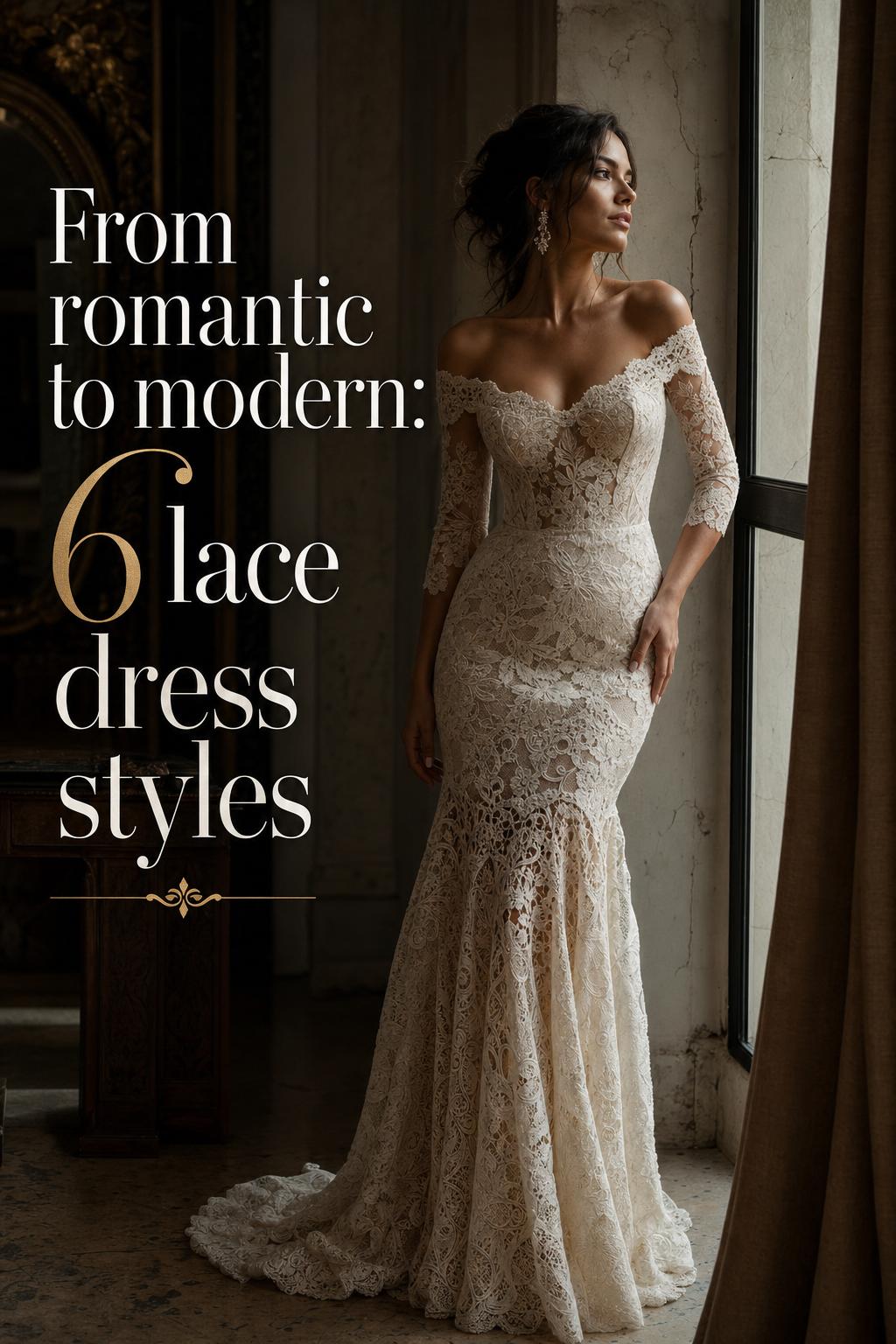
Mermaid and column lace dresses
Mermaid and column lace dresses emphasize body line and visual elongation. In prom and bridal contexts, this silhouette is often used when the goal is a more sculpted presence, especially when lace is paired with corset construction, sheer panels, rhinestone detail, or carefully placed embellishments. Azazie’s prom guidance ties these shapes directly to perceived polish, showing how lace quality, lining, and embellishment placement affect whether the dress looks refined or overworked.
The mood here is defined, directional, and often more dramatic than soft. Lace on a mermaid or column cut tends to highlight contour and seam structure rather than volume. That makes this family of styles visually powerful for evening events, prom, and certain wedding settings where the dress needs to feel sleek rather than airy.
A-line lace dresses
A-line lace dresses are among the most adaptable forms in the category. They appear across prom, bridal, and bridesmaid dressing because they create shape without the engineered drama of a mermaid or the fullness of a ballgown. This silhouette supports lace overlays well and works with a wide range of pattern densities, making it easier to balance texture with movement.
In wedding and bridal-party discussions, A-line lace is regularly framed as practical and flattering. It can read romantic, classic, or understated depending on the lace type and color treatment. The silhouette’s flexibility is also why it appears so frequently in venue-based styling conversations.
Ballgown and princess lace dresses
Ballgown and princess lace dresses bring volume into the conversation. In bridal editorial from Cymbeline, lace craftsmanship is tied closely to cut, with fuller shapes offering more surface area for lace placement and greater opportunity to emphasize French workmanship. On these silhouettes, lace functions less as contour and more as atmosphere. It softens volume, adds dimension, and creates a ceremonial visual effect.
This is the most overtly formal branch of lace dress styles. It is associated most strongly with weddings, though the same visual logic can cross into formal eveningwear. The trade-off is practical: more fullness means greater event presence, but also more fabric management, especially over long durations or in venue conditions where movement matters.
Sheath, pencil, and bodycon lace dresses
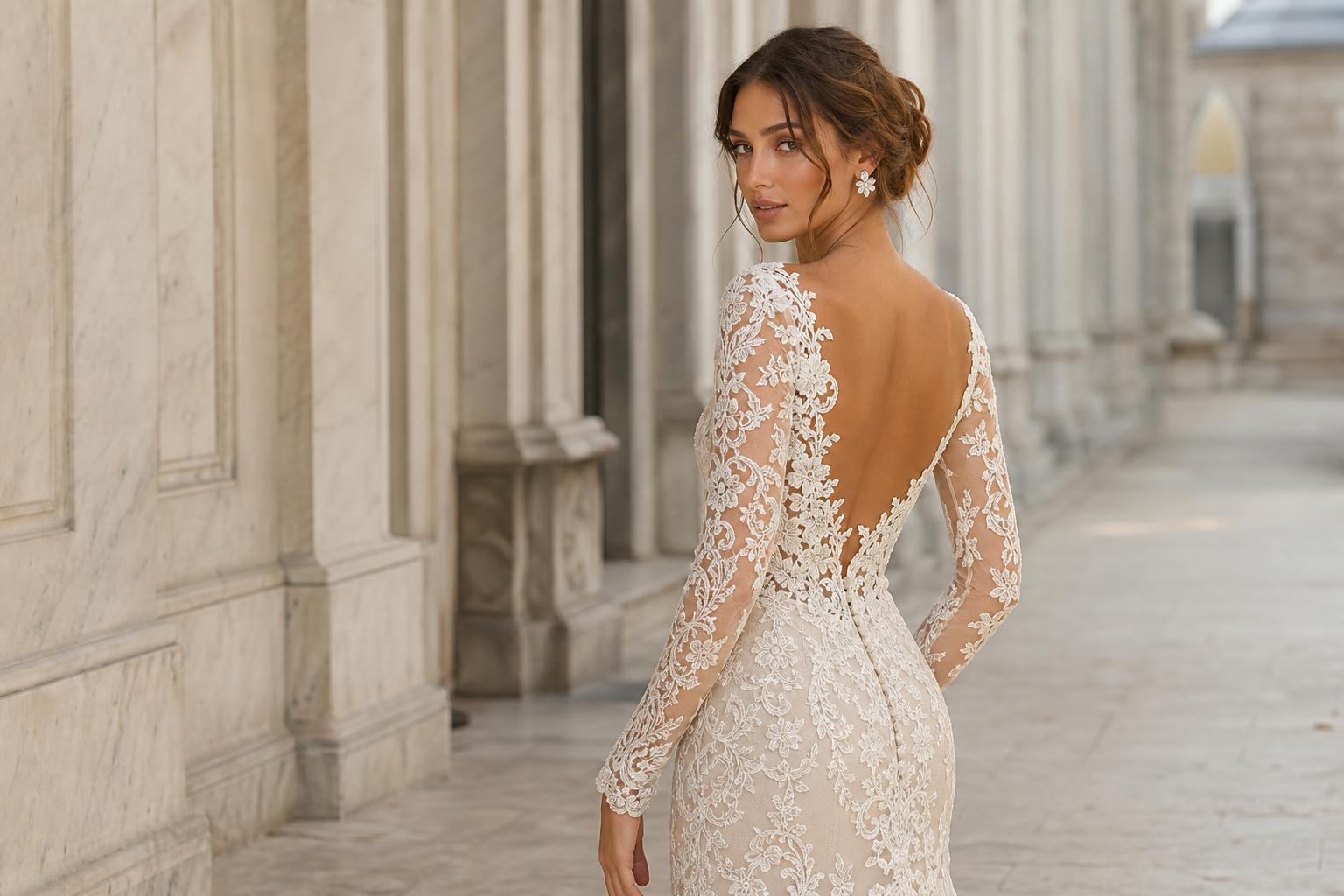
Sheath, pencil, and bodycon lace dresses belong to the streamlined end of the spectrum. ThreadCurve’s style breakdown highlights fit-and-flare, bodycon, and off-shoulder variations as distinct categories because lace behaves differently on a close fit than it does on fuller cuts. On a sheath or bodycon silhouette, the eye reads lace pattern continuity, edge finish, and underlayer contrast more immediately.
These styles usually feel more urban, cocktail-ready, or evening-oriented than bridal-ballgown lace. They can also move into bridesmaid territory when the design remains clean and the color palette is controlled. Compared with A-line lace, the sheath family is less forgiving of weak lining or crowded embellishment because every detail sits closer to the body and is easier to judge visually.
Fit-and-flare and off-shoulder lace dresses
Fit-and-flare lace dresses offer a middle ground between structure and movement. The fitted upper section keeps the look polished, while the flare creates ease. Off-shoulder lace versions shift attention to neckline architecture and can turn a traditional fabric into a more trend-aware statement. These styles often appeal to readers who want definition without the intensity of a mermaid cut.
Visually, fit-and-flare reads youthful and versatile. It adapts well to weddings, daytime celebrations, and semi-formal events. Compared with bodycon, it is less dependent on exact contour; compared with A-line, it feels more intentionally shaped through the waist.
Style overview: fabric-led lace dress styles
Chantilly lace
Chantilly lace is regularly treated as one of the key reference points in lace taxonomy. In bridal conversations, it signals delicacy, fine patterning, and softness. When used on wedding gowns, Chantilly often supports a romantic visual story rather than a highly graphic one. It suits silhouettes where lightness and subtle texture are part of the appeal.
Compared with denser lace treatments, Chantilly tends to feel lighter and more refined in appearance. That makes it a natural fit for brides seeking a soft surface effect or for dresses where the lace should enhance the silhouette rather than dominate it.
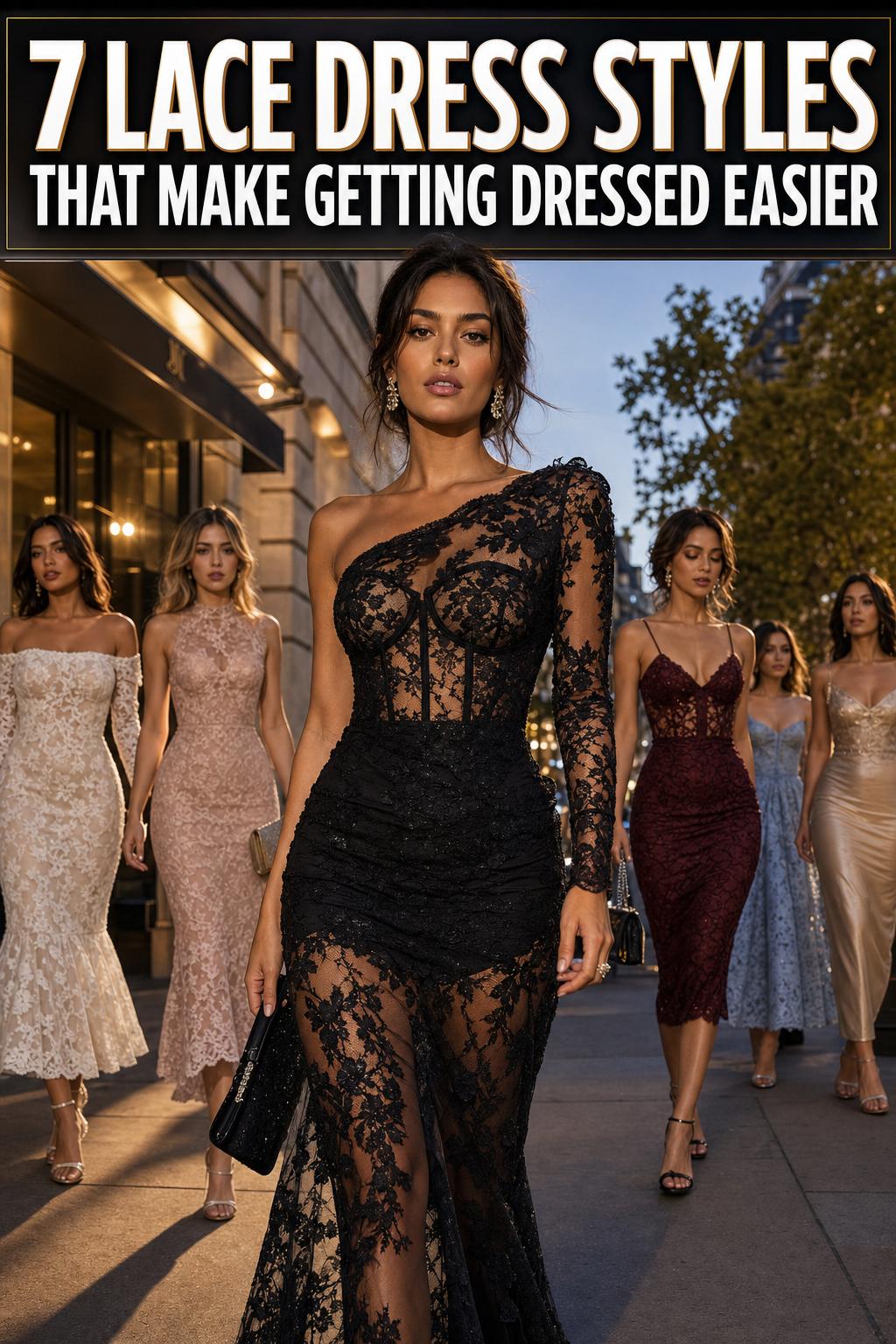
Alençon lace
Alençon lace is another foundational reference in bridal styling. It is often discussed alongside Chantilly because the two are commonly considered by the same shopper, yet they produce a different visual result. Alençon generally reads more defined and dimensional, giving the dress stronger pattern visibility and a slightly more structured lace presence.
That distinction matters on camera and in person. Where Chantilly can create softness, Alençon can create emphasis. On a sheath or mermaid silhouette, that extra definition can sharpen the dress’s visual architecture. On an A-line or ballgown, it can make lace motifs stand out more clearly across a larger area.
Venise and Guipure lace
Venise and Guipure lace enter the conversation as richer, more tactile references within the broader lace family. They are useful comparison points when a dress needs texture that reads immediately rather than subtly. In practical styling terms, these lace types often support more graphic, statement-oriented dressing because the viewer notices the lace itself before noticing only the cut.
This makes them particularly relevant when evaluating dress impact. A simple silhouette in a more tactile lace can feel more dressed than the same silhouette in a softer lace. The styling philosophy shifts from shape-led elegance to texture-led presence.
Lace overlays, appliqué, embroidery, and illusion details
Many of the most appealing lace dresses are not made from one single lace effect but from layered techniques. Across bridal and prom content, overlays, appliqué, embroidery, sheer lace panels, illusion bases, and tulle-supported lace placement are recurring ideas. These details influence sheerness, depth, and the level of formality more than the category label alone.
A lace overlay creates broad visual texture. Appliqué isolates motifs and places them strategically. Illusion panels can modernize or soften a neckline or sleeve line. In a dress such as Azazie’s Rowane Neptune Corset Rhinestone Sheer Lace, the effect comes not only from lace but from how sheer construction, corsetry, and embellishment work together. That is an important distinction for anyone comparing dresses that look similar on a hanger but entirely different when worn.
Direct comparison: how silhouette changes the meaning of lace
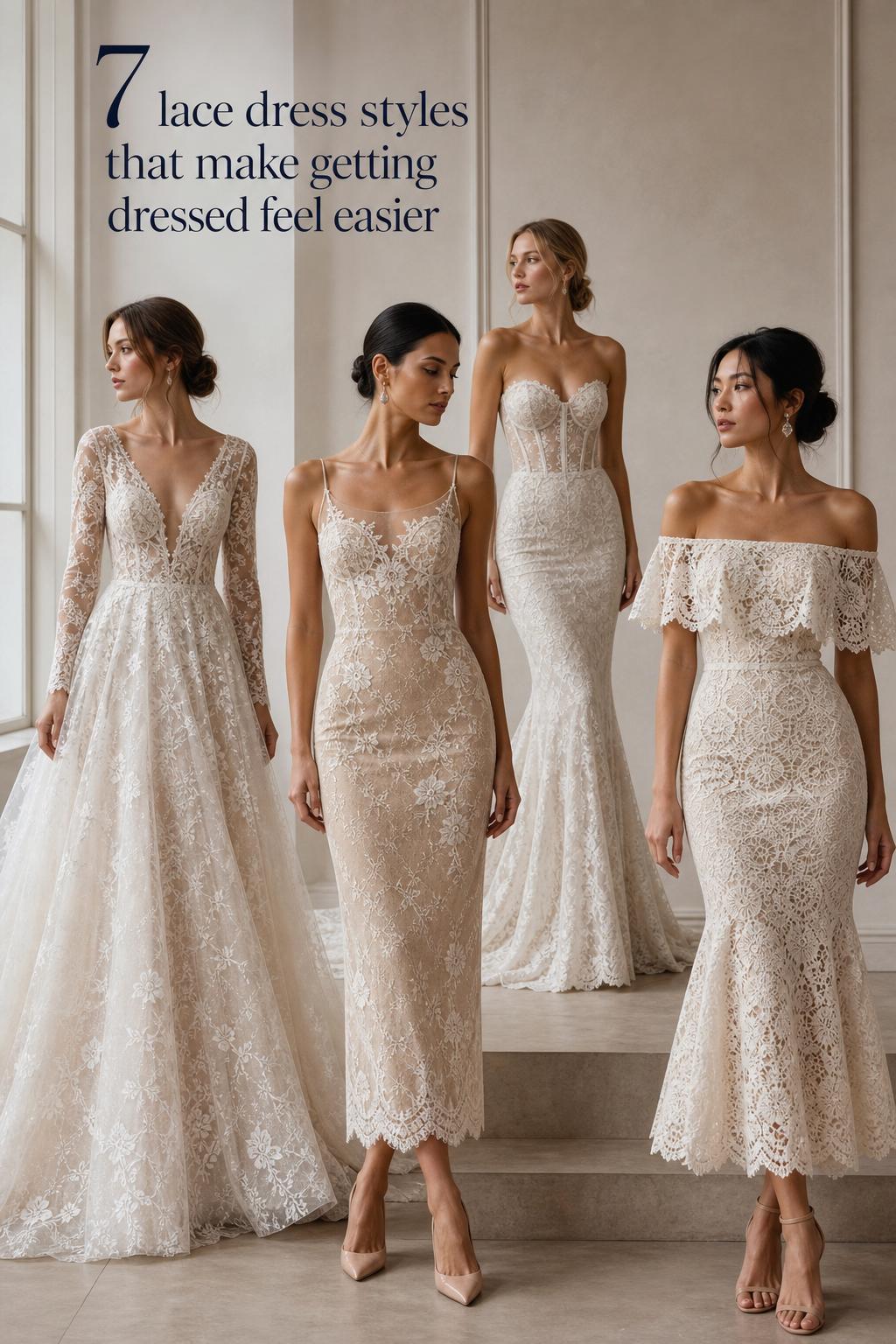
The same lace can project different messages depending on cut. A-line lace reads approachable and balanced. Mermaid lace reads sculpted and high-impact. Ballgown lace reads ceremonial and expansive. Sheath lace reads clean and close to the body. Slip lace, especially in the celebrity-driven trend conversation, reads lighter, more fashion-forward, and less conventionally formal even when the fabric itself references romance.
- For structure: mermaid, column, sheath, and bodycon silhouettes make lace feel more defined.
- For softness: A-line and fit-and-flare silhouettes allow lace to move more gently across the body.
- For ceremony: ballgown and princess silhouettes amplify lace through scale.
- For trend appeal: slip and off-shoulder variations update lace through minimalism or neckline focus.
This is why lace dress styles should never be evaluated by fabric alone. The visual anchor may be the lace, but the silhouette controls how formal, modern, or romantic the final result becomes.
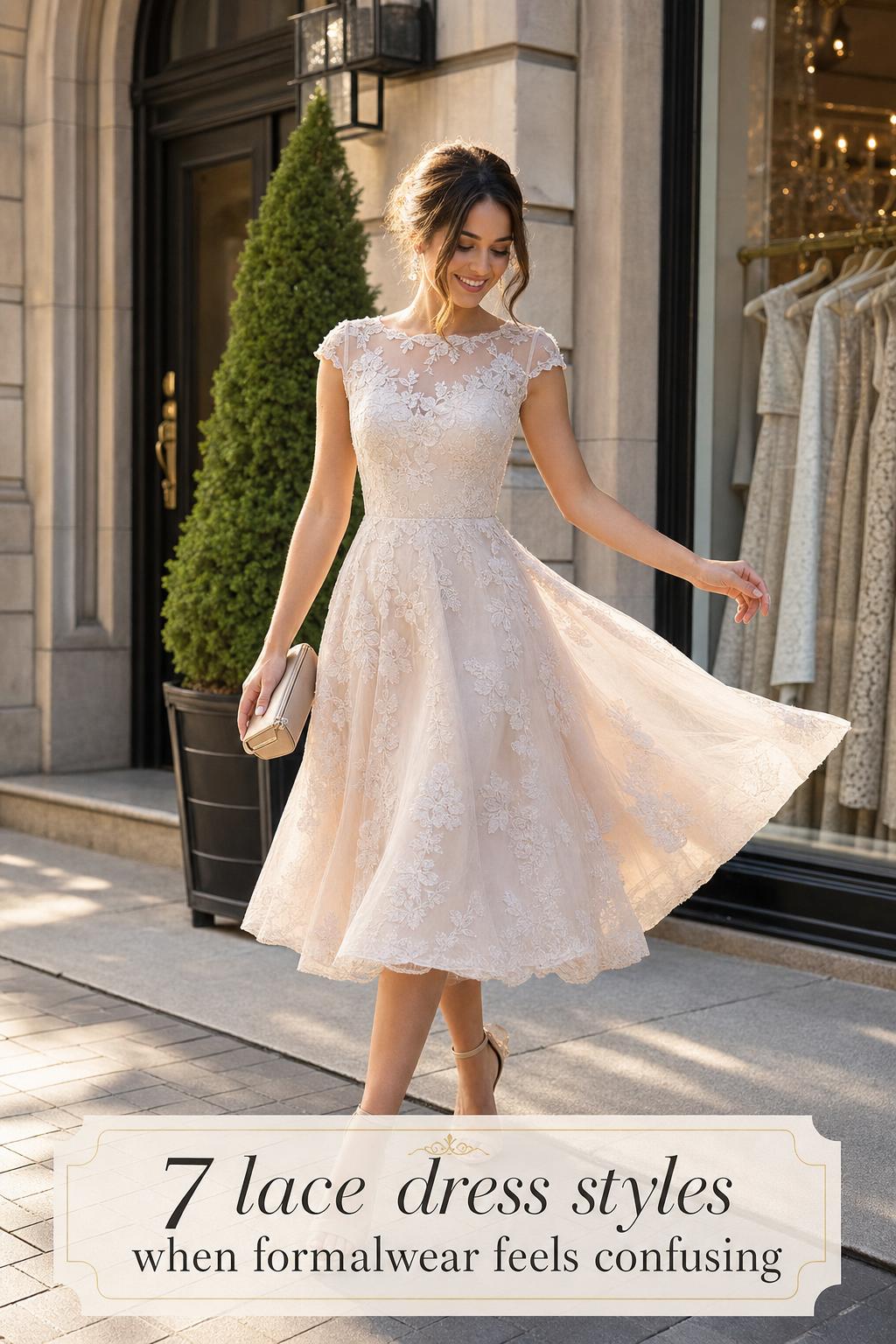
Bridal lace versus occasion lace: where the styling philosophy shifts
Bridal coverage dominates the lace category for a reason. Weddings naturally accommodate detail, symbolism, and craftsmanship, which makes lace an easy fit. The Knot’s lace taxonomy and Cymbeline’s emphasis on French craftsmanship both reinforce this bridal foundation. Bridal lace often prioritizes tradition, texture depth, and an intentional relationship between fabric and cut.
Occasion lace, by contrast, is broader and more variable. Prom content from Azazie connects lace with value perception, embellishment, and silhouette drama. Bridesmaid-focused guidance from Adrianna Papell frames lace more collaboratively, considering color, pattern, and how the dress works within a group visual story. Trend media such as Who What Wear and Woman & Home shifts lace into contemporary styling language, using celebrity adoption and city influence to show how lace can move beyond bridal associations.
The practical takeaway is simple: bridal lace is usually judged by craftsmanship and emotional tone, while occasion lace is often judged by versatility, polish, and styling ease. Both use the same material family, but they answer different wardrobe questions.
The slip-dress effect: modern lace compared with traditional lace dressing
The lace slip dress trend deserves its own comparison because it changes how many readers interpret lace altogether. Traditional lace dressing relies on visible structure, decorative detail, or ceremonial scale. The lace slip dress, highlighted by Who What Wear in 2026 trend coverage, strips much of that away. The silhouette is lighter, the line is often more fluid, and the styling context leans toward celebrity and city fashion rather than strictly occasion dressing.
Visually, this creates a very different outfit composition. Traditional lace uses lace as a central statement. A slip dress uses lace to edge, soften, or romanticize a minimal form. That difference is why Sofia Coppola’s lace dress moment can function as trend evidence: the appeal is not only the fabric but the way lace operates inside a cleaner seasonal wardrobe.
For readers deciding between the two, the question is not whether one is better. It is whether you want lace to dominate the look or refine it.
Visual style breakdown in real outfits
Layering approach
Traditional bridal and formal lace often depends on underlayers, linings, overlays, and sometimes tulle support to create depth. This produces a richer visual field and greater pattern clarity. Trend-led lace, especially slip dresses, usually relies on a lighter layering approach so the silhouette remains direct. When comparing dresses in person, this is one of the fastest ways to understand their category: more layering usually signals formality and craftsmanship emphasis, while less layering signals ease and modernity.
Garment proportions
Ballgown and princess proportions create a wide visual base, so lace becomes atmospheric. Sheath and bodycon proportions compress the visual frame, so lace becomes precise. A-line balances those two impulses. Fit-and-flare creates directional movement from waist to hem, which can make lace feel more kinetic than static. Proportion play matters because it determines whether the eye lands on texture, shape, or movement first.
Accessories and jewelry
Accessory logic changes with lace density. Azazie’s prom guidance includes jewelry coordination because ornate lace can compete with equally ornate accessories. A pearl-embellished lace/chiffon dress such as the Jasminiah Blue Pearl-Embellished Lace/Chiffon already contains visual decoration, so accessories work best when they support rather than duplicate that detail. Cleaner slip or sheath lace can accommodate a more defined jewelry statement because the dress itself is visually quieter.
Footwear and outfit balance
Footwear should reinforce the dress’s structural message. Strappy sandals and delicate shoes align naturally with softer or lighter lace treatments. More substantial silhouettes need footwear that does not disappear under the visual weight of the dress. The key principle is balance: the more elaborate the lace and silhouette, the more the rest of the outfit should stabilize rather than add complexity.
Occasion comparisons: which lace dress style works where
Weddings and US venues
Venue-based wedding guidance adds practical clarity to lace decisions. Wedding-look.com frames lace wedding dresses through US venue suitability, which is a helpful lens because a dress that works beautifully in one setting may feel visually misplaced in another. Ballgown and heavily detailed lace may suit venues that support ceremony and scale, while more streamlined lace silhouettes can better match understated or movement-heavy settings.
This venue logic is less about rules than coherence. Lace should align with the environment’s visual rhythm. A dress with strong craftsmanship details can shine in a venue where those elements can be appreciated. A lighter silhouette may be the stronger choice when the setting calls for ease, mobility, or a less formal read.
Bridesmaid dressing
Adrianna Papell’s bridesmaid perspective introduces an important comparison point: lace in a bridal party must often support a collective image, not only an individual one. That changes the styling philosophy. Sheath and A-line lace dresses are especially effective here because they deliver texture and elegance while remaining easier to coordinate in color and proportion across multiple wearers.
Lace bridesmaid dressing also places more emphasis on moderation. Too much pattern density or embellishment can pull focus unevenly. The strongest bridesmaid lace styles usually use lace to unify the group, not fragment it.
Prom and evening events
Prom and eveningwear invite more direct glamour. Here, mermaid cuts, corset structures, rhinestone accents, and sheer lace elements can be fully intentional. Azazie’s examples make this clear: embellishment and silhouette are not extras but part of how the dress communicates value and occasion readiness.
That said, quality indicators become more visible in evening lace. Weak lining, crowded decoration, or lace that lacks pattern clarity can quickly reduce the dress’s impact. For formal evening use, the best lace dresses are the ones where fabric, structure, and detail appear integrated rather than layered on for effect.
Cocktail and modern fashion dressing
Cocktail and fashion-led lace dressing often works best in sheath, bodycon, slip, or fit-and-flare silhouettes. These cuts allow lace to feel current rather than overtly bridal. Who What Wear’s broader lace clothing coverage in 2025 supports this shift by treating lace as a wardrobe trend, not just an event fabric. In this context, lace can function as a seasonal texture within a broader street-style or editor-driven outfit language.
Brand comparisons that shape how lace is presented
Different brands frame lace dress styles through different value systems, and that affects how shoppers interpret the category.
- Azazie connects lace to prom silhouettes, embellishments, lining, and the question of how to make lace look expensive.
- Adrianna Papell positions lace through bridesmaid and occasion dressing, with attention to shape, color, and group styling.
- Cymbeline emphasizes cuts, styles, and French craftsmanship, making lace feel atelier-driven and bridal in orientation.
- The Knot acts as a taxonomy resource, helping readers compare lace types such as Chantilly, Alençon, and Venise in wedding contexts.
- Who What Wear and Woman & Home shift the conversation toward trend analysis, celebrity dressing, and seasonal relevance.
This matters because the same term, “lace dress,” can point to very different expectations depending on the source. A shopper comparing these perspectives becomes better equipped to distinguish craftsmanship-led lace from trend-led lace and ceremonial lace from everyday fashion lace.
Tips that make lace look more polished
Lace is unusually sensitive to finishing details. It can look elevated or visually busy based on decisions that seem minor in product descriptions but become obvious in wear.
- Check how the lining supports the lace rather than hiding it or fighting it.
- Look at embellishments in relation to pattern scale; pearls, rhinestones, or embroidery should feel integrated.
- Assess whether the silhouette gives the lace enough visual space to read clearly.
- Be careful with accessories when the dress already includes statement detail.
- Prioritize overall composition over isolated features; lace, neckline, sleeves, and underlayers should feel connected.
A practical example: a heavily embellished lace mermaid dress can carry itself with minimal jewelry because the dress already provides the visual anchor. A simpler lace slip dress or sheath may need a more deliberate accessory story to avoid looking unfinished. Polished dressing is less about adding more and more about supporting the role the lace is already playing.
Common comparison mistakes readers make with lace dress styles
One frequent mistake is comparing dresses only by occasion label. Two “wedding lace dresses” can behave completely differently if one relies on soft Chantilly over an A-line frame and the other uses stronger motif definition on a fitted silhouette. The better comparison is always silhouette plus lace type plus construction.
Another mistake is assuming more decoration automatically creates a more luxurious result. Azazie’s discussion of expensive-looking lace points in the opposite direction: quality often comes from lace density, pattern clarity, thoughtful lining, and controlled embellishment rather than maximum detail.
A third mistake is overlooking context. The right lace dress for a wedding venue, a bridal party, a red-carpet-adjacent event, or a fashion-driven city look will not necessarily follow the same formula. Sofia Coppola’s lace dress influence and the celebrity lace slip dress trend show how modern styling can make lace feel lighter and more current than many shoppers initially expect.
Outfit comparisons that show the styling logic
Formal event interpretation: mermaid lace versus A-line lace
A mermaid lace dress approaches a formal event through shape definition. It creates a controlled silhouette, usually benefits from restrained accessories, and places emphasis on contour, construction, and finish. An A-line lace dress approaches the same event with more visual ease. It spreads attention between bodice, waist, and skirt movement, which can make the outfit feel softer and less intense while still fully formal.
Wedding interpretation: Chantilly romance versus Alençon definition
In a wedding setting, Chantilly-based styling leans into softness and delicacy. The overall aesthetic mood is often airy, subtle, and romantic. Alençon-based styling introduces stronger motif visibility, so the dress reads more graphic and intentional. Both can be elegant; the difference is whether the lace is meant to whisper across the silhouette or stand forward within it.
Modern fashion interpretation: lace slip dress versus lace sheath dress
A lace slip dress usually treats lace as a tonal or textural accent inside a minimal line. It feels contemporary, fashion-aware, and often celebrity-influenced. A lace sheath dress is more structured and polished. It suits cocktail dressing and occasion wardrobes where the silhouette needs to feel deliberate and finished. The slip dress is about reduction; the sheath is about refinement.
Bridesmaid interpretation: lace sheath versus lace fit-and-flare
A lace sheath for bridesmaids creates cohesion and clean proportion, especially in a group setting. A lace fit-and-flare introduces more movement and shape variation, which can feel livelier but also slightly less uniform. The decision depends on whether the bridal party aesthetic calls for streamlined consistency or more expressive silhouette play.
When to choose each lace style family
Choosing among lace dress styles becomes easier when the decision is framed around visual intention rather than category labels alone.
- Choose mermaid or column lace when you want a sculpted, evening-focused, or high-definition silhouette.
- Choose A-line lace when you want versatility, soft structure, and broad occasion range.
- Choose ballgown or princess lace when ceremony, scale, and dress presence are central.
- Choose sheath or bodycon lace when polish, contour, and urban occasion dressing matter most.
- Choose fit-and-flare lace when you want waist definition plus movement.
- Choose a lace slip dress when the goal is modern styling with a lighter, trend-aware romantic edge.
It is also useful to think about event duration and movement. Fuller bridal silhouettes may create unforgettable visual impact but require more management across a long day. Streamlined lace shapes often travel better through transitions, standing time, and tighter venue conditions. Practicality does not reduce style value; it usually improves how confidently the dress is worn.
Care, quality, and longevity as part of style choice
Lace style is not only an aesthetic decision. Quality indicators such as lace density, backing, lining, and pattern integrity affect how a dress photographs, moves, and holds up over time. These details matter especially in prom, bridal, and evening categories where the dress is expected to look elevated throughout a long event.
Care also deserves attention because delicate lace surfaces, overlays, and appliqué can change character if handled casually. Practical maintenance and storage help preserve the dress’s visual finish, especially when sheer details, embroidery, or layered construction are involved. This is one of the under-discussed distinctions between a dress that looks beautiful once and one that retains its appeal.
In style terms, longevity supports confidence. A lace dress feels more refined when the surface remains clean, the pattern stays clear, and the underlayers continue to support the lace rather than collapse under it.
Final read on lace dress styles
The clearest distinction in lace dressing is this: silhouette determines the dress’s structure and attitude, while lace type determines its texture and mood. That is why lace dress styles can range from ceremonial ballgowns to sleek celebrity slip dresses without losing their core identity. They are united by material language but separated by styling logic.
Once you identify whether a dress is shape-led, fabric-led, or trend-led, the category becomes much easier to navigate. A-line and fit-and-flare lace speak to balance. Mermaid and sheath lace speak to definition. Ballgown lace speaks to presence. Slip lace speaks to modern minimalism with romantic reference. Many of the strongest looks combine these elements carefully, using traditional lace with a cleaner silhouette or a simpler lace treatment with more directional styling.
The most successful choice is not the one with the most detail. It is the one where lace, cut, occasion, and styling all speak the same visual language.
FAQ
What is the difference between Chantilly and Alençon lace?
Chantilly lace is generally associated with a softer, more delicate visual effect, while Alençon lace reads more defined and dimensional. In dress terms, Chantilly often supports a lighter romantic mood, whereas Alençon gives motifs stronger visibility and a more pronounced pattern presence.
Which lace dress silhouette is the most versatile?
A-line is typically the most versatile because it works across bridal, bridesmaid, prom, and formal settings without feeling overly specialized. It balances structure and movement well, making it easier to adapt to different lace types and styling directions.
How do I make a lace dress look more expensive?
Focus on lace quality, lining, and controlled detailing rather than maximum embellishment. A polished lace dress usually has clear pattern definition, supportive underlayers, and accessories that do not compete with the dress’s existing texture or decoration.
Are lace slip dresses considered formal?
Lace slip dresses can be formal, but they usually read more modern and fashion-led than traditionally ceremonial. Their level of formality depends on styling, finish, and context, especially compared with structured lace silhouettes such as mermaid, sheath, or ballgown designs.
What lace dress styles work best for bridesmaids?
Sheath and A-line lace bridesmaid dresses are often the most effective because they combine elegance with coordination. They allow color, pattern, and proportion to stay visually cohesive across a bridal party without overwhelming the group look.
How should I choose a lace wedding dress for a venue?
Match the dress’s scale and texture to the venue’s atmosphere and practical demands. Fuller silhouettes and more elaborate lace can suit settings that support ceremony and presence, while streamlined lace styles often work better where ease of movement and a lighter visual tone are important.
What makes lace on a sheath dress different from lace on a ballgown?
On a sheath dress, lace is read at close range through contour, motif clarity, and edge finish. On a ballgown, lace interacts with volume and surface area, so it creates more atmosphere and broad visual texture rather than a tightly focused pattern statement.
Can lace dresses work outside weddings and prom?
Yes, especially in sheath, bodycon, fit-and-flare, and slip silhouettes. Trend coverage and celebrity styling show that lace can function as a broader fashion texture for cocktail dressing and seasonal wardrobes, not only for bridal and prom events.