Modern Muslimah Style: Polished Coverage Without the Bulk
Muslimah style, decoded: the outfit logic behind modern modest dressing
Muslimah style becomes most interesting in the moments when real life demands range: a morning commute that turns into a lunch meeting, a long day on your feet, or a last-minute dinner invite that still calls for polished modesty. The strongest looks aren’t built from “rules” alone—they’re built from outfit composition: silhouette balance, fabric behavior, and thoughtful coverage that feels intentional rather than restrictive. That’s the difference between simply dressing modestly and practicing modesty fashion with a clear visual strategy.
This guide approaches muslimah style like a fashion intelligence report—practical, analytical, and wearable in the U.S. context. You’ll see how to structure outfits around proportion play, how to keep layers breathable, and how to make staples like a mode abaya work beyond formal settings. You’ll also find styling systems for islamic modest fashion, including muslim outfits casual and modest girly outfits that still read elevated.
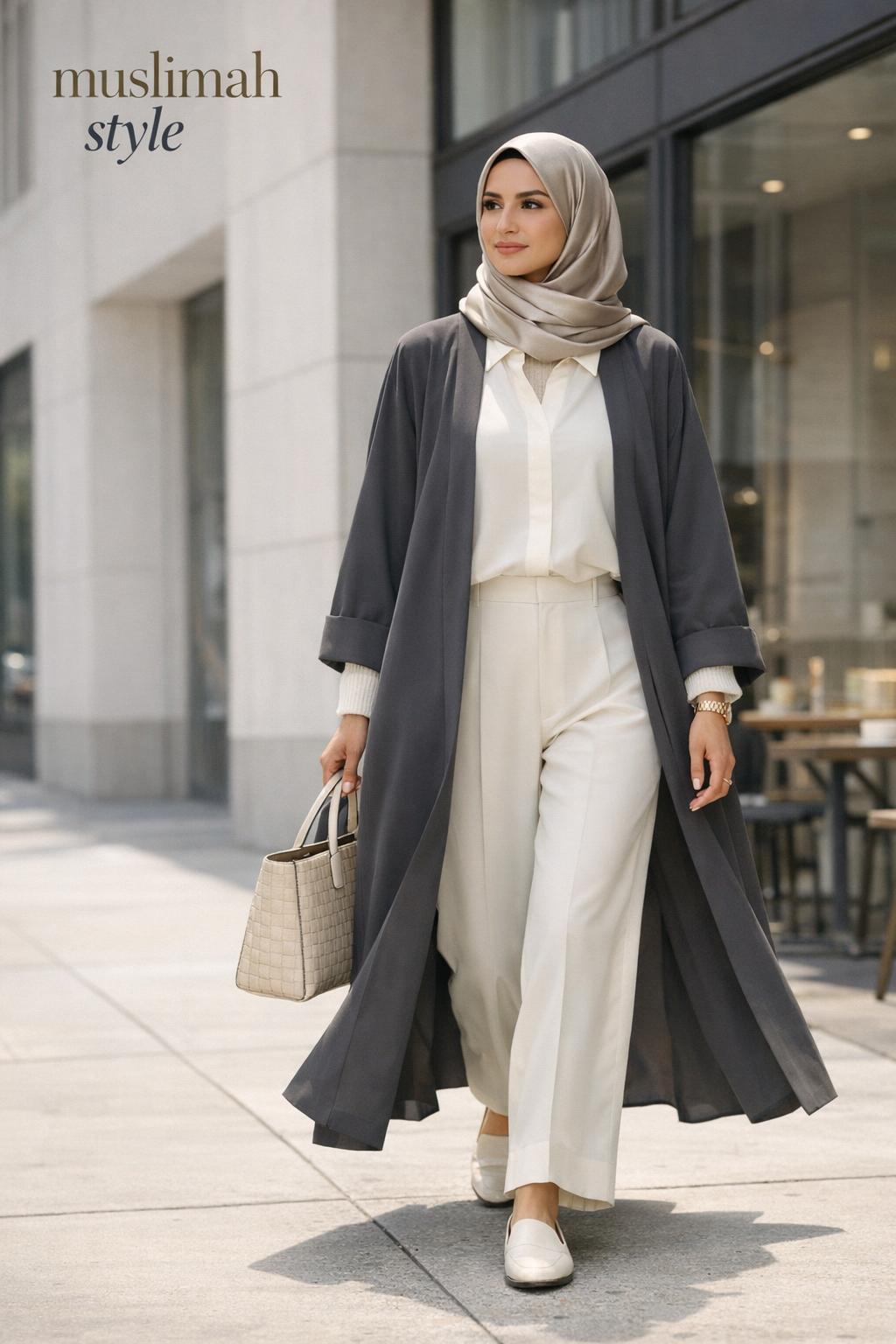
Start with the framework: modesty fashion is a styling system, not a single aesthetic
Modesty fashion is often misunderstood as one “look.” In practice, it’s a system built on adjustable variables: coverage level, fit preference, fabric opacity, and how you layer for movement and climate. Muslimah style can be minimalist, romantic, sporty, or corporate—what stays consistent is the engineering of the outfit.
A reliable way to think about it: every outfit needs an anchor silhouette (the main shape) and supporting pieces (layers, accessories, shoes) that control exposure, define structure, and create visual harmony. When those roles are clear, islamic modest fashion looks modern and effortless rather than over-layered.
Found the dress? Keep the rest in one place.
Zarellea brings guest details, vendors, timelines, and every next step together — so your wedding plan feels as good as your look.
The three anchors that keep a modest outfit intentional
Most successful muslimah style outfits resolve three technical questions: where the waistline is implied, where the length visually ends, and where the eye should land first. A longline top with straight trousers reads different from the same top with a wide-leg trouser because the hemline creates the “end point.” A belt over a flowy dress changes the waist story entirely. And a scarf or structured bag can become a visual anchor so the outfit feels designed, not accidental.
- Silhouette balance: pair volume with structure (wide leg with a tailored layer, or a flowy skirt with a crisp shirt).
- Texture contrast: combine matte and sheen, knit and woven, or smooth and ribbed to avoid a flat look.
- Tonal layering: keep layers within a close palette when you want length; use contrast when you want definition.
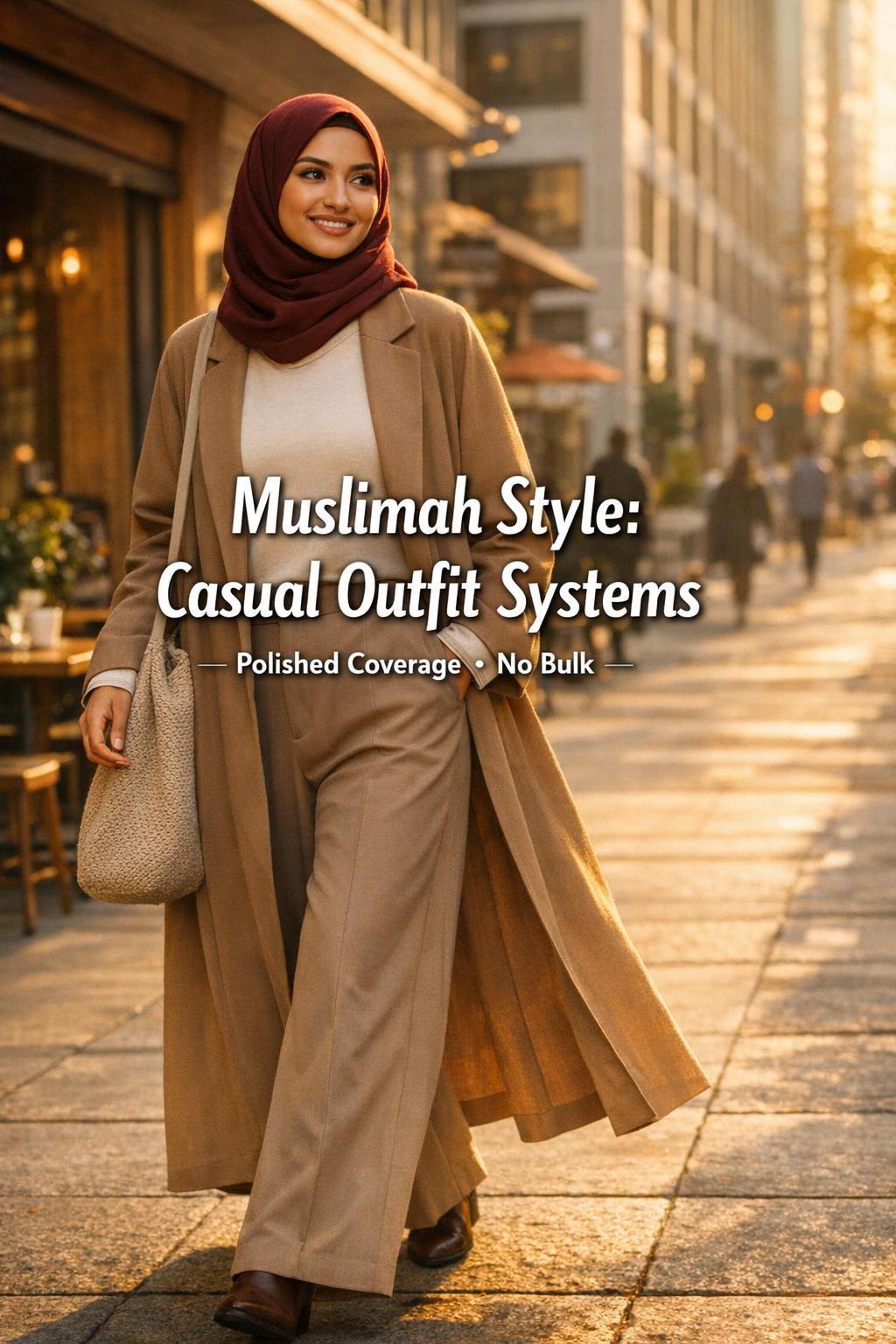
Key pieces that do the heavy lifting (and why they work)
In muslimah style, the most valuable pieces are the ones that solve multiple styling problems at once: coverage, comfort, and a clean line. Instead of collecting random “modest” items, build a wardrobe around pieces that layer without bulk and that maintain shape throughout the day.
Mode abaya as a modern outer layer
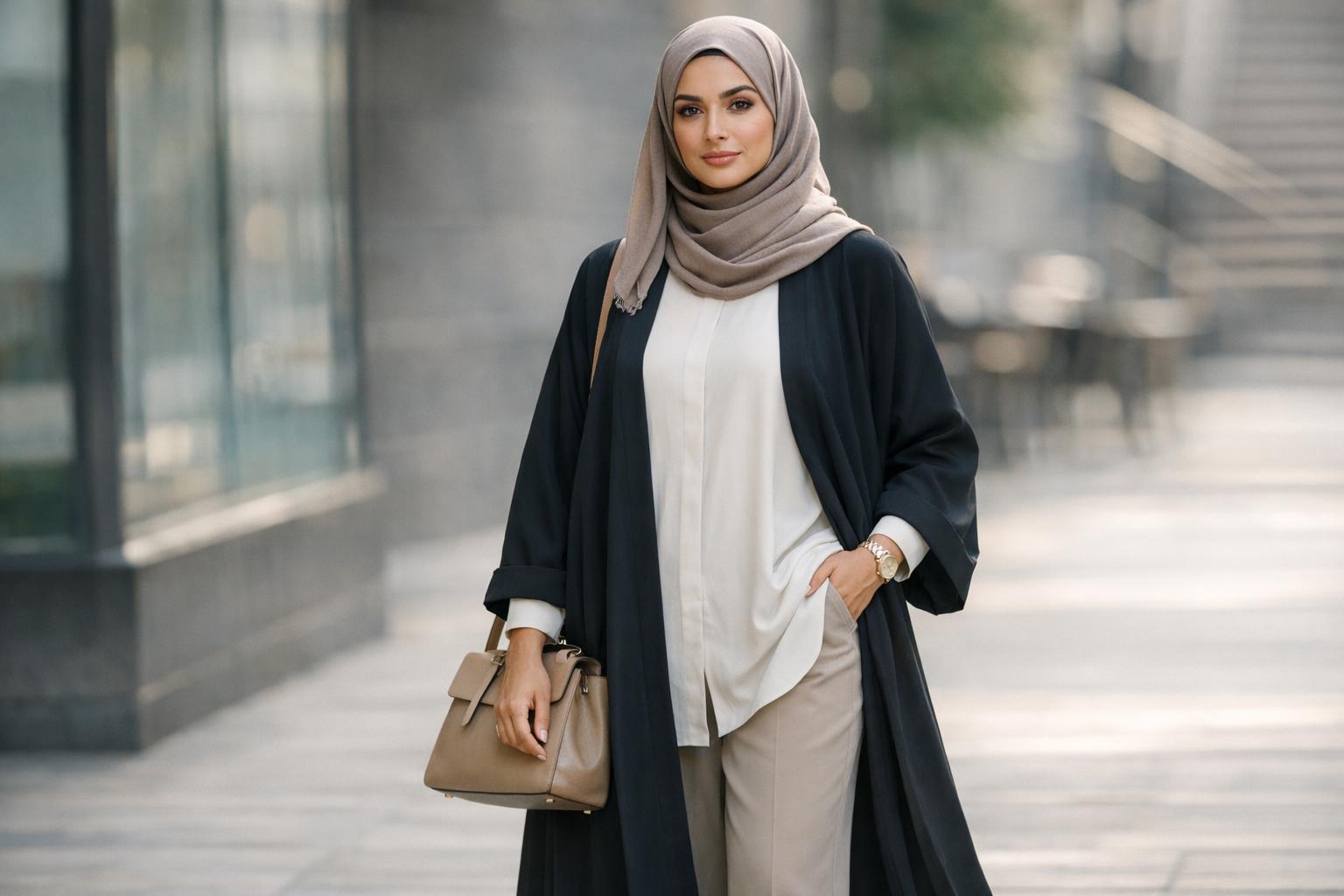
A mode abaya works best when you treat it as outerwear rather than a special-occasion uniform. The garment already provides length and continuity, so the styling focus shifts to refinement: the drape at the shoulders, sleeve volume, and how the front opening frames the outfit underneath. A streamlined underlayer prevents the abaya from looking heavy, while a structured shoe or bag adds a modern finish.
Where this can go wrong is proportion overload—too much volume underneath can cause bunching and limit movement. The most wearable approach is a narrow-to-straight inner silhouette, then let the abaya supply the drama.
The longline shirt that replaces constant layering
Longline button-downs and tunic-length shirts function like a built-in modesty layer. They offer coverage with a crisp vertical line that lengthens the body visually. They also solve the “what do I wear under a shorter knit?” problem—especially for muslim outfits casual where comfort matters but the look still needs composure.
Wide-leg trousers: comfort that still reads polished
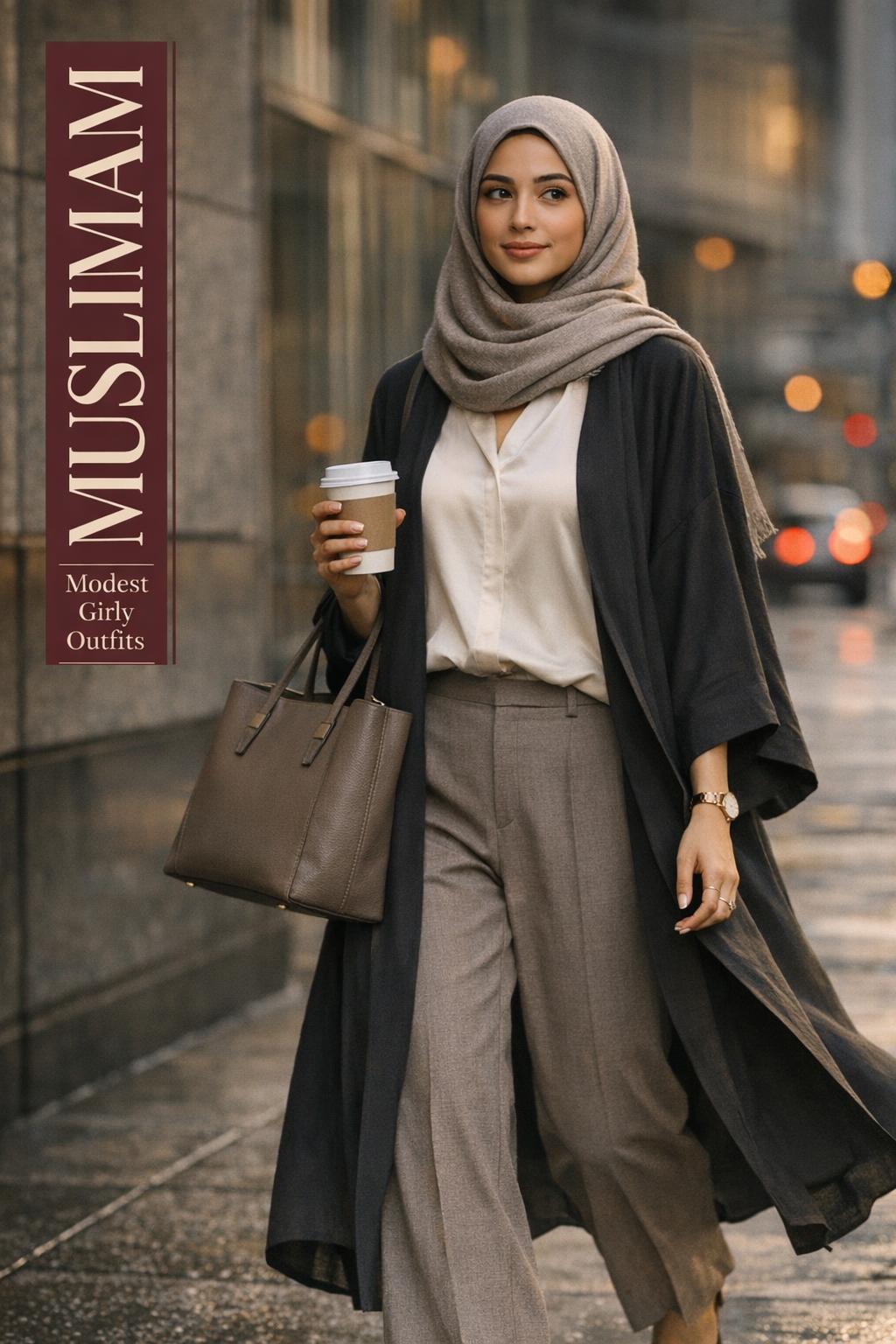
Wide-leg trousers are a modesty fashion staple because they create airflow, ease of movement, and a strong base line. They also help balance longer tops by creating an intentional column. The styling key is the hem: too long looks messy; too short breaks the line. A clean break at the shoe keeps the silhouette sharp and modern.
Maxi skirts for controlled volume
Maxi skirts deliver softness and movement, but they need a counterweight. A structured top, a defined shoulder line, or a tailored layer prevents the outfit from collapsing into a single shapeless mass. For modest girly outfits, a maxi skirt can carry the romantic mood, while the top keeps the styling editorial.
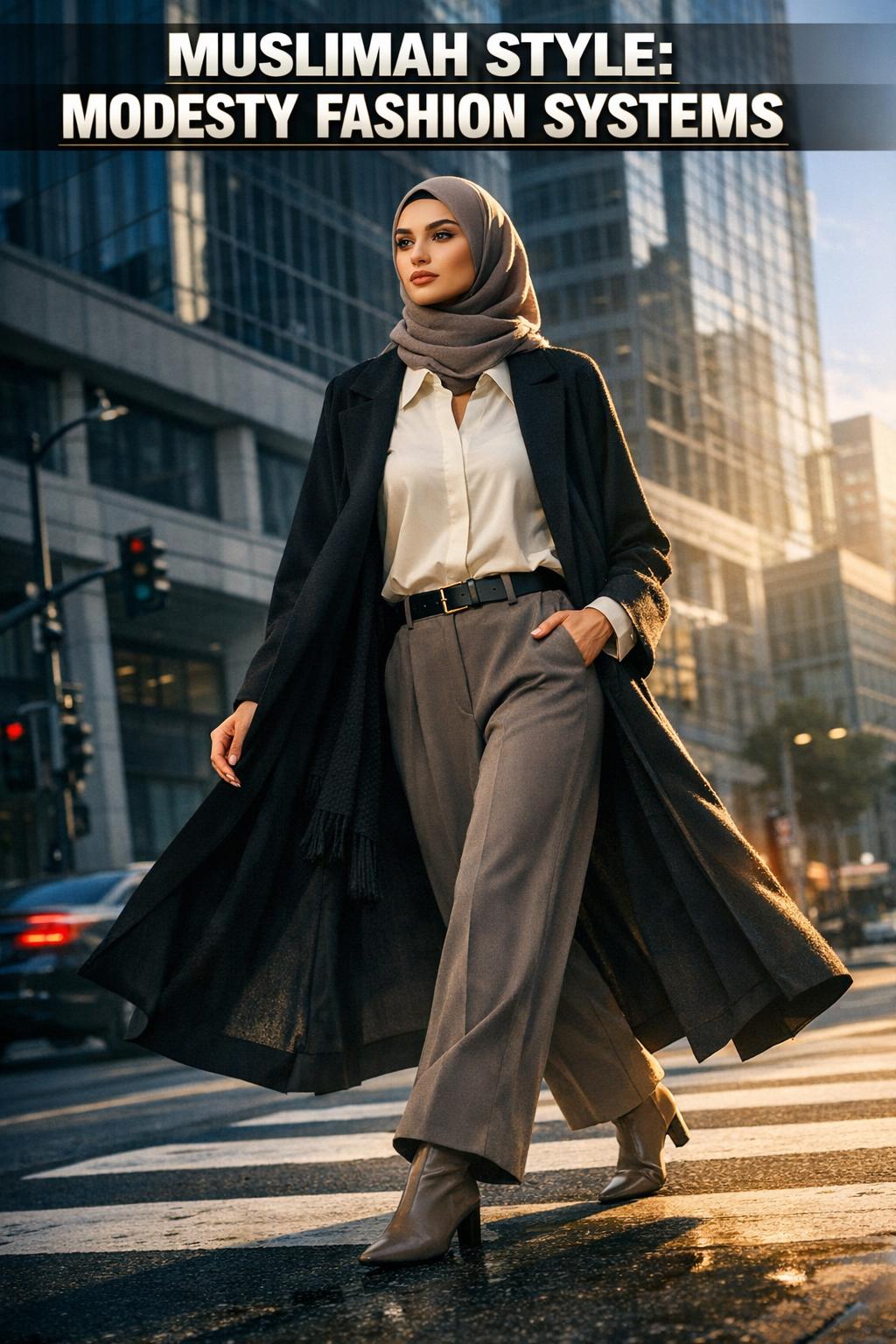
Muslim outfits casual: how to look relaxed without looking unfinished
Casual modest dressing is where most people struggle because comfort can quickly turn into “unstyled.” The solution is to keep at least one element structured and one element intentional in color. Think of casual outfits as having a quiet architecture: a clean base, a defined layer, and a controlled palette.
The elevated knit + tailored layer formula
A knit top is inherently soft, which is why it pairs well with a tailored long blazer or a structured overshirt. This combination works because the outer layer provides edge definition at the shoulders, while the knit keeps the outfit approachable. Keep the knit smooth or ribbed rather than bulky to avoid adding unnecessary volume under the layer.
For climate flexibility, swap the tailored layer for a lightweight trench-style piece or a longline shirt. The outfit logic stays the same: soft base, structured frame, clean line.
Denim in modesty fashion: choose the right cut, then style the line
Denim can absolutely live inside muslimah style, but the cut matters. Straight or wide cuts tend to maintain a modest line without clinging. The top half is where the outfit becomes intentional: a tunic-length shirt, a long cardigan, or a mode abaya styled like an overcoat creates the coverage and the verticality that makes denim feel refined rather than purely casual.
Tips: the fastest ways to “finish” a casual modest outfit
When an outfit feels almost right but not complete, the fix is usually not another layer—it’s a better visual anchor. In islamic modest fashion, finishing details do the work that short hemlines or fitted shapes often do in mainstream styling.
- Use a single statement accessory (a structured bag or a sleek watch) to create a focal point.
- Keep shoes clean and minimal to avoid visual clutter at the hem.
- Match undertones (warm neutrals together, cool neutrals together) for tonal layering that looks expensive.
- Prioritize fabric opacity in daylight; sheer layers can read unintentionally revealing outdoors.
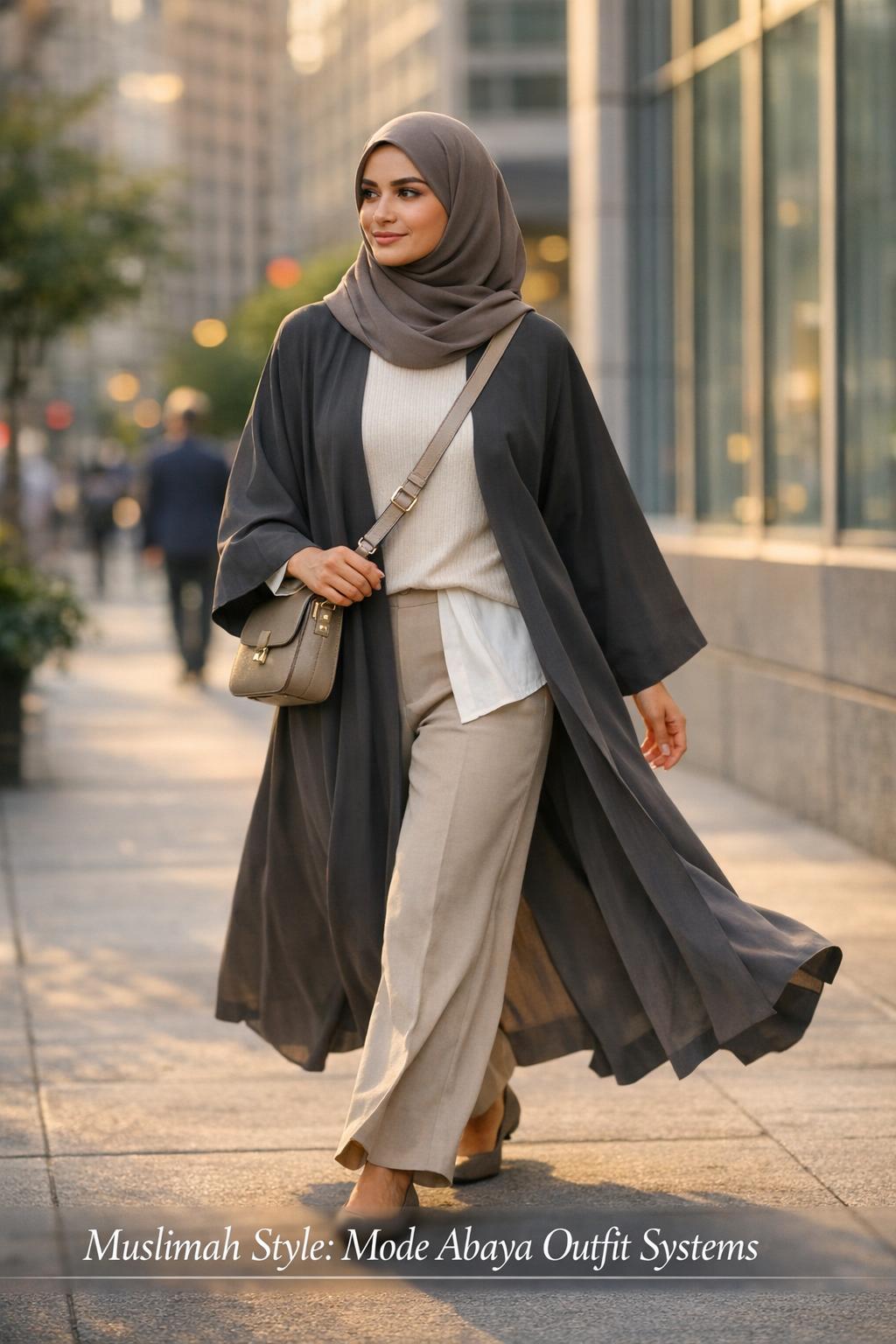
Modest girly outfits: softness with structure (so it doesn’t look costume-like)
Modest girly outfits often lean into romantic elements—flow, gentle color, and softer textures. The risk is slipping into overly sweet styling that feels disconnected from the real world. The fix is structure: one crisp element that sharpens the look and makes the romance feel modern.
Color harmony: how to keep a romantic palette grounded
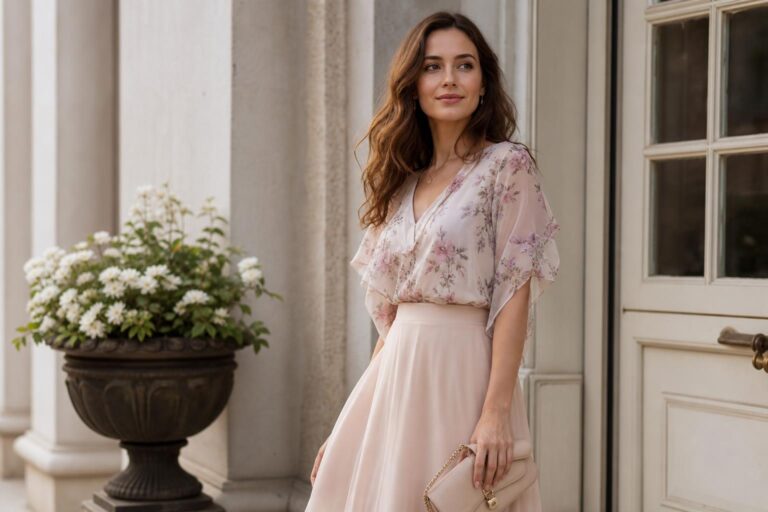
Soft palettes work best when they have an anchor neutral. A creamy base, a muted blush tone, or a soft gray-beige can keep the look cohesive without becoming flat. The goal is not “more color,” but better distribution: keep the base color dominant, then add one accent tone for dimension.
Texture contrast: the detail that makes feminine modest looks editorial
Romantic modesty fashion looks elevated when textures do the talking. Pair a smooth woven skirt with a fine knit top; pair a matte dress with a slightly structured outer layer. The contrast creates depth without needing loud prints or excessive accessories.
When to wear it: everyday romance vs event-ready
For everyday wear, keep the romance in one zone: either the skirt silhouette or the scarf styling, not both. For events, you can increase the drama by choosing a longer, more fluid outer layer—this is where a mode abaya with elegant drape becomes a clean, culturally aligned statement without requiring a complicated outfit underneath.
Islamic modest fashion for work: the professional line that still feels current
Workwear muslimah style succeeds when the outfit communicates competence through clean lines and controlled volume. The most professional modest outfits rely on verticality—long layers, straight hems, and restrained color contrast. This approach reads polished in a U.S. office environment while keeping comfort and coverage intact.
Outfit composition: the “column + frame” strategy
A monochrome or close-tone base (the column) instantly lengthens the silhouette and reduces visual clutter. Add a structured layer (the frame) like a blazer-length coat or a crisp longline shirt to define the shoulders and finish the look. This is one of the simplest systems for modesty fashion because it’s repeatable across seasons.
Fabric matters more than trend
In professional settings, fabric behavior is the difference between “put-together” and “wrinkled by noon.” Choose materials that hold shape and don’t cling in motion. Softer fabrics can still work, but they need a tailored counterpiece—otherwise the outfit can lose its structure after a long day of sitting, walking, and commuting.
Tips: modest workwear that survives a full day
Long days expose styling weaknesses: shifting layers, static cling, and heat buildup. The best islamic modest fashion work outfits are designed for movement, not just mirror photos.
- Test reach and sit: raise your arms and sit down to confirm coverage and comfort.
- Use a breathable base layer under structured pieces for temperature control.
- Keep one backup scarf pin or subtle fastening option for windy commutes.
- Choose a bag that doesn’t snag delicate fabrics or pull at sleeve edges.
Seasonal reality check: layering for U.S. weather without bulk
Seasonal dressing is where muslimah style becomes truly technical. Modesty often requires layering, and layering can trap heat or add weight. The solution is to build outfits with breathable separation: thin inner layers that manage comfort, and outer layers that provide coverage and visual structure.
Warm weather: airy coverage that still looks sharp
In heat, the temptation is to reduce layers, but the better approach is to simplify the silhouette. A long, lightweight outer layer over a minimal base can actually feel cooler than multiple mid-weight pieces. Keep shapes slightly away from the body for airflow, and prioritize opacity so the outfit remains confident in direct sunlight.
Cold weather: length plus insulation, not just thickness
For colder months, aim for length and sealing points: a long coat or abaya-style outer layer that blocks wind, plus sleeves and hems that don’t ride up. Overly thick layering can restrict movement and distort proportions. Instead, create warmth with smarter layers that sit smoothly under a clean outer frame.
Transition seasons: the art of removable structure
Spring and fall demand modular dressing. The best modesty fashion approach here is removable structure: a longline shirt, a light outer layer, and a base that still looks complete if you take one piece off. That way, your outfit remains cohesive from cold mornings to warmer afternoons.
Occasion dressing without overcomplication: from errands to events
Muslimah style shines when it’s adaptable. Instead of building separate wardrobes for every scenario, use a “core outfit + upgrade points” method: one reliable base, then change the visual anchors that signal the occasion.
Everyday: clean base, controlled palette
For everyday muslim outfits casual, keep the palette tight and the base functional: comfortable trousers or a maxi skirt, a longline top, and footwear that supports walking. The style upgrade comes from intentional proportion—ensuring the longest layer is truly the longest, and hems don’t compete at awkward midpoints.
Social plans: add one statement element, keep the rest quiet
For dinners, gatherings, or celebrations, the cleanest formula is one statement piece and a restrained supporting cast. A mode abaya with refined drape can be the statement; alternatively, a striking scarf color can become the focal point. Keep the base minimal so the statement reads deliberate, not noisy.
Event-ready modesty fashion: movement is part of the look
Formal modest looks should be judged in motion. Fabrics that snag, sleeves that restrict, or layers that shift undermine the elegance. When the silhouette flows cleanly while walking and sitting, the outfit looks expensive and effortless. That’s why long, fluid outer layers are often the simplest way to create occasion impact without complex styling.
Common muslimah style mistakes (and the smarter fixes)
Most styling issues aren’t about modesty itself—they’re about imbalance. Over-layering, mismatched undertones, and competing hemlines can make a well-covered outfit feel visually heavy. These fixes are technical, not trend-based, which is why they keep working across different personal styles.
Mistake: too many mid-length layers
Multiple pieces ending around the same hip or mid-thigh point create a “stacked” effect that shortens the silhouette. The fix is clear hierarchy: one long layer, one mid layer, and one base, or commit to a single dominant length like a long outer layer over a streamlined base.
Mistake: volume on volume without structure
Wide trousers plus an oversized top plus a loose outer layer can look like the outfit is wearing you. Keep volume in one zone, then add structure elsewhere—a defined shoulder, a straighter underlayer, or a cleaner hemline. This is especially important for modest girly outfits where softness needs a modern edge.
Mistake: ignoring fabric opacity and light
Daylight exposes sheerness that indoor lighting hides. The fix is practical: check your outfit near a window before leaving, and be mindful of light-colored layers that become semi-sheer outdoors. This is a trust-building habit because it prevents uncomfortable surprises and keeps islamic modest fashion feeling secure.
Practical styling tips that make modest dressing easier week after week
Strong muslimah style doesn’t require a huge closet—it requires repeatable systems. When your basics are consistent, you can rotate accents and still look fresh. The goal is to reduce decision fatigue while keeping outfits refined.
Tips: build a repeatable outfit formula library
Create a small set of formulas you can rely on, then swap colors and textures. Think of each formula as a template built on silhouette logic rather than specific items.
- Longline shirt + wide-leg trouser + sleek shoe
- Maxi skirt + fine knit + structured outer layer
- Streamlined base + mode abaya as the main statement
- Tunic top + straight trouser + minimal accessories
Tips: keep your palette intentional for faster styling
Color discipline makes modesty fashion look more elevated with less effort. A tight palette also makes layering easier because pieces naturally coordinate. Neutrals don’t have to be boring; the sophistication comes from tonal range—light to dark within the same undertone—and from using texture contrast to add depth.
Tips: prioritize comfort engineering, not just appearance
Comfort is a style ingredient. If sleeves restrict, hems ride up, or fabrics trap heat, you’ll adjust all day—and the outfit will lose its clean line. Choose pieces that allow natural movement, and treat coverage as something you can secure confidently. That’s what makes muslim outfits casual look calm and composed, even on high-movement days.
FAQ
What does “muslimah style” mean in everyday fashion?
Muslimah style refers to modest dressing choices that prioritize coverage while still using modern styling principles like silhouette balance, tonal layering, and texture contrast to create outfits that feel intentional for everyday life.
How can I make muslim outfits casual look more polished?
Keep one element structured (like a tailored outer layer or crisp longline shirt), control the palette to avoid visual noise, and use a single visual anchor—such as a sleek shoe or structured bag—to make the outfit feel finished without adding extra layers.
How do I style a mode abaya so it doesn’t feel too formal?
Treat the mode abaya like an outer layer: wear it over a streamlined base, keep accessories minimal, and focus on clean proportions so the abaya becomes a modern frame rather than a special-occasion uniform.
What are the easiest modest girly outfits to build from basics?
Start with a maxi skirt for softness, pair it with a fine knit or crisp top for structure, and keep colors within a romantic-but-grounded palette; the look reads feminine because of movement and texture, not because of excessive detailing.
How do I avoid looking bulky when layering for modesty fashion?
Limit volume to one zone, choose smoother inner layers, and establish a clear length hierarchy so hems don’t compete; a clean long outer layer over a narrow-to-straight base usually creates the sharpest line.
What’s the most reliable workwear formula in islamic modest fashion?
Use the “column + frame” strategy: a close-tone base for a long, clean line, plus a structured layer to define the shoulders and finish the outfit; this reads professional while staying comfortable and modest.
How should modesty fashion change in hot weather?
Instead of removing coverage, simplify the silhouette and choose breathable, non-clingy layers that allow airflow; prioritize opacity in daylight and avoid stacking multiple mid-weight pieces that trap heat.
Why do some modest outfits look “unfinished” even when they’re fully covered?
It’s usually an outfit composition issue—competing hemlines, mismatched undertones, or lack of a visual anchor—so refining proportion, tightening the palette, and adding one intentional finishing detail often solves it.