Modern Athleisure Capsule Wardrobe for Life on the Go
Airport mornings, school runs, coffee meetings, light workouts, and long travel days all ask for the same thing: clothes that move well, layer easily, and still look intentional. That is exactly where an athleisure capsule wardrobe earns its place. It sits at the intersection of activewear, streetwear fusion, and minimalist dressing, giving you a compact set of pieces that can handle movement without sacrificing visual polish. The strongest versions are not built around endless shopping. They are built around proportion, repetition, and multi-use staples such as leggings, joggers, sneakers, hoodies, layering tanks, and a practical outer layer.
The appeal is straightforward. A well-edited capsule wardrobe reduces decision fatigue, creates faster outfit composition, and helps each purchase work harder. In athleisure, this matters even more because the category already blurs boundaries between gym-to-street dressing, travel wear, weekend style, and casual city dressing. Whether your reference points are Lululemon, Athleta, Vuori, Nike, Varley, Marika, APL, Adidas Samba, or a completely brand-agnostic mix, the underlying strategy stays the same: choose versatile pieces with clean lines, dependable fabric performance, and enough tonal cohesion to mix and match without friction.
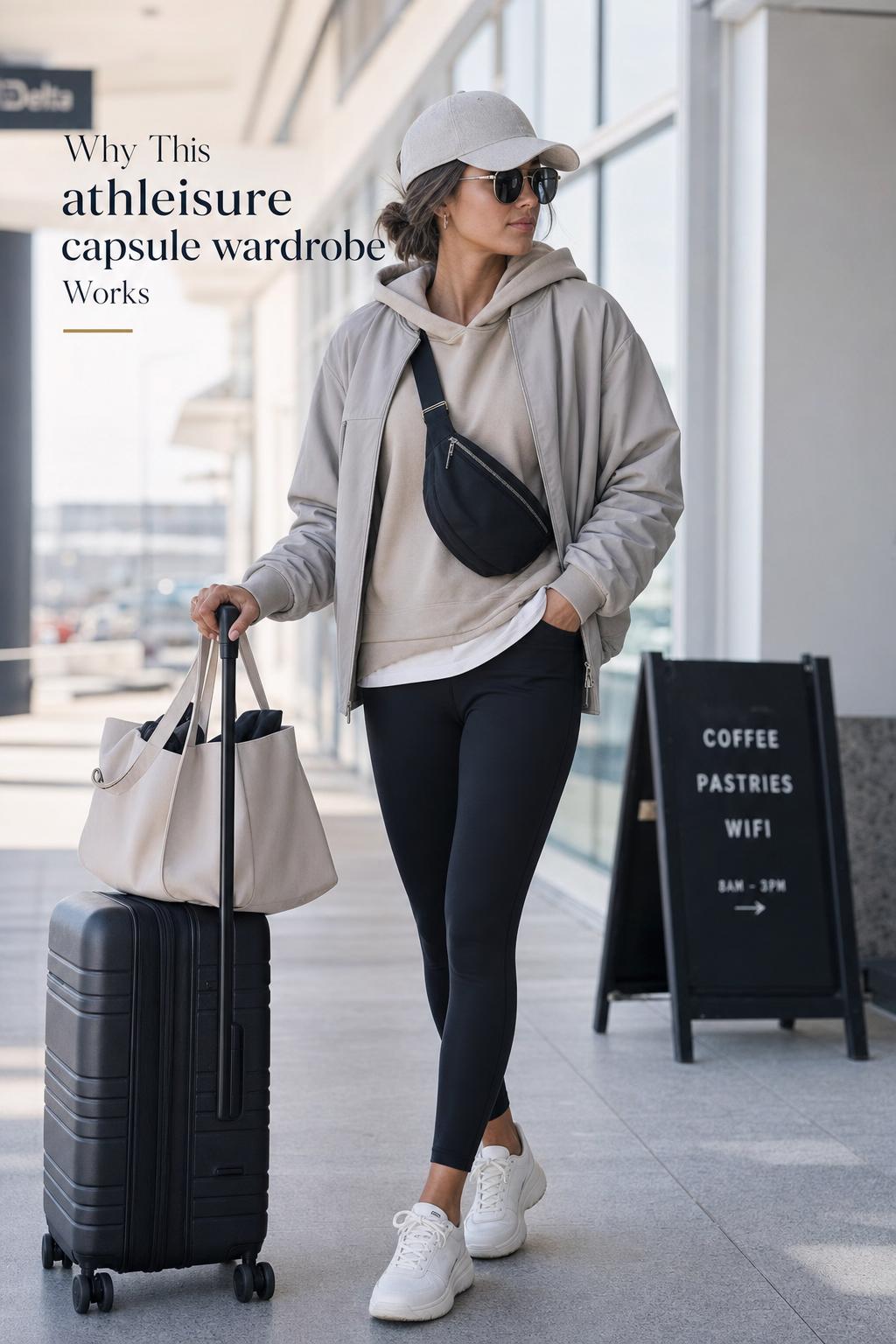
Defining the modern athleisure capsule wardrobe
An athleisure capsule wardrobe is a small, deliberate collection of active-inspired clothing designed to create multiple outfits from a limited number of pieces. It borrows from the broader capsule wardrobe concept but shifts the emphasis toward comfort, mobility, layering, and performance-casual styling. In practical terms, that means your wardrobe is anchored by essentials such as leggings, joggers, sneakers, support tops, oversized tees, hoodies, sweatshirts, and lightweight jackets rather than formal tailoring or occasionwear.
What separates a strong athleisure capsule from a random pile of activewear is intention. The clothes should coordinate in silhouette and palette, and they should cover more than one scenario. A pair of leggings should work for a low-impact workout, errands, and a travel day. A bomber jacket or lightweight down jacket should function as both an outer layer and a styling piece. A belt bag should not feel like an afterthought; it should act as a visual anchor that sharpens a casual outfit.
Found the dress? Keep the rest in one place.
Zarellea brings guest details, vendors, timelines, and every next step together — so your wedding plan feels as good as your look.
This approach also explains why the category continues to resonate in fashion hubs and media-driven style culture. The Los Angeles ease associated with active dressing, the New York preference for practical city uniforms, and the broader editorial conversation around modern minimalism all support the same wardrobe logic: fewer pieces, more combinations, better movement.
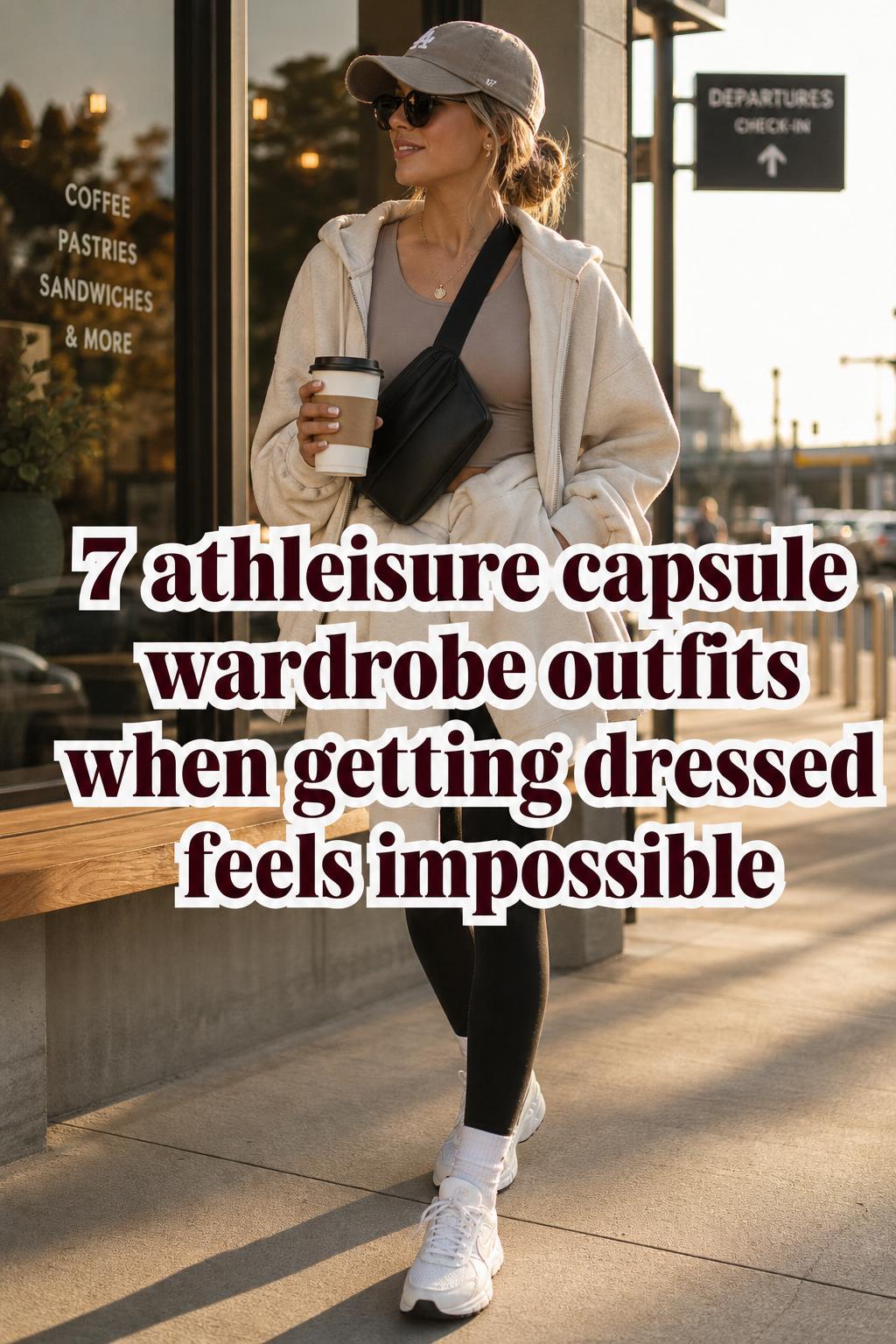
Why this wardrobe model works so well in 2026
The current appeal of athleisure is not only aesthetic. It answers a broader shift toward multi-use wardrobes. People want clothing that can move from workout to weekend, from commute to coffee, and from lounge to travel without a complete outfit change. In that environment, the athleisure capsule wardrobe becomes less of a trend and more of a practical system.
Its strongest advantage is versatility. A compact edit of coordinated pieces naturally increases outfit repetition without making the wardrobe feel repetitive. That is because texture contrast, proportion play, and layering create visual variation. Joggers with a cropped top and sneakers read differently from the same joggers with an oversized sweatshirt, beanie, and belt bag. The pieces stay the same, but the styling logic changes.
There is also a sustainability angle that makes the capsule format more compelling. A smaller wardrobe encourages better use of each garment, more careful shopping decisions, and a clearer view of what actually gets worn. That aligns with wider conversations around minimalism, circular fashion, upcycling, resale, and capsule systems such as Project 333. The point is not restriction for its own sake. The point is reducing excess while improving utility.
One limitation is worth noting. An athleisure capsule is highly effective for casual, travel, and movement-focused routines, but it may not cover more formal dress codes. That is not a flaw. It simply means the capsule should be built around your real lifestyle rather than an imagined one.
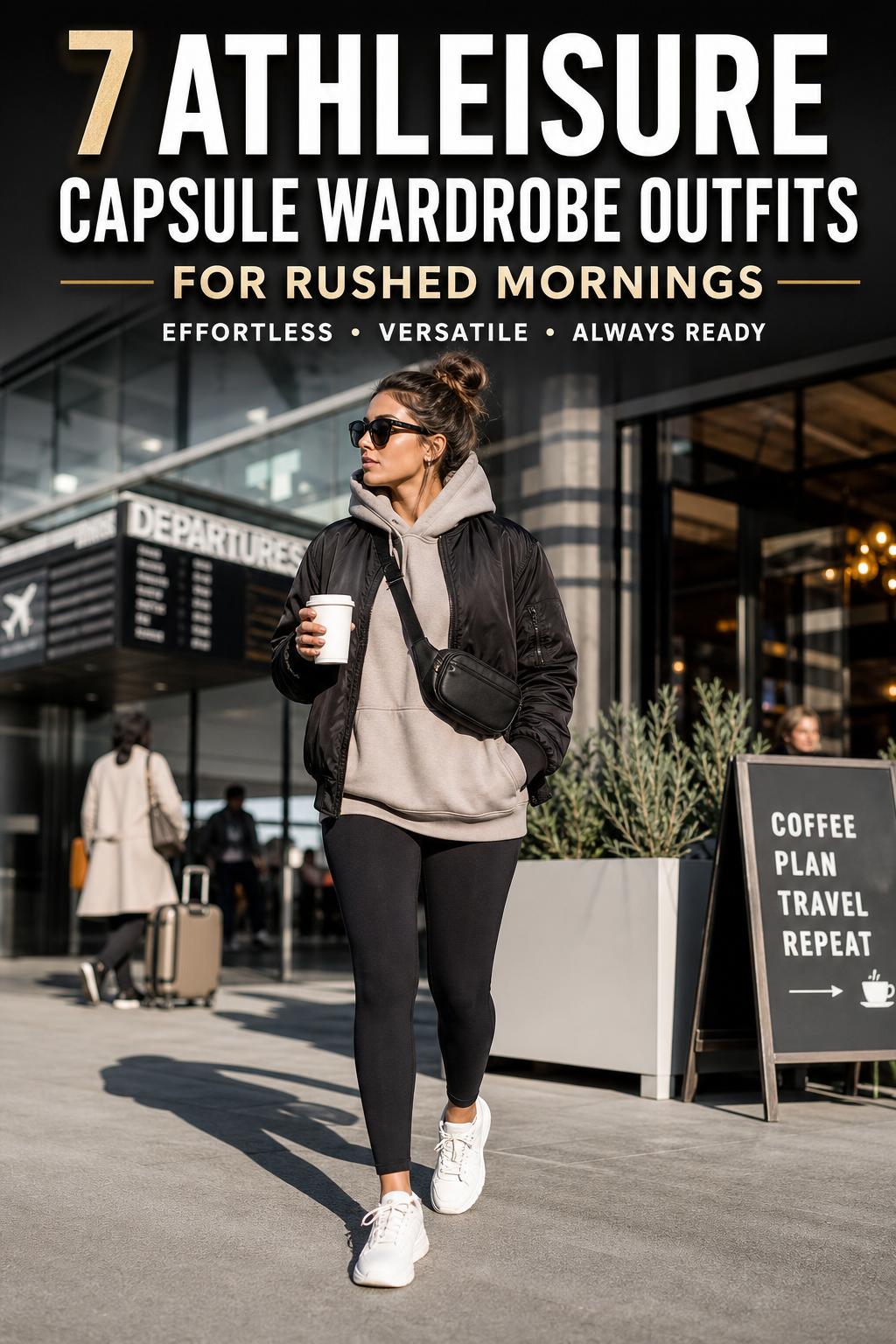
The core edit: pieces that carry the whole wardrobe
The most reliable athleisure capsules usually land between 12 and 15 pieces, excluding underwear and specialty items. That range gives enough variety for repetition without diluting the concept. The items below form the core wardrobe architecture seen across the strongest examples of this style category.
- Leggings
- Joggers or track pants
- Hoodie or sweatshirt
- Sports bra or support top
- Layering tank or tee
- Oversized T-shirt
- Cropped top
- Lightweight jacket or bomber jacket
- Sneakers
- Accessories such as a cap, beanie, belt bag, or backpack
- Optional base layers for seamless layering
The key is not owning every variation. It is choosing the versions that create the most outfit mileage. A monochrome wardrobe with black leggings, grey joggers, white sneakers, and a neutral hoodie will behave differently from one built around bolder seasonal palette choices, but both can work if the color story is controlled.
Leggings as the foundation piece
Leggings are the clearest anchor in an athleisure capsule wardrobe because they establish the fitted base layer that many outfits build around. Visually, leggings create a lean silhouette that balances well with oversized hoodies, roomy sweatshirts, bomber jackets, and lightweight outerwear. Functionally, they move between workout dressing and lifestyle dressing more easily than most bottoms.
This is why leggings appear so consistently across references to Athleta, Lululemon, Nike, Zella, and Marika. The brand name matters less than the role the piece plays. The most useful pair should offer enough structure to hold shape, enough comfort for long wear, and enough simplicity to style with multiple tops.
Joggers and track pants for relaxed structure
Joggers shift the wardrobe from pure activewear into performance-casual dressing. They introduce softness and ease while still keeping the outfit streamlined. Compared with leggings, joggers add volume through the leg, so they often pair best with a more fitted support top, cropped top, or clean layering tank to maintain silhouette balance.
Marika’s emphasis on joggers that bridge workout and lifestyle reflects exactly why they matter. They create a softer line than leggings, making them ideal for travel, off-duty city dressing, and low-key social settings where comfort still needs a composed finish.
Hoodies and sweatshirts as proportion tools
A hoodie or sweatshirt is more than a comfort piece. It is a proportion device. Worn over leggings, it softens the fitted lower half. Styled with joggers, it creates a coordinated lounge silhouette. Layered under a bomber jacket or lightweight down jacket, it adds depth and textural contrast. This is one reason hoodies appear repeatedly across capsule guides, from Nike-centered recommendations to more premium references such as Varley.
The smartest version is clean and versatile rather than overdesigned. A neutral hoodie can function as a core top layer several times per week without feeling repetitive. It also gives the wardrobe an easy route into colder weather styling.
Support tops, tanks, and tees that keep layering efficient
Sports bras, support tops, layering tanks, and oversized tees create the internal mechanics of the capsule. They determine whether the wardrobe works for actual movement or only for the appearance of movement. A sports bra or support top gives the wardrobe technical function. A layering tank or tee extends styling flexibility. An oversized T-shirt adds a casual streetwear note and can make leggings feel less gym-specific.
These top layers matter because athleisure is often assembled in tiers. A support top under a hoodie gives workout practicality. A tank under a zip layer improves temperature control. An oversized tee over leggings and sneakers creates an effortless gym-to-street formula with minimal styling effort.
Cropped tops and the role of visual balance
Cropped tops appear frequently in modern athleisure because they sharpen proportion. With high-rise leggings or joggers, they define the waistline and prevent the silhouette from feeling too heavy through the torso. In capsule terms, they add range. The wardrobe moves from purely functional to fashion-aware without requiring more pieces.
The most effective cropped tops are simple enough to layer under jackets and sweatshirts but strong enough to stand alone when temperatures rise. They are especially useful in transitional weather when full outerwear is not necessary.
Outer layers that complete the wardrobe
The outer layer changes the message of the outfit immediately. A bomber jacket adds shape and city polish. A lightweight jacket keeps the look practical and mobile. A lightweight down jacket makes the capsule more winter-ready without abandoning the sporty visual language. These pieces are where texture and structure enter the wardrobe most clearly.
This is also where a broader luxury-to-accessible spectrum can fit naturally. Whether the reference point is a premium performance layer, a simple active jacket, or an outerwear option linked to labels such as The North Face or Moncler, the principle remains the same: choose an outer layer that works over multiple tops and does not disrupt the simplicity of the capsule.
Sneakers as both function and finish
Sneakers are the most important single footwear category in this wardrobe because they ground nearly every outfit. They also influence whether the capsule reads sporty, elevated, retro, or minimalist. APL suggests sleek performance appeal. Adidas Samba brings a recognizable streetwear edge. Common Projects shifts the outfit toward minimal luxury. The visual effect changes, but the wardrobe logic stays intact.
The best sneaker for a capsule wardrobe is rarely the most dramatic one. It is the pair that can carry a support top and leggings in the morning, then still look coherent with joggers and a bomber jacket later in the day.
Accessories that make casual outfits feel considered
Accessories are often underestimated in athleisure, yet they are what stop the wardrobe from feeling unfinished. A beanie adds softness and seasonal practicality. A cap sharpens a sporty outfit. A backpack increases utility. A belt bag introduces modern styling structure and keeps the silhouette compact. The Lululemon Everywhere bag has become a recognizable reference in this space for exactly that reason: it supports movement while adding a clear streetwear cue.
These pieces should be treated as styling tools rather than extras. One or two carefully chosen accessories can make a repeated outfit look more editorial and less improvised.
How outfit formulas create variety from fewer pieces
The power of a capsule wardrobe lies in repeated formulas. Instead of creating every outfit from scratch, you build around combinations that consistently work. This is where athleisure becomes especially efficient. The garments already share a visual language, so a small shift in layering or accessory choice can create a new result.
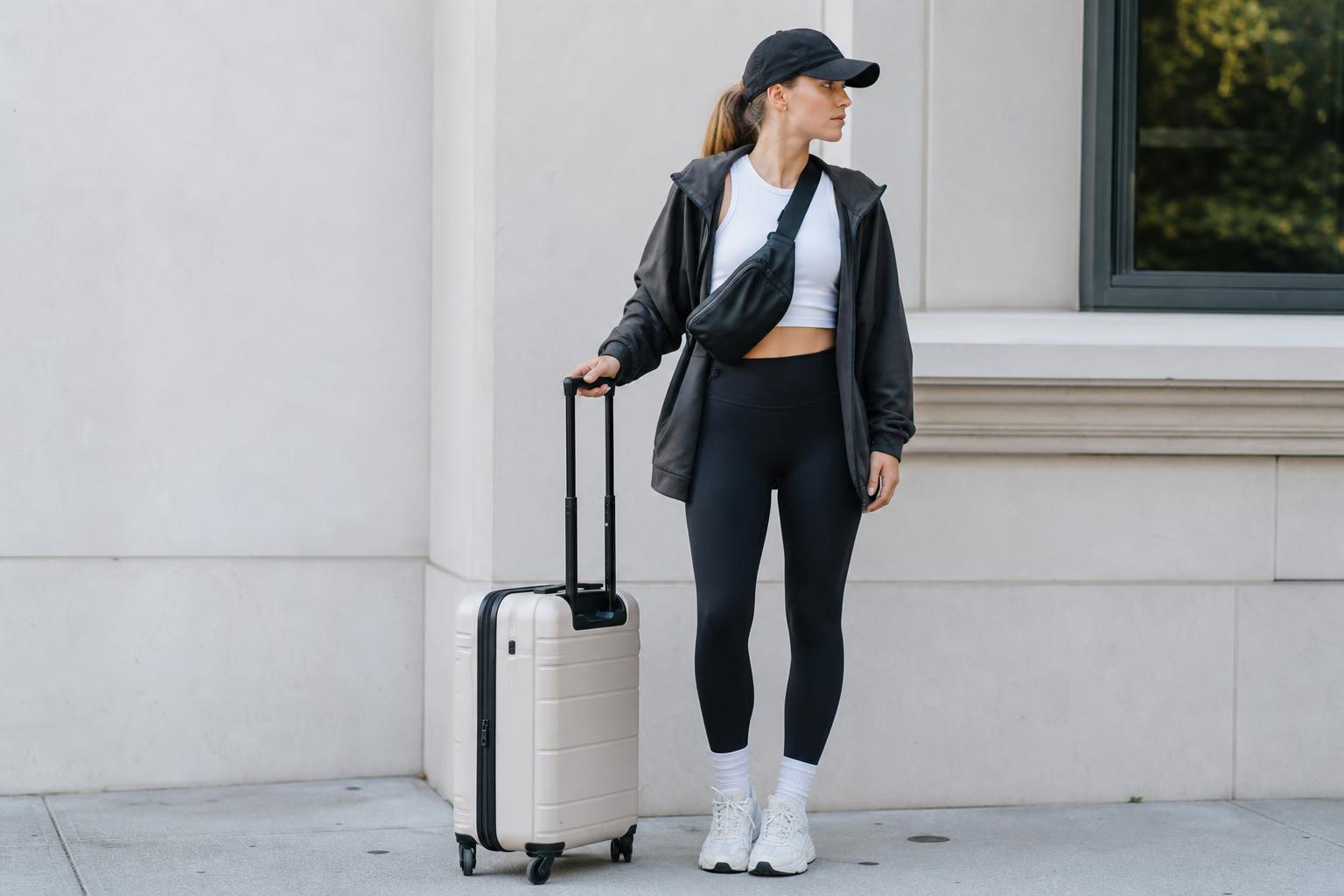
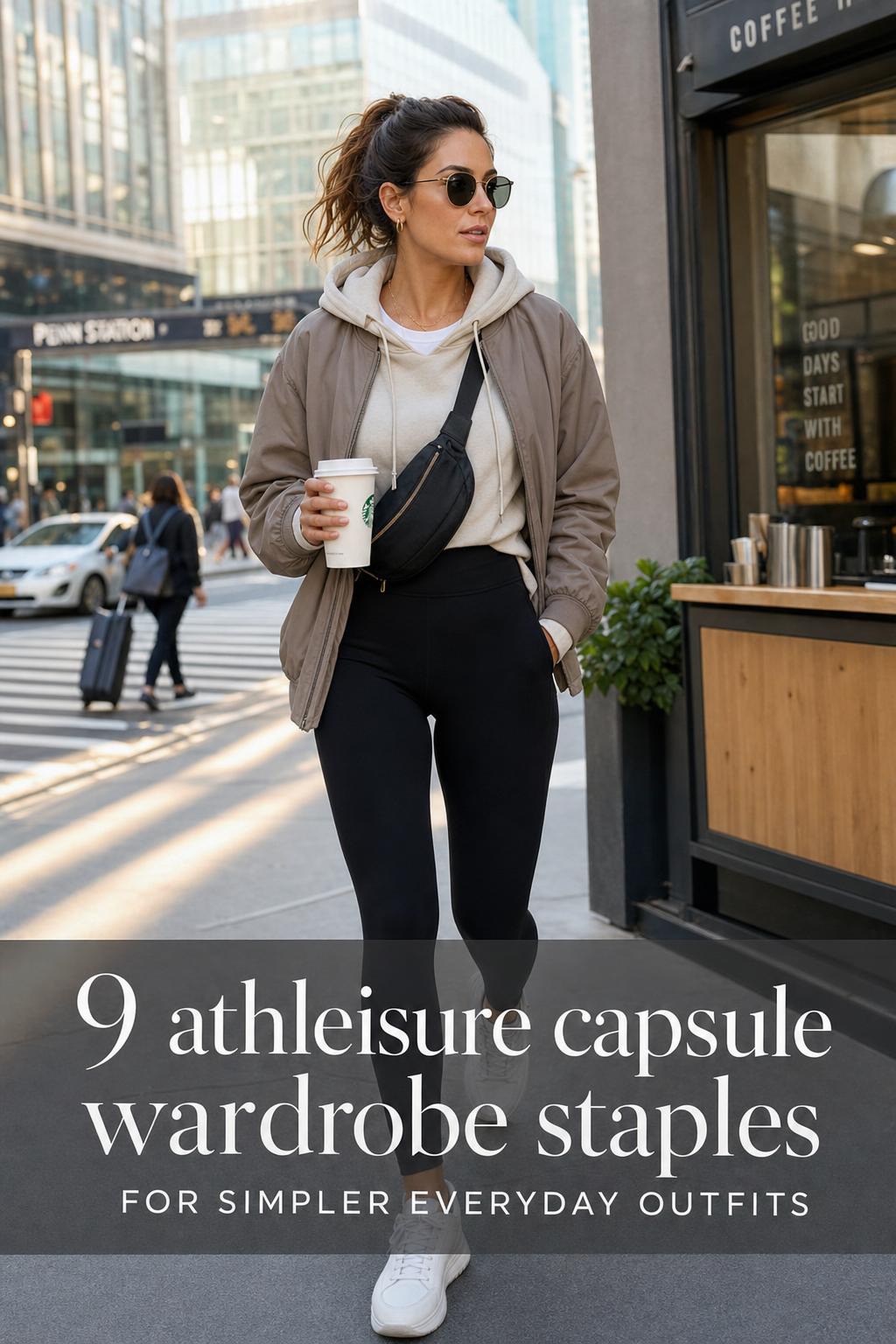
A classic workout-to-weekend formula starts with leggings, a support top, and a lightweight jacket, then finishes with sneakers and a belt bag. The look works because the fitted base keeps the silhouette streamlined while the outer layer adds coverage and shape. For a more streetwear-leaning version, swap the jacket for an oversized sweatshirt and add a beanie.
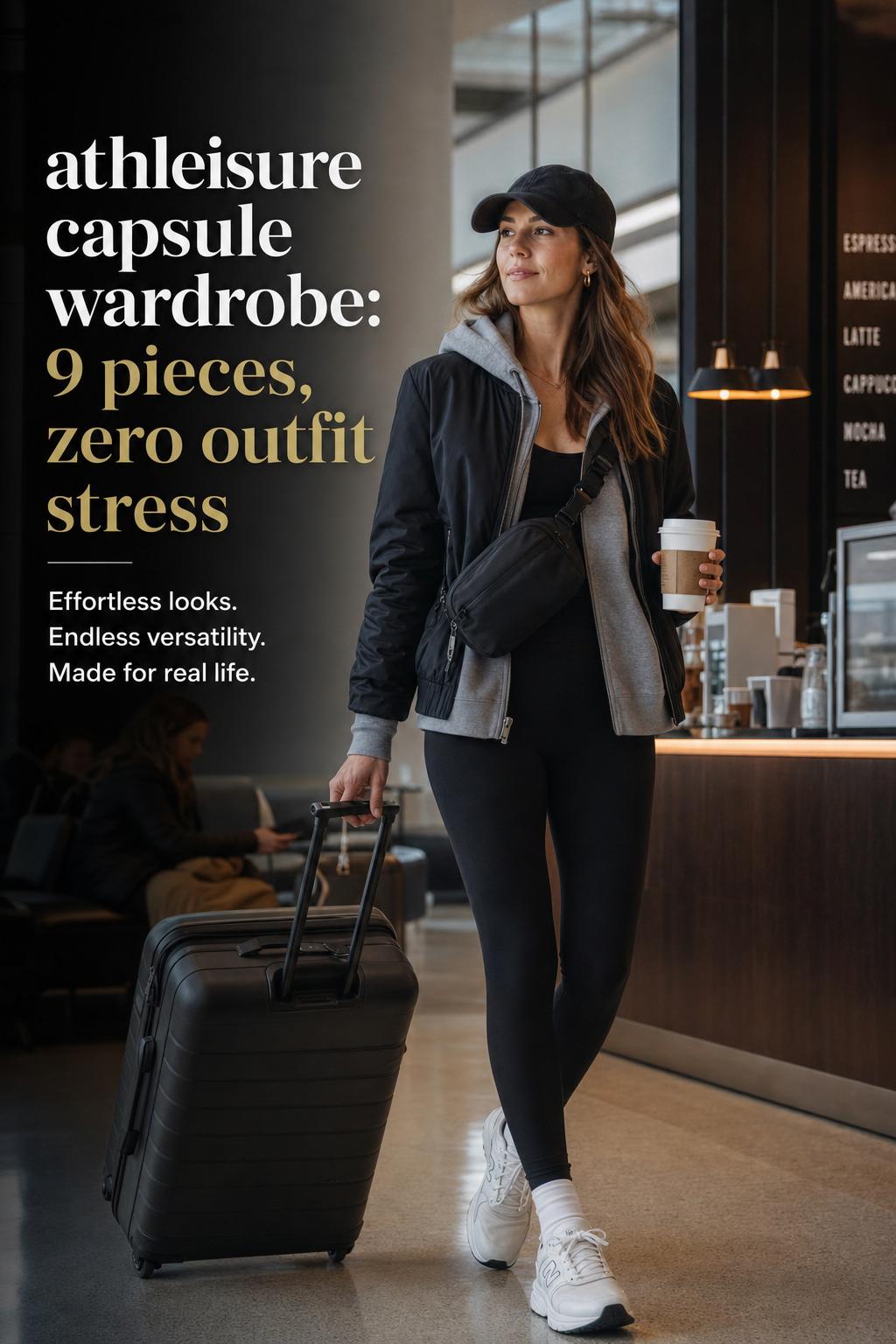
A travel formula often works better with joggers than leggings. Joggers, a layering tank, a hoodie, and sneakers create softness and ease without looking careless. Add a backpack for function or a belt bag for a cleaner line. The balance here comes from mixing a relaxed lower half with a neater upper structure.
For an errands-to-lunch outfit, high-rise leggings with a cropped top and bomber jacket create a sharper composition. The cropped top defines proportion, the bomber adds shape, and the sneakers keep the look practical. This is one of the easiest formulas for making activewear feel intentional rather than purely utilitarian.
Tips for building stronger outfit combinations
- Pair fitted bottoms with relaxed top layers to create silhouette balance.
- Use one accessory as a visual anchor rather than piling on multiple statement elements.
- Keep the palette tight so tops and bottoms can rotate more freely.
- Let fabric texture create interest when the color scheme is minimal.
- Repeat your best formulas and vary one element, such as the jacket, sneaker, or bag.
Color palette and style logic: why some capsules feel cohesive instantly
The fastest way to improve an athleisure capsule wardrobe is not adding more pieces. It is refining the palette. Cohesion comes when leggings, joggers, hoodies, and outer layers share a tonal relationship. Neutrals usually perform best because they reduce friction in outfit building, but a capsule does not have to be colorless. It simply needs a system.
Black, grey, navy, cream, and white create the easiest foundation because they allow the wardrobe to absorb different sneaker styles and accessories without visual chaos. A seasonal accent color can then be added through a crop top, beanie, or bomber jacket. This keeps the outfit composition controlled while still preventing monotony.
Texture matters just as much as color. Matte leggings, brushed fleece, technical performance fabrics, and sleek sneaker finishes create enough contrast to make simple outfits feel layered. That is one reason athleisure works so well for minimalist dressing. The visual interest often comes from fabric behavior rather than print or embellishment.
A brand-agnostic shopping perspective with useful reference points
Many athleisure guides lean heavily on affiliate-style shopping lists. A stronger wardrobe strategy starts with product categories and quality criteria, then uses brands only as reference points. This keeps the capsule flexible whether your preference is premium, mid-market, or more accessible.
Lululemon, Athleta, Vuori, Nike, Varley, Marika, and APL all appear within the broader athleisure conversation because each brand signals a slightly different emphasis. Nike often centers performance energy. Athleta and Lululemon are frequently associated with polished active staples. Vuori leans into relaxed softness. Varley often suggests elevated lounge-athleisure crossover. Marika highlights mix-and-match activewear practicality. APL and Common Projects show how footwear can shift the overall tone of a capsule.
What matters most is not logo recognition. It is whether the item supports the wardrobe’s structure. A hoodie that pills quickly, leggings that lose shape, or sneakers that only work with one outfit will weaken the system regardless of brand reputation.
What to evaluate before you buy
- How many outfits the piece can join immediately
- Whether the silhouette balances your existing tops or bottoms
- If the fabric feels durable enough for repeated wear
- Whether the color strengthens or disrupts the capsule palette
- If the item works across at least two settings, such as movement and lifestyle wear
Materials, performance details, and why fabric changes everything
Athleisure succeeds or fails at the fabric level. The category depends on performance characteristics that support movement and repeated wear. Moisture-wicking fabric helps active pieces remain comfortable. Four-way stretch improves mobility and shape recovery. Durable construction matters because capsule wardrobes rely on rotation; the same garments are worn often, so weak fabrics show problems quickly.
Fabric also affects the visual outcome. A sleek performance legging reads sharper than a thin, overly casual pair. A structured bomber jacket gives cleaner shape than an unformed outer layer. A brushed sweatshirt introduces softness and comfort, while a smoother technical fabric pushes the wardrobe toward a more urban, polished direction.
This is where longevity and sustainability connect. Pieces that hold shape, resist early wear, and justify frequent use naturally support a smaller wardrobe model. The capsule format encourages closer attention to garment lifecycle, care, and resale potential rather than impulsive accumulation.
Tip: let function guide style choices
If a piece looks great but cannot handle the way you move through the day, it does not belong in the core capsule. A support top that lacks enough security, a jacket that overheats easily, or sneakers that are stylish but uncomfortable for walking will create friction. In a capsule system, friction becomes obvious very quickly.
Adapting the capsule by body type, lifestyle, and routine
One reason a brand-neutral approach matters is that fit needs vary. A successful athleisure capsule wardrobe should not assume one silhouette, one height range, or one styling goal. Petite dressers may prefer slightly shorter outer layers to preserve proportion. Taller wearers may prioritize longer inseams in joggers or leggings. Plus-size readers may focus on support, waistband stability, and top lengths that create the right balance. The capsule framework is flexible enough to absorb all of these needs because it is based on function, not rigid rules.
Lifestyle also changes the piece count. Someone with a gym-focused weekly routine may need more support tops and leggings. Someone using athleisure mainly for travel and errands may rely more on joggers, oversized tees, hoodies, and a strong outer layer. A city commuter may prioritize compact accessories such as a belt bag and sneakers that can handle long walking days. The smartest capsule is always built around frequency of use.
This is also where men’s athleisure capsules enter the conversation. The Adult Man frames the concept through minimalist menswear, and the logic is parallel: fewer pieces, sharper utility, cleaner combinations. The authorial perspective of Karlton Miko Tyack reinforces that athleisure capsule thinking is not limited to one audience. The core wardrobe mechanics transfer easily across different style profiles.
Climate and city context: the capsule changes with location
An athleisure capsule should respond to weather as much as style. The same core formula will not perform identically in Los Angeles, New York, London, or Paris. Warmer climates tend to support lighter layers, cropped tops, and more visible support pieces. Colder cities require stronger outerwear logic, base layers, and accessories such as beanies.
In a Los Angeles setting, leggings, a sports bra, an oversized tee, sneakers, and a belt bag may be enough for much of the year. In New York, the same wardrobe likely needs a bomber jacket, hoodie, lightweight down layer, and more attention to tonal layering. London and Paris add another useful reference point because they often reward cleaner, more restrained outfit composition. In those settings, neutral palettes and sleek sneakers can help the capsule feel refined without losing practicality.
Seasonal transitions are where the capsule proves its value. Instead of reinventing the wardrobe for every shift in weather, you rotate outer layers and accessories while keeping the base pieces consistent. That continuity is one of the strongest arguments for the capsule method.
Practical climate tips
- Warm climates benefit from lighter layers, tanks, and cropped tops with fewer heavy fleece pieces.
- Cold climates need outerwear depth, including a hoodie plus a lightweight jacket or down layer.
- Transitional weather is easiest when your capsule includes one fitted base, one soft mid-layer, and one structured outer layer.
- Accessories should respond to weather, not only aesthetics; beanies and caps both shift function and style.
Common mistakes that weaken an athleisure capsule
The first common mistake is buying too many versions of the same piece without enough range elsewhere. Five nearly identical leggings do not create versatility if there is only one useful top layer. The second is ignoring silhouette variation. A capsule made only of oversized pieces can lose definition, while one built only from fitted items can feel visually flat.
Another mistake is letting brand loyalty override wardrobe logic. It is entirely possible to admire Athleta, Nike, Vuori, Lululemon, or Varley and still choose a different option because it integrates better with what you already own. Strong capsules reward selectivity, not accumulation.
The last major issue is forgetting accessories and care. Without a bag, cap, beanie, or polished sneaker rotation, outfits can feel incomplete. Without proper washing and garment rotation, the wardrobe loses shape quickly. A capsule is small by design, so maintenance matters more.
Care, rotation, and garment longevity
Capsule wardrobes demand repeat wear, which makes care strategy essential. Garments with stretch and technical finishes need consistent handling if they are going to stay supportive and presentable. Even the best capsule can look tired if leggings lose recovery, hoodies become rough, or sneakers no longer feel clean enough to anchor the outfit.
Rotation is one of the simplest longevity tools. Alternating between two or three key bottoms rather than overusing one pair helps preserve fit and appearance. The same goes for sneakers and outer layers. Repetition is built into the system, but concentrated overuse should not be.
This maintenance mindset also supports the broader sustainability conversation around capsule wardrobes. The fewer items you rely on, the more valuable good care becomes. Better upkeep extends wearability, supports resale or circular use, and keeps the wardrobe functioning as intended.
Advanced styling: using AI-driven outfit planning without losing personal style
An emerging extension of the capsule concept is AI styling and wardrobe planning. In practice, this can help readers map outfits, identify missing categories, and avoid duplicate purchases. For athleisure, where many garments look similar at first glance, digital planning can be particularly useful in showing how leggings, joggers, outerwear, and accessories interact across a week of real outfits.
The best use of AI in this context is organizational rather than prescriptive. It can help you sort your capsule by function, create outfit formulas for travel or errands, and test how often each piece appears in rotation. It is less useful if it pushes you toward random additions that ignore your body type, climate, or daily routine. A strong capsule still depends on human judgment about comfort, movement, and visual identity.
That same planning logic can support short-form content, image-based lookbooks, and outfit galleries. The wardrobe becomes easier to maintain when each item has a clear role and visible combinations attached to it.
Editorial style references and authority signals in the athleisure space
Modern athleisure does not exist only in product marketing. It is reinforced by broader fashion media and editorial framing. References to editors and platforms such as Who What Wear and Marie Claire US are useful because they reflect the larger shift that made performance-casual dressing a normal part of everyday style discourse. They help explain why pieces once associated mainly with the gym now sit comfortably in travel wardrobes, city uniforms, and minimalist closets.
That editorial validation matters because it moves the conversation beyond trend language. Athleisure works not just because it is popular, but because it aligns with how people actually dress now: mobile, layered, and often moving between settings without a full outfit change.
Putting the capsule into practice: a realistic weekly framework
In a practical week, the same capsule can cover multiple needs with only minor adjustments. Monday might call for leggings, a tank, hoodie, and sneakers for a workout followed by errands. Tuesday could shift to joggers, an oversized tee, and a bomber jacket for travel or remote work. Wednesday may bring the leggings back with a cropped top, lightweight jacket, and belt bag. By Thursday, the joggers return with a support top and sweatshirt. The repetition is visible, but the outfit composition still feels fresh because the silhouette and layering change.
This is the real value of the athleisure capsule wardrobe. It is not about endless novelty. It is about creating enough visual and functional variation from a compact set of reliable pieces. Once the wardrobe reaches that point, shopping becomes more selective, styling becomes faster, and the closet feels substantially calmer.
FAQ
What is an athleisure capsule wardrobe?
An athleisure capsule wardrobe is a small, coordinated collection of active-inspired clothing designed to create many outfits from fewer pieces. It usually includes staples such as leggings, joggers, hoodies, layering tops, sneakers, and a lightweight jacket, all chosen for comfort, versatility, and easy mixing.
How many pieces should an athleisure capsule wardrobe have?
A practical range is usually around 12 to 15 core items, excluding underwear and highly specialized pieces. That size is large enough to create outfit variety but small enough to maintain the simplicity and repeat-wear logic that make capsule dressing effective.
Which pieces are most essential?
The most important pieces are leggings, joggers, sneakers, a hoodie or sweatshirt, a support top or sports bra, a layering tank or tee, and one outer layer such as a bomber jacket or lightweight jacket. Accessories like a belt bag, cap, beanie, or backpack help complete the wardrobe and sharpen outfit composition.
Can an athleisure capsule wardrobe work in different seasons?
Yes, as long as layering is built into the system. In warmer weather, the capsule can lean on tanks, cropped tops, and lighter layers. In colder weather, hoodies, base layers, beanies, and lightweight down or structured outerwear extend the same wardrobe without requiring a complete reset.
Is a capsule wardrobe only useful for workouts?
No. The most effective athleisure capsules are designed for multiple settings, including errands, travel, casual coffee meetings, school runs, and off-duty weekends. The category works best when each item can move between activity and lifestyle dressing.
How do I keep the wardrobe from feeling repetitive?
Use outfit formulas rather than relying on constant newness. Changing one element, such as the outer layer, sneaker, or accessory, can shift the entire look. Texture contrast, tonal layering, and proportion play also create visual variety even when the same base pieces repeat.
Do I need expensive brands like Lululemon, Athleta, or Vuori?
No. Those brands are useful reference points, but the capsule works best when purchases are guided by fit, fabric performance, versatility, and how well each item integrates with the rest of the wardrobe. A brand-neutral approach usually creates a more balanced and practical closet.
How does sustainability connect to an athleisure capsule wardrobe?
The capsule approach encourages fewer, more intentional purchases and more frequent use of each garment. That supports a more thoughtful wardrobe model linked to minimalism, garment longevity, circular fashion, resale, and frameworks such as Project 333.
Can AI help me build an athleisure capsule wardrobe?
Yes, especially for outfit planning and identifying wardrobe gaps. AI tools can help organize combinations, track repeated pieces, and create a clearer view of how your leggings, joggers, jackets, and sneakers work across a week. The final choices should still be guided by your climate, routine, and fit preferences.