What to Pack: Hawaii Capsule Wardrobe for Beach-to-Dinner Style
Airport packing decisions often look simple until Hawaii enters the equation. A beach destination suggests ease, but a real hawaii capsule wardrobe has to solve several competing needs at once: heat, sun, resort settings, beach time, casual sightseeing, possible evening dinners, and the constant temptation to overpack “just in case.” That is why so many travelers end up with a suitcase full of single-use outfits and still feel underdressed at the wrong moment.
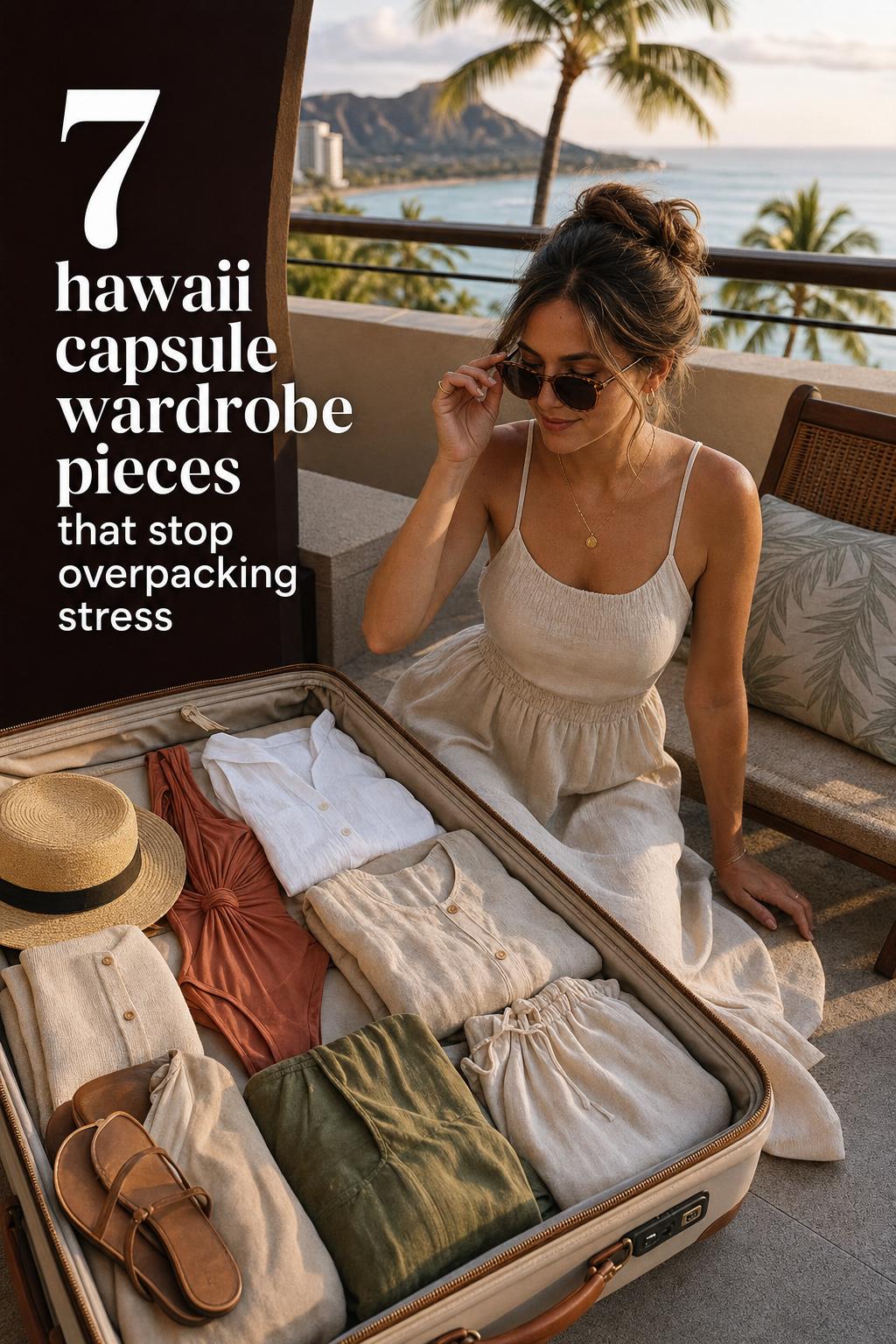
The smarter approach is not packing more. It is packing with structure. A well-built hawaii capsule wardrobe uses a small group of versatile pieces that work across Waikiki days, beach transitions, family outings, and relaxed dinner plans. The goal is not minimalism for its own sake. The goal is practical style: fewer pieces, more outfit combinations, better comfort, and less visual clutter in your suitcase.
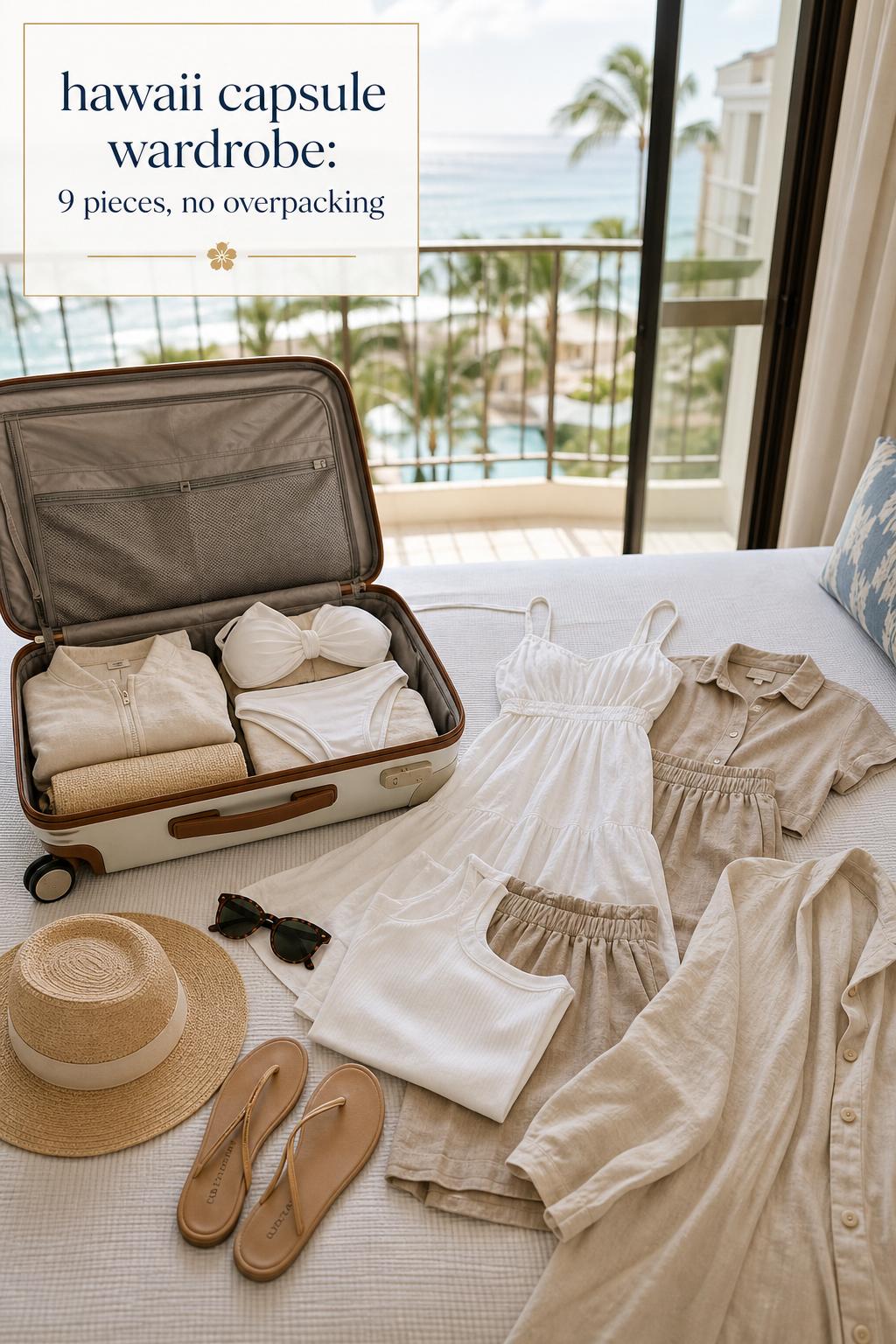
This guide breaks down the styling logic behind a Hawaii packing list that actually functions in real life. It covers climate considerations, breathable fabrics, core resort wear pieces, outfit composition, family and couple travel adjustments, and the common mistakes that make vacation packing harder than it needs to be.
Why this styling challenge is harder than it looks
Hawaii creates a specific wardrobe problem because the setting is relaxed, but the day structure is not always simple. One traveler may move from breakfast to beachwear, then into a sundress and sandals for sunset. Another may spend the day in family activities and need coordinated outfits that still feel practical. A capsule wardrobe has to cover movement, heat, sun exposure, and different dress expectations without turning into a full vacation trunk.
Found the dress? Keep the rest in one place.
Zarellea brings guest details, vendors, timelines, and every next step together — so your wedding plan feels as good as your look.
The most common issue is imbalance. People either pack too casually and feel unprepared for dinners or polished resort spaces, or they pack too many statement pieces that do not mix well with swimwear, cover-ups, and daytime basics. The result is wasted luggage space and fewer usable outfits.
There is also the climate factor. Hawaii is not a one-note destination. Oahu and Waikiki may call for easy beach-to-city dressing, while Maui, Kauai, and the Big Island can shift the balance of your packing choices depending on coast, activities, and evening conditions. That makes versatility more valuable than novelty.
The logic behind a strong hawaii capsule wardrobe
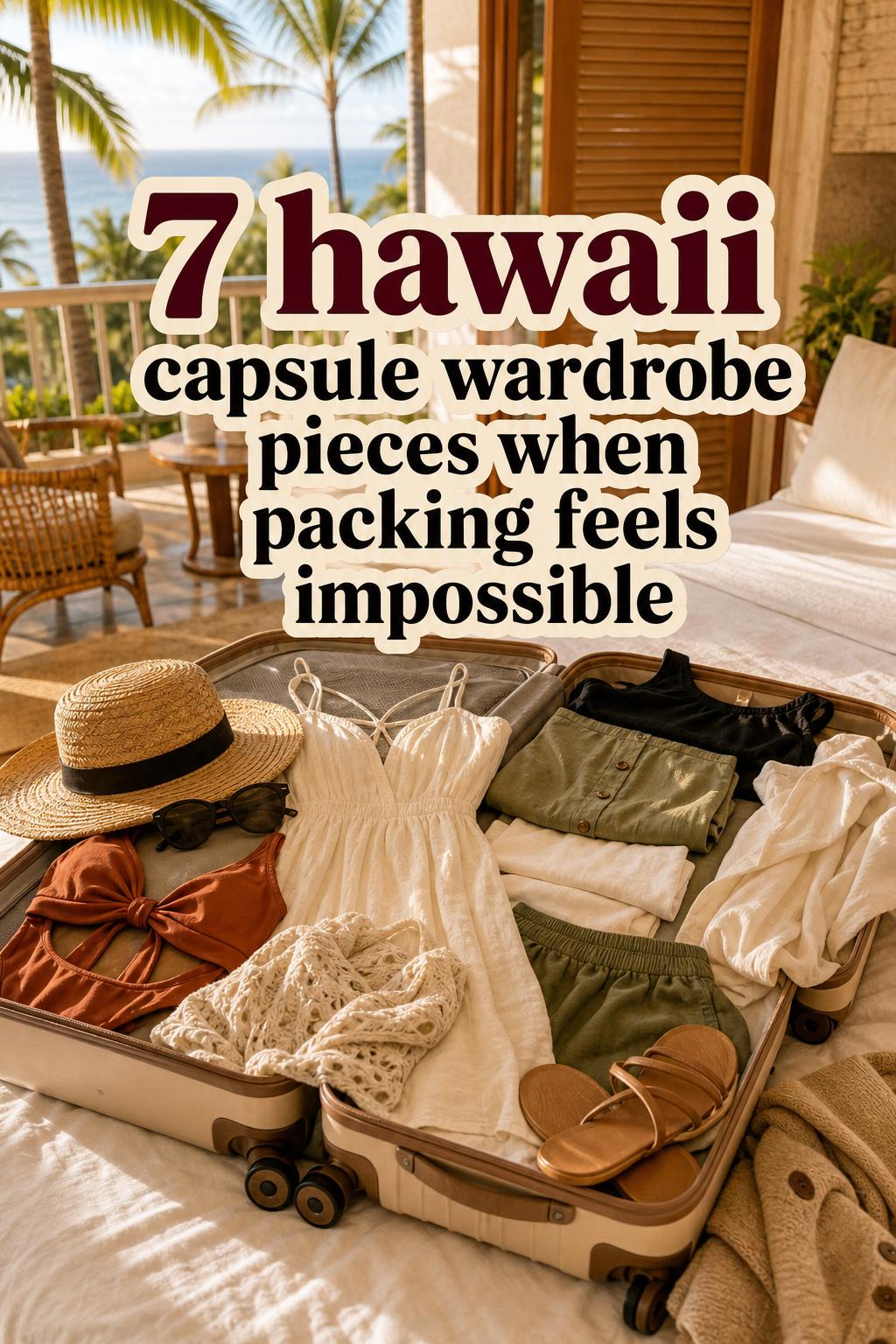
A capsule wardrobe is a limited collection of clothing designed to create many outfits from relatively few pieces. In the Hawaii context, that means choosing clothes with repeat value. Each item should work with at least two or three other pieces in your suitcase. A dress should transition from daytime sightseeing to dinner with a simple accessory shift. Sandals should pair with swim cover-ups and casual dresses. A lightweight layer should make sense across islands, not just in one narrow scenario.
This styling method works because it creates visual anchors. Swimwear, dresses, sandals, and cover-ups are the core entities of most successful Hawaii packing lists for a reason: they create a practical foundation. From there, tops, bottoms, hats, sunglasses, and matching sets add variation without breaking the system.
The best vacation capsule wardrobe also controls silhouette. If everything is loose and oversized, the wardrobe can feel shapeless. If everything is fitted and delicate, it may feel too precious for a tropical destination. The strongest balance usually combines easy, breathable shapes with a few clean lines that make the outfit feel intentional rather than improvised.
Key dressing principles that solve the problem
Prioritize breathable fabrics
Breathable fabrics are one of the most practical ways to improve a Hawaii packing list. Linen, cotton, and rayon are repeatedly useful because they support airflow and create the relaxed resort wear texture that suits the destination. Fabric choice affects comfort as much as silhouette does. A simple dress in the right material will outperform a more elaborate piece in a fabric that traps heat.
Build around day-to-night flexibility
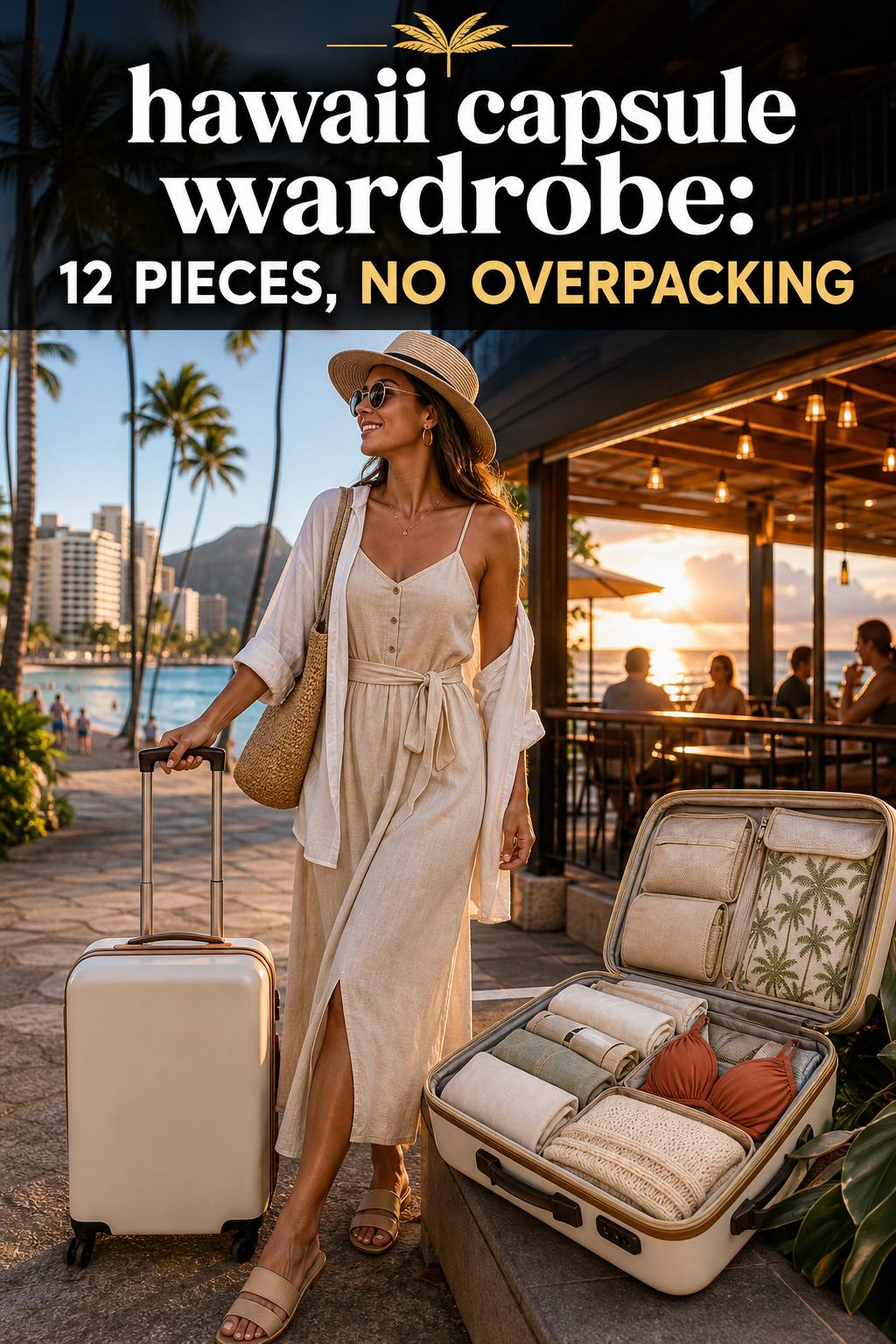
Vacation outfits work harder when they can shift roles. A swimsuit should sit under a cover-up that can also function as a lunch layer. A sundress should be polished enough for dinner with sandals and a hat removed. This is the principle that keeps a hawaii capsule wardrobe compact while still looking varied.
Use a small number of visual anchors
Matching sets, dresses, neutral sandals, and beachwear basics give the wardrobe structure. This is especially helpful for family travel, where coordinated outfits can quickly become chaotic if every piece is competing for attention. A few anchors create color harmony and reduce decision fatigue.
Pack for activities, not fantasy outfits
The most effective capsule wardrobe for Hawaii begins with your actual trip pattern. Beach time, casual resort lounging, walking in Waikiki, family excursions, snorkeling-related downtime, light hiking, and dinner plans all have different demands. A practical suitcase reflects the trip you are taking, not the version that exists only in mood boards.
Island context changes what your capsule needs
Waikiki and Oahu: polished casual with beach access
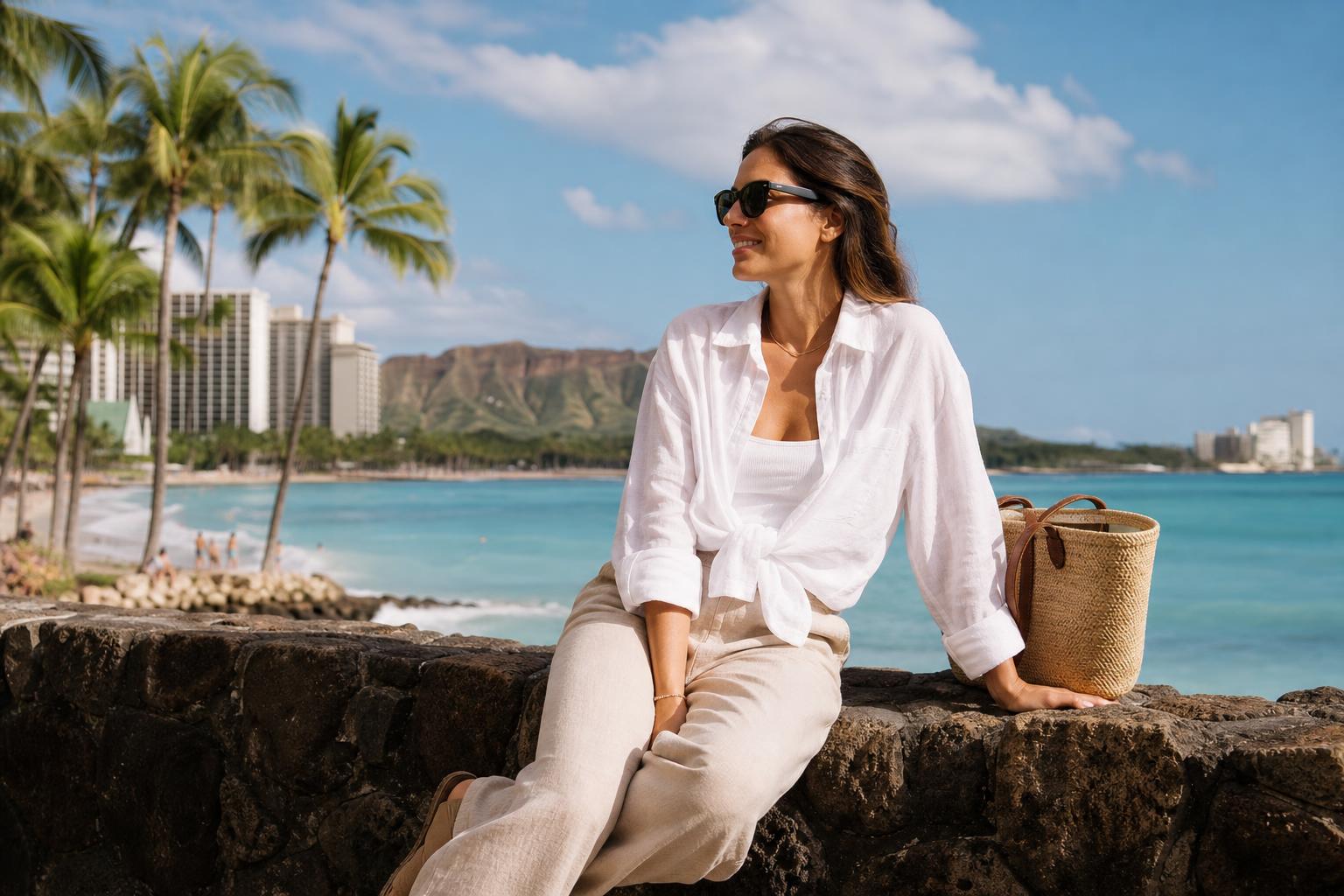
Waikiki dressing usually benefits from strong beach-to-dinner transitions. This is where sundresses, sandals, a reliable cover-up, and easy tops and bottoms become especially useful. The visual tone can be slightly more polished because the setting often blends vacation ease with city-adjacent movement. A capsule wardrobe for Oahu should still stay lightweight, but it benefits from pieces that look complete outside the beach zone.
Maui and Kauai: relaxed resort wear with climate awareness
Maui and Kauai align well with soft resort wear dressing, but the packing logic stays the same: versatile pieces first. Dresses, swimwear, and breathable separates do most of the work. If your trip includes a mix of resort time and outdoor exploration, build around items that can handle repeat wear without feeling repetitive.
Big Island: keep room for practical layering
The Big Island calls for slightly more attention to variation in setting, especially if your plans move beyond one coastal routine. In a capsule framework, this does not mean packing heavily. It means reserving space for a lightweight layer and avoiding a suitcase made entirely of beach-specific pieces.
The core 20 to 30 pieces that do the real work
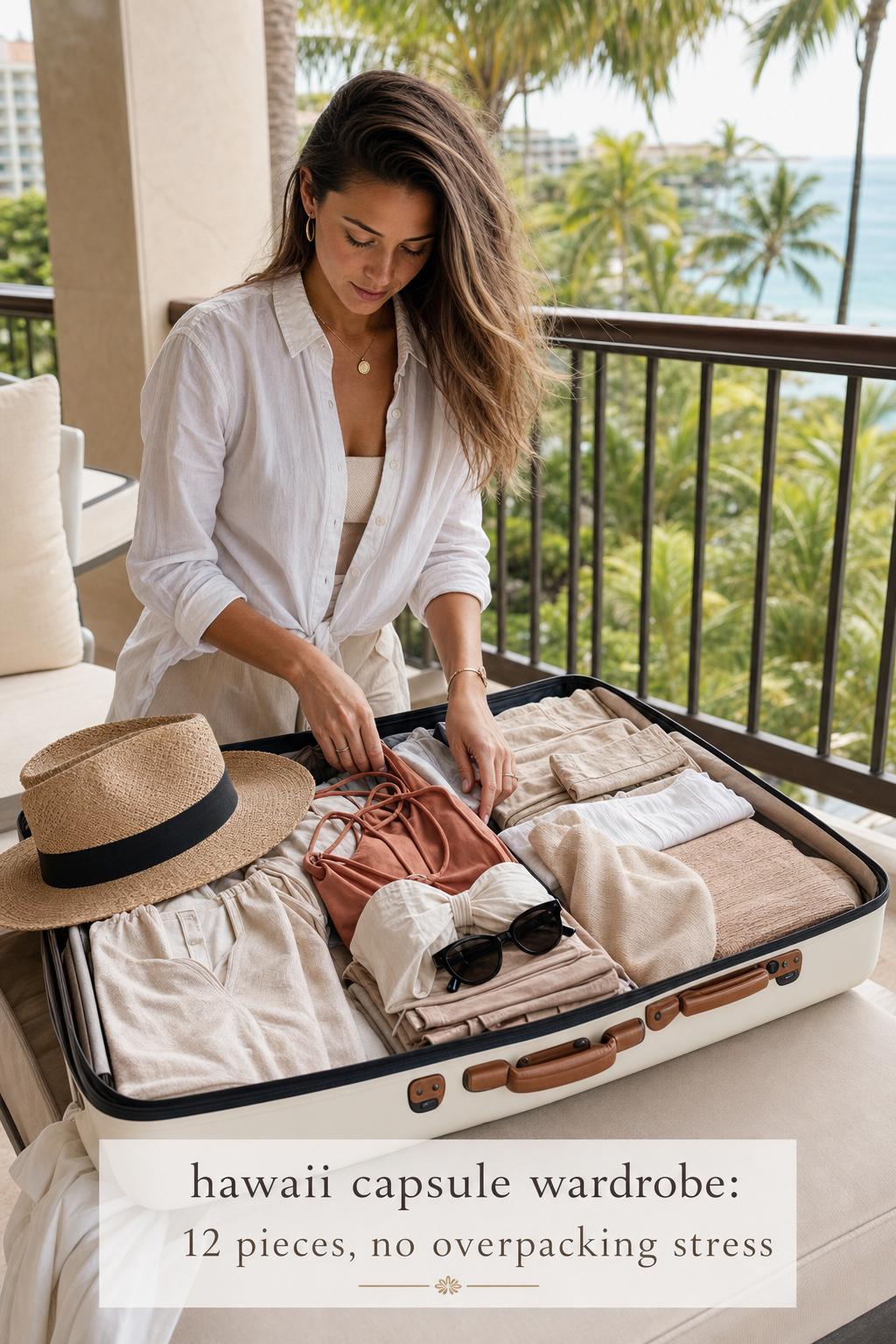
A complete hawaii capsule wardrobe does not need endless variety. It needs a controlled set of essentials that combine well. The exact number depends on trip length, laundry access, and your travel style, but the structure stays consistent.
- 2 to 3 swimsuits or bathing suits
- 2 cover-ups or beachwear layers
- 3 to 4 dresses, including at least one sundress that can work for dinner
- 3 to 5 tops in breathable fabrics
- 2 to 3 bottoms that mix easily with every top
- 1 matching set if you like coordinated outfits
- 1 lightweight layer for evening or variable conditions
- 2 pairs of sandals, with at least one comfortable walking option
- 1 pair of water-friendly shoes if your activities require them
- 1 hat or visor
- 1 pair of sunglasses
This type of packing list creates a wardrobe that covers resort wear, daytime walking, beachwear, and simple evening dressing. It also leaves room for proportion play. If your dresses are the main visual feature, your sandals and accessories can stay understated. If you rely more on tops and bottoms, a matching set can become the statement piece that adds variety without adding complexity.
What to pack and what to leave behind
What earns space in the suitcase
The most useful items are the ones that bridge settings. Dresses that can be styled casually or slightly elevated, swimwear that layers smoothly under cover-ups, sandals that suit both daytime and dinner, and tops that pair with multiple bottoms all deserve priority. Hats and sunglasses are also worth the space because they support both practicality and outfit composition.
What often creates packing clutter
Pieces that only work once are usually the first items to remove. That includes occasion-specific outfits with no mix-and-match value, shoes that require their own separate wardrobe logic, or overly structured garments that fight against the climate and relaxed setting. If a piece cannot move between at least two contexts, it is usually not helping your capsule.
Outfit solution: the beach-to-lunch uniform
Start with a swimsuit, add a clean cover-up, and finish with flat sandals, sunglasses, and either a hat or visor. This combination works because it respects the reality of a Hawaii day: changing temperatures, sun exposure, and the need to move from water to public spaces without a full outfit change.
The styling logic is simple. The swimsuit acts as the base layer, the cover-up adds coverage and texture, and the accessories create a finished visual line. If the cover-up has enough shape, the outfit reads as intentional rather than transitional. This is one of the highest-value formulas in any vacation capsule wardrobe.
Outfit solution: the sundress that handles daytime and dinner
A sundress with simple sandals is one of the strongest pieces in a hawaii capsule wardrobe because it solves multiple problems at once. It is breathable, easy to pack, and visually complete with minimal styling effort. For daytime, pair it with flat sandals, sunglasses, and a beach bag. For dinner, keep the same dress and switch to cleaner sandals and fewer daytime accessories.
This outfit works because the silhouette is self-contained. You do not need to engineer proportion through multiple layers. The dress creates the line, the sandals support movement, and the accessory changes control the level of polish. That is exactly the kind of efficiency a travel wardrobe needs.
Outfit solution: matching sets for easy coordination
Matching sets appear often in vacation outfit planning because they reduce decision-making while still looking styled. Brands such as PatPat and Showpo lean into this logic from different angles, whether the focus is family coordination or vacay wardrobe styling. In practical terms, a matching set gives you three outcomes: wear it together, wear the top with a different bottom, or wear the bottom with another top.
This is especially useful for couples and family travel, where visual anchors matter. A coordinated base can simplify photos, day plans, and packing volume. The key is keeping the set breathable and easy rather than overly formal. In Hawaii, a matching set should support the trip, not dominate it.
Outfit solution: relaxed separates for walking days
For sightseeing, casual meals, or a day that starts away from the beach, rely on a breathable top, simple bottoms, comfortable sandals, sunglasses, and a lightweight layer if needed. This combination creates stronger functional support than a dress when movement is the priority.
The reason it works is silhouette control. A defined top-and-bottom combination often performs better for active vacation days because it stays stable, allows easier movement, and can adapt as the day shifts. If the color palette remains cohesive, these separates also increase the total number of possible outfits without increasing the suitcase count.
Outfit solution: swim-to-sunset transitions
This is the outfit scenario that exposes weak packing most quickly. The strongest solution is a swimsuit under a polished cover-up or lightweight dress, paired with sandals and simple accessories. Later, the swimsuit drops out of visual importance while the outer layer carries the look into sunset plans.
What matters here is not complexity but fabric behavior and shape. The outer layer should feel intentional enough to stand on its own. If it only reads as beachwear, you lose the transition. If it reads too dressed up, it becomes impractical for daytime use. The middle ground is where a Hawaii capsule wardrobe performs best.
Practical packing checklist with real-world priorities
The best packing checklist separates essentials from nice-to-haves. That distinction prevents the classic overpacking pattern where useful basics are buried under lower-value extras.
- Essentials: swimsuits, cover-ups, dresses, breathable tops, bottoms, sandals, sunglasses, hat or visor, lightweight layer
- Useful additions: matching set, second pair of sandals, water-friendly shoes
- Trip-dependent extras: activity-specific pieces for snorkeling downtime, light hiking, or more polished dinner plans
If laundry is available or easy to manage during the trip, a 20-piece wardrobe may be enough for a longer stay. If not, moving closer to 25 or 30 pieces can make sense, especially for families. The point is not hitting a perfect number. The point is preserving outfit flexibility without duplicating function.
Tips that improve comfort, function, and style
One of the smartest ways to improve vacation outfits is to make every accessory justify its place. Sandals should be comfortable enough for actual walking, not only poolside visuals. Hats and visors should support sun protection while still working with your dresses and beachwear. Sunglasses should not feel like an afterthought because they contribute to the final balance of the look.
Another useful tip is to choose pieces with tonal or palette consistency. A suitcase built around related colors creates more combinations and makes every outfit feel deliberate. That matters even more when you are repeating the same sandals, cover-ups, or tops across several days.
For travelers building a family-oriented Hawaii packing list, use one or two recurring visual anchors rather than full matching outfits every day. That keeps the wardrobe coordinated without making it feel rigid. PatPat’s family-focused approach highlights how coordination can be useful, but the most practical version is still rooted in repeatable basics.
An editorial note on brands, inspiration, and local perspective
Brand-led vacation styling often emphasizes immediate outfit appeal, and that can be helpful for visual planning. Showpo frames the idea through a vacay wardrobe lens, while PatPat leans into coordinated travel dressing. The Elegance Edit and CapsuleSuitCase focus more directly on what to pack and what to leave. Each approach highlights a valid part of the problem, but the most effective result comes from combining styling inspiration with packing discipline.
There is also room to think beyond generic resort wear. A stronger Hawaii wardrobe feels more grounded when it considers local context, Waikiki-specific dressing, and a more authentic relationship between place and clothing. That includes paying attention to climate by island, practical day structure, and a more thoughtful approach to local designers and sustainable resortwear when available within your shopping preferences.
The same mindset applies to capsule wardrobe theory more broadly. Wendy Mak’s well-known framework around building many outfits from a limited number of pieces supports the core principle here: a small wardrobe can create a surprisingly wide outfit range when each piece is selected for compatibility rather than impulse.
How to adapt the wardrobe for different travel styles
For family trips
Family packing benefits from simplification. Coordinated anchors, repeatable sandals, beachwear that layers easily, and durable casual pieces usually matter more than high outfit variety. Build around practical rotation and photo-friendly cohesion rather than separate fashion narratives for each day.
For couples
Couples often need a wardrobe that can shift from casual day plans to sunset dinners without a full reset. Dresses, matching sets, and polished sandals support that transition well. The key is avoiding over-specialization. Romantic vacation styling works best when it still respects the climate and movement of the trip.
For solo travelers
Solo travelers often benefit most from a tight vacation capsule wardrobe because decision fatigue becomes more visible when you are styling everything yourself on the go. A compact set of dresses, tops, bottoms, and accessories with clear mix-and-match logic creates efficiency and keeps packing lighter.
For budget-focused packing
Budget-friendly packing does not require sacrificing style. It requires stronger repeat value. Fewer, better-integrated pieces outperform a larger haul of disconnected vacation outfits. If one dress works three ways and one sandal works across beachwear and dinner, the wardrobe becomes more cost-effective as well as more practical.
Common mistakes that weaken a Hawaii packing list
The first mistake is treating Hawaii like a single dress code. It is not. Beachwear matters, but so do transitions, movement, and varying island conditions. A suitcase made entirely of swim cover-ups and tropical prints may feel fun at first and limiting by day three.
The second mistake is ignoring fabric behavior. Heavy, stiff, or overly delicate pieces often become dead weight. Breathable fabrics such as cotton, linen, and rayon are usually more aligned with comfort and repeat wear.
The third mistake is packing too many shoes. In most capsule systems, sandals do the majority of the work. Once footwear starts demanding separate outfits, the entire wardrobe becomes less efficient.
The fourth mistake is overcommitting to novelty. Tropical destination dressing should still feel like your style, just edited for climate and purpose. When every piece is a statement piece, none of them functions as a stable visual anchor.
A smarter way to plan 7 days of outfits from fewer pieces
A seven-day Hawaii trip does not require seven unrelated looks. It requires a rotation system. Two or three swimsuits, several tops, a few bottoms, three or four dresses, and one matching set can generate enough outfit combinations for a full week with variety built in.
- Use dresses for the highest-efficiency day-to-night outfits.
- Use separates for active days and sightseeing.
- Use swimwear plus cover-ups for mornings and beach-heavy plans.
- Repeat sandals and accessories across multiple outfit categories.
- Let one matching set add polished variety without increasing complexity.
This approach mirrors the strongest capsule wardrobe logic: fewer pieces, more combinations, and a wardrobe that feels calm rather than chaotic.
Final styling perspective
A successful hawaii capsule wardrobe is not built on trend volume. It is built on function, visual cohesion, and destination-aware choices. Swimsuits, cover-ups, dresses, sandals, hats, sunglasses, and breathable separates remain the foundation because they solve the actual clothing problems a Hawaii trip creates.
When the wardrobe is working properly, every item has a role, every outfit has flexibility, and the suitcase supports the trip instead of complicating it. That is the real advantage of a capsule approach: less packing pressure, better outfit composition, and more confidence across beach days, Waikiki walks, and sunset plans.
FAQ
How many pieces should I pack for a hawaii capsule wardrobe?
A practical range is usually 20 to 30 pieces, depending on trip length, laundry access, and whether you are packing for solo travel, couples, or family needs. The most important factor is not the number itself but whether each item mixes easily with several others.
What fabrics work best in Hawaii’s heat?
Breathable fabrics such as linen, cotton, and rayon are strong choices because they support comfort, airflow, and repeat wear. In a tropical setting, fabric behavior matters as much as the cut of the garment.
What are the most important items in a Hawaii packing list?
The highest-priority pieces are swimsuits, cover-ups, dresses, breathable tops and bottoms, sandals, sunglasses, and a hat or visor. A lightweight layer is also useful when your itinerary includes variable settings or evening plans.
Can I wear the same pieces from beach to dinner?
Yes, but only if you choose pieces with enough visual flexibility. A sundress, polished cover-up, or well-chosen matching set can transition effectively, while very casual beachwear may not carry the same outfit into dinner without looking unfinished.
How should I adjust my wardrobe for Waikiki?
Waikiki often benefits from slightly more polished casual dressing because the setting blends beach access with more public, walkable spaces. Pack items that can move beyond the beach comfortably, such as dresses, clean sandals, and tops and bottoms with easy styling flexibility.
Are matching sets useful for a Hawaii vacation?
Yes, especially if you want quick outfit coordination or family-friendly visual anchors. A matching set is efficient because it can be worn together or broken apart, which increases outfit options without adding many extra pieces.
Should I pack different clothes for Oahu, Maui, Kauai, and the Big Island?
Your core wardrobe can stay consistent, but the balance may shift slightly by island. Oahu and Waikiki often reward beach-to-city versatility, while the Big Island may justify a bit more attention to layering and broader activity planning.
What should I leave out of my suitcase?
Leave out items that only work once, require their own separate styling system, or feel too heavy or impractical for a tropical destination. In most cases, low-repeat statement pieces and extra shoes create more clutter than value.
Is a capsule wardrobe helpful for family Hawaii vacations?
Yes, because it simplifies coordination and reduces overpacking. A family-focused capsule works best when it uses repeatable basics, a few visual anchors, and versatile pieces that handle both activity and comfort.