
Spring Bright Spring Outfits Capsule Wardrobe, Refined
A bright top, a clean neutral trouser, and one sharp accessory in coral or teal can look effortless on a Pinterest board. In a real closet, though, the difference between a successful bright spring outfits capsule wardrobe and a chaotic collection usually comes down to styling logic. Readers often place bright spring, true spring, and even general spring capsule wardrobe ideas in the same category because all three rely on freshness, warmth, and light seasonal dressing. The overlap is real, but the visual effect is not identical.
This comparison focuses on the bright spring capsule wardrobe as the main framework, then measures it against two closely related approaches that repeatedly appear around the same style conversation: the broader spring capsule wardrobe and the true spring outfit formula. The goal is practical clarity. By the end, you will be able to see how color intensity, outfit formulas, fabric finish, accessories, and wardrobe piece selection shift from one approach to another and how to build a compact closet that feels intentional rather than generic.
The three style frameworks people often group together
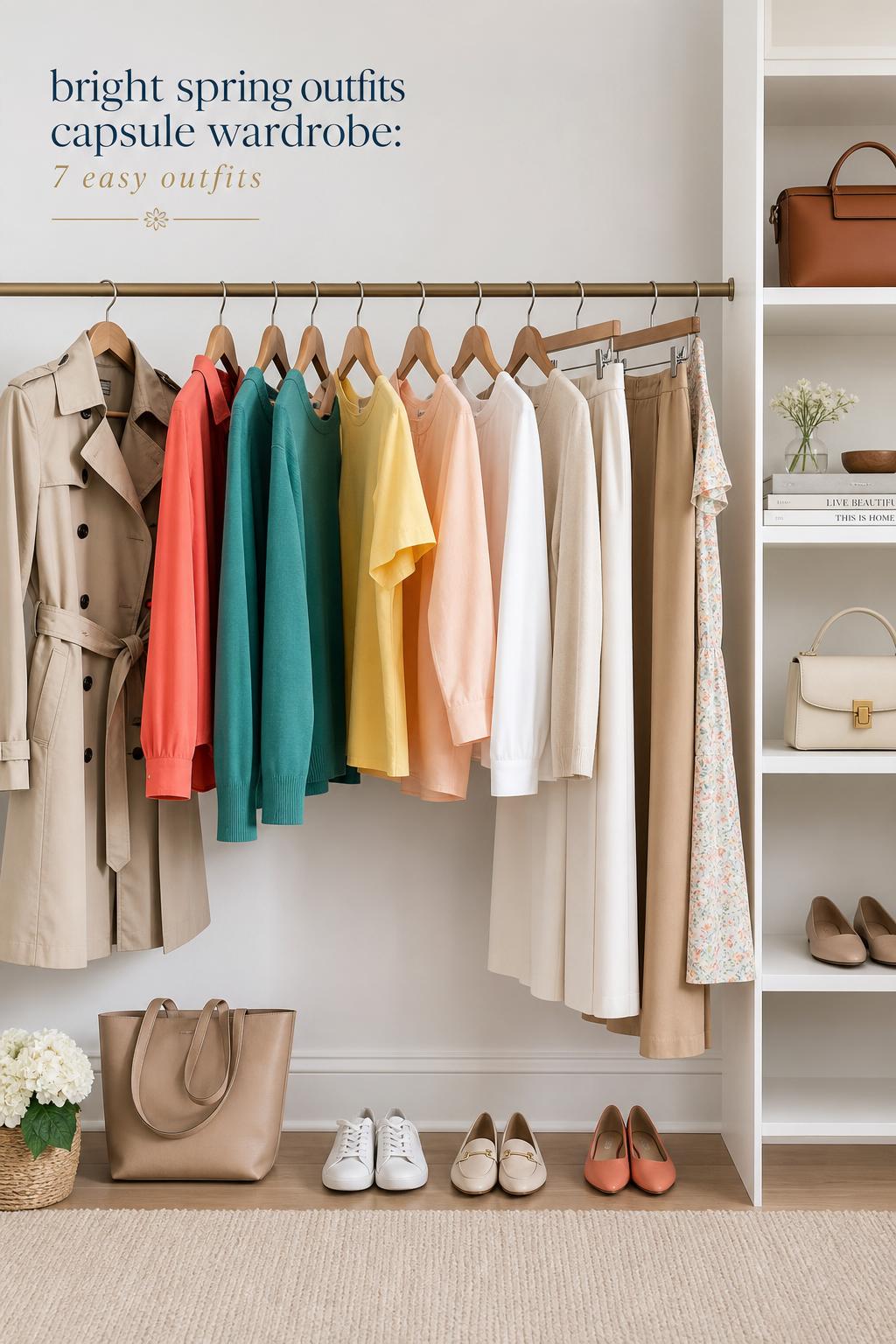
These wardrobes share the same seasonal base: spring weather, lighter layers, and mix-and-match planning. What changes is the degree of color specificity. A broad spring capsule wardrobe is usually practical first. A true spring wardrobe is warm and lively. A bright spring capsule wardrobe is more color-driven, more contrast-aware, and more dependent on keeping brightness clear across the full outfit composition.
That distinction matters because capsule wardrobes work best when every item supports the same visual direction. If the palette logic is vague, outfit formulas become weaker. If the palette is too rigid without grounding neutrals, the wardrobe becomes hard to wear. The strongest bright spring outfits capsule wardrobe sits in the middle: disciplined enough to feel cohesive, flexible enough to function in everyday U.S. life from office settings to weekends and transitional weather.
Found the dress? Keep the rest in one place.
Zarellea brings guest details, vendors, timelines, and every next step together — so your wedding plan feels as good as your look.
Style overview: bright spring capsule wardrobe
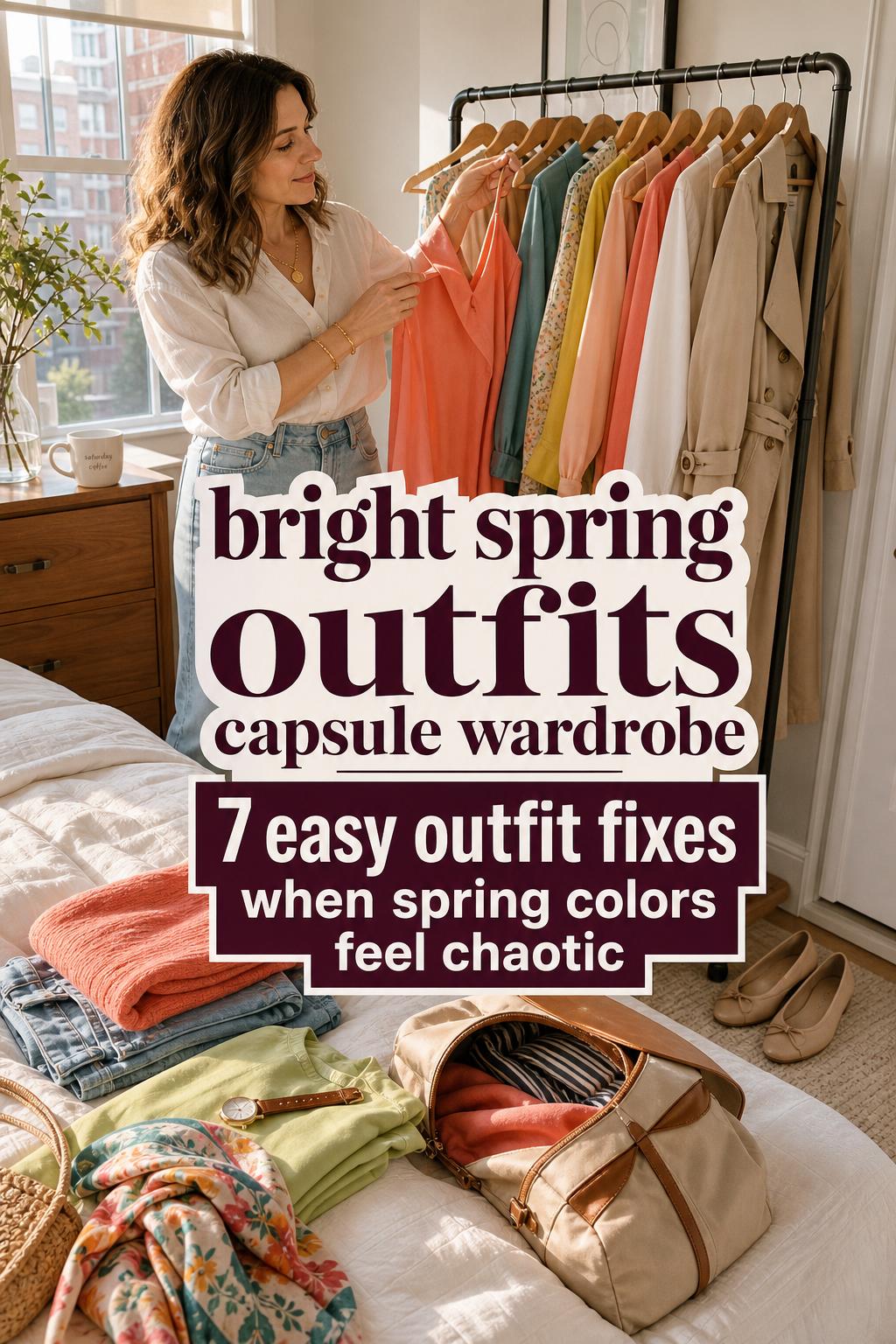
The bright spring capsule wardrobe is defined by brightness first, supported by warmth and clean contrast. Its signature lies in color families such as coral, teal, yellow, peach, and lime, usually balanced with bright neutrals so the look stays polished instead of loud. Compared with a generic seasonal capsule, this approach is less about owning fewer clothes in the abstract and more about building a wardrobe where every piece participates in a clear color system.
Silhouettes are typically clean and wearable rather than heavily trend-led. The emphasis is on outfit formulas, not novelty. Tops, trousers, lightweight layers, dresses, and accessories act as color blocks that can be recombined into many outfits. Fabrics and finishes matter because brightness changes depending on texture. Cotton, linen, and silk blends support freshness, while the wrong finish can make the palette feel dull or overly shiny.
The overall mood is high-impact but controlled. A bright spring look should feel energetic, clear, and seasonally light. In practice, that often means one or two bright focal colors anchored by supportive neutrals and finished with accessories that echo the same color family rather than interrupt it.
Style overview: the broader spring capsule wardrobe
A general spring capsule wardrobe is wider in scope. It usually centers on practical essentials, often organized around a set number of pieces such as 28 items with the promise of many possible combinations. This wardrobe approach values efficiency, outfit count, and versatile investment pieces. Color is important, but not always tightly governed by a single seasonal palette.
Its defining characteristics include flexible staples, repeatable layering, and season-ready basics such as tops, pants, dresses, outerwear, and shoes. Silhouettes tend to stay classic to maximize wear. The color palette may include bright tones, but they are often treated as accents rather than as the system that shapes the whole closet.
The mood is pragmatic and adaptable. This style works well for readers who want a spring wardrobe that saves time and supports many settings, from casual errands to workwear. Publications and retailers often strengthen this version with brand examples and product recommendations, making it especially useful for shopping and implementation.
Style overview: true spring outfit formulas
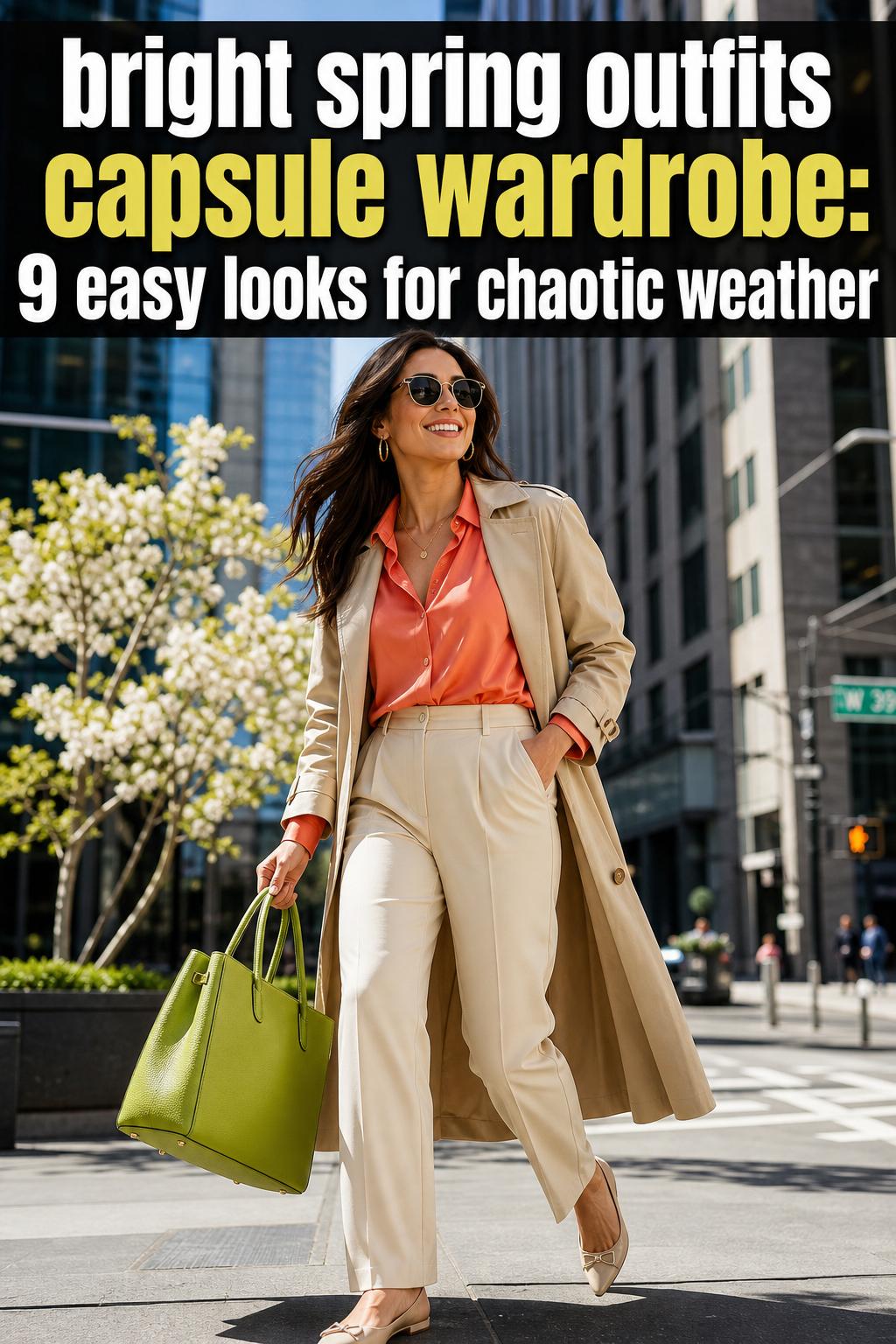
True spring sits close to bright spring, which is why the two are often confused. The difference is that true spring reads more warm-bright, while bright spring places more emphasis on vivid clarity and sharper visual energy. True spring outfit formulas typically revolve around warm, cheerful combinations where coral, teal, and yellow appear in ways that feel sunny and inviting rather than highly contrasted.
The silhouettes can be almost identical to a bright spring capsule wardrobe, but the styling philosophy is gentler. Fabric texture often becomes more visible here because warmth can be reinforced through softer finishes and tactile contrast. The overall aesthetic mood is bright and warm, but slightly less crisp than bright spring.
Where the lines separate: the main differences
Color palette discipline
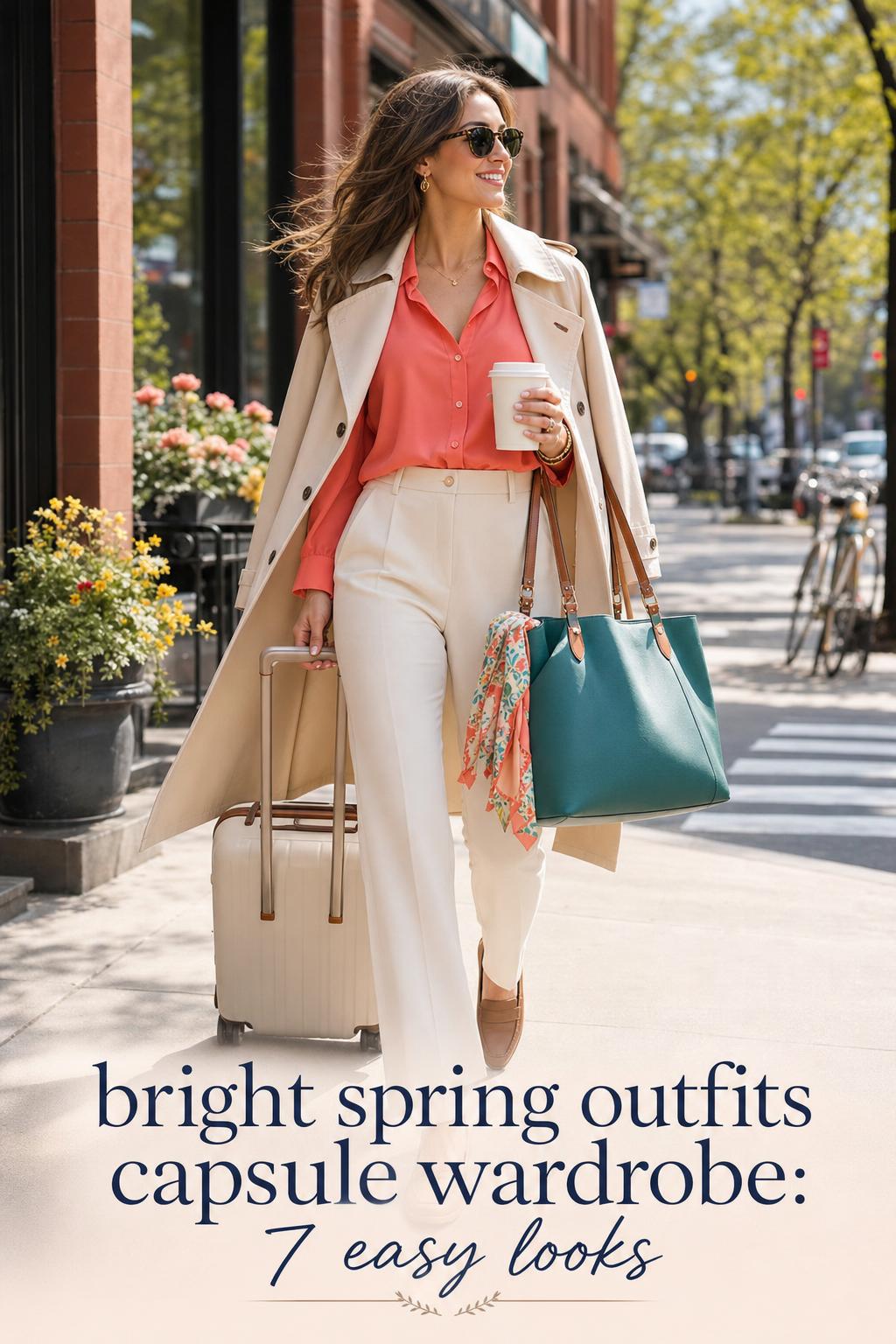
The broad spring capsule wardrobe uses color as one tool among several. A bright spring capsule wardrobe treats color as the organizing principle. True spring also relies on a defined palette, but its warmth leads the eye more than its brightness. This is the most important distinction. If the outfit succeeds because the colors are bright, clean, and intentionally contrasted, it is leaning bright spring. If the outfit succeeds because it feels warm and cheerful with less visual sharpness, it is closer to true spring. If it succeeds because the pieces are versatile basics that happen to work well in spring, it is likely just a general spring capsule.
Silhouette and structure
All three approaches prefer practical silhouettes, but they use them differently. The broad capsule wardrobe often chooses silhouettes for maximum versatility and long-term wear. Bright spring uses similarly practical shapes, yet the silhouette mainly serves as a clean frame for color. True spring allows a slightly softer visual read because the mood is less contrast-driven. In real life, that means the bright spring wardrobe often looks crisp first and soft second.
Styling philosophy
A general capsule asks, “How many outfits can these pieces create?” Bright spring asks, “How do these pieces maintain brightness and harmony every time they are combined?” True spring asks a similar question, but with warmth as a stronger priority. This shift affects purchasing decisions. A basic neutral layer may be useful in all three wardrobes, yet only the bright spring method tests whether that neutral supports rather than dulls the surrounding colors.
Typical wardrobe pieces
The overlap is substantial: tops, pants, knitwear, dresses, outerwear, footwear, and accessories. The difference lies in selection. The broad spring capsule wardrobe is often built around essentials and investment pieces. Bright spring chooses those same categories but filters them through specific color families and finish. True spring does the same with a warmer cast. This is why two wardrobes may have the same item count yet produce very different visual results.
The color question that decides everything
The strongest comparison point is not whether a wardrobe includes brights, but how those brights interact with neutrals, skin tone harmony, and outfit balance. In bright spring, color families work best when they remain clear and lively. Coral, teal, yellow, peach, and lime are not random statements. They are visual anchors that shape how tops, bottoms, and accessories relate to one another.
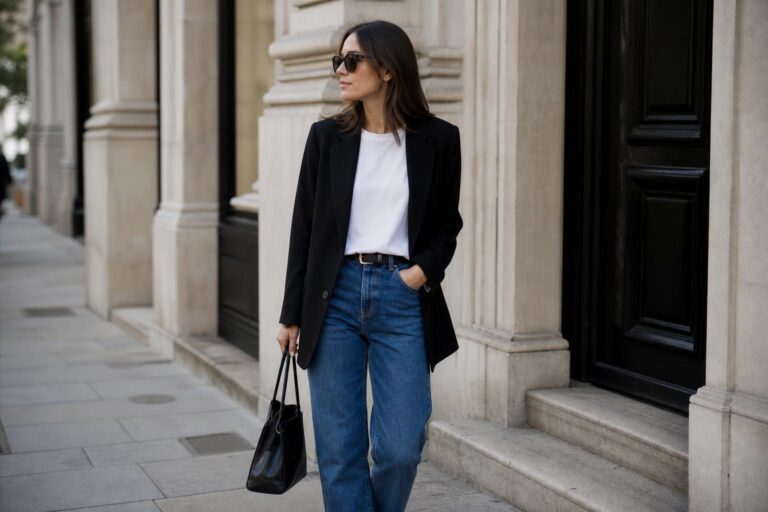
In a broad spring capsule wardrobe, a neutral trench, white shirt, and blue jean might be enough to define the season. In a bright spring wardrobe, that same formula usually needs more palette intent. A bright top, a cleaner neutral, or a color-pop accessory changes the whole reading. In true spring, the same outfit may move toward warmer color accents and softer transitions between pieces.
Tip: if an outfit looks functional but not vivid, it is likely drifting toward a generic spring capsule. If it looks warm but not especially crisp, it may be reading true spring. If it feels fresh, clear, and color-coordinated without looking harsh, it is much closer to bright spring.
Fabric, finish, and why brightness can fail even with the right colors
One of the most underused styling decisions in spring wardrobes is fabric selection. Bright spring palettes rely on light-reflective clarity, but that does not mean every finish should be shiny. Cotton, linen, and silk blends repeatedly make sense in this wardrobe because they support brightness without overwhelming it. Texture should help the color read clearly, not flatten it or turn it overly glossy.
This is a useful point of comparison with other spring wardrobes. A general capsule can tolerate more variation because it is less dependent on palette precision. A bright spring capsule is less forgiving. The same peach blouse in a crisp cotton may feel ideal, while in a finish that dulls the color it can weaken the whole outfit. True spring can often handle a touch more softness in texture because the overall mood is warmer and gentler.
For rainy days and transitional weather, texture also affects practicality. A wardrobe built for U.S. spring conditions from April through June needs layers that work in breezes, light rain, and fluctuating temperatures. Light outerwear, trenches, and practical layering pieces should still support the brightness of the palette rather than drag it into a muddy visual zone.
The 28-piece comparison: same structure, different result
The idea of a 28-piece spring capsule wardrobe appears often because it gives readers a manageable framework. It also reveals the difference between these style approaches very clearly. The structure may be the same, but the editing principles are not.
- A broad spring capsule wardrobe uses the 28-piece model to maximize outfit count, often aiming for 80 or more combinations through versatile basics.
- A bright spring capsule wardrobe uses a similar count, but every piece must support color harmony, brightness, and repeatable outfit formulas.
- A true spring capsule uses the same compact planning method while favoring warm-bright combinations over stronger crisp contrast.
This is where many wardrobes go off course. People borrow the piece count from a standard capsule framework but do not apply enough palette control. The result is a closet full of individually nice spring items that do not produce a coherent bright spring visual identity.
What changes inside the 28 pieces
In a general capsule, tops and bottoms are selected for flexibility first. In bright spring, the tops often carry more color responsibility, while bottoms and layers help maintain balance. Accessories become more strategic as well. In true spring, the color distribution may feel a little softer, with warmth spreading more evenly across the outfit.
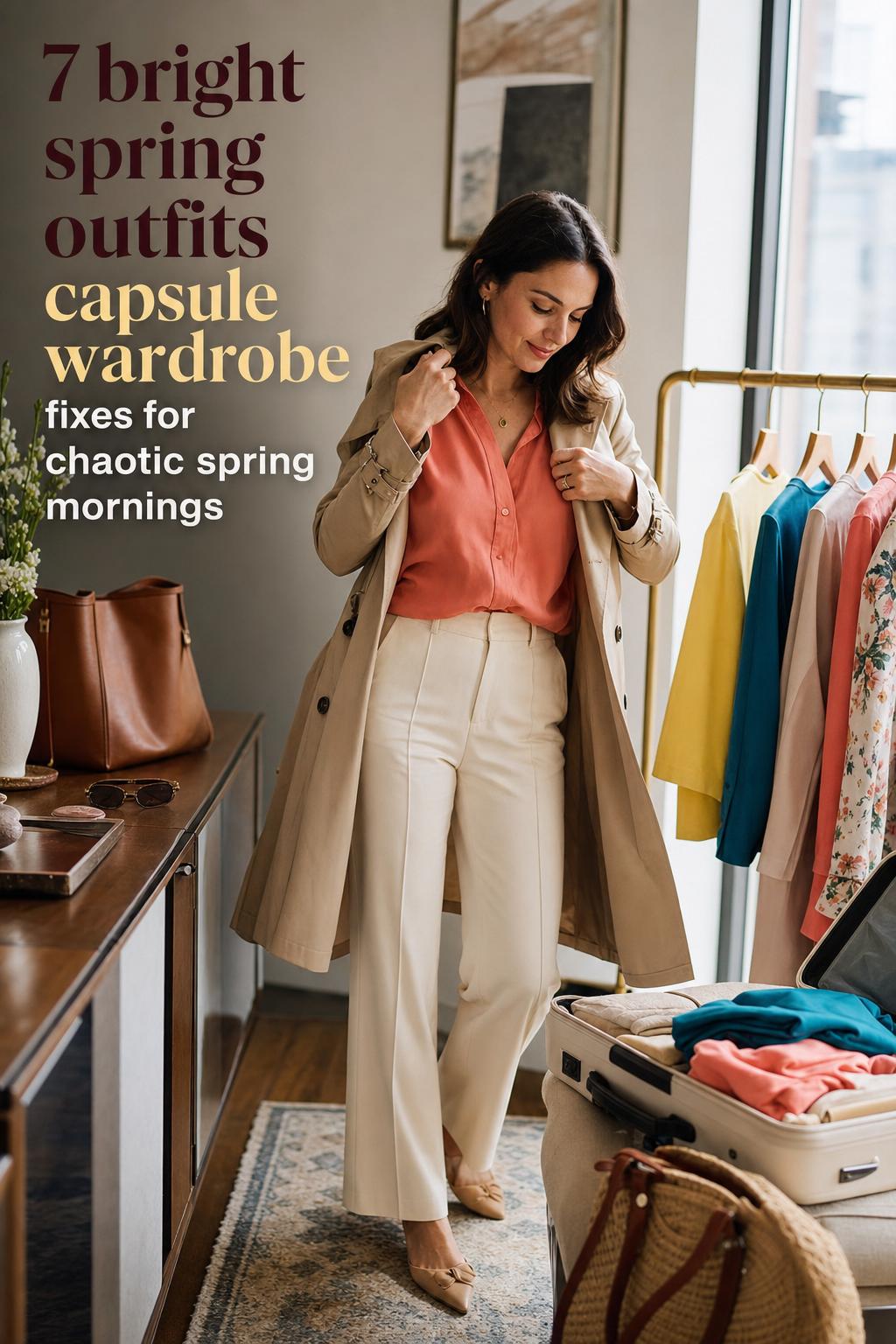
Tip: if you are building a 28-piece bright spring capsule wardrobe, treat accessories as part of the core system rather than afterthoughts. A bag, scarf, or belt in the right color family can complete the palette logic just as effectively as a top or dress.
Visual style breakdown in everyday outfits
Layering approach
The broad spring capsule wardrobe usually layers for weather and utility. A bright spring wardrobe layers for weather and color continuity. That difference is subtle until you see it in practice. A neutral jacket over a bright top can work in both wardrobes, but in bright spring the jacket must act as a clean frame rather than a visual interruption. True spring often accepts a more blended layered effect, especially when warmth remains visible across the look.
Garment proportions
Proportion play in these wardrobes is usually restrained. Since capsule dressing relies on repeat wear, exaggerated shapes are less central than balance. In bright spring, proportion serves clarity. If the silhouette becomes too complicated, the color story loses impact. In a broad spring capsule, proportion can be more classic and neutral. In true spring, softer proportion shifts may feel more natural because the palette itself is less visually sharp.
Accessories and visual anchors
Accessories are one of the strongest separators between these styles. In a standard spring capsule, accessories often support practicality. In bright spring, they extend the palette. Bags, scarves, jewelry, belts, and even sunglasses should reinforce brightness and cohesion. A bright neutral bag or a clearly chosen color-pop accessory can carry the look from pleasant to intentional. This is one of the biggest opportunity areas because many spring wardrobes stop at clothing and never fully integrate accessory logic.
Footwear choices
Shoes in all three styles need to serve versatility, but bright spring benefits from footwear that does not visually deaden the outfit. In broad capsule dressing, the most flexible shoe often wins. In bright spring, flexibility still matters, yet the shoe should preserve the freshness of the seasonal palette. True spring footwear can often lean warm and easy without requiring the same level of crisp visual contrast.
Outfit comparisons that show the difference clearly
Casual daytime interpretation
A broad spring capsule wardrobe approaches a casual daytime outfit through ease: a simple top, practical bottom, and light layer that can move through changing temperatures. The same situation in a bright spring capsule wardrobe introduces more intentional color placement. A bright top becomes the visual anchor, the bottom acts as a stabilizer, and the accessory provides a final echo of the palette. In a true spring version, the warmth of the colors becomes more noticeable than the contrast between them.
Why this works: casual outfits tend to expose weak wardrobe logic because they are stripped of occasion dressing. If a bright spring casual outfit still feels clear and balanced with minimal pieces, the capsule is functioning properly.
Office or polished workwear interpretation
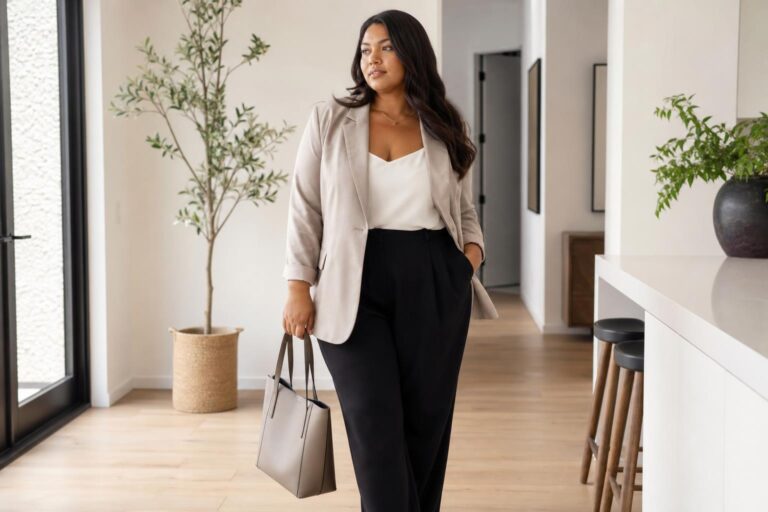
For workwear, the broad spring capsule often leads with investment pieces and neutral structure. The bright spring wardrobe keeps that structure but shifts the emphasis toward color families that remain polished. This is where bright neutrals become important. They keep the look office-ready while allowing coral, teal, peach, or yellow to appear in a controlled way. A true spring office outfit often feels warmer and gentler, while bright spring aims for sharper freshness.
This comparison matters because many readers assume bright wardrobes are harder to wear at work. The real issue is not brightness itself but whether the color is anchored. Structured layers, clear outfit formulas, and disciplined accessories make bright spring highly practical in professional settings.
Weekend and travel interpretation
Travel and weekend dressing reveal how well a capsule actually performs. A broad spring capsule wardrobe usually excels here because it is built for efficiency. A bright spring capsule can be just as effective if the palette has been edited carefully. The travel version should not include every bright item you own. It should include the brightest items that coordinate most easily with your neutrals, outerwear, and shoes. True spring remains a strong option for relaxed travel because its warm-bright combinations often feel easy to repeat.
Tip: for a short U.S. spring trip, bright spring works best when one lightweight outerwear piece, a small set of coordinated tops, and accessories in the same color family carry the visual interest. This avoids overpacking while preserving the identity of the wardrobe.
How brands fit into the comparison
Brand references tend to appear more often in broad spring capsule guidance than in palette-specific dressing, but they still help illustrate the comparison. Uniqlo and JW Anderson are often useful when discussing capsule foundations because they reinforce the idea of practical silhouettes, wearable layers, and product-led wardrobe building. Aligne appears in the conversation as an example tied to practical spring capsule recommendations. These brands matter less as status markers and more as reminders that a bright spring wardrobe still needs real foundations.
The key point is that product sourcing and color logic are not the same task. You can buy a strong trench, knit, trouser, or top from a recognized retailer and still miss the bright spring effect if the palette is inconsistent. The broad spring capsule wardrobe often succeeds through item quality and versatility. The bright spring capsule succeeds when those practical pieces also align with the brightness and warmth of the palette.
Body type and lifestyle adaptations that change the styling outcome
A useful bright spring capsule wardrobe does not depend on a single body shape or lifestyle. Petite, tall, and plus-size adaptations are not separate wardrobes; they are fit adjustments inside the same palette logic. This is where capsule planning becomes more sophisticated. The item categories may stay the same, but cut and proportion should reflect how the garments sit on the body and how often they will be used.
For example, a petite wardrobe often benefits from keeping color continuity strong so the outfit reads cleanly rather than fragmented. A tall wardrobe can handle longer lines and stronger color blocking with ease. A plus-size wardrobe may prioritize silhouettes that balance drape and structure, allowing the palette to stay vivid without the outfit feeling overworked. Across all three, the bright spring principle remains constant: clean composition, deliberate color placement, and supportive textures.
Lifestyle shifts the comparison too. An office capsule leans more heavily on refined layers and investment pieces. A casual or weekend wardrobe can push color accents further. A minimalist wardrobe for bright spring keeps the item count low but cannot abandon color theory, or it simply turns into a generic minimal spring wardrobe.
Weather, transition dressing, and the U.S. spring reality
Spring dressing in the United States is rarely consistent enough for a one-note wardrobe. A useful comparison between these styles has to include weather. The broad spring capsule wardrobe typically performs well in transitional conditions because it is built around layering. Bright spring can perform just as well, but only if light outerwear, trenches, and knitwear have been selected with palette continuity in mind.
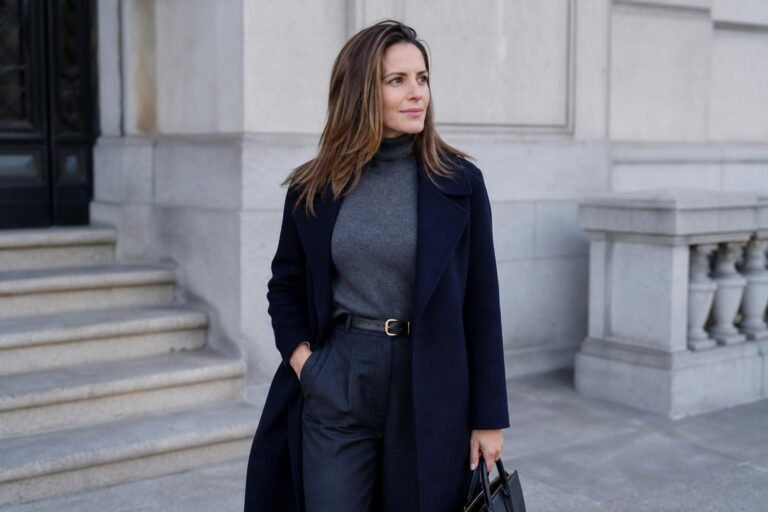
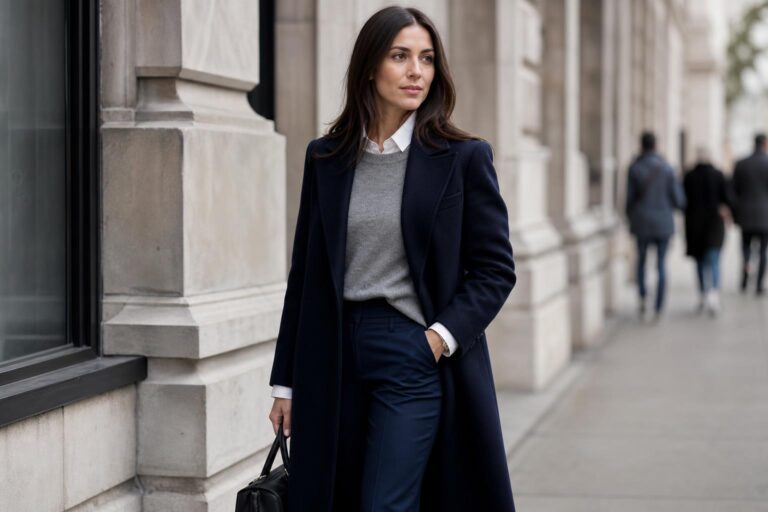
Rainy days are especially revealing. A general capsule may default to the most practical dark layer. A bright spring capsule needs a rain-ready piece that still supports brightness. Transitional outfit formulas matter here: bright top, stable bottom, light outerwear, and one accessory that keeps the look fresh. This preserves the seasonal identity even on gray days. The same logic appears in winter-to-spring transitional capsule dressing, where continuity between seasons depends on layering rather than a full wardrobe reset.
Tip: late spring often benefits from lighter fabrics and cleaner finishes, while early spring can tolerate more layering and stronger neutral support. This small shift keeps the wardrobe functional without abandoning the core palette.
Common mistakes that make a bright spring capsule look generic
- Relying on spring basics without enough palette definition.
- Using bright colors without balancing them with supportive neutrals.
- Ignoring accessory coordination, especially bags, scarves, and belts.
- Choosing fabrics that mute the brightness of coral, teal, yellow, peach, or lime.
- Building around trend pieces instead of repeatable outfit formulas.
- Confusing warm-bright true spring dressing with the clearer, sharper energy of bright spring.
These mistakes are common because the categories overlap so closely. A wardrobe can still be attractive while missing its intended style identity. That is why comparison is useful. It shows not only what a bright spring wardrobe includes, but also what it should avoid.
A practical shopping framework by price tier
One of the most functional ways to compare these wardrobes is through shopping strategy. The broad spring capsule wardrobe often leads with investment pieces and retailer examples. The bright spring approach benefits from the same structure but needs stronger palette editing. A price-tiered approach keeps the wardrobe realistic while preserving style direction.
- Budget: prioritize tops, accessories, and one or two seasonal accent pieces that establish the palette clearly.
- Mid-range: add stronger layering pieces, better-cut trousers, and versatile dresses that expand the outfit count.
- Premium: focus on outerwear, refined fabrics, and key investment pieces that hold the capsule together across multiple seasons.
The comparison point is simple. A broad spring capsule can allocate most of the budget to universal basics. A bright spring capsule should still invest in foundations, but not at the expense of the colors and accessories that create the wardrobe’s identity. This is also where sustainability naturally enters the conversation: a smaller set of durable, repeatable items performs better than an oversized collection of disconnected impulse buys.
When each style works best
Choose a broad spring capsule wardrobe if
You want maximum practicality, easy shopping, and a compact system built around staples, investment pieces, and outfit count. This approach works especially well for busy schedules, office dress codes, and readers who are new to capsule dressing.
Choose a bright spring capsule wardrobe if
You want a color-driven wardrobe with a clear visual point of view. This style is strongest for readers who already know that brightness and warmth improve their overall look and who want every outfit to feel fresh, clear, and coordinated rather than merely functional.
Choose true spring outfit formulas if
You prefer a warm-bright seasonal direction but do not want the sharper visual edge of bright spring. This approach works well for softer styling, easy daytime dressing, and wardrobes where warmth is the main attraction.
The strongest hybrid approach
The most practical solution for many readers is not choosing one category in a rigid way. It is combining the structural discipline of a 28-piece spring capsule wardrobe with the visual intelligence of bright spring color families. This hybrid approach is often the most wearable in real life. It keeps the closet compact, preserves outfit formulas, and avoids the flatness that can happen when capsule dressing becomes too neutral.
The formula is straightforward: use the broad capsule model for piece count and wardrobe planning, borrow true spring where warmth needs softening, and keep bright spring as the final filter for color clarity, accessories, and overall outfit composition. That combination creates a wardrobe that feels intentional on ordinary days, not only in styled photo grids.
Conclusion
The core distinction is simple once you see it clearly. A broad spring capsule wardrobe is built around versatility. True spring is built around warm brightness. A bright spring capsule wardrobe is built around clear, energetic color harmony supported by practical silhouettes, thoughtful fabrics, and repeatable outfit formulas. They can share many of the same garment categories, but they do not produce the same visual result.
You can identify bright spring most easily by its balance of brightness, warmth, and controlled contrast. The outfit feels fresh rather than muted, polished rather than random, and cohesive from clothing to accessories. For many wardrobes, the most useful direction is to combine capsule discipline with bright spring color logic. That is what turns a collection of spring clothes into a real wardrobe system.
FAQ
What is a bright spring capsule wardrobe?
A bright spring capsule wardrobe is a compact collection of clothing built around the bright spring palette, spring-ready layering, and repeatable outfit formulas. Its main feature is clear, lively color harmony supported by practical wardrobe pieces such as tops, trousers, dresses, lightweight outerwear, shoes, and accessories.
How is bright spring different from true spring?
Both are spring-based color directions, but bright spring emphasizes vivid clarity and stronger visual energy, while true spring reads warmer and slightly softer. In outfit terms, bright spring usually looks crisper and more contrast-aware, while true spring feels sunnier and more blended.
How many pieces should a bright spring capsule wardrobe include?
A 28-piece framework is a practical starting point because it keeps the wardrobe manageable while still allowing many outfit combinations. The exact number matters less than whether the pieces work together through color families, layering logic, and balanced accessory choices.
What colors belong in bright spring outfits?
Coral, teal, yellow, peach, and lime are useful bright spring color families, usually grounded by supportive neutrals. The goal is not to wear every bright color at once, but to create combinations where brightness stays clear and intentional across the full outfit.
Which fabrics work best for a bright spring wardrobe?
Cotton, linen, and silk blends are especially useful because they support freshness and help color read clearly. Fabric finish matters in bright spring dressing, since textures that are too dull or too glossy can weaken the effect of an otherwise strong palette.
Can a bright spring capsule wardrobe work for the office?
Yes, especially when bright colors are anchored with clean neutrals, structured layers, and disciplined accessories. The office version of bright spring is less about loud color and more about controlled brightness within polished outfit formulas.
How do accessories fit into bright spring outfit formulas?
Accessories are part of the core system, not just finishing touches. Bags, scarves, belts, jewelry, and shoes can reinforce the palette, extend outfit variety, and help maintain color harmony across multiple looks built from a limited number of clothing pieces.
Can I combine a minimalist wardrobe with bright spring colors?
Yes, but the wardrobe still needs color structure. A minimalist wardrobe for bright spring should keep the piece count streamlined while preserving the palette logic, otherwise it becomes a generic minimal spring wardrobe with less visual identity.
How do I keep bright spring outfits practical for changing U.S. spring weather?
Use lightweight outerwear, flexible layers, and transition-ready outfit formulas that can handle rain, breeze, and temperature changes. The key is choosing layers and accessories that preserve brightness rather than defaulting to darker pieces that interrupt the seasonal palette.