European Summer Capsule Wardrobe for Chic City Days
Airport mornings, train platforms, stone streets, late dinners that begin after sunset: a european summer capsule wardrobe has to do more than look polished in photos. It needs to handle heat, walking, sudden rain, hotel sinks, carry-on limits, and the quiet dress codes that shape real travel days across Europe. That is why the most effective versions are never built around novelty. They are built around proportion, fabric, and repeatable outfit logic.
The appeal is easy to understand. European summer style often reads as relaxed but intentional, with neutral foundations, breathable textures, and a few visual anchors that make even simple combinations feel considered. A Breton striped top, a clean blazer, a linen dress, wear-everywhere sandals, straight denim, a lightweight layer: none of these pieces are complicated on their own, but together they create the kind of wardrobe that moves easily from city mornings to dinner reservations.
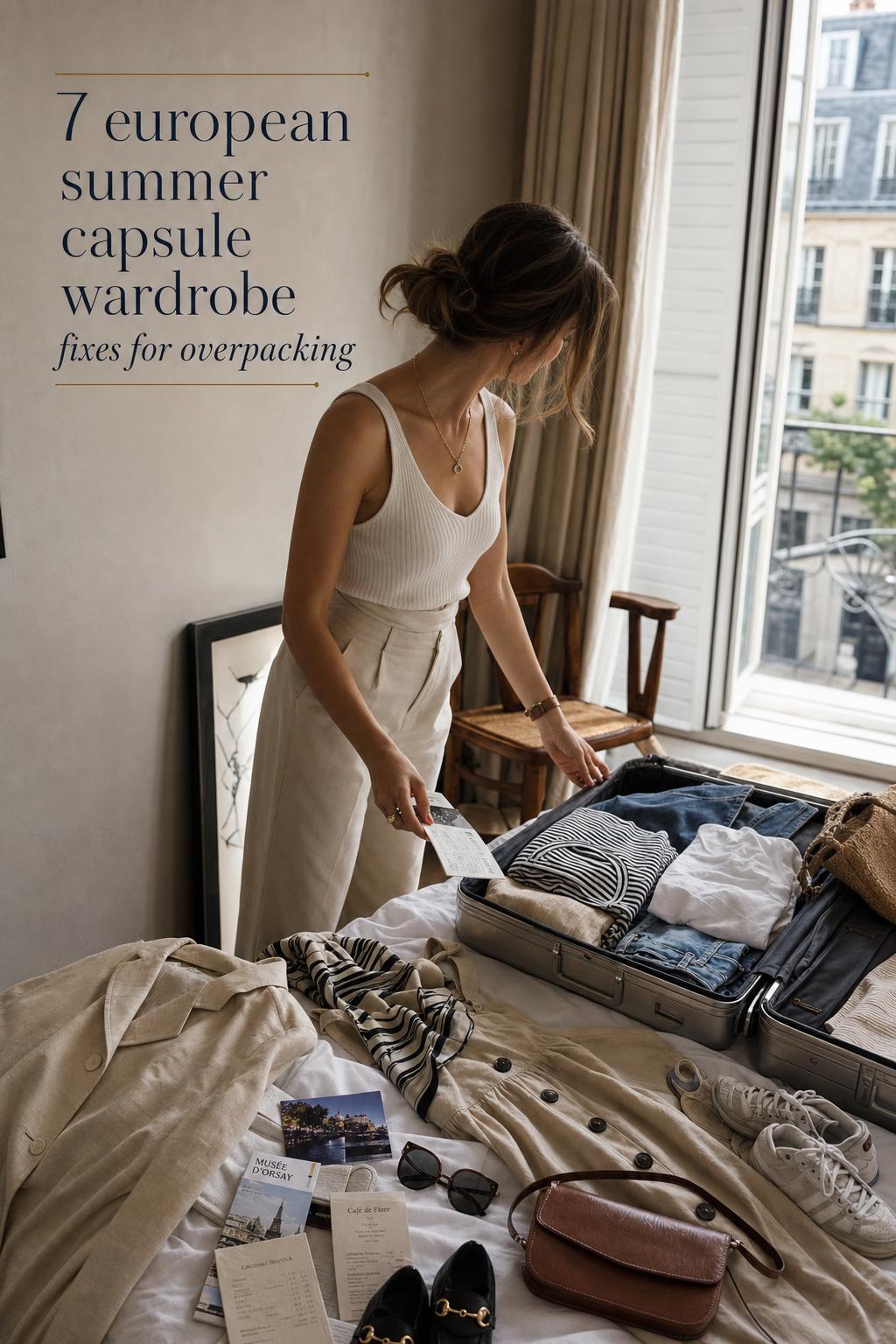
What makes the idea especially wearable is its restraint. A well-built capsule does not ask you to buy a completely new identity for Paris, Milan, Barcelona, Amsterdam, or Athens. It asks you to edit. The right 11 to 14 pieces can create a surprising number of outfits, especially when the palette is cohesive and the fabrics are chosen with Europe’s climate range in mind, from Northern Europe to Southern Europe.
This guide takes an editorial approach to the european summer capsule wardrobe while staying grounded in real use: city-specific climate considerations, core pieces, shoe logic for cobblestones, layering strategy, fabric choices, accessories, shopping guidance, and practical packing for a 7- to 14-day trip with carry-on discipline.
Found the dress? Keep the rest in one place.
Zarellea brings guest details, vendors, timelines, and every next step together — so your wedding plan feels as good as your look.
Why this wardrobe system works so well for Europe
A capsule wardrobe is a tightly edited collection of versatile pieces designed to mix and match across multiple outfits. In a European travel context, that discipline matters more because days are long, transit is frequent, and luggage often needs to stay compact. The wardrobe has to support movement, repeat wear, and day-to-night transitions without feeling repetitive.
The strongest capsules share three traits. First, they rely on versatile wardrobe basics rather than single-use statement pieces. Second, they use a neutral color capsule as the foundation, with one or two accents added sparingly. Third, they account for layering, because even in summer, Europe does not behave like one uniform climate zone. A sleeveless dress that works in Barcelona may need a blazer or lightweight outerwear in Amsterdam, and the same sandals that feel right in Athens may be less practical on long cobblestone walking days.
There is also a visual reason the system feels so effective. Repetition creates style clarity. When your tops, bottoms, dresses, outerwear, shoes, and accessories all belong to the same palette and silhouette family, the wardrobe looks intentional rather than random. That coherence is what gives European travel style its polished ease.
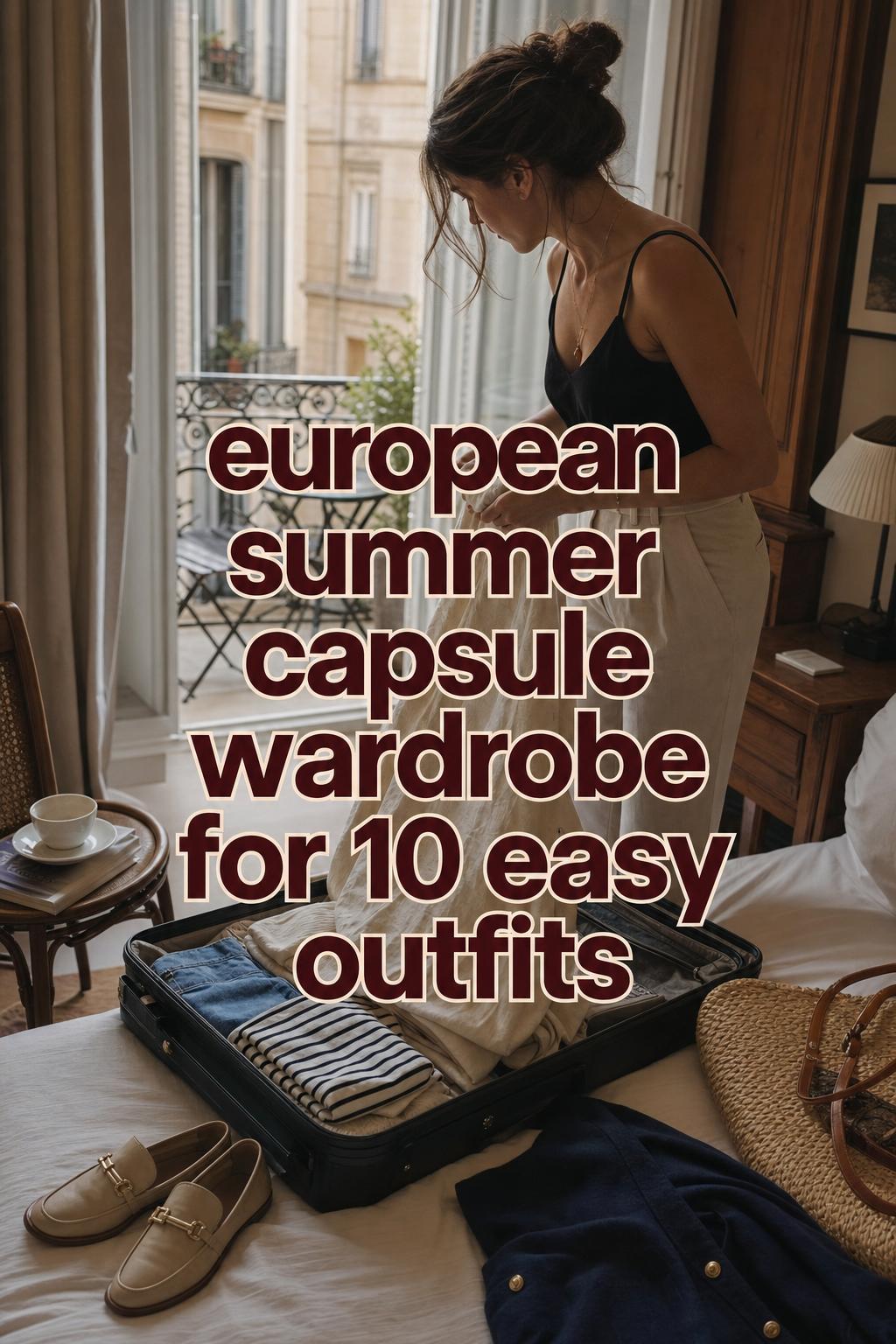
Climate matters more than trend mood
A common mistake in summer packing is treating Europe as one weather category. In practice, climate variation should shape your capsule from the beginning. Layering for Europe summers is not just a styling extra; it is the reason the wardrobe remains functional across cities.
Northern Europe: lighter layers with weather flexibility
For Northern Europe, a lightweight layer becomes essential rather than optional. A simple T-shirt, straight denim, a classic blazer, and closed shoes create a stronger daytime base than a suitcase dominated by bare dresses and sandals. Fabrics still need to feel breathable, but the outfit composition should leave room for cooler mornings and occasional rain. The visual mood here is usually cleaner and more layered, which makes structured pieces especially useful.
Central Europe: balanced structure and breathable fabrics
Central Europe often rewards a middle-ground approach. This is where a day-to-night dress, versatile trousers, a striped top, and a blazer work particularly hard. The goal is not maximum minimalism for its own sake. It is flexibility. Cotton, linen, and breathable blends hold up well when temperatures shift through the day, especially if your itinerary alternates between walking, museums, dining, and transit.
Southern Europe: breathability first, but never without a layer
In Southern Europe, fabric behavior becomes the lead story. Linen, cotton, viscose, and other breathable blends earn their place because they move with heat rather than trapping it. But even here, an edited capsule should still include one polished layer. A blazer or light jacket can sharpen a simple dress for evening and helps a travel wardrobe feel complete rather than beach-adjacent. The mistake is assuming high heat means no structure at all.
Tip: if your route moves from Nordic cities to Southern Europe, build for the coolest destination and lighten the wardrobe through styling. It is easier to remove a blazer than to invent one when the weather turns.
The core capsule framework: fewer pieces, stronger outfit composition
The most reliable european summer capsule wardrobe usually lands between 11 and 14 core pieces, not counting underwear or sleepwear. That range is large enough to create variety, but controlled enough to fit inside a carry-on. The exact number matters less than the internal logic of the wardrobe.
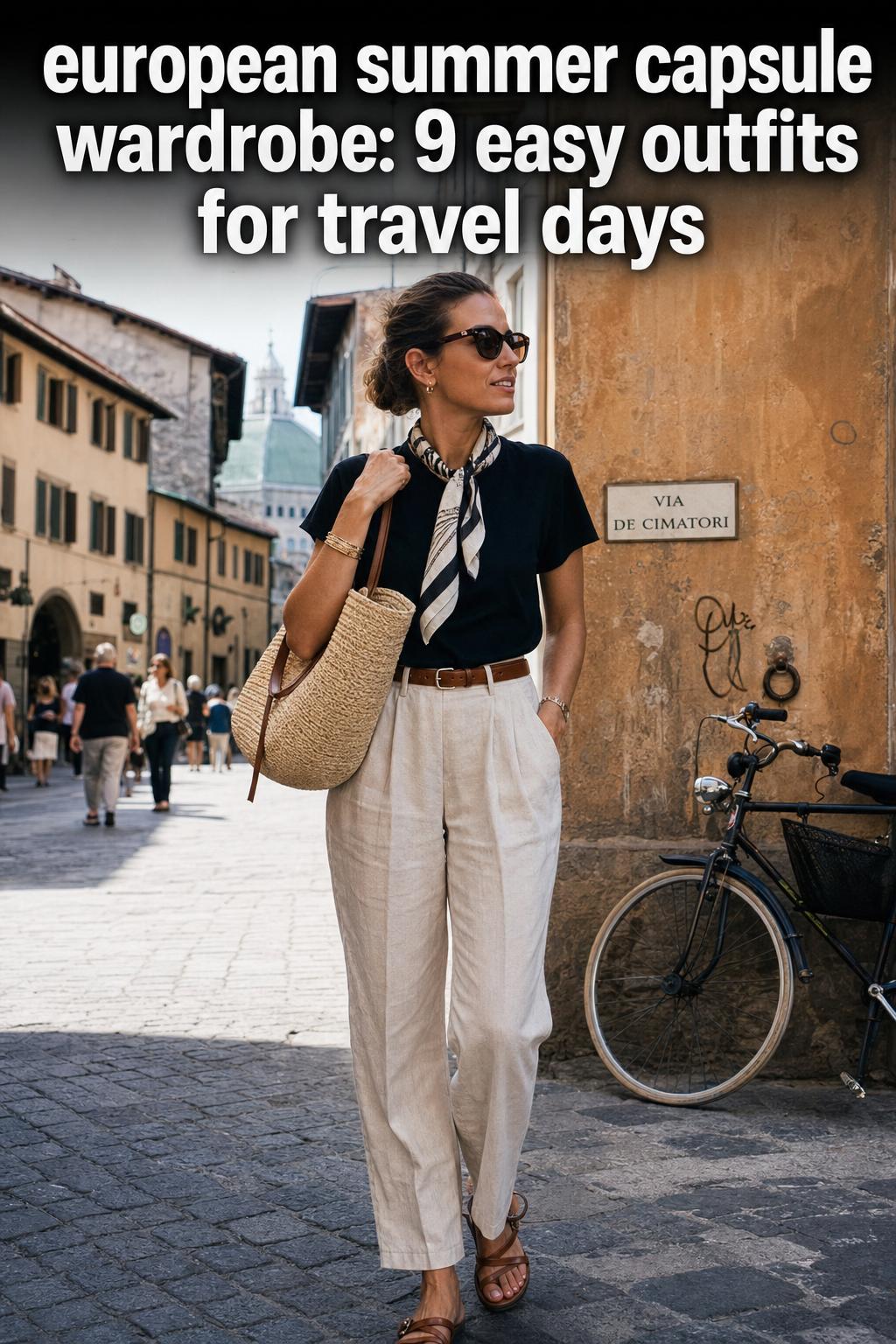
- 3 to 4 tops
- 2 to 3 bottoms
- 1 to 2 dresses
- 1 to 2 outerwear layers
- 2 to 3 pairs of shoes
- 2 to 4 accessories that connect outfits
This structure works because every category serves a different role. Tops carry repetition, bottoms anchor the palette, dresses offer instant polish, outerwear creates climate flexibility, shoes determine comfort and practicality, and accessories shift the styling energy without increasing bulk.
Tops that create the wardrobe’s rhythm
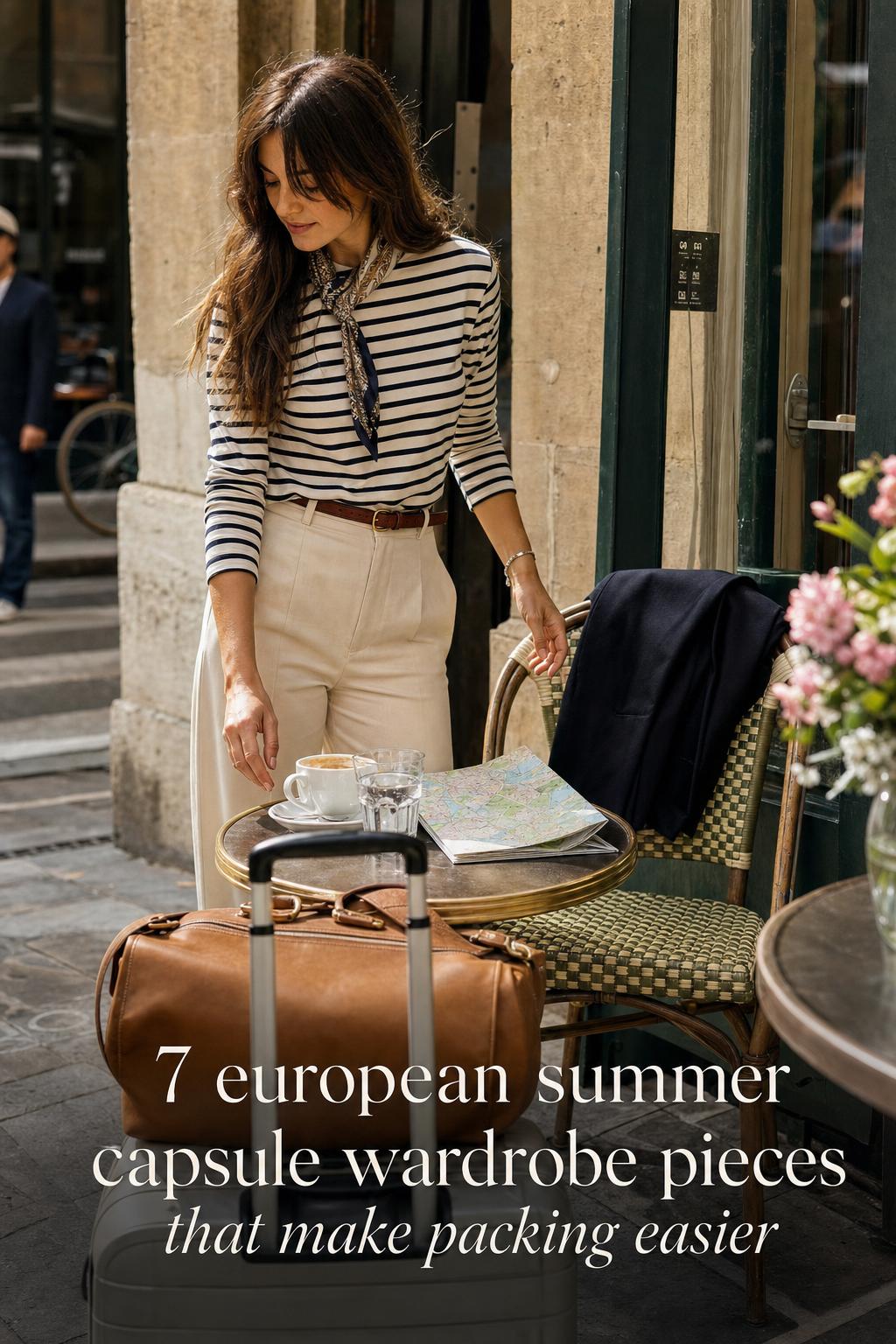
A simple T-shirt remains foundational because it gives the rest of the wardrobe room to breathe. It balances stronger pieces like a blazer, striped knit, or more tailored trousers. In many capsules, the Breton striped top becomes the visual anchor. It introduces a recognizably European note without overwhelming the rest of the wardrobe, and it pairs easily with denim, shorts, or a clean skirt.
The smartest top selection includes a mix of plain and directional. For example, one simple T-shirt, one Breton stripe, and one slightly more elevated top create more visual range than three tops with the same energy. This is where many wardrobes become flat: too many basics, not enough contrast.
Bottoms that ground the color palette
Bottoms should be neutral, repeatable, and structurally different from one another. Straight denim offers weight and city practicality. A lighter trouser or relaxed short softens the wardrobe and handles warmer days. Denim shorts appear often in summer capsule guidance because they are easy to wear, but they are not universally the strongest option for every itinerary. If your days involve long walks, religious site visits, or dressier dinners, a clean trouser may outperform them in versatility.
Why this works: silhouette balance matters. If your tops are soft and relaxed, a more structured bottom prevents the whole wardrobe from collapsing into shapelessness. If your wardrobe includes a blazer, the bottom should be able to hold its own beside that cleaner line.
Dresses that solve day-to-night quickly
A day-to-night dress earns space because it reduces decision fatigue. One well-chosen dress can handle daytime exploring with flat sandals and then shift into evening with a blazer, bag, and more refined shoe. Midi lengths are especially effective in a travel capsule because they feel polished, move easily, and sit comfortably between casual and dressed.
If you pack two dresses, make sure they are not redundant. A linen day dress and a slightly more minimal evening-friendly dress create contrast. Two dresses in the same shape and mood usually waste valuable suitcase space.
Outerwear that sharpens the entire capsule
The lightweight layer is where a summer travel wardrobe becomes polished. A classic blazer is especially useful because it gives structure to softer summer fabrics and makes basics feel intentional. A light jacket can also work, particularly if your trip leans casual, but one tailored layer usually delivers more day-to-night mileage.
This is also where brands such as COS, Whistles, and C&A fit naturally into the conversation. Their role in a capsule is not about branding for its own sake; it is about pieces that can support repeated wear, tonal layering, and clean outfit composition across seasons, including winter-to-summer transitions.
Shoes that can actually handle Europe
Shoe planning is often where idealized packing breaks down. Wear-everywhere sandals are useful, but they are only one part of a practical European summer wardrobe. Cobblestones, station platforms, and long walking days make supportive options essential. That is why the most balanced capsules usually include a rotation rather than a single hero shoe.
- One walking shoe, such as trainers or a practical flat
- One open shoe, such as sandals or espadrilles
- Optional: a smarter shoe, such as loafers or a block-heel sandal for evenings
Loafers and trainers are especially useful underrepresented categories in this kind of wardrobe because they bridge comfort and polish. Espadrilles can work beautifully in warmer cities, while block-heel sandals offer a more elevated option without the instability of a narrow heel on uneven surfaces.
Accessories that connect rather than clutter
Accessories should act as modular connectors. A bag, scarf, or simple finishing piece can shift the mood of the same base outfit without increasing the number of garments you pack. The mistake is treating accessories as afterthoughts. In a restrained wardrobe, they often provide the variation people expect from extra clothing.
A scarf, in particular, works hard in a travel capsule. It can add color, change the neckline effect of a simple top, and help a repeated blazer-and-T-shirt formula feel less obvious. This is a subtle but effective way to create multiple visual readings from the same foundation.
Fabrics and texture: the hidden structure of a successful capsule
Most capsule failures are not caused by the wrong item category. They are caused by the wrong fabric. A wardrobe can have all the correct pieces on paper and still feel uncomfortable, overly casual, or hard to rewear if the materials do not suit heat, movement, and laundry access.
Linen remains central because it responds well to high temperatures and instantly communicates summer. Cotton offers reliability and softness, especially for tops and layering pieces. Viscose and breathable blends can add drape and ease when you want a smoother line than crisp linen provides. Tencel and recycled fabrics also fit naturally into a thoughtful capsule conversation because they speak to the growing importance of sustainable and durable wardrobe choices.
Texture contrast matters as much as fabric choice. If everything in the wardrobe is equally soft and unstructured, the outfits lose visual anchor. A blazer over a cotton dress, denim with a striped knit, linen trousers with a crisp tee: these combinations work because they create tension between structure and ease.
Tip: build fabric variety intentionally. A capsule feels more expensive and more editorial when the pieces differ in surface and weight, even if the palette stays neutral.
How to make a small wardrobe feel visually rich
The secret is not packing more. It is using a repeatable outfit formula with enough variation in silhouette, color, and texture to avoid sameness. This is where fashion psychology meets practicality. People do not usually notice repeated pieces; they notice repeated styling.
Tonal foundations with one accent
A neutral color capsule works because it reduces friction. Tops and bottoms combine easily, outerwear never clashes, and shoes feel integrated rather than random. But a wardrobe built only from similar beige or black pieces can become visually flat. One accent, whether introduced through a striped top, scarf, or dress, keeps the composition alive.
This color strategy also helps with shopping. If you are considering pieces from Sezane, Boden, COS, Whistles, ASOS, or C&A, the first question is not whether the item is attractive in isolation. It is whether it belongs to the existing palette and can connect with at least three other pieces in your travel capsule.
Silhouette rotation prevents repetition
Even a minimalist wardrobe needs shape variety. Pairing the same fitted top with the same straight bottom every day will feel repetitive no matter how refined the color palette is. Instead, rotate the silhouette logic: one day softer on top and structured below, another day a column shape with a blazer, another day a dress with flat sandals and a scarf.
Most versatile item: the blazer. It shortens the gap between casual daywear and dinner-ready polish, and it gives softer summer garments a clean frame. If you invest in one piece first, this is usually the smartest place to start.
Three easy outfit formulas
- Top + tailored bottom + lightweight layer
- Day-to-night dress + sandals or loafers + bag
- Breton striped top + denim or shorts + blazer for evening
These combinations feel reliable because each has a clear visual anchor. The first depends on structure, the second on streamlined simplicity, and the third on pattern contrast. Once those formulas are in place, the capsule begins to function almost automatically.
Wearable interpretations of the aesthetic
Relaxed layers with a polished city edge
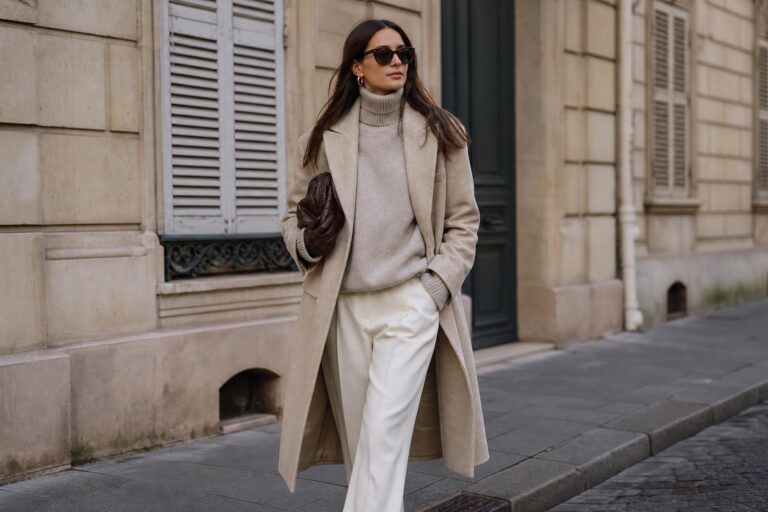
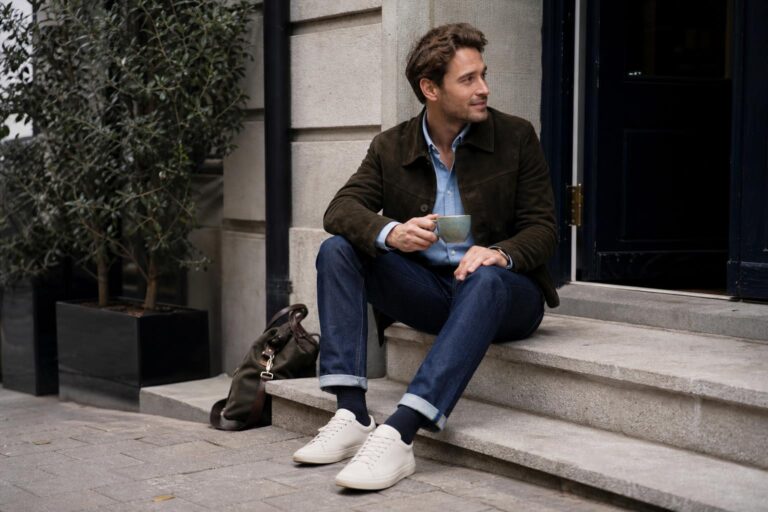
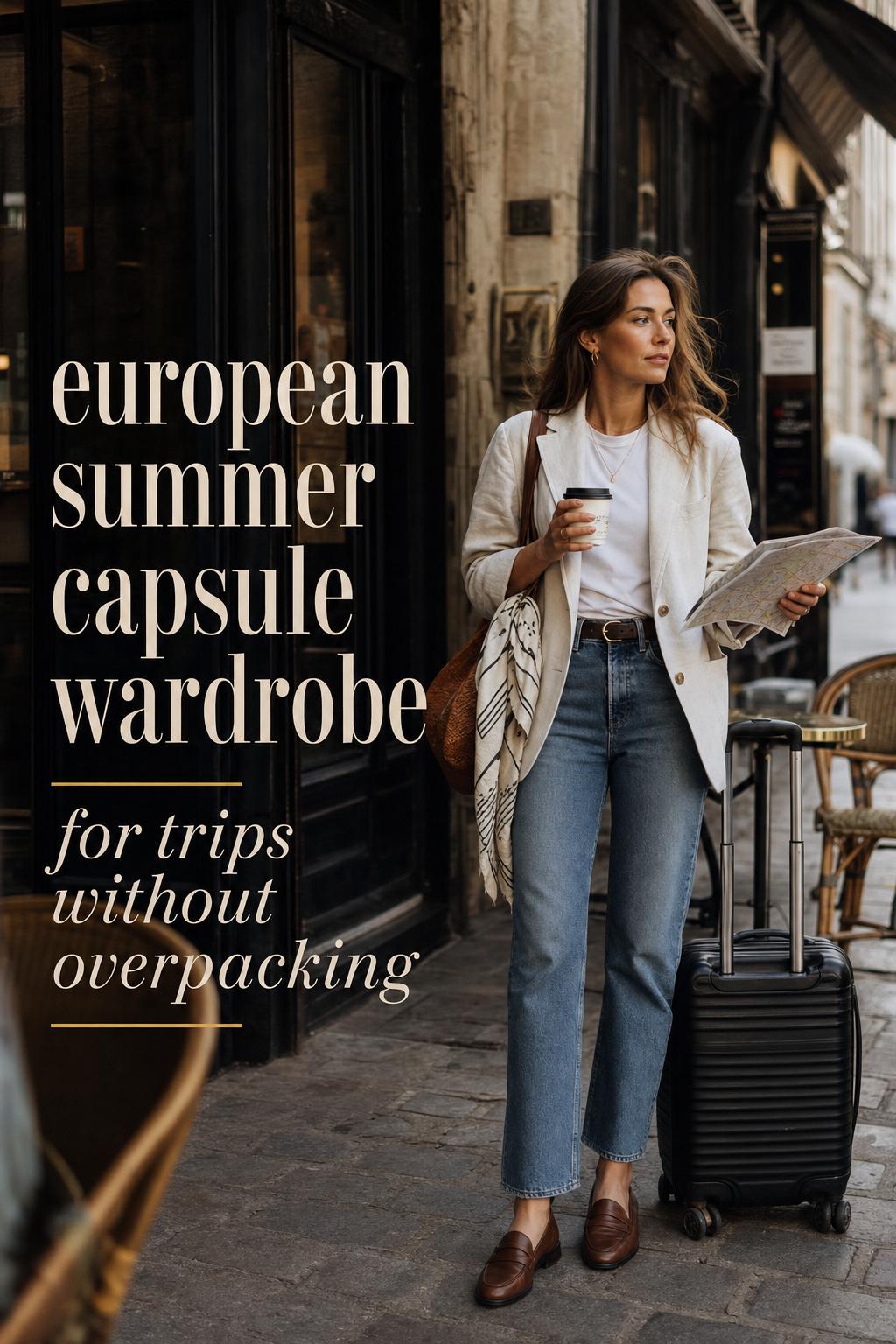
This is the version of the capsule that works hardest in Paris, Amsterdam, or cooler Central Europe days. Start with a simple T-shirt, straight denim, and a classic blazer. Add loafers or trainers, depending on how much walking the day requires. The appeal lies in proportion play: the blazer introduces clean structure, while the T-shirt keeps the combination from feeling stiff.
Why this combination works: the denim acts as a visual anchor, the blazer creates vertical line and polish, and the T-shirt softens the outfit so it still reads like summer. If your body type prefers more waist definition, choose a blazer with cleaner shaping or adjust the T-shirt tuck. If you prefer a looser silhouette, keep the tee slightly relaxed and let the blazer do the tailoring work.
Easy ways to recreate the look: if you already own denim and a neutral jacket, the only update may be a sharper T-shirt and a better shoe. This is not a buy-everything outfit; it is often an edit-the-basics outfit.
Breton stripes and understated contrast
The Breton striped top remains one of the clearest shorthand signals of European summer style, but its strength comes from balance. It works best when the rest of the outfit is restrained. Pair it with neutral trousers, denim, or clean shorts and keep the accessories simple. The stripe already provides movement, so the rest of the look should stabilize it.
This is where brands often associated with polished everyday dressing, such as Sezane or Boden, make sense conceptually. The pieces that suit this mood tend to have clarity rather than excess. The striped top becomes the focal point, while the supporting pieces stay quiet.
Styling mistake to avoid: adding too many competing details. A striped top, statement bag, dramatic jewelry, and bold shoe can quickly make a capsule outfit feel overloaded. In a small wardrobe, editing is what keeps everything elevated.
Soft dresses with structured finishing pieces
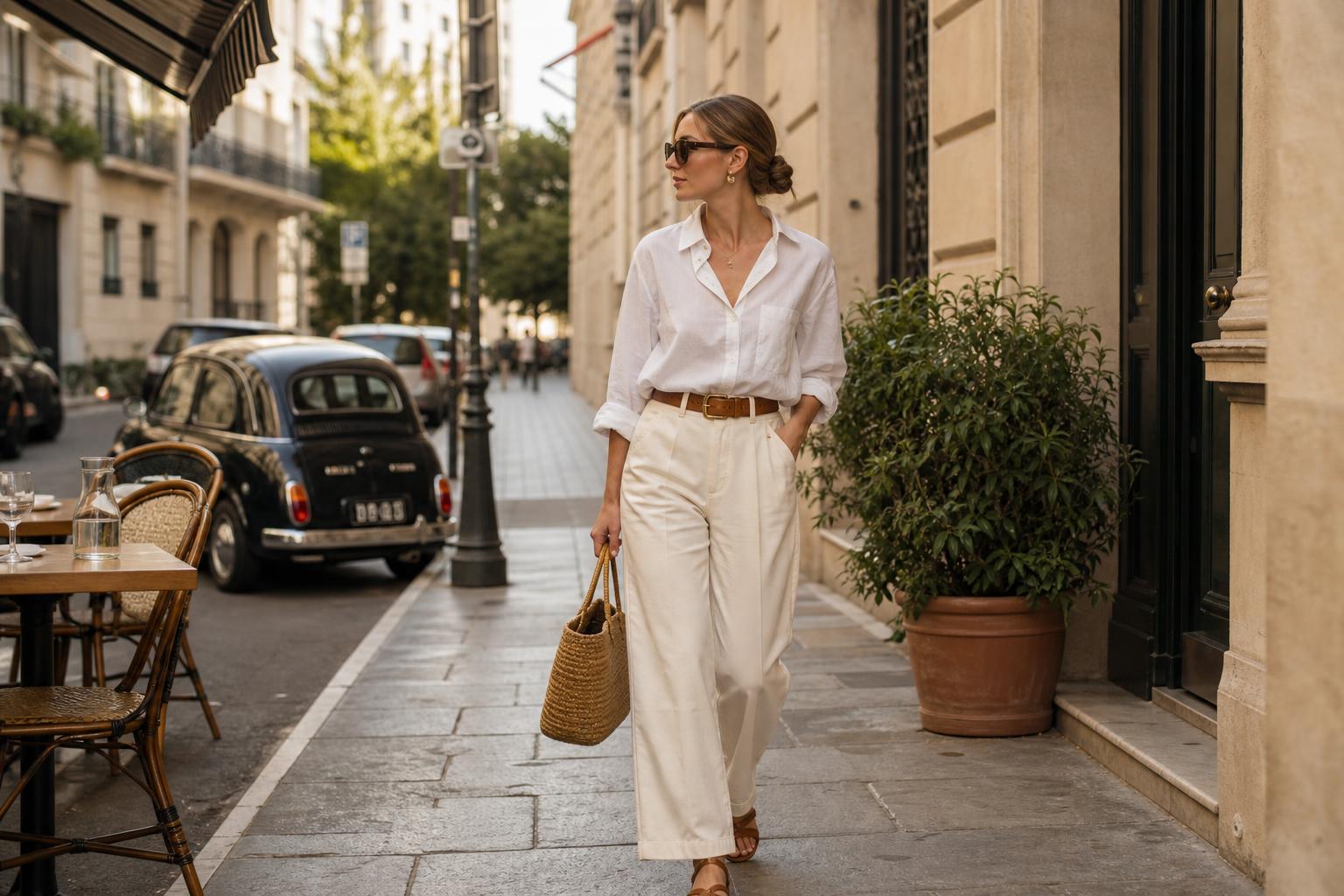
A breathable dress carries much of the emotional appeal of summer travel style, but what makes it useful in a capsule is not romance. It is adaptability. A midi dress in linen, cotton, or viscose can be worn during the day with sandals, then sharpened with a blazer or light jacket for evening. That shift is what makes the dress worth its space.
Texture is the key styling element here. If the dress is fluid and soft, use accessories with more shape: a defined bag, cleaner sandal, or structured outerwear. This avoids the common problem of a dress outfit feeling visually unfinished. For long days, flat sandals or espadrilles keep the look grounded. For dinner, a block-heel sandal can add formality without losing practicality.
Tailored minimalism for Milan-chic energy
This interpretation depends less on pattern and more on line. Think lightweight trousers, a clean top, and a blazer with enough shape to create a defined silhouette. The mood is crisp, controlled, and quietly directional. It is one of the easiest ways to make a small wardrobe feel expensive because the outfit reads through proportion rather than decoration.
Neutral trousers anchor the look and prevent the palette from feeling chaotic. If the blazer is slightly oversized, keep the rest of the outfit close to the body to maintain silhouette balance. If the trouser is wider, a neater top keeps the volume intentional. This is a strong formula for city dinners, museums, and days that move between indoors and outdoors.
Barcelona-casual with breathable ease
In warmer cities, the capsule can relax without losing structure. A simple T-shirt with a lighter bottom, or a linen dress with espadrilles, creates that sun-ready ease people often chase when packing for Southern Europe. But the strongest version still includes visual discipline. Keep the palette cohesive, avoid overpacking loud prints, and let fabric texture carry the interest.
How to wear this in everyday life: if your trip includes beach proximity, outdoor lunches, and long evening walks, this softer formula makes sense. If your schedule includes more formal dining or urban transit, keep one polished shoe and one tailored layer close at hand. The wardrobe should respond to itinerary, not just mood boards.
City capsule templates that make planning easier
A city-by-city lens can make a european summer capsule wardrobe feel much more intuitive. Different destinations ask for different emphases, even when the core wardrobe stays consistent.
Paris-style capsule
The Paris-style version leans on stripes, denim, a blazer, a day-to-night dress, and accessories used sparingly. The overall effect is polished restraint. A Breton top with straight jeans and loafers works for daytime. The same blazer over a dress shifts naturally into evening. This template rewards neutral color discipline and strong basics.
Milan-chic capsule
The Milan version is cleaner and more tailored. Prioritize trousers, a well-cut top, a strong blazer, and shoes that feel polished enough for dinner. The silhouette should look intentional from every angle, with less reliance on casual pieces like denim shorts. If your personal style favors sharper lines, this city mood may guide the entire capsule successfully.
Barcelona-casual capsule
Barcelona invites more ease, more breathable dresses, and lighter shoes such as sandals or espadrilles. The key is to keep the wardrobe edited. One striped top, one clean short or easy bottom, one dress, one blazer, and a practical walking shoe can take you surprisingly far without sacrificing cohesion.
Amsterdam and Athens adjustments
Amsterdam benefits from stronger layering and walking-ready shoes, while Athens pushes breathable fabrics and heat-conscious dressing to the front. In both cases, the capsule remains recognizably the same; only the emphasis shifts. This is the advantage of a modular wardrobe system. It adapts by weighting categories differently rather than rebuilding from zero.
Practical packing logic for a 7- to 14-day trip
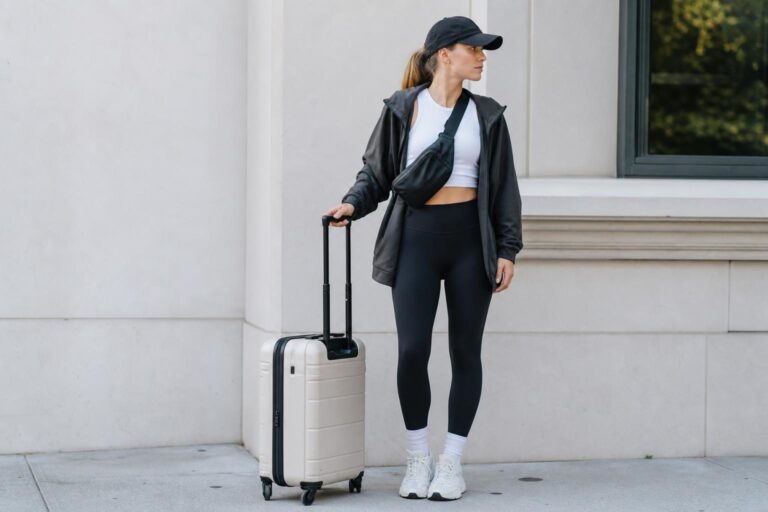
A capsule is only as useful as its packing strategy. If the pieces are right but the suitcase is chaotic, the wardrobe loses some of its efficiency. Carry-on optimization matters because it protects mobility. Trains, short flights, and frequent hotel changes become easier when your wardrobe is compact and intentional.
- Pack the heaviest walking shoes on travel day.
- Roll or fold according to fabric behavior, not habit.
- Use packing cubes to separate tops, bottoms, dresses, and accessories.
- Repeat bottoms more often than tops.
- Build around a 7-day outfit rotation even for longer trips.
Laundry opportunities matter more than many travelers expect. If you can rewear a blazer, denim, and a walking shoe multiple times, then the pieces that need more frequent refresh are usually tops and lighter dresses. That reality should shape your counts. There is rarely a need to pack one complete outfit per day.
Sample 7-day logic: rotate two bottoms through multiple tops, use one dress for two separate moments, repeat your blazer often, and treat accessories as the visual shift. That approach keeps the wardrobe controlled while still delivering outfit variety.
Dress codes, modesty, and occasion shifts
The strongest travel capsules account for social context, not only weather. Religious site visits may require more modest coverage, and evening dining in some cities can call for a more polished finish than daytime sightseeing. This is another reason the lightweight layer matters so much. A blazer or light jacket can quickly make a sleeveless or simple outfit feel more appropriate.
This is also where trousers and midi dresses often outperform very casual shorts. They handle more situations with less effort. If your itinerary includes a summer wedding, a refined dinner, or nightlife moments, one smarter dress or an elevated shoe can expand the wardrobe significantly without breaking the carry-on principle.
Balanced perspective: not every traveler needs a dressier capsule. A family-focused itinerary, a highly casual route, or a trip built around daytime exploration may prioritize trainers, simple tops, and durable bottoms. The right wardrobe is the one that reflects the trip honestly.
Shopping guidance: what to look for before you add anything new
Shopping for a capsule requires more discipline than shopping for a single outfit. The question is never only “Do I like this?” It is “Does this piece strengthen the whole wardrobe?” That means evaluating every item by versatility, fabric, climate range, repeat wear potential, and how well it supports multiple outfits.
Capsule-friendly brands and retailers appear across the summer wardrobe space for a reason. COS and Whistles often align with cleaner structure and polished layers. Sezane and Boden fit naturally into the conversation around striped tops and wearable European-inspired staples. ASOS offers broad access to capsule basics like simple T-shirts, denim shorts, sandals, dresses, and blazers. C&A connects well to seasonal transition logic, especially when building a wardrobe that can stretch from winter to summer thinking. PatPat enters the conversation from the angle of carry-on efficiency and outfit planning.
Budget-friendly alternative thinking is often smarter than trend chasing. If your current wardrobe already has a good blazer, denim, and one breathable dress, you may only need to add a better top, a walking-friendly shoe, or one accessory to pull the capsule together. Replacement is not always the answer; alignment is.
Common mistakes that make a capsule feel smaller than it is
- Packing too many statement pieces and not enough foundations
- Choosing fabrics that wrinkle, trap heat, or cannot be reworn easily
- Relying only on sandals and ignoring walking realities
- Buying items that suit one city fantasy but not the actual itinerary
- Creating a neutral palette with no visual contrast at all
- Duplicating silhouettes instead of adding shape variation
The deeper issue behind most of these mistakes is a mismatch between aesthetics and function. A capsule wardrobe should look intentional, but it should also relieve pressure. If every day requires a new styling solution, the wardrobe is not edited enough. If every outfit feels identical, it is too edited in the wrong direction. The balance sits in versatile basics, one or two anchors, and enough texture or silhouette variation to keep things interesting.
A final checklist before you zip the suitcase
- A simple T-shirt and one top with more visual identity, such as a Breton striped top
- Two or three bottoms with different silhouette roles
- One day-to-night dress and optional second dress if the itinerary supports it
- One classic blazer or polished lightweight layer
- Two to three shoes, including one pair built for extended walking
- Accessories that can shift repeated outfits
- Breathable fabrics such as linen, cotton, viscose, or breathable blends
- A plan for layering across Northern Europe, Central Europe, or Southern Europe
- A 7-day outfit rotation, even if the trip is longer
- Awareness of modesty or occasion-specific dress needs
The best european summer capsule wardrobe is not rigid. It is refined. It leaves room for a striped top that feels distinctly Paris, a tailored layer with Milan clarity, a dress that suits Barcelona ease, and shoes realistic enough for the actual streets beneath you. That is why the concept continues to resonate: it looks aspirational, but it works in real life. Build it around your route, your pace, and the silhouette language that already feels like you, and the wardrobe will travel beautifully.
FAQ
What is a european summer capsule wardrobe?
A european summer capsule wardrobe is a small, coordinated group of travel-friendly pieces designed to mix and match across multiple outfits for summer trips in Europe. It usually includes versatile tops, bottoms, dresses, a lightweight layer, practical shoes, and a few accessories, all built around a cohesive palette and breathable fabrics.
How many pieces should I pack for Europe in summer?
A practical range is usually 11 to 14 core pieces, not counting underwear or sleepwear. That is enough for a 7- to 14-day trip when the wardrobe is coordinated well and includes repeatable basics, one polished layer, and shoes that can handle long walking days.
What fabrics work best for a summer capsule wardrobe in Europe?
Linen, cotton, viscose, and breathable blends are the most useful choices because they support warm-weather comfort and easier repeat wear. A strong capsule also benefits from some texture variation, so softer fabrics are balanced by more structured pieces like denim or a blazer.
Do I really need a blazer in a summer travel capsule?
In many cases, yes. A classic blazer is one of the most versatile pieces in a european summer capsule wardrobe because it adds structure, supports layering, and helps casual daytime outfits transition into evening. It is especially useful in Northern Europe, Central Europe, and for dinner or dress-code-sensitive moments.
Are sandals enough for a Europe trip in summer?
Usually not. Sandals are useful, but a balanced shoe rotation is smarter for European travel because cobblestones, stations, and long walking days often demand more support. Most capsules work best with at least one walking shoe plus one open shoe, with loafers, trainers, espadrilles, or block-heel sandals added based on itinerary.
How do I make a capsule wardrobe feel less repetitive?
The key is varying styling rather than adding more clothing. Rotate silhouettes, use one accent within a neutral color capsule, and rely on accessories such as a scarf or bag to change the mood of repeated basics. A Breton striped top, for example, can completely shift the visual energy of the same bottom and blazer.
What should I wear in different European cities?
The core wardrobe can stay consistent, but the emphasis should shift by destination. Paris-style dressing often leans on stripes, denim, and a blazer; Milan-chic favors sharper tailoring and cleaner lines; Barcelona-casual works well with breathable dresses and lighter shoes; Amsterdam benefits from stronger layers; and Athens prioritizes heat-conscious fabrics.
Can I pack only a carry-on for a 2-week Europe trip?
Yes, if the wardrobe is edited carefully and built around repeat wear. Use a 7-day rotation, rewear outerwear and bottoms more often than tops, choose fabrics that hold up well through multiple wears, and use packing cubes or other packing tools to keep the carry-on organized and compact.
What is the most versatile item in a european summer capsule wardrobe?
The blazer is often the most versatile item because it sharpens simple outfits, supports layering, and makes dresses, denim, and basic tops feel more intentional. It also helps a summer wardrobe adapt to temperature shifts and more polished evening settings.
How should I shop for capsule-friendly pieces?
Choose pieces that can work with at least three other items in your wardrobe, suit the climate of your route, and support repeat wear without feeling limited. Look for breathable fabrics, clean silhouettes, and items from places like COS, Sezane, Boden, Whistles, ASOS, or C&A only when they genuinely strengthen the wardrobe rather than simply adding more options.