Why Old Money Shoes Still Define Polished Style
A polished pair of old money shoes can make ordinary clothes look considered. That is the real appeal of this category: not flashy branding, not trend-chasing novelty, but footwear that creates visual authority through shape, material, restraint, and longevity. In practice, that usually means loafers, brogues, oxfords, derby shoes, and related classic silhouettes finished in leather or suede, built to age well, and styled with the calm confidence associated with quiet luxury, Ivy League dressing, and heritage wardrobe habits in the U.S. and Europe.
The old-money aesthetic in shoes is less about price theater and more about signals that read refined without effort. Minimal logos, clean lines, dark brown or black leather, subtle patina, and proper care all matter more than obvious status cues. Whether you are building a small capsule wardrobe, looking for a versatile first pair, or trying to understand why penny loafers and cap-toe oxfords remain so dependable, the smartest approach is to focus on silhouette, material, fit, and realistic use. That is where this style becomes wearable in everyday life rather than just visually appealing online.
What makes a shoe feel “old money” rather than merely formal
The distinction starts with understatement. Old money shoes usually avoid loud branding and instead rely on heritage construction, balanced proportions, and quality materials. The aesthetic sits close to prep, Ivy League style, and the broader quiet luxury mood, but the shoe itself remains practical: something that works with tailored trousers, denim, knitwear, or a blazer without looking as if it was purchased for one single occasion.
This is why loafers, brogues, and oxfords appear so often in discussions of the style. They offer a stable visual anchor. A penny loafer brings a preppy, club-adjacent tone without feeling stiff. A derby shoe is slightly more relaxed and easier for daily wear. An oxford sharpens the outfit composition and works well when the rest of the wardrobe leans tailored. Brogues introduce texture and detail while still staying within the traditional framework.
Found the dress? Keep the rest in one place.
Zarellea brings guest details, vendors, timelines, and every next step together — so your wedding plan feels as good as your look.
There is also a cultural layer. In U.S. terms, the aesthetic often overlaps with New England prep and Ivy League references. In the U.K. and Europe, it pulls from English shoemaking traditions and private-club dress codes. The common thread is continuity: footwear chosen to last, cared for properly, and worn repeatedly rather than rotated out with each season’s trend cycle.
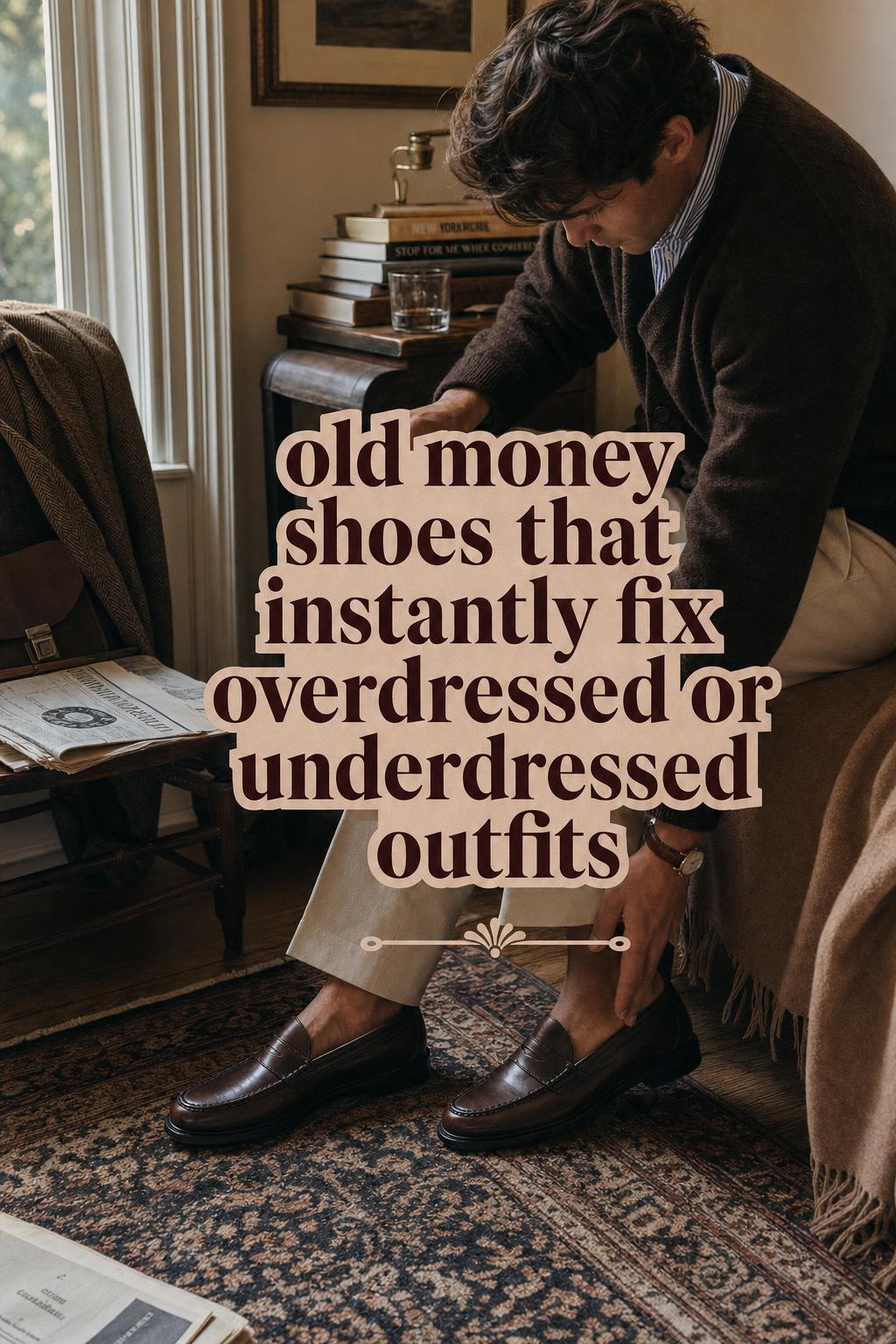
The silhouettes that define an old money shoe wardrobe
If you want a wardrobe that actually functions, not just a collection of attractive pairs, start by understanding which silhouettes carry the most styling range. The strongest old money shoe rotation is built around a few categories rather than endless variation.
Penny loafers as the everyday cornerstone
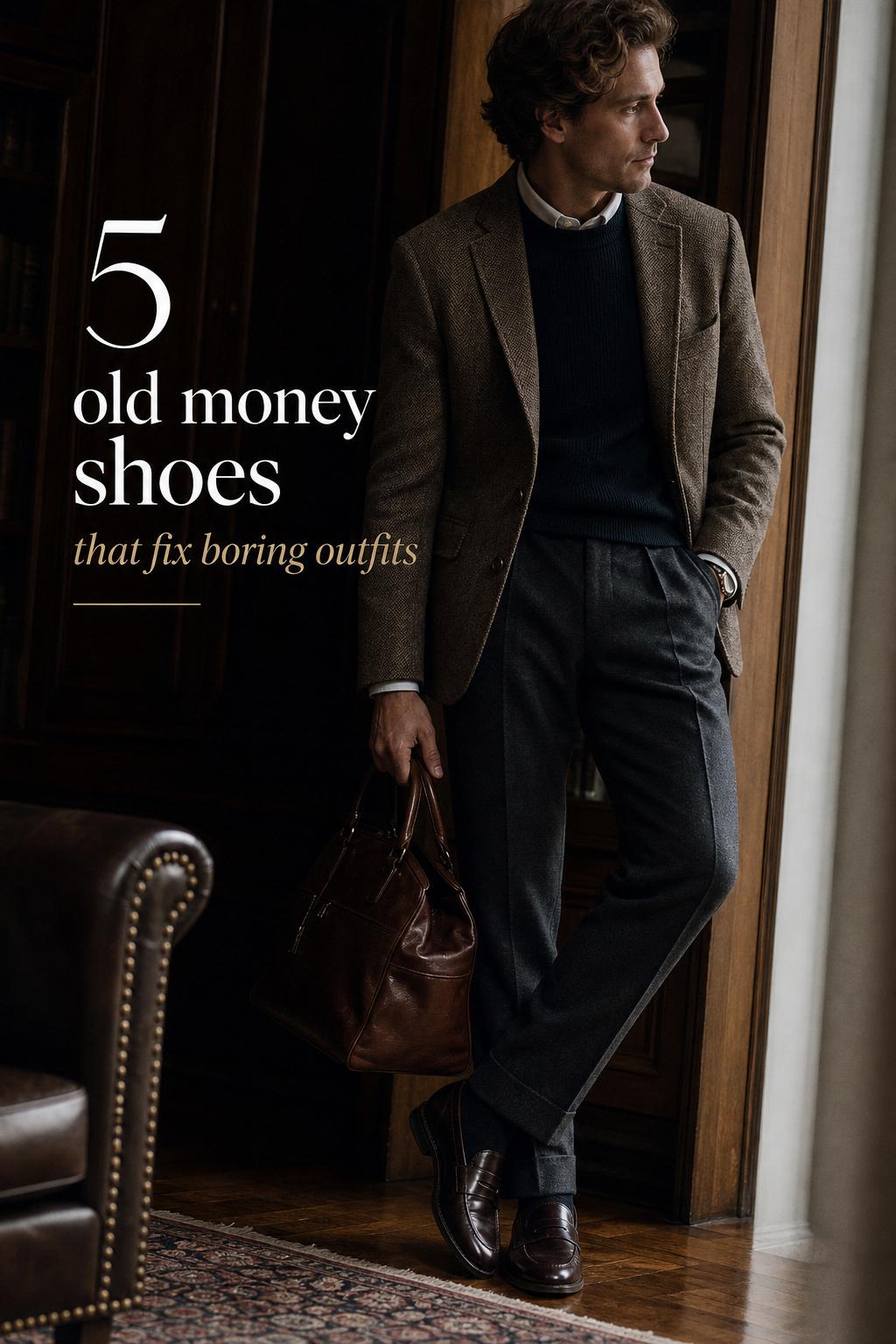
Penny loafers are the easiest entry point because they sit between formal and casual. They work with tailored trousers, chinos, denim, and lightweight suiting, which makes them one of the most practical shoes for someone trying to recreate the old money look in real life. A leather penny loafer in dark brown or black is especially versatile because it can move from office settings to dinner or travel without creating visual friction.
The reason penny loafers work so well is proportion. They expose a little more of the foot than an oxford, which keeps them relaxed, but their vamp and leather structure still feel polished. For petite frames, that lighter visual profile can feel less heavy than a thick derby. For taller wearers or those with broader proportions, they still hold enough substance to balance wider trousers and heavier knitwear.
- Buy first if you want one pair that handles the most outfits.
- Choose smooth leather for maximum versatility.
- Choose suede if your wardrobe is softer, more relaxed, or more seasonal.
- Avoid oversized metal details if you want the quietest interpretation of the look.
Leather loafers, with or without hardware
Leather loafers extend beyond the penny style. Bitless versions feel especially restrained and align naturally with logo-light dressing. Horsebit loafers introduce a little shine and can still fit the old-money framework when the hardware remains subtle and the rest of the outfit is clean. This is where the distinction between elegance and excess becomes important. Minimal brass hardware can act as a visual accent; too much contrast can shift the shoe toward a more display-oriented message.
For workwear or urban wardrobes, black leather loafers often make more sense. For softer daytime dressing, dark brown remains easier and warmer. If you already own structured jackets, wool trousers, and belts in brown tones, brown loafers will integrate more smoothly into a capsule wardrobe.
Derby shoes for flexibility and comfort
Derby shoes deserve more attention because they are often more forgiving in fit and more adaptable in daily use than oxfords. Their slightly more open construction gives them a less rigid presence, which helps if you want a traditional shoe that does not feel too ceremonial. This is especially useful for commuting, travel, and long workdays when you need comfort alongside polish.
From a styling perspective, derbies pair well with flannel trousers, chinos, and heavier fabrics. They are a strong option in colder weather when loafers may look too light against coats, tweed-like textures, or dense knitwear. If your wardrobe leans practical and layered rather than sharply formal, derby shoes can become your most-worn pair.
Oxfords for formal clarity
Oxfords carry the cleanest, most formal line in the group. They work best when the wardrobe around them is equally disciplined: tailored trousers, suiting, crisp shirting, refined outerwear. In old money terms, the appeal is their timelessness. A cap-toe oxford in black or dark brown never needs to prove itself.
That said, not everyone needs them first. If your week involves mostly business-casual dressing, travel, and social occasions rather than formal meetings or events, penny loafers or derbies may deliver better value. Oxfords are worth prioritizing when your wardrobe includes frequent tailored dressing and you want a shoe that sharpens posture and silhouette instantly.
Brogues and tassel loafers for controlled character
Brogues and tassel loafers add personality without breaking the old-money framework. Broguing introduces visible detailing, which can be useful if your clothing palette is mostly neutral and you want texture rather than color to do the work. Tassel loafers, on the other hand, sit in a particularly elegant zone: traditional, expressive, and often very effective with tailored separates.
These styles are best treated as second or third purchases rather than foundation shoes. They broaden the wardrobe, but they are less essential than a plain loafer or a classic derby. If you are shopping on a budget, build the core first, then add these once your daily needs are covered.
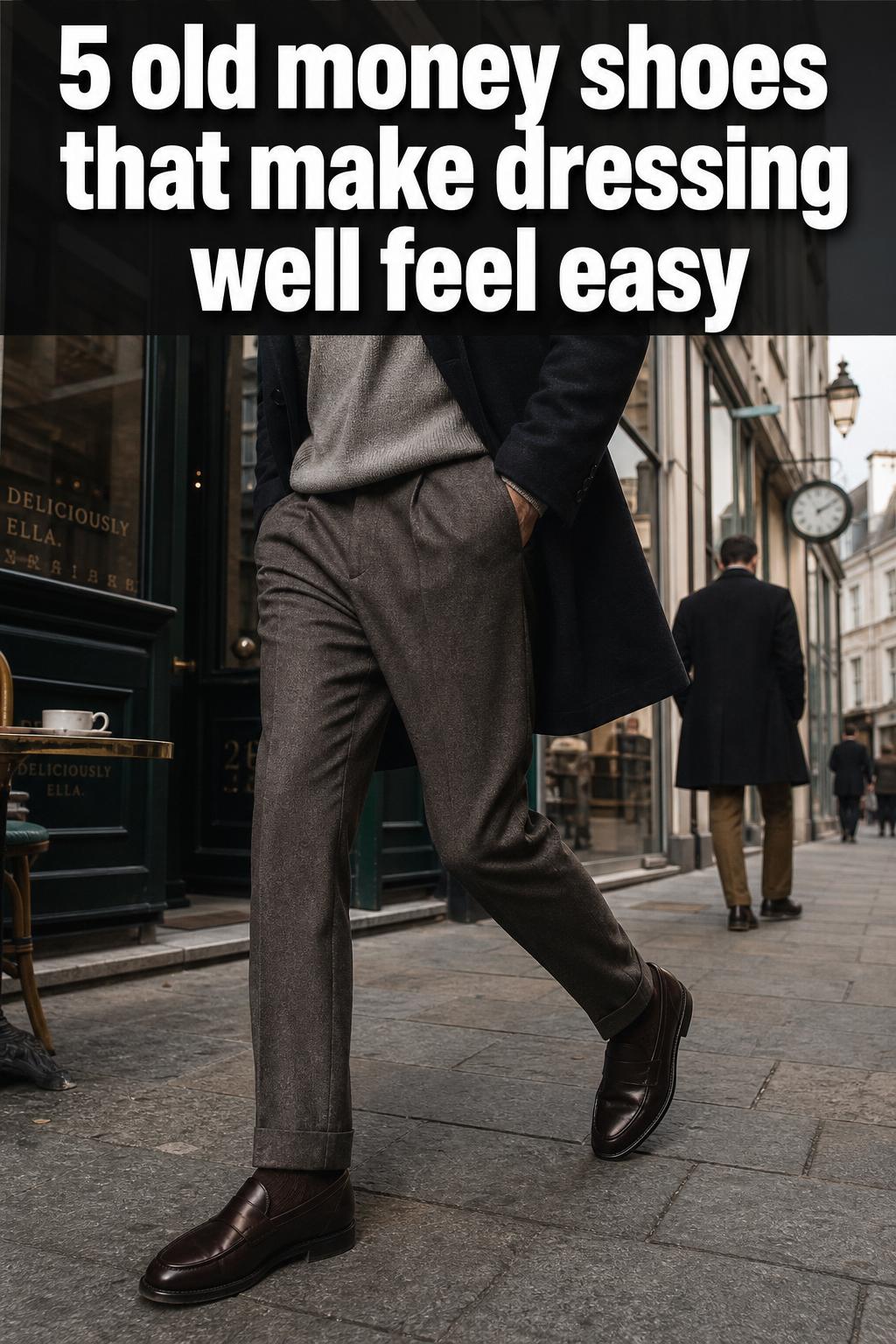
Materials, construction, and the logic of quiet luxury
The old-money effect depends heavily on material behavior over time. Good leather does not merely look expensive on day one. It becomes better-looking through wear, maintenance, and patina. That gradual aging is central to the appeal, because it communicates continuity and care rather than constant replacement.
Calfskin, full-grain leather, and suede
Leather and calfskin dominate the conversation because they deliver the polished finish most associated with timeless footwear. Smooth calfskin works best when you want maximum flexibility across office, evening, and semi-formal settings. It reflects light cleanly, which helps the shoe read refined from a distance. Full-grain leather carries similar authority, especially when the construction is neat and the color deepens attractively with wear.
Suede introduces softness. It is still fully compatible with the aesthetic, especially in loafers and more relaxed derby styles, but it reads more seasonal and slightly less formal. In spring and early fall, suede can make an outfit feel richer through texture contrast. In wet weather or rough commuting conditions, smooth leather is usually the safer practical choice.
For shoppers trying to avoid mistakes, the key question is not “Which material is more luxurious?” but “Which material suits my real schedule?” If you travel often, walk outdoors, or need one pair to cover many situations, smooth leather is the better first investment. If your wardrobe already has a leather foundation and you want variation, suede adds depth.
Construction details that matter more than branding
Heritage construction is repeatedly linked to the category because it supports longevity. Clean stitching, balanced soles, stable heels, and a well-shaped last all matter more than a loud logo. This is why brand-light labels and heritage makers often feel more convincing in this space than heavily branded fashion footwear.
When assessing a pair in person or online, look for coherence. Does the sole look proportional to the upper? Does the leather appear dense and even rather than plasticky? Does the shape feel classic enough that it will not date quickly? Old money shoes are rarely about novelty lasts or exaggerated profile experiments. The design should feel settled.
Patina as a visual asset, not wear-and-tear failure
Patina is one of the most useful concepts to understand because it changes how you shop and care for shoes. In this context, patina refers to the attractive aging of leather over time. It is part of why well-maintained brown loafers or brogues often look better after months or years of wear than they did when first unboxed.
This does not mean neglect. It means the shoe develops character through conditioning, brushing, sensible storage, and regular use. A rich dark-brown loafer with gentle tonal variation often feels more authentic to the old-money mood than a shoe that looks unnaturally perfect but lacks depth.
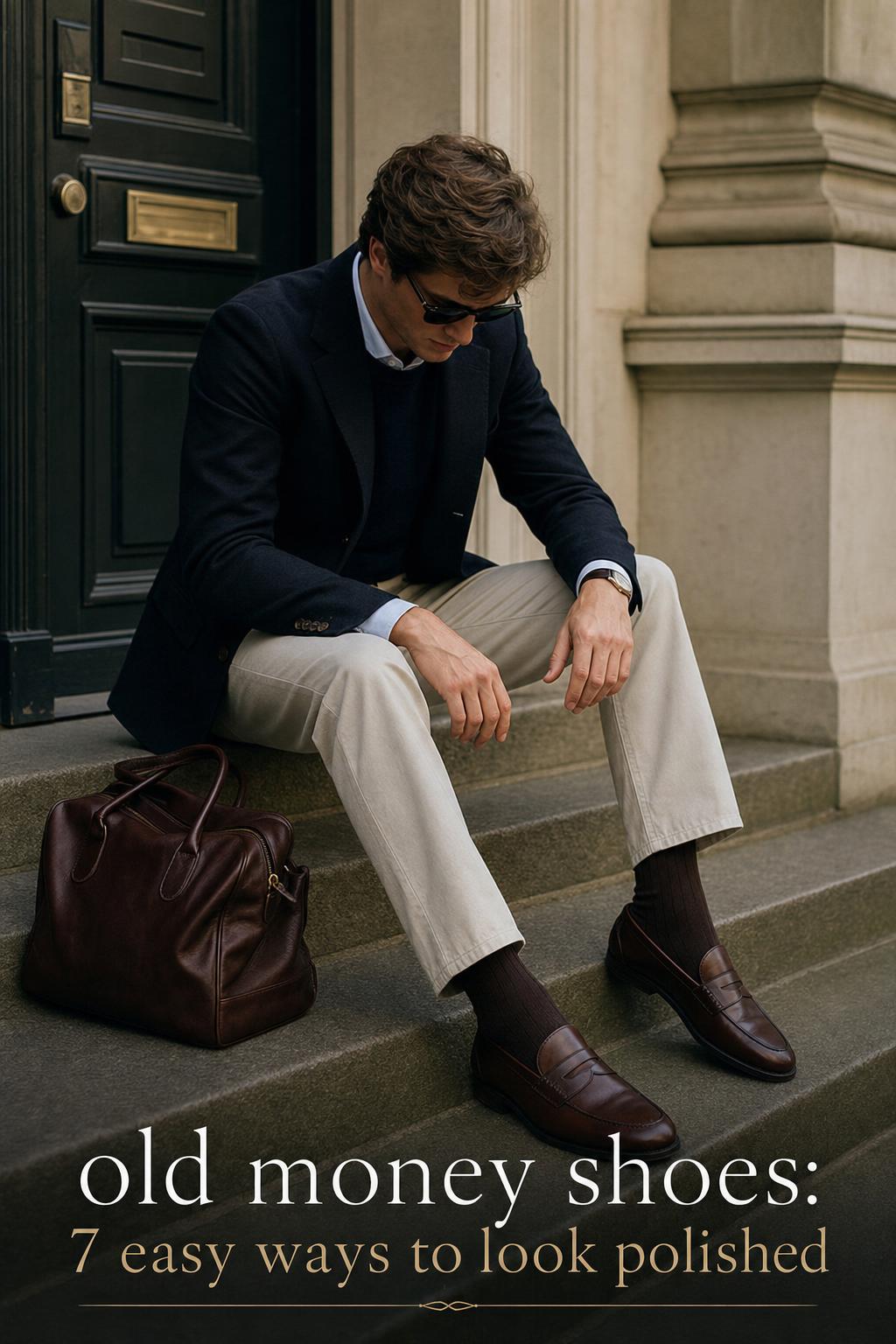
How to build a practical old money shoe capsule
The smartest wardrobe starts with need, not fantasy. Many readers are drawn to the aesthetic through images of horsebit loafers, suede slip-ons, and multiple elegant dress shoes, but most people only need two or three pairs to create the effect consistently.
- First pair: dark brown penny loafers for maximum versatility.
- Second pair: black or dark brown derby shoes if your week includes office dressing, poor weather, or long days on foot.
- Third pair: black cap-toe oxfords if you attend formal events or wear tailoring regularly.
- Optional fourth pair: suede loafers or tassel loafers for seasonal texture and wardrobe depth.
This order works because it matches use frequency. Loafers cover the widest style range. Derbies solve comfort and weather issues. Oxfords refine the formal end of the wardrobe. By the time you reach tassel loafers or more expressive brogues, the foundation is already doing the heavy lifting.
For budget-conscious shopping, this sequence also prevents common overspending mistakes. People often buy a striking but niche pair first, then realize it works with very few outfits. A capsule approach keeps each purchase accountable to actual wear.
Color strategy: the palette that makes shoes look expensive
Color is one of the clearest old-money signals because the palette is disciplined. Black, dark brown, and oxblood are the core tones most closely associated with timeless footwear. These shades work because they support tonal layering and let construction and material quality speak for themselves.
Black for structure, dark brown for warmth
Black shoes create a sharper line. They pair naturally with charcoal, navy, black, and cooler wardrobe combinations. If your clothing skews metropolitan, tailored, or monochromatic, black loafers or oxfords will usually earn their place quickly. They are especially useful when the goal is authority and visual precision.
Dark brown is often the more forgiving and versatile choice for everyday wear. It complements cream, beige, olive-adjacent earth tones, blue denim, and many forms of classic sportswear. It also tends to show patina beautifully, which reinforces the heritage feel associated with quiet luxury.
Oxblood, cordovan tones, and seasonal texture
Oxblood and deeper cordovan-like shades are useful when you already have black and brown covered. They add richness without becoming loud. In practical terms, these colors work particularly well in fall and winter wardrobes where heavier fabrics and darker layering need a shoe with depth.
Suede in dark neutral tones can also shift the visual temperature of an outfit. It softens tailoring and makes a blazer-and-trousers combination feel less corporate. This is helpful for readers who want the old-money effect without looking overly dressed for everyday life.
Outfit pairings that translate the aesthetic into real life
The best old money shoes are not standalone trophies. They function as part of a larger outfit system that includes trousers, knitwear, tailoring, belts, bags, and subtle accessories. When the pairings are correct, the shoes reinforce the overall message of restraint and refinement.
For daily city wear
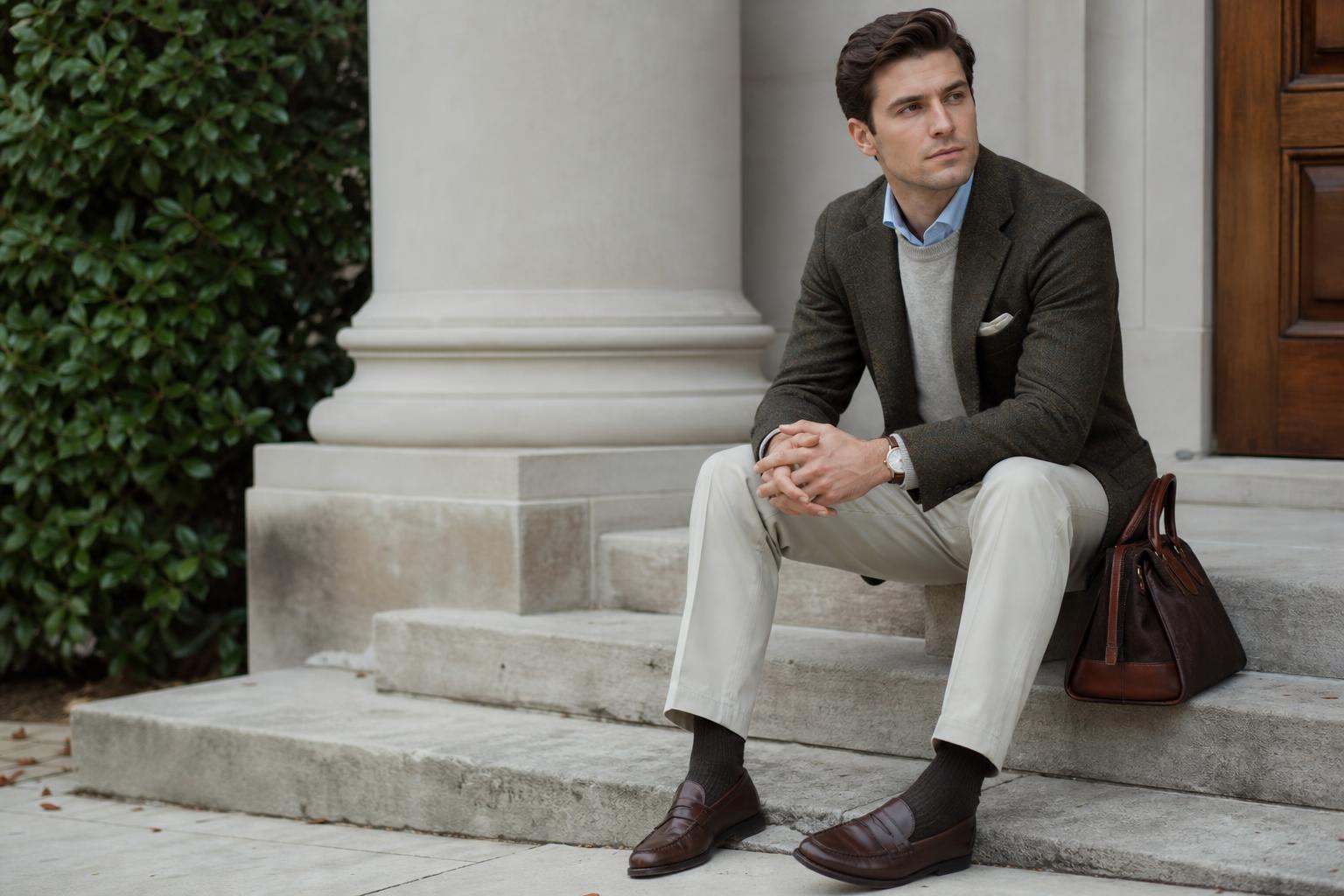
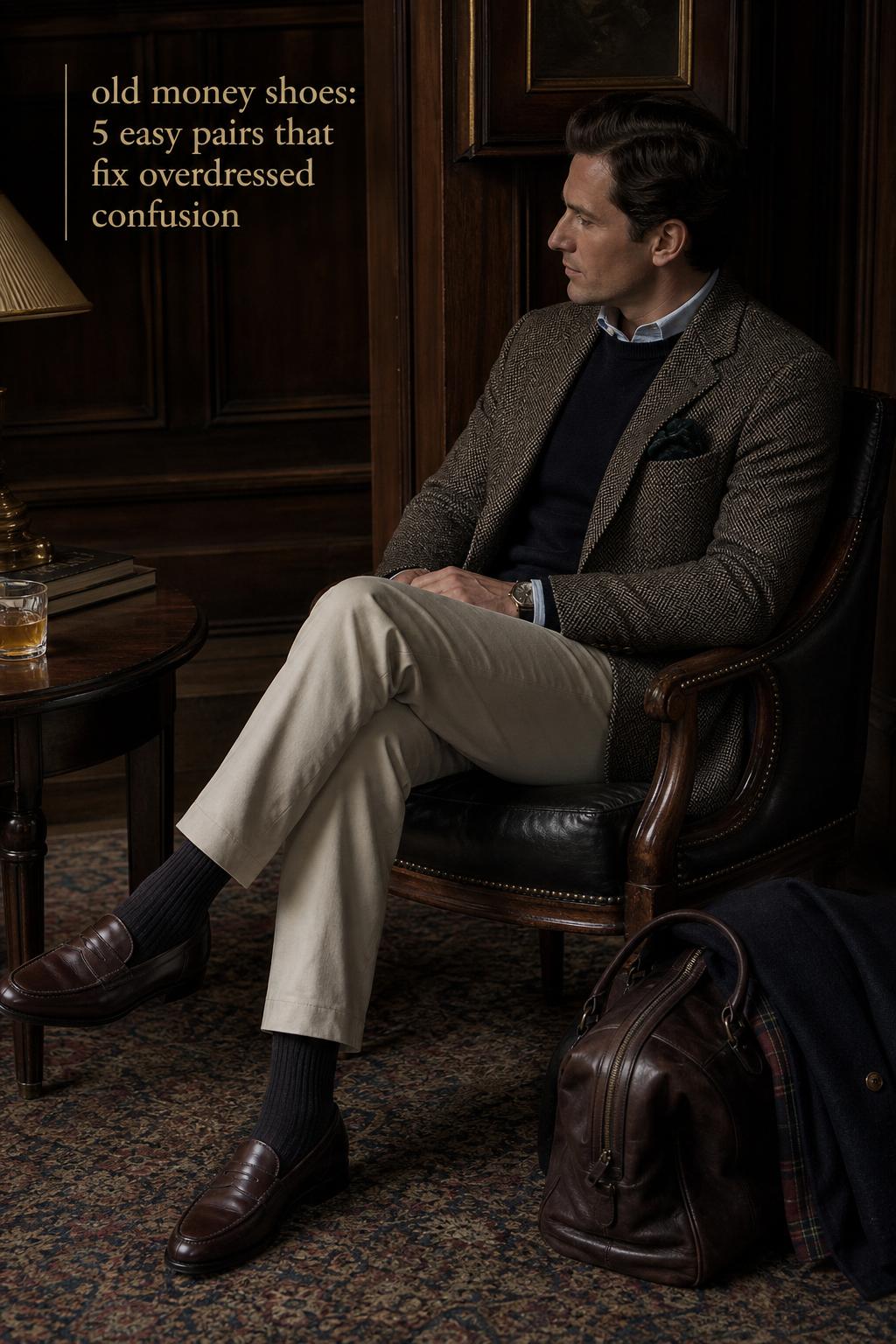
Dark brown penny loafers with straight trousers, a fine knit, and a structured blazer create one of the most reliable modern interpretations of the style. The blazer provides shape, the knit softens the composition, and the loafers keep the outfit from becoming too corporate. This works particularly well for office environments, lunch meetings, and social plans after work.
If you are petite, keep the trouser break cleaner and avoid overly heavy soles, which can visually shorten the leg line. If you are tall, slightly fuller trousers and a more substantial loafer or derby can create better proportion play.
For relaxed weekends and travel
Suede loafers or soft leather loafers with chinos, a polo or knit, and a lightweight outer layer carry the preppy side of the aesthetic well. This combination works because it keeps the structure in the shoe while making the rest of the outfit easier and more mobile. For travel days, derby shoes may be the better choice if you expect more walking and need a more secure fit.
A briefcase or understated leather bag can reinforce the visual logic when you want the outfit to feel cohesive. The key is to keep accessories logo-light. The old-money effect weakens when every item demands separate attention.
For tailoring and formal occasions
Cap-toe oxfords with suiting remain the cleanest solution. Brogues can also work, especially when the suit has more texture or the setting is less strict. The principle is simple: the more formal and streamlined the clothing, the cleaner the shoe should be. Save more relaxed loafers for contexts where the outfit can carry a softer silhouette balance.
For longer events, comfort should be part of the decision. A technically “perfect” formal shoe that causes discomfort after an hour will not support graceful posture or confident movement. In real life, slightly more forgiving derby construction can sometimes outperform an oxford if the dress code allows it.
Brand stories: heritage makers and modern interpretations
The old-money shoe conversation often splits into two directions. One is heritage shoemaking, especially the English tradition associated with long-standing craftsmanship and restrained design. The other is newer or aesthetic-led brands building collections around the same values: timeless silhouettes, minimal logos, and premium positioning.
On the heritage side, names such as Edward Green and Crockett & Jones are often linked with the traditional ideal. They fit the broader logic of English shoemaking: controlled shape, material seriousness, and a reputation built on consistency rather than visual noise. In the modern luxury conversation, Gucci appears as a reference point, especially where loafers and horsebit styles are concerned, though the old-money reading depends heavily on choosing restrained versions and styling them with discipline.
Contemporary interpretations come through labels and collections such as Montelaire, Neos Aesthetic, The Old Money, Old Money Shoes, wearoldmoney, old-money.com, and oldmoney.net. Their messaging often emphasizes heritage construction, timeless footwear, logo-free design, and longevity. For the shopper, the practical lesson is not to fixate only on the label but to compare what the shoe is actually offering: silhouette, leather, construction, and versatility.
Ralph Lauren is also a useful style reference in the broader old-money visual language because the brand is logically associated with the popularization of prep and refined heritage dressing. That matters less as a shoe-buying instruction than as a styling cue: the footwear should support a composed, club-adjacent wardrobe rather than operate as an isolated statement piece.
How to shop without overpaying
Old money style can tempt people into equating higher price with automatic credibility. That is not a reliable method. A shoe earns its place through how often you will wear it, how well it integrates with your wardrobe, and how convincingly it handles time. A less theatrical pair that works four days a week is usually a smarter purchase than an expensive niche style that remains in the closet.
- Prioritize shape before label.
- Check whether the leather looks likely to age attractively.
- Choose colors that match your belts, trousers, and outerwear.
- Think in cost-per-wear rather than one-time excitement.
- Do not pay premium pricing for loud branding if your goal is understated luxury.
A practical value signal is wardrobe compatibility. If a pair works with tailoring, chinos, denim, and knitwear, it is usually worth stronger consideration. Another is care potential. Shoes that can be maintained with brushing, conditioning, shoe trees, and sensible storage are better aligned with the long-game ethos of the category.
Fit, break-in, and comfort: the part that decides whether you will actually wear them
Even the best-looking old money shoes fail if the fit is wrong. Loafers should feel secure enough that the heel does not slip excessively, but not so tight that the instep becomes painful. Derby shoes tend to be more forgiving, which is one reason they are such a practical recommendation for first-time buyers. Oxfords need more precision because their structure leaves less room for compromise.
Break-in matters, but it should not be used to excuse a clearly poor fit. A quality shoe may soften and adapt slightly, yet it should already feel fundamentally compatible with your foot. If you commute, travel, or stand for long stretches, comfort will shape your styling choices more than any brand narrative will. Shoes that pinch often get avoided, and unworn shoes have no wardrobe value.
For readers balancing aesthetics with function, this is a useful hierarchy: fit first, silhouette second, color third, branding last. That order usually leads to better buying decisions.
A care routine that supports the old-money effect
Care is not an optional extra in this category. It is part of the look itself. The polished but lived-in finish associated with old money shoes comes from maintenance habits: brushing, storing correctly, allowing shoes to rest, and using shoe trees to help preserve shape.
The essentials
- Use wooden shoe trees after wear to support shape and reduce creasing.
- Brush leather regularly to remove surface dust.
- Condition and polish when the leather begins to look dry or dull.
- Store pairs carefully rather than piling them together.
- Rotate shoes instead of wearing the same pair every day.
These habits matter because old money footwear is expected to age with dignity. A loafer with deep creasing, neglected leather, and collapsed shape loses the quiet-luxury signal. The opposite is also true: even a modestly priced classic shoe can look far more elevated when it is cleaned, shaped, and given time to develop a subtle patina.
Climate also influences care. In many U.S. settings, changing humidity, rain, and seasonal shifts mean leather needs attention if you want it to remain supple. Smooth leather generally tolerates this better than suede, while suede requires more selective use and more awareness of weather.
Common mistakes that weaken the old-money effect
The aesthetic is easy to misunderstand because it looks simple. In reality, its success depends on precision. Small errors are often what make the outfit feel forced rather than effortless.
- Buying shoes with overly visible logos or flashy hardware.
- Choosing trendy shapes that will date quickly.
- Ignoring care and expecting leather to look better on its own.
- Wearing ultra-formal shoes with overly casual clothing in a way that feels disconnected.
- Buying too many specialized pairs before securing one versatile foundation pair.
- Forcing suede into wet-weather routines where it will become a maintenance burden.
Another frequent mistake is confusing stiffness with refinement. Old money style does not require you to look overdressed in ordinary environments. A penny loafer with clean trousers and knitwear often communicates the aesthetic more convincingly than a highly formal oxford worn in the wrong context.
Tips for making the style work on a budget
You do not need a large collection or a wardrobe full of heritage labels to capture the look. What matters is editing. A small number of well-chosen, well-maintained shoes will outperform a larger rotation of inconsistent pairs.
Start with one pair of dark brown penny loafers or derby shoes depending on your lifestyle. Choose the silhouette that matches your most common outfits. If you wear chinos, denim, knitwear, and relaxed tailoring, loafers are often enough. If your schedule involves commuting, weather exposure, or all-day wear, derbies may deliver better daily value.
Keep the rest of the outfit simple so the shoes can read more elevated. Neutral trousers, a clean belt, and a structured layer make average footwear look better, while cluttered styling can make even strong shoes look confused. That is one of the most useful budget lessons in this category: composition matters as much as individual spend.
If affordability is the concern, invest selectively in the pair you will wear most and save experimentation for later. Quiet luxury becomes more believable when repetition is part of the wardrobe. Rewearing a dependable loafer with different outfits often looks more convincing than constantly introducing new statement pieces.
Seasonal and location-based reading of the look
Old money shoes are not worn in a vacuum. Their styling shifts depending on whether the visual reference is New England prep, London club tradition, or a more European interpretation shaped by polished simplicity. Understanding that context helps you choose pairs that feel appropriate rather than costume-like.
In a U.S. prep framework, loafers are especially central. They pair naturally with chinos, knitwear, and understated tailoring, and they support the Ivy League side of the aesthetic. In a British-leaning reading, brogues and more structured leather shoes often carry greater weight because they echo English shoemaking heritage and club-oriented dress traditions.
Seasonally, loafers and suede thrive in warmer or transitional months, while derby shoes, brogues, and denser leather footwear feel more coherent in cooler conditions. This matters because texture contrast should align with climate. A suede loafer can feel elegant in spring, but in a wet winter commute it may become an impractical styling choice.
The accessory ecosystem that supports old money shoes
Shoes carry more authority when the surrounding accessories speak the same language. Belts, briefcases, bags, and even eyewear should reinforce the same principles: quality, restraint, and continuity. The role of accessories here is not to attract attention independently but to complete the outfit composition.
A leather belt in a related tone is usually the easiest win. A clean briefcase or understated bag supports loafers and derbies well, especially in work settings. If you are trying to make the wardrobe feel more expensive without overspending, keeping accessories calm and logo-light is often more effective than upgrading every individual garment at once.
This also explains why old money shoes work so well inside a capsule wardrobe. They connect naturally to tailoring, leather goods, and classic outerwear, which means each additional piece increases the usefulness of the others. That network effect is where the style becomes practical rather than decorative.
Final wardrobe logic: buy less, choose better, wear repeatedly
The most convincing old money shoes are rarely the loudest or the newest. They are the pairs that fit properly, complement your real wardrobe, hold their shape, and improve through care. Penny loafers, derby shoes, brogues, and oxfords remain central not because they are nostalgic, but because they solve modern dressing problems with unusual efficiency. They look polished, move across occasions, and support the calm visual language of heritage style.
If you want the look to feel authentic, treat the shoes as part of a system. Start with a classic silhouette, choose black or dark brown before experimental shades, pay attention to leather and construction, use shoe trees, allow for patina, and resist unnecessary branding. That approach creates what the aesthetic is really known for: quiet confidence built through consistency.
FAQ
What are the best old money shoes to buy first?
Dark brown penny loafers are usually the best first purchase because they work across the widest range of outfits, from chinos and knitwear to tailored trousers and blazers. If your lifestyle involves more walking, commuting, or cooler weather, derby shoes may be the more practical first choice.
Do old-money shoes need to come from a famous brand?
No. The aesthetic depends more on silhouette, material quality, restrained design, and proper care than on a recognizable label. Heritage names such as Edward Green or Crockett & Jones fit the tradition well, but a quieter brand or collection can still work if the shoe is well made and logo-light.
Are loafers or oxfords better for everyday wear?
Loafers are generally better for everyday wear because they move more easily between casual and polished outfits. Oxfords are more formal and work best when your wardrobe includes regular tailoring, business settings, or dressier occasions.
How do I make old money shoes look more expensive?
Prioritize clean leather, classic colors, and good maintenance. Wooden shoe trees, brushing, conditioning, and careful storage do more for the look than visible branding. Pairing the shoes with neutral trousers, a proper belt, and structured layers also increases the overall sense of refinement.
Is suede appropriate for the old-money aesthetic?
Yes. Suede loafers and similar styles fit the aesthetic well, especially in spring, early fall, and softer daytime outfits. They are less formal than smooth leather and less practical in wet weather, so they work best as a second or third pair rather than your only option.
What colors are most useful in an old money shoe wardrobe?
Black and dark brown are the most useful foundation colors, with oxblood as a strong secondary option once the basics are covered. Black reads sharper and more formal, while dark brown is often warmer and easier for everyday styling.
How should old money shoes fit?
They should feel secure, balanced, and comfortable from the start, even if a short break-in period is expected. Loafers should not slip excessively at the heel, and structured shoes should not rely on pain to “mold” correctly over time. A poor fit will reduce wear, which lowers the real value of the purchase.
Can I build an old money shoe wardrobe on a budget?
Yes, especially if you focus on one versatile pair first and keep the rest of your wardrobe simple and coordinated. A well-chosen loafer or derby in a classic color, kept in good condition, will do more for the aesthetic than several trend-driven purchases.
What is the biggest mistake people make with old money shoes?
The most common mistake is chasing the image of the style instead of the function of it. That often leads to buying formal or highly branded shoes that do not suit daily life. The better approach is to choose understated styles you will genuinely wear, then maintain them well enough to develop character over time.