
Old Money Girl Outfits for a Polished Everyday Wardrobe
Some style aesthetics are easy to copy for a photo and surprisingly hard to wear in real life. That is exactly why old money girl outfits can feel confusing. The look appears effortless, but the details are precise: the coat cannot overwhelm the frame, the knit cannot look sloppy, the shoes must be polished without feeling precious, and the whole outfit has to suggest ease rather than obvious effort.
The challenge is not simply buying neutral clothes. It is building a wardrobe that reads calm, refined, and quietly expensive through proportion, fabric, and restraint. For work, weekends, dinners, and transitional weather, the old money aesthetic works best when it solves practical dressing problems at the same time: how to stay comfortable, how to layer without bulk, how to look polished without relying on logos, and how to make simple pieces feel intentional.

At its core, this style sits between classic tailoring, preppy luxury, and quiet luxury. It favors wool, cashmere, silk blends, fine cotton, clean lines, and a palette of navy, cream, camel, and white. But the real difference is not the price tag. It is the styling logic. A white shirt looks sharper when the trousers have enough drape to balance it. A cardigan feels richer when the texture is fine and the accessories stay minimal. A loafer works because it grounds the look while keeping the silhouette practical for actual movement.
That is what makes old money girl outfits so useful when approached correctly. They are not costume dressing. They are a wardrobe system built around timeless pieces, understated luxury, and repeatable outfit formulas that can move from brunch to office hours to evening plans without losing composure.
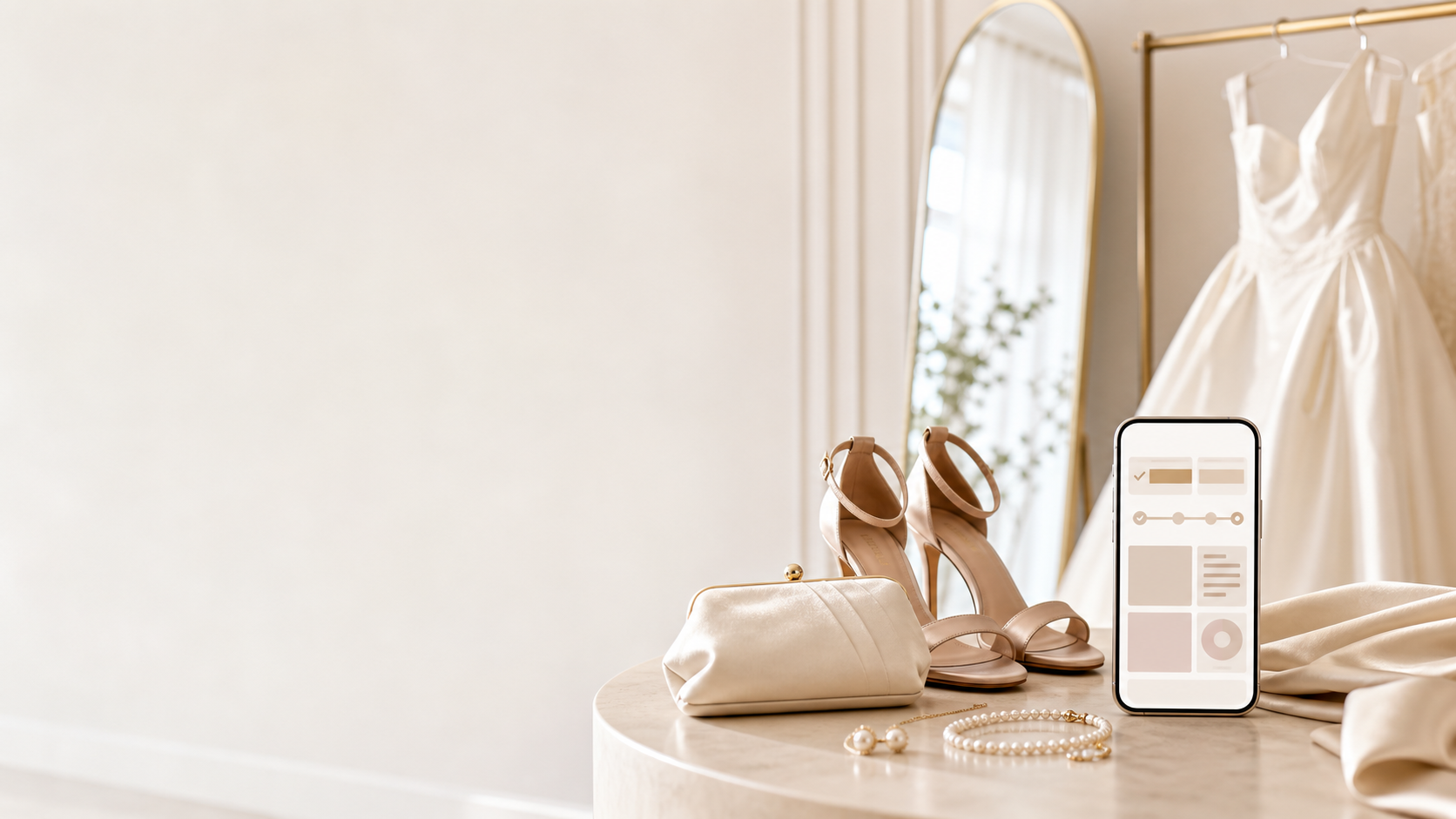
Found the dress? Keep the rest in one place.
Zarellea brings guest details, vendors, timelines, and every next step together — so your wedding plan feels as good as your look.
What the old money aesthetic actually means in daily dressing
The old money aesthetic is a visual language of reassurance. Instead of trend-heavy statements, it relies on pieces that suggest permanence: tailored coats, crisp button-downs, fine knits, leather loafers, clean trousers, and simple handbags with little or no visible branding. In fashion terms, this overlaps strongly with quiet luxury and understated luxury, where quality and fit carry the outfit rather than overt logos.
In practice, that means an outfit should look composed from a distance and still feel thoughtful up close. Texture matters. Fabric weight matters. Hem length matters. Even grooming details such as neat hair and clean shoes influence whether the outfit reads polished or simply plain. This is why many people try the look and feel underwhelmed: they copy the color palette but miss the structure.
There is also a heritage element. The aesthetic is often tied to preppy luxury, heritage fashion, and East Coast-coded references such as the Hamptons and New York style contexts. It has also been pushed back into the spotlight through the modern quiet luxury conversation and social-media interest, including TikTok-driven fascination with low-key wealth dressing. Still, the most wearable version is not about performance. It is about choosing timeless wardrobe staples that can repeat without looking repetitive.

Why this style can go wrong so easily
Old money dressing looks simple, which is exactly why mistakes stand out. When there is no loud print, no dramatic embellishment, and no trend piece distracting the eye, proportion and fabric become the entire message. A blazer that is too tight looks stiff. A coat that is too large can swallow the body and lose the refined line. A flimsy white shirt often reads ordinary instead of elevated.
Weather adds another complication. In cold seasons, many people over-layer and create visual heaviness. In warmer months, they reach for fabrics that are too thin, clingy, or casual, which weakens the calm structure associated with the look. Daily life matters too. A beautiful leather loafer that pinches, or a delicate bag that cannot hold essentials, turns the aesthetic into a styling exercise rather than a functioning wardrobe.
Dress codes can also create tension. For work, the outfit has to feel credible and composed. For weekend plans, it needs softness and ease. For evening, it should become elegant without suddenly looking flashy. The most successful old money girl outfits solve this by using a consistent visual anchor: usually one tailored piece, one soft piece, one practical leather accessory, and a controlled color palette.

The wardrobe foundation that makes the look believable
If this aesthetic feels scattered in your closet, the issue is usually not a lack of clothes. It is a lack of foundational pieces that repeat well. The old money wardrobe depends on a small group of staples that can rotate across seasons and settings while keeping the same refined tone.
- tailored coats in wool, camel tones, or structured trench shapes
- white button-down shirts in crisp cotton
- cashmere pullovers and cardigans with fine texture
- tailored trousers with clean drape, including wide-leg cuts
- skirts with controlled structure, especially pencil and A-line silhouettes
- leather loafers that are polished but comfortable enough for regular wear
- simple leather handbags with minimal branding
- pearl jewelry or similarly restrained finishing pieces
These pieces work because each one contributes a specific role in outfit composition. The coat or blazer provides architecture. The knit softens the line. The trouser or skirt determines movement and proportion. The shoe grounds the look. The bag and jewelry keep the finish intentional without introducing visual noise.
Tailored coats and outerwear as the visual anchor
A tailored coat is often the first thing that makes an old money outfit feel convincing. Double-breasted wool coats, camel single-breasted styles, and structured trench coats create a calm vertical line that instantly sharpens simpler base layers. This matters in real life because outerwear is what people actually see most often, especially in commuting months.
The key is balance. If the coat is long and substantial, keep the layers underneath slimmer or smoother so the body does not disappear. If the coat is more fitted, wider trousers can create a more modern and comfortable proportion. Cashmere-blend outerwear and wool options tend to read more refined than overly padded silhouettes when the goal is timeless rather than sporty.
White shirts and cashmere knits do most of the quiet work
The white shirt is one of the strongest old money pieces because it is both practical and visually precise. It brightens navy, camel, and cream palettes while keeping the outfit structured. Fine cashmere knits serve a different role. They soften the outfit without making it casual, especially when worn over a shirt, tucked lightly into trousers, or paired with a skirt that has a clean waistline.
This combination is useful for anyone trying to look polished through long days. A crisp shirt provides shape at the collar and cuffs. A knit adds warmth and texture. Together, they create tonal layering that looks thoughtful without asking for complicated styling.
Trousers, skirts, and the importance of line
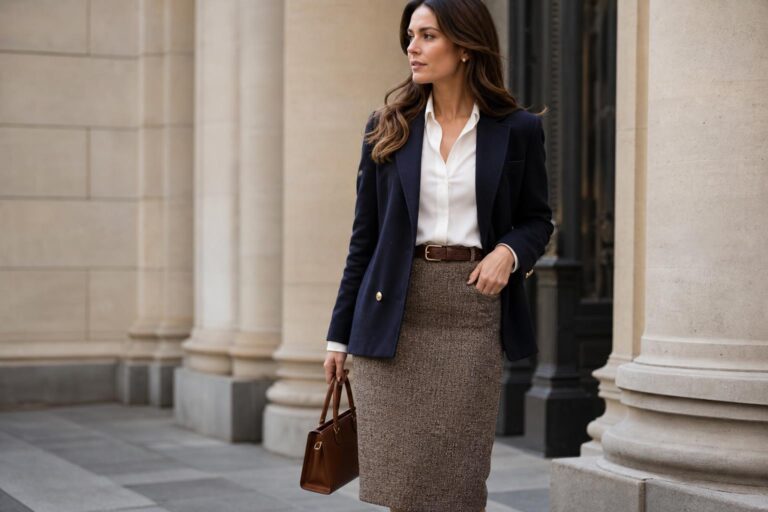
Tailored pants and structured skirts are where the old money look either settles into elegance or slips into stiffness. Wide-leg trousers often work especially well because they create movement while keeping the line clean. Pencil skirts offer a more formal route, while A-line silhouettes bring ease and help balance broader shoulders or heavier outerwear.
What matters most is visual clarity. The waistband should sit cleanly, the fabric should not wrinkle excessively, and the hem should work with your chosen shoe. When trousers are too cropped or too clingy, the outfit loses the quiet confidence that defines the aesthetic.
Logo-free accessories make the outfit feel finished
Accessories in this style should support the outfit rather than dominate it. Leather loafers, simple leather bags, and pearl jewelry are recurring essentials because they add polish without distracting from the silhouette. This is where many quiet luxury outfits succeed: they understand that restraint is part of the finish.
If the clothes are already neutral and tailored, accessories should not compete. One structured bag, one pair of polished loafers, and one subtle jewelry category are usually enough. The result feels more believable than stacking on multiple “luxury-coded” details at once.
The palette and fabric strategy behind old money girl outfits
Color and fabric are not separate decisions in this aesthetic. They work together to create a sense of calm. Navy, cream, camel, and white are effective because they look expensive through depth and softness rather than brightness. These shades also layer easily, which is one reason the look stays practical for everyday wear.
Fabric choice is what prevents the palette from feeling flat. Cashmere adds softness, wool brings structure, silk blends add fluidity, and fine cotton keeps shirts and lighter layers crisp. The old money look is often described as timeless because these materials age well in visual terms. They hold shape, create subtle texture contrast, and support classic tailoring.
Why neutrals work better here than loud contrast
Neutrals make silhouette and texture visible. In a strong print or high-contrast palette, the eye reads color first. In a cream knit with camel trousers and a navy coat, the eye notices drape, finish, and shape. That is why this style can look richer even when the outfit formula is simple.
For readers who find all-neutrals intimidating, the easiest way to wear them is to vary depth rather than introduce more colors. A white shirt under a cream knit with camel outerwear feels layered and intentional because each tone remains within the same calm family.
Fabric insight: quiet luxury is often a texture story
The phrase quiet luxury often gets reduced to expensive labels, but visually it is usually about fabric behavior. Cashmere falls softly but keeps refinement. Wool holds a sharper line. Silk blends move fluidly in evening dressing. Fine cotton looks clean and controlled. When these textures are combined thoughtfully, the outfit gains depth without requiring visible branding.
Brands such as The Row, Brunello Cucinelli, and Loro Piana are often referenced as exemplars because they are associated with this kind of low-key material focus. The useful lesson is not that every item must come from those houses. It is that the look depends on finish, hand feel, and line more than conspicuous labels.

Wearable outfit formulas that solve real dressing situations
The most effective old money girl outfits are not random inspiration images. They are repeatable formulas that answer specific daily needs. The sections below focus on situations where people often struggle: wanting to look polished at work, comfortable on weekends, elegant in the evening, or refined in shifting weather.
Relaxed layers that still feel polished
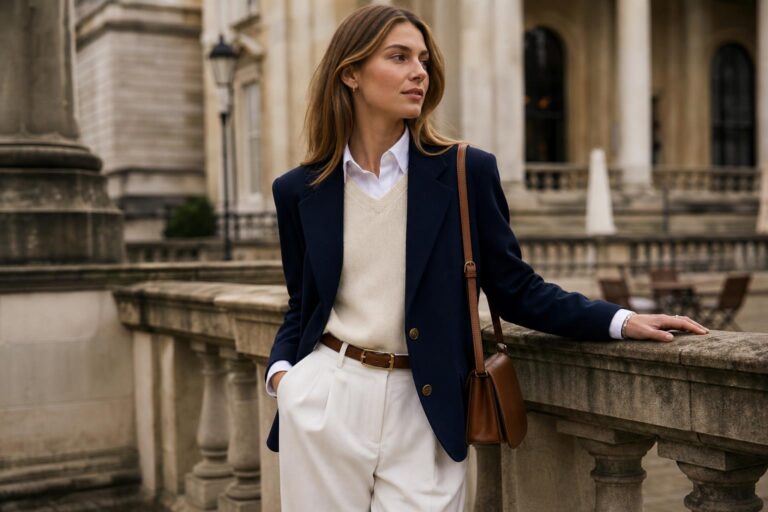
A white button-down under a fine cashmere cardigan with wide-leg tailored trousers is one of the strongest everyday formulas in this aesthetic. It works because the shirt collar and cuffs create crisp visual edges, while the cardigan softens the upper half. The wide-leg trouser adds movement and prevents the outfit from feeling too strict.
For real life, this combination is especially useful for work, meetings, lunch plans, or travel between appointments. It layers well without bulk, and each piece can adjust to indoor temperature changes. Add leather loafers and a structured handbag, and the outfit maintains enough polish for professional settings without becoming severe.
Quick styling adjustment: if your frame is petite or you dislike heavy layering around the shoulders, choose a lightweight cardigan and keep the shirt tucked more cleanly. If you want a softer effect, leave the cardigan unbuttoned and let the shirt front create a longer vertical line.
Comfortable city outfits with structure
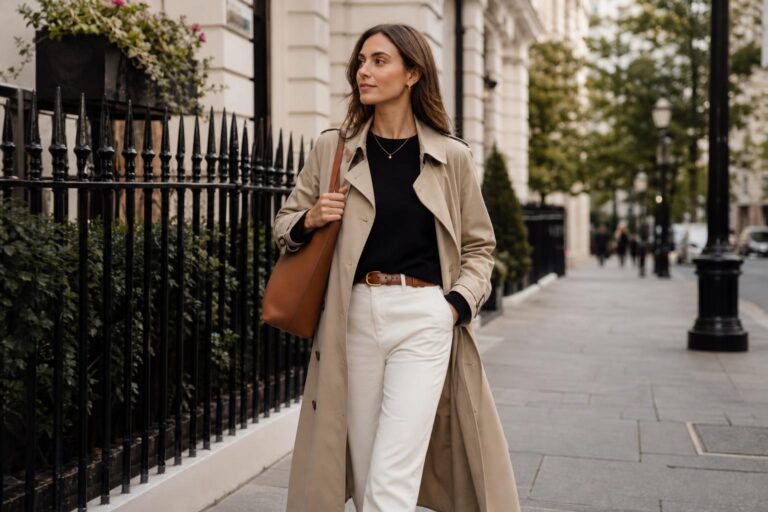
A camel coat over a knit and tailored pants is one of the most practical city versions of the old money look. The coat acts as the visual anchor, which means the layers underneath can stay simple. This is useful for commuting, errand-heavy days, or weekend city plans when you need comfort but still want a composed silhouette.
The reason this outfit works is proportion play. A longer coat creates authority and length, while a knit close to the body keeps the center line tidy. Tailored pants with enough drape support movement and keep the palette from feeling rigid. Loafers remain the best shoe pairing here because they bridge elegance and practicality better than more delicate footwear.
Most versatile piece: the camel coat. It works with navy, white, and cream, and it instantly signals the heritage-inspired side of the aesthetic without looking theatrical.
Weekend classics that do not collapse into casual
One of the easiest mistakes on weekends is replacing elegance with softness that has no structure. A better approach is a knit sweater with a midi or A-line skirt, finished with loafers and minimal jewelry. This keeps comfort intact while preserving shape through the skirt line.
This outfit is effective for brunch, casual lunches, gallery visits, or relaxed social plans because it balances femininity and practicality. The knit provides warmth and ease. The skirt introduces movement and polish. Pearl jewelry or a simple leather bag finishes the look without making it precious.
Why this outfit works: the soft upper texture contrasts with the cleaner line of the skirt, so the outfit feels styled rather than accidental. It also avoids the overdone effect that can happen when every item is heavily tailored.
Evening dressing with understated elegance
For dinners, socials, and events, a silk slip dress with a long tailored coat is one of the clearest expressions of quiet luxury. The slip dress introduces fluidity, while the coat restores structure. That balance is what keeps the outfit within the old money vocabulary rather than drifting into obvious eveningwear.
Add pearls, an understated clutch, and polished shoes that allow stable movement. The point is not sparkle. It is controlled refinement. This is where the aesthetic overlaps strongly with understated luxury: the fabrics carry the sophistication, and the accessories stay disciplined.
Budget-friendly alternative: if silk is not realistic, prioritize a fabric with smooth drape and keep the coat impeccable. In this outfit composition, the outer layer and overall line are often what make the look feel elevated.
Smart casual workwear that never looks try-hard
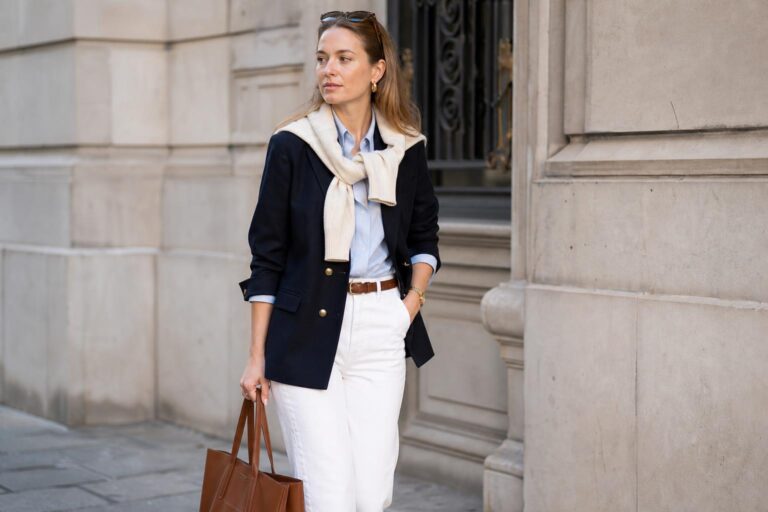
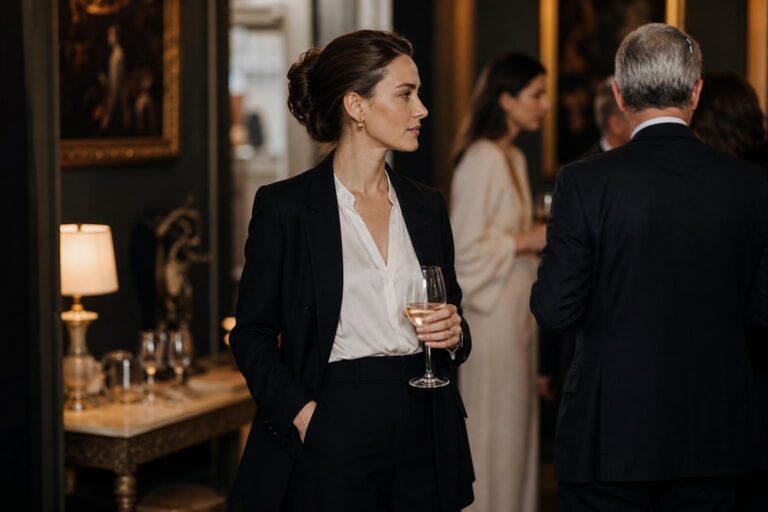
An old money outfit for work does not need to be severe. A white shirt, blazer, tailored trousers, and loafers remain effective because they create clarity without excess. The blazer provides credibility, the shirt adds sharpness, and the trousers maintain ease through the day.
The logic here is simple: one structured top layer, one crisp foundational piece, one fluid lower silhouette, and restrained accessories. This composition handles office lighting, long desk hours, and commute-friendly movement better than tighter or more trend-focused workwear. It also transitions easily to after-work dinners.
Common comfort mistake: choosing a blazer that looks polished standing still but restricts movement while sitting or commuting. In this aesthetic, comfort matters because stiffness reads less luxurious than ease.
Location cues that help the look feel grounded
Part of what gives the old money aesthetic its recognizability is geography. The visual language often draws from East Coast prep, the Hamptons, and New York polish. Even when the outfit is worn elsewhere, these references shape the styling: coastal neutrals, heritage-inspired tailoring, crisp shirting, and practical leather accessories that feel suitable for city movement or refined weekend escapes.
This does not mean the wardrobe needs to become costume-like or overly literal. It means the outfit benefits from context. A navy coat, cream knit, and loafers feel coherent because they echo a broader world of preppy luxury and old money restraint. The look becomes more believable when it suggests a lifestyle of repetition, routine, and well-chosen staples rather than one-off statement dressing.
Style references that clarify the mood
Public figures and fashion references can help clarify the mood when you are building the look. Carolyn Bessette Kennedy is often associated with the cleaner, quieter side of this aesthetic: spare lines, crisp simplicity, and clothing that feels controlled rather than decorated. Kiki Astor is another reference point often linked to the old money persona, especially in discussions about polished heritage style and social-world elegance.
These references are useful not because they should be copied literally, but because they illustrate the same principle: edit heavily, prioritize line and fabric, and let the outfit communicate confidence without visible strain. That is also why Bon Chic Bon Genre occasionally enters the conversation. It points toward a similarly coded world of refined dressing, social polish, and controlled elegance.
How to recreate the look without relying on obvious luxury spending
One of the smartest ways to approach old money girl outfits is to separate the aesthetic from pure price. The look depends on quality cues, but quality cues are not the same thing as wearing a closet full of instantly recognizable luxury labels. The practical strategy is to spend attention where the eye reads the outfit first: coat, knit texture, trouser drape, shoe finish, and bag shape.
Heritage houses and luxury names such as The Row, Brunello Cucinelli, Loro Piana, Hermès, Loewe, Celine, and J. Press help define the style vocabulary, but the most wearable interpretation often comes from mixing a few stronger pieces with simpler basics. A crisp shirt, clean trousers, and polished loafers can already establish the tone if the fit is disciplined.
- invest first in outerwear and shoes, because they shape the outfit from the outside in
- choose logo-free accessories whenever possible
- favor wool, cashmere, fine cotton, and silk blends over flashy finishes
- repeat a compact palette so more pieces work together
- use tailoring and garment care to elevate inexpensive staples
Thrift and budget-conscious shopping can work especially well for this aesthetic because timeless silhouettes often reappear across decades. A good wool coat, a quality button-down, or a classic loafer shape can look convincing without being current-season. The key is condition. Clean shoes, pressed shirts, and garments that hold shape are essential.
A 30-day old money capsule reset
If your wardrobe already contains pieces that almost fit the old money aesthetic but never quite come together, a capsule reset is usually more useful than a shopping spree. The goal is not to own more. It is to create more repeatable combinations with better visual consistency.
Week 1: build the outer layer and shoe base
Start with one tailored coat and one practical polished shoe, ideally loafers. These two items shape the wardrobe immediately because they determine whether your outfits read casual, trendy, or timeless from the first glance.
Week 2: refine your shirt and knit rotation
Add or edit white shirts and cashmere or fine-gauge knits. At this stage, focus on necklines, cuff clarity, and how the knit sits over trousers or skirts. Small fit corrections here make a large visual difference.
Week 3: adjust your trouser and skirt proportions
Test your trousers and skirts with your actual shoes and outerwear. This is where proportion issues usually reveal themselves. A pant that looks fine alone can fail once paired with a longer coat or loafer.
Week 4: simplify accessories and create a rotation
Choose one or two bags, one jewelry direction such as pearls, and a set of go-to combinations for work, weekends, and evenings. The old money look feels strongest when repeated with confidence rather than constantly reinvented.
Maintenance is part of the aesthetic
This style depends heavily on upkeep. Because the palette is restrained and the silhouettes are classic, wear and neglect become visible faster. A cashmere knit with pilling, dusty loafers, or a wrinkled shirt can collapse the entire impression. In contrast, careful maintenance makes even simple outfits look more expensive and more composed.
Wardrobe rotation matters too. Repeating the same beloved pieces is part of the appeal, but rotation helps fabrics recover and keeps the silhouette looking intentional. Delicate materials such as cashmere, wool, camel hair, and silk blends benefit from considerate use and care, which is one reason this aesthetic often feels tied to discipline as much as taste.
Common styling traps that make the look feel forced
Most failed old money outfits do not fail because they are too simple. They fail because they overstate the concept. When every piece tries too hard to signal wealth, the outfit loses the ease that should define it.
- too many visible logos, which disrupt the quiet luxury effect
- over-layering thick pieces, which creates unnecessary bulk
- mixing too many “heritage” signals at once, making the outfit feel costume-like
- choosing shoes that are elegant in theory but impractical in routine life
- using cheap-looking fabrics in a palette that depends on texture for depth
- ignoring fit, especially in coats, blazers, and trousers
A better approach is selective restraint. One excellent coat with a simple knit and polished loafers will almost always look stronger than an outfit crowded with references to luxury. In this aesthetic, editing is part of the styling.
How to adapt old money girl outfits to your routine and body type
The old money look is often presented as a narrow visual formula, but it becomes much more useful when adapted through silhouette rather than copied literally. If you need mobility and commute comfort, choose wider trousers and softer knits under a structured coat. If you prefer more waist definition, use an A-line skirt or a cleaner tuck with your shirt and cardigan. If long coats feel overwhelming, a blazer can deliver similar structure in a shorter proportion.
The styling principle remains the same across body types and routines: one clean line, one soft texture, one grounded accessory category, and a restrained palette. Once you understand that formula, the wardrobe becomes flexible. You stop chasing a costume version of old money and start building a believable, wearable version of timeless style.
Quick tips for making the outfit feel more elevated immediately
Sometimes the difference between ordinary neutrals and a convincing old money outfit is very small. It often comes down to finishing choices rather than major purchases.
- steam or press shirts before wearing them, especially white cotton pieces
- keep loafers and leather bags polished and clean
- limit accessories so the outfit composition stays clear
- use tonal layering instead of adding more colors
- choose one statement in texture, such as cashmere or silk, not multiple competing details
- check hem lengths with your actual shoes before leaving the house
These are small decisions, but they matter because this aesthetic is built on discipline. Quiet luxury only reads as luxury when the outfit looks intentional at every distance.

FAQ
What are old money girl outfits?
Old money girl outfits are looks built around timeless wardrobe staples, classic tailoring, high-quality fabrics, and understated accessories. They usually rely on pieces such as tailored coats, white shirts, cashmere knits, clean trousers, loafers, and simple handbags in a restrained palette like navy, cream, camel, and white.
How is old money style different from quiet luxury?
The two are closely connected. Quiet luxury focuses on subtle, logo-free refinement through fabric, fit, and finish, while old money style adds a heritage and preppy dimension through classic tailoring, polished restraint, and familiar wardrobe codes such as loafers, pearls, and tailored outerwear.
Can I create old money outfits on a budget?
Yes, if you focus on the parts of the outfit that matter most visually: fit, fabric appearance, outerwear, shoe condition, and restrained accessories. A well-cut coat, crisp white shirt, polished loafers, and simple leather bag can create the effect without relying on visible luxury branding.
What colors define the old money aesthetic?
The most recognizable palette includes navy, cream, camel, and white. These shades support tonal layering, allow texture to stand out, and help outfits feel calm, refined, and easy to repeat across work, weekends, and evening dressing.
Which fabrics make the look feel more authentic?
Cashmere, wool, silk blends, and fine cotton are the most important fabrics for this style. They support clean silhouettes, create subtle texture contrast, and help simple outfits look elevated without needing obvious decoration.
What shoes work best with old money outfits?
Leather loafers are one of the strongest choices because they balance elegance and practicality. They ground tailored trousers, work with skirts, and support daily movement better than more delicate shoes, which makes them especially useful for work and city dressing.
How do I avoid looking like I am wearing a costume?
The best way is to keep the outfit edited and wearable. Use one strong tailored piece, one soft texture like cashmere, one practical leather accessory, and minimal jewelry. Avoid stacking too many heritage references, visible logos, or overly dramatic pieces in one look.
What are the best old money outfits for work?
A white button-down, blazer, tailored trousers, and loafers remain one of the best work formulas because the combination looks credible, polished, and comfortable. For colder days, a structured wool or camel coat adds another layer of refinement without changing the outfit’s overall clarity.
Do I need designer brands like The Row or Loro Piana to get the look?
No. Brands such as The Row, Brunello Cucinelli, Loro Piana, and Hermès help define the visual language of the style, but the wearable version depends more on clean lines, quality-looking fabrics, disciplined color choices, and proper maintenance than on any single label.
How do I maintain old money style through the seasons?
Keep the core principles consistent and adjust fabric weight. Use wool coats, cashmere knits, and layered shirting for colder months, then shift to fine cotton, lighter knits, silk blends, and the same restrained palette for warmer weather. The silhouette should stay polished even when the fabric becomes lighter.