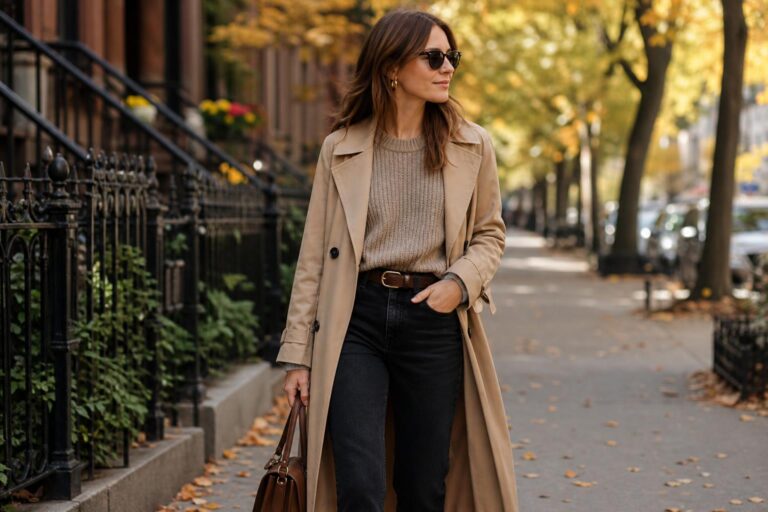

Autumn Winter Outfits for City Days
Getting dressed in the cold half of the year rarely fails because there are not enough clothes in the wardrobe. It usually fails because the combination is off. Autumn winter outfits often become too bulky, too flat, too warm indoors, too cold outdoors, or polished in theory but awkward once real life starts: commuting, walking, layering, carrying a bag, sitting through the day, then stepping back into the weather.
That tension is what makes this season deceptively difficult. You want warmth, but not heaviness. You want comfort, but not a shapeless silhouette. You want an outfit that can move between a morning chill, heated interiors, casual plans, office expectations, and evening changes in temperature without feeling overworked.

The most effective autumn winter outfits solve those problems through proportion, fabric behavior, and smart layering rather than sheer quantity. A good cold-weather look is not just a stack of pieces. It is a composition with a clear visual anchor, enough flexibility for changing temperatures, and a silhouette that still looks intentional once the coat comes off.
Why autumn and winter dressing feels harder than it should
The challenge starts with inconsistency. Early autumn can be crisp in the morning and mild by midday. Deep winter can mean freezing wind outside and overheated spaces inside. That creates a practical problem: the outfit needs temperature adaptability without becoming fussy. If every layer is essential, you overheat. If every layer is decorative, you freeze.
Found the dress? Keep the rest in one place.
Zarellea brings guest details, vendors, timelines, and every next step together — so your wedding plan feels as good as your look.
There is also a silhouette issue. Heavy knits, thick outerwear, boots, and winter accessories all add visual weight. Without balance, the result can feel bottom-heavy, boxy, or overly padded. This is why some outfits look polished on a hanger but lose shape on the body. Fabric thickness, coat length, trouser volume, and footwear profile all affect proportion play.
Daily routine adds another layer of complexity. A look that works for standing outdoors may not work for driving, climbing stairs, sitting at a desk, or moving through the city all day. Practicality matters here. Shoes need traction and endurance. Bags need enough capacity for gloves, a scarf, or a knit layer. Sleeves need to fit under coats. These details are not secondary; they determine whether an outfit is genuinely wearable.
Dress codes complicate things further. Casual settings often invite comfort-first styling that can slip into sloppy territory. More polished environments can push people toward stiff formulas that feel disconnected from weather reality. The most useful approach is not to choose between function and style, but to build outfit compositions that support both.

The styling logic behind strong cold-season outfits
A successful cold-weather outfit usually has three priorities: one source of structure, one source of softness, and one practical grounding element. Structure might come from a tailored coat, blazer, or straight trouser. Softness often comes from knitwear, brushed textures, or relaxed layering. The grounding element is usually footwear or a bag that makes the look feel intentional rather than improvised.
Silhouette balance matters more in autumn and winter because every added piece changes the line of the body. If the top half includes a thick sweater and a substantial coat, the lower half needs either enough structure to support it or enough slimness to counter it. If trousers are wide and drapey, the upper half benefits from cleaner shape around the shoulders or waist. This is what keeps the outfit composed instead of visually crowded.
Texture contrast is equally important. Cold-weather dressing becomes more interesting when smooth and tactile surfaces work together: a structured outer layer over knit texture, a sleek boot under soft tailoring, a tonal palette broken up by one matte or polished finish. This creates depth without requiring a loud color story.
Color balancing helps prevent winter wardrobes from feeling either dull or chaotic. A seasonal palette generally works best when anchored by neutrals and built through tonal layering. That does not mean every outfit needs to be monochrome. It means the shades should relate clearly enough that the eye can read the look as one composition. Rich neutrals, darker bases, and soft contrast often look more elevated than high-friction color combinations in heavy fabrics.
A practical framework for building the outfit
- Start with the base layer that will still look good indoors.
- Add one warmth layer that can be removed without collapsing the outfit.
- Choose outerwear that matches the visual weight of the shoes.
- Use accessories to adjust function, not to rescue a weak outfit.
- Keep at least one part of the silhouette clean and defined.
This framework matters because the coat is not the whole outfit. Once you remove it, the look should still feel complete. That single shift improves versatility and makes getting dressed far easier through the whole season.

Relaxed layers that still feel polished
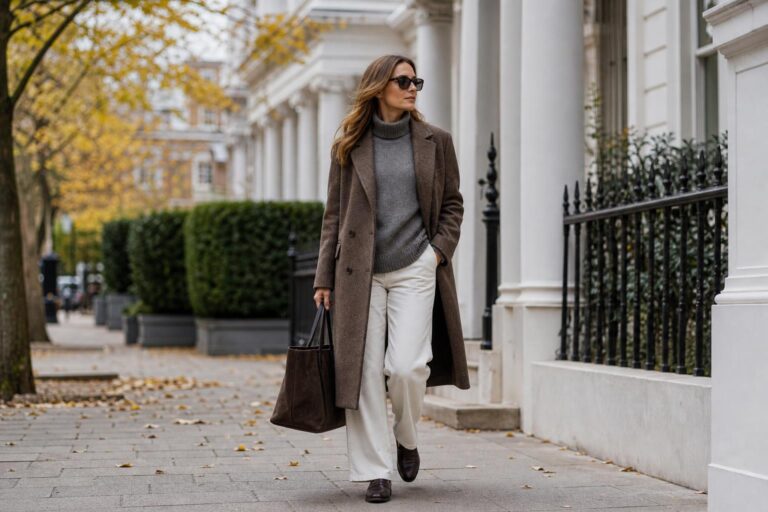
One of the most reliable autumn winter outfits starts with a soft knit and straight or slightly loose trousers, finished with a structured outer layer. The mood is relaxed, but the shape remains controlled. This works especially well for days that include commuting, errands, lunch meetings, or a casual office environment because the outfit can handle movement without losing visual sharpness.
The styling logic is simple: the knit provides comfort and insulation, while the trouser line creates order. A tailored coat or blazer adds a visual anchor at the shoulders, which prevents the softness of the sweater from making the whole outfit look sleepy. If the knit is chunky, keep the trousers more fluid and clean. If the trousers carry more volume, use a finer knit or a slight front tuck to define shape.
Why this outfit works
This combination solves a common seasonal problem: wanting warmth without looking overbuilt. It distributes bulk more intelligently. The top feels cozy, but the lower half stays streamlined enough to preserve proportion. A substantial boot grounds the look and visually connects to the weight of the outer layer, which is why the outfit looks complete rather than top-heavy.
Quick styling adjustment
If the look starts to feel too casual, replace a slouchy knit with one that has clearer shoulder definition or a shorter hem. If it feels too severe, soften it with a scarf in a related tone rather than introducing a disconnected accent color.
Lightweight styling for unpredictable weather
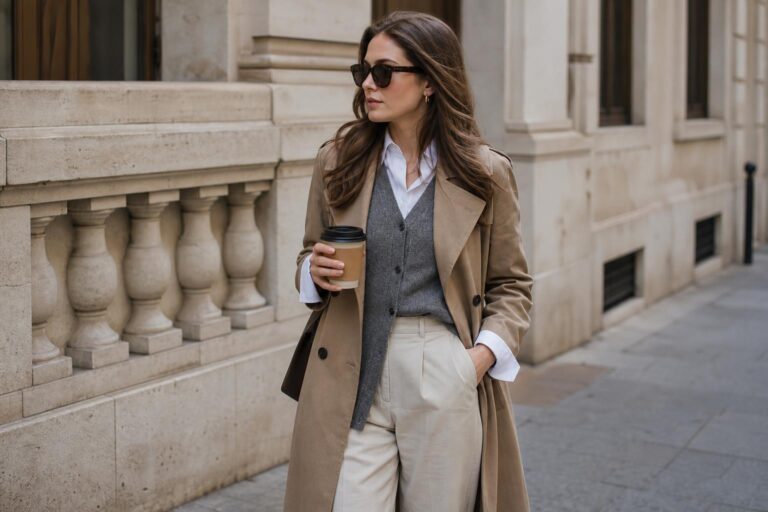
The hardest transitional weeks call for outfit composition rather than heavy insulation. A lighter base, a medium-weight layer, and outerwear that can open or come off easily tend to outperform thick all-at-once dressing. This kind of autumn winter outfit is especially useful when mornings are cold, afternoons are milder, and indoor temperatures are difficult to predict.
The key here is using layers with different thermal roles. The base should be comfortable enough to stand on its own. The middle layer should add warmth without stiffness. The outer layer should protect against wind and create the finished silhouette. When all three pieces are doing separate jobs, you gain flexibility without sacrificing style.
Visually, this outfit works best when the layers remain distinct but harmonious. Tonal layering is especially effective because it makes removal easier. Taking off one layer does not break the outfit if the palette still holds together. This is a smart approach for long days that move between indoors and outdoors.
Fabric insight
In transitional cold weather, stiffness often creates more discomfort than lack of warmth. Layers that trap heat but restrict movement become tiring quickly. Softer fabrics with moderate weight tend to work better because they adapt to sitting, walking, and carrying outerwear once the temperature changes.

Comfortable city outfits with structure
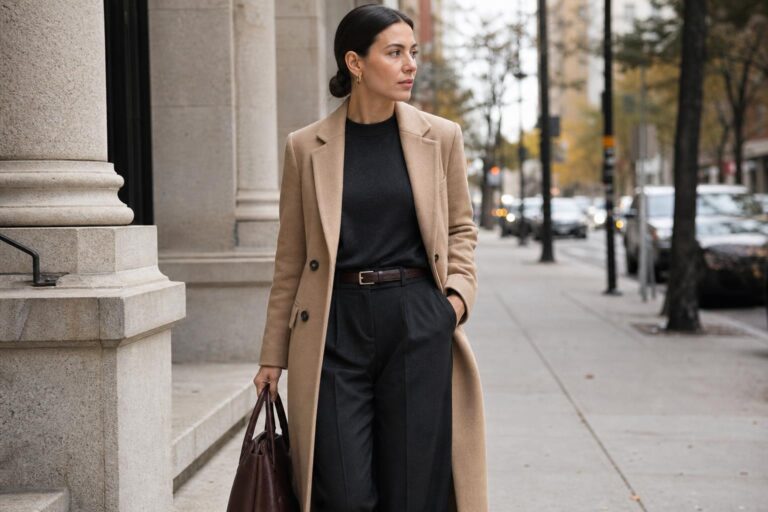
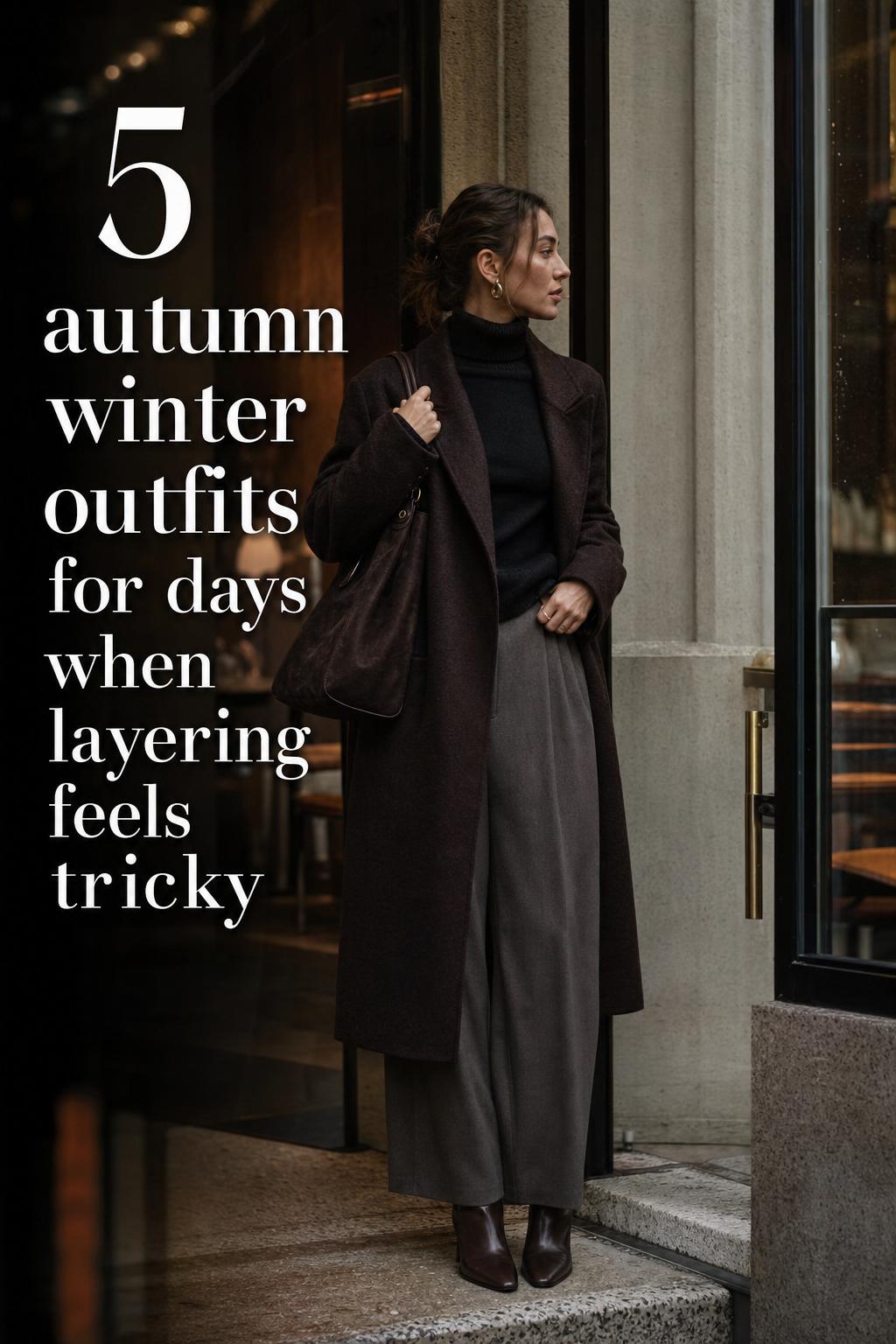
City dressing in autumn and winter demands more from an outfit. You need practicality for walking, public transit, changing pavements, and long hours out of the house, but the look still needs shape. The strongest solution is usually a structured outer layer over an easy base, combined with shoes that can handle distance and weather without visually dragging the outfit down.
This is where visual anchors matter most. In a city outfit, the coat, shoes, and bag do a lot of work. They create the framework around simpler interior layers. That means your knitwear, top, or trousers can stay relatively uncomplicated while the overall composition still reads as intentional.
A practical cold-weather city look often succeeds because of restraint. Too many statement pieces compete with each other and make layering feel cumbersome. A better approach is one statement element, one clean supporting shape, and one comfort-first element that does not look accidental.
Best shoe pairing
Footwear should match the visual density of the outfit. If the coat is long or substantial, delicate shoes can make the proportions feel unstable. A more grounded shoe profile usually works better and supports all-day wear. This matters not just for style balance but for real movement, especially in cold conditions.
Elevated casual looks that stay practical
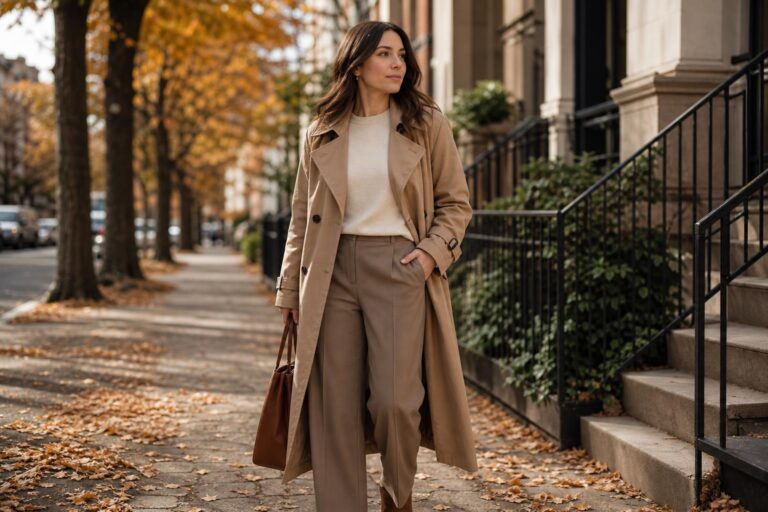
Casual dressing is where many autumn winter outfits lose clarity. Comfort becomes the priority, and the result can drift into layers that feel heavy, repetitive, or too informal once you step into a restaurant, office, or social setting. The fix is not dressing up more. It is introducing one elevated element that changes the entire outfit composition.
That elevated element could be a cleaner coat line, a more refined trouser shape, or a sharper bag and shoe combination. The point is to give the eye one polished reference point. Once that is in place, softer pieces like knitwear or easy separates feel intentional rather than lazy.
This kind of look is useful for weekends, travel days, casual dinners, or work-from-anywhere routines. It recognizes that comfort is non-negotiable in cold weather, but it refuses the idea that comfort must come at the expense of shape and finish.
Easy ways to recreate the look
- Keep the palette narrow so relaxed pieces look cohesive.
- Use one structured layer to frame softer textures.
- Choose a bag with enough function for daily use but a clean silhouette.
- Let shoes and outerwear carry most of the visual weight.
Soft layering without added bulk
Many people assume warmth requires thickness, but bulk is often a styling problem rather than a weather requirement. Some of the best autumn winter outfits rely on softer layering that keeps the body comfortable while maintaining a clean line. This is particularly helpful for anyone who feels overwhelmed by heavy coats, thick sleeves, or bulky combinations that limit movement.
The principle is to build warmth through controlled layers rather than one oversized mass. A close, comfortable base under a knit or light outer layer usually feels better than doubling up on large pieces. This reduces bunching at the arms, strain at the shoulders, and the boxed-in feeling that often makes winter clothing tiring to wear.
From a silhouette perspective, soft layering works because it allows the body’s shape to remain visible. The outfit still has ease, but not blur. That distinction is important. Ease looks modern and wearable. Blur often looks accidental.
Common comfort mistake
One frequent issue is wearing a thick knit under a coat that was only cut for lighter layers. The result is restricted arms, overheating, and a distorted shoulder line. A better solution is reducing one layer’s bulk and letting the outerwear keep its intended structure.
How to make a simple outfit feel visually complete
Cold-season dressing does not need a long list of pieces to feel considered. What it needs is cohesion. A simple combination can feel far more polished than a complicated one if the proportions align and each item supports the same mood. This is where outfit composition becomes more useful than trend-chasing.
Start by identifying the visual anchor. In some outfits, it is the coat. In others, it is the boots, the trouser line, or a knit with clear texture. Then build around that anchor with supporting elements that do not fight it. If the anchor is strong and the palette is controlled, the outfit will feel finished even when the ingredients are basic.
Most versatile piece
The most versatile item in cold-weather dressing is often the layer that works both indoors and outdoors. Pieces with that dual role reduce the need for total outfit changes and make daily dressing far more flexible. They also improve cost-per-wear because they support multiple outfit directions across the season.
Balancing aesthetics with function in daily routines
The difference between an aspirational outfit and a wearable one usually appears around hour three. That is when the bag becomes too small, the shoes become impractical, the coat starts pulling at the sleeves, or the scarf overwhelms the neckline. Good autumn winter outfits are designed for duration. They account for movement, indoor heating, outerwear storage, and the fact that most people are not standing still in picturesque weather all day.
Functional styling does not mean utilitarian styling. It means every visible choice earns its place. A bag should support the routine. A scarf should add warmth without swallowing the collar line. Footwear should work with the pace of the day. Outerwear should allow the layers beneath to function. Once these decisions align, the outfit stops feeling fragile.
Tips for real-life wearability
- Dress for the longest part of your day, not just the coldest moment.
- If you will remove your coat often, make sure the indoor layer has enough structure.
- Use accessories to fine-tune warmth rather than adding unnecessary extra garments.
- Keep one outfit formula for busy mornings and vary it through texture or color.
Common styling traps in autumn and winter
Cold-weather outfits often go wrong in predictable ways. The first is over-layering, where every piece adds warmth but none contributes shape. The result is discomfort, overheating, and a silhouette with no focal point. The second is ignoring footwear scale. Heavy coats paired with shoes that feel too slight can make the entire outfit look unresolved. The third is relying on trend pieces that do not suit the routine, which usually means the outfit looks good for a moment but fails through a full day of wear.
Another common mistake is building the outfit from the outside in. If the coat is the only strong piece, everything collapses once it comes off. The better strategy is to create a complete indoor outfit first, then add weather protection in a way that supports the existing proportions.
There is also a palette trap. In colder months, many wardrobes swing between all-dark outfits with no texture variation and busy layered combinations with no harmony. A more effective route is controlled contrast: related tones, one clear accent if needed, and texture doing part of the visual work.
Adapting autumn winter outfits to different body types and lifestyles
No single outfit formula works identically for everyone because proportions, comfort preferences, and routines vary. What matters is understanding the styling logic well enough to adapt it. If you prefer more shape, define the waist through garment choice or proportion rather than adding fussy extras. If you prefer looser fits, keep one line cleaner so the whole look still has direction. If your day involves lots of movement, prioritize layers that can bend, sit, and carry well without wrinkling into stiffness.
Body type adaptation is less about rules and more about line management. A longer outer layer can elongate the silhouette, but only if the pieces beneath do not bunch or cut the body at awkward points. Wide trousers can look elegant in winter, but they usually need enough shoe presence to hold the hem visually. Chunky knits can be flattering, but they are easier to wear when one adjacent piece provides definition.
Lifestyle matters just as much. An office routine needs outfits that transition well when outerwear is removed. A city-based day may require stronger shoes and weather-minded accessories. A more casual schedule may benefit from soft, repeatable formulas that still look polished with one tailored element added.
Budget-friendly alternative
You do not need an entirely new cold-weather wardrobe to dress well. The most effective update is usually refining what you already own into better combinations. Focus first on fit, layering order, and one strong outer layer or shoe option that improves multiple looks at once.
A smarter way to build repeatable cold-season formulas
Repeatable outfit formulas are useful not because they are boring, but because they reduce decision fatigue while improving consistency. In autumn and winter, this is especially valuable. When the weather is demanding, a dependable formula helps you get dressed faster without sacrificing style quality.
A strong formula has a stable base and flexible accents. For example, the same silhouette can shift mood through color balancing, texture contrast, or outerwear changes. This keeps the wardrobe functional while still allowing variation. It also helps avoid impulse choices that look appealing in isolation but do not integrate with the rest of the season.
The best formulas tend to share a few traits: clear proportion, one visual anchor, practical shoes, and enough adaptability for changing temperatures. Once you identify those traits in your own wardrobe, autumn winter outfits become less about searching for inspiration and more about refining combinations that already work.
Tips for refining your formula
- Photograph the outfits that feel easiest and look most balanced.
- Notice whether the success comes from coat length, shoe shape, or knit proportion.
- Repeat the silhouette before buying more statement items.
- Edit out pieces that create friction with layering or movement.
When an outfit feels off, these are usually the reasons
If a cold-weather outfit looks right in theory but feels wrong on the body, the issue usually comes from proportion mismatch, uneven visual weight, or poor layer function. A long coat over an oversized knit and wide trousers can be beautiful, but if all three pieces carry similar volume, the outfit loses shape. A slim look with no texture contrast can feel flat. A practical boot with the wrong hem width can interrupt the line of the leg.
Fixing the problem rarely requires replacing the whole outfit. Often the solution is one adjustment: changing the shoe profile, reducing bulk in the upper half, switching to a cleaner base layer, or tightening the color story. This is why analytical styling is so useful in winter. Small changes have a large effect because the wardrobe pieces are heavier and more visually present.
Closing perspective
The best autumn winter outfits are not the most layered or the most dramatic. They are the ones that understand real life: shifting weather, long days, changing temperatures, movement, and the need to feel put together without feeling trapped in your clothes. Once you focus on silhouette balance, texture contrast, practical footwear, and adaptable layering, cold-season dressing becomes more efficient and much more satisfying.
Use these principles as a framework rather than a formula you must copy exactly. The strongest outfits usually come from refining what already suits your routine, your proportions, and your comfort threshold. When the outfit works both visually and practically, confidence follows naturally.
FAQ
How do I make autumn winter outfits look stylish without looking bulky?
Focus on proportion rather than adding more layers. Use one structured piece such as a tailored coat or clean trouser shape to offset softer knit textures, and avoid stacking multiple oversized garments in the same outfit. Keeping at least one line defined helps the outfit feel intentional and balanced.
What is the easiest formula for everyday autumn and winter dressing?
A reliable formula is an indoor-ready base, one warm but removable layer, and outerwear that matches the visual weight of your shoes. This works because it keeps the outfit functional across changing temperatures while still looking complete when the coat comes off.
How can I dress for cold weather when the temperature changes throughout the day?
Use layers with separate jobs instead of one very heavy outfit. Build around a comfortable base layer, add moderate insulation through a knit or similar piece, and finish with outerwear that can open or come off easily. Tonal layering also helps because the outfit stays cohesive even when one layer is removed.
Which shoes work best with autumn winter outfits?
The best shoes are the ones that support both the outfit’s visual weight and your actual routine. In colder months, footwear usually needs enough presence to balance coats, knitwear, and heavier fabrics while still being practical for walking, commuting, and extended wear.
How do I make casual autumn winter outfits look more elevated?
Add one polished element that gives the look a clear reference point. That might be a sharper outer layer, a more refined trouser shape, or a cleaner bag-and-shoe combination. Once one part of the outfit feels elevated, the rest can stay comfortable without looking unfinished.
Why do some winter outfits feel uncomfortable even when they look good?
They often fail because the layering is working against movement. Thick knits under restrictive coats, mismatched sleeve volume, and shoes that do not suit the day’s demands all create discomfort. An outfit needs to account for sitting, walking, carrying layers, and indoor heat, not just appearance.
Can I create better autumn winter outfits without buying new clothes?
Yes. The most effective improvement usually comes from better outfit composition, not more pieces. Rework what you already own by refining proportions, simplifying the color story, and pairing soft items with one structured element that gives the look shape.
How do I choose layers that work for both indoors and outdoors?
Choose an indoor base that looks complete on its own, then add warmth in a layer that can be removed without collapsing the outfit. This is more practical than relying on a coat to do all the visual work and makes the outfit easier to wear across different settings.
What is the biggest mistake people make with autumn winter outfits?
The biggest mistake is treating warmth as a matter of adding more rather than dressing more intelligently. Over-layering, ignoring shoe scale, and building the entire look around the coat often lead to outfits that feel heavy, awkward, or incomplete once real life begins.