Plus Size Summer Outfits: 12 Current Ways to Dress
Summer style is moving toward clothes that look intentional without feeling overworked. That shift is especially useful when you are building plus size summer outfits, because the best look is not simply the one that photographs well. It is the one that lets you move, sit, stay cool, and feel like yourself for the entire day.
The current approach is less about hiding and more about choosing proportion, fabric, and detail with purpose. A breezy midi dress can be as polished as tailored trousers. A pair of shorts can be the foundation of a confident outfit when the rise and hem feel right. Below are 12 wearable ideas, plus a simple way to adapt each one for heat, coverage, work, travel, or a summer event.
1. The summer ideas worth carrying into a plus-size wardrobe
The most useful summer trends are not the ones that demand a complete wardrobe reset. They are small shifts that make familiar pieces feel fresh. This season, that can mean a longer short instead of a very short hem, a fluid matching set instead of a complicated outfit, or a saturated color worn with calm neutrals. These ideas work across personal styles because they change the styling language, not the person wearing the clothes.
Start with fabric before color. Cotton poplin, linen blends, rayon, Tencel, seersucker, and lightweight crinkle gauze can all feel different against the skin, so check the actual fiber content and the amount of ease in the garment. A loose cut is not automatically cool if the fabric is heavy or synthetic. Likewise, a fitted piece can work in warm weather when it is made from a breathable knit and paired with an open layer.
Found the dress? Keep the rest in one place.
Zarellea brings guest details, vendors, timelines, and every next step together — so your wedding plan feels as good as your look.
2. Outfit formulas for the hottest days
When temperatures rise, a good formula reduces the number of decisions you need to make. The goal is not to wear as little as possible. The goal is to create airflow, keep the outfit from clinging in uncomfortable places, and give the eye a clear shape. These formulas are flexible enough to adjust for your preferred level of coverage.
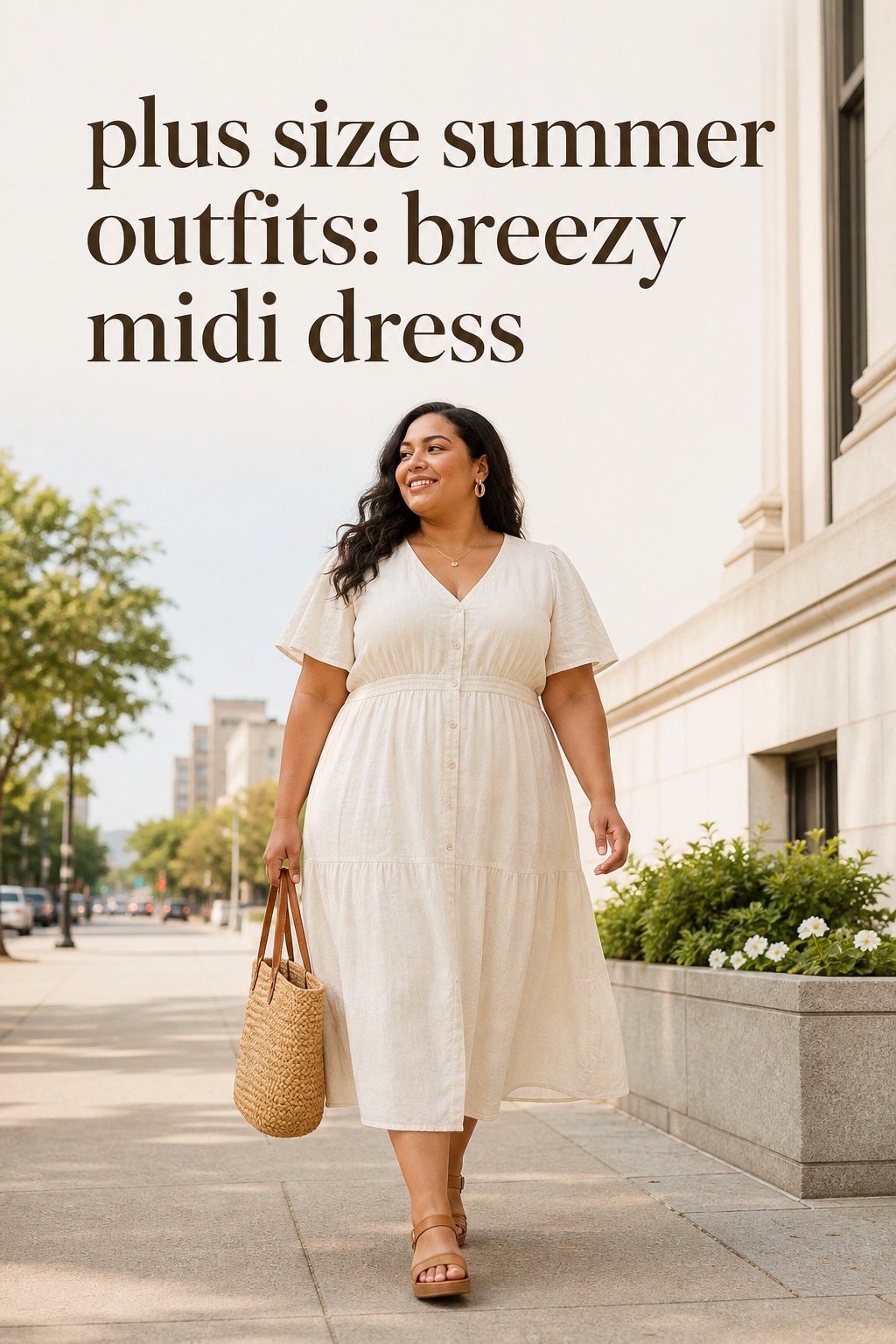
1. A breezy midi dress with practical sandals
Choose a midi dress with a defined shoulder, a comfortable bust, and a skirt that moves away from the body rather than wrapping tightly around it. A square, V, or soft scoop neckline can create visual structure without requiring shapewear. Add flat leather sandals, a woven tote, and small earrings for an easy daytime outfit. If the dress is sleeveless and you prefer more coverage, carry a cropped linen shirt and wear it open rather than adding a tight cardigan.
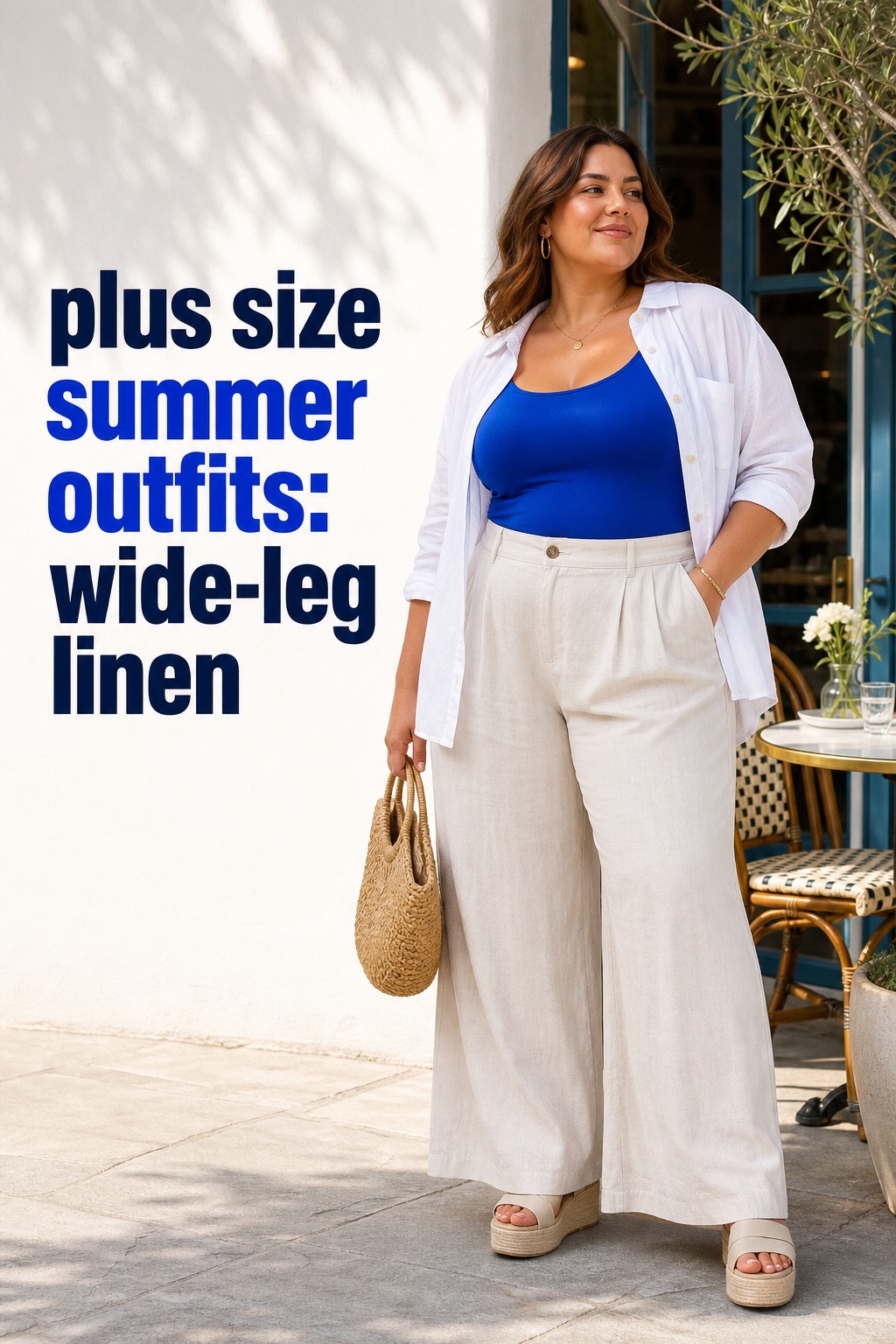
2. Wide-leg pants with a fitted tank and open shirt
Wide-leg pants are one of the most reliable warm-weather shapes because they create space around the legs. Look for a waistband that lies flat without digging in, and check that the fabric is opaque when you sit down. Pair them with a close-fitting tank or a bodysuit, then add an unbuttoned cotton shirt. The contrast between a defined base and a fluid top layer keeps the look balanced. Finish with platform sandals or a low-profile sneaker.
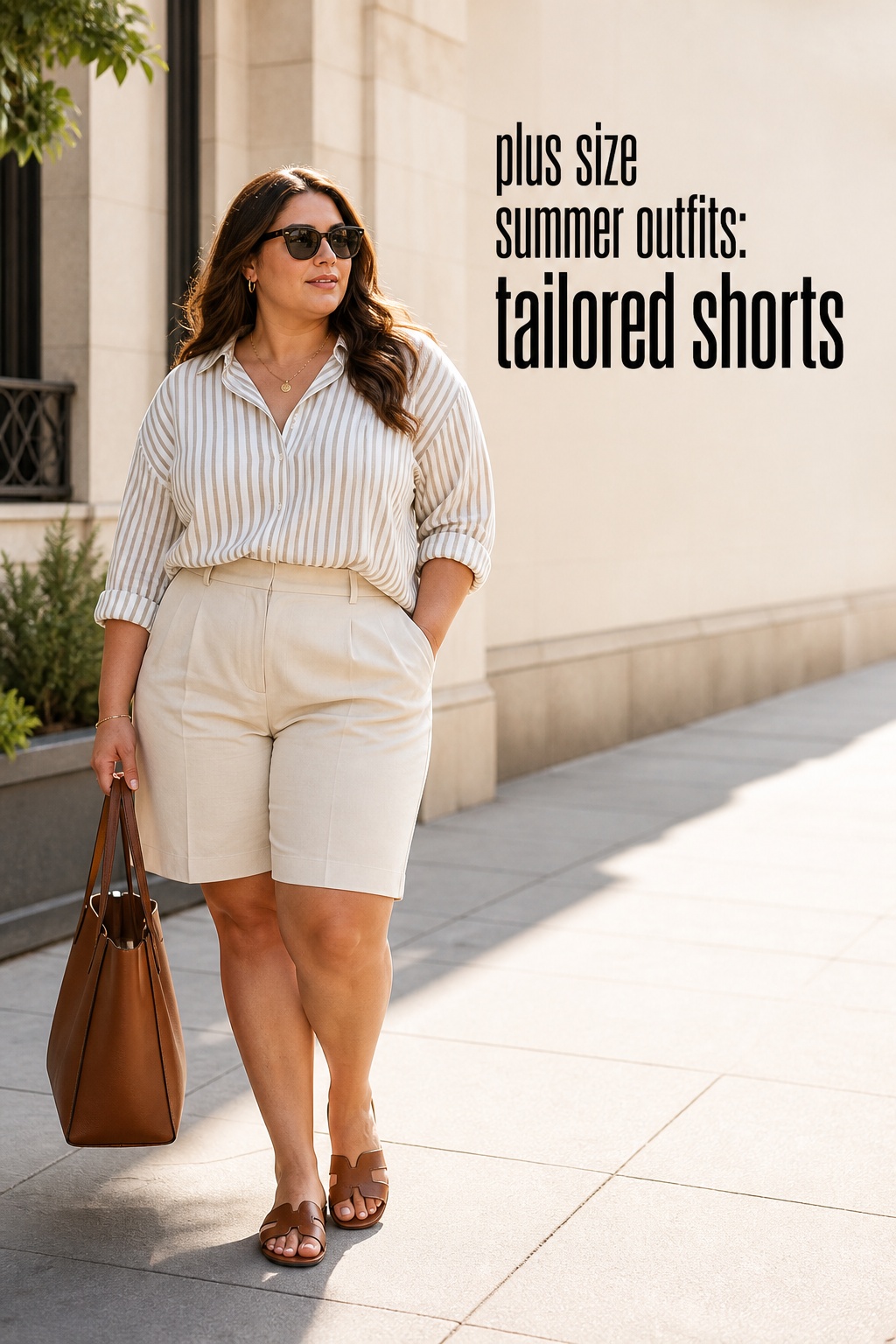
3. Tailored longer shorts with a relaxed button-down
Longer shorts are a strong way to make a shorts outfit feel current while keeping more coverage through the upper thigh. Try a mid- or high-rise pair with a clean front, a generous leg opening, and pockets that do not pull the fabric sideways. Tuck in a cotton button-down loosely, roll the sleeves, and add a belt if the waistband is designed for one. Sleek sandals and a structured bag make the formula feel polished enough for lunch or casual travel.
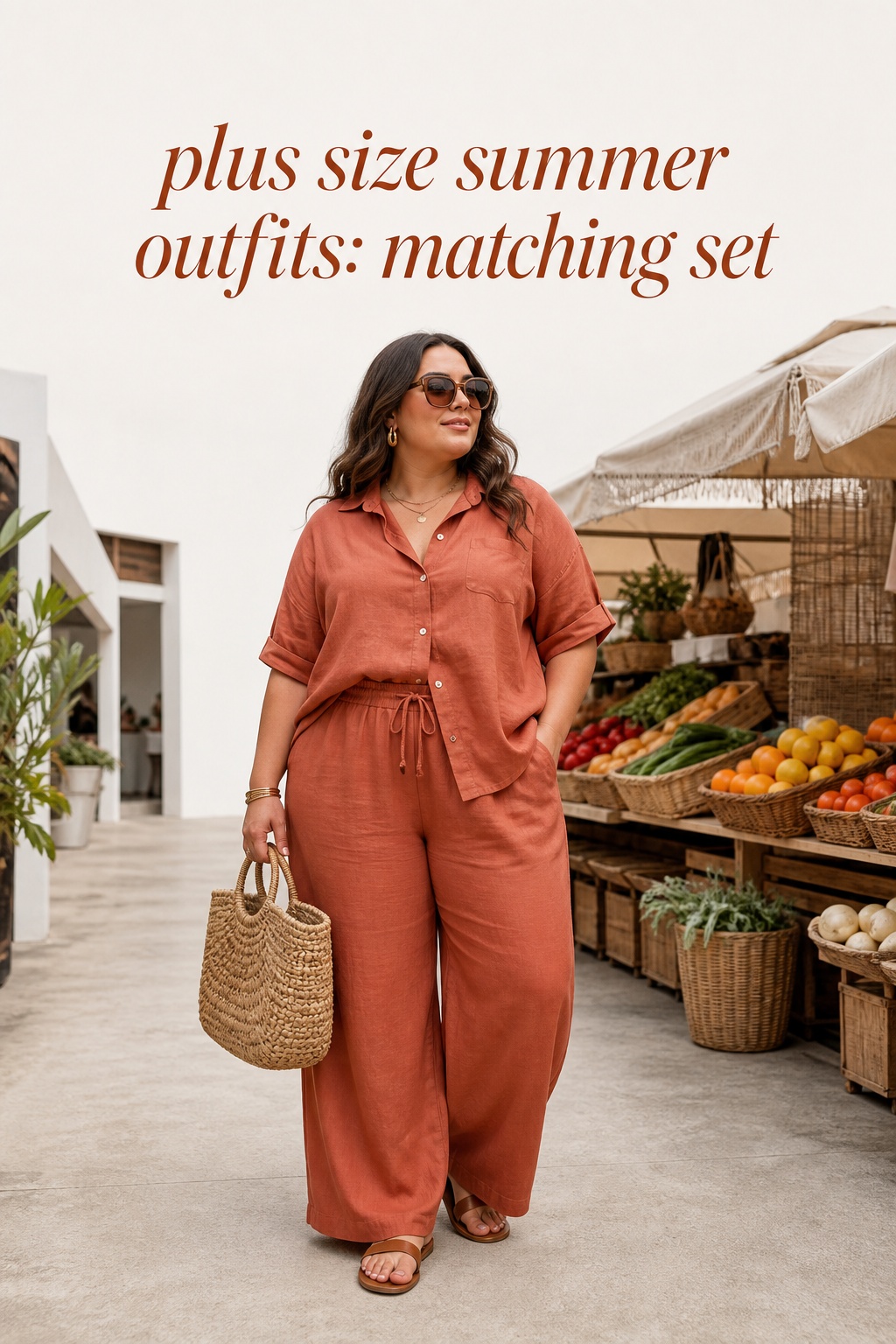
4. A matching set with one contrasting accessory
A matching top and bottom set solves the color-matching problem before you start. A linen-blend shirt with pull-on pants, a knit tank with a midi skirt, or a short-sleeve top with relaxed shorts can all work. Keep the base in one color, then introduce contrast through a striped bag, bright sandals, or statement sunglasses. Wear the pieces together on a very hot day and split them up later with denim, black trousers, or a simple white tee.
3. Outfit formulas for work, weekends, and summer events
The best plus size summer outfits are not isolated inspirations. They are useful answers to the situations that fill a real calendar. A work outfit needs enough structure to look deliberate. A weekend look needs movement and comfort. An event outfit may need polish, but it should still allow you to walk, eat, and stay outside without constant adjustment.
5. A monochrome column with a light blazer
For a simple work formula, build a column in navy, black, espresso, cream, or a soft olive. Try a knit top with straight-leg trousers, or a shell with an ankle-length skirt. Add a lightweight blazer in a related shade rather than a sharp contrast. This creates a long visual line while giving the outfit enough authority for meetings. Choose a breathable lining or an unlined blazer, and make sure the sleeves allow you to move your arms comfortably.
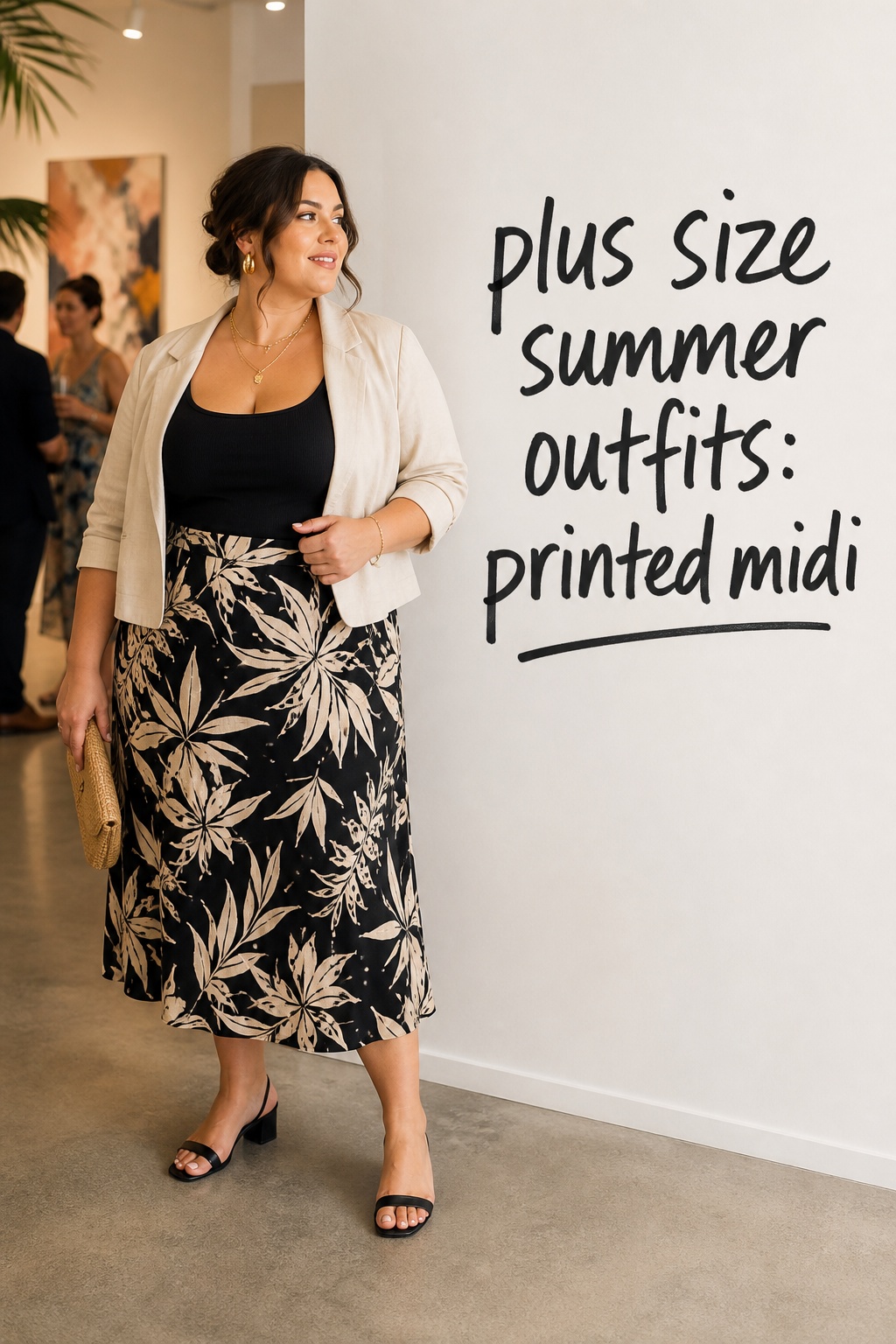
6. A printed skirt with a quiet solid top
Print is a quick way to make a summer outfit feel expressive. If you like florals, stripes, dots, or abstract patterns, let the skirt do most of the work. Pair it with a solid tank, knit tee, or short-sleeve blouse in one of the print’s quieter colors. A tucked top defines the waist, while a half tuck offers a more relaxed line. Add a small shoulder bag and sandals that echo the base color instead of competing with the print.
7. A polished jumpsuit with a cropped layer
A jumpsuit can take the place of a dress when you want a little more coverage or prefer trousers. Pay attention to the rise, torso length, and closure before focusing on the color. A wrap front, adjustable waist, or elastic back can make the fit easier to personalize. Add a cropped denim jacket, short cardigan, or lightweight utility jacket so the layer ends near the waist instead of cutting across the widest part of the hip. Low wedges or block-heel sandals are practical for events.
8. A relaxed denim look with a statement top
Denim can work in summer when the weight and silhouette are right. Choose a lighter wash, a relaxed straight leg, or a soft wide leg, then balance it with a top that has one memorable detail. That could be a bright color, a sculptural sleeve, a tie neckline, or a subtle texture. Keep the accessories simple so the top remains the focus. If the day is hot, switch full-length denim for a denim midi skirt or a lightweight chambray version.
4. How to make the looks feel current without sacrificing comfort
Trend awareness is useful when it gives you more options, not when it creates a list of rules. To update an outfit, change one proportion, one color, or one accessory. Try a longer short with a tucked tee, a bold color with tan accessories, or a simple dress with a modern flat shoe. Small updates often feel more natural than wearing every new idea in the same look.
Fit is also more than a size number. Check where a shoulder seam lands, whether a sleeve gives your upper arm enough room, whether a waistband stays in place when you sit, and whether the fabric pulls across the fullest part of the bust or hip. If a garment fits in most places but needs one adjustment, tailoring may be more useful than sizing up. A hem, strap, or waist alteration can change how often you wear the piece.
Use layers that can leave the outfit
Summer layering should be optional. An open shirt, cropped jacket, or light scarf can help with air conditioning and evening shade, but the base outfit should still work without it. Pack layers that fold easily and do not add much weight. A white or blue cotton shirt is especially useful because it can cover the shoulders, create a vertical line, or make a dress feel more casual.
Build in movement and support
Movement is part of style. Test an outfit by sitting, reaching, walking up stairs, and carrying the bag you plan to use. If you wear shorts, skirts, or dresses, anti-chafing shorts can make the day more comfortable without changing the visible outfit. For dresses and jumpsuits, look for a bra-friendly back, adjustable straps, and enough room through the bust. Comfort details are not an afterthought. They determine whether a look earns a repeat wear.
Shop the gaps in your existing wardrobe
Before buying a new trend piece, identify the gap that makes your current clothes harder to wear. Maybe you need a supportive sandal, a top that works with three bottoms, or a light layer for cold restaurants. A small gap-filling purchase can create more outfits than another statement dress. Aim for pieces that connect at least three existing items, then note which combinations work before shopping again.
A useful summer capsule might include one easy dress, one printed or colored dress, wide-leg trousers, longer shorts, a midi skirt, two tanks, one polished blouse, an open cotton shirt, comfortable sandals, and a sneaker or low wedge. You do not need exactly these items, but the principle is worth keeping: combine a few strong foundations with a few pieces that express your mood.
The most current look is often the one that feels personal and repeatable. Wear the color you usually save for special occasions. Let your arms, legs, or shoulders be visible if you want them to be. Choose coverage when it helps you feel comfortable, not because a fashion rule says you should. Plus size summer outfits work best when they support the life you are actually living.
FAQ
What fabrics work best for plus size summer outfits?
Look for breathable cotton, linen blends, Tencel, rayon, seersucker, and lightweight gauze. Fabric weight and weave matter as much as the fiber label. Choose pieces that allow air to move and avoid anything that feels clingy or heavy before you have worn it for a few minutes.
Can plus-size women wear shorts in summer?
Absolutely. Start with the rise, leg opening, and length that feel best to you. Longer tailored shorts, relaxed denim shorts, and soft pull-on styles can all be excellent. Anti-chafing shorts underneath are an optional comfort layer, not a requirement.
How can I stay cool while wearing a summer dress?
Choose a breathable fabric, a shape with airflow, and a neckline or sleeve length that feels comfortable. A midi or maxi dress does not have to be hot when it is cut away from the legs and made from a light fabric. Add flat sandals and carry a layer instead of wearing one all day.
How do I make a plus-size summer outfit look more polished?
Use one structured element, such as a belt, blazer, crisp shirt, tailored short, or defined bag. Keep the rest of the outfit simple. Matching the color of your shoes and bag can also make relaxed pieces feel more deliberate.
What should I wear to a summer event?
Try a printed midi dress, a polished jumpsuit, or a monochrome column with a light jacket. Check the invitation, venue, and amount of walking first. Choose supportive shoes, breathable fabric, and a fit that lets you sit and move without constant adjustment.
How can I rewear my summer clothes in different outfits?
Use one piece in at least three settings. Wear a matching-set shirt with shorts or denim, pair a dress with sandals for daytime and a jacket for dinner, or style wide-leg pants with a tank and then a blouse. Changing shoes, jewelry, and the third layer can create a new impression without buying a full new outfit.
Color can do the same kind of work as a trend without making the outfit feel costume-like. If you normally reach for black, navy, or denim, add one clear summer shade such as tomato red, butter yellow, cobalt, or soft green. Keep the silhouette familiar so the color feels easy to wear. A bright blouse with neutral trousers is often more versatile than a full colorful outfit, while a colored sandal or bag can refresh a dress you already own.
Proportion is another quiet update. Pair a fuller bottom with a closer top, or balance a fitted dress with a loose shirt worn open. This is not a rule about what any body should wear. It is simply a way to give the outfit visual rhythm. If you prefer volume everywhere, use similar fabric weights and create definition with a cuff, a necklace, a tucked corner, or a bag that sits near the waist.
Do not overlook footwear. A supportive fisherman sandal, a low block heel, a streamlined sneaker, or a polished flat can change the mood of the same clothing. If you are dressing for a long day, choose shoes you can actually walk in and let the accessories provide the occasion signal. A woven bag and gold hoops make a casual dress feel ready for lunch. A small shoulder bag and a block heel can take the same dress toward dinner.
For travel, think in outfit families instead of isolated outfits. Pack one neutral bottom, one second bottom in a print or color, two breathable tops, one dress, one open layer, and two pairs of shoes. Each item should connect to at least two others. This makes it easier to handle weather changes, laundry gaps, and plans that shift from sightseeing to dinner. A light scarf can add color, protect your shoulders, or work as a wrap when the temperature drops.
Finally, take care with underlayers. A smooth camisole can make a sheer blouse usable, while a supportive bra can change how a neckline sits. Seamless shorts or a slip may help some outfits glide more comfortably, but they should be chosen for your preference rather than as a condition for wearing the clothing. When the foundation is comfortable, you can focus on the interesting parts of the look: the color, texture, shape, and accessories.