Dresses by Fabric: A Wear-Anywhere Guide for Real Life
A dress can look flawless on a hanger and completely fail in real life—clinging where you need glide, overheating you at noon, wrinkling the moment you sit, or turning “effortless” into “fussy” by hour two. That’s not a styling problem you solve with a different neckline. It’s a fabric problem.
This is why shopping and styling “dresses by fabric” is a practical strategy, not a niche fashion detail. Fabric governs drape, structure, breathability, opacity, movement, and how a dress holds up through commuting, meetings, weddings, travel days, and humidity.
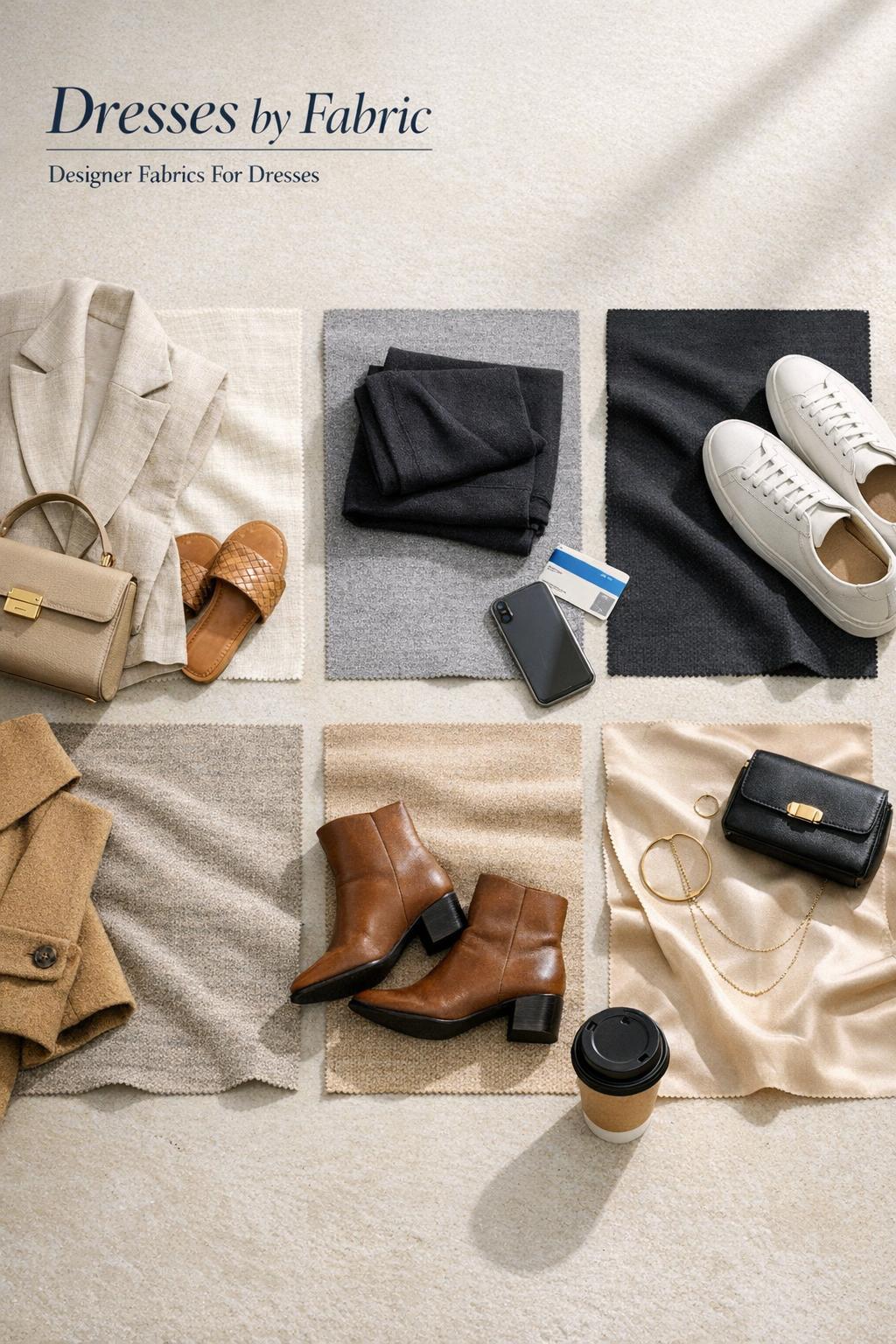
This guide is built to help you make fabric-led decisions quickly: what to choose, what to avoid, and how to style each dress fabric material so you get comfort, polish, and repeat wear. You’ll also see how to use designer fabrics for dresses and still keep the look grounded—think cozy glam, luxurious dresses that don’t feel costume-y, and fabulous dresses that actually function.
Understanding the styling challenge: why the same dress “works” one day and fails the next
Most dress frustration shows up in predictable situations: temperature swings (cold mornings, warm afternoons), long hours of sitting, walking, or standing, and environments where you need to look put-together without babysitting your outfit. The hidden variable is how your fabric reacts to heat, moisture, friction, and gravity.
Found the dress? Keep the rest in one place.
Zarellea brings guest details, vendors, timelines, and every next step together — so your wedding plan feels as good as your look.
A structured dress fabric material can sharpen the silhouette, but it can also restrict movement and highlight creasing. A fluid fabric can feel breathable and elegant, but may cling in humidity or shift into transparency under strong light. Even “easy” fabrics can turn high-maintenance when they wrinkle easily, attract lint, or lose shape by midday.
So the real challenge is balancing three forces at once: comfort (skin feel and airflow), practicality (durability and care), and visual authority (how the fabric reads from a distance). When those three align, you get the holy grail: a dress you reach for repeatedly.
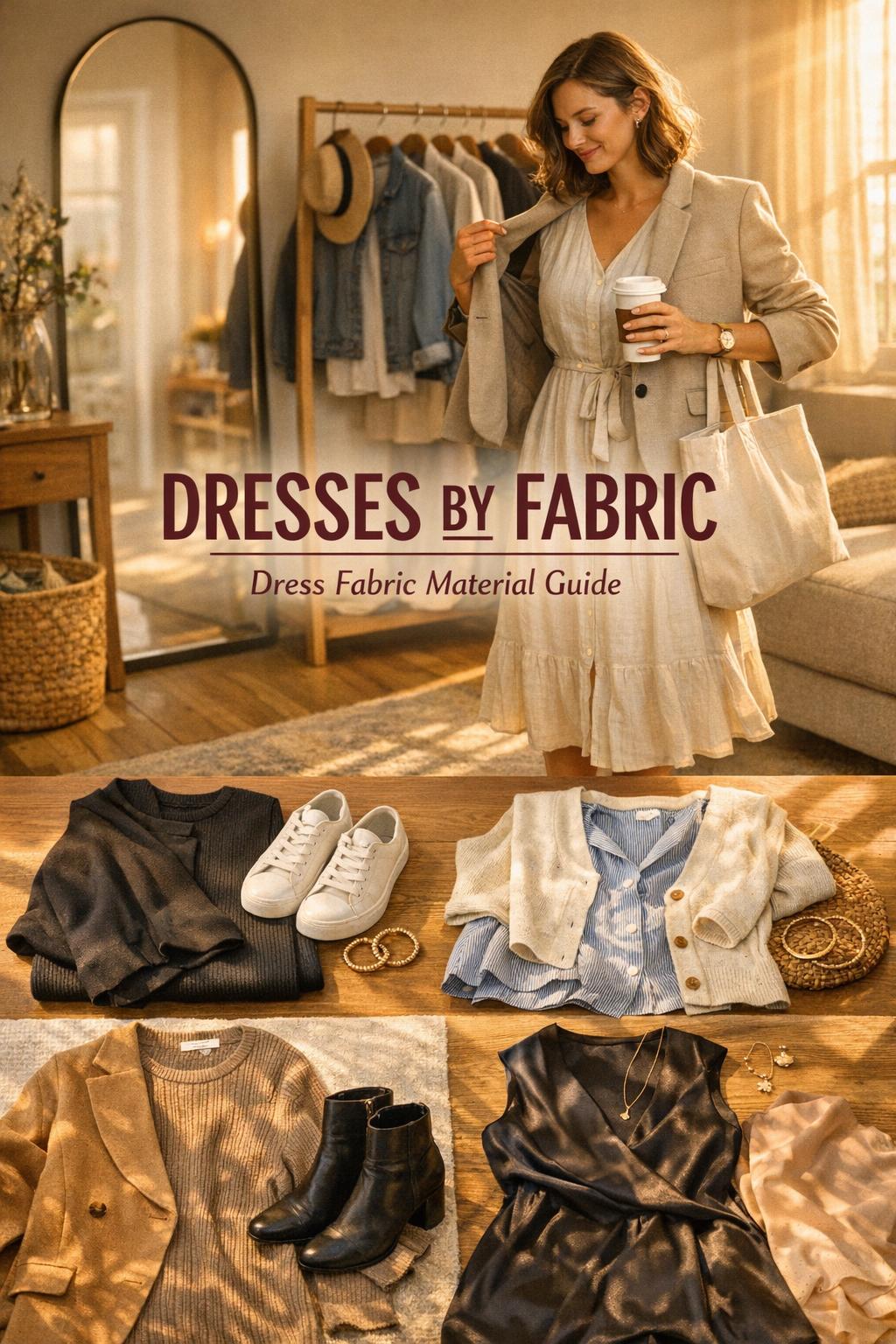
The fabric-first method: key dressing principles that solve most dress problems
Fabric-first styling is a decision framework: start with what the day demands (weather, activity level, formality), then pick a fabric that naturally supports that demand, and only then choose silhouette and styling. This prevents the common cycle of buying a “pretty” dress that never makes it out of the closet.
Principle 1: Match fabric behavior to the occasion’s “stress points”
Every occasion has stress points—wrinkles from sitting, shine from flash photography, sweat risk, wind, or long wear. Your dress should be engineered for those stress points. If you’ll be seated for hours (workday, dinner, travel), prioritize fabrics that resist creasing and recover shape. If you’ll be outdoors, prioritize fabrics that breathe and don’t turn translucent in sunlight.
Principle 2: Use texture contrast as a styling shortcut
Texture contrast is the fastest way to look intentional: pair a smooth, fluid dress with a structured layer, or balance a textured, substantial dress with clean accessories. This is where “cozy glam” becomes wearable—soft textures with one crisp element to keep the silhouette polished.
Principle 3: Let drape determine proportion play
Drape dictates how a dress occupies space around the body. If the fabric is fluid and cling-prone, a more controlled silhouette (strategic seams, a defined waist, or a layer that creates a clean line) reads sharper. If the fabric is structured, you can keep accessories minimal and let the dress be the visual anchor.
Principle 4: Build repeat-wear value with layering compatibility
A dress becomes a workhorse when it layers well. Some fabrics grab onto knits, generate static, or bulk under jackets. Others slide cleanly and keep the outfit composition crisp. When choosing dresses by fabric, think in outfits, not single pieces: can you add a blazer, cardigan, denim jacket, tights, or a coat without the dress collapsing or bunching?
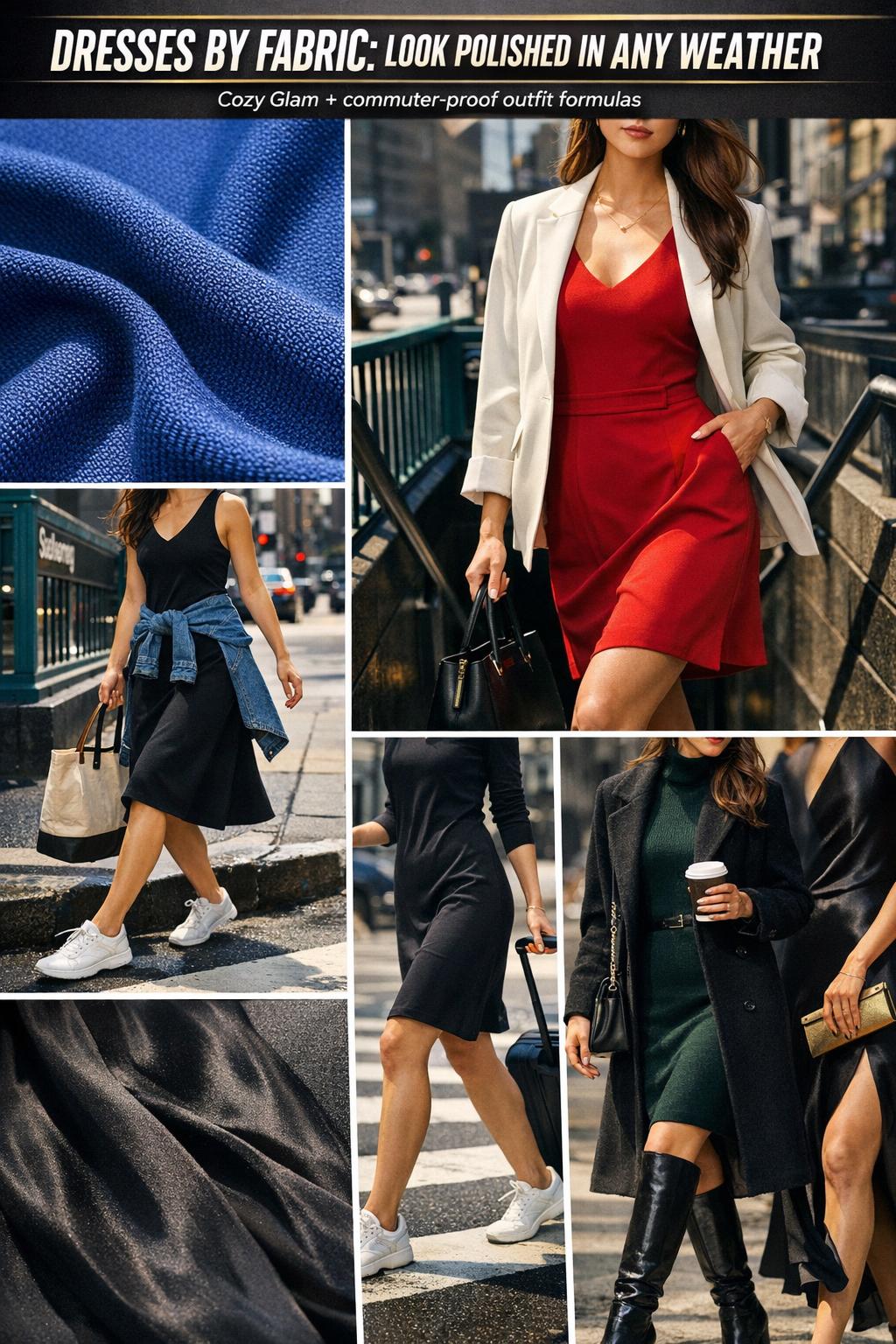
A practical fabric map: how to choose dresses by fabric without overthinking
Instead of chasing abstract categories like “casual” or “dressy,” use a fabric map based on performance and visual effect. This helps you shop smarter—especially when you’re evaluating designer fabrics for dresses where the price often reflects finishing, weave, and drape.
- Breathable & airy: best for heat, walking-heavy days, and outdoor plans; can wrinkle or turn sheer depending on weave.
- Structured & tailored: best for polish, shape, and office-ready authority; can feel less forgiving during long wear.
- Fluid & drapey: best for movement and elegant lines; can cling, show lines, or require more mindful underlayers.
- Stretch & body-skimming: best for comfort and travel; fit and recovery matter to avoid sagging.
- Textured & statement: best for event dressing and “fabulous dresses” moments; may be warmer and less packable.
This map turns fabric into a styling tool. Once you identify which group your dress belongs to, you can predict how it will behave and style it accordingly.
Outfit solutions that start with dress fabric material (and end with a wearable look)
The outfit ideas below are built around real constraints: humidity, air-conditioning, long commutes, unpredictable schedules, and the need to look polished without feeling restricted. Each solution uses fabric logic first, then adds silhouette and styling.
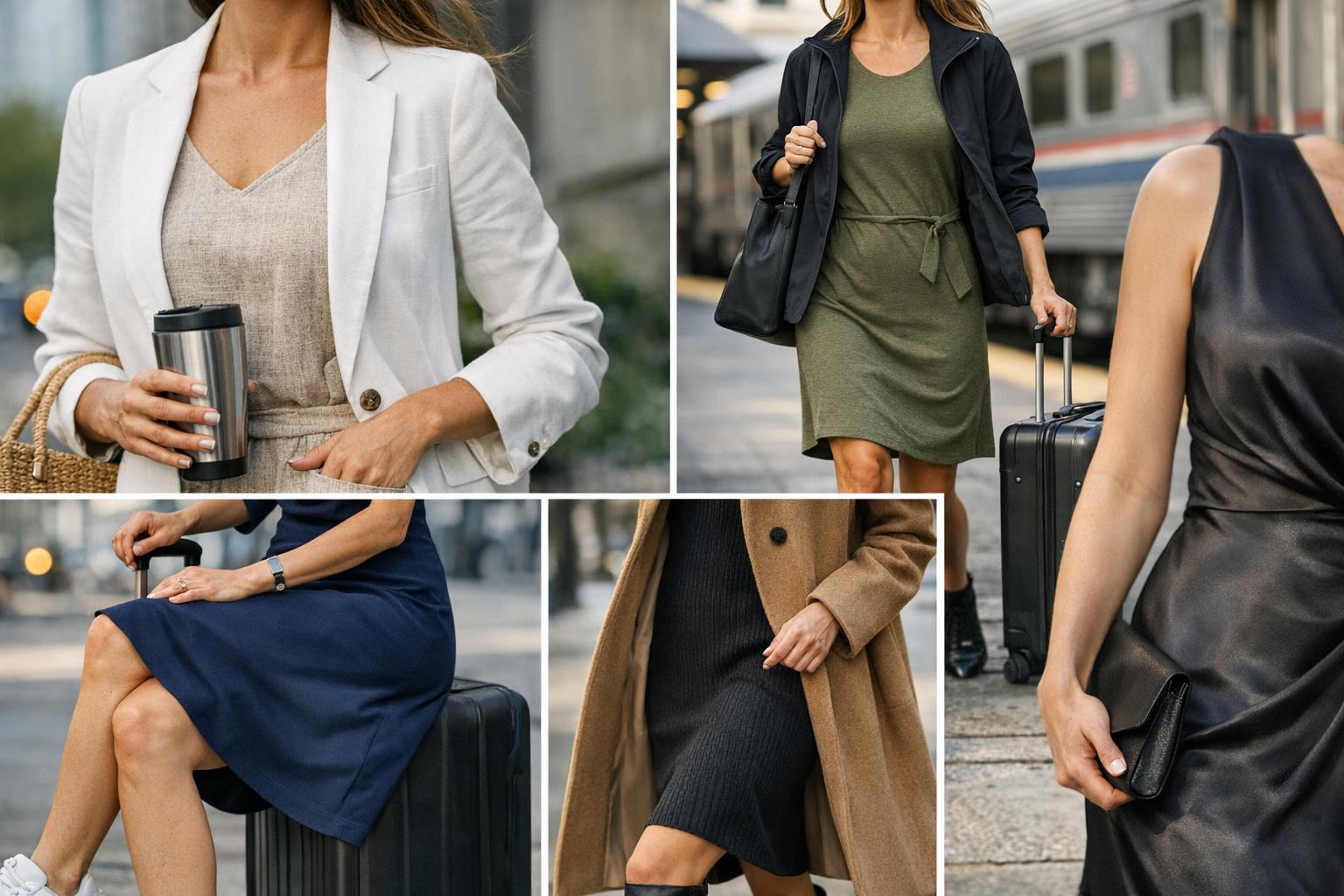
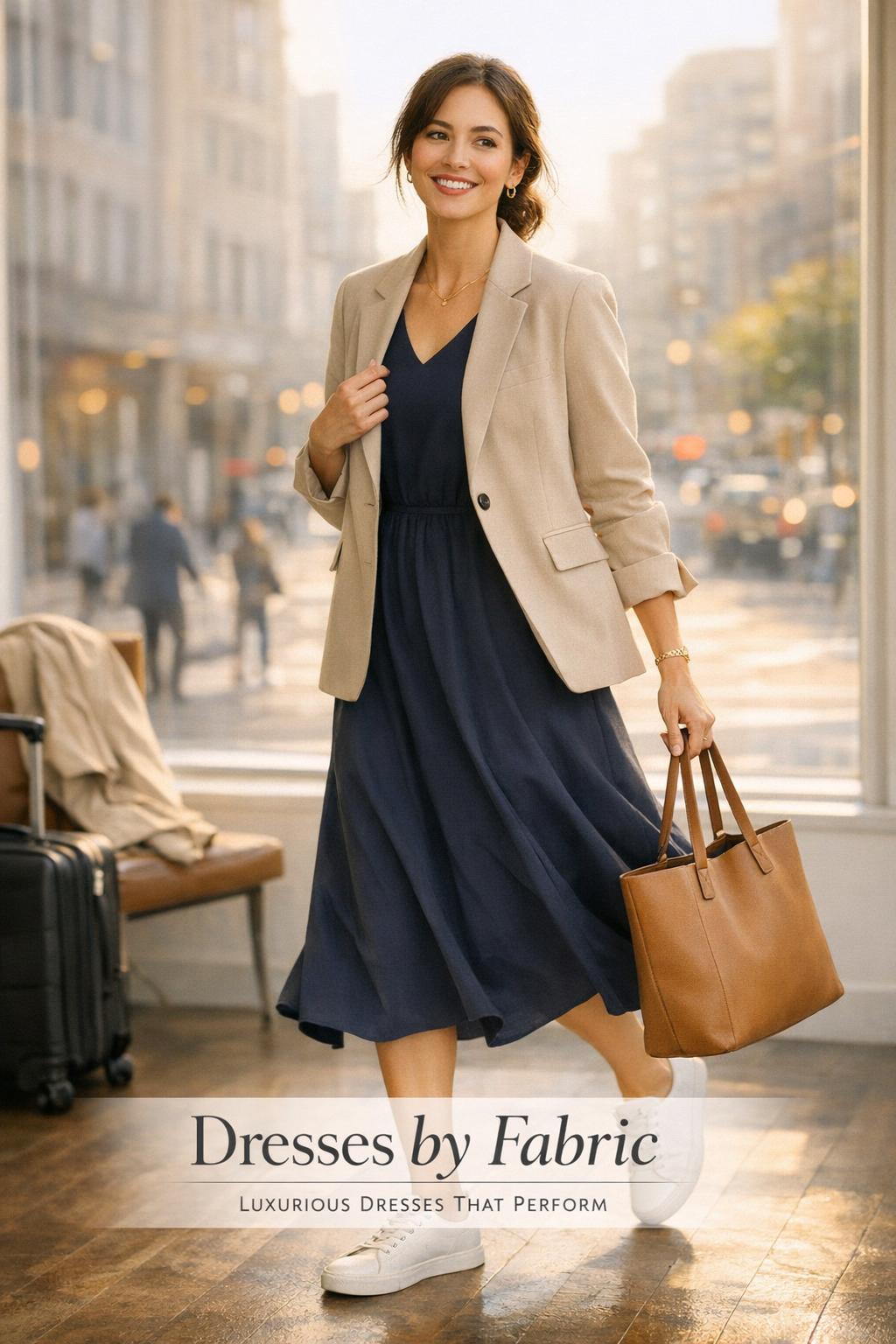
Outfit solution: breathable daytime dress that still looks “finished”
Start with an airy, breathable dress fabric material that doesn’t trap heat—ideal for warm days, outdoor lunches, or walking-heavy errands. The styling risk with breathable fabrics is that they can read too casual or get rumpled quickly. The fix is structure in the supporting pieces.
Style breakdown: a breathable dress as the base layer, a crisp topper (light blazer or structured jacket) as the silhouette balancer, and streamlined shoes to keep the outfit from drifting into “weekend-only.” This combination works because the structured outer layer acts as a visual frame, while the dress does the comfort work underneath.
When to wear it: warm-weather office days with a casual dress code, daytime events, city exploring, and any schedule where you’ll go from sun to shade repeatedly.
Outfit solution: temperature-swing commuter formula (cool morning, warm afternoon)
Temperature swings punish the wrong fabric—especially anything that traps heat or shows sweat quickly. The smartest move is a dress fabric material with balanced weight (not too sheer, not too heavy) and a layer that you can add or remove without wrecking the outfit composition.
Why this works: the dress does the core styling, while the removable layer manages comfort. The goal is a clean line whether the layer is on or off, so the dress should look complete on its own (finished neckline, confident hem length, and a silhouette that doesn’t require a jacket to make sense).
Practical detail: if your dress fabric is clingy, choose a smoother outer layer that won’t create friction or bunching. If your dress fabric is structured, go softer on the layer so the outfit doesn’t feel rigid from head to toe.
Outfit solution: wrinkle-resistant travel dress that photographs well
Travel days demand fabric discipline. Your dress will be crushed in a seat, brushed by bags, and expected to look presentable in harsh airport lighting. A travel-ready dress fabric material should bounce back after sitting and maintain a tidy surface texture.
Style breakdown: a clean, minimal dress silhouette in a resilient fabric, paired with a sleek sneaker or flat for walking endurance. Add a mid-weight layer that can double as a blanket substitute and an outfit “finisher.” This is where cozy glam becomes functional: a soft layer provides comfort, while a streamlined dress keeps you visually composed.
Visual logic: travel outfits look best when they have one controlled line. If the dress is relaxed, keep footwear and bag structured. If the dress is structured, soften with a more relaxed outer layer to avoid looking overly formal in a casual environment.
Outfit solution: “cozy glam” cold-weather dress that doesn’t feel bulky
Cold-weather dressing often creates a bulk problem: warm layers can swallow shape, and thick fabrics can restrict movement. Cozy glam solves this by pairing a warmth-forward fabric with a sleek silhouette and strategic texture contrast.
Why this works: a warmer dress fabric material provides insulation, while cleaner lines keep the silhouette intentional. Add one statement element—either a polished boot, a structured coat, or a refined bag—to elevate the softness into “luxurious dresses” territory without adding visual noise.
When to wear it: dinner reservations, seasonal gatherings, and days when you want comfort that still reads elevated from the first meeting to the last stop.
Outfit solution: office-ready tailored dress with built-in authority
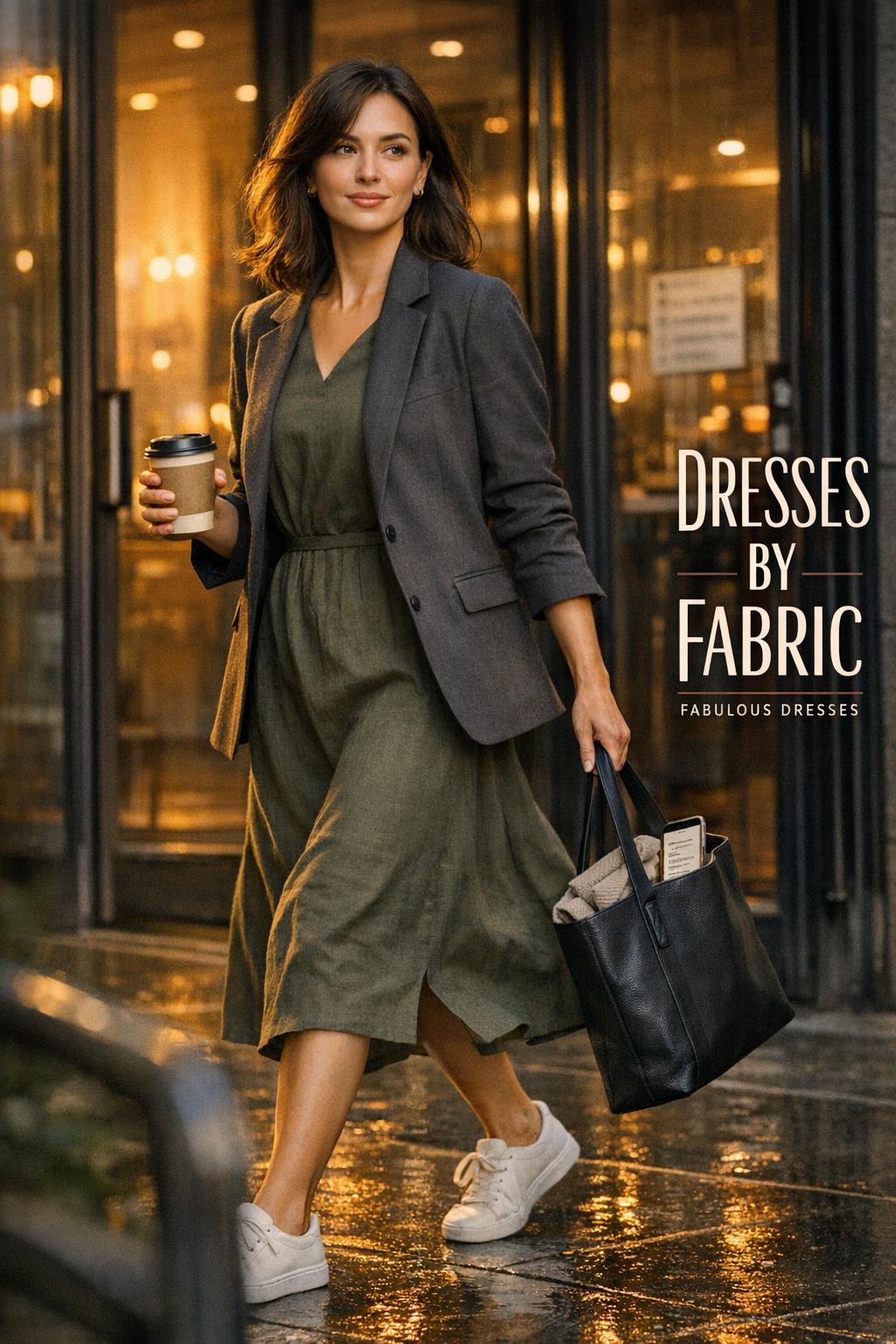
For work settings, fabric is your credibility amplifier. A tailored-leaning dress fabric material creates clean edges and a stable silhouette—useful when you need to look sharp without constant adjustment.
Style breakdown: a structured dress as the visual anchor, minimal accessories for a controlled palette, and a shoe that reinforces polish. The key is to avoid competing textures; when the fabric already has structure, keep the rest of the look streamlined so the outfit reads intentional rather than “over-styled.”
Trade-off to note: structured fabrics can feel less forgiving across long seated hours. If your day includes extensive sitting, choose a silhouette with movement allowance (walkable hem, comfortable armholes) so the fabric’s authority doesn’t become discomfort.
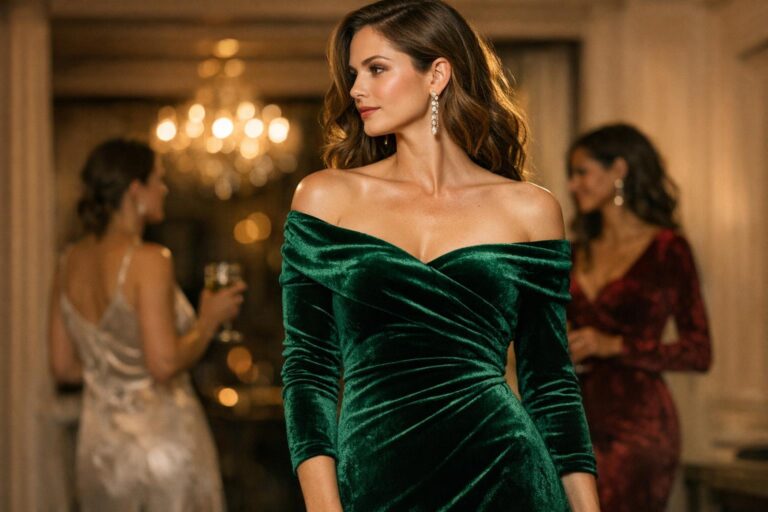
Outfit solution: evening-ready drape for “luxurious dresses” energy without stiffness
Evening dressing often fails when the fabric looks beautiful but behaves poorly—sliding straps, clinging in humidity, or requiring constant smoothing. The smarter path is to pick a drapey fabric that moves elegantly and then stabilize the outfit with discreet structure in the styling.
Why this works: fluid fabric delivers the elevated, light-catching effect associated with luxurious dresses, while the styling adds control. Think of your accessories as engineering: a stable shoe for posture, a bag that doesn’t snag, and outerwear that doesn’t crush the drape.
Result: a dress that feels “fabulous” in motion, not just in still photos.
Designer fabrics for dresses: how to evaluate what you’re paying for
Designer fabrics for dresses can elevate the entire experience of wearing a dress, not just the look. The value typically shows up in how the fabric drapes, how it feels on skin, and how reliably it returns to shape after a full day. But “designer” doesn’t automatically mean practical for your lifestyle.
A useful way to evaluate designer-level dress fabric material is to test it against your real wardrobe needs: Does it wrinkle easily? Does it require special handling that won’t fit your schedule? Does it layer well with the outerwear you already own? A fabric that looks premium but demands constant maintenance can quietly become a “special occasion only” piece—even if you wanted it for everyday.
For readers building a wardrobe of fabulous dresses with repeat wear, the best investment fabrics are the ones that support your calendar. A dress that can go from day to evening with one switch—shoe, jacket, or bag—often outperforms a more delicate piece that only works in perfect conditions.
Fabric-specific styling intelligence: how texture changes the entire outfit composition
Fabric texture is a silent styling language. Smooth surfaces read refined and minimal; textured surfaces read dimensional and expressive. Understanding this prevents the most common mismatch: pairing a statement fabric with statement accessories and ending up with visual chaos.
Smooth fabrics: keep the silhouette intentional, then add one strong detail
Smooth fabrics tend to highlight shape and seam lines. That makes them ideal for clean silhouettes, tonal layering, and modern minimal styling. Because the surface is calm, one strong detail (a bold shoe, a sculptural bag, or a sharp outer layer) is enough to create a focal point.
Textured fabrics: let the fabric be the statement piece
Textured dress fabric material already brings depth, which can make even simple silhouettes look elevated. The best approach is restraint in accessories so the fabric remains the visual anchor. This is a reliable formula for fabulous dresses that feel styled without feeling overdone.
Stretch fabrics: focus on fit stability and clean underlayers
Stretch can be a comfort win, especially for long wear, travel, and movement-heavy days. The styling success factor is stability: the dress should hold shape rather than sagging. Clean underlayers help the dress skim rather than cling, keeping the line smooth and intentional.
Occasion-based decisions: picking dresses by fabric for real American schedules
U.S. dressing often requires quick pivots—work to dinner, air-conditioned interiors to outdoor heat, weekday errands to last-minute plans. Fabric choice becomes a time-saving tool when you map it to the reality of where you’ll be, how long you’ll wear it, and what you’ll be doing.
Workdays that include commuting and meetings
Choose a dress fabric material that supports structure and reduces maintenance: you want a surface that stays smooth enough to look credible in close conversation. If you’re carrying a bag and moving through public transit or rideshares, durability matters as much as aesthetics.
Outdoor events and daytime gatherings
Prioritize breathability and movement. Outdoor settings also increase the odds of wind and strong sunlight, so fabric opacity and how the dress moves becomes part of the decision. The most successful approach is an airy base with a light layer that adds coverage and polish when needed.
For evening, fabric reads louder. A fluid or refined-texture fabric signals elevation without needing excessive embellishment. If you want luxurious dresses energy, let drape and surface finish create impact, then keep the rest of the styling controlled and deliberate.
Travel weekends and packable wardrobes
Packability is a fabric trait. The right travel dress fabric material won’t punish you for folding and sitting; it will recover quickly and remain comfortable across long wear. For a compact suitcase plan, choose dresses that can be styled with the same shoes and layers to create multiple outfits without extra bulk.
Tips that make any dress fabric material easier to wear
Fabric-led styling doesn’t end at purchase. Small choices—layers, accessories, and even how you move through the day—can change how a fabric performs. These tips focus on reliability, not perfection.
Tips: keep friction under control
Cling, bunching, and awkward drag lines often come from fabric-on-fabric friction. Pair smoother layers with cling-prone dresses, and avoid overly textured outerwear that grips the dress. This single adjustment can make a “difficult” dress feel effortless.
Tips: build a two-shoe strategy
Most dresses become more wearable when you have two footwear options that match the fabric’s message: one comfort-forward choice for daytime movement and one polish-forward choice for evenings. This is how you extend the range of designer fabrics for dresses without needing multiple separate outfits.
Tips: use outerwear as your silhouette “editor”
Outerwear is not just warmth—it’s proportion control. A structured jacket can sharpen a soft dress. A softer layer can relax a structured dress. Treat the outer layer as an editor that adjusts the tone of the look, from casual to elevated, while keeping the base dress constant.
Tips: plan for lighting and transparency
Some fabrics behave differently in outdoor sunlight versus indoor lighting. Before you commit to a new dress, check it in bright light and consider whether you need a discreet underlayer. This protects the elegance of the look and keeps your confidence intact through the day.
Common mistakes people make when shopping dresses by fabric (and what to do instead)
Most “I never wear it” dresses share a few predictable issues. Fixing them is less about style rules and more about matching fabric behavior to real life.
Mistake: buying a fabric for the fantasy version of your life
A delicate or high-maintenance dress fabric material may suit a perfect, low-stress evening, but not a normal day of commuting, sitting, and moving. Instead, anchor your closet in fabrics that match your weekly schedule, then add one or two higher-maintenance pieces for true special occasions.
Mistake: ignoring how the fabric behaves when seated
Sitting reveals everything—wrinkling, riding up, pulling at the hips, and discomfort at the waist. Instead, test the dress by sitting and standing repeatedly. If it looks and feels worse after two minutes, it won’t survive a full day.
Mistake: over-accessorizing a statement fabric
When the fabric already carries texture, sheen, or volume, extra accessories can push the outfit into visual noise. Instead, choose one focal point: the dress. Keep everything else sleek so the look reads intentional and modern—especially for fabulous dresses where the goal is impact with restraint.
Mistake: treating “luxurious” as a look instead of a feel
Luxurious dresses succeed when the wearer looks comfortable and in control. If the fabric requires constant adjusting, it won’t read luxurious in motion. Instead, prioritize fabrics that support ease—steady drape, stable fit, and a finish that stays consistent through wear.
A quick decision guide: choosing the right dress fabric material in under five minutes
If you’re shopping online or making a fast closet decision, use this rapid filter. It keeps you focused on outcomes rather than hype.
- What’s the longest continuous wear? If it’s all day, prioritize comfort and recovery over delicate elegance.
- Will you sit a lot? Choose fabrics that don’t punish creasing and silhouettes that allow movement.
- Indoors, outdoors, or both? Pick breathable options for outdoor heat; plan a layer for aggressive air-conditioning.
- Do you need “polish” or “ease” first? Structured fabrics lead with polish; fluid or stretch fabrics lead with ease.
- What’s the styling goal? For cozy glam, combine softness with one sharp element. For luxurious dresses, keep the surface refined and the silhouette stable.
This approach makes designer fabrics for dresses feel less intimidating because you’re evaluating them through function and wearability, not just prestige.
Conclusion: the simplest way to get more wear out of every dress
The most reliable style upgrade isn’t a trend—it’s choosing dresses by fabric with clear intent. When you match fabric behavior to your day’s stress points, use texture contrast to create balance, and treat outerwear as a silhouette tool, dresses become easy, repeatable solutions rather than one-off purchases.
Use fabric as your decision filter and you’ll naturally build a wardrobe that covers real scenarios: breathable pieces for heat, structured options for authority, drapey styles for evenings, and resilient choices for travel. That’s how cozy glam becomes everyday, luxurious dresses become wearable, and fabulous dresses become the ones you actually reach for.
FAQ
What does it mean to shop for dresses by fabric?
Shopping for dresses by fabric means choosing a dress primarily based on how the material behaves—drape, breathability, wrinkle tendency, structure, and comfort—so the dress performs well for your weather, schedule, and occasion rather than just looking good in a photo.
How do I choose the best dress fabric material for hot weather?
For hot weather, prioritize breathable, airy fabrics that allow airflow and don’t trap heat, then stabilize the look with a structured layer or clean accessories so the outfit still reads finished when the base fabric is more relaxed.
What fabric qualities matter most for a work dress?
Work dresses benefit from fabrics that hold a stable silhouette, resist looking rumpled after sitting, and layer cleanly under a jacket; the goal is a credible, low-maintenance surface that stays polished through meetings and commuting.
How can I make a clingy, drapey dress feel more wearable?
Make a drapey dress easier to wear by reducing friction with smoother layers, choosing supportive footwear for posture and movement, and keeping accessories controlled so the fabric’s movement looks intentional rather than fussy.
Are designer fabrics for dresses always worth it?
Designer fabrics for dresses can be worth it when the fabric improves drape, feel, and shape recovery in ways you’ll benefit from regularly, but they’re not automatically practical if they wrinkle easily, require constant adjustment, or demand care routines that don’t match your lifestyle.
What is “cozy glam” in dress styling?
Cozy glam is a styling approach that pairs comfort-forward textures or warmer materials with one polished, structured element—such as a sharp coat, sleek shoe, or refined bag—so the outfit feels soft and wearable while still reading elevated.
How do I make luxurious dresses look effortless instead of stiff?
Luxurious dresses look effortless when the fabric can move and sit comfortably without constant adjustment; keep the silhouette stable, avoid competing textures, and use minimal, intentional accessories so the refined fabric finish remains the focal point.
What’s the easiest way to avoid outfit “overload” with textured fabrics?
When the dress fabric material is textured or visually strong, treat the dress as the statement piece and keep shoes, bag, and outerwear streamlined so the outfit maintains a clear visual hierarchy rather than competing focal points.
How can I build a small wardrobe of fabulous dresses that work for multiple occasions?
Build a small wardrobe by choosing a mix of fabrics—breathable for daytime, structured for work, drapey for evenings, and resilient for travel—then rely on layering and a two-shoe strategy to shift the same dress between casual, polished, and event-ready settings.