
Silk Fabric Dress Design for Sleek, No-Fuss Evening Style
Silk fabric dress design, without the stress: dressing for elegance when real life is involved
The styling problem with silk is rarely about taste—it’s about control. You choose silk because it signals polish, movement, and a high-end finish, but once you actually have to wear it for a full evening, the fabric’s behavior becomes the deciding factor. A beautiful silk fabric dress design can look impeccable on a hanger and still feel like a gamble once you add warm rooms, long dinners, photos, sitting, standing, and the reality of undergarments.
This guide solves that specific tension: how to get the elevated look of silk (including silk satin) while staying comfortable, secure, and appropriately dressed for real occasions—everything from fancy dresses for a formal invite to a simple evening dress that still reads intentional. The goal is not to over-style. It’s to make silk work like a reliable wardrobe tool, not a delicate costume.

You’ll find practical outfit solutions, logic-first dressing principles, and a set of checks that help you decide silhouette, structure, and finishing details—so your final look can land in “abiti mozzafiato” territory without the constant adjusting.
Understanding the styling challenge: why silk feels high-risk in event dressing
Silk’s appeal is also the source of its difficulty. The fabric reflects light, shows shape, and drapes in a way that instantly looks dressy—but that same sheen can highlight creasing, cling, and tension lines. In a busy environment (warm indoor lighting, long wear, frequent sitting), silk can feel less forgiving than other formal fabrics, especially when the dress is cut on the bias or designed to skim the body.
Found the dress? Keep the rest in one place.
Zarellea brings guest details, vendors, timelines, and every next step together — so your wedding plan feels as good as your look.
Most people struggle with the same cluster of practical constraints: how to keep the silhouette smooth, avoid visible lines, manage movement, and maintain confidence through the entire occasion. This gets even more complex when the event has a strict tone—like formal prom dresses long—where you need the drama of a gown but still want to feel mobile and secure.
In short: silk looks effortless, but wearing it well is a series of small, strategic choices. The solution isn’t “avoid silk.” It’s to design your outfit composition around silk’s strengths and limitations.

Key dressing principles that make silk look intentional (and feel manageable)
Principle 1: Build the silhouette first, then choose the shine level
With silk, silhouette balance is the foundation. If the cut is too minimal without support, the dress can read overly delicate and become fussy. If the cut is overly tight, the sheen amplifies every pull line. Decide whether your event needs a fluid outline (soft and romantic) or a controlled outline (structured and formal), then choose silk or silk satin accordingly. Silk satin’s smoother surface tends to read more formal under lighting, while other silk finishes can feel softer and less “spotlight” reflective.
Principle 2: Use structure as a visual anchor
Silk drape needs an anchor point—something that stabilizes the look so it doesn’t feel like it’s floating. This can come from a defined waist, a cleaner neckline, or a sleeve that gives the eye a reference. Even in a simple evening dress, one structured element (like a sharper shoulder line or a more deliberate waist seam) can make the overall effect look designed rather than improvised.
Principle 3: Engineer comfort for long wear, not just the mirror moment
Silk is often chosen for special occasions, which means long durations: arrivals, photos, dinner, dancing, or extended sitting. If a dress only works when you’re standing perfectly still, it’s not truly functional. The best silk fabric dress design for real life accounts for range of motion and the realities of a seated posture—because that’s when pulling, creasing, and ride-up happen.
Principle 4: Let the dress be the statement piece; keep the support pieces quiet
Silk already carries visual volume through shine and movement. If everything else competes—high-contrast accessories, overly complex layering—the outfit composition can feel chaotic. A cleaner supporting cast makes the silk look more expensive and helps keep the focus on drape, line, and finish.

Outfit solutions: silk looks that solve real constraints
Below are outfit solutions designed around common situations: formal invites, prom-level dress codes, warm indoor venues, and the desire to look elevated without feeling “handled” by your clothing. Each one focuses on how silk behaves, not just how it photographs.
Outfit solution: the controlled-slip approach for a simple evening dress
A slip silhouette becomes far more wearable when it’s controlled rather than flimsy. Choose a silk satin slip dress with deliberate lines: a neckline that sits flat, straps that feel secure, and a length that doesn’t fight your stride. The point is to keep the dress minimal while ensuring it holds its shape on the body, so the look reads “clean evening” instead of “nightwear adjacent.”
Why it works: silk satin provides a refined sheen that signals evening immediately, while the pared-back silhouette avoids bulk. The “controlled” part—secure fit points and stable neckline—reduces constant adjustments, which is the fastest way to lose confidence in silk.
Style breakdown: keep accessories sleek and supportive rather than loud. The dress is the visual anchor; everything else should maintain tonal harmony to highlight texture contrast between skin, satin sheen, and understated finishing pieces.
Outfit solution: fancy dresses with sleeve strategy (for comfort and visual balance)
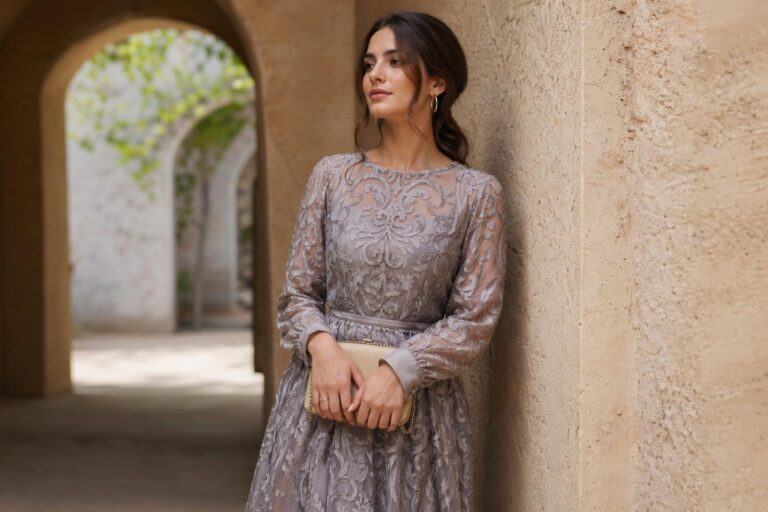
If you want the impact of fancy dresses but worry about silk feeling too revealing or too delicate, use sleeves as your stabilizer. A silk dress design with sleeves gives you built-in structure: sleeves frame the torso, create proportion play, and make the garment feel more “complete,” which is especially useful in venues with strong lighting or lots of photos.
Why it works: sleeves reduce the need for constant tugging at the neckline and help the dress keep its intended line. They also support a balanced silhouette by giving the upper body a clearer outline—important when the skirt is fluid.
When to use it: evening events where you’ll be moving between environments (arrivals, indoor dining, and dance floor). Sleeve-driven balance keeps silk looking composed through these transitions.
Outfit solution: formal prom dresses long in silk satin, without the “heavy” feeling
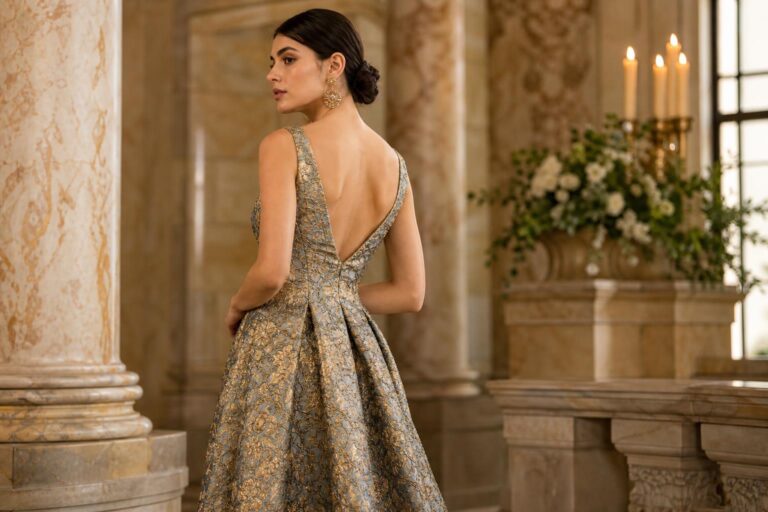
Formal prom dresses long are often built for drama, but silk can deliver that drama with less bulk—if the design prioritizes clean lines. A long silk satin gown with a controlled waist and a skirt that moves without excessive volume creates a cinematic effect while staying relatively light on the body. The key is to avoid fighting the fabric: let silk create the movement rather than layering on too many elements that compete with drape.
Why it works: length delivers formality instantly, and silk satin reads especially luminous under event lighting. With a stable waist and intentional neckline, you get a gown that feels elevated but not costume-like.
Practical logic: long hemlines demand attention to walking and sitting. The most wearable long-silk solution is one that allows stride without constant lifting, so you can move freely and keep your posture relaxed—an underrated part of making a formal look appear natural.
Outfit solution: “abiti mozzafiato” impact through minimal design choices
That breathtaking effect—abiti mozzafiato—doesn’t require maximalism. In silk fabric dress design, impact often comes from one decisive feature executed cleanly: a strong neckline line, a precise waist, or an intentional length. The more reflective the silk (especially silk satin), the more important it is to keep the design choice singular rather than stacked.
Why it works: silk already creates spectacle through motion and shine. One clear design feature becomes the statement piece, while the rest of the dress supports it with restraint. This is how you get “wow” without sacrificing wearability.
Best for: events where you want to look formal and memorable but still feel like yourself—especially if you dislike heavy embellishment or overly intricate styling.
Outfit solution: the comfort-first silk look for warm indoor venues
Warm indoor venues can make silk feel clingy, especially if the dress is cut close to the body. The comfort-first solution is a silk dress design that preserves airflow in the silhouette: a slightly more forgiving skirt line, a neckline that doesn’t require readjusting, and a fit that doesn’t rely on tension to stay in place. You still get the sheen and drape, but you reduce the friction points that make people abandon silk halfway through the night.
Why it works: comfort improves posture and ease, which improves the overall look. A silk dress that allows natural movement reads more expensive than a silk dress that looks “managed” by constant fixing.
Style note: keep the palette cohesive. In warm lighting, tonal layering amplifies silk’s richness and makes the outfit composition feel intentional, not piecemeal.

A practical framework for choosing the right silk dress design
When you’re shopping or planning, the fastest route to a good choice is a simple decision framework. Silk becomes easy when you treat it like a performance material: beautiful, yes, but sensitive to design decisions.
- Start with the venue and duration: long events favor designs with stable fit points (waist, neckline, sleeve or strap security).
- Match formality to shine: silk satin typically reads more formal because of its smoother reflection, which suits gowns and formal prom dresses long; softer silk finishes can work for a simple evening dress that still feels elevated.
- Choose your “anchor” detail: define what will hold the look together—waist definition, neckline structure, or sleeve architecture.
- Decide your movement needs: if you’ll dance or walk a lot, prioritize a skirt line that allows stride and a bodice that stays in place without constant adjustment.
- Keep support pieces minimal: when in doubt, let the silk be the hero and keep styling quiet and cohesive.
This framework prevents the most common silk pitfall: picking a dress solely for a photo moment, then realizing the design requires ongoing maintenance to look right.
Styling logic: making silk look expensive without overdoing it
Texture contrast is your best styling tool
Silk brings its own texture through sheen. To keep the look editorial rather than overly glossy, build contrast strategically—think matte accents, restrained hardware, or minimal layers that don’t compete with the dress’s surface. The goal is to make the silk’s finish feel intentional, like a curated material choice, not an attention grab.
Proportion play matters more than extra detailing
Because silk drapes, the eye reads the outline first. A balanced proportion—clean upper line plus fluid lower line, or a more defined waist with a calmer skirt—creates a clear shape. That clarity is what registers as “designed.” This applies whether you’re aiming for fancy dresses or a simple evening dress: shape clarity beats decoration when the fabric is already expressive.
Use tonal layering to keep silk from feeling “separate”
Silk can look like it belongs to a different outfit if everything else is too contrasty. Tonal layering—keeping surrounding pieces in a related color family—lets silk integrate into the overall outfit composition. This is particularly effective with silk satin because the light reflection can make color shifts look more dramatic than they are.
Tips that make silk wearable: small adjustments with outsized payoff
Tips for keeping the neckline and straps stable
The easiest way to ruin the ease of silk is constant neckline monitoring. Prioritize designs where the neckline lies flat and straps feel secure. For slip-style silk satin looks, stability is the difference between “effortless” and “fidgety.” If a dress needs frequent adjustment in the fitting room, it will demand even more once you’re moving through an event.
Tips for sitting, walking, and long-event comfort
Silk shows stress points most when you sit and stand repeatedly. Choose a design that doesn’t rely on extreme tightness to look sleek. A slightly more forgiving cut often photographs better across an entire night because the surface remains smoother and the drape remains consistent.
Tips for balancing shine in silk satin
Silk satin reads luminous, which is the appeal—but that also means it draws attention to the areas it highlights. If you want a more controlled effect, pick designs with clear lines and fewer competing elements. A cleaner silhouette allows the shine to look intentional and high-end rather than loud.
Tips for turning a “pretty” dress into fancy-dress level polish
The finishing strategy matters: keep the dress as the statement piece and edit everything else. Fancy dresses in silk succeed when the overall styling looks curated—cohesive palette, controlled accessories, and a silhouette that stays stable without effort. That edit is what moves the look from “nice” to “event-ready.”
Common mistakes with silk fabric dress design (and what to do instead)
Mistake: choosing silk only for its look on a hanger
Silk can look stunning off-body but behave differently once it has to move with you. Instead, evaluate how the dress performs in motion: does it stay aligned at the neckline, does it pull when you sit, does it twist as you walk? A wearable silk design should feel stable, not precarious.
Mistake: overcomplicating the outfit around a reflective fabric
Silk satin already creates visual intensity. Adding too many competing details can make the outfit feel busy and distract from the fabric’s natural elegance. Instead, simplify: focus on silhouette balance and tonal harmony so the silk reads as the intentional centerpiece.
Mistake: treating a formal dress code like a styling free-for-all
For formal prom dresses long and other strict dress codes, the outfit needs clear formality signals: length, controlled lines, and an overall composition that feels deliberate. Instead of pushing novelty, let silk provide the drama through drape and sheen, then keep the structure crisp so the final look aligns with the occasion.
How to adapt one silk dress across multiple occasions
A strong silk fabric dress design can be re-contextualized if you understand what’s doing the work: the fabric’s sheen, the silhouette’s clarity, and the outfit’s support pieces. The same silk satin dress can read as a simple evening dress or as one of your go-to fancy dresses depending on how formal you make the surrounding choices.
- For a restrained evening: keep the silhouette clean, accessories minimal, and the palette tonal so the look stays calm and polished.
- For a high-formality event: emphasize length, sharper structure points (waist/neckline), and cohesive finishing so the dress reads ceremonial rather than casual.
- For “abiti mozzafiato” energy: commit to one standout design feature and edit everything else; silk’s movement does the rest.
This is the core advantage of silk: it can scale up or down without needing reinvention—if the base dress design is stable and the styling remains disciplined.
Conclusion: the silk solution is clarity, structure, and restraint
Silk becomes easy when you stop treating it like a fragile fantasy fabric and start treating it like a precision material. The most successful silk fabric dress design choices prioritize a stable silhouette, a clear anchor detail, and an outfit composition that supports the dress rather than competing with it. That’s how you get a simple evening dress that still looks elevated, fancy dresses that feel wearable, and formal prom dresses long that deliver drama without discomfort.
Use the same logic for future events: start with the environment and duration, choose the shine level that matches the dress code, and keep your styling edited so silk satin can do what it does best—move, reflect, and look intentional from the first photo to the final goodbye.

FAQ
What makes a silk fabric dress design feel more wearable for long events?
Wearability comes from stability: a neckline that lies flat, secure straps or sleeves, and a silhouette that doesn’t rely on tightness to look sleek. The more the dress can stay in place through sitting and walking, the more confident and comfortable it will feel over several hours.
How do I choose between silk and silk satin for an evening dress?
Use the formality and lighting as your filter: silk satin’s smoother, more reflective surface typically reads more formal and “evening” under strong lights, while other silk finishes can feel softer and more understated. The best choice is the one that matches the event’s tone and the level of shine you want to manage.
Can a silk satin dress work as a simple evening dress without looking too flashy?
Yes—keep the silhouette clean and the styling restrained. When the dress design has clear lines and the accessories stay minimal and cohesive, silk satin reads polished rather than loud, making it suitable for a simple evening dress approach.
How do I make silk look appropriate for formal prom dresses long?
Prioritize length and a controlled structure point such as a defined waist or stable neckline so the gown reads intentional and ceremonial. Silk satin is especially effective here because it signals formality through sheen, but the design must allow comfortable movement to stay elegant throughout the night.
Why do some silk dresses feel like they need constant adjusting?
This usually happens when the design lacks stable fit points, so the dress shifts with movement. Slippery drape paired with an unsecured neckline or overly minimal structure can create a fidgety wearing experience, which is why strap security, neckline placement, and balanced proportions matter.
What’s the easiest way to get an “abiti mozzafiato” effect in silk?
Commit to one decisive design feature—such as a strong neckline line, a defined waist, or a dramatic length—then keep everything else edited. Silk’s natural movement and light reflection provide the impact, so restraint in the rest of the look makes the result feel more elevated.
How do I keep fancy dresses in silk from looking overstyled?
Let the silk be the statement piece and keep the supporting elements quiet. A cohesive palette, minimal add-ons, and a clear silhouette balance prevent the sheen and drape from competing with extra details, which is what often makes silk looks feel “too much.”
Is there a reliable rule for picking a flattering silk silhouette?
A reliable rule is to create one visual anchor and one fluid area: for example, a stable neckline or defined waist paired with a skirt that drapes. This keeps the outline clear while allowing silk to move naturally, which typically reads more polished than an all-over tight fit.