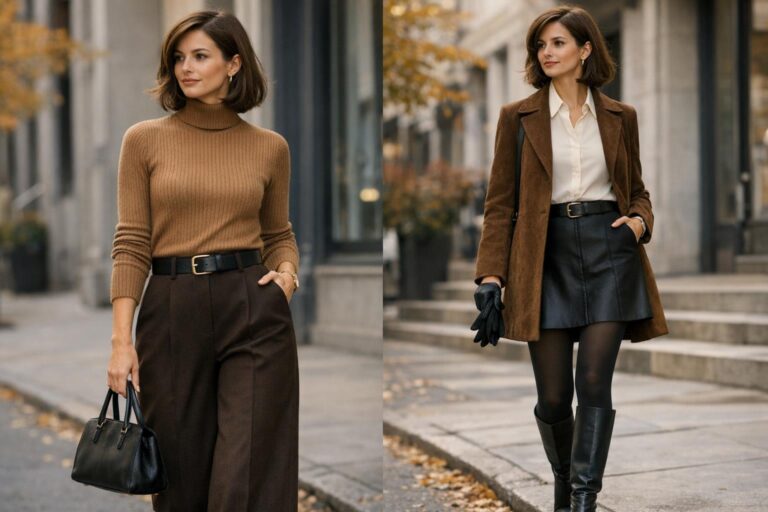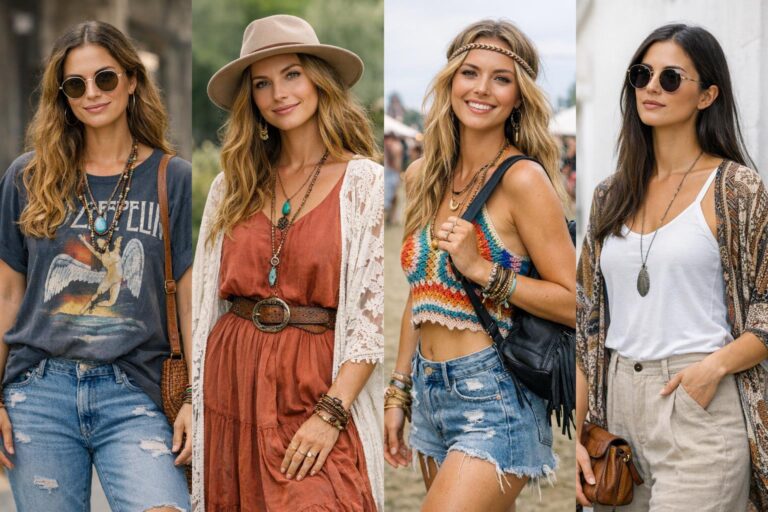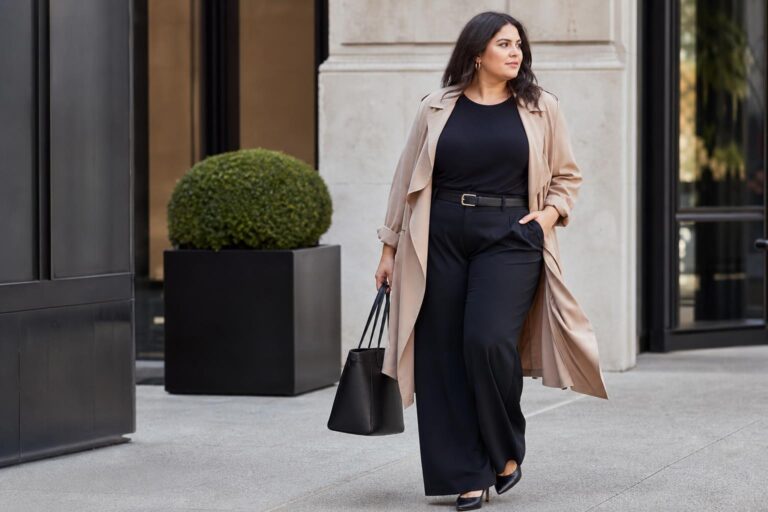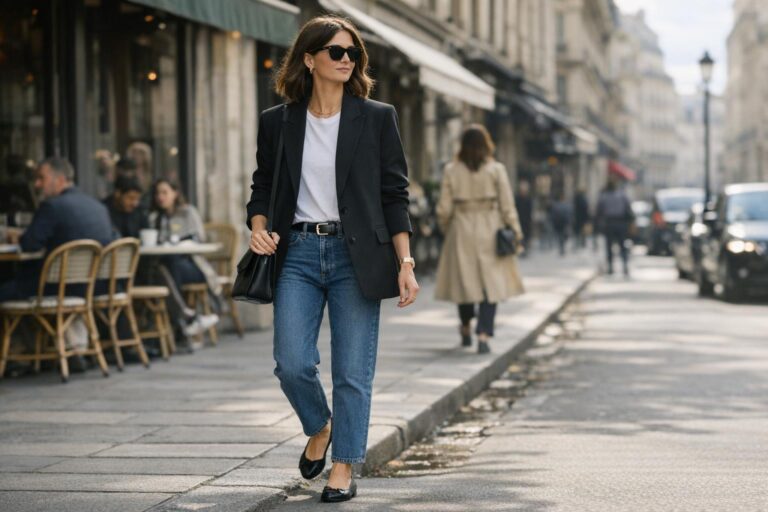
Indie Style vs Alt Indie: How to Nail the Difference
Indie style vs. alt indie outfits: the difference is less about “what” you wear and more about “how” you build the look
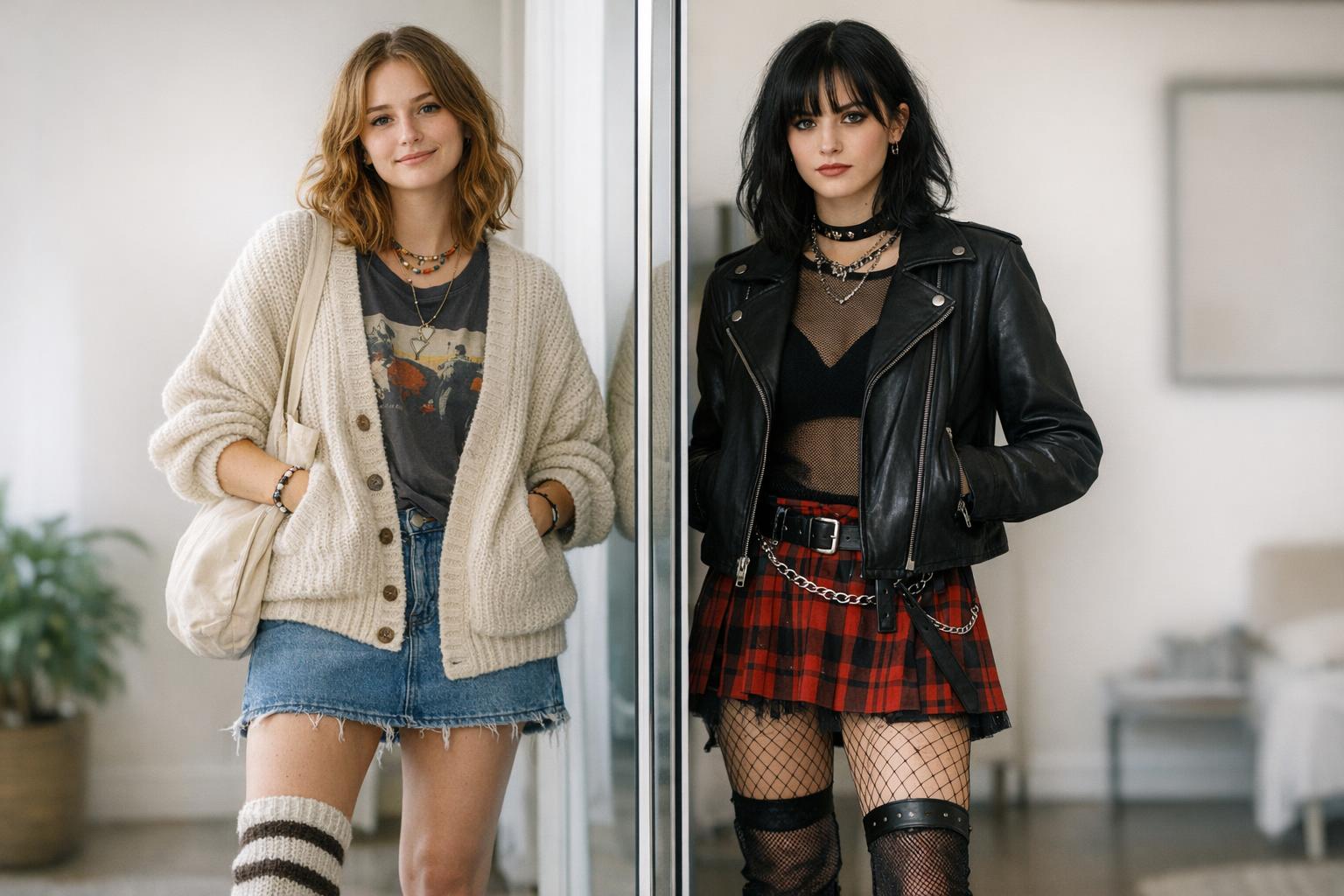
The moment usually happens in a mirror: you’re wearing a thrifted tee and an oversized layer, and the outfit reads “indie”—until one tweak (a sharper shoe, a darker palette, a more aggressive accessory choice) pushes it into something distinctly alternative. That blur is exactly why indie style and alt indie outfits are constantly discussed together: they share roots in individuality and a mixed-source wardrobe, but they communicate different visual signals.
This breakdown treats indie style as a styling system—an approach to clothes built on contrast, personal taste, and intentional imperfection—then compares it to alt indie outfits as a more intensified, edge-forward branch that tightens the mood and amplifies statement pieces. You’ll learn how each aesthetic handles silhouette balance, color strategy, texture, accessories, and real-life wearability, plus how to blend both without losing clarity.
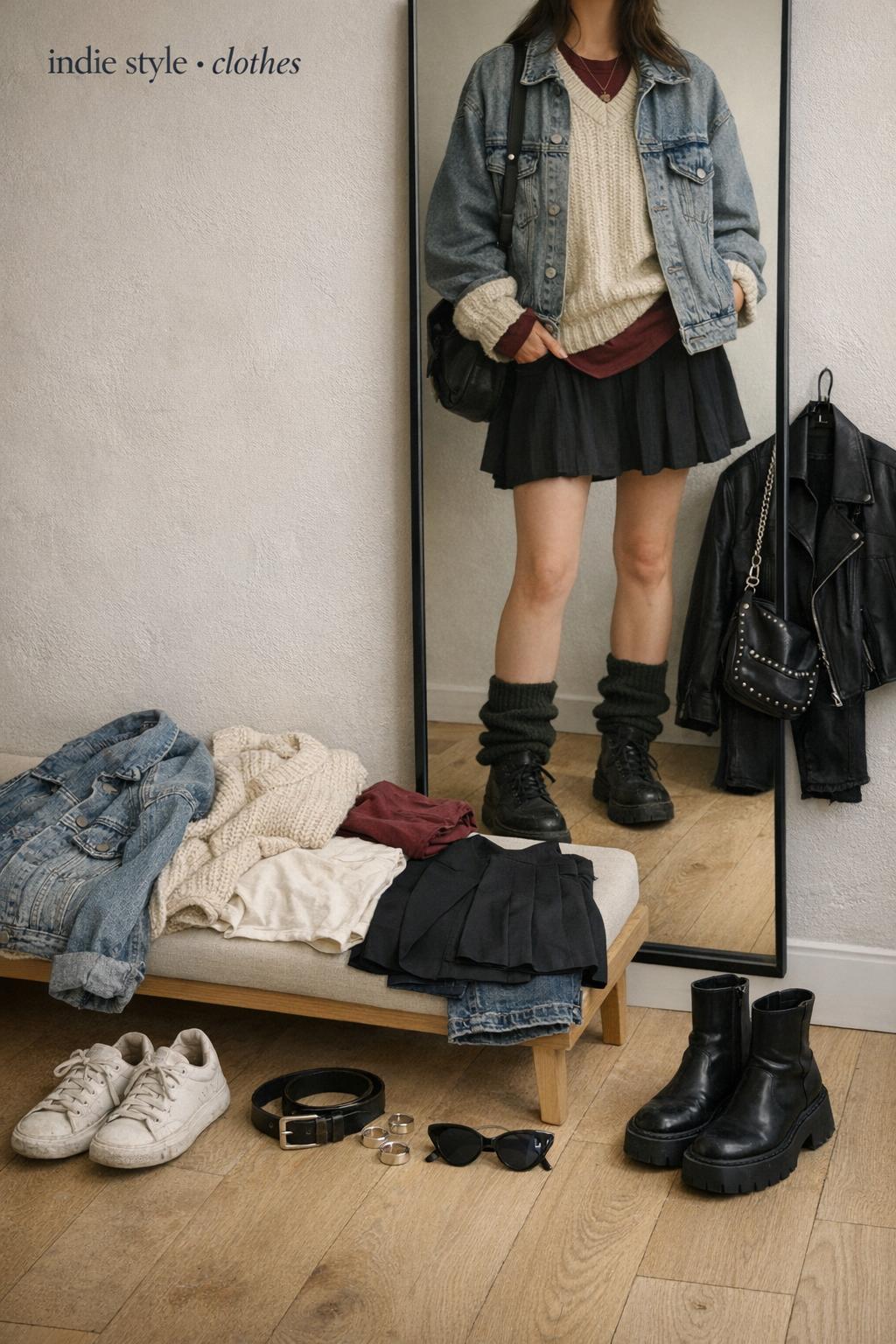
Because indie aesthetic fashion often lives on Pinterest boards rather than strict rules, the most practical way to understand it is to compare the same outfit situations side-by-side—casual days, polished moments, and even the “fitness inspo” version of the look where performance pieces meet street styling logic.
Style overview: indie style (the “curated mismatch” formula)
Indie style is defined by an intentional mix: pieces that look collected rather than bought as a set, with proportion play as the main design tool. It’s less about a single trend and more about outfit composition—building a look with a visual anchor (a jacket, a shoe, a bag, or a standout color note) and letting everything else orbit that focal point.
Found the dress? Keep the rest in one place.
Zarellea brings guest details, vendors, timelines, and every next step together — so your wedding plan feels as good as your look.
Defining characteristics: eclectic layering, thrift-coded combinations, relaxed confidence, and a “worn-in” ease that still feels deliberate. The goal isn’t perfection; it’s personality.
Typical silhouettes: oversized outerwear over straight or tapered bottoms; boxy tops with shorter hems; loose dresses grounded by heavier shoes; a frequent high-low balance that keeps the outfit from feeling costume-like.
Color palette: flexible. Indie outfits can be colorful, but the palette usually follows a logic—either tonal layering (several shades in the same family) or controlled contrast (one bright or odd note against neutrals).
Fabrics and textures: texture contrast is central—knits with denim, worn cotton with structured layers, soft tees with heavier outerwear. The texture story often does the work that logos would do in other aesthetics.
Overall mood: expressive, approachable, lived-in, slightly artistic. Indie aesthetic fashion reads as “I styled this myself,” not “I followed a uniform.”
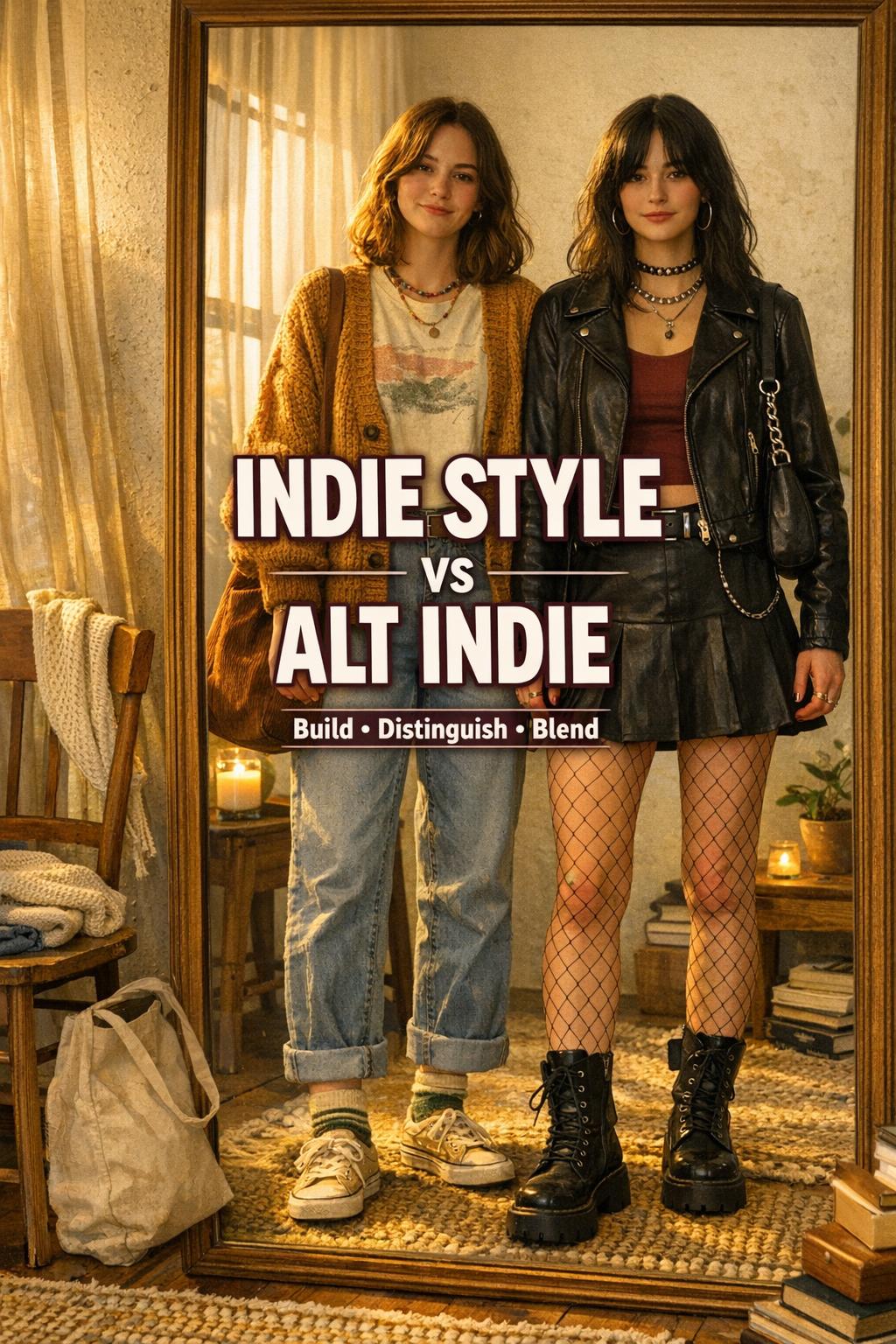
Style overview: alt indie outfits (indie’s sharper, darker, more declarative cousin)
Alt indie outfits use a similar building method—mixing pieces, leaning on layering, and valuing individuality—but the styling philosophy changes. Alt indie is more mood-driven and more contrast-heavy: silhouettes become more intentional, palettes skew darker or higher-contrast, and accessories act as primary signals rather than subtle accents.
Defining characteristics: stronger edge, bolder proportions, and a higher reliance on statement elements to communicate aesthetic quickly. Where indie style can feel “collected,” alt indie often feels “constructed.”
Typical silhouettes: deliberate structure—either very oversized (dramatic outerwear) or more fitted lines that emphasize shape. The balance is often more graphic: wide + narrow, long + cropped, heavy + sleek.
Color palette: more concentrated and more decisive. If indie can be soft-neutral with a quirky accent, alt indie tends to commit: darker bases, stark contrast, or a limited palette that makes the outfit read cohesive even when the pieces are mixed.
Fabrics and textures: higher contrast and more “impact.” Smooth vs. rough, matte vs. sheen, and sturdy materials that hold shape. Even simple clothes look more intentional when the fabric has presence.
Overall mood: bold, editorial, slightly confrontational. Alt indie outfits often prioritize a strong visual message over maximum versatility.
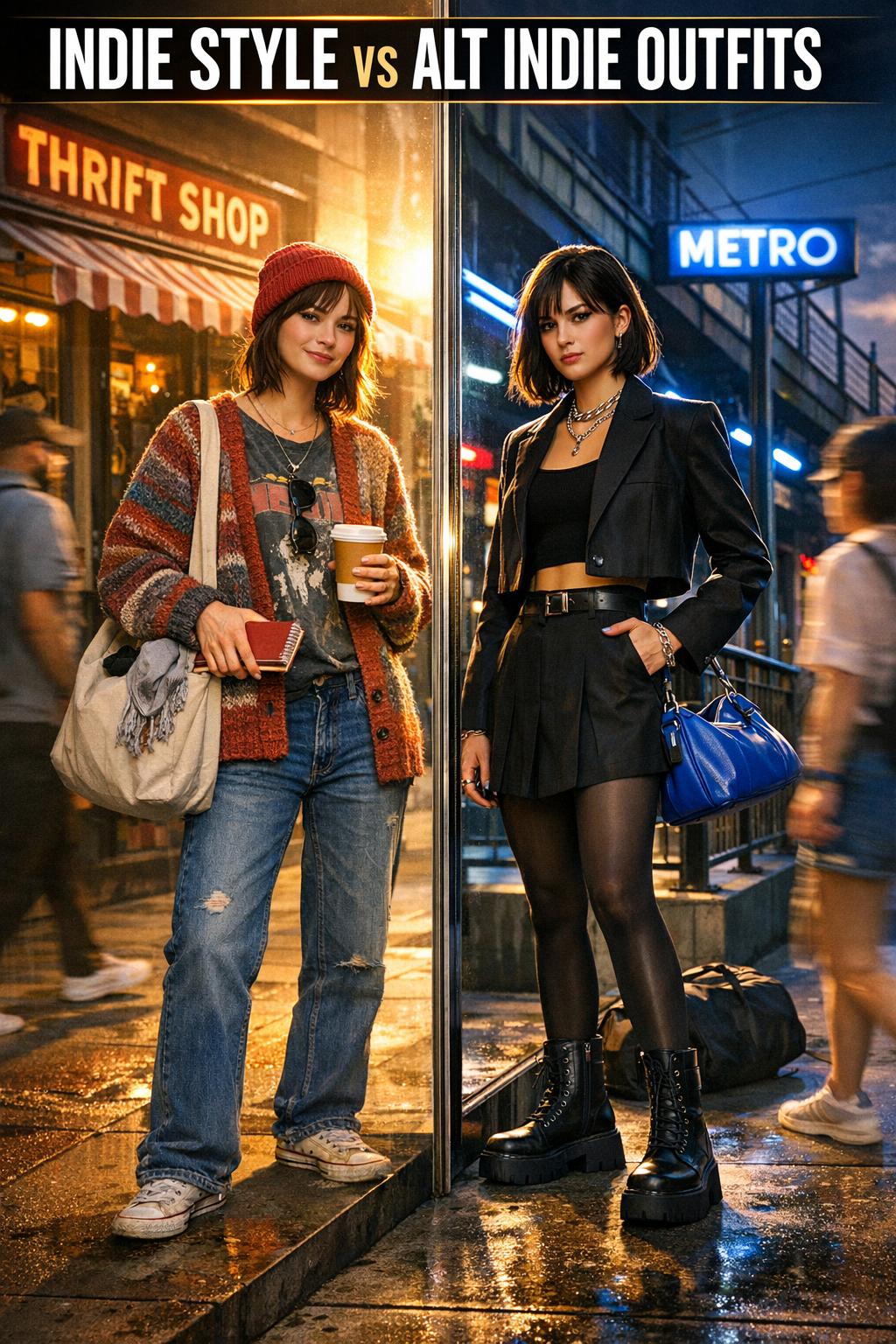
Indie outfits colorful vs. alt indie: where the aesthetics split
The cleanest way to separate these aesthetics is to examine the decisions that happen after you pick the base clothes. Both can start from similar items—tees, denim, layered tops—but they diverge in how they manage proportion, color harmony, and finishing details.
Silhouette and structure: relaxed collage vs. graphic intention
Indie style typically uses a relaxed silhouette as the default. Oversized layers and easy fits create movement and an unforced feel, then one structured piece (a stiffer jacket, a more defined shoe) provides the visual anchor. Alt indie outfits often reverse that logic: the silhouette is the statement. Whether it’s a dramatic oversized outer layer or a more fitted line, the outline is engineered to read “alt” even before the details land.
Color palette: playful mixing vs. controlled intensity
Indie outfits colorful can work beautifully when the palette is controlled by repetition—echoing a tone in two or three places (top, sock, bag) so the color feels designed, not random. In alt indie, color tends to serve contrast: a sharper pop against a darker base or a highly limited palette that emphasizes mood. The trade-off is flexibility: indie color play can adapt to more contexts, while alt color strategy often reads more “look” than “outfit.”
Level of formality: casual ease vs. deliberate styling
Indie style sits comfortably in casual environments because it often looks like everyday clothes styled well—tees, knits, denim, and practical layers. Alt indie outfits can be casual too, but the finishing choices raise the styling “volume,” which can feel more formal in a fashion sense (more intentional, more curated), even if the pieces themselves are still casual.
Styling philosophy: personality-first vs. mood-first
Indie aesthetic fashion reads as personality-first: the outfit communicates taste through unexpected combinations and texture contrast. Alt indie outfits are more mood-first: the outfit is built to project a specific tone—darker, sharper, more intense—then personality comes through the details.
Wardrobe pieces: interchangeable basics vs. signature statements
Indie style can be built from highly interchangeable clothes: simple tops, relaxed bottoms, layering pieces, and accessories used as small accents. Alt indie leans harder on signature items—pieces that do a lot of communication on their own—so the outfit reads “alt” quickly. The upside is impact; the limitation is that signature items can be harder to rotate across different settings without repeating the same vibe.
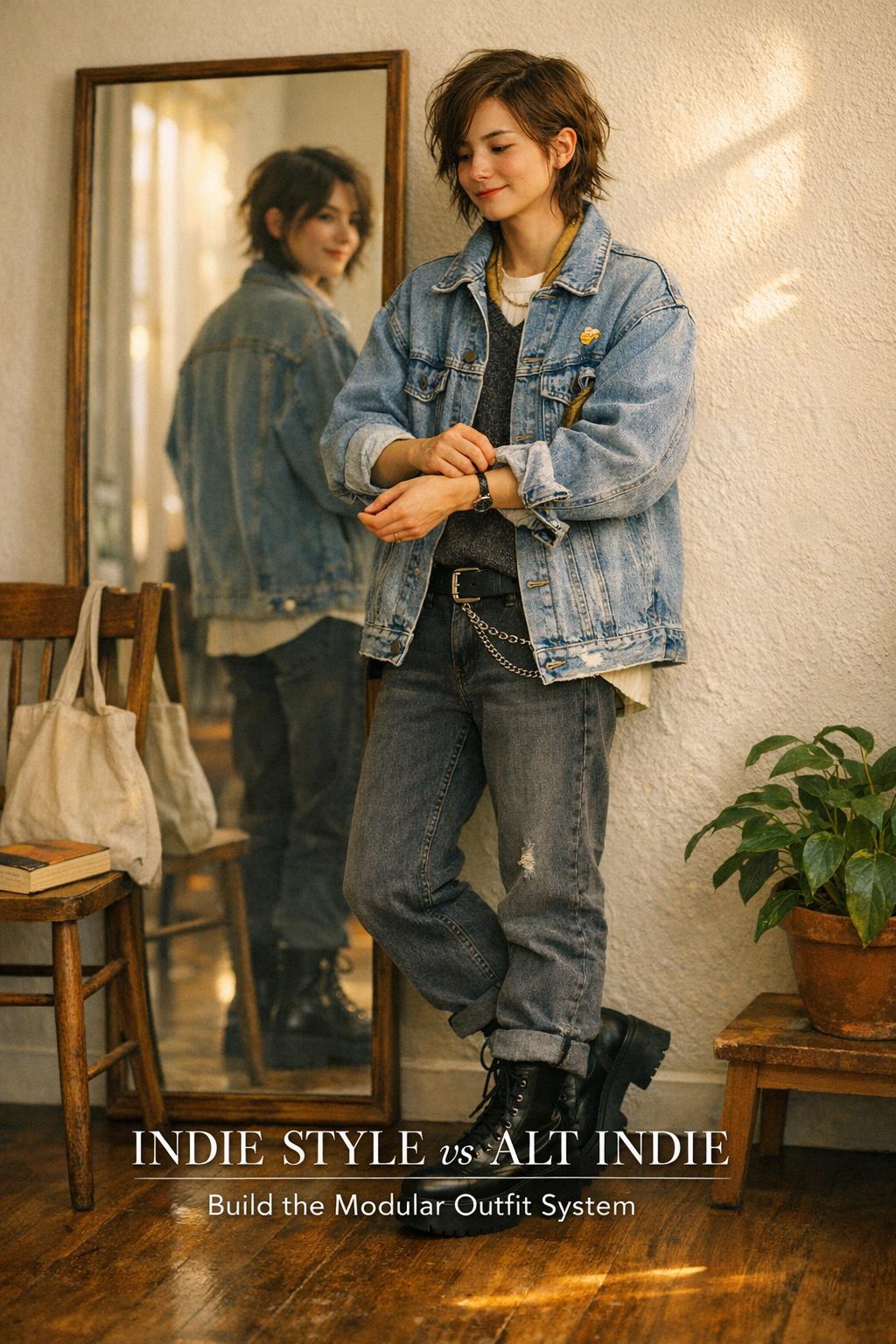
Visual style breakdown: how each aesthetic behaves in a real outfit
If you screenshot outfits for inspiration, you’re usually reacting to five visual levers: layering, proportions, accessories, footwear, and overall balance. Indie style and alt indie outfits pull those levers differently, even when they start from the same clothes.
Layering approach: soft stacking vs. high-contrast layering
Indie layering tends to be “soft stacking”: pieces overlap without sharp breaks—an open layer over a tee, a knit under a jacket, a longer hem peeking out. The eye moves smoothly. Alt indie layering prefers clear contrast: a cropped layer over a longer base, a sharper outer line, or a more defined difference in fabric weight that creates a graphic read.
Garment proportions: comfort-led vs. outline-led
Indie style usually prioritizes comfort and movement, then refines proportions with one or two intentional constraints (a cuffed sleeve, a tucked front hem, a belt used sparingly). Alt indie outfits prioritize the outline first. Even if the clothes are comfortable, they’re arranged to produce a distinct shape—long-and-lean, oversized-and-compact, or sharply contrasted top-to-bottom.
Accessories: subtle storytelling vs. loud punctuation
In indie aesthetic fashion, accessories often feel like collected objects: they add storytelling without overpowering the outfit. In alt indie outfits, accessories behave like punctuation marks—high-contrast choices that sharpen the message of the look. The practical difference is wardrobe flexibility: indie accessories can move across more outfits without dominating; alt accessories can define the entire outfit in seconds.
Footwear choices: grounding vs. defining
Footwear in indie style typically grounds the outfit—creating stability under relaxed layers and mixed textures. In alt indie, footwear often defines the outfit’s edge. Even with similar clothes, the shoe choice can be the single switch that changes the aesthetic category.
Overall outfit balance: “effortless” vs. “intentional”
Indie style aims for controlled imperfection—an outfit that looks effortless but still composed. Alt indie outfits aim for clear intention—an outfit that looks designed, even when it’s built from casual clothes. Neither is better; they’re simply different types of visual communication.
Side-by-side outfit logic: same scenario, different styling outcome
Rather than listing endless looks, the most useful comparison is to take a few everyday scenarios and show how indie style and alt indie outfits would approach the same base idea. The goal is to make the styling logic visible: what changes, why it changes, and how to keep it wearable.
Example comparison: casual day outfit (walking, errands, coffee)
Indie style approach: Start with comfortable clothes and make them feel curated through texture contrast and one visual anchor. A relaxed base works because the outfit composition is built from soft layers and a balanced silhouette—nothing feels too precious, but the proportions look intentional.
Alt indie outfits approach: Use the same casual foundation, but tighten the palette and sharpen the outline. The outfit works by raising contrast—either in color, shape, or texture—so it reads more deliberate. Even small changes in how pieces sit on the body can create that “alt” clarity.
Example comparison: “clean but creative” outfit (classes, meetings, casual work)
Indie style approach: Keep the outfit approachable by using simple clothes and adding creativity through proportion play—an easy layer, a slightly unexpected pairing, or a tonal palette with one accent note. This reads polished because the outfit has a clear center of gravity, but it stays relaxed.
Alt indie outfits approach: Keep it clean by limiting colors and reducing visual noise, then inject edge through sharper structure. The outfit reads “put together” because the silhouette is controlled and the styling looks intentional, but it may feel less flexible if the environment is conservative.
Example comparison: cold-weather layering (wind, indoor/outdoor transitions)
Indie style approach: Prioritize warmth and movement, then style the layers so the outfit doesn’t balloon. Indie layering works best when you keep one line clean—either a more streamlined bottom or a more defined outer layer—so the textures can mix without the silhouette losing shape.
Alt indie outfits approach: Make the outer layer the statement and let it define the outline. Alt layering succeeds when you control bulk with clear contrast: a sharper outer shape over a simpler base, or a stronger palette that keeps the many layers reading cohesive rather than chaotic.
Example comparison: warm-weather outfit (heat, minimal layers)
Indie style approach: With fewer layers, indie style relies more on fabric feel and small styling details—slight proportion tweaks, a controlled color accent, and accessories that add personality without heaviness. The outfit works when the base looks effortless but still composed.
Alt indie outfits approach: In heat, alt indie needs restraint to avoid looking overbuilt. The best strategy is to keep the base clean and let one statement element carry the mood. The outfit reads alt through decisiveness, not layering volume.
How to choose between indie style and alt indie outfits for real life
Most wardrobes don’t need a single aesthetic 24/7. The more practical question is which styling mode suits your day, your environment, and your comfort needs. Indie style tends to be the higher-versatility choice; alt indie outfits tend to be the higher-impact choice.
Everyday wear and travel: when versatility matters
For walking-heavy days, travel schedules, or unpredictable weather, indie style has a clear advantage: it’s built on comfortable clothes and flexible layers. Outfit composition can still feel interesting without requiring delicate pieces or constant adjustment. Alt indie outfits can travel well too, but the more statement-driven the look, the more you’ll feel the pressure to keep everything “on message.”
Work environments: reading the room without losing personality
Indie aesthetic fashion adapts easily to casual workplaces because you can keep silhouettes simple and let creativity show through texture contrast or subtle color choices. Alt indie outfits can work in creative fields, but the stronger the contrast and edge, the more important it is to keep the outfit clean and intentional—too many competing statements can read distracting in a professional setting.
Social settings: blending in vs. standing out
Indie style tends to blend while still feeling distinctive; it signals taste without demanding attention. Alt indie outfits are built to stand out more clearly. If the setting is crowded or visually loud, alt indie’s decisive palette and sharper silhouette can actually look cleaner because the outfit reads as one idea rather than many.
Comfort and movement: the underrated deciding factor
Comfort isn’t just about softness—it’s also about how the outfit moves through your day. Indie style usually wins for all-day wear because it relies on ease. Alt indie outfits can be comfortable, but the more structured the silhouette, the more you’ll notice it when sitting for long periods or moving between indoor and outdoor temperatures.
Tips: build indie outfits colorful without losing cohesion
Color is where indie style becomes instantly recognizable—especially in indie outfits colorful—but color only looks “indie” (curated) when the palette has logic. Without that logic, the same clothes can read random rather than intentional.
- Use repetition as your organizing tool: echo a color in two places (top + accessory) so the palette looks designed.
- Pick one visual anchor: let one piece dominate (a layer, a shoe, or a bag) and keep the rest quieter.
- Mix textures to soften bright color: a textured knit or worn cotton can make bold tones feel lived-in rather than loud.
- Keep one area clean: if the top is colorful and layered, streamline the bottom (or reverse it) to protect silhouette balance.
A useful self-check: if you remove one color note and the outfit still looks complete, your palette is likely cohesive. If everything collapses, the look may be relying on too many competing accents.
Tips: make alt indie outfits feel intentional, not costume-like
Alt indie outfits are easiest to wear when the edge is concentrated rather than scattered. The more statements you add, the more critical outfit composition becomes—especially the relationship between silhouette and accessories.
- Limit your statement count: one dominant statement plus one supporting detail keeps the look sharp.
- Control the outline first: decide whether the outfit’s shape is oversized or fitted, then build around that decision.
- Use contrast strategically: sharp contrast works best when it’s repeated (for example, dark base + repeated light accents) rather than introduced once.
- Let accessories punctuate: choose accessories that clarify the mood instead of competing with the silhouette.
If you’re new to the aesthetic, start by converting an indie base into alt indie through one decisive change—palette tightening or sharper footwear—before adding additional signals.
Indie aesthetic fashion and “fitness inspo”: where sporty basics fit into the look
Fitness inspo often looks separate from indie aesthetic fashion, but in real wardrobes they overlap through practicality. Performance-oriented clothes can function as the base layer, and the aesthetic comes from how you frame that base with proportions, texture contrast, and an intentional outer layer.
Indie style with fitness pieces: works best when the sporty items are treated as basics—clean lines underneath—and the indie identity is added through a relaxed layer and a lived-in texture. The outfit reads indie because the sporty foundation is softened by a more collected, mixed-material feel.
Alt indie outfits with fitness pieces: succeed when the silhouette is decisive. A sleek performance base can support a stronger outer line, and the palette can be controlled for a graphic result. The look stays wearable when the outfit doesn’t try to be “gym” and “statement” at maximum volume at the same time.
Practical tip for all-day wear
If you’re moving between errands, commuting, and casual plans, use the outer layer as the switch. Keep the base comfortable, then adjust the mood with the layer and footwear so the outfit works across settings without needing a full change.
Common mistakes that blur the look (and how to fix them)
Because indie style and alt indie outfits share building blocks, the difference often comes down to editing. Most “it’s not working” moments are actually composition issues: too many focal points, unclear silhouette, or a palette without hierarchy.
Mistake: too many statement pieces competing
Fix: choose a single visual anchor. In indie style, let texture or color carry the statement; in alt indie, let silhouette or a high-contrast element lead. Everything else should support, not fight.
Mistake: layering that adds bulk without shape
Fix: keep one line streamlined. If the outer layer is oversized, simplify what’s underneath. If the base is loose, use a more defined outer line. This is proportion play in practice: comfort stays, but the outline gains clarity.
Mistake: color that feels random instead of curated
Fix: use repetition and restraint. Repeat one accent twice, and keep the rest tonal or neutral. Indie outfits colorful succeed when they look designed; alt indie succeeds when contrast looks controlled.
Mistake: the outfit reads like a costume
Fix: increase the percentage of “real clothes.” Even in alt indie outfits, the most wearable looks include grounding basics—simple clothes that make the statement item look intentional rather than theatrical.
A practical mini-wardrobe lens: how to build outfits from the same clothes
The most useful wardrobe strategy is to treat clothes as modular. Indie style is naturally modular; alt indie outfits become modular when you standardize your base and rotate the statement layer. This is where “clothes” stop being a pile of items and start functioning as a system.
Think in three tiers:
- Base layer (comfort + movement): the pieces you can wear all day without fuss.
- Structure layer (silhouette control): the piece that shapes the outline and adds intent.
- Signal layer (aesthetic clarity): the element that makes the outfit read indie or alt—often palette, accessory emphasis, or a defining shoe.
Indie style often distributes the signal across small details; alt indie outfits concentrate the signal into one or two bold choices. Using the same base tier makes the two aesthetics easier to swap between without rebuilding your entire closet.
Blending indie style and alt indie outfits without visual confusion
Hybrid looks are where most people actually live: a bit of indie ease with a touch of alt sharpness. The key is to decide what you want the outfit to read as at first glance, then let the other aesthetic play a supporting role.
Hybrid strategy 1: indie base, alt finishing
Start with indie outfit composition—relaxed layers, mixed textures, comfortable clothes—then add an alt finishing choice that clarifies the mood. This works well for everyday wear because the outfit stays livable, but still has edge.
Hybrid strategy 2: alt silhouette, indie palette play
Use a more decisive outline, then soften the mood with indie color logic—repetition, tonal layering, and controlled accents. This is a strong way to wear indie outfits colorful without losing the clean, intentional read that makes alt indie outfits feel powerful.
Hybrid strategy 3: indie accessories, alt palette restraint
Keep the palette tight and the silhouette clear, then introduce indie storytelling through accessories and texture contrast. This is often the easiest route for people who like indie aesthetic fashion but want a more minimal daily uniform.
FAQ
What is indie style in fashion?
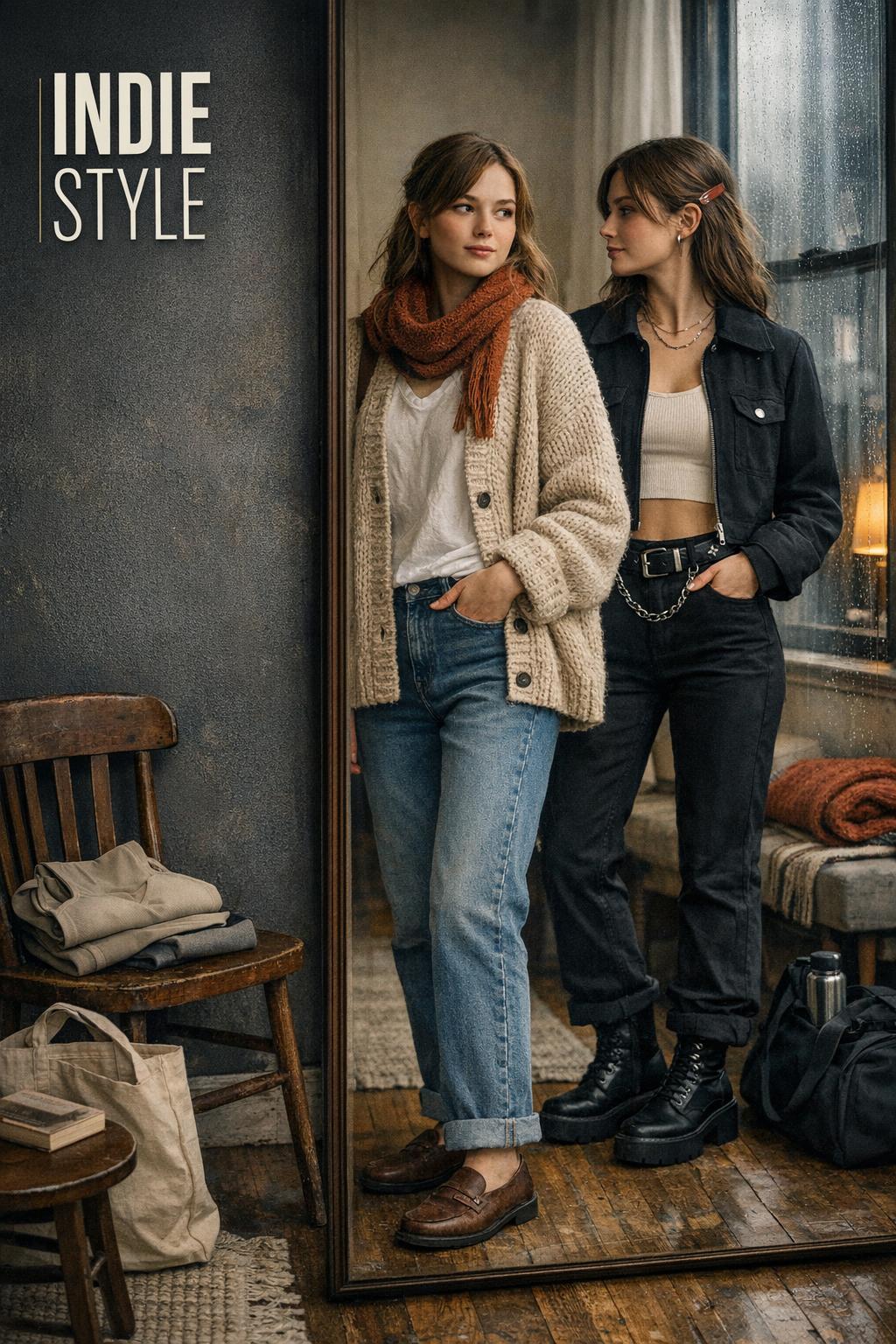
Indie style is an outfit-building approach centered on individuality, curated mismatch, and balanced proportions, often using relaxed silhouettes, texture contrast, and a flexible color strategy to create a lived-in but intentional look.
What makes alt indie outfits different from indie style?
Alt indie outfits use similar mixing and layering but shift the emphasis toward a sharper mood: more decisive silhouettes, more controlled or high-contrast palettes, and stronger statement elements that make the outfit read “alt” quickly.
Can indie outfits be colorful without looking messy?
Yes—indie outfits colorful look cohesive when color is organized through repetition (echoing a tone in more than one place) and anchored by one dominant piece, while the rest of the outfit stays tonal or texturally balanced.
How do I start dressing indie if I only have basic clothes?
Use basics as your base layer, then add indie identity through proportion play (one oversized or structured layer), texture contrast (knit with denim, soft with sturdy), and a single visual anchor like a standout color note or defining accessory.
How do I make alt indie outfits wearable for everyday life?
Concentrate the edge into one or two choices—either a decisive silhouette or a controlled contrast palette—while keeping the rest of the outfit grounded in comfortable, simple clothes so the look reads intentional rather than costume-like.
Where does indie aesthetic fashion overlap with fitness inspo?
The overlap comes from using performance-oriented basics as a comfortable foundation, then adding the aesthetic through an intentional outer layer, controlled proportions, and texture or palette choices that shift the look from “gym” to styled streetwear.
What’s the easiest way to switch an outfit from indie to alt indie?
Keep the base outfit the same and change one decisive element—tighten the palette for more intensity or swap to a sharper finishing choice (especially footwear or a more structured layer) so the overall mood shifts without rebuilding the look.
How can I tell if my outfit reads indie style or alt indie at first glance?
If the outfit reads relaxed, collected, and personality-led with softer layering transitions, it leans indie; if it reads more graphic, mood-led, and deliberately constructed through contrast and silhouette control, it leans alt indie.