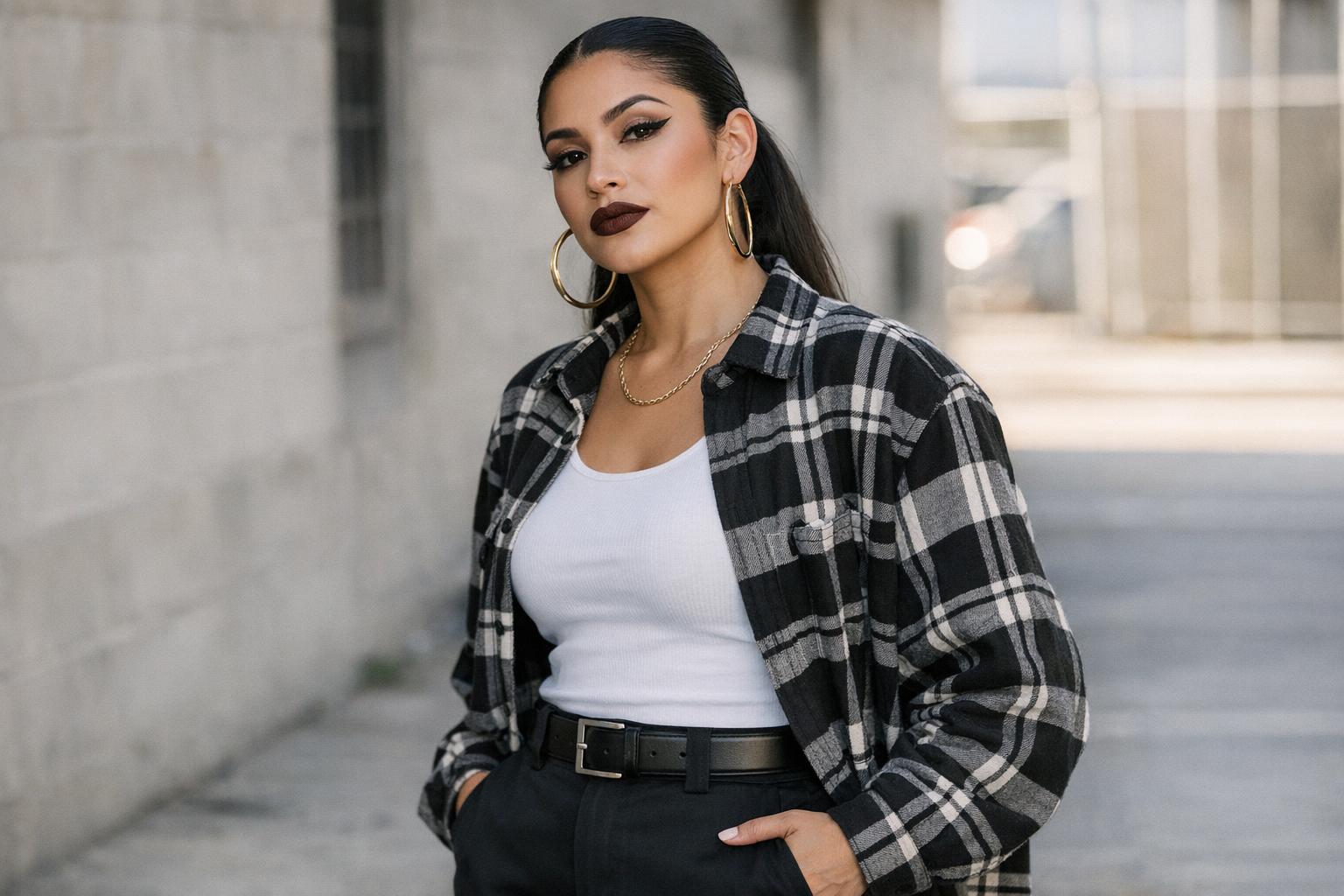
Modern Chola Style: West Coast Workwear, Styled with Respect
Chola style, without the costume problem: a practical guide to outfits, makeup, and context
You can love the sharp lip liner, the clean winged eyeliner, the oversized flannel, and the crisp workwear silhouette—and still feel stuck when you try to wear chola style in real life. The styling challenge is rarely about finding the pieces. It’s about making the look feel intentional, comfortable, and appropriate for where you’re going, without sliding into a caricature shaped by mass media and editorial shortcuts.
That tension is real because chola style is both an aesthetic and a cultural signal. In U.S. street culture—especially Los Angeles and the broader West Coast—it’s tied to Chicana/o identity, 1990s–early 2000s streetwear, and a history of being misunderstood or repackaged by fashion media. When the look is lifted into glossy “trend” language (or into a backstage beauty moment like Beaufille’s Fall 2014 show), it can flatten meaning into a few surface cues: dark lip liner, heavy liner, and a tough-girl uniform.
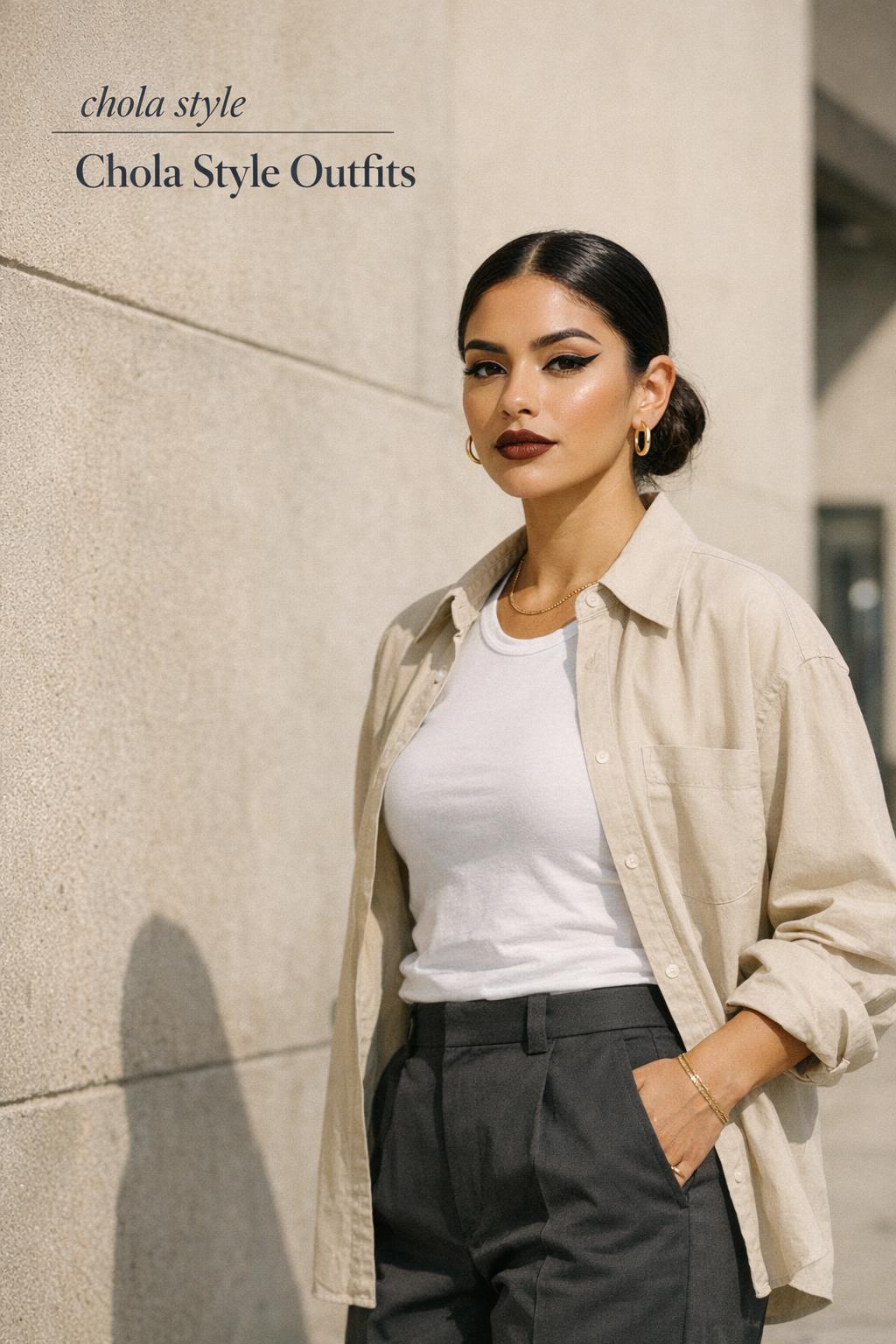
This guide solves a practical problem: how to build chola style outfits and chola outfit ideas that work for everyday situations—errands, casual city days, warm weather, cooler nights—while keeping the styling logic tight and being honest about the cultural appropriation debate that frequently surrounds the look. You’ll get wardrobe principles, makeup structure, and outfit solutions—including chola outfits 90s references and modern streetwear adaptations—plus mistakes to avoid and a targeted FAQ.
Understanding the styling challenge: why chola outfits are easy to reference and hard to execute
Chola style has strong visual anchors: lip liner paired with dark lipstick, winged eyeliner, defined brows, workwear like Dickies, oversized shirts, and bold accessories. Those anchors make the aesthetic instantly recognizable in editorial photography—like Nick Haymes’ Los Angeles “Style Print” framing—and in curated boards on Pinterest. But the same recognizability is what makes the look risky in daily wear: the outfit can tip from “composed” into “costume” if the proportions, grooming, and context aren’t balanced.
Found the dress? Keep the rest in one place.
Zarellea brings guest details, vendors, timelines, and every next step together — so your wedding plan feels as good as your look.
Practical constraints add friction. Oversized layers can feel bulky in heat; heavy makeup can crease or feel uncomfortable in long wear; and workwear silhouettes can read too severe if you don’t build in softness through fabric behavior, fit, or tonal layering. Many people searching cholo outfits for women are also trying to solve a second problem: how to borrow the attitude and structure of the look without copying community-coded details in a way that feels extractive.
There’s also the media layer. Pieces from fashion outlets and magazines have framed chola style through cultural appropriation discourse, with references to public figures like Gwen Stefani and editorial moments connected to Vogue Italia (including the “Haute Mess” conversation that still gets cited). That history shapes how the look is perceived. Your outfit isn’t judged in a vacuum; it’s read through what people think the look “means,” especially outside LA and West Coast contexts.
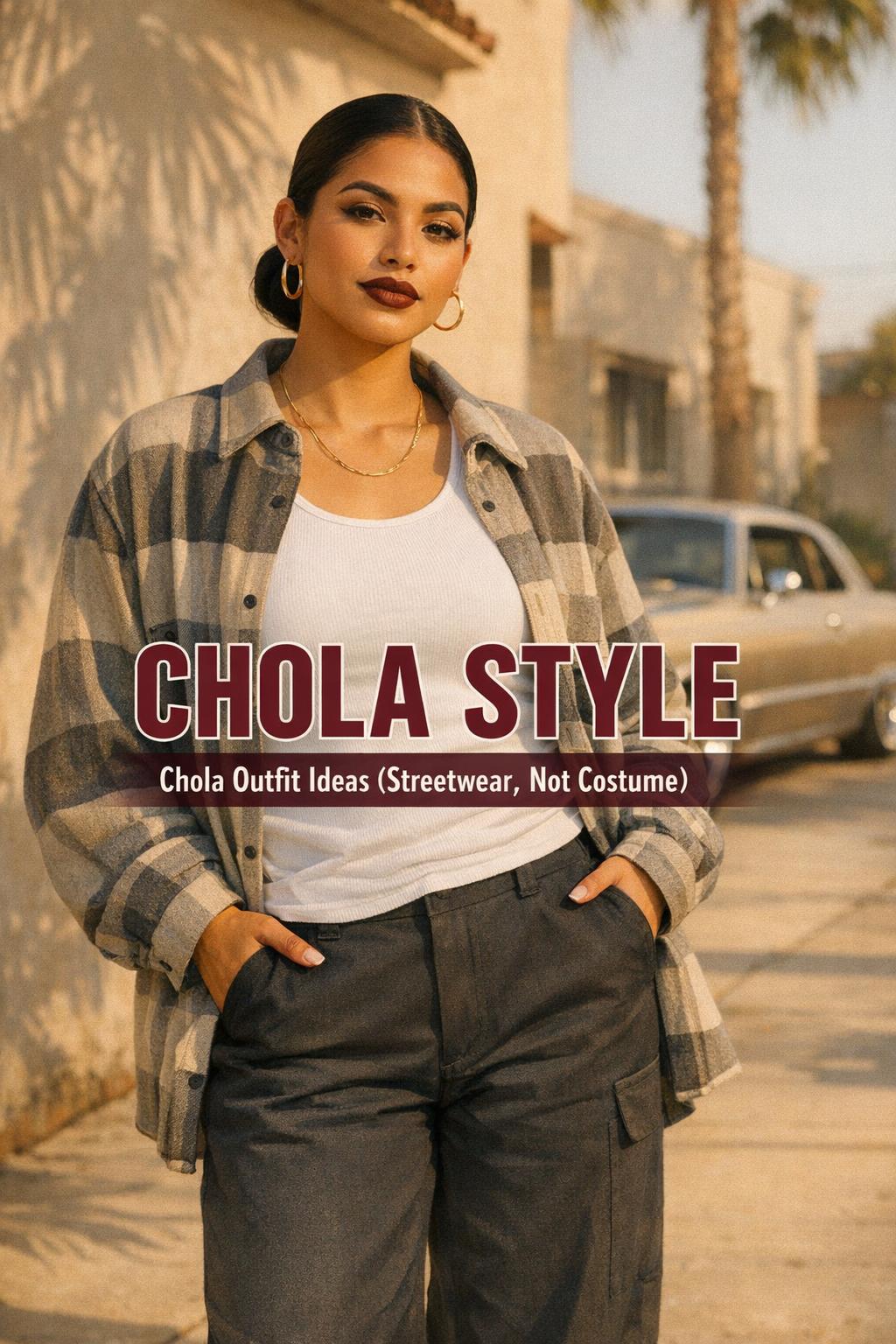
Key dressing principles that make chola style outfits wearable (and not performative)
Chola style works best when you treat it as outfit composition—silhouette balance, texture contrast, and deliberate visual anchors—rather than a checklist of stereotypes. The goal is to build a look that’s cohesive and functional first, then layer in the aesthetic cues with restraint.
Principle 1: choose one “hero signal,” not every signal at once
Pick a primary anchor: either makeup (a strong dark lip liner moment), or workwear (Dickies as the silhouette driver), or an oversized flannel as the top layer. When every cue hits at full volume—heavy liner, heavy lip, bandana, oversized everything—the look can read like an imitation assembled from search results rather than a lived-in outfit. A single hero signal creates clarity and reduces the “costume” risk.
Principle 2: use proportion play to keep oversized pieces clean
Oversized shirts and outerwear are central to chola outfits 90s references, but the most wearable version uses contrast: one relaxed piece paired with a more structured or streamlined counterpart. Think oversized flannel with straight workwear trousers; or a roomy tee with a crisp waistband. The outcome is a readable silhouette instead of a shapeless volume.
Principle 3: keep your palette intentional—tonal layering beats random contrast
A controlled palette helps the outfit look designed. Many chola outfit ideas lean on strong neutrals, denim, and workwear tones because they hold structure and photograph well. Tonal layering—variations of similar shades—makes the outfit feel like streetwear styling logic, not a theme.
Principle 4: build comfort into the “hard” elements
Workwear and sharp makeup are visually strong, but they must function through a real day. If your eyeliner smudges by hour three or your trousers restrict movement, the look becomes maintenance-heavy. The strongest chola style outfits are the ones you can walk in, sit in, and wear across temperature shifts—especially in city settings.
Principle 5: treat cultural context as part of the styling brief
Chola style is closely tied to Chicana/o culture and LA/West Coast street culture. That connection is why the look carries power—and why cultural appropriation concerns appear so often in mainstream coverage. The practical takeaway: be careful about turning identity-coded style into a party look, a “trend” costume, or a prop for photos. If you’re outside the culture, your best path is to keep references subtle, avoid caricature, and stay grounded in appreciation rather than extraction.
Outfit solutions: chola style outfits for real life (with styling logic)
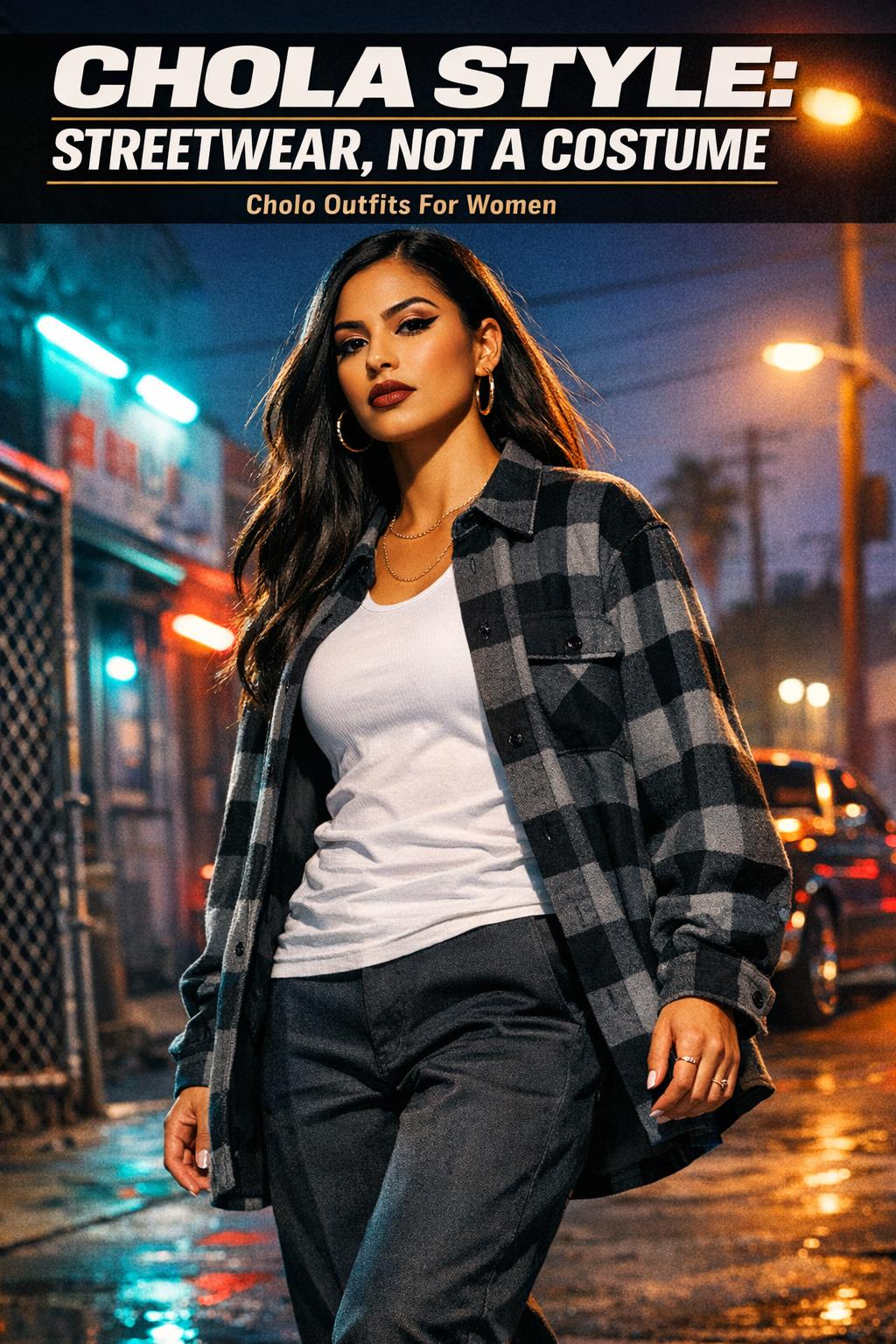
These outfit solutions are built around everyday constraints: weather swings, long wear, movement, and the need to look intentional. Each one uses a clear visual anchor and explains the composition so you can adapt it to your closet. You’ll see chola outfit ideas that nod to 1990s streetwear and Los Angeles cues while staying wearable.
Outfit solution: West Coast workwear core (Dickies as the visual anchor)
This is the cleanest way to wear chola style without relying on heavy styling extras: build the outfit around Dickies-inspired workwear structure, then keep everything else minimal. The trousers become the statement piece, and the rest of the look supports them with controlled proportion.
- Key pieces: Dickies-style workwear pants, a fitted or straight-cut tee, an oversized shirt layer (flannel or crisp button-up), and simple accessories.
- Why it works: the structured pant anchors the silhouette; the top layers provide proportion play without visual noise.
- When to wear: errands, casual city days, and any time you want a strong outfit that still feels functional.
Style breakdown: keep the waistband clean and the shirt layer intentionally oversized, not accidentally big. If the shirt is oversized, keep the tee more fitted to avoid stacking volume. This outfit reads as streetwear composition first, chola reference second—which is the point if you want the look to feel respectful and current.
Outfit solution: chola outfits 90s remix (oversized flannel + denim balance)
For readers searching chola outfits 90s, the flannel-and-denim formula is the most recognizable reference. The modern fix is to refine the shape: oversized on top, straighter lines below, and a palette that looks cohesive rather than costume-coded.
Style breakdown: use an oversized flannel as your outer layer, then choose denim with a clean line—straight rather than exaggerated. The flannel becomes the texture contrast, while the denim acts as the neutral anchor. If you add accessories, keep them intentional and minimal; the outfit should read as a considered uniform, not a bundle of references.
Makeup pairing: a toned-down version of chola makeup works best here—defined brows and a controlled winged eyeliner, with lip liner softened rather than sharply outlined. You’re keeping the “editorial” impact while making it wearable for a full day.
Outfit solution: warm-weather chola outfit ideas (lightweight structure, not heavy layering)
Hot weather is where many chola style outfits fail: people keep the same oversized layering logic and end up uncomfortable. The solution is to preserve structure through fit and fabric behavior instead of adding more pieces.
- Key pieces: a crisp tee or sleeveless top, structured workwear-style shorts or lightweight trousers, and one optional layer (an oversized shirt worn open).
- Why it works: the silhouette stays defined without trapping heat; the open layer creates movement and shape.
- Comfort logic: fewer layers, cleaner lines, and makeup that can hold up without constant touch-ups.
Beauty strategy: if you want a chola makeup cue in heat, choose one high-impact element—either winged eyeliner or lip liner—not both at maximum intensity. That keeps the face as a visual anchor while staying practical for long wear.
Outfit solution: smart-casual chola style (a controlled nod for dinners, galleries, and events)
Chola style is often treated as purely street. But many people want a version that works for a dinner, a gallery night, or a creative workplace. The trick is to keep the aesthetic in the styling details—makeup precision, proportion control—while choosing cleaner garments.
Style breakdown: use structured trousers (workwear-inspired lines still fit here) and a crisp top. Add an oversized outer layer that looks deliberate—clean and sharp rather than distressed. The outfit’s authority comes from silhouette balance: straight lines below, controlled volume above, and a tight palette.
Why this avoids the “trend costume” issue: you’re not stacking stereotyped cues. Instead, you’re applying the aesthetic logic—structure, confidence, clean lines—while keeping the references subtle. This is especially useful if you’re navigating the cultural appropriation debate and want to avoid reducing the look to a gimmick.
Outfit solution: comfortable city uniform (Pinterest-friendly, movement-ready)
Many chola outfit ideas circulate as images—quick inspiration with less attention to movement. A city-ready uniform needs walkability and durability. Build around one strong piece and make everything else supportive.
Style breakdown: choose a workwear bottom (Dickies-style trousers are the obvious anchor) and pair it with a simple top. Add one accessory that reads clearly in photos—like a bold jewelry element—then stop. The outfit becomes a “visual headline” without turning into a collage of references. This approach aligns with how the look is photographed in street style and editorial contexts, from LA documentation to magazine features.
Outfit solution: cholo outfits for women with a modern streetwear lens (power silhouette, softened edges)
Searches for cholo outfits for women often point to a desire for a tougher, more assertive silhouette—without sacrificing comfort or fit. The most wearable version leans into power through structure, then softens through styling restraint.
- Key pieces: structured workwear pants, a clean base layer, and an oversized shirt or jacket that creates shoulder and torso presence.
- Why it works: the “power” comes from geometry—straight lines, firm waistband, controlled volume—rather than extra props.
- Styling variation: swap the oversized layer depending on weather, keeping the base consistent for a capsule approach.
Makeup pairing: a defined brow and winged eyeliner deliver the attitude without requiring full heavy makeup. If you add lip liner, keep the edge precise but not exaggerated; the goal is polish, not parody.
Visual identity, solved: chola makeup cues you can wear for hours
Chola makeup is one of the strongest identifiers of the aesthetic, and it’s where many people either overdo it or struggle with longevity. Across mainstream coverage, the repeated cues are consistent: lip liner, dark lip color, winged eyeliner, and strong brow shape. Backstage references like Beaufille’s Fall 2014 beauty framing show how fashion can “reinvent” the look by isolating these cues and presenting them as trend—often without context.
If your goal is a practical, wearable version, treat the makeup like design: one focal point plus supporting structure. Think of it the way editorial photography frames it—high contrast, clean edges, strong features—but translate that into comfortable execution.
Makeup structure: a four-part system (lip, line, brow, base)
- Lip liner first: lip liner creates the signature definition. Keep the outline sharp, but soften the fill if you want a more modern finish.
- Winged eyeliner as geometry: winged eyeliner is a visual arrow that lifts the face. Make the wing proportionate to your eye shape so it reads intentional, not heavy.
- Brows as the frame: a defined brow anchors the look. The brow is what makes a bold lip or liner look controlled rather than chaotic.
- Base as support: avoid overloading the base if you’re wearing strong eyes or lips; too much product can reduce comfort and increase maintenance.
Practical insight: the most wearable chola makeup looks are the ones that still look clean after a commute, a meal, and a few hours of wear. If you’re featuring a dark lip color, build it in thin layers and keep the liner edge clean. If you’re featuring winged eyeliner, prioritize symmetry and crispness over thickness. The look is about precision as much as it is about boldness.
Tutorial-first learning: why YouTube is useful (and how to use it intelligently)
If you’re learning technique, YouTube tutorials are practical because you can see sequencing—liner placement, blending, and how the finished look behaves under real lighting. Lists of chola makeup and hair tutorials highlight how many variations exist, from more 1990s-heavy definitions to softer modern adaptations. Use tutorials to refine method, not to copy a persona: focus on transferable skills like clean winged eyeliner, controlled lip liner, and hair styling cues that work with your texture and comfort level.
Tips: making bold makeup work with an all-day outfit
Pairing makeup with chola style outfits is about distribution of intensity. A strong lip can replace jewelry as the statement piece. A strong eye can replace a graphic top. If you’re wearing Dickies and an oversized shirt, consider a more controlled lip so the face doesn’t compete with the silhouette. If your outfit is minimal, you can let the makeup carry more of the aesthetic signal.
Wardrobe signals: the pieces that read “chola style” and how to style them responsibly
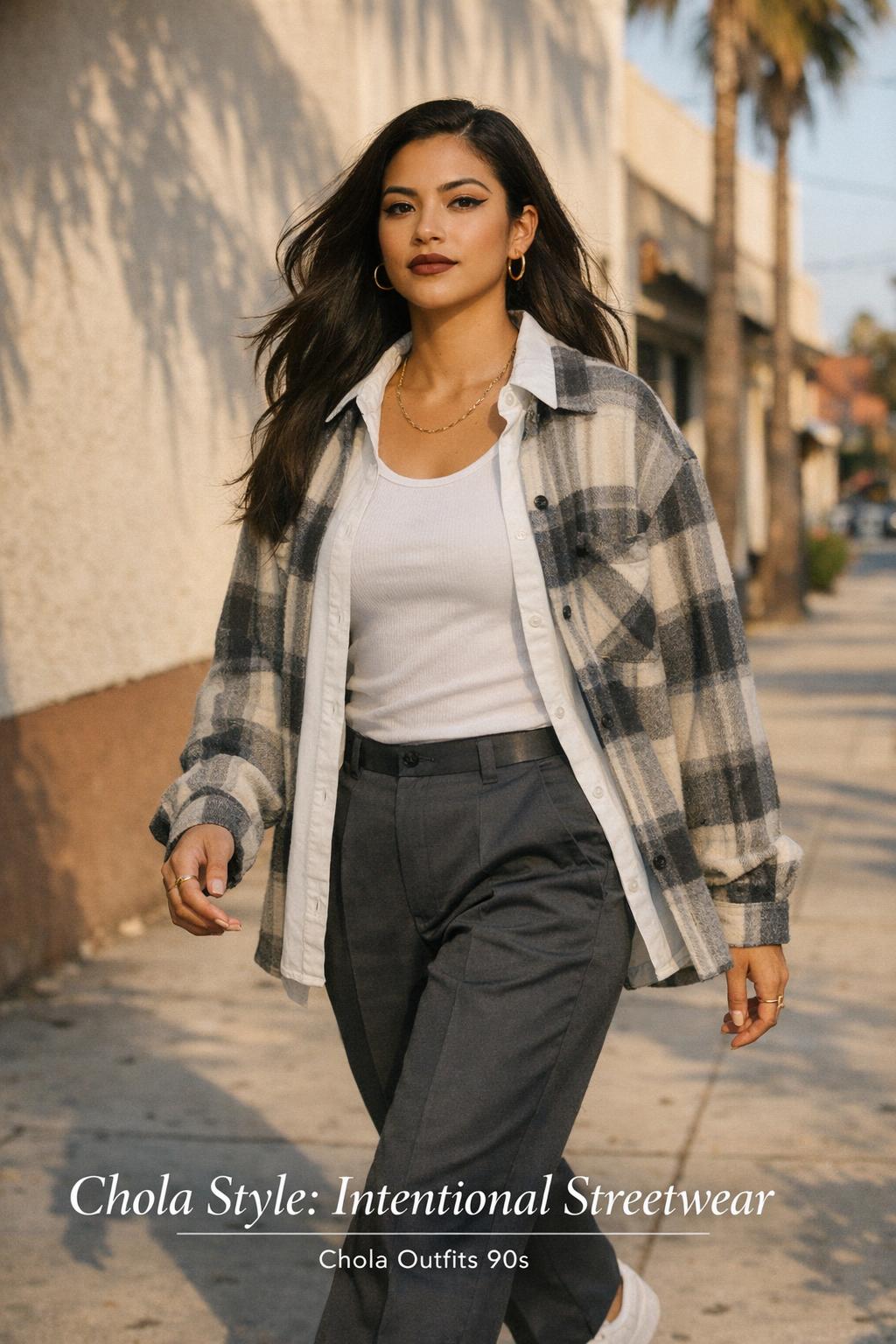
Wardrobe cues are where most chola style outfits become instantly legible: Dickies, oversized shirts (especially flannels), and streetwear silhouettes that echo 1990s and early 2000s styling. The key is to treat these pieces as a capsule system—repeatable, adaptable, and grounded in fit.
The capsule logic: fewer pieces, more outfits
A modern chola-inspired capsule doesn’t require a long shopping list. It requires a small set of versatile anchors that can be recomposed. This is the same logic that makes streetwear uniforms effective: repetition with variation.
- Workwear bottom (Dickies as the classic reference) for structure and durability
- Oversized shirt layer (flannel or similar) for volume and texture contrast
- Simple base tops to keep the silhouette clean
- A small rotation of accessories that don’t over-code the look
Why this works: when the base is consistent, your styling choices become clearer. You can shift the look by changing one variable—makeup intensity, shirt layer, accessory weight—without rebuilding the entire outfit. This also reduces the temptation to stack stereotyped details.
Where “chola style outfits” go wrong: when the outfit becomes an internet composite
Pinterest boards and aggregator pages are useful for visuals, but they can also encourage “composite styling”: taking every recognizable cue from multiple images and wearing them all at once. That’s how a look stops feeling like fashion and starts feeling like an imitation. If your chola outfit ideas come from curated images, translate them into principles—silhouette, palette, one hero signal—rather than copying every detail.
The media lens you can’t ignore: editorial visibility, representation, and cultural appropriation
Chola style has been documented, aestheticized, and debated in mainstream outlets for years. Fashion photography features like Nick Haymes’ Los Angeles framing in Vogue emphasize visual detail—hair, makeup, wardrobe—often highlighting how street style becomes editorial subject. At the same time, cultural commentary pieces have questioned what happens when a community-coded look is lifted into fashion trend language, especially when paired with famous-name references like Gwen Stefani or editorial moments associated with Vogue Italia.
This matters for personal styling because public perception is shaped by these media frames. If your look reads like an editorial pastiche—“Haute Mess” energy without lived context—it can feel like appropriation rather than appreciation. And the debate isn’t abstract: it’s about power, visibility, and who benefits when an aesthetic rooted in marginalized communities becomes profitable or “cool” in mainstream spaces.
Practical guideline: appreciation shows up in restraint and context
If you’re not from the culture, the most respectful approach is to avoid turning chola style into a costume category—especially for parties, “theme” photos, or exaggerated makeup for shock value. Instead, focus on styling fundamentals that overlap with broader streetwear: workwear structure, clean palette, proportion play, and one makeup cue executed with precision. Restraint reads as taste; excess reads as performance.
Why feminist analysis changes the conversation
Some cultural coverage has framed the chola fashion trend through gender, power dynamics, and a feminist lens—highlighting that the aesthetic isn’t just “tough style,” but a way of signaling identity and agency. That lens is also why community-based brands and designers, including references like Mama Clothing, matter in the conversation: they shift the focus from outsiders borrowing the look to insiders shaping it.
Location and setting: how to adapt chola outfit ideas beyond Los Angeles
Los Angeles is a central reference point in mainstream depictions of chola style, but people wear chola-inspired looks across the U.S., often filtered through local streetwear habits. The practical issue is that what reads as everyday uniform in one place can read as statement styling in another. Your outfit needs to account for setting.
In LA and West Coast contexts: keep it authentic by keeping it simple
When a look is culturally legible, authenticity is often communicated through ease. A workwear bottom like Dickies, an oversized shirt layer, and controlled makeup reads more credible than an over-styled, hyper-referential outfit. The outfit should look lived-in and functional, not assembled for attention.
Outside major West Coast hubs: focus on the silhouette, not the stereotypes
If you’re wearing chola style outfits in areas where the aesthetic is less commonly seen, the outfit may attract more scrutiny. In that case, anchor your look in universal styling logic: clean lines, controlled palette, one hero cue. This approach also helps you avoid the pitfalls of looking like you’re wearing someone else’s identity as a trend.
Hair, accessories, and finishing: the details that polish chola outfits without overcoding them
Finishing details are where outfits become either editorially sharp or visually overloaded. Many chola makeup and hair tutorials emphasize how grooming and hair shape the final impression. The key is to treat hair and accessories as supporting architecture: they should reinforce the outfit’s structure, not compete with it.
Accessory discipline: one statement, one support
Chola outfits can include bold jewelry and strong accessory cues, but restraint is what keeps the look wearable. Choose one statement element (for example, a bold jewelry piece) and one support element (something minimal that repeats the palette). When accessories start stacking, the outfit risks sliding into a caricature.
Tips: how to keep the look crisp in photos and in real life
Editorial images often reward high contrast—sharp liner, defined lip edge, clear silhouette. Real life rewards comfort and durability. For a balance, make the outfit crisp through fit and ironing/clean lines, and keep the makeup precise rather than heavy. A clean winged eyeliner reads better than an overbuilt smoky line; a defined lip liner reads stronger when it’s symmetrical and controlled.
Shopping reality check: where “chola style clothing” turns commercial (and what to do instead)
Shopping pages and marketplaces make chola style look like a product category—“chola style clothing” as tees, hoodies, jewelry, and slogan-heavy items. That commercial framing can be useful if you’re looking for basics, but it also encourages the most superficial version of the aesthetic: buying a label instead of building an outfit system.
A more effective approach is to shop by function and silhouette: workwear structure, oversized layers, and makeup tools that support the signature cues (lip liner, dark lip color, winged eyeliner). If you do buy explicitly labeled items, consider whether the product feels like appreciation or a gimmick—and whether it reduces a living culture into a punchline.
Practical capsule shopping list (category-based, not logo-based)
- Workwear pants (Dickies as the core reference point)
- Oversized flannel or oversized shirt layer
- Simple base tops that layer cleanly
- Lip liner and a dark lipstick option
- Eyeliner suitable for a crisp winged eyeliner shape
This list stays close to the strongest recurring cues while leaving room for personal style and context. It also avoids turning chola style into a “merch” identity.
Common mistakes that sabotage chola style outfits (and the fixes)
Mistake: stacking every reference at maximum intensity
Why it happens: the aesthetic is often summarized online as a set of recognizable cues, so people try to include them all. Why it fails: the outfit loses composition and starts reading like a costume. Fix: choose one hero signal (makeup, workwear, or oversized layer) and keep the rest clean.
Mistake: confusing “editorial” with “everyday”
Why it happens: fashion media and backstage beauty references can glamorize chola cues as trend, separate from daily life. Why it fails: editorial exaggeration often isn’t comfortable or practical for long wear. Fix: translate the idea into wearable structure—lighter base, crisp lines, and makeup that lasts.
Mistake: ignoring the cultural appropriation conversation
Why it happens: the internet can present chola style as purely aesthetic. Why it fails: it dismisses the community roots in Chicana/o culture and the real discomfort that comes when identity-coded style is used as a prop. Fix: avoid costume contexts, keep references subtle if you’re outside the culture, and prioritize respect and restraint over shock value.
Mistake: letting makeup overwhelm your face instead of shaping it
Why it happens: heavy liner and dark lips are easy to over-apply when you’re following quick inspiration images. Why it fails: the makeup can feel harsh, smudge, or require constant maintenance. Fix: focus on precision—clean winged eyeliner, symmetrical lip liner, and a controlled base that supports the look.
Ethical and practical style boundaries: wearing chola-inspired looks with cultural respect
Chola style is not a neutral trend. It’s tied to identity, place, and history—especially in Los Angeles and the West Coast—and it has been repeatedly filtered through mainstream media narratives. That’s why ethical considerations belong in a practical guide: they affect where and how a look should be worn.
A grounded approach starts with intent and ends with execution. If your goal is to explore streetwear structure and 1990s-inspired styling, focus on universal elements like workwear silhouettes, tonal layering, and precise beauty technique. If your goal is to look like a specific cultural archetype you’ve seen in an editorial spread, pause. That’s the point where appreciation can become appropriation—especially when the look is worn for novelty or content.
It’s also worth acknowledging that community voices and designers matter in shaping how the aesthetic evolves. Coverage that centers Latina designers and brands like Mama Clothing reframes the conversation: not “who can wear it,” but “who is defining it, and who benefits.” That is a healthier foundation for style exploration than copying a headline-making editorial moment.
Pulling it together: a wearable approach to chola outfits that stands up in real life
The most successful chola style outfits follow a simple logic: one strong visual anchor, a controlled silhouette, and grooming that’s precise rather than excessive. Use Dickies-style workwear or an oversized flannel as your structural core, then keep palette and proportions intentional. Treat chola makeup as design—lip liner and winged eyeliner executed with clean geometry—so the look lasts through a real day.
Just as importantly, treat context as part of the outfit. Chola style lives in a cultural landscape shaped by Los Angeles street culture, editorial photography, and an ongoing cultural appropriation debate. The practical path forward is respect and restraint: build outfits that read as fashion intelligence, not a costume, and let your styling choices reflect understanding as much as inspiration.
FAQ
What is chola style?
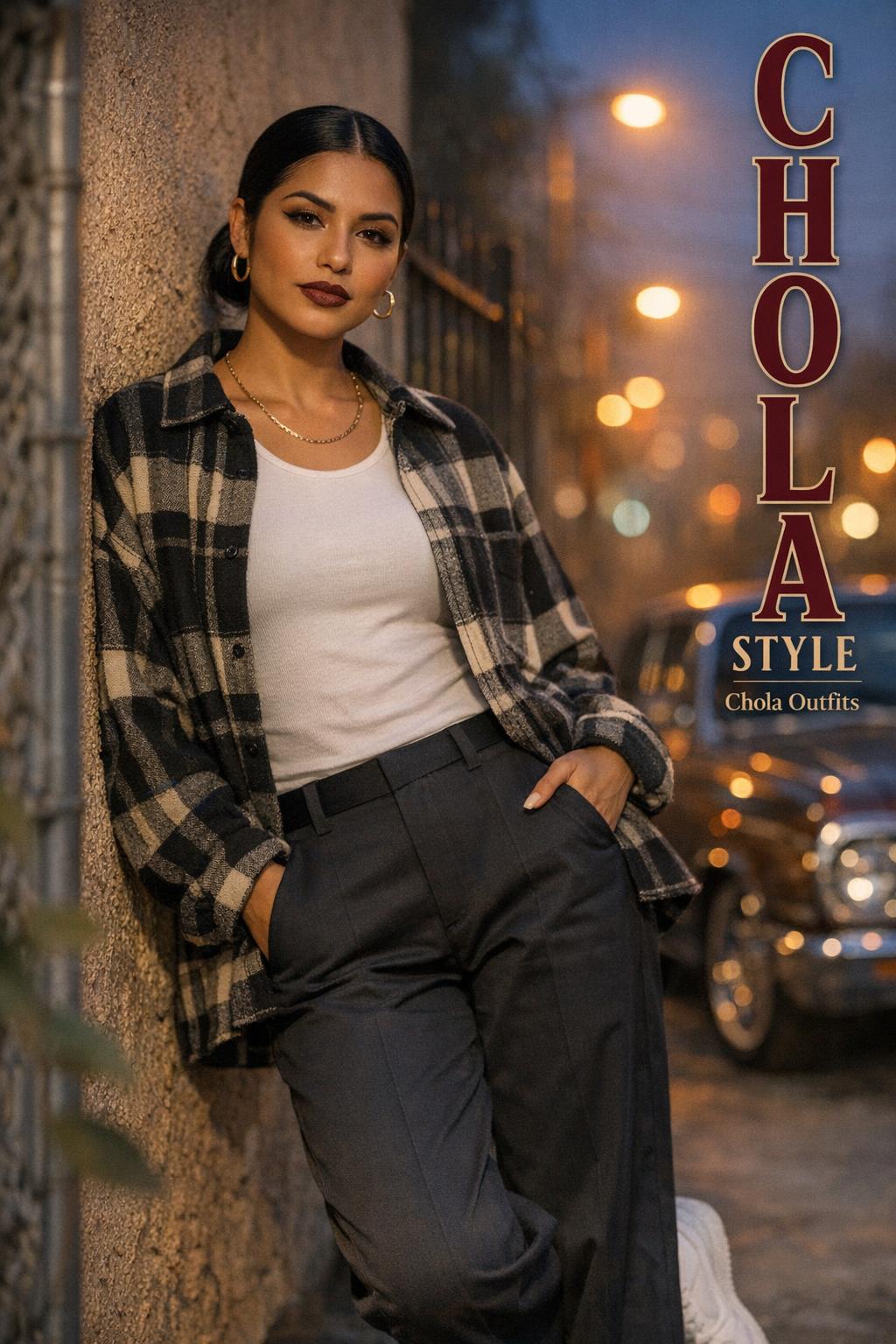
Chola style is an aesthetic closely associated with Chicana/o culture and U.S. West Coast street culture, especially Los Angeles, recognized through strong makeup cues like lip liner and winged eyeliner alongside streetwear and workwear signals such as Dickies and oversized shirts.
What are the main makeup cues in chola makeup?
The most repeated cues are defined lip liner paired with darker lip color, crisp winged eyeliner, and strong brows; the most wearable approach is to choose one focal point (lip or eye) and keep the rest of the makeup supportive for comfort and longevity.
What clothing items define chola style outfits?
Common wardrobe signals include workwear like Dickies, oversized flannels or oversized shirts, and clean streetwear silhouettes that reference 1990s–early 2000s styling; the look reads best when one of these becomes the outfit’s main anchor.
How do I wear chola outfits 90s-inspired without looking like I’m in costume?
Use the 1990s reference as a silhouette guide rather than a full checklist: pick one hero element like an oversized flannel or workwear pants, keep the palette controlled, and avoid stacking every recognizable cue at maximum intensity.
Why is there a cultural appropriation debate around chola style?
The debate exists because chola style is rooted in marginalized communities and has been repeatedly repackaged by mainstream fashion media and public figures, which can shift credit and profit away from the culture while reducing the look to a trend or stereotype.
Is it appropriate to wear chola style if I’m not Chicana/o?
Because the look carries cultural meaning, the most responsible approach is to avoid costume contexts, keep references subtle, focus on universal style fundamentals like workwear structure and clean composition, and be mindful of how your styling choices may be perceived in light of appropriation concerns.
How does Los Angeles influence chola style?
Los Angeles is a key location in how chola style is documented and recognized, appearing frequently in street style and editorial photography; it’s often treated as a central reference point for the look’s visual language and cultural context.
What’s the easiest way to start with chola outfit ideas if I’m new to the look?
Start with one wearable anchor—Dickies-style workwear pants or an oversized flannel—then pair it with simple basics and add one controlled beauty cue like winged eyeliner or lip liner to create a clear, intentional outfit without overdoing it.
How do fashion media and editorial photography affect how chola style is seen?
Editorial photography and magazine coverage can amplify specific cues—like lip liner, heavy liner, and workwear—while sometimes stripping away cultural context, which shapes public perception and contributes to debates about representation and appropriation.