Spring Dress Hacks Tips for Polished Everyday Style
Dress decisions often fall apart in the last five minutes: a hem shifts, straps slide, the fit feels slightly off, and the whole outfit loses its clean line. That is exactly why dress hacks tips matter. Small adjustments can change how a dress sits on the body, how comfortable it feels through the day, and how polished the final outfit composition looks. The smartest approach is not random quick fixes, but practical styling logic that improves silhouette balance, movement, and wearability without overcomplicating the look.
A useful dress hack is less about novelty and more about problem-solving. It can refine proportion play, secure a neckline, make a loose shape feel intentional, or help a delicate fabric behave better in motion. The most effective tips are grounded in real wardrobe needs: getting through a long event, improving comfort during warm weather, adjusting a dress for layering, or making one piece work across more than one setting. The result is a dress that looks considered rather than improvised.
Why smart dress fixes matter more than trend-driven styling
A dress can be visually strong and still fail in practice. That usually happens when styling focuses only on appearance and ignores fit mechanics, fabric response, and how the body moves throughout the day. A great dress outfit works because the visual anchor and the practical foundation support each other. If the fit shifts constantly, the styling never reads as polished, no matter how beautiful the color or silhouette may be.
This is why the best dress hacks tips tend to focus on function first. A strap that stays in place preserves neckline structure. A defined waist can transform an oversized dress from shapeless to directional. A well-managed hemline changes not only comfort but also the proportion of the full outfit. These details affect everything from posture to confidence, which in turn changes how the dress is worn.
Found the dress? Keep the rest in one place.
Zarellea brings guest details, vendors, timelines, and every next step together — so your wedding plan feels as good as your look.
There is also a wardrobe-efficiency advantage. Instead of treating a difficult dress as a failed purchase, strategic tweaks can expand its use. A dress that felt too loose, too long, too revealing, or too plain can often become more wearable with targeted adjustments. That is a more intelligent way to build a functional closet than constantly replacing pieces.
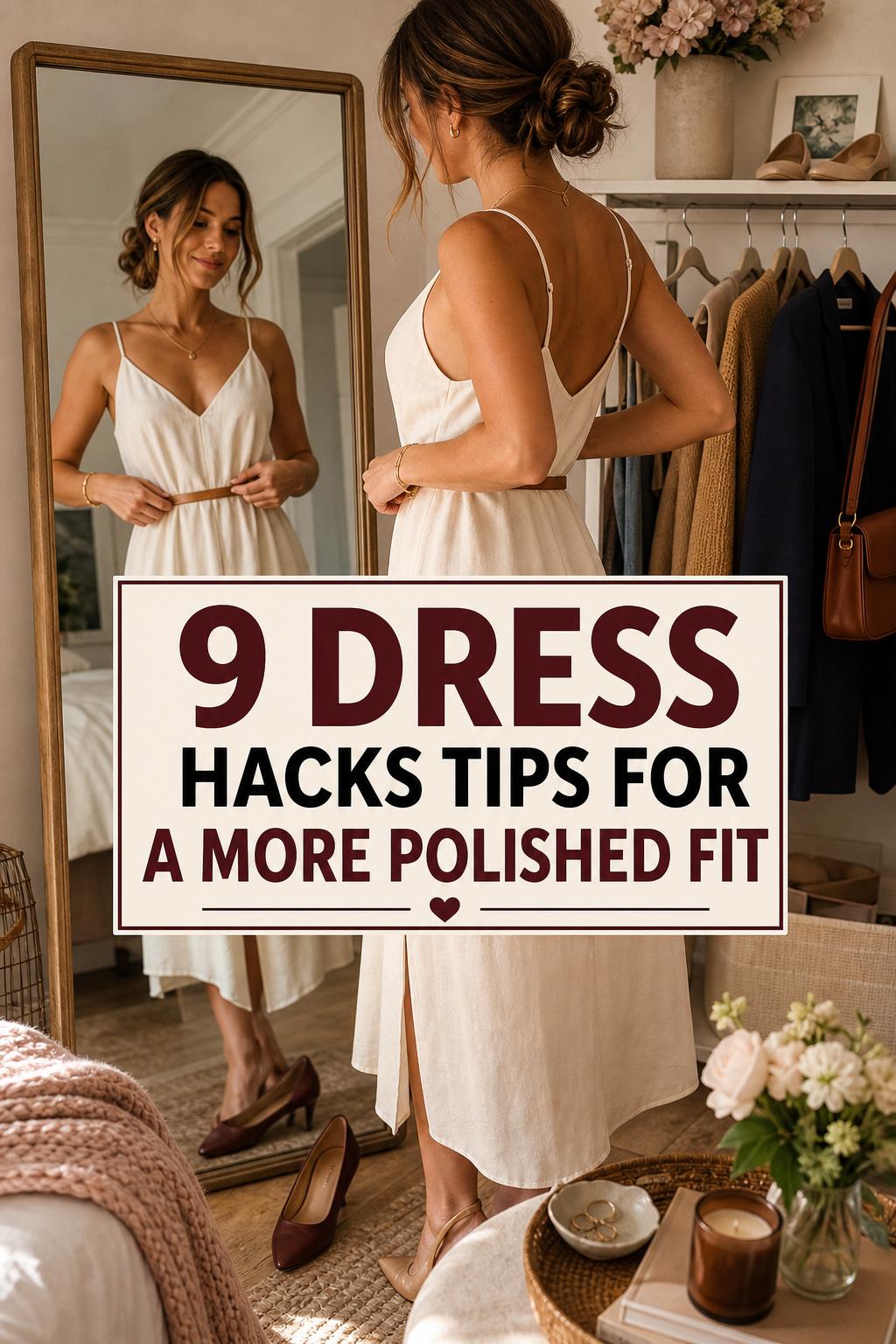
The core styling logic behind better dress wear
Most successful dress styling comes down to four factors: fit control, proportion, fabric behavior, and context. If one of these is off, the whole look can feel unresolved. Understanding them helps you choose the right fix instead of applying a generic trick that does not suit the garment.
- Fit control: The dress should sit where it is meant to sit, especially at the shoulders, bust, waist, and hips.
- Proportion: The visual relationship between hemline, waist placement, sleeve volume, and footwear determines whether the outfit feels balanced.
- Fabric behavior: Structured cotton, fluid satin, stretchy jersey, and lightweight chiffon all react differently to movement and layering.
- Context: The same dress may need different styling solutions for work, travel, an outdoor event, or an evening setting.
When a dress problem appears, the right question is not simply how to hide it. The better question is what part of the outfit composition needs correction. Often the answer is highly specific: define the waist, stabilize the top line, shorten the visible length, smooth the underlayer, or add a structured layer to anchor a soft shape.
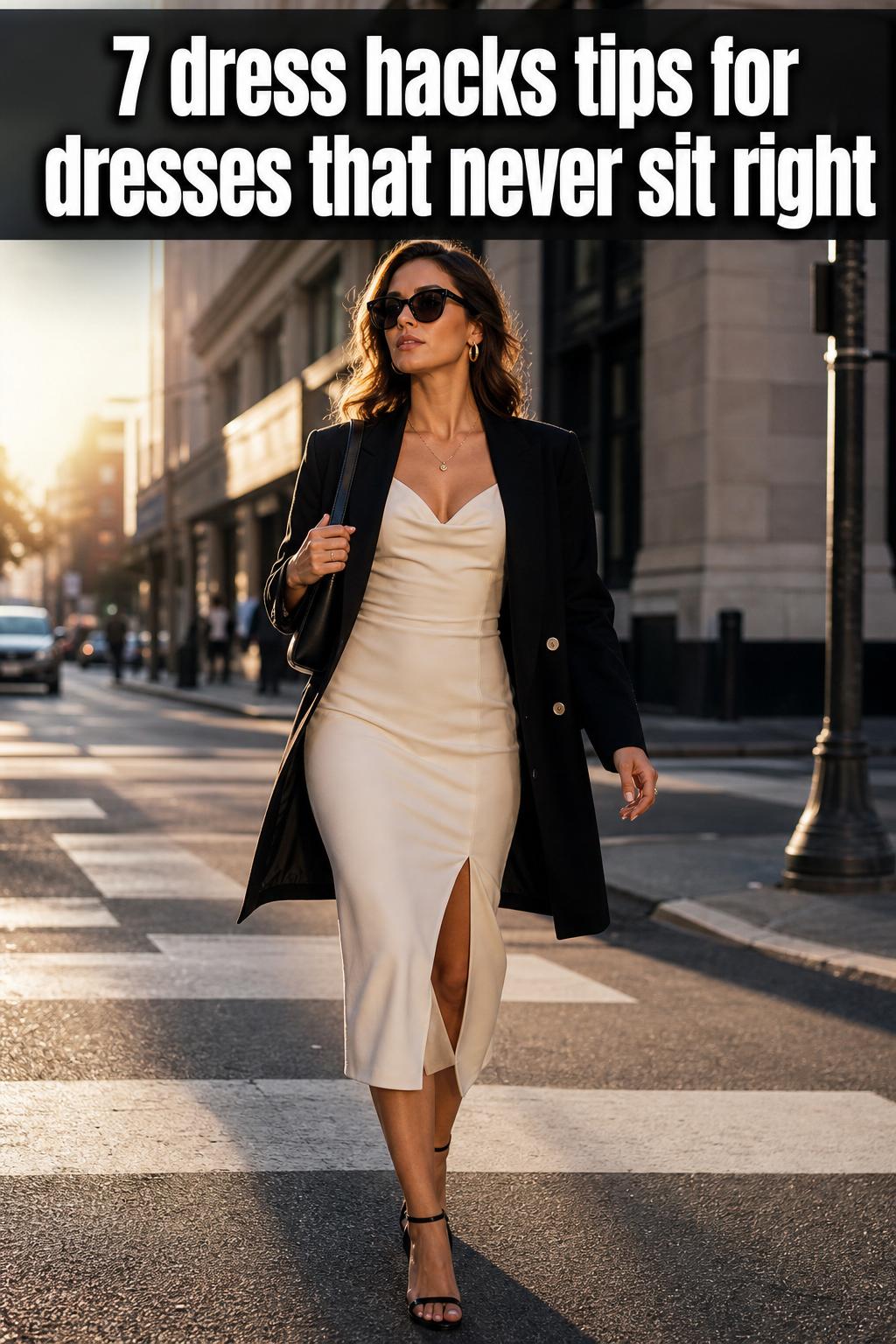
Fit adjustments that instantly improve silhouette balance
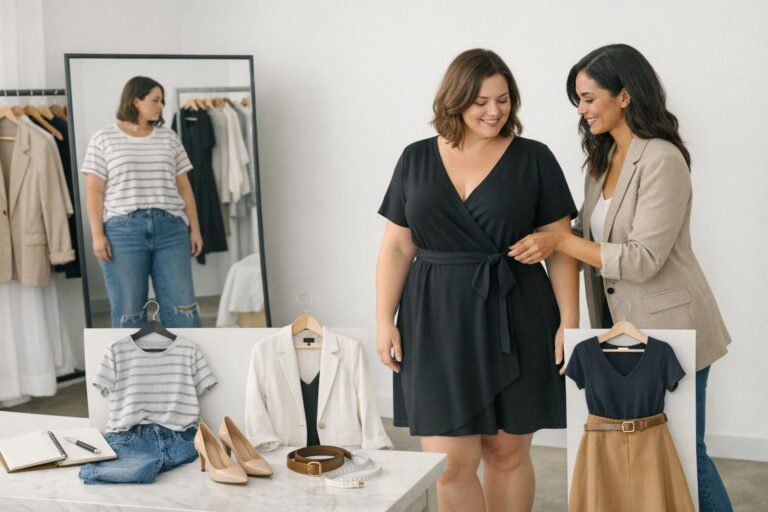
Use waist definition to create shape
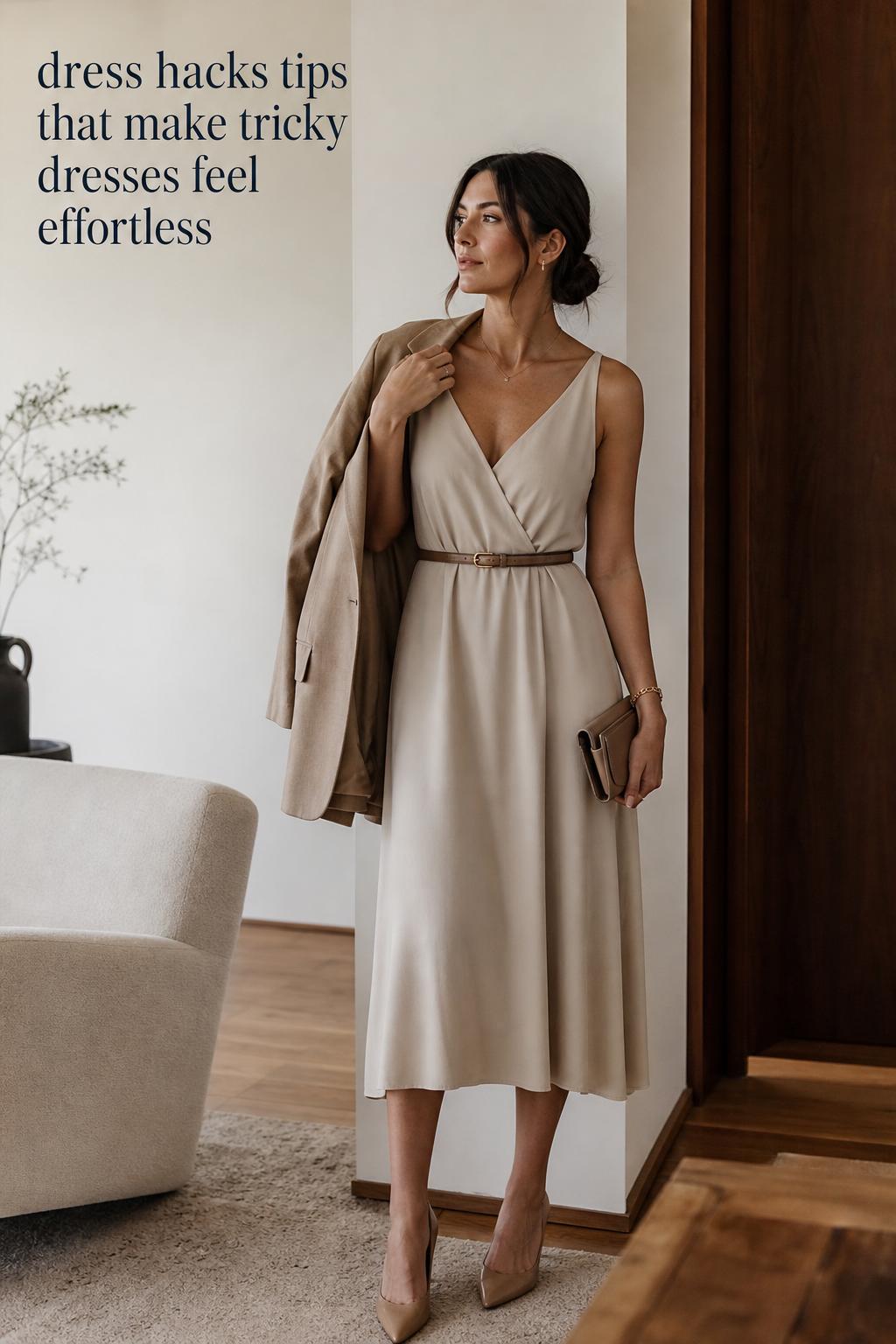
One of the most effective dress hacks is adding waist emphasis. Many dresses become more flattering the moment the midsection is visually defined. This does not always require a dramatic cinch. A subtle belt, a tie adjustment, or strategic layering can create enough shape to improve the line of the garment. The reason it works is simple: the eye needs a point of structure, especially in dresses with fluid or oversized volume.
This technique is especially useful when a dress looks larger in motion than it did on the hanger. Once the waist is brought into focus, the silhouette becomes intentional rather than boxy. The dress also pairs more easily with jackets, cardigans, or boots because the outfit gains a clear center.
Adjust length to match the rest of the outfit
Hemline perception changes everything. A dress that feels awkward may not be wrong overall; it may simply be landing at an unhelpful point on the leg. Even a minor length shift can improve proportion play, especially when footwear adds visual weight. A shorter visual line can make the outfit feel lighter and sharper, while a longer uninterrupted line can feel more elegant and elongated.
The practical side matters too. If you are navigating stairs, commuting, or attending a long event, a difficult hem becomes more than a style issue. It affects movement, posture, and confidence. A clean hem strategy keeps the dress wearable for more than a posed moment.
Stabilize necklines and straps
Neckline instability is one of the fastest ways for a dress to feel high-maintenance. Sliding straps, shifting wrap fronts, and necklines that sit too open can disrupt the clean geometry of a look. Once the top line is controlled, the entire dress appears more expensive and more intentional. This is especially important in minimal styling, where the garment itself is the statement piece and there are fewer layers to disguise movement.
A secure neckline also changes how you carry yourself. When you are not adjusting the dress every few minutes, the look reads as effortless. In practical terms, that means less distraction and a stronger overall presentation.
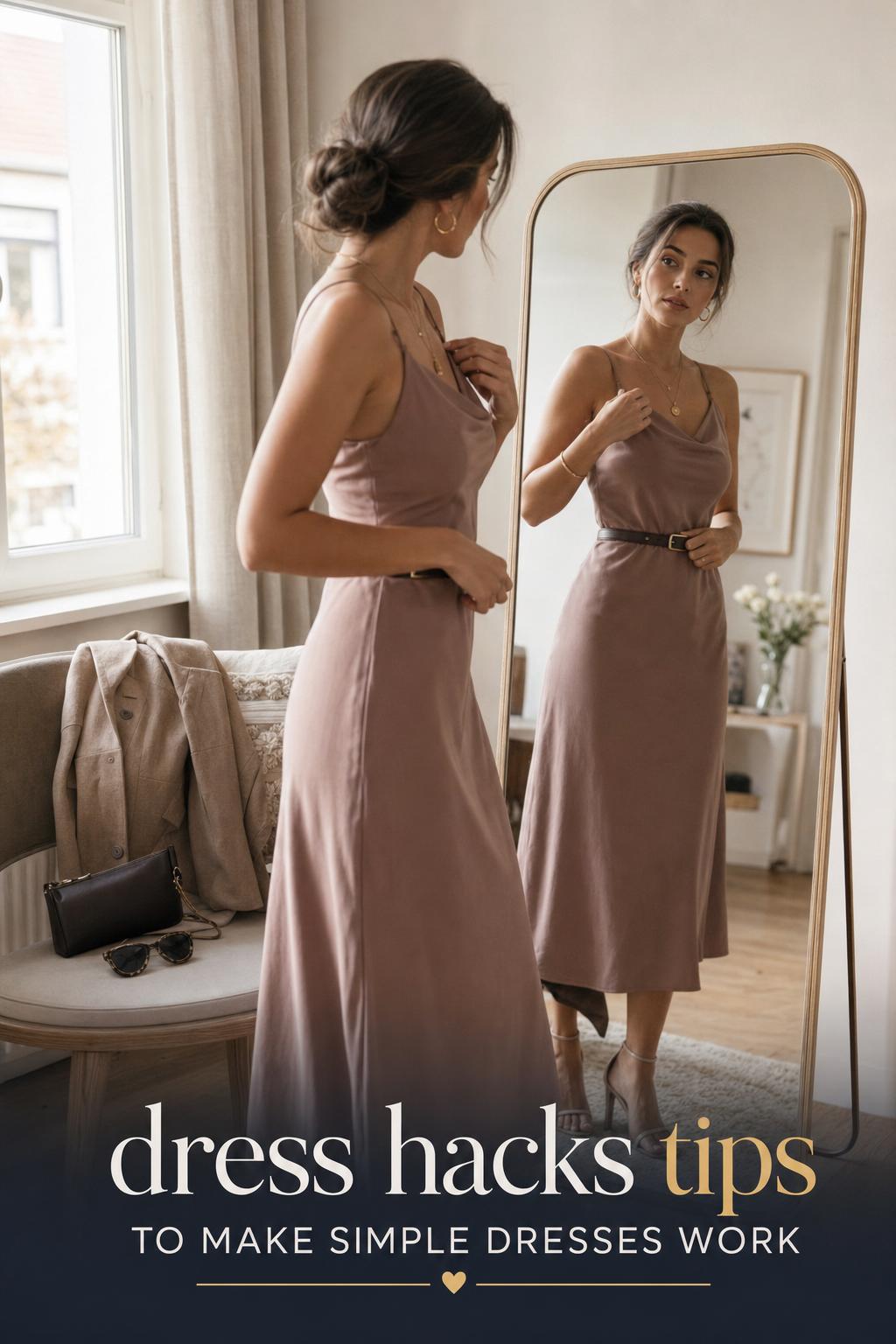
Fabric-focused dress hacks tips that actually make sense
Not every dress challenge comes from sizing. Fabric often creates the issue. Lightweight materials can cling, sheer fabrics may need layering support, and highly fluid textiles can lose shape without structure. The right fix depends on what the fabric is doing, not just what the dress looks like.
When soft fabric loses definition
Very soft dresses can look beautiful in stillness but underwhelming in real movement. They may collapse at the waist, twist slightly, or read too casual for the occasion. The best response is not always to add more accessories. Often, a single structured element creates the balance the outfit needs. That might be a sharper outer layer, a cleaner shoe shape, or a more defined waistline. The contrast gives the fabric direction.
This works because texture contrast helps the eye understand the outfit. Softness without contrast can blur the line of the body. Once structure enters the composition, the silhouette becomes more legible and more refined.
When cling disrupts the line
Cling can make even a well-cut dress feel unpolished. It interferes with the intended drape and can change how the dress moves when walking or sitting. The most effective solution is usually foundation-focused: smoothing the underlayer, adjusting the fit at pressure points, and avoiding additional bulk that creates friction under the dress. These choices matter because a dress is only as smooth as what sits beneath it.
From an editorial perspective, cling is not only about modesty or comfort. It can flatten the visual rhythm of the garment. Dresses are designed to fall in a certain way, and once that line is restored, the whole look appears cleaner.
When lightweight dresses need support
A very light dress may need more internal or external support than expected. This is common with pieces that look airy and elegant but feel too exposed, too delicate, or too mobile in wind and movement. The styling answer is often strategic layering. A slip, a fitted base, or a balancing top layer can preserve the softness of the dress while making it far more wearable.
That added support should remain visually discreet. The goal is to protect the integrity of the dress, not compete with it. When done well, the dress still feels light, but no longer fragile.
Layering moves that rescue difficult dresses
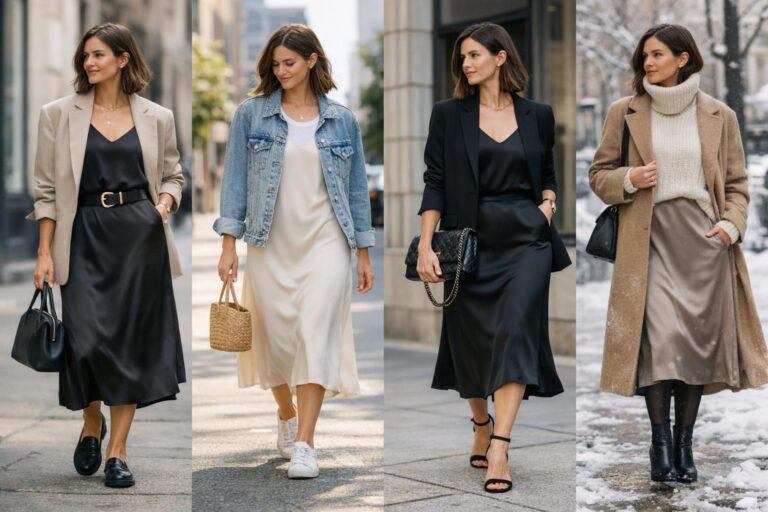
Layering is one of the most versatile tools in dress styling because it solves both visual and practical issues. It can add coverage, shift the dress into a different season, alter the shape, or reduce the formality of a piece that feels too occasion-specific. The strongest layering choices do not hide the dress. They reframe it.
Use outerwear as a structural frame
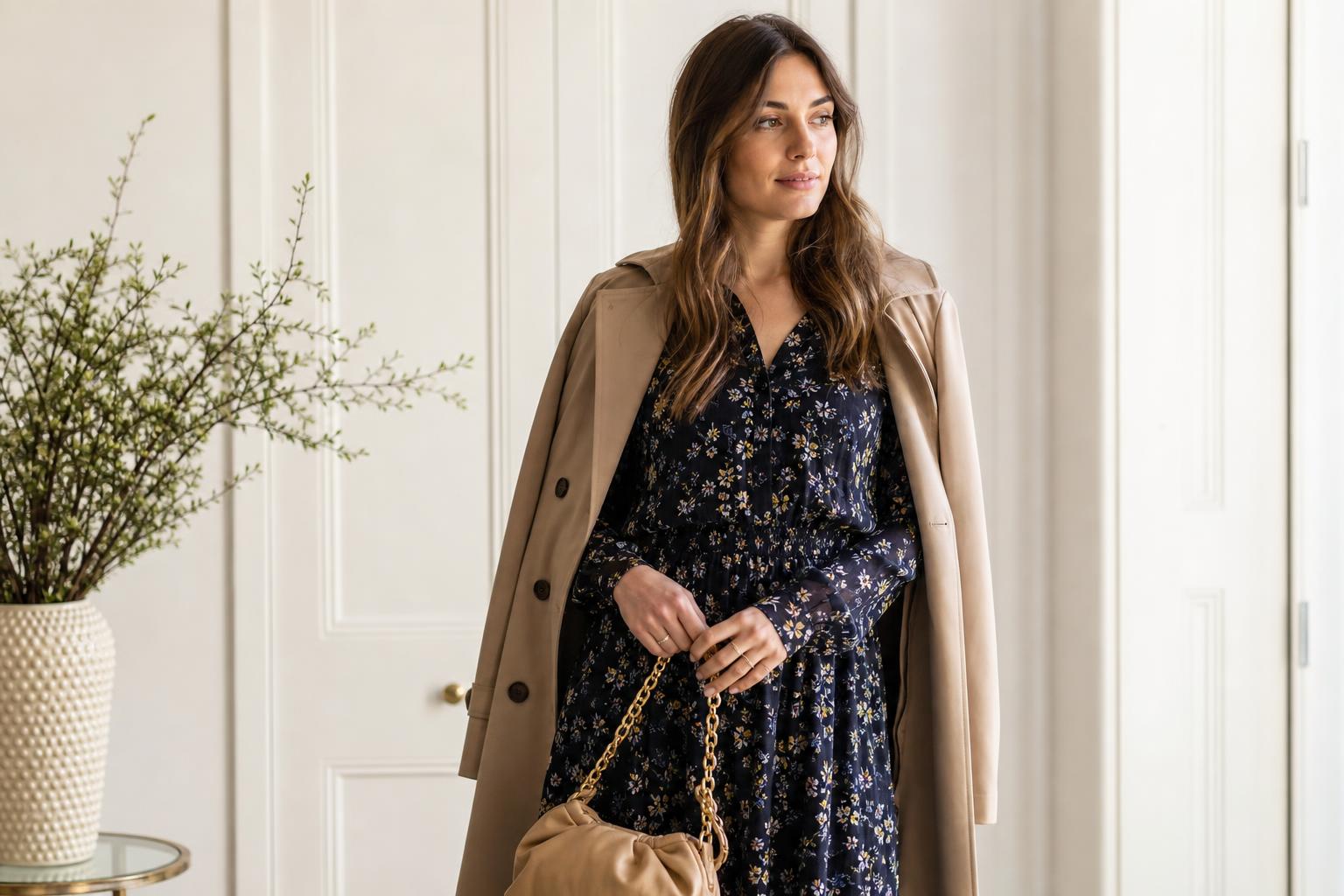
A jacket, blazer, or cropped layer can correct a dress that feels too soft, too exposed, or too undefined. The reason this works is silhouette architecture. Outerwear draws a sharper line around the torso and shoulders, which gives visual stability to dresses with fluid skirts or loose cuts. It also makes the outfit more adaptable across settings.
In practical wear, this matters most during transitions: moving from day to evening, entering air-conditioned interiors, or dressing for uncertain weather. A dress that seemed limited suddenly becomes more flexible when the top half is anchored.
Transform the dress with underlayers
Underlayers are often underestimated because they are not the most visible part of the outfit. Yet they can shape how the entire dress behaves. They can improve comfort, provide opacity, soften cling, and make a dress feel secure enough for all-day wear. The strongest underlayer disappears visually while improving every practical aspect of the garment.
This is particularly relevant for dresses worn over long hours. Sitting, walking, traveling, and changing temperatures all reveal weaknesses that a quick mirror check does not catch. A smart underlayer prevents those issues before they start.
Event dressing: hacks that hold up beyond the mirror
A dress can look perfect at home and fail completely at the actual event. Real-world wear tests clothing differently. Lighting changes, temperatures shift, the schedule runs long, and movement becomes constant. The best dress hacks tips account for these conditions early. That is what separates a polished look from a high-maintenance one.
For long celebrations and formal occasions
Special-event dresses often prioritize visual impact, which can make them less forgiving over time. A fitted shape may feel restrictive after several hours. A dramatic neckline may need more support than expected. A floor-skimming hem may become difficult on stairs or crowded floors. In these cases, the smartest styling choice is often invisible reinforcement rather than visible accessorizing.
The strongest formal look is one you can move in confidently. Elegance depends on ease. If a dress requires constant correction, it loses refinement no matter how striking the design is. Stability at the bust, waist, and hemline should be treated as part of the fashion decision, not an afterthought.
For daytime wear and everyday styling
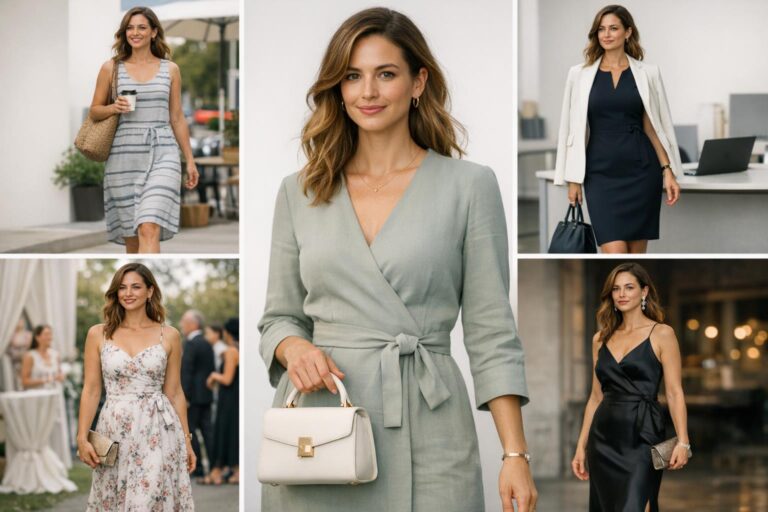
Casual dresses present a different challenge. They often need more shape or styling direction to avoid looking unfinished. Here, the hack is usually less about support and more about outfit composition. A simple dress benefits from one clear visual anchor: a belt, a structured shoe, a compact layer, or tonal coordination that sharpens the overall line.
This keeps the outfit from slipping into shapelessness. It also helps a basic dress feel deliberate enough for errands, lunch, casual meetings, or travel days. The logic is simple: when the dress itself is minimal, the styling must create the polish.
Common mistakes that make a dress look harder to wear than it is
Many dress problems are created by styling habits rather than the dress itself. A few repeated mistakes tend to make a garment seem less flattering, less comfortable, or less versatile than it really is.
- Ignoring the role of foundation layers and focusing only on visible accessories.
- Leaving a loose silhouette completely unshaped when the fabric needs structure.
- Pairing a delicate dress with footwear that disrupts the proportion balance.
- Assuming a neckline problem will improve over time instead of securing it immediately.
- Choosing layers that compete with the dress instead of supporting its line.
- Testing a dress only while standing still instead of walking, sitting, and moving in it.
The fix is usually not dramatic. It is about seeing the dress as part of an integrated look. When fit, layer, shoe, and movement are considered together, many common issues become manageable.
A stylist’s way to evaluate a dress in under five minutes
Before deciding that a dress works or does not, assess it in motion and in relation to the rest of the outfit. This fast review method reveals whether you need a styling adjustment or a more significant fit change.
- Check the shoulder and neckline line first. If the top half shifts, the rest of the look will feel unstable.
- Look at the waist placement. If the center of the body disappears, the silhouette may need definition.
- Test the hem while walking and sitting. If it catches, twists, or feels cumbersome, adjust the length strategy.
- View the dress with the intended shoes. Footwear changes the visual weight and line of the garment.
- Assess the fabric in natural movement, not just in a mirror pose.
- Add or remove one layer to see whether the shape improves.
This process works because it prioritizes outfit performance as much as appearance. A dress should hold its form and its logic once the day begins.
Tips for making one dress work harder in your wardrobe
The most valuable dress is not always the most dramatic one. It is the one that can be styled across multiple situations with small but effective changes. A few strategic adjustments can shift the same dress from casual to polished, from warm-weather wear to transitional layering, or from daytime simplicity to evening structure.
Tips for better versatility
- Use waist definition to create a more polished version of a loose dress.
- Change the layer rather than the dress when moving between settings.
- Keep one reliable underlayer available for lightweight or cling-prone fabrics.
- Build around the dress with one strong visual anchor instead of too many competing accessories.
- Test different shoe weights to see how the hem and overall proportion change.
Versatility comes from understanding the dress’s strongest feature. If it is the print, keep the rest of the look quiet. If it is the silhouette, protect the line with minimal distractions. If it is the fabric, support its movement instead of fighting it with heavy styling.
Seasonal context changes the right hack
The same dress behaves differently across seasons because temperature, layering needs, and fabric response all shift. Warm weather highlights breathability, movement, and transparency issues. Cooler weather introduces layering bulk, static, and the challenge of preserving shape under outerwear. This is why a useful hack in one season may be ineffective in another.
In warmer conditions, the most important factors are comfort and fabric control. Dresses need to move freely without becoming difficult or overly exposed. In cooler conditions, structure becomes more important. Layers should add warmth without distorting the dress or making the torso feel overloaded. The best seasonal styling respects both the garment and the climate.
From a visual standpoint, seasonal adaptation also changes color harmony and texture contrast. A light dress may need grounding textures in cooler months, while a more substantial dress may need lighter styling around it in warmer weather to avoid visual heaviness. These adjustments help the dress remain relevant instead of feeling locked into one moment of the year.
How to know when a hack is enough and when the dress is simply wrong
Not every issue should be solved with a styling trick. Some dresses have a fundamental fit problem that no quick adjustment can fully correct. If the bust placement is consistently off, the shoulder line does not sit properly, or the fabric and cut work against each other, repeated hacks may only disguise a deeper issue. In those cases, the dress is not becoming more wearable; it is becoming more complicated.
A worthwhile dress hack improves the original design and reduces friction. It should not require constant maintenance, visible compromise, or an entire support system to function. The line between a smart fix and an exhausting one is simple: after the adjustment, the dress should feel easier to wear, not more fragile.
This perspective helps avoid overstyling. A dress that needs one or two thoughtful corrections can become a wardrobe asset. A dress that needs endless intervention may be better replaced, altered properly, or reserved for a very specific use.
The polished finish: what makes dress styling look intentional
The final difference between a dress that looks thrown on and one that looks editorial is coherence. Every element should support the same visual message. If the dress is soft and fluid, add enough structure to keep the silhouette clear. If the dress is already strong and architectural, keep the styling clean so the shape remains the focal point. If the dress is minimal, let proportion and texture do the work.
Intentional styling does not mean complicated styling. In fact, the most sophisticated dress solutions are often quiet. A secure neckline, a cleaner waistline, a better underlayer, a more balanced hem, or a stronger outer layer can make more impact than extra embellishment. These refinements elevate the look because they improve both appearance and function.
That is the enduring value of practical dress hacks tips. They do not ask a dress to become something entirely different. They help it perform at its best, with sharper lines, better comfort, and styling that holds up in real life.
FAQ
What are the most useful dress hacks tips for everyday wear?
The most useful everyday tips focus on comfort and shape: define the waist if the dress feels boxy, stabilize straps or necklines if the top shifts, use a smooth underlayer if the fabric clings, and pair the dress with shoes that support the intended proportion of the hemline.
How can I make a loose dress look more flattering?
A loose dress usually improves with some form of structure, especially at the waist or shoulders. The goal is not always a tight fit, but a clearer silhouette so the dress looks intentional rather than oversized without direction.
What should I do if my dress fabric clings too much?
Start with the foundation layer, because cling is often caused or worsened by what is worn underneath. A smoother base and better fit through key pressure points help the fabric fall as intended and restore a cleaner line to the dress.
How do I keep a dress neckline from shifting during an event?
The key is to secure the top line before leaving the house and test it in motion, not just while standing still. A stable neckline preserves the dress’s structure, improves comfort, and prevents the look from becoming distracting or high-maintenance.
Can layering really fix a difficult dress?
Yes, if the layer solves a specific problem such as lack of structure, too much exposure, or seasonal impracticality. The best layering does not overwhelm the dress; it reframes it so the silhouette feels more balanced and the outfit becomes easier to wear.
How can I make one dress work for different occasions?
Focus on changing the supporting elements rather than the dress itself. Waist definition, outerwear, underlayers, and footwear can shift a dress from casual to polished or from daytime to evening while keeping the core garment consistent.
What is the biggest mistake people make when styling dresses?
The biggest mistake is judging a dress only by how it looks in a static mirror view. A dress needs to be tested while walking, sitting, and moving, because many fit and proportion issues only appear once the garment is worn in real conditions.
When is a dress hack not enough?
A hack is not enough when the dress has a core fit issue, such as an incorrect bust position, unstable shoulder line, or a cut that consistently works against the fabric. In that case, alterations or a different dress are usually the better solution.