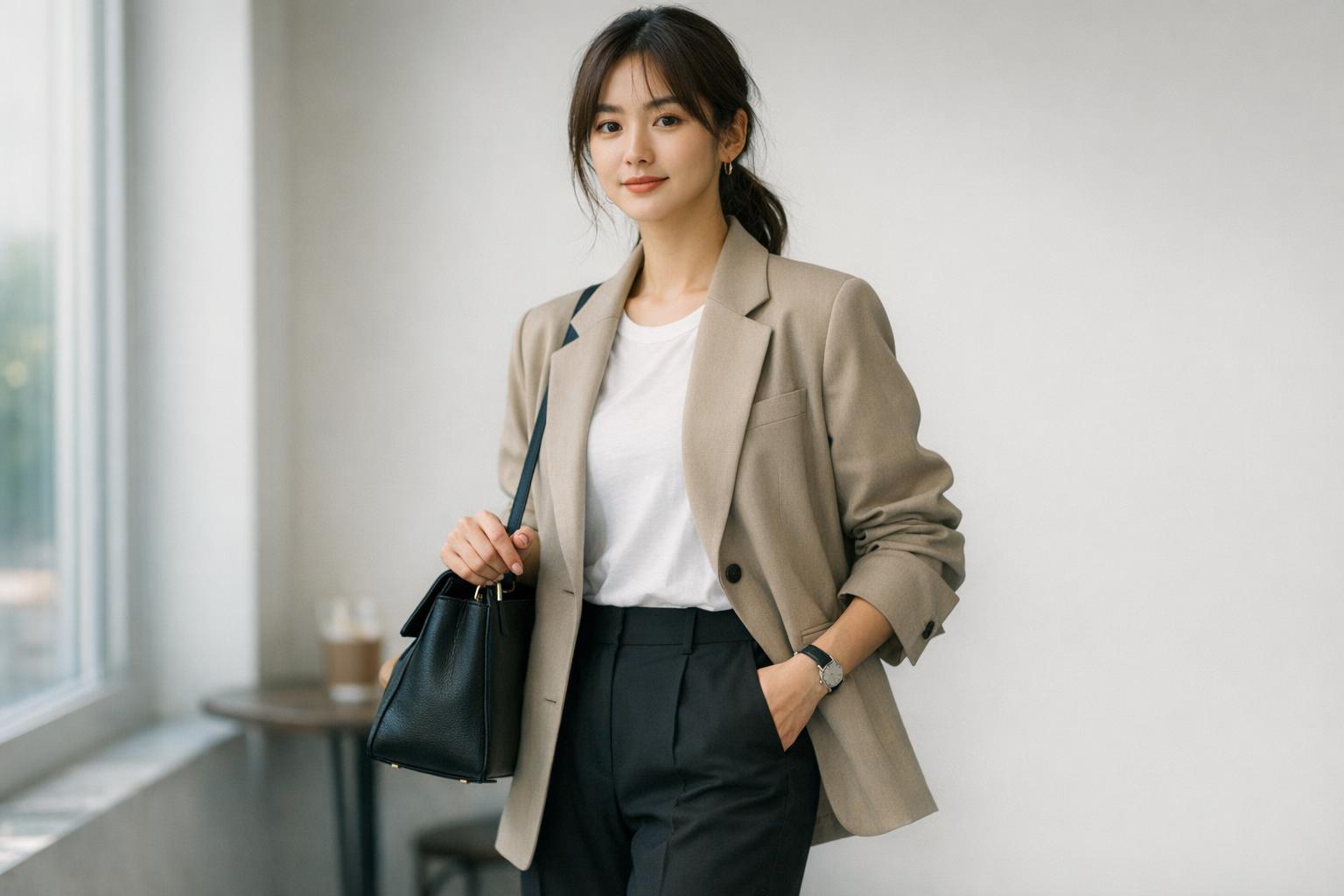
Polished Korean Style Outfits for Commuting and Weekends
Korean style outfits, decoded for real life
A Korean-inspired outfit often has one job: look intentional without looking overworked. That’s why korean style outfits read so clearly on camera—clean lines, deliberate proportions, and a controlled palette—yet still feel wearable for everyday U.S. routines like commuting, campus days, coffee runs, and casual dinners. The most consistent styling logic is simple: a strong silhouette anchor (tailoring, a structured outer layer, or a crisp waistband) paired with softness (knit, pleats, jersey, or drape) so the outfit feels modern instead of rigid.
This guide breaks down korean outfits as an outfit-composition system rather than a trend mood board. You’ll see how proportion play, tonal layering, texture contrast, and strategic accessories build that “effortless but edited” finish associated with Asian fashion style—plus where the popular acubi outfits aesthetic fits in, and how to shop and style Korean clothing brands without guessing.
The styling framework: what makes an outfit read “Korean”
Even with different aesthetics—minimal, preppy, street, romantic—korean oufits tend to share a consistent structure. The goal is visual clarity: your eye should land on one or two focal points, not get lost in competing details. That clarity comes from a few repeatable styling principles.
Silhouette balance over bodycon emphasis
Instead of relying on tightness for “style,” many korean outfits use contrast: a fitted top with relaxed trousers, an oversized blazer with a shorter skirt, or a long coat over a narrow base layer. This creates a balanced outline that looks polished in motion, not just in a mirror. It’s also more forgiving across body types because the outfit’s architecture—waistline placement, shoulder shape, hem length—does the work.
Found the dress? Keep the rest in one place.
Zarellea brings guest details, vendors, timelines, and every next step together — so your wedding plan feels as good as your look.
Tonal layering and controlled color harmony
Color in korean style outfits often stays within a tight range: neutrals, muted tones, or a deliberate two-color story with one accent. The payoff is instant cohesion. Tonal dressing also makes inexpensive pieces look more elevated because the outfit reads as a “set,” even when it’s not.
Texture contrast as the quiet statement
When color is restrained, texture becomes the statement piece. Think crisp cotton against soft knit, denim against a smooth blazer, or pleats against a clean tee. Texture contrast gives depth and makes simple combinations feel styled—especially in photos.
Accessories as visual anchors, not clutter
The accessory approach is selective. A structured bag, a sleek sneaker, a refined loafer, or a single hair/ear detail often finishes the look. The goal is a clean focal point that supports the silhouette rather than adding noise.
The essential wardrobe building blocks
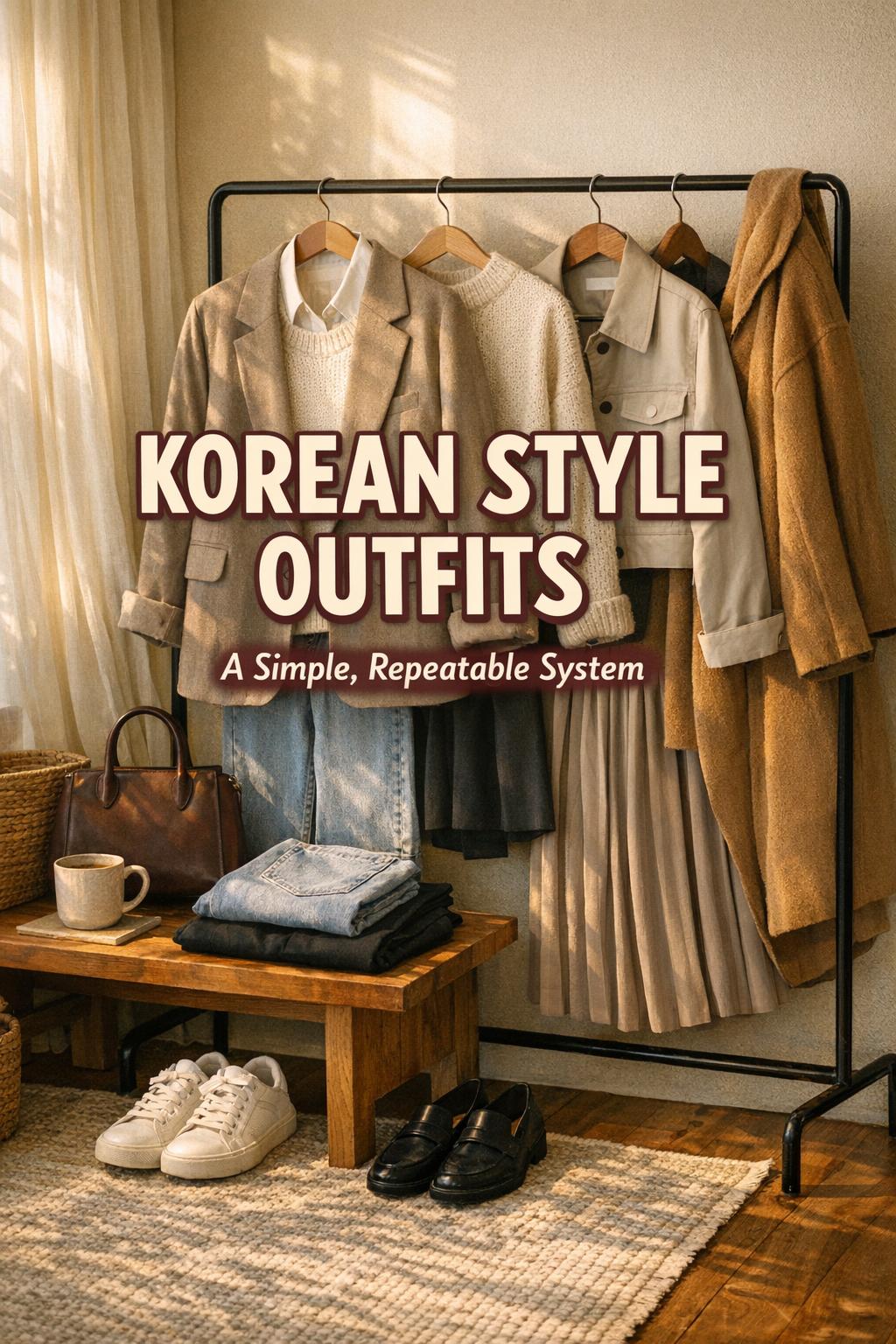
If you want repeatable korean style outfits, focus on a compact set of pieces that can recombine into multiple silhouettes. The most useful items are the ones that control proportion: tailoring, waist definition, and outerwear that frames the outfit.
- Tailored outer layer: a structured blazer, cropped jacket, or long coat to create a clean shoulder line and instant polish.
- High-waist bottoms: trousers, straight-leg jeans, or a structured mini/pleated skirt that sets the outfit’s proportions.
- Layerable knits: fine knit tops, cardigans, or a simple sweater for texture and warmth without bulk.
- Crisp basics: tees or shirts with enough structure to hold shape under jackets.
- Comfort-forward shoes: sleek sneakers, loafers, or low-profile boots that keep the outfit grounded and walkable.
- A controlled bag choice: one structured bag and one casual option for outfit versatility.
Notice what’s missing: overly ornate pieces that only work once. Korean outfits typically prioritize re-wearable foundations, then add personality through proportion, layering, and one directional detail.
Outfit composition ideas that photograph well and wear even better
The best korean style outfits aren’t complicated; they’re edited. Use these composition ideas as formulas you can repeat, adjusting fabric weight and hem lengths based on season and comfort.
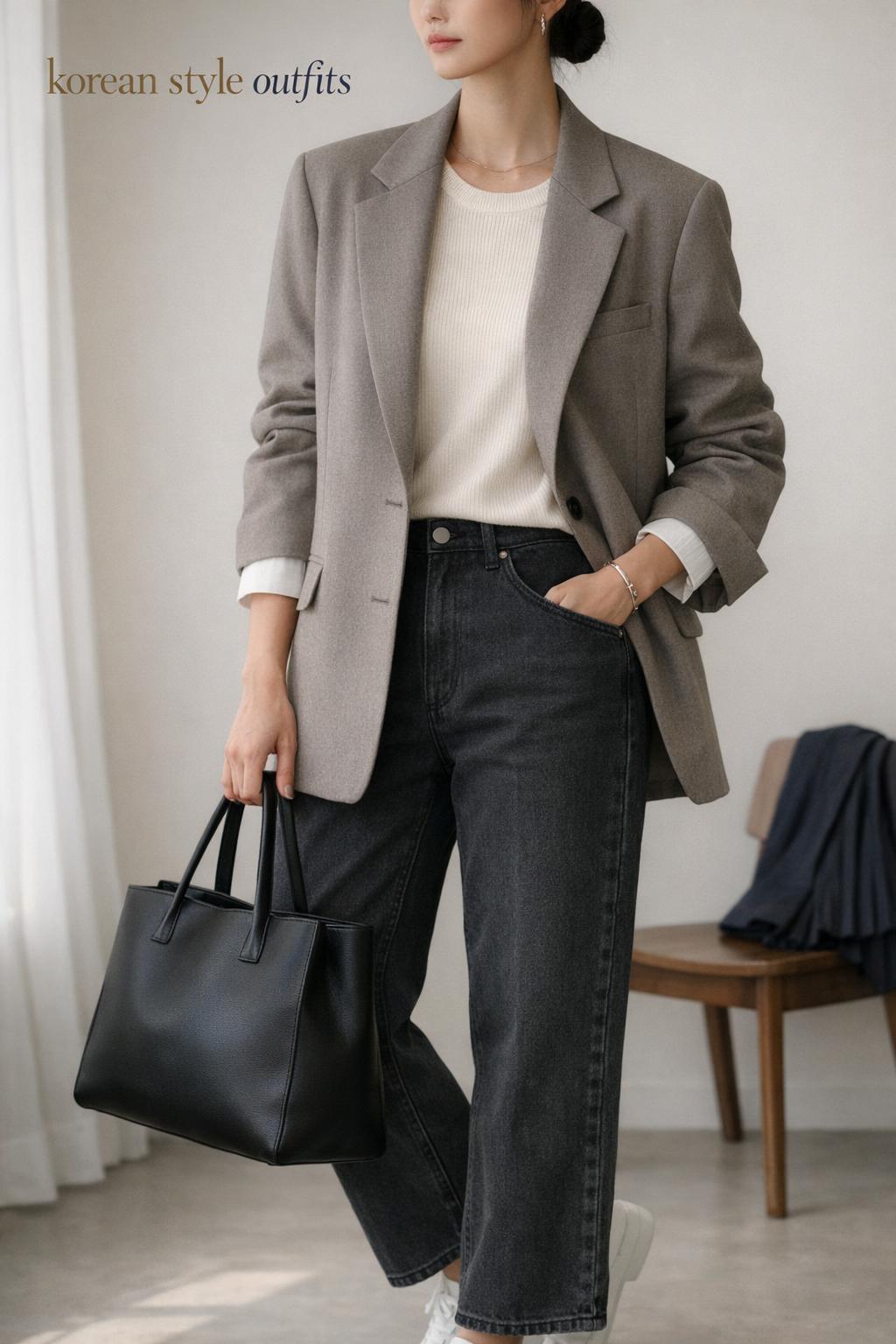
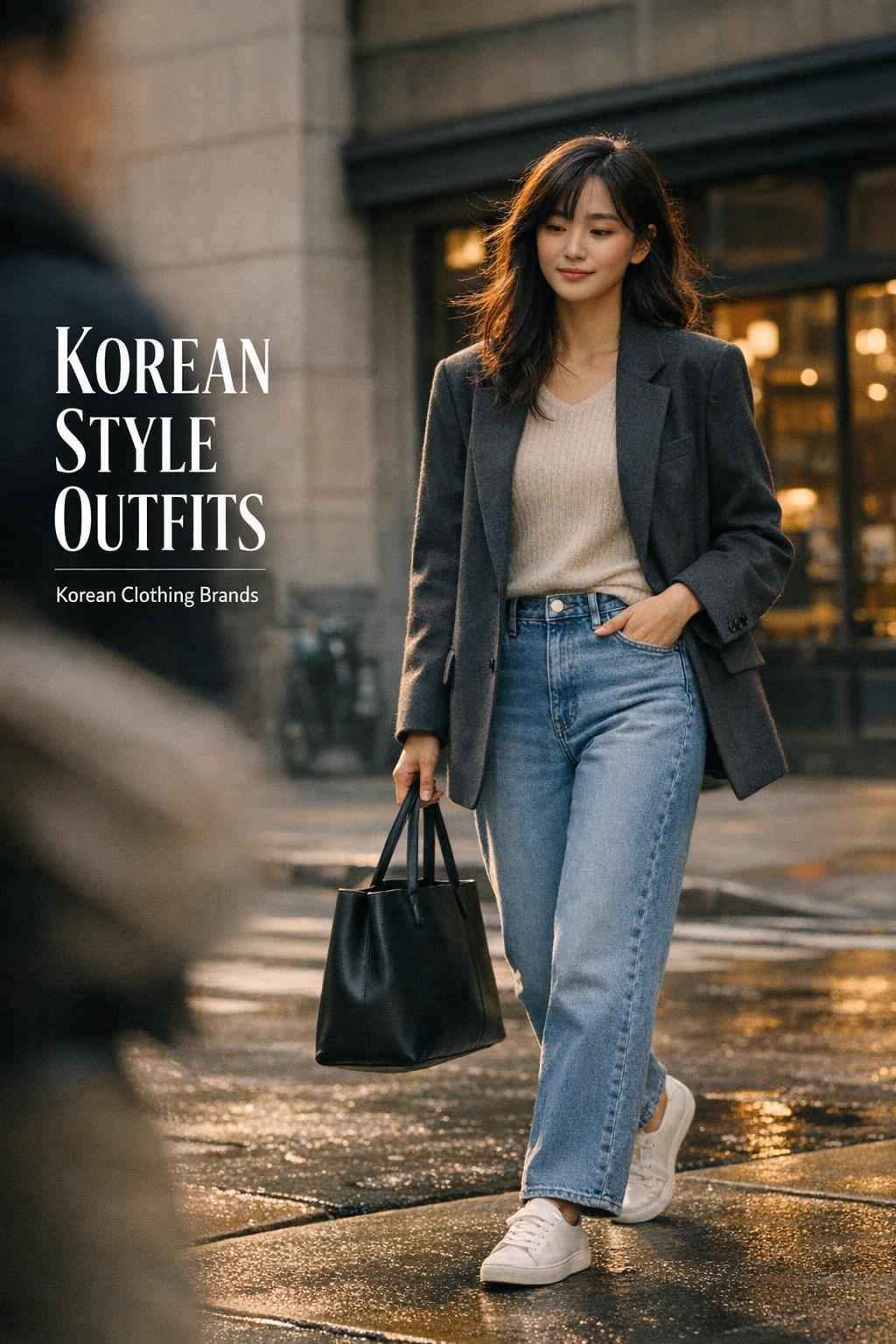
Tailored blazer + knit top + straight-leg denim
This combination works because the structured blazer acts as a visual frame, while the knit softens the look and keeps it approachable. Straight-leg denim prevents the silhouette from feeling top-heavy. For a cleaner line, keep the blazer slightly oversized and the knit closer to the body, so the outfit has a clear inside-outside proportion.
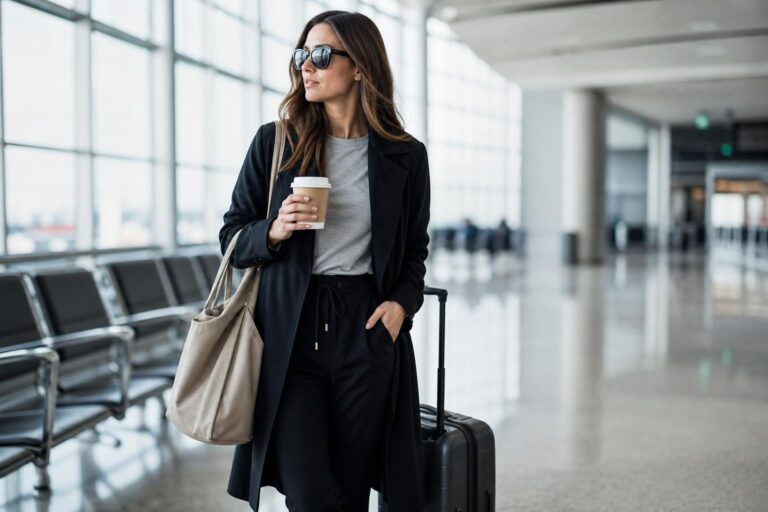
When to wear it: office-casual days, meetings that don’t require full suiting, travel days where you still want to look sharp.
Styling variation: switch denim for trousers to push it more minimal, or use a shorter blazer to emphasize leg length if you’re pairing with chunkier shoes.
Button-up shirt + pleated skirt + low-profile shoes
A crisp shirt and pleated skirt is a classic Korean-prep direction because it balances strict and soft elements. The shirt provides structure and a clean neckline; the pleats create movement and texture. Low-profile shoes keep it modern and prevent the look from tipping costume-like.
Why it works: the pleats become the outfit’s texture statement, so you can keep the rest quiet—minimal jewelry, a simple bag, and controlled color harmony.
Cropped jacket + high-waist trousers for proportion play
A cropped outer layer shifts the waistline higher and creates a long-leg effect, especially with high-waist trousers. This is one of the most reliable proportion tricks in korean outfits because it reads intentional even when the pieces are simple.
Real-life comfort note: if you’re moving a lot (commuting, standing, long days), choose trousers with a stable waistband and enough ease through the hip. A clean silhouette still needs mobility.
Monochrome set dressing (without buying a set)
Monochrome is a shortcut to the refined look often associated with Asian fashion style. The key is to vary textures so the outfit doesn’t look flat: pair smooth trousers with a knit top, or denim with a structured jacket in the same color family.
Tip: if the shades don’t match perfectly, keep them close in undertone (warm-with-warm, cool-with-cool). The eye forgives small differences when the undertone is consistent.
Where the acubi outfits aesthetic fits—and how to wear it without losing polish
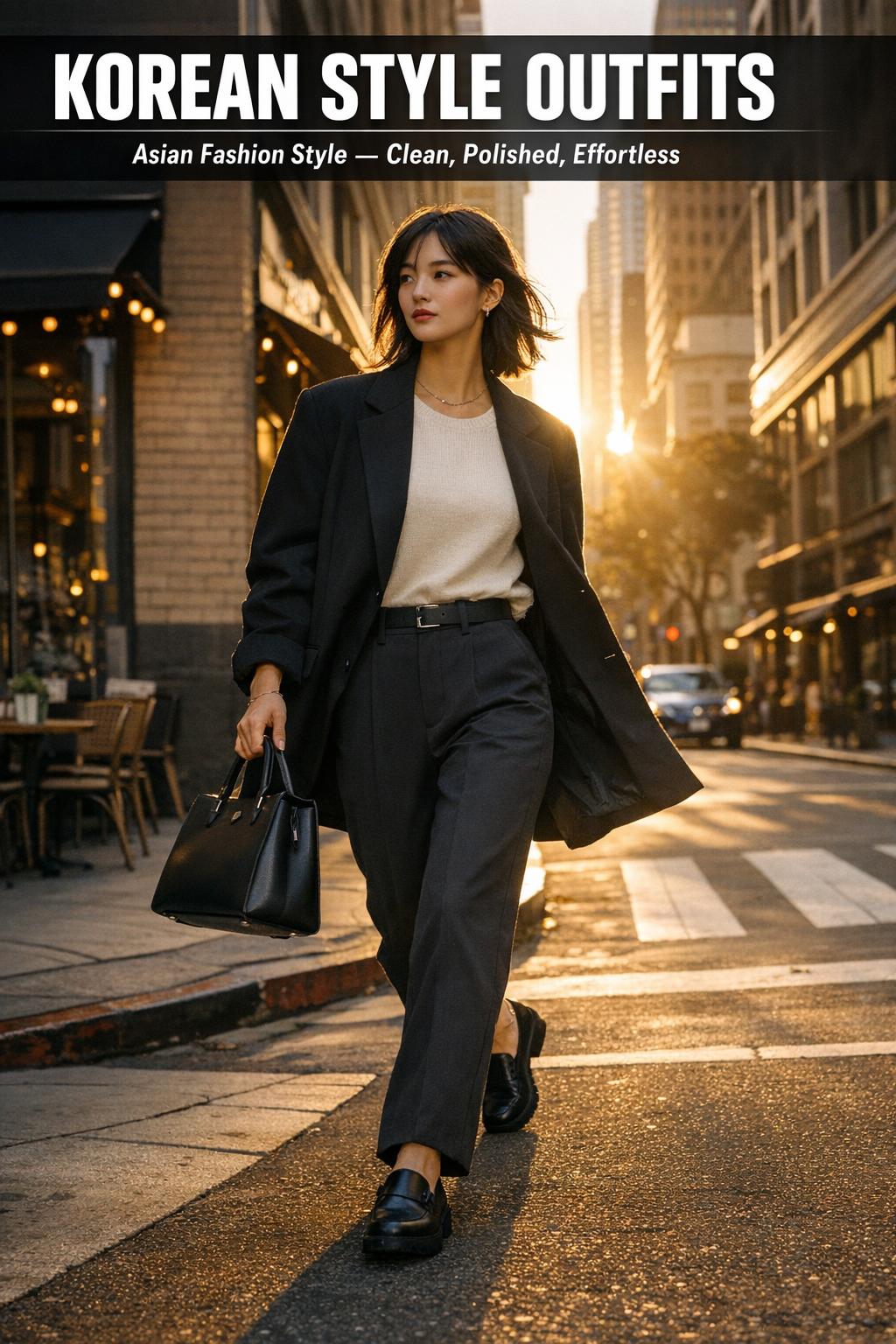
The acubi outfits aesthetic is a sharper, more stripped-back direction within korean style outfits. It’s built on fitted layers, sleek lines, and a cooler, urban minimalism. Done well, it feels modern and intentional; done poorly, it can read overly stark or impractical for everyday life.
Key visual codes
- Clean, narrow silhouettes with strategic contrast (fitted top + straight bottom, or a sleek base with a structured layer).
- Muted, controlled palette (often neutrals) with minimal accents.
- Texture-led interest (ribbed knits, smooth outerwear, structured bottoms).
- Accessories that look engineered rather than decorative (structured bag, streamlined shoes).
How to make it wearable in U.S. settings
The most common issue with the acubi outfits aesthetic is under-layering for weather and over-committing to tight pieces. Keep the concept, adjust the practicality: add a structured outer layer for warmth and shape, and ensure at least one piece has ease for movement (straight-leg denim or trousers are usually the easiest fix).
Tip: if you want the sleek effect without feeling restricted, choose a fitted top with stretch and pair it with a structured waistband bottom. The waistband creates the clean line; the fabric does the comfort work.
Seasonal strategy: the same Korean outfits, adjusted by fabric weight
Korean style outfits translate well across seasons because the core styling principles don’t change—only fabric weight, layering depth, and shoe choice do. Think like a system: keep the silhouette logic, adjust the insulation.
Warm weather: light structure, breathable layers
In heat or humidity, the goal is to keep the outfit crisp without heavy fabrics. A lightweight button-up, a structured skirt, or straight-leg denim with a simple top can still read polished if the fit is clean and the color story is controlled.
Practical note: if you’re walking a lot, prioritize shoes that look sleek but don’t punish you. The outfit aesthetic collapses if discomfort forces awkward posture.
Cold weather: long lines and insulation that doesn’t add bulk
Cold-season korean outfits often rely on long outerwear to create a strong vertical line. That long line is a visual anchor: it makes layered outfits look intentional instead of bulky. Keep the base layer streamlined (knit + trousers or denim), then let the coat do the statement work.
Tip: when layering knits, keep one layer thin. Two chunky layers can fight each other and distort the silhouette.
Occasion-based Korean style outfits (U.S. lifestyle edition)
Korean outfits are adaptable because they’re built on proportion and restraint, not overly specific pieces. Here’s how that translates to common U.S. scenarios where you need both style and function.
Campus and study days: polished comfort
A straight-leg bottom plus a structured top layer is the most reliable formula. It holds up through long sitting hours, walking between buildings, and quick temperature changes indoors. The outfit reads intentional, but you still feel like yourself.
- Use a cardigan or blazer as the “on/off” layer for lecture halls and libraries.
- Keep the base simple: a clean tee or knit top that doesn’t bunch under layers.
- Choose a bag that keeps structure; it sharpens even a casual outfit.
Office-casual and hybrid work: quiet authority
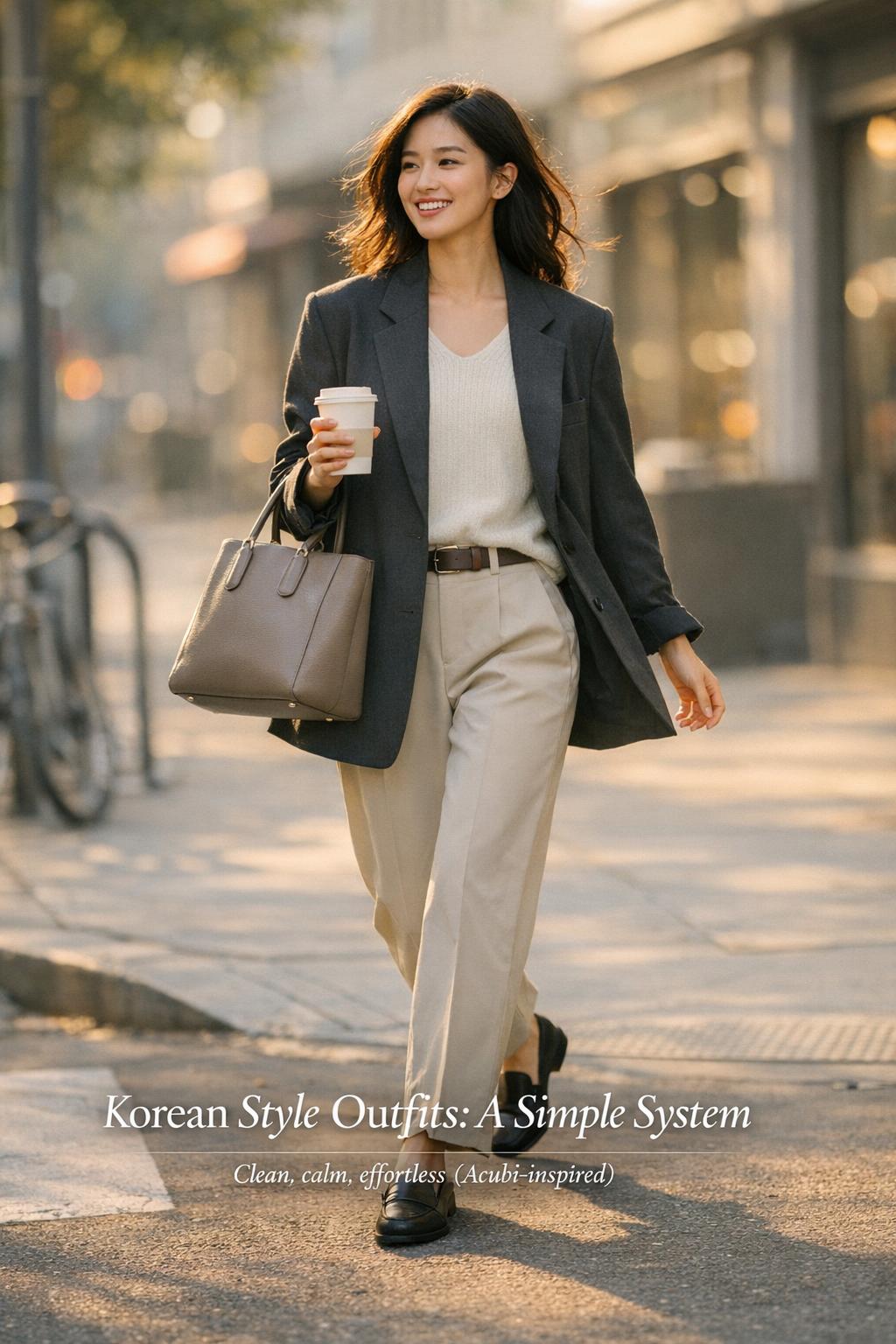
For office environments that allow creative styling, korean style outfits offer a strong middle ground: tailored pieces that aren’t as formal as full suiting. The key is to keep the palette controlled and make fit the primary signal of professionalism.
Best approach: blazer + knit + trousers. The blazer delivers authority; the knit keeps the look relaxed; trousers maintain a clean vertical line that reads competent on video calls and in person.
Weekend city plans: street-clean, not street-messy
The difference between “cool casual” and “just casual” is usually one structured element. If you’re leaning into Asian fashion style with a street influence, keep one piece crisp: a structured jacket, a clean waistband bottom, or a refined shoe. That single anchor keeps the outfit from looking thrown together.
Tip: if you want to experiment with the acubi outfits aesthetic on weekends, start by tightening the color palette before changing silhouettes. A controlled palette makes bolder proportions feel intentional.
Korean clothing brands: how to shop the look without overbuying
Shopping Korean clothing brands is easiest when you shop for outfit architecture, not random trending items. The most useful purchases are pieces that improve your silhouette options: outer layers that frame, bottoms that define the waist, and knits that layer cleanly.
Build a mini “outfit system” before you chase statement pieces
If your closet is missing structure, statement pieces won’t land. Start with two to three outer layers and two bottoms that you can rotate weekly. Once those are in place, accessories and trend-forward shapes become easier to integrate without creating one-time outfits.
Check fit details that change the entire silhouette
Small construction details determine whether korean outfits look refined or accidental: shoulder seams on blazers, waistband stability on trousers, skirt pleat structure, and how knits sit at the neckline. Those are the points that keep an outfit crisp through a full day of wear.
Tip: if you’re shopping online, prioritize pieces that show clear shape in product photos—especially outerwear and bottoms. The clearer the shape, the easier it is to predict how it will frame your outfit.
Styling details that quietly elevate Korean outfits
The difference between a basic outfit and a Korean-inspired outfit is often in the finishing logic: where the waistline sits, how the neckline frames the face, how layers stack without bulk, and whether the shoe choice supports the silhouette.
Waist definition without tightness
High-waist bottoms define proportion even if the fit is relaxed. If you prefer looser clothing, choose a stable waistband and keep the top more streamlined—or tuck partially to show structure without feeling restricted.
Necklines as face-framing tools
Crew neck knits read clean and minimal, while a button-up collar adds sharpness. The key is consistency: if your outfit is already structured (blazer, tailored trousers), a softer neckline can prevent stiffness. If your outfit is casual (tee + denim), a sharper neckline detail can add polish.
Shoe choice should support the outfit’s “line”
Low-profile shoes keep the silhouette sleek; chunkier shoes add weight and can shorten the visual line if not balanced with cropped lengths or a higher waist. Choose shoes based on the silhouette goal, not just trend appeal.
Common mistakes that make Korean style outfits feel “off”
Korean outfits are deceptively simple, which means small missteps show quickly. The fix is usually not buying more—it’s correcting proportion and visual focus.
- Too many focal points: if the outfit has bold shoes, a statement bag, and heavy layering, the eye doesn’t know where to land. Choose one hero element.
- Over-oversized styling: oversized can be intentional, but it needs a counterbalance—either a defined waistline or a cleaner leg line.
- Flat textures: all-jersey or all-basic cotton can look unfinished. Add one contrasting texture (knit, pleat, denim, structured outerwear).
- Ignoring movement: if you’re constantly adjusting a skirt hem, pulling at a top, or slipping in uncomfortable shoes, the outfit won’t read effortless. Fit and function are part of the aesthetic.
Tip: when something feels wrong, take one step back and identify the outfit’s visual anchor. If you can’t name it (blazer shape, waistline, skirt volume, long coat line), the outfit likely needs a clearer structure.
Quick styling “recipes” you can repeat all week
These are not rigid outfits; they’re adaptable templates that produce consistent korean style outfits with minimal effort. Use them to build rotation and reduce decision fatigue.
- Clean minimal: knit top + trousers + structured bag (add blazer when needed).
- Preppy polish: button-up shirt + pleated skirt + low-profile shoes.
- Street-clean: tee + straight-leg denim + structured jacket.
- Acubi-inspired: fitted top + straight-leg bottom + sleek outer layer in a controlled palette.
- Monochrome editor: same-color top and bottom + one texture contrast (knit vs. structured).
Each recipe works because it has a clear silhouette plan: one framing layer, one proportion-setting bottom, and one finishing anchor (shoe or bag). That’s the repeatable logic behind the most wearable korean oufits.
FAQ
What are the easiest korean style outfits to start with if I’m new to the look?
Start with a structured outer layer (like a blazer or cropped jacket), a simple knit or tee, and straight-leg denim or trousers in a controlled color palette. This combination delivers the clean silhouette balance associated with korean outfits without requiring trend-specific pieces.
How do I make korean outfits work in hot U.S. weather without heavy layering?
Keep the same silhouette logic but use lighter structure: a crisp button-up, a structured skirt or straight-leg denim, and minimal accessories. The outfit still reads polished if the fit is clean and the color harmony is restrained, even with fewer layers.
What is the acubi outfits aesthetic and how is it different from other korean style outfits?
The acubi outfits aesthetic is a more stripped-back, sleek direction that relies on narrow silhouettes, muted tones, and texture-led minimalism. It differs from preppy or romantic Korean outfits by emphasizing clean lines and a cooler, more urban finish rather than soft details or overt layering.
How can I look polished in korean style outfits without dressing too formal?
Use one tailored piece as the structure signal—typically a blazer or high-waist trousers—then keep the rest relaxed with a knit top and comfortable shoes. The outfit looks intentional because the silhouette is framed, but it doesn’t read like full suiting.
What are common mistakes that make korean oufits look awkward?
The most common issues are competing focal points, overly oversized styling without a counterbalance, flat textures with no contrast, and choices that don’t support movement and comfort. Korean outfits depend on clear visual anchors, so simplifying and correcting proportion usually fixes the problem.
How do I use a monochrome palette without the outfit looking flat?
Keep the color family consistent but vary textures and structure—pair a knit with structured trousers, or denim with a crisp jacket in a similar tone. Texture contrast and clean fit create depth, which is why monochrome works so well in korean style outfits.
What should I prioritize when shopping Korean clothing brands online?
Prioritize pieces that clearly show shape and construction—outerwear that frames the shoulders, bottoms with stable waistbands, and knits that layer cleanly. These items form an outfit system that makes it easier to recreate Korean outfits repeatedly instead of collecting one-off trend items.
Can asian fashion style elements work in a minimalist wardrobe?
Yes—asian fashion style translates especially well to minimal wardrobes because it emphasizes silhouette balance, tonal layering, and controlled accessories. With a few structured layers and well-fitting bottoms, you can create multiple korean outfits from a small set of neutral pieces.