Japan Capsule Wardrobe Ideas for a Calm, Polished Style
A japan capsule wardrobe sits at the intersection of two style conversations that are often grouped together but are not identical: minimalist dressing and Japanese-inspired dressing. That overlap creates confusion. A tightly edited closet can feel visually similar to many outfits associated with Japan, yet the styling logic, garment balance, and layering approach are not always the same.
This comparison breaks down the main style approaches that tend to shape a japan capsule wardrobe: a classic minimalist capsule on one side and a Japanese-inspired capsule on the other. The goal is not to treat either as a costume or a rigid formula. Instead, the focus is on how silhouette, proportion, texture, color restraint, and daily practicality create two wardrobes that may share simplicity but deliver a very different visual result.
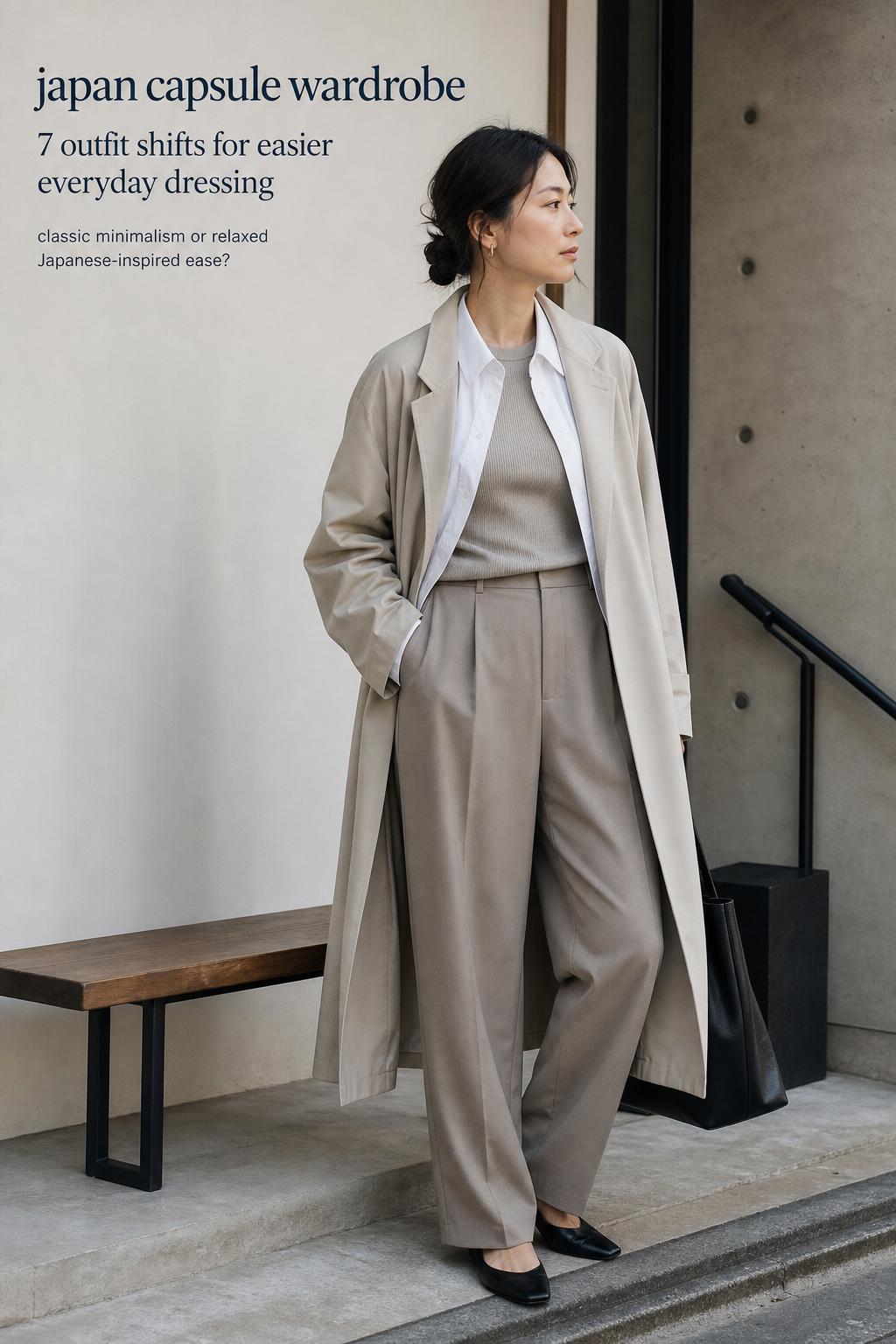
For readers building a more intentional wardrobe, this distinction matters. A clean closet with neutral basics is one thing. A wardrobe influenced by Japanese styling ideas often adds roomier shapes, deliberate layering, visual calm, and a different relationship to structure. Understanding that difference makes it easier to choose pieces that work together instead of assembling a closet that looks coherent on paper but disconnected in real wear.
Two style directions behind a japan capsule wardrobe
The phrase japan capsule wardrobe usually suggests a wardrobe that is edited, repeatable, practical, and visually refined. Within that idea, two distinct directions appear again and again. The first is a standard minimalist capsule wardrobe built around streamlined essentials. The second is a Japanese-inspired capsule that still values restraint, but often uses shape, layering, and relaxed structure as the main design language.
Found the dress? Keep the rest in one place.
Zarellea brings guest details, vendors, timelines, and every next step together — so your wedding plan feels as good as your look.
They belong in the same conversation because both reject excess. Both depend on versatility. Both tend to favor fewer, better-chosen pieces. But once you look at outfit composition, they begin to separate. Minimalism often sharpens the line of the body. Japanese-inspired styling often softens or reframes it.
Style overview: classic minimalist capsule
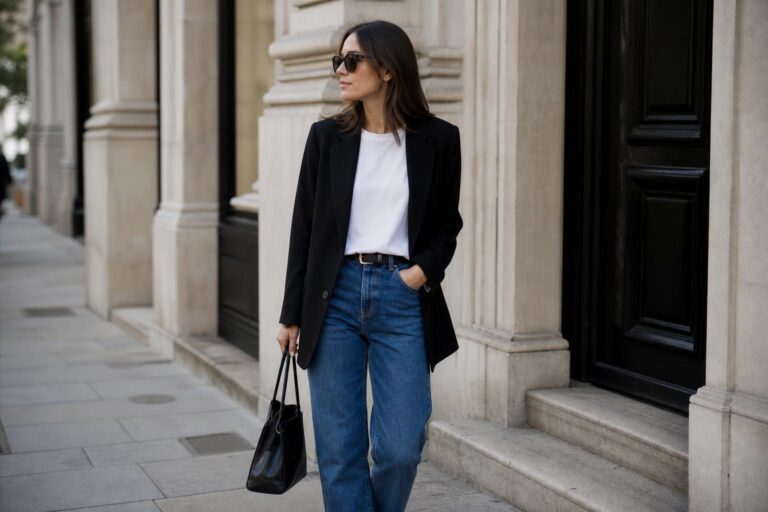
A classic minimalist capsule is defined by clarity. The silhouettes are usually clean and controlled, with straight-leg trousers, fitted knitwear, tailored outerwear, simple shirting, and understated dresses. The color palette leans neutral, often relying on black, white, gray, navy, beige, or cream to keep combinations easy and polished.
Fabrics in this style direction are chosen for crispness or smoothness. Think cotton shirting, fine knits, wool suiting, denim with a clean wash, and leather accessories that act as visual anchors. The overall mood is efficient, modern, and refined. Nothing appears accidental. Even casual pieces are selected for line and function.
Style overview: Japanese-inspired capsule
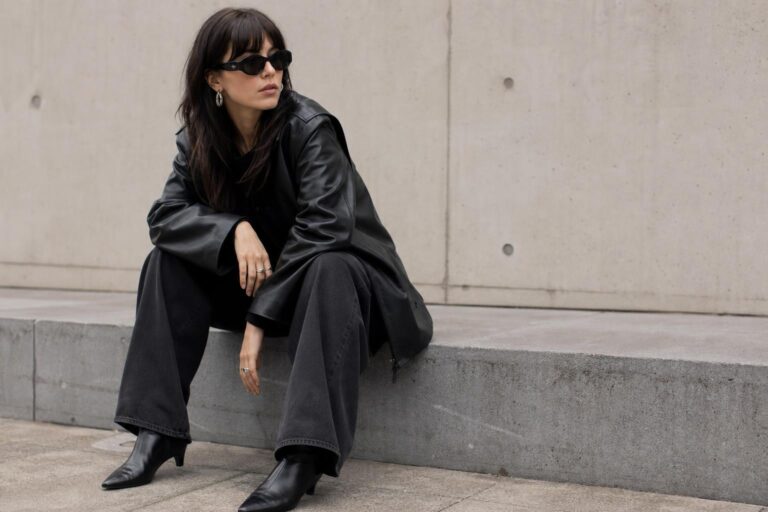
A Japanese-inspired capsule also values editing, but its defining characteristic is not simply minimal color or fewer items. It is the use of proportion play and visual ease. Typical silhouettes are looser, more layered, and less body-contouring. Volume in trousers, oversized shirts, boxy jackets, longer coats, and tunic-like tops often creates the outfit’s shape rather than close fit.
The palette can still be neutral, but the mood shifts through texture and tonal depth rather than sharp contrast alone. Fabrics with movement or surface character become more important because they support drape and layering. The aesthetic mood feels calm, practical, and considered, with comfort integrated into the visual design instead of treated as a separate concern.
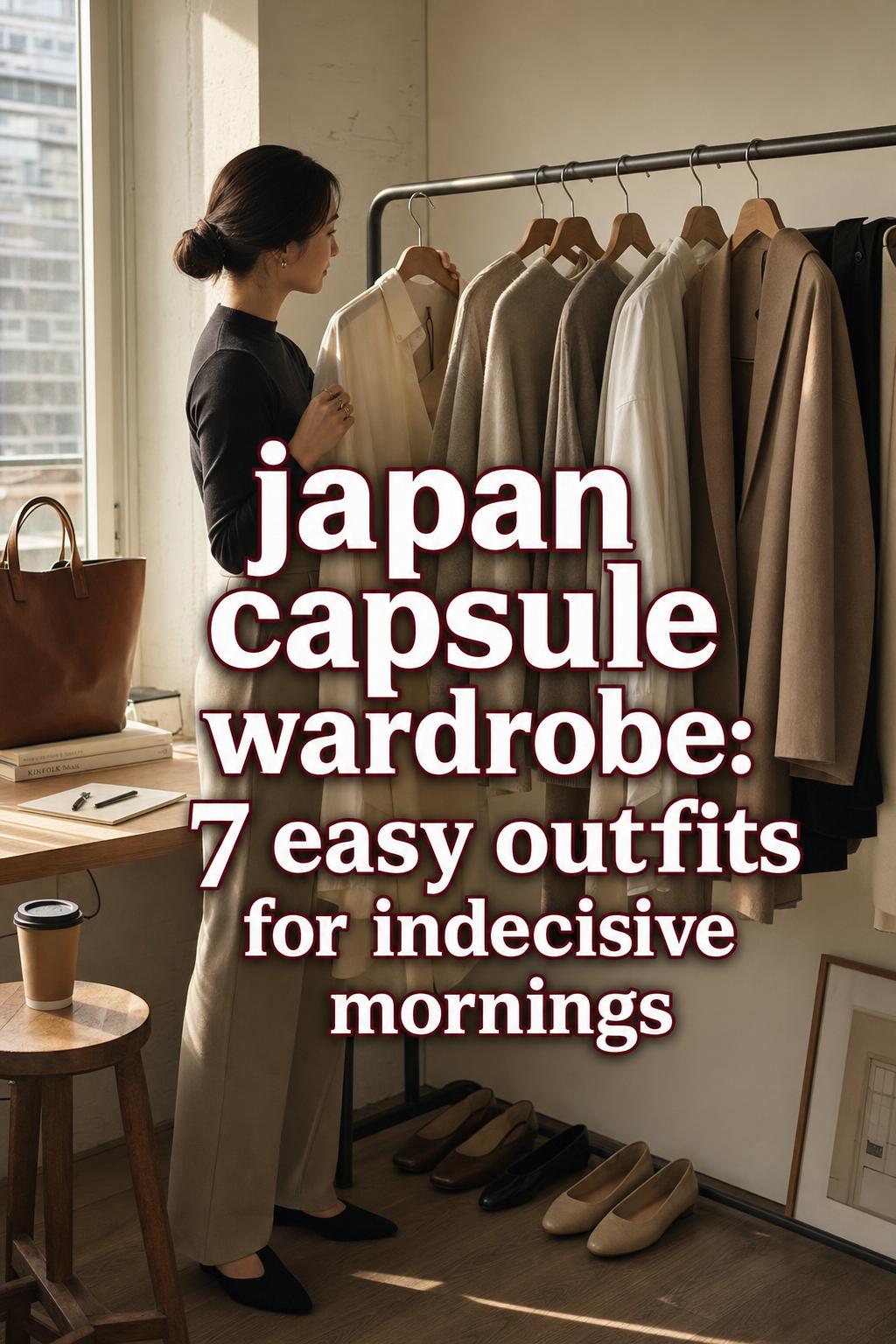
Why these styles are often confused
The confusion comes from surface-level similarities. Both wardrobes are edited. Both avoid clutter. Both can rely heavily on neutrals. Both are strong choices for daily dressing, travel, and repeat wear. From a distance, they can appear to follow the same rules.
The difference becomes visible in styling philosophy. Minimalism usually aims for reduction through precision. Japanese-inspired styling often aims for reduction through harmony. In the first, each piece is trimmed back to keep the look sleek. In the second, the look is simplified, but the silhouette may remain generous, layered, and spatial.
This is why someone can own all neutral clothing and still not achieve a japanese capsule wardrobe in the way many people imagine it. Color restraint alone is not enough. The relationship between garments matters more than the number of pieces or the absence of prints.
Silhouette is the real dividing line
If there is one category that separates these wardrobes most clearly, it is silhouette. Minimalist capsules often favor vertical clarity. Lines are direct. Waist placement, shoulder shape, hem length, and trouser break are usually managed to create a clean finish. The body remains legible beneath the clothing.
In a Japanese-inspired capsule, silhouette balance tends to come from space around the body. Volume is not random; it is controlled through proportion. A wider trouser may be paired with a cropped outer layer. A longer shirt may sit under a shorter knit. A boxy top may work because the fabric falls softly rather than standing stiffly away from the frame. The eye reads the outfit as a composition before it reads it as body-conscious dressing.
How minimalist structure works
Classic minimalist outfits often depend on one or two structural points. A blazer sharpens a knit. A straight trouser steadies a fluid blouse. A sleek coat turns basics into a polished uniform. This approach is effective because it reduces visual noise and makes repetition look intentional.
How Japanese-inspired proportion works
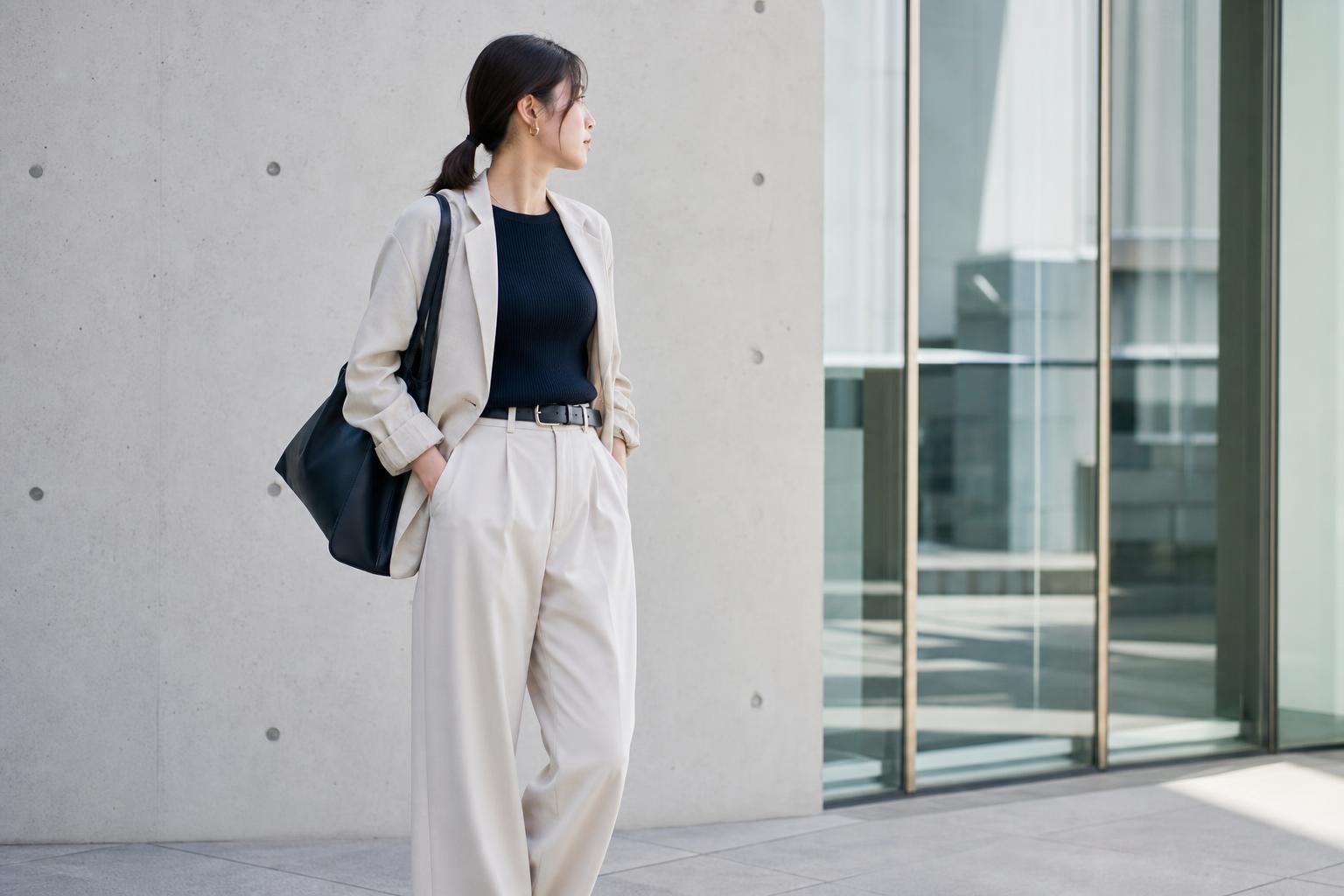
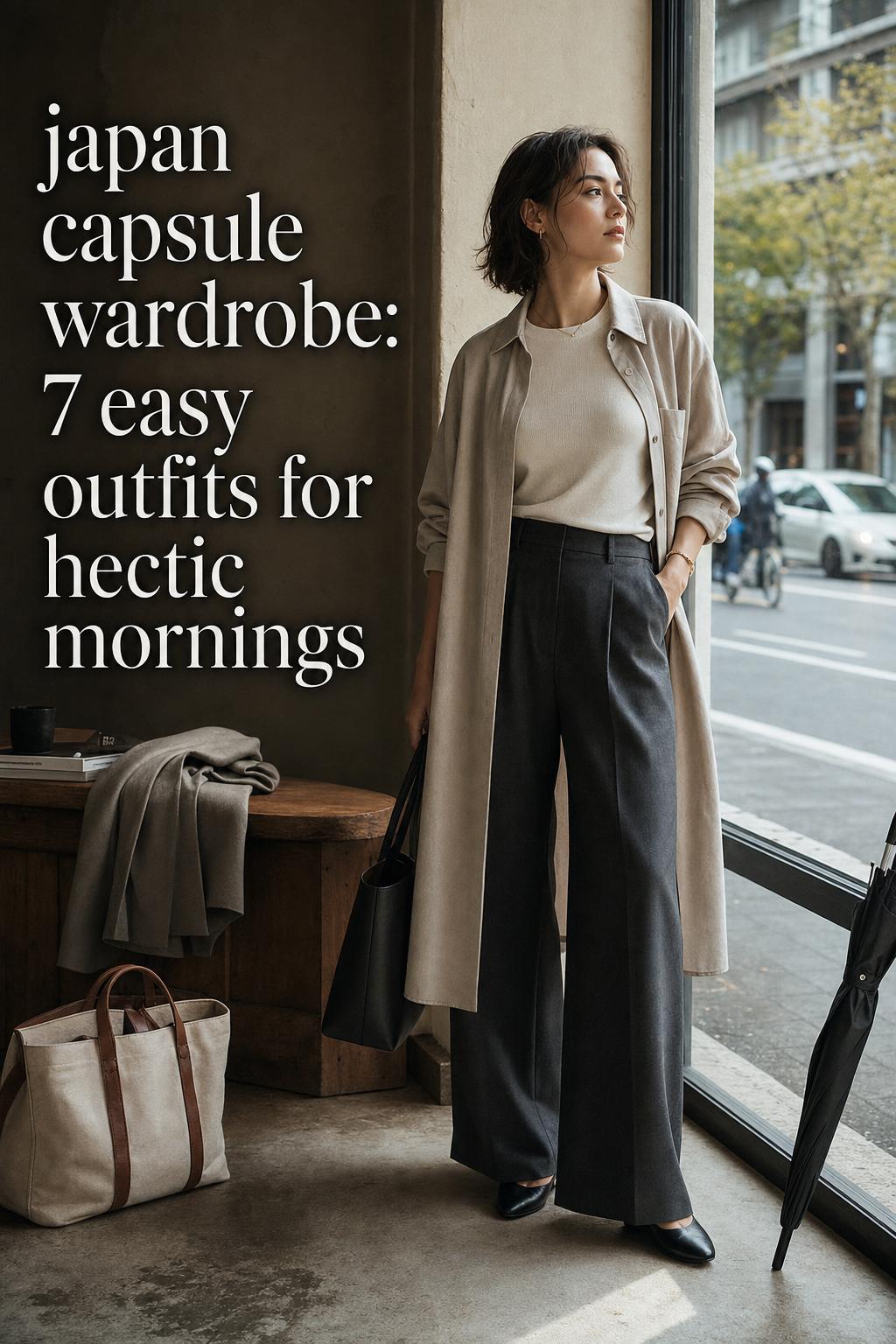
Japanese-inspired styling usually builds interest through shape contrast rather than obvious statement pieces. The composition may include a roomy shirt, relaxed trousers, flat shoes, and a coat with enough length to extend the silhouette without becoming formal. The result is not dramatic in a loud sense. It is visually composed because each piece leaves room for the others.
Color palette: similar restraint, different effect
At first glance, both wardrobes often live in a muted or neutral range. That overlap is real. Black, white, navy, gray, and earthy tones are natural foundations for both. But they use those shades differently.
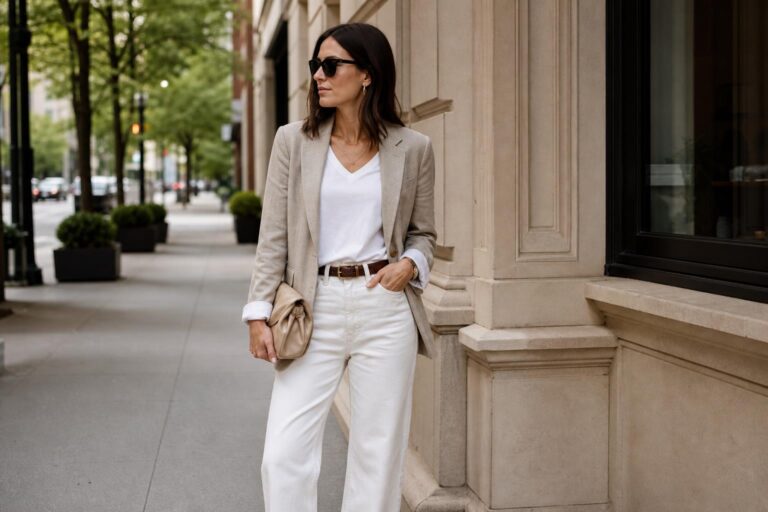
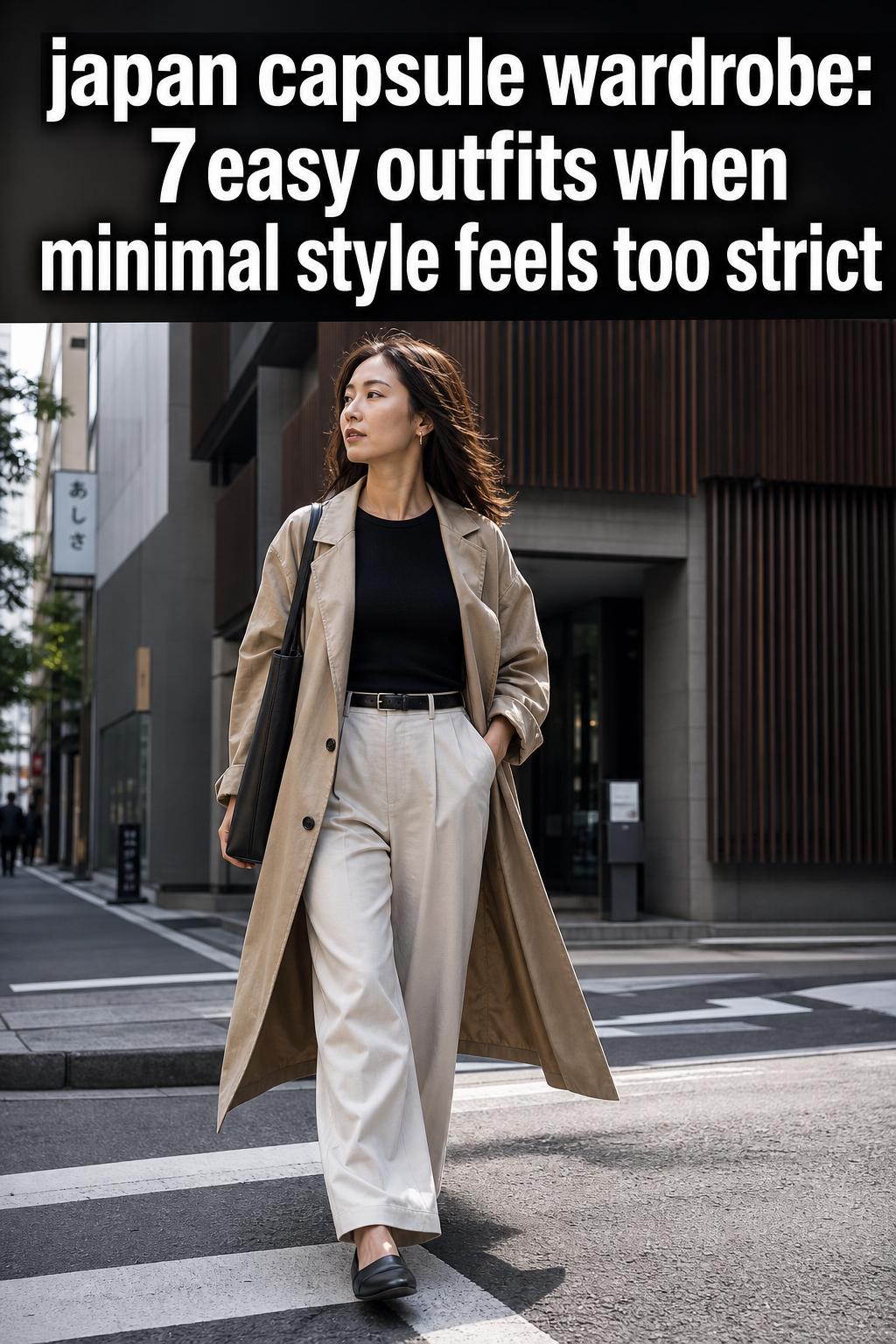
In a classic minimalist capsule, color is often used to support sharpness. High-contrast pairings, monochrome dressing, and clear tonal separation all reinforce a clean line. A black trouser with a white shirt reads crisp and direct. A beige coat over a cream knit and black boot feels polished because each element stays disciplined.
In a Japanese-inspired capsule, color restraint often supports softness and continuity. Tonal layering becomes more important than contrast. Similar shades in different textures can create depth without breaking the calm of the outfit. The palette feels less about clean division and more about visual flow.
Tip: use texture to keep neutral outfits from feeling flat
When a wardrobe relies on a narrow palette, texture contrast does the work that bold color would normally do. In a minimalist capsule, this may mean pairing smooth wool with crisp cotton. In a Japanese-inspired capsule, it may mean combining soft drape, matte surfaces, and slightly irregular fabric weight to make tonal dressing feel intentional rather than plain.
Formality and mood
Another useful comparison is formality. Minimalist wardrobes often tilt polished, even when they are casual. The clothing has a dressed quality because cut and finish are so controlled. A simple outfit can still feel office-ready or urban because the garments hold shape clearly.
A Japanese-inspired capsule often looks relaxed even when it is highly intentional. That does not make it less refined. It simply shifts the source of refinement from tailoring to proportion and restraint. The look is often less corporate, less sharp-edged, and more rooted in ease. That distinction matters for readers deciding how they want their wardrobe to function day to day.
If your life requires frequent transitions between casual settings and polished environments, classic minimalism may feel easier to deploy. If comfort, movement, and all-day wear are your priorities, a Japanese-inspired approach may offer more flexibility without losing visual coherence.
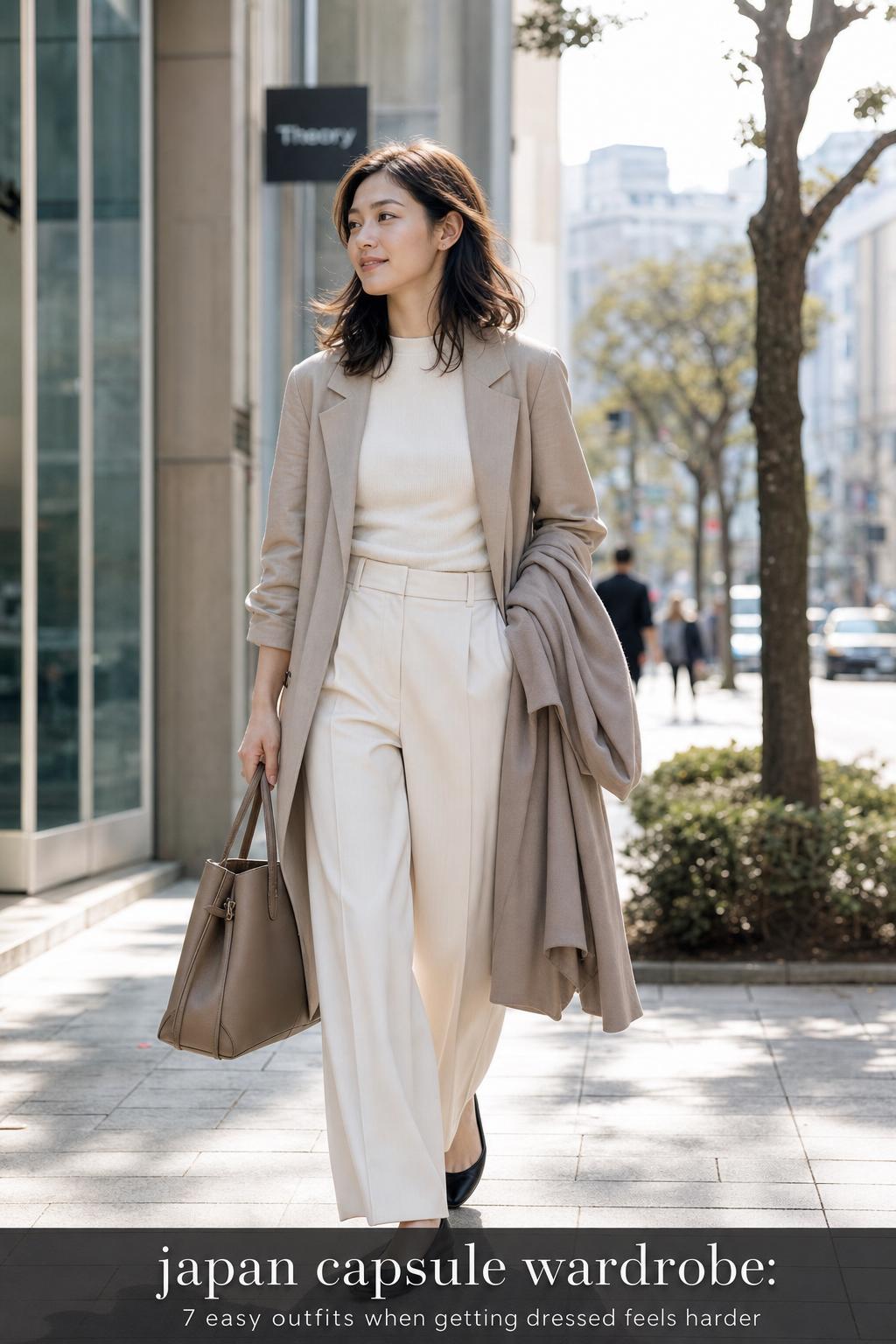
The wardrobe pieces each style tends to prioritize
A capsule is only as strong as its foundations. Looking at the core pieces in each approach makes the contrast more practical.
- Classic minimalist capsules tend to center on tailored trousers, straight jeans, fitted or semi-fitted knits, clean button-down shirts, blazers, sleek coats, simple dresses, and structured shoes.
- Japanese-inspired capsules often prioritize wider trousers, relaxed shirts, boxy tops, roomy layers, long outerwear, easy dresses or tunic-like shapes, and flat footwear that supports movement and proportion.
- Both wardrobes rely on repeatable basics, but the cut of those basics changes everything.
This is one of the most common mistakes when building a japan capsule wardrobe: buying standard minimalist essentials and expecting them to produce a Japanese-inspired result. The issue is rarely the item category. It is the shape of the item within that category.
Visual style breakdown in everyday outfits
Real-life wear makes abstract style distinctions easier to understand. The following comparisons focus on how each wardrobe reads in motion, during regular days, and across practical settings such as commuting, walking, working, and travel.
Layering approach
Minimalist layering is usually compact. A coat goes over a knit, a blazer goes over a shirt, and each layer stays visually contained. The goal is a smooth line with minimal interruption. Japanese-inspired layering often has more dimensionality. Hem lengths may intentionally shift. The underlayer may remain visible. Space between garments becomes part of the outfit composition.
Garment proportions
Minimalism often relies on balance through neatness. Japanese-inspired styling relies on balance through volume distribution. If one piece expands, another piece often stabilizes the look through length, drape, or simpler shape. The result is not oversized for its own sake. It is measured looseness.
Accessories
In a classic minimalist capsule, accessories often sharpen the outfit. A clean leather bag, simple belt, or understated jewelry piece can finish the look without distracting from it. In a Japanese-inspired capsule, accessories are often quieter in emphasis, blending into the overall silhouette instead of standing apart as polished punctuation.
Footwear choices
Footwear reveals the styling logic quickly. Minimalist outfits often look strongest with sleek boots, loafers, or other shapes that maintain structure. Japanese-inspired outfits often work best with shoes that support a grounded line and easy movement. The shoe does not need to be decorative. It needs to fit the scale and ease of the garments above it.
Overall outfit balance
Minimalist dressing usually appears sharper at first glance. Japanese-inspired dressing usually appears softer, calmer, and more spatial. Neither is inherently better. The better choice depends on whether you want your wardrobe to communicate precision or ease as its first impression.
Where a japan capsule wardrobe fits in modern fashion
The current relevance of a japan capsule wardrobe comes from its ability to answer several modern wardrobe pressures at once. Many people want fewer clothes, more outfit repeatability, better comfort, and a cleaner visual identity. A Japanese-inspired capsule offers a useful response because it does not force a trade-off between practicality and style language.
It also reflects a broader shift in how people define polish. For a long time, being well-dressed was closely tied to obvious structure. Now, visual intelligence often comes from proportion, restraint, tonal layering, and fabric behavior. A wardrobe can look highly considered without relying on formal tailoring in every outfit.
Outfit comparison: the same situation, two different results
The most useful way to compare these styles is to imagine the same dressing scenario interpreted through two wardrobes.
Casual day outfit interpretation
A classic minimalist casual look may center on straight trousers, a fitted knit, and a clean outer layer. The composition works because each piece is direct and the silhouette remains controlled. The outfit feels practical but still visually crisp.
A Japanese-inspired version of the same casual day might use relaxed trousers, a slightly boxy top, and a longer or roomier outer layer. The styling logic is different. Instead of refining the body line, the outfit creates calm through shape and spacing. It reads as thoughtful without appearing rigid.
Workwear interpretation
For work, a minimalist capsule often performs through structure. Tailored pieces help the outfit communicate authority quickly. The visual message is efficient and professional, especially in environments where sharpness is useful.
A Japanese-inspired workwear approach can still look polished, but it usually does so through disciplined simplicity rather than overt tailoring. The pieces may be looser, yet the color palette, fabric quality, and proportional balance keep the outfit composed. This works especially well in settings where creative professionalism or smart casual dressing is accepted.
Travel outfit interpretation
Travel reveals which style logic truly supports real life. A minimalist travel outfit often looks immediately put together, but if the clothing is too fitted or too dependent on pristine structure, comfort can drop over long hours. A Japanese-inspired travel look often has an advantage here because movement, layering, and comfort are built into the silhouette from the start.
That said, a fully relaxed outfit can read too informal if the proportions are not controlled. The strongest travel wardrobe often borrows from both directions: minimalist editing with Japanese-inspired ease.
A practical hybrid: where the two approaches meet
For many readers, the ideal wardrobe is not one style in pure form. It is a hybrid. This is especially true if you admire the calm of Japanese-inspired dressing but still need a closet that can handle work meetings, city wear, and more polished settings.
A hybrid capsule keeps the disciplined editing of minimalism while borrowing the proportional intelligence of Japanese-inspired styling. That might mean using a neutral palette and a limited number of pieces, but choosing roomier trousers, a softer shirt shape, or a more relaxed coat length. The result is a closet that remains versatile without feeling severe.
Tip: build around shape, not just item count
Many capsule wardrobes fail because they focus only on how many pieces to own. A stronger approach is to define your preferred silhouette first. Once you know whether you want sleek lines, relaxed volume, or a mix of both, the number of garments becomes far easier to manage. This is especially important in a japan capsule wardrobe, where proportion is central to the overall effect.
Common styling mistakes that blur the wardrobe
A comparison becomes most useful when it also shows what can go wrong. Several mistakes appear repeatedly when people try to create these wardrobes.
- Using only neutrals but ignoring silhouette, which creates a wardrobe that is cohesive in color but weak in identity.
- Choosing oversized pieces without proportion control, causing the outfit to look heavy rather than calm.
- Relying on fitted basics while expecting a Japanese-inspired result.
- Adding too many decorative accessories, which interrupts the quiet composition both styles depend on.
- Forgetting fabric behavior, especially when layering looser garments that need drape rather than stiffness.
These errors are less about trend mistakes and more about visual logic. A successful capsule wardrobe does not come from isolated good pieces. It comes from pieces that share the same design conversation.
How to decide which style suits your wardrobe habits
The better style is the one that aligns with how you actually get dressed. If you enjoy clean structure, like looking polished with minimal effort, and often move between professional or urban settings, a classic minimalist capsule may serve you best. It keeps decision-making fast and the overall effect sharp.
If comfort, movement, layering, and visual softness matter more to you, a Japanese-inspired capsule will likely feel more natural. It supports long days, transitional weather, and repeat wear without requiring every outfit to look tailored. For many people, that makes it especially practical.
There is also a personality element. Minimalism often suits those who want a direct, refined visual message. Japanese-inspired styling often suits those who prefer subtle composition and a less rigid outline. Neither is more advanced. They simply prioritize different kinds of discipline.
When each style works best
Different wardrobes perform better in different contexts, and this is where comparison becomes genuinely helpful.
For everyday wear
A Japanese-inspired capsule often excels in everyday wear because it integrates comfort into the design. The pieces can handle movement, errands, walking, and changing temperatures more naturally. A minimalist capsule still works well daily, especially for those who want a more streamlined appearance.
For work environments
Classic minimalism usually has the advantage in formal offices because structure translates quickly as professional. A Japanese-inspired capsule works best in workplaces where smart casual, creative dressing, or softer tailoring is acceptable.
For travel
Travel often favors the Japanese-inspired side because relaxed silhouettes and layered styling support comfort over long hours. Still, minimalist editing helps keep luggage efficient and outfits interchangeable, so the strongest travel wardrobe often blends both systems.
For casual versus polished occasions
Minimalism transitions easily toward polished occasions because its clean lines already carry some formality. Japanese-inspired dressing is excellent for casual and smart-casual situations, especially when the emphasis is on visual ease, creative restraint, and tonal sophistication rather than overt sharpness.
Editorial guidance for building a more coherent capsule
If your goal is a stronger japan capsule wardrobe, the smartest move is to choose a dominant style logic before buying more pieces. Decide whether you want your wardrobe to look sharper or softer, more tailored or more spatial, more direct or more layered. Once that decision is made, selection becomes easier.
Then evaluate every garment by three criteria: silhouette role, layering value, and repeat potential. A piece should not enter the wardrobe simply because it is basic. It should enter because it supports the whole system. That is what makes a capsule feel intelligent rather than merely reduced.
Tip: use one visual anchor in every outfit
Every strong outfit benefits from a visual anchor. In a minimalist look, that anchor may be a blazer, tailored trouser, or structured shoe. In a Japanese-inspired look, it may be a long coat, a wide trouser, or a boxy top that defines the silhouette. The anchor keeps simple outfits from feeling unfinished.
The core distinction in one sentence
A classic minimalist capsule wardrobe simplifies through precision, while a Japanese-inspired capsule wardrobe simplifies through proportion and ease. That single distinction explains why these styles can look related yet feel entirely different in practice.
Once you can identify that difference, shopping becomes more disciplined, outfit building becomes more intuitive, and a japan capsule wardrobe becomes easier to interpret on your own terms. The most useful result is not copying one strict formula. It is understanding how to combine restraint, comfort, and visual intelligence in a way that matches your life.
For some wardrobes, that will mean crisp tailoring with only a hint of relaxed proportion. For others, it will mean tonal layering and roomier shapes with just enough structure to stay polished. Either route can work. What matters is that the pieces speak the same design language.
FAQ
What does a japan capsule wardrobe usually mean?
It usually refers to a small, intentional wardrobe shaped by simplicity, versatility, and a Japanese-inspired approach to proportion, layering, and visual calm rather than just owning fewer neutral basics.
Is a japanese capsule wardrobe the same as a minimalist capsule wardrobe?
No. They overlap in restraint and repeatability, but a minimalist capsule often focuses on sharp structure and clean lines, while a Japanese-inspired capsule often emphasizes softer volume, tonal layering, and relaxed silhouette balance.
Can I build this kind of wardrobe if I already own mostly basic pieces?
Yes, but the key is to assess shape rather than category alone. Basic items can work well if their proportions support the silhouette you want, especially through relaxed trousers, roomier tops, and outerwear that creates better outfit balance.
Why do neutral clothes sometimes still fail to create the right look?
Because color is only one part of the wardrobe. If the cuts are too fitted, too stiff, or unrelated in proportion, the outfit will not produce the calm, cohesive effect associated with a Japanese-inspired capsule even if the palette is very restrained.
Which style is better for work?
Classic minimalism is usually easier for formal workplaces because tailored structure reads professional quickly, while a Japanese-inspired capsule is often stronger in creative, smart-casual, or more relaxed work environments.
Is oversized clothing necessary for a japan capsule wardrobe?
No. The goal is not indiscriminate oversizing. What matters is controlled proportion, where garments create ease and shape without overwhelming the frame or making the outfit feel visually heavy.
How do I make a japanese-inspired outfit look polished instead of sloppy?
Focus on disciplined color choices, clean layering, thoughtful length relationships, and fabrics with good drape. The outfit should feel intentional in its volume, with at least one element that acts as a visual anchor.
Is this style practical for travel?
Yes, especially because relaxed silhouettes and layering support movement and comfort, but the wardrobe works best when edited carefully so every piece can repeat across multiple outfits without losing visual coherence.