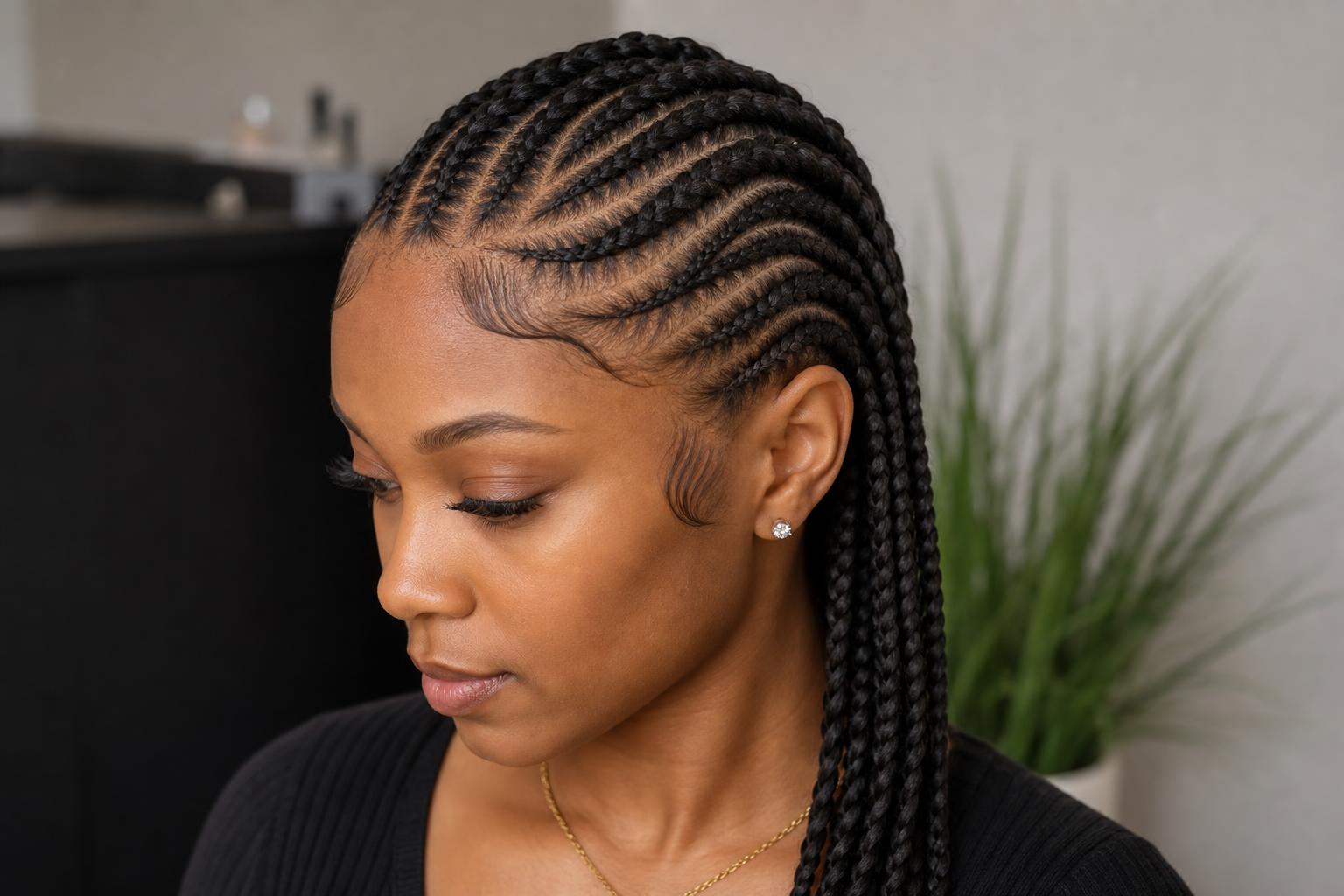
Modern Cornrows Styles for Work, Events, and Everyday
Choosing among cornrows styles sounds simple until the real decisions begin: pattern, size, accessories, scalp comfort, hair texture, occasion, and how long you actually want to wear the look. A style that appears sharp in a photo may feel too tight after a few days, look too formal for everyday wear, or require more upkeep than expected. That is why so many people search for inspiration but still struggle to choose the right cornrow design for real life.
The challenge is not only visual. Cornrows sit close to the scalp, so every design choice affects comfort, maintenance, and overall wearability. Straight-back rows, side parts, zigzag lines, feed-in cornrows, and decorated styles with beads or cuffs all create a different result. This guide breaks down the styling logic behind the most useful options, explains how cornrows function as protective styling, and helps you match the right look to your daily routine, event needs, and hair goals.
Why choosing the right cornrow style can be harder than it looks
Cornrows are defined by a braiding technique that keeps the braid close to the scalp. That technical foundation creates both their appeal and their complexity. Because the hair is braided in visible rows and patterns, the final look depends on precision, parting, symmetry, and tension. A small change in layout can shift the entire style from classic and understated to statement-making and fashion-forward.
Practicality also matters. Some readers want cornrow hairstyles for natural hair that feel polished enough for work and easy enough for daily life. Others want dramatic pattern design for formal events, cultural fashion moments, or image-led looks inspired by celebrity references such as Alicia Keys or broader pop culture influences like lemonade braids. Men often face a different version of the same question: how to find cornrow braids that feel modern and intentional without creating a grooming routine that is too demanding.

Found the dress? Keep the rest in one place.
Zarellea brings guest details, vendors, timelines, and every next step together — so your wedding plan feels as good as your look.
The difficulty usually comes from balancing four factors at once: visual impact, scalp comfort, maintenance level, and personal style identity. The most successful choice is rarely just the prettiest pattern. It is the one that fits your hair type, your schedule, your setting, and the statement you want the style to make.
What cornrows are and why they remain so versatile
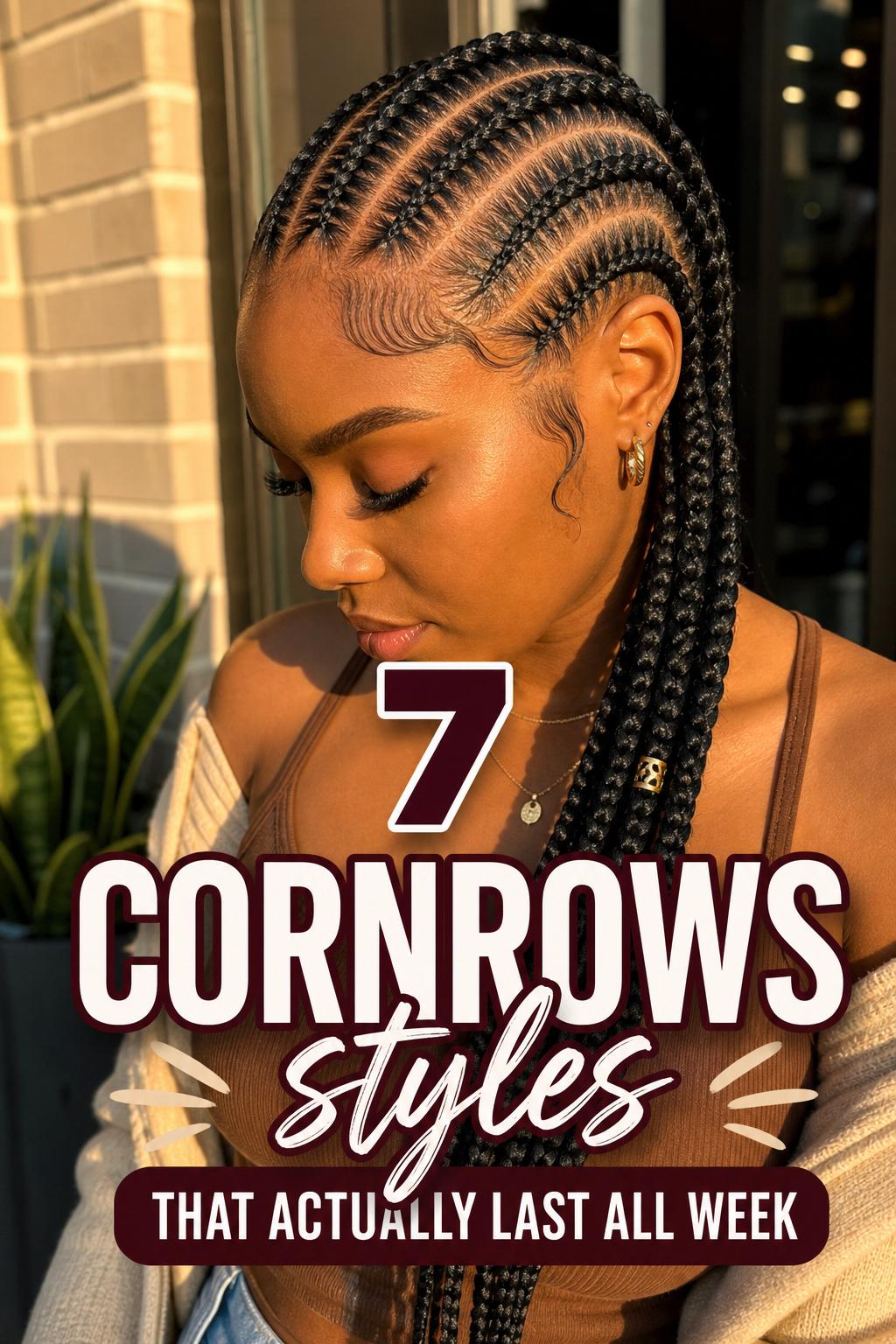
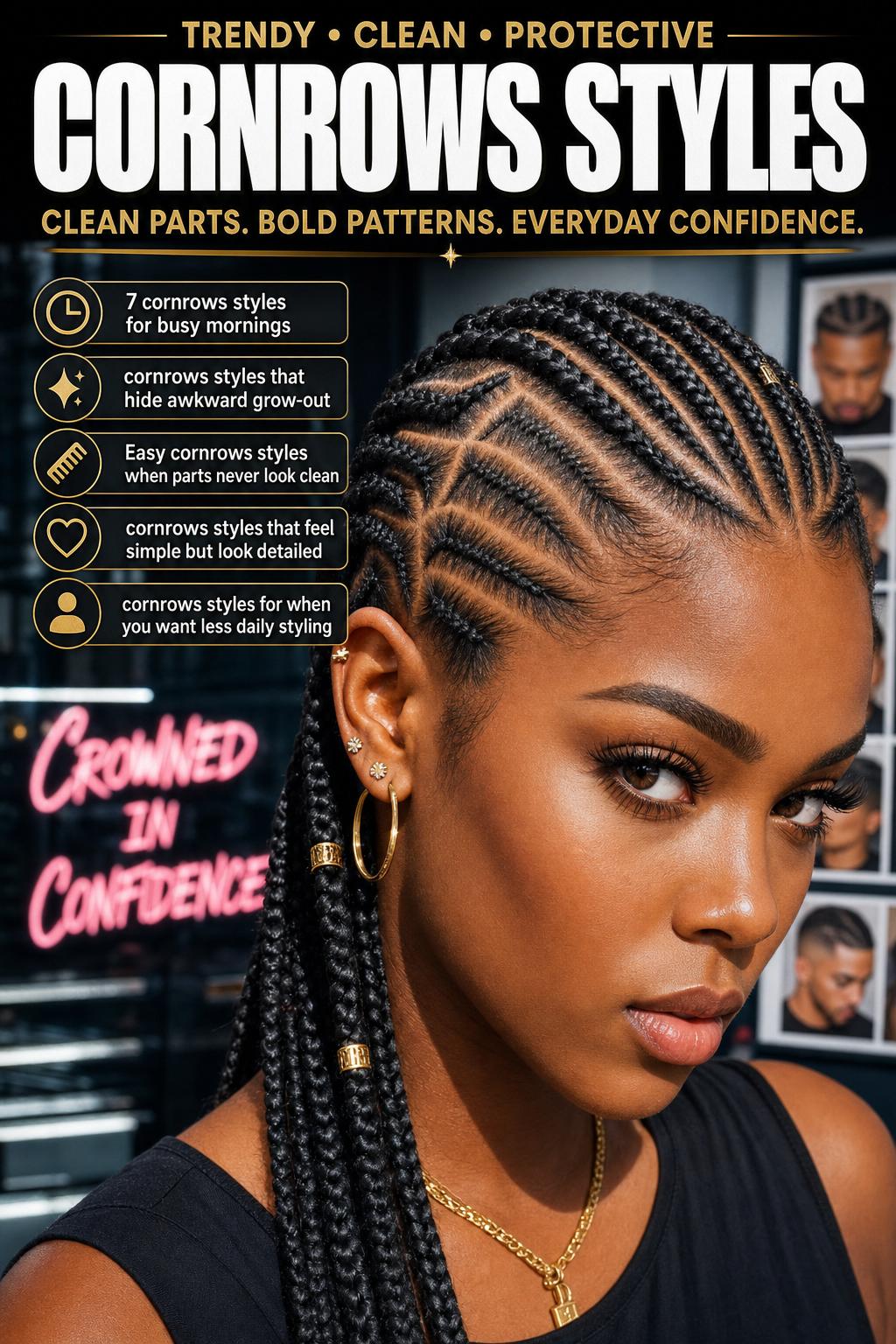
Cornrows are a form of flat braids created with a three-strand braiding method near the scalp. They are widely recognized as both a styling technique and a protective styling option. That dual role explains why they appear across editorial beauty coverage, natural hair discussions, men’s grooming features, and inspiration galleries focused on trend-led braids.
The versatility comes from pattern architecture. The same core technique can produce straight-back cornrows, center-part rows, side cornrows, curved layouts, geometric shapes, feed-in transitions, and decorated designs finished with beads, cuffs, or other hair accessories. This means the style can be minimal, expressive, formal, sporty, or culturally referential depending on the braid map.
Another reason cornrows remain popular is that they work across multiple contexts. Beauty magazines in the United States often present them as a strong option for natural hair, while fashion publications and style blogs regularly spotlight men’s cornrow styles, celebrity inspiration, and statement pattern work. That broad coverage reflects a simple truth: cornrows can be adapted without losing their visual clarity.
The key styling principles that make cornrows work
Good cornrows are not only about the braid itself. They rely on proportion, line direction, visual balance, and realistic maintenance. Before deciding on a specific look, it helps to use a styling framework rather than choosing from a random gallery image.
- Match the pattern to your routine. Straight-back or center-part cornrows are usually easier to maintain visually because the layout is clean and structured.
- Use accessories strategically. Beads and cuffs act as visual anchors. They add personality, but too many embellishments can shift a look from refined to overly busy.
- Think about silhouette from the front and side. Side cornrows and off-center parts change facial framing more dramatically than symmetrical rows.
- Respect scalp comfort. Protective styling should still feel wearable. If a style relies on excessive tension, the visual payoff is not worth the trade-off.
- Balance trend with longevity. Zigzag and geometric patterns create strong fashion impact, but classic layouts often age better over several weeks of wear.
This logic also helps when comparing cornrows with other protective braids. If your priority is scalp-defined pattern and close-to-head structure, cornrows are the stronger option. If your priority is freer movement and looser braid distribution, another braid family may be more suitable. That distinction matters when readers are trying to solve a very specific style problem rather than simply browsing hairstyles.
Reading the pattern: which cornrow designs solve which styling problems
Straight-back cornrows for clean structure and low visual complexity
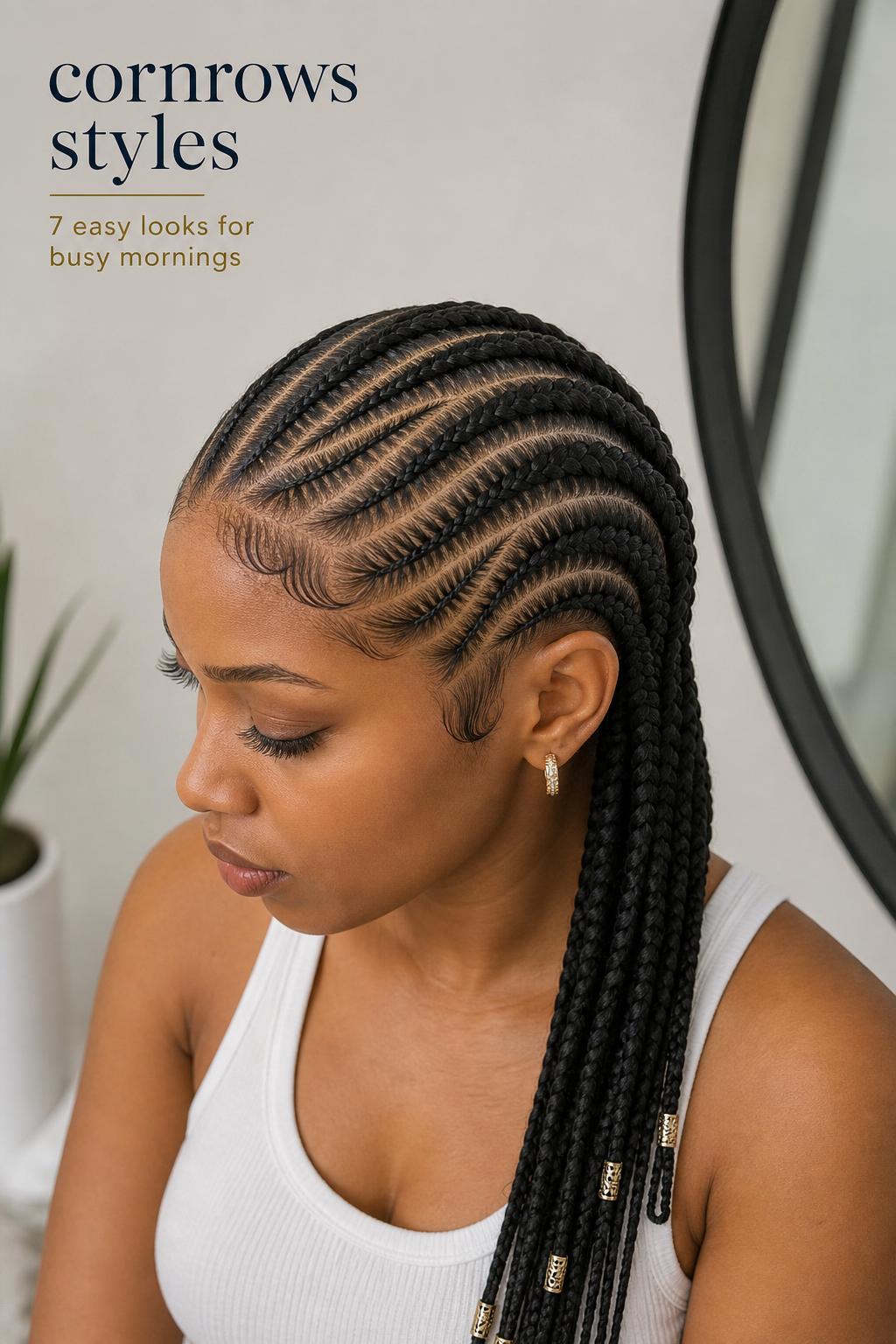
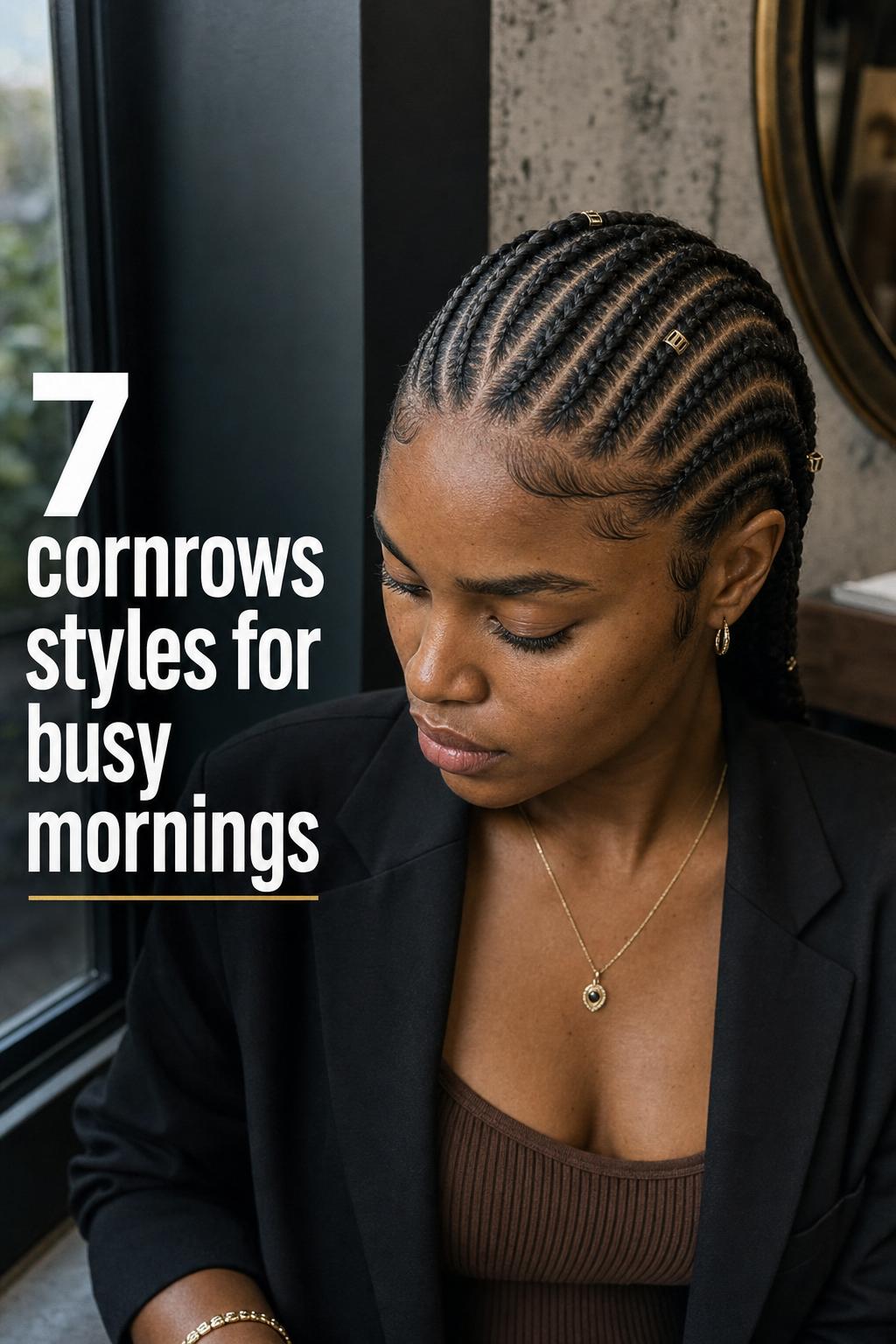
Straight-back cornrows are the classic solution when you want a style that looks polished without demanding too much visual interpretation. The rows move directly back from the hairline, creating a neat, balanced composition that works well for everyday wear, gym-to-office transitions, and readers who prefer a clear, disciplined finish.
This design solves the problem of versatility. It pairs easily with casual clothing, tailored workwear, and event dressing because it does not compete aggressively with the rest of your look. For men, straight-back cornrows are often the most approachable entry point into braided styles. For women, they create a strong base for beads or cuffs without losing simplicity.
Center-part cornrows for symmetry and sharper facial framing
Center-part cornrows introduce a stronger visual structure because the part itself becomes part of the design. This style works especially well when the challenge is creating a more intentional, fashion-aware appearance. The center line organizes the braid pattern and gives the look a composed, editorial quality.
The advantage here is precision. If you want your cornrow braids to feel more designed than basic, a center-part layout creates immediate order. It is especially effective in image-driven settings, from styled portraits to formal occasions where symmetrical grooming reads as deliberate and refined.
Side cornrows for asymmetry and softer proportion play
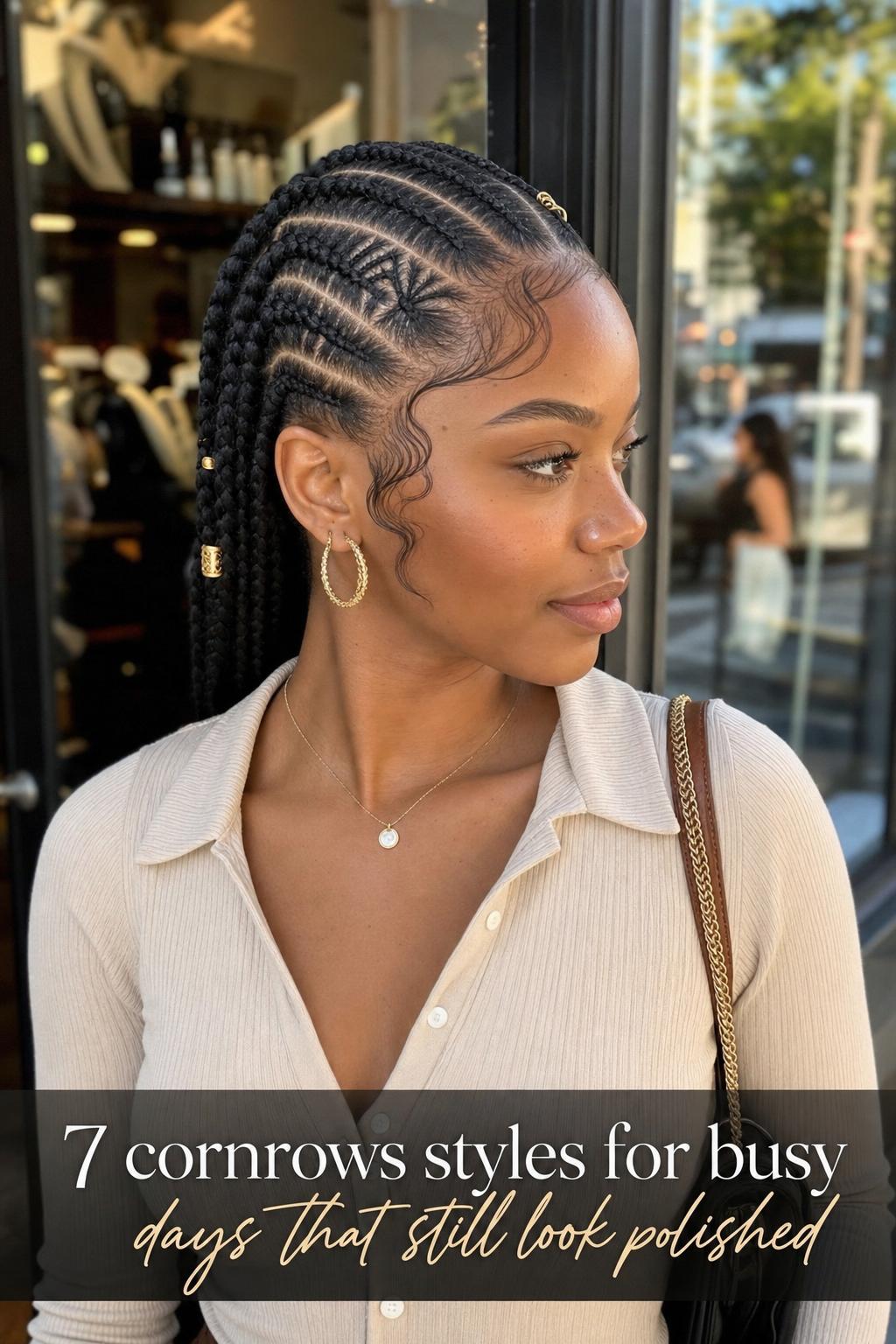
Side cornrows and off-center layouts solve a different problem: they create movement. Instead of directing the eye straight back, they shift attention across the face and scalp, producing a more fluid shape. This can be useful if a strict center line feels too severe or if you want the hairstyle to carry more personality without moving into highly intricate territory.
Side-swept cornrow ideas often appear in mainstream beauty roundups because they bridge practical wearability and visual interest. They are also effective for occasions where you want a softer finish than classic straight-back rows. In styling terms, asymmetry creates dimension and can make the final composition feel less rigid.
Zigzag and geometric patterns for statement impact
Zigzag cornrows, curved rows, and geometric pattern work are for readers whose main challenge is avoiding a look that feels too ordinary. These styles transform the scalp into a visible design surface. The line work itself becomes the statement piece, which is why fashion-led publications and trend-focused braid galleries keep returning to them.
The trade-off is that statement patterns require stronger execution and may feel less understated in professional or minimalist settings. They work best when you want the hairstyle to carry the outfit, not simply support it. For men, center-part and zigzag combinations can create a modern grooming direction. For women, geometric cornrows often pair well with selective accessories rather than heavy decoration.
Feed-in cornrows and lemonade-inspired looks for seamless transitions
Feed-in cornrows are often chosen because they create a more gradual visual build. Instead of looking abruptly thick from the start, the rows appear to grow with more fluidity. This technique is frequently discussed alongside lemonade-inspired braids and pop culture-led cornrow variations that emphasize a more sculpted finish.
These styles are helpful when the challenge is achieving a more polished, elevated look with stronger directional movement. Lemonade braids, in particular, are often associated with side-oriented patterning and a more fashion-conscious presentation. They can be dramatic, but they also solve a common concern: how to make cornrows feel current without abandoning the core technique.
Decorated cornrows with beads and cuffs for cultural expression and finish
Beaded cornrows and styles finished with cuffs are often treated as simple embellishment, but they do more than decorate. They influence rhythm, movement, and visual focus. A few well-placed beads can make a classic braid pattern feel expressive. Hair cuffs can introduce a metallic accent that sharpens the entire style.
This approach is especially useful when the base pattern is simple and you want a customized result without redesigning the braid map. Beauty editors and cultural lifestyle publishers frequently highlight beads and accessories because they connect individual expression with a long-standing visual language around cornrows. The key is editing. The accessory should complete the pattern, not overwhelm it.
Natural hair, men’s styling, and the question of compatibility
Many readers arrive with one practical concern: will the style suit their hair and lifestyle? Coverage across major beauty and style publications consistently frames cornrows as highly relevant for natural hair and increasingly visible in men’s grooming. The reason is compatibility. Cornrows can be adapted for different lengths, different pattern goals, and multiple image preferences.
For natural hair, the appeal often lies in structure and manageability. Cornrow hairstyles for natural hair can simplify the daily styling process while still offering visual range. Straight-back rows create a clean baseline. Feed-in and side patterns add softness or drama. Beads and cuffs allow individuality without changing the underlying braid logic.
For men, the most effective cornrows styles usually prioritize line clarity and grooming precision. Center parts, straight-backs, zigzag rows, and curved designs all appear frequently in men’s style roundups because they align with current fashion photography and celebrity-led grooming references. Names such as David Haye show up in men’s cornrow discussions not because every reader wants to copy a celebrity, but because public figures help normalize the style within a broader fashion context.
Compatibility also depends on maintenance tolerance. A person who wants a simple protective look may prefer classic rows. Someone who enjoys regular styling appointments and visual variety may be better suited to more intricate patterns. There is no universal best choice. The best choice is the one that fits how you live with your hair after the appointment ends.
A practical way to choose between classic, trend-led, and occasion-ready cornrows
Instead of choosing from a large inspiration gallery at random, it helps to classify cornrows into style functions. This makes decision-making faster and more realistic.
- Classic function: straight-back cornrows, center-part rows, simple side cornrows.
- Trend function: zigzag patterns, geometric layouts, lemonade-inspired movement, curved rows.
- Decorative function: beaded cornrows, cuffs, accessory-led finishes.
- Editorial function: combinations that rely on strong symmetry, high-definition parting, or pop culture references.
- Everyday protective function: manageable patterns with lower visual complexity and easier upkeep.
This classification matters because not every cornrow style solves the same problem. A workweek style needs staying power and consistency. An event style can be more expressive. A photo-focused look can afford stronger pattern contrast. Once you know the function, the pattern choice becomes far easier.
History and cultural context shape how cornrows are worn today
Cornrows are not simply a trend cycle. Their significance is tied to African origins and broader diaspora connections that continue through the Caribbean, the United States, and contemporary fashion and beauty culture. That historical depth helps explain why cornrows continue to appear in both protective styling conversations and cultural fashion coverage.
Modern style media often frames cornrows through inspiration images, celebrity references, and current pattern trends. That is useful for visual ideas, but it is only part of the picture. Cornrows also carry cultural meaning, and many of the most recognized modern variants gain traction because they connect heritage, identity, and self-expression with present-day styling. This is one reason public figures such as Alicia Keys are frequently cited in beauty coverage: celebrity visibility amplifies a style, but the style itself has much deeper roots.
Readers looking for the right cornrow style often make better choices when they understand that cornrows sit at the intersection of artistry, practicality, and cultural continuity. The pattern is visual, but the style is never only visual.
From appointment chair to everyday wear: how to approach the braiding process
One of the biggest mistakes people make is focusing entirely on the inspiration image and not enough on execution. How to do cornrows, or how to request them clearly from a stylist, starts with a few practical decisions: pattern family, row size, accessory choice, and how much maintenance you can manage afterward.
Essential preparation before braiding
Preparation shapes the final result. Hair tools such as braiding combs are regularly mentioned in cornrow tutorials because neat sectioning determines how sharp the pattern will appear. Accessories such as beads and cuffs should also be chosen in advance so the braid design can accommodate them rather than treating them as an afterthought.
It is also worth deciding whether your priority is classic structure, statement patterning, or a decorated finish. This saves time and reduces the risk of ending up with a style that looks visually disconnected. A strong cornrow design usually feels coherent from scalp pattern to final detail.
How a basic straight-back tutorial translates into better style decisions
Even if you do not plan to braid your own hair at home, understanding the logic of a basic straight-back technique is useful. It clarifies why parting matters, why row spacing affects the visual rhythm, and why tension changes both comfort and appearance. That knowledge helps you communicate more effectively with a stylist and evaluate whether a pattern is practical for your needs.
In simple terms, the process relies on clean sections, controlled near-scalp braiding, and consistent pattern direction. Once you understand those variables, you can better judge whether a feed-in style, side-swept layout, or geometric pattern is a smart choice for your hair and routine.
Care and scalp health: the part of protective styling that cannot be ignored
Cornrows are widely described as protective styling, but that description only holds when the style is worn and maintained thoughtfully. One of the most important gaps in many inspiration-led conversations is scalp health. Tension, wear duration, and basic cleansing habits all affect whether a cornrow style remains helpful or becomes uncomfortable.
Scalp care matters because cornrows expose the braid map clearly. If the scalp feels strained, the style is too tight. If the hairline or roots remain uncomfortable beyond the initial adjustment period, the style is not functioning well as protection. Protective styling should reduce daily handling, not create a new problem.
What good cornrow maintenance looks like
- Keep the scalp clean and pay attention to how it feels, not just how the braids look.
- Use moisturizing and scalp-focused hair care products thoughtfully rather than overloading the style.
- Monitor wear time and remove the braids when they stop feeling or looking healthy.
- Choose accessories that do not add unnecessary strain.
- Re-braid based on scalp condition and braid integrity, not only on appearance in photos.
Some style guides also point toward oils, serums, and other braiding care products as part of maintenance. The practical principle is simple: support the scalp and preserve the look without saturating the style. Less clutter usually creates better longevity.
Outfit and occasion logic: matching cornrows to where you are actually going
Cornrows do not exist in isolation. They change the outfit composition because they expose more of the face, scalp, and overall head shape. That means pattern choice should align with where the style will be worn. This is where many readers make a stronger decision: not by asking which style is prettiest, but by asking which style fits the setting.
Outfit solution: polished everyday structure
For daily wear, classic straight-back or center-part cornrows create the most adaptable base. The clean line work supports casual pieces, work-friendly tailoring, and minimal accessories. This combination works because the hairstyle already introduces structure, so the rest of the look can remain streamlined. In visual terms, the cornrows act as the grooming anchor.
Outfit solution: event-ready pattern with controlled drama
For formal events or fashion-focused occasions, side cornrows, feed-in designs, or geometric patterns create stronger presence. These styles solve the problem of looking finished without needing heavy additional styling. The pattern itself carries the impact. When paired with a composed outfit, the result feels intentional rather than excessive.
Outfit solution: expressive finish through accessories
If the setting allows more personality, beads and cuffs can transform simple cornrows into a more expressive statement. This works especially well when the outfit is otherwise controlled. Accessories then function as a focused accent rather than competing with multiple bold elements at once.
Outfit solution: men’s grooming with fashion clarity
For men, straight-backs, center parts, and zigzag rows create a strong visual line that pairs well with clean grooming and contemporary wardrobe staples. The styling logic is straightforward: the braid pattern introduces identity, so the rest of the appearance benefits from precision and restraint. This is why men’s cornrow guides often emphasize classic rows alongside a few modern pattern updates rather than pushing every trend at once.
Tips that make cornrow inspiration more wearable in real life
A beautiful image is not the same as a wearable plan. The easiest way to make cornrows styles more successful is to translate inspiration into a practical brief before braiding begins.
- Save examples from similar hair lengths rather than choosing only aspirational images.
- Decide whether the scalp pattern or the accessories are the main focal point.
- For first-time wearers, begin with classic cornrows before moving into intricate geometric designs.
- Choose one visual direction: symmetrical, asymmetrical, decorated, or trend-led.
- If longevity matters more than novelty, favor patterns that still look tidy as they age.
One useful approach is to think in terms of visual pressure. The more complex the braid map, the less decoration you usually need. The more minimal the rows, the more room you have for beads, cuffs, or styling variation. This creates better balance and avoids a crowded result.
Where many style guides stop short: the overlooked decisions that matter
Some of the most useful cornrow decisions happen before and after the style itself. Pricing, stylist availability, and salon comfort can affect the experience just as much as the final pattern. Discussions around salon accessibility and discrimination are not always included in mainstream hairstyle roundups, yet they remain relevant to how people actually access braided styles in the United States.
There is also growing space for more technical and design-focused cornrow planning, including grid-based pattern mapping and even AI-assisted design ideas mentioned in broader discussions of future styling tools. While these approaches are not yet central to most mainstream cornrow guides, they point toward a more customized future where readers may choose patterns with even greater precision before braiding begins.
What matters now is knowing that a good cornrow decision includes more than a trend reference. It includes wearability, scalp respect, and a pattern that aligns with your life rather than just your saved images.
Common mistakes that can make cornrows look or feel wrong
Most cornrow disappointments come from mismatched expectations, not from the style category itself. The pattern may be beautiful, but if it does not fit your daily needs, the result will still feel wrong.
- Choosing complexity over compatibility: an intricate design can be stunning, but it may not suit an everyday routine.
- Ignoring scalp tension: a sharp finish should never require prolonged discomfort.
- Over-accessorizing: too many beads or cuffs can distort the visual hierarchy of the braid pattern.
- Using trend references without adaptation: celebrity-inspired styles need to be translated to your own length, texture, and lifestyle.
- Treating all cornrows as identical: straight-back, side-swept, feed-in, and geometric styles solve different problems and should be chosen accordingly.
In practical terms, the fix is always the same: define the purpose first. Is the goal protection, polish, trend impact, event styling, or personal expression? Once that is clear, the right cornrow path becomes much easier to identify.
Final perspective: how to choose cornrows with confidence
The strongest cornrows styles are the ones that combine pattern clarity, personal relevance, and realistic maintenance. Straight-back rows remain useful because they are clean and versatile. Side cornrows and center parts add visual direction. Zigzag and geometric designs bring fashion energy. Feed-in and lemonade-inspired braids offer smoother transitions and stronger movement. Beads and cuffs finish the look with expression and detail.
What ties all of these options together is thoughtful selection. Cornrows work best when they are treated as both style and structure: a hairstyle with cultural depth, visual intelligence, and practical demands. Choose the pattern that supports your routine, respects your scalp, and reflects how you actually want to present yourself. That is the difference between copying an image and wearing the style well.
FAQ
What are cornrows?
Cornrows are braids created close to the scalp using a three-strand technique. They are known for their defined rows, visible patterning, and versatility as both a protective styling option and a design-driven hairstyle.
Are cornrows considered protective styling?
Yes, cornrows are widely treated as protective styling, especially in natural hair conversations, but they only function that way when the style is comfortable, not overly tight, and maintained with attention to scalp health and wear time.
How long do cornrows usually last?
Longevity depends on the pattern, maintenance, and how the scalp feels over time. Simpler styles often remain visually neat longer, but braids should be removed and re-braided based on comfort, scalp condition, and overall braid integrity rather than appearance alone.
Which cornrow styles are best for beginners?
Straight-back cornrows and simple center-part styles are usually the best starting point. They provide a clear, classic look, are easier to maintain visually, and help first-time wearers understand how cornrows feel before moving to more intricate patterns.
Do cornrows work for men as well as women?
Yes, cornrows are widely worn by both men and women. Men’s style coverage often highlights straight-backs, center-part rows, zigzag patterns, and curved designs, while women’s features tend to include side-swept looks, feed-in cornrows, and beaded finishes.
What is the difference between straight-back cornrows and feed-in cornrows?
Straight-back cornrows describe the direction and overall layout of the rows, while feed-in cornrows refer to a technique that creates a more gradual, seamless visual transition in the braid. A style can be straight-back in pattern and feed-in in execution.
Are beads and cuffs a good idea for cornrows?
Yes, when used selectively. Beads and cuffs can add character, cultural expression, and visual focus, especially on simpler braid patterns. The most effective result usually comes from using accessories as a finishing detail rather than overloading the style.
How do I choose the right cornrow pattern for everyday wear?
Start by deciding how much maintenance and visual impact you want. Straight-back, center-part, and simple side cornrows are usually best for everyday wear because they balance polish, practicality, and flexibility across different settings.
What should I pay attention to after getting cornrows?
Focus on scalp comfort, cleanliness, and how the style wears over time. If the braids feel too tight, the scalp stays sore, or the look starts to compromise comfort, it is a sign that the style needs adjustment or removal.
Why are cornrows often discussed in relation to culture and history?
Cornrows are connected to African origins and the wider diaspora, including the Caribbean and the United States. Their modern popularity in beauty, fashion, and pop culture exists alongside that deeper cultural significance, which is why the style is more than a passing trend.