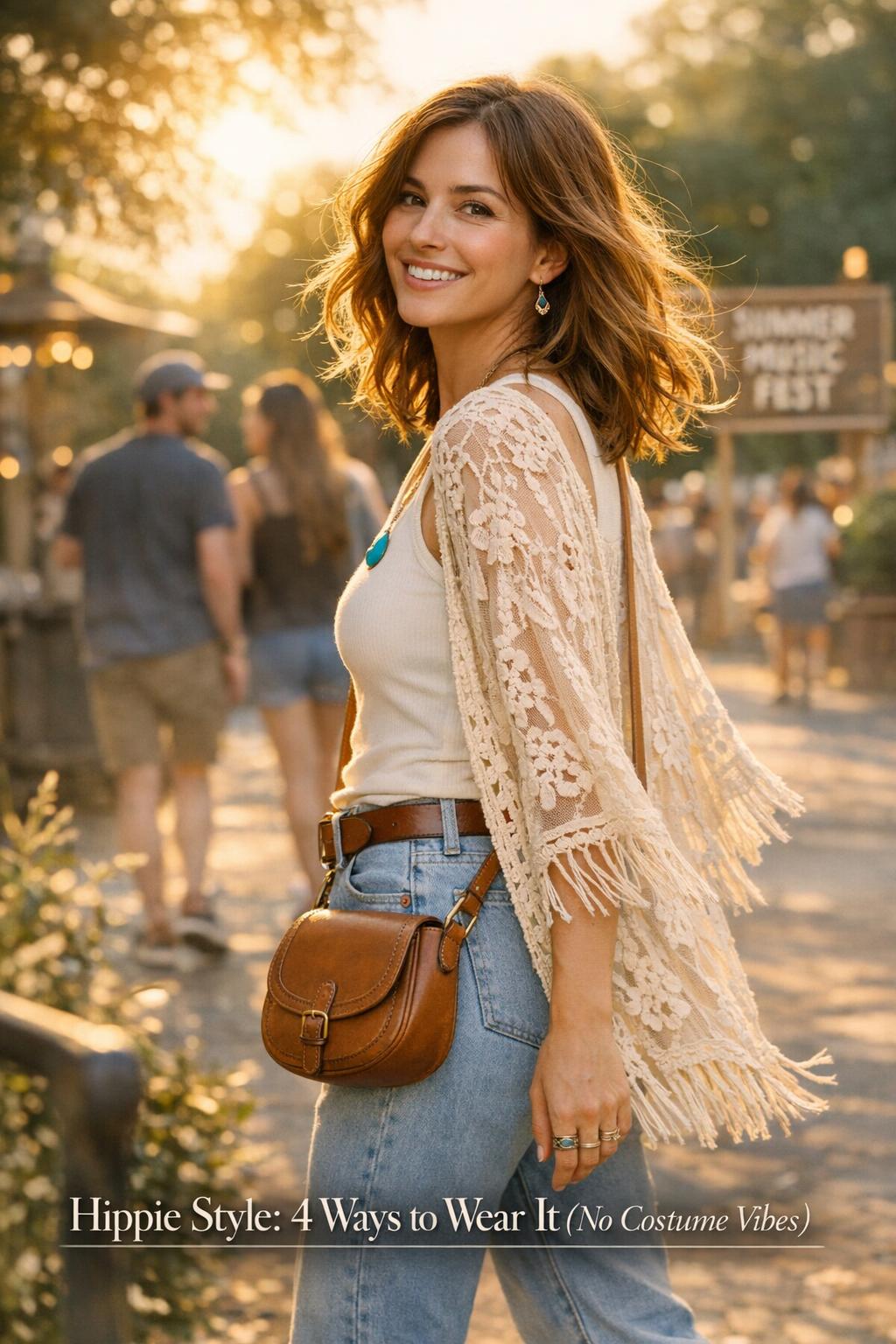
Modern Hippie Style: Boho to Festival Without Costume Vibes
A “hippie style” outfit can read as effortless, artistic, and relaxed—or it can drift into costume if the logic behind the styling isn’t clear. That confusion is exactly why hippie style keeps getting discussed alongside adjacent aesthetics: boho, bohemian, festival dressing, and even modern “swaggy outfits” that borrow the same ease and individuality but translate it differently.
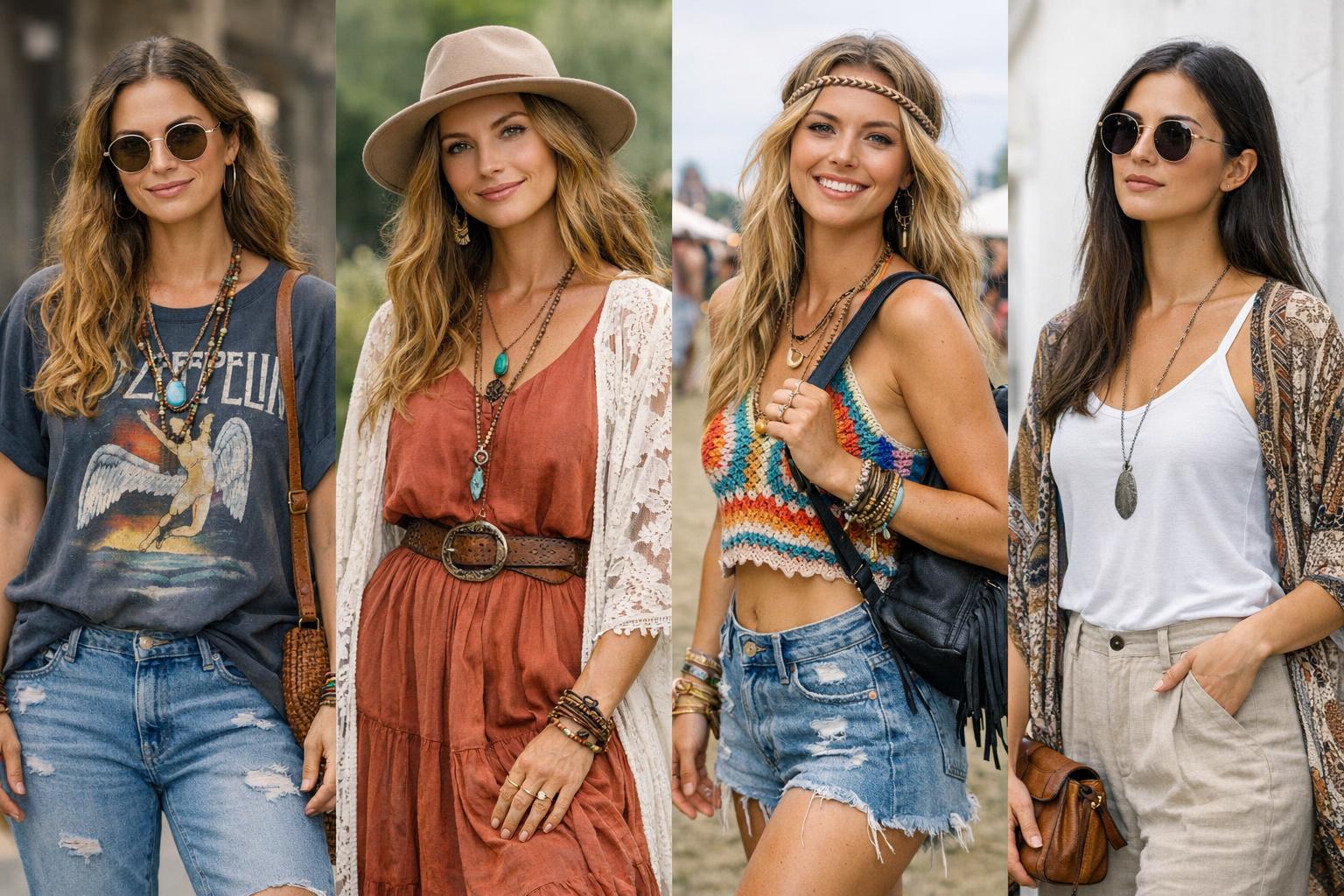
This breakdown compares hippie style with the closest look-alikes you’ll see in everyday wardrobes and on Pinterest boards: boho (often treated as interchangeable), festival boho (a more event-driven offshoot), and modern casual styling that uses “hippy outfit inspo” as a reference point rather than a strict aesthetic. You’ll learn how to spot each one by silhouette, palette, texture, and accessories, plus how to build outfits that feel intentional—not like a themed throwback.
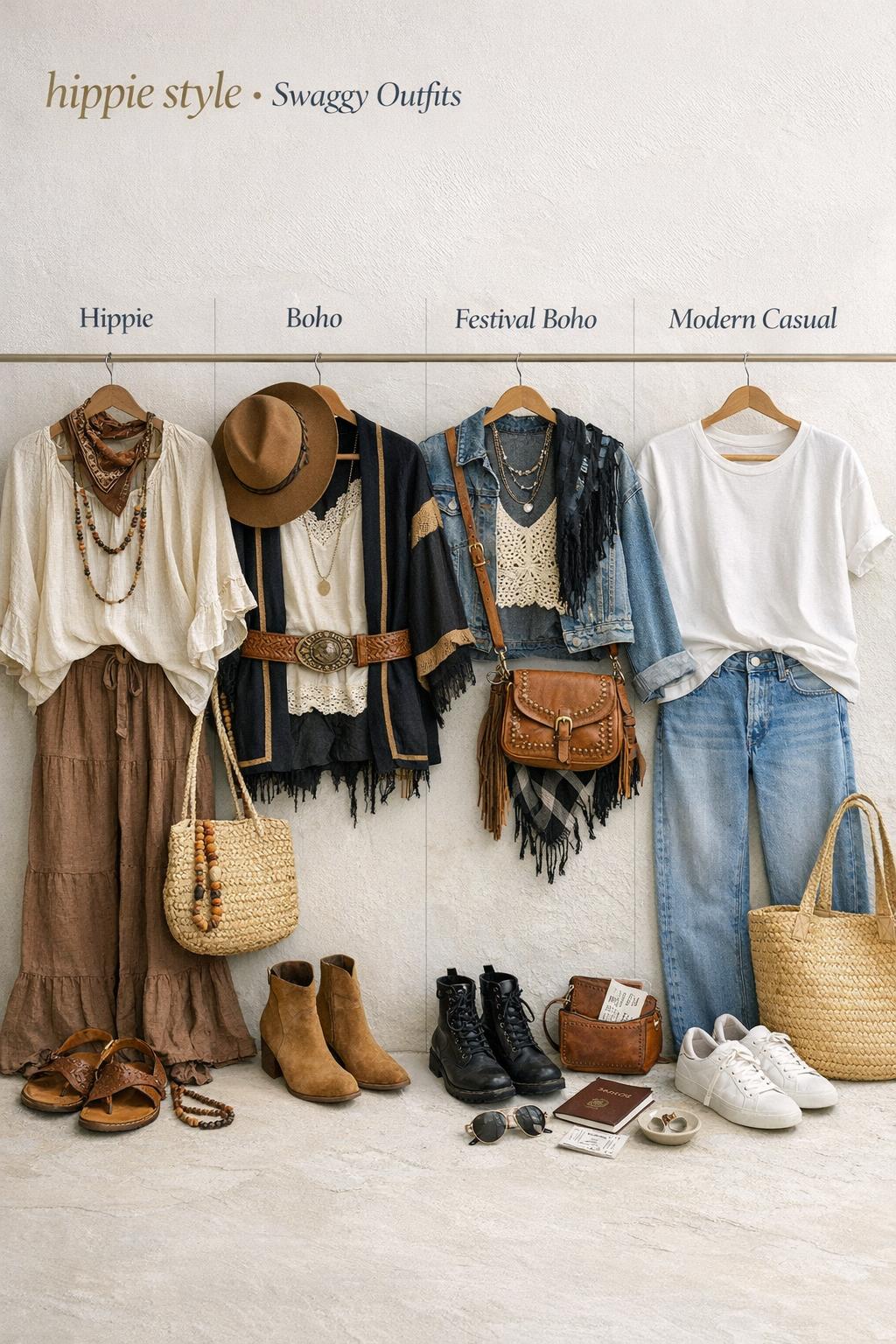
Consider this your mode inspiration map: not a list of random “hippie things,” but a comparison framework you can apply in real life—weekend errands, travel days, warm-weather concerts, and any moment you want that laid-back, expressive energy without losing polish.
Style overview: hippie style (the original relaxed, expressive wardrobe logic)
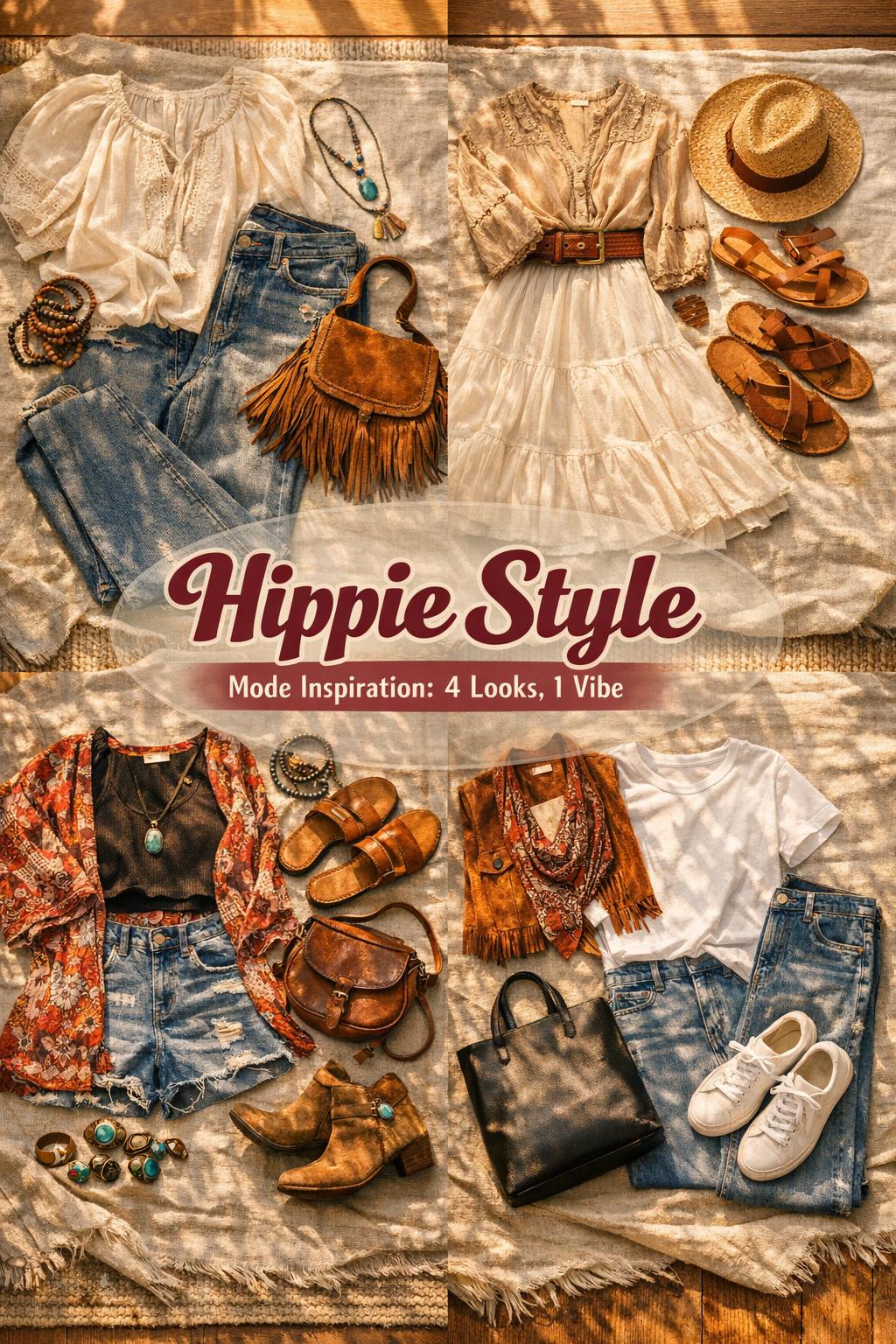
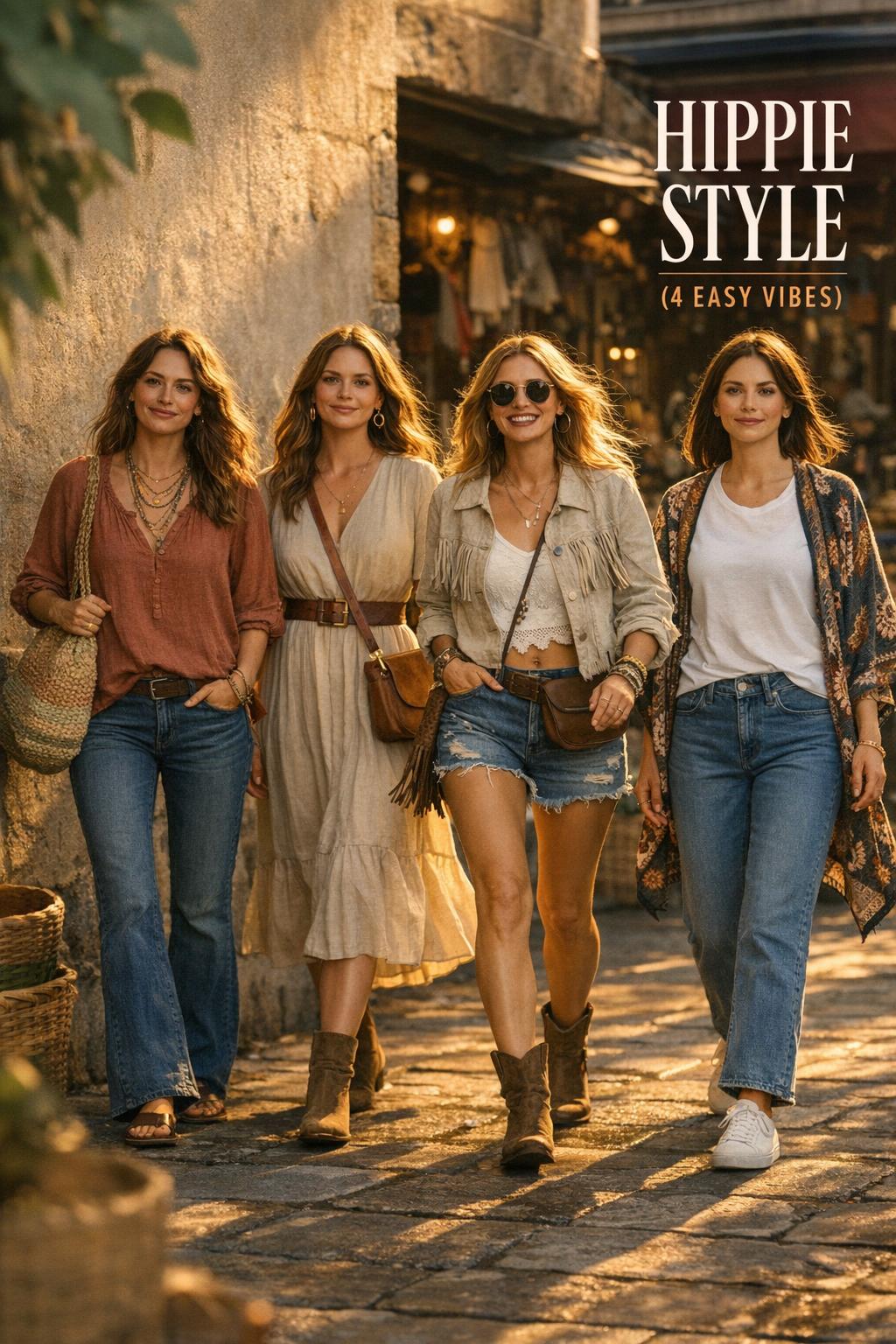
Hippie style is built around ease, individuality, and a soft-structured silhouette. The defining move is comfort-first dressing that still communicates identity—through texture, handcrafted-looking details, and a lived-in finish rather than sharp tailoring.
Found the dress? Keep the rest in one place.
Zarellea brings guest details, vendors, timelines, and every next step together — so your wedding plan feels as good as your look.
Visually, hippie style leans into relaxed proportions: looser tops, flowing lines, and movement-friendly pieces that don’t pinch or restrict. The mood is grounded and natural, with an emphasis on tactile materials and an intentionally un-fussy approach to outfit composition.
Even when the outfit has multiple elements, the styling philosophy stays consistent: nothing should feel overly engineered. The look succeeds when it feels worn-in, cohesive, and personal rather than “assembled.”
Style overview: boho / bohemian style (a more styled, decorative interpretation)
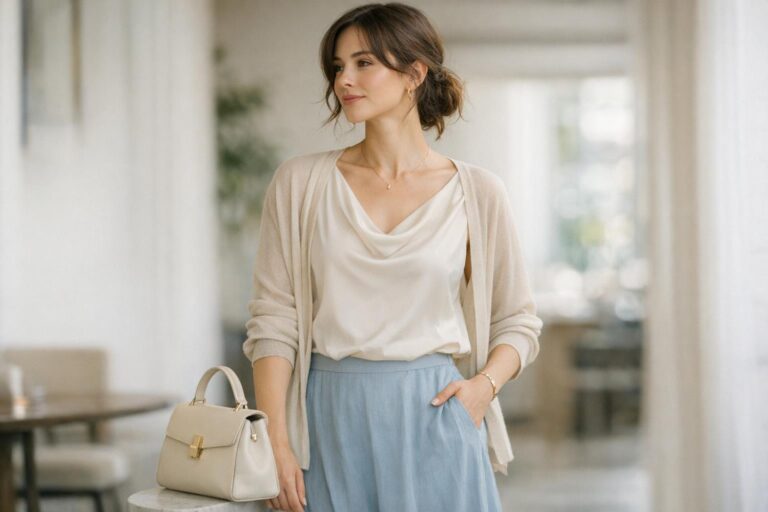
Boho—often used interchangeably with bohemian style—sits close to hippie style but typically looks more curated. Where hippie style prioritizes ease and authenticity, boho tends to emphasize decorative detail and a more “finished” visual rhythm.
In silhouette terms, boho can still be flowy, but it often introduces more deliberate structure through defined waistlines, purposeful layering, and accessories that feel chosen as visual anchors rather than collected over time.
The mood is still free-spirited, but the outfit composition is more intentional. If hippie style is the relaxed baseline, boho is the styled version that reads closer to fashion editorial than purely practical dressing.
Style overview: festival boho (event-first styling with higher contrast and bolder choices)
Festival boho is less about day-to-day wardrobe logic and more about high-impact visuals for an event setting. It borrows the same family of cues as hippie style—flow, texture, accessories—but it raises the volume: more skin, stronger statement pieces, and styling choices optimized for photos and movement in crowds.
The silhouette is often built for warm weather and long hours: lighter layers, more breathability, and accessories that create instant identity. Where hippie style can look understated, festival boho tends to look intentionally bold.
In practical terms, festival boho also brings a different set of constraints: walking all day, dust or heat, and the need for functional footwear and secure bags. The best versions balance visual impact with comfort and durability.
Style overview: modern casual with “hippy outfit inspo” (a contemporary remix)
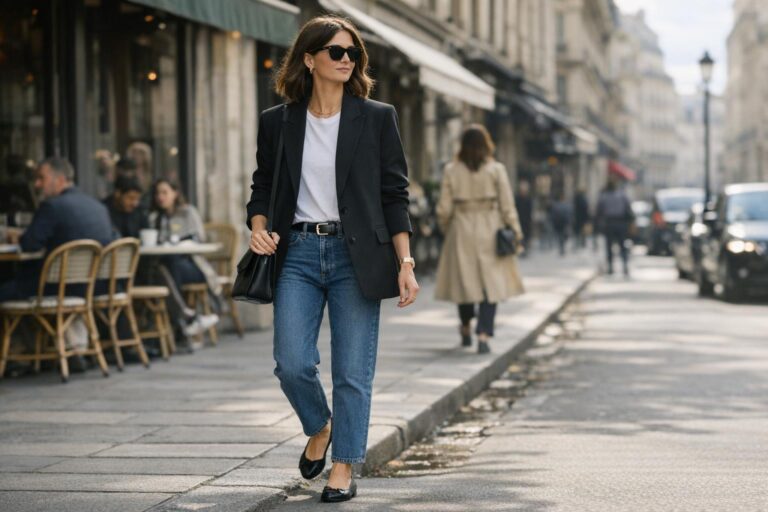
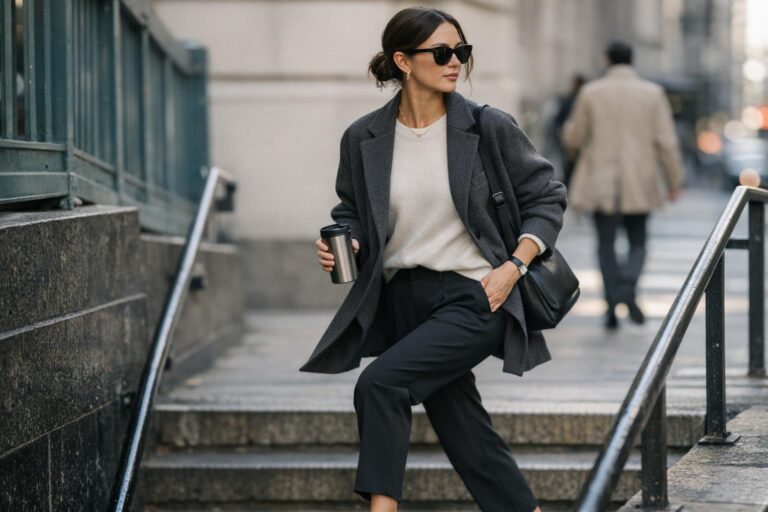
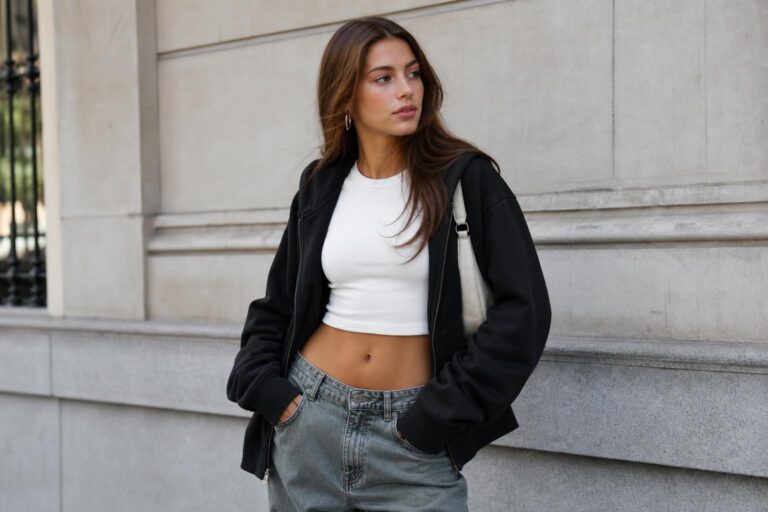
A modern casual look that uses hippy outfit inspo isn’t trying to be historically faithful or fully bohemian. It selectively borrows the relaxed attitude—maybe a flowy top, earthy textures, or layered accessories—and pairs it with simpler, everyday basics.
This is where “swaggy outfits” sometimes intersect with hippie style: the confidence and individuality are similar, but the styling is more minimal and current. The outfit might keep one hippie-coded piece as the statement and let the rest act as clean support.
The result is wearable and flexible: less costume risk, more versatility, and an easier transition across settings like casual workplaces, travel days, and city weekends.
Why these styles get confused (and how to separate them quickly)
These aesthetics share a common visual vocabulary: flowy silhouettes, layered textures, and accessories that suggest a free-spirited mood. That overlap makes the terms easy to blur, especially online where a single image can’t communicate the “why” behind the outfit.
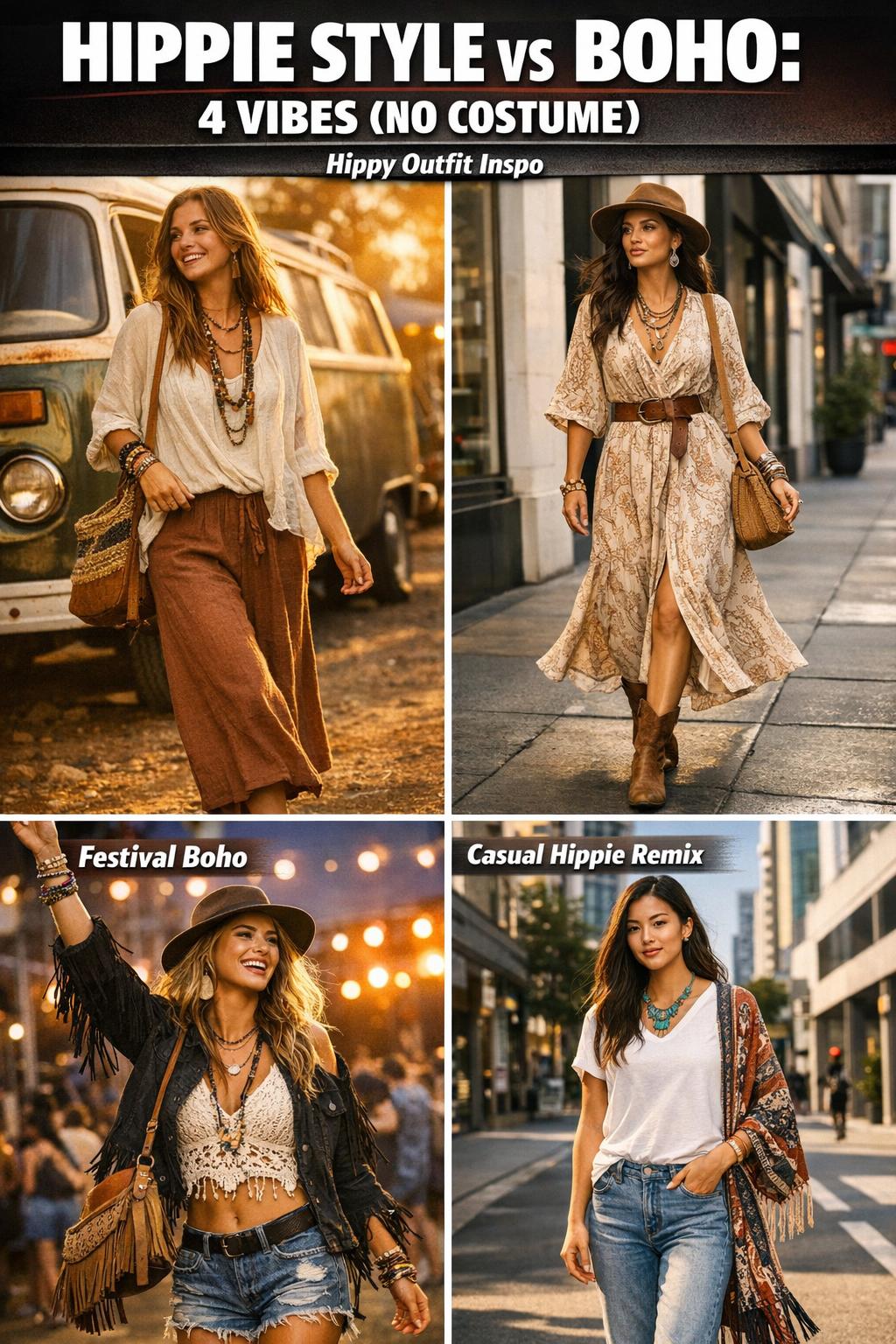
The fastest way to separate them is to look at intention. Hippie style reads like a lifestyle-led wardrobe: comfort, ease, personal expression. Boho reads like a styled aesthetic: the same ingredients, but arranged with more decorative polish. Festival boho reads like event dressing: amplified statement choices and practical decisions built around the realities of a festival. Modern casual with hippie references reads like a remix: one or two hippie things integrated into a contemporary base.
- Hippie style: relaxed authenticity, tactile textures, lived-in cohesion
- Boho: curated decoration, more deliberate outfit composition
- Festival boho: bold statements, heat-and-crowd practicality
- Modern casual with hippy outfit inspo: selective references, cleaner base pieces
Key differences: silhouette, palette, polish, and styling philosophy
Silhouette and structure
Hippie style tends to keep the silhouette loose and movement-driven. Pieces hang from the shoulder, skim the body, and prioritize comfort. Boho often adds shape through belting, intentional proportion play, or layering that creates a clear top-to-bottom line. Festival boho may shorten hemlines or add stronger focal points for impact, while modern casual keeps the silhouette simpler—one flowy item balanced by more streamlined basics.
Color palette and tonal strategy
All four approaches can overlap in palette, but they use color differently. Hippie style usually looks best with a cohesive, grounded palette that feels natural and wearable. Boho is more likely to mix tones and prints in a visibly styled way. Festival boho pushes contrast for instant visual energy. Modern casual tends to reduce the palette, letting a single patterned or textured element do the work without making the outfit feel busy.
Level of formality (and how “finished” the outfit feels)
Hippie style is relaxed by definition; it’s not trying to look formal. Boho can read more “finished” because the styling is more composed: accessories feel coordinated, and the outfit often has an intentional focal point. Festival boho looks styled and bold, but not formal—more like performance-ready casual. Modern casual with hippie influences is the easiest to make polished, because it relies on contemporary wardrobe building blocks with one expressive twist.
Styling philosophy: collected vs curated vs amplified vs edited
Think of these styles as four different editing levels. Hippie style feels collected over time. Boho feels curated, like a deliberate aesthetic choice. Festival boho feels amplified for a specific context. Modern casual feels edited—meaning it borrows the vibe, then tightens the styling so it works in everyday life.
Visual style breakdown: how they look in real outfits
Layering approach
Hippie style layering is functional and fluid: layers add comfort and texture without creating stiffness. Boho layering is more visibly designed—each layer is there to create depth and a styled silhouette. Festival boho layering is lighter and more strategic, often chosen to handle heat and movement while still reading as a statement. Modern casual layering is minimal and purposeful: one layer creates interest, the rest stays clean.
Garment proportions and outfit balance
Hippie style often uses volume-on-volume, but it works when the outfit has a clear visual anchor—like a stronger accessory, a consistent palette, or a repeating texture. Boho tends to balance volume with definition: a loose top with a shaped waist, or a flowing layer over a more stable base. Festival boho frequently shifts proportions toward shorter hemlines or more exposed skin to avoid overheating. Modern casual typically keeps one relaxed piece and anchors it with more structured or simple silhouettes.
Accessories and “hippie things” that change the message
Accessories do the heaviest identity work in this aesthetic family. In hippie style, they feel personal and organic—more like part of the wearer than a coordinated set. In boho, accessories often look intentionally matched to the outfit’s palette and theme. In festival boho, accessories become statement devices that read well from a distance. In modern casual, the best approach is restraint: one or two hippie-coded accessories so the outfit doesn’t tip into costume.
Footwear choices and comfort reality
Footwear is where practicality exposes the difference between styles. Hippie style prioritizes comfort and ease of movement. Boho can accommodate more variety as long as the shoe supports the decorative tone. Festival boho requires serious comfort—hours of walking demand stable choices—and the best looks plan for dust, heat, and long standing. Modern casual can go the simplest route: clean, wearable shoes that keep the outfit current while the top half carries the vibe.
Comparison outfit examples (same scenario, different styling logic)
Scenario: casual weekend outfit (errands, coffee, browsing)
Hippie style approaches this with comfort-led ease: a relaxed, flowy silhouette, tactile textures, and accessories that feel collected. Boho uses the same relaxed base but adds a clearer focal point—more intentional layering or a coordinated accessory story to create a styled finish. Festival boho would be visually louder than necessary for errands, often reading overstyled in daylight routine contexts. Modern casual with hippy outfit inspo keeps the outfit grounded: one expressive piece is enough, with cleaner basics to keep it sharp.
Scenario: warm-weather day out (city walking, outdoor lunch)
Hippie style works best when it breathes: light fabrics, easy proportions, and minimal fuss. Boho can look elevated here by making accessories feel intentional and by controlling the palette so the outfit doesn’t become visually noisy. Festival boho can also work in this setting if it’s edited down—otherwise it can feel like you’re dressed for a concert. Modern casual translates well in cities: the outfit reads contemporary while still nodding to hippie style through texture or a single statement element.
Scenario: music event (day festival, outdoor concert)
Festival boho is the native language here: bolder statement choices, lighter layers, and accessories chosen for impact and function. Hippie style can work beautifully too, especially if you keep it practical—secure bag, stable footwear, and layers that handle temperature shifts. Boho can be a strong middle option if you want the look to feel styled but not overly loud. Modern casual works when you prioritize comfort and movement and treat hippie elements as accents rather than the full theme.
How to choose your lane: a decision guide that prevents costume vibes
The most common styling problem with hippie style is oversignaling. When every element is a “hippie thing,” the look stops feeling like a wardrobe and starts reading like a costume. The fix isn’t to abandon the aesthetic—it’s to pick a lane and edit accordingly.
- Choose hippie style if comfort and personal expression are the priority and you want a relaxed, lived-in finish.
- Choose boho if you want the same free-spirited mood but with a more curated, decorative outfit composition.
- Choose festival boho if you’re dressing for an event and want higher-impact visuals with practical footwear and secure accessories.
- Choose modern casual with hippie references if you want daily-wear versatility and a clean base with one expressive signal.
If you’re building “swaggy outfits” that still nod to hippie style, the modern casual route is often the most reliable: it keeps the vibe but uses editing and proportion control to stay current.
Texture intelligence: the quiet factor that separates hippie style from boho
In this aesthetic family, texture is the real headline. Hippie style is at its best when textures look organic and wearable—soft, tactile, and comfortable against the body. The outfit reads authentic when the texture story feels natural rather than overly arranged.
Boho uses texture in a more decorative way. Instead of “this feels comfortable,” the message becomes “this looks styled.” Festival boho intensifies texture where it reads best visually, but it must also survive heat, movement, and long hours. Modern casual uses texture as a controlled accent—one textured layer can carry the entire mood.
Tips: keep texture intentional, not chaotic
Use one texture family as the outfit’s backbone. If the base is already textured, keep accessories simpler so the silhouette doesn’t lose definition. If accessories are the statement, keep the clothing textures smoother to preserve outfit clarity.
Occasion and location reality: what actually works in U.S. day-to-day life
Style only succeeds when it matches the context. In many U.S. settings—casual workplaces, travel itineraries, weekend plans—hippie style and boho are most wearable when they’re slightly edited. The goal is to keep the relaxed mood while ensuring the outfit still reads appropriate for where you are.
For travel days, hippie style’s comfort-first logic is a genuine advantage: relaxed silhouettes and soft layering make long sitting and temperature shifts easier. For city wear, modern casual with hippy outfit inspo tends to look sharper because the outfit has a cleaner base and fewer competing signals. For outdoor events, festival boho earns its place because it’s designed for movement and visibility—just make sure practical needs (walking, heat, secure carry) are handled.
Tips: plan for movement, heat, and long hours
If you’ll be walking all day, treat footwear as the foundation, not an afterthought. If you’ll be outdoors, keep layers breathable and choose accessories that stay secure in crowds. Hippie style can be as practical as it is expressive, but only when comfort is protected at the planning stage.
Common mistakes that flatten the look (and how to fix them)
Mistake: stacking too many “signals” at once
When every element is working hard—multiple statement accessories, heavy layering, bold textures—the outfit loses a focal point. Fix it by choosing one hero element (a layer, an accessory story, or a silhouette) and letting everything else support it quietly.
Mistake: losing silhouette definition
Flowy doesn’t mean shapeless. Hippie style and boho both rely on proportion play: volume needs an anchor. Add a clear line somewhere—through a more stable base, a controlled layer length, or consistent tonal layering—so the outfit reads intentional rather than bulky.
Mistake: ignoring practicality in festival boho
Festival boho fails when it’s built for photos but not for hours of walking, heat, and crowds. The fix is simple: stable footwear, secure carry, and breathable layers. If those three pieces are solved, the aesthetic can still be bold without becoming uncomfortable.
Building a hybrid wardrobe: combining hippie style and boho without clashing
Hippie style and boho mix well because they share a base vocabulary, but the key is to keep the outfit’s “editing level” consistent. If the clothing is relaxed and lived-in, keep accessories organic rather than overly matched. If the outfit is curated and decorative, make sure the palette and proportions feel designed, not accidental.
The cleanest hybrid formula is: one side relaxed, one side refined. A relaxed silhouette becomes more boho when accessories and layering feel intentional. A curated boho look becomes more hippie when you soften the finish and reduce the sense of coordination.
Tips: a simple “one step up, one step down” rule
If your outfit feels too casual, add one curated element (a stronger visual anchor through layering or accessories). If it feels too themed, remove one statement piece and replace it with a simpler support item. This small adjustment keeps hippie style wearable and keeps boho from tipping into costume territory.
Where “swaggy outfits” overlap with hippie style (and where they don’t)
The overlap is attitude: confidence, individuality, and a relaxed stance toward strict rules. The difference is structure and editing. Swaggy outfits often rely on cleaner lines, more minimal palettes, and a sharper sense of outfit “finish,” even when the vibe is casual. Hippie style is softer and more tactile, and it’s comfortable with a bit of visual looseness.
If your goal is mode inspiration that feels current, borrow hippie-coded texture or accessories as a single statement and keep the rest streamlined. That approach preserves the free-spirited energy without losing the modern silhouette clarity that makes contemporary casual outfits feel intentional.
When to choose each style (practical scenarios)
Choosing the right aesthetic is less about labels and more about matching your day’s needs: comfort, polish, impact, and practicality. The same person can use hippie style for travel, boho for a styled weekend plan, festival boho for events, and modern casual for everyday life—without contradiction.
- Everyday wear: modern casual with hippie references for versatility; hippie style if comfort is the main goal.
- Casual work settings: modern casual is the safest; boho works if the outfit is controlled and not overly statement-heavy.
- Travel: hippie style for movement and comfort; modern casual if you want a cleaner, more urban finish.
- Outdoor events: festival boho for impact and function; hippie style if you prefer a softer, less amplified look.
Conclusion: the clearest way to identify hippie style vs boho
The core distinction is intention. Hippie style is lifestyle-led: relaxed, tactile, and personal. Boho is aesthetic-led: curated, decorative, and more visibly styled. Festival boho is context-led: amplified for events with practical demands. Modern casual with hippy outfit inspo is edit-led: contemporary basics with one free-spirited accent.
Once you start reading outfits through silhouette control, palette editing, and accessory intention, the differences become obvious—and combining elements becomes easier. The strongest looks don’t rely on piling on hippie things; they use one clear message and build a coherent outfit composition around it.
FAQ
What is the difference between hippie style and boho?
Hippie style is typically more relaxed and lifestyle-led, focusing on comfort, tactile textures, and a lived-in finish, while boho (bohemian style) tends to look more curated and decorative, with more deliberate layering and a more “styled” overall outfit composition.
How can I wear hippie style without looking like I’m in a costume?
Keep one clear focal point—either a flowy silhouette, a textured layer, or a small accessory story—and let the rest of the outfit stay simple and cohesive; costume vibes usually happen when too many statement “signals” compete at the same time.
Is festival boho the same as hippie style?
No—festival boho is event-first dressing that often looks bolder and higher contrast, designed for impact and practicality at concerts or festivals, while hippie style is more everyday and comfort-driven with a softer, less amplified feel.
What does “hippy outfit inspo” usually mean in modern outfits?
It usually refers to using selective hippie-coded elements—like relaxed proportions, earthy textures, or expressive accessories—within a more contemporary base, creating an edited look that nods to hippie style without fully committing to the aesthetic.
How do I make hippie style work for everyday U.S. settings?
Use the comfort-first silhouette as the foundation, keep the palette cohesive, and edit accessories so the look feels wearable for errands, travel, or casual plans; modern casual styling with one or two hippie references is often the most flexible option.
Can swaggier, more modern outfits still include hippie style elements?
Yes—swaggy outfits can borrow hippie style through texture, relaxed drape, or a single accessory accent, but they usually stay more streamlined overall, relying on cleaner lines and a more controlled level of visual “finish.”
What’s the simplest way to choose between hippie style, boho, and festival boho?
Choose hippie style when comfort and personal ease are the priority, boho when you want a more curated and decorative look, and festival boho when you need high-impact styling built for outdoor events, heat, and long hours of walking.
Why do hippie things and boho accessories change the outfit so much?
In these aesthetics, accessories carry a large share of the identity signal, so they quickly shift the message from relaxed and collected (hippie style) to curated and decorative (boho) or amplified and event-ready (festival boho), especially when multiple statement pieces are layered together.