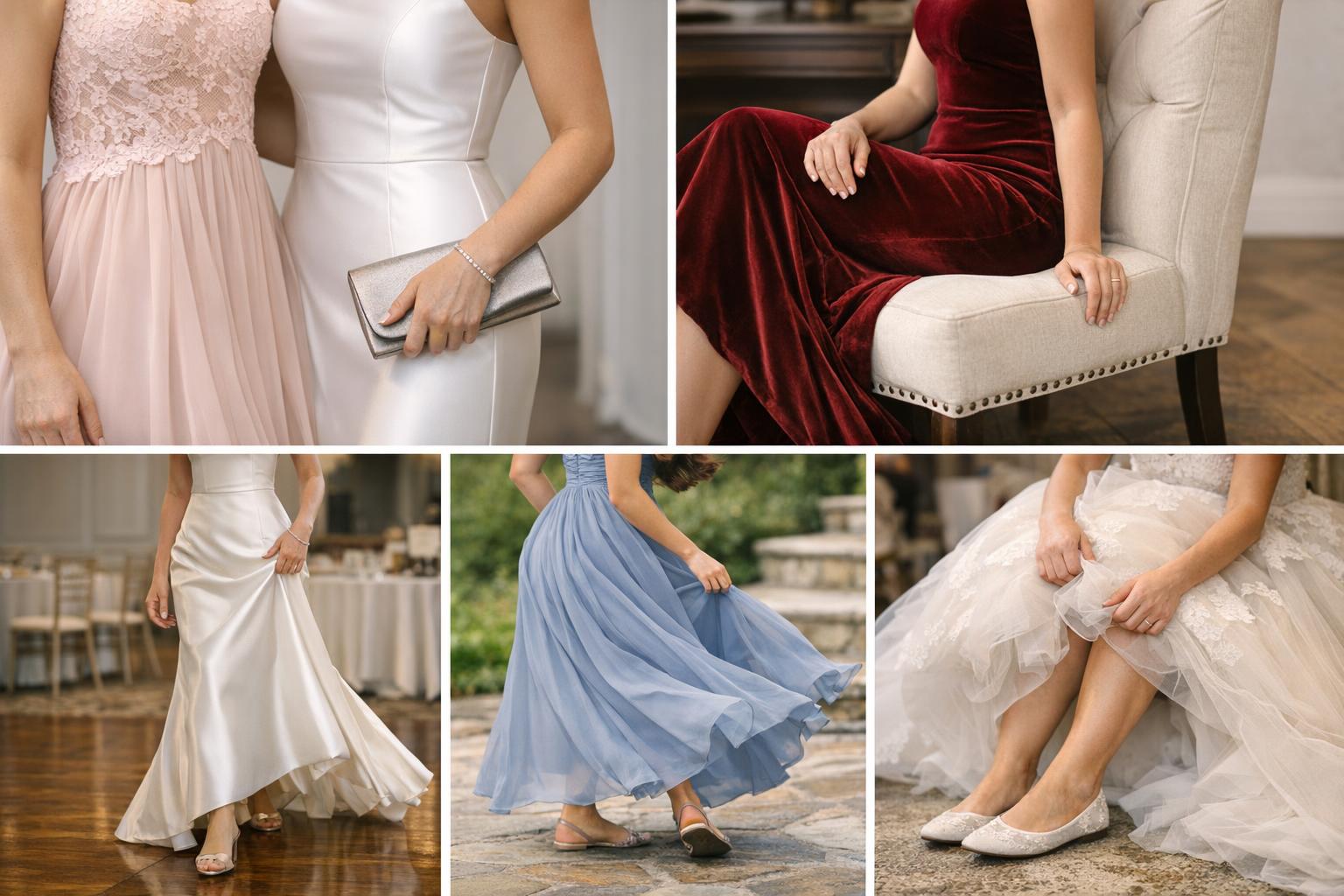
How Materials Gown Style Shape Comfort, Drape, and Photos
Materials gown style: the real problem is that fabric decides everything
A gown can look “right” on a hanger and still feel wrong the moment you sit down, step onto grass, or realize you’ll be wearing it for six hours. That’s the core challenge behind materials gown style: most styling mistakes aren’t about taste—they’re about fabric behavior. Drape, weight, texture, and even care needs determine whether a silhouette feels effortless or fights you all night.
This becomes even more complicated when the event is formal—weddings, black-tie galas, evening receptions—because you’re balancing movement, structure, photographs, and comfort. A mermaid shape in a fabric that collapses will look limp; a ball gown in a fabric that’s too stiff can feel like you’re carrying the room with you.
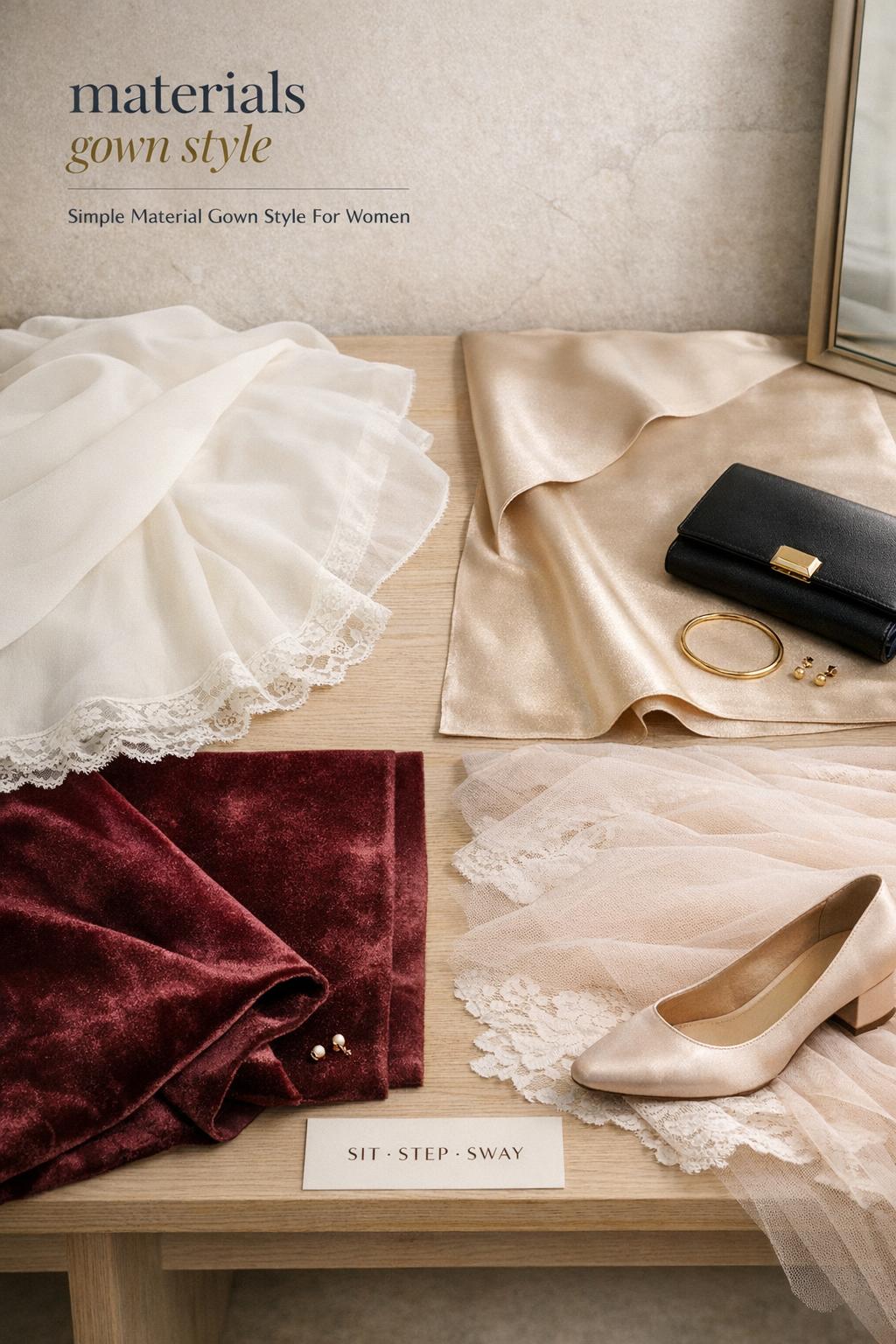
This guide solves the issue from the inside out: you’ll learn how core gown fabrics (satin, silk, chiffon, tulle, lace, crepe, velvet, organza, taffeta) actually perform, which silhouettes they naturally support (A-line, ball gown, mermaid, fit-and-flare, sheath), and how to build practical outfit solutions—including simple material gown style for women, vintage style gown direction, and color logic like elegant colours for dresses and burgundy evening dresses—without guessing.
Understanding the styling challenge: why gowns fail in real life
The gown problem usually shows up in motion. You walk, sit, dance, pose, and deal with temperature swings. Fabrics respond differently: some flow and recover, others crease quickly, cling, itch, or snag on beading. If your event is a wedding, you also have venue variables—outdoor ceremonies, indoor air conditioning, long photo sessions—where comfort and practicality matter as much as silhouette.
Found the dress? Keep the rest in one place.
Zarellea brings guest details, vendors, timelines, and every next step together — so your wedding plan feels as good as your look.
The second layer is visual: fabric finish controls how a gown reads. Satin and silk have a sheen that can amplify seams and highlights. Lace and tulle add texture and depth. Crepe reads cleaner and more modern because it often sits closer to the body with a controlled drape. Velvet absorbs light differently, which can make colors look rich and dramatic but also heavier.
The third layer is maintenance. Formal gowns are not “wear and forget” pieces. Care requirements—how easily a fabric wrinkles, how delicate it is, whether it needs extra attention—should be part of the style decision, not an afterthought.
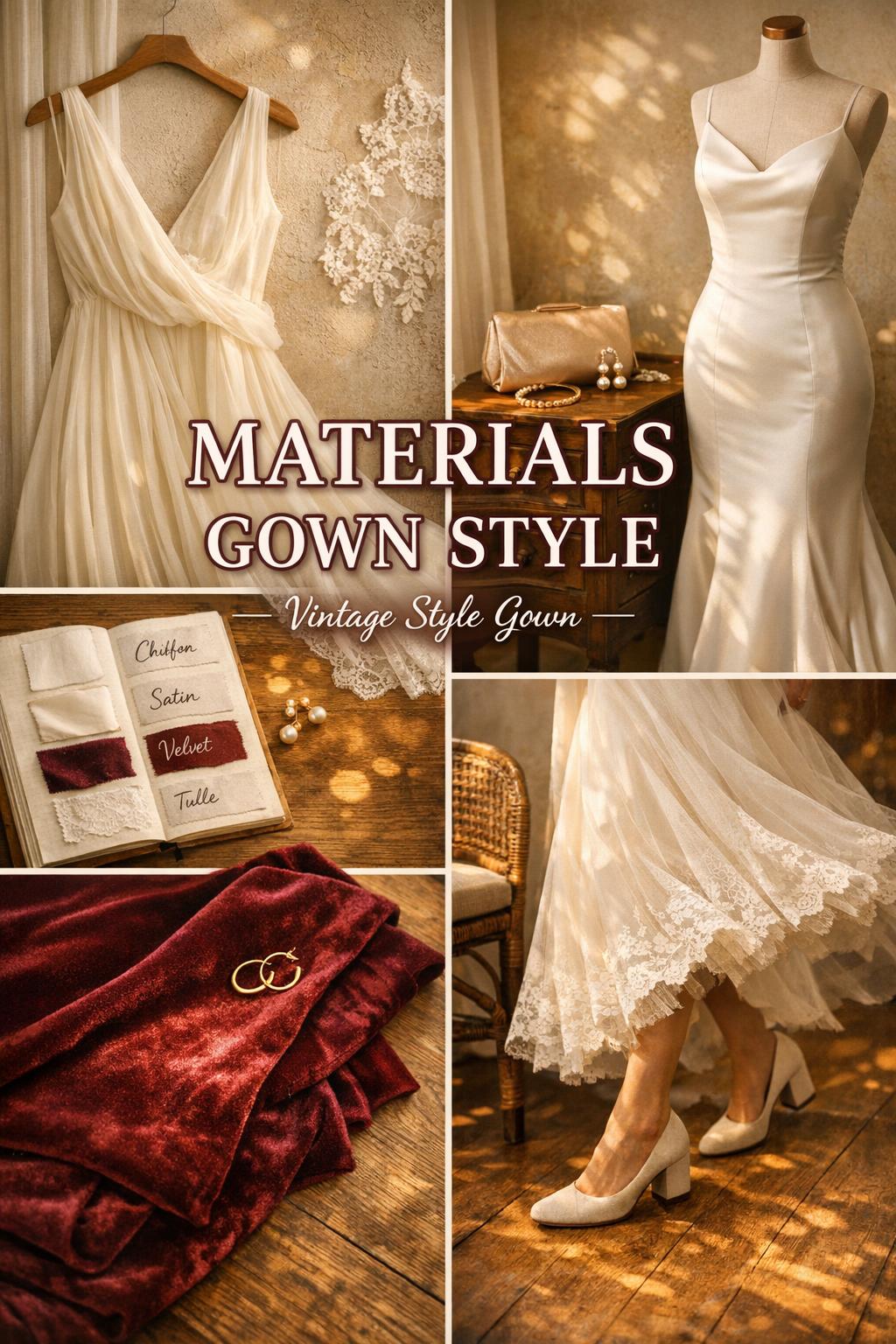
Fabric intelligence: a quick reference to core gown materials
Core fabrics and what they’re best at
Think of fabric as the gown’s architecture. It determines whether the dress stands away from the body (volume), skims it (clean lines), or clings and follows movement (body emphasis). The most common gown materials show up repeatedly across wedding and formalwear guidance because they cover a wide range of drape, structure, and embellishment options.
- Silk: often chosen for elevated, refined drape and a premium feel; works when you want fluidity or luxe structure depending on weave.
- Satin: a go-to for formal gowns and wedding dresses; notable for its smooth surface and shine, which reads “dressy” instantly.
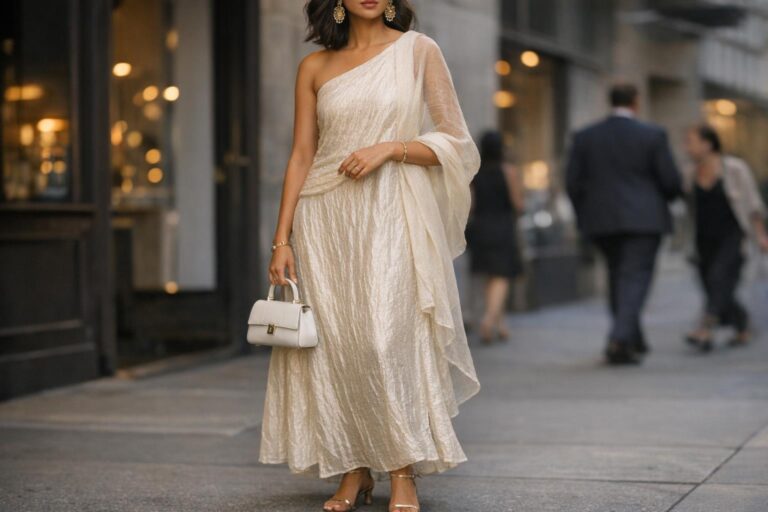
- Chiffon: lightweight and airy, designed for flow; strong choice when breathability and movement matter.
- Tulle: the volume builder; used for ball gowns, layered skirts, and romantic overlays.
- Lace: texture and detail; commonly used as an overlay or appliqué for bridal and formal contexts.
- Crepe: controlled drape with a smoother, often matte-leaning appearance; ideal for modern silhouettes and clean lines.
- Velvet: rich texture and depth; reads especially formal and seasonally warm.
- Organza: crisp, light structure; useful for volume without the heaviness of denser fabrics.
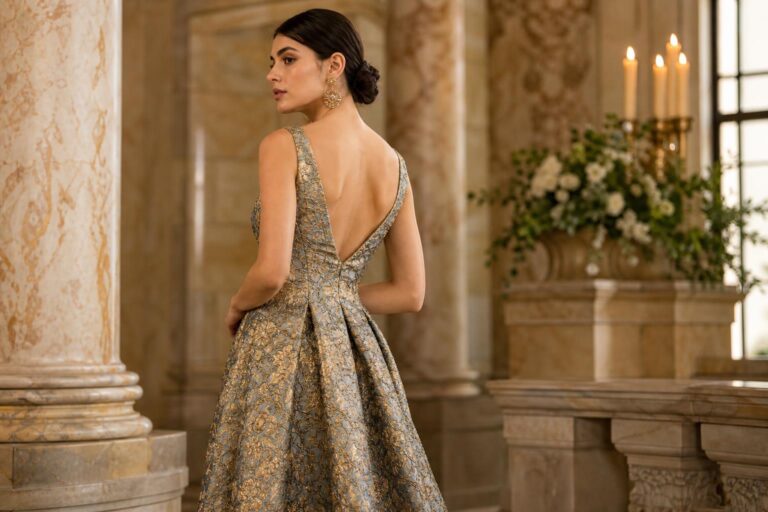
- Taffeta: structured with a noticeable presence; supports shape and can create dramatic silhouettes.
Drape, weight, and movement: how fabric alters style
Drape is the way fabric falls and moves around the body. A gown silhouette is essentially a plan; drape is the execution. Chiffon naturally creates soft vertical lines that flatter A-line and sheath gowns. Tulle and organza can hold space, supporting ball gown proportions. Satin and silk can be either sleek or sculptural depending on how the garment is cut and supported underneath.
Weight is the hidden comfort factor. Lightweight materials feel freeing but can be more affected by wind or cling. Heavier materials feel secure and polished but can trap warmth. Your best choice depends on climate, venue, and how long you’ll wear the gown.
Movement is where style becomes real. If you’re choosing a simple long gown style for materials, you’re usually trying to avoid constant adjustment—pulling a neckline up, smoothing a skirt, or fighting wrinkles. Fabrics like crepe can deliver a clean look with less visual chaos, while chiffon gives forgiving movement in warm settings.
Silhouette strategy: matching gown shapes to materials that behave
Silhouette balance is the logic behind a gown looking “expensive” rather than improvised. When fabric and shape agree, the gown holds its intended line without extra fuss. When they clash, the dress looks like it’s doing too much—or not enough.
Ball gown: volume that needs the right kind of structure
A ball gown is about proportion play: fitted through the bodice, dramatic through the skirt. The skirt needs support, which is why tulle and organza are natural partners—they create lift and presence. Taffeta also supports a more architectural ball gown mood, but it reads bolder and more formal because it holds shape.
If your goal is a softer, bridal-adjacent romance for a wedding guest look, layered tulle with lace detailing keeps the silhouette full without looking overly heavy. If you want a crisp, statement finish, organza or taffeta delivers a cleaner outline.
A-line: the most versatile canvas for “simple material gown style for women”
A-line gowns are forgiving and universally useful because they create a stable waist-to-hem line without clinging. They work across satin, chiffon, lace overlays, and even velvet depending on season. If you need a simple material gown style for women that can move from ceremony to dinner without constant wardrobe management, A-line plus a fabric with predictable drape is the practical answer.
For warm weather and outdoor venues, chiffon A-line builds a breathable, flowy shape. For evening formality or indoor venues, satin A-line reads polished and photo-ready. Lace can be layered over either to add detail without changing the core silhouette logic.
Mermaid and fit-and-flare: when fabric must support definition
Mermaid and fit-and-flare silhouettes depend on shape clarity. The fabric has to maintain a smooth line through the hips and thighs and then release into the flare. Satin and structured silk options often align with this goal because they hold a refined surface. Crepe can work when the cut is clean and the gown is designed for controlled drape—ideal when you want definition without high shine.
Lace can be used strategically here as an overlay or appliqué—especially on bodices and along the transition into the flare—because it adds dimension and can visually “lock in” the silhouette.
Sheath: the clean-line test for fabric quality and comfort
A sheath gown is a truth-teller: it highlights fabric hand feel and how the material moves with your body. Crepe is a frequent solution because it offers a streamlined look with controlled flow. Chiffon can work for a softer sheath, especially when you want movement rather than a sharply defined outline. Satin and silk sheath gowns can read strikingly formal, but they also require more attention to how light hits the surface and how the fabric behaves when seated.
Embellishment and texture: lace, tulle, and the “detail layer” effect
Many gowns aren’t one material—they’re a system. A base fabric creates the silhouette; overlays and embellishment-friendly fabrics create story and focus. Lace and tulle are central here because they can add romance, softness, and dimension without forcing you into a heavy garment.
Lace as structure, not just decoration
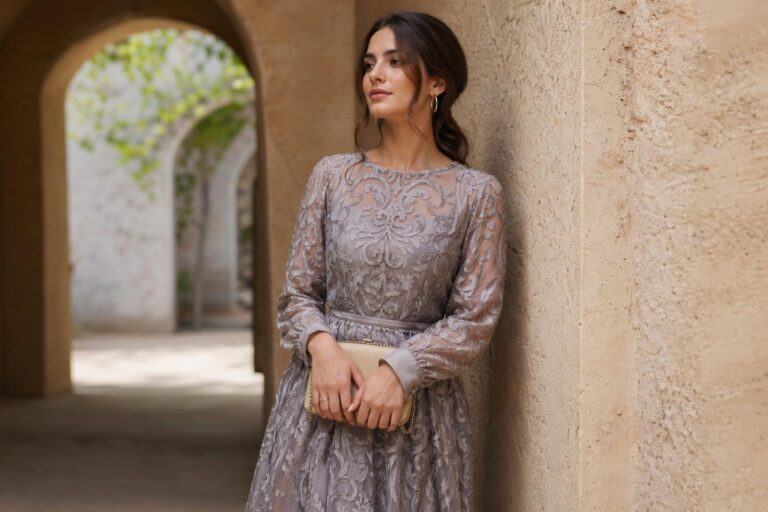
Lace isn’t only visual. Used as an overlay, it can make a simple base fabric feel more intentional, and it can help the gown read “occasion” even in a minimalist cut. Lace also pairs well with satin, silk, and crepe foundations because it introduces texture contrast—matte-meets-sheen or pattern-meets-solid—without changing the silhouette.
Tulle for volume, softness, and movement
Tulle is the classic volume tool for ball gowns and A-line skirts, but it’s also a strategic overlay for simple long gown styles for materials when you want lightness. A tulle layer can soften the visual impact of a structured base and create a “floating” hem effect that photographs well, especially in wedding settings.
Because tulle is so light, it’s also sensitive to snags and rough handling. If your event involves crowded seating, a busy dance floor, or outdoor terrain, you’ll want to prioritize a design where tulle is protected or layered in a way that still moves but doesn’t catch easily.
Season, climate, and venue: choosing gown materials that make sense
Seasonality isn’t a trend—it’s a comfort equation. Fabric affects temperature regulation, movement, and whether you’ll spend the night adjusting straps or wishing you’d chosen something lighter. Weddings amplify this because ceremonies often start earlier, last longer, and involve mixed indoor/outdoor settings.
Summer and warm climates: breathability and flow first
In heat or humidity, the priority is airflow and mobility. Chiffon is a reliable choice because it’s lightweight and designed to move. Tulle can still work as a soft overlay, but you’ll want to avoid excessive bulk that traps warmth. A sheath or A-line silhouette in chiffon typically performs well for long ceremonies and receptions.
For color direction in summer formalwear, elegant colours for dresses often work best when they align with the fabric’s finish: a soft, flowing fabric reads polished in a refined palette without needing heavy structure.
Winter and cooler evenings: warmth, depth, and richer texture
Velvet becomes a strategic option when you want warmth and a richer surface texture. It has a distinct presence—more depth, more drama—and tends to align with formal evening settings. Satin and silk also work in winter, especially when the gown has enough structure to feel secure and event-ready.
This is where burgundy evening dresses often shine in a styling sense: deeper tones align naturally with the visual weight of velvet and the formality of satin. The key is not the color alone, but how the fabric finish supports that mood.
Destination weddings and travel-friendly gown logic
Destination weddings introduce a packing and wrinkle-management problem. The more delicate or crease-prone a material is, the more stressful the travel day becomes. If you’re optimizing for “arrive and wear,” prioritize fabrics and silhouettes that don’t rely on extreme volume or constant steaming. Crepe and chiffon are often practical because they read formal without demanding a rigid structure, while heavy taffeta-like drama can become harder to manage in transit.
Also think about terrain: beach pathways, garden venues, and uneven surfaces. A slightly shorter hemline or a sheath/A-line that clears the ground can be more functional than a full ball gown skirt in the wrong setting.
Brand and guide perspectives: how labels frame fabric education
In the U.S. market, brand style guides frequently organize gown decisions around fabric taxonomy and practicality: comfort, drape, silhouette impact, and care. Adrianna Papell and Andrea Papell present fabric education as a styling tool—helping shoppers understand why silk, satin, chiffon, tulle, lace, velvet, and crepe feel different on the body and look different in photographs. Moonlight Bridal frames fabric choices through a wedding lens, emphasizing popularity, seasonality, and how movement changes the gown’s effect during a ceremony.
Retailer and marketplace approaches also shape how people shop. A material-based catalog structure (like material-based gowns grouped by satin, silk, velvet, lace, chiffon) makes it easier to start with a feel or finish rather than a silhouette. Meanwhile, PDF field guides from sources like Jo-Ann and Beau Weddings tend to consolidate fabric and materials guidance, often including underlay and construction considerations that explain why an overlay behaves differently than the base fabric beneath it.
Even historical educational references—such as a university-hosted regency-focused PDF—reinforce a useful modern point: gown materials are never just aesthetics. They’re tied to construction and underlayers, which is why two “satin” gowns can look completely different depending on what’s underneath.
Key dressing principles that solve most gown-material dilemmas
Once you understand the fabric-and-silhouette relationship, styling becomes a set of decisions you can repeat confidently. The goal is to choose a gown that holds its shape, supports your movement, and matches the event’s formality without creating avoidable discomfort.
- Start with movement, not the mirror. If you’ll be seated for dinner, dancing, or walking outdoors, choose a fabric whose drape stays graceful in motion (chiffon and crepe are common solutions).
- Match structure to silhouette. Ball gowns need volume builders like tulle or organza; mermaid and fit-and-flare benefit from smoother, more supportive surfaces like satin or structured silk options.
- Use texture as a visual anchor. Lace adds detail and depth; velvet adds richness; tulle adds softness and scale.
- Let care requirements influence the final call. If you don’t want a high-maintenance night, avoid a gown that demands constant smoothing, delicate handling, or stress-inducing packing.
These principles are also the foundation for styling “simple” looks. A simple material gown style for women isn’t plain—it’s edited. The fabric does the work, the silhouette stays coherent, and accessories act as controlled accents rather than distractions.
Outfit solutions: practical gown formulas that work under pressure
The outfits below are structured as real-life solutions: each one uses fabric behavior to solve a specific problem—heat, movement, formality, travel, or a desire for a vintage style gown effect without sacrificing comfort.
Outfit solution: the breathable wedding guest gown that still photographs polished
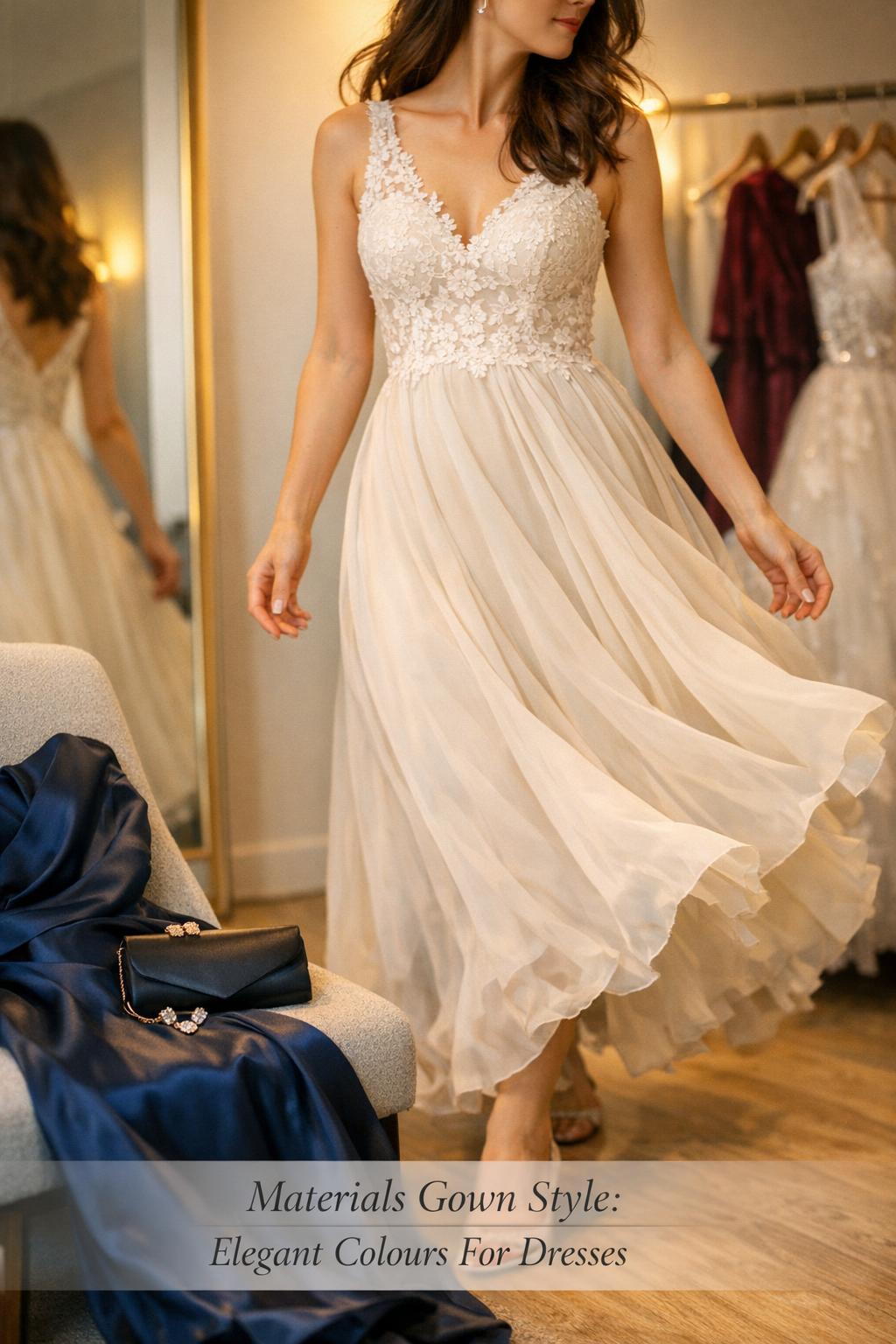
Key pieces: a chiffon A-line gown with a clean bodice; optional lace overlay detail at the neckline or sleeves; minimal sandals or formal flats depending on venue.
Why it works: Chiffon’s flow creates graceful movement during ceremonies, especially outdoors. The A-line silhouette keeps comfort high—no restriction through the hips—while still delivering formal shape. Lace functions as a targeted “detail layer,” adding depth so the gown reads event-appropriate without requiring heavy embellishment.
Style breakdown: This formula is the backbone of many simple long gown styles for materials because it resists the two biggest wedding-guest issues: overheating and constant outfit adjustment.
Outfit solution: satin fit-and-flare for maximum formality with controlled drama
Key pieces: a satin fit-and-flare gown; refined jewelry; a structured clutch that matches the gown’s sleek surface.
Why it works: Satin reads formal immediately, which is useful for evening receptions and upscale venues. Fit-and-flare creates a defined silhouette without the extreme restriction of some mermaid cuts. The fabric’s smooth surface creates a “clean finish” that pairs well with minimal accessories, keeping the look sharp rather than overworked.
Practical note: Because satin highlights light and seams, the best results come from a gown that fits well and feels stable when you sit and stand. If you anticipate long seated dinners, test the gown in a seated position before committing.
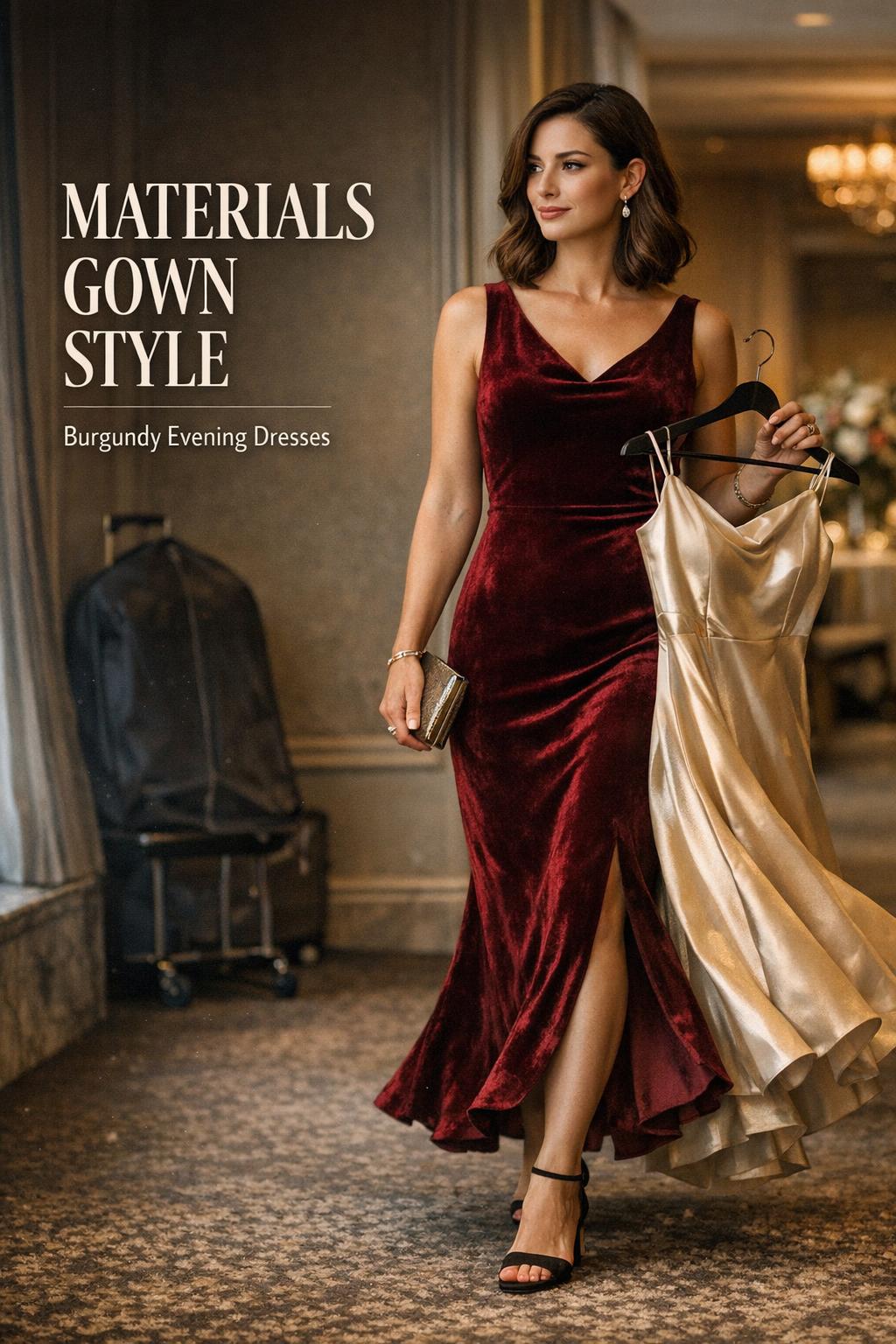
Outfit solution: burgundy evening dresses in velvet for cold-weather impact
Key pieces: a velvet gown in burgundy; streamlined heels; minimal earrings to avoid competing with velvet’s texture.
Why it works: Velvet is a texture statement on its own. In cooler months, it also aligns with comfort—warmth without needing extra layers that can distort silhouette lines. Burgundy evening dresses in velvet deliver strong visual depth because the fabric absorbs and reflects light in a way that makes the color look dimensional.
Style breakdown: Keep the silhouette clean—sheath or gentle A-line—so the texture remains the visual anchor. The result is formal, seasonally intelligent, and high-impact without needing heavy embellishment.
Outfit solution: a tulle-and-lace ball gown for the “main character” wedding moment
Key pieces: a ball gown with tulle layers; lace appliqué or lace bodice overlay; a secure shoe option for standing and walking on mixed surfaces.
Why it works: This is the classic romance equation: tulle creates scale and softness; lace provides detail and visual focus. The silhouette is intentionally dramatic, so the styling strategy is restraint elsewhere—simple hair accessories, minimal jewelry, and a practical shoe choice for stability.
When it’s the right choice: indoor venues, grand staircases, formal photo-heavy events, and weddings where a dramatic silhouette is expected. If the venue is tight or highly crowded, consider a slightly less voluminous A-line version to preserve movement and comfort.
Outfit solution: the modern minimal sheath in crepe for clean-line elegance
Key pieces: a crepe sheath gown; a single statement accessory (clutch or earrings); optional lace detail for softness if you want bridal-adjacent polish.
Why it works: Crepe offers controlled drape that supports a smooth silhouette without relying on shine. It’s an excellent base for elegant colours for dresses because the surface reads refined and contemporary. The sheath cut keeps the outfit composition intentional—no excess volume—making it suitable for formal dinners, ceremonies, and city venues.
Comfort logic: Because sheath shapes are close to the body, prioritize comfort in stride length and seating. The best version feels secure rather than restrictive.
Outfit solution: vintage style gown energy without costume vibes
Key pieces: an A-line or fit-and-flare gown with lace overlay and a tulle or chiffon skirt component; minimal, classic accessories.
Why it works: “Vintage style gown” is often more about material storytelling than a strict historical replica. Lace signals heritage detail; tulle adds romance; chiffon adds soft movement. Together, they create an era-inspired impression that still feels wearable for modern weddings and formal events.
Style breakdown: Keep the silhouette clean and the palette controlled. The fabric mix delivers the vintage reference, so the rest of the styling can stay streamlined.
Color and fabric finish: making elegant colours for dresses look intentional
Color doesn’t live alone—it sits on a surface. That surface is the fabric finish. Satin and silk emphasize sheen, which can make colors read brighter and more formal. Crepe often reads quieter and more modern. Velvet deepens and enriches tones through texture. Lace adds pattern that can soften a solid color or make it feel more bridal-adjacent depending on placement.
When you’re choosing elegant colours for dresses, decide what the gown should communicate first: polished and luminous (satin), clean and architectural (crepe), romantic and layered (tulle and lace), or rich and dramatic (velvet). Then choose a silhouette that allows the fabric and color to lead without fighting for attention.
Burgundy evening dresses are a strong example of this logic in practice. Burgundy can read very different depending on fabric: in satin, it becomes sleek and formal; in velvet, it becomes deep and plush. The best choice depends on venue lighting, season, and how much visual weight you want the gown to carry.
Construction realities: overlays, underlays, and why two “satin gowns” aren’t the same
Many fabric guides hint at a key truth: gowns are built in layers. Overlays (like lace or tulle) behave differently depending on what they’re sitting on. Underlayers and linings affect comfort, opacity, and how smoothly the gown moves against the body. This is why a lace gown can feel soft and flexible in one version and structured in another, or why a satin gown can feel fluid versus stiff depending on the internal build.
From a practical standpoint, this means you should evaluate a gown as a whole system. Walk, sit, and move your arms. Pay attention to how the bodice stays in place, how the skirt swings, and whether the lining feels breathable for the season. For weddings and long formal events, these checks matter more than the first impression in the fitting room mirror.
Care and longevity: choosing materials you can actually maintain
Care is part of styling because it affects how confident you feel wearing the gown. If you’re anxious about wrinkles, snags, or delicate surfaces, you’ll move differently—and the gown will wear you. Many fabric education resources emphasize care considerations alongside comfort and drape for a reason: the most beautiful material is the one you can manage from closet to event to storage afterward.
Practical care mindset for common gown fabrics
- Chiffon and tulle: prioritize snag awareness; avoid sharp jewelry and be mindful in crowded spaces.
- Satin and silk: monitor creasing and surface marks; test seating and movement so you know what the fabric does during the event.
- Lace: treat as a detail surface; be cautious with accessories that can catch.
- Velvet: protect the pile (surface texture) from crushing; store thoughtfully to preserve the finish.
- Crepe: use it as a low-drama base for clean lines; still test comfort because close-to-body silhouettes can limit stride.
A useful decision rule: if you’re choosing a gown for a high-logistics day—travel, destination weddings, long ceremonies—select materials and silhouettes that reduce maintenance. That’s often the difference between enjoying the event and managing your outfit all night.
Tips that make materials gown style feel easy (even when the event is complicated)
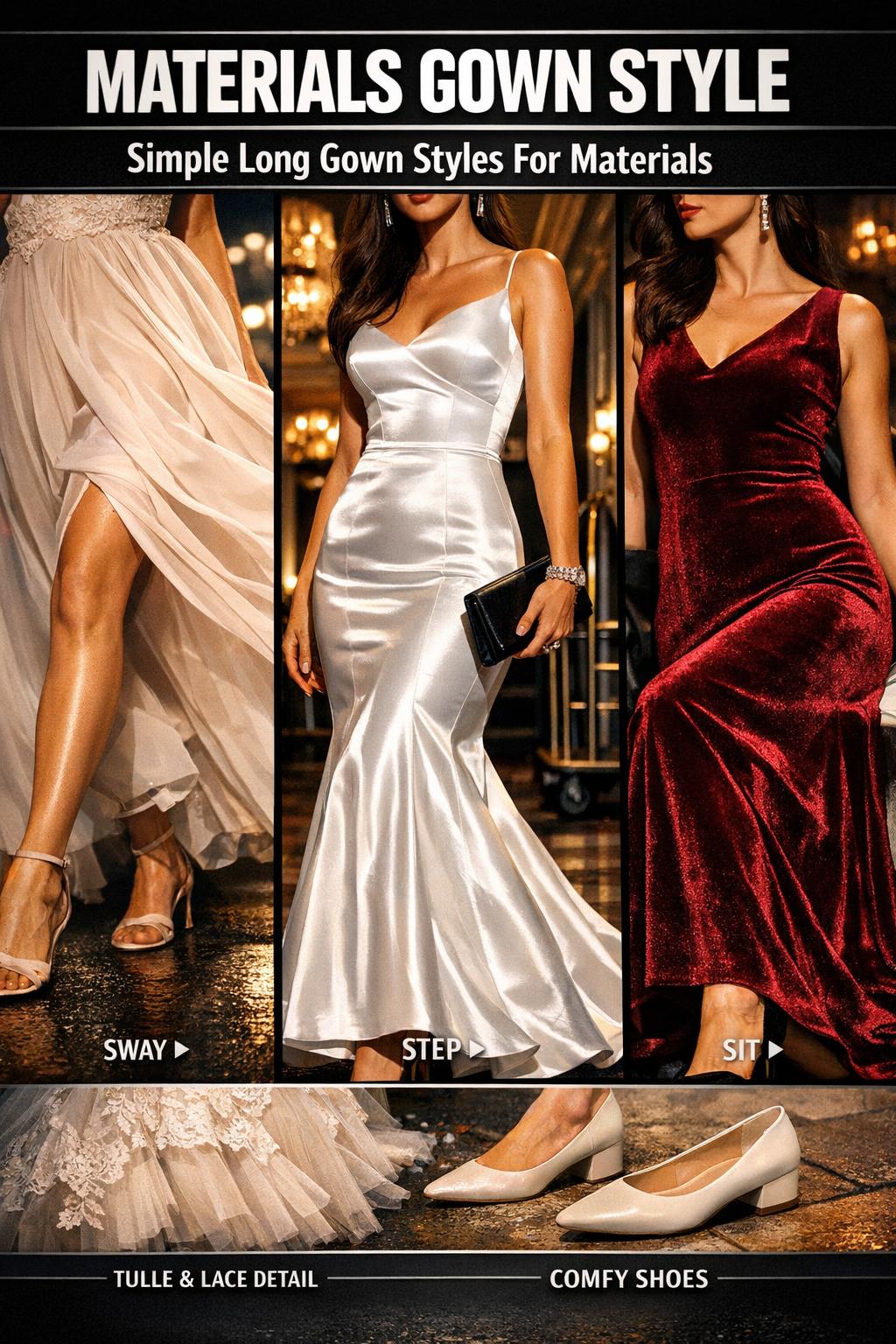
Tip: do the “sit, step, and sway” test before committing
In real fittings, the most revealing moment is sitting down. Satin and silk can crease; sheath silhouettes can restrict; mermaid shapes can change how you walk. Sit, stand, take a normal step, and sway the skirt. If the gown returns to shape and feels stable, the material-silhouette pairing is doing its job.
Tip: use texture contrast to look styled without adding bulk
If you want a simple material gown style for women but fear it will look too plain, add texture—not clutter. Lace overlay, a tulle layer, or even choosing velvet over a flat fabric can create depth while keeping the outfit composition clean. This is especially effective in elegant colours for dresses, where subtle surface variation reads expensive and intentional.
Tip: align your hem and fabric with the venue floor
Outdoor weddings and destination venues are where long hems and delicate overlays become practical problems. If you’ll walk on grass, gravel, or sand, choose a hem that doesn’t drag or a fabric that won’t catch easily. Chiffon and crepe A-line gowns tend to be easier to manage than highly layered tulle ball gowns in challenging terrain.
Common mistakes that sabotage gown materials and style
Most gown “fails” are predictable. They come from choosing a silhouette first and hoping any fabric will behave, or choosing a fabric because it looks luxurious without checking how it performs over time.
- Picking a mermaid shape in a fabric that can’t hold definition: the silhouette loses clarity and looks less polished in photos.
- Choosing heavy structure for a hot, outdoor event: discomfort rises, and the gown becomes restrictive during long ceremonies.
- Over-embellishing when the fabric already makes a statement: velvet plus heavy detailing can feel visually dense; satin plus too many competing accents can look chaotic.
- Ignoring care realities: the most beautiful lace or tulle overlay becomes stressful if it constantly snags or requires constant adjustment.
The fix is simple: treat fabric as the foundation, silhouette as the framework, and details as targeted finishing. When you build in that order, the gown supports you instead of demanding attention.
A location-aware note for U.S. shoppers: why guides and hubs matter
In the United States, many shoppers rely on brand education hubs and retailer guides to make fabric decisions because gown shopping often happens under time pressure—wedding invitations, formal events, and limited alteration windows. Brands like Adrianna Papell and Andrea Papell build trust by translating fabric names into practical outcomes: drape, silhouette effect, comfort, and care. Bridal-focused guidance, like Moonlight Bridal’s fabric lens, helps connect materials to season and ceremony context.
If you’re comparing options quickly, a material-based approach can be more efficient than browsing endless silhouettes. Start by selecting your top two fabric directions—such as chiffon versus satin, or crepe versus velvet—then narrow to A-line, sheath, fit-and-flare, mermaid, or ball gown depending on your comfort needs and venue realities.
Closing framework: how to choose the right gown materials every time
Materials gown style becomes straightforward once you treat fabric as performance, not just appearance. Start with the event context (wedding, formal evening, destination travel), then choose a fabric that matches the climate and your comfort needs. Next, select a silhouette the fabric naturally supports—A-line for versatility, sheath for clean lines, fit-and-flare or mermaid for definition, ball gown for volume. Finish with controlled texture and color logic, whether that means lace and tulle for romance, crepe for modern minimalism, or velvet for winter richness and burgundy evening dresses impact.
The result is a gown that moves well, photographs beautifully, and feels manageable from the first fitting to the last dance—exactly what a problem-solving style strategy should deliver.
FAQ
What are the most common materials used for gown style in formal and wedding settings?
The most commonly referenced gown fabrics include satin, silk, chiffon, tulle, lace, crepe, velvet, organza, and taffeta, because they cover the main needs of formalwear: shine versus matte finish, soft flow versus structured volume, and embellishment-friendly surfaces.
Which fabric works best for a gown that needs to look elegant but feel comfortable?
Comfort usually improves when the fabric’s natural drape matches the silhouette, so chiffon and crepe are common solutions for gowns that must move easily, while an A-line shape tends to increase wearability by avoiding restriction through the hips and thighs.
How do I choose gown fabric by silhouette like A-line, mermaid, sheath, or ball gown?
Match structure to shape: ball gowns typically pair well with tulle or organza for volume; mermaid and fit-and-flare silhouettes benefit from smoother, supportive fabrics like satin or structured silk options; sheath gowns often suit crepe or chiffon for controlled drape and clean lines.
What fabric is best for summer weddings or warm climates?
For warm weather, prioritize breathable, lightweight movement, which is why chiffon is frequently recommended; it flows well, supports comfortable wear over long ceremonies, and works across A-line and sheath silhouettes.
What fabric makes the most sense for winter formals or cold-weather events?
Velvet is a strong cold-weather choice because it adds warmth and rich texture, while satin and silk also work well when you want a formal finish that feels seasonally appropriate, especially for evening venues.
How do lace and tulle change the overall gown look?
Lace adds detail and texture, often as an overlay or appliqué that increases visual depth, while tulle is commonly used to create soft volume and layered movement, particularly in ball gown and A-line skirts.
Are “simple long gown styles for materials” less formal than embellished gowns?
Not necessarily—simplicity can read very formal when the fabric finish and silhouette are polished, such as satin in a clean fit-and-flare or crepe in a refined sheath; the formality comes from the fabric’s surface, the gown’s structure, and how cohesive the overall composition looks.
What’s the best way to pick between satin, chiffon, crepe, and velvet?
Choose based on performance needs: satin emphasizes shine and formal polish, chiffon emphasizes lightness and flow, crepe emphasizes clean controlled drape, and velvet emphasizes rich texture and depth; the right option depends on venue, season, and how much structure you want the gown to hold.
Why do two gowns made from the “same fabric” still look and feel different?
Gowns are typically built with layers—overlays like lace or tulle and internal underlayers and linings—so the full construction affects opacity, comfort, and how the fabric moves; that’s why a satin or lace gown can behave differently depending on what supports it underneath.