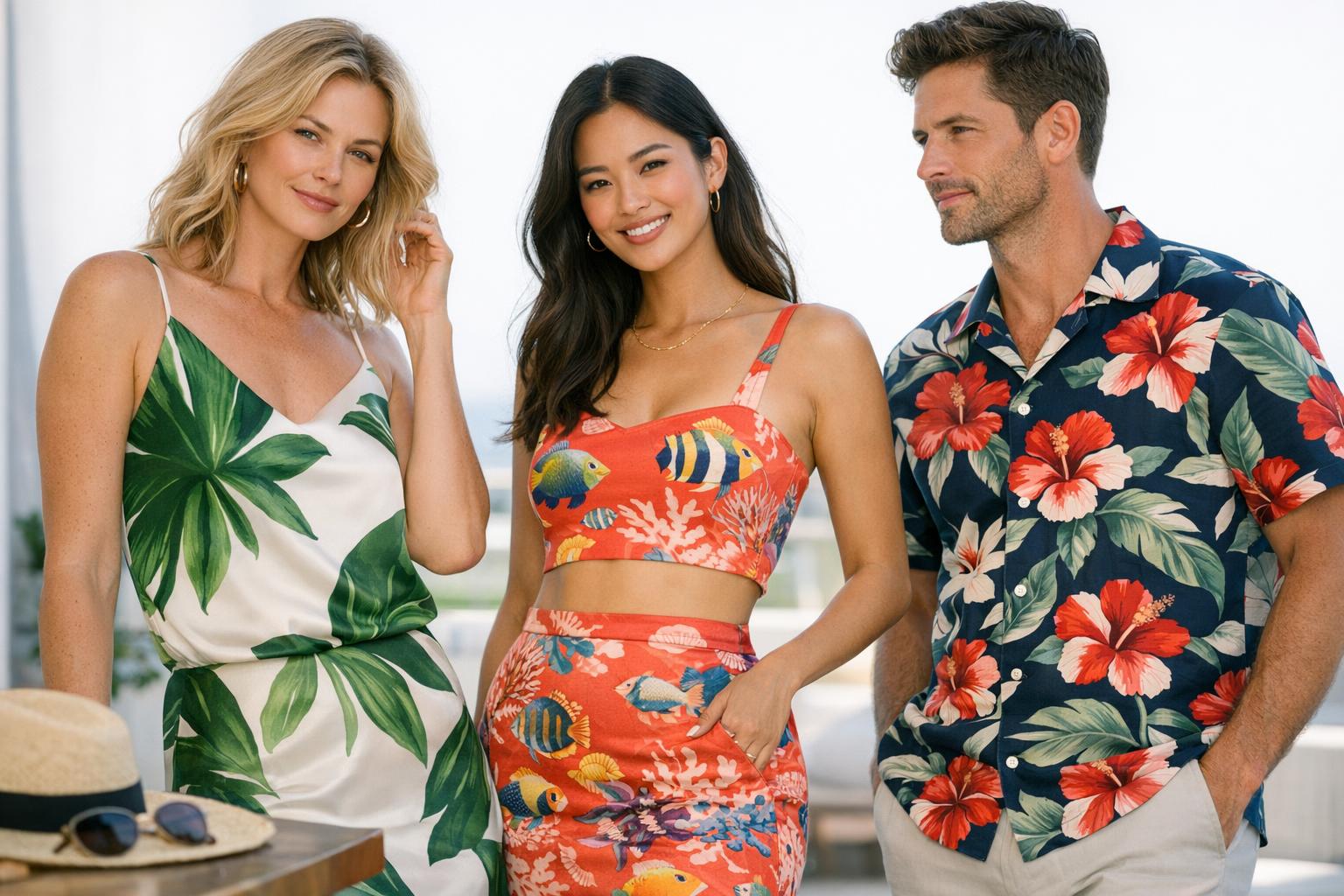
Modern Tropical Fabric Prints That Feel Polished, Not Costume-y
Tropical fabric prints and the modern summer print mood
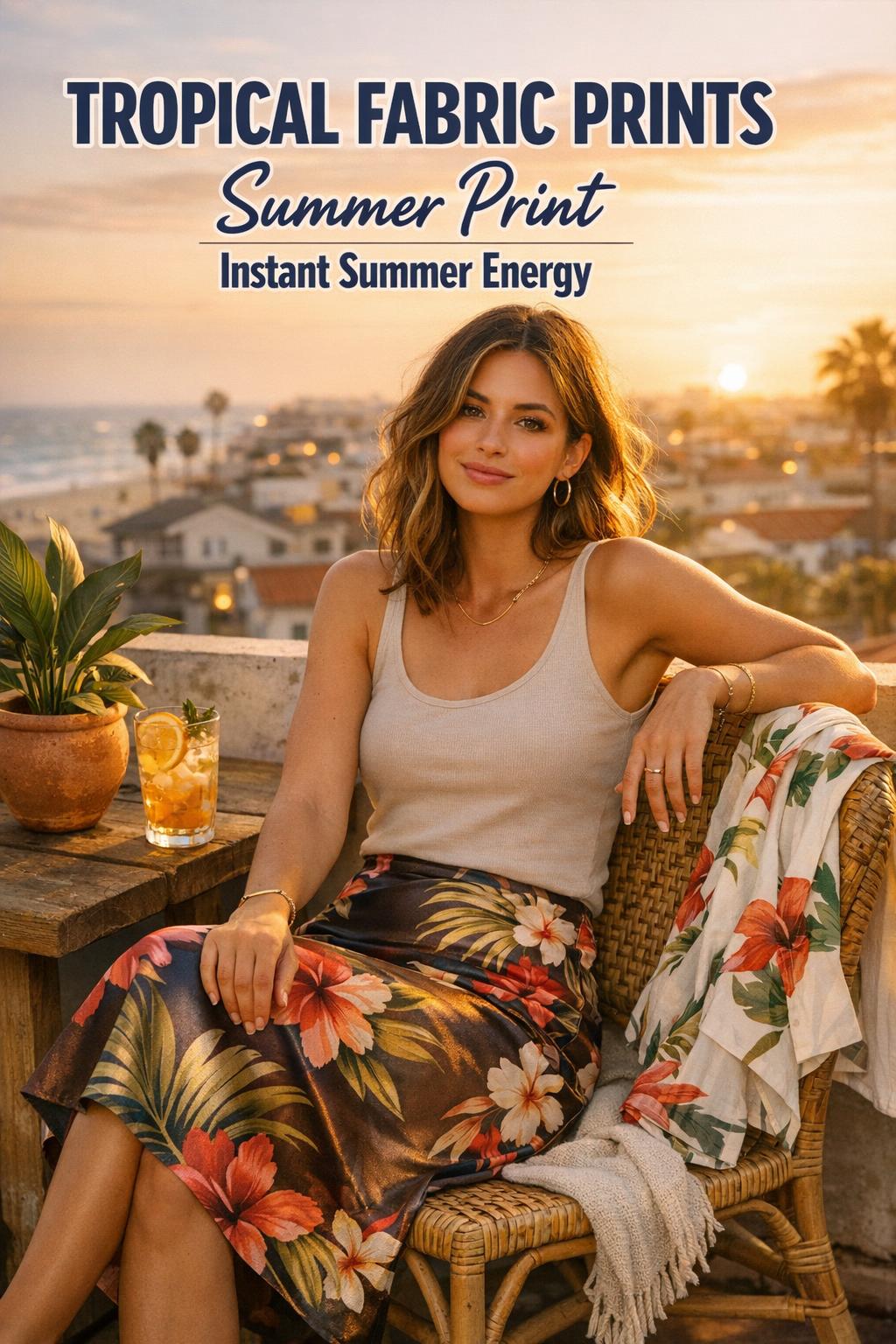
Tropical fabric prints have a specific visual power: they read as sunshine even when the sky is gray. A palm-leaf sweep, a tropical flowers pattern that feels oversized and graphic, or a jungle-cluster of plants can turn a simple silhouette into a statement—without needing extra styling noise. In the U.S., this look shows up everywhere a warm-weather identity is welcome: vacations, rooftop parties, casual weddings, beach towns, and the everyday commute when you want your outfit to feel like a getaway.
The aesthetic sits at an interesting intersection of ease and intention. Tropical prints are inherently decorative, so the most current way to wear them is controlled: clean proportions, a clear color story, and one dominant print acting as the visual anchor. That’s why the same tropical prints pattern can read “resort,” “street,” or “home-as-a-sanctuary” depending on the fabric base—stretch fabric, quilting cotton, satin, or velvet—and how you balance it with solids.
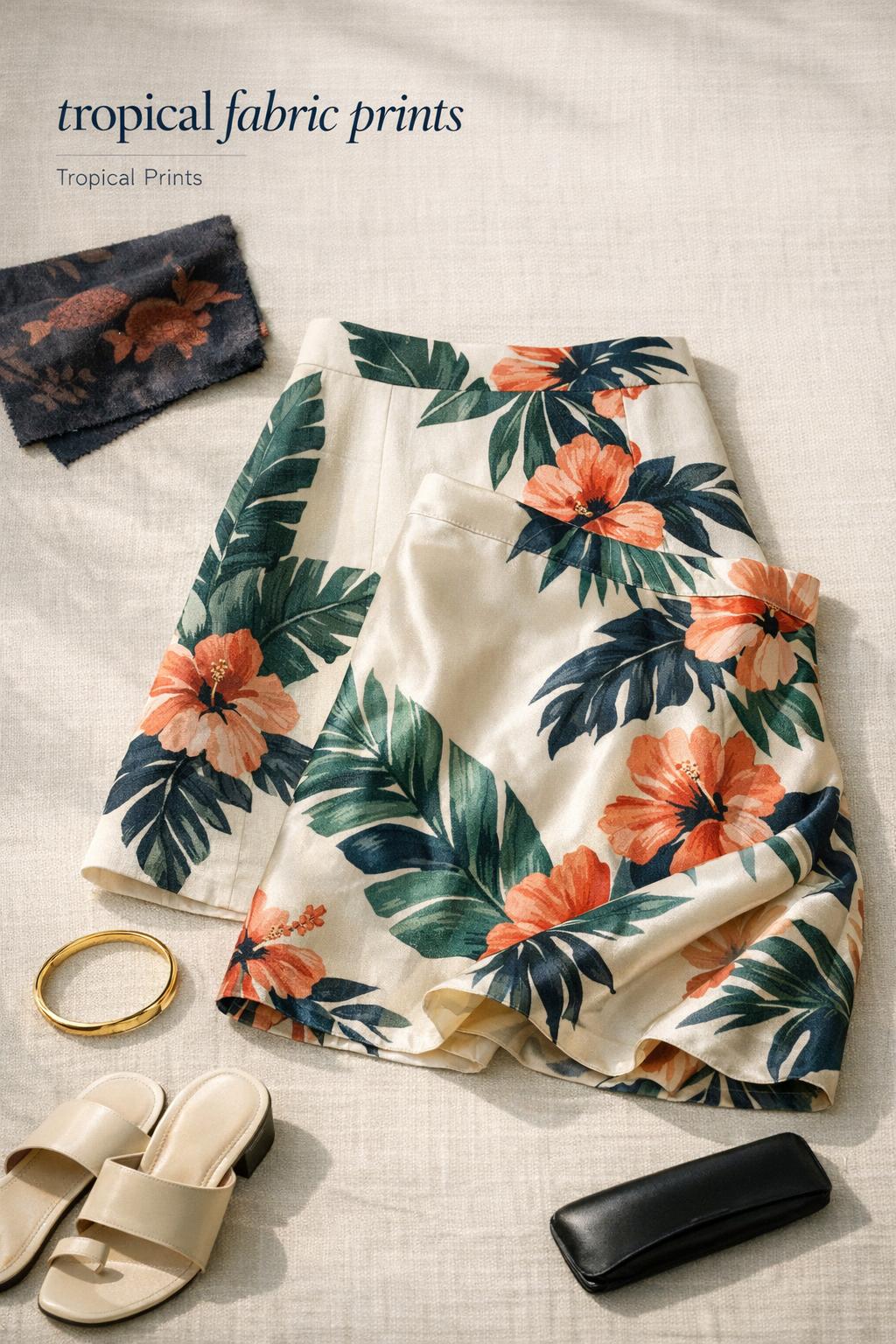
This guide approaches tropical fabric prints like a style system. You’ll see how motifs (palm leaves, tropical plants, botanical prints, coral and fish elements) interact with fabric behavior (drape, stretch, weight), how print quality signals like OEKO-TEX matter in practical buying decisions, and how to build multiple outfits from the same summer print energy—without looking like you’re wearing a costume.
What counts as a tropical print—and why it reads instantly “summer”
Tropical prints are defined less by a single flower and more by a design language: palm leaves, tropical plants, bold botanicals, and jungle-leaning compositions that suggest heat, humidity, and lush growth. Some versions tilt island-inspired, aligning with Hawaiian prints and Aloha shirt aesthetics; others skew contemporary with abstract tropical floral layouts or painted plant motifs. The shared effect is a high-impact surface pattern that can carry an entire look.
Found the dress? Keep the rest in one place.
Zarellea brings guest details, vendors, timelines, and every next step together — so your wedding plan feels as good as your look.
In outfit composition terms, a summer print succeeds when it creates a focal point and simplifies the rest of the styling. A palm leaf fabric can be your “hero” piece; everything else should support it with clean lines, minimal pattern competition, and thoughtful texture contrast. This is also why tropical motifs translate beyond clothing into table décor and backdrops: the print communicates atmosphere quickly, which is the point for events and home decor as much as for personal style.
The fabric base is the real styling decision
When people shop tropical fabric by the yard, they often start with motif. Stylists start with the base fabric, because it determines drape, sheen, stretch, and how the print sits on the body. The same tropical flowers pattern feels playful on cotton but cinematic on satin. The same palm leaf graphic feels sporty on stretch fabric but more “decor editorial” on heavier options used for tablecloths or backdrops.
Cotton prints: crisp structure and everyday clarity
Cotton shows up prominently in tropical and nautical prints and is commonly sold by the yard for sewing and craft projects. The style benefit is predictability: cotton holds shape, presses cleanly, and makes tropical prints pattern look crisp rather than fluid. That structure is ideal when you want the print to feel graphic and controlled—think clean shirt silhouettes, easy skirts, or simple coordinates where the print does the talking.
Satin energy: lamour satin as a high-gloss tropical statement
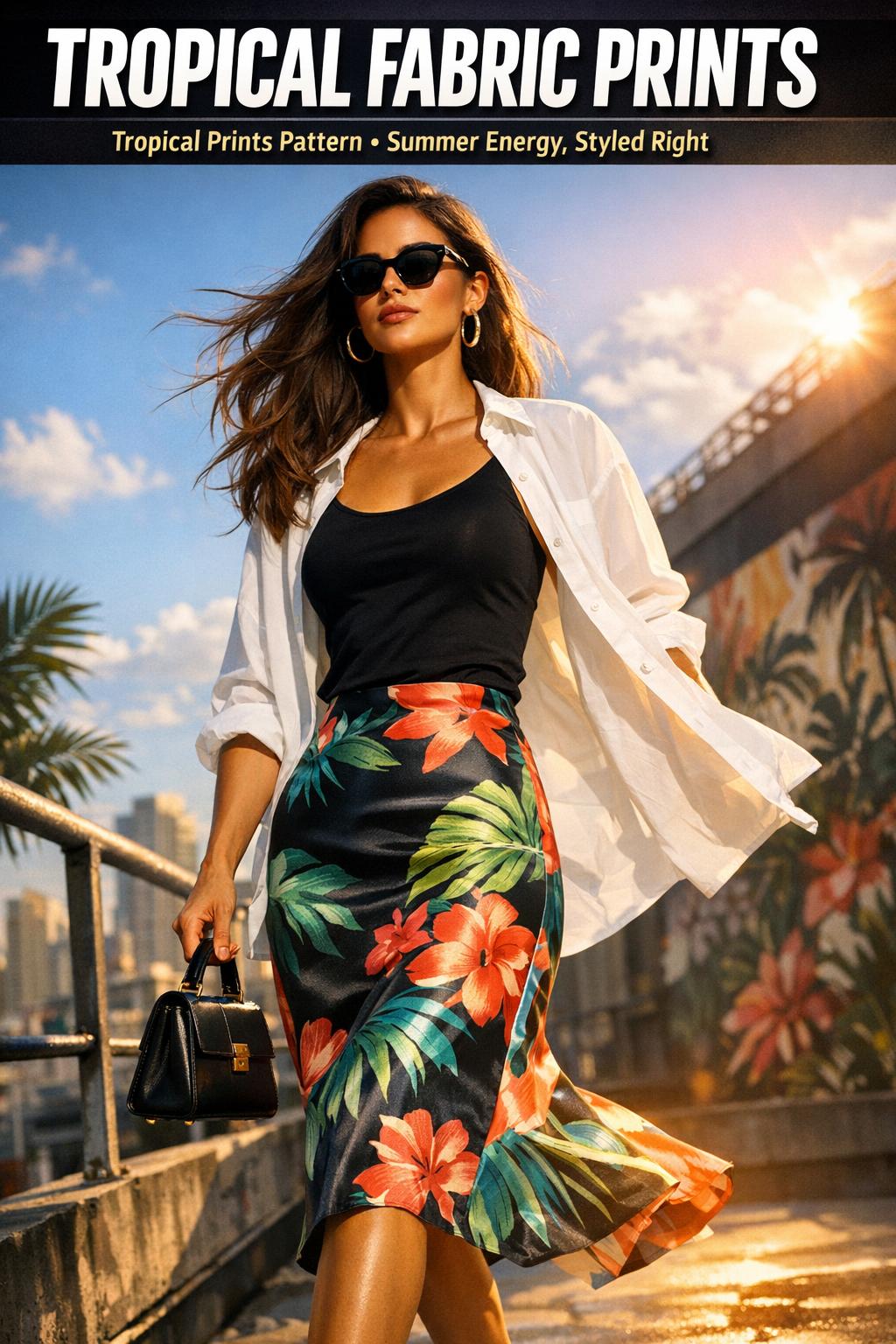
If you want tropical fabric prints to read more elevated, satin is the shortcut. A clear example is the Tropical Paradise print fabric sold as lamour (L’amour) satin, described with a 58/60-inch width and a weight of 130 g per square yard, made from 100% polyester and printed in Korea. That combination—polyester satin with a wide width—signals a fabric that photographs well and performs in decorative applications like tablecloths, overlays, runners, and backdrops, where sheen and color saturation matter as much as drape.
In outfit terms, satin makes a tropical print feel less “beach souvenir” and more “night-out resort.” The print becomes a light-catching surface, so the styling logic shifts: keep the silhouette streamlined and let the sheen carry the drama.
Stretch fabrics: the modern, body-aware tropical silhouette
Stretch fabric categories built around tropical design point to a different wearer mindset: movement first. A tropical stretch base reads as active, dance-ready, and party-friendly because it follows the body and resists wrinkling better than many crisp woven bases. Brands like Funki Fabrics frame tropical prints inside a “tropical design stretch fabric” context, which naturally supports more fitted silhouettes and playful proportions.
Home decor bases: when tropical prints become an interior mood
Several retailers position tropical fabric by the yard explicitly for home decor—bold botanical prints for upholstery moments, or wallpaper-inspired textiles in cotton, linen, and velvet. Wallshoppe leans into tropical yardage for home settings, while Livettes Wallpaper extends tropical jungle fabric into multiple fabric types (including velvet), reinforcing the idea that tropical prints are not only for clothing; they’re also a space identity.
Print technology and quality signals that affect how your outfit wears
Tropical prints succeed when the color remains confident after wear, handling, or laundering—and when the print scale looks intentional rather than pixelated or dull. While many shoppers focus on motif alone, print method and certification can be the deciding factor between a print that stays vibrant and one that fades into “almost tropical.”
Digital printing as a style tool (not just a production detail)
Digital printing shows up directly in the tropical floral fabric by the yard space, where The Textile District describes a process involving digital printing and fiber reactive dyes, along with an OEKO-TEX certification. For styling, this matters because digital workflows can support detailed tropical floral and leaf layouts—especially for abstract tropical florals—where crisp edges and layered color are part of the design’s impact.
Fiber reactive dyes and why saturation matters in tropical prints
Fiber reactive dyes are discussed in the context of The Textile District’s tropical floral offerings. In practical terms, dye choice influences how bold a tropical print stays over time, which affects how “fresh” the garment continues to look. Tropical prints pattern relies on confident color and contrast; once those soften, the whole aesthetic can feel tired, regardless of silhouette.
OEKO-TEX as a credibility signal for printed fabric
OEKO-TEX appears as a stated certification within The Textile District’s tropical floral product context. For buyers, certifications function as a filtering tool—especially when you’re choosing fabric that sits against skin for apparel, or when you’re sewing for spaces where comfort is part of the experience. It’s not a styling detail, but it supports confident purchasing decisions when you’re investing time in sewing.
Motif families: choosing the right tropical story for your aesthetic
Motif is your narrative layer. It’s the difference between “vacation postcard” and “graphic botanical editorial.” Tropical fabric prints tend to cluster into a few recognizable families, and each one pushes the outfit mood in a different direction.
Palm leaves and tropical paradise prints: clean, iconic, instantly readable
Palm leaves are the classic shorthand for tropical prints, and the Tropical Paradise naming used for a palm-leaf fabric print reinforces how this motif is positioned: it’s meant to create atmosphere fast. Palm-leaf prints work best when you treat them like a neutral-with-attitude—pairing them with calm solids so the leaf shapes stay crisp and not visually chaotic.
Tropical flowers pattern: bold florals with a romantic edge
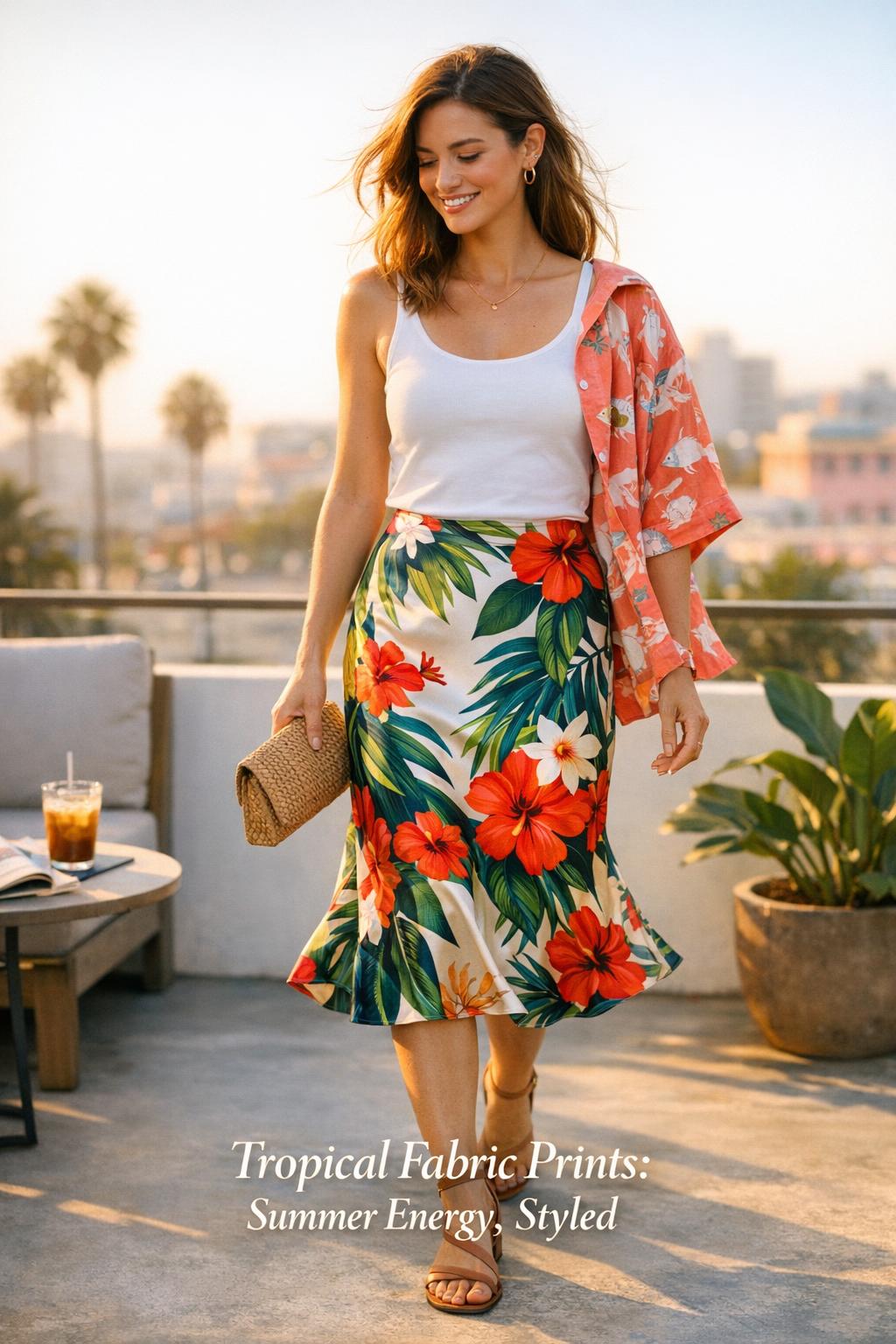
A tropical flowers pattern reads softer than palms, but it can be more dramatic when scaled up. Hawaiian print fabric traditions often lean into bold floral statements, and collections like Hawaiian fabric by the yard emphasize that island motif energy for Aloha shirt aesthetics and dresses. The key is scale management: larger flowers need simpler silhouettes; smaller florals can handle more tailoring and layering.
Painted tropical plants: artistic, slightly abstract, design-forward
Painted plant motifs—like Solid Stone Fabrics’ Painted Tropical Plants Print—shift tropical from “tourist” to “gallery.” The brushstroke feel naturally pairs with modern, minimal shapes because the print itself already contains texture. This is a strong choice when you want tropical fabric prints without the obvious postcard vibe.
Nature sets: coral, fern, fish, and the Key West signal
Helio Graphics frames tropical fabrics by the yard through nature-inspired motifs, including coral and fish elements, and even a Key West reference in the collection context. These motifs read more coastal and observational—less “flower market,” more “marine notebook.” They excel in outfits and interiors where you want a tropical theme that feels collected rather than loud.
Look: satin tropical after-dark (the polished resort silhouette)
This look is built for warm evenings and photo-heavy settings—dinners, rooftop events, or any occasion where you want your outfit to glow rather than shout. The silhouette logic is sleek: a liquid line through the torso and hips, with just enough movement to keep the print feeling alive.
Use a tropical paradise print on lamour satin as the hero fabric. The satin’s sheen amplifies color and makes palm leaves and tropical florals feel cinematic. Because this particular lamour satin is described at 58/60 inches wide and 130 g per square yard, it suits pieces that benefit from width—bias-cut skirts, fluid tops, or statement panels—while staying light enough to move. Keep the palette grounded with solid neutrals so the print remains the visual anchor.
- Key garments: satin slip-style skirt or streamlined top in a tropical prints pattern
- Footwear: minimal sandals or sleek evening flats
- Accessories: a single bold accent (structured bag or sculptural earrings) rather than multiple competing details
Why this works: sheen already reads “dressed.” The styling win comes from restraint—one print, one polished silhouette, and clean supporting pieces that let the tropical fabric prints look intentional rather than themed.
Look: cotton tropical-and-nautical daytime precision (graphic, crisp, wearable)
This look takes the classic vacation motif and makes it city-friendly. The mood is bright but controlled, with a slightly preppy energy that feels comfortable for errands, casual lunches, and warm-weather travel days where you still want structure.
Start with tropical and nautical prints in quilting cotton—sold by the yard in tropical/nautical categories—because cotton keeps the print edges sharp. Let the print sit in a simple shape: a boxy shirt, a clean A-line skirt, or relaxed shorts with a tailored waistband. The color strategy is clear contrast: tropical print on top, calm solid on bottom (or the reverse), so the look reads composed rather than busy.
Why this works: cotton’s crispness turns a summer print into a graphic element. Pairing tropical prints with nautical cues also narrows the theme, so the outfit reads “coastal” instead of “costume.”
Look: stretch tropical party set (movement-first, confident, modern)
This is the tropical aesthetic at its most kinetic: the kind of outfit designed for dancing, festivals, or long summer parties where comfort has to keep up. The silhouette is body-aware—fitted through key areas, with strategic cut and proportion so the print doesn’t distort in unflattering places.
Choose tropical design stretch fabric from a tropical category built for that base. Stretch lets you commit to a bolder tropical flowers pattern or palm-heavy tropical prints pattern without worrying as much about creasing. Keep the palette high-energy but limit the styling extras; stretch plus a statement print is already a full look. Consider coordinating pieces (top and bottom) in the same print to create a continuous line, then break it with a single neutral layer if needed.
- Key garments: fitted top with matching skirt/shorts in tropical prints
- Footwear: stable sandals for long wear
- Accessories: simple, close-to-body pieces that don’t compete with the print
Why this works: stretch fabric supports the lifestyle context. The look stays sharp over hours, and the print remains the centerpiece because the silhouette is streamlined and the accessories are edited.
Look: Hawaiian print ease (Aloha shirt energy, updated proportions)
This look is relaxed, social, and unmistakably warm-weather. The mood is open-collar, sun-on-skin, and slightly nostalgic—without leaning into novelty. The silhouette should feel airy, not oversized to the point of swallowing the print.
Build around Hawaiian fabric by the yard, known for bold floral prints and island designs that naturally align with Aloha shirts and dress silhouettes. Keep the lines simple: a clean camp-collar shirt, a soft dress shape, or a matching set that reads intentional rather than like vacation pajamas. If the print is loud, keep the rest quiet: matte solids, minimal layers, and straightforward accessories that won’t fight the florals.
Why this works: Hawaiian prints are already a complete aesthetic message. Updated proportions—cleaner hems, more precise fit—make the same tropical flowers pattern feel modern and styled for real life, not just a themed getaway.
Look: botanical home-to-street layering (the “decor print” worn as fashion)
This look takes inspiration from interiors: bold botanical prints and tropical yardage that feel substantial, almost architectural. The mood is curated and design-aware—perfect for creative workplaces, gallery days, or any setting where you want your outfit to feel like a visual concept.
Source tropical fabric by the yard from decor-focused collections—like Wallshoppe’s tropical selection, which leans into bold botanicals—and use it in structured, minimal silhouettes. The styling trick is proportion play: a slightly boxy outer layer over a narrow base, or a structured skirt with a clean top. Keep the color palette intentional: pull one secondary tone from the print and echo it in a solid piece to make the outfit look engineered rather than accidental.
Why this works: decor prints often have stronger contrast and a bolder scale, which can look high-fashion when the silhouette is disciplined. The outfit succeeds when the print is treated like design, not novelty.
Look: tropical jungle texture (velvet option for depth and contrast)
This is the tropical aesthetic with shadow and texture. The mood is more “night garden” than “beach day,” which makes it especially effective when you want tropical fabric prints outside the obvious daytime context. The silhouette can stay simple; texture is doing the heavy lifting.
Livettes Wallpaper’s tropical jungle fabric collection highlights that tropical motifs can live on multiple bases, including velvet. Velvet changes the visual behavior of the print: it absorbs light instead of reflecting it, making jungle motifs feel richer and more dimensional. To keep the look modern, use clean shapes and avoid excessive draping. One velvet tropical piece paired with matte basics creates a sharp texture contrast that reads elevated.
Why this works: tropical prints pattern can risk looking flat when over-styled. Velvet introduces depth, so the print feels intentional and seasonless, not locked to a single “summer-only” moment.
Look: nature-notes tropical (coral and fish motifs with Key West undertone)
This look is quieter and more collected—still tropical, but less botanical overload. The mood is coastal and observant, like a sketchbook of seaside elements rather than a full floral explosion.
Work with nature-inspired tropical fabrics by the yard that include coral and fish motifs, as seen in Helio Graphics’ tropical collection context, which also nods to Key West. Keep the outfit composition simple and layered: one printed piece as the focal point, supported by solid layers. This motif family pairs especially well with clean, minimal accessories because the print already carries narrative detail.
Why this works: coral and fish motifs create visual interest through illustration rather than pure color saturation. The result is tropical without being loud, which makes it easier to wear repeatedly.
Where to buy tropical fabric by the yard (and how to shop with intention)
Most U.S. search intent around tropical fabric prints is commercial: people want yardage for specific projects. The best buying strategy is to match retailer strengths to your use case—apparel, decor, stretch, or custom printing—then confirm practical specs like width, fabric content, and any certification notes.
- OnTheGoLinens: a defined print name (Tropical Paradise) on lamour satin with clear specs (58/60-inch width, 130 g/sq yd, 100% polyester) and an origin note (printed in Korea), plus decor-oriented use cases like tablecloths and backdrops.
- The Textile District: tropical floral fabric by the yard with designer/collection attribution (J Marie Creates) and credibility markers like OEKO-TEX, plus process signals including digital printing and fiber reactive dyes.
- Harts Fabric: tropical and nautical cotton prints positioned in a quilting cotton context, emphasizing by-the-yard shopping for wearable, structured projects.
- Funki Fabrics: tropical design stretch fabric, naturally aligned with fitted silhouettes and movement-focused wear.
- Lava Hut: Hawaiian fabric by the yard with island motifs aligned to Aloha shirts and dresses.
- Wallshoppe: bold botanical tropical yardage for home decor styling.
- Livettes Wallpaper: tropical jungle fabric available across multiple bases, including cotton, linen, and velvet.
- Helio Graphics: tropical fabrics by the yard with nature motifs like coral and fish and a Key West contextual signal.
- Solid Stone Fabrics: Painted Tropical Plants Print as a motif-forward option for a more artistic tropical direction.
- Walmart: a broad tropical fabric prints category hub with multiple vendors and value-oriented options across different materials.
A useful reality check: “tropical” is a wide umbrella. Treat shopping like building a palette—choose your motif family first, then select the base that matches how you need the garment or decor piece to behave.
Custom tropical printing and the designer-collaboration effect
Custom or on-demand printing shifts tropical prints from trend-following to identity-building. When a retailer ties fabric to a designer or collection, you get a clearer design perspective—more like buying art direction than buying a generic print. The Textile District’s connection to J Marie Creates is a clear example of how designer attribution frames the print’s intent, while process details like digital printing and fiber reactive dyes situate it as a contemporary production approach.
In practical styling terms, designer-linked tropical fabric prints often feel more specific: an abstract tropical floral might look less like a standard hibiscus repeat and more like a modern surface design. That specificity helps your outfit read curated, especially when you repeat the print in small ways across looks—like a single printed shirt one day and a printed skirt another—without the feeling of wearing the same “vacation outfit” repeatedly.
Style tip: controlling scale so tropical prints don’t overwhelm your silhouette
Scale is the most common reason tropical prints go wrong. When the motif is oversized and the garment is also oversized, the body disappears and the print takes over. When the motif is tiny but the fabric has a lot of sheen, the surface can read visually noisy. The solution is proportion control: one dimension should be calm—either the print scale or the garment volume.
- If the print is bold botanical and large-scale, choose a clean, simple silhouette with minimal seams.
- If the silhouette is voluminous, use a more controlled tropical flowers pattern or a less busy tropical plant motif.
- If the fabric is shiny (like lamour satin), simplify everything else: fewer accessories, fewer layers, and fewer competing textures.
Event and decor styling: tropical fabric prints beyond clothing
Tropical fabric prints are particularly effective for events because they create an instant theme without requiring complex installations. Satin-based tropical prints can read elevated as table décor—tablecloths, overlays, runners—and can double as backdrops, which is directly aligned with how Tropical Paradise lamour satin is positioned for décor uses. Botanical collections sold by the yard also translate easily into cushion covers, accent panels, or statement upholstery moments, especially when the print is high contrast and designed to be seen from a distance.
The styling logic is identical to dressing: one hero print, supporting neutrals. In an event space, that might mean one tropical table runner with calm solid linens; in a living room, one bold botanical cushion paired with solid upholstery. The print does the atmosphere-building; the solids keep it from feeling like a theme park.
Common mistakes with tropical prints (and what to do instead)
The most frequent misstep is treating tropical as a costume category rather than a print category. That leads to over-styling—multiple prints, loud accessories, and too many colors competing. The second mistake is ignoring the base fabric: a print that looks perfect online can behave differently in stretch versus cotton, or in satin versus linen or velvet options.
- Mistake: mixing multiple tropical motifs at once (palm leaves plus tropical flowers plus jungle animals). Better: commit to one motif family and echo one color from it elsewhere.
- Mistake: choosing a shiny tropical print and then adding more shine. Better: pair satin with matte supporting pieces for clean texture contrast.
- Mistake: buying without checking width and use-case. Better: match fabric width and weight expectations to your project, especially for decor items like backdrops or tablecloths.
Key pieces that make tropical prints feel like a cohesive aesthetic
To keep tropical fabric prints wearable across many days, build a small system around them. The goal is repetition without boredom: the same summer print energy, expressed through different bases and silhouette balances.
- One hero tropical print piece in a crisp base (cotton tropical or tropical/nautical cotton prints).
- One hero tropical print piece in a statement base (lamour satin for sheen, or velvet for depth within tropical jungle motifs).
- One movement-friendly option in stretch fabric for long events and high-comfort days.
- Two to three solid “support” pieces in calm neutrals to anchor the palette.
This structure makes outfit-building fast: your tropical prints pattern becomes the consistent visual identity, while fabric base and silhouette change the mood.
Care and longevity: keeping your summer print looking intentional
Tropical prints depend on clarity—clean edges, confident color, and a surface that doesn’t look worn too quickly. That’s why it’s worth paying attention to the information brands provide: fiber content (like 100% polyester in the lamour satin example), print process notes (digital printing and fiber reactive dyes), and credibility cues (OEKO-TEX). Even when care instructions vary by base, the underlying principle is consistent: preserve the print by reducing unnecessary abrasion and avoiding styling choices that stress the fabric in high-friction areas.
A practical approach: assign your most vibrant tropical floral pieces to lower-friction silhouettes (flowy skirts, relaxed shirts) and reserve stretch tropical prints for movement-heavy days where performance matters. This is less about strict rules and more about matching garment function to fabric behavior.
Conclusion
Tropical fabric prints work because they compress mood into surface design: they deliver a complete summer print identity with minimal effort. When you choose the motif family intentionally and let the base fabric guide the silhouette—crisp cotton for graphic clarity, lamour satin for polished sheen, stretch for movement, velvet for depth—the aesthetic becomes versatile instead of seasonal. The result is a wardrobe and decor approach that feels consistent, curated, and easy to repeat in new ways.
FAQ
What are tropical fabric prints?
Tropical fabric prints are textiles featuring motifs associated with tropical and coastal design language, such as palm leaves, tropical plants, bold botanical layouts, and tropical floral designs, often sold as fabric by the yard for apparel, decor, or event use.
Which base fabric is best for a tropical prints pattern: cotton, satin, or stretch?
Cotton is best for crisp, structured everyday pieces; satin (such as lamour/L’amour satin) is best when you want a glossy, elevated statement; and stretch fabric is best for movement-first, fitted silhouettes and long-wear comfort where flexibility matters.
What does “fabric by the yard” mean when shopping tropical prints?
“Fabric by the yard” means the textile is sold in measured lengths so you can purchase exactly what your project requires, which is common across tropical categories at retailers ranging from specialty shops to broad catalogs.
What should I look for in print quality when buying tropical floral fabric by the yard?
Look for clear process and credibility cues such as digital printing details, dye information like fiber reactive dyes, and certification signals like OEKO-TEX, because tropical prints rely on strong saturation and clean edges to keep the design looking fresh.
What is OEKO-TEX and why does it matter for tropical prints?
OEKO-TEX is a stated certification used as a trust signal in some printed fabric offerings, and it matters because it helps buyers feel more confident when choosing textiles intended for apparel or close-contact use.
Are Hawaiian prints the same as tropical prints?
Hawaiian prints are a specific island-inspired subset within the broader tropical category, often featuring bold florals and designs associated with Aloha shirt and dress aesthetics, while tropical prints more broadly include palms, jungle botanicals, and other nature-inspired motifs.
How can I use tropical fabric prints for home decor or events?
Tropical prints are commonly used as bold botanical yardage for decor and as statement textiles for event styling, including applications like tablecloths, overlays, runners, and backdrops where a single print can set the entire atmosphere.
What’s the difference between a tropical plant print and a tropical jungle fabric?
A tropical plant print often focuses on botanical elements like leaves and plants, including painted plant motifs, while tropical jungle fabric typically implies denser, more immersive compositions and may be offered across multiple bases such as cotton, linen, or velvet for a more textured decor-forward look.
Why do some tropical fabrics mention width and weight, like 58/60 inches and 130 g/sq yd?
Width and weight help you predict how a fabric will behave and how much coverage you’ll get for your project; for example, a wide satin tropical print with a specified weight is especially relevant for decor items like tablecloths or backdrops where sizing and drape matter.