Modern Blair Waldorf Style for a Polished Fall Wardrobe
Some fashion characters fade into nostalgia. Others become a permanent styling reference point. Blair Waldorf style belongs to the second category because it translates a highly recognizable Gossip Girl image into a usable wardrobe formula: polished headbands, precise tailoring, plaid and pleated structure, pearl accents, and a preppy power silhouette that still reads relevant in a modern closet. What makes the look endure is not only the drama of the Upper East Side fantasy, but the discipline of the outfit composition itself.
The lasting appeal of Gossip Girl Blair fashion comes from its clarity. Each look is built around visual anchors that feel intentional rather than random: a structured coat, a defined waist, a refined color story, or a single statement accessory that organizes the whole outfit. Whether the reference point is a Blair Waldorf dress, a tailored blazer, or one of the most memorable Gossip Girl outfits Blair wore on screen, the underlying system remains consistent. This is why the Blair Waldorf aesthetic continues to return through magazine editorials, celebrity reinterpretations, and social-media revivals.
This article breaks down the style with the same logic fashion editors use when evaluating a strong wardrobe identity: silhouette balance, texture contrast, color harmony, occasion relevance, and adaptability. The goal is not costume. It is to understand how Blair Waldorf inspired outfits work, why they still feel visually effective, and how to recreate them in a way that reads polished today rather than overly literal.
The real structure behind the Blair Waldorf aesthetic
At its core, the Blair Waldorf aesthetic is a preppy framework sharpened by social polish. It combines prep-school references with high-society refinement, creating an image that is disciplined, feminine, and visibly composed. The influence of Gossip Girl is essential here, but the appeal extends beyond television nostalgia because the wardrobe language is easy to decode: fitted tops, controlled skirt volume, neat accessories, coordinated layers, and styling choices that rarely look accidental.
Found the dress? Keep the rest in one place.
Zarellea brings guest details, vendors, timelines, and every next step together — so your wedding plan feels as good as your look.
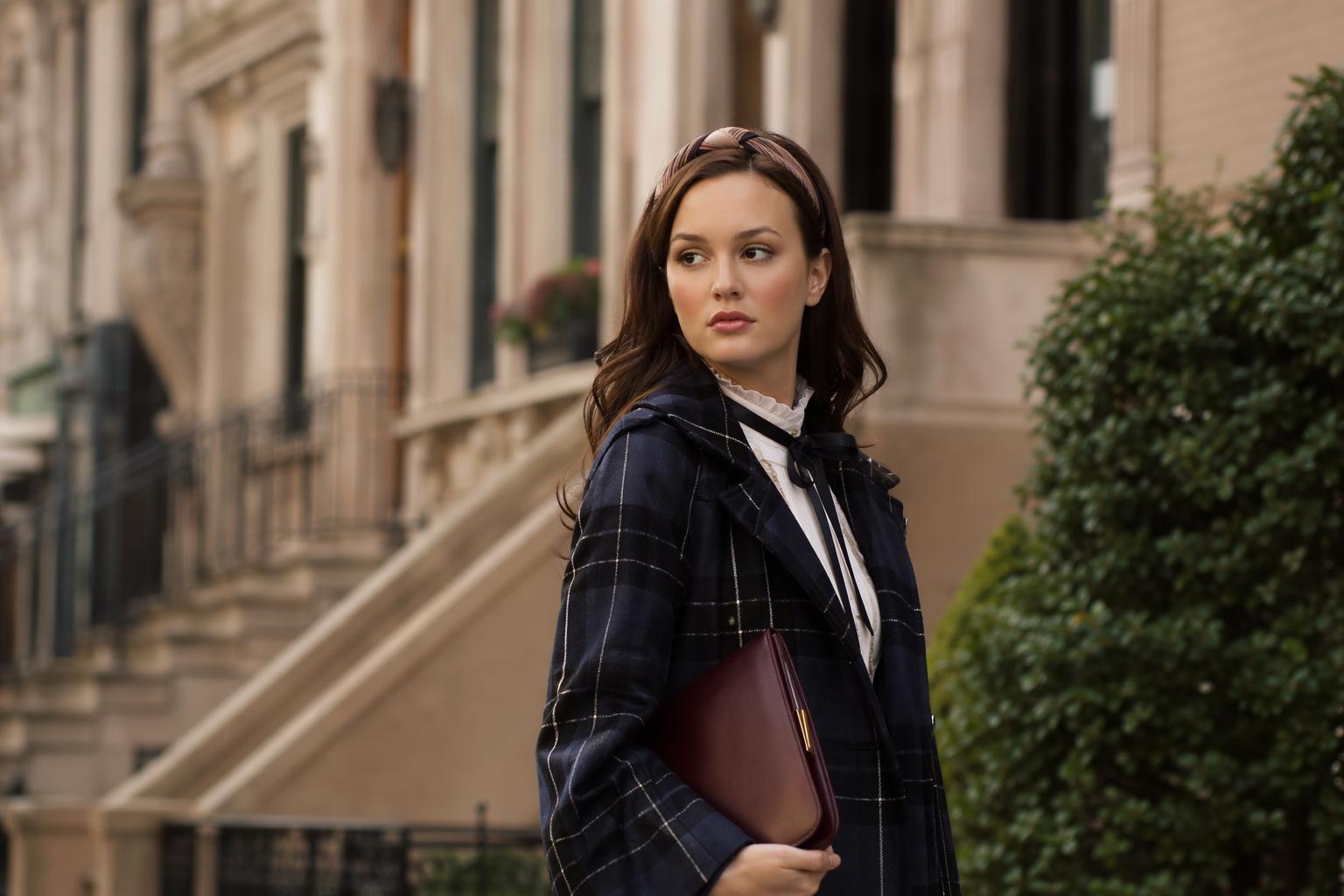
Leighton Meester’s embodiment of Blair Waldorf gave the style its visual authority. On screen, Blair’s wardrobe projected hierarchy and confidence through clothes that were decorative without losing structure. That balance matters. Too much sweetness and the look becomes costume-like. Too much severity and it loses the charm that defines Gossip Girl Blair. The signature effect comes from keeping refinement and playfulness in tension.
Another reason the look stays relevant is that it supports multiple search intentions at once. Some readers want to understand the fashion history of Blair Waldorf. Others want a practical shopping formula. Others are drawn by modern celebrity versions, such as the Bella Hadid conversation around Blair-coded preppy dressing. In all cases, the same style mechanics apply: clean lines, strategic accessories, and a wardrobe built from pieces with enough structure to hold their shape visually.
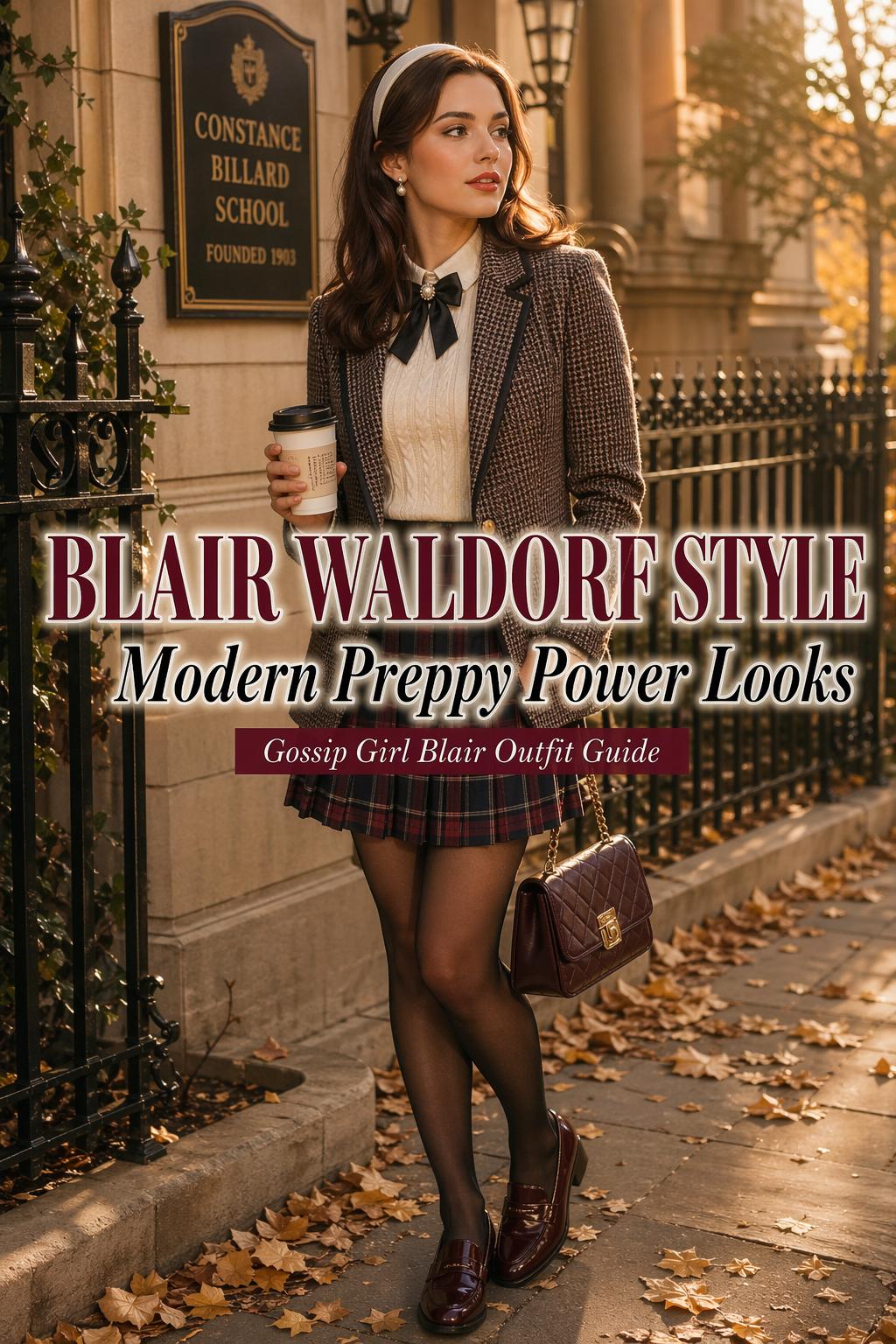
What defines the look at first glance
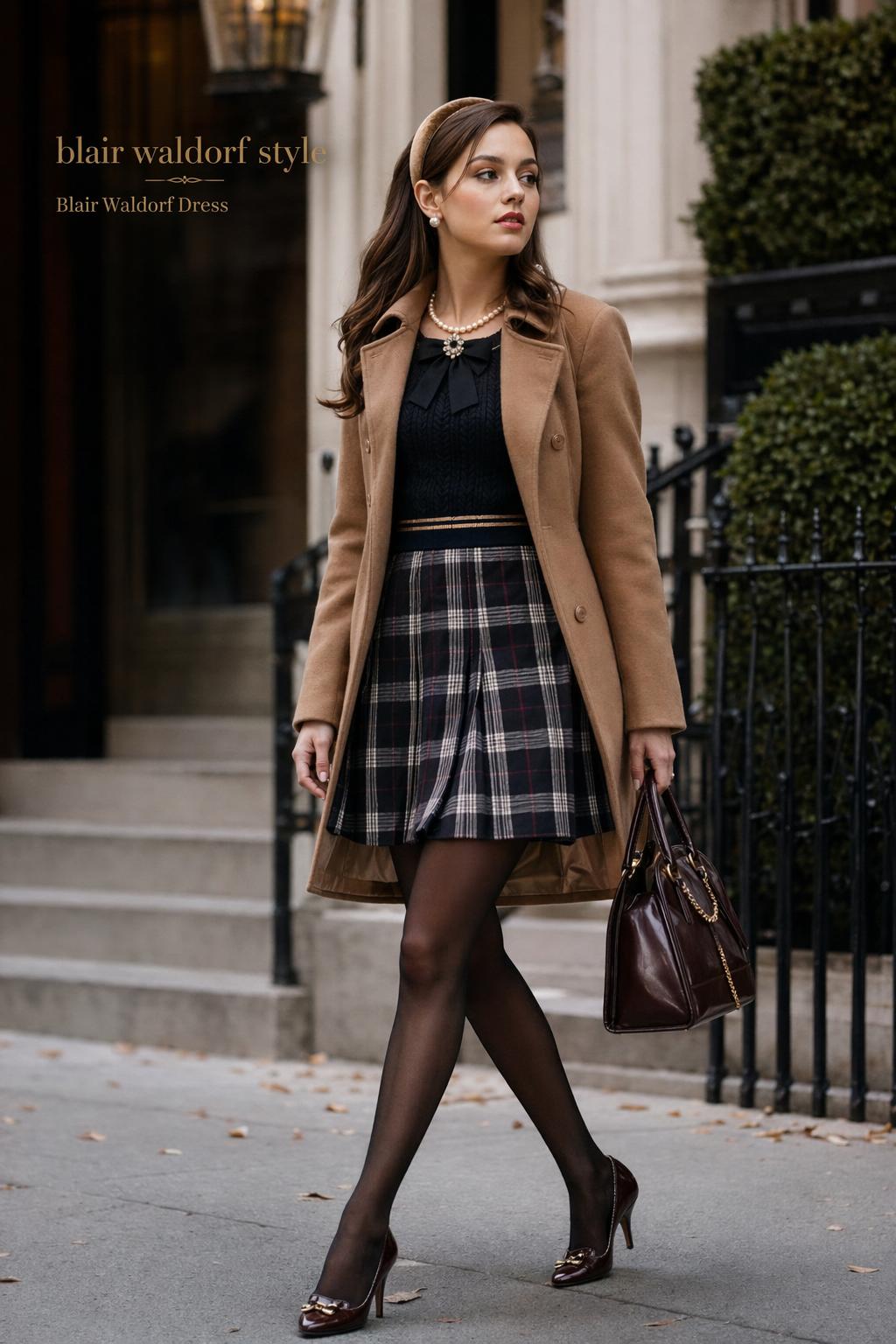
A Blair-inspired outfit is usually identifiable within seconds. The visual cues are strong and repetitive in the best way: headbands, pleated or plaid skirts, tailored coats, structured blazers, bows, pearls, coordinated dresses, and an occasional little black dress handled with more polish than minimalism. The silhouette often centers the waist, keeps the upper half refined, and lets accessories complete the message rather than compete with it.
The style also favors coherence over spontaneity. Outfit composition matters more than trend-chasing. A cardigan works because it softens the edge of a structured skirt. A coat works because it extends the vertical line and reinforces authority. Pearls work because they add brightness and old-world formality without overwhelming the face. This is fashion with internal logic, not just recognizable references.
Signature pieces that make a Blair Waldorf wardrobe recognizable
The easiest way to understand blair waldorf style is to study the recurring categories of clothing and accessories. These pieces appear across editorial coverage, outfit roundups, and modern recreations because they carry the identity of the look. They are not interchangeable basics. They are coded items.
Headbands as the visual anchor
No item is more closely linked to Blair Waldorf than the headband. It functions as more than a hair accessory. It is the visual anchor that sharpens the entire outfit. A headband frames the face, adds polish instantly, and reinforces the controlled femininity that defines Blair’s image. In practical terms, it also does what strong accessories should do: it makes simple garments look more intentional.
This is why a headband can transform a plain cardigan-and-skirt combination into something clearly Blair-coded. The accessory creates top-of-body emphasis, which is especially effective when the rest of the outfit uses clean tailoring. In visual balance terms, it draws the eye upward and keeps the look from feeling heavy through the hips when paired with pleated or plaid skirts.
For readers searching for a Blair Waldorf headband outfit guide, the key principle is restraint. Once the headband is in place, the rest of the styling should not become overly busy. Let the accessory act as the statement piece, then support it with pearls, a fitted blouse, or a structured coat rather than piling on competing details.
Plaid skirts and pleated skirts create the prep-school foundation
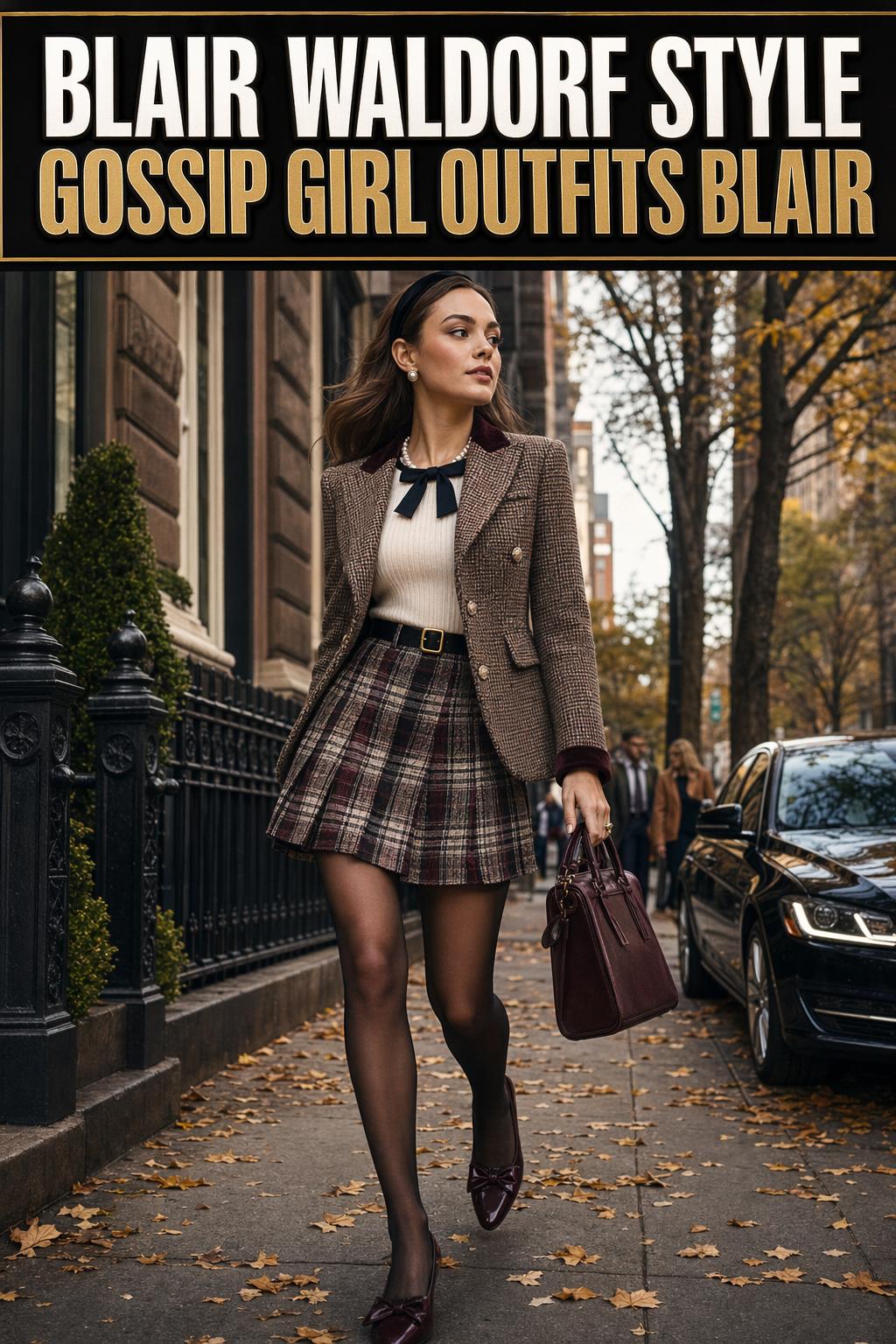
Plaid skirts and pleated skirts are central to Gossip Girl outfits Blair because they ground the wardrobe in prep-school references. Their value is not just thematic. They offer movement, shape, and a disciplined lower-half structure that pairs well with fitted knits, crisp blouses, and cropped jackets. Pleats add rhythm to an outfit, while plaid introduces pattern without abandoning order.
The reason these skirts keep appearing in modern Blair Waldorf inspired outfits is that they solve proportion problems elegantly. A pleated skirt brings volume and texture to the lower body, while a slim cardigan or tailored blazer keeps the top half compact. That proportion play creates a polished silhouette with very little effort. It is especially effective for transitional seasons and fall styling, which explains why student and magazine coverage frequently ties Blair-inspired dressing to autumn fashion.
- Pleated skirts work best when the top layer is fitted or lightly structured.
- Plaid patterns feel most Blair-like when the rest of the palette stays coordinated.
- A defined waist keeps the look sharp and prevents the outfit from feeling costume-driven.
- Headbands, pearls, or a belt can finish the composition without overcomplicating it.
Tailored coats and blazers bring the prep-to-power effect
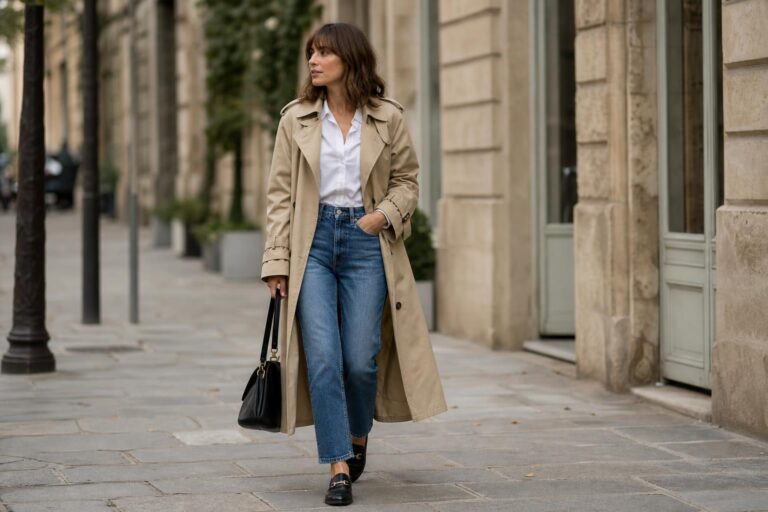
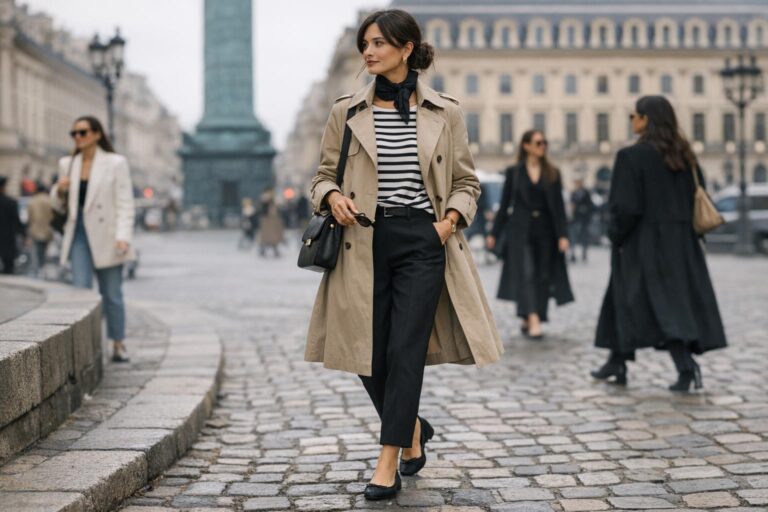
The Blair wardrobe is often described as preppy, but that term alone misses the authority built into the styling. Tailored coats and structured blazers are what move the look from school-inspired to socially commanding. This is the prep-to-power silhouette mentioned across style analysis of Blair Waldorf. A coat adds hierarchy. A blazer adds definition. Both create the kind of clean outer layer that makes the outfit look expensive, even when the individual pieces are relatively simple.
This is also where the Blair Waldorf aesthetic becomes useful for real-life wardrobes. A tweed coat or sharply cut blazer can be worn far beyond a full character-inspired outfit. It pairs naturally with dresses, skirts, and even more basic layers while preserving that composed Upper East Side mood. The structure of the outer layer is what creates authority, not just the color palette or accessories.
The Blair Waldorf dress and the role of the little black dress
The Blair Waldorf dress is not one fixed silhouette, but it usually follows a few consistent rules: feminine shaping, visible polish, and styling that feels socially ready rather than casual. In fashion coverage connected to Leighton Meester, the little black dress appears as a particularly strong Blair-adjacent reference point. The LBD works because it captures Blair’s sophistication without depending on plaid or school-coded styling.
What makes a little black dress read Blair rather than generic is the styling context. Add pearls, a structured coat, a refined headband, or a designer-informed silhouette and the look shifts into Blair territory. The same logic applies to coordinated dresses in richer palettes. A dress alone is never enough. It needs the support system of accessories and outerwear to communicate the full identity.
Designer references that shape the look
Part of Blair Waldorf style’s authority comes from the way fashion media links it to established designers. Names such as Valentino, Diane von Furstenberg, Marc Jacobs, and Carolina Herrera appear in discussions of Blair-like silhouettes because they reinforce the wardrobe’s elegant, high-society dimension. These references do not mean every Blair-inspired look must be luxury-led. They clarify the design language: refined dresses, polished tailoring, strong femininity, and pieces that hold visual structure.
Anna Sui appears as a historical reference in this broader conversation, while Jacquemus shows up in more current event context around celebrity dressing. Together, these references reveal an important point: Blair’s style is not tied to one brand identity. It is tied to a visual vocabulary that multiple labels can express in different ways. Some lean romantic. Some lean sharp. Some emphasize bold polish. The common denominator is discipline in silhouette.
Why these designer names matter
Valentino and Carolina Herrera support the polished, socially elevated side of the aesthetic. Diane von Furstenberg adds feminine confidence. Marc Jacobs connects naturally to a more fashion-aware interpretation of prep. When these brands are associated with Blair-coded dressing, the point is less about label worship and more about garment logic. They embody structured femininity, which is the engine of the entire wardrobe.
This is useful for practical styling because it helps identify what to look for even outside high-end shopping. A Blair-relevant piece should have one or more of the following qualities: a neat neckline, a clear waist, a refined print, polished fabric behavior, or an accessory-friendly shape. If a garment slouches too much or lacks enough visual definition, it loses the specific discipline that makes the look recognizable.
Why the color palette feels so effective
Blair’s wardrobe succeeds partly because the color stories tend to feel intentional rather than improvised. Coordinated palettes make the accessories, tailoring, and patterns look integrated. A plaid skirt can feel classic instead of busy when the knit and headband echo tones already present in the pattern. A little black dress becomes more Blair-like when balanced with pearls or a polished coat that adds refinement rather than stark contrast.
Color harmony also helps manage the difference between inspiration and imitation. A literal recreation can feel theatrical. A modern adaptation often works better when it borrows Blair’s palette discipline instead of copying every garment type. Tonal layering, repeated accent colors, and controlled contrast all support the Blair Waldorf aesthetic without requiring a full costume approach.
Texture contrast is equally important
A key part of the visual appeal is the interaction between textures. Tweed, polished knits, structured cotton shirting, crisp skirts, and pearl jewelry create contrast while staying within a refined register. This matters because texture is often what separates a rich-looking outfit from a flat one. In practical terms, a smooth blouse under a textured blazer creates depth. A pleated skirt under a fitted cardigan introduces movement against structure. These combinations feel expensive because they are visually layered, not because they are complicated.
For seasonal dressing, this also gives the look flexibility. Heavier coats and textured layers make sense for fall. A lighter Blair Waldorf dress with pearls and a headband can carry the same identity in milder weather. The formula adapts because the texture relationships do the work, not just the exact garments.
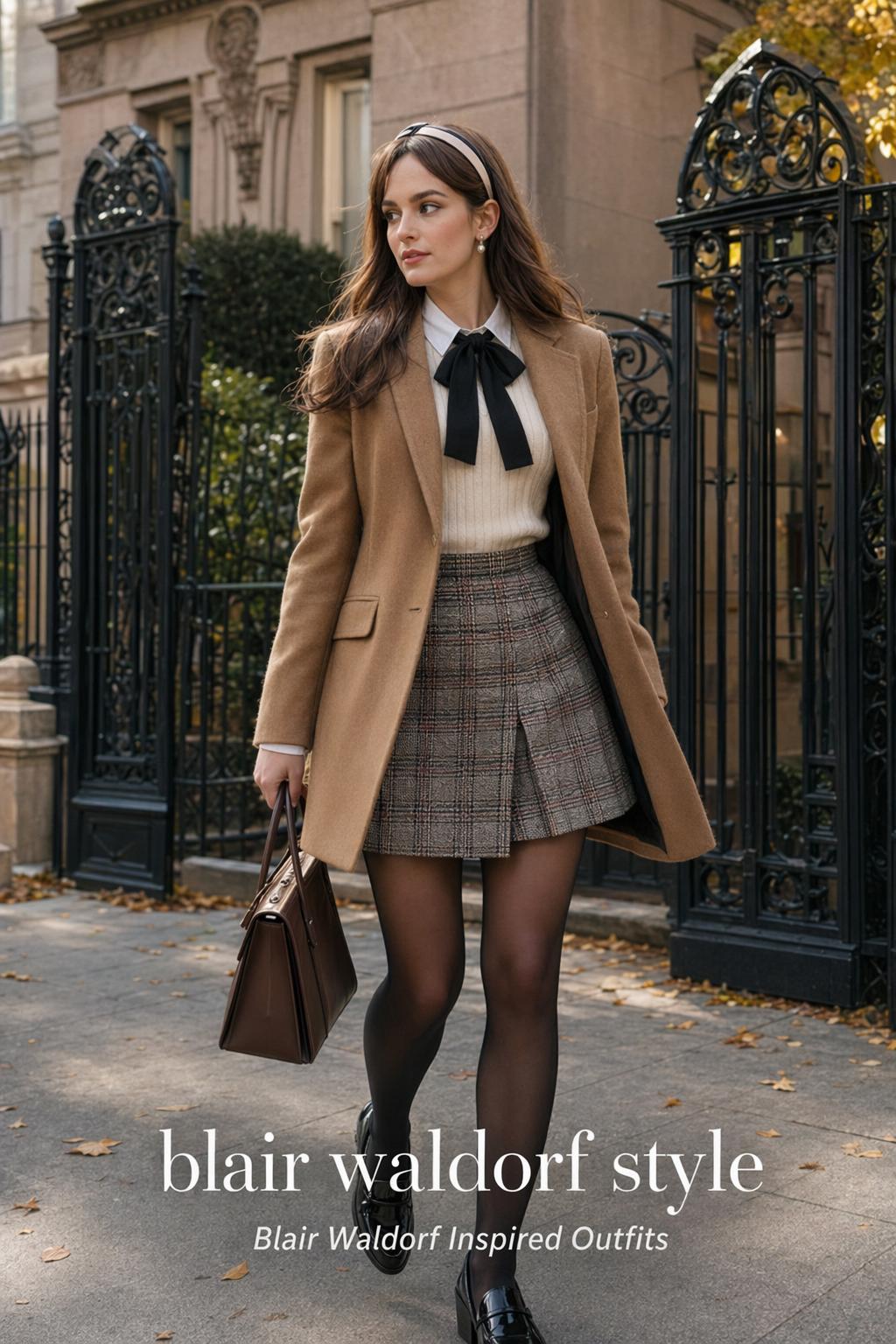
How to build Blair Waldorf inspired outfits in a modern wardrobe
The strongest approach to modern Blair Waldorf inspired outfits is to think in modules rather than full recreations. This is especially useful for readers searching how to recreate the Blair Waldorf look in 2026 or build a Blair-inspired wardrobe that does not feel locked in the Gossip Girl era. A practical wardrobe should let the aesthetic appear in degrees, from subtle office polish to full preppy statement dressing.
The capsule framework that makes the aesthetic wearable
A Blair-coded capsule wardrobe relies on a controlled set of repeat pieces. The goal is not quantity. It is consistency of shape and styling logic. Once those pieces exist, multiple outfits become possible without losing the visual identity.
- A fitted cardigan or neat knit top
- A pleated skirt and a plaid skirt
- A structured blazer or tailored coat
- A polished dress, including a Blair Waldorf dress or a little black dress
- Headbands and one or two pearl-based accessories
- A belt or waist-defining element for silhouette control
This framework works because each item supports the same silhouette family. The tops stay controlled. The skirts add movement. The outerwear creates authority. The accessories finish the message. Even one or two of these elements can instantly shift a standard outfit into Blair territory.
Tips for adapting the look without losing its identity
Modernizing Blair style is mostly about editing. The mistake is often excess. If the headband is prominent, simplify the print story. If the coat is sharply tailored, keep the rest of the textures balanced. If the outfit uses plaid, anchor it with solids so the pattern remains the focal point. The most convincing updates keep the discipline of the look while reducing anything that feels overly theatrical.
Inclusive sizing and comfort also matter in practical styling. A Blair-inspired silhouette depends on proportion, not on one body type. A well-fitted blazer, a waist-conscious dress, or a pleated skirt with clean drape can create the same effect across different figures. The real objective is preserving shape and balance. Pieces should allow movement, maintain line, and stay polished throughout the day.
Sustainable fabric choices fit naturally into this update as well. Because the Blair Waldorf aesthetic values timeless structure, it translates well into wardrobes built around fewer, more versatile pieces. A coat, skirt, or polished dress that can repeat across seasons is more aligned with the spirit of the style than a pile of novelty items that only work once.
From daytime polish to evening sharpness
One of the most useful aspects of Gossip Girl Blair styling is how easily it shifts from daywear to evening with small adjustments. The structure is already there. What changes is the level of refinement and contrast. This makes the style especially appealing for readers who want outfits that can move between work, dinner, social events, and fall city dressing without a full reset.
Daywear composition
For daytime, the strongest formula is a plaid or pleated skirt, fitted top, and one defined accessory such as a headband or pearls. Add a structured blazer or coat when more authority is needed. The result is polished but still readable for daily wear. This is where preppy chic works best: enough detail to feel styled, but not so much that the outfit feels formal.
Evening shift
For evening, the little black dress becomes one of the cleanest pathways into Blair-coded sophistication. The silhouette should stay refined, then accessories and outerwear can elevate it. A pearl element, a polished coat, or a sharper waistline makes the dress feel connected to the Blair Wardorf image rather than simply black and classic. The styling should become slightly more graphic and intentional, not louder.
This is where the Marie Claire-style connection between Leighton Meester, designer labels, and Blair-esque dressing becomes useful as a reference model. The modern interpretation often lands best when the outfit is streamlined and the luxury signal comes through cut and polish rather than excess decoration.
The office-ready version of blair waldorf style
Not every reader wants the full Upper East Side fantasy. Many want the office-ready translation. This version of blair waldorf style keeps the structured femininity but tones down the overtly youthful details. The ideal office look uses a tailored blazer, a polished skirt or dress, and a controlled accessory story. Pearls can work. Headbands can work if they are refined rather than oversized. The emphasis should be on precision.
The reason this works professionally is that Blair’s style is built on visual discipline. Clean hems, tidy layers, and defined proportions create authority in workplace settings. A plaid skirt can still function if the rest of the outfit is streamlined. A little black dress can still read office-appropriate if the silhouette is structured and the styling stays measured. This is not about copying television outfits exactly. It is about extracting the tailoring logic.
Quick office styling tips
- Choose one statement element, not three.
- Let the blazer or coat provide structure, then keep accessories restrained.
- Use pearls as a finishing accent rather than the main event.
- Favor crisp lines and polished fabrics over anything too slouchy.
- Keep the palette coordinated so the outfit reads intentional and professional.
Why social media keeps reviving Blair Waldorf
The Blair revival seen across TikTok and Instagram makes sense because her wardrobe is highly legible in visual media. The ingredients are easy to recognize in a single frame: headbands, plaid, pearls, coats, bows, and strong silhouette definition. Social platforms reward clear aesthetic identities, and Blair Waldorf remains one of the sharpest examples of a television character whose wardrobe functions almost like a brand system.
That revival is not only nostalgic. It also aligns with current interest in classic preppy style, high-society dressing, and wardrobes that feel curated rather than random. Articles discussing a 2025 or 2026 Blair return often connect the style to influencer culture because the aesthetic photographs well, communicates status quickly, and offers enough flexibility to be interpreted through both luxury and accessible shopping choices.
Bella Hadid and the modern reinterpretation conversation
Bella Hadid appears in fashion commentary as a contemporary figure through whom Blair Waldorf codes can be re-read. The significance is not that Bella reproduces Blair exactly. It is that her styling demonstrates how a celebrity can absorb preppy, nostalgic cues and reposition them within a current fashion conversation. That kind of reinterpretation keeps Blair relevant because it proves the look can survive outside its original Gossip Girl setting.
This is also a reminder that a modern Blair-inspired wardrobe does not need to look frozen in time. The stronger move is to preserve the polished architecture of the style while adjusting the intensity. Keep the tailored coat. Keep the headband if it suits the outfit. Keep the structured femininity. Then edit according to setting, season, and personal comfort.
Context matters: where the Upper East Side influence still shows
Blair Waldorf is inseparable from the New York and Upper East Side fantasy embedded in Gossip Girl. That location context matters because it explains the polished social energy of the wardrobe. The coats, the formality, the visible grooming, and the sense of occasion all reflect an environment where clothes signal identity. Even when a reader is nowhere near NYC, understanding that context helps preserve the mood of the style.
At the same time, the look has expanded beyond one location. Fashion coverage treats it as a global reference point, with magazine and blog interpretations moving through U.S. style conversations, international publications like Vogue India and Elle Australia, and broader digital fashion culture. That shift confirms something important: Blair’s appeal is not local, even if the Upper East Side remains the emotional backdrop.
Event dressing and polished public moments
Some of the strongest Blair-coded modern references appear through event dressing around Leighton Meester, celebrity styling mentions such as Ilaria Urbinati, and fashion-event context including Santa Monica or the Urban Jürgensen mention tied to related coverage. These moments matter because they show how Blair-like dressing can move into real-world fashion settings. The translation usually emphasizes elegant dresses, polished outerwear, and a cleaner version of the character’s signature refinement.
For readers, the takeaway is practical. The Blair Waldorf aesthetic works especially well for settings that reward visible polish: dinners, dressy daytime events, seasonal parties, gallery-type occasions, and office environments where tailoring is an asset. It is less effective when the dress code is aggressively casual. The structure that makes the style beautiful can feel overdressed if the context does not support it.
Common styling mistakes that weaken the Blair effect
Because the Blair Waldorf image is so recognizable, it is easy to overstate it. The best modern versions are edited. The weaker ones try to stack every possible signifier into one outfit. That usually disrupts silhouette balance and makes the look feel more like costume than wardrobe.
- Using too many decorative elements at once, such as bows, pearls, plaid, and a strong headband in the same look.
- Choosing garments without enough structure, which removes the polished foundation of the aesthetic.
- Ignoring fit, especially through the waist and shoulders.
- Combining too many competing colors instead of working within a coherent palette.
- Treating every outfit as a character recreation rather than an interpretation for a real setting.
The most reliable correction is simple: choose one focal point, maintain proportion control, and let the rest of the look support the main statement. If the skirt carries the visual interest, keep the knit and accessories clean. If the coat is dramatic, reduce ornament elsewhere. Blair style is strong because it is controlled.
A practical style map for different seasons
The Blair wardrobe is often associated most strongly with fall, and that makes sense. Plaid, pleats, coats, and layered textures all thrive in cooler weather. But the look is flexible across seasons when the materials and weight of the garments are adjusted. The key is to preserve the refined silhouette while changing the density of the outfit.
Fall and transitional weather
This is the natural home of the aesthetic. Tailored coats, tweed textures, plaid skirts, and polished layering all align with fall dressing. The visual richness of the season also supports pearls and headbands particularly well. This is why campus and fall fashion coverage often returns to Blair as a reference point.
Milder weather and dress-focused styling
In milder conditions, the look can shift toward a Blair Waldorf dress, lighter cardigans, and streamlined accessories. The emphasis should stay on polish rather than bulk. Texture contrast can come from the pairing of a neat knit with a smooth dress fabric, or from a structured accessory against a simpler silhouette. This preserves the identity without forcing cold-weather layers into the wrong season.
For movement and comfort, especially during longer days, lighter versions of the look tend to work best when the dress or skirt still keeps enough shape to hold the Blair line. If the fabric collapses too much, the outfit loses its composure. That is the recurring rule across seasons: shape matters.
How to read the style like a fashion editor
One reason Blair Waldorf style remains compelling is that it is easy to read editorially. The outfits have clear hierarchy. There is usually a visible lead element, a supporting structure, and a finishing detail. In fashion analysis terms, this is strong outfit architecture. The eye knows where to land first, how to move through the silhouette, and why the look feels complete.
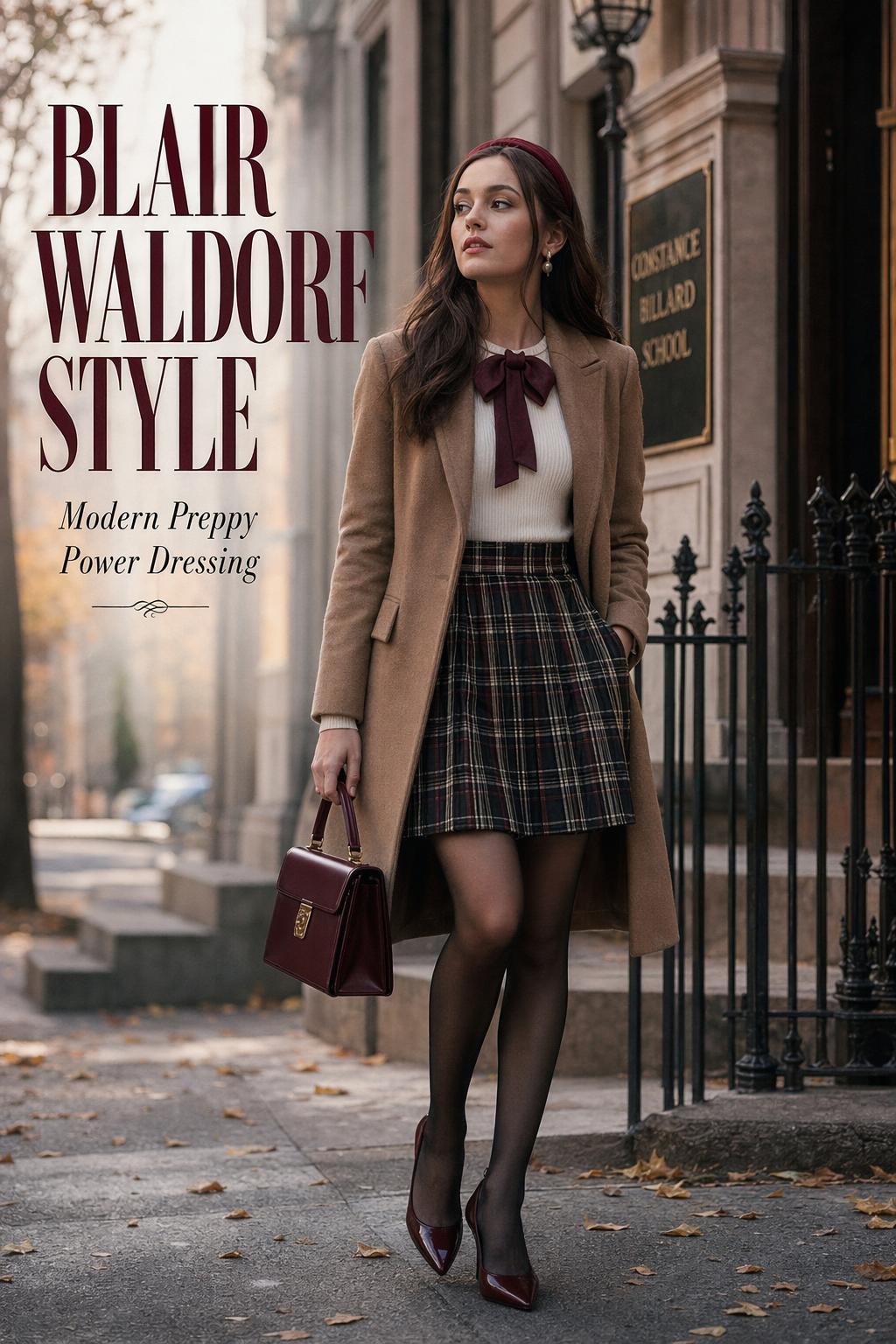
For example, a headband plus tailored coat plus pleated skirt works because each element performs a different role. The headband frames the face. The coat establishes line and authority. The skirt adds movement and pattern rhythm. Pearls can then act as a brightness accent rather than a distraction. This kind of composition explains why even simple Blair Waldorf inspired outfits can look elevated when the proportions are right.
That is also why the look remains attractive in both luxury editorials and affordable shopping guides. The formula is transferable. Whether the inspiration comes through W Magazine-style designer curation, Yahoo-style practical item lists, or blog-driven recreations, the same visual system holds. The labels can change. The structure should not.
FAQ
What is Blair Waldorf style in simple terms?
Blair Waldorf style is a polished version of preppy fashion built around headbands, tailored coats, pleated or plaid skirts, pearls, refined dresses, and a highly coordinated wardrobe. It combines prep-school references with high-society sophistication and is closely tied to Gossip Girl and Leighton Meester’s on-screen image.
How do I recreate the Blair Waldorf aesthetic without looking like I am wearing a costume?
The most effective approach is to borrow the styling logic rather than copy every signature detail at once. Choose one strong Blair-coded element such as a headband, plaid skirt, or tailored coat, then build the rest of the outfit with clean lines, a controlled palette, and polished accessories.
What are the most essential pieces for Blair Waldorf inspired outfits?
The core pieces are a headband, a pleated skirt or plaid skirt, a structured blazer or tailored coat, a polished dress or little black dress, and pearl accessories. These items create the silhouette and visual identity most associated with Gossip Girl Blair.
Can a Blair Waldorf dress work for modern daywear?
Yes, as long as the dress has a refined silhouette and is styled with restraint. A Blair Waldorf dress works best when paired with one or two structured elements, such as a polished coat, pearls, or a neat headband, instead of too many overtly character-based details.
Why are headbands so important to the Blair Waldorf aesthetic?
Headbands are important because they act as a visual anchor. They frame the face, instantly add polish, and make even simple outfits feel more intentional. In Blair’s wardrobe, they are one of the clearest markers of controlled femininity and preppy refinement.
Which designers are most often connected to Blair Waldorf style?
Valentino, Diane von Furstenberg, Marc Jacobs, and Carolina Herrera are among the designer references most often connected to Blair-like dressing, with Anna Sui appearing in historical context and Jacquemus showing up in more current fashion-event conversation. These names reflect the polished, structured femininity associated with the look.
Is Blair Waldorf style mainly for fall?
Fall is the most natural season for the look because plaid, pleats, coats, and layered textures all thrive in cooler weather, but the aesthetic can work year-round. In milder weather, dresses, lighter cardigans, and refined accessories can preserve the same Blair identity with less weight.
Are Gossip Girl outfits Blair wore still relevant today?
Yes, because the outfits are built on clear fashion principles that still work now: structure, proportion, coordinated color, and strong accessories. Modern reinterpretations, including celebrity and social-media references, show that the Blair formula remains adaptable even when the styling is updated.
Can blair waldorf style work for the office?
It can work very well for the office when the styling is edited. A tailored blazer, polished skirt or dress, and restrained accessories create a professional version of the look that keeps Blair’s precision and confidence without leaning too heavily into the character styling.