Why The Chinnon Fabric Dress Is Everywhere for Occasionwear
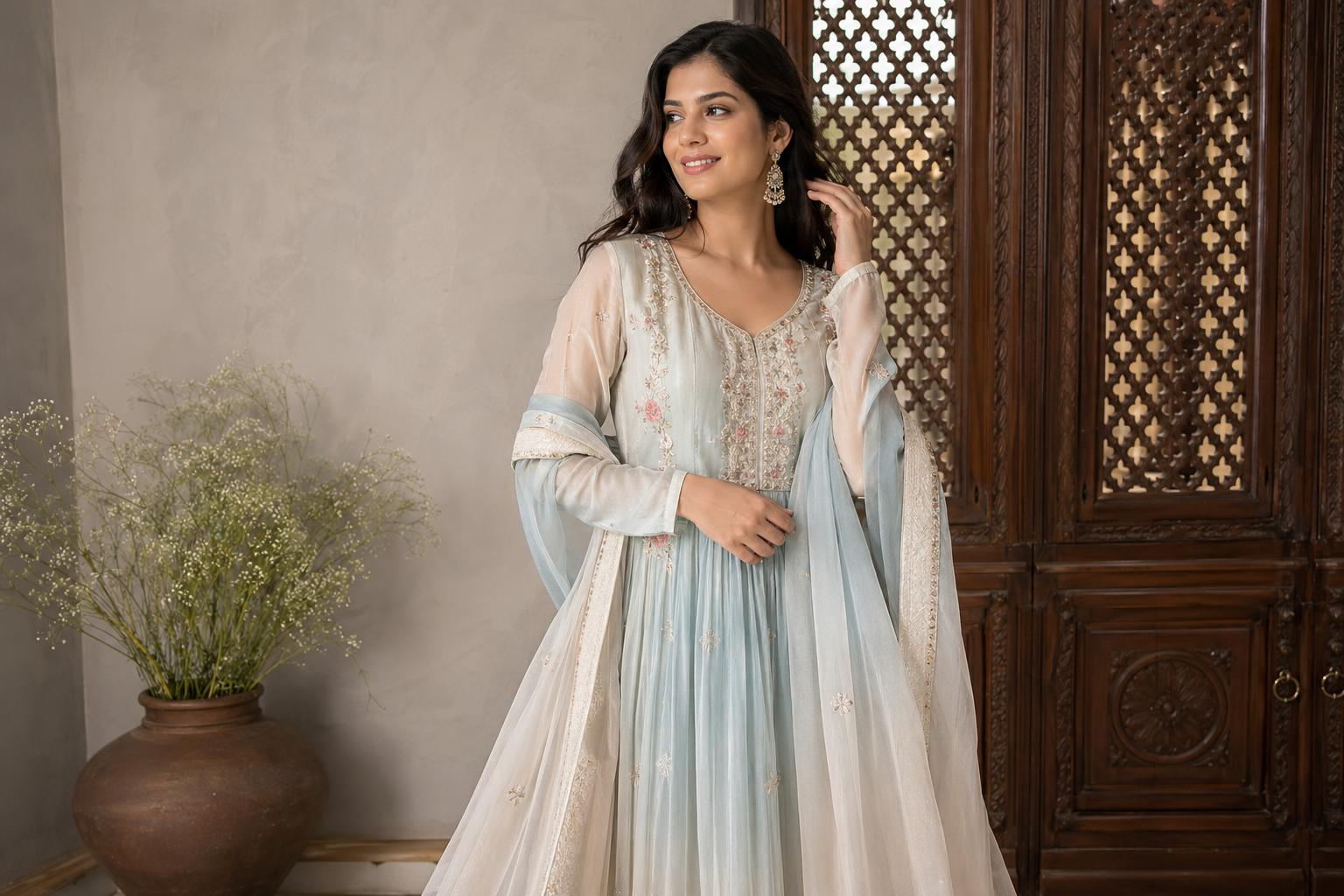
There is a particular ease to a chinnon fabric dress that makes it stand apart in the world of occasionwear and modern fusion dressing. The surface is light, the drape is fluid, and the overall impression is soft without becoming shapeless. In the U.S. market, where shoppers often want one piece that can move from festive gatherings to weddings, dinners, and cultural celebrations, chinnon answers a very specific style need: it feels dressed up, but it does not feel overly rigid.
The aesthetic around chinnon is built on movement, sheen, and silhouette balance. It appears across western dress cuts, Anarkali designs, long dresses, sharara sets, salwar kameez, and Indo-Western silhouettes, creating a wardrobe language that feels both traditional and contemporary. That flexibility is part of its appeal. A chinnon look can read romantic, festive, minimal, or statement-making depending on color, embellishment, and cut.
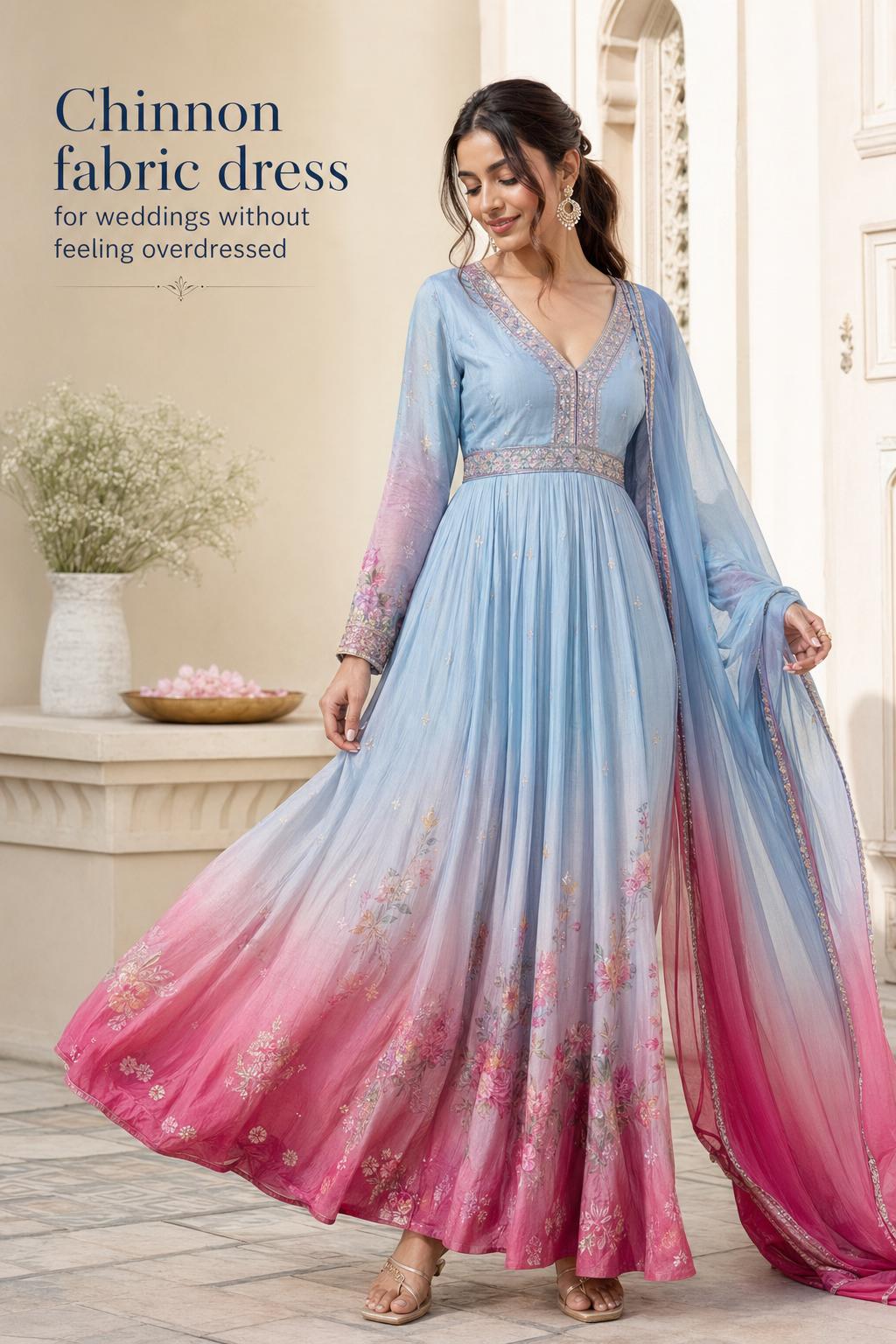
This visual identity is especially compelling for shoppers drawn to pretty dresses casual enough for daytime events yet refined enough for evening wear. From powder blue western styles to zari-accented partywear and ombre long dresses, chinnon supports a wide style range. Its popularity comes from that exact combination of softness and presence: the fabric moves lightly, but the finished outfit still holds visual impact.
What gives chinnon its distinct fashion identity
Chinnon is most often presented as a lightweight dress fabric associated with drape, softness, and festive styling. In shopping and fabric contexts, it frequently appears alongside terms such as chinnon chiffon, dyeable fabric, festive print, lightweight texture, and partywear. That tells you a great deal about how it is used. It is not treated like a heavy, architectural fabric. Instead, it is valued for movement, fluidity, and an elegant line through the body.
Found the dress? Keep the rest in one place.
Zarellea brings guest details, vendors, timelines, and every next step together — so your wedding plan feels as good as your look.
In practical styling terms, this means chinnon works best when the silhouette allows the fabric to fall naturally. A long dress, a softly flared Anarkali, an Indo-Western drape, or a salwar kameez shape all benefit from that quality. The visual result is smoother and more graceful than a stiff fabric would allow. This is also why many current retail listings emphasize ombre effects, festive prints, zari detailing, and color stories such as powder blue or rani shades. These details amplify the drape rather than compete with it.
For U.S. shoppers, the important distinction is that chinnon sits at the intersection of dress fabric and fashion fabric. It is sold both as finished garments and as material intended for dressmaking. That dual presence makes it relevant to two audiences at once: those buying a ready-to-wear look from retailers such as ODHNI, Fabricoz, Reet Lifestyle, House of Indya, Silk And Gleam, and Mirraw, and those sourcing fabric through sellers such as Fabnic, Fabritale, and The Wardrobe Fabrics.
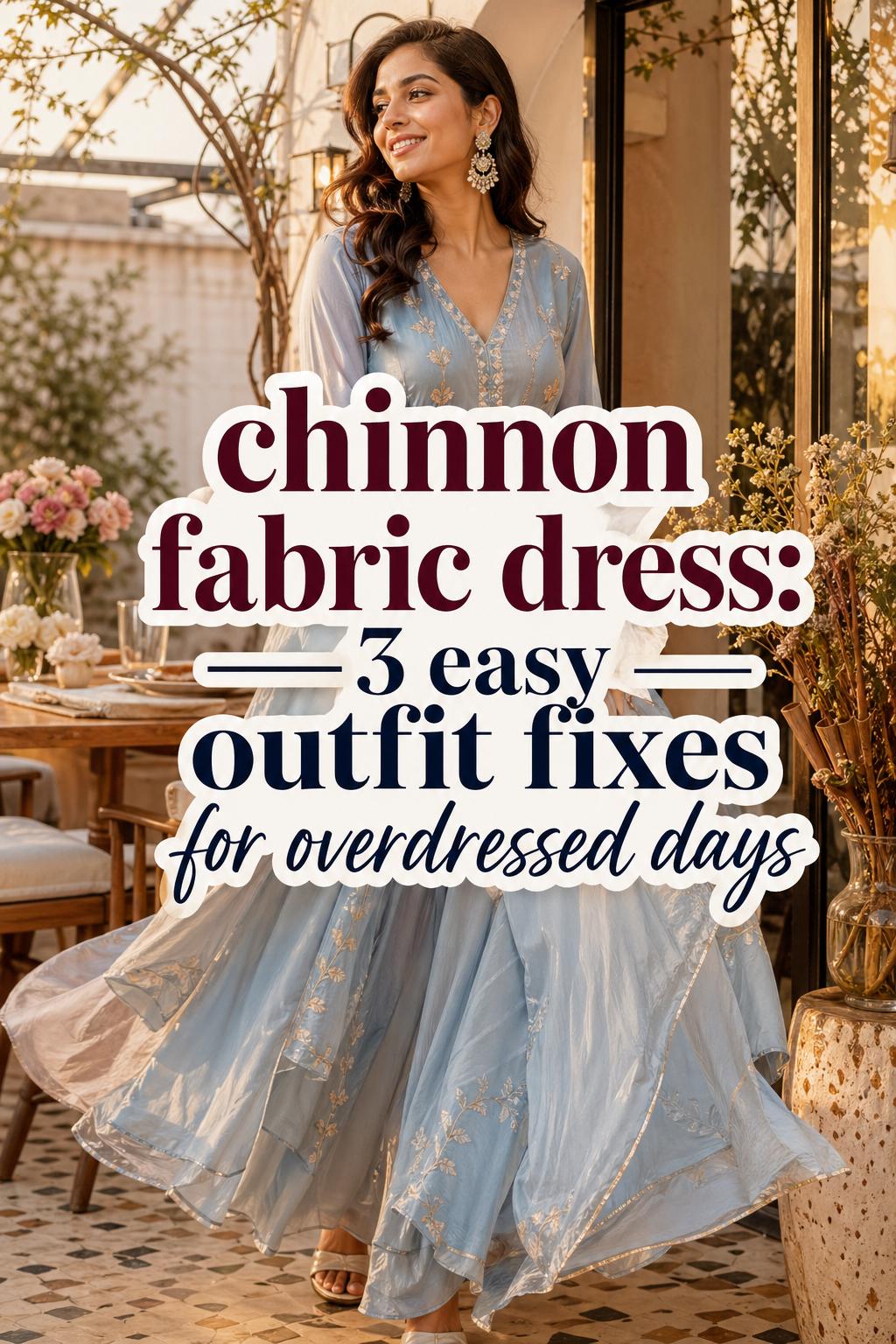
The style spectrum: where a chinnon fabric dress fits in the modern wardrobe
One of the strongest reasons chinnon continues to attract attention is that it does not belong to only one fashion lane. It appears in western dresses, ethnicwear, plus-size fusion dressing, and festive categories. That range makes it especially useful in wardrobes that need versatility. A shopper looking at traditional Indian outfits for a family wedding may still want a silhouette that feels easy and current. Another shopper may want a simple dress casual enough for a daytime event, but elevated through drape and print.
That broad use also explains why the fabric shows up in product categories as different as salwar kameez, sharara dress, lehenga styling, gown dressing, and Indo-Western dresses. Chinnon performs best when the garment relies on flow rather than structure. The silhouette can be romantic, festive, minimal, or dramatic, but the common thread is always the same: movement is part of the design.
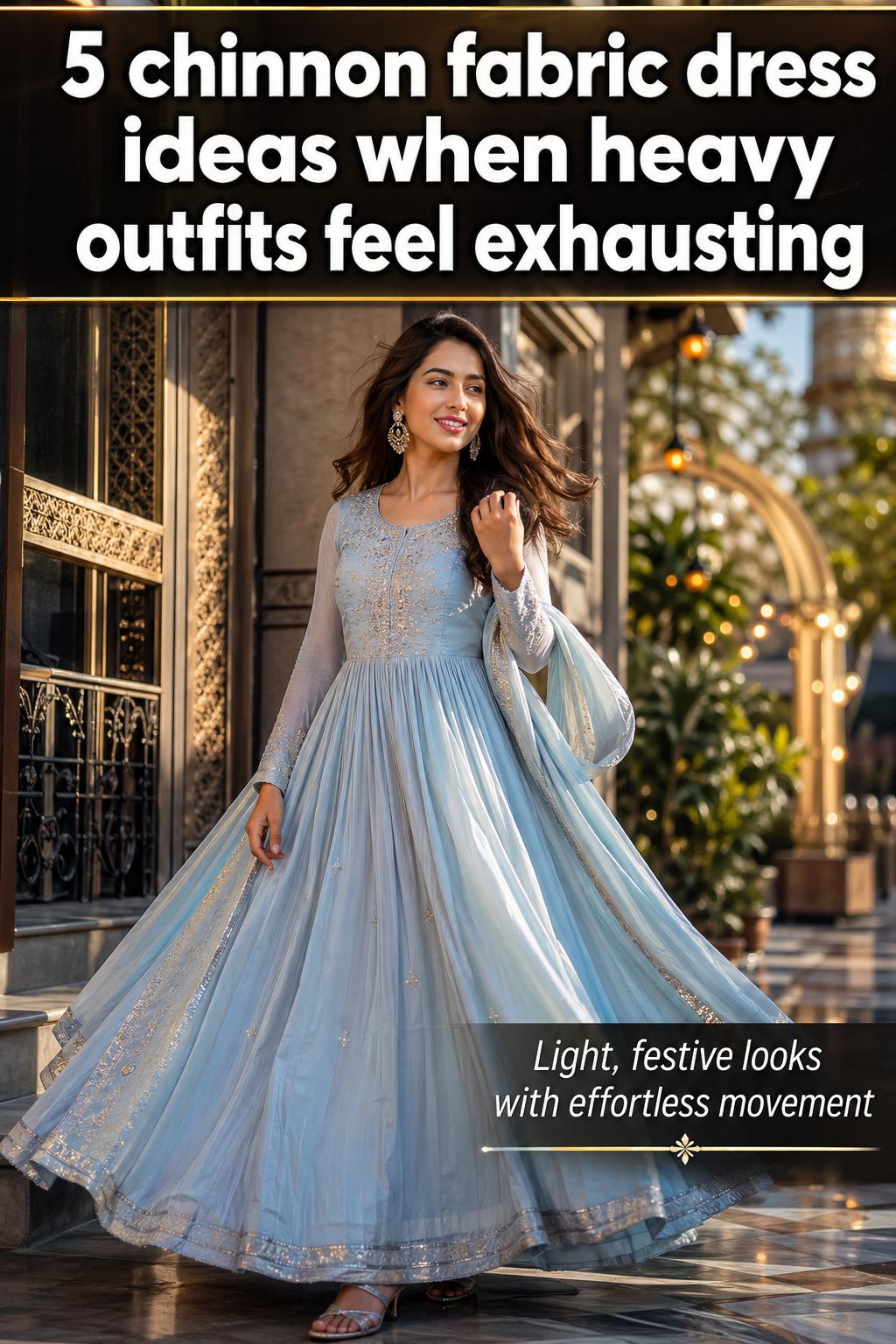
Look: Powder blue fluid western elegance
This interpretation centers on clean softness. A powder blue chinnon western dress creates a calm, luminous profile that feels polished without looking heavy. The silhouette is usually long or mid-length, with enough volume to let the fabric move. The visual mood is refined and airy, making it appropriate for daytime celebrations, semi-formal gatherings, and dressier casual events where a simple shape still needs visual lift.
The key here is tonal clarity. Powder blue already carries a delicate, light-reflecting quality, and chinnon supports that through drape rather than stiffness. ODHNI’s elegant powder blue chinnon western dress points directly to this aesthetic direction: a western cut, a soft color, and a fabric chosen for visual ease. Minimal accessories work best because the fabric and tone already create the statement. Footwear should support the fluid line rather than interrupt it.
This look works because silhouette balance stays uninterrupted from shoulder to hem. It belongs to the same visual family as pretty dresses casual shoppers often search for, but it has more occasion value. If the goal is understated elegance, this is one of the most effective ways to wear chinnon in the U.S. wardrobe.
Style breakdown
- Visual anchor: powder blue color story
- Core garment: western chinnon dress
- Best setting: brunch celebrations, daytime festive wear, semi-formal dinners
- Supporting detail: minimal jewelry to preserve fabric movement
Look: Ombre movement for modern event dressing
Ombre on chinnon creates one of the most effective examples of fabric and print working in complete alignment. Because the material has a natural sense of flow, a gradient effect does not sit flat. It travels with the garment, creating visual rhythm as the wearer moves. The result is more atmospheric than a standard solid dress, and it often feels more current for evening functions.
Reet Lifestyle’s radiant ombre long dress captures this direction well. The long silhouette gives the ombre enough vertical space to develop, while the chinnon fabric keeps the dress from feeling dense. This combination is especially useful for wedding-adjacent events, receptions, and party settings where a gown-like presence is desired without committing to a heavily structured look.
The reason this look succeeds is proportion play. The fabric carries the gradient, and the gradient in turn makes the length feel intentional. If you want a latest dress design direction that still feels wearable rather than experimental, ombre chinnon is one of the clearest choices.
Key pieces for this aesthetic
- Long chinnon dress with ombre coloration
- Minimal heel or occasion sandal
- Accessories that echo one tone from the gradient rather than adding a competing color
Look: Anarkali volume with soft architectural flow
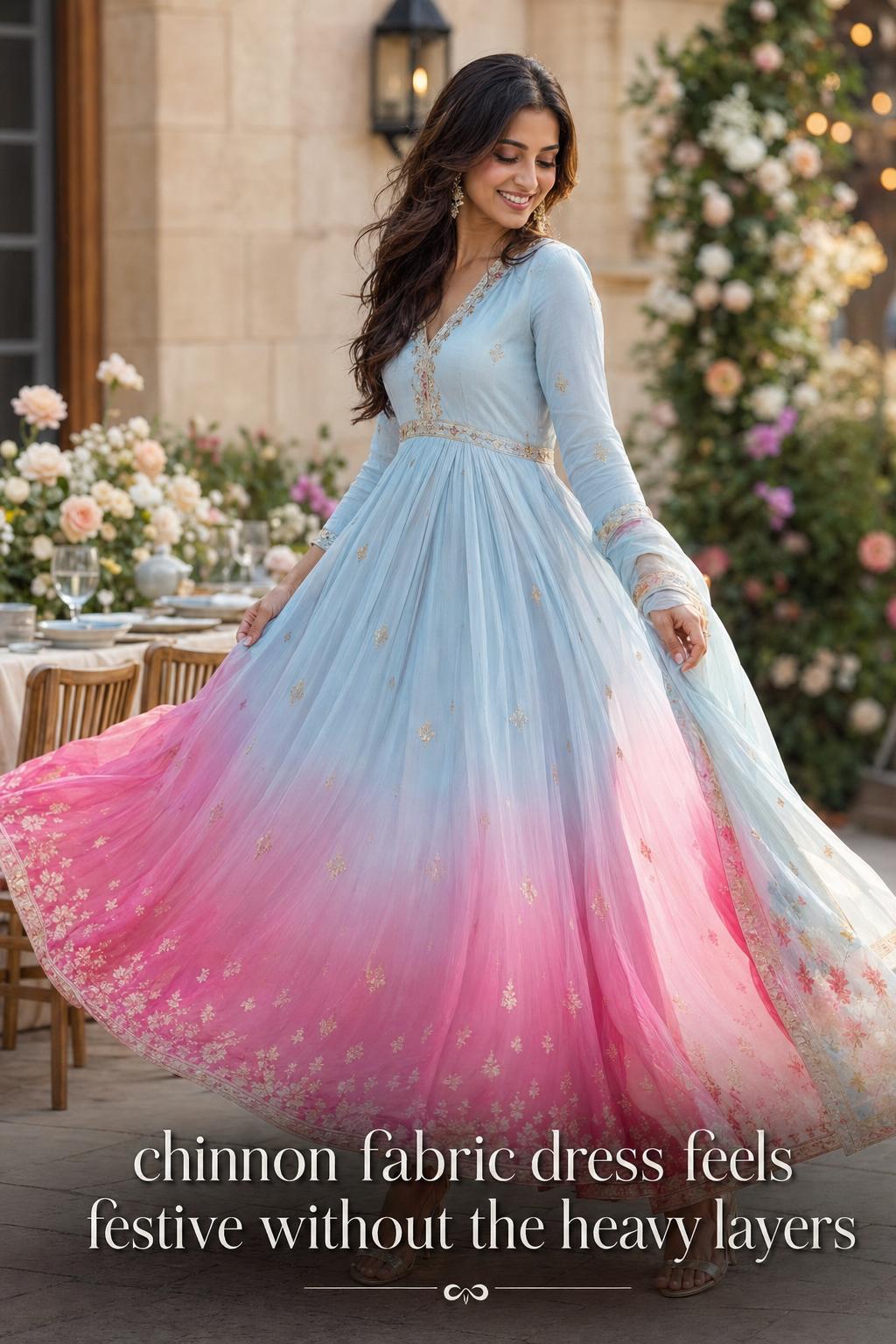
Among the most recognizable uses of chinnon is the Anarkali silhouette. Here the fabric supports flare, vertical movement, and a gentle sense of drama. This is where chinnon becomes particularly important in conversations around Anarkali designs, because the success of the shape depends on how the fabric opens and settles. Too rigid, and the line becomes bulky. Too limp, and the shape loses presence. Chinnon sits in a useful middle ground for festive interpretation.
Fabricoz’s chinnon silk Anarkali dress illustrates the category well. The pairing of chinnon with an Anarkali cut reinforces a familiar logic in ethnic fashion: the silhouette needs drape, and the fabric needs enough visual elegance to justify the sweep. For U.S. shoppers attending weddings, religious functions, or cultural events, this remains one of the strongest alternatives to a heavier ensemble.
This look works because it blends movement with formality. It belongs naturally among traditional Indian outfits, yet it still feels adaptable for modern dressing. The silhouette has heritage value, but the fabric keeps the overall impression light, which matters during long events or indoor functions where comfort becomes part of the styling decision.
How to read the silhouette correctly
When choosing an Anarkali in chinnon, pay attention to flare distribution and surface detail. If the garment already has visual volume, heavy embellishment across every panel can overwhelm the fabric’s softness. A better composition often places focus at the neckline, sleeves, or hemline so the drape remains visible.
Look: Indo-Western fusion with modern line control
Indo-Western dressing depends on tension between two style languages: one rooted in traditional forms, the other in global contemporary silhouettes. Chinnon is effective here because it softens that transition. A dress can carry Indian styling references without feeling costume-like, and it can lean western without losing festive character. This is one of the reasons the fabric appears so often in fusion categories aimed at U.S. shoppers.
Silk And Gleam’s wedgewood chinnon Indo-Western dress for plus size demonstrates an especially useful point: fusion dressing in chinnon is not limited to one body type. The fabric’s fluidity can create a more balanced line, especially when the cut avoids unnecessary stiffness. The result feels elegant and intentional rather than overworked.
This look works because the visual anchor is the silhouette itself. The fabric supports drape, the styling language stays contemporary, and the overall outfit lands in that in-demand space between occasionwear and everyday polish. For anyone building a U.S.-based wardrobe that needs both cultural relevance and modern ease, this is one of the most practical chinnon directions.
Practical tip for plus-size chinnon dressing
In a plus-size Indo-Western dress, the strongest results usually come from clean shaping and uninterrupted vertical flow. When the line remains consistent from bodice to hem, chinnon can do what it does best: create movement without adding visual heaviness.
Look: Festive print energy with dressmaking potential
Printed chinnon introduces a different mood entirely. Instead of relying on silhouette alone, it uses surface design to create personality. Festive print chinnon can move toward dresses, lehengas, sarees, or statement separates, making it especially useful for shoppers or makers who want flexibility. The print becomes the focal point, while the fabric ensures the result still feels soft and fluid.
The Wardrobe Fabrics positions chinnon festive print in exactly this creative zone. The appeal is not limited to one ready-made outcome. It can be shaped into a long dress, festive overlays, lehenga-inspired looks, or modern occasion pieces. This is also where latest dress design thinking becomes important. Instead of copying a fixed silhouette, the wearer can use the printed fabric as the starting point for the entire visual story.
This version of the aesthetic works because print and drape remain in dialogue. A busy print on a rigid fabric can feel static. On chinnon, it feels lighter and more dimensional. That makes it suitable for festive wardrobes that want color and energy without sacrificing movement.
Look: Sharara-inspired partywear with zari focus
When the mood shifts toward celebration, chinnon can take on more ornament. In a sharara dress or heavy partywear look, the fabric becomes a base for embellishment rather than the only visual element. This is where zari enters the composition. Zari woven details give the garment a stronger festive identity, while the chinnon keeps that embellishment from becoming visually dense.
The Mirraw listing featuring KSM Prints and a rani colour zari woven designer chinnon fabric heavy partywear sharara dress shows this clearly. The color is bold, the embellishment is statement-driven, and the fabric provides necessary softness underneath. In partywear, that balance matters. If both fabric and embellishment are heavy, the result can feel overbuilt. Chinnon prevents that.
This look works because texture contrast is controlled. The shimmer of zari gains clarity against the smoother drape of the fabric. For wedding functions, festive evenings, and celebratory events, this is one of the most visually complete interpretations of chinnon.
Why embellishment matters differently on chinnon
Zari and sequins can elevate chinnon, but placement is crucial. Concentrated embellishment usually performs better than all-over density because it preserves the fabric’s natural fall. The most effective compositions let the eye move between shine and drape rather than forcing both to compete at every point.
Look: Salwar kameez softness for cultural versatility
A chinnon salwar kameez offers one of the clearest examples of comfort and occasion value working together. The set has enough structure to read as traditional dress, yet the fabric prevents it from feeling overly formal or cumbersome. For many U.S. shoppers navigating community events, celebrations, or family gatherings, this is a dependable category because it can be styled up or down with relative ease.
House of Indya’s chinnon fabric salwar kameez category reflects the continuing importance of this garment form. The fabric supports lightweight wear and graceful drape, which matters not just visually but practically. Long gatherings, indoor events, and transitional weather all favor outfits that can maintain shape without feeling restrictive.
This look works because the composition is balanced across top, bottom, and drape. It also sits comfortably within traditional Indian outfits while remaining adaptable for a U.S. setting where many shoppers want formality without excess weight. A color-forward or softly embellished version can shift from modest daytime dressing to evening-ready presentation with only small accessory changes.
Look: Dyeable white chinnon for custom style direction
One of the more practical but often overlooked directions in chinnon dressing is dyeable fabric. A white dyeable pure chinnon chiffon fabric creates a blank visual field that can be customized into a dress, gown, or event piece. This matters for shoppers who want a specific tone, who are coordinating for a group event, or who prefer dressmaking over ready-made options.
Fabritale’s white dyeable pure chinnon chiffon fabric points directly to this utility. In style terms, dyeability expands the fabric’s relevance. It is no longer only about buying what already exists. It becomes about shaping a personal version of the chinnon aesthetic, whether that means a soft pastel look, a richer festive tone, or a highly specific event palette.
This look works because customization becomes the design advantage. It is especially useful for those who want a latest dress design idea without being limited to standard retail colors. The trade-off, of course, is that fabric sourcing requires more decision-making around dress style, finishing, and care. But for shoppers comfortable with that process, chinnon offers a strong foundation.
Color, sheen, and surface detail: the visual logic of chinnon styling
Color behaves differently on chinnon than it does on heavier textiles. Because the fabric tends to move and catch light softly, tones often appear more fluid. That is why powder blue, wedgewood, ombre treatments, festive prints, white dyeable bases, and rani shades all make sense within the category. The fabric does not flatten them. It allows them to shift subtly as the garment moves.
Surface detail follows the same logic. Zari, woven accents, and festive print work when they reinforce the fabric’s lightness rather than contradict it. In practical terms, that means choosing detail placement carefully. A western dress in plain chinnon may rely on color alone. An Anarkali may need flare and hem interest. A sharara dress may use zari as a statement feature. The styling logic changes by garment type, but the principle is consistent: let the drape remain visible.
Quick style tip
- For daytime events, softer tones such as powder blue or light ombre usually highlight chinnon’s fluidity best.
- For eveningwear, richer shades and zari accents create stronger visual contrast.
- For printed chinnon, keep accessories edited so the fabric remains the focal point.
From pretty dresses casual to wedding-ready: adapting the same fabric mood
One reason shoppers in the U.S. continue to look for chinnon dress options is the ability to scale the same fabric across occasions. A minimal western silhouette can lean toward pretty dresses casual. Add stronger color, embellished detailing, or a more formal cut, and the same material moves into celebration territory. Few fabrics manage that transition as naturally.
This flexibility also matters when building a wardrobe instead of buying one-off event clothing. A simple dress casual in chinnon can still feel distinct because the fabric brings polish through movement. On the other end, an Anarkali, sharara dress, or salwar kameez in the same material can satisfy the expectations of traditional Indian outfits without requiring a heavy textile commitment.
The styling decision should begin with occasion and silhouette, not just with fabric alone. For a daytime cultural event, choose softer tones and lighter ornament. For a wedding reception or festive evening, a zari-accented or ombre version creates more visual depth. The fabric supports both directions, but the finish determines the final mood.
Where shoppers in the U.S. are finding chinnon today
The current market for chinnon in the U.S. leans strongly toward digital retail and product-focused shopping. That means most buyers encounter the fabric through category pages, direct-to-consumer dress listings, or online marketplaces rather than through broad editorial fashion coverage. This can be an advantage if you know what to look for, because the available styles already show the fabric’s strongest use cases.
ODHNI, Fabricoz, Reet Lifestyle, Silk And Gleam, House of Indya, Mirraw, Fabnic, Fabritale, and The Wardrobe Fabrics each represent a different point on the chinnon spectrum. Some focus on ready-to-wear dresses. Others focus on fabric collections or festive prints. Together, they map out a practical buying landscape for U.S.-based shoppers exploring western dresses, Anarkali styles, plus-size fusion looks, salwar kameez options, sharara dressing, or raw fabric for custom making.
Retailer spotlights and what each one signals
- ODHNI: western chinnon dress styling, including softer color-led pieces such as powder blue.
- Fabricoz: chinnon silk Anarkali direction, useful for dressier ethnicwear.
- Fabnic: broader chinnon fabric collection for sourcing and project planning.
- The Wardrobe Fabrics: festive print chinnon with strong dressmaking potential.
- Reet Lifestyle: ombre long dress styling for event-focused wardrobes.
- Silk And Gleam: plus-size Indo-Western chinnon options.
- House of Indya: chinnon salwar kameez for traditional dress categories.
- Fabritale: dyeable pure chinnon chiffon fabric for custom use.
- Mirraw and KSM Prints: embellished partywear and sharara-focused design language.
Common styling mistakes that flatten the chinnon effect
Because chinnon depends so much on drape, the most common mistakes happen when the styling works against that quality. Over-accessorizing is one example. If the dress already has ombre color, festive print, or zari detail, adding too many competing elements can make the outfit feel visually crowded. The fabric is at its best when there is room for movement to remain part of the composition.
Another issue is selecting a cut that asks the fabric to behave like something more structured. Chinnon is not meant to carry severe lines. It performs better in silhouettes that welcome flow, such as long dresses, Anarkali forms, salwar kameez, sharara styles, or soft western cuts. A garment that needs architectural stiffness can diminish the advantages of the textile.
The final mistake is ignoring use context. A simple dress casual approach works for daytime and relaxed events. A partywear sharara with zari belongs to a different setting. Chinnon is versatile, but not every variation suits every occasion equally. The smartest styling decisions come from matching ornament level, silhouette, and event type from the start.
Care and maintenance: preserving drape, color, and finish
Care matters more with chinnon than many shoppers expect, especially because the fabric’s appeal depends on how it falls. Once drape is affected by rough handling, the entire look changes. Whether you are dealing with a finished dress, a festive print fabric, or a dyeable chinnon chiffon, maintenance should be approached gently and consistently.
For garments with zari or decorative details, extra caution is important. Embellishment adds visual richness, but it also adds care complexity. The same applies to ombre finishes and dyed fabrics, where color handling becomes part of preservation. The practical goal is simple: keep the fabric smooth, keep the color clear, and avoid treatment that disrupts texture.
Care priorities for chinnon pieces
- Handle embellished garments more carefully than plain versions.
- Pay attention to color treatments such as ombre or dyeable finishes.
- Store in a way that protects the fabric’s fall rather than compressing it heavily.
- Use an iron setting and maintenance routine suitable for a lightweight fabric.
These are not dramatic measures, but they are important. Chinnon’s beauty lies in softness and flow. Care should preserve those qualities, not fight them.
How to choose the right chinnon silhouette for your occasion
Choosing the right chinnon fabric dress starts with understanding what the event requires visually and practically. For weddings and festive evenings, gowns, long ombre dresses, Anarkali designs, or zari-focused sharara looks usually provide the needed impact. For daytime functions or softer celebrations, a western chinnon dress or lightly detailed salwar kameez often feels more balanced.
Comfort should play a real role in the decision. Long events favor fabrics that move easily and silhouettes that do not become tiring to wear. That is one reason chinnon is so often linked to celebration dressing. It creates polish without necessarily bringing the weight associated with more rigid occasion fabrics.
It also helps to decide whether your priority is print, embellishment, or shape. If shape is the hero, choose an Anarkali or fluid western dress. If surface design matters most, festive print chinnon offers strong visual return. If shine is the point, zari-woven partywear becomes the better route. This kind of decision-making leads to better purchases than choosing by color alone.
Style tip for wardrobe planning
If you want maximum versatility, start with one plain or softly toned chinnon piece and one statement version. Together, they cover far more occasions than two heavily embellished dresses would.
Chinnon in the context of fusion wear and South Asian fashion in the U.S.
Chinnon’s rise in U.S.-facing retail reflects a broader style reality: South Asian fashion in the United States increasingly moves between tradition and modern adaptation. Shoppers are not choosing only between fully western clothing and fully formal ethnic dressing. Many are building wardrobes that include Indo-Western dresses, contemporary salwar kameez sets, soft occasion gowns, and reworked festive silhouettes.
This is precisely where chinnon remains relevant. It supports cultural dress categories such as lehenga styling, saree-adjacent festive fashion, salwar kameez, and Anarkali forms, but it also works in western silhouettes sold through direct retail. The fabric helps bridge those worlds. It can carry tradition, but it can also align with a more streamlined aesthetic mood preferred by many U.S. shoppers.
Brands such as House of Indya, ODHNI, Silk And Gleam, Reet Lifestyle, Fabricoz, and Mirraw all participate in this larger fashion conversation in different ways. Some emphasize heritage-driven garment types. Others present more westernized or fusion-led silhouettes. Chinnon is one of the materials that allows those differences to coexist while still feeling connected.
Related fabric conversations shoppers often have
In practice, shoppers rarely think about chinnon in isolation. The conversation often overlaps with chiffon, georgette, and other lightweight dress fabrics. Even in retail language, chinnon chiffon appears as a phrase, which shows how closely these categories are associated in buying behavior. The most useful way to approach this is to focus on the qualities repeatedly linked to chinnon: drape, softness, festive application, dyeability, and suitability for dresses and ethnicwear.
If you are deciding between lightweight dress fabrics, the key question is not simply which one is better. It is which one supports the silhouette and surface treatment you want. Chinnon is especially compelling when movement, fluid color effects, gentle sheen, and occasionwear flexibility matter most. That is why it continues to appear across western long dresses, festive prints, salwar kameez, and embellished partywear categories.
Final styling perspective
The strongest thing about chinnon is not that it fits one trend, but that it supports a whole visual mood built on fluidity, softness, and adaptable elegance. It works in western dress forms, Anarkali designs, Indo-Western silhouettes, sharara partywear, and traditional Indian outfits because the fabric carries movement so well. That visual consistency is what gives it lasting relevance.
For a U.S. wardrobe, that makes chinnon especially useful. It can become a simple dress casual enough for daytime, a festive print piece with dressmaking potential, or a refined occasion look with zari and color depth. The most successful styling choices come from understanding the fabric’s logic: let the drape lead, choose embellishment with intention, and match the silhouette to the event. Once those decisions are aligned, chinnon becomes one of the easiest fabrics to make look quietly striking.
FAQ
What is the difference between chinnon and chiffon?
Chinnon is typically presented in dress and fabric retail as a lightweight, drapey material associated with festive wear, soft sheen, and fluid silhouettes. Chiffon is often used as a comparison point, and the phrase chinnon chiffon appears in product language, but in practical styling terms the main reason shoppers choose chinnon is its graceful fall in dresses, salwar kameez, Anarkali styles, and fusion looks.
Is chinnon fabric good for dresses?
Yes, chinnon is especially well suited to dresses because it supports movement and a soft silhouette. It works particularly well in long dresses, western cuts, ombre styles, Anarkali designs, and Indo-Western dressing where the fabric needs to flow instead of hold a rigid shape.
Which chinnon dress styles are most popular in the U.S. market?
Common styles include western chinnon dresses, long ombre dresses, chinnon silk Anarkali dresses, plus-size Indo-Western dresses, salwar kameez, and embellished sharara partywear. These categories appear repeatedly across U.S.-facing digital retailers and marketplaces because they cover both festive and versatile wardrobe needs.
Can I dye chinnon fabric at home?
Dyeable chinnon options are available, including white dyeable pure chinnon chiffon fabric. That means customization is part of the category, but the result will depend on the fabric finish and the care taken during the dyeing process. If color accuracy matters for an event or coordinated wardrobe, planning the final shade carefully is important.
Does chinnon work for traditional Indian outfits?
Yes, chinnon appears frequently in traditional Indian outfits such as salwar kameez, lehenga-inspired looks, Anarkali designs, and sharara sets. Its drape makes it especially effective for garments that need movement and a festive finish without the feel of a heavy textile.
How should I style embellished chinnon with zari or sequins?
Let the embellishment remain the focal point. Chinnon already brings softness and movement, so zari or sequins work best when accessories are edited and the overall silhouette stays clean. This keeps the outfit balanced and prevents the look from feeling visually crowded.
Where can I buy a chinnon fabric dress in the U.S.?
U.S.-facing shoppers commonly find chinnon through online retailers and marketplaces such as ODHNI, Fabricoz, Reet Lifestyle, Silk And Gleam, House of Indya, Mirraw, Fabnic, Fabritale, and The Wardrobe Fabrics. Some specialize in finished dresses, while others focus on festive prints or fabric for custom projects.
Is chinnon better for casual wear or partywear?
It can work for both, depending on the cut and finish. A minimal western chinnon dress can lean toward pretty dresses casual or simple dress casual territory, while ombre treatments, zari accents, festive prints, and sharara styling move the fabric firmly into partywear and wedding-related dressing.
What should I look for when buying chinnon for a long event?
Focus on silhouette, ornament level, and ease of movement. Chinnon is a strong option for long events because it tends to feel visually elegant without relying on a heavy build. Softer draped styles such as long dresses, Anarkalis, and salwar kameez are often the most practical choices for extended wear.