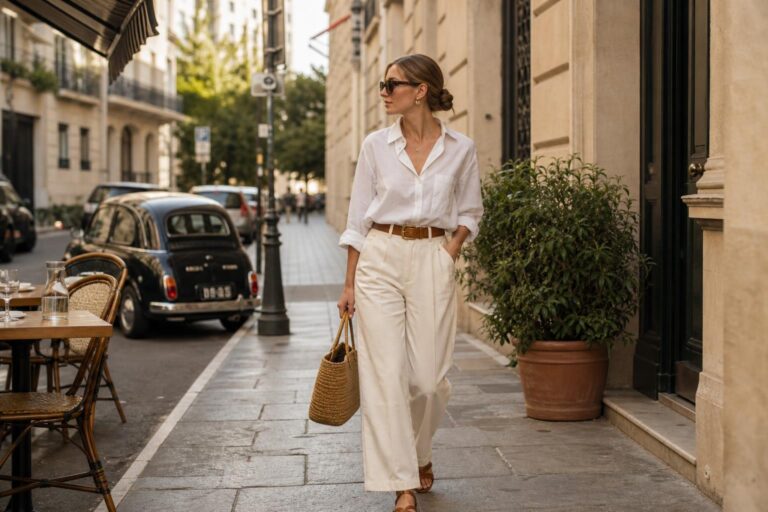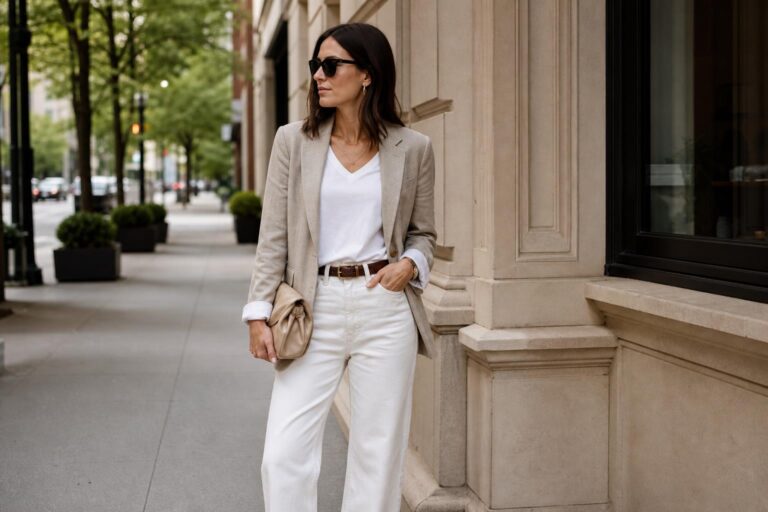
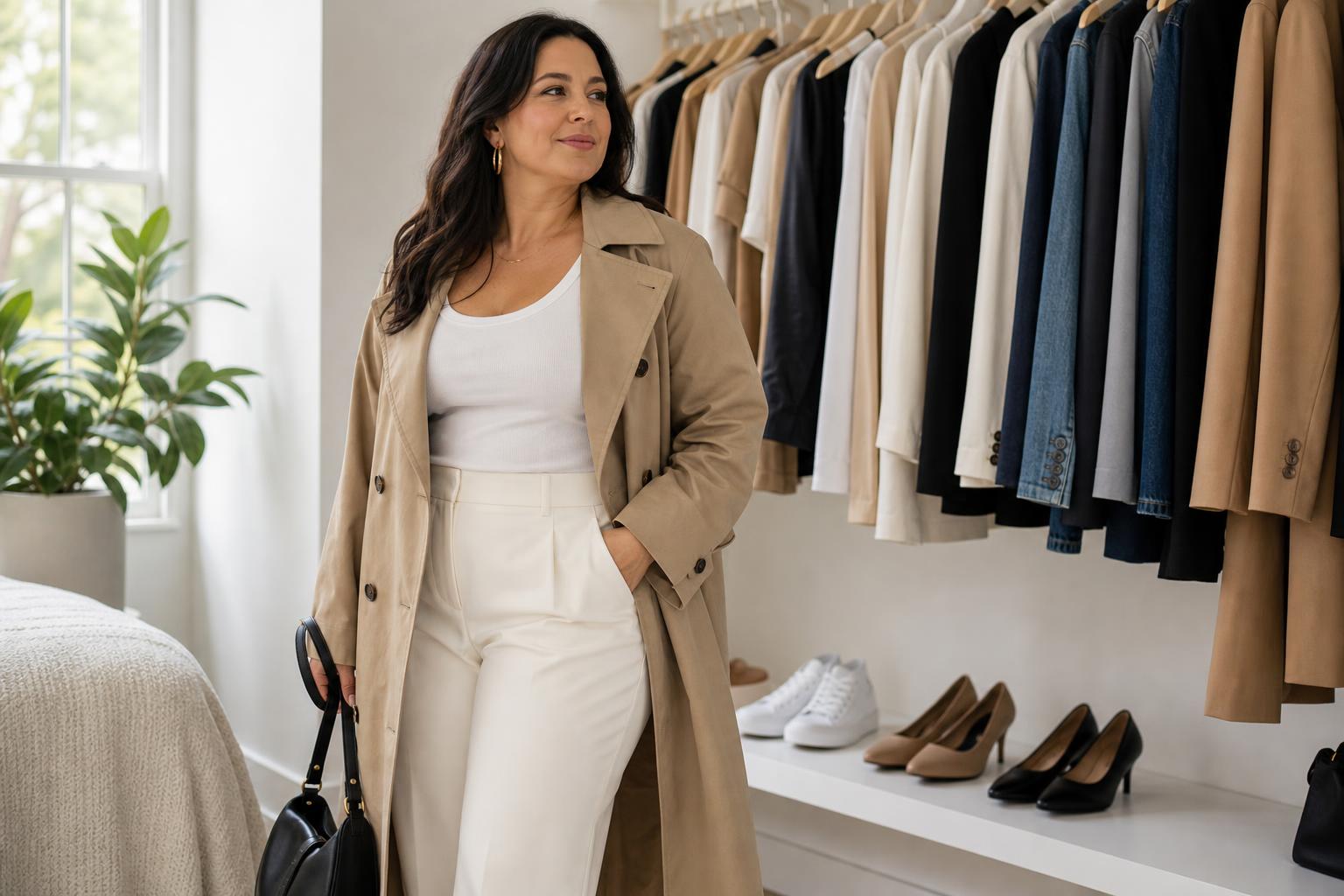
Spring Midsize Capsule Wardrobe for Polished Everyday Style
A midsize capsule wardrobe sits at the intersection of simplicity and precision. The appeal is obvious: fewer pieces, stronger outfit composition, less visual clutter, and more clarity about what actually earns space in a closet. But the concept only works when the wardrobe is built with honest attention to fit, silhouette balance, comfort, and daily wear patterns. A capsule is not defined by a strict number. It is defined by cohesion.
For midsize dressing, that cohesion matters even more. Pieces need to layer cleanly, skim rather than restrict, and create visual structure without forcing the body into trends that do not support movement or proportion. The most effective midsize capsule wardrobe is not about reducing style. It is about refining it, so every item contributes to a polished, adaptable, repeatable system.
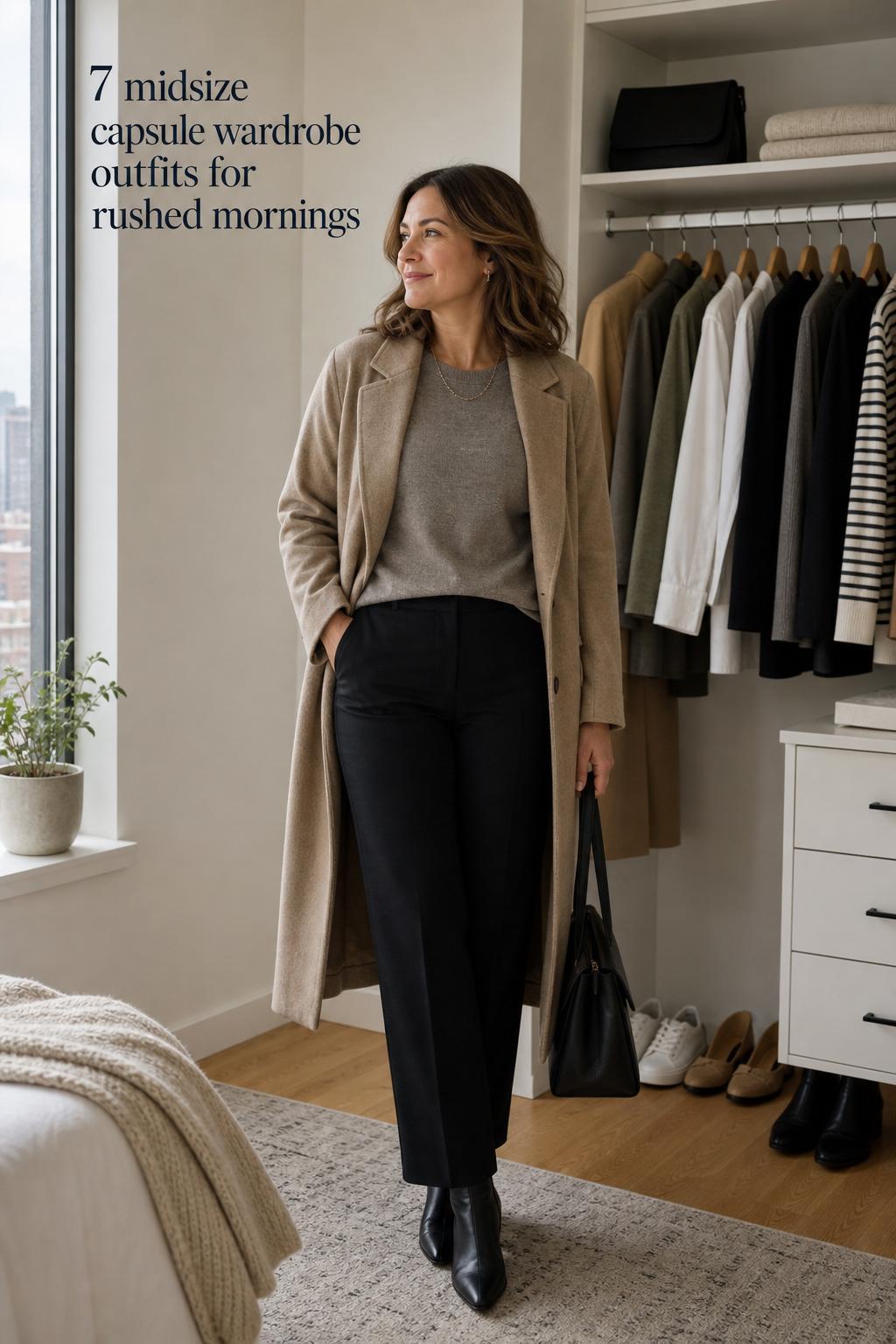
What a midsize capsule wardrobe really needs to do
A functional capsule wardrobe has one core job: make getting dressed easier while still delivering range. That means each piece should connect with several others, support multiple settings, and hold up across changing weather or routine shifts. For a midsize wardrobe, this requires more than basic minimalism. It requires practical design logic.
The strongest wardrobe foundations usually come from a close edit of what already works. If a jacket constantly slides off the shoulders, if trousers pull across the hips, or if a knit only works in one exact combination, that item is not contributing enough. A capsule depends on reliability. Pieces should feel intentional on the body, not merely acceptable on a hanger.
Found the dress? Keep the rest in one place.
Zarellea brings guest details, vendors, timelines, and every next step together — so your wedding plan feels as good as your look.
This is where analytical styling becomes useful. Instead of asking whether an item is fashionable in isolation, the better question is whether it anchors a complete outfit. A straight-leg trouser, for example, often functions as a visual stabilizer. A soft knit introduces texture contrast. A structured outer layer sharpens the line of the silhouette. Each element has a role.

Start with outfit architecture, not shopping
Before adding anything new, define the shapes that make everyday dressing easier. This is the framework of the wardrobe: the trouser cut that consistently works, the skirt length that layers well, the knit weight that can move between indoor and outdoor settings, and the jacket shape that creates clean proportion over multiple tops.
Capsule dressing often fails when it begins with abstract ideals instead of lived reality. A wardrobe built around fantasy occasions will always feel incomplete. A wardrobe built around actual movement patterns, commute needs, temperature changes, and comfort thresholds becomes much more resilient. If most days require sitting, walking, layering, and adjusting between spaces, your capsule needs to reflect that.
Key structural categories to assess
- Base layers that sit smoothly under knits, blazers, or jackets
- Bottoms that create consistent proportion with flats, boots, or sneakers
- Mid-layers such as fine knits or shirts that support tonal layering
- Outer layers that define the silhouette without overwhelming it
- Shoes that complete the line of the outfit and match the wardrobe’s visual direction
When these categories are aligned, the wardrobe becomes easier to repeat without looking repetitive. Repetition is not a flaw in a capsule. Poor coordination is.
Why silhouette balance matters more than quantity
One of the most overlooked elements of a midsize capsule wardrobe is silhouette balance. A wardrobe can contain many useful pieces and still feel difficult if the shapes fight each other. The issue is not always style. It is often proportion play.
For example, a boxy knit paired with a wide cropped pant can work beautifully if there is enough definition elsewhere, perhaps at the ankle, neckline, sleeve, or shoe. Without that visual anchor, the outfit may read as heavy rather than intentional. On the other hand, a fitted base layer under a relaxed blazer and straight trouser often creates a clean line because it balances softness and structure.
The goal is not to chase slimming tricks. It is to create coherence. Clothes should relate to each other in scale, weight, and length. This is especially important in a capsule, where pieces appear repeatedly in different combinations. If the proportions are right, styling becomes easier with less effort.
Tip: use one visual anchor in every outfit
A visual anchor keeps the composition focused. It might be a structured blazer, a sharply cut trouser, a defined waist seam, a long coat, or a shoe with enough shape to ground the hemline. When one piece provides direction, the rest of the outfit can remain simple without feeling unfinished.
The color logic that makes a capsule feel cohesive
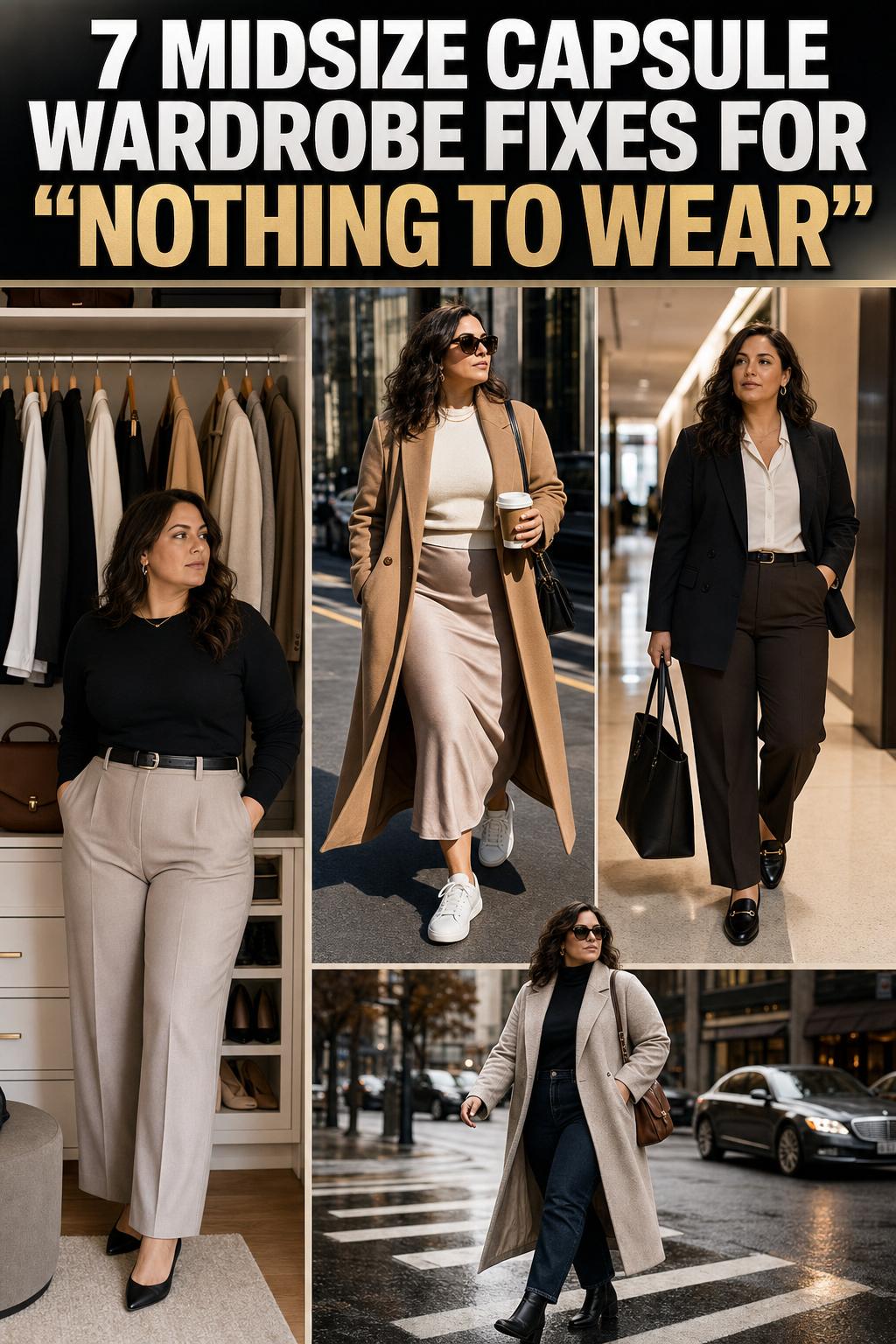
Color is often discussed as a matter of preference, but in a capsule wardrobe it functions as a coordination tool. A tightly edited palette allows more combinations with less friction. That does not mean everything needs to be neutral. It means the colors should speak the same visual language.
A practical approach is to build around dependable core shades and then add one or two accent directions. This helps avoid the common problem of owning individually attractive pieces that never combine into a convincing outfit. Tonal layering also becomes easier when there is a relationship between light, medium, and dark values within the wardrobe.
Texture plays an important role here. Two items in similar colors can still feel dynamic if one has a matte finish and the other introduces softness, ribbing, drape, or structure. In capsule dressing, texture contrast often replaces the need for constant novelty.
A balanced palette tends to include
- Core shades that anchor most outfits
- Bridge shades that connect tops, bottoms, and outerwear
- Accent shades used sparingly for interest
- Enough tonal variation to prevent flat outfit composition
This kind of palette supports both minimal and expressive dressers. The difference is not in the system itself, but in how boldly the accent pieces are introduced.
Fabric behavior changes everything
A capsule wardrobe is only as strong as the fabrics inside it. This is especially true for midsize dressing, where material can either support the body’s movement or create tension in the silhouette. Fabric weight, drape, recovery, and layering potential all matter more than trend value.
Stiff fabric can create useful structure in outerwear or trousers, but if overused it can make outfit combinations feel rigid. Very clingy fabric may layer easily, yet it can expose every line beneath it and reduce comfort over a long day. The ideal wardrobe includes a range: some pieces with shape, some with softness, and some that act as transitional connectors between the two.
This is why knitwear, shirting, and tailoring need to work together rather than compete. A soft knit under a structured jacket often succeeds because the textural relationship creates depth while the jacket supplies form. Similarly, a fluid trouser can offset a more architectural top, keeping the outfit balanced rather than severe.
Tip: test fabric in motion, not only in the mirror
Sit, walk, reach, and layer before deciding whether a piece belongs in a capsule. A garment that looks polished while standing still but twists, rides up, or collapses after an hour will not become a reliable repeat item. Durability in movement is a stronger standard than a quick try-on impression.
The most useful categories in a smaller, smarter wardrobe
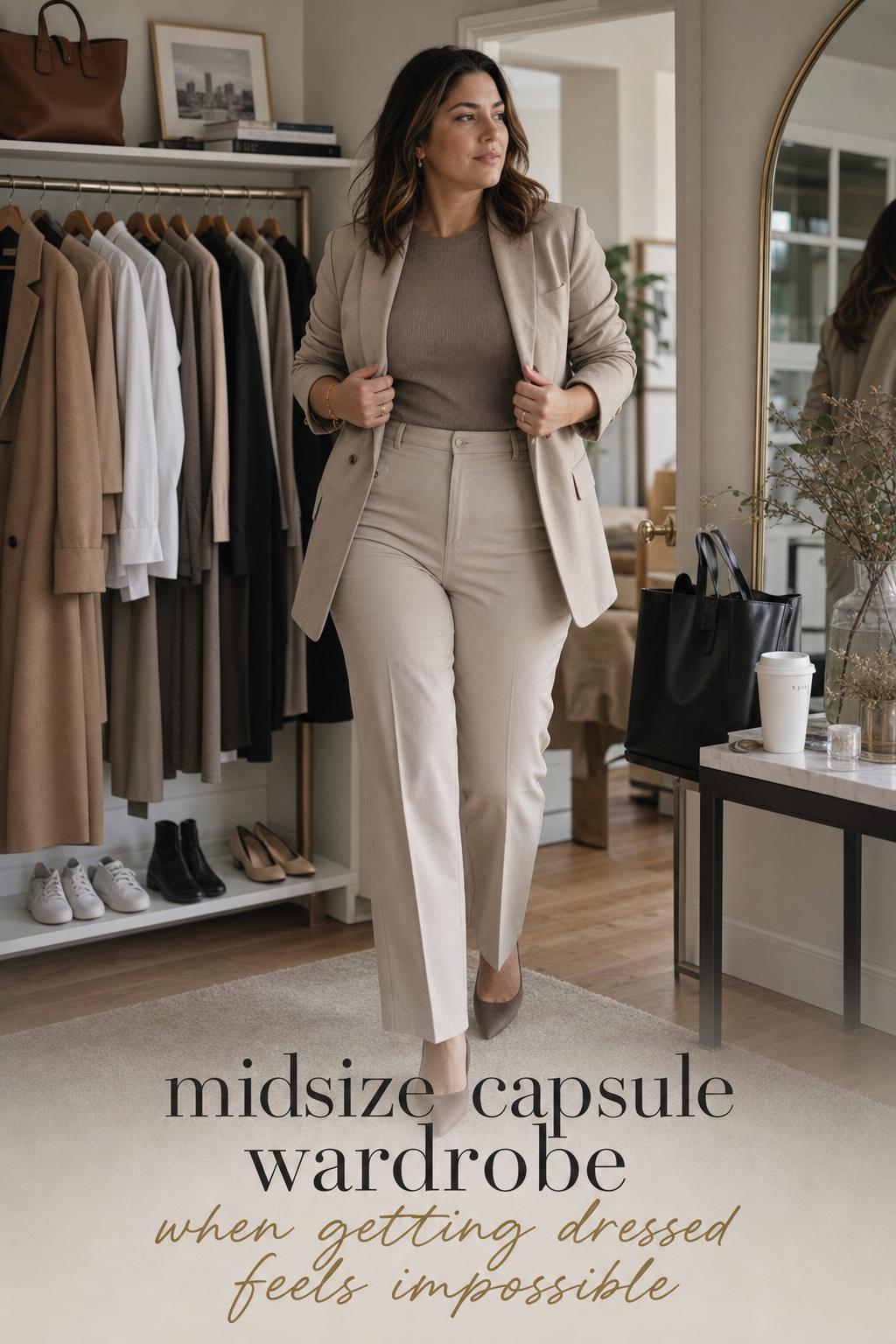
A midsize capsule wardrobe does not require an endless checklist, but it does benefit from strategic categories. Each category should solve a different styling problem. Some create polish, some deliver comfort, and some bridge the gap between casual and elevated dressing.
Foundational tops
These pieces carry a large share of the wardrobe’s workload. Clean base layers, easy shirts, and lightweight knits are especially effective because they can operate alone or under layers. The key is neckline and shoulder line. If those details are right, the top will integrate with jackets, coats, and jewelry more easily.
Bottoms that establish proportion
Trousers, denim, or skirts should be chosen less for trend status and more for repeatability. The ideal cut creates a stable relationship with your most-worn shoes. Hem length, rise, and leg shape all influence whether the outfit reads intentional or slightly off. In a capsule, bottoms often act as the quiet framework that makes the rest of the wardrobe function.
Outerwear that sharpens the look
Outerwear is often the final layer seen first. A blazer, coat, or jacket can instantly refine a simple base. In practical terms, this means outerwear should coordinate with the palette, work over multiple sleeve shapes, and provide enough room for layering without appearing oversized in an uncontrolled way.
Shoes that complete the line
Shoes do more than finish an outfit. They change the proportion of the entire look. A sleek shoe can lengthen the visual line of a trouser. A heavier sole can ground a looser silhouette. The best capsule footwear supports everyday function while staying visually aligned with the wardrobe’s structure.
Style variations inside the same capsule
A common misconception is that a capsule wardrobe limits personal style. In reality, the opposite is often true. Once the foundation is cohesive, small shifts in styling produce noticeably different effects. The same core pieces can move between polished, relaxed, and slightly directional depending on layering, accessories, and proportion adjustments.
Consider a simple formula built from a knit, tailored trouser, and structured outer layer. The result changes depending on whether the knit is tucked, half-tucked, or left loose; whether the shoe is minimal or more grounded; and whether the outer layer is worn open or closed. These are minor choices, but they alter the visual rhythm of the outfit.
This is one reason capsules reward precision. The more intentional the pieces, the more styling range each one contains.
Three useful style directions from the same core wardrobe
- Polished: structured outerwear, clean knit, tailored bottom, refined shoe
- Relaxed: softer layering, slightly looser silhouette, understated finishing pieces
- Elevated casual: one statement piece balanced by otherwise restrained staples
Seasonal shifts without rebuilding the closet
The most effective midsize capsule wardrobe does not restart every season. It evolves through substitutions in fabric, layering weight, and color emphasis. This keeps the wardrobe efficient while maintaining relevance to the weather and seasonal palette.
In cooler periods, texture contrast tends to carry more visual interest. Knits, heavier tailoring, and layered combinations create depth. In warmer periods, the focus shifts toward lighter fabric behavior, cleaner lines, and fewer layers with greater precision. The silhouette may become simpler, but the outfit still needs a focal point, whether that is a crisp shirt shape, a deliberate neckline, or a strong trouser line.
This seasonal adjustment is one of the clearest signs of a mature capsule. The wardrobe is not static. It is edited in response to climate and routine, without losing its identity.
Tip: rotate by weight, not by trend
When a season changes, start by replacing the heaviest and lightest items first. This keeps the capsule recognizable while improving comfort. A wardrobe that is too trend-dependent often loses cohesion during transitions. A wardrobe organized by fabric weight and layering logic remains much easier to wear.
Common mistakes that weaken a midsize capsule wardrobe
Even a well-intentioned capsule can become frustrating if the edit is based on aesthetics alone. Several patterns tend to create friction.
- Keeping pieces that only work in one exact outfit
- Relying on oversized shapes without enough structure
- Choosing basics that are technically simple but visually disconnected
- Ignoring fabric performance during long wear
- Building around aspirational occasions instead of daily life
Another frequent issue is over-correcting toward minimalism. A capsule should feel edited, not stripped of identity. If every piece is neutral, soft, and visually similar, the wardrobe may become hard to style in a satisfying way. A small amount of contrast, whether through shape, texture, or a controlled statement piece, keeps the system alive.
What stylists often get right
The best wardrobe edits usually focus on function first. Pieces are selected because they layer smoothly, repeat well, and support several outfit compositions. The visual result is polished, but that polish comes from consistency rather than excess. That principle is especially valuable in midsize dressing, where comfort, line, and movement all influence whether an item becomes a staple or a regret.
How to evaluate whether a piece deserves a place
Every addition should pass a practical test. Can it be styled at least three ways with pieces already in the wardrobe? Does it improve proportion rather than complicate it? Can it handle real movement and real weather? Does it align with the existing palette and texture story?
This type of evaluation prevents the slow drift that makes capsules less effective over time. A single beautiful item can still be the wrong item if it interrupts the wardrobe’s logic. The point is not to reject personality. It is to make sure personality integrates instead of isolating itself.
A quick edit framework
- Fit: does it skim, support, and stay comfortable through the day?
- Function: can it work across more than one setting?
- Coordination: does it connect with several existing pieces?
- Proportion: does it help the overall silhouette?
- Longevity: will you still want to reach for it repeatedly?
Real-life styling scenarios where a capsule proves its value
The strength of a capsule becomes most obvious on ordinary days. A rushed morning, an unexpected temperature shift, a long stretch away from home, or a day that moves from casual to polished with little warning are all moments when wardrobe logic matters more than novelty.
In those situations, reliable combinations matter. A base layer that does not cling under a knit, trousers that remain comfortable while sitting and walking, and an outer layer that instantly sharpens the outfit can solve the day without requiring a complete rethink. This is what makes a capsule feel luxurious in practice: not abundance, but readiness.
For travel, the same principle applies. A capsule-oriented edit prevents overpacking because pieces already work in multiple combinations. For office settings, it reduces decision fatigue. For weekends, it maintains style without demanding too much effort. The wardrobe earns its value through repetition that still looks considered.
Building personal style within clear limits
Restraint does not erase style identity. It clarifies it. Once the practical framework of a midsize capsule wardrobe is in place, personal expression can come through in very specific ways: a preferred neckline, a signature outerwear shape, a repeated tonal palette, a shoe with architectural presence, or a single statement piece that appears across multiple looks.
This is often more effective than trying to express personality through constant variety. Repetition creates recognition. A wardrobe with a clear point of view feels stronger than one filled with disconnected trends. The most compelling capsules are rarely the most crowded. They are the most coherent.
Tip: define your style by recurring choices
Look for repeated preferences rather than isolated favorites. You may consistently choose clean lines over ornament, soft structure over stiffness, or tonal combinations over high contrast. Those recurring choices are the clearest guide to what your capsule should include and what it can leave out.
A practical reset if your closet feels crowded but incomplete
Many wardrobes feel full while still failing to deliver complete outfits. That usually signals a mismatch between quantity and coordination. The reset does not require discarding everything. It requires identifying which pieces repeatedly create successful combinations and which ones interrupt them.
Start with the items you already trust. Build around those. Then compare less-used pieces against the standards those staples set. Often the gap becomes obvious: wrong fabric, wrong length, wrong neckline, wrong level of structure, or simply no relationship to the rest of the wardrobe. This kind of audit is more revealing than sorting by category alone.
The result is a wardrobe that feels lighter, clearer, and more precise. Not because it has reached some idealized number, but because it now behaves like a system.
FAQ
What is a midsize capsule wardrobe?
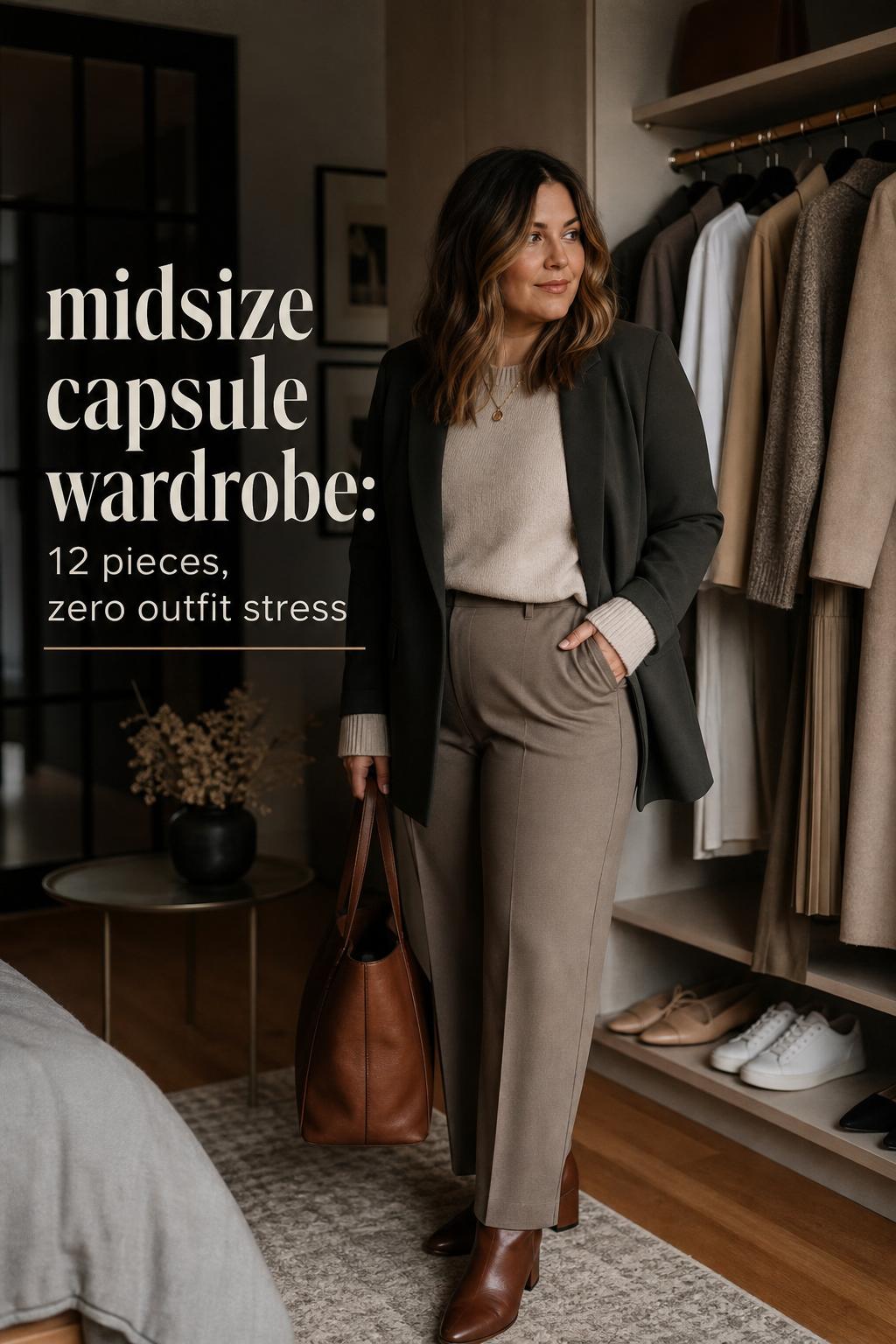
A midsize capsule wardrobe is a tightly edited closet built around versatile pieces that work well together while also supporting midsize fit, comfort, and proportion needs. The focus is not on owning the fewest possible items, but on keeping pieces that coordinate, layer well, and create reliable outfits.
How many pieces should a midsize capsule wardrobe have?
There is no single required number. A useful capsule is defined by cohesion rather than a strict count. If your wardrobe contains enough pieces to dress for your real schedule, weather, and comfort needs without excess duplication, it is functioning as a capsule.
How do I make a capsule wardrobe flattering for a midsize body?
Focus on silhouette balance, fabric behavior, and proportion instead of trend rules. Pieces that skim comfortably, layer cleanly, and create a clear visual line tend to work best. Structured outerwear, dependable trousers, and tops with consistent neckline and shoulder fit are often especially useful.
Can a capsule wardrobe still feel stylish and not boring?
Yes, if the wardrobe includes enough variation in texture, shape, and tonal depth. A capsule becomes boring when every piece is visually similar and offers no contrast. Even a restrained wardrobe benefits from a statement piece, an intentional shoe choice, or subtle shifts in layering and proportion.
What colors work best in a midsize capsule wardrobe?
The best colors are the ones that coordinate easily and reflect your actual style preferences. A practical palette usually includes core shades for consistency, bridge shades for mixing, and one or two accent directions for interest. The goal is a wardrobe that combines smoothly, not one limited to a specific color family.
How do I shop for a capsule wardrobe without wasting money?
Evaluate each item for fit, coordination, proportion, and repeat wear before adding it. If a piece only works in one outfit, feels uncomfortable after movement, or disrupts the existing palette and silhouette, it is unlikely to strengthen the wardrobe. Shopping becomes more efficient when every item has a clear role.
Should a capsule wardrobe change with the seasons?
Yes, but usually through fabric and layering adjustments rather than a total rebuild. Heavier textures, warmer layers, and deeper tonal combinations often support colder months, while lighter materials and cleaner outfit compositions work better in warmer weather. The overall style logic should remain consistent.
What is the biggest mistake people make with capsule wardrobes?
The biggest mistake is building around an idealized image instead of real daily life. A successful capsule reflects actual routines, movement, climate, and comfort needs. When pieces are chosen only because they seem minimal or fashionable, the wardrobe may look cohesive on paper but fail in practice.