Spring Casual Old Money Outfits With Quiet Luxury Appeal
Some aesthetics announce themselves immediately. Others work through restraint, proportion, and the quiet confidence of clothes that never seem to be trying too hard. That is why casual old money outfits remain so magnetic: they sit between polish and ease, borrowing from prep, collegiate style, timeless tailoring, and the wider language of quiet luxury without becoming overly formal.
Part of the fascination comes from how easily this look is confused with adjacent styles. A navy blazer and loafers can lean Ivy League, refined casual, or pure old-money aesthetic depending on fabric, fit, palette, and how the outfit is finished. The difference is rarely one dramatic item. It is the total composition: cashmere instead of a loud knit, cream and beige instead of sharp contrast, tailored trousers instead of trend-led shapes, understated accessories instead of obvious statements.
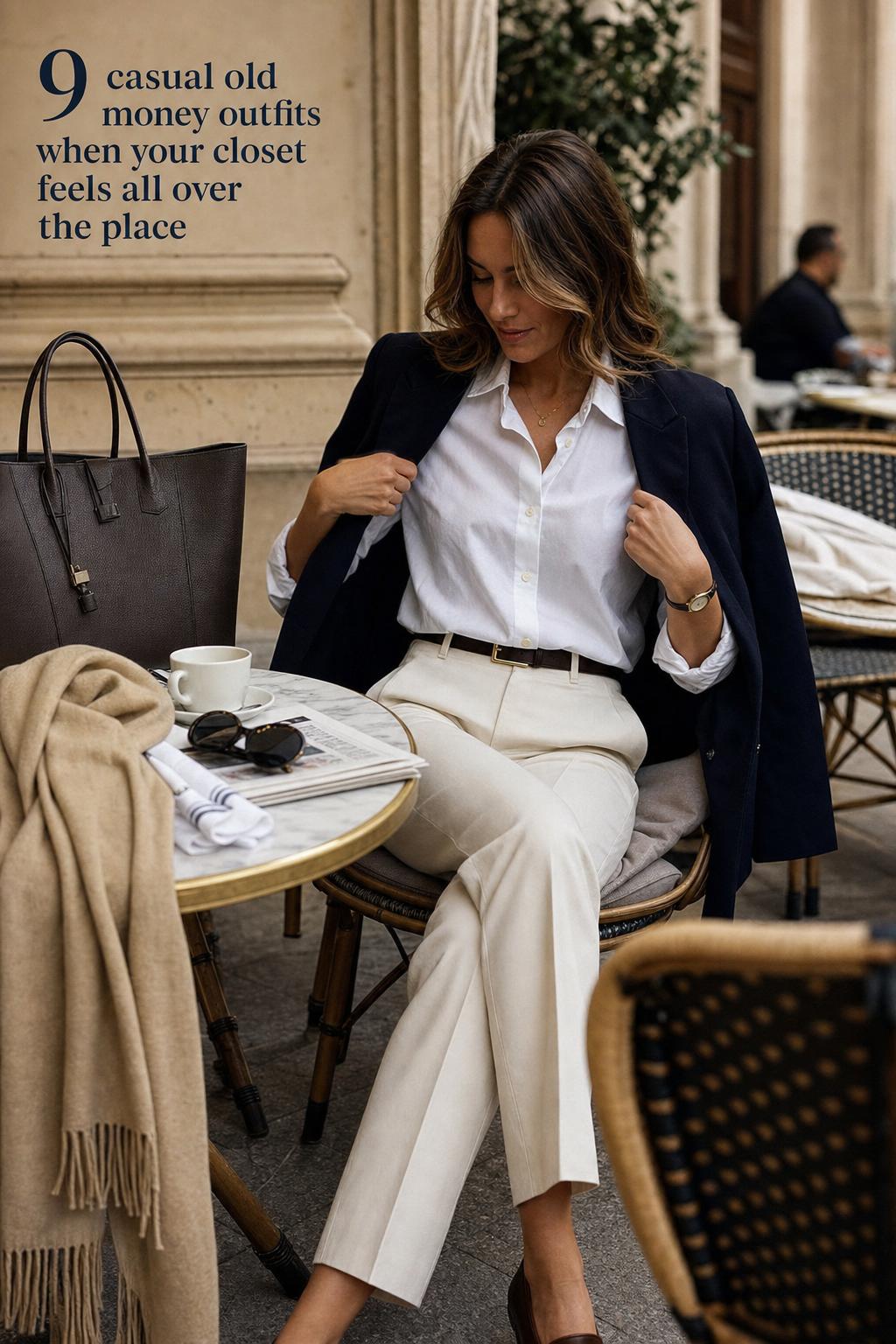
Right now, the appeal is practical as much as visual. People want clothes that feel elevated but usable, polished but not stiff, luxurious without logos. That is exactly where casual old money outfits perform best. They offer a wardrobe logic built around quality over quantity, a capsule wardrobe mindset, and pieces that move from a museum afternoon to brunch, a casual office, or a country club setting with only minor adjustments.
The controlled elegance behind casual old money outfits
The old-money aesthetic in casual settings is less about wealth signaling and more about visual discipline. The outfit usually relies on timeless silhouettes, quiet luxury, and refined casual wear that appears settled rather than experimental. A blazer has structure but does not dominate. A cashmere sweater softens the line of the body without becoming slouchy. Loafers finish the look with ease, not flash.
Found the dress? Keep the rest in one place.
Zarellea brings guest details, vendors, timelines, and every next step together — so your wedding plan feels as good as your look.
What makes the style distinct is its refusal to over-explain itself. Instead of trend-heavy combinations, it favors a stable vocabulary: navy, cream, beige, camel, charcoal, white shirts, oxford shirts, chinos, pleated skirts, tailored pants, scarves, belts, and knitwear that looks better because of material and cut. In visual terms, that creates calm. In practical terms, it makes dressing easier.
This is also why the style resonates across gendered wardrobes. The same values apply whether the outfit includes straight-leg trousers, a pleated skirt, an unisex blazer, or a polo layered under knitwear. The silhouette language stays similar: clean lines, restrained proportions, and fabrics that communicate longevity.
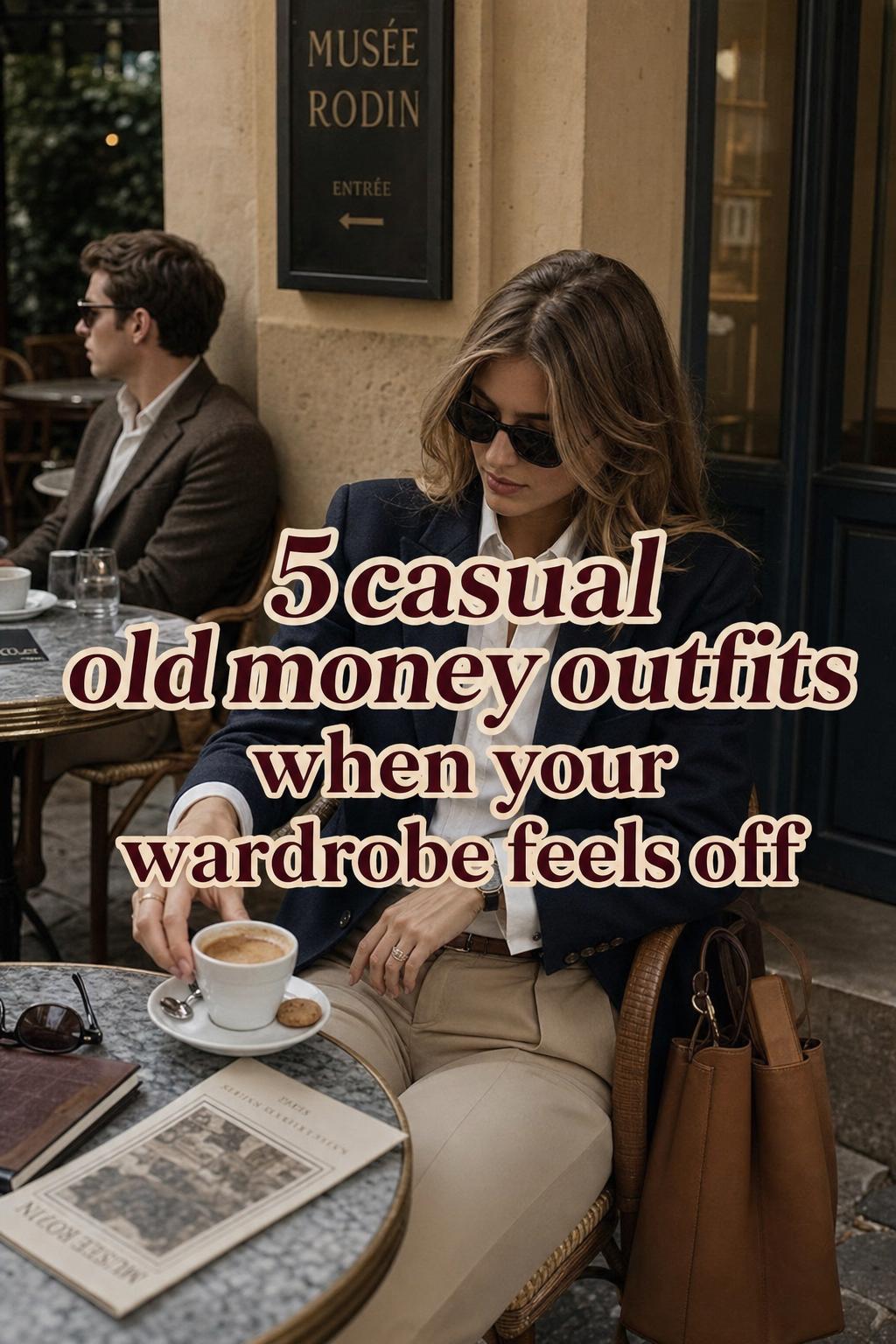
Why this aesthetic feels different from ordinary preppy dressing
Preppy style and old-money styling share obvious roots, especially in collegiate fashion and Ivy League references, but they do not always create the same visual impression. Preppy can feel brighter, more youthful, and more overtly styled around school-uniform cues. Casual old money outfits tend to feel quieter and more mature. The palette is softer. The fit is more considered. The texture story matters more.
A rugby-inspired or heavily branded look can read clearly preppy. An old-money look takes the same heritage and edits it down. Think oxford shirt under a cashmere crewneck instead of a bold sweatshirt, or a navy blazer with tailored chinos instead of a louder contrast combination. The mood shifts from expressive to composed.
That distinction becomes even clearer in movement. A good old-money outfit has visual stability. Nothing swings too far into oversized drama, trend-led proportion play, or decorative overload. Even when denim appears, it is used sparingly and grounded by more polished elements such as loafers, a blazer, or a crisp white shirt.
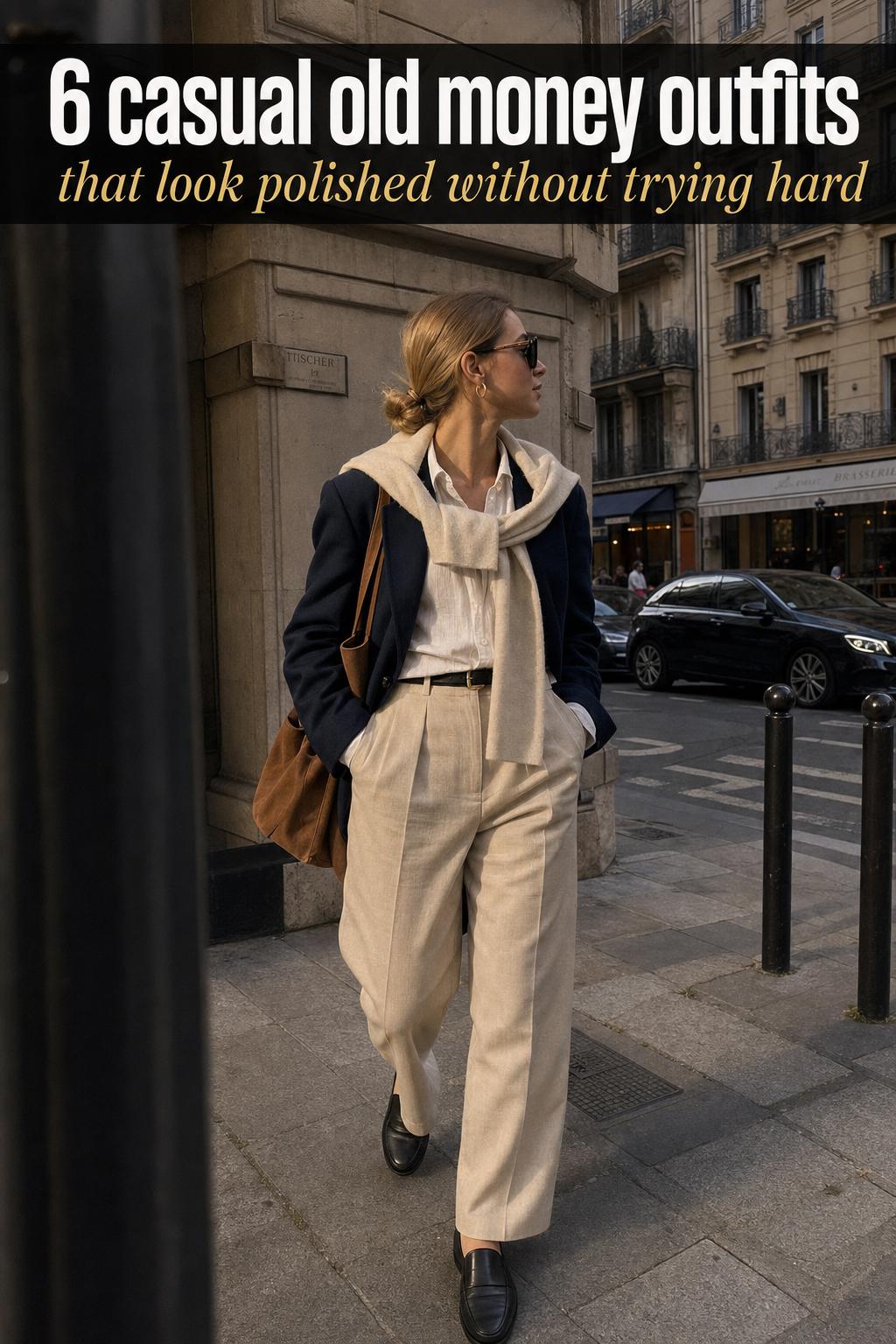
The visual anchors that define the wardrobe
Every convincing version of this aesthetic is built around a few dependable anchors. These pieces do not just appear often; they create the structure that allows the entire outfit to feel cohesive. The most successful wardrobes repeat these anchors across seasons and settings rather than chasing constant novelty.
The blazer as a visual framework
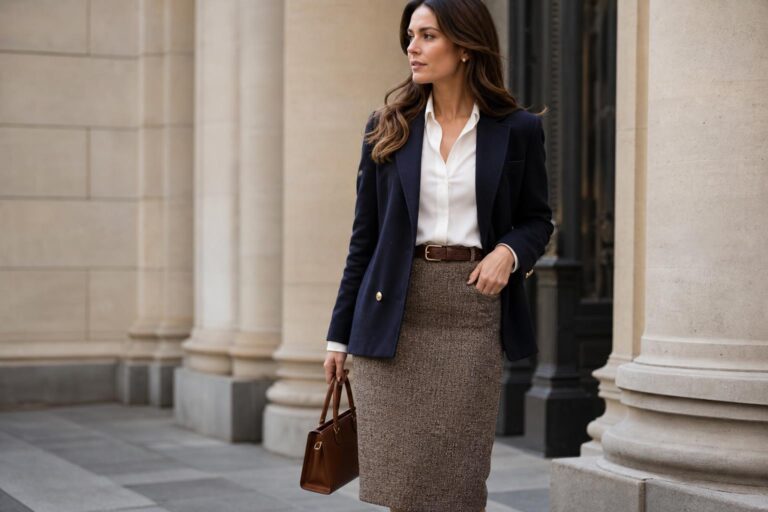
A blazer is one of the clearest signals in the category because it brings immediate structure to casual clothing. Navy remains the strongest option, with charcoal as another stable choice. The reason it works is proportion. A blazer sharpens denim, steadies chinos, and gives knitwear a tailored edge. In a women’s wardrobe, it can also balance a pleated skirt by grounding movement with structure.
The blazer should not feel aggressively corporate. The old-money version sits in refined ease: shaped enough to define the shoulders, relaxed enough to be worn over cashmere, an oxford shirt, or a polo without stiffness. It is less about power dressing and more about visual order.
Cashmere as the softness that elevates everything
Cashmere appears so often for a reason. It changes the mood of an outfit without requiring dramatic styling. A cashmere sweater over a white shirt instantly creates tonal depth. A cardigan layered with tailored trousers looks more intentional than a standard knit. In the old-money aesthetic, cashmere is not just a luxury fabric; it is a texture tool that makes restraint look rich rather than plain.
In practical wardrobe terms, cashmere also supports the capsule wardrobe idea. A few well-chosen pieces in cream, beige, camel, navy, or charcoal can be layered repeatedly with shirts, skirts, chinos, and wool outerwear.
Trousers, skirts, and the importance of clean lines
Old-money casual dressing avoids visual chaos at the lower half of the outfit. Straight-leg trousers, tailored pants, chinos, and pleated skirts all work because they maintain line and rhythm. They support the upper half rather than competing with it. The silhouette reads composed first, fashionable second.
This is where many outfits fail. If the trousers are too trend-driven, too distressed, or too shapeless, the balance disappears. The same applies to skirts that are overly decorative or cut in a way that disrupts the controlled elegance of the look. Simplicity is not a limitation here; it is the foundation.
Loafers, belts, scarves, and accessory discipline
Accessories carry a surprising amount of responsibility in this aesthetic. Loafers remain the strongest footwear because they sit perfectly between formal and relaxed. A minimal belt defines the waistline or refines trousers without demanding attention. A scarf adds softness and heritage energy when the rest of the outfit is intentionally quiet.
Understated jewelry, leather goods, eyewear, and minimalist timepieces make sense here because the style is built on calibrated detail. Even references to Hermès scarves or heritage accessories only work when they support the outfit’s restraint. The goal is never to turn one item into a spectacle.
Color palette is doing more work than people realize
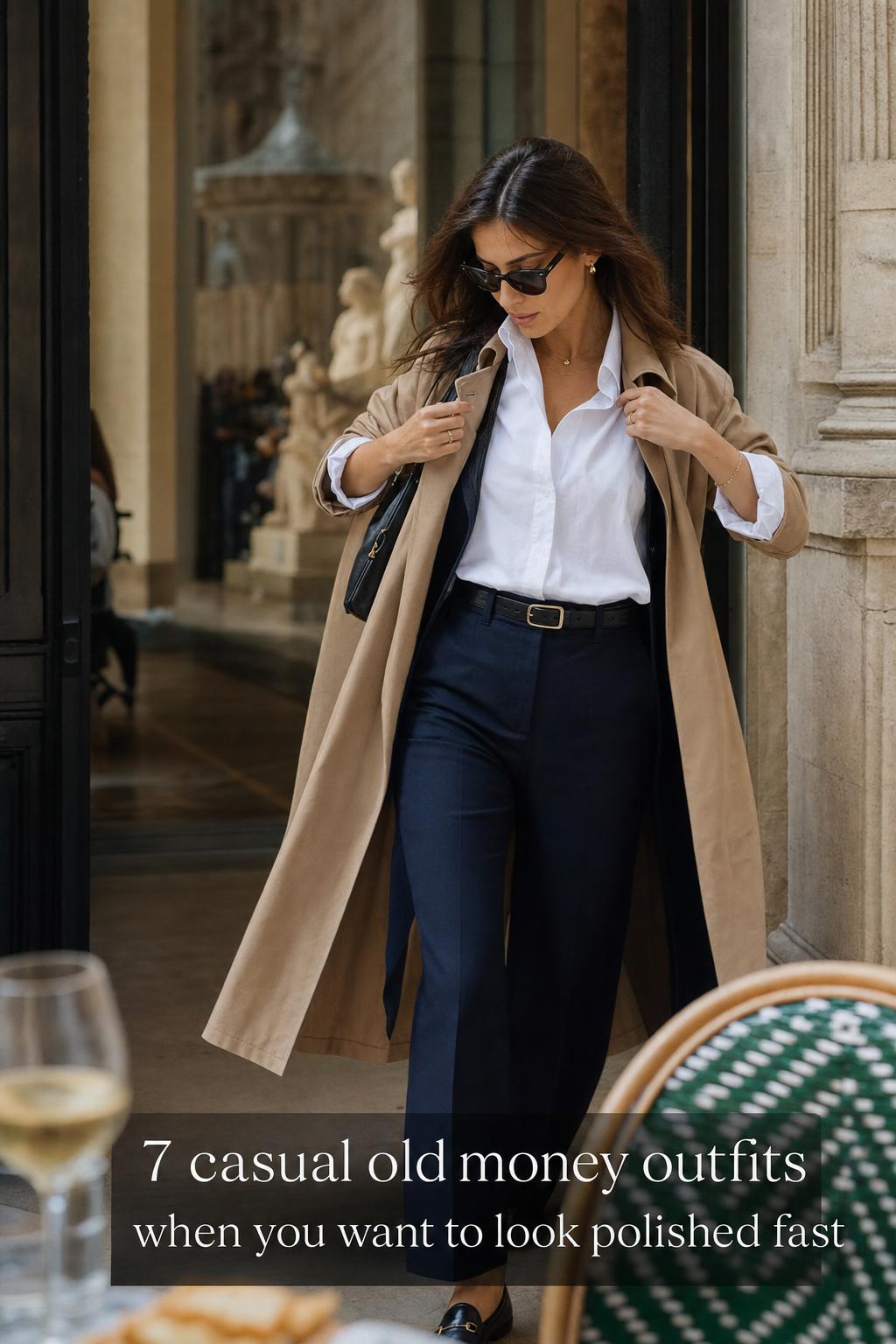
The palette in casual old money outfits is not just aesthetically pleasing. It is functional. Navy, cream, beige, camel, taupe, white, and charcoal create instant compatibility across garments, which is why the wardrobe feels so calm and expensive at the same time. These shades also make texture more visible. In a loud palette, you notice color first. In a restrained palette, you notice fabric, fit, and composition.
Navy and cream is one of the most reliable pairings because it gives enough contrast to feel defined without becoming harsh. Beige and camel create softness, especially in cashmere and wool. Charcoal introduces gravity, making casual combinations feel more anchored. White shirts and oxford shirts provide clarity in layered looks.
This is one reason quiet luxury and old-money style are so often linked. Both aesthetics understand that subtle tones make quality easier to read. A wool blazer in navy or a cashmere knit in cream does not need ornament to look elevated. The material and the palette handle the message.
Tip: use contrast sparingly
If you want the look to feel authentic rather than costume-like, keep the contrast controlled. A white shirt under a navy blazer works because the sharpness is balanced by chinos, loafers, or a soft knit. Too many stark shifts in one outfit can make the aesthetic feel more performative than natural.
Texture is where subtle wealth becomes visible
People often talk about old-money style as if it were simply a list of garments, but the real distinction usually comes from texture contrast. Cashmere, wool, linen, cotton oxford, and twill each change the visual language of the same basic outfit. A blazer with a flat synthetic look can feel ordinary. A wool blazer with gentle texture reads more established and considered. The same principle applies to shirts, knitwear, and scarves.
This is especially important in simple combinations. An oxford shirt and trousers can look generic or quietly polished depending on fabric quality and fit. A linen shirt in spring and summer creates lightness without abandoning the tailored logic of the style. In colder months, wool and cashmere provide density, which makes the outfit look more grounded and complete.
Texture also keeps neutral wardrobes from looking flat. When the palette is restrained, a cashmere sweater against cotton trousers, or a wool blazer over a crisp white shirt, creates enough variation to hold visual interest without resorting to louder design choices.
How the same aesthetic changes by season
The strongest old-money wardrobes are season-aware. They do not force the same formula year-round. They preserve the same principles while adjusting fabric weight, layering behavior, and the amount of visual openness in the outfit.
Spring and summer: lighter structure, breathable polish
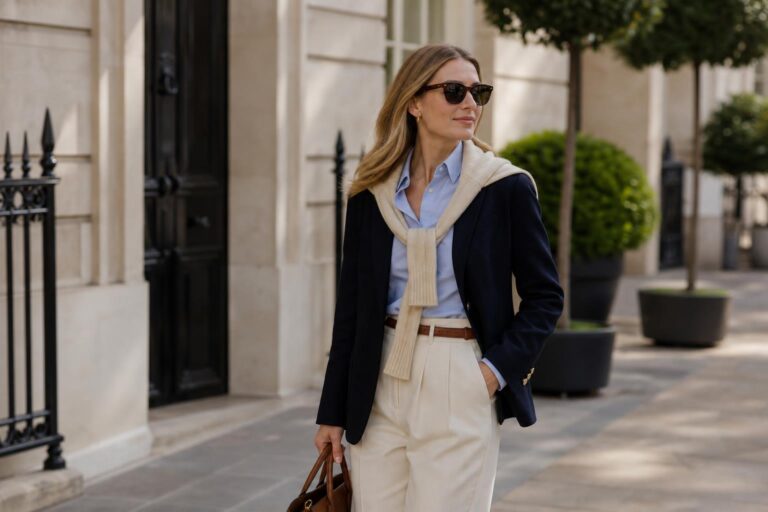
Warm-weather versions of the aesthetic rely on linen blends, cotton shirts, lighter knitwear, and more air between layers. This is where a linen blazer, an oxford shirt, chinos, and loafers create a useful everyday formula. Denim can enter the wardrobe here, but it works best as a supporting casual element rather than the main event. A blazer plus denim combination succeeds only when the jeans remain clean and the rest of the outfit keeps the tailored message intact.
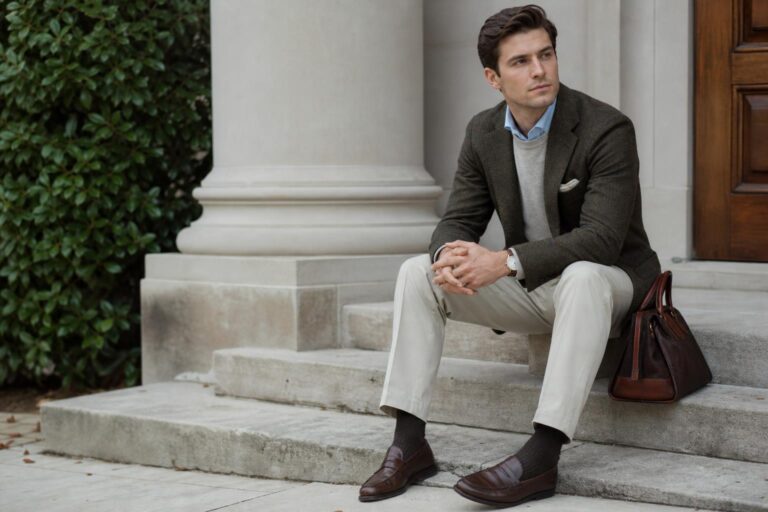
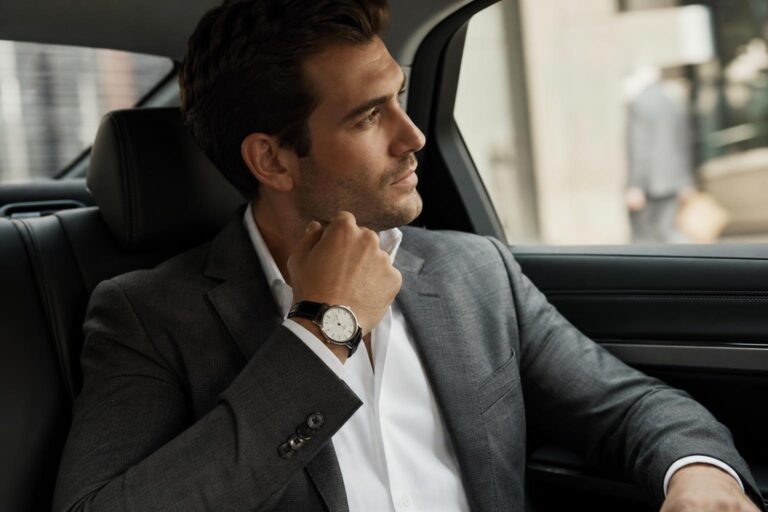
For women, a pleated skirt with a fine knit or navy blazer creates movement without losing composure. For men, a polo under an unstructured blazer offers a polished but relaxed interpretation. In both cases, spring and summer old-money dressing should feel breathable, not heavy.
Fall and winter: layered depth and visual weight
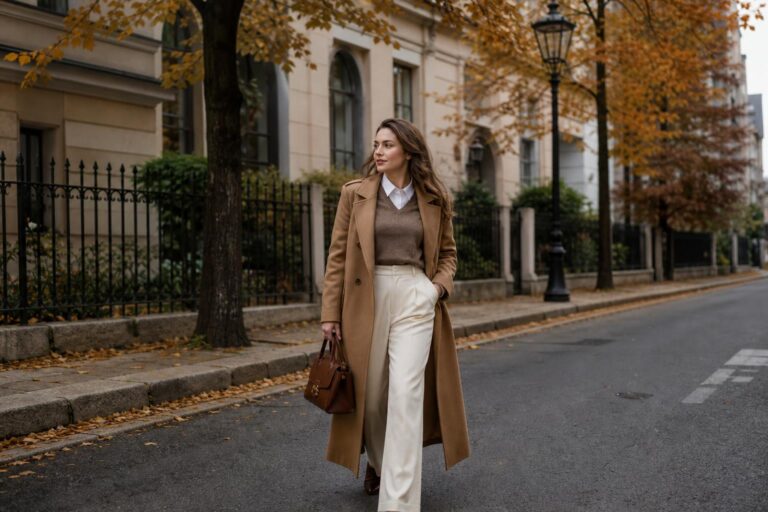
Cold-weather dressing allows the aesthetic to become more textured and dimensional. Wool, cashmere, trench coats, scarves, and layered shirting create a more complete composition. A cashmere sweater over an oxford shirt with tailored trousers and loafers is one of the clearest formulas because it builds from the neckline outward. Every layer adds information without adding noise.
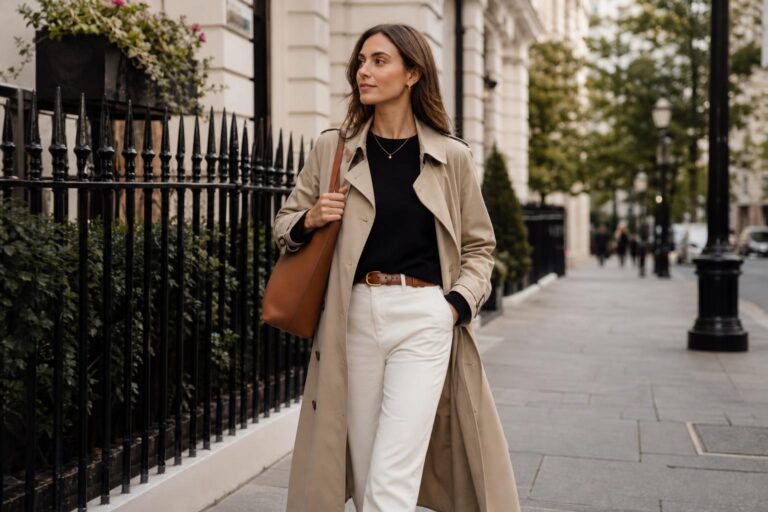
A trench coat sharpens the outer line of the silhouette, especially over knitwear and a blazer. Scarves become useful not only for warmth but for visual softness. The best winter versions of this style feel substantial, never bulky. That is the difference between thoughtful layering and simply wearing more clothes.
Tip: match fabric weight across the outfit
A heavy wool blazer with very light summer trousers can look disconnected, and a crisp linen shirt under a dense winter combination can feel visually thin. The more consistent the fabric weight, the more expensive the outfit reads.
Real-life settings where the look either works or falls apart
Casual old money outfits are appealing because they adapt well to environments that demand polish without full formality. The style performs especially well in social spaces where ease and control matter equally: brunch, museum visits, gallery openings, gentle networking events, casual office settings, and country club environments. It also aligns naturally with the atmosphere suggested by places such as Newport, Charleston, Ivy League campuses, London’s Mayfair, Belgravia, and European garden-party settings.
The setting matters because the aesthetic is contextual. A country club brunch look should feel softer and more relaxed than a gallery opening outfit. A museum afternoon can support a scarf, tailored trousers, and a wool blazer in a way that would feel too dense for a bright coastal setting. The wardrobe stays consistent, but the styling energy shifts.
This is also where many people overdo it. If every old-money outfit looks ready for a yacht club or a formal event, it stops feeling casual. The more successful approach is situational editing. Keep the heritage references present, but let the occasion decide the formality level.
A brunch interpretation
For brunch, the old-money version of casual works best when it feels bright and effortless. A cream cashmere sweater, tailored chinos or a pleated skirt, loafers, and a minimal belt create exactly enough polish. The look suggests social ease rather than visible effort. A scarf can work if lightweight, but the outfit should not feel too composed for daylight.
A museum or gallery interpretation
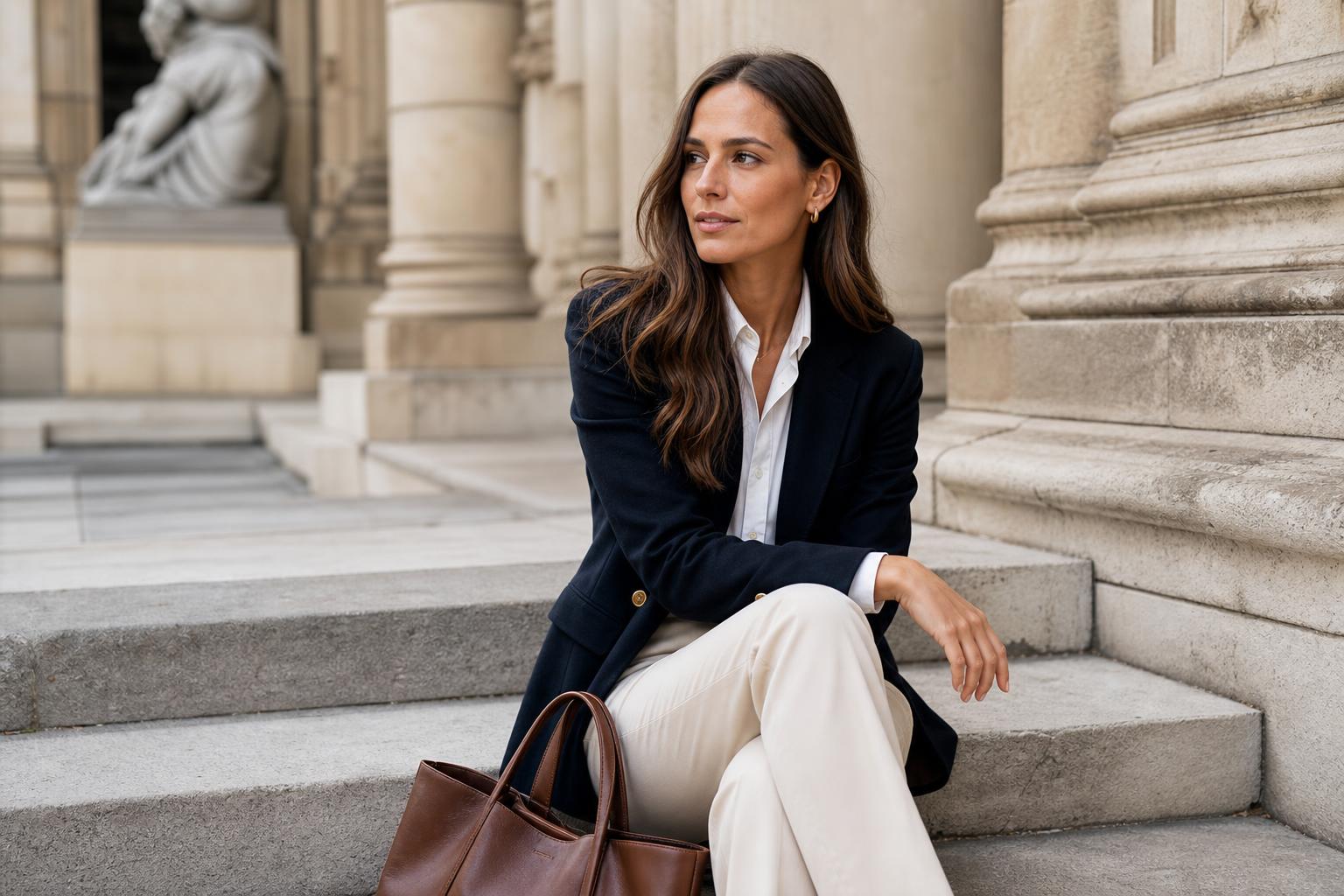
This setting allows for more structure. A navy blazer over a white shirt or oxford shirt, charcoal or beige tailored trousers, loafers, and understated accessories create a stronger line. The composition feels intellectual, contained, and visually literate. It is one of the cleanest expressions of the style because the setting supports restraint.
A country club or yacht club interpretation
Here the preppy roots become more visible, but the old-money version still edits carefully. A polo, chinos, loafers, and a navy or linen blazer can work well. The mood should feel inherited rather than styled for attention. This is where the distinction between quiet luxury and themed dressing becomes especially important.
The gender-inclusive logic of the aesthetic
One of the reasons this style lasts is that its visual language is highly transferable. It does not depend on one narrow body type or one fixed expression of masculinity or femininity. Instead, it relies on unisex principles: balanced tailoring, refined fabrics, controlled layering, and a palette that supports cohesion.
A unisex blazer can be worn closer to the body for a sharper line or slightly more relaxed for a softer, contemporary interpretation. Pleated skirts, straight-leg trousers, chinos, polos, and fine knitwear can all be adapted through length, fit, and proportion. The goal is not to make every outfit look identical. The goal is to preserve the same composure across different silhouettes.
This matters for wearability. Some people feel more at ease in oversized layers, others in tailored fits. The old-money approach allows room for both, as long as the total outfit remains intentional. An oversized piece works when the rest of the look is disciplined. A sharply tailored piece works when it is softened with texture and neutral color.
Wearable outfit logic: eight ways the aesthetic comes to life
The most useful way to understand this style is to see how it behaves in complete outfit compositions. The pieces themselves are familiar. What changes is how they are balanced, softened, and anchored.
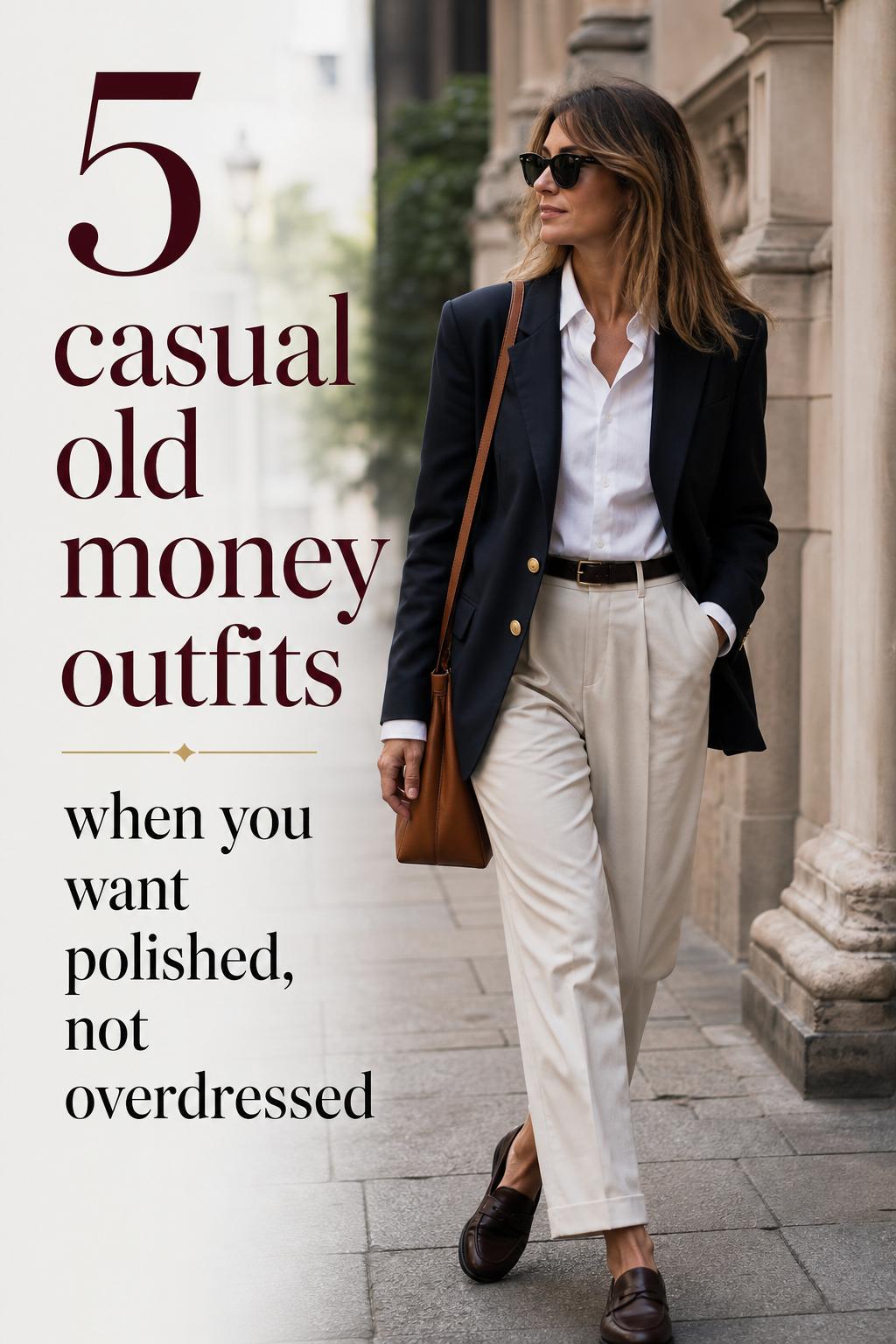
- A navy blazer, white shirt, straight-leg trousers, loafers, and a belt creates a clean daily formula that works for casual office settings or city lunches. The blazer provides the visual framework, while the loafers keep the outfit from drifting into formalwear.
- A cream cashmere sweater layered over an oxford shirt with chinos and loafers feels more relaxed but still highly composed. The collar adds structure under the softness of the knit, which is why the outfit looks complete rather than plain.
- A pleated skirt, fine knit cardigan, scarf, and loafers produces a softer version of the old-money mood. The movement of the skirt is controlled by the compact line of the cardigan and shoes.
- A polo under a linen blazer with tailored trousers works especially well in spring and summer. This combination lowers the formality of the blazer without losing polish.
- Clean denim with a navy blazer, cashmere knit, and loafers can work when the jeans are visually quiet. This is one of the few places where denim belongs, and it only succeeds when every other element remains elevated.
- A trench coat layered over a cashmere sweater and tailored pants gives fall and winter outfits a refined outer shell. The trench creates length and reinforces the timeless quality of the palette.
- A white shirt with beige chinos, a minimal belt, loafers, and understated eyewear is one of the easiest warm-weather versions to recreate affordably. The success comes from fit and restraint rather than complexity.
- A charcoal blazer, fine knit crewneck, pleated trousers, and loafers creates a deeper, more urban version of the aesthetic, especially suited to gallery settings or evening-casual occasions.
Why these combinations work
Each outfit uses the same logic: one structured element, one softening element, one clean base, and one understated accessory layer. This balance prevents the style from becoming either too rigid or too casual. It also explains why the wardrobe can be compact. The pieces repeat, but the mood changes through texture, season, and setting.
Brands, heritage, and the cultural signals behind the look
Although the aesthetic is more philosophy than logo, certain brand references help clarify its visual world. Ralph Lauren and J. Crew sit close to the American prep and collegiate side of the spectrum. Burberry and the trench coat connect the look to heritage outerwear. Hermès scarves represent the accessory language of understated luxury. Loro Piana, Brunello Cucinelli, and Kiton point to the fabric-first version of quiet luxury, where cashmere, wool, and cut matter more than visible branding.
These names are useful not because they are required, but because they illustrate the style’s range. One end of the aesthetic leans East Coast and Ivy League. Another leans European, with softer luxury signals and a more discreet relationship to tailoring. Both still fit within casual old money outfits when the wardrobe remains restrained, polished, and materially focused.
There is also a historical undercurrent that helps explain the style’s appeal. Prep-school references, boarding-school uniform influences, yacht club culture, and country club dressing all feed into the visual identity. But in modern wardrobes, these references work best when they are interpreted lightly. Too much costume-coded heritage can make the outfit feel staged rather than lived in.
Shopping signals that make the look believable
The easiest way to miss the mark is to focus only on item labels. The better approach is to evaluate cut, fabric, and finishing. Casual old money outfits succeed when the clothing looks stable over time. That means paying attention to seam quality, how a blazer sits through the shoulders, how trousers fall from the waist, and whether knitwear holds shape with repeated wear.
This is where the phrase quality over quantity becomes practical rather than abstract. A small wardrobe of cashmere, wool, oxford shirts, loafers, tailored trousers, scarves, and one or two blazers can carry more visual authority than a large wardrobe built from trend turnover. Department stores, heritage brands, and curated secondhand or resale sources all make sense within this framework.
- Prioritize fabric first: cashmere, wool, linen, and cotton oxford consistently support the aesthetic.
- Choose a neutral core palette so pieces can rotate naturally inside a capsule wardrobe.
- Check fit before styling details. A poorly cut blazer cannot be saved by a good belt or expensive loafers.
- Buy accessories with restraint. One strong scarf, one polished belt, and reliable loafers are more useful than a crowded accessory drawer.
- Think in outfit systems, not isolated purchases. Every new item should work with at least three existing pieces.
Tip: secondhand can support the aesthetic especially well
Because this wardrobe is built on longevity and classic silhouettes, curated secondhand shopping often makes more sense here than in trend-driven categories. A well-cut blazer, quality loafers, or a heritage scarf can feel more authentic with a little age than a brand-new item chasing the same mood.
Most versatile pieces in an old-money capsule wardrobe
If your goal is not just inspiration but function, a capsule wardrobe approach is the most efficient path. The aesthetic naturally supports repetition because the visual language depends on consistency. A few carefully chosen anchors can build dozens of combinations without making the wardrobe feel repetitive.
- A navy blazer
- A charcoal or beige tailored trouser
- A white shirt and an oxford shirt
- A cream or camel cashmere sweater
- A polo for warm-weather layering
- Chinos in a neutral tone
- A pleated skirt if that silhouette suits your wardrobe
- Loafers in a simple leather finish
- A minimal belt
- A trench coat or wool outer layer depending on climate
These pieces are versatile because they can move across the formality spectrum with minor changes. Swap chinos for tailored pants, add or remove a scarf, replace a white shirt with a polo, and the outfit shifts without losing its identity.
Common styling mistakes that make the look feel forced
This aesthetic is easy to admire and surprisingly easy to over-style. The mistakes usually happen when someone focuses on the idea of old money more than the mechanics of dressing well.
- Overloading the outfit with heritage symbols at once, such as a blazer, scarf, crest-style references, and highly formal footwear in a casual setting.
- Choosing pieces that are too stiff, making the outfit look costume-like instead of lived in.
- Ignoring fabric quality and relying only on color cues like navy and beige.
- Using too many obvious luxury signals, which moves the look away from understated elegance.
- Forgetting the casual part of casual old money outfits and dressing too formally for the setting.
The visual difference between convincing and unconvincing styling is often subtle. Successful outfits leave room for ease. They look habitual, not assembled for effect. That is why fit, texture, and restraint matter more than literal imitation.
Style psychology: why some people feel more themselves in this aesthetic
Casual old money outfits appeal to people who want control without rigidity. The aesthetic communicates steadiness, privacy, and confidence through clothes that do not need trend validation. For some, that feels grounding. For others, it can feel too contained if their style identity depends on stronger self-expression.
That is an important distinction. This wardrobe works best for people who enjoy visual continuity, repeat wear, and the calm of a refined neutral palette. It may feel less satisfying for someone who wants overt experimentation, sharper contrast, or statement-led styling. Neither preference is better; they simply communicate different fashion instincts.
In practical terms, this means you do not need to adopt the aesthetic completely for it to be useful. Many wardrobes benefit from borrowing its structure, accessory discipline, or fabric logic without committing to a full old-money identity.
Easy ways to blend old-money elements into your existing style
One reason this look has staying power is that it mixes easily with adjacent aesthetics. You can add old-money structure to a more casual wardrobe, or soften a preppy wardrobe with more restrained textures and tonal layering.
- Replace trend-heavy outerwear with a navy blazer or trench coat.
- Swap logo knits for a cashmere sweater in cream, camel, or navy.
- Use loafers to elevate simple trousers or dark denim.
- Shift bright color combinations toward a neutral palette built around cream, beige, charcoal, and white.
- Add one understated accessory, such as a scarf or minimal belt, instead of multiple visible accents.
This blending approach is often more wearable than a total wardrobe overhaul. It lets you test how much timeless tailoring, quiet luxury, and refined casual styling actually suit your daily life.
The key visual difference when you blend successfully
The outfit starts to look calmer. Not boring, just more resolved. The colors relate better, the silhouette has more direction, and the accessories stop competing. That is usually the first sign that old-money dressing principles are working for you.
Wardrobe maintenance and longevity
A style built on luxury basics only works if the garments continue to look good over time. Cashmere care and wool maintenance matter because these fabrics are central to the aesthetic. A worn-out knit, misshapen blazer, or tired loafers can weaken even the best outfit composition.
This is also where the sustainability angle makes sense. A wardrobe based on fewer, better pieces aligns naturally with long-term use. The point is not perfection or exclusivity. It is durability, repeat wear, and the discipline to buy less but buy with more intention.
In real life, that means choosing garments you will maintain, not just admire. A beautiful cream sweater is only practical if it fits your routine. Tailored trousers are useful only if the cut supports frequent wear. Longevity is one of the most authentic signals in the entire aesthetic.
Which aesthetic feels more timeless: old money, prep, or quiet luxury?
These categories overlap, but they do not age in exactly the same way. Prep has a stronger visual identity and can swing younger or more thematic depending on styling. Quiet luxury is broader and can become so minimal that it loses personality. The old-money aesthetic sits in the middle. It borrows prep’s heritage and quiet luxury’s restraint, then filters both through timeless tailoring and everyday polish.
That middle ground is what makes casual old money outfits especially durable. They are specific enough to feel recognizable, but flexible enough to adapt across seasons, ages, and settings. A navy blazer, loafers, tailored trousers, and cashmere have remained relevant because they are not dependent on a single cultural moment.
The best version of the look does not ask for strict imitation. It asks for consistency: coherent colors, dependable fabrics, thoughtful layering, and clothes that look better because they are worn with confidence and restraint.
FAQ
What are the essential pieces for casual old money outfits?
The strongest foundation includes a navy blazer, cashmere sweater, white shirt or oxford shirt, tailored trousers or chinos, loafers, a minimal belt, and a neutral outer layer such as a trench coat or wool piece. For women, a pleated skirt also fits naturally into the wardrobe.
Is a navy blazer necessary for the old-money aesthetic?
A navy blazer is not mandatory, but it is one of the most reliable anchors because it adds structure, works across seasons, and pairs easily with cream, beige, charcoal, white, denim, and chinos. It often makes casual outfits look instantly more composed.
Can denim work in casual old money outfits?
Yes, but it should be used sparingly and styled carefully. Clean denim works best with elevated pieces such as a blazer, cashmere knit, white shirt, or loafers. The goal is to keep denim as the casual element inside an otherwise polished composition.
What colors make an outfit look more old money?
Navy, cream, beige, camel, taupe, white, and charcoal are the most effective shades because they create cohesion and allow fabric quality and tailoring to stand out. These tones also support a capsule wardrobe, since most pieces combine easily.
How is old-money style different from regular preppy style?
Old-money style is usually quieter and more restrained. It shares prep’s heritage influences, including collegiate and Ivy League references, but it relies more on subtle texture, refined fit, and understated elegance than on obvious school-inspired styling cues.
What fabrics matter most for this look?
Cashmere, wool, linen, cotton oxford, and twill are central because they create the texture contrast and material depth that make simple outfits look elevated. In this aesthetic, fabric quality often matters more than decorative detail.
Are loafers the best shoes for casual old money outfits?
Loafers are often the best fit because they sit perfectly between tailored and relaxed dressing. They work with trousers, chinos, pleated skirts, and even polished denim, helping the outfit maintain ease without losing structure.
Can this style work for both men and women?
Yes. The aesthetic is highly adaptable because it is built around unisex principles such as clean lines, neutral palettes, quality fabrics, and balanced tailoring. The exact silhouettes may change, but the styling logic remains consistent across wardrobes.
How do I make the look feel authentic instead of costume-like?
Focus on restraint. Use one or two heritage cues rather than many, prioritize fit and fabric over labels, and dress for the actual setting. The most convincing old-money outfits look lived in and natural, not overly styled around a concept.
Is quiet luxury the same as old-money style?
They overlap, but they are not identical. Quiet luxury is a broader idea centered on subtle quality and minimal branding, while old-money style adds more heritage, prep, and timeless tailoring references. Casual old money outfits often sit where those two ideas meet.