
Parisian Chic Style: a Calm, Polished Wardrobe System for NYC
Parisian chic style, decoded as an aesthetic (not a costume)
The most recognizable version of parisian chic style shows up in motion: a coffee run in Saint-Germain-des-Prés, a brisk walk across Paris in a trench, a late meeting where a blazer replaces the need for “going-out” sparkle. The mood reads effortless, but the construction is intentional—clean lines, calibrated proportions, and a quiet confidence that comes from repeating great pieces instead of chasing constant novelty.
Visually, the aesthetic sits at the intersection of minimalism and polish. Neutrals do the heavy lifting, denim is treated like a wardrobe foundation, and footwear signals the whole look—loafers and ballet flats communicate ease, while boots and tailored outerwear push it into colder-weather sophistication. You see it echoed in looks street style during Paris Fashion Week, but it’s just as relevant for U.S. city life because the formulas translate: Paris to NYC is a short leap when the pieces are universal.

The appeal is practical as much as it is aesthetic. Parisian style works because it reduces decision fatigue: fewer items, stronger pairings, and a clear silhouette logic. It also holds up season after season—especially when built around staples like the white tee, straight-leg jeans, an oversized blazer, and a trench. The result is a closet that feels elevated without being fussy.
What “Parisian chic” actually means: the core identity and its roots
At its core, Parisian chic is timeless elegance expressed through simplicity and quality. It’s the idea that “less is more,” translated into wardrobe choices that look refined without obvious effort. Paris is the visual reference point, but the style logic is portable: reduce the palette, sharpen the silhouette, and let one strong piece anchor the outfit composition.
Found the dress? Keep the rest in one place.
Zarellea brings guest details, vendors, timelines, and every next step together — so your wedding plan feels as good as your look.
Fashion history is part of the vocabulary. Coco Chanel is often invoked because her name is linked with the enduring concept of understated luxury and classics like the tweed jacket—pieces that create structure without loudness. The point isn’t to dress head-to-toe in a single brand; it’s to understand why iconic items endure: they’re consistent, repeatable, and flattering across contexts.
In modern terms, parisian chic overlaps with “French-girl style” and “effortless chic,” but it’s more specific than a vague vibe. It’s a disciplined approach to a wardrobe: restrained color, tailored lines, and a preference for staples (blazer, loafers, denim, white tee, trench) that can be recombined into Paris outfits for work, weekends, and travel days.

Key pieces that make the aesthetic instantly recognizable
Most high-impact Paris outfits aren’t complicated; they’re built from a small set of recognizable items repeated in different proportions. The wardrobe staples below are less about “rules” and more about visual anchors—pieces that create structure, polish, and continuity across seasons.
- tailored blazer (often oversized for proportion play)
- trench coat for tonal layering and weather-ready polish
- white tee and simple tops as clean base layers
- straight-leg or classic denim to ground the look
- loafers and ballet flats for timeless, walkable footwear
- tweed jacket as a heritage-texture statement (often associated with Chanel)
Brands enter the conversation when you want shorthand for certain product archetypes. Chanel is the classic reference for tweed and fashion heritage; contemporary French brands with U.S. visibility—like sézane, a.p.c., maje, and sandro—are often associated with the modern Parisian wardrobe ecosystem, especially when you’re trying to shop the “right” kind of minimal, tailored, or denim-driven pieces.
Style tip: build around structure, then soften with texture
The most reliable styling logic is to start with a structured element (blazer, trench, tweed jacket) and balance it with something relaxed (denim, a white tee, flats). This is the quiet engine behind parisian chic style: the tension between tailored and casual makes the outfit feel lived-in, not styled to the point of stiffness.

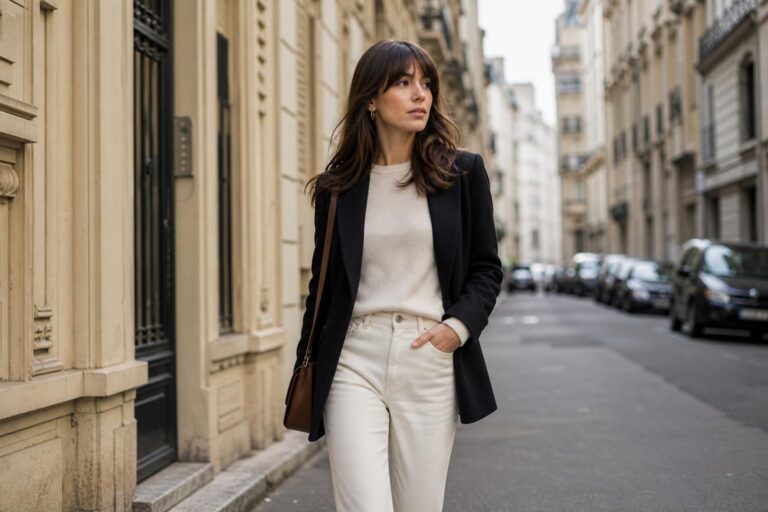
Look: relaxed minimal layers (the blazer-forward city uniform)
This look captures the “editor off-duty” energy often associated with Parisian street style: crisp lines, minimal color interruption, and a silhouette that skims the body without clinging. The visual mood is calm and assured, designed for long days—commutes, meetings, and an effortless transition from day to night without an outfit change.
Anchor the outfit with an oversized blazer over a clean white tee, paired with straight-leg denim in a classic wash. Keep the palette neutral—think black, cream, navy, or soft gray—so the tailoring does the talking. Finish with loafers for a grounded, walkable base that still reads polished.
- key garments: oversized blazer, white tee, straight-leg jeans
- footwear: loafers
- accessories: keep minimal; let the blazer be the visual anchor
Why this works: the blazer creates a clean shoulder line that elevates denim instantly, while the white tee prevents the look from feeling heavy. Loafers reinforce the timeless fashion message—practical, classic, and sharp enough for a city setting like Paris or NYC.
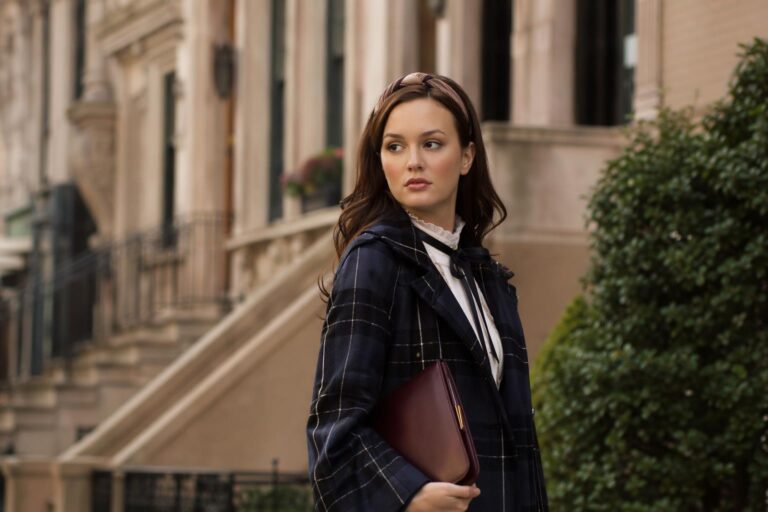
Look: trench-and-tonal layering (Paris outfits for unpredictable days)
The trench look is a Parisian style signature because it’s both cinematic and functional. The mood is streamlined and weather-aware, with tonal layering that reads expensive even when the pieces are simple. This is the outfit you reach for when you need to look composed in motion—walking fast, carrying a bag, stepping in and out of variable temperatures.
Start with a trench coat in a neutral tone and build a quiet palette underneath—light-to-dark or dark-to-light, but controlled. Keep the silhouette simple: straight lines, minimal bulk, and a base that doesn’t compete with the trench. Footwear can lean classic with ballet flats for a softer finish or loafers for a more structured impression.
Why this works: the trench is the statement piece, but it’s a “low-noise” statement—iconic, not attention-seeking. Tonal layering keeps the eye moving vertically, which elongates the silhouette and makes the look feel intentional without extra styling tricks.
How to recreate the look without overthinking it
Choose a trench that has enough structure to hold its shape; then repeat one neutral family across the outfit. The fastest way to lose the Parisian chic effect is to introduce too many competing focal points. If you want variation, swap the shoe (ballet flats vs. loafers) rather than changing the whole palette.
Look: ballet-flats polish (soft structure with a classic finish)
Ballet flats bring a particular kind of Parisian elegance: light, understated, and quietly deliberate. The mood is refined but not formal, ideal for days when you want to look finished without committing to heavy footwear. This is the look that makes sense for gallery afternoons, casual dinners, or “smart casual” settings where comfort still matters.
Keep the outfit composition clean and simple. Pair a tailored layer—like a blazer or a more structured jacket—with a straightforward base in neutrals. Ballet flats keep the line of the leg uninterrupted and maintain an airy silhouette, especially when the rest of the outfit is streamlined and minimal.
- key garments: tailored jacket or blazer, clean neutral base
- footwear: ballet flats
- palette: neutrals with minimal contrast
Why this works: the combination leans into timeless fashion cues without leaning on obvious trend signals. The tailored layer adds authority; the flats add ease. It’s a Parisian chic formula that reads effortless because nothing is fighting for attention.
Look: tweed-jacket heritage (a Chanel-coded texture moment)
This look taps the historic backbone of parisian chic style: heritage texture, refined structure, and an unmistakable nod to Paris fashion. The mood is classic and composed, with the tweed jacket functioning as a textural statement piece that doesn’t require loud color or heavy styling.
Use the tweed jacket as the centerpiece and keep everything else quiet. Clean silhouettes work best—straight lines, minimal volume, and a controlled palette that lets the tweed texture read clearly. Footwear stays in the timeless lane: ballet flats for softness or loafers for a slightly sharper edge.
Why this works: tweed carries visual complexity on its own, so it benefits from simple companions. The result feels “finished” in seconds, which is the practical promise behind the Chanel association—elegance built into the garment, not added later through styling overload.
Tip: treat tweed like a statement, not a theme
A common misstep is piling on additional “classic” signals until the look becomes costume-like. One heritage piece is enough. Keep the rest modern and minimal—especially if you’re wearing it outside Paris, where a lighter touch often reads more authentic.
Look: neutral street style (Paris Fashion Week energy, everyday wearability)
Looks street style during Paris Fashion Week often exaggerate silhouettes—bigger coats, stronger tailoring, bolder proportion play—but the most wearable versions keep the palette restrained. The mood is directional yet grounded: you get the fashion-week structure without sacrificing functionality.
Build the outfit with outerwear as the lead: a coat or trench with clean lines. Underneath, keep a simple base—denim and a neutral top work because they don’t compete with the coat. Finish with footwear that can handle walking and standing: boots for colder days, or loafers when you want crispness without bulk.
- key garments: coat or trench, denim base, minimal top layer
- footwear: boots or loafers depending on weather
- styling move: keep the palette neutral to let the silhouette lead
Why this works: the outfit uses one high-impact element (outerwear) and keeps the rest quiet. That’s the easiest way to channel Paris fashion week street style without turning the look into a trend collage.

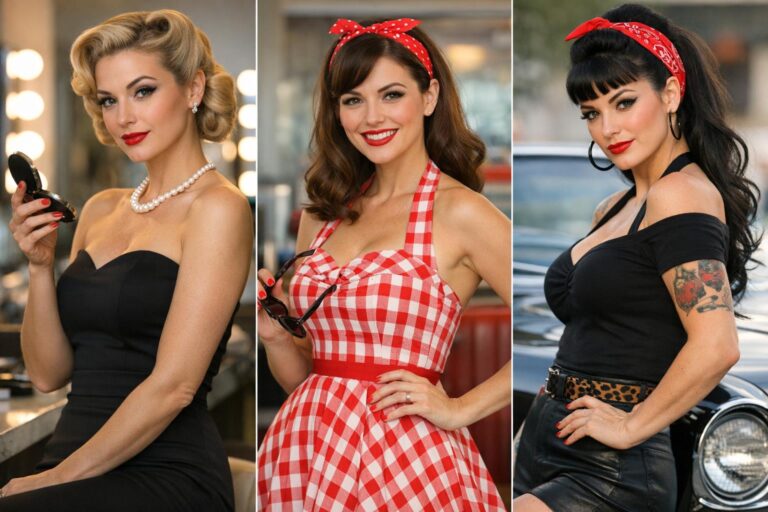
Look: vintage-inspired romantic (soft lines with a modern backbone)
Vintage-inspired Parisian chic leans romantic without becoming precious. The mood is warm and personal—less stark minimalism, more softness—yet still anchored by disciplined styling choices. Think of this as the version of Parisian style that feels at home in boutique-lined streets and café settings, with a gentle nod to prints or wrap-like silhouettes.
Prioritize a soft focal garment, such as a wrap dress silhouette or a romantic top paired with denim, then bring structure back through footwear and outerwear. Keep the palette cohesive—neutrals with a restrained accent—and avoid over-accessorizing. The strength of the look is the balance between softness and order.
Why this works: the romantic piece adds movement and personality, while denim and classic shoes prevent the outfit from drifting into costume territory. This is also where contemporary French brands often come into play—sézane, maje, and sandro are frequently associated with this polished-romantic lane because their aesthetic codes align with it.
Paris neighborhoods as style cues: Le Marais vs. Saint-Germain-des-Prés
Parisian chic isn’t monolithic, and one of the clearest ways to understand its range is to think in location-based styling cues. Neighborhood references like Le Marais and Saint-Germain-des-Prés provide a useful framework because they imply different outfit priorities while staying within the same “effortless chic” identity.
Le Marais: sharper contrast, more street-style edge
Le Marais styling cues often translate as slightly more directional: stronger silhouettes, bolder tailoring, and a street-style sensibility that pairs clean lines with a touch of attitude. The formula still relies on staples—blazers, coats, denim—but the proportions feel more intentional and slightly more fashion-forward.
Saint-Germain-des-Prés: classic polish, quieter uniform energy
Saint-Germain-des-Prés reads more classic and composed: trench-led layering, refined neutrals, and footwear choices like ballet flats that keep the mood elegant. The outfits feel like timeless fashion in practice—repeatable combinations designed to work for years, not weeks.
Practical takeaway: use neighborhood logic to choose your “lead” piece
If you want the Le Marais effect, lead with tailoring (oversized blazer, strong coat) and keep the base streamlined. If you want the Saint-Germain effect, lead with a trench or a classic jacket and soften the finish with flats. Either way, the look stays Parisian because the palette remains controlled and the silhouette stays clean.
Sub-styles within parisian chic style (and how to mix them)
The best way to avoid feeling like you’re copying a uniform is to treat parisian chic as a spectrum. The aesthetic holds steady—timeless pieces, neutral palettes, refined simplicity—but the emphasis shifts depending on mood, season, and lifestyle.
- minimalist Parisian: crisp neutrals, clean silhouettes, blazer-and-denim dominance
- vintage-inspired/romantic Parisian: softer shapes, wrap-dress energy, gentle texture and movement
- street-style Parisian: outerwear-led looks, proportion play, Paris Fashion Week influence filtered for real life
Mixing is the real skill. A minimalist base (white tee, denim, loafers) can take a romantic layer on top. A street-style coat can sit over an otherwise classic outfit. Keeping one part of the outfit “quiet” is the consistent rule: if outerwear is dramatic, keep the base minimal; if the dress is the focal point, simplify the shoe and jacket.
French spring outfits and fall formulas: seasonal logic without trend whiplash
Seasonality in Parisian style is less about reinventing and more about recalibrating. The same core pieces reappear with small shifts in layering and footwear. That’s why the look is so attractive for a capsule wardrobe approach: it’s built to adapt.
French spring outfits: light structure, breathable simplicity
In spring, the aesthetic gets lighter without losing polish. Think trench-as-top-layer, white tees as clean foundations, and denim as the consistent anchor. Ballet flats often make sense here because they keep the outfit visually light and practical for walking-heavy days.
Fall and winter: outerwear becomes the silhouette
In cooler months, Paris outfits pivot around outerwear: coats, tailored jackets, and blazers carry the visual weight. Boots enter naturally, especially when you want warmth without sacrificing structure. The palette tends to deepen, but it remains restrained—neutrals and timeless combinations rather than loud seasonal color stories.
Tip: choose footwear based on mileage, not mood boards
Parisian chic reads best when it’s functional. If your day includes long walks or commuting, loafers and boots often outperform delicate shoes. Ballet flats work beautifully, but only when they match your real-life wear needs. The outfit should look effortless because it feels manageable.
The people and voices shaping the look (muses, editors, and modern creators)
Part of what keeps Parisian chic culturally “alive” is how it’s interpreted by modern style voices. Contemporary influencers like sabina socol and lea sfez are often cited as references for how the look translates today—mixing denim, romantic elements, and structured layers without abandoning the core identity of simplicity.
You’ll also see cross-city translation through creators like franny fyne and editor-driven styling that frames Parisian chic as replicable in NYC. That’s an important clue: the look isn’t dependent on living in Paris. It’s dependent on adopting the styling logic—staples first, palette discipline, and footwear that supports real movement.
Jeanne damas is frequently referenced in the broader French-girl style conversation as a modern muse figure, sitting naturally in the vintage-romantic lane. The common thread across these names isn’t identical outfits; it’s consistent outfit composition: one focal piece, a stable base, and a refusal to overcomplicate.
A Parisian chic starter kit: 12 pieces that cross-season
For a wardrobe that produces consistent Parisian style without constant shopping, focus on pieces that behave well across seasons. This starter kit is designed to support proportion play, tonal layering, and repeatable Paris outfits for work and weekends.
- oversized blazer
- trench coat
- tweed jacket (or a textured classic jacket as an alternative)
- white tee
- simple neutral top layer (clean, minimal)
- straight-leg denim
- second denim option (to vary the base without changing the aesthetic)
- ballet flats
- loafers
- boots (for colder seasons and street-style edge)
- neutral outerwear piece (coat category for winter styling)
- a simple dress option (works especially well for the romantic sub-style)
Where brands fit: if you want a French-brand lens, look toward sézane for polished romantic staples, a.p.c. for denim-anchored minimalism, and maje or sandro for tailored pieces that sit between classic and modern. Chanel remains the reference point for the tweed heritage idea, even if you interpret it through a more accessible jacket.
Style tip: repeat silhouettes, not exact outfits
Parisian chic becomes believable when the wardrobe has continuity. Repeating the same silhouette logic—structured layer over a simple base, classic shoe—creates a signature. You don’t need identical combinations every time; you need consistent proportions and a coherent palette.
Shopping and quality signals: budget-friendly vs. investment decisions
Parisian chic is often assumed to be expensive because it references heritage (Chanel) and tailoring. In practice, the cost comes down to choices: investing in a few high-wear items can make sense, while other categories can be more flexible. The goal is longevity—pieces that maintain shape, pair easily, and don’t require constant replacement.
Where it’s worth prioritizing quality
Outerwear and structured tailoring do the most visual work. A blazer that holds its line and a trench that drapes cleanly will elevate everything underneath, including basic denim and a white tee. If you’re choosing between “more items” and “better outerwear,” Parisian style logic favors the stronger structure.
Where you can stay flexible
Simple base layers and trend-adjacent details don’t need to be expensive to look chic; they need to be clean, well-fitted, and coherent within the palette. Denim and tees can be rotated as long as the overall outfit composition stays disciplined.
Practical tip: shop by outfit formulas, not isolated “cute pieces”
Before buying, map each item to at least two outfit formulas: blazer + white tee + denim + loafers; trench + neutral base + ballet flats; tweed jacket + simple base + flats. If a piece doesn’t integrate quickly, it’s less likely to support the effortless chic promise and more likely to create closet clutter.
Common mistakes that dilute the Parisian chic effect
Because the aesthetic looks simple, it’s easy to miss the details that make it read “chic” instead of merely basic. These are the most common breakdown points, especially when translating the look outside Paris.
- too many statement elements at once (prints, loud accessories, dramatic shoes competing)
- ignoring silhouette balance (tight top + tight bottom + heavy shoe can feel visually compressed)
- over-trending the outfit (chasing new street-style cues without a stable base of staples)
- choosing shoes that don’t match real life (discomfort reads as fussiness, not ease)
- fragmented color stories (too many unrelated shades disrupt the “timeless” impression)
The fix is typically simple: make one decision the visual anchor (outerwear, tailoring, or a heritage-texture piece) and let everything else support it. This is the same logic you see repeatedly in Paris Fashion Week street style coverage—strong lead item, restrained supporting cast.
Look di moda, but make it wearable: translating Paris to NYC (and anywhere else)
It’s tempting to treat Parisian style as something location-bound, but the most successful “look di moda” interpretation is the one that adapts to your routines. In the U.S., that often means planning for longer commutes, more time outdoors, and bigger temperature swings between indoor and outdoor spaces.
Use Paris as the aesthetic reference and your city as the functional filter. A blazer-and-loafers formula works in NYC because it’s sharp and practical. A trench-based outfit works because it handles weather transitions. The pieces remain the same; the styling priorities shift toward comfort and repeatability.
Mini guide: three outfit formulas to keep on rotation
- oversized blazer + white tee + denim + loafers
- trench + tonal neutral base + ballet flats
- coat or tailored jacket + denim base + boots
Each formula supports the same Parisian chic identity while accommodating different weather and energy levels. Rotate shoes and outerwear to create variety without losing the visual throughline.
Conclusion: the aesthetic advantage of choosing fewer, better signals
Parisian chic style endures because it’s a system, not a trend: controlled palettes, dependable staples, and a silhouette logic that looks polished in motion. Build around structure, soften with texture, and let your wardrobe repeat its strongest formulas. When the outfit is designed to work in real life—walking, commuting, shifting seasons—the “effortless” part stops being a myth and becomes an outcome.

FAQ
What is Parisian chic style, in simple terms?
Parisian chic style is an approach to dressing built on timeless elegance, simplicity, and quality—usually expressed through neutral palettes, clean silhouettes, and dependable staples like a blazer, trench, denim, loafers, and ballet flats.
What are the core wardrobe staples of Parisian chic?
The most repeated staples include a tailored or oversized blazer, a trench coat, a white tee, classic denim (often straight-leg), loafers, ballet flats, and a heritage-inspired piece like a tweed jacket often associated with Chanel.
Is Parisian chic expensive?
It doesn’t have to be, but it does reward smart spending: outerwear and tailoring create the most visible “chic” effect, while basics like tees and some denim can be more flexible as long as the overall palette and silhouette stay clean and cohesive.
Can you dress Parisian chic on a budget?
Yes—focus on outfit formulas rather than lots of new items, and prioritize one strong structured layer (a blazer or trench) that elevates simple pieces you already own, like a white tee and classic denim.
How do I create Parisian chic outfits for fall?
Use outerwear as the anchor—blazers, coats, and trenches—then keep the base simple with denim and neutral tops; finish with loafers for polish or boots when the weather is colder, maintaining a restrained palette for a timeless effect.
What’s the difference between Parisian chic and French-girl style?
They overlap, but Parisian chic is usually framed as a more defined system of timeless staples and minimalist polish, while French-girl style is often used as a broader umbrella for “effortless chic” that can include more romantic or vintage-inspired elements.
Which Paris neighborhoods are most associated with the look?
Le Marais and Saint-Germain-des-Prés are commonly referenced as style cues: Le Marais suggests sharper street-style energy and bolder tailoring, while Saint-Germain-des-Prés leans classic and polished with trench-led outfits and understated footwear like ballet flats.
Which brands are commonly connected to Parisian chic shopping?
Chanel is a classic heritage reference (especially for tweed), while contemporary French brands with U.S. visibility—sézane, a.p.c., maje, and sandro—are frequently associated with the modern Parisian wardrobe of tailored pieces, denim, and refined everyday staples.
How do Paris Fashion Week street style trends influence everyday Parisian style?
Paris Fashion Week street style tends to amplify proportions and outerwear statements, but the wearable takeaway is consistent: let one structured piece lead (a coat, trench, or blazer) and keep the rest of the outfit minimal, neutral, and functional.