Girlie Style, Coquette, or Classic Feminine? How to Tell
girlie style, coquette style, and soft feminine dressing: where the lines actually separate
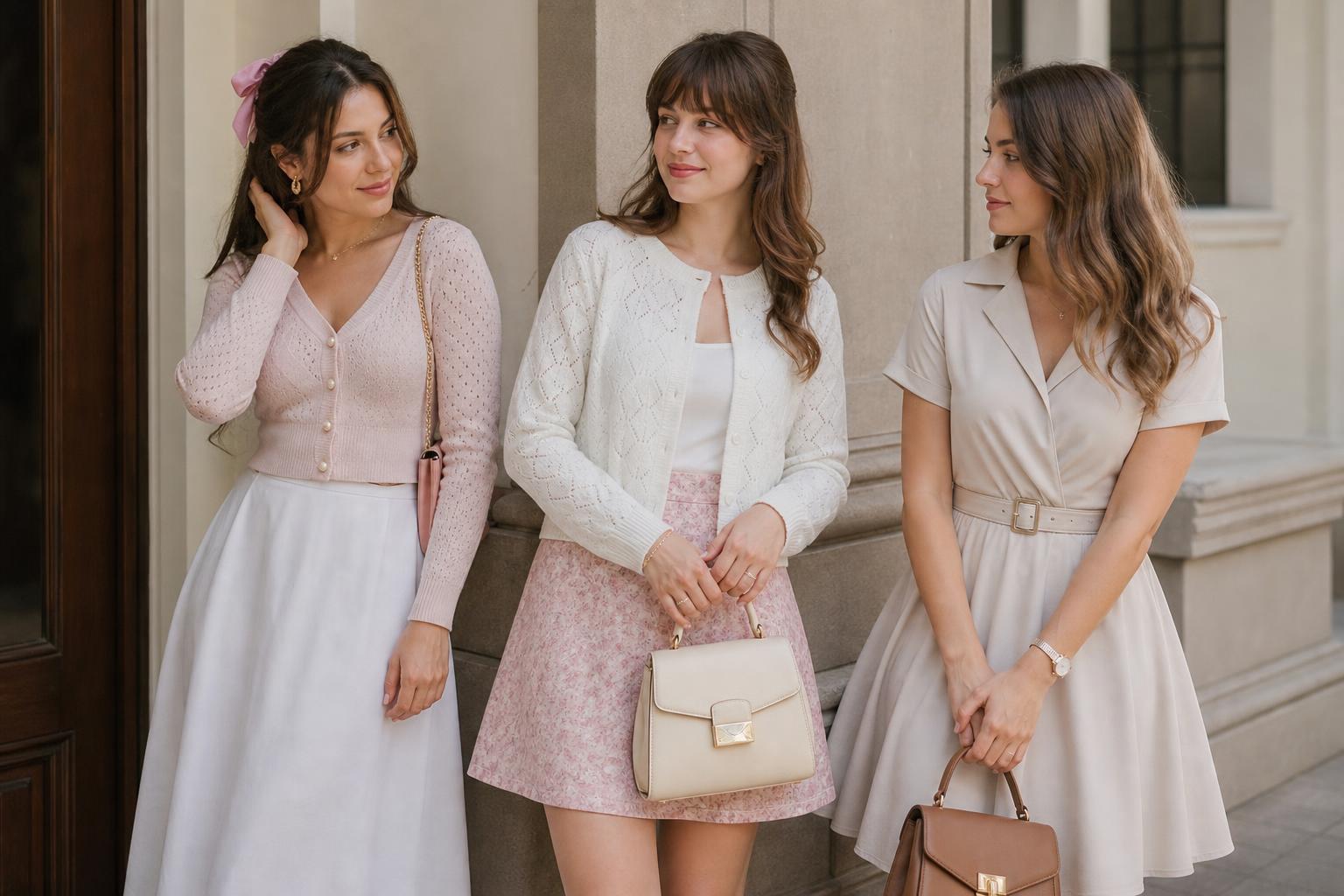
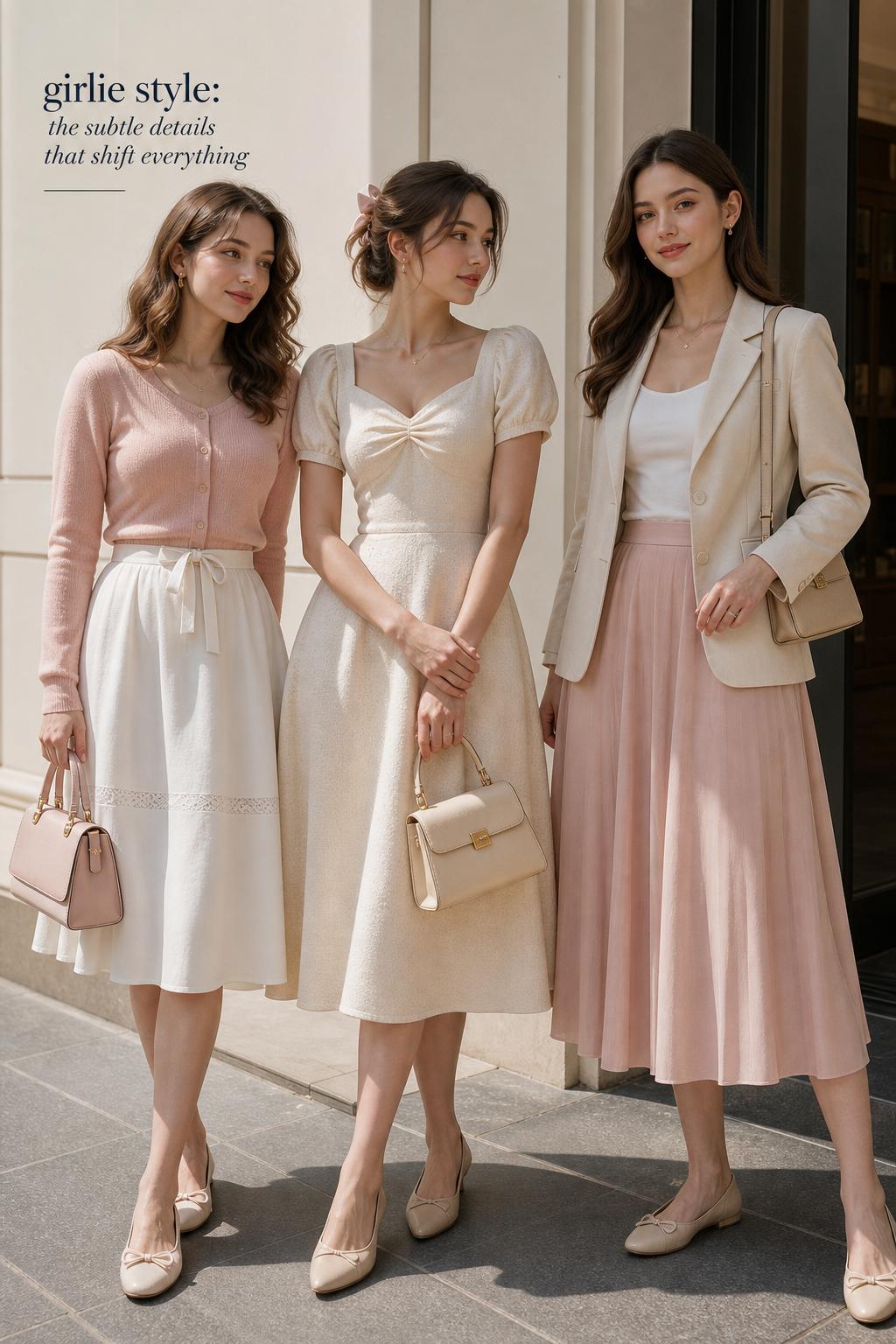
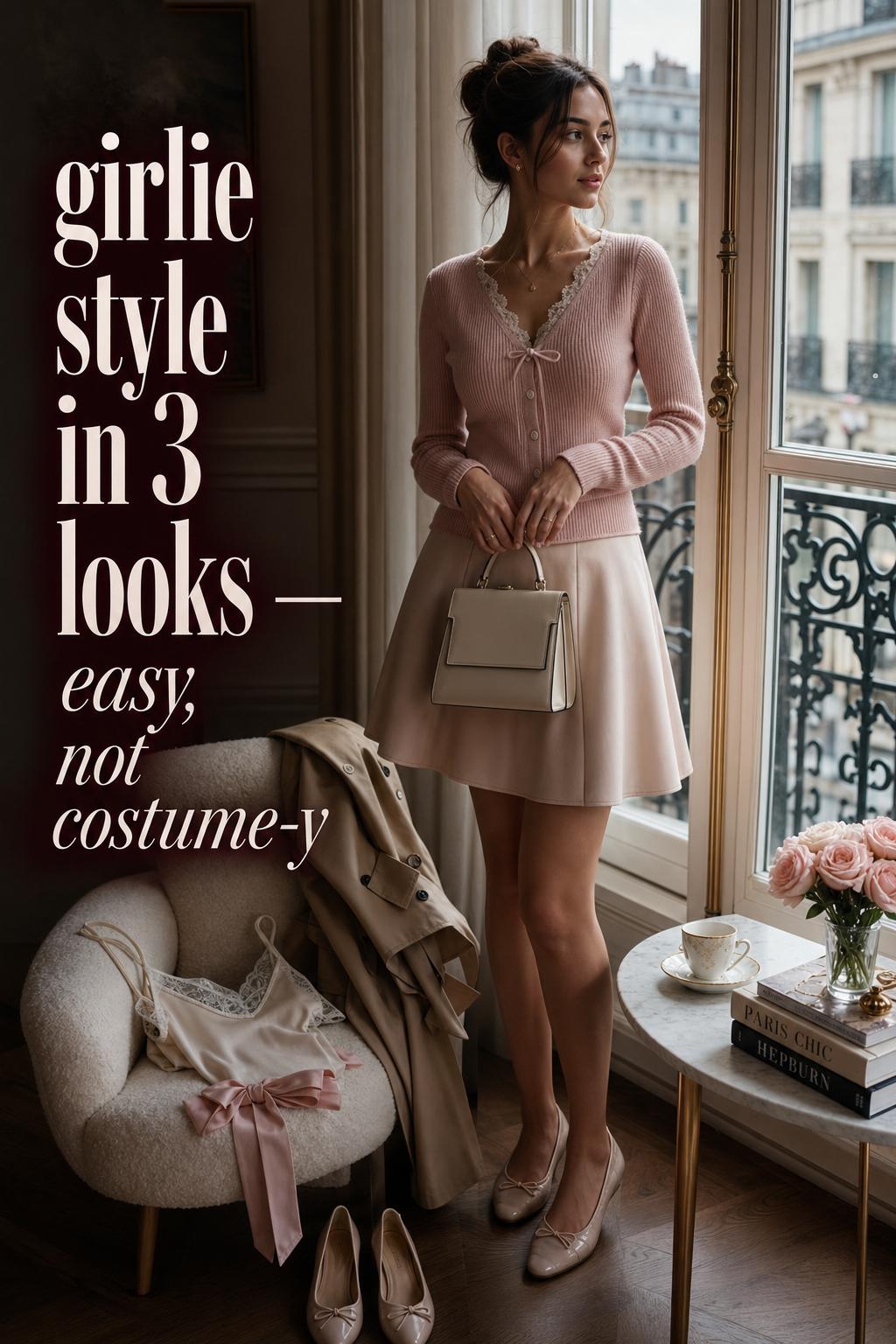
A pink ribbon, a fitted cardigan, a delicate skirt, and a polished pair of flats can all signal girlie style at first glance. The confusion starts because several fashion aesthetics orbit the same visual territory: softness, femininity, charm, and detail. In everyday style conversations, girlie style is often used as a broad label for looks that feel youthful, romantic, or sweet, even when the actual styling logic differs from one aesthetic to another.
That is why a clear comparison matters. Some wardrobes lean classic and pretty, others push into decorative romance, while some stay practical and understated with only a feminine finish. Understanding the difference helps with shopping, outfit planning, and personal consistency. A person who wants a wearable wardrobe for daily life may be drawn to girlie style, while someone else may prefer a more theatrical romantic direction.
This breakdown compares girlie style with closely related soft feminine approaches, especially coquette style and a more classic polished feminine wardrobe. The goal is not to fix rigid rules, but to explain silhouette balance, color decisions, texture choices, accessories, and outfit composition so you can identify each look quickly and use the right elements with intention.
style overview: what defines girlie style
girlie style centers on a distinctly feminine visual language that feels sweet, approachable, and coordinated rather than severe or heavily directional. It usually favors softened lines, visibly pretty details, and an overall mood that reads playful, polished, or romantic without necessarily becoming costume-like. The appeal is in the clarity of the styling: the clothes communicate softness immediately.
Found the dress? Keep the rest in one place.
Zarellea brings guest details, vendors, timelines, and every next step together — so your wedding plan feels as good as your look.
Typical silhouettes in girlie style include fit-and-flare shapes, slim cardigans, A-line skirts, softly tailored dresses, fitted tops balanced by fuller bottoms, and neatly proportioned outerwear. The silhouette tends to stay readable and flattering rather than oversized or aggressively deconstructed. Structure appears, but in a gentle form.
The color palette often leans light, sweet, or fresh. Pink is the most obvious reference point, but the broader logic is softness rather than one fixed shade family. Cream, white, pastel tones, and light neutrals all support the mood. Even when darker colors appear, they are usually styled in a way that preserves a feminine visual anchor.
Fabrics and textures also matter. Knits, cotton, satin-like finishes, delicate trims, and lightweight materials fit naturally because they reinforce softness. The overall mood is pretty and intentional, with enough detail to feel styled but not so much that the outfit becomes overloaded.
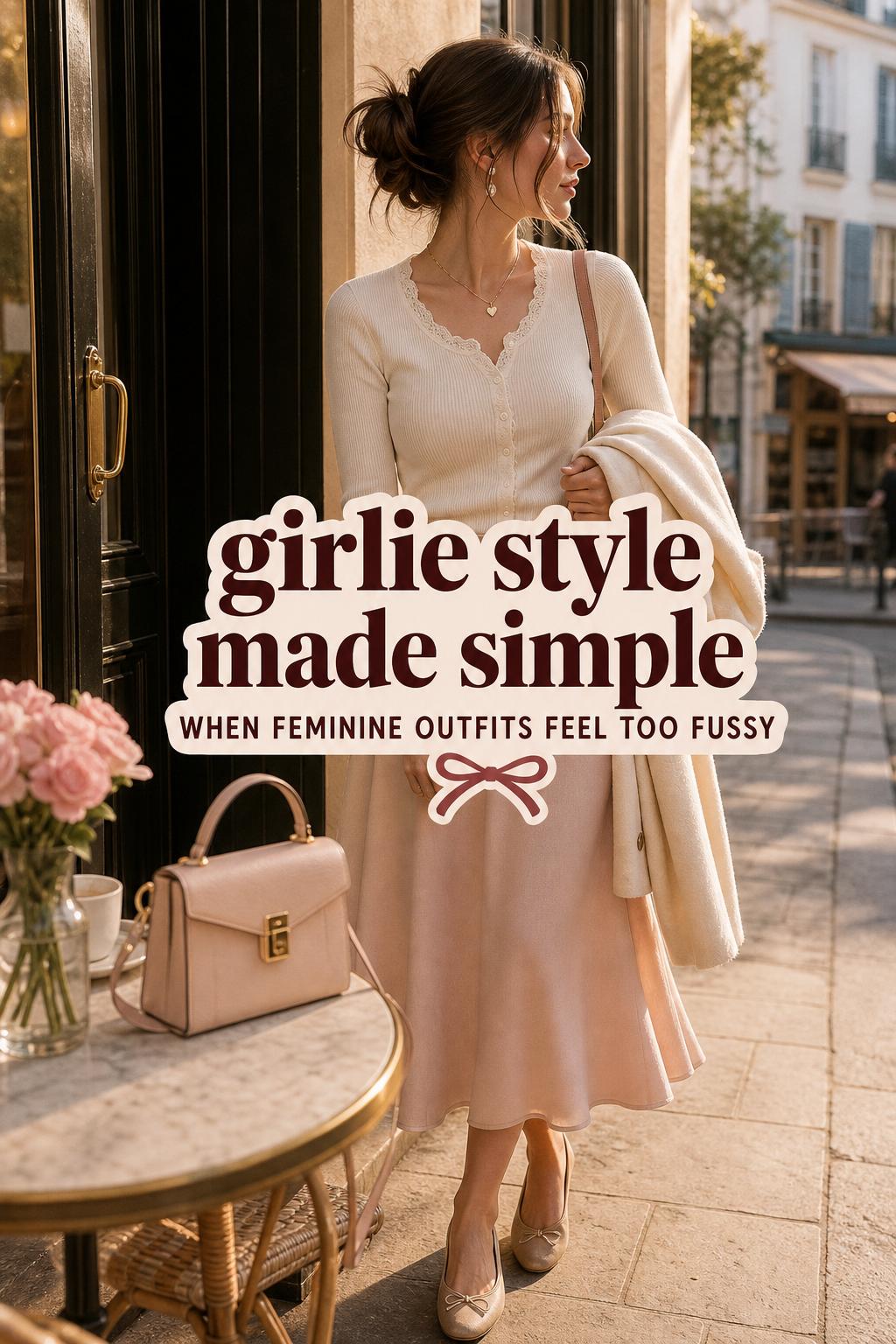
style overview: coquette style as the more decorative cousin
Coquette style sits close to girlie style, which is why the two are often discussed together. The overlap includes bows, delicate accessories, soft colors, fitted tops, and romantic references. The distinction is that coquette style tends to be more deliberately ornamental and more self-consciously aesthetic. It often amplifies sweetness into something more stylized and visually coded.
Its silhouettes can still be feminine and close to the body, but the treatment is usually more decorative. Trims, ribbons, lace-like elements, dainty layering, and heightened styling details become central rather than supportive. If girlie style is pretty first, coquette style is often expressive first.
The palette generally remains soft, but contrast may be used more strategically to make the styling feel more dramatic or intentionally flirtatious. Texture is especially important here because the look depends on visible detail. In practical wear, that means the outfit often asks for more precision in accessory choice and more confidence in styling.
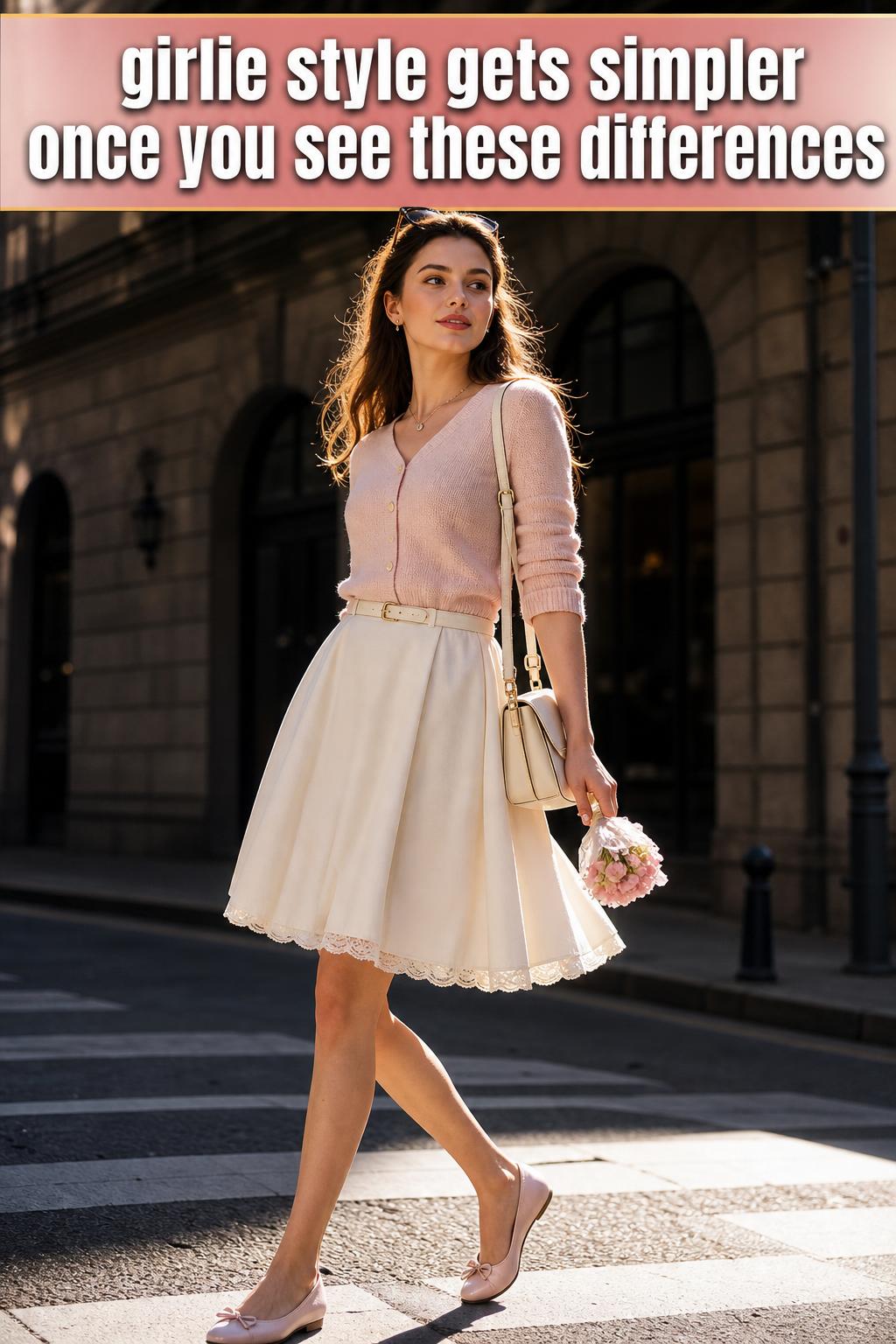
style overview: classic feminine dressing and why it gets mistaken for girlie style
A classic feminine wardrobe shares many outer signals with girlie style: dresses, skirts, polished shoes, soft knits, neat handbags, and an overall refusal of harsh styling. The difference is that classic feminine dressing is usually less cute and less playful. It prioritizes refinement, restraint, and balance over sweetness.
Silhouettes are often clean and composed, with smooth lines and fewer overtly youthful details. The color palette may still include pink, cream, and soft tones, but the finish is more mature. Fabrics are chosen for polish as much as feel, and the outfit tends to read elegant before it reads charming.
This is where many wardrobes sit in real life. Someone may enjoy feminine dressing without wanting bows, heavily decorative trims, or a highly curated romantic image. In that case, classic feminine style becomes the closest alternative to girlie style, especially for work, travel, and everyday dressing that still feels pretty.
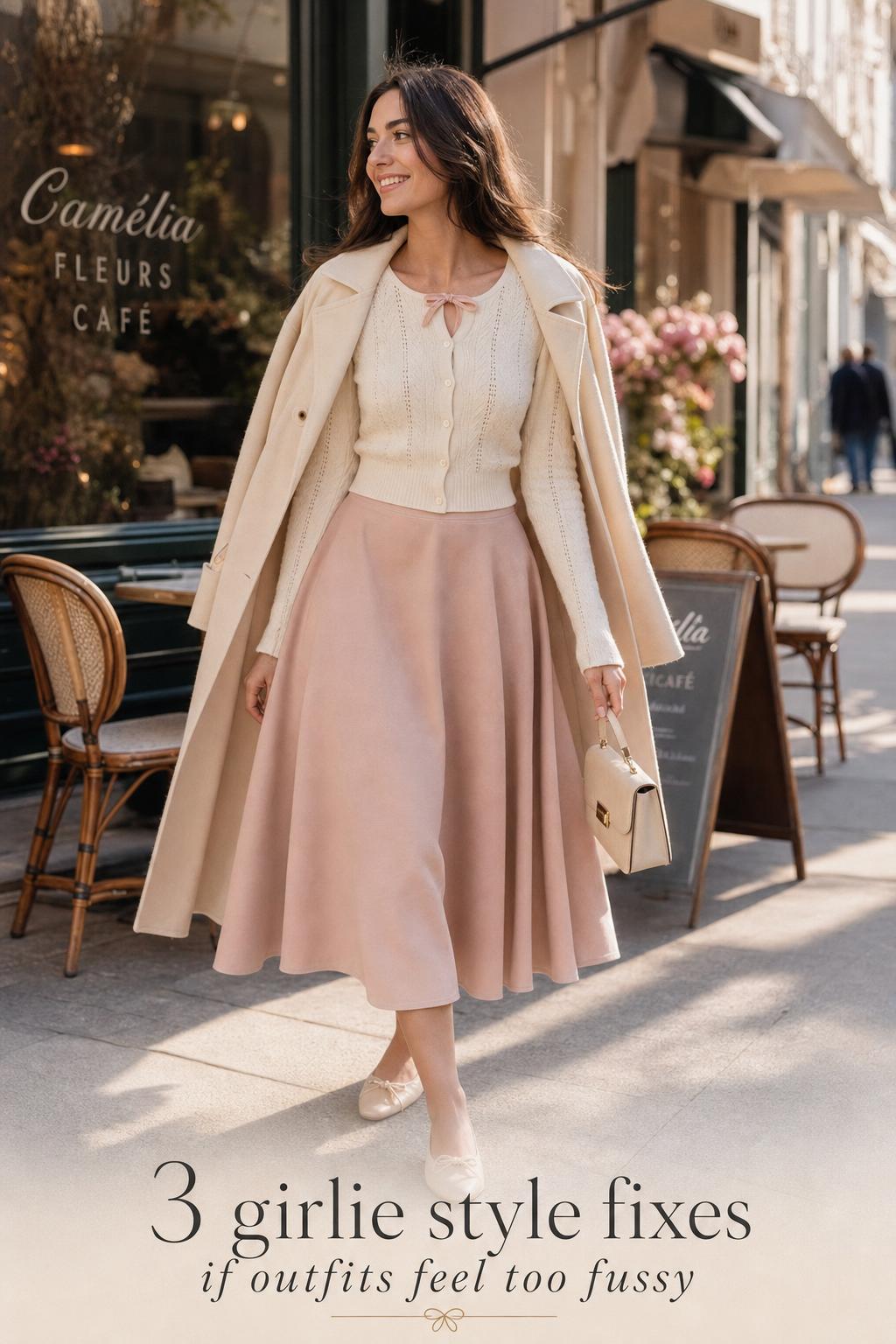
the real distinction: sweetness, ornament, or polish
The fastest way to separate these aesthetics is to identify the dominant styling intention. girlie style is built around sweetness. Coquette style is built around ornament and aesthetic signaling. Classic feminine dressing is built around polish. All three can include soft colors, fitted silhouettes, and delicate accessories, but they do not prioritize the same visual result.
- girlie style aims for pretty, youthful, and clearly feminine outfit composition.
- Coquette style pushes the same visual family toward more decorative, romantic, and overtly styled detail.
- Classic feminine style edits the softness down and raises the level of refinement.
This distinction matters because the wrong styling detail can shift the look immediately. Add too many ribbons, lace accents, and dainty layered accessories, and a simple girlie outfit can move into coquette territory. Strip away too much softness and favor only clean tailoring, and the look becomes classic feminine rather than girlie.
silhouette and structure: how each style shapes the body
Silhouette is one of the clearest comparison points because it determines how the outfit reads before color or accessories even register. girlie style usually prefers a balanced figure line. Tops are often gently fitted, waists are usually defined, and skirts or dresses commonly create movement without overwhelming the frame. The proportions feel tidy and intentionally flattering.
Coquette style can share the same fitted base, but it often leans more into body-conscious contrast or more delicate layering around that base. The silhouette may look more curated and more stylized because small decorative details become part of the structure. A ribbon at the neckline, a trimmed hem, or a visibly delicate cardigan changes the visual rhythm of the outfit.
Classic feminine dressing tends to smooth the silhouette. The shape is still flattering, but the emphasis shifts from cute proportion play to balanced elegance. A clean skirt, a softly tailored dress, or a polished knit set usually reads more composed and less playful than a typical girlie look.
practical insight on proportion
If the outfit relies on a visibly sweet shape such as a fitted cardigan with a flared skirt, it is likely in girlie style territory. If the same formula adds more decorative contrast and delicate embellishment, it leans coquette. If the lines become cleaner and the detailing becomes more restrained, the look reads classic feminine.
color palette: similar shades, different intention
Color creates much of the confusion because all three aesthetics often draw from overlapping palettes. Soft pinks, creams, whites, and light neutrals appear across the board. The difference is not simply the color itself, but how the palette is used in the full outfit composition.
In girlie style, color supports approachability and sweetness. The palette often looks brightened, softened, or fresh, with enough contrast to keep the outfit lively. It feels coordinated but not too severe. A simple pink knit with a light skirt and neat shoes captures the effect well because the color story stays easy to read.
Coquette style uses similar tones but may lean more heavily into romantic color coding. The palette can look more intentionally aesthetic, especially when the softness is paired with visible ornament. The colors are not just pretty; they are part of a more expressive image.
Classic feminine dressing treats these same shades with more restraint. Instead of relying on sweetness, the palette often aims for serenity and refinement. The result is less playful and more composed, even when the colors themselves remain soft.
fabric and texture: the hidden reason outfits read differently
Many readers focus first on color and accessories, but texture often decides whether a look feels girlie, coquette, or classic feminine. In girlie style, fabrics generally support movement and softness without demanding attention. Fine knits, cotton blends, smooth skirts, soft cardigans, and lightweight dresses are common because they make the look feel easy and wearable.
Coquette style depends more heavily on texture contrast and visible delicate surface detail. The outfit usually benefits from materials or trims that communicate romance immediately. That extra visual information is part of the aesthetic language, which is why coquette outfits can feel more deliberate and less effortless.
Classic feminine dressing typically favors fabrics that hold polish. The texture story is quieter. Rather than adding sweetness through detail, it creates elegance through clean surfaces, drape, and control. This is especially useful in wardrobes that need to move between casual and polished settings without dramatic restyling.
how these styles look in real outfits
The most useful comparison is not abstract. It is visual. In everyday dressing, the gap between styles shows up in layering, accessories, footwear, and overall balance. Even a nearly identical garment can look completely different depending on what surrounds it.
layering approach
girlie style uses layering to reinforce softness without clutter. A cardigan over a dress, a neat jacket over a skirt, or a fitted top under a lightweight layer all work because the layers preserve a clean silhouette. Coquette style tends to use layering more decoratively, with each visible element contributing to the aesthetic message. Classic feminine dressing uses layering for polish, often with fewer styling signals and less visual interruption.
garment proportions
In girlie style, proportion play is often straightforward: fitted top, softer bottom; defined waist, controlled volume; shorter cardigan, fuller skirt. Coquette style can use similar formulas but increases delicacy and decorative focus. Classic feminine dressing often lengthens the line and keeps volume more moderate, which creates a smoother overall impression.
accessories
Accessories are one of the easiest identifiers. In girlie style, they tend to be neat and sweet. In coquette style, they become more central and more expressive. In classic feminine dressing, they refine the outfit rather than define it. This difference is useful when you want to shift the mood of the same base outfit without replacing the clothes themselves.
footwear choices
Footwear in girlie style usually supports the softness of the outfit and keeps the visual balance light. Coquette style may choose shoes that amplify charm and delicacy. Classic feminine dressing generally prefers shoes that strengthen polish and versatility. The outfit logic changes immediately depending on whether the shoes act as a sweet accent, a romantic signal, or a refined anchor.
example comparison: the casual daytime outfit
A casual daytime outfit is where these styles separate most clearly because practicality starts to matter. For girlie style, the goal is usually an easy feminine silhouette that still feels comfortable and natural for errands, lunch, or a simple day out. A fitted knit, a clean skirt or soft trousers, and understated accessories create a look that feels intentionally pretty without looking overworked.
Coquette style would approach the same situation with more visible styling emphasis. The base could still be simple, but the decorative details would carry more weight. The outfit would read less as casual-pretty and more as a curated aesthetic statement, which works well if dressing up visually is part of the point.
Classic feminine dressing would likely simplify the whole composition. The same daytime setting might call for softer tailoring, a clean color story, and accessories that quietly finish the look. The result is still feminine, but less sweet and less coded.
example comparison: the polished outfit for work or a structured day
Workwear or structured daytime dressing reveals the practical limits of each style. girlie style can work here when the feminine details stay controlled. A neat skirt, a refined blouse, and a soft jacket can retain the sweetness of the aesthetic while meeting a more polished context. The key is reducing anything that feels overly youthful or too decorative for the environment.
Coquette style is the hardest to translate directly into many professional settings because the visual coding can feel more expressive than the setting allows. It can still influence accessories or softness in color, but full commitment may not suit a conventional workplace. This is not a weakness of the style; it is a context issue.
Classic feminine dressing excels here because refinement is already built into the style. It keeps softness but filters it through cleaner lines and quieter detail. For readers who want a wardrobe that moves from office to dinner with minimal changes, this approach is often the most functional.
example comparison: evening, dinner, or a more dressed-up setting
Evening dressing shifts the balance again. girlie style in a dressed-up context often becomes more polished rather than more decorative. The silhouette may remain feminine and flattering, but the styling usually gains elegance instead of adding excessive sweetness. This prevents the outfit from feeling too youthful for the occasion.
Coquette style can thrive in these settings because evening naturally supports more visual detail. Decorative accessories, romantic finishes, and softer dramatic contrast make more sense at dinner, parties, or social events where style expression is expected. The same elements that may feel excessive by day can feel entirely coherent at night.
Classic feminine dressing continues to prioritize polish. Its advantage is consistency. It rarely feels out of place because the styling remains composed even when the fabrics or accessories become more elevated.
where girlie style works best in a real wardrobe
girlie style is especially effective for readers who want a wardrobe with personality but still need usability. It works well in everyday wear, casual social settings, daytime events, and situations where looking put together matters but full formality is unnecessary. Its strength is readability. The outfit feels intentional immediately.
- It suits everyday dressing when you want a pretty but uncomplicated silhouette.
- It works for casual occasions that benefit from polish without stiffness.
- It adapts well to travel days when the pieces are comfortable and coordinated.
- It can move into semi-polished settings if the color palette and accessories stay refined.
The limitation is that too much sweetness can narrow its flexibility. If every item is highly decorative, the wardrobe becomes harder to scale up or down. The strongest girlie wardrobes usually balance charm with a few clean, anchoring pieces.
when coquette style makes more sense
Coquette style is strongest when visual identity is the priority. It suits social dressing, image-driven styling, fashion-forward casual looks, and environments where aesthetics are part of self-presentation. Because it relies on more explicit decorative language, it often works best when the wearer enjoys a more curated and visibly styled finish.
Its trade-off is practicality. Not every setting rewards highly decorative detail, and not every wardrobe needs that degree of visual specificity. For some readers, coquette style is ideal as an occasional styling direction rather than an everyday formula.
when classic feminine dressing is the strongest option
Classic feminine dressing is often the most adaptable of the three. It fits offices, dinners, travel, meetings, and daily wear with little friction. For readers who want feminine dressing without a youthful or highly aesthetic-coded finish, this style offers clarity and longevity.
The trade-off is that it may feel less expressive if your personal taste leans playful, sweet, or overtly romantic. It offers polish first, not charm first. That difference is subtle in theory but obvious in practice once the outfit is fully styled.
common styling mistakes when trying to create girlie style
The most frequent mistake is assuming that anything pink or feminine automatically creates girlie style. In reality, the look depends on balance. A soft color palette without the right silhouette can feel flat. Decorative details without structure can make the outfit look cluttered. Strong girlie styling depends on editing.
- Adding too many sweet details at once, which pushes the outfit away from pretty and into overload.
- Ignoring proportion, especially when volume appears on both top and bottom without a visual anchor.
- Choosing accessories that compete instead of supporting the outfit composition.
- Relying only on color while neglecting fabric texture and silhouette balance.
- Forgetting context, particularly when dressing for work or travel.
The strongest girlie outfits usually have one clear point of softness, one point of structure, and one refined finishing detail. That combination keeps the look intentional.
tips for making girlie style look modern instead of costume-like
A modern interpretation of girlie style comes from control. Sweetness works best when the outfit includes enough restraint to feel current and wearable. The easiest update is to reduce excess detail and focus on a clean silhouette with a few feminine cues rather than many competing ones.
Tip: let one element carry the softness. If the skirt is already flared and the color is already delicate, accessories can stay minimal. If the top has visible romantic detail, keep the rest of the outfit more grounded. This avoids turning femininity into visual noise.
Tip: use texture contrast carefully. A soft knit paired with a smoother skirt often creates enough interest on its own. Adding too many surface details at once can make the outfit lose clarity. Texture should support the mood, not overwhelm it.
Tip: think in terms of visual anchors. A neat shoe, a structured bag, or a clean outer layer can stabilize a sweet palette and keep the outfit from looking overly precious. This is especially useful in U.S. everyday styling, where practicality and wearability matter as much as aesthetic appeal.
how to borrow from each style without losing your point of view
Most real wardrobes are not built from one pure aesthetic. The most practical approach is often selective mixing. girlie style can borrow the refinement of classic feminine dressing to feel more versatile. It can also borrow a small amount of coquette detail to feel more expressive, as long as the outfit still has restraint.
For example, a girlie wardrobe becomes more adaptable when clean tailoring or polished basics anchor the softer pieces. Likewise, a classic feminine wardrobe can feel less formal with a sweeter color palette or softer knit textures. The goal is not to merge everything at once, but to understand which style logic is leading.
If sweetness is leading, the look reads girlie. If ornament is leading, it reads coquette. If refinement is leading, it reads classic feminine. That single question can help you edit outfits faster than any trend label.
a context readers often overlook: climate, movement, and daily wearability
One of the most useful style decisions has nothing to do with aesthetics alone. It has to do with how the outfit behaves through a full day. A look that appears perfect in a still image may be difficult in heat, on public transit, during a long workday, or while traveling. This matters because girlie style often relies on fabrics and shapes that need thoughtful balancing.
In warmer weather, lighter fabrics and simpler layering keep the outfit from feeling too delicate or high maintenance. In cooler weather, cardigans, neat coats, and soft layering help preserve the feminine line without adding bulk. This is where classic feminine dressing often becomes a useful reference, because it handles outerwear and structure more easily.
Movement also changes styling choices. A sweet skirt-and-cardigan formula may work beautifully for lunch or shopping, but a day filled with commuting and long sitting hours may call for the same visual language translated into softer trousers, more stable shoes, and fewer fragile accessories. The strongest wardrobes keep the aesthetic while adjusting the execution.
the clearest way to identify each style at a glance
At a glance, girlie style looks sweet, feminine, and intentionally pretty. Coquette style looks romantic, decorative, and more overtly aesthetic. Classic feminine dressing looks polished, refined, and softly elegant. Because these styles share so many visible features, readers often try to separate them by individual garments, but that usually fails.
The better method is to read the full outfit composition. Ask what the silhouette is doing, where the visual anchor sits, how much decorative information appears, and whether the mood is playful, expressive, or polished. Clothes rarely communicate through one detail alone. The total styling logic is what gives the style its identity.
final style takeaway
The core distinction is simple once the styling intention is clear. girlie style prioritizes sweetness and approachable femininity. Coquette style intensifies that softness through decorative romance. Classic feminine dressing refines it into polish and restraint. They overlap in color, silhouette, and mood, but the final outfit tells you which direction is really in control.
To identify girlie style, look for gentle structure, a visibly feminine palette, and details that feel pretty rather than theatrical. To identify coquette style, look for ornament and a stronger aesthetic signal. To identify classic feminine dressing, look for cleaner lines and a more composed finish. The most versatile wardrobes often combine elements from all three, but they stay strongest when one visual priority leads the rest.
FAQ
what is girlie style in fashion?
girlie style is a feminine fashion approach built around sweetness, soft visual cues, and clearly pretty outfit composition. It usually includes gentle silhouettes, soft or fresh color palettes, and details that feel polished and charming rather than severe.
is girlie style the same as coquette style?
No. They overlap, but they are not the same. girlie style is generally more wearable and sweetness-focused, while coquette style is usually more decorative, romantic, and intentionally aesthetic-driven.
how can i make girlie style look more grown-up?
The most effective adjustment is to keep the feminine silhouette while reducing excess detail. Cleaner accessories, more polished outerwear, and a restrained color story help the outfit feel mature without losing its soft identity.
can girlie style work for everyday wear?
Yes. It works especially well for everyday wear when the pieces are comfortable, proportioned well, and not overloaded with decorative accents. The easiest daily version uses a simple feminine silhouette with one or two sweet details rather than many.
what colors are most associated with girlie style?
Soft pinks, creams, whites, and light neutrals are closely associated with the look, but the broader principle is softness and freshness rather than one fixed color. The outfit should feel feminine and visually light, even when the palette is not entirely pastel.
what is the difference between girlie style and classic feminine style?
girlie style emphasizes sweetness and youthful charm, while classic feminine style emphasizes polish and refinement. Both are feminine, but classic feminine dressing is usually cleaner, less playful, and easier to translate into formal or professional settings.
can i mix girlie style with more polished pieces?
Yes. In fact, that is often the most practical way to wear it. A polished bag, cleaner shoes, or a more structured outer layer can anchor softer pieces and make the overall outfit more versatile without removing the girlie mood.
how do i know if my outfit has become too costume-like?
If multiple sweet details compete at once and the outfit no longer has a clear visual anchor, it usually starts to feel overdone. Editing down accessories, simplifying the silhouette, or adding one structured element often restores balance.